climate-change

Summer at Molino Creek Farm

Only a bit on recent Farm highlights and then off on a tangent about production….

Fall color on one of the Community Orchard’s apricot trees

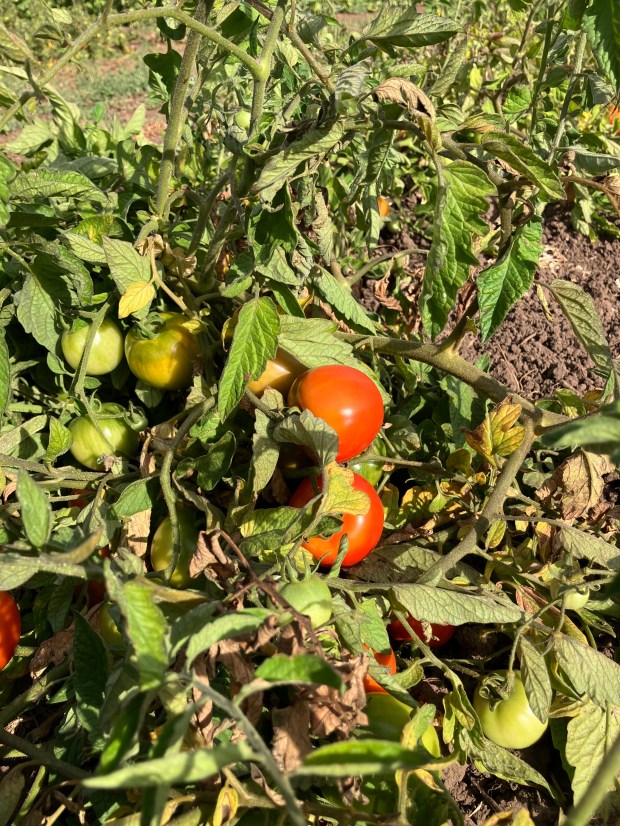
Fall is appearing across the farm- the wannuts and apricots are changing color! Tomatoes are also changing color- but for the ripening….lots and lots suddenly coming on. 

Bodhi reports regular Great Horned Owl activity and another owl, with a screechy-noise…that is a whiny underaged great horned owl making its terrible youngster noise.  He also reports the oddity of Bonny Doon skunks and opossums in the middle of the road on the night after full moon- whatsup with that?

Sylvie spotted an amazing coast garter snake wandering the grounds as well as a huge praying mantis in her beans.

A Praying Mantis in Sylvie’s Beans – Photo courtesy of S. Childress

Folks are taking home giant, 1 pound lemons as well as the last of the Persian limes and oranges….testing the first of the lamb haas avocados (are they ripe, yet?).

The hot weather broke and then we got cool weather, even drizzle. The apples are growing big- two more weeks before the harvest begins!

 – The Aforementioned Tangent – 

Recently, I’ve been wondering how to quantify the sum total of what is produced and processed on these Molino Creek Farm acres in terms of food, poo, and biomass. Here’s a summary.

Coyote Poo? Full of Chardonnay grapes…etc

Poo

One hundred thirty seven acres of land rich with wildlife makes a lot of poo, every year. The assimilative capacity of the land for animal excrement is astounding – otherwise, we’d be up to our neck in it! A pigeon makes 25 pounds of excrement a year, and I assume smaller birds some fraction thereof. Our farm has around 30 wild, naturally occurring pigeon-sized birds (band tailed pigeons and mourning doves) throughout the year. We have 140 California quail, say half pigeon sized. And, there are easily 80 goldfinches and 400 other small birds, mostly juncos, sparrows, towhees, etc…say one quarter pigeon sized. Bird feces on our land per year: around 6,000 pounds- 3 tons! 

Furry animals vary on poo production. We have 10 deer year-round; a deer makes 1200 pounds of poo a year. A mouse makes 20 pounds of poo per year and a low estimate for our part of California is 10 mice per acre: 28,000 pounds of poo! (The whole wild world of the North Coast of Santa Cruz County smells like rotting mouse poo after the first rains.). Add in 50 squirrels (40#/year) and a low ball 200 gophers (30#/year) on our farm, and you get 8,000 more pounds of animal poo. So, our 137 acres of critters makes around 54,000 pounds (27 tons) of animal poo per year. That’s 4 dump truck loads! All of this poo gets assimilated into the land and helps to grow what we see around us.

Black Beans? Nay! Deer Poo – oh, so fresh…
Turkey Poll – is everywhere!

Non-Animal Production

 Our farm is a mixture of natural areas and cropland – each has its own story to tell in terms of production.

In terms of produce, within the 6-8 row crop acres and the 3 acres of orchards, we can make 12,000 pounds a year of a combination of apples, citrus, and avocados, 6,000 pounds of dry farmed tomatoes and 10,000 pounds of dry farmed squash…along with a few irrigated crops like peppers and onions. In the winter, the 25 acres of crop lands make another average 4,000 pounds/acre of biomass in cover crops: 100,000 pounds of biomass that gets tilled into the ground for extra fertility and soil building.

In the wildlands, there is still more production going on. Our 20 acres of redwood forest puts on around 1800 pounds of dry mass per year per acre, so 36,000 pounds. An additional 60 acres of shrubland and grassland makes another 330,000 pounds of biomass per year. So, wildlands are growing 366,000 pounds of dry biomass annually. Not all of that biomass represents sequestered greenhouse gases, but certainly some of it is. As our redwood trees get bigger, and as we help to protect them from catastrophic tree-killing wildfire, they will sequester more and more carbon.

Imported Additions

Farms often import soil amendments, and Molino Creek Farm is no exception. Some years, we bring in a couple of dump trucks of compost. Many years, we are adding feather meal or some other form of organic fertilizer to help grow food. Recently, we imported what looks like charcoal – ‘biochar’ – from the disposal of dead trees from the surrounding conservation land’s efforts to reduce future wildfire impacts. These inputs are not cheap and it takes time/effort to spread them where they need to go. And so, we like to rely more on cover crops than imported additions, but still our soil tests tell us we need to add some more nitrogen. Total pounds of inputs on average – around 35,000 pounds.

I would be remiss if I didn’t add that we do also import diesel fuel to run tractors, around 200 gallons per year. Our well water for irrigation is pumped via solar power to tanks and then gravity fed through water wise drip systems. The groundwater has to be seen as another ‘imported addition.’

Teeming with Life

The bounty of living things, the manure it creates, the human-captured or wild productivity, and the minimal imported farm additives is fascinating on this small farm. Another small farm has been popularly featured in the film “The Biggest Little Farm.” The film helps people understand what is possible with careful farm management working with wild creatures, growing organically. What do we compare these small farms with? City land? Conventional, large scale agriculture? Wild lands in parks?

I visit all of those other land use types and rarely do I see the kind of bounty that I’ve experienced on small farms that allow nature space and work with nature in the crop lands. If you haven’t visited Statton Island’s rice farms near Davis, California in November and December, you are missing a breathtaking experience – more birds than you would imagine could land in one place…big birds: cranes, geese, and many more. 

I’ve also experienced the devastating effects of ‘other’ types of farming. A recent drive across the pesticide-reeking Central Valley had almost zero bugs smashed on my car, contrasting with 20 years ago where it was thick with insect spattering…what happened? Huge crop fields up the Salinas Valley are seemingly lifeless, just like farmers like…so they don’t have to worry about insect damage or bird dropping contamination. 

How you spend your grocery money…who you support and why…can make a big difference in wildlife conservation. Why not make wise choices?
Fire Era

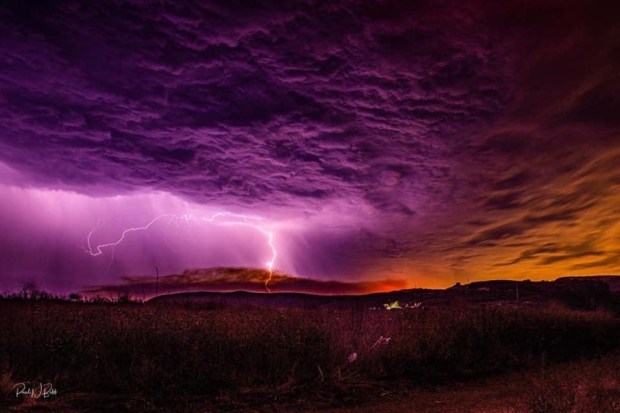
It seems like the world has changed. As I write this on Tuesday 9/16/25, Tropical Storm Mario is headed towards California. Back in 2020, the CZU Lightning Complex Fire was the result of another such situation, via Tropical Storm Fausto. And, as with 2020, there is a lineup of such storms…another is predicted soon after this upcoming one. We look forward to the regular Fall rains to start, typically on October 15. Meanwhile, we wait to see where the lightning will strike and if someone can extinguish the flames before the resulting inferno.

I moved to Santa Cruz in 1986…did I somehow miss old timer stories or some other form of history that tropical storms, lightning, thunder, etc., are ‘normal’ for this part of the world??!!

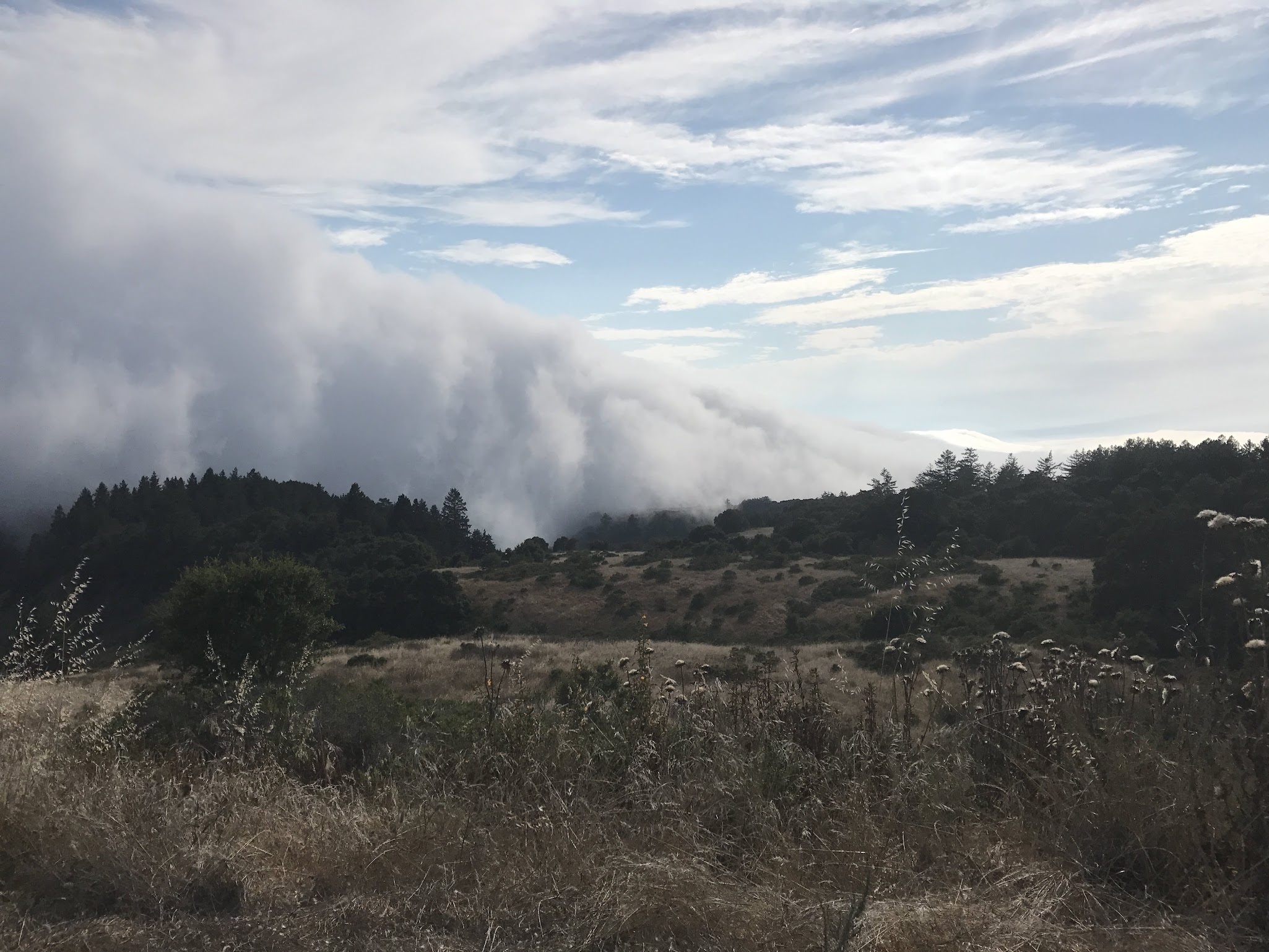
Does this seem normal to you?

An ODD wall of clouds eats a North Coast ridgeline, quickly (from the South) – how unusual! Aug 2, 2017

Changing How We Live

All us country folk are changing the way we live, out here on the outskirts of towns. 

Many modern Californians lived for decades in the “woods.” They had sprawling outbuildings full of canning supplies and landscaping tools, tractors, chicken coops, pet pens, toys scattered about. Their homes were ”original” architecture, funky and artful. Their gardens neat or a tangle, blended into the surrounding with the forest engulfing less tended portions. Funky. That was much of country California.

In this changing world, we can no longer afford to be that way: our ‘stuff’ is burning up and making a mess. Now, we must consolidate our things into fire resistant structures and manage the surrounding vegetation. 

The Vegetation Around Us

This land is productive, which means that plants make a lot of biomass each year. In most natural areas near Santa Cruz, plants produce 4,000 – 8,000 dry pounds of biomass per acre per year: that’s 6,800 – 13,600 pounds of living biomass: literally ‘tons.’ For a house that’s 1200 square feet, clearing within the 100’ required space is managing about an acre and a half of vegetation. That means chipping, burning, mulching, composting, or hauling biomass “away” – otherwise, living or shed plant parts accumulate, add up, and pose a worse fire hazard in subsequent years.

Same goes for the thousands and thousands of acres of open space/parkland around the Monterey Bay. That open space is producing lots of fuel for future wildfire.

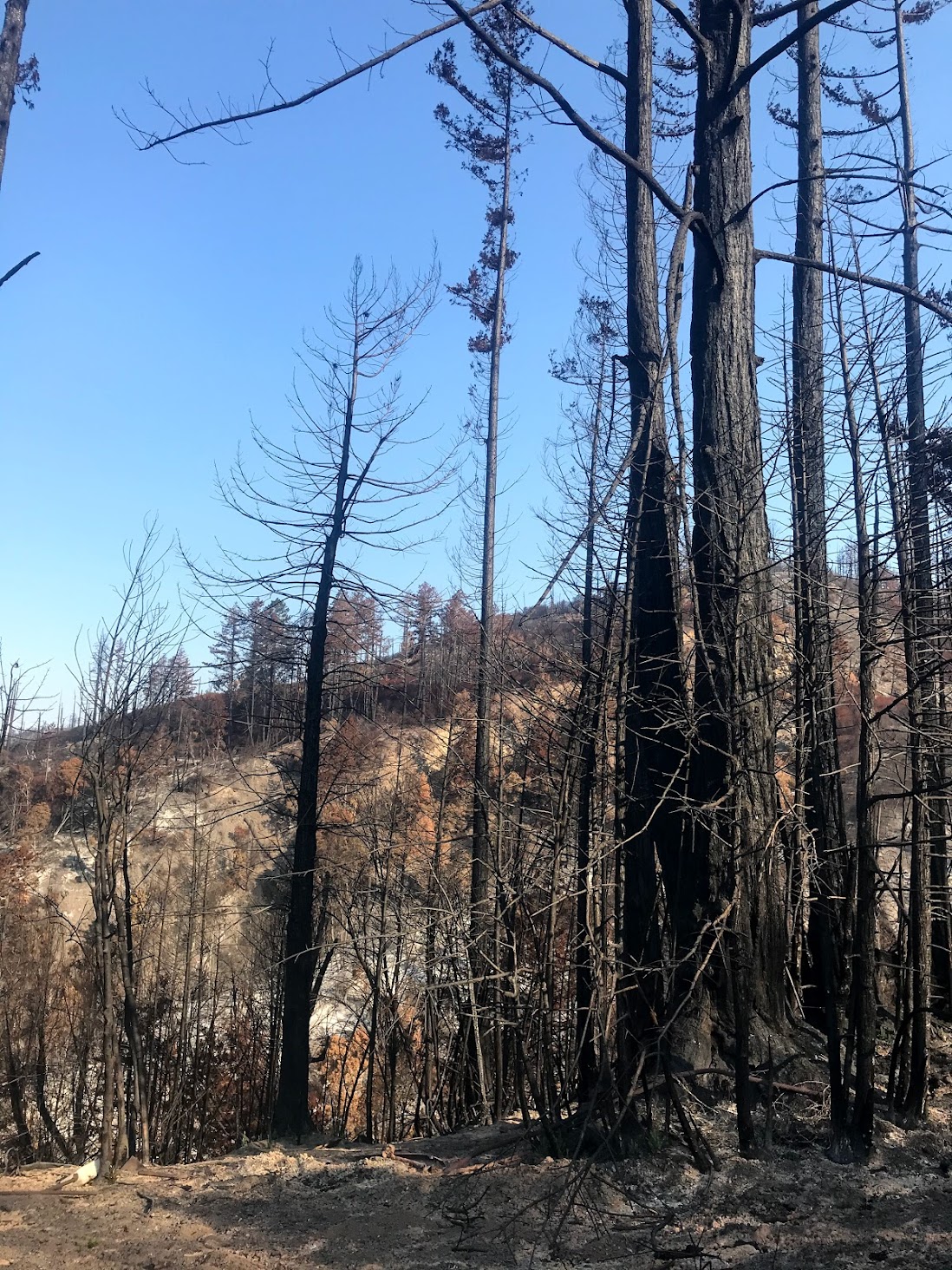
Some of the outfall of the 2020 CZU Lightning Complex Fire

Attitudes

Many people can’t handle this new reality of living with fire, especially in the country. Sure, if you are wealthy and live rurally, you can pay for someone to manage your property for wildfire…but still it is expensive! If you are poor, you can work to do it yourself…but it takes time, strength, and know-how! I’ve asked the folks I know who take care of their rural spaces how much time it takes to manage their (small!) home’s vegetation wildfire danger. The uncannily similar answer for my informal poll is….6 hours a week.

But most people are just plain in denial about the danger, even though everyone knows someone who’s been through one of the giant fires of the past few years. Some of those in denial actually went through the last fires and somehow think that it can’t happen again. 

Perhaps we’ve become inured to the fire news and so can’t grip reality. Did you know that Chinese Camp, a small town in the Sierra was nearly completely destroyed by wildfire in early September? That was the result of another ‘monsoon’ full of lightning from the South! Too much!

City Folks

It might be easier to ignore the wildfire danger if you live in the City. But people must change the way they live in the cities, apparently: in case you don’t recall there was this thing in Santa Rosa called the Tubbs Fire that burned thousands of homes, many of which were ‘in town.’

It looks to me like a wind-driven wildfire could burn a long way into Santa Cruz with houses stacked against one another adjacent to the forested and shrubby steep canyons of Moore Creek or adjacent to the thickly vegetated and at times crispy dry San Lorenzo Valley. The towns sprinkled around Fort Ord share the same danger/fate as does Monterey and Carmel.

Wind Driven?

Do we forget about the 70 mph gusts that fanned the CZU 2020 fires? Were we watching the Santa Rosa Tubbs Fire blast on high winds? The winds are increasing…

The Cause and Effect

The changing world I have outlined here is in large part due to the burning of fossil fuels, trapping sunlight…aka ‘the greenhouse effect.’ More ‘greenhouse gasses’ cause more atmospheric energy: part of the reason we are seeing the new tropical storms headed our way. The winds, with or without the storms, are demonstrably getting more intense. Predicted outcomes of climate change include extreme heat and drought events…extremes of all sorts – big swings.

The sad changes we are struggling to manage with just plain living are probably quite minor compared to what is to come based on climate change predictions. One day, folks will look back at the one-day-a-week that it takes us now to manage our yards and say “humf! That’s nothing.” What will their struggles be like? Will they be trying to survive weeks-long dust storms…building storm proof greenhouses for food? 

When will we reverse this terrible trajectory?

– this article originally appeared as part of BrattonOnline.com – check it out!

People for Fire

Nature around the Monterey Bay has been adjusting to changing wildfire regimes; we should expect that to continue, but how that happens is up to us in many different ways. Very recently, we are putting purposeful, good fire back onto the land. This may help restore the land while protecting human infrastructure from catastrophic damage, but there are too few projects to learn from…we must learn more!

Burning History

The Monterey Bay area has been getting hotter and drier for 20,000 years, which coincides with the era of fire-lighting humans. Laguna de las Trancas is an ancient pond that lies on a geological fault on the North Coast. Ancient ponds record the history of their place in strata. Scientists have taken sediment cores from that pond and recorded layers of pollen and volcanic ash, going back through time as the deeper sediment is older. Volcanic ash has properties that allow us to know from which volcano it originates and scientists have used various methods to chart the age of ancient volcanic eruptions. So, volcanic ash serves as milestones marking known years in the sediment’s past. This is how we know that this region changed to a much more fire-prone landscape around 12,000 years ago, consequent with the widespread archeological evidence of humans. Before that, the dominant forest trees were firs; after that, fire-adapted redwoods came to dominate. More recently, for the past 1200 years, fire scars on ancient redwoods illustrate a 4-6 year burn return interval. Indigenous people likely managed the fires sweeping frequently through redwood forests, but their fire tending of this landscape tragically ended during the genocidal colonist period. Purposeful fire has been almost entirely absent on most of this landscape for 230 years. In its place, long-interval catastrophic wildfires have caused all sorts of mayhem and loss of life.

Indigenous Pyro Management 

Oral history, written accounts at the time of colonist contact, pollen records in ponds, burn scars on ancient trees, and vegetation patterns on this landscape are things that can teach us bits about thousands of years of intentional use of fire by humans. One early written account from early Old-World colonist explorers notes that many of the meadows around Monterey Bay were burned black. We know now that without burning and/or grazing all of this region’s prairies change quickly into forests, so fire must have been maintaining meadows for a very long time, in the absence of grazing and tree-pulling by the Pleistocene megafauna. The blackened meadows hampered the progress of invading Old-World explorers because they had trouble feeding their horses, which they relied on for transport. In this case, we might contemplate the use prairie fire as self-defense, but we also know that indigenous peoples used fire to cultivate native plants that served as medicine, salad greens, grain, basket materials and much more.

Good Fire Emerging Now

California’s governor has set a goal of using prescribed fire on a half million acres a year. It has been 1/10th of that for too long but indigenous folks probably burned more like 3 million acres (or more) a year previously.  

Most people do not see the natural landscape as their pharmacy, grocery store, or fibershed, but many people look to the hills and know the danger of wildfire. Purposeful, good fire is starting to address this last concern and one day will help people reunite with the land in those other ways. 

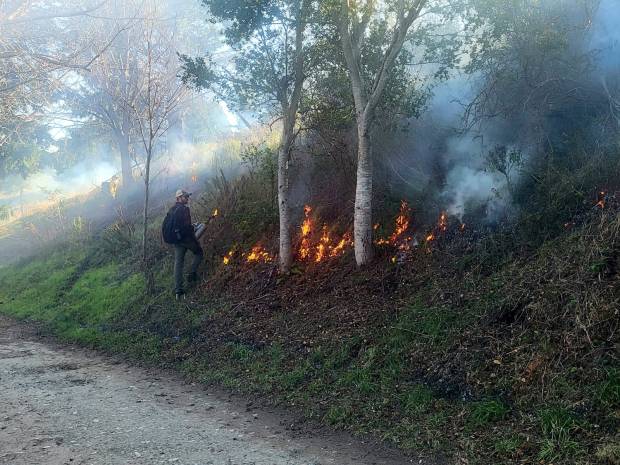
I was recently fortunate to interact with the Central Coast Prescribed Burn Association as they purposefully burned big patches of brush on Santa Cruz County’s North Coast. After much planning and preparation, forty volunteers gathered one Saturday to light big patches of hillside on fire. The goal was to restore coastal prairie and to train more wildland fire lighters in order to expand our region’s capacity to reintroduce fire on the landscape. These volunteer groups are growing around the world, including here in California. We have learned that their work is essential for everyone’s safety, and for the stewardship of the land, which provides us so much: water, timber, livestock, recreation, clean air, food, health, and solace.

Value-Added Fire

As we realize the importance of good fire in natural lands, entrepreneurs are envisioning profit. People are cashing in on the wildfire crisis by managing wildland fuels to power electrical generators. Some are seeing a potential to power electrical land stewardship equipment with generators fired by the fuel that equipment is removing. Others are already hauling wildland fuels to generation facilities supplying regions in Northern California with power. New technology allows burning wildland fuels to create charcoal, which is added to agricultural areas improving water holding capacity and maybe even soil fertility. That carbon is captured to mitigate greenhouse gas emissions. The machines are called ‘carbonators’ and they use thousands of gallons of water a day to keep them cool, which is the trick to making charcoal.

There was a lull for a bit, fand now there’s a rejuvenation of wood fired heaters for rural homes. The new woodstoves are engineered to be very efficient with very low air particulate output. Greenhouse gas (carbon) output is from recently grown wood rather than ancient fossil fuels.

The Future?

I envision a time when robots harvest biomass for fuel, farming every square inch of Planet Earth for energy. Imagine micro technology…ant-sized robots that prune plants in cultivated landscapes and natural areas, hauling bits of biomass back to larger robots which haul it to biomass energy production facilities…one big conveyor belt of fuel stolen from natural food webs. I do not like that future, but it seems inevitable in our ‘civilized’ world. How far off is that future? Without another way of managing wildfire, the day of that scenario is coming closer, quickly. The alternative is for more people to be involved with community groups managing purposeful, good fire across large areas, like the Monterey Bay region.

Your Role

Each of us has a role in helping Good Fire gain traction. Start with getting an air filter for your house: you need one anyway for wildfire smoke. Air pollution is a great concern, even with purposeful fires. The recent burning exercise I was a part of was delayed a week because of air quality concerns, and that week delay caused a bunch of issues with people’s schedules, wasted catering food, etc. If we can all be better prepared for smoke, it will be easier to get Good Fire on the ground. If you are able, help to figure out a way to get air filters to folks who can’t afford them!

We can’t expand Good Fire unless everyone feels safe in their homes. So, helping people get safe in their homes is an important thing. And, even when those homes are well secured against wildfire, people still need to be talked to, shown Good Fire, and helped to shed their fears. We can try to experience purposeful fire and see how well it is managed and then tell those stories to more people: there is a lot of fear about even professionally managed, purposeful fire.

The last thing I think more people might do: volunteer to help! The Prescribed Burn Associations could use more volunteers. Learning to manage purposeful fire is hard work and many people are needed.

-this column originally posted in the very informative weekly blog, BrattonOnline – please subscribe, like, and spread the word!