turkey

June Gloom

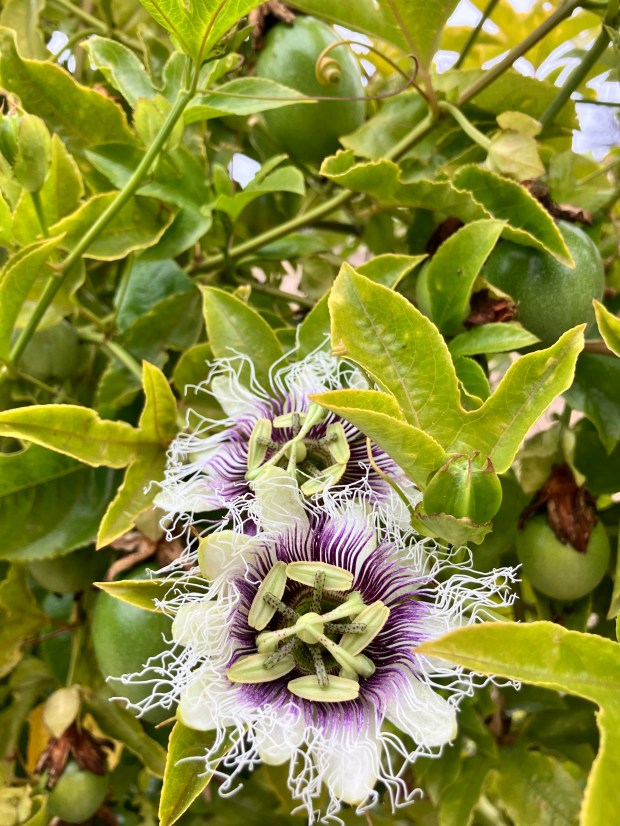
Frederick, a variety of passionfruit that does well here – exploding into glory for Interdependence Day

Happy Interdependence Day!

The sky has been a uniform textureless gray. Every day, throughout the day, high, dense relentless fog caps over the Farm. We awake to a dimly lit 55 Fahrenheit, 85 percent humidity and the day peaks in the mid 60s – no blue sky, little breeze…a still, sullen, quiet day that only turns a bit brighter midway through, slowly trailing into darkness in the evening as fog grows even thicker.  Nighttime, no stars, but the huge moon brightly illuminates a big patch of sky a little more than the rest. 

The odd cold cricket tentatively chirps. A single owl hoots in the distance. Sneaky coyote and sly fox silently roam, leaving tracks and little other sign to know that they were there.

Dawn comes with a middling bird chorus – too cold to be motivated, but still doing their duty. 

Turkey Fight!

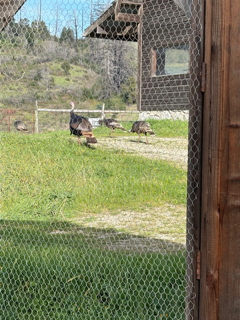
Recently, Sylvie chronicled a turkey brawl, awakening to ‘very distressed’ turkey noises. They were in a ‘serious fight,’ ‘using their mouths to grab each other’s mouths or necks and careening around.’ Her photo taking frightened them and they broke it off with one chasing the other up the hill. Check it out- there are numerous web movies of this kind of thing. One more type of turkey noise explained, but they have a huge vocabulary. The 3 hens and 2 chick group is still hanging out together, and I noticed that one of the adults is a particularly dark morph. Not sure why, but a turkey clan left a pile of feathers next to the orchard gate- wondering if it got away from coyote or what happened? Did you know that there are albino turkeys (not here!)? Woah. Every day, new turkey drama.

Speaking of birds, the quail babies are all flying now. Tiny, but flying!

Solar Power

The bigger array, the more power. That’s the lesson of these foggy days. Increasingly, we rely on solar power to pump our irrigation water. Our crops need water even when the sun doesn’t shine, but the solar power for the well pumps tapers off. This makes us even gladder for the larger solar array that the Resource Conservation District of Santa Cruz County hooked us up with this past year: it pumps even when there’s the weakest sun hiding behind the thickest of fog! So, we keep up with filling our water tanks, just barely.

Tons of Golden Delicious apples, like most trees…loaded and growing fast.

Jillions of Apples

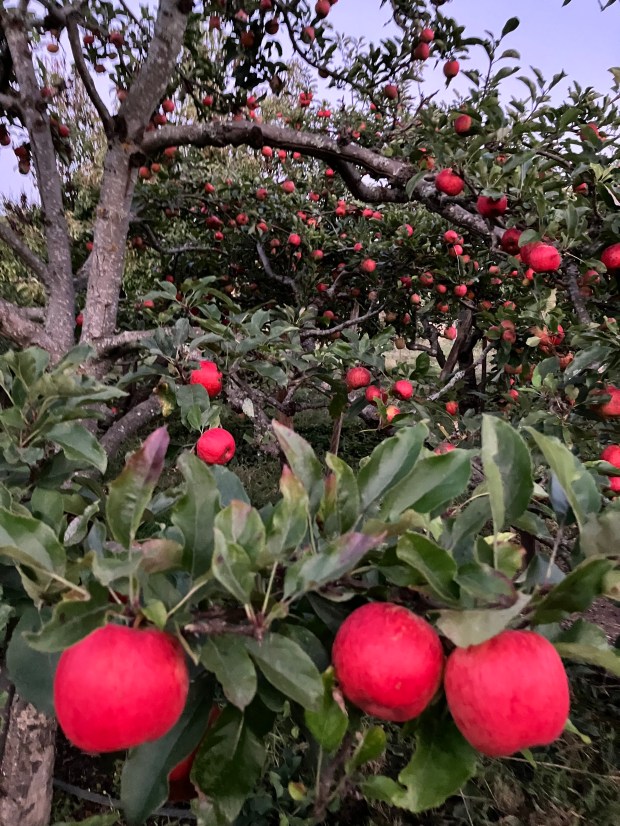
The notion of apples bearing fruit in alternate years seems a bit abstract until one sees a Big Year (and last year was puny). This year is really, really big. The birds know it- count the 15 jays and 10 acorn woodpeckers hacking away at the apples every minute of every day. And still there will be many, many fruit. Every branch of every tree is weighted with silver dollar sized fruit that is quickly growing. This is part of the watering issue- fruit-filled trees are very thirsty, making it difficult to keep up. Apple roots are soaking up the water and sending it to fruit production just about as fast as we can irrigate them. Water all day and still the soil doesn’t get very wet. SLURP! I had estimated 11,000 pounds of apples to harvest and I’m starting to think that’s low. It is propping time- branches will break soon!

Molino Creek Farm’s dry farmed tomatoes are getting BIG!

Early Mowing

We started mowing when we should have, 2 months ago and those early-mowed areas are filled with colorful poppies and bright green grass. Mowing early conserves soil moisture, especially in a late rainfall year like this one. The method of slowing plant transpiration of soil moisture is a central factor in successful dry farming (tomatoes, squash) and is evident even in the fallow or hay fields. Those early-mowed fields are lush and the early mowed material is breaking down leaving bunchgrasses and poppy plants brightly burgeoning.

The Olive Collective is watching the fruit grow as the olive press greenhouse gets built

The Last Mow

Except for those early mowed areas, we are in a marathon to complete the Last Mow of the season. The head-high grasses of the unmowed fields and margins are turning tawny, throwing oodles of seed, hiding legions of snakes and mice. We edge into the dry grasses a little at a time to give the critters fleeing space. The cut grass mulch is a dense six inches thick with little chance of decomposing now that the dry summer is upon us. It will be et by grasshoppers, mice, and such. And, it will provide the best seed germination medium and erosion control mat for the next rainy season. The mower growls and dust flies as the farm prepares for fire season.

Two Dog Farm’s beautiful dry farmed winter squash is looking good…

Meanwhile, Vegetables

The mild spring makes for giant cropping systems. The carpet of Two Dog Farm dry farmed winter squash is extravagant. The rows of peppers, luxuriant. Row upon row of dry farmed Early Girl tomatoes is awesome. The unfurling of 2 Dog chardonnay grape vines is magnificent. Everywhere we look, lush, healthy crops. Astounding start to the summer. What’s next?

Amazing array of food being grown right now at Molino Creek Farming Collective

Junuary’s Humdrum Ho Ho Ho

Wild azalea – the last flower of the season. Photo from a nearby forested seep

Dry farming in a wet spring followed by June Gloom brings weeds and big growth. Dressed like a hoer? Gloves, a sun hat, long sleeves and long pants – all necessary parts of the kit. Hoers are a most common sight nowadays in these expansive rich soiled crop fields. One might even sing “On the 4th day of Solstice, my true love brought to me four hoers hoing…etc”: every farmer’s dream! Late season rains make for extra germination of seeds that might have (in a ‘normal’ year) been left ‘high and dry’ in the dry farmed tomato and squash patches. The unusually late precipitation makes for crops growing big and fast, as do the weeds, which must have their roots separated from the soil lest they compete and use up the moisture. The most common weed in Molino Creek Farm patches: daikon radish, left over from cover crop let go to seed. Two Dog Farm has its own suite of pestiferous plants, a weedy amaranth being chief among them. Despite Santa’s continual bowl full of jelly Ho Ho’ing, these weeds are no joke.

We dub this drizzly, cold, and sometimes breezy month: Junuary!

Drippy Roadsides, Scooting Quail, Turkeys (redux)

When dew and mist hang heavy from every grassblade and shrub leaf, there is no place for quail to go. They must stay on the road to avoid hypothermia. So, we drive or walk slowly watching the ground birds weave and scuttle trying to find a dry path off the gravel road. The first baby quail emerged in the past week or so; the oldest hatchlings are able to fly already. Nervous quail parents try to herd their frenetic fluffball chicks one way or the other but they sometimes scatter anyhow. It takes quail parents a long while to gather their covey once it flushes. High delicate peep peeps whine from under bushes, hoping for the deep cluck cluck of parents calling them back to their nomadic homes. The adult quail would love it if the babies could take to the air especially for the night roost up in thick trees farther from marauding predators.

We look for turkey patterns, anything to make sense of what these large birds are up to. One group of turkeys has 2 adolescents, ¼ the size of the rest of the flock, which has 4 females tending to the emergent young: thanks, aunts!

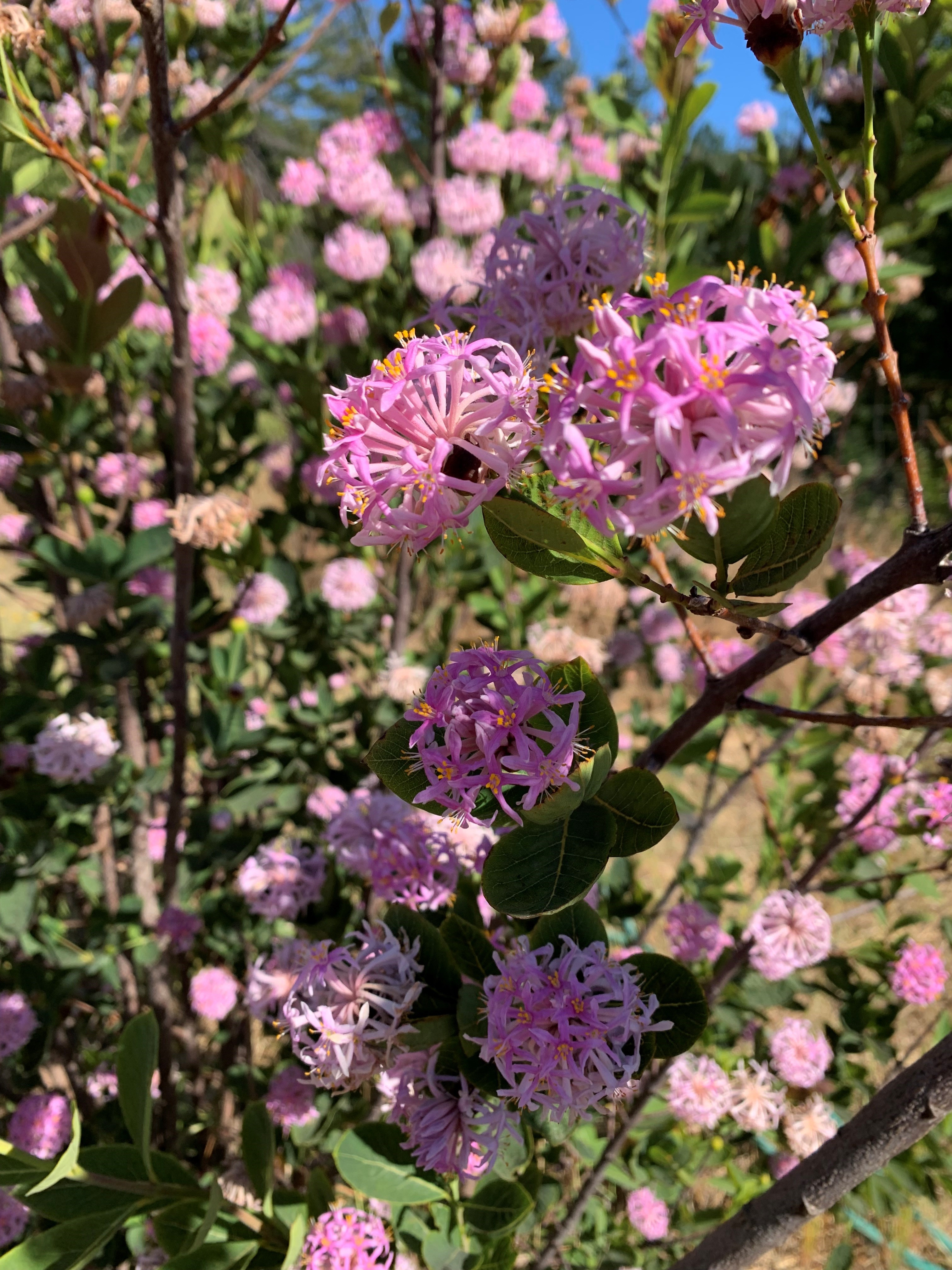
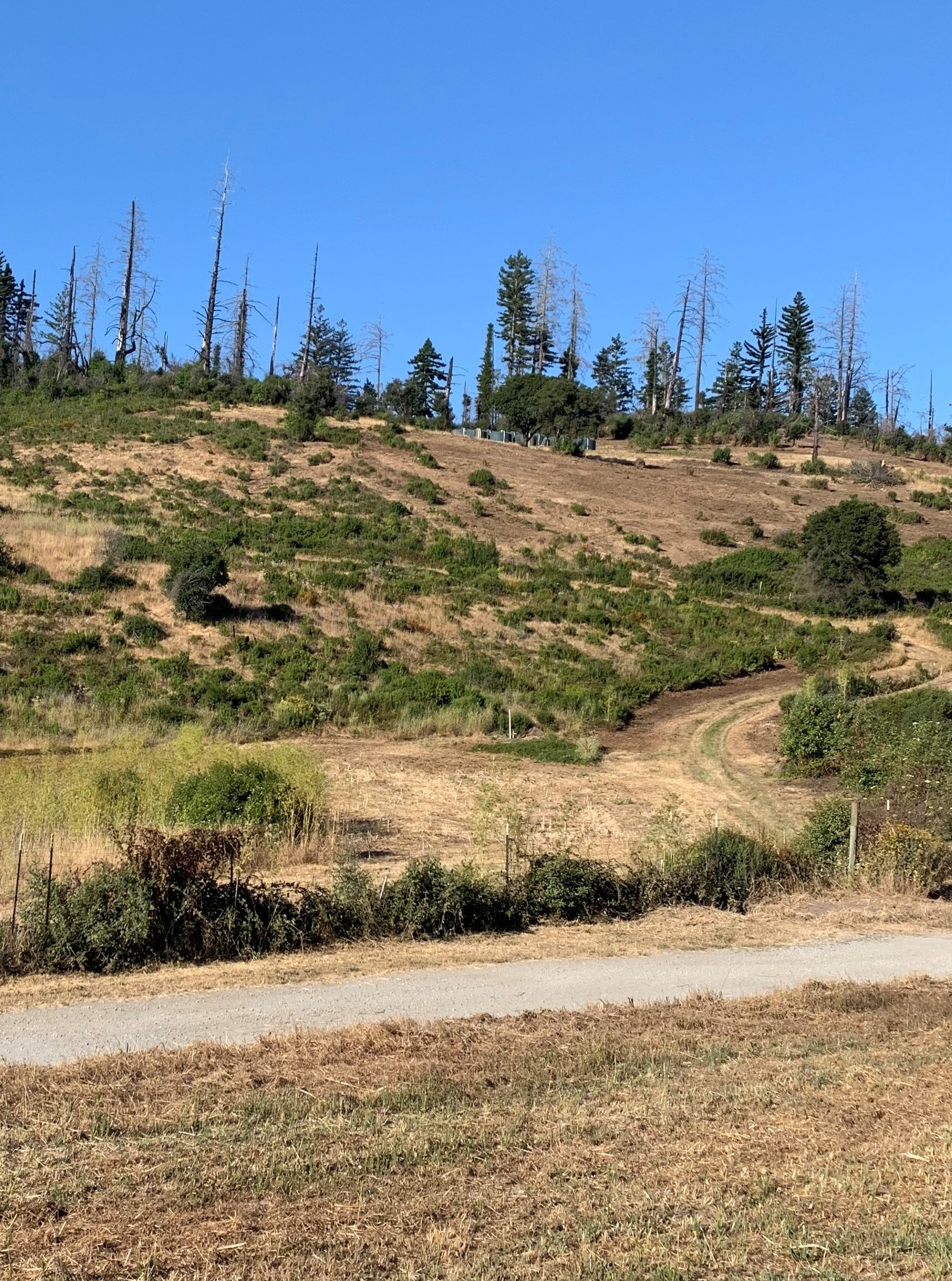
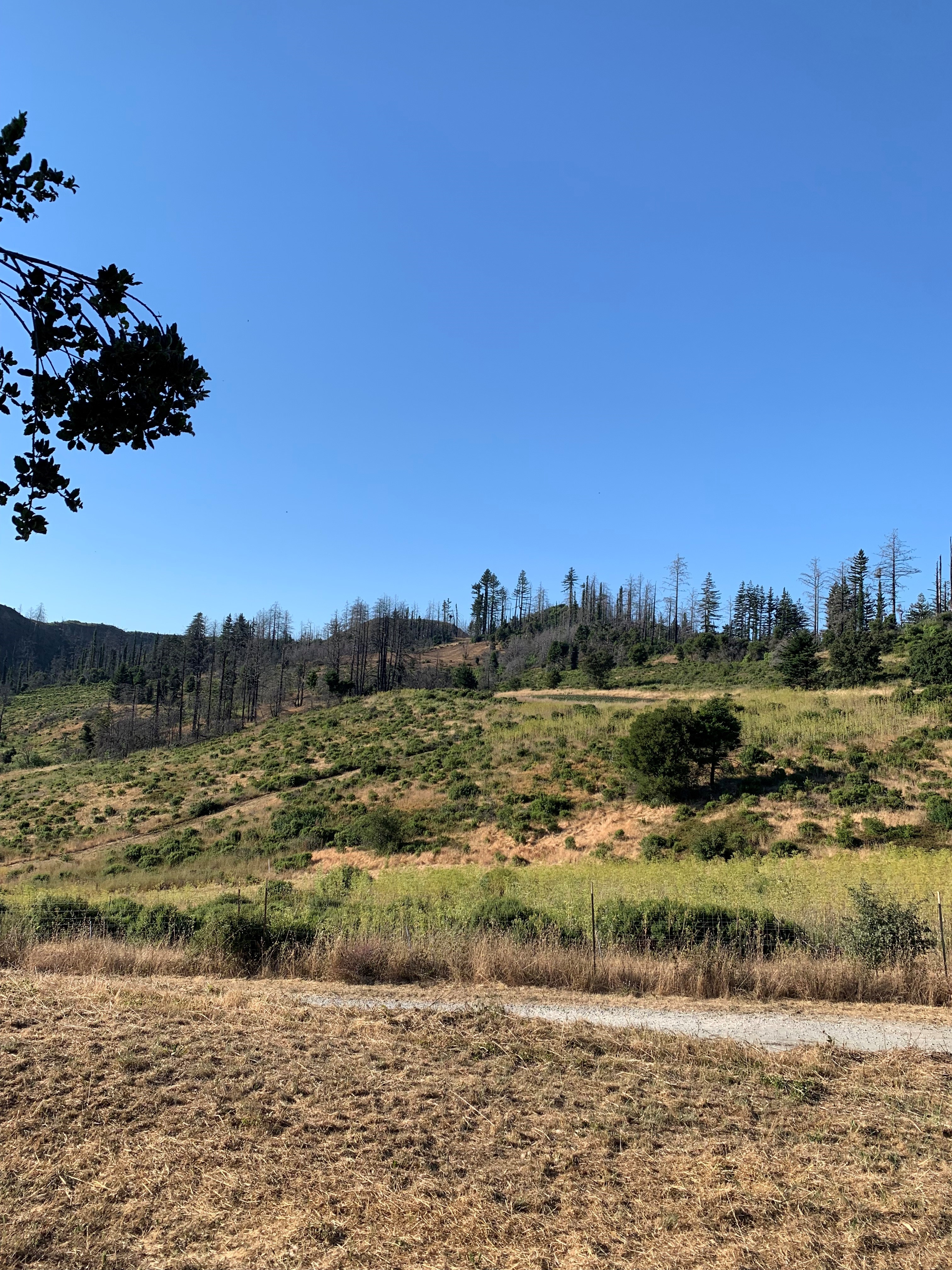
Some small percentage of Ceanothus thyrsiflorus, blue blossom, survived after an epic seed flush due to the 2020 fire. Those that didn’t survive are now a world of kindling for the next wildfire.

Fuel, Fire

What does one do to prepare for a Super El Niño? The 2020 CZU fire was spurred by remnants of a hurricane which started fires across much of the State. Hurricane predictors have warned to expect many more hurricanes this coming season in the Pacific…so, chances of a piece of hurricane hitting California in the middle of our dry, dry summer are increased. I recently surveyed Molino Creek Farm’s and nearby Bonny Doon’s fireshed: it is ripe to burn. There are miles of dead and damaged trees dropping bone dry limbs onto the awaiting dead shrub understory. The Ceanothus that came up after the fire is 12’ tall but only one in 30 of the shrubs survive, leaving stacked dead shrubs with lots of air between them: a legion of kindling to light the shed limbs and dead trees. Terrifying. It could happen this summer. That next wildfire will not be like anything anyone alive has experienced in the Santa Cruz Mountains. When it lights up and the fire runs from north to south and if there’s any wind behind it, the fire storm will have enough momentum to head into the San Lorenzo Valley and possibly into UCSC and Santa Cruz. Beware Felton! 

The late gloom and drizzle helps…but, the heat waves aren’t normally until August with the two last fires leaping in the middle of that month.

Are we acting like we’ve got 6 weeks left before things are crispy and ready to ignite?

Scents

Freshly mowed grass and apples tickle our noses. The mowing has to happen, despite the grass still being green. It is green grass that gives off the freshly mown lawn smell: spicy/sweet and somewhat moldy. That delightful scent is everywhere as we drive tractors up and down every farm roadside. 

In the orchard, the surprising first scent of apples…at the bottom of the orchard, in the new Gravenstein apple grove. That type of apple has a distinct sour-floral smell and those trees bear early, which is why we planted a grove. It is the first year we’ll get many from those trees, and I’m looking forward to that harvest. Their flesh turns punky quickly, so timely harvest is key. Their waxy-semi-oily skin seems to be where the distinct almost skunky scent arises. What apple diversity we have!

In the forested springs and on creeksides through the mountains…the last of the wild azaleas are blossoming. A little more complex than jasmine but just as sweet, a bit dusty with a hint of orange-citrus. The scent caries a long way. The flowers are beautiful. If you haven’t caught them this year, you’ll have to wait for next: they might already be gone.

The next warmish night…should we ever have one…will make us smell tanoak pollen. Ugh.

Sounds

Marty’s recent stay in the Barn reminds us of the noise of chorus frogs from the cement pond. Those noisy amphibians call through the night and us locals apparently have put that sound out of mind. Ear plugs are necessary for guests to allow them to sleep past the nature noises.

As the fog lifts, when it lifts, there are zephyrs and slight gusts. Muted long drippy mornings are interrupted by a sudden rustling of leaves. A dust devil appears with a whoosh next to you on the road.

The quiet nights carry wave roar, echoing loud sets interspersed with patterns of fewer, smaller waves.

The lowing of cows on the prairies far below the farm.

Hoots of great horned owls.

Molino Creek Farm lies down below these chaparral covered ridges and beyond it, fog and the Monterey Bay.
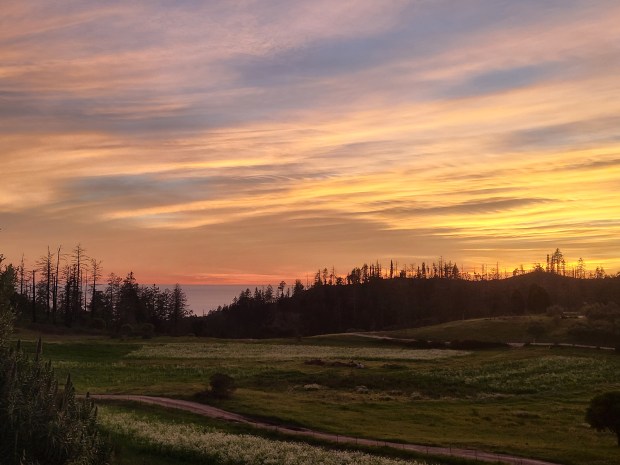
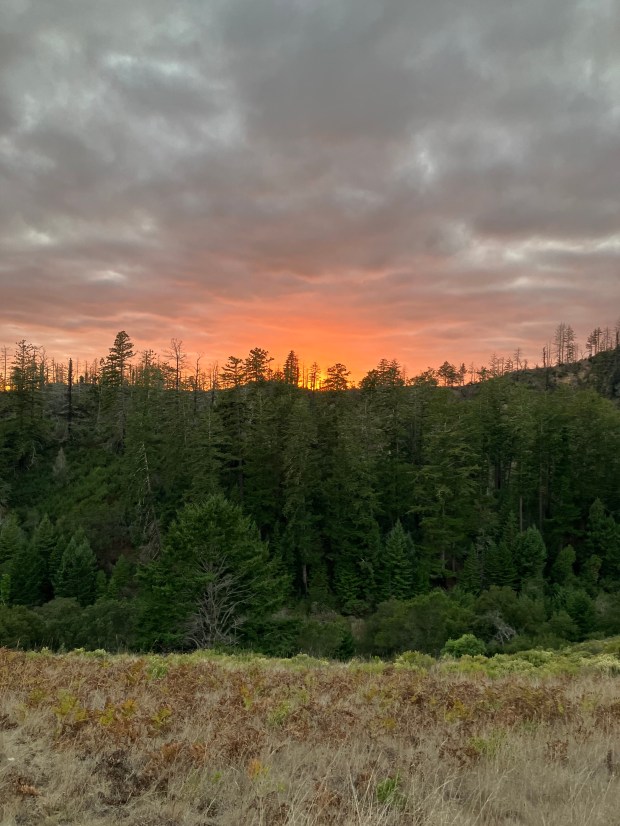
a colorful sunset

Tremulous Time

Humans keep calendars and clocks, rarely aligned with Nature’s metronome. Religion nudges ceremony further, further from the harmonic pulse of seasons, from the spin of Earth, Moon, and Sun. The peeling of millions of people-machines drown timekeeping (dawn and dusk!) birdsong, belching chemical steam, blotching sky, trapping heat, swaying ancient melodies into continuous disharmonious cacophony.

Disoriented humans growing old too fast, days’ flight, years’ fast wrinkle. 

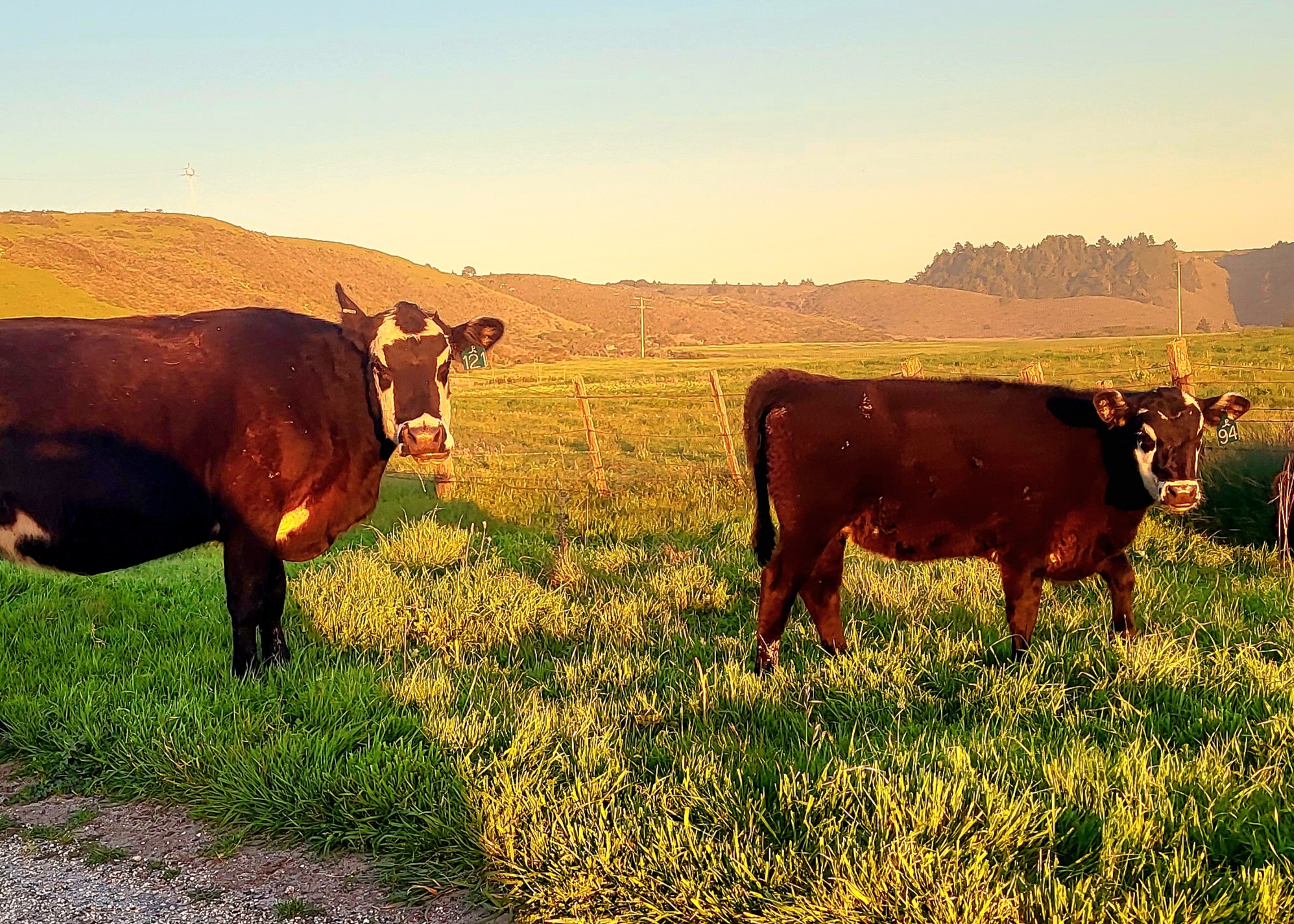
Cows on the road into Molino Creek Farm, photo courtesy of M. Lipson

Jumping Ahead

Daylight Savings Time came and March lept into the place where April used to be. Apples are blossoming a month too soon. The blinding greens from the shining fields are already upon us, grass bolting, wildflower riot. Heat waves follow draughts of rain (again!). No more rain foretold and yet too early to believe it is the end of this ‘rainy’ season.

Prescience

Presently taking the time to gaze and smile at verdant hillsides, lush grass and dark green, leafy oaks. Endless ranks of pointy grass strain skyward portending future pokey seeds and ankle-torturing socks. For now, it is grassland Peak Green. 

Big, bushy coast live oaks unveil soft new leaves, some trees more yellow, some more red, all gradually turning more uniform dark, prickly, waxy green. Pale dusty pollen filled oak flower tassles dangle from every branch tip; tinier, unseen…stem-hugging female flowers promise acorn births. Farm fields glow at sundown – rafts of white radish, yellow mustard splashes, sprays of bright calendula orange. These will hurry seed-making against all odds, facing the pace of people-priorities under tractor-wheel, mower and plow onto worm-work, rot, and crop-root (joy!).

The varying green of grass and coast live oaks – Photo by M. Lipson

Creature Gathering

Toms and hens, spiders to the wind, and the dawn reveals the arrival of swallows.

The harem found Tom, amused at flashes of facial color (the blues! the reds!), gobbling and strut – cooing encouragement then giggling. Too soon for (echoes of Mardi Gra chiefs) tail displays. The Molino Creek Farm turkey flock saunters along the roads, pecking at field margins. Wondering if this is the same flock that disappeared last early November, all except the Tom: where did they go?

Marty reports spiders taking to the sky. Arachnid astronauts spin and then drop from web ends. Abandoned threads continue downwind, tangling together, creating scattered ropes, white crazy string biotic ‘litter.’ Parachuting predators terrorize fast-reproducing feasts – herbivorous bugs or themselves become wren or robin snacks. 

Mysterious moonlit sky trails recently led the barn swallows back to their Molino summer home. They peer into last year’s neglected mud nests, taking stock. Last year’s brood must find new nest locations, not too far from family… collective actions guarantee the coming year’s sibling success. Each whirring swallow eventually lands puddle-side, testing the qualities of mud with both claw and beak.

So goes the rhythm and so goes the song of the consistently changing world at Molino Creek Farm. 

Turkeys spotted by Nibby Bartle

And The Skies Opened Up

“Here comes The Rain!” they said, and it poured. Scuttling long tomato harvest hours, for many days, rescuing the fruit. Waves of warmth before the chilly precipitation. Then, the wind. Ravenous deer. Big colorful sunsets.

Another magnificent sunset at Molino Creek Farm

Deluge

Stepping out of the shower, there was this massive rumbling noise from outside. Breathing deep to combat a visceral fear growing: “What IS that sound?” Brain grabs an idea: Is that a low flying big aircraft? “No, that’s not it.” I recall the adage that tornadoes sound like freight trains. It has been years since my teenage Georgia experiences with twisters close at hand. I forget the noise. A quick round of glancing out of every window, every direction: no sickly gray-green sky, no breaking tree branches…probably not a tornado. But, it is raining so hard the roof is rumbling. Blustery but not extreme, the windows rattle and bow. The air could hold no more water. The surface of every bit of flat-ish soil was everywhere a deep liquid sheen where a rough moist surface had been moments before. Rivulets feed deep moving pools carrying rafts of debris. Luckily, it lasted only a few minutes; otherwise, it would have been a major disaster. Scary. 

In a few hours, the world transformed. Gone is the dust of the long, dry summer. The Fear of Fire evaporates: we are given reprieve. 

Coyote Bush Female Plant About to Burst with Seed (to the wind!)

Germination

This was the Germinating Rain, an unusual phenomenon of Mediterranean California. Billions of seeds scattered at the onset of the drying tawny summer and buried by crisp dead thatch are now sprouting, turning the brown landscape to green. The verdancy blushes at first, so subtle as to make you doubt your eyes: you must look closely. It will be February before the prairies are so green as to make your eyes hurt. It takes time for the new growth to overtop the skeletons of last year’s plants.

The farmers never gave up weeding. They were at it as recently as last week. Now, they will be overwhelmed by the flush of seedlings stimulated by the rain. But the harvest is nearly over and the moist ground is better prepared for planting the Winter cover crop. There will be more purposeful germination in the dark brown, fluffy richly scented soil for the next couple of months.

A raft of radish weed seedlings has germinated in this tomato field

Fall is Here

The subtle signs of Fall are arriving. Black walnut leaves rapidly yellow. Willows, too, turn paler hues. But the most profound change is in the bracken: vast patches of hillside fronds have withered to their signature brown. The rain moistens those leaves and scents their vicinity with sweet straw bitterness.

Bracken fern fall

Turkey Tales

As Thanksgiving approaches, one would assume that the wise wild turkey would know something untoward is approaching. The scent of their roasting flesh will waft across the landscape right on schedule and they can’t have missed that for generations. Is that why they’ve become so scarce? 

Then again there was the horrid sound, the screaming alarms and furtive loud complaints from the woodland two weeks ago. I took a walk in the newly moist world today down toward the forest via the Camp Road, towards the creek – yonder the way of the terrible turkey noise. No sign of problems. Not a turkey feather askew. On return, as if to bolster the ‘something’s not right’ sense: a single (male?) turkey takes a thunderous flight from one branch to another in the high-up redwood canopy. Where did the other 5 of that one’s friends go?! We wait and watch to see how this story unfolds and miss the flock which had so regularly meandered across our farm.

Two Dog Really Truly Dry Farmed Winter Squash

Sunsets and Fruit Picking

The stormy weather has produced the most remarkable sunsets, lighting the evening as the harvest winds down. As the predicted First Storm approached, every person possible took to the vines buckets in hand to pick as many tomatoes as possible. Rains can easily ruin the crop. Water starved plants, dry farmed tomato vines in particular, faced with sudden abundant moisture soak up so much that the fruit bursts. Stems and leaves suddenly moist are excellent surfaces for a rain of bacteria and fungi eager to devour cells. Melt down is commencing. As Judy says, we are lucky if the crop can last until Thanksgiving. It is a rare year when that happens. The trade off with beneficial end of Fire Season is the unfortunate commencement of the end of the tomatoes. 

Meanwhile, in the orchard there is another kind of harvest underway, a harvest unaffected (we hope!) by the onset of rains: apples! It always takes such patience to await the ripening of apples, but the small harvest of the early ones (Gala) emphasizes the wait for those to come. Plus, there are no mutsu apples this year, so the next in line are Braeburn…still a ways off, but the taste of the first ones…with overtones of citrus and tropical fruit…make us excited. And the size of the Fuji crop is oh-such-a-bonanza.

Braeburn apples are slowly ripening

Onward we go…soon to the mowing and onto the harrowing-in of cover crop seeds.

Seems also that cider pressing approaches.

The Slowness of Extreme Heat

Happy Interdependence Day! I’m happy not to live under the tyranny of a monarchy AND I’m glad to be part of a community that recognizes the centrality of interdependence. The Molino Creek Farm Community relies on one another, exercising our various strengths to foster healthy farm life at its center. We include teachers, woodcrafters, a midwife, farmers, orchard tenders, bookkeepers and administrators, activists, road technicians, and natural lands managers. Many others join, from near and far. Together, we make this land sing: it depends on us, we depend on it, and everyone depends on each other. Nearly 4 years after the last wildfire, we feel that interconnectedness more than ever.

Name that shrub: one of our many hedgerow plants

Evening Scents

Each evening and early in the morning, the air is filled with the “seminal” smell of the male flowers of tanoak. It hits you strongly, suddenly: the pollen must release all at once after the evening arrives. As the sun was beginning to set, before the emanation of the heavy tanoak smell, there was a more subtle, pleasant, sweet aroma: thousands of white flowers unfurled from the field bindweed, a ground-hugging invasive morning glory- like vine of the tilled fields. There’s no detectable smell from a single bindweed flower, but en masse they sure smell pretty.

Summer Fruit

There is a pinkish blush on the first dry farmed tomatoes, but other fruits are riper. The 2 trees are young yet, but the first aprium crop is coming on: it looks like we might get 20 pounds to share among our community orchardists. They are delicious and almost make up for the lack of real apricots, which we can’t seem to produce in our cool coastal clime. The star of the show is cherries, but again too few to get to market: we anticipate 300 pounds of fat, dark red sweet cherries from the 18 trees that the fire spared. The 25 other recovering cherry trees in that block, grafted onto resprouting rootstock, will make their first sizeable harvest next year…starting in 2026, we’ll be back to ‘normal’ with 3,000 pounds plus of annual production if the stars align.

Next up this season…plums and prunes! The apples are silver dollar sized, at least, and growing. And, the avocado fruit have just set – if we can keep them moist enough, we’ll have a crop starting next January.

Sweat Investment

Even the mornings are hot as we greet the dawn ready for chores. First up: fuels reduction! Clipping, raking, and hauling the dry vegetation away from the buildings, water tanks, solar arrays, and pipes. Piles grow in the fields far away from danger…5 months from now and we’ll set them ablaze in the mist and drizzle. Today’s fuel will be tomorrow’s shrub-eradicating fire, each pile moved on top of a plant we want to eradicate.

The roar of mowers, whine of weedeaters, and buzz of saws soon obliterate the extended dawn bird chorus. When our own machinery isn’t running, we can still hear the neighbors working downhill towards us, maintaining the regional shaded fuel break along Warrennella Road. This past week we thank Brion Burrell for his artistic machinery management to reduce acres of French broom and other fire dangers to nothing, making the land around us healthier and more resilient.

Neighbors and Farm partnered in clearing French Broom and fuels away from water tanks
San Vicente Redwoods cleared an ancient meadow of post-fire French broom pulse high above the Farm

Early morning still: trucks trundle and people amble towards the irrigation controls. We reach down to turn valves, starting water flowing. Then we pace the water lines, inspecting for leaks. Earlier, ravens or mice have made holes in the plastic irrigation tubes, and out pours too much water, hissing loudly, spitting into the air, creating mud and disaster. Repair kits, a thorough soaking, and a bit of work later things return to normal and the cycle of wetting has begun on one more patch, once again. We are applying 45,000 gallons of solar pumped irrigation water from our well each week to grow orchard trees and row crops. That water makes tens of thousands of dollars of income and thousands and thousands of pounds of delicious food. And it takes lots of attention, coordination, and work to manage.

Wild Life

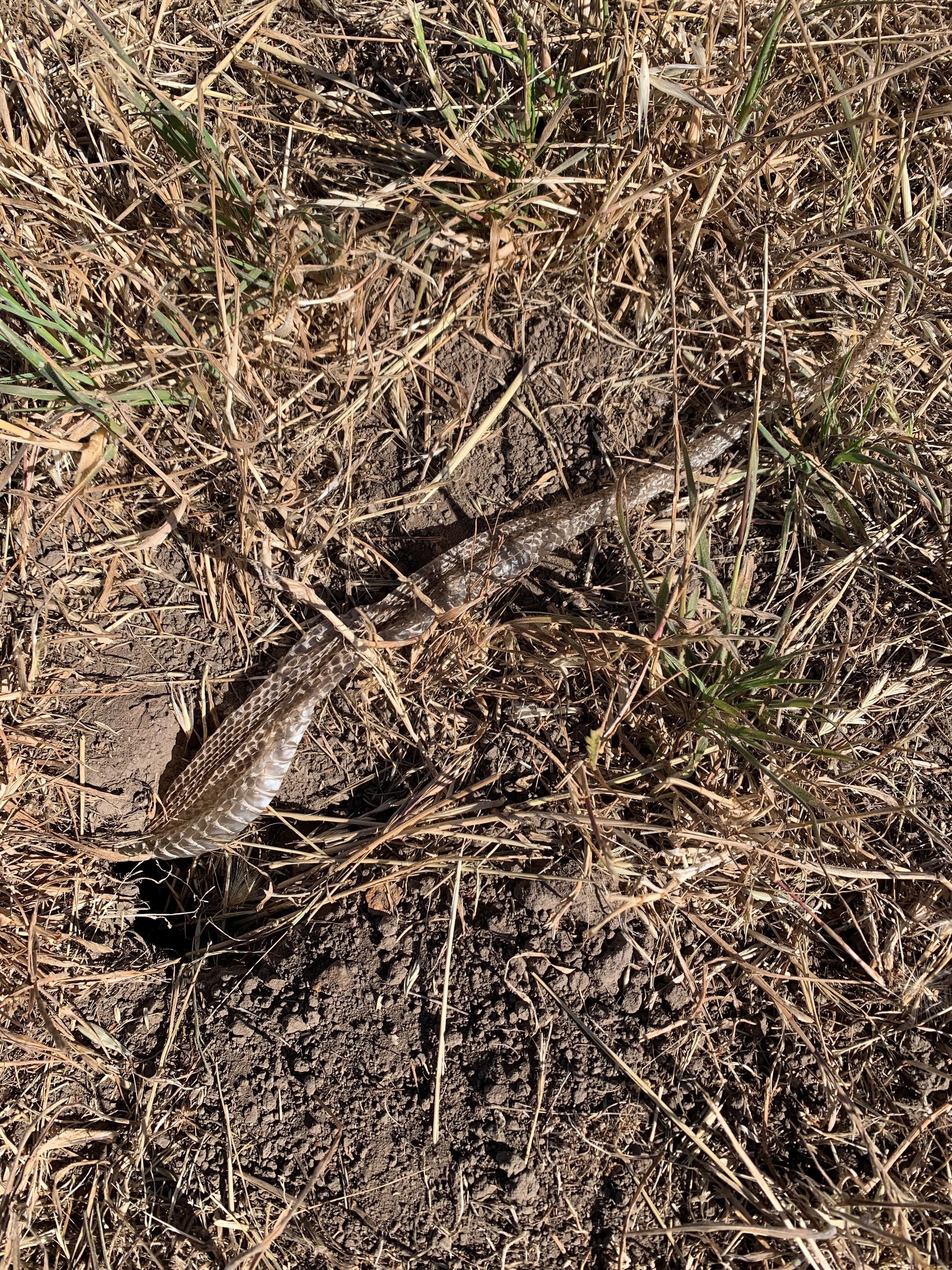
Those dawn treks for irrigation reveal fresh snake tracks, coyote scat, and weasel footprints. Gone are the days when you could easily see snakes, but they are still active around the farm. This past week must have been the right moon phase for reptiles to shed their skin. Fence lizards are still flakey. Shed snake skins have appeared, always trailing into gopher holes.

Gopher snake skin- as typical, entering gopher burrow

The regularly yipping coyotes are feasting on a big crop of juicy blackberries, as seen in their purple, seed-filled scat. Weasels are feasting on mice, and we hope they soon eat the surprising, sudden appearance of ground squirrels.

Very late but they finally appeared: dozens of California quail fluffies. The quail babies peep like easter chicks as they tumble and run along dusty trail and road, proud parents standing guard. The first younglings can fly, but most are still too young. A mother turkey is also shepherding a second round of just 3 much larger, still flightless and fluffy babies. High on the ridge, the purple martin chicks are in the air, noisy moist-sounding deep chirp-whistles give them away. They’ve done well this year. Maw and Caw greeted a third raven…a child from the past?…this morning – sometimes that one sticks around a few weeks, we’ll see.

Noise From Below

With the heat and extreme dry, we hope that no one sets the world on fire with fireworks at the beach tonight. The week leading up to this evening has been sporadic with preparatory explosions. The King Tides have made the beaches narrower, and the signs and Sheriff shoo people away, but still we wait with trepidation. May all we hear is the continued crash of the large ocean waves, lulling us to sleep with all of the windows open on these warm summer nights.

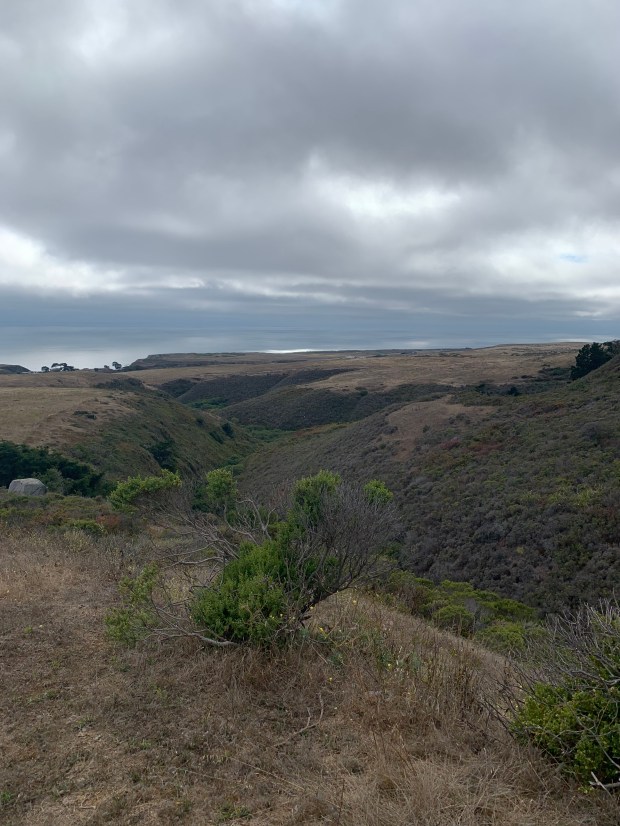
A view to the sea overlooking habitats at Cotoni Coast Dairies

Dripless Fog and Peace

Gazing out to the ocean from 900’ above it at Molino Creek Farm, I notice layers of fog. The high one is at farm height – just peeling back from the land, wisps still hanging in the sheltered canyon, shrouding tall redwood trees. It is white-silvery and seems light and airy. The lower fog layer is darker and heavier, streaked with patches of varying shades of gray. The layers seem still but are moving slowly. The lower, denser deck as normal marches southward. These foggy mornings are quiet and still, except for the occasional muffled purr of waves playing with the shore. The sets of quiet waves accentuate the peaceful silence between.

Foggy Shrouds Surround the Farm Frequently this July

The fog has kept the air cool despite the mostly cloudless skies above the farm’s fields. Even when the fog moves across the entire farm, it has been too light to precipitate. It seems odd that the fog can play so thickly around the tall trees and not make for under-tree precipitation. This might be the least wet foggy spell I’ve seen. If it would only drip…it would feel even better.

The view from our drive off the farm…Santa Cruz County’s Beautiful North Coast

Along the Coast

Out the main road and downhill to the ocean, the sun breaks through the shrouding fog and lights the ocean in bright patches. Flocks of turkeys roam the edges of the grasslands and kestrels harass the voles. The meadows have turned summer brown. The damp air smells sulphury and salty from the ocean’s seaweedy soup. An alert coyote lopes rapidly away through the close cow-cropped dry grass, glancing back at me, tail low, wary. I passed a mother and a cub fox similarly rushing for hiding; others report gray foxes on the road frequently.

Fruity Orchards

Wandering into the orchards, we encounter delicious orange-red cara cara navel oranges and unripe, but just getting tasty gala and gravenstein apples. We pick a few ripe limes and lemons as a new dark green, shiny-bumpy crop grows bigger. Downhill, the Swanton Pacific Ranch orchard is turning out a few ripe Lodi apples, a light gold-green and sweet-tart. Flocks of starlings, acorn woodpeckers, stellar and scrub jays are exacting their tithe from the fruit, but perhaps it saves us some thinning.

The apples are hanging so thickly that we can’t keep up with the propping. We lost a half tree last week when the branches pulled it apart. The big old pear also peeled off a major limb; same with an old apple tree. The birds stripped an entire tree of comice pears, saving any additional thinning; same with a couple of the Italian prune trees. Argh! The acorns are getting ripe, so maybe the woodpeckers and jays will be off for more nutritious long term food storage soon.

In the Surrounding Forest

Seeds hang thick on the native grasses along the forest paths. Woodland brome hangs pendulously with dense furry seeds. Blue wild rye’s dense upright spikes are often woven with spider webs, keeping the seeds on the stalks. I’m drawn to the striking orange stems of fine-leaved fescue with its delicate tiny seeds. The forest understory is still lush and green in the growing shade from fire-recovering redwoods.

Evening Sky

The sunset was gorgeously playing with fish scale high clouds, ushered in from a ‘passing monsoonal system’ (schwew! No summer lightning, please!). The sunsets are also being colored by very high smoke billowing forth from the big fire near Yosemite. No smoke smell – its not dipping that low around here (thankfully).

-from my weekly blog for Molino Creek Farm’s webpage and Facebook sites.