California Department of Parks and Recreation

Sierra Club and State Parks in California: Collaborating for Wildlife Conservation?

On September 25th 2026, I enjoyed an interview with Norman La Force a leading conservationist in our region. Mr. La Force is a member of the California Sierra Club’s State Parks Committee and helped me to understand the history of success as well as the current and ongoing struggles of working with State Parks to conserve habitat and protect wildlife while providing equitable access to parks across our region. Folks joined us by calling in, adding to the depth of the conversation. This article is a distillation of the themes of that radio show, which you can hear in full at this link.
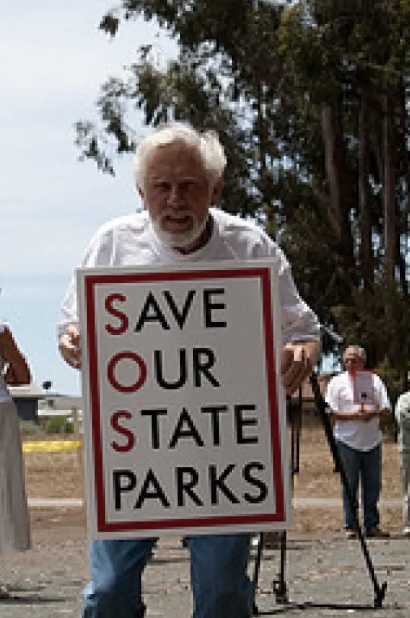
man holding sign saying 'save our state parks'

Norman La Force – A Powerful Ally for Nature

Norman holds a JD in law from the Georgetown University Law Center and he has used his legal expertise as an environmental protection attorney for many years, helping the Sierra Club, Golden Gate Audubon Society, and other local environmental organizations to conserve wildlife and habitats around the greater San Francisco Bay Area. He is President and General Counsel for SPRAWLDEF “Sustainability, Parks, Recycling and Wildlife Defense Fund.” And, for many decades, Norman has been one of the few long-time dedicated members of the Sierra Club California’s State Park Committee. His focus has been on wildlife conservation broadly and especially in the face of ongoing pressures to expand visitor use of state parks.

One of his accomplishments was co-leading the establishment of Berkeley’s McLaughlin Eastshore State Park State Seashore, described in his memoir, Creating the East Shore Park, An Activist History.  During our conversation, he described the initial resistance of State Parks to accept such a park as it was too urban. Decades later, Parks professes great pride in the park as a prime example of providing equitable access. The park is one of the most visited in the State.
The Sierra Club’s State Parks Committee

For decades, Sierra Club California has convened its State Parks Committee. Its charter is to ensure that all Parks are open and available for public use and that there is adequate funding for operations and maintenance. Among other things, the Committee works to advocate for the preservation and protection of the natural and cultural resources of California’s State Parks. It also tries to ensure equitable access by all Californians to our state parks.

Norman suggested that one of the ongoing and greatest tensions between the Sierra Club and State Parks is the agency providing adequate protection for wildlife and habitat, including following regulatory guidance to create park plans that address wildlife and habitat protections. He noted that Parks just plain doesn’t abide by several relevant Public Resources Codes – § 5002.2, § 5019.5, and § 5001.96, which require Parks to create plans for each park, in those plans to analyze the appropriate level of visitation and then to manage within those limits.

Why Can’t Parks Do Right?

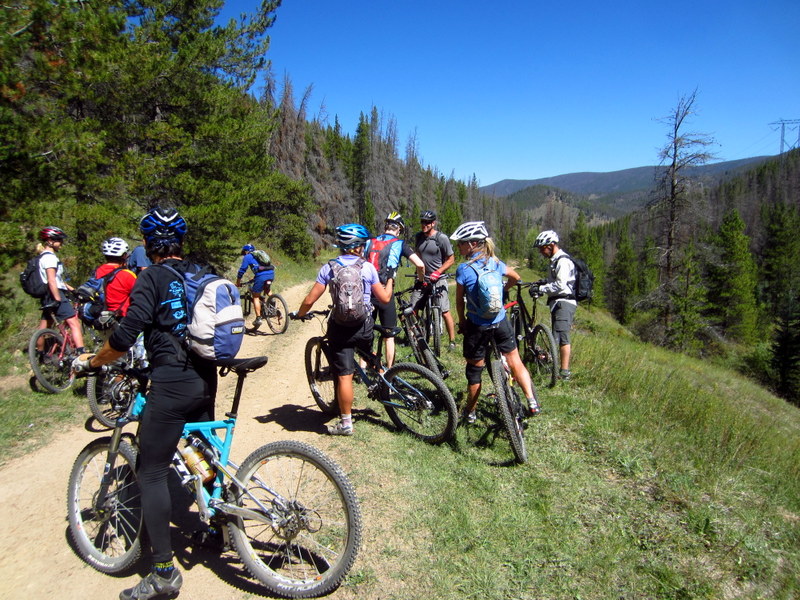
Mr. La Force provided many examples of the pressures State Parks is under that contribute to their neglect of natural resource protections in favor of poorly planned visitor use. For instance, he noted that Parks has been swayed by recreational advocates from the Off Highway Vehicle and Mountain Biking lobbies. He highlighted a mountain biking advocate campaign using the alluring phrase ‘Access for All,’ which may suggest equitable access but in fact seeks to expand the influence of what is, at least in East Bay Parks, a small minority of users. East Bay statistics suggest 80% of users are hikers, 10% mountain bikers, and the remaining mostly equestrians. We discussed how these groups are conflicting users and mountain bikers can unfairly ‘displace’ others, such as families with small children and other pedestrians. Nevertheless, lobbying groups have been successful at influencing Parks to overlook such realities.

Another reason for natural resource neglect that Norman pointed out is budgetary shortfalls. He noted that Parks has seen decades of budget shortages resulting in their own documentation of a one billion dollar backlog of  ‘deferred maintenance,’ which is equal to a full year of their overall budget. This budget shortfall doesn’t address the ongoing degradation of habitats and species which somehow doesn’t even get tabulated and reported to the Legislature when addressing budget issues.

Over Visitation

Two of the callers into the radio show highlighted issues of over visitation in parks, one for Point Lobos State Natural Reserve and one for Nisene Marks State Park. Callers noted overcrowding and asked Norman what might be done. He said that it is clear that we need more Parks. He praised Governor Newsom and Parks for recently creating new State Parks to expand recreational opportunities that might help with overcrowding. He also noted that it is probably important to look towards reservation systems such as were enacted at Muir Woods National Monument just north of the Golden Gate. He also noted that limiting parking can help with overcrowding, suggesting that Parks work with adjoining road agencies to put signs up prohibiting parking.
What Can We Do?

I asked Norman La Force for his advice to people who might want to help California State Parks better meet its mandates to protect wildlife and habitats. He added a phrase to “All Politics is Local” – “All Politics is Personal,” encouraging people to develop relationships with decision makers so that they pay more attention to wildlife protection in parks. Norman suggested people get more involved in individual State Parks by joining, or starting, a ‘Friends of…’ organization. He also suggested that people join local chapters of the Sierra Club and Audubon Society to help them be more effective at making advances with these issues. He also noted that his California Sierra Club State Parks Committee could use volunteers with energy to help advocate for wildlife in State Parks.
Don’t Look Back! State Parks Forward?

Press is rolling unveiling what might seem like a ‘new’ initiative, obscuring and ‘moving on’ from some really UGLY past issues with California State Parks. But, hey- we all want to move on, keep moving forward…especially those with criminal records or histories of abuse.

Parks Forward: a brief history

The origin of the Parks Forward initiative was a crushing blow in 2012, an event that should make every Californian, especially those dedicated to natural areas access and conservation, doubt whether the California Department of Parks and Recreation can be trusted. Some may recall the closing of many State Parks supposedly due to budget shortfalls, which some of us recognized at the time as being a political ploy to pressure the California legislature into increasing Parks’ budget. Sure enough, ‘fiscal irregularities’ (as stated euphemistically in Parks’ subsequent report) were discovered, but only after the panicky scuttling of thousands of volunteers, non-profit organizations, and private donations to keep parks from closing down. Many nonprofits made good money from this fundraising boon, which also cemented their cache with the public.

The Bigger History

The State Parks corruption boondoggle in 2012 needs to be put into context with a larger history for a wholistic understanding of the situation. Since its inception, State Parks has been the recipient of lands purchased by private organizations. It has been typical that ‘conservation’ organizations use private donor funds to purchase properties while lobbying for public bond initiatives earmarked in such a way that they profit by subsequently selling those properties to the State. This process violates all sorts of legal and moral codes such as illicit 501(c)3 lobbying, private organizations setting State priorities, adding land to an agency already unable to manage the lands it holds, etc. Conservationists recognize that purchasing and ‘setting aside’ land for ‘protection’ is the relatively easy and affordable first step- the real work is sustaining species on those lands in perpetuity. For a while, recognition of these ‘irregularities’ put a halt to adding more land to the State Parks system.

Santa Cruz County Parks History

Much of that ‘bigger’ history is reflected in what has been occurring in Santa Cruz County where a disproportionate percentage of land is owned by State Parks. State Parks General Planning processes were successfully challenged for Castle Rock State Park, Nisene Marks State Park, and the Gray Whale Ranch addition to Wilder Ranch State Park. In each instance, private organizations were instrumental in transferring land to State Parks while State Parks was unable to either plan for or manage those properties in alignment with California law. And yet, each park welcomes visitors, pouring funding into private businesses at the expense of biodiversity protection and visitor experience. Henry Cowell State Park and the State Park beaches at Cotoni Coast Dairies were opened and remain highly used without any planning, whatsoever. The General Plan for Wilder Ranch State Park, a mecca for mountain bikers, does not allow mountain biking and private recreational businesses openly operate mountain biking concessions. Yet, Parks rangers have been ordered not to enforce prohibitions against either mountain bikers or their unpermitted concessions.

The ‘New’ Parks Forward Initiative

Surrounding Earth Day 2026, there was much press about the Parks Forward initiative. One might even think it was ‘new.’ More new parks were added to the network of State Parks and some parcels were added to expand certain existing State Parks. In some cases, the press releases note property was ‘donated’ and in other cases, the situation is far more opaque. Nowhere in the press releases is there any mention of species conservation- it is all coached in ‘more access.’ Both access and conservation are expensive to do correctly, are not being done correctly in any State Park currently, and are conflicting uses with vast tradeoffs that go unanalyzed by Parks’ mandated General Plans and concomitant ‘carrying capacity analysis.’

Symptoms Make Sense

This new roll out of “Parks Forward” is quite predictable given public amnesia, popular myths, and the level of oversight from the Parks Forward Commission. Apparently, the public has forgotten about the origins of the Parks Forward initiative: if citizens remembered, there would be some acknowledgement in the many press releases. Overriding the grave concerns of the past is a fervor for more public access to natural areas. The myth, echoed by everyone touching this new version of the Parks Forward initiative, is that ‘more people accessing more natural areas is good for conservation.’ This balderdash flies in the face of science and common sense. The logical conclusion of this thinking is that if every human accessed every last piece of nature then every species would be conserved…the opposite is true. But, conservation organizations want to make money from donors and State politicians want to look successful, so enter the echo chamber of the deeply mistaken myth, which is doing permanent damage to the potential for wildlife conservation in California.

It is amazing to me that there is a Parks Forward Commission with smart people allowing such misguided endeavors to continue within State Parks. Perhaps they, too, accept the mythology. The symptoms of their complicity were present many years back when the Commission swallowed the poison of the progress report in year 2 of their formation. That report includes ‘four strategic focus areas’ with no metrics for success and two incredibly tiny ‘natural and cultural pilot efforts underway,’ which likewise have no metrics for conservation success. The apparent acceptability of these puerile efforts to the Commission point to an inability of the Commission to provide substantive oversight and input into the broken State Parks system.

Ask, Please

With the unveiling of new parks and new land ‘protections,’ we must ask: is there any additional funding for long term stewardship for biodiversity conservation, or are these new areas merely to continue the silent death of species to the overwhelmingly poorly managed public access/private inurement money machine?

Has California State Parks apologized to the People for the lies and manipulation it promulgated in 2012? Does that apology include details of what they will do to change this sordid past? Can we identify specific individuals who were responsible for those actions? Is there new management? Or, is this situation much like that exposed by the Epstein situation, where the abusers are still in charge? Abusers – is that too much to say? Well, in this case the victims do not have voices and will never speak out…the wildlife will simply go away while the abusers will vocally claim victory with their empty promises of conservation alongside public recreation and access to natural areas.

Parks Forward Commission

This was downloaded from this url: http://parksforward.com/meet-the-commission on April 30, 2026. This is a list of the Parks Forward Commission appointed in 2015 to address grave mishaps by California State Parks- aka ‘fiscal irregularities’ – leading to unnecessary parks closures in 2012.

man holding sign saying 'save our state parks'

A New Vision for California State Parks

A report published without including either attribution or date, ostensibly by the Parks Forward Commission (though some citations suggest the group was only officially appointed in 2015) in February 2015. In April 2026, this link worked but I make it available here in case it otherwise disappears.