On September 25th 2026, I enjoyed an interview with Norman La Force a leading conservationist in our region. Mr. La Force is a member of the California Sierra Club’s State Parks Committee and helped me to understand the history of success as well as the current and ongoing struggles of working with State Parks to conserve habitat and protect wildlife while providing equitable access to parks across our region. Folks joined us by calling in, adding to the depth of the conversation. This article is a distillation of the themes of that radio show, which you can hear in full at this link.
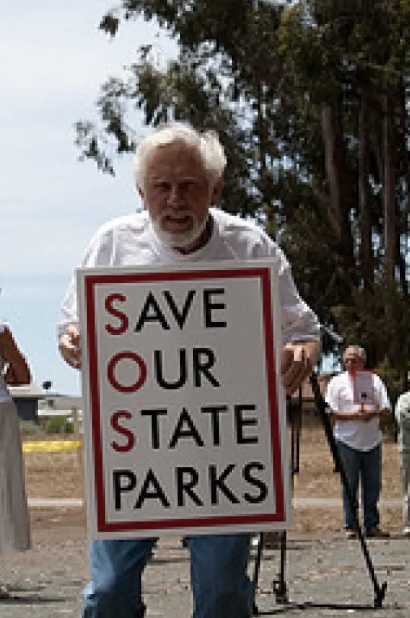
Norman La Force – A Powerful Ally for Nature
Norman holds a JD in law from the Georgetown University Law Center and he has used his legal expertise as an environmental protection attorney for many years, helping the Sierra Club, Golden Gate Audubon Society, and other local environmental organizations to conserve wildlife and habitats around the greater San Francisco Bay Area. He is President and General Counsel for SPRAWLDEF “Sustainability, Parks, Recycling and Wildlife Defense Fund.” And, for many decades, Norman has been one of the few long-time dedicated members of the Sierra Club California’s State Park Committee. His focus has been on wildlife conservation broadly and especially in the face of ongoing pressures to expand visitor use of state parks.
One of his accomplishments was co-leading the establishment of Berkeley’s McLaughlin Eastshore State Park State Seashore, described in his memoir, Creating the East Shore Park, An Activist History. During our conversation, he described the initial resistance of State Parks to accept such a park as it was too urban. Decades later, Parks professes great pride in the park as a prime example of providing equitable access. The park is one of the most visited in the State.
The Sierra Club’s State Parks Committee
For decades, Sierra Club California has convened its State Parks Committee. Its charter is to ensure that all Parks are open and available for public use and that there is adequate funding for operations and maintenance. Among other things, the Committee works to advocate for the preservation and protection of the natural and cultural resources of California’s State Parks. It also tries to ensure equitable access by all Californians to our state parks.
Norman suggested that one of the ongoing and greatest tensions between the Sierra Club and State Parks is the agency providing adequate protection for wildlife and habitat, including following regulatory guidance to create park plans that address wildlife and habitat protections. He noted that Parks just plain doesn’t abide by several relevant Public Resources Codes – § 5002.2, § 5019.5, and § 5001.96, which require Parks to create plans for each park, in those plans to analyze the appropriate level of visitation and then to manage within those limits.
Why Can’t Parks Do Right?
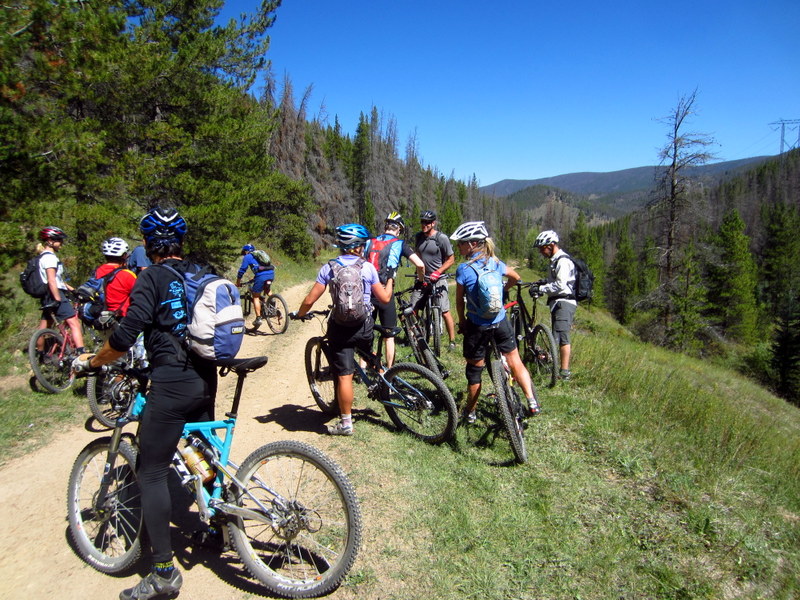
Mr. La Force provided many examples of the pressures State Parks is under that contribute to their neglect of natural resource protections in favor of poorly planned visitor use. For instance, he noted that Parks has been swayed by recreational advocates from the Off Highway Vehicle and Mountain Biking lobbies. He highlighted a mountain biking advocate campaign using the alluring phrase ‘Access for All,’ which may suggest equitable access but in fact seeks to expand the influence of what is, at least in East Bay Parks, a small minority of users. East Bay statistics suggest 80% of users are hikers, 10% mountain bikers, and the remaining mostly equestrians. We discussed how these groups are conflicting users and mountain bikers can unfairly ‘displace’ others, such as families with small children and other pedestrians. Nevertheless, lobbying groups have been successful at influencing Parks to overlook such realities.
Another reason for natural resource neglect that Norman pointed out is budgetary shortfalls. He noted that Parks has seen decades of budget shortages resulting in their own documentation of a one billion dollar backlog of ‘deferred maintenance,’ which is equal to a full year of their overall budget. This budget shortfall doesn’t address the ongoing degradation of habitats and species which somehow doesn’t even get tabulated and reported to the Legislature when addressing budget issues.

Over Visitation
Two of the callers into the radio show highlighted issues of over visitation in parks, one for Point Lobos State Natural Reserve and one for Nisene Marks State Park. Callers noted overcrowding and asked Norman what might be done. He said that it is clear that we need more Parks. He praised Governor Newsom and Parks for recently creating new State Parks to expand recreational opportunities that might help with overcrowding. He also noted that it is probably important to look towards reservation systems such as were enacted at Muir Woods National Monument just north of the Golden Gate. He also noted that limiting parking can help with overcrowding, suggesting that Parks work with adjoining road agencies to put signs up prohibiting parking.
What Can We Do?
I asked Norman La Force for his advice to people who might want to help California State Parks better meet its mandates to protect wildlife and habitats. He added a phrase to “All Politics is Local” – “All Politics is Personal,” encouraging people to develop relationships with decision makers so that they pay more attention to wildlife protection in parks. Norman suggested people get more involved in individual State Parks by joining, or starting, a ‘Friends of…’ organization. He also suggested that people join local chapters of the Sierra Club and Audubon Society to help them be more effective at making advances with these issues. He also noted that his California Sierra Club State Parks Committee could use volunteers with energy to help advocate for wildlife in State Parks.

