Wild land recreation impacts

Well Managed Parks?

Some people I know are saying how ‘well managed’ our public open spaces are around the Monterey Bay. Let’s examine how one might come to such a conclusion and, at the same time, consider carefully parks managers’ roles in protecting wildlife for future generations.

Logical Fallacies

The simple, unsubstantiated statement that most of the Monterey Bay region’s public parks are ‘well managed’ is rife with logical fallacies. The people saying this are hoping that their statement will resonate because they are perceived as authorities about environmental matters. They are taking advantage of a ‘bandwagon’ building on a very publicly vocal minority of parks users who are also repeating the statement for their own purposes. Members of this bandwagon really enjoy some aspect of public parks and are suggesting that because their expectations have been met, everything else the parks managers are doing is being done well, too. They may be relying on black-or-white rationale where a park is either managed well or not, and they’d rather land on the ‘managed well’ side of that dichotomy. Building on that assertion, they purport any level of critique of parks management as personal attacks on parks managers. In the ensuing discussion, they are incredulous that anyone would suggest something isn’t right with parks management. They point out that all the credible public figures regularly praise our parks. When further pressed, the person claiming local parks are ‘well managed’ says ‘prove me wrong!’ … ‘where is there any proof that local parks are being mismanaged?’ they ask. After providing several examples of failures, the next thing I hear is “well I meant ‘generally well-managed,’ not that they can’t do better.’ If the conversation continues, the ambiguity gets wider and deeper. Why do these people continue to utter this statement?

Motives

Sunny dayists, popularity by praise, narcissism, greed, business marketing…all of these alone or combined are good explanations for the motivation of the people claiming parks are ‘well managed.’ Have you ever met someone who is always leaning into the positives around them? I had the great fortune of spending lots of time with one of those types of people. Our situation allowed us to eat at many of the region’s restaurants. When we first went out to eat, I was pleased that they expressed such praise for the food, the service, the atmosphere…everything! After a long while, I noticed that their praise was the same no matter where we ate out. I tested the hypothesis, leading us to one of the worst restaurants in the region: same level of praise! I bet you know someone like this; imagine them saying that parks are so, very ‘well managed.’ Do you believe them? On the other hand, isn’t it just easier and more fun to praise parks managers? When you are part of this bandwagon, such praise makes you popular.

Or, maybe you don’t care about that bandwagon. Maybe you get exactly what you want at local parks and so share the innocent but narcissistic reflection, ‘parks are well managed!’ A perhaps more malevolent explanation is that those declaring ‘parks are well managed’ actually do understand that parks are NOT well managed but they are getting what they want and so they greedily fight any threats to what’s working for them. For instance, perhaps those sharing the ‘well managed parks’ assertion are daredevil acrobat drone pilots who raise kids and drink beers with the parks managers families…might those be the sort of people who would declare ‘parks are well managed!”  There’s one more type that comes to mind: the businessperson. You can probably imagine the marketing lingo of any shrewd businessperson in the fields of nature education, outdoor recreation, tourism, conservation, public administration, or politics. Their statements are carefully crafted to build their personal brand, make more money, have more power. In that context, ‘parks are well managed,’ becomes what in politics is known as a “tribal statement.” One says ‘parks are well managed’ with a nod to one’s colleagues who are most likely to provide some positive business outcome. For instance, parks managers might provide support for nonprofits in the nature education space. Hearing that you are part of the bandwagon, perhaps an outdoor equipment maker will donate some gear to your organization. When a politician is reminded that you share their black-or-white jingoes, they might be especially helpful in supporting initiatives that move you towards business success. I know business-oriented conservationists who regularly say things they know aren’t true such as ‘this park is so very well managed!’ in the mistaken idea that such lies will improve their rapport and make them more powerful.

Bandwagon Patrol

Beware the bandwagon and beware the logical fallacies that accompany unsubstantiated generalities about things you know little about. Perhaps we could all benefit from changing vague generalities/assertions to more detailed personal reflections: ‘When I last visited Nisene Marks, I was pleased not to encounter any hikers.’ instead of ‘Nisene Marks is well managed.’ Let’s get more specific in general about things that affect the environment. Instead of ‘parks are well managed,’ maybe one could say ‘if Henry Cowell had a management plan, it would be easier to judge how well it is being managed.’ We can only fairly judge how well a park is being managed within the context of its management.

Context

If Natural Bridges park’s main objective was maximizing beach access, how are they doing at managing for that? Seems like we should know some details about the context of management at individual parks to better understand how well they are being managed. If Cotoni Coast Dairies’ main objective was managing for nature conservation, how would we know how well the managers are doing? We’d need access to supporting data and summary reports, of course!

Principles of Good Land Management

I suggest a framework of good land management principles. First, for land management to be judged at all, there must be a management plan that informs what happens on the ground. The plan needs to rely on the scientific method and an adaptive management framework, include citations for supporting peer-reviewed publications, and have recommendations for monitoring and managing for the ecological and social carrying capacity of the land. Next, managers should regularly be working to adapt management and the management plan using analyses informed by high quality data. Managers who are doing good work will be transparent with their decision making and focus on actively engaging with and including the public in all aspects of land management. Land managers doing good work will be able to prove how they are maintaining all species while providing access designed to maximize public benefit.

-this essay originally published in Bruce Bratton’s illuminating BrattonOnline.com weekly blog. Why not subscribe (and donate!) now?

Environmental Injustice and Accountability

Shall we all agree? Injustice shall not stand! But what are the ultimate measures of environmental injustice, and how do we make those responsible for violating those measures more accountable? Shouldn’t these be the primary questions we pose as ethical humans concerned with the welfare of future generations? As the which came first the chicken-or-the-egg statement goes, ‘no peace, no justice.’

Species Loss and Soil Loss

I posit that the loss of species is the primary measure of environmental injustice. And I would suggest that soil loss is, as a measure, just as important. It is sometimes difficult to make the case that a given species is critical to the welfare of humans. But any informed, rational conversation on the subject will eventually conclude that the most justice is served by ensuring all species survive. It is similarly difficult for most people to understand and discuss the importance of keeping soil in its rightful place. And again, if people take the time to have informed rational discussions on this matter, they will conclude that is absolutely critical that humans do everything in their power to ensure that soil is not lost…from any place.

Measuring Success

Humans have become expert at measuring things, and there are easily available metrics for monitoring species and soil health. The federal government of the United States has an Endangered Species Act and a Marine Mammal Protection Act and the State of California has its analogues. These two very powerful pieces of legislation demand a science-based approach of measuring the degree to which species are approaching extinction, publishing lists of species which have entered that trajectory, and demanding humans take the actions necessary to recover those species back to healthy populations. With those rules, we have progressed well in our species health measurements, database management, analyses, and predictions – oodles of very smart humans’ careers are spent on these issues. The US Fish and Wildlife Service, National Marine Fisheries and California Department of Fish and Wildlife are the authorities responsible for protecting species.

Similarly, both the federal government and the State of California have strong legislation to address soil loss. The federal Clean Water Act and the state Porter-Cologne Act both address soil loss where it can most easily be shown to affect human welfare: in wetlands, streams, and rivers. Again, humans have become adept at measuring soil (aka ‘sediment’) levels in our wetlands and waterways. The acting authority for both pieces of legislation is the State Water Quality Control Board, acting with Regional Water Quality Control Boards…ours being the Central Coast office based in San Luis Obispo.

Photo by Vince Duperron

Progress?

We have had some success, but mostly we are failing to address species decline and soil loss. The Monterey Bay region has excellent examples of both the limited successes and abject failures with both issues. If you get to Moss Landing or Monterey and hop on a whale watching boat (and I hope you do!), you can predictably view endangered species that, due to legal protections, measurements, and adaptive management, have recovered somewhat from extinction. Hike at the Pinnacles, and you can see California condors which most people feared would go extinct not that long ago. Walk on some of our local beaches and you might see a snowy plover…another species who owes its survival around here to the Endangered Species Act. Same with the southern sea otter, marbled murrelet, and the central coast populations of steelhead and coho salmon. If I’m convincing you of humans’ ability to reverse species extinction, you are being premature. All of those species, and dozens more endangered animal species remain on the federal and state lists of imperiled species because they have not been recovered. And, many, many more species qualify for listing under the state and federal endangered species acts but the authorities haven’t spent the time to analyze them. Locally, only the peregrine falcon has been ‘delisted’ – no small feat! The reason so many species are so tenuously holding onto their existence: lack of accountability.

Accountability

Holding people accountable begins with measuring their success. After legal action by the Center for Biological Diversity, the US Fish and Wildlife Service has been dutifully publishing 5-year reviews of the status of each federally listed species; the stories in those reports are not good, but their reports fail to go so far as to hold anyone accountable. Turning to our much-vaunted free press, The Intercept recently published an exposé that illustrates who should be held accountable for the lack of protection afforded endangered grizzly bears. That story, and similar stories I’ve documented from around the Monterey Bay, point to problems with the justice system. If you haven’t figured it out yet, the US justice system is seriously in trouble: there is no justice in the USA! As shown in that Intercept article, anyone can destroy the habitat of, or kill individuals of, any endangered species and easily get away with it.

Point Reyes Horkelia: another species about to be listed as Endangered due to bad public lands management decisions

Local Examples – Endangered Species

Whale species, snowy plovers, Ohlone tiger beetles, California red-legged frogs – all local endangered species with good documentation of legal infractions that have gone unanswered. There are films, witnesses, and reliable first-hand accounts (including by legal enforcement personnel) showing boat captains purposefully pursuing and interfering with the movement of – harassing – legally protected whales on the Monterey Bay…and these are ongoing situations. When interviewed, Federal enforcement personnel say that it is hopeless to enforce such infractions because they report to too few legal personnel and those personnel say such cases don’t stand any hope of holding up in court. Similarly, State enforcement personnel say that unless they catch, film, and have witnesses of someone in the act of killing an endangered sea otter (with ‘blood on their hands’ and a ‘body in their trunk’) there is no hope of legal enforcement of the many more frequent (and well documented) situations of human behavior negatively impacting that imperiled species. Again, they say this is due to limited legal bandwidth within their agency and the hopeless nature of the justice system in convicting anyone. In Florida, there is good legal precedent for finding parks agencies responsible for allowing visitors to trample endangered sea turtle nests. In Florida, as with California, state parks personnel are required to plan for such endangered species protection, even on popular beaches. Around the Monterey Bay, parks agencies routinely allow visitors to trample endangered snowy plover nests and squish endangered Ohlone tiger beetles: there’s documentation aplenty with both situations. As recently as this past year, park agency personnel have destroyed wetlands occupied by California red-legged frogs to ‘improve’ trails. In past years, park agencies have graded and graveled trails, destroying Ohlone tiger beetle habitat. When reports reach federal officials, they respond that they contact parks personnel, admonish them, receive apologies, and then they forget it…there is not one bit of justice served!

Local Examples – Soil Loss

I could, and will in a future essay, provide a similar litany of examples where responsible agencies have failed to enforce regulations designed to address soil loss. The San Lorenzo River is ‘listed’ as impaired by sediment- soil loss in that watershed is rampant and largely unaddressed. There is more to come on this.

Upper- and Lower-Level Accountability

What do we do? If voters don’t demand that District Attorneys enforce environmental crimes, they won’t. If we don’t demand that our politicians have environmental platforms, they won’t work to improve the justice system so that it protects species and soils. But is the fault really way up there at those ranks? Can’t we demand accountability at lower levels? After all, unless we work together at every level, we won’t succeed.

If you see something, say something. We must have compassion for the enforcement personnel who so want to do their jobs but feel disempowered. And let’s learn how to be good witnesses, how to provide the right reports, and how to help document the two primary root environmental justice issues. Evidence must mount from more people more frequently. We must also make sure that the evidence is well stewarded: I look forward to annual reports from enforcement agencies about the frequency of infractions that remain unenforced.

Finally, why do we allow parks agencies to keep operating so that visitors are destroying the endangered species that those parks were designated to protect? Why do parks personnel allow so much soil loss from roads, trails, farms, and buildings? This goes beyond enforcement. This is a political issue. No one wants such injustice.

-this essay originally posted by the wise Bruce Bratton, who aligns some of the areas’ best minds to post in his weekly blog at BrattonOnline.com – why not subscribe today?

Being Present, Naturally

Our best moments are when we feel the most present. The stories we tell, the good ones and the bad ones, reflect on the times when we were most attentive. If you read that statement and let that realization sink in, you might be inspired to take a break from reading this.

The media we return to is that which absorbs us. When we see or read something that catches our attention, we focus on it and the world around us can fall away. Likewise, when we turn our attention outward, the world opens up. The more we pay attention, the more we see. We are incredibly good observers if we stop to do just that.

My favorite way to open myself to discovery, is to find a quiet place in nature and let all that is occurring there slowly reveal itself. There is so much complexity in any wild place that the discovery goes as deep as you are willing to observe.

Jon Young at least used to live near Santa Cruz and has written and taught a lot about how to become more present in the moment and how that presence of mind can help heal. This 17 minute TedX talk summarizes some of his most poignant lessons. Telling stories, listening to stories, being aware of your natural surroundings, and allowing yourself to become more a part of your surroundings are all central themes.

Mr. Young advocates for choosing a ‘sit spot’ to visit as a door-opening exercise to discovering yourself and nature, to finding a way to be present. Visiting one spot in nature and sitting there for an hour regularly with little movement allows us the time for discovery and the time for those beings that occupy that place to accept our presence and reveal themselves.

The Nature of Being in Nature

When we go into nature, how do we change? Some people go into nature for the most active forms of recreation: extreme or less extreme mountain biking, jogging slow or fast, the many forms of exercise for people or beast called ‘horseback riding,’ and then there is destination hiking or exercise hiking. Some people go into nature for more passive activities such as wildlife viewing, natural history study, art, poetry, contemplation, meditation, teaching children, learning from nature, becoming more at one with the wild and other beings, or just plain observation. The active forms of recreation (fast mountain biking, especially) are not compatible in the same time and place with the more passive types of natural area visitation. And yet, natural area managers mostly plan for ‘mixed use’ or ‘multi-use trails,’ mixing all of those uses together when they design and manage open space. This is despite a very well-honed natural areas planning science enshrined by the National Parks Service and other agencies who manage for visitor use expectations and experiences. There are University degree programs focusing on training natural areas managers in this science. Unfortunately, despite the huge investments in natural areas, I am unaware of any such science being applied in our region.

The Num-Num Cult

I recently came across an example of the kindergarten-level conversation we are subject to by the local open space managers who design the visitor use experiences we must tolerate. Check out this survey to “let us know if trails are meeting your needs” recently offered by the Santa Cruz Mountains Stewardship Network. The survey is meant to help inform the “State of the Trails Project,” which mostly otherwise appears on the Midpeninsula Regional Open Space District’s website on web searches. You can view a video presentation about this report at this link.

I was disheartened by the survey in that none of the rich passive uses of parks were reflected in the choices respondents could choose from. Using their terminology, all my friends’ uses of parks would be forced to fit into one use – ‘hiking’ – which is very far off from our real and precious experiences in nature. Luckily for us, the survey has blank spots that allow you to add comments.

Majority Rules?

Such a survey makes me wonder where we are heading with managing natural areas for the quality of visitor use experiences. If businesses have any say, they will support visitor use experiences that raise the most capital, experiences with expensive equipment that breaks or wears out. More passive uses of natural areas will never compete. The most passive uses, the most healing uses, will create the least amount of spending. The frugality of healthy people is astonishing.

Will those of us who are turning away from techno-gadgets and buying things be so marginalized that we will have nowhere to go to have the natural areas experiences we cherish?

Nature Heals

Many of us already understand the importance of nature in helping us stay healthy. The most recent term highlighting this phenomenon is called ‘forest bathing.’ Health care professionals recommend forest bathing, which is about practicing mindfulness, being present in nature so that we see the wealth of colors, sounds, and smells that are around us. This requires peace and quiet, the most peaceful places are the places that heal the best.

Wilderness Changed

The term wilderness is fast disappearing, for better or for worse. The term was problematic, anyways as it ignored the wealth of indigenous presence across the whole earth and the importance of indigenous people’s stewardship. And yet, the idea of wilderness being a place where technology, bustle, and noise is left behind, where contemplation and connection with nature are paramount needs to be attended to in our natural areas. Besides the wonky science of natural areas management for the ‘quality of visitor experience,’ it seems we lack a phrase that well contains such places.

Your Turn

I hope that you take the opportunity to fill in that survey and that you let politicians and open space managers know about the many ways that you cherish nature in open spaces. Let’s inform them of the term ‘displacement’ when you no longer feel comfortable going to a natural area because of the type or number of other ‘users.’ Every one of us has a right to our kind of use in natural areas, and it is open space managers’ jobs to accommodate those uses. They should be asking us about the quality of our experiences and adjusting their management to maximize that quality over time.

I hope that you also take some time to do some forest bathing. It will do a world of good. The more of us that do it, the more peaceful the world will become.

-this column originally posted in Bruce Bratton’s esteemed blog at BrattonOnline.com – I strongly suggest you subscribe (and donate to support it!) – this is precious place to learn much of what you should know to be a citizen of the Monterey Bay.

Killing Santa Cruz’ Greenbelt

Fellow citizens of Santa Cruz, we have done so much good for the environment. We are transforming our city into a bicycling mecca, and our entire region will soon be powered by mostly renewable energy. Hundreds of volunteers work hard to keep our many beautiful beaches accessible and clean. We recycle and conserve water at unprecedented rates. Our culture strongly supports organic agriculture, and we purchase local and organic foods at a plethora of organic grocers and farmers markets every day of the week. And, we have supported leaders who found the funding and partners to protect thousands of acres of parks and open space across our lovely hills.

So why is our community welcoming the destruction of the City of Santa Cruz’ greenbelt?

The City’s Greenbelt has been a great environmental accomplishment. For a while, our City was circled by open space, and we nearly connected the pieces – from Natural Bridges State Beach to Antonelli Pond up to the Moore Creek Preserve and onto UCSC’s meadows, across Pogonip, down into Henry Cowell and Sycamore Grove, up onto De La Veaga Park, and down the creek to Arana Gulch and the Harbor. We worked well together to make that happen. Different people had different goals for supporting our Greenbelt: improving property values, protecting water quality, preserving nice views, protecting wildlife, creating recreational opportunities, limiting urban sprawl, and giving our children natural places to learn and grow.

Setting the land aside has been the easiest part of reaching our greenbelt goals. But, the greenbelt is relatively new – it is in its infancy – and Santa Cruzans are proving poor stewards.

Neighbors complain that greenbelt areas are messy homeless encampments, harboring unsavory elements and even criminals. Trail erosion, pavement, fires, and trash in greenbelts pollute our streams. The pleasant views of the greenbelt are being transformed though crowds of users, buildings, recreational infrastructure- fences, roads, signs, and parking lots- all of which is destroying wildlife habitat and scaring away what critters are left. For those who would enjoy the parks, planners with little capacity are trying to provide for all types of recreation, assuring degradation of the quality of all recreational experiences. The greatest number of those who would use the greenbelt for generations to come are those seeking peaceful, passive, family recreation. That potential is rapidly disappearing – our children’s children will have to travel further from home to enjoy quiet nature experiences, healthy wildlife, or clear-running streams.

How did the Greenbelt end up in this mess?

Organizational and individual leadership and capacity has been lacking to preserve and steward the Santa Cruz Greenbelt. The agency responsible for oversight of the greenbelt is the City of Santa Cruz Parks and Recreation Department; its mission is ‘to provide the best facilities, recreational cultural and parks programs.’ The agency is understaffed and mostly focused on safety, aesthetics, and maximizing recreational development. Greenbelt conservation then falls to nonprofit advocates- friends groups and larger environmental organizations. Pogonip Watch and Friends of Arana Gulch are important. Volunteers with the California Native Plant Society work hard to raise funds, educate our community, pull invasive species, and are focused on a few mostly long-term conservation issues. But, they can’t do enough. The local chapter of the Sierra Club has had difficulty addressing much local nature conservation as well, and greenbelt issues have divided the group.

Meanwhile, well-funded and organized special interest groups are succeeding in transforming the greenbelt to benefit a small fraction of our community. A passionate bicycle transportation community along with lucrative mountain bicycle businesses are succeeding in carving up the greenbelt, criss-crossing it with high-speed recreation and transportation corridors. Organizations hoping to make some small improvements with homelessness issues are converting 9 acres of Pogonip’s wildlife habitats to agriculture; they hope also to have a permanent homeless encampment there, as well. Sports enthusiasts are working to transform still more of Pogonip to ballfields.

These special interests join the City of Santa Cruz and most other regional leaders who seem to believe that more is better when it comes to extractive use of natural areas, including the Greenbelt. Here are three bars of their collective public relations tune:

  • The greenbelt works best when it serves the maximum number of people and types of uses.
  • Legitimate use of the greenbelt drives away unsavory use.
  • If we don’t maximize use of the greenbelt, people will stop caring about preserving nature.

These three statements are false.

We need to support organizations and leaders that will expose these falsehoods and work to preserve the greenbelt for future generations.

To solidify our commitment to a greenbelt that supports wildlife, clean water, and passive recreational enjoyment, our greenbelt areas need to be protected by conservation easements enforced by third party organizations. Only then can our greenbelt be protected from the special interest groups which will inevitably garner political support until nothing is left.

Lessons from a Sad History of a Santa Cruz Park

This is a story illustrating how nature is damaged by recreation focused parks managers, and how that focus creates unfortunate adversarial situations with their fellow citizen park stewards. Soon the managers are lashing out at the very conservationists who brought them this beautiful piece of nature to protect in the public commons.

This particular tale starts out typically—environmentalists successfully saving land threatened by development and establishing a public park. This victory evolved into a barely legal and cursory process to open the park to recreation and to expand recreational access to the maximum extent feasible. Opportunities for a more balanced approach to protect wildlife habitat while providing public access were missed. Organized opposition to this unbalanced approach led to a series of unpleasant altercations, minimal mitigation requirements, and, eventually, abandonment of most environmental protections. In sum, there was inadequate resolution of disputes between parks managers and conservationists, resulting in recreationists winning and wildlife losing. Many elements of this story are evident in most other parks in Santa Cruz County, but there is hope: working together, we can improve these situations. Perhaps you can help. Please read on.

The recent conservation history of the Gray Whale Ranch began in the early 1990s when a land developer purchased a working ranch, proposing a housing development. The developer’s plans envisioned an extensive housing subdivision: a private, gated paradise. Conservationists organized and created the group “Save the Gray Whale Parklands” to oppose the proposal. Behind the public battle, others organized politically to find funding to purchase the property. Negotiations and pressure eventually succeeded, and the California Department of Parks and Recreation added Gray Whale Ranch to Wilder Ranch State Park.

Conservation purchase of a property is like a wedding, where the real work comes afterwards…. The years that followed the purchase of Gray Whale Ranch have been at times tense and rife with unfortunate surprises. Directly after the celebration of park acquisition, there was pressure to open the park for recreation. To open the park to visitors, State Parks created an Interim Use Plan to adhere to legally required public and environmental review regulations. Park management policy requires managers to thoroughly inventory natural resources, identifying sensitive areas for protection from any potential recreational development—including the extensive trails, roads, and the parking lot envisioned for this particular new park. Instead, parks planners favored a streamlined approach that ignored the locations of sensitive natural resources, expediting recreational access on the “‘existing trails” of the former ranch. Surely, they proffered, using existing ranch roads would be better than creating new trails. Similarly, State Parks’ proposed parking lot was to be situated in a purportedly degraded site, where planners suggested previous use had destroyed any sensitive natural resources. However, these claims were not supported by rigorous analysis and seemed contrary to conditions observed in the field, so once again conservationists had to organize to protect the park from this new set of threats.

It became clear that State Parks’ streamlined planning process in effect ignored input, and that the agency would proceed apace with opening the park for recreation. Even so, opposition had gained some ground on stopping the new vehicular entrance and parking lot proposal since State Parks had suggested they be located in what was clearly sensitive habitat.

After failing to improve the Interim Use Plan through the initial public and environmental review process, the conservation community had four remaining avenues to pursue: political pressure, action by either the California Coastal Commission or California Department of Fish and Wildlife (CDFW), or perhaps a lawsuit. They dismissed the last option as infeasibly expensive and unpopular, turning their attention to the other possibilities. But first, more research was needed.

With the park now open to the public and with the blessing of State Parks ecologists, conservationists organized a more careful examination of the entrance and proposed parking lot location. They collected data on locations of mima mound-associated wetlands, mapped the state-listed endangered San Francisco popcorn flower, and inventoried locations of the federally endangered Ohlone tiger beetle (OTB). All of these sensitive natural resources would be impacted by the proposed developments.

Armed with this information, conservationists first met with Assemblyman Fred Keeley, who was able to extract verbal assurances from State Parks that they would not impact rare mima mound habitat. To address concerns about enforcing resource protections, Keeley was also able to secure funding for an additional park ranger as well as establish a Gray Whale Advisory Committee to explore expanded public access while addressing resource protection. At the same time, conservationists were working with the Coastal Commission, resulting in direction that State Parks desist from developing the parking lot in sensitive habitat and instead explore other, less sensitive locations. The Coastal Commission also directed State Parks to develop an Ohlone Tiger Beetle Management Plan. Finally, upon notification of the parking lot location’s threats to the endangered popcorn flower, the California Department of Fish Game issued a letter notifying State Parks of a state law violation if they commenced with the proposed parking lot. Despite these seeming victories, State Parks proceeded with a series of unfortunate actions: developing the parking lot in sensitive habitat, ignoring the OTB planning process, destroying OTB habitat, and launching legal actions against conservationists.

Despite pressure to abandon the proposed parking lot development, State Parks started development with cement pouring for a foundation for the restrooms as well as placement of logs outlining the parking lot. Discovering the parking lot development, conservationists quickly worked to follow up on the assurances given to Fred Keeley and the Coastal Commission. Further investigation revealed a curious situation: an unprecedented hand-edited backtracking on the CDFW’s original letter to State Parks striking and replacing language, thus green-lighting the parking lot. Investigations concluded that a State Parks staff person had approached a high level CDFW staff person “friend” to achieve this result, favoring State Parks’ plans. Shortly thereafter, a State Parks staff person wrote a very threatening letter (on State letterhead) threatening one of the conservationists with legal action. This was a commonly employed strategy at the time called “Strategic Legal Action against Public Participation” or a SLAPP suit. Shortly thereafter, higher level State Parks administrators distanced the agency from this individual’s actions, but the staff person went on to file the lawsuit as an individual citizen. Amazingly, this individual’s complaint was supported by testimony of two of their subordinate employees. The lawsuit dragged on, costing thousands of dollars and untold stress; the matter was eventually settled though not before frightening other conservationists working on the issue.

Fortunately, through all of this, the Coastal Commission maintained its pressure on State Parks and was experiencing some success. Whether it was Fred Keeley or the Coastal Commission, or the embarrassment of the legal actions of its employees, State Parks eventually abandoned work on the ill-advised parking lot and turned its attention to the potential expansion of recreational trails through the work of Fred Keeley’s Gray Whale Advisory Committee (GWAC).

The GWAC’s first meeting was an unveiling of a polished plan presented by Mountain Bikers of Santa Cruz for an extensive new trail system throughout the park. In a well-orchestrated maneuver to establish the basis for group’s focus, the biking community had been working with State Parks’ permission, surveying areas of the park for potential trail development. Meeting after meeting, the outnumbered conservationists on the committee repeated their testimony from earlier in the planning process: the right way to do recreational trail planning was by inventorying natural resources and subsequently planning for recreation where impacts to the most sensitive resources could be minimized. Parks administrators, clearly inexperienced and unprepared for group process, failed at any progress from the group, which eventually stopped meeting. State Parks presented the Fred Keeley with the report of failure to find a way to expand trails and eventually stopped organizing meetings. Fred Keeley had failed at his venture to secure both increased natural resource protection alongside increased public access. In one small way, this outcome might be seen as a conservation success, but in many other more significant ways it was a terrible failure. Conservationists had succeeded in stopping an expansion of official, State Parks-sanctioned trails through the many sensitive areas on the property, and yet, proposals to move existing and ill-designed access out of sensitive habitats had failed. Gradually, mountain bikers built and currently use the expansive trail system they had originally proposed with no consequence from State Parks’ enforcement staff. And so, mountain bikers got what they wanted while conservationists got little: wildlife lost habitat, and future generations have lost the chance to experience a more intact version of nature within the park.

To complete this story, we must explore two remaining legacies of the Gray Whale planning process: the outstanding Ohlone Tiger Beetle Management Plan and whatever planning process State Parks would initiate to take over where the Interim Use Plan left off.

Gray Whale Ranch is home to one of four populations of the very endangered Ohlone tiger beetle, and State Parks management of the species has been mixed. State Parks never submitted the required Ohlone tiger beetle management plan that the Coastal Commission had required for opening the park to recreation. Instead, sometime in late 2006 or early 2007, State Parks staff spread tons of gravel over very large areas of recreational trails, including in areas previously occupied by the Ohlone tiger beetle. To survive, these beetles create burrows in certain types of native soil: their larvae develop in those burrows, feeding on invertebrates passing within the reach of the burrow entrances. Adding gravel destroys Ohlone tiger beetle habitat. Gravel placement skipped the largest known area of beetle burrows: somehow, State Parks had decided to limit the species to a single area, perhaps in an effort to simplify their management and oversight. But, management at that now single site has seen some positive results: that population at times has been quite successful and healthy. Also, to State Parks’ credit, recreational users of the trails are at times able to learn about the species (when interpretive signs are maintained and legible). State Parks ecologists have even managed trail use to create additional habitat for the beetles. And yet untold but large areas of the beetle’s habitat have been destroyed and there is no published comprehensive plan for mitigating that destruction nor the ongoing destruction of their habitat throughout the park.

It has been many years since the publication of the Gray Whale Ranch Interim Use Plan, but there has been no progress on creating a longer-term plan for managing the park. According to State policy, State Parks must create a General Plan for each park. And, each General Plan is to include a carrying capacity analysis that outlines ways to balance recreational use with protection of natural resources. General Plans are subject to public review and concurrence by other agencies charged with protection of public trust resources (wildlife, clean water, plants, soils, etc.). Without further planning and improved management, the future of Gray Whale Ranch is in some ways certain and in other ways unknown. Without major changes in management, there will be continuing but gradual and severe habitat degradation from ill-planned recreational use and management. Trails have already eroded with the loss of hundreds of tons of soil that has been washed into surrounding habitats, filling wetlands and degrading streams. Unplanned and unregulated trails bisect sensitive wildlife habitat, degrading it and spreading diseases and invasive plants. The park ranger position that Fred Keeley helped to fund has long since evaporated and one very rarely sees any ranger presence at the park. Families with small children and horseback riders report feeling displaced from using the park, which has been overrun by fast moving mountain bikers on the shared trails. And yet, a small but very dedicated cadre of State Parks ecologists do what they can to restore portions of the park when they have the time.

On face value, this story is all about one place, but every element of the story has been and is currently being repeated in every park in our area. Public parks planning processes in our area are always done in contravention to best practices, failing to analyze the park for opportunities and constraints to recreational use with natural resource inventories. Parks planners point to limited resources and a rushed timeline to complete such inventories and yet reject offers by volunteers to complete those—suspect of these meddlers as “biased” and “unscientific.” As with this story, when presented with data, parks personnel ignore it. As with this story, parks planning processes are driven behind the scenes, outside of public process, by the mountain biking community in close partnership with the public parks agencies. Like the example given in this story, conservationists who actively participate in parks planning processes and attempt to increase natural resource protection are reviled by parks managers and face personal attacks and punishing retribution. When other agencies attempt to influence conservation outcomes, their work is stymied and ultimately abandoned. Sometimes, too few staff manage well-designed conservation successes but addressing only a tiny fraction of the need. Finally, parks planners who promise the necessarily ongoing and subsequent planning and monitoring fail to deliver, making temporary plans permanent, follow-up plans never materialize, and monitoring very rarely occurs.

In closing, I want to give some means of action for those who care about wildlife, clean water, and the ability for future generations to experience the wonder of nature in our parks. First, we badly need a more organized constituency for nature. The California Native Plant Society needs funding, more members, and more active members; this group offers a science-based and collaborative approach to conserving native plants including in our parks. The Wildlife Society might also benefit from increased funding, membership, and participation— this group might one day become more active in parks management planning for wildlife conservation. The Xerces Society has resolutely been protecting insects everywhere they can- including by advocating for sound public land management. Second, everyone should express concern about parks management often to their elected officials, who should be pressured to increase funding for the natural resource/ecologist positions for parks agencies. Third, people could monitor parks resources and report their findings to the agencies, perhaps even using the popular iNaturalist application during organized bioblitzes: long term monitoring of trends using the same methods could be powerful. Fourth, assisting volunteer groups in removing invasive species from parks would have very direct positive impact: there are regularly organized opportunities throughout our area. Fifth, following up on any aspect of the above story in any park would be useful—ask questions, investigate, document, and stay involved … that attention could garner results. And, finally, participation in the public processes for planning in parks; learn from others about how to do this effectively and teach others what you’ve learned. Though my story seems grim, together many conservationists have accomplished much. There are many others working on these issues right now. Every success to protect nature in parks means a better chance of a child a hundred years off experiencing natural wonder on their visits to parks. I hope you will help.
Surpassing Sustainability? Natural Areas Visitor Use in Northern Santa Cruz County

The Situation

Our community has done a relatively good job of preserving nature and building a tourist economy, but with no end in sight to development pressure and wild lands feeling the pinch we as a community have nature tourism sustainability issues it’s up to us to face and manage. In the current configuration around 20% of Santa Cruz County has been set aside as parks, most of that managed by State Parks but with many other locations falling under the purview of a patchwork of public and private managers. This extensive park system allows us to enjoy diverse and healthy wildlife populations, increased property values, recreational open space, and clean ground & surface water that can only flow from unpolluted drainages. The 8+ million tourists that visit Santa Cruz County each year are a substantial driver of the economy –bringing jobs and tax revenue to our community– and yet, each of the 3 realms of sustainability – social, economic, and environmental – are already facing unprecedented strain, with even greater challenges clearly identifiable in the very near future. There is an urgent need for action.

Socially, both parks users and parks neighbors are facing a crisis of expectations. Visitors do not find the amenities they expect of open space areas; instead they find few restrooms, no interpretation, degraded and dangerous trails, and parks in a humiliating state of neglect. As neighbors with a long-timer’s perspective our experience of the natural areas around us is quickly changing with jammed parking areas, increased motor vehicle traffic, more users of more types, and the inevitable trash, graffiti, emergency response, and noise issues becoming more frequent and more intense. Longtime residents, where able, increasingly adjust their lives to avoid interactions with crowded tourist weekends. Those who live adjacent to public open spaces are more frequently picking up trash and calling law enforcement or for emergency response assistance. The impacts on our community are random and incur real costs, all the while being totally preventable.

Economically, we don’t have a good understanding of costs and benefits of open space users on our local economy. Certainly, many businesses embrace maximizing tourism to improve their profits. But, the tax revenue that nature tourism brings doesn’t seem to be enough to maintain our vehicle access & amenities at parks and hasn’t increased either trash or restroom services. We grimly consider how many more tourism-related accidents our emergency services can accommodate before negatively impacting response time for residents. Parks budgets have not kept up with the increased demand for interpretation, enforcement, trail management, or stewardship activities; local tourist taxes have for the most part not been allocated to our community’s natural attractions, and parks entrance fees are vastly insufficient in the rare cases that they are collected at all.   

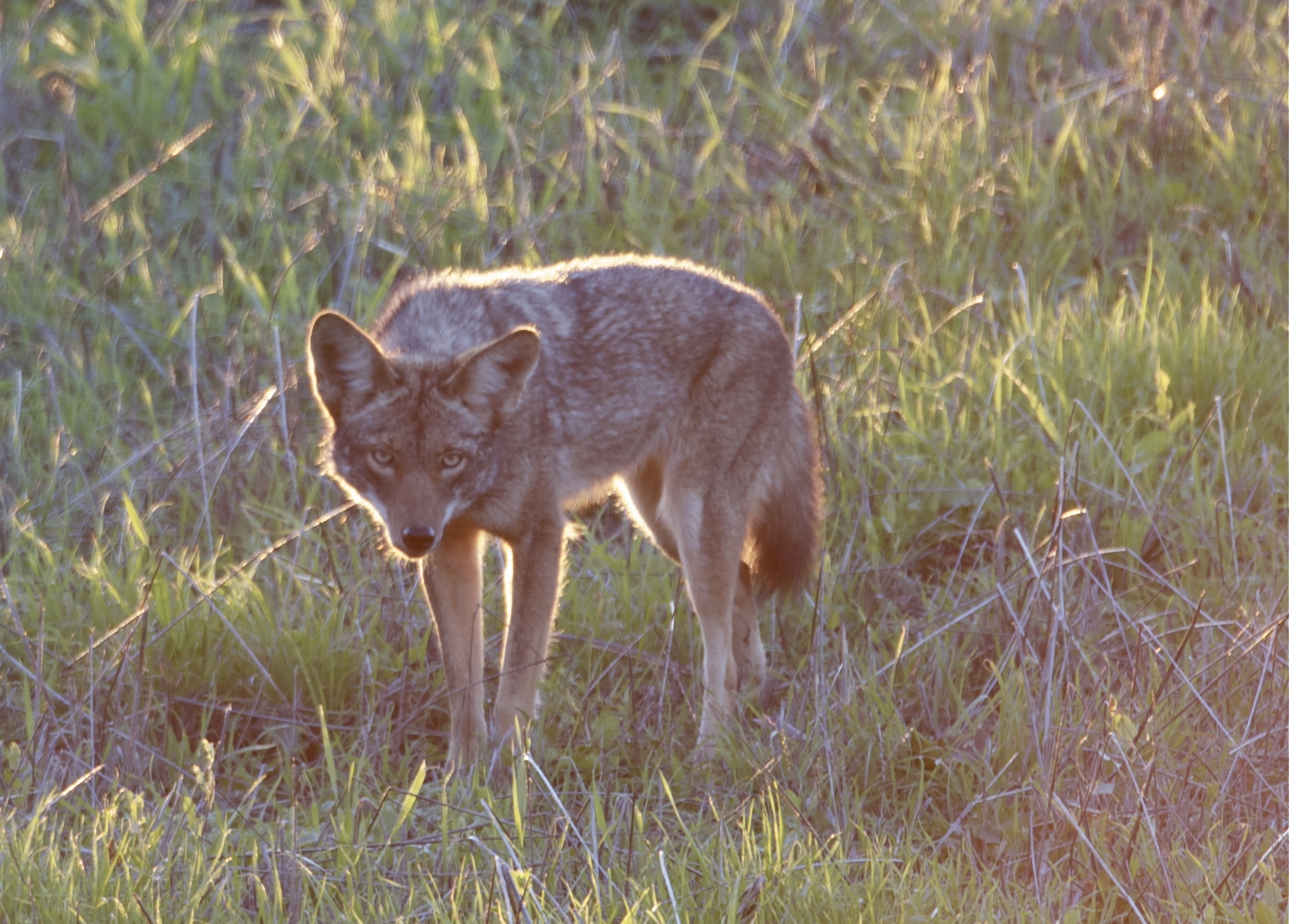
Ecologically, our area is rich with globally-significant treasures all of which are threatened by increased use. Our rich predator community — understood by biologists to be a key indicator of ecological health– is only holding its own because we have at times been careful to maintain areas with fewer human impacts. Mountain lions, badger, ringtail, bobcat, coyote, and fox all are important to the ecology of our natural areas and each species requires careful planning to ensure sufficient habitat and that human use of those habitats does not disrupt them. Increased visitation also threatens our rare and endangered birds, fish, and amphibians through poaching; introductions of weeds and disease; as well as mere regular behavioral disruption.

Solutions

How do we create a more sustainable future for natural areas visitation in Northern Santa Cruz County? First and foremost, there must be a more comprehensive natural areas visitation plan across the landscape. Such a plan would address all of the social, economic, and ecological issues raised above. Currently, there are 11 entities operating in various levels of natural areas management isolation. Each time one of those entities proposes a new public access plan, there would be benefit from a more holistic analysis and plan for regional visitor use sustainability.

In addition, and in the meanwhile, there are two other important elements to create a more sustainable public access program: scientific rigor and public accountability. Public access managers are not able to adapt their management to social, economic, or ecological thresholds without good data; without good data, much will be lost. And, without a means for the public to hold them accountable, public access managers will be unable to comply with their civic agreements. Both of these elements require advocates strong enough to allow public access managers to reduce use as necessary and until data exist to support any level of access. Public engagement in natural areas management will be fostered through regular public reporting including convening of community meetings where there is evidence of both the standing of and responsiveness to our community.

Unbalancing Act: park planners threatening wildlife by appeasing the masses

Here on Santa Cruz County’s North Coast, parks managers aren’t using the normal tools to help them balance recreation and wildlife conservation.  There are numerous proposals for new wild land park access points, trails, campgrounds, parking lots and the like.  Meanwhile, miles of unplanned, ‘illegal,’ uninvited trails from dozens of ad hoc trail heads proliferate, unheeded.

To manage parks correctly, parks managers would normally go through a planning process that includes understanding the current situation, planning for specific goals, and monitoring to see if they got it right.  Park planners start with studying both the wildlife (types, distribution) and likely recreational visitors (expectations).  The results of these studies inform a ‘carrying capacity analysis’ – how many of what kind of human recreational use can occur in a particular area of conservation land without too deleteriously affecting a given set of natural resource goals.  The analysis details thresholds of acceptable change, which sets in motion a monitoring program so that managers can adjust visitor use accordingly.

Limiting wild land visitor use to protect wildlife is a lot like hunting and fishing regulations that have been succeeding well in restoring game species.  Fishing and hunting regulations require good information on how many fish or game can be caught while maintaining or increasing a population.   Regulatory agencies set the regulatory limits of “take” and monitor both the amount of animals reported to have been killed as well as the populations of the animals still alive, adapting regulations on a regular basis to maintain healthy populations.  Hunting and fishing regulations can change yearly. Sometimes, there are moratoriums on “take” of a certain species.

Despite the parallels in theory and efficacy, in actual practice there is divergence between hunting/fishing and management of park visitors, especially here in Santa Cruz County.  Whereas hunting and fishing regulations are widespread and accepted in U.S. culture, Santa Cruz County’s wild land recreation culture hasn’t experienced controls of visitor use, with a couple of exceptions.  The endangered snowy plover and elephant seal both have seasonal closure, prohibiting recreational visitation to the beaches that are critical to their survival:  two of umpteen species protected on a miniscule percentage of our park land.  This is not for want of policies that mandate better park management.

There are many policy mechanisms obligating wild land parks managers towards more effective recreational visitation management.  For instance, California State Parks is required by law to perform a carrying capacity analysis (Pub. Resources Code 5019.5) for all of their parks.  And yet, such analyses have yet to be implemented using modern biological or sociological principles.  Instead, State Parks’ plans contain arbitrary zones grading from high to low recreational use radiating out from the most convenient park entrance.  Likewise, BLM is required to balance recreational and environmental goals and to monitor and adjust visitor use as necessary.   Santa Cruz County Parks and all other parks managers must protect sensitive park locations by limiting use to interpretative activities under the California Coastal Act.  Despite these regulations, between the disinterested public and “slippage” in agency interpretation/implementation, we see little evidence of professional management of recreational use in Santa Cruz County’s precious parks.

What you can do

Each and every time a new access proposal comes forward, ask the organization responsible what they will be monitoring to assure that recreation isn’t causing too much wildlife disturbance.