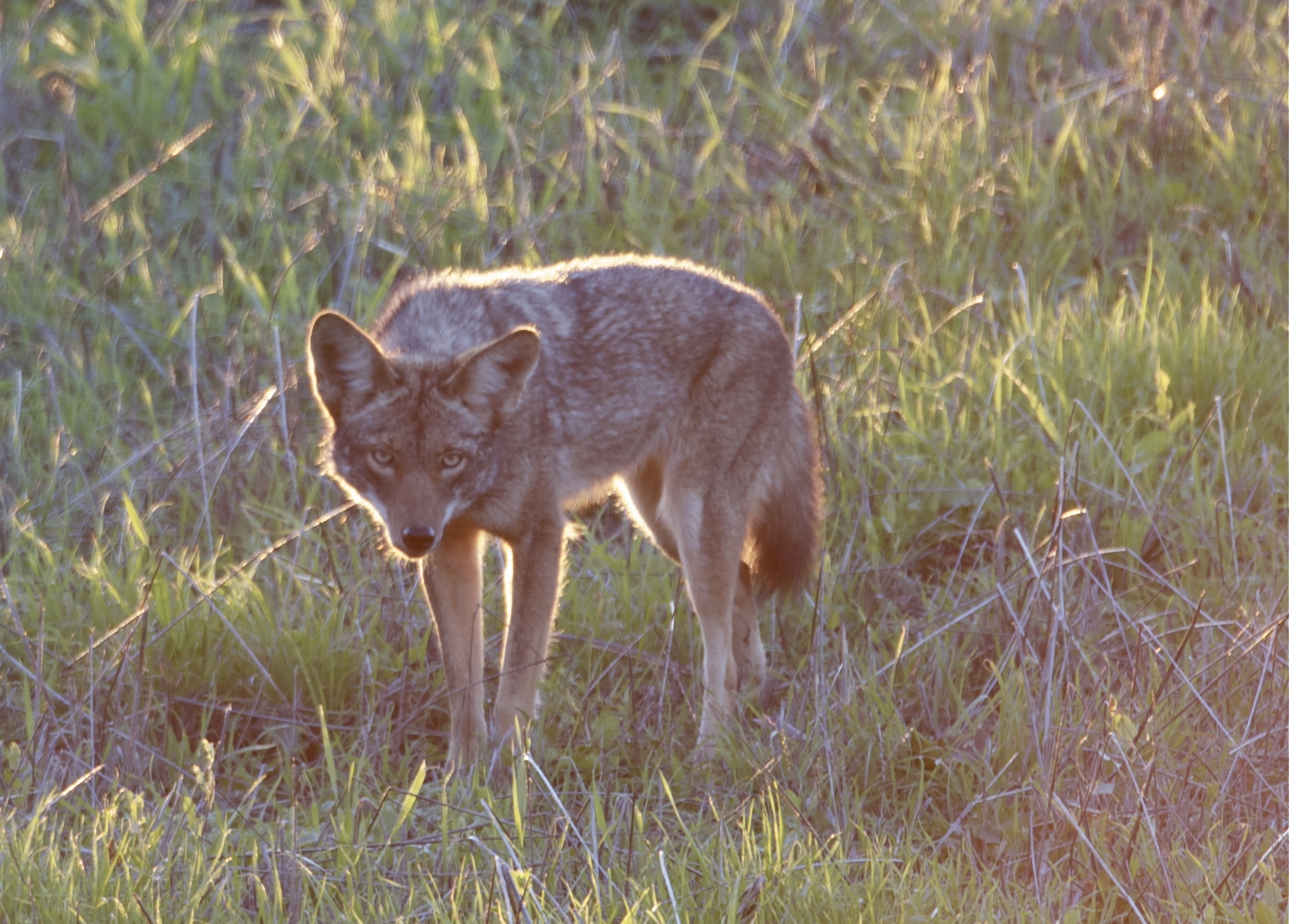
We called her Bella, member of a North Coast coyote pack.
Wild land recreation conflicts with healthy wildlife populations, endangering future generations’ ability to enjoy the nature we currently experience and the services that ecosystems provide. Wild land recreation here refers to both active (mountain biking, hiking, horseback riding, etc.) AND passive (wildlife viewing, meditation, walking, painting, poetry) types of recreation. The severity of impacts from these activities on wildlife vary depending on the numbers of people and the species of wildlife. Here, I focus on vertebrates, though we should be concerned with invertebrates, as well – some of what follows applies to the many species of endangered insects in our wild lands.
Santa Cruz County’s wild lands support diverse vertebrate wildlife – many have been declining due to habitat loss and fragmentation. Wild land parks are important to the survival of especially wide ranging carnivores such as American badger, ring tailed cat, gray fox, bobcat, long tailed weasel, and puma.
These predators are essential to supporting wild land ecosystems and the services those ecosystems provide including the water we so rely upon. If future generations are to enjoy the beauty of redwood and oak forests maritime chaparral and coastal scrub, and coastal prairies and wetlands, all depends on these predators. Widespread and poorly planned wild land recreation is posing increased threats to these predators in Santa Cruz County.
The impacts of wild land recreation on wildlife have been well and extensively scientifically documented, including in our region. The diversity and abundance of wildlife decline in parks with recreation as opposed to parks without recreation. With more recreation, these impacts increase. Deer flee 200 yards when approached by recreational mountain bikers in parks. Bobcats and badgers decline in recreational parks and especially den only far from recreation. While some species of birds become accustomed to recreation, others do not and will not forage or nest close to recreational visitors in parks. A frog very like our California red-legged frog has been shown to decline in proximity to recreational use of parks. In sum, because of the wealth of evidence, wild land recreation has recently been recognized as one of the greatest and growing threats to wildlife across the entire world.
WHAT TO DO
If you care for future generations’ ability to enjoy what we have today, speak up against the widespread proliferation of recreational access to wild land parks. There are many such proposals in Santa Cruz County, right now. If you consider giving to private, not-for-profit land trusts, consider giving only when they have proven that they are setting aside lands for wildlife, primarily. If you or your friends recreate in wild lands, stay on marked, planned trails- not the miles of unmarked, ad hoc trails created mostly by mountain bikers in our State Parks.


