nature

Rumblings Afar

The bounty is upon us. The Horn of Plenty gushes forth a profound plethora of food as Fall begins. The Equinox returns old bird friends to the farm’s ongoing bird drama, including many galliformes. The meso-predators – fox and skunk, especially – roam and hunt each evening. Farmers sweat in frequent heat, weeding and harvesting. We are thankful the lightning has skipped us, yet, but WHAT’s WITH THE STORMS??!!

Farm Overview at Sunset – Color thanks to Tropical Storm Mario

Rumblings Afar

Last week it was Tropical Storm Mario, this week an unnamed spiraling monstor. Mario spewed a swarm of lightning bolts 30 miles offshore, jetting up the coast and not, as predicted, coming onshore. The unnamed storm spun arms of poofy clouds and hundreds of lightning bolts, mostly around Lompoc and the southern San Joaquin Valley. It, too, was predicted to come ashore with that violent weather this past Tuesday night but then, once again, it skipped us: the only a hundred or so lightning strikes were inland, in the foothills of the Central Valley. Tense times, these.

The mugginess, daytime heat, and even balmy evenings are unusual for us. Luckily, it hasn’t been scorchingly hot – the apples aren’t getting sunburn. And, happily for tomato farmers, there hasn’t been enough rain to even start to wet the ground – dry farmed tomatoes split with rain!

And, oh how those tropical storm clouds color our sky at sunrise and sunset. Brilliant orange hues are the dominant evening entertainment, dazzling near the horizon and all mixed up with purples and blues higher up, sprayed across cloud puffs or ethereal mists.

The Toil

Amidst the episodic heat, farmers work and sweat. The weeding never ends. One starts early to avoid the worst of it, but that early starts later…hoes hit the ground at 6:45 if we’re lucky. And the harvest takes hours through the day while the sun pushes prickles and wilting heat right through you. The sweat would drip except it is so very dry, salt cakes on the skin roughly mixing with dust. Harvesting tomatoes bent fully over, gingerly stepping between sprawling plants and peering into the dense foliage for hidden fruit, carefully extracted…boxes and boxes of big swelling fruit emerging from so little ground – it is an epic year! What a contrast to last year’s crop failure.

Two Dog Farm dry farmed winter squash, each year a stunning miracle from such seemingly dry ground

Fruit Ripens

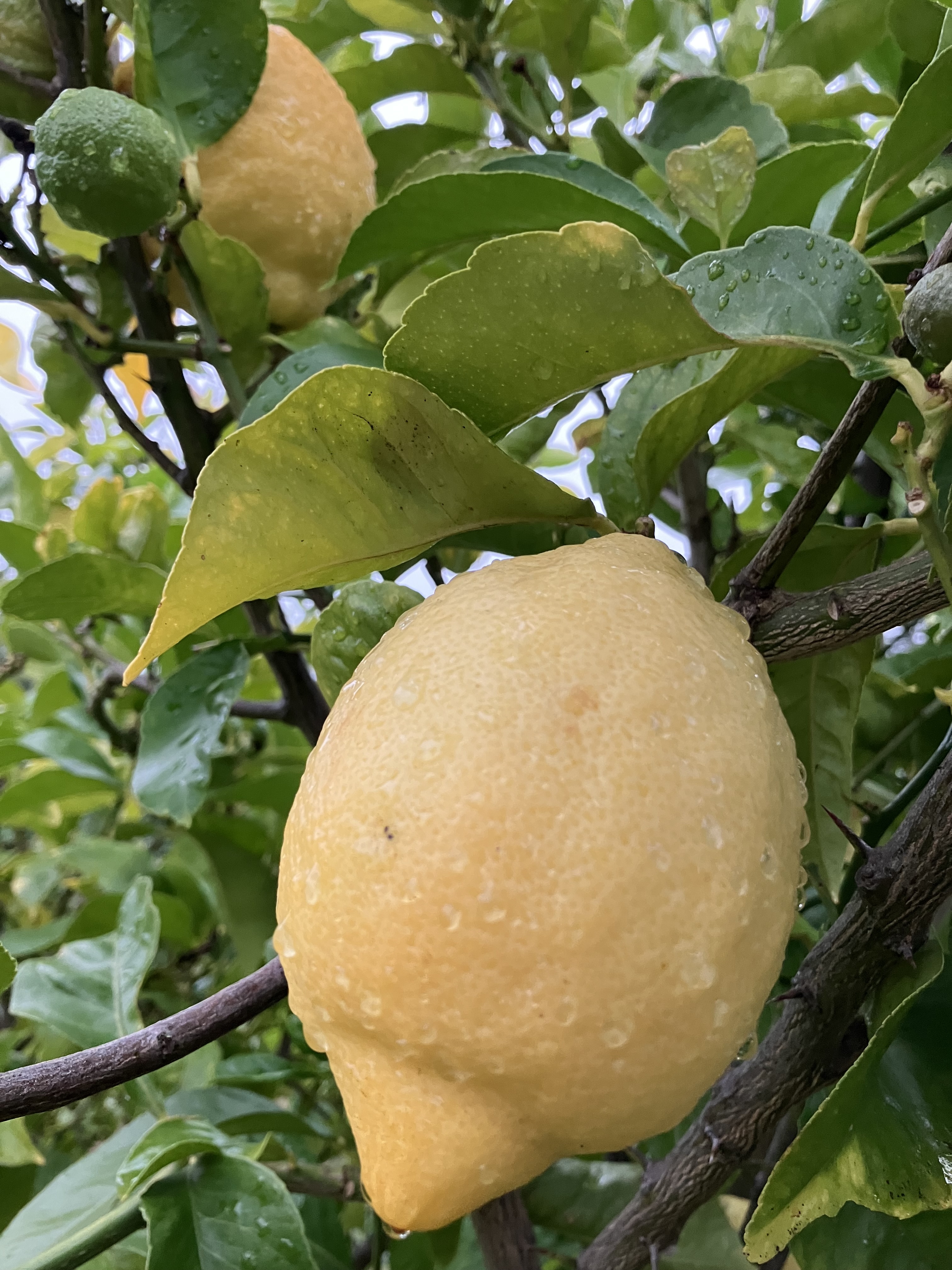
In the orchard, the apples ripen with lemon harvest still in swing. Eureka lemons get ripe by the day, our first year of sending them for weeks to market. These lemons are popular among our Community Orchardists, too – they are catching on – so, the ‘seconds’ lemons are getting claimed voraciously. About 50% of the lemons aren’t perfect enough for market, and so 25 pounds a week are getting distributed. It seems like next year we’ll have surplus for the Pacific School, once they return from the summer. Our lemon trees have just past 10’ tall, a bit lanky and need of some shaping – sharp spines make portions of the getting-dense trees hard to harvest. It is surprising how difficult it is to discern the varying shades of yellow on the fruit, sometimes with hidden tinges of green, to harvest the ripe ones as they turn ever-so-slightly deeper colored.

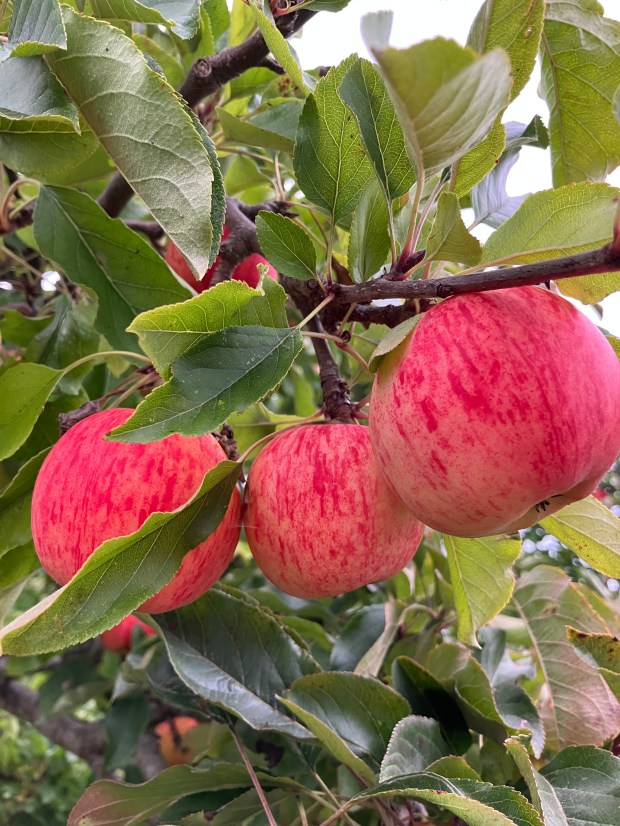
Gala apples are the first to ripen: we sent our first box to market out to the Community this past week. The background peach color, beneath the red streaks, is so obviously a sign of ripeness. They are gorgeous when ripe.

Ripening Gala apples in our Community Orchard

Reclaiming the Land

We are so thankful to our various partners for their assistance in restoring the natural areas of Molino Creek Farm. Last year, the Central Coast Prescribed Burn Association’s (CCPBA) massive network of volunteers and dedicated staff put Good Fire on the ground, nudging our scrub invaded systems back to coastal prairie. Their work also makes our farm safer from wildfire, which has been much on our minds of late. This fire break augments a many miles long regional firebreak that runs on our border and protects Bonny Doon and then Santa Cruz further down the fire-shed.

This week, the new President of the CCPBA, Matthew Todd, has been using his expertise and big, expensive tool to take that burning a bit further. His Bobcat runs a masticator, and he’s mowing down huge patches of the invasive French broom which sprung up after the 2020 fire. Alongside that broom are acres of brush that has taken over super-diverse prairies that were dominant in photos as recent as 1988. Matthew is a landscape artist – it is looking so great and we are much-relieved to have his help bashing broom…and jubata grass…and coyote brush. Broom control protocol calls for several years of mowing in the Fall, like we’re doing now, and we are going to do just that – maybe with a bit of Rx Fire thrown in there.

Rumor has it that CalFire will do a training burn in a few weeks (after grape harvest), so more to come.

Matthew Todd on his masticator, taking care of prairie one strip at a time: Thank YOU!

Natural Production

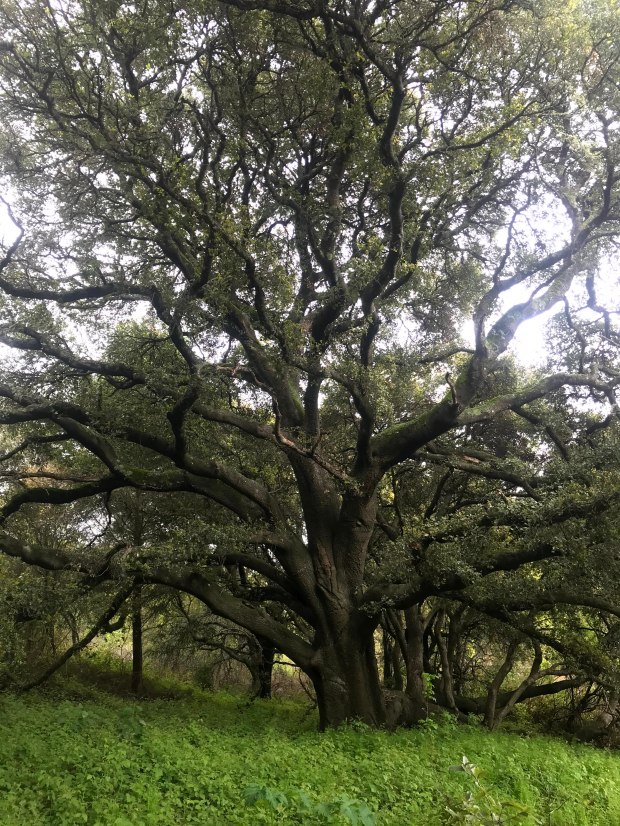
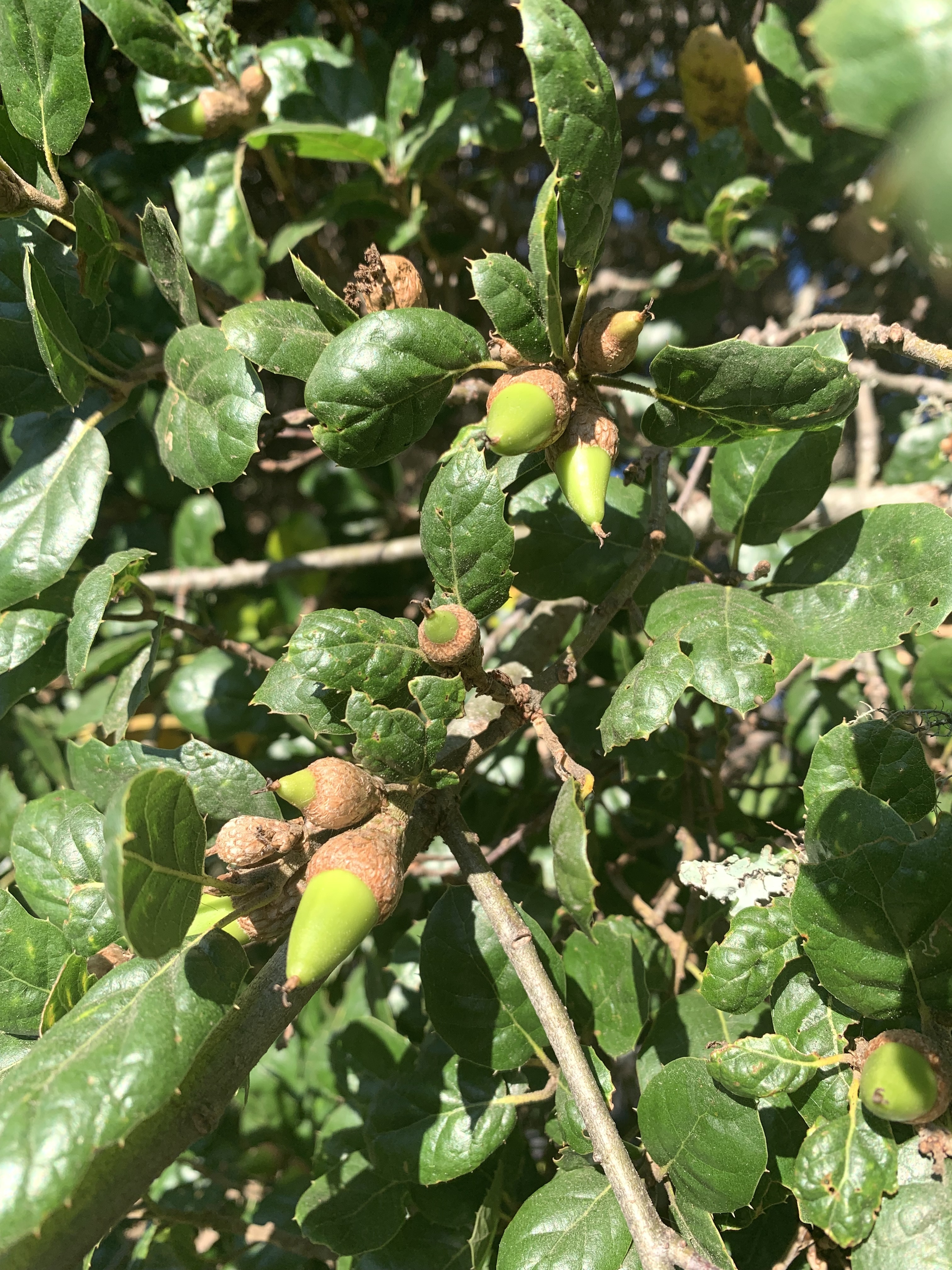
While our Farm Fruit is abundant, so is the fruit of the woods. Jays and Acorn Woodpeckers have turned their attention to the acorns, which have swollen and started to drop. On the ridgelines above the Farm, the manzanita bushes have their first massive berry production since the 2020 fire. The seeds have tasty dry, sweet pulp and hard as rock seeds. Some critter has been feasting on them and then pooping out the remains in our apple orchard – a long haul, but someone has a circuit.

Critterland

It is easy to see a fox at night if you just go looking. We must have a large population. They bark and yowl. You can’t hear them, but you can certainly smell them … skunks are prowling farm-wide. The hayfields are full of their nuzzling holes where they seek mice or crickets. The bunchgrasses we’ve been nurturing in our hayfields have turned green and since we didn’t harvest the hay, there is plenty of hunting ground for skunks.

Native bunchgrass, California brome (Bromus carinatus) hay field with skunk hunting sign

Welcome Back Sparrows! And…

Golden-crowned sparrows returned, as usual, with the Equinox. In the dark of the night on 9/19, hundreds of these winter birds dropped out of the sky and started feasting on what seeds remain from the entire summer of feasting of the other birds. They were quiet and shy at first, maybe a bit tired from their journey, but now they are feisty and squeaky. 

At the same time, other types of birds arrived. The meadowlarks landed in the meadows lower down and closer to the ocean. And, the blackbirds – Brewer’s and bicolored – have suddenly formed their cacophonous flock at the top of the trees around the periphery of the farm fields.

Gallinaceous Bird Drama

The turkey flock was attacked in the forest, what a terrible noise, and only the male has been about. Seems like a good idea to go to that place of turkey noise and see what happened. A coyote or even a pack of coyotes would stand quite a challenge against such powerful birds: maybe it was a lion? Tracking is in order.

Massive quail coveys flush and whirr at every turn. They are Very Jumpy because there is a Very Good Hunter about: Cooper’s hawk is energetically flying about. Do kestrels eat quail? There’s one of those around, too.

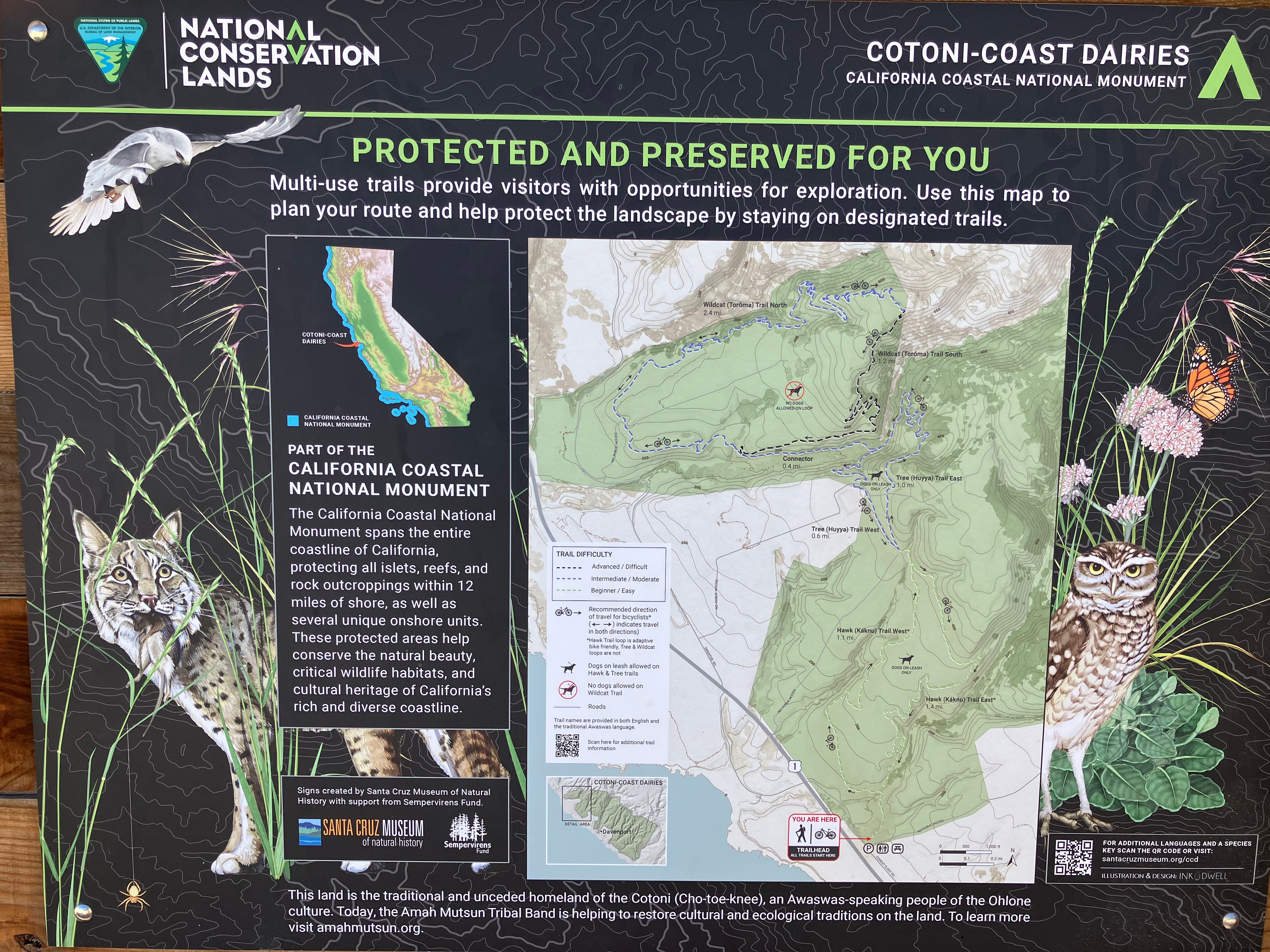
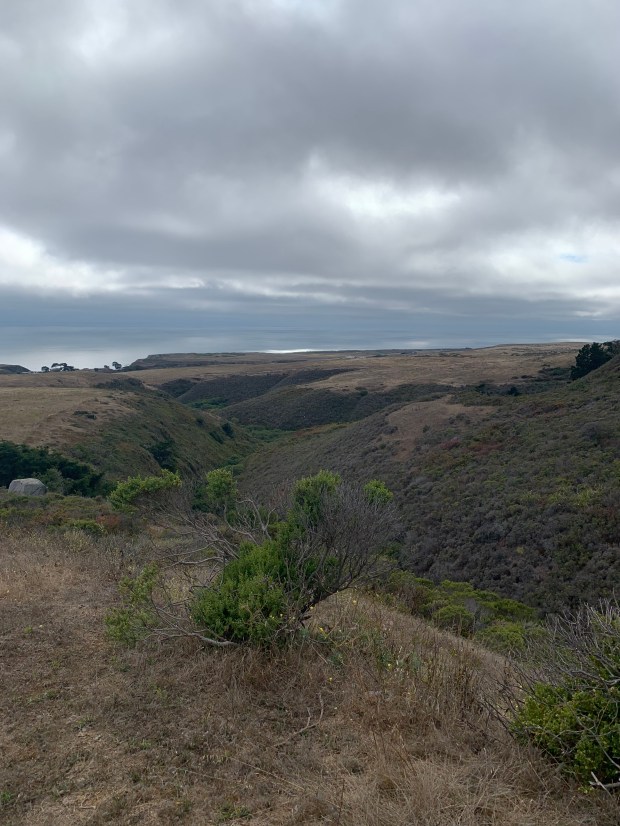
A view to the sea overlooking habitats at Cotoni Coast Dairies

Restorative Justice: Trust for Public Land and Coast Dairies

There is healing to do in my community, but no one is moving that forward with one particular travesty. We’re approaching the 7-year anniversary of a local conservation organization’s legal action against our community, including environmental hero Celia Scott and others. In 2018, the Trust for Public Land sued a group of my community. Their actions incurred long-lasting damage to personal lives and the willingness and ability for the public to remain engaged in the hard work of protecting the North Coast of Santa Cruz County. This story is a microcosm of society-wide problems. In this essay, I explore this scenario in hopes that we can heal or at least learn from the past in ways to strengthen and improve the future, in similar situations.

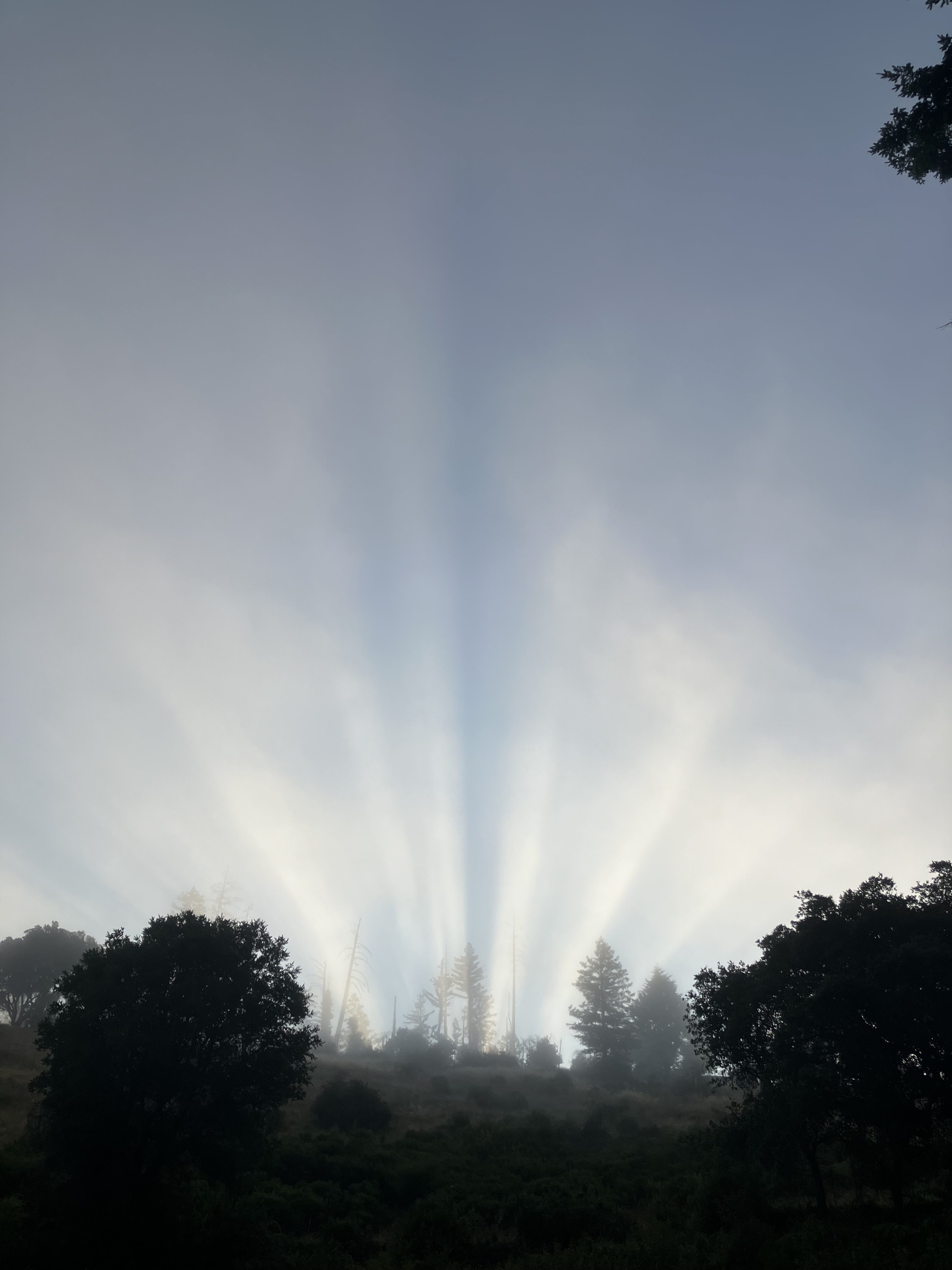
The sun rises from the fog, hope for a new era

What Happened?

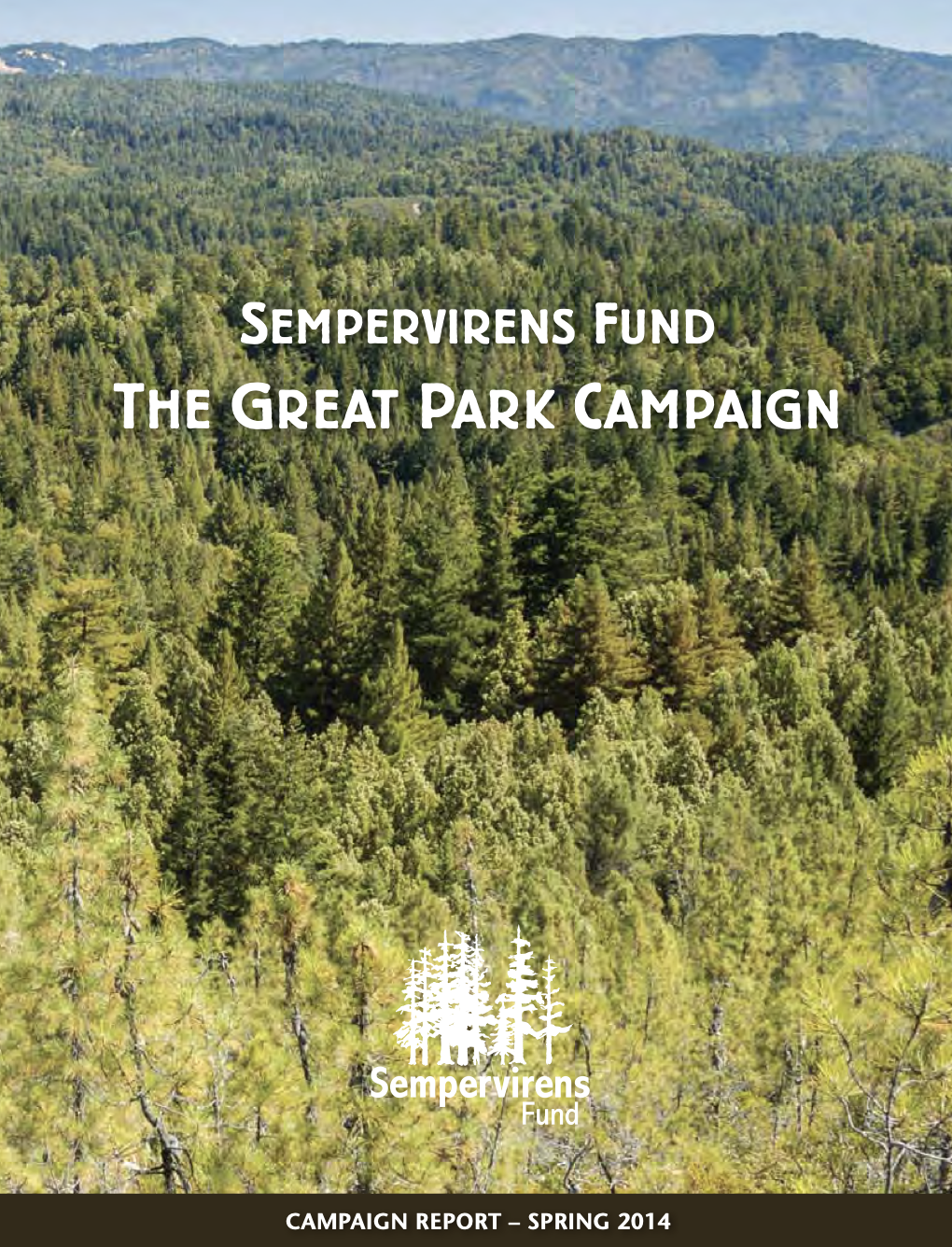
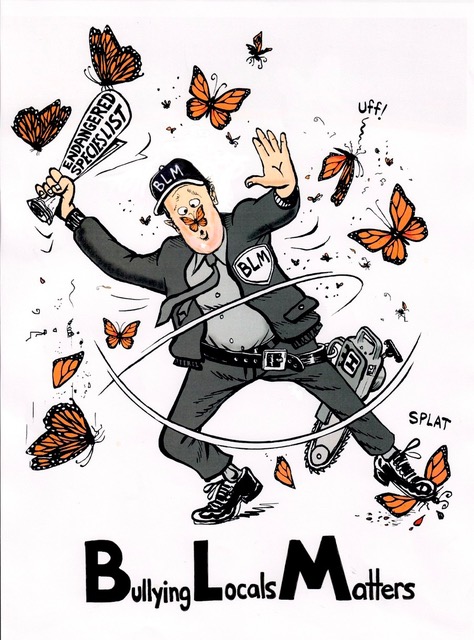
In 2014, we were extremely concerned that the Trust for Public Lands chose the Bureau of Land Management (BLM) to take possession of ~5,800 acres of the ~7,000-acre Coast Lands and Dairies property. This would be the first transfer of large acreage in Santa Cruz County to the Federal Government, putting decision making, environmental review, and management oversight far afield from local influence. Moreover, the BLM is nationally recognized as being the ‘bottom of the barrel’ of public land management agencies insofar as their ability to provide adequate staffing or adequately analyze and plan for protecting natural resources and managing visitor use. ‘Don’t worry,’ the Open Space Illuminati whispered, ‘the land will go to National Parks soon enough.’ ‘The Great Park’ was their dream, a way of cementing the legacy of a very few boomers and their deep-pocketed, old school “environmentalist” funders. A dozen or so local veteran conservationists were clearer eyed and decided to fight back. 

The Sempervirens Fund’s Great Park Campaign publication cover, see this link for more.

This coalition worked with experienced legal counsel to challenge the federal lands transfer based on TPL’s need to divide the property between State, private, and Federal ownership…a process requiring County and Coastal Commission approval. When their legal action failed, TPL sued those activists, demanding a large financial settlement. TPL’s legal action also failed but not before the damage was done to individuals and their families as well as the coalition overall and my community of conservationists in general.

Outfall

TPL’s lawsuit echoed through the region, hobbling conservation and damaging community. The Open Space Illuminati felt more empowered, less humble. Family members questioned whether activism was worth the risk, fearing retribution affecting their already tenuous ability to live in an increasingly unaffordable area. Conservationists wondered how a ‘conservation’ organization like TPL could launch such an attack.   

The Bullying 

This history is but one instance of something we see unfolding nationally with greater consequence. In most political spaces we have mainstream, wealthy, influential ‘centrist’ “liberals” that are sure that they know what’s best for everyone, and they are determined to force their reality forward. They bully and demonize progressives who are often under-resourced for such battles: ‘successful’ centrists are often in wealthier circles/circumstances, and their visions often include methods of increasing their financial advantage. Do we forget progressives’ criticisms of the World Bank and US AID for their paving the way to the destruction of communities and ecosystems? Newsom is so good at bullying Trump because his centrist community are very experienced at bullying progressives, and they’ll be back at that focus soon enough. The centrists love the far right for the power that gives them to move the populace to the center where the rich get richer and the environment and the poor suffer greatly. The Coast Dairies situation is a microcosm in another way.

Microcosm

Many of us are familiar with the story of the colonialist tragedy affecting indigenous people, but can we also apply some of those lessons to the situation with TPL at Coast Dairies? We know we are on the unceded ground of indigenous people: each and every one of us reading this. At the same time, many prescribe to the philosophy of such colonialism when we celebrate the “keystone” of “successful” conservation. Cheers ring out when property is purchased for a park, and few ask who is losing when that happens. Some of us are familiar with the boundaries of parks being drawn without consultation of native peoples around the world: indigenous people displaced by ‘conservationists.’ Few of us see the parallels with such dangerous transitions in California where the ‘We can do better!’ mentality overwhelms local communities. 

Can We Do Better?

Conservationists celebrate the quick transition away from local control, yet traditional land management knowledge is lost at great peril. Those engaged in traditional forestry know how to manage land at scale, restore forests, grow trees, and reduce wildfire risks. Those engaged with traditional range management also know how to manage lands at scale, control herds of beasts to ecological benefit, and identify stewardship risks before they become catastrophic. Indigenous peoples have a much deeper and broader experience to share. Instead, the conservation community often removes these previous communities from their stewardship roles, instead entrusting land care to too few University-educated elites with their small share of experience matched by their lack of humility, and framed by their embrace of pro-forma ‘management planning and environmental review’ processes designed to protect them from public conversation, criticism, and legal challenge.

All of this is happening at Cotoni Coast Dairies. Can the situation there, including with the Trust for Public Land, help model a way to overcome this negative global spiral?

 Reconciliation

I am suggesting that we go through a truth and reconciliation process for the Coast Dairies debacle, including the TPL’s legal action against our community. 

First, we must seek to understand. Who was involved with deciding that the Coast Dairies property would best be in BLM’s hands? Let’s hear from those individuals about their decision and what they think about that nowadays. Who was involved in the decision to sue our community members? Let’s hear from those individuals about what motivated that action. Why did community members sue TPL? Let’s also hear from those individuals about what they were hoping to achieve and how they see their loss affecting the current situation. Can we also hear from the Federal decision makers: how does the machinations of federal control address the concerns of our community?

A well facilitated truth and reconciliation process can move forward from such mutual understanding towards solutions that can help to heal the past and move to a more productive future.

I predict this reconciliation process will not happen until the Open Space Illuminati and the Federal decision makers feel that they are no longer ‘winning.’ Then, they might see that they need the help of the people they have marginalized. This will require the marginalized to gain more power. Please join the movement by talking to your network about these issues.

If we don’t address these past injustices, it will not be a long wait until we see them repeat in larger and more tragic ways. Right here in our communities.

-this post originally published as part of the illuminating BrattonOnline weekly blog, featuring leading thinkers on local, regional, and global affairs…in this era of squelched free speech, it is best to keep our minds agile by reflecting on well-informed commentary and journalism. Subscribe now and SAVE (your mind- the blog is free).

Cotoni Coast Dairies BLM Land Opens to Public

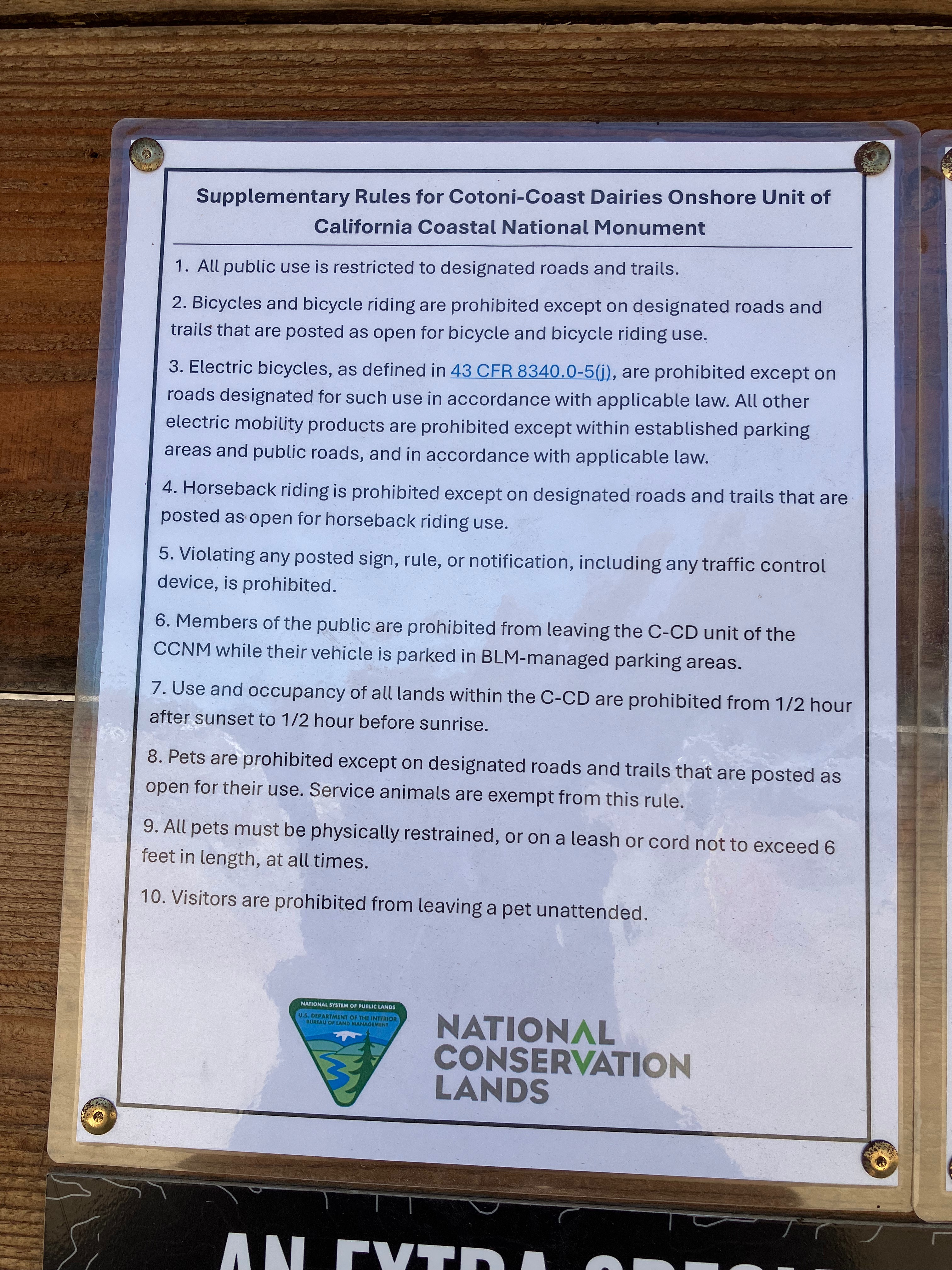
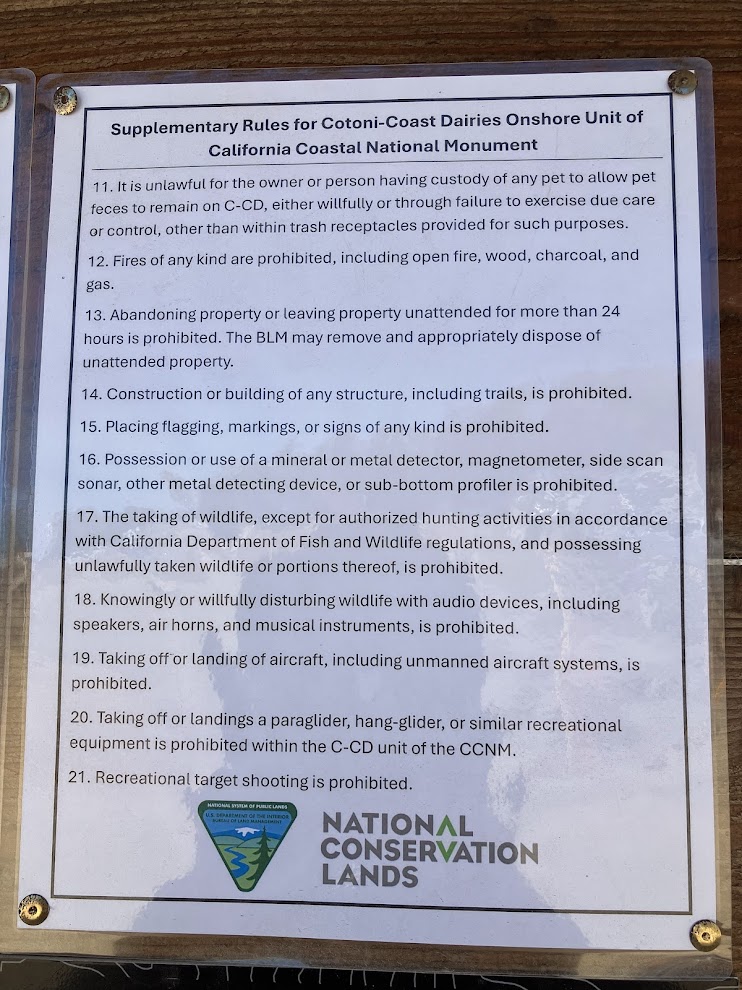
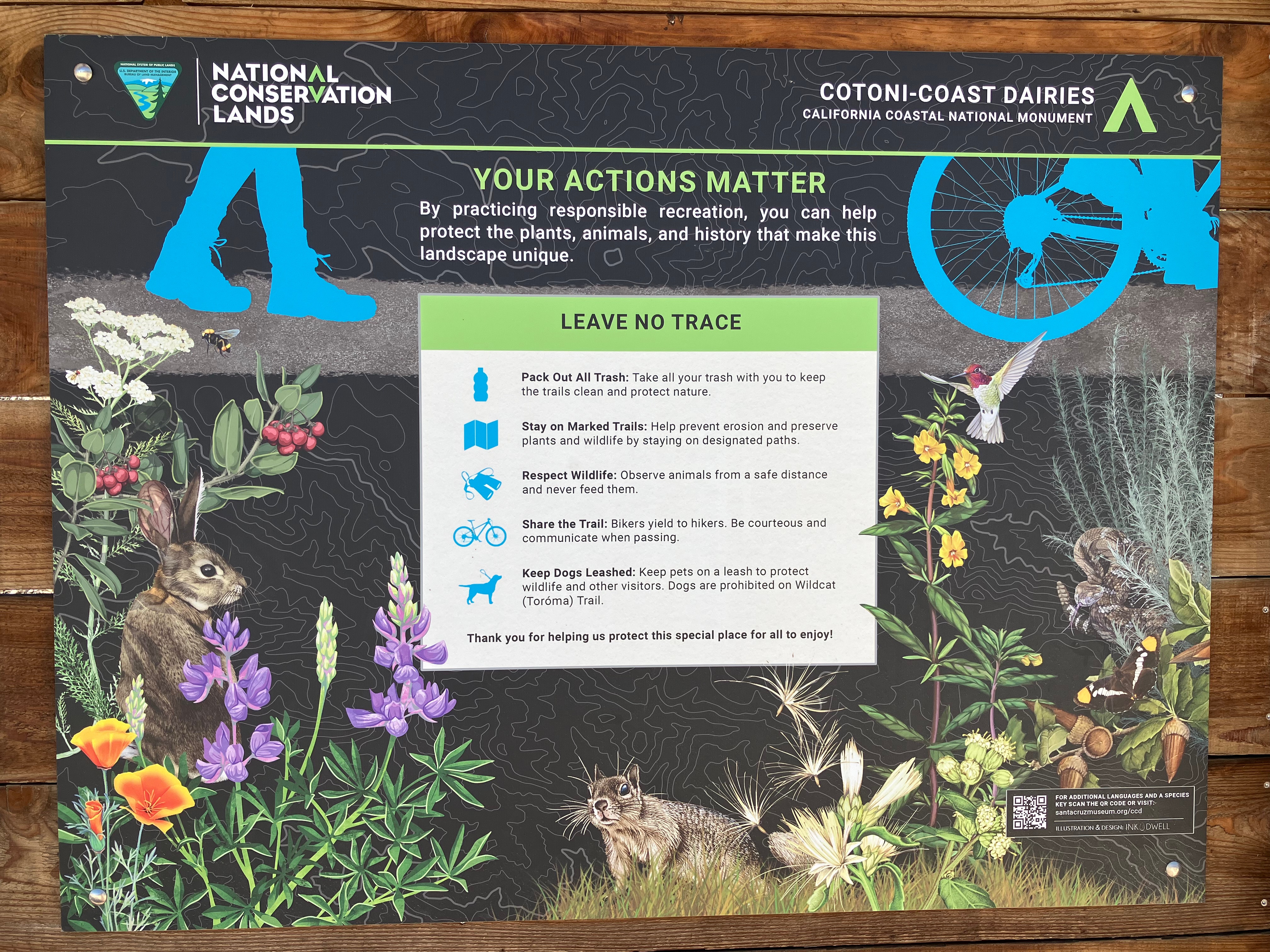
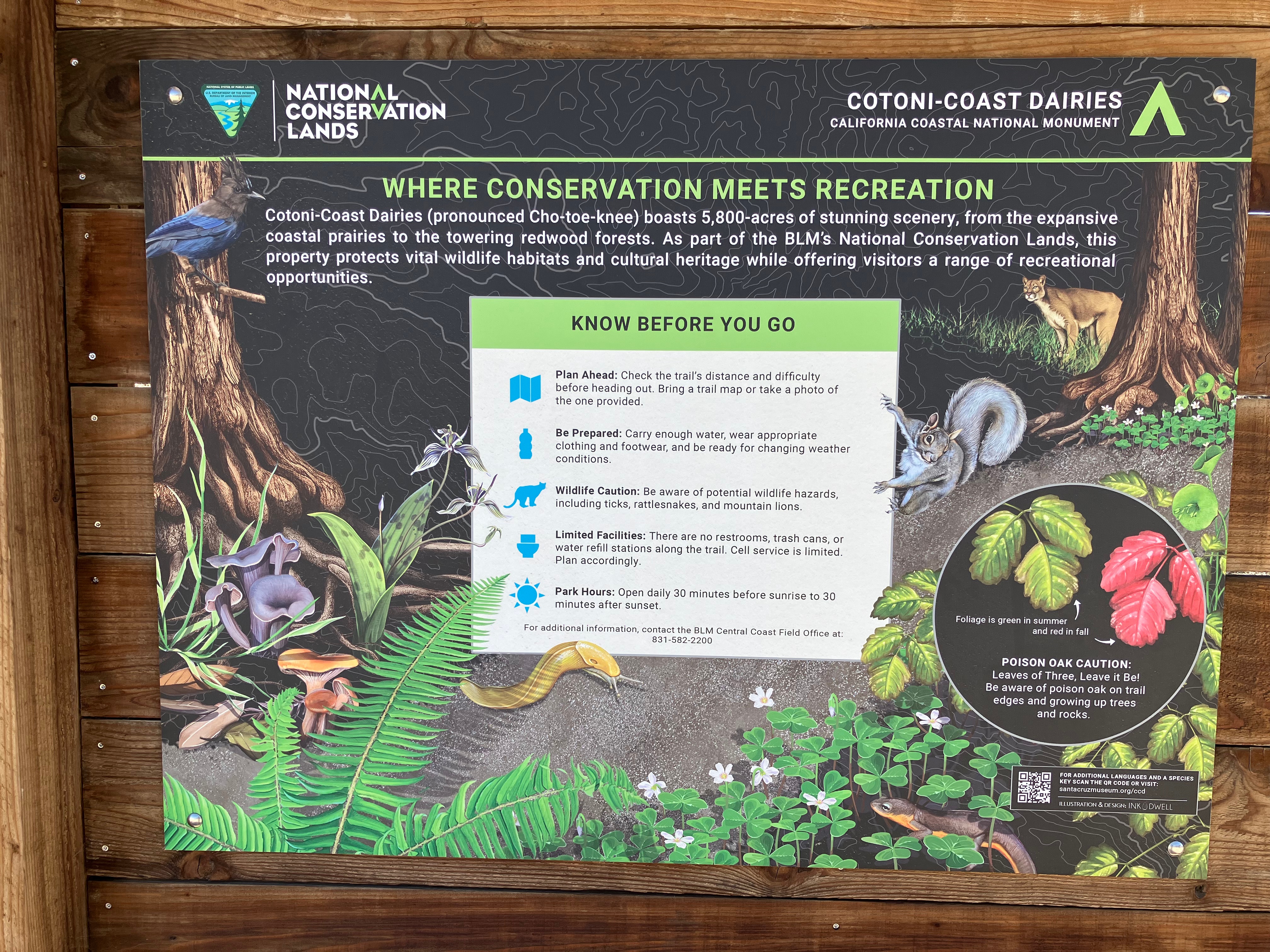
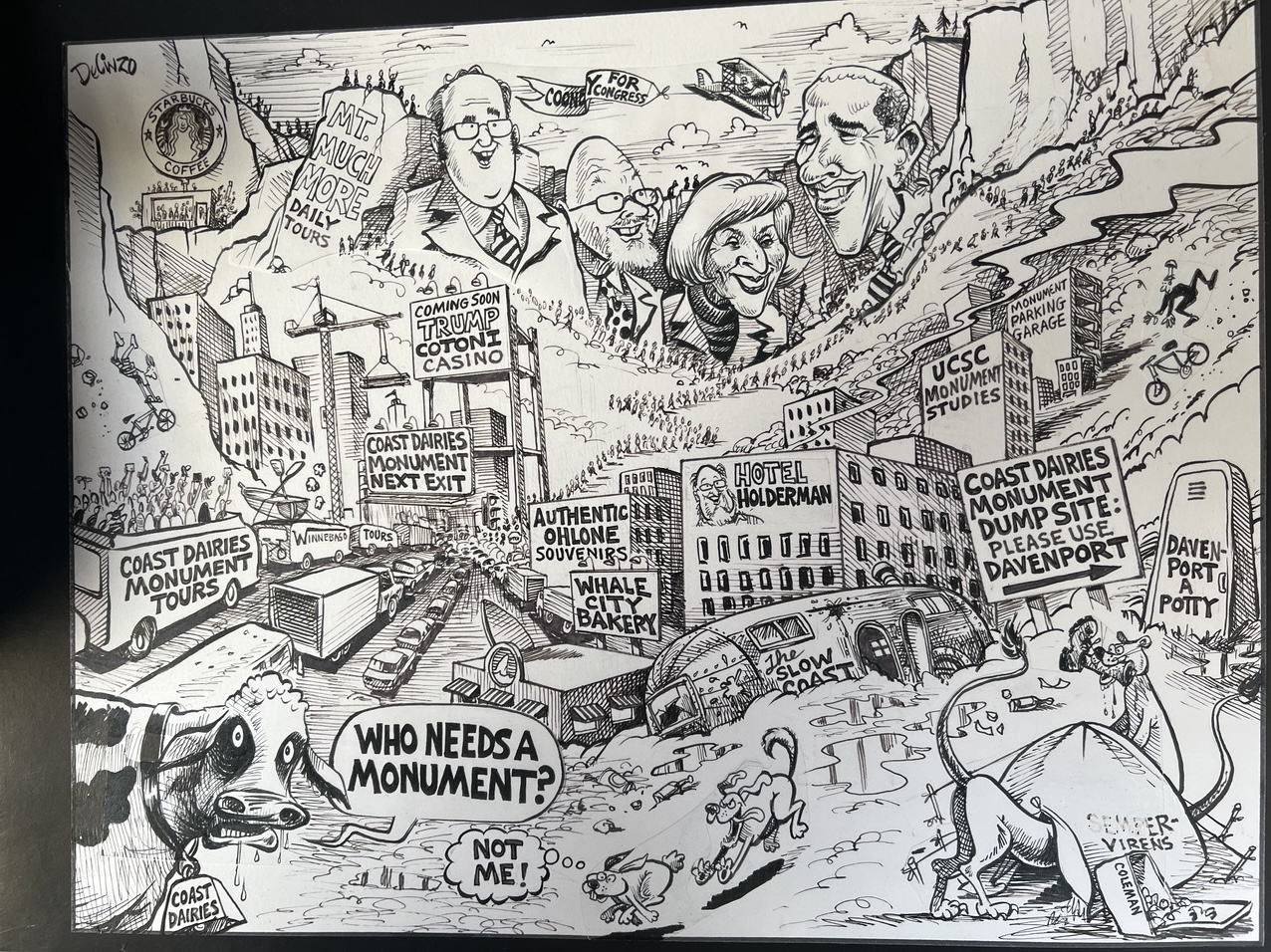
The opening ceremony for public access onto the Federal Bureau of Land Management’s Cotoni Coast Dairies property was on August 15, 2025, a grim day for those who have followed this travesty, which will only worsen with the planned public access.

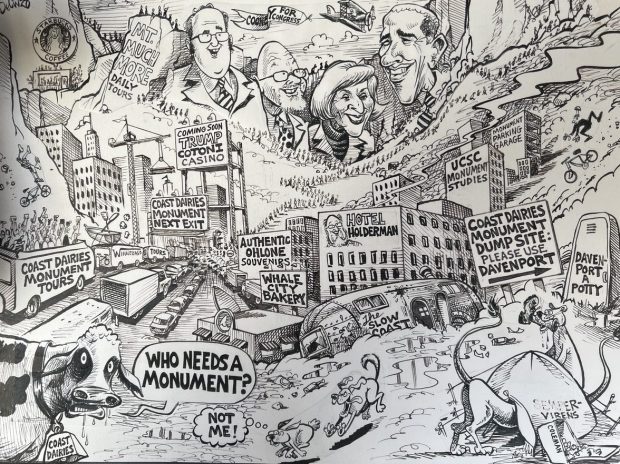
Many thanks to De Cinzo for this image

Building on a Tragic History

Nothing good led up to this moment. There is no one left who speaks the language of, or can show direct descendance from, the native people of this property. There are rich archeological sites illustrating that this land was settled for thousands of years. So, as with every spot in California we must see this property and how it has been and will be used as a colonialist endeavor. There is no attempt to give the land back to any coalition of First Peoples who represent those ancestors or to respect them in any way that approaches restorative justice. Oh, but there’s the name…(!)

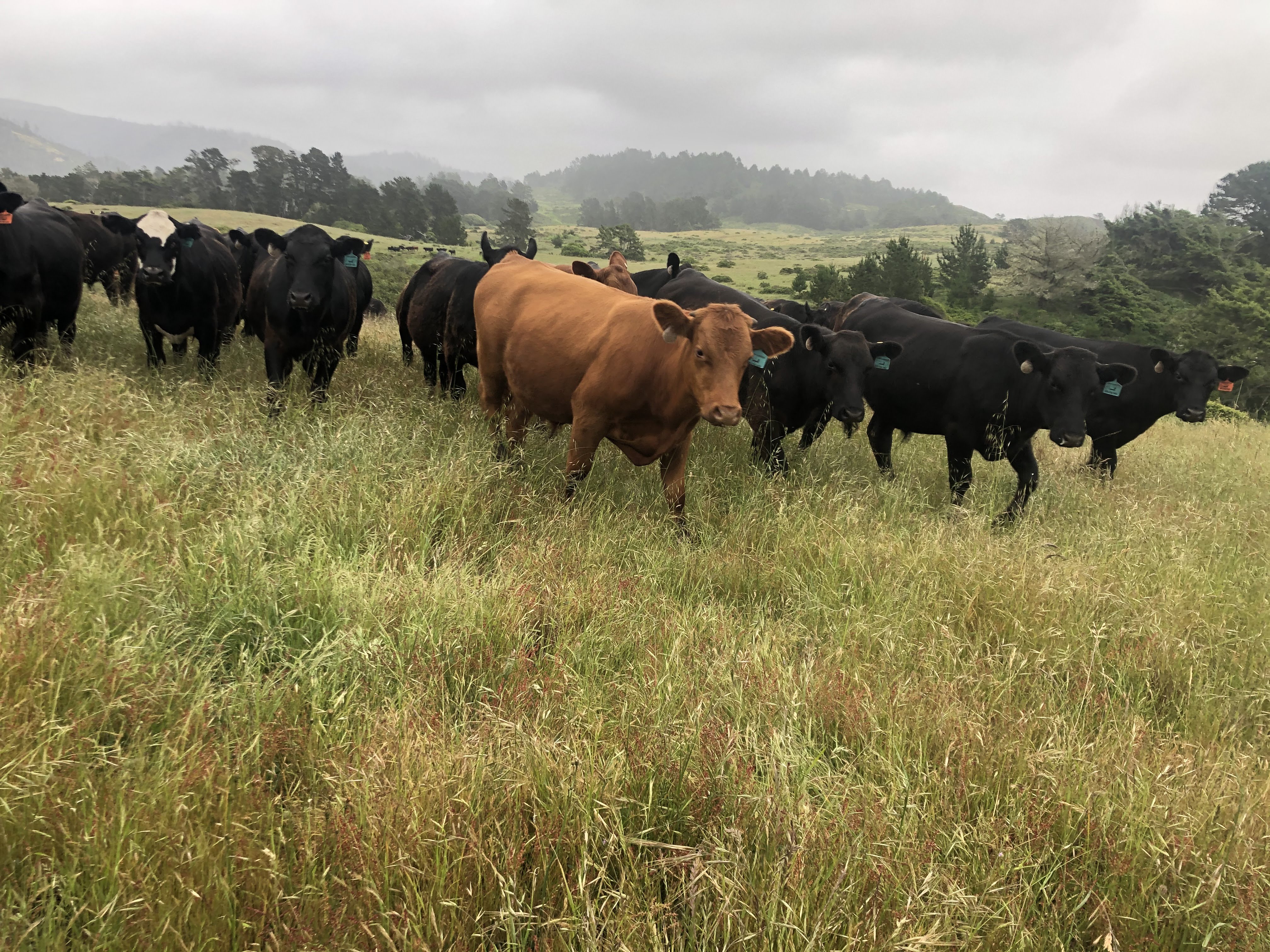
After the genocide, the land has seen one extractive use after the next with little regard for conserving nature. The ‘Coast Dairies’ portion of the name points to cows, and cows there still are. The grazing regime has never focused on restoring the very endangered coastal prairies on the property and, even now, there is no plan to do so. This recreational use is a new, highly impactful extractive use. The property is rare for the Santa Cruz Mountains in having had very few human visitors for the last 100 years, so wildlife has been accustomed to roaming without disturbance. Cougars and badgers are especially wary of humans when setting up dens. A million visitors a year will soon be visiting and wildlife will flee.

The consortium of people responsible for so many other, better outcomes for conservation tried hard, won some concessions, but have seen great loss with how this property came to be open to the public. We tried to get anyone but the Federal Government to manage the property, but the Open Space Illuminati had other things in mind…’The Great Park’…a handful of boomers wanted their legacy in a wide swath of the area becoming a National Park. They stopped at nothing to achieve that legacy. The activists, biologists, conservationists, and regular citizens, were even sued to strike fear into them, to make them capitulate.

Money Made it Happen

The Wyss Foundation bankrolled cash-strapped ‘conservation’ organizations to create a fake grassroots campaign that culminated in Obama signing a Monument Proclamation adding 5 properties across a wide swath of coastal California to the California Coastal National Monument. 

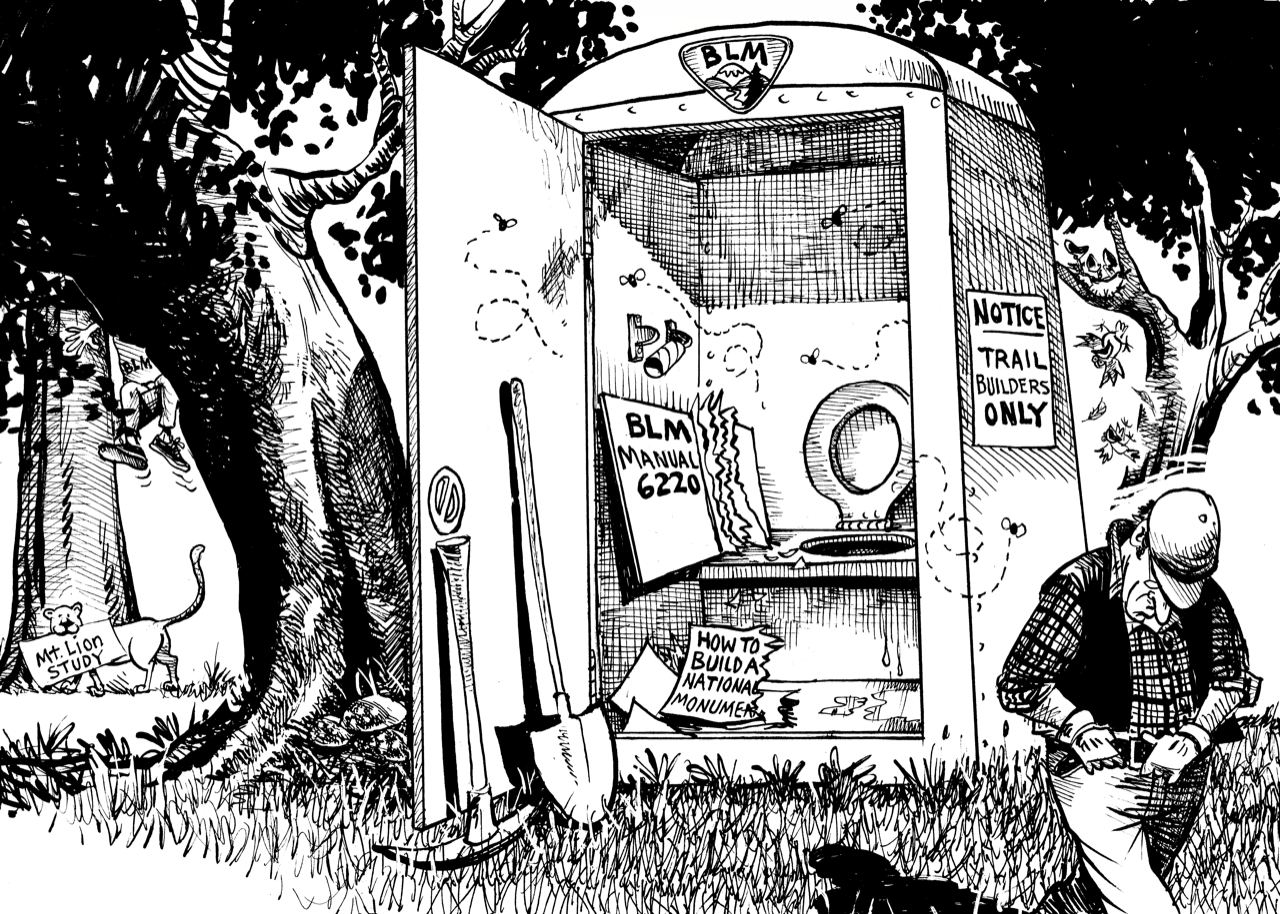
Then, the BLM routed hundreds of thousands of dollars, sole-sourcing a contract to a mountain biking advocacy organization to build the kind of trails their users wanted to see. That business quickly changed their name to a ‘trails’ organization. Instead of supporting good paying local jobs, the BLM paid this organization to rally volunteers to do the work of installing trails that were placed across a landscape without regard for the wildlife written into the President’s Proclamation for protection. When asked about how they could do such things when the property’s designation required favoring conservation over visitor use, BLM cynically snickered that the majority of the property, 51%, is set aside without public access. The rest, apparently, is a sacrifice zone.

What We Wanted and Will Pursue

Those of us who care about the native peoples, the nature of the property, and the experience of future visitors have a vision, which we will pursue despite setbacks. The land should not be Federal land – if you wonder why, you need to look at the current situation with federal lands nationwide. We always knew this, but now others are starting to understand our concerns. The current administration is selling federal land for real estate development and other extractive uses. If, after cutting the federal workforce, there are any staff remaining to manage the land at all, that will be a surprise. The Administration has said Federal lands will remain open to visitors even if there is no staffing or budgets. Oh no- could my dystopian vision for the property be closer to reality?!

 If there is a chance, California should buy Cotoni Coast Dairies. Then, let’s envision taking Canada’s Indigenous Guardian’s project to this place, giving tribal people primacy in stewardship, use, and oversight. Perhaps the State could give the land back, as it has just accomplished with the Yurok.

If the property is to remain a public park with visitor access, there needs to be a radical shift in how that is approached. The regulatory designation for first managing the property for conservation needs to apply even to the areas with public access. This will require altering use patterns, even closing the trails occasionally, for the benefit of the soil, streams, wildlife and plants that Obama clearly intended to protect. There will need to be lots of monitoring and enforcement to adequately protect natural resources. The BLM will need to do a ‘carrying capacity analysis’ to determine ‘limits of acceptable change’ – thresholds that, if surpassed, trigger altered management of visitor use to bring the use into alignment with conservation. 

Next Steps

It will soon be possible for visitors to monitor the situation first hand. Those of us who asked to do baseline monitoring of wildlife and plants were refused the opportunity many times. When we asked how small children and the elderly could possibly co-recreate on trails overrun by fast-moving mountain bikes, our concerns were dismissed. We will be able to help document how well BLM’s rules are working and if there is enough enforcement. We will be able to see the spread of diseases introduced by bike tires and hiking shoes ravage the amphibians, the trees, and the soil, and we will recall how BLM staff predicted those impacts in writing, with administrators choosing to ignore even the simplest measures that hundreds of other parks managers have employed to address those concerns.

-this post updated to past tense from the one posted via Bruce Bratton’s legacy site BrattonOnline.com

Swings

Prickly, skin burning sun gives way a day later to chilly overcast drizzle. As the planet warms, the extremes get more extreme; I don’t recall that kind of pendulum, but who knows? Monday’s sunny high at Molino Creek Farm was in the low 80’s, Tuesday a little cooler (but not much), and Wednesday it was in the low 60’s and drizzling. Let’s go back to the moment it switched: Saturday. We gathered our Community Orchardists just as the day went from somewhat cloudy and cool to crystal clear and warmer – the kind of beautiful where it feels like someone dropped a psychedelic dome over the big green earth, emphasizing color and clarity. Shimmering, exquisite beauty.

Cherry Blossoms

Fruit for the People!

The working bee rocked- cheerful chatter and hard workers knocking out pruning, weeding, fertilizing and cleaning branches & props. It was enough to turn around whatever doubt we might have had that this season is a turning point. We came together around food with toasts and kind words of appreciation for the community we create around growing Fruit for the People! Speaking of which…our Community Orchardists have delivered their first crop of Robertson navel oranges to our favorite outlet: the Pacific Elementary School‘s Food Lab in Davenport. Somewhat shy of 100 pounds of juicy, brightly colored, thin skinned oranges are making people happier and healthier. This kicks off 2025’s food donations to this important program.

Oh- and By the Way…many thanks to our dedicated readers and their forays to the Food Bin. They sold out of our tasty Bearss Limes and had to call us up to get more – vocal demand was the key. We are happy to help more people to shop local – this is The Locally Owned Grocery Store on this side of town. Go on back, now- they have a new batch of our limes, the best limes in town.

Aisle cover crop: bell beans; under tree permanent cover crop: Iberian comfrey

Terroir

We imagine we taste it in our limes, maybe in our oranges, too. But, the terroir comes out especially in our cider and wine. Cassandra Christine pointed it out first and now we are all grooving on the unique taste our soil imparts into our fruit. You’ll have to wait a bit to purchase Two Dog Farm’s chardonnay, but we are wishing them well in getting a big harvest this year after so carefully tending the vines.

Italian Prune Bark

This Land is Bird’s Land

There are so many birds at Molino Creek Farm right now – it is teeming with feathered friends. A few of us counted the bicolor blackbirds singing in a dead, bare-branched fir tree above the orchard. The number is the same as previously reported 35-40: that’s our flock.

There are hundreds more golden crowned sparrows, which are getting ready to take off to Alaska. I have some observations to share about these buddies. The sparrows around my home have accepted me as a friend and do not flee until I get around 5 feet away if I move slowly. As I walked around the garden the other evening, I approached the cherry tree, which had just started flowering. A golden crowned sparrow was happy about that – he was furtively plucking petals and pecking at buds, feasting away as fast as he could, ecstatic. This had mixed effects on me: on one hand, I was excited to realize that this species eats flowers; on the other hand, I wasn’t pleased that this bird was potentially causing loss of my favorite fruit. I talked to this guy about it, telling him that I really wished he wouldn’t eat my cherry flowers, but he didn’t seem to understand. I told him I’d get out the bird seed and feed his brethren seed if he let the cherry blossoms along. A moment later, he left and I haven’t seen sparrows in the tree again: good! I put seed out in the front yard and, looking out my sliding glass door this morning, I saw the flock of golden crowned sparrows, some of whom were eating the seed. I noticed that others, closer to the window, were eating weeds…and one was eating the petals of a California poppy. Just as I felt the rush of another discovery, yet another piled on: the poppy petal eating sparrow fed a luscious mouthful of petals to its friend, as if to say – “YES! It IS delicious!”

One more note…the golden crowned sparrows are also eating radish leaves, but not just any radish leaves – they find certain tasty radish plants and strip them to leaf midveins while completely ignoring a neighboring, probably less tasty plant.

We will miss these friends when they leave for Alaska…any day now.

Austrian Pea – a resprouting cover crop plant in a sea of chopped up calendula

Scents of Spring

Sweet smell of plum blossoms, pungent-bitter scent of calendula crushed underfoot, the perfume of fresh cut grass…and, the acrid-poopy smell of rotting radish. The Farm planted daikon radish as a cover crop and it does quite well. Grind it up with the mower and, well, it rots. To me, it didn’t smell so nice even as a live plant. I don’t really like that crucifery stench, but others apparently do: a recent UCSC class visit taught me that humans can have vastly different experiences with the mustard green smell. Good thing. A bit more rain (its coming!) and a bit more mowing and that rotting daikon scent will be ubiquitous. About that time, the rotting radish smell will mix with the freshly applied compost and melting down feather meal scents and the Farm will smell….richly stinky!

First Quince Flowers

The Sounds of Late Winter

Behind the bird chorus, waves pound. Finches crazy whistling, goldfinch squeaks, robin operas, junco twittering, bluebird sonnets, and so many other bird songs fill the air at dawn and dusk…and sporadically all day long. Lately, the waves have been very loud, rolling roars pulsing, occasionally cracking high on the rocks and sending an attention note into the hills. Gusts sing in the trees and whistle through the winter’s last dead hemlock stems, rocking.

Here goes another growing season, folks! We’re digging in deep.

2020 Fire starting to disappear to new redwood bark regrowth

Cotoni Coast Dairies, 2064: A Dystopia 

I invite you to immerse yourself for a few moments into my nightmare of the future of Santa Cruz’ North Coast. How will Cotoni Coast Dairies fare in the future, for instance in 2064? During the past year, many things have aligned to push my nightmare closer to reality. Note, this essay is the opposite view of my prior utopian sketch published here.

Wilder Ranch 2064
State Parks held off the Populists for a while, but California relented

The Recipe

Extreme factions of the far right have expertly wrangled a successful populist movement, gaining control of all three branches of the US government. Swiftly, we see dismantling of conservation including parklands staff and environmental protections for wildlife, clean water, and clean air. We recall Brazil’s Bolsonaro regime and their treatment of the precious natural areas of the Amazon and its inhabitants: park boundaries ignored and rapacious resource development encouraged, including illegal settlements. This story has been repeated in many places around the world as populist national political interests are imposed. These trends repeat: abandoning local interests with the establishment of the parks at the outset and continuing alienation of local people post parks development. As ecologists and conservationist Dan Janzen has wisely noted, it is important that the most local people see their own interests reflected in conservation lands, so that they will play an active role in protecting those lands.

What’s Coming

It is 2064, the 50th anniversary of Cotoni Coast Dairies becoming public land, and none of the hundreds of shanty inhabitants living on the property are reminded of the significance of this milestone. Parking areas and trails, once developed for the recreational elite, are covered with trash and lean-to cardboard and tin shelters, which started during the Hard Times of the 2030’s. Presidential Administrations have opened most federal lands, especially Bureau of Land Management lands, to settlement, promising to alleviate housing shortages. Millions had been displaced by extreme heat and epic storms, driven by climate change in the quickly uninhabitable interior USA. The squalor of the hastily erected federal land climate refugee camps contrasts only slightly to those on the nearby State Parks lands, which were opened by the Governor a little later and had ad hoc administrators that attempted (at first) to organize them. 

Missing Wildlife

By 2050, wildlife on the North Coast existed only as a fond memory of most settlers, who longed for the first decades of feasting on their tasty flesh. Even the smallest birds have succumbed to cooking fires, and the land is silent, without bird song. Tide pools have been scraped clean of limpets and mussels and people comb post-storm beaches for kelp and other marine vegetables, otherwise out of reach from harvest.

Cotoni Coast Dairies 2064: “House Everyone!!” The President cried, and BLM was the first to comply

Wildfire

Fires have become tamer after the raging infernos of the 20’s and 30’s consumed the last of the mature trees and, eventually, even their memories…the blackened snags and stumps. Storms come almost every summer, and it is rare that lightning fails to ignite a hundred fires between Santa Cruz and Half Moon Bay. These run quickly across the mountains in the regularly howling winds, consuming whatever diminutive weeds survive. Hundreds of people succumb to wind-driven infernos, but more replace them. As bad as it seems, there is no better place remaining: the seasons are still relatively mild compared to anywhere else in the country.

The Water 

The much-feared Water Guard and their families are the richest among the abject poor, for the cost of this scarce commodity cannot be avoided. They maintain and guard impoundments in the few streams that still provide water: Waddell, Scott, San Vicente, and Laguna Creeks. The other streams disappeared by 2050, now only scorched, mud-filled, lifeless canyons. The dams in the remaining creeks are maintained at high cost and much labor. Deluges are followed by flash floods carrying boulders, silt and debris that easily fill the tiny reservoirs. The stronger people earn water credit in trade for their labor rebuilding the dams, cleaning out storage pools, and replacing distribution pipes leading to water sales locations. Others earn their water by guarding this system day and night, sometimes with their lives. Water is life!

The Realization of This Nightmare

This dystopia is closer than most realize. It is a choice. It is everyone’s choice to avoid, but no one chooses the leadership necessary to do so. Instead, we keep electing representatives to take the place of the parents we wish we had had. Mother and daddy know best, we just want to be told to hush and to trust and that everything will be okay, but it never works out that way.

The pathway to this nightmare has been paved in so many ways. The back-room-deal-type Environmental Saviors responsible for the federal presence, for the Bureau of Land Management (of all agencies!) takeover of Cotoni Coast Dairies not that long ago fought local conservationists in court and won, then counter-sued the conservationists for their expenses. Those types are still working behind the scenes to make this deal seem palatable and good by succoring wealthy outdoor recreation types and funding their trail-building enablers. They have long abandoned partnerships with local community interests and even the more wide-ranging and very popular wildlife conservation movement. Alienation of those interests leaves the door wide open for the populists to overrun these lands which they portray as empty, pretty landscapes ready for settlement. It has always been so.

What You Can Do

The frustration we feel at the trends we have seen too late emerging can be put to good use. We can give money to the Center for Biological Diversity, a last bastion effectively using the legal system to protect wildlife, even around the Monterey Bay. We can vote for different representatives who primarily recognize the importance of the environment and the need to engage, enlighten, and empower those people who care about nature, which is everyone. We can speak up against the local lack of justice. We have more influence in local politics than national: this is the place we create the political movements that make a difference. This is the place we nurture the leaders of tomorrow’s State and Federal governments.

-this essay originally appeared alongside those of my Most Excellent Colleagues at BrattonOnline, a weekly e-newsletter covering the arts, history, ecology, politics, foreign affairs, and more.

Trails Through the Woods

What could possibly be wrong with trails through the woods? Ad hoc, unsanctioned, illegal, illicit, unapproved…choose your adjective to precede the ‘trails through the woods’ phrase and then ask ‘what could possibly be wrong with unsanctioned trails through the woods?’ While we’re at it, let’s ask the question, ‘what type of person would build and maintain unsanctioned trails through the woods?’ Let’s hypothesize for a moment.

Law Abiding Citizen

There’s a lot going on in our nation with people’s attitudes about abiding by laws. Some people are as apt to decry a convicted felon in the White House as they are to cite the horrors of the justice system, saying it is utterly failing most of the poor souls who face the courts. How does that work, logically? I’m not sure it does. But, are we saying at the same time that we should question the laws, as well? Has ‘law abiding citizen’ become an anachronism or just plain laughable? Or, maybe our culture has become accepting of individual interpretation of laws, but not in all cases. For instance, who in their right minds would support widespread law breaking with hit and run drivers, armed robbery, or homicide? But, say how about the lesser offences of shoplifting, forgery, assault, or libel? Are we getting to your more acceptable level of crimes, yet? How about….driving 20 mph over the speed limit, selling alcohol to minors, extortion, or petty theft? And then, somewhere down the line you encounter the laws against damaging public property, trespass, entering closed areas of public land, visiting public parks when they are closed, and violating federal and state clean water laws or endangered species regulations. How are we feeling about the types of citizens who break those laws? Are we giving them a pass? Someone is. A lot of people are. Hundreds and hundreds of people in our community have decided that the criminals committing that last litany of crimes are ‘okay people’ undeserving of one iota of investigation that might result in at most a warning, and almost never prosecution.

Anarchists I know would scoff at the legal argument here. Many who know how broken the justice system is would also shrug off the legal arguments, as well, understanding that without justice there can be no reasonable pursuit of legal matters. So, perhaps we must turn to ethics to examine the truer nature of those who would participate in unsanctioned trail building and maintenance.

A Matter of Ethics

Should we consider the consequences of illegal trail building? Or, is it enough to ask if rogue trail building is good? Is building an unsanctioned trail in and of itself causing harm to other people? Is maintaining a rogue trail respectful of all people? These are the types of questions one must ask in seeking answers outside of legal context. As I have posed these questions over the years, the most common answer is “I don’t know.” So, we must ask another question of morality: is it unethical for an illicit trail builder to create new trails if they are ignorant of the consequences or context of their actions? 

Consequences, Respect

The consequences of constructing and/or maintaining rogue trails are well known, or at least readily available. The most glaring impact of rogue trails is on wildlife. Conservation lands managers have a difficult time providing for some trail access while also conserving wildlife: the two goals are mutually exclusive. Park users disturb wildlife, so one must plan around that to have healthy wildlife populations. Trails constructed outside of that planning process scuttle attempts at nature conservation. 

And so, rogue trail builders either have contempt for parks managers’ planning processes or do not care about wildlife or both.

The same sets of arguments also apply to conservation of flora, fungi, soil, and clean water. 

And again, it would stand to reason that those who construct illegal trails have contempt for park oversight personnel’s work/expertise and also do not care about conserving native plants or mushrooms and don’t care if soil erodes, that we have clean running streams, or that natural areas provide for drinking water.

Let’s extend these logical frameworks to the element of respect. Morals often refer to respecting others: their lives, their pursuits, safety, happiness, etc. All groups with which I have interacted in the past few decades readily recognize that humans need all species to continue existing for our own survival. And so, those who create and maintain unsanctioned trails score quite low on the ‘respect others’ morality scale with that first test. The majority of USA citizens support wildlife conservation; second test strikes against those who would build trails without the careful planning that parks managers use to weigh the pros and cons of new trails. We could go on…

In Sum

In kind words, how would you summarize the findings above to describe those people who make it a habit to create, or maintain, unsanctioned trails? Excluding nihilism, one would need to start with the term ‘criminal,’ but that would not be enough. The word ‘selfish’ sounds unkind, eh? And, even so, just ‘criminal, selfish…’ lacks something. 

Most of the social circles with which I have discourse include short hand lines of reference to describe types of people who love fun just a little too much. You know, when fun overrides respect for others? The term ‘fun-loving’ falls short of describing the types of people referenced in these conversations; the people being referenced generally have problems, which is why they are being discussed. Such conversations generally end in head shaking…no great solutions…sighs and ‘I hope they figure it out….’ or ‘maybe so-and-so (someone possibly close to them) can have a chat with them.’ I think we are getting closer to understanding the types of people we are dealing with. 

Next time you take a walk in nature, watch for the many trails veering from the signed, sanctioned one you are hiking. Ask yourself how much traffic that trail must get to be so well rutted and then think about how far that trail must travel, how much work it takes to chainsaw (at night) those trails open after trees fall. What a massive effort by _______ types of people (fill in the blank)! Think about the conversations they must have with one another and their networks… and how that is influencing the goodness of our community.

– this post originally published in the weekly e-news for the Monterey Bay, BrattonOnline – if you don’t already know it, now’s a good time to subscribe.

First Bloom, Maritime Chaparral

Santa Cruz manzanita in full bloom!

The ridgeline expanse of chaparral lay dormant, wafting resinous scents, clicking and crackling as the morning sun’s first rays dried the maroon, shredding bark strands which hang peeling from the skin-smooth twisty manzanita trunks. Through the late summer and fall, each day brought the same routine, sometimes hotter days, sometimes nights bringing fog, dripping and awakening lichen which festoon branches and carpet the ground, nestled into lichens and patches of rabbit poop. Then, the rain came, soaking the rocky ground. Now, months later, maritime chaparral awakens with its first bloom.

Recently, on an early morning drive to the trailhead we encountered huge white, slippery frost patches along the spine of Ben Lomond Mountain where Empire Grade bisects high chaparral, towering oak forest, and miles of burned conifer trunks. We were off to Big Basin not for lingering in the recovering redwood forest as much as to spend time in the warmth of chaparral. Once on the trail, my cheeks and nose were numb with cold, as we descended from magnificent wet old growth forest onto drier rocky ocean view ridges with a different type of snow…petalfall. 

The 3 types of manzanitas at Big Basin and Butano State Park have already been blooming since December. The best show is from a shrub that only grows in the southern part of the Santa Cruz mountains, but there are two other species of manzanita also flowering. The woodland edge manzanita, a species that can get 20’ tall, is aptly called Santa Cruz manzanita; it gets large clusters of obviously pinkish flowers. Glossy leaf manzanita with its small dark green boxwood-like leaves form the neatest of dense bushes with tiny white flowers. Giant woody burls of brittle leaf manzanita send out much less organized clusters of trunks, intertwining with other shrubs to add to the branchy complexity of impenetrable scrubland. In the chill shade below manzanita bush canopies, a carpet of white…the snow of spent blossoms covers moss mats and gravelly barrens.
undefined

More Unfolding

The manzanitas are first, but other chaparral shrubs are also awakening. We saw the first dusty, dark blue flower clusters of the pine-scented, warty-leaved wild lilac. Milk maid’s simple four petaled flowers adorned the trailsides where we walked along with the very first boisterous redwood sorrel blossoms emerging from a lush carpet of shamrock leaves. I look forward to hiking in chaparral in a month or so, when there will be an even more impressive profusion of flowers.

Next: Flowering Hillsides

We will soon encounter the 5th spring after the 2020 CZU Lightning Complex Fire, and the burned hillsides promise a Big Show. First up in the pageant: blue blossom, or wild lilac. They have just begun, but in 6 weeks there will be thousands of acres of sky blue flowers covering 10’ tall glossy leaved shrub-trees. Fire-following bush poppies are next, in June: 2” wide, cheery yellow flowers smiling from the startling silvery blue-green canopies of six foot tall leggy shrubs. Magenta flowering and very poky chaparral pea, twisty white flowers of twining wild morning glory, and white spikes of chamise. For more than half the year, maritime chaparral is a colorful show with patches of yellows, splashes of blue, rafts of white and pink, and dots of red set in cushions of diverse blue-green mounds of shrubs, sometimes towered over by occasional pines or redwoods.

Misplaced Scorn, Not Enough Love

These shrubby ecosystems are being disrespected (again) right now, but we should show them more love. News and talk shows about the fires in southern California frequently include scorn of the shrubby landscape which carries fire so fiercely. ‘Control that vegetation!’ some say. ‘Cut down those shrubs!’ others exclaim. At the top of Loma Prieta, cell phone tower owners mow down many acres of the most beautiful chaparral. Even local parks have started destroying chaparral along trails and fire roads. Few note that no matter how much energy you put into messing up that habitat, what comes up will still be flammable, and probably badly so. 

On the other hand, chaparral blankets and protects the poorest of soils allowing rain to replenish the groundwater. In places where humans have tried hard to convert chaparral to something else, they manage to create a terrible weedy patch – fine fuels that carry fire fast. And, in those places, the hillsides give way in heavy rains and fill streams with sediment, creating flooding and debris flow problems.  Where these amazingly drought tolerant chaparral shrubs are given a chance, they hold incredibly steep poor soils in place allowing rainfall to soak in without landslides. 

Now, Go!

If you can find some time to spend with chaparral, try taking a few trips to the same place in the next few months to watch the flower display change and unfold. Those ridges in Butano and Big Basin State Parks are great chaparral displays. Summit Road near Loma Prieta is also quite nice. Despite fuels management and long intervals without fire, some patches of chaparral persist in Wilder Ranch and in/around Nisene Marks, both State Parks. Montara Mountain in San Mateo County is my favorite chaparral trekking location…amazing views, too.

When you go to these places, here are some questions for the trip:

  • How many Ceanothus, aka blue blossom or wild lilac, do you see? Is there variation in flower color? What’s your favorite?
  • What kind of rock is the chaparral anchored into? Do you see any soil? How do these shrubs get water?
  • How long has it been since there was a fire in that patch of chaparral? Is there a lot of dead fuel build up? Are there young or old pines, which might indicate how old the stand is? 
  • Is the chaparral well managed by people? Are invasive plants under control or spreading? Are the roads and trails eroding or well maintained? Are the nearby houses, power lines, and roads sensitively integrated into the system?

After your return from your chaparral tour, please keep this conversation alive. Talk to your friends and family about chaparral. Read more about it. Vote as if chaparral mattered: political candidates should have opinions about how to protect rare habitats given the constant onslaught of poor human behavior.

This column originally published as part of BrattonOnline, a weekly news publication to keep our community informed about pressing matters at home and abroad – check it out! Subscribe! READ!

People for Fire

Nature around the Monterey Bay has been adjusting to changing wildfire regimes; we should expect that to continue, but how that happens is up to us in many different ways. Very recently, we are putting purposeful, good fire back onto the land. This may help restore the land while protecting human infrastructure from catastrophic damage, but there are too few projects to learn from…we must learn more!

Burning History

The Monterey Bay area has been getting hotter and drier for 20,000 years, which coincides with the era of fire-lighting humans. Laguna de las Trancas is an ancient pond that lies on a geological fault on the North Coast. Ancient ponds record the history of their place in strata. Scientists have taken sediment cores from that pond and recorded layers of pollen and volcanic ash, going back through time as the deeper sediment is older. Volcanic ash has properties that allow us to know from which volcano it originates and scientists have used various methods to chart the age of ancient volcanic eruptions. So, volcanic ash serves as milestones marking known years in the sediment’s past. This is how we know that this region changed to a much more fire-prone landscape around 12,000 years ago, consequent with the widespread archeological evidence of humans. Before that, the dominant forest trees were firs; after that, fire-adapted redwoods came to dominate. More recently, for the past 1200 years, fire scars on ancient redwoods illustrate a 4-6 year burn return interval. Indigenous people likely managed the fires sweeping frequently through redwood forests, but their fire tending of this landscape tragically ended during the genocidal colonist period. Purposeful fire has been almost entirely absent on most of this landscape for 230 years. In its place, long-interval catastrophic wildfires have caused all sorts of mayhem and loss of life.

Indigenous Pyro Management 

Oral history, written accounts at the time of colonist contact, pollen records in ponds, burn scars on ancient trees, and vegetation patterns on this landscape are things that can teach us bits about thousands of years of intentional use of fire by humans. One early written account from early Old-World colonist explorers notes that many of the meadows around Monterey Bay were burned black. We know now that without burning and/or grazing all of this region’s prairies change quickly into forests, so fire must have been maintaining meadows for a very long time, in the absence of grazing and tree-pulling by the Pleistocene megafauna. The blackened meadows hampered the progress of invading Old-World explorers because they had trouble feeding their horses, which they relied on for transport. In this case, we might contemplate the use prairie fire as self-defense, but we also know that indigenous peoples used fire to cultivate native plants that served as medicine, salad greens, grain, basket materials and much more.

Good Fire Emerging Now

California’s governor has set a goal of using prescribed fire on a half million acres a year. It has been 1/10th of that for too long but indigenous folks probably burned more like 3 million acres (or more) a year previously.  

Most people do not see the natural landscape as their pharmacy, grocery store, or fibershed, but many people look to the hills and know the danger of wildfire. Purposeful, good fire is starting to address this last concern and one day will help people reunite with the land in those other ways. 

I was recently fortunate to interact with the Central Coast Prescribed Burn Association as they purposefully burned big patches of brush on Santa Cruz County’s North Coast. After much planning and preparation, forty volunteers gathered one Saturday to light big patches of hillside on fire. The goal was to restore coastal prairie and to train more wildland fire lighters in order to expand our region’s capacity to reintroduce fire on the landscape. These volunteer groups are growing around the world, including here in California. We have learned that their work is essential for everyone’s safety, and for the stewardship of the land, which provides us so much: water, timber, livestock, recreation, clean air, food, health, and solace.

Value-Added Fire

As we realize the importance of good fire in natural lands, entrepreneurs are envisioning profit. People are cashing in on the wildfire crisis by managing wildland fuels to power electrical generators. Some are seeing a potential to power electrical land stewardship equipment with generators fired by the fuel that equipment is removing. Others are already hauling wildland fuels to generation facilities supplying regions in Northern California with power. New technology allows burning wildland fuels to create charcoal, which is added to agricultural areas improving water holding capacity and maybe even soil fertility. That carbon is captured to mitigate greenhouse gas emissions. The machines are called ‘carbonators’ and they use thousands of gallons of water a day to keep them cool, which is the trick to making charcoal.

There was a lull for a bit, fand now there’s a rejuvenation of wood fired heaters for rural homes. The new woodstoves are engineered to be very efficient with very low air particulate output. Greenhouse gas (carbon) output is from recently grown wood rather than ancient fossil fuels.

The Future?

I envision a time when robots harvest biomass for fuel, farming every square inch of Planet Earth for energy. Imagine micro technology…ant-sized robots that prune plants in cultivated landscapes and natural areas, hauling bits of biomass back to larger robots which haul it to biomass energy production facilities…one big conveyor belt of fuel stolen from natural food webs. I do not like that future, but it seems inevitable in our ‘civilized’ world. How far off is that future? Without another way of managing wildfire, the day of that scenario is coming closer, quickly. The alternative is for more people to be involved with community groups managing purposeful, good fire across large areas, like the Monterey Bay region.

Your Role

Each of us has a role in helping Good Fire gain traction. Start with getting an air filter for your house: you need one anyway for wildfire smoke. Air pollution is a great concern, even with purposeful fires. The recent burning exercise I was a part of was delayed a week because of air quality concerns, and that week delay caused a bunch of issues with people’s schedules, wasted catering food, etc. If we can all be better prepared for smoke, it will be easier to get Good Fire on the ground. If you are able, help to figure out a way to get air filters to folks who can’t afford them!

We can’t expand Good Fire unless everyone feels safe in their homes. So, helping people get safe in their homes is an important thing. And, even when those homes are well secured against wildfire, people still need to be talked to, shown Good Fire, and helped to shed their fears. We can try to experience purposeful fire and see how well it is managed and then tell those stories to more people: there is a lot of fear about even professionally managed, purposeful fire.

The last thing I think more people might do: volunteer to help! The Prescribed Burn Associations could use more volunteers. Learning to manage purposeful fire is hard work and many people are needed.

-this column originally posted in the very informative weekly blog, BrattonOnline – please subscribe, like, and spread the word!

Land Atonement

Very slowly, we must move in the direction of becoming at one with the Land. All that we eat, all that we breathe, all that we drink comes from the Land.

What is your opinion of how people have treated the land around us?

Have we damaged it, or made it better? How do you know?

Big Sur: Whole or Shattered?

The Santa Lucia Mountains…Big Sur, to our South. On one hand, we see picturesque beauty, “wilderness,” a rugged, sparsely settled landscape, millions of flowers, huge trees, and a rich marine environment. On the other hand, there is a land devoid of much of the wildlife that once called that place habitat, the native peoples that called it home and stewarded that place are mostly gone (but still there!), wildfires ravage the landscape too hot and too frequently, roads and other development bleed soil and pollution into streams, and hordes of poorly managed visitors negatively impact the richest ecology, where the land meets the sea.

Monterey Peninsula: Zombie Ecosystems or Well-Managed Parks?

An ecological treasure, the Monterey Peninsula has rare pine and cypress forests, chaparral, and coastal prairies. Millions of humans visit to play golf, shop, drive fancy cars, visit art galleries, taste wine, or do tourism at an aquarium and historic sites. Nature there is fragmented into isolated parks which have no chance of long-term health. With lots of exposure to disease and human disturbance, with no chance of natural interactions with wildlife or fire, the parks represent zombie ecosystems, seemingly alive but really walking dead as they slowly decline with species after species winking out.

Tilled Valleys, How do You Fare?

The Salinas and Pajaro Valleys frame the central Monterey Bay, rich alluvial soils that support Agriculture, the nation’s salad bowl. Farming is an economic engine, sustaining jobs and communities and feeding people vegetables, never enough helpings per capita in any given day. The effluent flowing out of that engine creates the most polluted surface water in the US, pools of eutrophic, stinking rot. Ancient rich soil is disappearing, lost with the rain, in floods, and in the wind. Groundwater is being contaminated with pollution or by sea water intrusion caused by over pumping groundwater.

Santa Cruz and the North Coast, Loved and Smothered

On the other side of the Bay lies Big Sur North, a tamer landscape, thickly inhabited, worn. Tourism, Silicon Valley settlement, and education rule here. Surf and mountain bike culture are ‘natural’ tourism while hordes of cotton candy fueled tourists amble in the relatively cool beachy haven that contrasts so readily with the increasingly baking inland. Millions of feet pummel the beach sand substrate, crushing the food chain of flocks of would-be shorebirds; the remaining birds scatter, no longer comfortable foraging on these overrun beaches. Similarly, most meadows and canyons zip with such continual disturbance that wildlife families flee….fewer places left to hide. In the built areas, hundreds of fossil fuel formulations leak from engines, pesticides ooze from landscapes, headwater rivers and streams are diverted for toilet flushing and carwashes, downstream they receive and convey pollutants into our treasured Bay.

How do We?

How do we atone for the ongoing damage we are causing to the land around us? In ecological terms we call this restoration. In social terms, we call this reparation. In economic terms, we call this re-investment. Do you see enough of this going on? I cannot believe that you do.

Ecological Restoration

We must make room for all of the species of plants and wildlife to flourish if we ourselves are to survive. We read such things, but do we believe them? Do we act on them? Are there things individuals can do to make this happen? Many of us can vote for those who have this vision. Many of us can learn about ecological restoration and tell others about the ways forward around here. There is good fire to put back on the landscape. There are ecological linkages to restore, across roads, through development. There are invasive species to control. And, there are many species of wildlife that need to be better managed, monitored, and restored with the California Department of Fish and Wildlife at the helm.

Reparations

We live on unceded lands. We are surrounded by people displaced by greed-fueled governmental policies, including war. The nation owes its current wealth to people terribly taken advantage of for generations. What are we doing for reparations? Anything at all?

Re-Investment

The way we do it, every new home, every new development creates a heavier burden on our already strapped local municipalities. The way we have done it for generations, businesses have profited from extraction from Nature, most recently including agriculture, water use, and tourism in natural areas. Some suggest it is time to increase the taxes of landowners to enable more tourists to overrun our natural areas…’investing” in new trails and repairing old trails degraded by millions of tourists to keep local businesses thriving. How did this become part of a re-investment proposal? 

A Path Forward

Whether you take part in restoration, reparations, or re-investment, each of us must do our part. I’m sure that none of us want to leave the world worse off than it was before we enjoyed the water, the air, and the food that Nature made possible. We regularly eat meals…taking. We regularly drink water…taking. We regularly travel through Nature…taking. We regularly purchase things and throw away things…taking. What are we regularly doing to give back, to atone for all that we are taking from Nature, from each other?

I hope that you will think about that debt when you vote this Fall. And, I hope that you will plan at least one activity in the next little while that gives something back. Make such giving a regular practice, please.

-this column brought to you in part by Bruce Bratton, who graciously publishes my work weekly at BrattonOnline.com Sign up, donate, and read it- a great way to catch up on what is going on around the Monterey Bay, and beyond.

Whence SCruz Enviros?

I continue to ask myself this question: where has the environmental movement gone in Santa Cruz? I have several hypotheses. This is not to deny the tireless work of various individuals who have helped on many fronts, but I sense a loss of momentum, of any organized movement of the type of conservationists that have been so crucial in the past in providing the Santa Cruz area with much of which it is now proud: Lighthouse Field, the City’s Greenbelt, Wilder Ranch, and Gray Whale Ranch come to mind, is there any kind of movement now that could achieve such success?

Questionable Rationality

One of the age-old issues with working with coalitions is the rationality factor, and the environmental conservation movement has had its share of associates who defy the laws of rational discourse. There is strength in numbers, but as those numbers grow the community will include people who are vocal about some pretty wild, unsubstantiated things. Those people sometimes have a fairly strident way of expressing themselves. Whether it is a tactic, or perhaps they believe it, the opposition to conservationists will say ‘look at that lunatic fringe group!’ They lump perfectly rational people in with the less-than-rational minority. The less-than-rational folks will also say ‘Look! I have credibility! I am associated with these rational people!’ That fringe element has driven more than a few of my colleagues away from advocating for conservation.

Oppositional Idiocy

Problems with rationality aren’t just internal to conservationists: there are many irrational people to face in the opposition. There is increased reliance on very poor methods of discourse: tu quoque, black-and-white and straw man arguments are very common, and conservationists aren’t always prepared to rebut such vacuous methods of dialogue. We often don’t even recognize them as such. As I wrote recently, add those types of arguments to a long list of unsubstantiated ‘facts’ and you have the gish gallop making it impossible to address any particular thing.

Conflict Avoidance

Poor discourse and barely rational coalition members may have contributed to the next reason I hypothesize for the demise of the local conservation movement: conflict avoidance. One thing that seems on the upswing with the younger generations is conflict avoidance, but this issue has long been a problem to conservationists. Politicians and other would-be mediators of environmental conflict have often tried problem solving by attempting solutions through compromise. That is, they see two sides – conservation versus development – and say “we can find a middle ground.” The problem with that is that often the conservation issues associated with the proposed development aren’t addressed by this middle ground: biology doesn’t work that neatly. This concept has oozed its way into the general populace where many want to solve things by reaching an imaginary happy spot – ‘half way’ between what is portrayed as two divergent points of view. Even that half-way point is difficult for most to imagine negotiating.

Those who are proponents of nature destruction are well seasoned negotiators, new public conservation advocates not so much. New recruits into conservation often balk at the need to negotiate with often well-paid consultants who are so good at their game. These new conservationists also often feel shy about hiring professionals, especially lawyers to help with the conflict: for some reason many feel like seeking that method of solution is ‘too much.’ And, then again, lawyers are expensive.

Legal Defense, Legal Bills

If somehow a group of conservationists can come to the conclusion that a lawyer would help, raising money for legal defense funds for conservation around Santa Cruz is not easy. Lawyers are expensive and their work takes time. Can you remember the last time a local conservation group asked for funding for legal defense? It has been a long time.

And yet, legal defense has often been essential to resolving many important environmental conflicts, everywhere. Especially here in California, the laws protecting the environment are strong and broad ranging. Those proposing to destroy nature fear enforcement of those laws. With my conservation advocacy, I often cite legal language and so have been called ‘litigious’ by a handful of nefarious truth-stretchers: I have never retained legal counsel to sue anyone. It is very important for conservationists to understand laws and regulations and to cite those as well as case law whenever making their point. And yet, fewer and fewer locals are forming coalitions to retain legal assistance to protect nature.

Legal Reprisals

Some conservationists have avoided the milieu of conflict because they fear that the often well-funded anti-nature crowd might sick their lawyers on them. There are Strategic Lawsuits Against Public Participation (SLAPP) where the pro-development types intimidate conservation advocates by suing them…often for libel but for lots of other things. Also, some conservation advocates have been named in lawsuits by nature destroyers. For instance, our ‘friends’ at the Trust for Public Land sued local conservationists to recover expenses the group said they used to defend themselves in court actions aimed at better protecting the Cotoni Coast Dairies property.

No Peace, No Justice

The last issue hobbling local conservationists is their inability to adequately form coalitions with environmental justice movements, which have perhaps gained more wide support and recognition. This piece well summarizes the issue, and rests with the ‘no brainer’ intersection of the two movements: climate change. In this regard, Santa Cruz might be doing okay, but we are leaving behind other conservation issues of the highest importance: conservation land management, endangered species conservation, clean water and wetlands protections, and natural areas visitor management. Each of those issues has meaning for environmental justice proponents, but conservationists have done little to make that bridge.

What Can You Do?

I urge more people to become actively involved with local conservation groups. And, when you do, help those groups to become better through your mentorship and skill. We need to train one another to be good at conservation before the next big issue threatens species, habitats, or the relationship between humans and nature in our region.

-this post originally published as part of Bruce Bratton’s long-running informative blog at BrattonOnline.com, a place you should turn for all that you need to know around the Monterey Bay (and beyond).