coast live oak

Pass…Future?

The last dry farmed tomato crop of Molino Creek Farm (?)

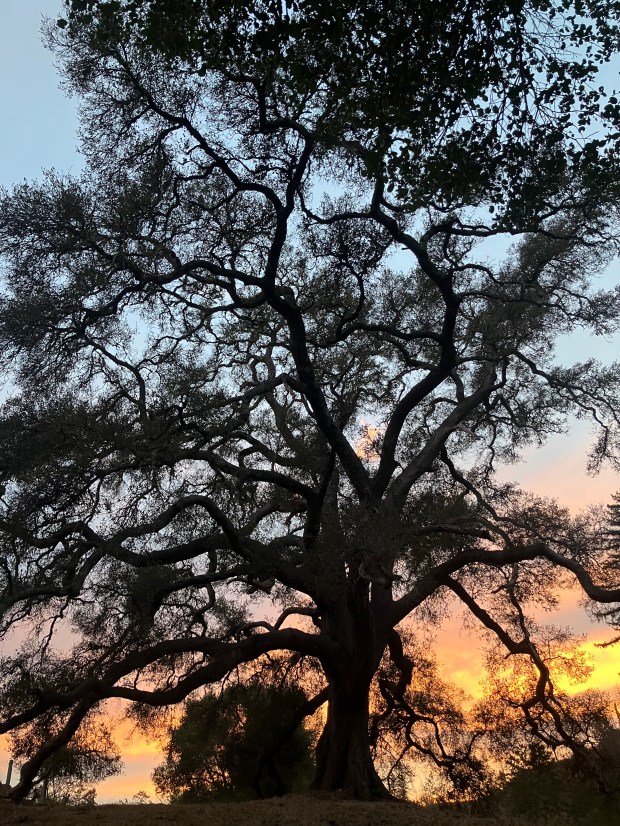
Those with more years are surer that they know better. We seem headed down the long tunnel towards darkness, remembering the other side, where light returns. Fall to winter, winter to spring. And on and on. We want to share experiences, how we coped with trials, the reason and the right way to plant a seed. When to water and when to leave off irrigation. How does a farmer pass along their lessons to the next generation? Years and cycles of seasons create notions of wisdom, minds ruminating on stories that want to be told. An auntie alone on the couch beckons for listeners, but she seems so tired, her ideas so old. Youth turns aside, rejection, lightness calling, pulling them away. They want to learn, they want to learn their own lessons, their own way. Innovation! Creation! Energy! Originality! Expression! Old tired eyes squint at this dazzling light. Auntie is offering gifts, some of irreplaceable value, some that are best let go. Both, she insists, are the same. Oh, so tiresome! The setting sun, glowing beauty, meets an ancient oak soaking up the last rays, joyfully, nonetheless. Bright stars gleaming in the night. They say whole galaxies are being born somewhere out there.

An ancient oak bathing in the last rays of sunset

The Last Markets

Another season draws to a close at Molino Creek Farm with one, maybe two last markets. Judy and Adan comb the rows of tomato vines, searching for the last tomatoes worth selling. The sunflowers have faded, but a few onions remain. Where once there wasn’t room in the market truck for even one box of orchard fruit, now many boxes are welcomed. Customers are buying apples! And the cash immediately goes towards cover crop seed, just in time. And we wonder…where next will we sell Community Orchard fruit? Where there is such rich and valued sweetness, we will find a way.

Granny Smith apples below the Barn

Clouds Roll In

Clouds and distant thunder accompany this ponderous and sad end. Recent years bring this see-saw of Fall heatwaves crashing headlong into surprising cold spells. A third major, many day heat wave saw even high 90s last week and only cooling to the 70s at night. And suddenly this morning we awoke to the 40s with clouds streaming in. They say it might rain. Some farmers even forestalled irrigation with hopes of water from the sky! At any rate, transpiration slowed from cooler temperatures, shortening days, and cloud cover so plants naturally aren’t quite as thirsty.

Arroyo willow showing fall color

Fall Color

The recent heat crisped the normally colorful black walnut leaves, but the promise of fall leaf cheer is starting to blush in Molino Creek Farm’s willow groves. Six years on after the fire, the willow groves are lush and thick like never before…many 2” diameter smooth trunks sprouted from the burnt-out stumps. They are 15 feet tall now, thick in long bushy lines along the unnamed tributary that cuts across our land. The willow yellow is a welcome respite from the otherwise drab landscape. The once-tawny gold grasses are gray with age and the summer drought has left even the redwood needles a bit tired and dull. The forest understory has shriveled to nothing: “duff.” Wildlife tracks have exposed dusty trails, many tracks left in the dirt and piles of dried scat accumulated from the entire summer alongside those. Nature has a fondness for muted browns right now…but then there are the willows! Perhaps rain will soon wash away the dirt and many shades of green will emerge with the newfound moisture.

The lush, post-fire willow glen along an unnamed tributary to Molino Creek…on Molino Creek Farm
Our redwood forest
Two Dog Farm’s leftover squash
some close up late season dry-farmed squash
“Some people pay good money for a hole like that!” – Grey referencing the funding spent on burrowing owl hole creation. This hole made by a genuine ground squirrel, for free!

Suddenly Spring Sprung

The Spring Equinox was a few weeks ago, and the natural world around the Monterey Bay is full of signs of the season. From wildflowers to birds, from the gophers to the grass, life is waking up. Forest bathing or any sort of time in nature is good for the soul and actively seeking out personal interactions with the signs of the season allows us to stay in touch with ancient rhythms of life…slowing down…nurturing our roots in this wonderful place.

California popply in a sea of Madia, which flowers later. There is lupine and brome grass, too

Wildflowers

We’re already past the first wildflowers of the year, but we haven’t missed many. Footsteps of spring is still in bloom- patches of bright yellow color splash across shallow soiled areas in grasslands. Nearby in those same grasslands and in the adjoining shrubby areas, you can see peopleroot, aka wild cucumber, a romping vine pushing up spikes of wonderfully scented cream-colored flowers. Still in those grasslands, poppy flowers have opened: the first ones are always the biggest, tulip sized! Santa Cruz’ Moore Creek greenbelt, Monterey’s Point Lobos, and the grasslands at Fort Ord are all good places to see grasslands’ unfolding spring wildflowers.

Get to some chaparral and you can see the first Ceanothus flowers alongside the waning honey-scented manzanita bloom. Fort Ord is a fine place to see a rare type of chaparral with unusual manzanitas and ceanothus species. Henry Cowell and Wilder Ranch State Parks have some nice patches, too. Report back on the state of the wildflowers in chaparral or grasslands, please!

Swallow Arrival

The first barn swallows returned to Santa Cruz County’s North Coast on March 19, 2023. They traveled from somewhere way south – the tropics where they spent the winter getting fat on different types of bugs. They arrived just in time to eat the early season bees, mosquitoes, and moths. They left when this place was dusty and dry and returned to a vibrant, green, moist landscape. They are just settling in and will soon be scooping up mud to repair or build new nests. I haven’t seen any other swallow species, yet- have you?

Furry Critters

Gophers are throwing soil with gusto, having just woken up for the Spring. The voles have been awake and active for a while, already. Baby voles are dispersing into new areas, and the very violent interactions between voles and gophers has commenced.

Young brush bunnies emerged from their birth dens about 2 weeks ago, half the size of the adults and so very cute. About a month ago, I encountered an adult brush bunny ‘thumping’ – something I’d read about as a youth in Richard Adams’ book Watership Down. An anxious-looking bunny was rushing between shrubs, ducking under cover and then thumping its hind legs onto the ground so hard as to make a drumming noise. It had its eyes on me-  very odd, since I thought I had previously had a fairly trusting relationship with the local bunny families. Perhaps this individual was an interloper from another family as this behavior was a one-time thing.

Long tailed weasels are feeding on gophers, voles, and young rabbits as are coyotes and bobcats. It had been a long time since I saw any bobcats, but two appeared in the area in the last month, so maybe their population is rebounding around Davenport.

California buttercup

Grass

It is the season of grass. Get to a weedy wet patch and you’ll see the most remarkable bright shiny green of Italian ryegrass, an invasive species that reflects light brightly from its leaf blades. The cold nights have tinged some grasses red or purple. Disease from the moist winter makes other grasses turn yellow or orange. The first grass flowers are emerging, but most are a ways away. I was surprised to see some foxtails already, normally a later spring grass flower. How tall with the grass grow? You can see it gain height by the day right now, but not long ago it just got slowly thicker across the ground. The longer and warmer days make for rocketing grass growth. Later rains keep it getting taller, but without rain grass drinks up the soil moisture and patches start to brown on shallow soil quickly after warm spells.

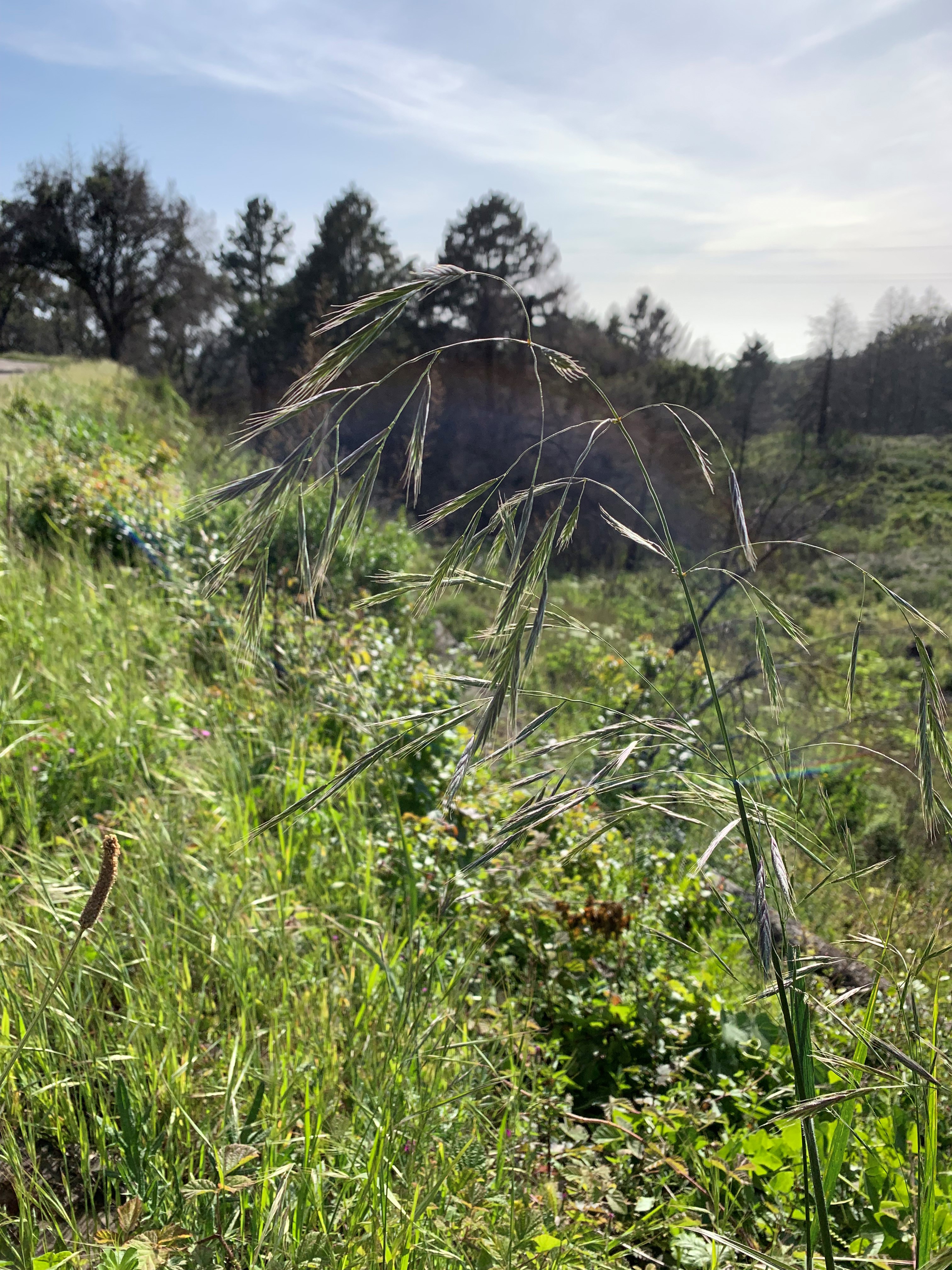
Bromus carinatus, California brome grass

Trees

This is the moment of Spring where we can enjoy the colorful signs of the genetic diversity of coast live oaks. Some coast live oaks unfurl their spring leaves earlier, some later. Examine patches of coast live oaks and see the personalities shine with varying leafing out timing, and even varying colors of new leaves. I like the more maroon new leaves, but the paler spring green trees are also wonderful.

Buckeyes and big leaf maples are breaking bud. Rare in our area, patches of black and valley oaks are also starting to think about leafing out. I recently travelled through the Sierra Nevada foothills and saw the blue oak forest waking up. I love to catch blue oak bud break as patches of that forest turn the most amazing purple-blue right as their leaf buds start to swell, before the leaves unfurl. Now is that time.

Time Passing

The moments of Spring pass quickly, so that if you miss visiting natural areas a few weeks in a row, you will miss an entire sub-portion of the season. The birds will come to you, though – keep an eye out for the swallows wheeling in the air, harbingers of spring! If you haven’t planned on visiting your favorite lupine patch, start planning: they are a few weeks away, but a spring without lupines isn’t ever quite the same.

-this post originally published by Bruce Bratton at his wonderful weekly blog, BrattonOnline.com – donate, subscribe, and so forth and you’ll be regularly in touch with so much around the Monterey Bay