wildlife

Protecting Our Most Precious Spots

The most highly protected terrestrial areas around California’s Monterey Bay are designated as “Natural Preserves” by the California Department of Parks and Recreation and as “Ecological Reserves” by the California Department of Fish and Wildlife. Let’s explore where those places are, and how the State’s premier land management agencies are directed to protect areas with these designations.

CDFW Ecological Reserves

The California Department of Fish and Wildlife (CDFW) manages 1.1 million acres of land in California. Unfortunately, CDFW does not publish summary statistics about how many of those acres are designated as Ecological Reserves, which have the highest protection of any state-owned public lands, as reflected in the following regulatory language:

“….ecological reserves are maintained for the primary purpose of …..protection of rare, threatened, or endangered native plants, wildlife, aquatic organisms, and specialized terrestrial or aquatic habitat types. Visitor uses are dependent upon the provisions of applicable laws and upon a determination by the commission that opening an area to such visitor use is compatible with the purposes of the property.” (Cal. Code Regs. tit. 14 § 630Additional Visitor Use Regulations on Department Lands Designated as Ecological Reserves).

Note the stress on maintaining these properties for species and habitat conservation, first and foremost. And note that it takes a vote by the California Fish and Game Commission to allow any visitors to use those properties. Any such vote must be supported by an analysis of the impacts of such visitation on the species and/or habitats that the Ecological Reserve was designated to protect.

Local Ecological Reserves

The two CDFW Ecological Reserves that people regularly visit around the Monterey Bay are the Elkhorn Slough Ecological Reserve and the Bonny Doon Ecological Reserve. The two other CDFW Ecological Reserves do not allow public access without special permission: Quail Hollow and Watsonville Slough.

The Elkhorn Slough regularly has many visitors. The Fish and Game Commission appears to have at some point voted to approve visitor use at that property. However, a Commission-approved Elkhorn Ecological Reserve Management Plan outlining how visitor use is compatible with the conservation purposes of the property is not readily available. So, unfortunately, I can’t tell you what ‘conservation purposes’ were designated when the property was afforded such a high level of protection.

The other CDFW Ecological Reserve that the public visits was founded with the conservation purposes, according to their approved management plan, from 2003:

“The Bonny Doon Ecological Reserve (BDER) contains the largest and most pristine remaining occurrences of several rare plant communities which are limited to ancient marine sand deposits in Santa Cruz County. These communities contain three plant species which are considered to be rare or endangered: Santa Cruz cypress (Cupressus abramsiana) and Santa Cruz wallflower (Erysimum teretifolium), both listed as Federal and State endangered at the time of acquisition; and Ben Lomond spineflower (Chorizanthe pungens var. hartwegiana), which has subsequently been listed as Federal endangered….The BDER acquisition represented a unique opportunity to preserve a comparatively large area of rare habitat in nearly pristine condition”

In contravention to the regulation cited above, CDFW has allowed public use despite the Fish and Game Commission never having approved visitor use according a plan analyzing the compatibility of visitor use and protection of the Bonny Doon Ecological Reserve. Moreover, such a plan would also be required to have a Coastal Development Plan, approved by the California Coastal Commission. The 2003 management plan alludes to the need for a trail plan, but it is not clear if the plan’s environmental impact sufficiently addressed issues associated with the vague plans outlined in the document. The plan did, however, require creation of a monitoring program that designed to trigger changes in visitor use and trail maintenance. {ask for monitoring reports}

State Parks Natural Preserves

The California Department of Parks and Recreation manages 1.6 million acres of land. As with CDFW, Parks does not publish how many acres are designated as Natural Preserves. Natural Preserves have the highest protection of any State Parks managed lands, as reflected in the following policy language:

“… natural preserves will be established to give full protection to environmental and ecological integrity, from the standpoints of watershed influences, scenic and visual unity, cultural values, and other appropriate environmental factors.

Developments in natural preserves are limited to trails and interpretive facilities required to make possible the visual and sensory enjoyment of the resources by visitors. Vehicle access and parking are not appropriate; visitor centers, restrooms, structures, and facilities other than signs shall be placed outside natural preserves.

Bicycles are allowed only on paved roads in…Natural Preserves.”

Note the language, as with CDFW, stressing the primary importance of these State Parks areas for ecological conservation, and how Parks adds to this designation watershed processes and areas of cultural significance.

Local Natural Preserves

There are 5 Monterey Bay spots with State Parks Natural Preserve designation: Wilder Beach Natural Preserve (small, Wilder Ranch State Park); San Lorenzo Headwaters Natural Preserve (1800 acres, Castle Rock State Park); Theodore Hoover Natural Preserve (23 acres, Big Basin State Park); Año Nuevo Coast Natural Preserve (925 acres, Año Nuevo State Park), and; Point Lobos State Natural Preserve (550 acres). A large portion of the Año Nuevo Coast Natural Preserve has restricted public access and there is no public access allowed at Wilder Beach. The other spots allow public access, but, as noted in the above policies, no one is allowed to leave trails in areas with this designation, and bicycles are not permitted except on paved roads.

One Natural Preserve is missing from State Park’s list: the one that was to be designated for the coastal prairies in upper Wilder Ranch. During the process of approving use of that part of the park, Parks was discussing designation of vast areas of the diverse grasslands as a Natural Preserve. However, it turned out that Parks never updated the Wilder Ranch General Plan and so didn’t pursue such a designation, possibly due to opposition from mountain bikers.

How Are They Doing?

Many people reading this will be familiar with at least some of the areas listed above, places afforded the highest levels of conservation protection. For each spot, ask yourself: how are the managers doing? Do those areas seem to be better managed for conservation than other places? In the case of Wilder Beach, are snowy plovers nesting there…do people get away with trespassing there? In the case of the Bonny Doon Ecological Reserve, is visitor use truly compatible with protecting the many species and habitats, which includes the most endangered ecosystem in North America? How can we tell these stories and help the managers elevate these very special places to give them the protection they deserve?

-this essay revised with new information from that which appeared in June 2024 at Bruce Bratton’s inimitable Monterey Bay news source at BrattonOnline.com

Advocates for Wildlife Protection: Where?

When was the last time you heard about someone advocating for wildlife protection in our Monterey Bay region? Who was it? Why?

I am disturbed by the lack of advocates for wildlife protection and I wonder why that might be. Here are some reflections.

A Plea for Help

Occasionally, I find a need to call out for help for wildlife protection advocacy. My most recent call for assistance was a seeming ‘no brainer.’ There was a clear need for wildlife advocates to ask the State of California office of the US Bureau of Land Management to consider a science-supported update of their statewide sensitive wildlife species list. The one BLM has been using doesn’t protect a bunch of State listed wildlife species, as it should. And, the BLM is required to work with our State Wildlife agency to do just that. This is one of the most straightforward issues I’ve faced: the facts are easy to illustrate and quick to research. And so, I reached out to the obvious pro-wildlife advocacy organizations. Who comes to mind when I say that? Pause, don’t read on…think: who would that be?

The Sierra Club

If you are a pro-wildlife advocate, the Sierra Club seems a great place to work. Well, it could use some help. My pleas to the Santa Cruz Group of the Ventana Chapter of the Sierra Club went unanswered. The one or two in the group who are apt to answer such requests are totally stretched. A while back, the local club was taken over by the pro-bicycle lobby, a group that has little regard for wildlife conservation. It should be telling that Santa Cruz doesn’t even have its own Sierra Club chapter: the local one is a sub-group of the Ventana Chapter, based in Monterey where most of the pro-environmental activism has been traditionally located.

The Wildlife Society, San Francisco Bay Area Chapter

Another far flung chapter of an organization that is supposed to represent Santa Cruz County’s wildlife conservation concerns is the SF Bay Chapter of the Wildlife Society. Unlike the Sierra Club, this Chapter did return my queries. However, after a long wait they wrote me that they were uncomfortable advocating for this issue. They actually told me that they weren’t an advocacy organization, despite their website saying that they “work to ensure that wildlife and habitats are conserved” by “advocating for effective wildlife policy and law.” It seems like whoever is active in the organization right now is uncomfortable being advocates. Luckily, their parent organization was a much better help.

The Western Section of the Wildlife Society

Even more far flung than the SF Bay Chapter, the Western Section of the Wildlife Society was a great help. Their leadership, though obviously overworked, were enthusiastic and helpful with the straightforward request for assistance. They did due diligence and had adult conversations about the need for advocacy and wrote an amazingly strong letter on the issue. If you want to support a good (local?) organization for wildlife advocacy, this is a logical choice. Unfortunately, they probably won’t be proactively monitoring our local situation and helping out without us asking.

Audubon Society

Not so far flung, the Santa Clara Valley Audubon Society is very active and quite influential…just over the hill. When approached, their overworked volunteers can sometimes be enticed to help with local conservation. I have to give them a call on this one.

Land Trusts

The Land Trust of Santa Cruz, Sempervirens Fund, Save the Redwoods League, Peninsula Open Space Trust and others…clearly all competing with one another with no unified messages or strategy for region-wide wildlife conservation. Instead, they are as likely to be public-forward with pitches for increased recreation in natural areas, which runs counter to wildlife conservation. With this contradiction, none of these organizations are able to build credible coalitions to advocate for wildlife conservation.

Wildlife Biologists

I have long approached local wildlife biologists for assistance, with mixed results. This time, I reached out to a few and was surprised. What I was asking experts to do was to do a bit of analysis  so that their opinions about adding species to the BLM’s list were well supported. A handful of wildlife biologists said that they would consider advocating for this cause, but only if paid for their time for analysis. One biologist, Jacob Pollock, stepped up as a volunteer. Dr. Pollock is a steadfast advocate for science-supported wildlife conservation. He has an inquisitive mind and powerful analytical abilities. He deserves recognition and thanks for his wildlife conservation volunteerism. This is apparently quite rare. He will shortly offer up a methodological approach to updating the BLM’s State Special Status Wildlife Species list with an example from a statewide analysis of the rarity of American badger, including BLM’s contribution to its recovery.

The rarity of such volunteers was recently emphasized when a community organization contacted me to speak at a public forum considering a potentially wildlife-impacting regulation. I couldn’t speak and couldn’t think of another wildlife advocate to do that speaking engagement. Have you seen an inspirational wildlife conservation advocate who regularly speaks to local threats to wildlife and solutions for conservation?

Why So Few?

What has created this dearth of local wildlife advocates? We have no reliable analysis about what has happened. One day, maybe I’ll find the time to do some investigative work about what went on with the local Sierra Club. Meanwhile, I suggest that mere intelligent leadership in our community would result in that person getting elected to the Santa Cruz Group. However, that person would be lonely without a couple or three more such people to make a majority vote happen in favor of wildlife…and, a group of such volunteers would be necessary to pick up the workload for responsible advocacy.

Cost of living might have something to do with the situation. The Monterey Bay area is very expensive to live in, so wildlife biologists must work hard to pay their bills, leaving no time for volunteer work. And, when professional wildlife biologists do advocacy, they threaten some of their employment opportunities, so there’s further disincentive.

Parallels with Environmental Educators

If there are any social scientists out there, read this other post and compare the notes with this one – I think there are parallels. Besides wildlife biologists, why are so few environmental educators meshing conservation advocacy with their work?  Is it likewise the threat to income? Or, is there something cultural going on here? There might be some redundancy with this issue as perhaps a large number of environmental educators are also wildlife biologists.

What Are We To Do?

I heard recently that progressives might be getting some funding to support a revitalization to allow improved political campaigns in Santa Cruz. Perhaps there is a similar need in wildlife advocacy. It does seem that we need a new organization to advocate for wildlife in our region. How would one go about setting it up for success? I imagine it starts with funding the set up and also creating an endowment for some staff positions. The mission would need to be building a supportive, diverse, and active public. I am looking for such change.

-this post slightly adapted from the one published by Bruce Bratton at his impactful BrattonOnline.com blog site where there is often lots of good information from some brainy characters. A great source of news.

What Do I Want for Wildlife?

We might ask ourselves, “What do I want?” This important reflective question is a good one and becomes even more poignant in those moments of realization that we have limited time on Earth. There’s a fairly malignantly overused neural pathway of “What do I want?” used for shopping and consumption, but let’s try to dismiss that one and turn our focus on another. “What do I want” from the world around me, the world less likely to be affected by my purchases? For instance, ask yourself what do I want my experience to be when I go for a walk, or what do I want from the natural world: for the forests and streams? What do I want for wildlife? What do I want for my family and friends…for my neighbors…for my community? As we look outside of ourselves and express our desires for the larger world, we encounter our social potential: what can we do as members of a community? How can we influence the world to be a better place? Most people know that we influence those closest to us the most and come to know our circle of influence better with age. Some people work to broaden their circle of influence, some to narrow it. If we feel frustration towards the state of the world, we might explore politics at the local level to see how we grow our influence to make a better world. How does this work for what we want from Nature?

I Want Healthy Wildlife Populations

The majority of Americans want wildlife to thrive, to know that humans are well stewarding, even restoring, wildlife populations: this is something with which both liberals and conservatives agree. As I’ve addressed many times in this column before, that sentiment largely lacks evidence in local politics. Our City and County elected officials fail almost every time they are given a choice to better protect wildlife. We live in an area with a very high number of rare and endangered species, and those are only protected because State and Federal officials step in to enforce protections. How can this be the case with the local legacy of environmentalism and environmental education?

The “Teach Them and They Will Care” Fallacy

While people may say “I want healthy wildlife populations!” they apparently favor the sentiment of “I want money” as they keep electing pro-business officials who (mistakenly) believe that environmental protection comes at unacceptable costs to social welfare. And still, the local environmental education community unanimously embraces the fallacy that if you teach them about the environment, they will care enough to protect it. The corollary fallacy is ‘if you give them access to nature, they will care about nature and so nature will be protected.’ These are convenient fallacies because both allow the environmental education and trail building communities to raise funding from the wealthy, pro-business elite; that funding is crucial to keeping their organizations operable. With the “carrot or the stick” dichotomy for environmental protection, there goes the carrot. What about the stick?

Environmental Protection has Become Non-Local

Over the past 20 years, local environmental protection owes much to State and Federal legal ‘sticks.’ Twenty years ago, we made headway with environmental battles via the Coastal Commission’s authority to protect sensitive habitats at Terrace Point, the University, on City Greenbelt lands, and in State Parks. That agency has since abandoned its environmental protection arm, but the US Fish and Wildlife Service and National Oceanic and Atmospheric Administration have since helped protect what they could from a federal perspective. The California Department of Fish and Wildlife (CDFW) has only occasionally helped protect the environment on the Monterey Bay, more commonly turning a blind eye to environmental impacts that are clearly within their jurisdiction. However, even so, CDFW has done more than local authorities to protect wildlife. In short, we apparently respond more positively to ‘sticks’ than ‘carrots’ when it comes to caring for wildlife around the Monterey Bay. Ask yourself if this approach aligns with your political beliefs? Do you want more State and Federal enforcement of wildlife protections? Or, would you rather believe that people only need ‘carrots’ to do the right thing for protecting wildlife? If the latter, how do you see things changing, socially or politically, to make that happen? If the former, how is it that you are actively supporting State and Federal agencies who are using sticks to protect wildlife?

Uh-Oh, Wildlife Protections in State Parks?

A while back, Californians realized that State Parks needed better planning to protect wildlife. And so, politicians created a rule that every park must have a plan that addresses wildlife protection, even specifying that those plans have what is called a carrying capacity analysis. Carrying capacity analysis defines an approach to determining how to design park access so that wildlife populations remain healthy. Locally, because of repeated negotiations with environmentalists, State Parks has evolved its approach to such analyses, though they have more recently apparently given up on creating plans for parks, altogether. The General Plan for Castle Rock State Park illustrates how landscape architects very badly approached their mandate for good carrying capacity analysis. In that plan, planners who were inadequately trained in wildlife protection sharpened their crayons and shaded huge bubbles across the park, vaguely labeled as high, medium, and low intensity use. This vague and unenforceable planning conveniently allowed unbridled access everywhere. Now, visitors are degrading very rare wildlife habitat associated with rock outcrops and regionally unique wildlife habitat associated with a black oak forest. Because of the terrible approach outlined in the General Plan, an environmental non-profit was able to construct a visitor center in close proximity to these very sensitive wildlife habitats.

A Curious Evolution

Realizing that people wanted State Parks to do more for wildlife protection, the more recent General Plan for Big Basin State Park improved a smidge on their carrying capacity analysis. That plan well reflects the modern principles of analyzing carrying capacity for wildlife protection, but curiously falls very much short of being meaningful. The Big Basin plan rightly says that it is important to address negative impacts of visitors on wildlife by defining science-based thresholds which would be monitored and, if surpassed, would trigger management actions. However, the plan then (very curiously) fails to define such thresholds.

Aiding and Abetting

The same environmental group that built a visitor center precisely where it would be most likely to negatively impact the most sensitive wildlife habitat at Castle Rock State Park is now proudly advertising a similar approach at Big Basin. Instead of helping the People get what they want (wildlife protection), they are doing a great job of raising capital to support their organization through a campaign of increasing access to Big Basin without a viable method of protecting wildlife at that park. In such a way, the organization illustrates its embrace of the fallacy that increased access somehow increases wildlife protection. As you might suspect, this same organization also embraces the fallacy that milktoast environmental education somehow increases wildlife protection. They are funding the interpretive signs for the planned entrance at Cotoni Coast Dairies; the signs, no doubt, will fail to provide visitors with either the inspiration or information needed for them to take meaningful actions to improve the Bureau of Land Management’s stewardship of wildlife at that park. Wait and see.

What Do You Want?

As you consider Big Basin State Park, Castle Rock State Park, or Cotoni Coast Dairies, ask yourself ‘what do I want for the wildlife of these parks?’ How would you know that you are getting what you want? In no case will you, or the managers of those parks ever know…unless things drastically change. That change will only occur if enough of the right people decide that what they want is important enough to act. In the meantime, please know that all visitor use of parks causes negative impacts to wildlife. If we want to conserve wildlife in parks, it will take a new level of dedication of parks managers to perform adequate carrying capacity analysis, monitoring, and adaptive management. That dedication will only occur with the ‘sticks’ that are luckily available to the citizens who are willing to use them.

Environmental Injustice and Accountability

Shall we all agree? Injustice shall not stand! But what are the ultimate measures of environmental injustice, and how do we make those responsible for violating those measures more accountable? Shouldn’t these be the primary questions we pose as ethical humans concerned with the welfare of future generations? As the which came first the chicken-or-the-egg statement goes, ‘no peace, no justice.’

Species Loss and Soil Loss

I posit that the loss of species is the primary measure of environmental injustice. And I would suggest that soil loss is, as a measure, just as important. It is sometimes difficult to make the case that a given species is critical to the welfare of humans. But any informed, rational conversation on the subject will eventually conclude that the most justice is served by ensuring all species survive. It is similarly difficult for most people to understand and discuss the importance of keeping soil in its rightful place. And again, if people take the time to have informed rational discussions on this matter, they will conclude that is absolutely critical that humans do everything in their power to ensure that soil is not lost…from any place.

Measuring Success

Humans have become expert at measuring things, and there are easily available metrics for monitoring species and soil health. The federal government of the United States has an Endangered Species Act and a Marine Mammal Protection Act and the State of California has its analogues. These two very powerful pieces of legislation demand a science-based approach of measuring the degree to which species are approaching extinction, publishing lists of species which have entered that trajectory, and demanding humans take the actions necessary to recover those species back to healthy populations. With those rules, we have progressed well in our species health measurements, database management, analyses, and predictions – oodles of very smart humans’ careers are spent on these issues. The US Fish and Wildlife Service, National Marine Fisheries and California Department of Fish and Wildlife are the authorities responsible for protecting species.

Similarly, both the federal government and the State of California have strong legislation to address soil loss. The federal Clean Water Act and the state Porter-Cologne Act both address soil loss where it can most easily be shown to affect human welfare: in wetlands, streams, and rivers. Again, humans have become adept at measuring soil (aka ‘sediment’) levels in our wetlands and waterways. The acting authority for both pieces of legislation is the State Water Quality Control Board, acting with Regional Water Quality Control Boards…ours being the Central Coast office based in San Luis Obispo.

Photo by Vince Duperron

Progress?

We have had some success, but mostly we are failing to address species decline and soil loss. The Monterey Bay region has excellent examples of both the limited successes and abject failures with both issues. If you get to Moss Landing or Monterey and hop on a whale watching boat (and I hope you do!), you can predictably view endangered species that, due to legal protections, measurements, and adaptive management, have recovered somewhat from extinction. Hike at the Pinnacles, and you can see California condors which most people feared would go extinct not that long ago. Walk on some of our local beaches and you might see a snowy plover…another species who owes its survival around here to the Endangered Species Act. Same with the southern sea otter, marbled murrelet, and the central coast populations of steelhead and coho salmon. If I’m convincing you of humans’ ability to reverse species extinction, you are being premature. All of those species, and dozens more endangered animal species remain on the federal and state lists of imperiled species because they have not been recovered. And, many, many more species qualify for listing under the state and federal endangered species acts but the authorities haven’t spent the time to analyze them. Locally, only the peregrine falcon has been ‘delisted’ – no small feat! The reason so many species are so tenuously holding onto their existence: lack of accountability.

Accountability

Holding people accountable begins with measuring their success. After legal action by the Center for Biological Diversity, the US Fish and Wildlife Service has been dutifully publishing 5-year reviews of the status of each federally listed species; the stories in those reports are not good, but their reports fail to go so far as to hold anyone accountable. Turning to our much-vaunted free press, The Intercept recently published an exposé that illustrates who should be held accountable for the lack of protection afforded endangered grizzly bears. That story, and similar stories I’ve documented from around the Monterey Bay, point to problems with the justice system. If you haven’t figured it out yet, the US justice system is seriously in trouble: there is no justice in the USA! As shown in that Intercept article, anyone can destroy the habitat of, or kill individuals of, any endangered species and easily get away with it.

Point Reyes Horkelia: another species about to be listed as Endangered due to bad public lands management decisions

Local Examples – Endangered Species

Whale species, snowy plovers, Ohlone tiger beetles, California red-legged frogs – all local endangered species with good documentation of legal infractions that have gone unanswered. There are films, witnesses, and reliable first-hand accounts (including by legal enforcement personnel) showing boat captains purposefully pursuing and interfering with the movement of – harassing – legally protected whales on the Monterey Bay…and these are ongoing situations. When interviewed, Federal enforcement personnel say that it is hopeless to enforce such infractions because they report to too few legal personnel and those personnel say such cases don’t stand any hope of holding up in court. Similarly, State enforcement personnel say that unless they catch, film, and have witnesses of someone in the act of killing an endangered sea otter (with ‘blood on their hands’ and a ‘body in their trunk’) there is no hope of legal enforcement of the many more frequent (and well documented) situations of human behavior negatively impacting that imperiled species. Again, they say this is due to limited legal bandwidth within their agency and the hopeless nature of the justice system in convicting anyone. In Florida, there is good legal precedent for finding parks agencies responsible for allowing visitors to trample endangered sea turtle nests. In Florida, as with California, state parks personnel are required to plan for such endangered species protection, even on popular beaches. Around the Monterey Bay, parks agencies routinely allow visitors to trample endangered snowy plover nests and squish endangered Ohlone tiger beetles: there’s documentation aplenty with both situations. As recently as this past year, park agency personnel have destroyed wetlands occupied by California red-legged frogs to ‘improve’ trails. In past years, park agencies have graded and graveled trails, destroying Ohlone tiger beetle habitat. When reports reach federal officials, they respond that they contact parks personnel, admonish them, receive apologies, and then they forget it…there is not one bit of justice served!

Local Examples – Soil Loss

I could, and will in a future essay, provide a similar litany of examples where responsible agencies have failed to enforce regulations designed to address soil loss. The San Lorenzo River is ‘listed’ as impaired by sediment- soil loss in that watershed is rampant and largely unaddressed. There is more to come on this.

Upper- and Lower-Level Accountability

What do we do? If voters don’t demand that District Attorneys enforce environmental crimes, they won’t. If we don’t demand that our politicians have environmental platforms, they won’t work to improve the justice system so that it protects species and soils. But is the fault really way up there at those ranks? Can’t we demand accountability at lower levels? After all, unless we work together at every level, we won’t succeed.

If you see something, say something. We must have compassion for the enforcement personnel who so want to do their jobs but feel disempowered. And let’s learn how to be good witnesses, how to provide the right reports, and how to help document the two primary root environmental justice issues. Evidence must mount from more people more frequently. We must also make sure that the evidence is well stewarded: I look forward to annual reports from enforcement agencies about the frequency of infractions that remain unenforced.

Finally, why do we allow parks agencies to keep operating so that visitors are destroying the endangered species that those parks were designated to protect? Why do parks personnel allow so much soil loss from roads, trails, farms, and buildings? This goes beyond enforcement. This is a political issue. No one wants such injustice.

-this essay originally posted by the wise Bruce Bratton, who aligns some of the areas’ best minds to post in his weekly blog at BrattonOnline.com – why not subscribe today?

Not Passing Through

A fundamental issue related to the inter-connectedness between humans and between humans and Nature is how we move. How often do we change homes? When we are doing errands or our work, how quickly do we move around the landscape, in cars, bikes, buses, or on foot? When we visit nature, how do we move…and how fast?

Changing Homes

According to surveys, US citizens move from one house to another 18 times. On average, they move every 6-11 years, depending on region and economic status. In other parts of the world, such as China, there are millions of itinerant workers who are on the move all of the time. Refugees from war, climate disasters, cartel/mob threats, etc., are numerous. Is this natural?

Some would suggest humans are naturally nomadic. Long lived civilizations are very rare, and I’d be interested in knowing how long pre-industrial indigenous group are thought to have remained in the same territory.

The Social Meaning of Moving

Neighbors are a very long type of human relationship. Some people don’t know their neighbors. Some even don’t want to. The throng of cities provide anonymity that some crave. Rural areas lay bare the need to interact with neighbors. Some loner rural denizens stand out in their desire for isolation, leaving the rest of the neighborhood wondering and curious. That spectrum means there is a wide variety of meaning when we move away from the social fabric of our neighborhoods. When we move farther still, we leave behind those we chose to interact with, our communities, our friends. How have those moves affected you, your family, your friends?

Lost Communities

I posit that the frequency of people moving is negatively affecting the quality of communities. If people stayed put more, wouldn’t they come to better understand the things that affect their community? Even if they aren’t particularly interested, it seems like people gradually come to understand housing issues, strains on water sources, the health of the public transit systems, who has power and who doesn’t, how weather affects people, social norms, and history. Each of those types of understanding influences our relationships with others in our community and can affect the political parties and politicians we choose. When we move, our votes make less sense, and our communities suffer the consequences.

Moving Around Where We Are

Closer to home, how do we move about in our daily lives? I am amazed at rush hour traffic and suppose that most of those people can’t afford not to be moving so slowly, breathing thick exhaust. For a long time, as a commuter, I tallied the very expensive vehicles on the road at various times of day. Not surprisingly, the rich are better able to avoid rush hour. So, how and when we move around is highly affected by how much money we have. But, everyone moving in cars on the road share the experience of isolation from each other and from the world as a whole. The more time people spend in their cars, the more isolated they are.

Economic conditions notwithstanding, Covid lockdowns changed many people’s movement patterns. People looked at their homes differently. For instance, people started cultivating many more houseplants. As the urban bustle subsided, wildlife started edging further into the built environment. We noticed the world around us a lot more. It was quieter both on the streets and in the air. Air pollution declined. Some of our movement patterns remain curtailed despite city governments’ attempts to get businesses to reverse work-from-home policies.

Moving Around In Nature

A ‘avid’ mountain bike enthusiast once told me that they rode carefully so as to avoid running over newts. For those who read my column regularly, you know I have an affinity with newts. When I walk in the forest, avoiding stepping on newts is something that keeps my attention. It is not easy. Newts blend into the forest floor easily, are varying sizes and move at varying speeds, and are sometimes so numerous that you have to walk ever so gingerly to avoid them. It is even more difficult for a bicyclist to avoid smashing newts, and that example serves for a world of other nature interactions. The faster you move around nature, the less likely it is that you will see the nature around you. Also, bicyclists, by covering more ground than those on foot, also disturb more wildlife than other, slower-moving parks visitors. If we are looking to increase the nature sense of humans, we must work to get mountain bikers off of their bikes, so they move more slowly and experience nature more deeply. The same goes for joggers. Parents who care about helping their children connect with nature have a challenge to show their kids how nature is exciting even if you aren’t on a bike or running through a park.

Infrastructure in Nature

‘Stay on the trails’ is an increasingly common park visitation rule. It wasn’t that way very long ago. Technically, State Parks has to formally designate an area as a natural reserve to legally restrict use to trails. At Cotoni Coast Dairies, the land managers have to go through an arduous rulemaking procedure to restrict future visitors to trails. Staying on trails changes the way you experience nature. Wildlife avoid trails. The vegetation surrounding trails is different. Your chance of encountering other people on the trails changes your experience. And, most trails are designed as straight lines, as if we are all in a hurry to get from one place to the next when we visit nature. Trail builders with parks agencies think that people want ‘loops’ and are averse to ‘out-and-back’ trails. Turn offs from the main trail better end in some giant attraction, like an incredible view. Those straight lines and loops create a certain type of experience for parks visitors. I suggest those designs enforce a more fleeting and more separate interaction with nature. What would it be like if more trails led one way to nothing obviously spectacular? What if parks managers designed in slow, immersive experiences into their ‘infrastructure?’

If people slowed down, looked around, and took more time to experience nature, wouldn’t that connect them more with the natural environment? Wouldn’t that connection make them care more about protecting the environment? Just as people moving less increases the possibility of caring more for their neighbors and human community, people moving more slowly in parks should increase their caring for the non-human world.

-this post originally published by Bruce Bratton in his highly engaging and enlightening weekly blog found at BrattonOnline.com, where you can turn for the most meaningful news for the Monterey Bay area.

Animals of our Hearts

We each come to loving non-human wildlife for our own reasons, and we want to assure that all species are thriving for future generations. Among the many people with whom I interact, their answer to an intriguing question is uncannily and increasingly resolute.

“How many species do you need to maintain the quality of life you desire?”

“All of them” is the answer more and more people are giving me.

How does that work?

Only through the goodness of our hearts will we conserve wildlife. What doors open our hearts enough that we are willing to act to restore wildlife?

Cute, Fuzzy Creatures

As children, we are fascinated and kind towards non-human animals. Often, what we glean from children is that they find wildlife to be ‘cute.’ Whether they are stuffed plush toys or animated cartoons, we indulge our youngest children’s inherent love of wildlife. They have pets, or visit friends’ pets, and develop relationships with non-human species. Children learn to cuddle and stroke pet fur, and the pets purr and roll, and show pleasure, giving love back. Humans and non-humans give and receive love, reducing stress and building trust. We expand the community from our core human families to include non-humans.

As adults, we carry with us that love of cuteness, the desire for connection with non-humans, the tactile pleasure of the furry cuddling interaction. And we develop still other ways to connect with non-human animals.

Non-Human Friends: Our Pets

The friendships we create with non-human species are complex, and we each have our own approach. Many share a basic understanding that has developed with our non-human pet species. There are troves of common wisdom about dog and cat behavior towards, and expectations of, humans, which I will not repeat. I’m sure you have plenty of material to reference, as this is a deeply cultural realm and the subject of many conversations, especially when extended family gathers and ‘pet talk’ is a relatively safe space for discussion.

As those pet conversations get more personal, it becomes clear that many humans rely on non-humans (and vice versa) for friendship. Our pets go with us on adventures and reveal to us much that we may not have otherwise experienced. Our pets recognize our ups and downs and participate actively with all of our emotional territory.

Wild Friends

It’s not only pets: some people recognize friendship with wild creatures. The stand-out crowd are those who feed or provide water for wild birds. This bunch is so numerous as to have a sizeable economy surrounding these connections. People buy and maintain hummingbird feeders, bird baths, bird feeders, suet cages…some even invest in specialized foods such as worms or fruit jellies for their favorite bird species. There is an emerging movement in gardening for wild birds.

Still others connect with the wild furry animals that they frequently encounter in parks or in their yards…squirrels, deer, and foxes are the ones I hear about the most. People put out squirrel food, some even getting to know a squirrel well enough to feed it out of their hands. Some folks get to know a certain local doe and her fawns, watching her through the year as she raises them from spots to adolescents. The doe may very well know about the safety net provided by their proximity to a friendly human’s habitation. She and her fawns will feel comfortable near the humans they recognize. Being very sound-centric, they respond attentively and curiously when we talk to them. The very habitual fox, trotting the same paths at the same times each day, will know just how to avoid human encounters but we catch glances of them when we break our rhythms. They poop on our shoes outside the door as a way of saying hello. For a while, foxes were so regularly seen in Bonny Doon that when their populations dipped a whole community was saddened.

Wildlife Viewers

Many of us are falling in love with more and more species of wildlife. We call ourselves naturalists or wildlife viewers. We study the critters we encounter in order to learn new stories. Domesticated dogs provide a gateway into the natural world…through our regular ‘dog walks’ and through our observation of their sniffing around and explorations. Wild animals do those things, too, in many more ways. They draw us out of our cozy homes to visit them and see what they are up to. Observing their behavior, we learn new things about the natural world. As our curiosity grows, we find ourselves in places we wouldn’t otherwise venture, at times of day we might not otherwise get out. Wildlife viewers must get up very early sometimes. To see a river otter, they go to the riverside; to see whales, they go out in boats; to see pond turtles, they spend time gazing at logs in ponds; to see snowy plovers, they squint into binoculars on a wind-blown beach; to hear owls, they stay up late and scritch gravel to goad them to calling.

Hunters

A significant and important segment of the human population connects with wildlife as part of the hunt. Sometimes, hunting provides important food for subsistence; historically, this was even more so. Other times, hunters enjoy the sport as well as the food. Hunters and people who fish get to know the species they pursue and the habitats those species rely on. And, their love of wildlife for hunting has actualized incredible conservation successes. Ducks Unlimited and Trout Unlimited are two of the many organizations supported by hunters which have helped steward wildlife habitat and recover species.

All of Us

Statistics suggest that the vast majority of humans, even here in the apparently divided USA, strongly support wildlife conservation. When we realize the importance of wildlife to our standard of living, we are compelled to learn more about what wildlife need to survive. When we connect with wildlife, we realize we are part of something greater than ourselves, bigger than our simplified human-oriented world. When we see wildlife make a connection with us, we feel part of the natural world, and our basic selves become more grounded and real. When we work to conserve wildlife, we are at our best…serving the world that serves us. Three ways we can be effective at wildlife conservation:

  • Vote for candidates that detail their approaches to conservation. Every political candidate has the means to make a bigger difference than any one of us acting alone.
  • Join a wildlife conservation organization, donate more than membership fees. The Center for Biological Diversity is my choice. The Audubon Society is a good one, too. I’m vetting others…suggest one that you think I should mention!
  • Tell your friends heart-felt wildlife stories. Help create a culture that connects with wildlife!

-this post originally part of a Bruce Bratton weekly blog at BrattonOnline.com, read it and be enlightened!

-to be further enlightened on this subject, see the recording of my recent presentation about local wildlife by clicking here.

Falling leaves and moist winter chill

Fallen leaves blown across the forest path, under foot while walking, go “swoosh, swoosh, swoosh.” The sound of moist leaves (not crisply crunchy), an early rain and cool nights softened the landscape, removed the dust, made things gentle again. We are relaxing, slowly shedding the stress of the Fall’s potential for wildfire made more real these past many weeks by wind-carried smoke from prescribed fires across the entire state, even nearby at Wilder Ranch.  

Breezes carry in the clouds and then clear the clouds, waves after waves of clouds and then sun alternate as the dry summer plays with the wet winter, back and forth. This week, winter won with a bit of rain, shy of an inch and not yet wetting the soil more than superficially. After the rain, some sunny warmth and then the wind, fog, and another front , and it got chilly. Tuesday evening fog piled up on the other side of the prominent ridge across Molino Creek and poured over it, falling like a ghostly waterfall backlit by the evening sun. Beautiful!

Neither the rain nor the subsequent drippy fog has been enough to release the cedar-scented petrichor, much anticipated.

we do grow olives…for locals only olive oil!

Big swell, seasonal scents

Last night’s goose bump chill sent us to close the windows, put on sweaters, and some even built their first wood stove fires. And today’s cool air reminded me of how I’ve been taking the sun’s warmth for granted and how I’ll miss that deeply warm sense for a long time soon. The cool air, moisture, and gusty breezes accentuate the piney, resinous smells of redwood, Douglas fir, and coyote brush. Winds across the ocean pushed up an epic swell recently. Roaring and thumping waves reverberated across the landscape, but now there’s just a low more consistent hum. The patterns of breezes with long lulls awaken the senses, especially when it is peaceful on the farm but the trees on the ridge start talking, telling us a big gust is coming.

Feathered visitors

Geese, Canada and white fronted, are honking their melodies overhead near sundown. They are making their way to their winter grounds.

The newest birds are blackbirds, strutting around the fields in flocks, their heads moving curiously straight back and then straight forward with every stride. This evening, the light was catching the glean off the backs of a flock of Brewer’s blackbirds, reflecting the iridescent deep purple-blue of their gorgeous plumage. They let me get close but eventually alighted to show me the bicolor blackbirds in their midst. There are around 50 of this mixed flock and more may still arrive. They love to eat the grass seeds in the cover crop. They might even be anticipating it.

Other wildlife

Otherwise, the wildlife report is all about the Very Big Buck, coyotes, and chirping bright blue bluebirds. Perhaps there’s more than one Very Big Buck, but people are talking about an extraordinarily large, very impressive male deer from here to Davenport and north to Swanton. This creature stands very smart and tall with a giant set of antlers nearly 3’ across. He stood in the roadway looking intently north where he couldn’t traverse without going around the deer fence. He hesitated, looked north again, and then sauntered uphill following the fence line, somehow seemingly begrudgingly.

Nearly nightly, the coyotes sing. They aren’t doing the long musical numbers with multiple animals yipping and howling, but rather it’s a series of solos of the one coyote couple. One evening, they were calling from way up the Molino Creek canyon. Another evening, they sang right outside the window. Each night they try making some song from a different place, perhaps checking out the acoustics: the echoes are always fun.

The throaty, watery chirps of western bluebirds grace our midst. The brilliant blue flashes from the males’ zig-zaggy flights are breathtaking. There were seven birds, up a couple from last count. With that plumage, one wonders if they are considering breeding early…

The fading row crops will soon be tilled in and cover crop will grow, instead

Fall farming

We’re not quite ready to cover crop. There are still 10 days of tomatoes to harvest and the apple harvest is in full swing. The floral crisp sweet Gala apples are almost all gone; we will pick no more for market. Last weekend, we picked all the remaining Mutsu apples which had been devastated by the apple scab disease that enjoyed our late wet warm spring. Next up are the Fuji apples, and there are plenty of those! Plus, there are Golden Delicious, an underappreciated long storing apple of extraordinary flavor. In the Barn there are hundreds of pounds of culled apples that we’ll soon be juicing for cider. And so, we pick, pick, pick…sending on the perfect apples to market. Between picking spells, we spread compost and mow to prepare for harrowing in the bell bean seeds.

those rusty brown tentacles….avocado roots poking up into the loose, month-old compost!

Tentacles in the compost

The Community Orchardists have been spending the last many weeks spreading compost under many trees. Around a month ago, we spread compost under the avocados on Citrus Hill. After that little bit of rain, I noticed those avocadoes looked particularly perky and vibrantly green. So, today I pushed around the compost to see if the avocado roots had invaded it: they had! It is so curious to me that avocado trees push pointy tenacles of roots straight up, out of the soil into mulch. How do those thick pokey roots feed off the mulch? Such a mystery.

young avocado trees are growing fast!

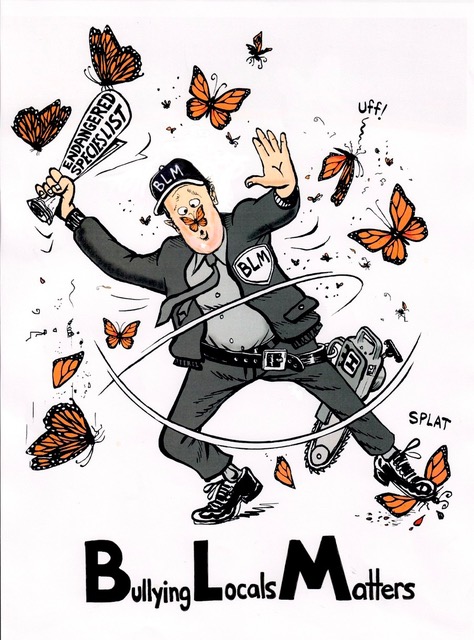
The US Bureau of Land Management-  Species Conservationists?

The California division of the Bureau of Land Management suggests that it is concerned about rare species, but what evidence is there for those of us considering their management of Cotoni Coast Dairies? It is crucial that public land managers take care of rare wildlife and plants – doesn’t it seem like public lands are the right place for species conservation? Let’s consider what we’ve seen…

Background

The BLM has some great policies to guide its management of rare species. It has a guidance manual, Manual 6840 “Special Status Species Management,” that says that BLM will manage not only for species on the USA’s list of threatened and endangered species, but also for species that are candidates for listing as well as those which State wildlife agencies consider priorities for conservation. The manual directs each BLM State office to keep a list of State Sensitive Species (both wildlife and plants) and to update those lists every 5 years in collaboration with State wildlife agencies.

BLM California has published the following lists of sensitive plants and wildlife.

California BLM’s Sensitive Species: Problems

Although BLM’s policies are good, somehow their implementation at Cotoni Coast Dairies, designated as one of  5 onshore units of California’s Coastal National Monument, has been faulty. For instance, plant species listed by the State as rare (Rank 1B) are automatically considered sensitive according to BLM policy, but the BLM California sensitive plant list is missing three of the California rare plant Rank 1B species that have been documented at Cotoni Coast Dairies: Choris’ popcornflower, Santa Cruz manzanita, and Monterey pine. In addition, although BLM’s State Sensitive Plant List has Point Reyes Horkelia, it is not noted as occurring under the management of the Central Coast Field Office, which oversees Cotoni Coast Dairies. Moreover, the last time BLM’s sensitive wildlife list was updated was 2009; it is missing many species recognized by California Department of Fish and Wildlife as rare, including some that occur at Cotoni Coast Dairies. Here are the Cotoni Coast Dairies’ wildlife species that would have been included on BLM’s sensitive wildlife list if the BLM California State Director Karen Mouritsen were following her mandated actions under Manual 6840:

Common nameLatin nameRarity Status
   
Grasshopper sparrowAmmodramus savannarumCA Species of Special Concern (nesting)  
Northern harrierCircus cyaneus  CA Species of Special Concern (nesting)  
Olive-sided flycatcher  Contopus cooperiCA Species of Special Concern (nesting)  
American badgerTaxidea taxusCA Species of Special Concern  
San Francisco dusky-footed woodratNeotoma fuscipes annectens  CA Species of Special Concern

BLM Central Coast Field Office: Problems

 The staff at BLM’s Central Coast Field Office have described themselves as being ‘conservationists.’ If this is so, then they are prevented from carrying out their self-professed ideology by someone higher up in BLM, perhaps at the State BLM level under Director Mouritsen’s oversight. In 2021, Michael Powers is listed as the author of the “Biological Monitoring Plan, Cotoni-Coast Dairies unit of the California Coastal National Monument, Updated December 2021.” It is odd that there is a monitoring plan in absence of the science plan mandated by the 6220 Manual, which provides policy for managing units of National Monuments under BLM’s stewardship. This oddness continues when one more closely peruses Mr. Powers’ monitoring plan.

Section V of the monitoring plan is titled “Special Status Species,” but the section fails to mention the majority of wildlife and plants on California BLM’s sensitive species lists. The only species listed in this section are the California red-legged frog, steelhead trout, and coho salmon – these noted as ‘Federally Listed’ at the top of that section.  The section of the monitoring plan fails to list the monarch butterfly, which was published by the US Fish and Wildlife Service as a candidate for listing as endangered a year before the monitoring plan, in 2020. According to BLM policy in the 6840 manual, federally published candidate species are to be considered sensitive species with such monitoring plans.

BLM Natural Resource Impacts

Some would suggest that plans are just plans and lists are just lists, but how do these things really matter? Someone in one of the California BLM offices ordered candidate species monarch butterfly habitat to be destroyed at Cotoni Coast Dairies (one day, we’ll know who!). Destroying that habitat makes it more difficult to restore healthy populations of monarch butterflies on Planet Earth. The increasing rarity of monarch butterflies that BLM has created places more burden on other landowners, both public and private to help monarchs not become extinct.

More broadly, someone evidently told BLM’s Mr. Powers not to consider the entirety of California State BLM-listed sensitive species in the monitoring and, presumably, management of Cotoni Coast Dairies. Since BLM State or local officials have not asked for help with budget, there must be some other issue, but political issues don’t seem logical. BLM’s policy states the following reason for analyzing, monitoring, and planning for the conservation of sensitive species: “to promote their conservation and reduce the likelihood and need for future listing under the ESA.” The majority of Americans on either side of the political divide support wildlife conservation. It is in everyone’s interest for species not to qualify for listing under the Endangered Species Act.

Without concerted collaborative effort, it is likely that at least one of the sensitive plants or animals at Cotoni Coast Dairies will face listing under the Endangered Species Act (ESA) in the next 30 years. The Point Reyes Horkelia is probably the most likely species, but the Monarch butterfly is also quite likely. The BLM has no plans to monitor those species, so the agency won’t know if its management of Cotoni Coast Dairies is helping or hurting those species.

What You Can Do

Would you please help? Please write State Director Mouritsen and ask her to protect sensitive species at Cotoni Coast Dairies as well as throughout California. You might mention that she should:

  • Order the Central Coast Field Office to consider BLM California’s sensitive plants and wildlife at Cotoni Coast Dairies as required by BLM’s 6840 Special Status Species Manual.
  • Publish an updated State BLM sensitive wildlife list in collaboration with the California Department of Fish and Wildlife, as mandated by the BLM’s 6840 Special Status Species Manual.
  • Publish an updated State BLM sensitive plant list to include the State ranked 1B plant species documented at Cotoni Coast Dairies, as mandated by the 6840 Manual.
  • Respect those who care about natural resource protection as much as she respects those clamoring for access for mountain bikes at Cotoni Coast Dairies.
  • Publish a Science Plan for Cotoni Coast Dairies as required by BLM’s 6220 National Monuments, National Conservation Areas, and Similar Designations (Public) Manual

That could be a short email note….it would be fast to write! It could even be a cut-and-paste of the those bullets. What we need is numbers of notes to show the Director that there are lots of people who care. Here’s her email address: kmourits@blm.gov It would be great if you could cc me, so I have a record of the communications: coastalprairie@aol.com

-this article originally published in Bruce Bratton’s impactful weekly blog BrattonOnline.com

Fattening Apples, Impending Heat

The tension of summer is upon us. We relish the beautiful days, like today, with an ocean breeze and high temperatures in the upper 70s to low 80s. The nights are cool enough to be our air conditioning. We awake to cool houses that slowly warm as the day progresses until the (welcome) onset of cooler evenings. The crickets are loud, the birds silent in the midday warmth, and cicadas fill the heat of the day with their one note, incessant, high metallic-whining song.

The magnificent pulse of pleasantly warm days and cool nights used to be normal, for decades it was normal. Recently, there is a prickle of worry that the HEAT will arrive: days of above 90s when the night never cool. We’ve had 4 of those in the last 3 years, 1 right before the 2020 fire and one just after. Those are tough. We might get one of those this weekend. The Weather Service can’t say. While they predict 110F inland, ”readings along the coast are a bit more tricky.” Sigh. All we can do is get the irrigated ground as wet as possible to buffer our poor crops against what might be wilting, damaging heat.

Molino Community Orchardists produce this beauty…a gala apple tree perfectly thinned

Pomelogically Speaking

Meanwhile, in the cool shade of apples trees…We gaze across a lush and happy orchard filled with quarter-sized fruit peaking out from beneath the protective cover of deep green leaves. The many hands of orchard collective workers have thinned almost the entire orchard to well-spaced fruit that is gaining girth expeditiously. By taking off most of the fruit and leaving a few, we relieve the mother trees of too much work. You can almost hear them sigh and relax.

The apple trees are growing so well that their bark is splitting, the first furrows appear on our aging tree trunks. So, this is how trees show their wrinkles. We are only a month away from the first apples ripening: The Gravensteins. We will have just two of those types of apple trees bearing this time around, but there are many more small ones getting bigger – 3 more years and the crop will begin to burgeon. After that, the Gala apples will be on hand in 2 months, and that’s the beginning of the big apple party. Apple trees do not like warm roots, but this spring saw the canopies grow so much that there is good shade across most of the orchard floor. The edge trees suffer more, but we’ll dispense thick mulch over their tender roots soon enough.

Plum Nothing!

Soon, there will be plums but none right now. The challenge with plums is netting them. We need to create an easy-to-deploy single tree netting system, so we can get plums this year. There is a promising fruit set.

Maw and Caw Update

Taking my morning stroll this morning, I heard a raven scream from down near the netted cherry grove. ‘Oh NO!’ I thought…’What’s wrong?!’ Perched on the cherry net structure were 4 ravens, not just our farm pair, Maw and Caw. Did they have twins this year? Was that single scream an obnoxious raven yell, so typical of their adolescent young? More study is needed.

Other Wildlife Observations

Foxes and coyotes calling, fledged barn swallows, frequent Lazuli song. It sounds like someone is strangling a cat, but its just a gray fox calling. It was very startling, though. It’s the first sign I’ve had in a long time that the foxes are still around. Uh-oh for the fruit, though.

Sylvie woke one night to the pitched song of coyotes.

One of the 4 fledged barn swallows from my porch hung upside down like a bat for an hour yesterday. What’s up with that. I worried that it was sick, but then saw it idly preening itself while hanging upside down. Odd bird! It seems to the smallest and is quite a rebel. The other three fly one way, it tilts its head at them going that way, chips, and flies a different way.

The laughing calls of lazuli bunting are very common on the farm. They well compliment the high giggling peeps of the many lesser goldfinches that are feasting on Madia seed happily.

Molino Creek Farm’s dryfarmed tomatoes

Farming

Dusty clouds billow in the wake of mowing tractors, weed-tilling tractors. Bent forms slowly hoe their way down the rows in the morning heat. Shimmering waves of warmth bend the images of quickly growing crops, not yet covering the ground, but soon! This is the time of cash outlay, the gamble that the harvest will bring the returns to pay back all the labor going into the crops right now. Killing gophers, weeding, watering…repeating…over and over, the harvest weeks away.

Black walnut – we have a lot of them on the farm!

Walnuts

We have a lot of black walnuts growing on our farm, never harvested. Still, they are beautiful trees!

-this post also placed at the Molino Creek Farm web space.

Endless Foggy Days

Day after day the fog variously seeps up the canyons, pours across the ridges, or just hangs across everything, dripping and drizzling. Droplets cover every plant, glistening. It is cool and damp, but the soil is still drying. The dust is subdued but the plants grow thirsty.

Blossoming Hillsides

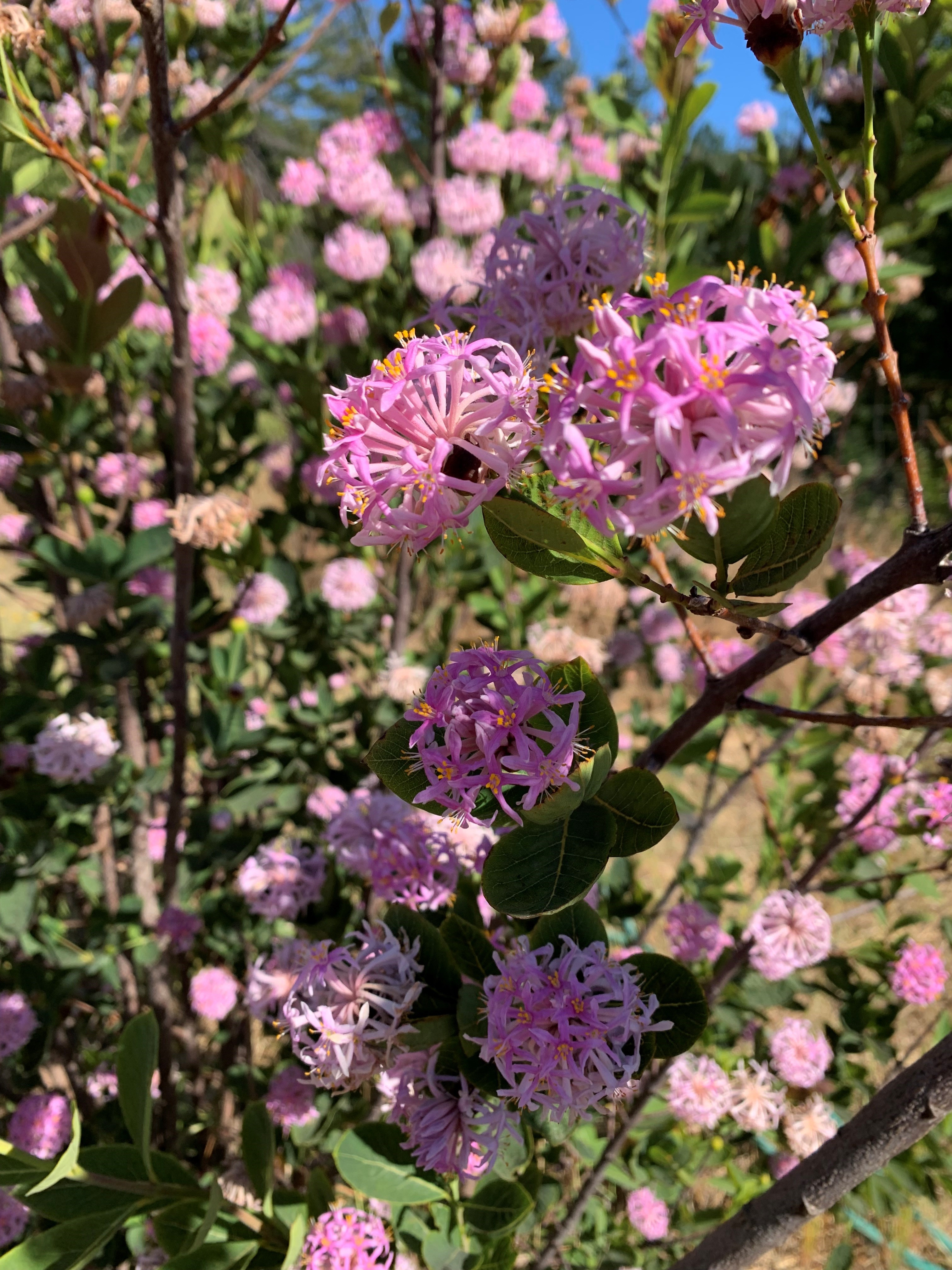
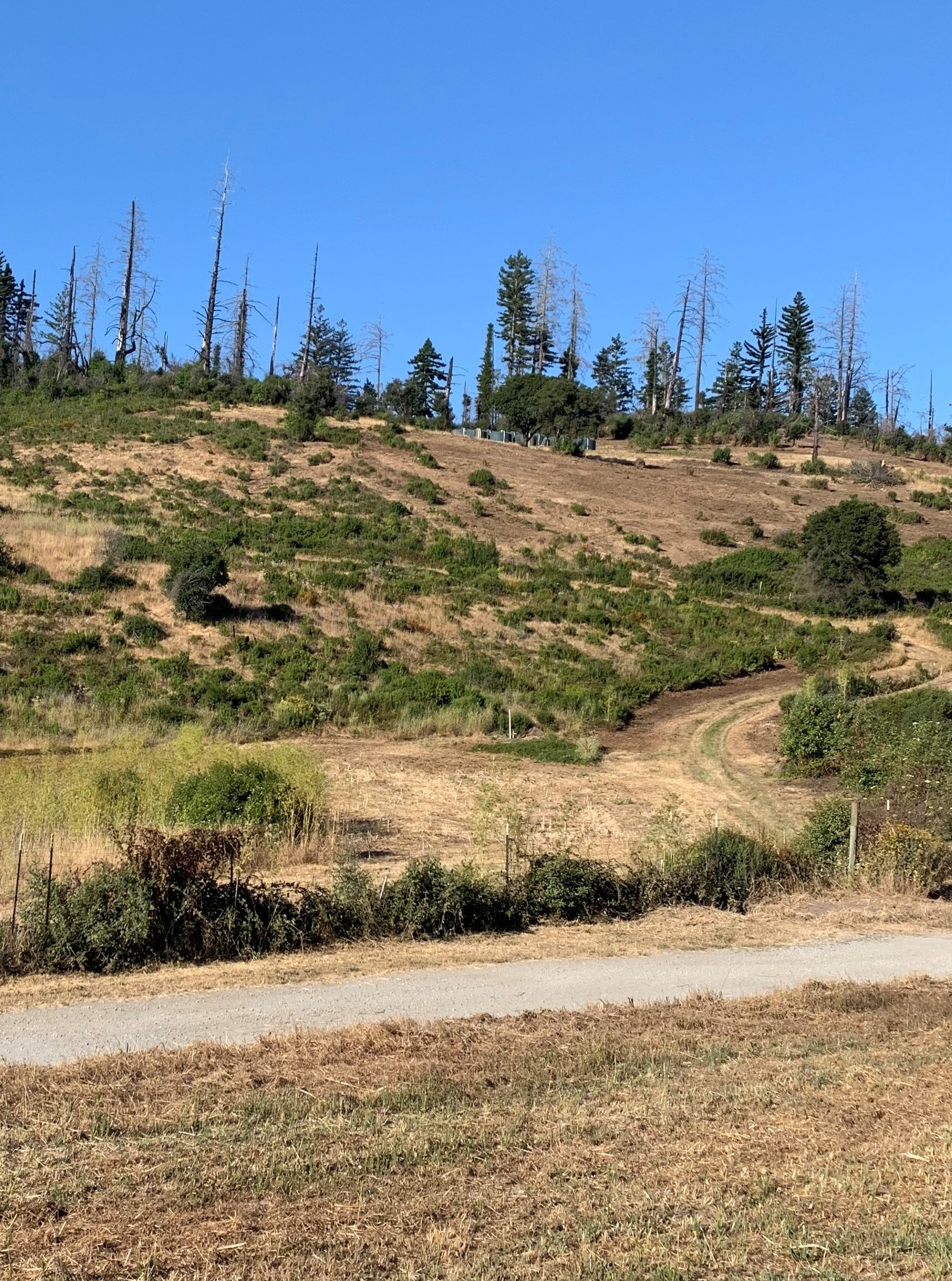
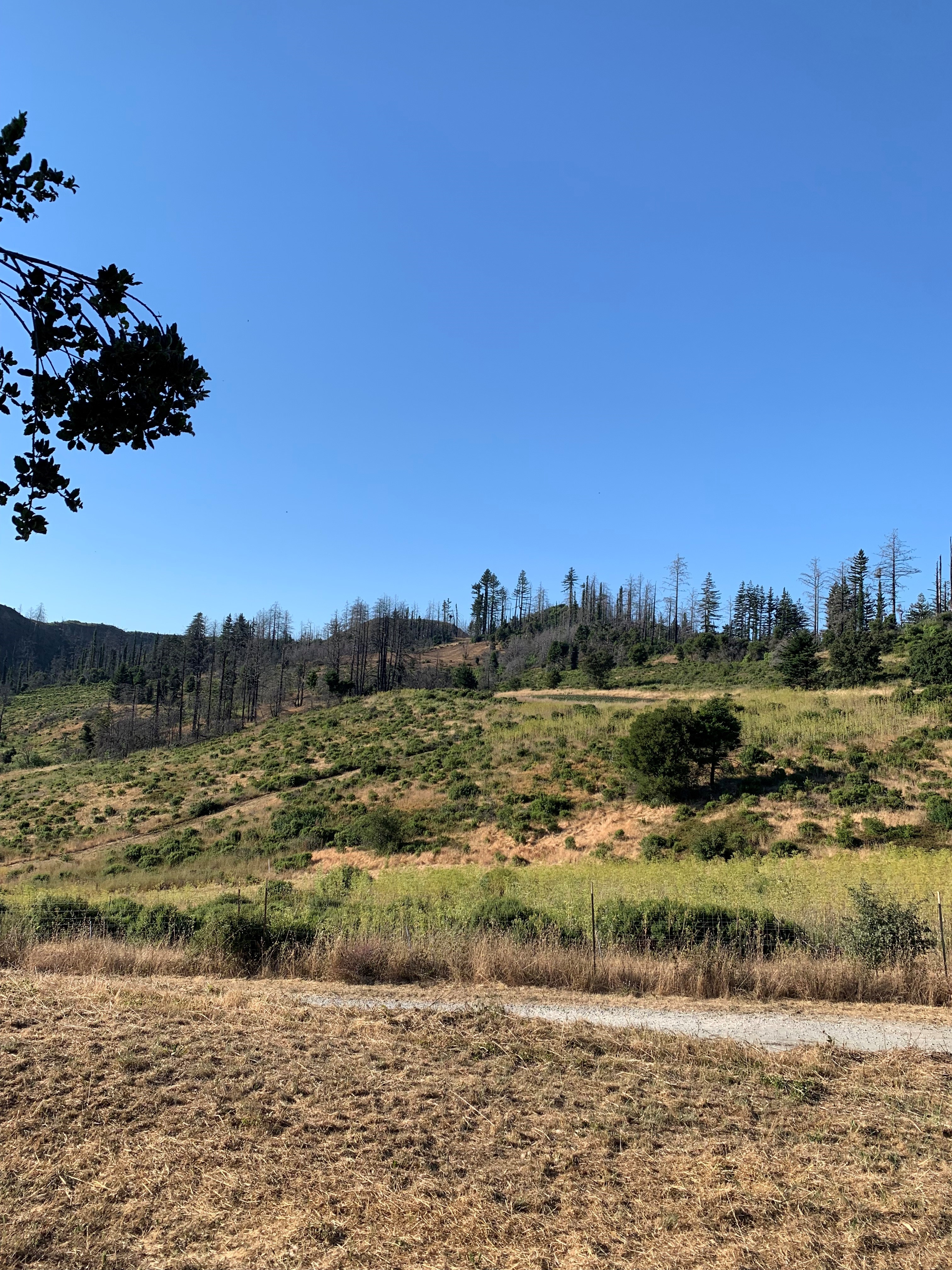
This weather has prolonged the spring bloom which is entering the moment of giant patches of colorful shrubs. Lavender bush lupines and yellow-orange monkey flowers are being joined by bright yellow lizard tail, each of these gentle shrubs has its own color place on the hillsides but intermingle in the interstices in a mélange of crazy color patterns. More subtle flower patches also claim their spaces – Phacelia, bee plant, and cudweeds are also in full bloom. It is a good time to go for a walk where the coastal scrub is near, especially the post-fire coastal scrub. The fire set us up for a very colorful spring.

Snakes and Such

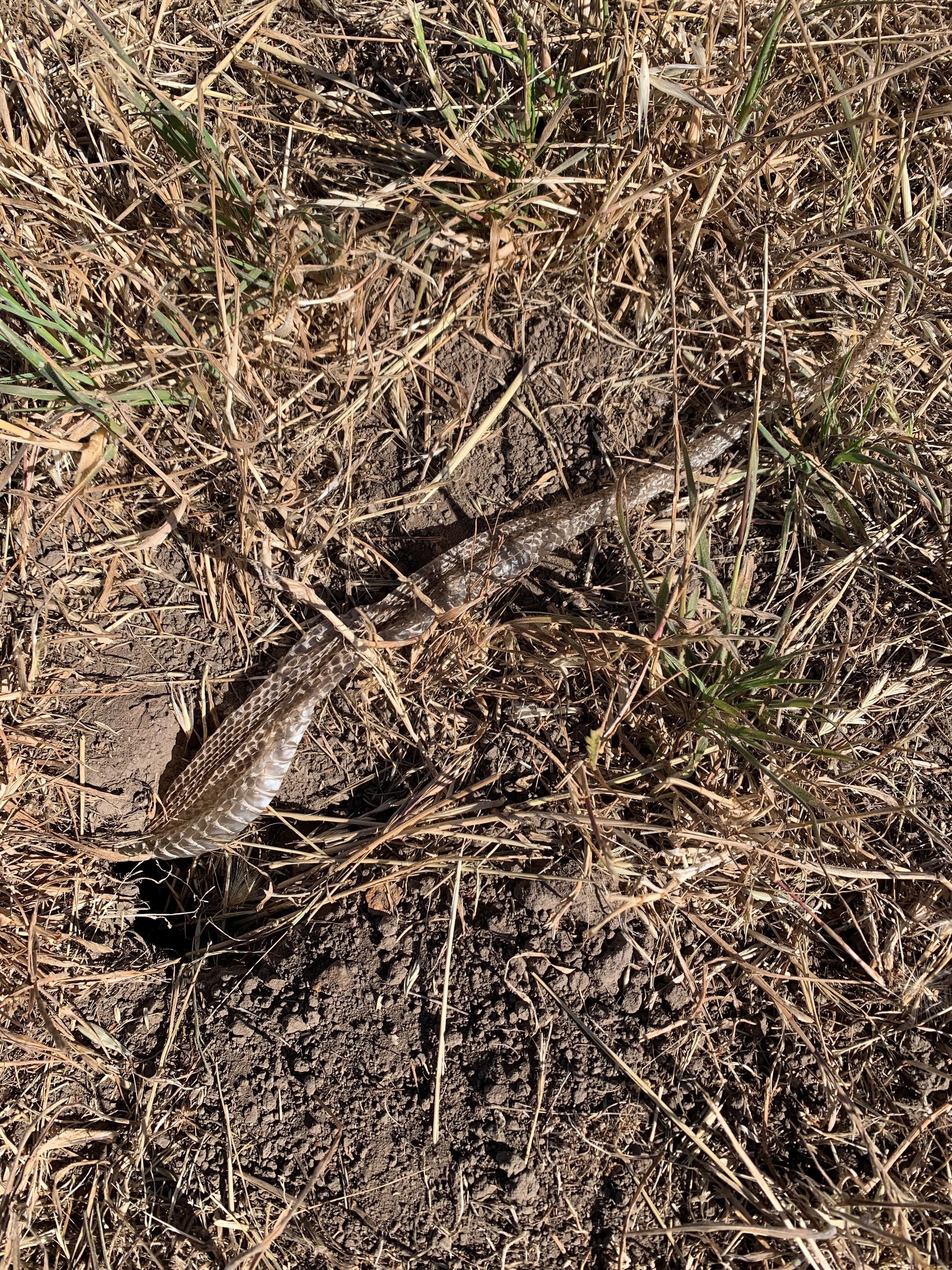
The extended cool spring seems to have concentrated the snakes into piles to keep warm. Last Sunday, Pete Trenham visited the farm and helped catalog 19 snakes in one walk about, including four rubber boas under one piece of roofing tin: a grip of snakes! We found gopher snakes of all sizes, a few ring neck snakes, yellow bellied racers, and garter snakes along with southern and San Francisco alligator lizards and blue bellied lizards. Down in the creek, we found California newts guarding their egg masses as a California giant salamander swam about. Molino Creek was much rearranged after the dynamic winter- now there are pools and riffles along with many beds of fresh piled rock.

Pete Trenham holding a grip of snakes: northern rubber boa to be exact

Planting Time

Farmers are planting seedlings. Baby onions are especially numerous in long rows. Adolescent sunflowers are getting bigger. Tomato plants are settling in nicely. The cool overcast weather makes for transition ease as plants move from the protection in the greenhouse out into the open air.

newly planted dry farmed tomatoes

Perennial Fruit

The orchards are lush and gorgeous. Apple trees have dark green leaves, a foot of new shoot growth, and oodles of tiny furry new fruit. Cherry trees are laden with clusters of fattening light green shiny fruit nested in curtains of deep dark green foliage. Avocado trees are perky explosions of new reddish leaves reaching for the sky with bolting new growth. Slower, the citrus trees are beginning to flush with shiny new baby leaves while buds break with stark white flowers and famously sweet scent. The grape vines have thousands of long clusters of buds nestled in bright delicate spring green leaves

More Scents and Sounds

The gentle breeze brings a faint smell of fire and a distant hum is the source: air curtain burners are disposing of hazard trees on the nearby land. That distant hum is joined by hours of closer noise: mowers! This spring in particular has called the mowers to work. Mow the 5’ grass to 2” and the next week it will be back quickly with 6” a week growth. The sweet smell of fresh cut grass permeates the air when the wind dies down. The Merlin bird app identifies the dominant dusk chorus: purple finch, song sparrow, and barn swallow fill the ears with song as the day grows dark and evening sets in.