wildlife

Beavers

Beavers are again being recognized by humans as creatures crucial to holding together the natural world across much of North America and Europe. Where they are able, beavers create wetlands. Those beaver wetlands do so much for so many other beings, including us. Let’s explore California’s beaver resurgence for a few minutes.

History

There once were two beaver species, then only one living alongside indigenous people, then even those were nearly wiped out. In modern time, beavers have been variously killed, ignored, restored, or coexisted with. The Big Beaver of the Pleistocene, like so many other species, winked out when humans arrived on the continent. Probably they were too tasty. Its smaller cousin, though, survived. There are names for beaver in many native people’s languages across California. But the Old World Peoples persecuted both the native peoples and the beaver. Beavers were trapped to extirpation so early in those terrible times that as records started being written, there was already doubt that beavers had ever been in most places across the State. The state’s wildlife department finally protected the few remaining of the species and then began restoring them. Beavers, farmers, water managers, and road departments had problems working it out, so the State started allowing, and still allows, beavers to be killed where they cause too big of problem. 

Over the past 20 years, brilliant folks from Back East figured out a way to solve some of those problems, so beaver coexistence technology is now a thing in California. At the same time, in just the last 5 years, our wildlife officials have started translocating problem beavers to restore the species in more places. These recent pro-beaver developments come just in time for so many reasons.

Beaver Biota

Where beaver go, many follow. Three weeks ago, I saw a river otter stick its head out of the water in a pond behind a beaver dam. River otters follow beavers as do ducks, egrets, herons, kingfishers and so much more. Rare amphibians and reptiles likely were once more abundant due to beavers, including California red-legged frogs, San Francisco garter snakes, California tiger salamanders, Western pond turtles, and Santa Cruz long-toed salamanders. Mostly, those rare species rely on manmade cattle or farm ponds nowadays, but what about before those? 

I have studied the landscape for 50 miles in every direction around Santa Cruz and have found very few natural ponds. Coastal ponds are either in earthquake faults, vernal pools in ancient dune declivities (e.g., Ft. Ord), or impoundments at the back of more modern dunes. These situations are all quite rare. Looking further abroad, there are more vernal pools in the Central Valley and one can imagine oxbow lakes along many of California’s rivers before modern humans messed so much by channelizing rivers. If we could restore beaver to the landscape, I’m betting we could recover frogs, snakes, turtles and salamanders…and even fish! Most agree that California’s many species of super endangered salmon once thrived in the food-rich backwaters of beaver ponds.

I could go on and on about the many other wetland species that follow beaver pond architecture, but I’m thinking you get the idea.

Fire Stop

Recently, “Smokey the Beaver” has become a meaningful meme. In the past decade Californians have witnessed catastrophic infernos raging across the landscape like no one had previously imagined was possible. Across the West and north through Canada the same pattern has been emerging: big, big fires fueled by climate-change-induced drought, heat, and winds. The solution to fire: water. When beavers dam rivers and streams, they create fire breaks. In the huge footprints of “The Big Black,” post-fire, thank the beaver for the green strips that offer refuge to whatever wildlife may have survived the blaze. I have stood my ground on the edge of two approaching wildfires and have witnessed masses of fleeing deer, rabbits, wood rats and more running from the flames. I imagine those creatures finding beaver wetlands and hunkering down, eyes wide, hearts racing as the world around them crackles, roars, and burns. Beaver firebreaks can help save human lives and infrastructure, as well.

The Wetting

Beavers make it possible to rehydrate the West. Their dams are speed bumps for floods, slowing the surge, spreading floodwaters across floodplains, and hydrating large swaths of valley bottoms. By storing rainwater behind their dams, beavers keep streams and rivers flowing farther into the season of California’s long, dry summer. As water slows down behind beaver ponds, it can more readily recharge groundwater, too. Some have suggested that restoring beavers across the mountain meadows of the Sierra Nevada could store as much water as 2 large new reservoirs. That would be cheaper…and more sustainable!

Monterey Bay’s Beavers

Beavers are in the Salinas River all the way down to the Highway One bridge. Those riverine beavers are bank burrowers…they don’t make dams in such big rivers, but they sure like to eat the willows. You’d have to go south to San Luis Obispo before you found another beaver family. And, travelling north you would have to get onto private land along Butano Creek in San Mateo County to encounter our beaver buddies. Sometimes that population makes a more public showing downstream in the Pescadero marsh, where one mysteriously died this past year. What about prime beaver habitat in the Carmel, Pajaro, and San Lorenzo rivers? When will beavers arrive in those locations? Corralitos, Soquel, and Scott creeks also offer promising beaver habitat. Perhaps one day we can find a way to offer beavers a place alongside humans in some of those rivers or streams. Help spread the word!

-this post originally published as part of the decades-long news source for the Monterey Bay and beyond at BrattonOnline.org Check it out! Subscribe!! DONATE. Support journalism, even grassroots journalism, maybe especially grassroots journalism.
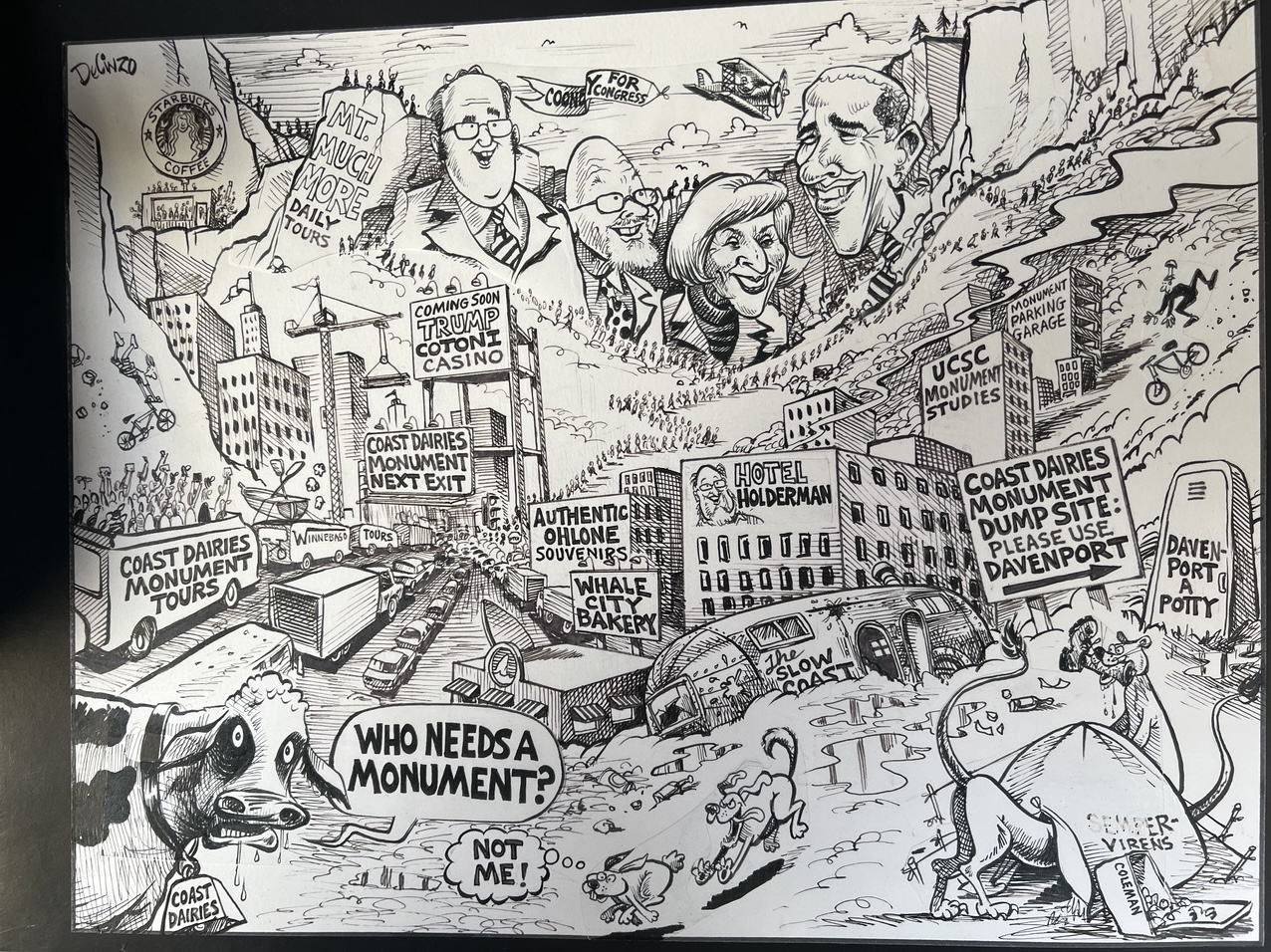
Cotoni Coast Dairies BLM Land Opens to Public

The opening ceremony for public access onto the Federal Bureau of Land Management’s Cotoni Coast Dairies property was on August 15, 2025, a grim day for those who have followed this travesty, which will only worsen with the planned public access.

Many thanks to De Cinzo for this image

Building on a Tragic History

Nothing good led up to this moment. There is no one left who speaks the language of, or can show direct descendance from, the native people of this property. There are rich archeological sites illustrating that this land was settled for thousands of years. So, as with every spot in California we must see this property and how it has been and will be used as a colonialist endeavor. There is no attempt to give the land back to any coalition of First Peoples who represent those ancestors or to respect them in any way that approaches restorative justice. Oh, but there’s the name…(!)

After the genocide, the land has seen one extractive use after the next with little regard for conserving nature. The ‘Coast Dairies’ portion of the name points to cows, and cows there still are. The grazing regime has never focused on restoring the very endangered coastal prairies on the property and, even now, there is no plan to do so. This recreational use is a new, highly impactful extractive use. The property is rare for the Santa Cruz Mountains in having had very few human visitors for the last 100 years, so wildlife has been accustomed to roaming without disturbance. Cougars and badgers are especially wary of humans when setting up dens. A million visitors a year will soon be visiting and wildlife will flee.

The consortium of people responsible for so many other, better outcomes for conservation tried hard, won some concessions, but have seen great loss with how this property came to be open to the public. We tried to get anyone but the Federal Government to manage the property, but the Open Space Illuminati had other things in mind…’The Great Park’…a handful of boomers wanted their legacy in a wide swath of the area becoming a National Park. They stopped at nothing to achieve that legacy. The activists, biologists, conservationists, and regular citizens, were even sued to strike fear into them, to make them capitulate.

Money Made it Happen

The Wyss Foundation bankrolled cash-strapped ‘conservation’ organizations to create a fake grassroots campaign that culminated in Obama signing a Monument Proclamation adding 5 properties across a wide swath of coastal California to the California Coastal National Monument. 

Then, the BLM routed hundreds of thousands of dollars, sole-sourcing a contract to a mountain biking advocacy organization to build the kind of trails their users wanted to see. That business quickly changed their name to a ‘trails’ organization. Instead of supporting good paying local jobs, the BLM paid this organization to rally volunteers to do the work of installing trails that were placed across a landscape without regard for the wildlife written into the President’s Proclamation for protection. When asked about how they could do such things when the property’s designation required favoring conservation over visitor use, BLM cynically snickered that the majority of the property, 51%, is set aside without public access. The rest, apparently, is a sacrifice zone.

What We Wanted and Will Pursue

Those of us who care about the native peoples, the nature of the property, and the experience of future visitors have a vision, which we will pursue despite setbacks. The land should not be Federal land – if you wonder why, you need to look at the current situation with federal lands nationwide. We always knew this, but now others are starting to understand our concerns. The current administration is selling federal land for real estate development and other extractive uses. If, after cutting the federal workforce, there are any staff remaining to manage the land at all, that will be a surprise. The Administration has said Federal lands will remain open to visitors even if there is no staffing or budgets. Oh no- could my dystopian vision for the property be closer to reality?!

 If there is a chance, California should buy Cotoni Coast Dairies. Then, let’s envision taking Canada’s Indigenous Guardian’s project to this place, giving tribal people primacy in stewardship, use, and oversight. Perhaps the State could give the land back, as it has just accomplished with the Yurok.

If the property is to remain a public park with visitor access, there needs to be a radical shift in how that is approached. The regulatory designation for first managing the property for conservation needs to apply even to the areas with public access. This will require altering use patterns, even closing the trails occasionally, for the benefit of the soil, streams, wildlife and plants that Obama clearly intended to protect. There will need to be lots of monitoring and enforcement to adequately protect natural resources. The BLM will need to do a ‘carrying capacity analysis’ to determine ‘limits of acceptable change’ – thresholds that, if surpassed, trigger altered management of visitor use to bring the use into alignment with conservation. 

Next Steps

It will soon be possible for visitors to monitor the situation first hand. Those of us who asked to do baseline monitoring of wildlife and plants were refused the opportunity many times. When we asked how small children and the elderly could possibly co-recreate on trails overrun by fast-moving mountain bikes, our concerns were dismissed. We will be able to help document how well BLM’s rules are working and if there is enough enforcement. We will be able to see the spread of diseases introduced by bike tires and hiking shoes ravage the amphibians, the trees, and the soil, and we will recall how BLM staff predicted those impacts in writing, with administrators choosing to ignore even the simplest measures that hundreds of other parks managers have employed to address those concerns.

-this post updated to past tense from the one posted via Bruce Bratton’s legacy site BrattonOnline.com

Cotoni Coast Dairies, 2064: A Dystopia 

I invite you to immerse yourself for a few moments into my nightmare of the future of Santa Cruz’ North Coast. How will Cotoni Coast Dairies fare in the future, for instance in 2064? During the past year, many things have aligned to push my nightmare closer to reality. Note, this essay is the opposite view of my prior utopian sketch published here.

Wilder Ranch 2064
State Parks held off the Populists for a while, but California relented

The Recipe

Extreme factions of the far right have expertly wrangled a successful populist movement, gaining control of all three branches of the US government. Swiftly, we see dismantling of conservation including parklands staff and environmental protections for wildlife, clean water, and clean air. We recall Brazil’s Bolsonaro regime and their treatment of the precious natural areas of the Amazon and its inhabitants: park boundaries ignored and rapacious resource development encouraged, including illegal settlements. This story has been repeated in many places around the world as populist national political interests are imposed. These trends repeat: abandoning local interests with the establishment of the parks at the outset and continuing alienation of local people post parks development. As ecologists and conservationist Dan Janzen has wisely noted, it is important that the most local people see their own interests reflected in conservation lands, so that they will play an active role in protecting those lands.

What’s Coming

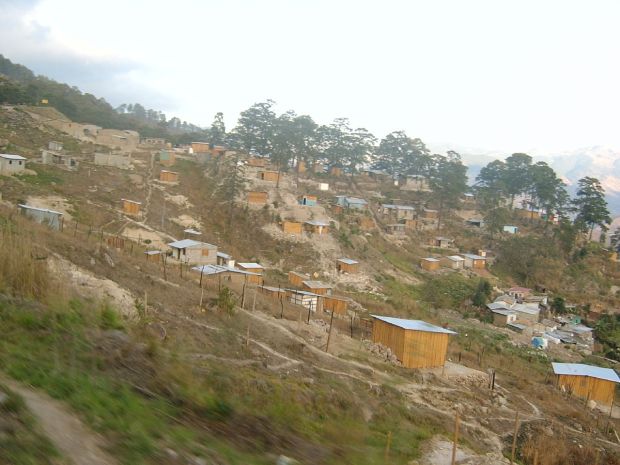
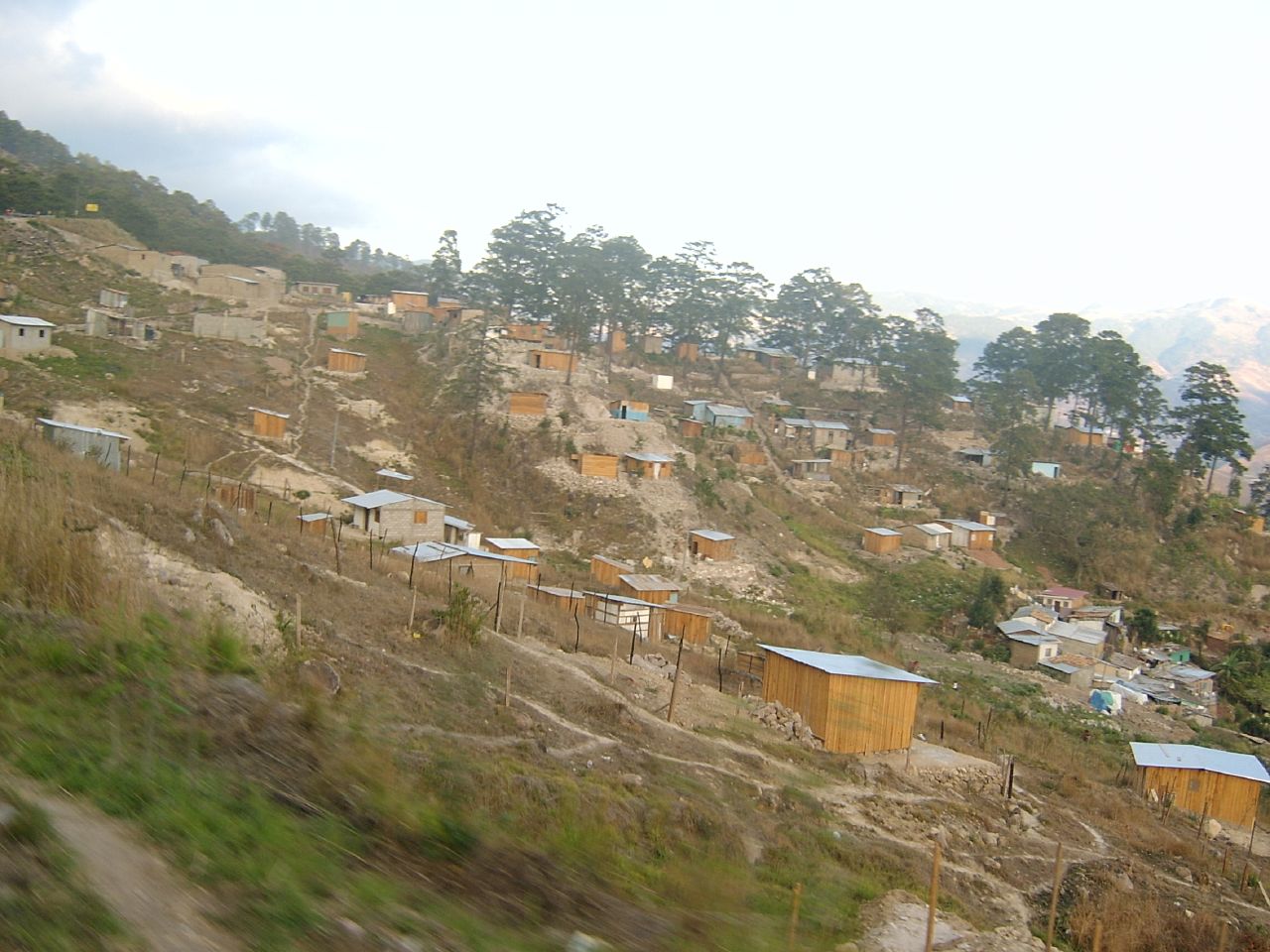
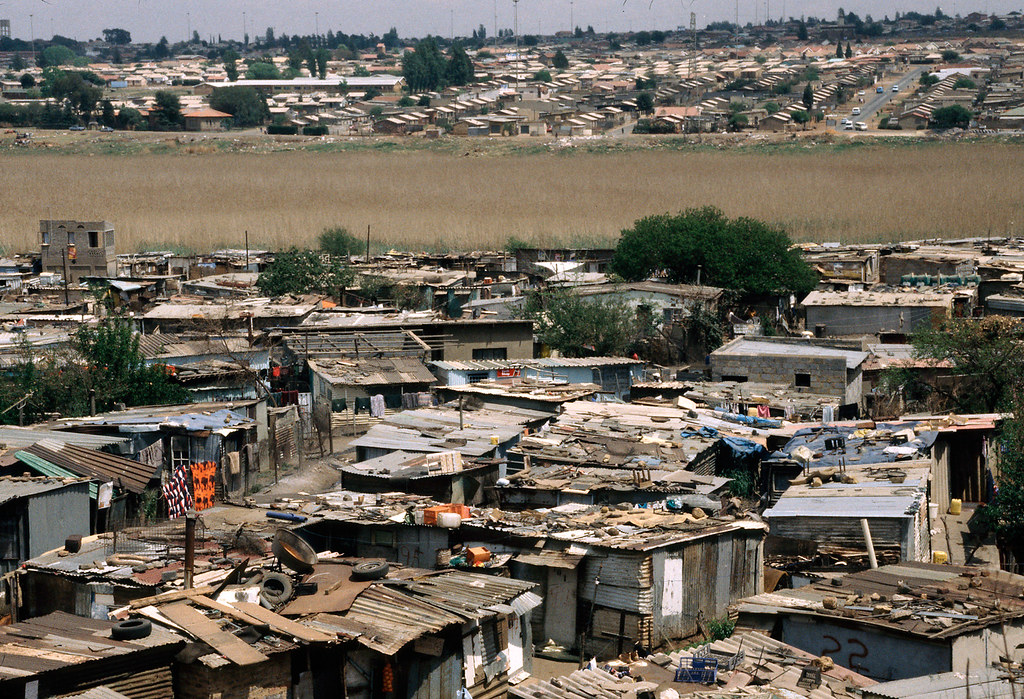
It is 2064, the 50th anniversary of Cotoni Coast Dairies becoming public land, and none of the hundreds of shanty inhabitants living on the property are reminded of the significance of this milestone. Parking areas and trails, once developed for the recreational elite, are covered with trash and lean-to cardboard and tin shelters, which started during the Hard Times of the 2030’s. Presidential Administrations have opened most federal lands, especially Bureau of Land Management lands, to settlement, promising to alleviate housing shortages. Millions had been displaced by extreme heat and epic storms, driven by climate change in the quickly uninhabitable interior USA. The squalor of the hastily erected federal land climate refugee camps contrasts only slightly to those on the nearby State Parks lands, which were opened by the Governor a little later and had ad hoc administrators that attempted (at first) to organize them. 

Missing Wildlife

By 2050, wildlife on the North Coast existed only as a fond memory of most settlers, who longed for the first decades of feasting on their tasty flesh. Even the smallest birds have succumbed to cooking fires, and the land is silent, without bird song. Tide pools have been scraped clean of limpets and mussels and people comb post-storm beaches for kelp and other marine vegetables, otherwise out of reach from harvest.

Cotoni Coast Dairies 2064: “House Everyone!!” The President cried, and BLM was the first to comply

Wildfire

Fires have become tamer after the raging infernos of the 20’s and 30’s consumed the last of the mature trees and, eventually, even their memories…the blackened snags and stumps. Storms come almost every summer, and it is rare that lightning fails to ignite a hundred fires between Santa Cruz and Half Moon Bay. These run quickly across the mountains in the regularly howling winds, consuming whatever diminutive weeds survive. Hundreds of people succumb to wind-driven infernos, but more replace them. As bad as it seems, there is no better place remaining: the seasons are still relatively mild compared to anywhere else in the country.

The Water 

The much-feared Water Guard and their families are the richest among the abject poor, for the cost of this scarce commodity cannot be avoided. They maintain and guard impoundments in the few streams that still provide water: Waddell, Scott, San Vicente, and Laguna Creeks. The other streams disappeared by 2050, now only scorched, mud-filled, lifeless canyons. The dams in the remaining creeks are maintained at high cost and much labor. Deluges are followed by flash floods carrying boulders, silt and debris that easily fill the tiny reservoirs. The stronger people earn water credit in trade for their labor rebuilding the dams, cleaning out storage pools, and replacing distribution pipes leading to water sales locations. Others earn their water by guarding this system day and night, sometimes with their lives. Water is life!

The Realization of This Nightmare

This dystopia is closer than most realize. It is a choice. It is everyone’s choice to avoid, but no one chooses the leadership necessary to do so. Instead, we keep electing representatives to take the place of the parents we wish we had had. Mother and daddy know best, we just want to be told to hush and to trust and that everything will be okay, but it never works out that way.

The pathway to this nightmare has been paved in so many ways. The back-room-deal-type Environmental Saviors responsible for the federal presence, for the Bureau of Land Management (of all agencies!) takeover of Cotoni Coast Dairies not that long ago fought local conservationists in court and won, then counter-sued the conservationists for their expenses. Those types are still working behind the scenes to make this deal seem palatable and good by succoring wealthy outdoor recreation types and funding their trail-building enablers. They have long abandoned partnerships with local community interests and even the more wide-ranging and very popular wildlife conservation movement. Alienation of those interests leaves the door wide open for the populists to overrun these lands which they portray as empty, pretty landscapes ready for settlement. It has always been so.

What You Can Do

The frustration we feel at the trends we have seen too late emerging can be put to good use. We can give money to the Center for Biological Diversity, a last bastion effectively using the legal system to protect wildlife, even around the Monterey Bay. We can vote for different representatives who primarily recognize the importance of the environment and the need to engage, enlighten, and empower those people who care about nature, which is everyone. We can speak up against the local lack of justice. We have more influence in local politics than national: this is the place we create the political movements that make a difference. This is the place we nurture the leaders of tomorrow’s State and Federal governments.

-this essay originally appeared alongside those of my Most Excellent Colleagues at BrattonOnline, a weekly e-newsletter covering the arts, history, ecology, politics, foreign affairs, and more.

Trails Through the Woods

What could possibly be wrong with trails through the woods? Ad hoc, unsanctioned, illegal, illicit, unapproved…choose your adjective to precede the ‘trails through the woods’ phrase and then ask ‘what could possibly be wrong with unsanctioned trails through the woods?’ While we’re at it, let’s ask the question, ‘what type of person would build and maintain unsanctioned trails through the woods?’ Let’s hypothesize for a moment.

Law Abiding Citizen

There’s a lot going on in our nation with people’s attitudes about abiding by laws. Some people are as apt to decry a convicted felon in the White House as they are to cite the horrors of the justice system, saying it is utterly failing most of the poor souls who face the courts. How does that work, logically? I’m not sure it does. But, are we saying at the same time that we should question the laws, as well? Has ‘law abiding citizen’ become an anachronism or just plain laughable? Or, maybe our culture has become accepting of individual interpretation of laws, but not in all cases. For instance, who in their right minds would support widespread law breaking with hit and run drivers, armed robbery, or homicide? But, say how about the lesser offences of shoplifting, forgery, assault, or libel? Are we getting to your more acceptable level of crimes, yet? How about….driving 20 mph over the speed limit, selling alcohol to minors, extortion, or petty theft? And then, somewhere down the line you encounter the laws against damaging public property, trespass, entering closed areas of public land, visiting public parks when they are closed, and violating federal and state clean water laws or endangered species regulations. How are we feeling about the types of citizens who break those laws? Are we giving them a pass? Someone is. A lot of people are. Hundreds and hundreds of people in our community have decided that the criminals committing that last litany of crimes are ‘okay people’ undeserving of one iota of investigation that might result in at most a warning, and almost never prosecution.

Anarchists I know would scoff at the legal argument here. Many who know how broken the justice system is would also shrug off the legal arguments, as well, understanding that without justice there can be no reasonable pursuit of legal matters. So, perhaps we must turn to ethics to examine the truer nature of those who would participate in unsanctioned trail building and maintenance.

A Matter of Ethics

Should we consider the consequences of illegal trail building? Or, is it enough to ask if rogue trail building is good? Is building an unsanctioned trail in and of itself causing harm to other people? Is maintaining a rogue trail respectful of all people? These are the types of questions one must ask in seeking answers outside of legal context. As I have posed these questions over the years, the most common answer is “I don’t know.” So, we must ask another question of morality: is it unethical for an illicit trail builder to create new trails if they are ignorant of the consequences or context of their actions? 

Consequences, Respect

The consequences of constructing and/or maintaining rogue trails are well known, or at least readily available. The most glaring impact of rogue trails is on wildlife. Conservation lands managers have a difficult time providing for some trail access while also conserving wildlife: the two goals are mutually exclusive. Park users disturb wildlife, so one must plan around that to have healthy wildlife populations. Trails constructed outside of that planning process scuttle attempts at nature conservation. 

And so, rogue trail builders either have contempt for parks managers’ planning processes or do not care about wildlife or both.

The same sets of arguments also apply to conservation of flora, fungi, soil, and clean water. 

And again, it would stand to reason that those who construct illegal trails have contempt for park oversight personnel’s work/expertise and also do not care about conserving native plants or mushrooms and don’t care if soil erodes, that we have clean running streams, or that natural areas provide for drinking water.

Let’s extend these logical frameworks to the element of respect. Morals often refer to respecting others: their lives, their pursuits, safety, happiness, etc. All groups with which I have interacted in the past few decades readily recognize that humans need all species to continue existing for our own survival. And so, those who create and maintain unsanctioned trails score quite low on the ‘respect others’ morality scale with that first test. The majority of USA citizens support wildlife conservation; second test strikes against those who would build trails without the careful planning that parks managers use to weigh the pros and cons of new trails. We could go on…

In Sum

In kind words, how would you summarize the findings above to describe those people who make it a habit to create, or maintain, unsanctioned trails? Excluding nihilism, one would need to start with the term ‘criminal,’ but that would not be enough. The word ‘selfish’ sounds unkind, eh? And, even so, just ‘criminal, selfish…’ lacks something. 

Most of the social circles with which I have discourse include short hand lines of reference to describe types of people who love fun just a little too much. You know, when fun overrides respect for others? The term ‘fun-loving’ falls short of describing the types of people referenced in these conversations; the people being referenced generally have problems, which is why they are being discussed. Such conversations generally end in head shaking…no great solutions…sighs and ‘I hope they figure it out….’ or ‘maybe so-and-so (someone possibly close to them) can have a chat with them.’ I think we are getting closer to understanding the types of people we are dealing with. 

Next time you take a walk in nature, watch for the many trails veering from the signed, sanctioned one you are hiking. Ask yourself how much traffic that trail must get to be so well rutted and then think about how far that trail must travel, how much work it takes to chainsaw (at night) those trails open after trees fall. What a massive effort by _______ types of people (fill in the blank)! Think about the conversations they must have with one another and their networks… and how that is influencing the goodness of our community.

– this post originally published in the weekly e-news for the Monterey Bay, BrattonOnline – if you don’t already know it, now’s a good time to subscribe.

Land Atonement

Very slowly, we must move in the direction of becoming at one with the Land. All that we eat, all that we breathe, all that we drink comes from the Land.

What is your opinion of how people have treated the land around us?

Have we damaged it, or made it better? How do you know?

Big Sur: Whole or Shattered?

The Santa Lucia Mountains…Big Sur, to our South. On one hand, we see picturesque beauty, “wilderness,” a rugged, sparsely settled landscape, millions of flowers, huge trees, and a rich marine environment. On the other hand, there is a land devoid of much of the wildlife that once called that place habitat, the native peoples that called it home and stewarded that place are mostly gone (but still there!), wildfires ravage the landscape too hot and too frequently, roads and other development bleed soil and pollution into streams, and hordes of poorly managed visitors negatively impact the richest ecology, where the land meets the sea.

Monterey Peninsula: Zombie Ecosystems or Well-Managed Parks?

An ecological treasure, the Monterey Peninsula has rare pine and cypress forests, chaparral, and coastal prairies. Millions of humans visit to play golf, shop, drive fancy cars, visit art galleries, taste wine, or do tourism at an aquarium and historic sites. Nature there is fragmented into isolated parks which have no chance of long-term health. With lots of exposure to disease and human disturbance, with no chance of natural interactions with wildlife or fire, the parks represent zombie ecosystems, seemingly alive but really walking dead as they slowly decline with species after species winking out.

Tilled Valleys, How do You Fare?

The Salinas and Pajaro Valleys frame the central Monterey Bay, rich alluvial soils that support Agriculture, the nation’s salad bowl. Farming is an economic engine, sustaining jobs and communities and feeding people vegetables, never enough helpings per capita in any given day. The effluent flowing out of that engine creates the most polluted surface water in the US, pools of eutrophic, stinking rot. Ancient rich soil is disappearing, lost with the rain, in floods, and in the wind. Groundwater is being contaminated with pollution or by sea water intrusion caused by over pumping groundwater.

Santa Cruz and the North Coast, Loved and Smothered

On the other side of the Bay lies Big Sur North, a tamer landscape, thickly inhabited, worn. Tourism, Silicon Valley settlement, and education rule here. Surf and mountain bike culture are ‘natural’ tourism while hordes of cotton candy fueled tourists amble in the relatively cool beachy haven that contrasts so readily with the increasingly baking inland. Millions of feet pummel the beach sand substrate, crushing the food chain of flocks of would-be shorebirds; the remaining birds scatter, no longer comfortable foraging on these overrun beaches. Similarly, most meadows and canyons zip with such continual disturbance that wildlife families flee….fewer places left to hide. In the built areas, hundreds of fossil fuel formulations leak from engines, pesticides ooze from landscapes, headwater rivers and streams are diverted for toilet flushing and carwashes, downstream they receive and convey pollutants into our treasured Bay.

How do We?

How do we atone for the ongoing damage we are causing to the land around us? In ecological terms we call this restoration. In social terms, we call this reparation. In economic terms, we call this re-investment. Do you see enough of this going on? I cannot believe that you do.

Ecological Restoration

We must make room for all of the species of plants and wildlife to flourish if we ourselves are to survive. We read such things, but do we believe them? Do we act on them? Are there things individuals can do to make this happen? Many of us can vote for those who have this vision. Many of us can learn about ecological restoration and tell others about the ways forward around here. There is good fire to put back on the landscape. There are ecological linkages to restore, across roads, through development. There are invasive species to control. And, there are many species of wildlife that need to be better managed, monitored, and restored with the California Department of Fish and Wildlife at the helm.

Reparations

We live on unceded lands. We are surrounded by people displaced by greed-fueled governmental policies, including war. The nation owes its current wealth to people terribly taken advantage of for generations. What are we doing for reparations? Anything at all?

Re-Investment

The way we do it, every new home, every new development creates a heavier burden on our already strapped local municipalities. The way we have done it for generations, businesses have profited from extraction from Nature, most recently including agriculture, water use, and tourism in natural areas. Some suggest it is time to increase the taxes of landowners to enable more tourists to overrun our natural areas…’investing” in new trails and repairing old trails degraded by millions of tourists to keep local businesses thriving. How did this become part of a re-investment proposal? 

A Path Forward

Whether you take part in restoration, reparations, or re-investment, each of us must do our part. I’m sure that none of us want to leave the world worse off than it was before we enjoyed the water, the air, and the food that Nature made possible. We regularly eat meals…taking. We regularly drink water…taking. We regularly travel through Nature…taking. We regularly purchase things and throw away things…taking. What are we regularly doing to give back, to atone for all that we are taking from Nature, from each other?

I hope that you will think about that debt when you vote this Fall. And, I hope that you will plan at least one activity in the next little while that gives something back. Make such giving a regular practice, please.

-this column brought to you in part by Bruce Bratton, who graciously publishes my work weekly at BrattonOnline.com Sign up, donate, and read it- a great way to catch up on what is going on around the Monterey Bay, and beyond.

Whence SCruz Enviros?

I continue to ask myself this question: where has the environmental movement gone in Santa Cruz? I have several hypotheses. This is not to deny the tireless work of various individuals who have helped on many fronts, but I sense a loss of momentum, of any organized movement of the type of conservationists that have been so crucial in the past in providing the Santa Cruz area with much of which it is now proud: Lighthouse Field, the City’s Greenbelt, Wilder Ranch, and Gray Whale Ranch come to mind, is there any kind of movement now that could achieve such success?

Questionable Rationality

One of the age-old issues with working with coalitions is the rationality factor, and the environmental conservation movement has had its share of associates who defy the laws of rational discourse. There is strength in numbers, but as those numbers grow the community will include people who are vocal about some pretty wild, unsubstantiated things. Those people sometimes have a fairly strident way of expressing themselves. Whether it is a tactic, or perhaps they believe it, the opposition to conservationists will say ‘look at that lunatic fringe group!’ They lump perfectly rational people in with the less-than-rational minority. The less-than-rational folks will also say ‘Look! I have credibility! I am associated with these rational people!’ That fringe element has driven more than a few of my colleagues away from advocating for conservation.

Oppositional Idiocy

Problems with rationality aren’t just internal to conservationists: there are many irrational people to face in the opposition. There is increased reliance on very poor methods of discourse: tu quoque, black-and-white and straw man arguments are very common, and conservationists aren’t always prepared to rebut such vacuous methods of dialogue. We often don’t even recognize them as such. As I wrote recently, add those types of arguments to a long list of unsubstantiated ‘facts’ and you have the gish gallop making it impossible to address any particular thing.

Conflict Avoidance

Poor discourse and barely rational coalition members may have contributed to the next reason I hypothesize for the demise of the local conservation movement: conflict avoidance. One thing that seems on the upswing with the younger generations is conflict avoidance, but this issue has long been a problem to conservationists. Politicians and other would-be mediators of environmental conflict have often tried problem solving by attempting solutions through compromise. That is, they see two sides – conservation versus development – and say “we can find a middle ground.” The problem with that is that often the conservation issues associated with the proposed development aren’t addressed by this middle ground: biology doesn’t work that neatly. This concept has oozed its way into the general populace where many want to solve things by reaching an imaginary happy spot – ‘half way’ between what is portrayed as two divergent points of view. Even that half-way point is difficult for most to imagine negotiating.

Those who are proponents of nature destruction are well seasoned negotiators, new public conservation advocates not so much. New recruits into conservation often balk at the need to negotiate with often well-paid consultants who are so good at their game. These new conservationists also often feel shy about hiring professionals, especially lawyers to help with the conflict: for some reason many feel like seeking that method of solution is ‘too much.’ And, then again, lawyers are expensive.

Legal Defense, Legal Bills

If somehow a group of conservationists can come to the conclusion that a lawyer would help, raising money for legal defense funds for conservation around Santa Cruz is not easy. Lawyers are expensive and their work takes time. Can you remember the last time a local conservation group asked for funding for legal defense? It has been a long time.

And yet, legal defense has often been essential to resolving many important environmental conflicts, everywhere. Especially here in California, the laws protecting the environment are strong and broad ranging. Those proposing to destroy nature fear enforcement of those laws. With my conservation advocacy, I often cite legal language and so have been called ‘litigious’ by a handful of nefarious truth-stretchers: I have never retained legal counsel to sue anyone. It is very important for conservationists to understand laws and regulations and to cite those as well as case law whenever making their point. And yet, fewer and fewer locals are forming coalitions to retain legal assistance to protect nature.

Legal Reprisals

Some conservationists have avoided the milieu of conflict because they fear that the often well-funded anti-nature crowd might sick their lawyers on them. There are Strategic Lawsuits Against Public Participation (SLAPP) where the pro-development types intimidate conservation advocates by suing them…often for libel but for lots of other things. Also, some conservation advocates have been named in lawsuits by nature destroyers. For instance, our ‘friends’ at the Trust for Public Land sued local conservationists to recover expenses the group said they used to defend themselves in court actions aimed at better protecting the Cotoni Coast Dairies property.

No Peace, No Justice

The last issue hobbling local conservationists is their inability to adequately form coalitions with environmental justice movements, which have perhaps gained more wide support and recognition. This piece well summarizes the issue, and rests with the ‘no brainer’ intersection of the two movements: climate change. In this regard, Santa Cruz might be doing okay, but we are leaving behind other conservation issues of the highest importance: conservation land management, endangered species conservation, clean water and wetlands protections, and natural areas visitor management. Each of those issues has meaning for environmental justice proponents, but conservationists have done little to make that bridge.

What Can You Do?

I urge more people to become actively involved with local conservation groups. And, when you do, help those groups to become better through your mentorship and skill. We need to train one another to be good at conservation before the next big issue threatens species, habitats, or the relationship between humans and nature in our region.

-this post originally published as part of Bruce Bratton’s long-running informative blog at BrattonOnline.com, a place you should turn for all that you need to know around the Monterey Bay (and beyond).

Gish Gallop

Has it always been so common, or is it just more apparent because it has become so prevalent in mainstream politics? The Gish Gallop is a method of debate where one streams together so many unsubstantiated points that it becomes difficult to track, and rebut, them all. Perhaps the easy swipe of social media or the increased speed of emerging news have helped to wire us to be more receptive to the full-steam-ahead BS argument technique. Here, I try my hand at making a speech using the Gish Gallop technique with a collection of commonly held nature fallacies:

A Gish’ing Example

Nature is dangerous! For instance, all sorts of snakes and spiders are venomous, and people die from their bites all the time. You have to be especially careful of mountain lions, which are increasingly attacking people across California. If environmentalists have their way, there will also be wolves roaming everywhere across the Western USA- once established, they will become habituated to eating livestock and they’ll be coming after people, too. Just outside your door trying to get into your trash are very dangerous rabid opossums. You don’t even have to go outside for nature to get you. There are spiders hiding in your house, and an average of six a year drop into sleeping people’s mouths. I heard just the other day about another venomous snake crawling out of someone’s toilet. Some crazies want to blame so many things like this on global warming, which is just hype from crackpots trying to control our lives. They claim burning fossil fuels is going to kill us all, but that’s not true! Change happens, for God’s sake, there have always been natural disasters and there always will be, just get used to it, you snowflakes!

Does that kind of diatribe sound familiar? It should, and its not just coming from the political right[1] – watch out for it coming from just about any political direction, in just about any social situation. You can tell a real Gish Gallop addict by picking out just one of their tidbits and trying to follow up with a more involved conversation. If they are a galloping gish o’phile, they’ll be unable to stick to that topic and will hit you with another round of Gish Gallop before you can yell ‘stop!’ I don’t know if its just my circles of company, but I venture to guess that 1 out of 10 of my conversations encounter something amounting to Gish Gallop.

Toilet Snakes

Let’s take a look at just one of the parts of the above parade d’ BS: toilet snakes. Mention the phrase ‘toilet snake’ during a party, and it may well take root in conversation with anecdotes just as lunatic, or even substantiating evidence of this profoundly unlikely scenario. Was it Voltaire that said absurdities beget atrocities? One step leads to the next. Who are we to deny the frequency of toilet snakes, anyway? I’m sure it has happened once or twice! It may even be getting more frequent with global warming, invasive species, collapsing and outdated infrastructure, and the loss of skilled labor attracted to public works jobs. See? How familiar is that? That’s how it goes…

Turning This Around: The Antidote

How good are you at stemming the tide of verbal diarrhea? How do we collectively alter this rotten social habit? It is time to infuse more meaningful dialogue into the world. I am particularly advocating for better dialogues about nature and hoping that we carry with us enough fascinating stories that we can knit deeper and deeper oral traditions into a regionally-oriented social fabric. As we do that, I encourage us to use science as our guide, so that we have a method of building out truth, of going deeper and deeper into nature, and to add those discoveries into our stories.

The Fate of Snakes

My essay ‘Snakes on the Monterey Bay’ is one of the most popular reads on my website. I suspect that there are widespread positive sentiments about native snake species. But there are also widespread popular beliefs, well supported in social circles, that snakes are all very dangerous. Snake phobia, even nature phobia, is far too common. I well recall a time when I was working with a farm labor crew to machete poison hemlock, an invasive species that had taken over much of Younger Lagoon Reserve that I was stewarding for the University. One of the crew spotted a garter snake: quickly three were chasing it and proudly hacked it to pieces in moments before I could stop them. They seemed astounded that I was angry at their actions. I’m sure that they still think that I was acting insanely to be defending SNAKES! Why? Many people believe snakes are dangerous, and this is one of the many subjects that we can work on to improve human-nature relations.

Might you find out a bit about one of our native snakes and start a conversation about it with your friends? Such conversations could change the world for the better.

-this column slightly modified (with The Guardian link) from that which I posted via BrattonOnline.com, Bruce Bratton (and team)’s wonderful source for news. Subscribe now and save (it is free, but donations are welcome)


[1] Although some admit that this is their favorite method of oratory.

The Slowness of Extreme Heat

Happy Interdependence Day! I’m happy not to live under the tyranny of a monarchy AND I’m glad to be part of a community that recognizes the centrality of interdependence. The Molino Creek Farm Community relies on one another, exercising our various strengths to foster healthy farm life at its center. We include teachers, woodcrafters, a midwife, farmers, orchard tenders, bookkeepers and administrators, activists, road technicians, and natural lands managers. Many others join, from near and far. Together, we make this land sing: it depends on us, we depend on it, and everyone depends on each other. Nearly 4 years after the last wildfire, we feel that interconnectedness more than ever.

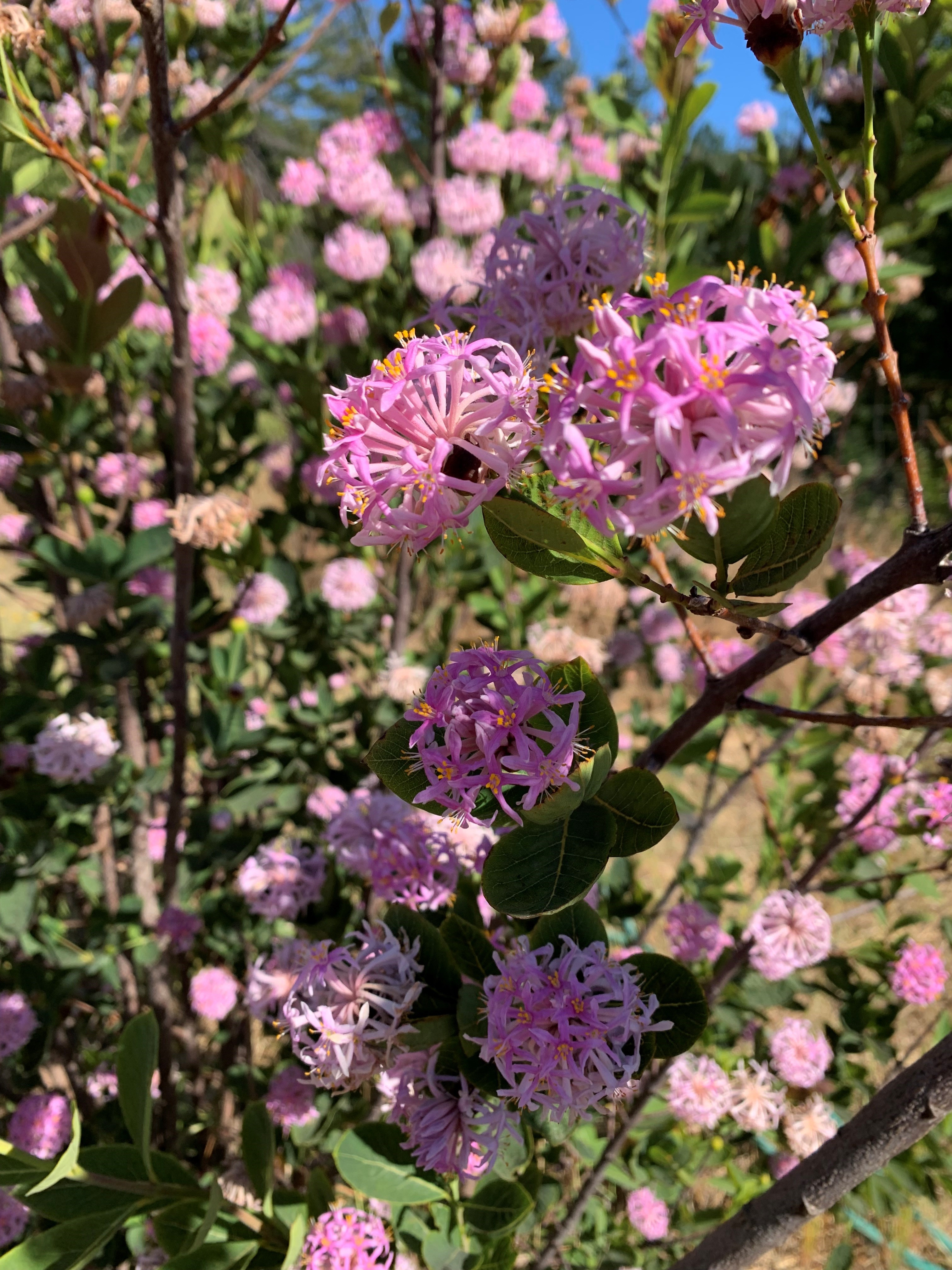
Name that shrub: one of our many hedgerow plants

Evening Scents

Each evening and early in the morning, the air is filled with the “seminal” smell of the male flowers of tanoak. It hits you strongly, suddenly: the pollen must release all at once after the evening arrives. As the sun was beginning to set, before the emanation of the heavy tanoak smell, there was a more subtle, pleasant, sweet aroma: thousands of white flowers unfurled from the field bindweed, a ground-hugging invasive morning glory- like vine of the tilled fields. There’s no detectable smell from a single bindweed flower, but en masse they sure smell pretty.

Summer Fruit

There is a pinkish blush on the first dry farmed tomatoes, but other fruits are riper. The 2 trees are young yet, but the first aprium crop is coming on: it looks like we might get 20 pounds to share among our community orchardists. They are delicious and almost make up for the lack of real apricots, which we can’t seem to produce in our cool coastal clime. The star of the show is cherries, but again too few to get to market: we anticipate 300 pounds of fat, dark red sweet cherries from the 18 trees that the fire spared. The 25 other recovering cherry trees in that block, grafted onto resprouting rootstock, will make their first sizeable harvest next year…starting in 2026, we’ll be back to ‘normal’ with 3,000 pounds plus of annual production if the stars align.

Next up this season…plums and prunes! The apples are silver dollar sized, at least, and growing. And, the avocado fruit have just set – if we can keep them moist enough, we’ll have a crop starting next January.

Sweat Investment

Even the mornings are hot as we greet the dawn ready for chores. First up: fuels reduction! Clipping, raking, and hauling the dry vegetation away from the buildings, water tanks, solar arrays, and pipes. Piles grow in the fields far away from danger…5 months from now and we’ll set them ablaze in the mist and drizzle. Today’s fuel will be tomorrow’s shrub-eradicating fire, each pile moved on top of a plant we want to eradicate.

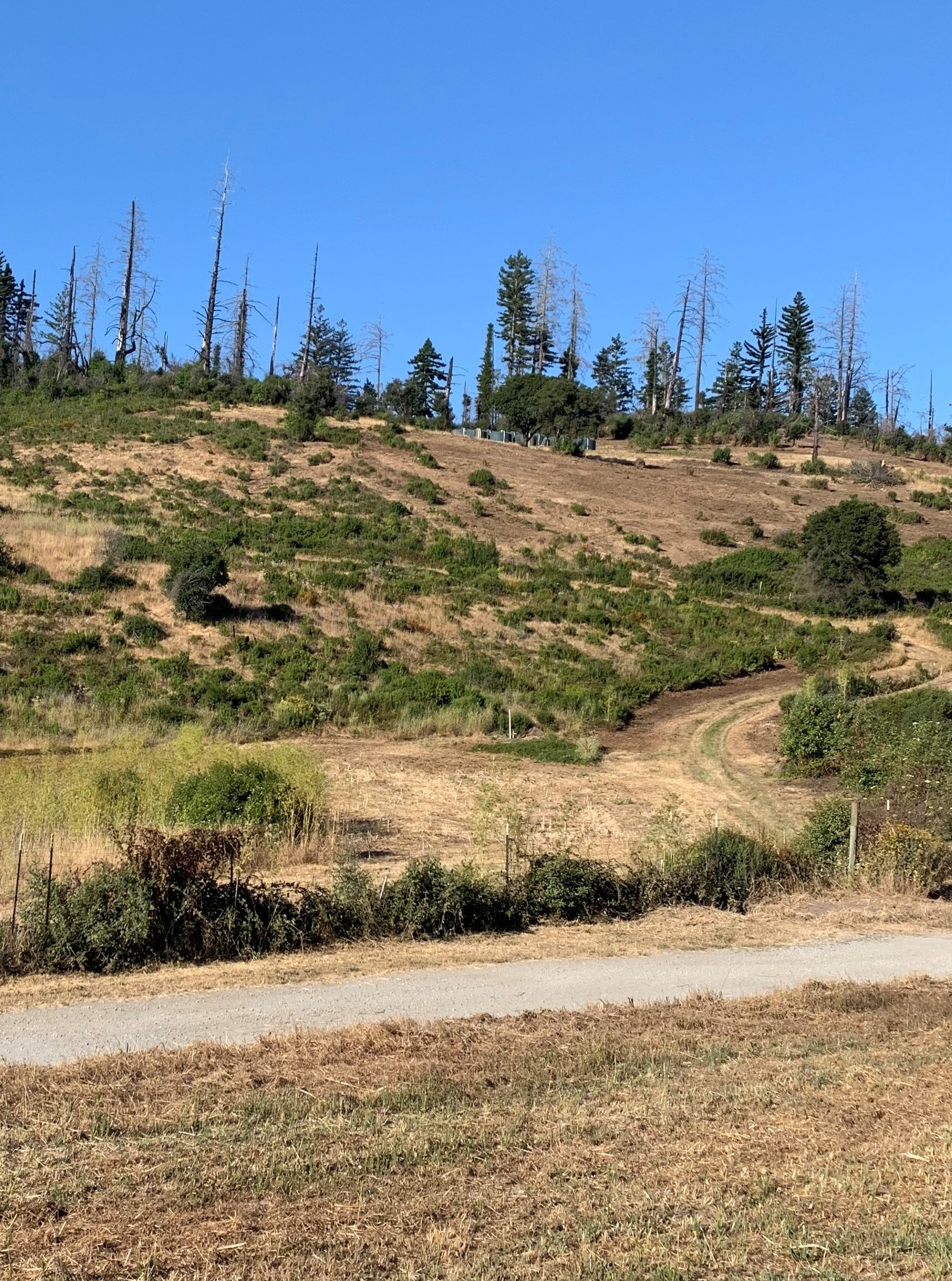
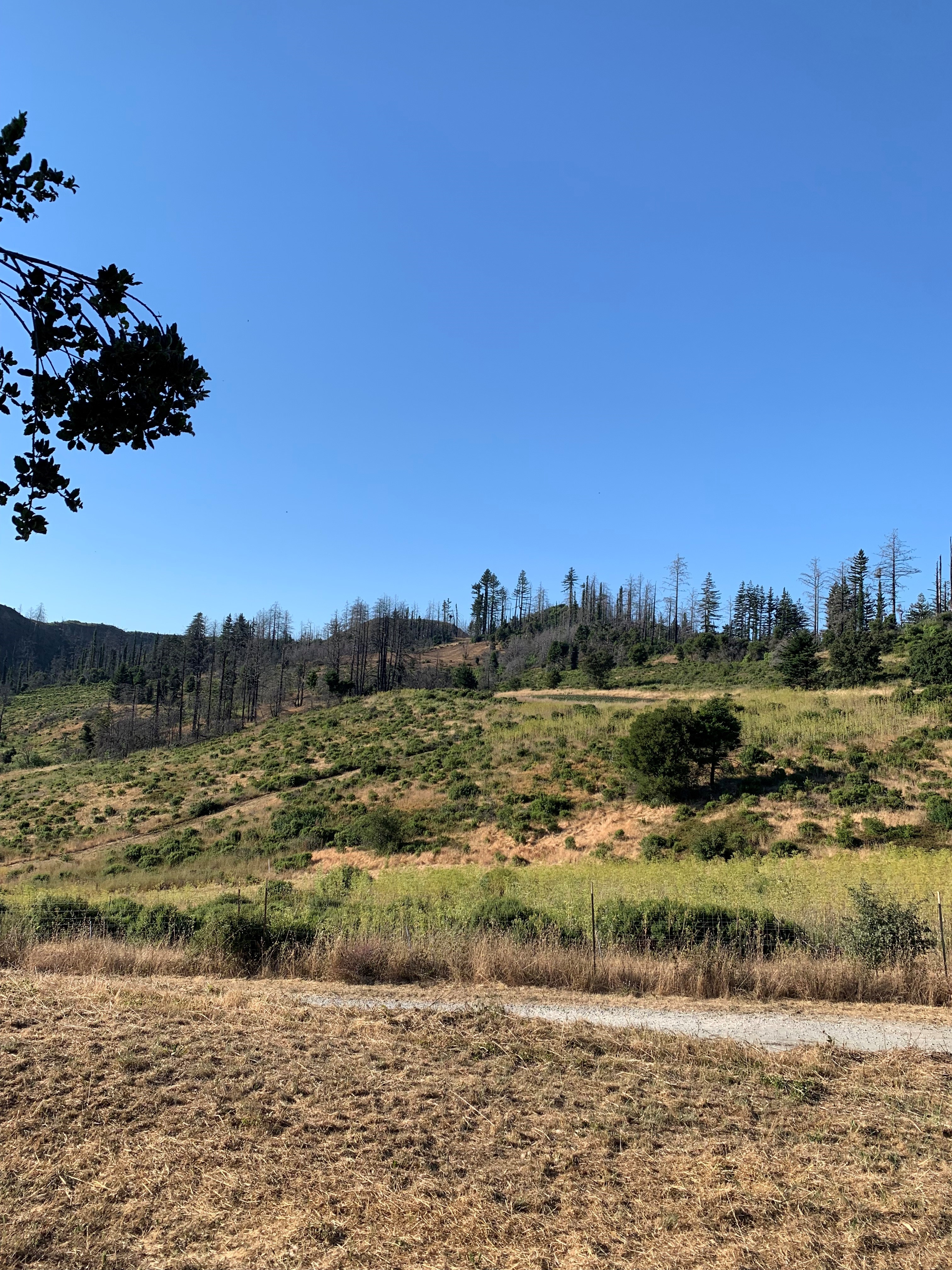
The roar of mowers, whine of weedeaters, and buzz of saws soon obliterate the extended dawn bird chorus. When our own machinery isn’t running, we can still hear the neighbors working downhill towards us, maintaining the regional shaded fuel break along Warrennella Road. This past week we thank Brion Burrell for his artistic machinery management to reduce acres of French broom and other fire dangers to nothing, making the land around us healthier and more resilient.

Neighbors and Farm partnered in clearing French Broom and fuels away from water tanks
San Vicente Redwoods cleared an ancient meadow of post-fire French broom pulse high above the Farm

Early morning still: trucks trundle and people amble towards the irrigation controls. We reach down to turn valves, starting water flowing. Then we pace the water lines, inspecting for leaks. Earlier, ravens or mice have made holes in the plastic irrigation tubes, and out pours too much water, hissing loudly, spitting into the air, creating mud and disaster. Repair kits, a thorough soaking, and a bit of work later things return to normal and the cycle of wetting has begun on one more patch, once again. We are applying 45,000 gallons of solar pumped irrigation water from our well each week to grow orchard trees and row crops. That water makes tens of thousands of dollars of income and thousands and thousands of pounds of delicious food. And it takes lots of attention, coordination, and work to manage.

Wild Life

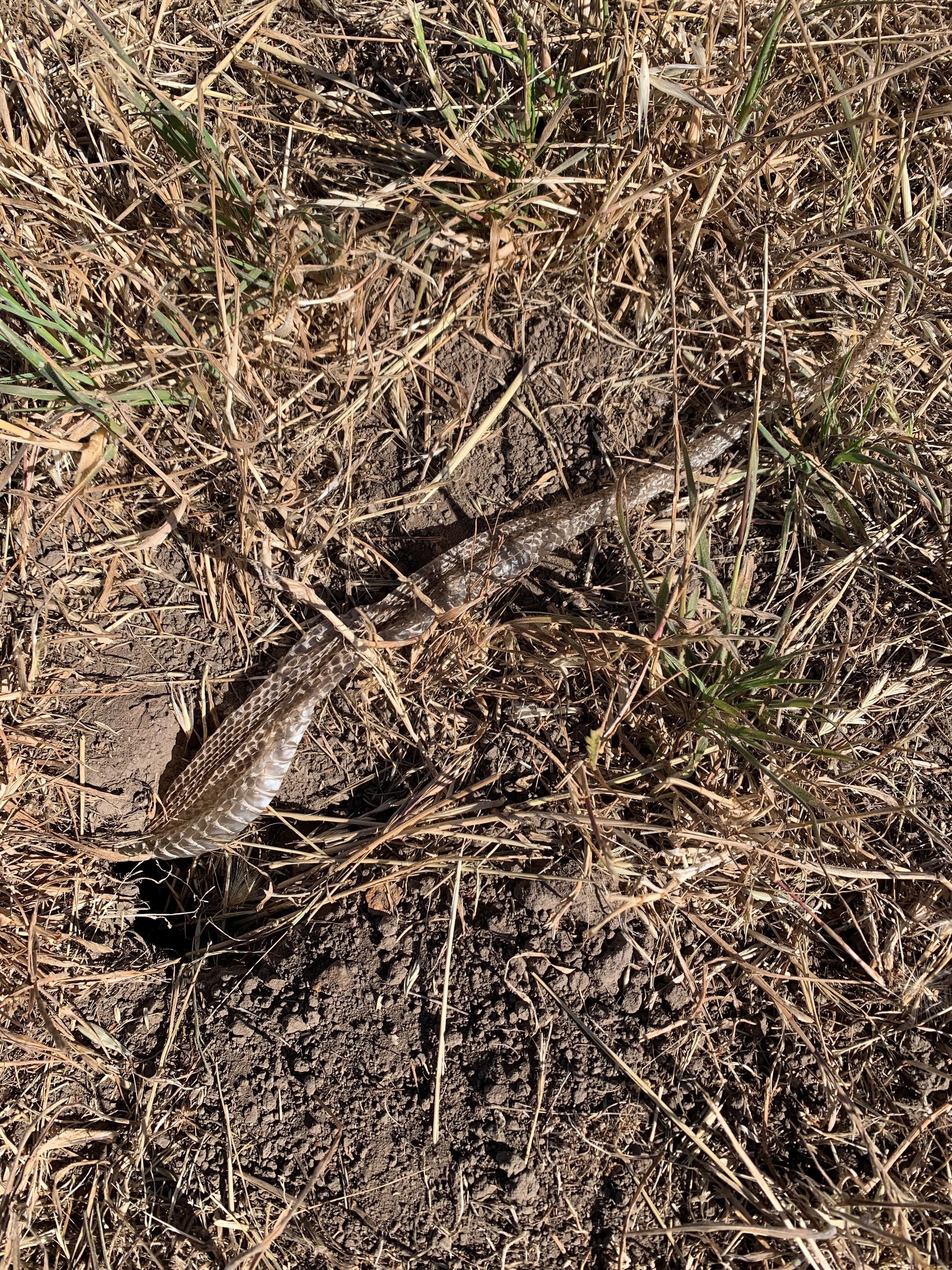
Those dawn treks for irrigation reveal fresh snake tracks, coyote scat, and weasel footprints. Gone are the days when you could easily see snakes, but they are still active around the farm. This past week must have been the right moon phase for reptiles to shed their skin. Fence lizards are still flakey. Shed snake skins have appeared, always trailing into gopher holes.

Gopher snake skin- as typical, entering gopher burrow

The regularly yipping coyotes are feasting on a big crop of juicy blackberries, as seen in their purple, seed-filled scat. Weasels are feasting on mice, and we hope they soon eat the surprising, sudden appearance of ground squirrels.

Very late but they finally appeared: dozens of California quail fluffies. The quail babies peep like easter chicks as they tumble and run along dusty trail and road, proud parents standing guard. The first younglings can fly, but most are still too young. A mother turkey is also shepherding a second round of just 3 much larger, still flightless and fluffy babies. High on the ridge, the purple martin chicks are in the air, noisy moist-sounding deep chirp-whistles give them away. They’ve done well this year. Maw and Caw greeted a third raven…a child from the past?…this morning – sometimes that one sticks around a few weeks, we’ll see.

Noise From Below

With the heat and extreme dry, we hope that no one sets the world on fire with fireworks at the beach tonight. The week leading up to this evening has been sporadic with preparatory explosions. The King Tides have made the beaches narrower, and the signs and Sheriff shoo people away, but still we wait with trepidation. May all we hear is the continued crash of the large ocean waves, lulling us to sleep with all of the windows open on these warm summer nights.

Protecting Our Most Precious Spots

The most highly protected terrestrial areas around California’s Monterey Bay are designated as “Natural Preserves” by the California Department of Parks and Recreation and as “Ecological Reserves” by the California Department of Fish and Wildlife. Let’s explore where those places are, and how the State’s premier land management agencies are directed to protect areas with these designations.

CDFW Ecological Reserves

The California Department of Fish and Wildlife (CDFW) manages 1.1 million acres of land in California. Unfortunately, CDFW does not publish summary statistics about how many of those acres are designated as Ecological Reserves, which have the highest protection of any state-owned public lands, as reflected in the following regulatory language:

“….ecological reserves are maintained for the primary purpose of …..protection of rare, threatened, or endangered native plants, wildlife, aquatic organisms, and specialized terrestrial or aquatic habitat types. Visitor uses are dependent upon the provisions of applicable laws and upon a determination by the commission that opening an area to such visitor use is compatible with the purposes of the property.” (Cal. Code Regs. tit. 14 § 630Additional Visitor Use Regulations on Department Lands Designated as Ecological Reserves).

Note the stress on maintaining these properties for species and habitat conservation, first and foremost. And note that it takes a vote by the California Fish and Game Commission to allow any visitors to use those properties. Any such vote must be supported by an analysis of the impacts of such visitation on the species and/or habitats that the Ecological Reserve was designated to protect.

Local Ecological Reserves

The two CDFW Ecological Reserves that people regularly visit around the Monterey Bay are the Elkhorn Slough Ecological Reserve and the Bonny Doon Ecological Reserve. The two other CDFW Ecological Reserves do not allow public access without special permission: Quail Hollow and Watsonville Slough.

The Elkhorn Slough regularly has many visitors. The Fish and Game Commission appears to have at some point voted to approve visitor use at that property. However, a Commission-approved Elkhorn Ecological Reserve Management Plan outlining how visitor use is compatible with the conservation purposes of the property is not readily available. So, unfortunately, I can’t tell you what ‘conservation purposes’ were designated when the property was afforded such a high level of protection.

The other CDFW Ecological Reserve that the public visits was founded with the conservation purposes, according to their approved management plan, from 2003:

“The Bonny Doon Ecological Reserve (BDER) contains the largest and most pristine remaining occurrences of several rare plant communities which are limited to ancient marine sand deposits in Santa Cruz County. These communities contain three plant species which are considered to be rare or endangered: Santa Cruz cypress (Cupressus abramsiana) and Santa Cruz wallflower (Erysimum teretifolium), both listed as Federal and State endangered at the time of acquisition; and Ben Lomond spineflower (Chorizanthe pungens var. hartwegiana), which has subsequently been listed as Federal endangered….The BDER acquisition represented a unique opportunity to preserve a comparatively large area of rare habitat in nearly pristine condition”

In contravention to the regulation cited above, CDFW has allowed public use despite the Fish and Game Commission never having approved visitor use according a plan analyzing the compatibility of visitor use and protection of the Bonny Doon Ecological Reserve. Moreover, such a plan would also be required to have a Coastal Development Plan, approved by the California Coastal Commission. The 2003 management plan alludes to the need for a trail plan, but it is not clear if the plan’s environmental impact sufficiently addressed issues associated with the vague plans outlined in the document. The plan did, however, require creation of a monitoring program that designed to trigger changes in visitor use and trail maintenance. {ask for monitoring reports}

State Parks Natural Preserves

The California Department of Parks and Recreation manages 1.6 million acres of land. As with CDFW, Parks does not publish how many acres are designated as Natural Preserves. Natural Preserves have the highest protection of any State Parks managed lands, as reflected in the following policy language:

“… natural preserves will be established to give full protection to environmental and ecological integrity, from the standpoints of watershed influences, scenic and visual unity, cultural values, and other appropriate environmental factors.

Developments in natural preserves are limited to trails and interpretive facilities required to make possible the visual and sensory enjoyment of the resources by visitors. Vehicle access and parking are not appropriate; visitor centers, restrooms, structures, and facilities other than signs shall be placed outside natural preserves.

Bicycles are allowed only on paved roads in…Natural Preserves.”

Note the language, as with CDFW, stressing the primary importance of these State Parks areas for ecological conservation, and how Parks adds to this designation watershed processes and areas of cultural significance.

Local Natural Preserves

There are 5 Monterey Bay spots with State Parks Natural Preserve designation: Wilder Beach Natural Preserve (small, Wilder Ranch State Park); San Lorenzo Headwaters Natural Preserve (1800 acres, Castle Rock State Park); Theodore Hoover Natural Preserve (23 acres, Big Basin State Park); Año Nuevo Coast Natural Preserve (925 acres, Año Nuevo State Park), and; Point Lobos State Natural Preserve (550 acres). A large portion of the Año Nuevo Coast Natural Preserve has restricted public access and there is no public access allowed at Wilder Beach. The other spots allow public access, but, as noted in the above policies, no one is allowed to leave trails in areas with this designation, and bicycles are not permitted except on paved roads.

One Natural Preserve is missing from State Park’s list: the one that was to be designated for the coastal prairies in upper Wilder Ranch. During the process of approving use of that part of the park, Parks was discussing designation of vast areas of the diverse grasslands as a Natural Preserve. However, it turned out that Parks never updated the Wilder Ranch General Plan and so didn’t pursue such a designation, possibly due to opposition from mountain bikers.

How Are They Doing?

Many people reading this will be familiar with at least some of the areas listed above, places afforded the highest levels of conservation protection. For each spot, ask yourself: how are the managers doing? Do those areas seem to be better managed for conservation than other places? In the case of Wilder Beach, are snowy plovers nesting there…do people get away with trespassing there? In the case of the Bonny Doon Ecological Reserve, is visitor use truly compatible with protecting the many species and habitats, which includes the most endangered ecosystem in North America? How can we tell these stories and help the managers elevate these very special places to give them the protection they deserve?

-this essay revised with new information from that which appeared in June 2024 at Bruce Bratton’s inimitable Monterey Bay news source at BrattonOnline.com

Advocates for Wildlife Protection: Where?

When was the last time you heard about someone advocating for wildlife protection in our Monterey Bay region? Who was it? Why?

I am disturbed by the lack of advocates for wildlife protection and I wonder why that might be. Here are some reflections.

A Plea for Help

Occasionally, I find a need to call out for help for wildlife protection advocacy. My most recent call for assistance was a seeming ‘no brainer.’ There was a clear need for wildlife advocates to ask the State of California office of the US Bureau of Land Management to consider a science-supported update of their statewide sensitive wildlife species list. The one BLM has been using doesn’t protect a bunch of State listed wildlife species, as it should. And, the BLM is required to work with our State Wildlife agency to do just that. This is one of the most straightforward issues I’ve faced: the facts are easy to illustrate and quick to research. And so, I reached out to the obvious pro-wildlife advocacy organizations. Who comes to mind when I say that? Pause, don’t read on…think: who would that be?

The Sierra Club

If you are a pro-wildlife advocate, the Sierra Club seems a great place to work. Well, it could use some help. My pleas to the Santa Cruz Group of the Ventana Chapter of the Sierra Club went unanswered. The one or two in the group who are apt to answer such requests are totally stretched. A while back, the local club was taken over by the pro-bicycle lobby, a group that has little regard for wildlife conservation. It should be telling that Santa Cruz doesn’t even have its own Sierra Club chapter: the local one is a sub-group of the Ventana Chapter, based in Monterey where most of the pro-environmental activism has been traditionally located.

The Wildlife Society, San Francisco Bay Area Chapter

Another far flung chapter of an organization that is supposed to represent Santa Cruz County’s wildlife conservation concerns is the SF Bay Chapter of the Wildlife Society. Unlike the Sierra Club, this Chapter did return my queries. However, after a long wait they wrote me that they were uncomfortable advocating for this issue. They actually told me that they weren’t an advocacy organization, despite their website saying that they “work to ensure that wildlife and habitats are conserved” by “advocating for effective wildlife policy and law.” It seems like whoever is active in the organization right now is uncomfortable being advocates. Luckily, their parent organization was a much better help.

The Western Section of the Wildlife Society

Even more far flung than the SF Bay Chapter, the Western Section of the Wildlife Society was a great help. Their leadership, though obviously overworked, were enthusiastic and helpful with the straightforward request for assistance. They did due diligence and had adult conversations about the need for advocacy and wrote an amazingly strong letter on the issue. If you want to support a good (local?) organization for wildlife advocacy, this is a logical choice. Unfortunately, they probably won’t be proactively monitoring our local situation and helping out without us asking.

Audubon Society

Not so far flung, the Santa Clara Valley Audubon Society is very active and quite influential…just over the hill. When approached, their overworked volunteers can sometimes be enticed to help with local conservation. I have to give them a call on this one.

Land Trusts

The Land Trust of Santa Cruz, Sempervirens Fund, Save the Redwoods League, Peninsula Open Space Trust and others…clearly all competing with one another with no unified messages or strategy for region-wide wildlife conservation. Instead, they are as likely to be public-forward with pitches for increased recreation in natural areas, which runs counter to wildlife conservation. With this contradiction, none of these organizations are able to build credible coalitions to advocate for wildlife conservation.

Wildlife Biologists

I have long approached local wildlife biologists for assistance, with mixed results. This time, I reached out to a few and was surprised. What I was asking experts to do was to do a bit of analysis  so that their opinions about adding species to the BLM’s list were well supported. A handful of wildlife biologists said that they would consider advocating for this cause, but only if paid for their time for analysis. One biologist, Jacob Pollock, stepped up as a volunteer. Dr. Pollock is a steadfast advocate for science-supported wildlife conservation. He has an inquisitive mind and powerful analytical abilities. He deserves recognition and thanks for his wildlife conservation volunteerism. This is apparently quite rare. He will shortly offer up a methodological approach to updating the BLM’s State Special Status Wildlife Species list with an example from a statewide analysis of the rarity of American badger, including BLM’s contribution to its recovery.

The rarity of such volunteers was recently emphasized when a community organization contacted me to speak at a public forum considering a potentially wildlife-impacting regulation. I couldn’t speak and couldn’t think of another wildlife advocate to do that speaking engagement. Have you seen an inspirational wildlife conservation advocate who regularly speaks to local threats to wildlife and solutions for conservation?

Why So Few?

What has created this dearth of local wildlife advocates? We have no reliable analysis about what has happened. One day, maybe I’ll find the time to do some investigative work about what went on with the local Sierra Club. Meanwhile, I suggest that mere intelligent leadership in our community would result in that person getting elected to the Santa Cruz Group. However, that person would be lonely without a couple or three more such people to make a majority vote happen in favor of wildlife…and, a group of such volunteers would be necessary to pick up the workload for responsible advocacy.

Cost of living might have something to do with the situation. The Monterey Bay area is very expensive to live in, so wildlife biologists must work hard to pay their bills, leaving no time for volunteer work. And, when professional wildlife biologists do advocacy, they threaten some of their employment opportunities, so there’s further disincentive.

Parallels with Environmental Educators

If there are any social scientists out there, read this other post and compare the notes with this one – I think there are parallels. Besides wildlife biologists, why are so few environmental educators meshing conservation advocacy with their work?  Is it likewise the threat to income? Or, is there something cultural going on here? There might be some redundancy with this issue as perhaps a large number of environmental educators are also wildlife biologists.

What Are We To Do?

I heard recently that progressives might be getting some funding to support a revitalization to allow improved political campaigns in Santa Cruz. Perhaps there is a similar need in wildlife advocacy. It does seem that we need a new organization to advocate for wildlife in our region. How would one go about setting it up for success? I imagine it starts with funding the set up and also creating an endowment for some staff positions. The mission would need to be building a supportive, diverse, and active public. I am looking for such change.

-this post slightly adapted from the one published by Bruce Bratton at his impactful BrattonOnline.com blog site where there is often lots of good information from some brainy characters. A great source of news.