oc

What’s In the Air?

Have you heard the question “What’s in the water?” I’ve encountered that question recently posed in the context of a situation when odd, inexplicable things had been happening at an organization. Then, new, seemingly fresh and rational personnel are hired, but those people quickly seem just as odd and inexplicable, less fresh and innovative and then things just stay the same kind of weird. How can that possibly happen?! And we exclaim, “What’s in the water?” It’s as if people are being medicated through their drinking water into a kind of sub-par state of being. “They drank the Kool-Aid” is another way of saying that same thing, I guess, except less innocuously referencing a terrible tragedy in South America some time ago. Judging by the amount of filtered water, bottled water, and such that people purchase, it does seem as if we are very, very concerned about what is in our water. What about the air? What’s in our air?

The Direction of the Wind

In my daily routine, each time I walk outside I try to pay attention to the wind. Which way is the wind headed? I feel the breeze on my skin or watch the swaying of the grass and trees. I tilt my body until I face straight into it, to know best the precise direction. Ialso ask how is the wind blowing right where I am versus farther away? Sometimes the wind is gentle close but raging nearby, on higher ground, where trees ‘talk’ and sway. 

The directions of the wind can be predictable, but it is becoming less so. Winds around the Monterey Bay are often from the north or northwest, mainly cool breezes. Winter storms especially sweep in with gales from the northwest. Bomb cyclones come from that way. Atmospheric rivers tilt the direction more from the west. Especially cold storms come more from the north. Once the breeze starts coming from those other two ways, things get weird.

CZU Lightning Complex Fire – The air looked like this for days

The downslope, Santa Ana winds of southern California (aka devil winds) make things really weird to our south. Those winds are from the east and can be very strong; fires rage, people freak out. Luckily, that phenomenon doesn’t happen here, but we do get occasional winds from the east. I swear I can smell the desert on those winds, the smell of creosote bush. Those breezes are warm and dry just like the winds from the south. I can very well recall the stormy winds from the south: those brought us the CZU Lightning Complex Fire as well as a couple other tattered hurricane remnants that created havoc across the state. When winds come from the south or east, beware of fire and keep your eye out for the odd human behavior associated with Santa Ana winds in southern California. We might also be concerned about the better-documented situation where those breezes carry the spores of fungi that cause Valley Fever, an air quality concern…borne on the wind as they say.  

Air Quality

Once you recognize the direction from which the wind blows, the next question becomes what is that air carrying? When the wind blows ‘just right’ (from the northeast), we get a nasty soup of smog hanging out to sea, blown out of the Golden Gate and then generally downcoast where you get to appreciate that the Bay keeps us a bit sheltered and inland from those toxic breezes. Northeast winds are rare, but that smog carries lots of ugly chemistry. There’s stuff you don’t want to breathe for its toxicity, but there is also lots of fertilizer from car exhaust. Catalytic converters do a good job of turning exhaust into readily available nitrogen compounds that are fertilizing the landscape. Healthy? Nay. Fertilizer makes habitats more weedy, weeds grow bigger and make a bigger wildfire danger when they dry. The tall weeds outcompete native wildflowers. Fires carried by those weeds are devastating California’s deserts, endangering things like Joshua trees. The Golden Gate (NE wind) is one of our passages for nitrogen-laced air pollution, the other is the Pajaro Valley, belching out smog pushed by the more northerly breezes passing down through the southern end of the Silicon Valley.

Those ‘Fresh’ Westerlies

If you are like me, you feel lucky to have that great expanse of clean ocean air to keep us breathing well. Think again. We are seeing more and more pollution from China reaching our shores. Those giant cargo containers full of ‘stuff’ isn’t the only thing coming from the east. Coal fired power plants are making a yuckola mess of chemicals that are polluting California’s air. But, let’s not rest all of the blame on human’s insatiable appetite for stuff in the present. Some of the toxic air particles are from greed of the deep past: gold mining. Mercury was used in processing gold in California. That mercury flowed downstream and into the ocean; it is now being carried back to land in fog and rain, concentrating up the food chain and poisoning mountain lions in the Santa Cruz Mountains.

Famous Air Quote

“We have some incredibly talented people that know environment and what we’re doing probably better than any people on Earth.

From day one, my administration has made it a top priority to ensure that America has among the very cleanest air and cleanest water on the planet.  We want the cleanest air.  We want crystal-clean water, and that’s what we’re doing and that’s what we’re working on so hard.”

I’m guessing you know the source of this quote by now. If not, you can probably guess from the recognizable style. We hope that President Trump, like all politicians, recognizes how much the vast majority of citizens value clean air, so that there is ample motivation to do something about it. If politicians don’t act on these things, we all suffer. Unfortunately, few journalists hold any politician accountable to their clean air record: after all, it is anti-business to do so, and the news needs money.

Our Work

Vote. Get an air purifier for your house. Buy less. Go outside and think about the breeze…the direction of the wind…the strength of the wind…and what is carried on those breezes. 

-this post originally published as part of BrattonOnline.com – check it out! Updated weekly with keen insights into Monterey Bay and beyond.

People for Fire

Nature around the Monterey Bay has been adjusting to changing wildfire regimes; we should expect that to continue, but how that happens is up to us in many different ways. Very recently, we are putting purposeful, good fire back onto the land. This may help restore the land while protecting human infrastructure from catastrophic damage, but there are too few projects to learn from…we must learn more!

Burning History

The Monterey Bay area has been getting hotter and drier for 20,000 years, which coincides with the era of fire-lighting humans. Laguna de las Trancas is an ancient pond that lies on a geological fault on the North Coast. Ancient ponds record the history of their place in strata. Scientists have taken sediment cores from that pond and recorded layers of pollen and volcanic ash, going back through time as the deeper sediment is older. Volcanic ash has properties that allow us to know from which volcano it originates and scientists have used various methods to chart the age of ancient volcanic eruptions. So, volcanic ash serves as milestones marking known years in the sediment’s past. This is how we know that this region changed to a much more fire-prone landscape around 12,000 years ago, consequent with the widespread archeological evidence of humans. Before that, the dominant forest trees were firs; after that, fire-adapted redwoods came to dominate. More recently, for the past 1200 years, fire scars on ancient redwoods illustrate a 4-6 year burn return interval. Indigenous people likely managed the fires sweeping frequently through redwood forests, but their fire tending of this landscape tragically ended during the genocidal colonist period. Purposeful fire has been almost entirely absent on most of this landscape for 230 years. In its place, long-interval catastrophic wildfires have caused all sorts of mayhem and loss of life.

Indigenous Pyro Management 

Oral history, written accounts at the time of colonist contact, pollen records in ponds, burn scars on ancient trees, and vegetation patterns on this landscape are things that can teach us bits about thousands of years of intentional use of fire by humans. One early written account from early Old-World colonist explorers notes that many of the meadows around Monterey Bay were burned black. We know now that without burning and/or grazing all of this region’s prairies change quickly into forests, so fire must have been maintaining meadows for a very long time, in the absence of grazing and tree-pulling by the Pleistocene megafauna. The blackened meadows hampered the progress of invading Old-World explorers because they had trouble feeding their horses, which they relied on for transport. In this case, we might contemplate the use prairie fire as self-defense, but we also know that indigenous peoples used fire to cultivate native plants that served as medicine, salad greens, grain, basket materials and much more.

Good Fire Emerging Now

California’s governor has set a goal of using prescribed fire on a half million acres a year. It has been 1/10th of that for too long but indigenous folks probably burned more like 3 million acres (or more) a year previously.  

Most people do not see the natural landscape as their pharmacy, grocery store, or fibershed, but many people look to the hills and know the danger of wildfire. Purposeful, good fire is starting to address this last concern and one day will help people reunite with the land in those other ways. 

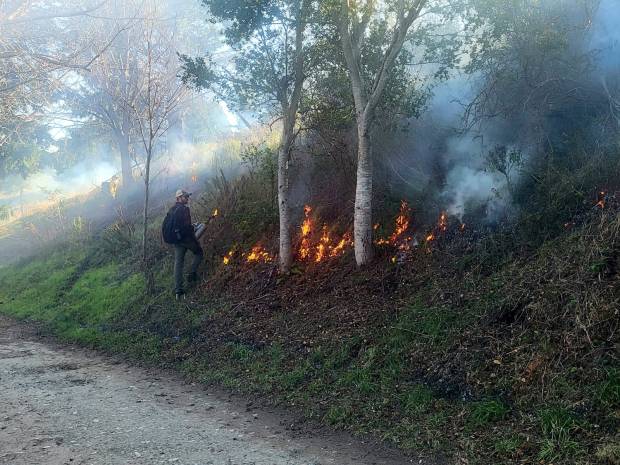
I was recently fortunate to interact with the Central Coast Prescribed Burn Association as they purposefully burned big patches of brush on Santa Cruz County’s North Coast. After much planning and preparation, forty volunteers gathered one Saturday to light big patches of hillside on fire. The goal was to restore coastal prairie and to train more wildland fire lighters in order to expand our region’s capacity to reintroduce fire on the landscape. These volunteer groups are growing around the world, including here in California. We have learned that their work is essential for everyone’s safety, and for the stewardship of the land, which provides us so much: water, timber, livestock, recreation, clean air, food, health, and solace.

Value-Added Fire

As we realize the importance of good fire in natural lands, entrepreneurs are envisioning profit. People are cashing in on the wildfire crisis by managing wildland fuels to power electrical generators. Some are seeing a potential to power electrical land stewardship equipment with generators fired by the fuel that equipment is removing. Others are already hauling wildland fuels to generation facilities supplying regions in Northern California with power. New technology allows burning wildland fuels to create charcoal, which is added to agricultural areas improving water holding capacity and maybe even soil fertility. That carbon is captured to mitigate greenhouse gas emissions. The machines are called ‘carbonators’ and they use thousands of gallons of water a day to keep them cool, which is the trick to making charcoal.

There was a lull for a bit, fand now there’s a rejuvenation of wood fired heaters for rural homes. The new woodstoves are engineered to be very efficient with very low air particulate output. Greenhouse gas (carbon) output is from recently grown wood rather than ancient fossil fuels.

The Future?

I envision a time when robots harvest biomass for fuel, farming every square inch of Planet Earth for energy. Imagine micro technology…ant-sized robots that prune plants in cultivated landscapes and natural areas, hauling bits of biomass back to larger robots which haul it to biomass energy production facilities…one big conveyor belt of fuel stolen from natural food webs. I do not like that future, but it seems inevitable in our ‘civilized’ world. How far off is that future? Without another way of managing wildfire, the day of that scenario is coming closer, quickly. The alternative is for more people to be involved with community groups managing purposeful, good fire across large areas, like the Monterey Bay region.

Your Role

Each of us has a role in helping Good Fire gain traction. Start with getting an air filter for your house: you need one anyway for wildfire smoke. Air pollution is a great concern, even with purposeful fires. The recent burning exercise I was a part of was delayed a week because of air quality concerns, and that week delay caused a bunch of issues with people’s schedules, wasted catering food, etc. If we can all be better prepared for smoke, it will be easier to get Good Fire on the ground. If you are able, help to figure out a way to get air filters to folks who can’t afford them!

We can’t expand Good Fire unless everyone feels safe in their homes. So, helping people get safe in their homes is an important thing. And, even when those homes are well secured against wildfire, people still need to be talked to, shown Good Fire, and helped to shed their fears. We can try to experience purposeful fire and see how well it is managed and then tell those stories to more people: there is a lot of fear about even professionally managed, purposeful fire.

The last thing I think more people might do: volunteer to help! The Prescribed Burn Associations could use more volunteers. Learning to manage purposeful fire is hard work and many people are needed.

-this column originally posted in the very informative weekly blog, BrattonOnline – please subscribe, like, and spread the word!

Power and Pitfalls of Experiential Learning

Most people I know rejoice when they hear about students engaged with experiential learning, but what does that term mean and how far should it go? Ronald Reagan was largely responsible for making it less affordable to attend colleges and universities, and when he did many cynics muttered about industry and their political party lackies wanting cheaper, more subservient labor. This purposeful dumbing down of our society is having grave consequences, and not just in one spot on the political spectrum. Backlash is occurring, but not the kind of backlash you might hope for: increasingly close relationships between industry and university systems. Industry hungers for skilled workers. And so, we are witnessing the rise of the trade school. Well-run trade schools could nurture collaboration, fostering Democracy, but this runs counter to oligarchical aspersions of the 1%. How will we solve this tension?

California’s Public Institutions of Higher Learning

What is the difference between the 4 different public institutions of higher learning in California: the 116 “community colleges,” 3 “polytechnic state universities,” 20 other “state universities”, and 10 “UC’s?” Community colleges are sorting machines to bridge the ‘better’ students into higher division courses at the other institutions. Around 20% of lower division students in California’s universities drop out; to keep the machine running, there must be replacements in line –community colleges produce those replacements. The “mission of the California Community Colleges is to advance California’s economic growth and global competitiveness through education, training, and services that contribute to continuous work force improvement.” In other words, community colleges are the first step for students entering trade school in California’s higher education system. As such, community colleges are primarily designed to feed students into the polytechnic universities, the purest type of university trade school. The term ‘polytechnic’ refers to vocational training, aka “trade school.” For administrative efficiency as well as similarity of mission, California’s 3 polytechnic universities are administered by the California State University (CSU) system. The other 20 CSU’s are a bit more abashedly also trade schools. The UC’s are clearly distinct from trade schools by their promotion of teaching theory and nurturing critical thinking, conducting research that advances theories, not current practice – they eschew applied research.

The Danger of Trade Schools in California

Trade schools are often proud of experiential learning, a key component of skills-based training. Industry saves money if the State spends the money building skills in the soon-to-be workforce. The current overrated excitement about training grade school students in STEM is a symptom of this thinking. Skills based training, including STEM training, is a big problem when things change as rapidly as they are changing. Most skills we teach to make widgets today are not the skills that will be needed a short period of time. Despite this, trade school curricula leave little room for elective courses. By their sophomore year, students must define their major, and to succeed at that declared major a student has no room in their schedule to explore other subjects. On top of this, trade schools are teaching a narrow set of ‘soft skills,’ related to obedience to process: students who can navigate the bureaucracy are the ones that succeed. The result of this system is an emerging workforce trained narrowly in already irrelevant job skills excepting the skill to navigate protocol.

Faltering Trade Schools

Years ago, California’s trade schools hired professors with experience in private industry. After Reagan gutted public higher education funding, competition increased between colleges and universities for other revenue sources from skyrocketing student fees, public:private partnerships (industry funding), and alumni donations. This competition led trade schools to attempt to become more like UCs: “top-tier” universities. And so, trade schools turned changed the old model of hiring professors experienced in “real world” industries to hiring the same types of professors UC would hire. Lucky for them, there is a glut of academically aspiring PhDs. Trade school administrators increasingly apply the screws to faculty, who are caught in demoralizing  stress. Professors at trade schools must teach as many tuition-paying students as possible: low faculty:student ratios are more profitable. To be successful these faculty must help with fundraising, meeting with industry officials to keep up reputations of building a skilled workforce. On top of those obligations, trade school faculty play the game of courting ‘top tier’ status for their university by somehow, miraculously wedging in time for publication-quality research.

Long-Lasting, Relevant Workforce Skill: Collaboration

Instead of, or at least in addition to, training trade school students on ‘how good are you at navigating protocol,’ trade schools might also focus on collaborative skills. What if experiential learning at trade schools focused on student engagement to solve real-world problems, interacting with real world stakeholders? In this case, faculty and students would interact with the stakeholders involved in any given issue…perhaps industry representatives, regulators, policymakers, financiers, interested citizens, labor leaders, etc. Students would be reviewed by their ability to critically evaluate situations and for the feasibility of their creative solutions. Faculty would be reviewed by the quality of their student mentorship on collaboration skills. Collaborative skill training would focus on power analysis, defining success, facilitating dialogues for mutual understanding, identifying gaps in knowledge, and identifying solutions of greatest benefit.

Contextual Shift

Training a future workforce skilled in collaboration would increase productivity while creating a more peaceful citizenry, but would also likely threaten wealth inequality…and so is a major threat to industry leaders. If those entering the industrial workforce understood the regulatory context of their work, they might favor solutions that meet regulatory expectations, rather than attempting to challenge or circumvent the rules. On the other hand, if those entering regulatory workforce understood industrial context of their work, they might be less likely to apply rules inappropriately in favor or in contravention of industry. In either case, accusations of a ‘dark state’ would evaporate and the people’s will for regulations would likely be more fully realized. Core to collaboration training is the idea that we can achieve more through collaboration than trade-offs faced with compromise. Those in power like the frame where the only pathway to solution is compromise because they think they always win as much as could be won. That mistaken assumption is evident in the politics of the USA.

DEI is the Answer

Even trade schools are teaching Diversity, Equity, and Inclusion (DEI), which holds great promise as a back door to training in collaboration. The skills I outlined above are inherent to implementing a more DEI-oriented society. The question is…will DEI suffuse everything at trade schools (and beyond), or will it be siloed as yet another idea in the world of ideas? In some places, we are seeing an attack on DEI training…after reading this essay, I hope you can think more critically about why that might be.

I also hope you will consider the implications of higher education tilting towards trade schools, away from the humanities, history, critical thinking, and theory.

-this essay originally published in Bruce Bratton’s amazing BrattonOnline.com blog: sign up and get an email reminder to read each week. It is worth it…even if you donate a bit to help keep it running!

Land Atonement

Very slowly, we must move in the direction of becoming at one with the Land. All that we eat, all that we breathe, all that we drink comes from the Land.

What is your opinion of how people have treated the land around us?

Have we damaged it, or made it better? How do you know?

Big Sur: Whole or Shattered?

The Santa Lucia Mountains…Big Sur, to our South. On one hand, we see picturesque beauty, “wilderness,” a rugged, sparsely settled landscape, millions of flowers, huge trees, and a rich marine environment. On the other hand, there is a land devoid of much of the wildlife that once called that place habitat, the native peoples that called it home and stewarded that place are mostly gone (but still there!), wildfires ravage the landscape too hot and too frequently, roads and other development bleed soil and pollution into streams, and hordes of poorly managed visitors negatively impact the richest ecology, where the land meets the sea.

Monterey Peninsula: Zombie Ecosystems or Well-Managed Parks?

An ecological treasure, the Monterey Peninsula has rare pine and cypress forests, chaparral, and coastal prairies. Millions of humans visit to play golf, shop, drive fancy cars, visit art galleries, taste wine, or do tourism at an aquarium and historic sites. Nature there is fragmented into isolated parks which have no chance of long-term health. With lots of exposure to disease and human disturbance, with no chance of natural interactions with wildlife or fire, the parks represent zombie ecosystems, seemingly alive but really walking dead as they slowly decline with species after species winking out.

Tilled Valleys, How do You Fare?

The Salinas and Pajaro Valleys frame the central Monterey Bay, rich alluvial soils that support Agriculture, the nation’s salad bowl. Farming is an economic engine, sustaining jobs and communities and feeding people vegetables, never enough helpings per capita in any given day. The effluent flowing out of that engine creates the most polluted surface water in the US, pools of eutrophic, stinking rot. Ancient rich soil is disappearing, lost with the rain, in floods, and in the wind. Groundwater is being contaminated with pollution or by sea water intrusion caused by over pumping groundwater.

Santa Cruz and the North Coast, Loved and Smothered

On the other side of the Bay lies Big Sur North, a tamer landscape, thickly inhabited, worn. Tourism, Silicon Valley settlement, and education rule here. Surf and mountain bike culture are ‘natural’ tourism while hordes of cotton candy fueled tourists amble in the relatively cool beachy haven that contrasts so readily with the increasingly baking inland. Millions of feet pummel the beach sand substrate, crushing the food chain of flocks of would-be shorebirds; the remaining birds scatter, no longer comfortable foraging on these overrun beaches. Similarly, most meadows and canyons zip with such continual disturbance that wildlife families flee….fewer places left to hide. In the built areas, hundreds of fossil fuel formulations leak from engines, pesticides ooze from landscapes, headwater rivers and streams are diverted for toilet flushing and carwashes, downstream they receive and convey pollutants into our treasured Bay.

How do We?

How do we atone for the ongoing damage we are causing to the land around us? In ecological terms we call this restoration. In social terms, we call this reparation. In economic terms, we call this re-investment. Do you see enough of this going on? I cannot believe that you do.

Ecological Restoration

We must make room for all of the species of plants and wildlife to flourish if we ourselves are to survive. We read such things, but do we believe them? Do we act on them? Are there things individuals can do to make this happen? Many of us can vote for those who have this vision. Many of us can learn about ecological restoration and tell others about the ways forward around here. There is good fire to put back on the landscape. There are ecological linkages to restore, across roads, through development. There are invasive species to control. And, there are many species of wildlife that need to be better managed, monitored, and restored with the California Department of Fish and Wildlife at the helm.

Reparations

We live on unceded lands. We are surrounded by people displaced by greed-fueled governmental policies, including war. The nation owes its current wealth to people terribly taken advantage of for generations. What are we doing for reparations? Anything at all?

Re-Investment

The way we do it, every new home, every new development creates a heavier burden on our already strapped local municipalities. The way we have done it for generations, businesses have profited from extraction from Nature, most recently including agriculture, water use, and tourism in natural areas. Some suggest it is time to increase the taxes of landowners to enable more tourists to overrun our natural areas…’investing” in new trails and repairing old trails degraded by millions of tourists to keep local businesses thriving. How did this become part of a re-investment proposal? 

A Path Forward

Whether you take part in restoration, reparations, or re-investment, each of us must do our part. I’m sure that none of us want to leave the world worse off than it was before we enjoyed the water, the air, and the food that Nature made possible. We regularly eat meals…taking. We regularly drink water…taking. We regularly travel through Nature…taking. We regularly purchase things and throw away things…taking. What are we regularly doing to give back, to atone for all that we are taking from Nature, from each other?

I hope that you will think about that debt when you vote this Fall. And, I hope that you will plan at least one activity in the next little while that gives something back. Make such giving a regular practice, please.

-this column brought to you in part by Bruce Bratton, who graciously publishes my work weekly at BrattonOnline.com Sign up, donate, and read it- a great way to catch up on what is going on around the Monterey Bay, and beyond.

Well Managed Parks?

Some people I know are saying how ‘well managed’ our public open spaces are around the Monterey Bay. Let’s examine how one might come to such a conclusion and, at the same time, consider carefully parks managers’ roles in protecting wildlife for future generations.

Logical Fallacies

The simple, unsubstantiated statement that most of the Monterey Bay region’s public parks are ‘well managed’ is rife with logical fallacies. The people saying this are hoping that their statement will resonate because they are perceived as authorities about environmental matters. They are taking advantage of a ‘bandwagon’ building on a very publicly vocal minority of parks users who are also repeating the statement for their own purposes. Members of this bandwagon really enjoy some aspect of public parks and are suggesting that because their expectations have been met, everything else the parks managers are doing is being done well, too. They may be relying on black-or-white rationale where a park is either managed well or not, and they’d rather land on the ‘managed well’ side of that dichotomy. Building on that assertion, they purport any level of critique of parks management as personal attacks on parks managers. In the ensuing discussion, they are incredulous that anyone would suggest something isn’t right with parks management. They point out that all the credible public figures regularly praise our parks. When further pressed, the person claiming local parks are ‘well managed’ says ‘prove me wrong!’ … ‘where is there any proof that local parks are being mismanaged?’ they ask. After providing several examples of failures, the next thing I hear is “well I meant ‘generally well-managed,’ not that they can’t do better.’ If the conversation continues, the ambiguity gets wider and deeper. Why do these people continue to utter this statement?

Motives

Sunny dayists, popularity by praise, narcissism, greed, business marketing…all of these alone or combined are good explanations for the motivation of the people claiming parks are ‘well managed.’ Have you ever met someone who is always leaning into the positives around them? I had the great fortune of spending lots of time with one of those types of people. Our situation allowed us to eat at many of the region’s restaurants. When we first went out to eat, I was pleased that they expressed such praise for the food, the service, the atmosphere…everything! After a long while, I noticed that their praise was the same no matter where we ate out. I tested the hypothesis, leading us to one of the worst restaurants in the region: same level of praise! I bet you know someone like this; imagine them saying that parks are so, very ‘well managed.’ Do you believe them? On the other hand, isn’t it just easier and more fun to praise parks managers? When you are part of this bandwagon, such praise makes you popular.

Or, maybe you don’t care about that bandwagon. Maybe you get exactly what you want at local parks and so share the innocent but narcissistic reflection, ‘parks are well managed!’ A perhaps more malevolent explanation is that those declaring ‘parks are well managed’ actually do understand that parks are NOT well managed but they are getting what they want and so they greedily fight any threats to what’s working for them. For instance, perhaps those sharing the ‘well managed parks’ assertion are daredevil acrobat drone pilots who raise kids and drink beers with the parks managers families…might those be the sort of people who would declare ‘parks are well managed!”  There’s one more type that comes to mind: the businessperson. You can probably imagine the marketing lingo of any shrewd businessperson in the fields of nature education, outdoor recreation, tourism, conservation, public administration, or politics. Their statements are carefully crafted to build their personal brand, make more money, have more power. In that context, ‘parks are well managed,’ becomes what in politics is known as a “tribal statement.” One says ‘parks are well managed’ with a nod to one’s colleagues who are most likely to provide some positive business outcome. For instance, parks managers might provide support for nonprofits in the nature education space. Hearing that you are part of the bandwagon, perhaps an outdoor equipment maker will donate some gear to your organization. When a politician is reminded that you share their black-or-white jingoes, they might be especially helpful in supporting initiatives that move you towards business success. I know business-oriented conservationists who regularly say things they know aren’t true such as ‘this park is so very well managed!’ in the mistaken idea that such lies will improve their rapport and make them more powerful.

Bandwagon Patrol

Beware the bandwagon and beware the logical fallacies that accompany unsubstantiated generalities about things you know little about. Perhaps we could all benefit from changing vague generalities/assertions to more detailed personal reflections: ‘When I last visited Nisene Marks, I was pleased not to encounter any hikers.’ instead of ‘Nisene Marks is well managed.’ Let’s get more specific in general about things that affect the environment. Instead of ‘parks are well managed,’ maybe one could say ‘if Henry Cowell had a management plan, it would be easier to judge how well it is being managed.’ We can only fairly judge how well a park is being managed within the context of its management.

Context

If Natural Bridges park’s main objective was maximizing beach access, how are they doing at managing for that? Seems like we should know some details about the context of management at individual parks to better understand how well they are being managed. If Cotoni Coast Dairies’ main objective was managing for nature conservation, how would we know how well the managers are doing? We’d need access to supporting data and summary reports, of course!

Principles of Good Land Management

I suggest a framework of good land management principles. First, for land management to be judged at all, there must be a management plan that informs what happens on the ground. The plan needs to rely on the scientific method and an adaptive management framework, include citations for supporting peer-reviewed publications, and have recommendations for monitoring and managing for the ecological and social carrying capacity of the land. Next, managers should regularly be working to adapt management and the management plan using analyses informed by high quality data. Managers who are doing good work will be transparent with their decision making and focus on actively engaging with and including the public in all aspects of land management. Land managers doing good work will be able to prove how they are maintaining all species while providing access designed to maximize public benefit.

-this essay originally published in Bruce Bratton’s illuminating BrattonOnline.com weekly blog. Why not subscribe (and donate!) now?

A Keen Balance of Heat and Cool (but then smoke)

The balance works out just right between night and day temperatures recently. The nights have windows open, cooling the house, providing fresh air and cricket chorus; the days are warm almost hot, almost warming too much, windows get closed….then the sun goes down and windows open, fresh air pouring in. Perfect comfort, naturally.

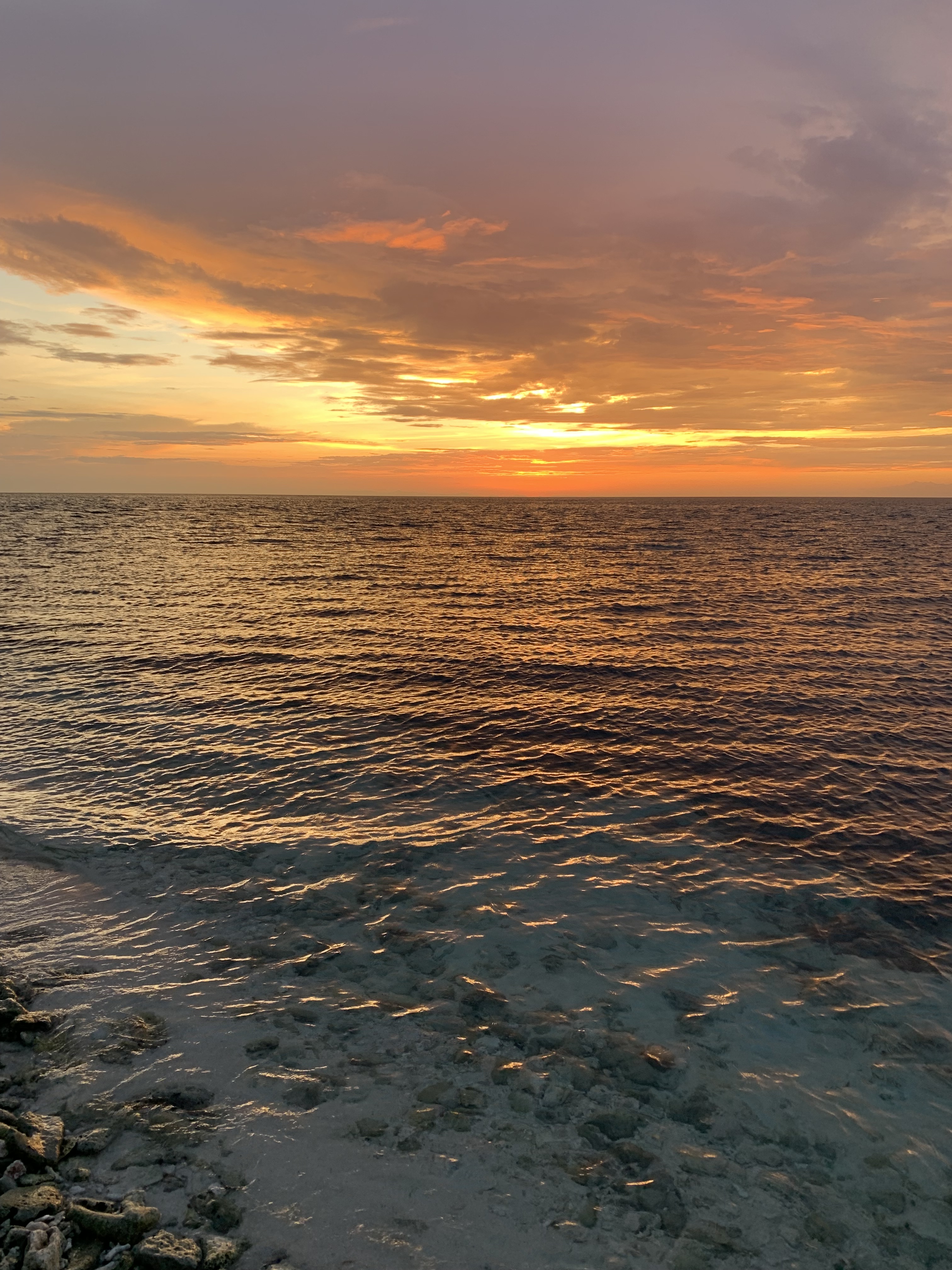
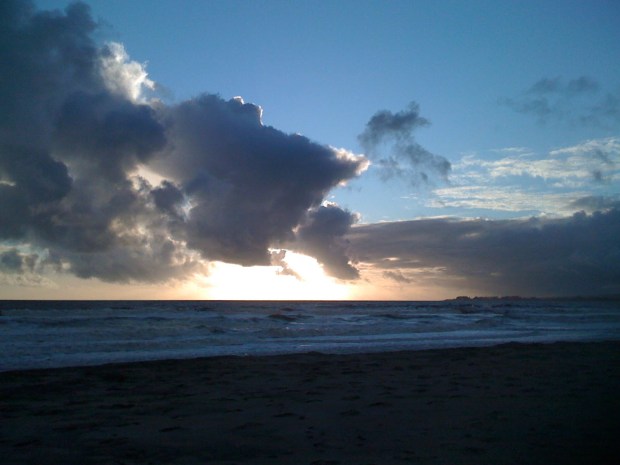
The Smoke from Prescribed Fire Makes for a Pretty Sunset

And so it was today, windows closed, an afternoon break and a glance outside reveals “OH NO!!” Smoke!!!!! The view outside was through the all-too-familiar haze that means fire somewhere: where?! Stepping outside, the characteristic smell of brush burning a ways away. Waves of denser or less dense smoke walk across the landscape, slowly – barely a breeze. Bob Brunie says he heard on the radio of a fire in Boulder Creek that had been put out, but Sylvie says it is a CAL FIRE-directed prescribed fire in the San Gregorio and Pomponio, according to the WatchDuty App on her phone. Oh good…so glad that’s what it was! And, the smoke magically changes from unwelcome and scary to welcome and thankful. So it goes. Made for an interesting sunset. Our farm will do a similar thing with the Central Coast Prescribed Burn Association soon – fuel reduction through good fire! Our smoke will cause some concern, we thinks.

What Do the Birds Think?

The smoke probably gives everyone pause, birds included. The migratory ones will recall smelling smoke and maybe even seeing flames during their journeys to our Farm this Fall: does the current smoke make them fearful? Carpets of scratching juncos and sparrows bob and hop through the churned-up dead grass, chipping and cheeping all day long, looking for food. As I approach the flocks, wrens erupt with their scratchy warning scolding alarms. Midday and coveys of quail flow from the thick patches of brush nervously crossing open spaces to sources of water, dipping and sipping, someone always keeping an eye out for danger.

Oozing holes in the orchard trees and the telltale PEENT! Gives notice that the red-breasted sapsucker(s?) have returned for the winter. Tommy Williams recently shared a photo of a burrowing owl somewhere nearby- they, too, have returned for the short-days season. As dusk dims, several poor wills flush in front of cars rolling along the very dusty road. And then, a stream of big bats sally from the barn, flapping quickly away, out of sight, a long night of foraging for bugs ahead.

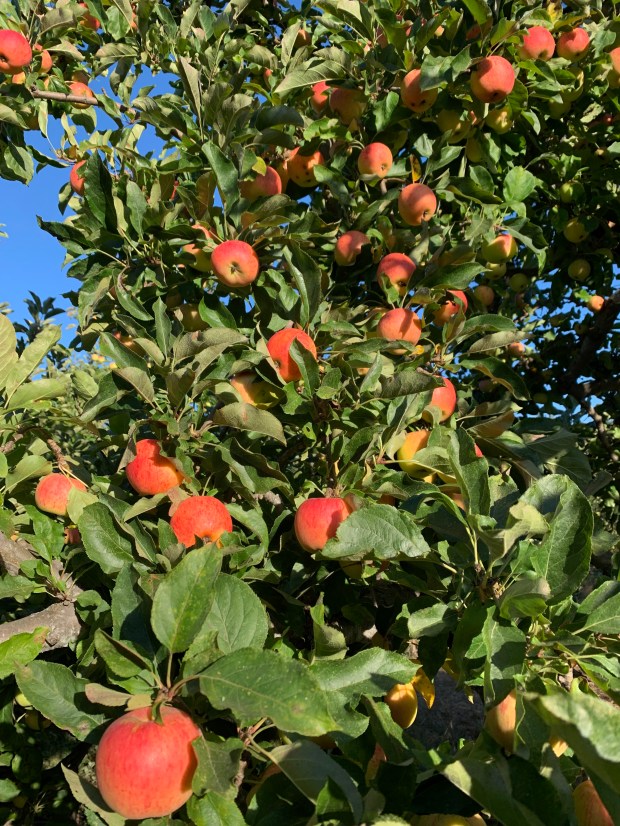
Wall O’ Wickson (crab apples)

The Harvest

The flip side of the hungry, fruitless beginning of summer is right now, the middle of Fall. We are mid harvest in the orchard, which started in August and will continue through February this year. Next year, the harvest will go year-round as more avocado types make fruit. The early fruit is gone: the last of the prunes in the fridge are shriveling, the final gala apples are headed to market (and press). The middle season apples are ripening: grenadine is a favorite, as is Hudson’s golden gem, Bramley, Cox’s orange pippin, golden delicious, and so many more. Thanks to Freddie Menge for tipping us off to plant two dozen Wickson crab apples: we have the Wall O’ Wicksons now- a massive conglomerate of tiny red tartness bedecking the ‘left bank’ of the orchard. This is their First Big Year. We didn’t have enough props for them, and one ripped itself apart right into the ground with the weight of the fruit.

Quince are ripening

Quince are ripening!

The mandarins, limes, and Meyer lemons are also starting to ripen on Citrus Hill. Those types of fruit will extend the harvest into February when MAYBE we get some avocados for the first time since the 2020 fire set back so many trees.

In the Fields

In the farm fields, there are peppers. Two Dog Farm has a field with row after row of tiny bushes laden with peppers from dark green to bright red. Nearby, their winter squash abundance is tantalizing. Butternut squash makes for the best ‘pumpkin’ pie, and you could walk across an acre of those beautiful fruit. A very few tomatoes hang on in their own fields, maybe perking up from the heat waves…we hope for at least a trickle of harvest for a bit longer.

Logs Out

We LOVE our neighbors who, with the help of Nadia Hamey and her crew with Hamey Woods, have made our egress route a thousand times safer. The Big Hill was Dangerous, the Douglas firs burned up in the wildfire- then, dangerously perched on either side of the road awaiting windstorm or decay to come crashing down. A month ago, the saws revved and whirred for so long, trees crashing down, cut into logs, hauled into piles by huge machinery. This past week, the piles got picked up and hauled out: a changed and safer landscape. So much dust, so much noise…such an amazing amount of energy, work, and money. The effects of the fire are still with us, but smart and kind people are still mitigating the effects to great benefit. Thank you!

Birthday Boy

One of our newest members, Bodhi Grace, will soon celebrate his birthday by having the first party in the Barn in quite some time. He drained and cleaned the Cement Pond, wetting the periphery of the barn for dust and fire.  That old barn is about to rock. Happy Birthday Bodhi!!!

Welcome Fall

We woke on the Equinox, September 22, to the song of night’s arrival – golden crowned sparrows. Somehow, they know the right day and arrive the same moment each year, ending their long travel south from Alaska. With the changing world, it seems odd that some things remain constant. These pesky birds promise hours of entertainment as their pecking order is as animated as chickens and they are far more numerous. Their aggression is correlated by the brightness of gold on their heads, but they still love each other: they have tight-knit family groups and larger tribes and they are settling into the same cluster of shrubs they called home last winter. They must be pleased to have so many seeds: last winter’s bounteous precipitation made the seeds rain more than even the huge coveys of quail can keep up with. When it rains, there will still be millions of seeds to germinate and the sparrows will start grazing the lush turf.

More Typicality

Just as last year, the winter battles summer this time of year. Some of us celebrated one more Warm Night: unusual in these parts. The warm night was sandwiched between two pretty hot days and then the Fog returned: moisture rolling off rooves at sunrise, dripping from leaf tips, coloring the dust on the road beneath wetted trees. The see-sawing of temperatures was the cue the apples needed to get that much closer to ripe, but the bouts of fog enshrouded days make it difficult to keep up with the watering…solar pumps don’t produce much when there’s too few photons. It would be better to water the orchard before it gets really hot, but the hot has recently been when the sun comes out. Dynamism and daily adaption is the way of the farmer. The question now…will it be truly typical and rain an inch, our first ‘big storm’ in the middle of October? Whoah! That’s just two weeks away!!

Dry farmed tomatoes- yum!

Fields of Tomatoes

The bouts of heat and the progression of the season coalesced to create a grand glut of tomatoes. In this house, we’ve processed a hundred pounds into jars and jars of sauce to brighten the meals in seasons far from summer. Another household dried 200 pounds. The smell of tomato fruit hangs in the air on still warm evenings. The warmth and dust-loving russet mites have ravaged many plants, leaves withered and crispy: they’re time is up, but there are many more healthy plants in some patches, especially in the ‘diagonal field’ with deeper soil, upwind of the road dust. That’s where the future lies…we need tomato production through Thanksgiving for a truly prosperous year.

One of Judy’s wonderful dahlias

Flowers

This is truly the driest time of year as we’ve had no rain since April. The hillsides are crispy dry and most shrubs, flowers, and grasses are dormant. The exception is the unbelievably bright green pine-scented coyote bush…just starting to flower. Want to tell the girl from the boy coyote (bushes)? Now’s the time. I mark the coyote bush female plants and eradicate them preferentially- they are the existential threat to us folks who like to keep grasslands, grasslands and let the wildflowers have the wide open space. For now, the coyote bush is keeping the pollinator community well fed. Butterflies flock, flies buzz, and wasps hop from cluster to cluster of the pollen and nectar rich flowerheads.

In the irrigated garden, it is Dahlia time! Big poofy, luscious flowers of the most unbelievable colors pop and spangle in a scant row among cucumber, beans, and squash. Sunflowers are still going, cut for each of the 3 farmer’s markets we are going to nowadays (Aptos/Cabrillo-Saturday, Downtown Santa Cruz-Wednesday, and Palo Alto-Saturday).

It makes nice fall color, even if poison oak is terrible to some

Fall Color

The walnuts and garden birches have only the slightest tinge of the beginnings of yellow. Same with the maples in the wild canyons. At the edge of the forests and on steep hillsides, poison oak is further along with its remarkable streaked purple-reds. Rumor has it that the aspen leaves are turning in Eastern California where ‘leaf peepers’ are drawn to fall glory.

More Return of the Birds

Besides the golden crowned sparrows, other birds have returned from afar for their winter haunts. Cassandra and I have both seen an unusual feathered friend: Western meadowlarks visiting the Farm! Their bright yellow, black-spotted bib and dangerously long stout bills give them away. I guess our grasslands have reclaimed enough shrub ground to look like viable meadowlark habitat – that’s new!

Another bird sighting – an osprey! Around 2012 this time of year, two ospreys would fly over the farm each evening at dusk, west to east. One is flying now. Someone says that they saw it carrying a fish…a little late for fledglings, don’t you think? Still, this is an odd thing and someday someone’s going to have to follow that sea hawk and see where its going.

The beginnings of our haystacks

Hey Rick, hay rick!

Last weekend at our work party, Jen, Mike, and Roland rolled up the hay near Cherry Hill. Tons of the dry grassy stuff is cut, getting raked, and being placed in our rudimentary hay ricks. If we had pines nearby, we could put some needles in our haystacks, but as it is they are full of weeds. This is a new adaption from the bad idea of old…placing dry hay under perfectly innocent trees during fire season. Now, we stack the hay, let it molder, and wait until the end of fire season to swoosh it under the trees to suppress weeds, add nutrients and organic matter, and provide cozy homes for VOLES who do such a good job of ridding the orchards of gophers.

Perhaps we’ll rediscover the way of stacking the hayrick…a profession of years ago with expertise and methods long lost.

Real Pro Haystacks

Whence SCruz Enviros?

I continue to ask myself this question: where has the environmental movement gone in Santa Cruz? I have several hypotheses. This is not to deny the tireless work of various individuals who have helped on many fronts, but I sense a loss of momentum, of any organized movement of the type of conservationists that have been so crucial in the past in providing the Santa Cruz area with much of which it is now proud: Lighthouse Field, the City’s Greenbelt, Wilder Ranch, and Gray Whale Ranch come to mind, is there any kind of movement now that could achieve such success?

Questionable Rationality

One of the age-old issues with working with coalitions is the rationality factor, and the environmental conservation movement has had its share of associates who defy the laws of rational discourse. There is strength in numbers, but as those numbers grow the community will include people who are vocal about some pretty wild, unsubstantiated things. Those people sometimes have a fairly strident way of expressing themselves. Whether it is a tactic, or perhaps they believe it, the opposition to conservationists will say ‘look at that lunatic fringe group!’ They lump perfectly rational people in with the less-than-rational minority. The less-than-rational folks will also say ‘Look! I have credibility! I am associated with these rational people!’ That fringe element has driven more than a few of my colleagues away from advocating for conservation.

Oppositional Idiocy

Problems with rationality aren’t just internal to conservationists: there are many irrational people to face in the opposition. There is increased reliance on very poor methods of discourse: tu quoque, black-and-white and straw man arguments are very common, and conservationists aren’t always prepared to rebut such vacuous methods of dialogue. We often don’t even recognize them as such. As I wrote recently, add those types of arguments to a long list of unsubstantiated ‘facts’ and you have the gish gallop making it impossible to address any particular thing.

Conflict Avoidance

Poor discourse and barely rational coalition members may have contributed to the next reason I hypothesize for the demise of the local conservation movement: conflict avoidance. One thing that seems on the upswing with the younger generations is conflict avoidance, but this issue has long been a problem to conservationists. Politicians and other would-be mediators of environmental conflict have often tried problem solving by attempting solutions through compromise. That is, they see two sides – conservation versus development – and say “we can find a middle ground.” The problem with that is that often the conservation issues associated with the proposed development aren’t addressed by this middle ground: biology doesn’t work that neatly. This concept has oozed its way into the general populace where many want to solve things by reaching an imaginary happy spot – ‘half way’ between what is portrayed as two divergent points of view. Even that half-way point is difficult for most to imagine negotiating.

Those who are proponents of nature destruction are well seasoned negotiators, new public conservation advocates not so much. New recruits into conservation often balk at the need to negotiate with often well-paid consultants who are so good at their game. These new conservationists also often feel shy about hiring professionals, especially lawyers to help with the conflict: for some reason many feel like seeking that method of solution is ‘too much.’ And, then again, lawyers are expensive.

Legal Defense, Legal Bills

If somehow a group of conservationists can come to the conclusion that a lawyer would help, raising money for legal defense funds for conservation around Santa Cruz is not easy. Lawyers are expensive and their work takes time. Can you remember the last time a local conservation group asked for funding for legal defense? It has been a long time.

And yet, legal defense has often been essential to resolving many important environmental conflicts, everywhere. Especially here in California, the laws protecting the environment are strong and broad ranging. Those proposing to destroy nature fear enforcement of those laws. With my conservation advocacy, I often cite legal language and so have been called ‘litigious’ by a handful of nefarious truth-stretchers: I have never retained legal counsel to sue anyone. It is very important for conservationists to understand laws and regulations and to cite those as well as case law whenever making their point. And yet, fewer and fewer locals are forming coalitions to retain legal assistance to protect nature.

Legal Reprisals

Some conservationists have avoided the milieu of conflict because they fear that the often well-funded anti-nature crowd might sick their lawyers on them. There are Strategic Lawsuits Against Public Participation (SLAPP) where the pro-development types intimidate conservation advocates by suing them…often for libel but for lots of other things. Also, some conservation advocates have been named in lawsuits by nature destroyers. For instance, our ‘friends’ at the Trust for Public Land sued local conservationists to recover expenses the group said they used to defend themselves in court actions aimed at better protecting the Cotoni Coast Dairies property.

No Peace, No Justice

The last issue hobbling local conservationists is their inability to adequately form coalitions with environmental justice movements, which have perhaps gained more wide support and recognition. This piece well summarizes the issue, and rests with the ‘no brainer’ intersection of the two movements: climate change. In this regard, Santa Cruz might be doing okay, but we are leaving behind other conservation issues of the highest importance: conservation land management, endangered species conservation, clean water and wetlands protections, and natural areas visitor management. Each of those issues has meaning for environmental justice proponents, but conservationists have done little to make that bridge.

What Can You Do?

I urge more people to become actively involved with local conservation groups. And, when you do, help those groups to become better through your mentorship and skill. We need to train one another to be good at conservation before the next big issue threatens species, habitats, or the relationship between humans and nature in our region.

-this post originally published as part of Bruce Bratton’s long-running informative blog at BrattonOnline.com, a place you should turn for all that you need to know around the Monterey Bay (and beyond).

Gish Gallop

Has it always been so common, or is it just more apparent because it has become so prevalent in mainstream politics? The Gish Gallop is a method of debate where one streams together so many unsubstantiated points that it becomes difficult to track, and rebut, them all. Perhaps the easy swipe of social media or the increased speed of emerging news have helped to wire us to be more receptive to the full-steam-ahead BS argument technique. Here, I try my hand at making a speech using the Gish Gallop technique with a collection of commonly held nature fallacies:

A Gish’ing Example

Nature is dangerous! For instance, all sorts of snakes and spiders are venomous, and people die from their bites all the time. You have to be especially careful of mountain lions, which are increasingly attacking people across California. If environmentalists have their way, there will also be wolves roaming everywhere across the Western USA- once established, they will become habituated to eating livestock and they’ll be coming after people, too. Just outside your door trying to get into your trash are very dangerous rabid opossums. You don’t even have to go outside for nature to get you. There are spiders hiding in your house, and an average of six a year drop into sleeping people’s mouths. I heard just the other day about another venomous snake crawling out of someone’s toilet. Some crazies want to blame so many things like this on global warming, which is just hype from crackpots trying to control our lives. They claim burning fossil fuels is going to kill us all, but that’s not true! Change happens, for God’s sake, there have always been natural disasters and there always will be, just get used to it, you snowflakes!

Does that kind of diatribe sound familiar? It should, and its not just coming from the political right[1] – watch out for it coming from just about any political direction, in just about any social situation. You can tell a real Gish Gallop addict by picking out just one of their tidbits and trying to follow up with a more involved conversation. If they are a galloping gish o’phile, they’ll be unable to stick to that topic and will hit you with another round of Gish Gallop before you can yell ‘stop!’ I don’t know if its just my circles of company, but I venture to guess that 1 out of 10 of my conversations encounter something amounting to Gish Gallop.

Toilet Snakes

Let’s take a look at just one of the parts of the above parade d’ BS: toilet snakes. Mention the phrase ‘toilet snake’ during a party, and it may well take root in conversation with anecdotes just as lunatic, or even substantiating evidence of this profoundly unlikely scenario. Was it Voltaire that said absurdities beget atrocities? One step leads to the next. Who are we to deny the frequency of toilet snakes, anyway? I’m sure it has happened once or twice! It may even be getting more frequent with global warming, invasive species, collapsing and outdated infrastructure, and the loss of skilled labor attracted to public works jobs. See? How familiar is that? That’s how it goes…

Turning This Around: The Antidote

How good are you at stemming the tide of verbal diarrhea? How do we collectively alter this rotten social habit? It is time to infuse more meaningful dialogue into the world. I am particularly advocating for better dialogues about nature and hoping that we carry with us enough fascinating stories that we can knit deeper and deeper oral traditions into a regionally-oriented social fabric. As we do that, I encourage us to use science as our guide, so that we have a method of building out truth, of going deeper and deeper into nature, and to add those discoveries into our stories.

The Fate of Snakes

My essay ‘Snakes on the Monterey Bay’ is one of the most popular reads on my website. I suspect that there are widespread positive sentiments about native snake species. But there are also widespread popular beliefs, well supported in social circles, that snakes are all very dangerous. Snake phobia, even nature phobia, is far too common. I well recall a time when I was working with a farm labor crew to machete poison hemlock, an invasive species that had taken over much of Younger Lagoon Reserve that I was stewarding for the University. One of the crew spotted a garter snake: quickly three were chasing it and proudly hacked it to pieces in moments before I could stop them. They seemed astounded that I was angry at their actions. I’m sure that they still think that I was acting insanely to be defending SNAKES! Why? Many people believe snakes are dangerous, and this is one of the many subjects that we can work on to improve human-nature relations.

Might you find out a bit about one of our native snakes and start a conversation about it with your friends? Such conversations could change the world for the better.

-this column slightly modified (with The Guardian link) from that which I posted via BrattonOnline.com, Bruce Bratton (and team)’s wonderful source for news. Subscribe now and save (it is free, but donations are welcome)


[1] Although some admit that this is their favorite method of oratory.

Loss

The sadness of loss is almost too much to remain engaged as a lover of Nature. The love comes easily and despite our collective desire to protect Her, we somehow keep acquiescing to destruction. Why? Either by quick violent death or by slow strangling loss, somehow humans are capable of the most atrocious acts against Nature. These things are not happening only in some distant rainforest or coral reef…these things cannot be relegated to some guiltless past by unknown villains…they have been happening right here, are occurring right now around the Monterey Bay.

Sudden Violent Nature Destruction

I’ve been living near Santa Cruz since 1986, and during that time there have been some horrific atrocities to Nature. And they still are occurring.

Even as I weep to see the destruction of the East Meadow at UCSC, I clearly recall the moments of the tearing of bulldozers into other precious ground. The actions themselves are bad enough, but the sadness deepens as I hear the violence supported by the sentiment of members of my community. Rationalizations. Deep convictions and justifications. How can so many have become so separated from the Great Nurturer, our Mother Nature? I know the answer, but it doesn’t make it easier: greed.

UCSC. Arana Gulch. Santa’s Village. Terrace Point. Castle Rock. Glenwood. Millenium High. Large areas of Fort Ord. Armstrong Ranch. Santa Cruz Gardens. Seascape. These are just a few of the places that have been violently, suddenly and permanently transformed by bulldozers, development, pavement, and buildings since I arrived in Santa Cruz.

None of these ‘projects’ ‘needed’ to happen. All have been completely rationalized by society at large. Many have profited, and many more will feel the losses for generations. Few now feel a more direct, deep sense of loss from the destruction of those places; most did not come to know them well enough to love them deeply. Fewer still have the broader and deeper connection with Nature to feel pain upon witnessing her passing and the forlornness that comes from respect of what was there before. No one can acutely feel these things and still survive. We must “move on.”

A Slower Strangling

War or slasher movies attract human attention far more than long term torture. We eventually forget Guantanamo, refugee camps, those haunted and plagued by the trauma of war, famine, or injustice: we “move on.” Such is the case with our treatment of the lands around us. We now know that even ‘protected’ lands need careful tending, that the whole Earth needs our active care, but we are failing that responsibility everywhere. And so, our neglect means Nature is (maybe not so slowly) dying. We have put Her in a cell and neglected food and water. She cannot be so separated from us, and her dying is already causing our suffering. And although everyone hears Her rattling her cage, we “move on.”

Nature’s Slow Death Around Us

We daily witness the actions driving climate change, but it is harder to see the actions driving the torture and neglect of Nature around us. Everyone reading this can glimpse those actions in the rhetoric about Nature tourism around the Monterey Bay…mostly about mountain biking, but also about the many ‘natural’ attractions our region has ‘to offer.’ Nature tourism is one of the top ten threats to biodiversity globally. Around the Monterey Bay, there are only the grossest, ham-fisted approaches by conservation lands managers to stem the impacts of natural areas visitors. We are loving our conservation lands to death. Literally watch your step as you hike trails eroding into ditches, soil spoiling surrounding streams, trails draining the water from the land. Trash. Weeds and pathogens proliferating along trails and roads through natural areas. Wildlife fleeing frequent visitation with no where left to go. Invasive plants, pathogens, and introduced animals permanently altering Nature, spurring native species loss. Nature tourism is good for business! And, as to the cost that comes from that profit…most people have already “moved on.”

Moving On

As a society, we are “moving on,” and I and others who care are swept up in the flow. The tears we shed for the losses we see are quickly diluted in the river of profit that drives our downstream movement. We feel we must hide our Great Sadness so that the shreds of hope we retain in the resilience of Nature might inspire others to come to her aid. The future is uncertain.

To calm the panic and loose the sadness, we turn to Nature and go for a walk…quietly, respectfully, slowly, and in awe.

-this post originally posted in Bruce Bratton’s stupendous weekly blog at BrattonOnline.com I suggest you subscribe to keep up with ‘all the news that’s fit for printing’ around the Monterey Bay and beyond. If you adhere to the adage, as I do, that all politics is local, that blog is the place to be.