Midsummer

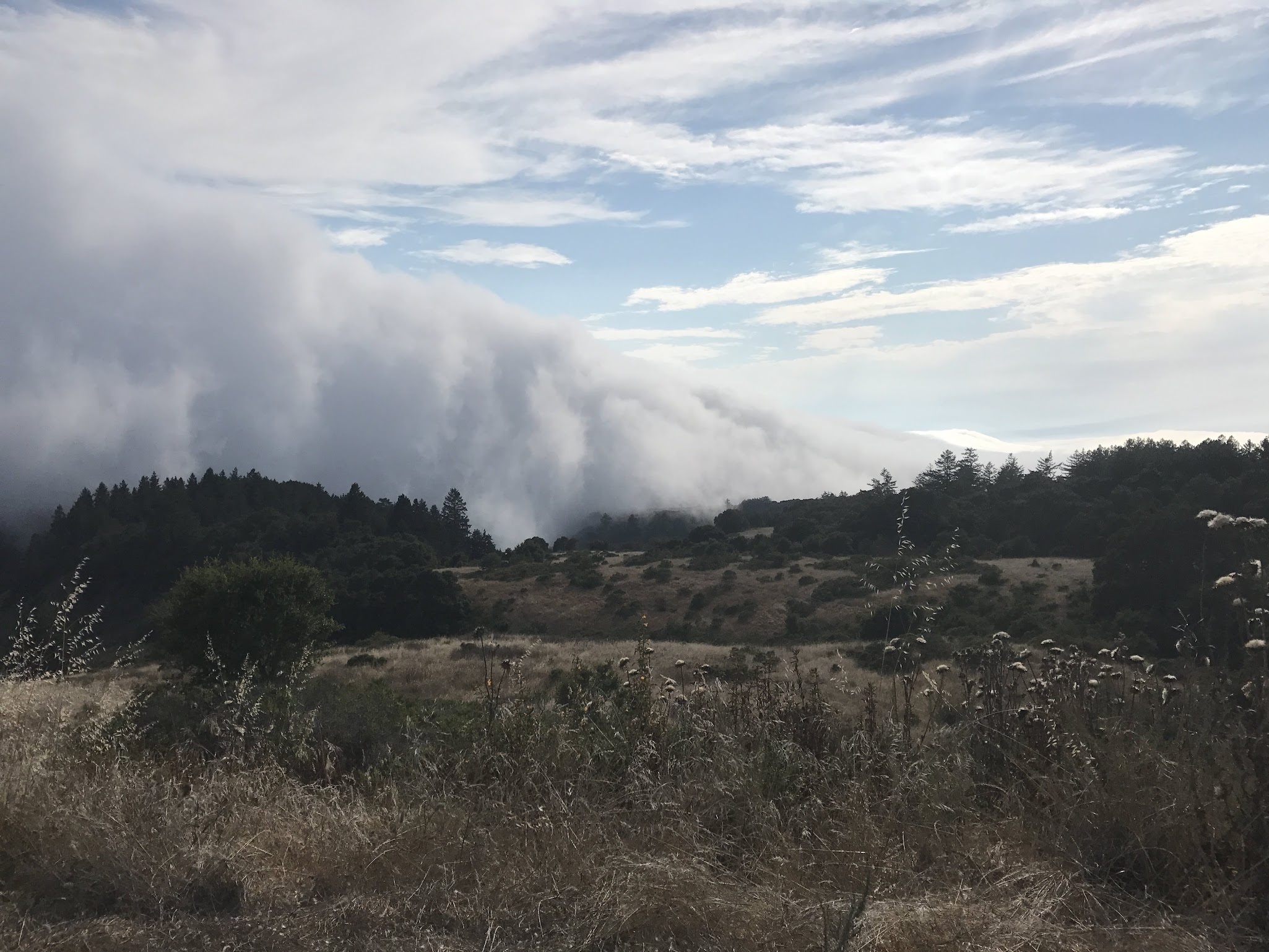
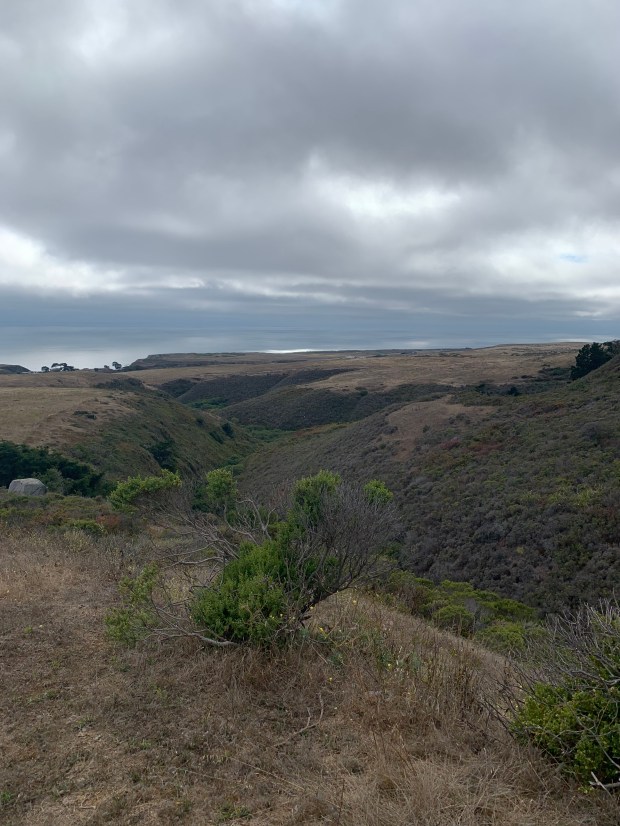
At midsummer, we pass the midway point of the year, the middle of summer, and the Land changes before our eyes.

Leaves

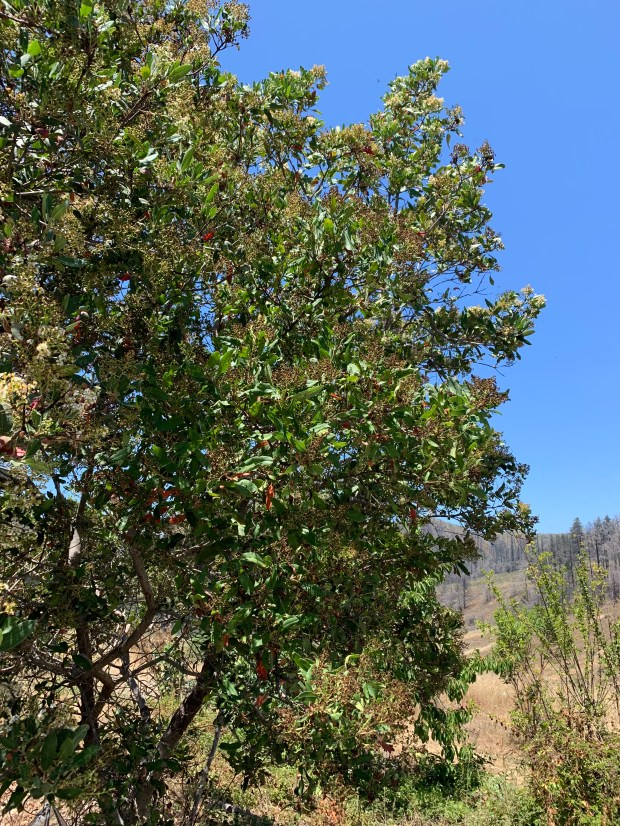
There are drought-deciduous plants and seasonally-deciduous plants. Their sometimes-colorful leaf drop is starting to overlap. Poison oak is one of those deciduous plants that are in between: on drier slopes, crimson patches have been emerging for a month as that plant decides to drop its leaves, leaving only stems and berries. Buckeye trees are dropping medium-brown leaves, too: very little Fall color to add to the landscape’s palette. Madrone Fall has happened already, leaves littering the ground most crunchily, bark peeling on the hot days making pinking and crinkling noises. Madrone trees lose their old leaves but keep their new ones. Bare madrone trees are dead, as is too often the case with some scourge that is ravaging many trees. 

I was just in the Eastern Sierra and the very first seasonal fall color was showing at 8,000 feet – branch tips of the brightest lemony yellow aspens were a treat, but very rare. Time to plan your leaf-peeping trip in a month or so. Our versions of seasonally deciduous lemony yellows will emerge in a while yet with hazelnut and big leaf maple, which mostly aren’t starting to lose their chlorophyll just yet.

Fruit

The grassland seeds have (mostly) fallen and the shrubland berries ripen while the woodland acorns grow fat. In abandoned agricultural fields, dead grass slowly sags horizontal, skeletons of radish, mustard, and hemlock rattle free their last seeds in the afternoon breezes. Perennial grasses in the more pristine prairies have dried, too, and just blue wild rye still holds a few seeds on its narrow, dense flower spikes. The bases of the bunchgrasses show a little green- real toughies! You would be lucky to find a single seed in the spent rattly seed cups of soap root and other lilies.

Side hilling strolls along the prairie-shrubland boundary reveals dark leaved coffeeberry shrubs thick with ripe purple-black juicy berries. Nearby, the mixture of ripening stages of blackberry offers a few small, seedy ripe fruit. Fruit eating birds (including band-tailed pigeons) and foxes have bellies full of these, as evidenced by their scat.

It will be a while before the acorns and buckeye nuts are ripe: they grow day-by-day. Acorn woodpeckers settle for bugs or last year’s cache of acorns for sustenance. 

Migration

As the season progresses, wildlife moves. The last of the barn swallows have just fledged (this last week!) and are fast growing muscle to make their long journey south. Cooper hawk and kestrel will be free of the swallows’ vigilant fuss by the middle of September. 

This year’s batch of adolescent dragonflies is patrolling the air from zero to 50’ above the dry grasslands and chaparral ecosystems, far from their natal homes. They dart about capturing the insects that have matured and taken flight after devouring leaf, shoot, and seed from the prolific biomass below. Below our feet, in the deep and complex matrix of gopher and ground squirrel burrows, newts pace back and forth stalking invertebrate prey. 

On foggy days, chorus frogs that have been emerging from drying ponds climb further out on tree limbs or hop further from their wetland birthplaces to find places with richer food and fewer competitors. These talkative amphibians make their squeaky hinge croaks across the extensive canopies of Fort Ord’s live oak woodlands in the long days of misty-fog “summer.”

Big things are on the move in the ocean as well. My favorite summer whale is the giant blue whale, which is typically seen in the Monterey Bay from July – October. August sitings have been scant, but still, they are out there! Meanwhile, our population of gray whales are at the height of their arctic adventures, way, way north – feasting on krill and wondering if this year is a good one to sneak over to the Atlantic Ocean. This year is the third lowest ice sheet coverage in the last nearly 50 years… gray whales were hunted out of the Atlantic and may soon act on their yearning for those ancestral feeding grounds. 

Fire Season

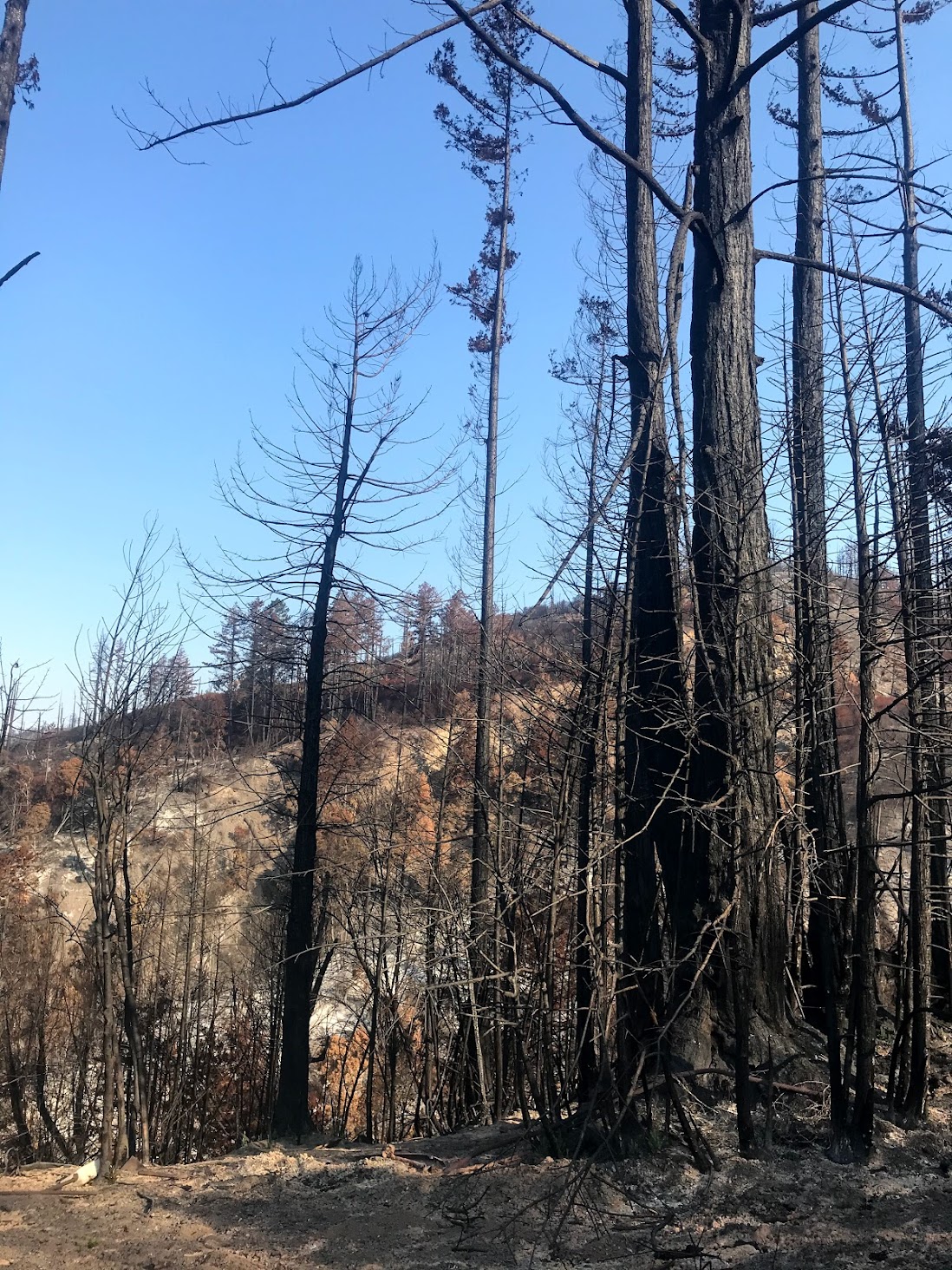
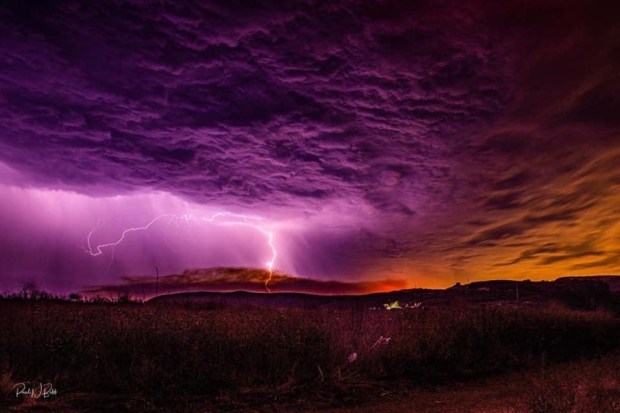
Monsoon season brought hundreds of lightning strikes to California last weekend ushering in the fire season across large areas of the state. We just passed the anniversary of the 2020 CZU Lightning Complex Fire and, before that, the 2009 Lockheed Fire. Mid-August has been the time for the Monterey Bay to burn recently, but September and October are historically fire months as well. Our cool July and ongoing cool nights have combined to help keep things less dry, but coastal heat waves are quickly removing any residual moisture. As interior California heats up and typical conditions prevail, the moderating effect of the ocean keeps us cooler and sometimes moister so the fire danger is less. That hasn’t stopped fires from happening, though, including a roadside fire in Davenport not long ago. There are no terrific heat waves foreseeable for the coast and no predictions of remnant tropical storms carrying thunder and lightning, so thanks for those things (for now). A reminder, though- it is Not Too Late to clear fuels and otherwise prepare. Recall from Santa Rosa that fire can carry way into town, so work to do even there. Wondering where to focus? Zone Zero- the 5 feet out from structures…nothing flammable there!

Midsummer’s challenge: crunch some madrone leaves under your feet. The crispy noise, the beautiful patterns of fallen madrone leaves, the peely bark…some deep delicious experiences are in store for you if you can get there.

Cotoni Coast Dairies BLM Land Opens to Public

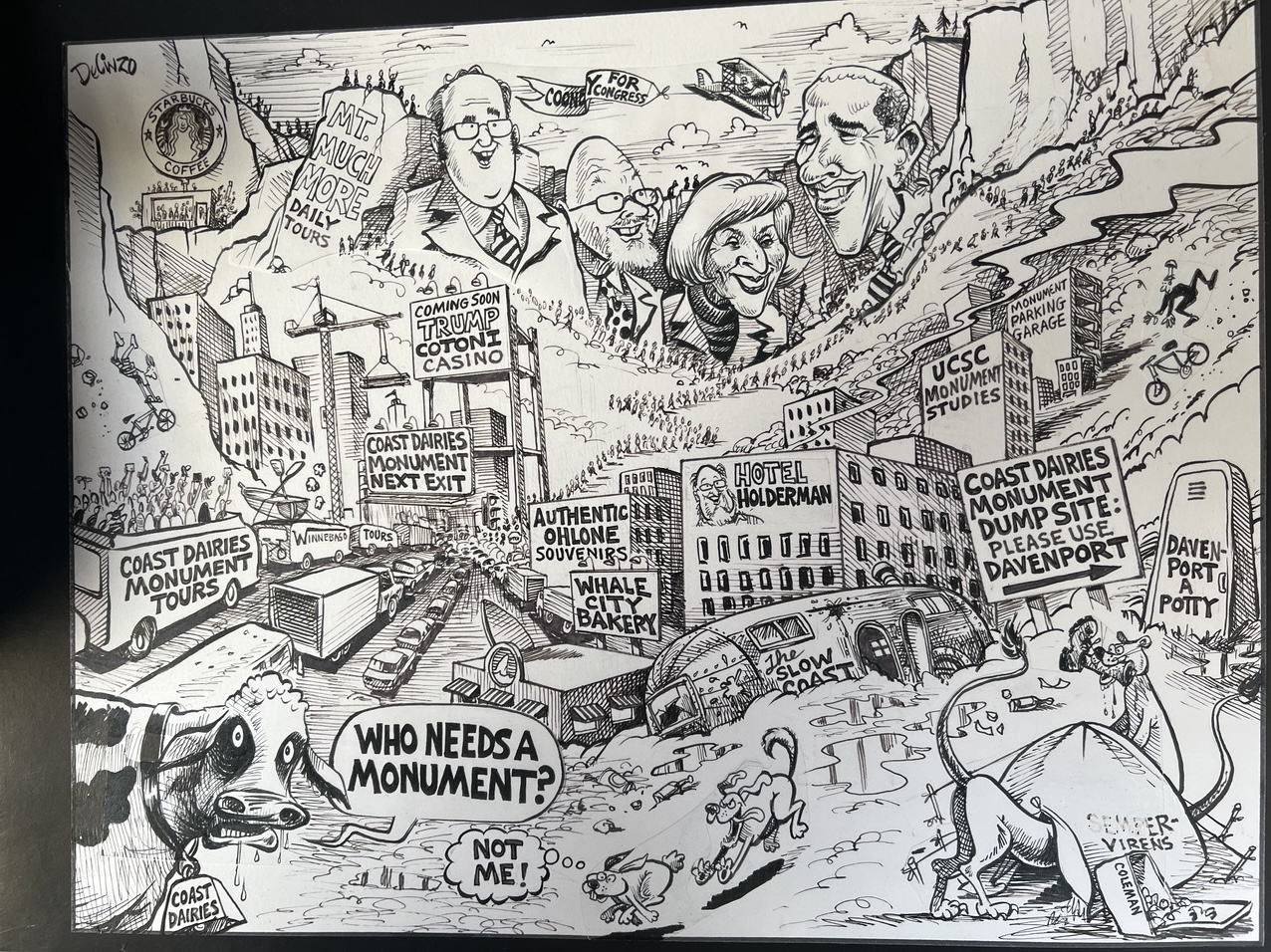
The opening ceremony for public access onto the Federal Bureau of Land Management’s Cotoni Coast Dairies property was on August 15, 2025, a grim day for those who have followed this travesty, which will only worsen with the planned public access.

Many thanks to De Cinzo for this image

Building on a Tragic History

Nothing good led up to this moment. There is no one left who speaks the language of, or can show direct descendance from, the native people of this property. There are rich archeological sites illustrating that this land was settled for thousands of years. So, as with every spot in California we must see this property and how it has been and will be used as a colonialist endeavor. There is no attempt to give the land back to any coalition of First Peoples who represent those ancestors or to respect them in any way that approaches restorative justice. Oh, but there’s the name…(!)

After the genocide, the land has seen one extractive use after the next with little regard for conserving nature. The ‘Coast Dairies’ portion of the name points to cows, and cows there still are. The grazing regime has never focused on restoring the very endangered coastal prairies on the property and, even now, there is no plan to do so. This recreational use is a new, highly impactful extractive use. The property is rare for the Santa Cruz Mountains in having had very few human visitors for the last 100 years, so wildlife has been accustomed to roaming without disturbance. Cougars and badgers are especially wary of humans when setting up dens. A million visitors a year will soon be visiting and wildlife will flee.

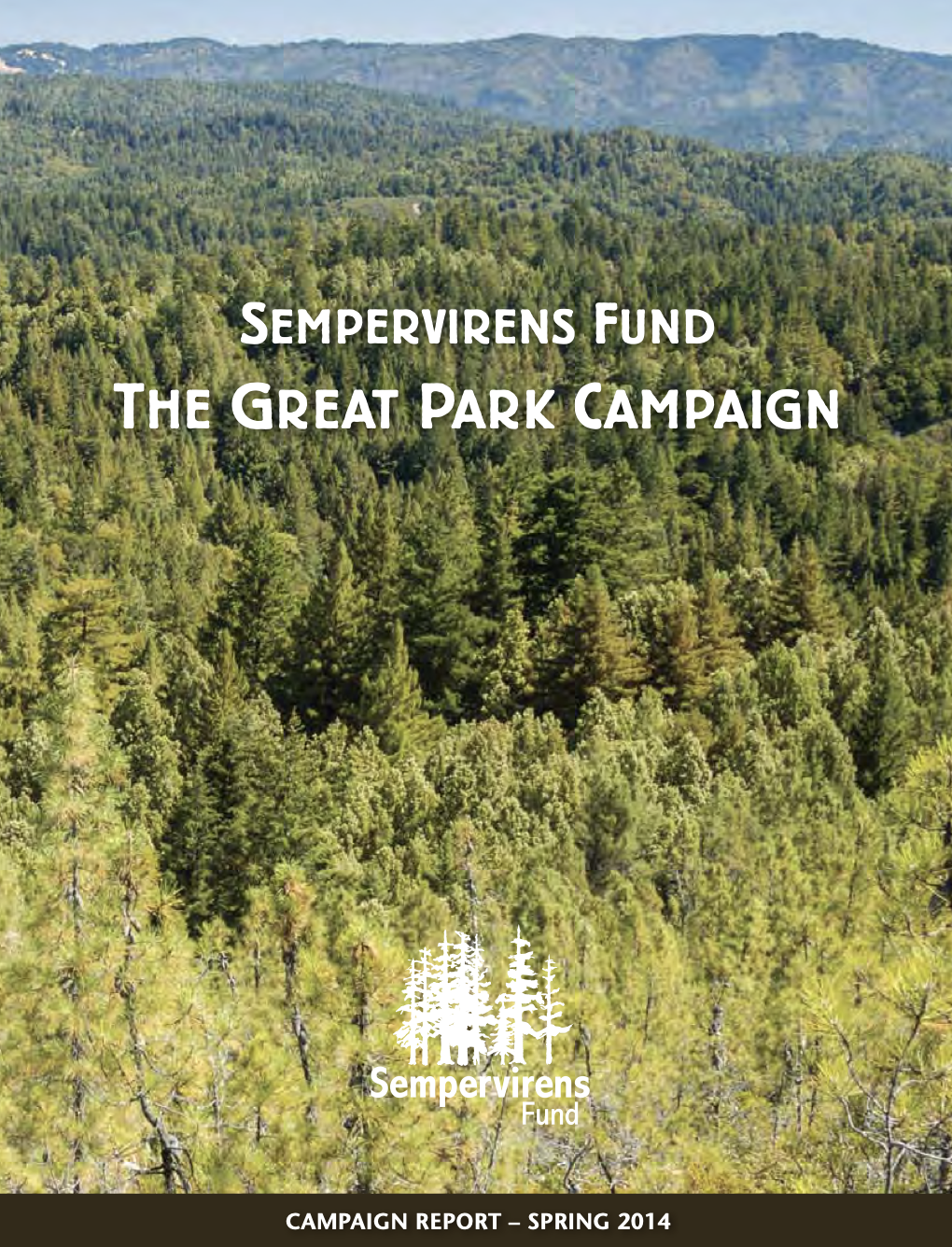
The consortium of people responsible for so many other, better outcomes for conservation tried hard, won some concessions, but have seen great loss with how this property came to be open to the public. We tried to get anyone but the Federal Government to manage the property, but the Open Space Illuminati had other things in mind…’The Great Park’…a handful of boomers wanted their legacy in a wide swath of the area becoming a National Park. They stopped at nothing to achieve that legacy. The activists, biologists, conservationists, and regular citizens, were even sued to strike fear into them, to make them capitulate.

Money Made it Happen

The Wyss Foundation bankrolled cash-strapped ‘conservation’ organizations to create a fake grassroots campaign that culminated in Obama signing a Monument Proclamation adding 5 properties across a wide swath of coastal California to the California Coastal National Monument. 

Then, the BLM routed hundreds of thousands of dollars, sole-sourcing a contract to a mountain biking advocacy organization to build the kind of trails their users wanted to see. That business quickly changed their name to a ‘trails’ organization. Instead of supporting good paying local jobs, the BLM paid this organization to rally volunteers to do the work of installing trails that were placed across a landscape without regard for the wildlife written into the President’s Proclamation for protection. When asked about how they could do such things when the property’s designation required favoring conservation over visitor use, BLM cynically snickered that the majority of the property, 51%, is set aside without public access. The rest, apparently, is a sacrifice zone.

What We Wanted and Will Pursue

Those of us who care about the native peoples, the nature of the property, and the experience of future visitors have a vision, which we will pursue despite setbacks. The land should not be Federal land – if you wonder why, you need to look at the current situation with federal lands nationwide. We always knew this, but now others are starting to understand our concerns. The current administration is selling federal land for real estate development and other extractive uses. If, after cutting the federal workforce, there are any staff remaining to manage the land at all, that will be a surprise. The Administration has said Federal lands will remain open to visitors even if there is no staffing or budgets. Oh no- could my dystopian vision for the property be closer to reality?!

 If there is a chance, California should buy Cotoni Coast Dairies. Then, let’s envision taking Canada’s Indigenous Guardian’s project to this place, giving tribal people primacy in stewardship, use, and oversight. Perhaps the State could give the land back, as it has just accomplished with the Yurok.

If the property is to remain a public park with visitor access, there needs to be a radical shift in how that is approached. The regulatory designation for first managing the property for conservation needs to apply even to the areas with public access. This will require altering use patterns, even closing the trails occasionally, for the benefit of the soil, streams, wildlife and plants that Obama clearly intended to protect. There will need to be lots of monitoring and enforcement to adequately protect natural resources. The BLM will need to do a ‘carrying capacity analysis’ to determine ‘limits of acceptable change’ – thresholds that, if surpassed, trigger altered management of visitor use to bring the use into alignment with conservation. 

Next Steps

It will soon be possible for visitors to monitor the situation first hand. Those of us who asked to do baseline monitoring of wildlife and plants were refused the opportunity many times. When we asked how small children and the elderly could possibly co-recreate on trails overrun by fast-moving mountain bikes, our concerns were dismissed. We will be able to help document how well BLM’s rules are working and if there is enough enforcement. We will be able to see the spread of diseases introduced by bike tires and hiking shoes ravage the amphibians, the trees, and the soil, and we will recall how BLM staff predicted those impacts in writing, with administrators choosing to ignore even the simplest measures that hundreds of other parks managers have employed to address those concerns.

-this post updated to past tense from the one posted via Bruce Bratton’s legacy site BrattonOnline.com

The Bounty

Do we revel enough in the produce on our plates? On the Farm, we get to see the food from its tiniest seeds through to buckets of production and onto the internment of the spent plant bodies back into the soil to start the cycle once again.

The not so subtle beauty of zucchini plants

Zucchini-Summer Squash

Big blossoms sit atop tender green fruit; both are edible. The giant leaves shelter the center stem where climbs rank over row of production of new zucchini. We keep a close watch on them to harvest at just the right time when the fruit aren’t tough or large seeded and yet are larger than the tiniest, finger sized tender fruit. The succession from the tiny to the huge can happen rapidly: we must be ever vigilant – the fields must be visited daily, the crop harvested every other day. You can almost hear the squeaky squash flesh stretch and grow.

Winter Squash

Isn’t it funny that the hard rinded ‘winter squash’ are squash just like the so different zucchini? What makes them winter squash? Oh, it’s just that we get to eat squash in winter, long after summer squash has gone, even in the recesses of the produce drawers of our refrigerators. In market, the zucchini comes from Mexico in the winter. As I traversed the road next to Two Dog Farm’s winter squash at dawn, I was surprised at wafts of sweet perfume: the winter squash in full bloom en masse has the most delightful citrus-y scent! The vines are romping across the field – soon, no soil will be visible. It is becoming one big mass of big umbrella leaves.

Onions at Molino Creek Farm

Onions

Our farmers grow the most delicious onions – red onions, yellow/sweet onions. Their spikey leaves are so perky. Row after row of waxy cylindrical foliage subtended by growing bulbs. One day, the leaves start to FLOP! Then we know they’re ready. Fresh onions go to market now and soon bucketfuls will get scattered on the greenhouse tables to ‘cure.’ That will net many weeks of storing onions to go to market. Those onion rows have been weeded and weeded, and weeding isn’t easy with those delicate leaves creating such an impenetrable canopy. We miss weeding and the bulbs turn out tiny. The unintended pearl onions are labor intensive to harvest and more so to get to market, so they go to the neighbors who delight in their unexpected midsummer arrival. Never take for granted the work behind each and every onion.

Lamb Haas avocados…wait for it!

Avocados

The Lamb Haas avocado has an 18-month ripening period. The fruit from this year grows alongside the fruit from last year for many months. It is looking like the few we have this year will get harvested in a month or so, but they look like the right size. The ground squirrels have started, and abandoned, eating them- a sign that there is time still to wait. 

Eighteen months is a long time for fruit to hang out, vulnerable to weather and pests. No wonder these fruit are so expensive! We are just past the Avocado Fall where the old leaves fall off and the new leaves unfurl. The trees look so lush, expansive, and vigorous. The Community Orchardists have done a top-notch job of making the main grove of our avocado trees look marvelously cared for and tidy. Next year, 6 years after the fire and the subsequent mass plantings, we’ll have a good harvest of fruit, again.

Critters

Last week, Sylvie reported seeing a skunk and some raccoons. She showed a short film of mother raccoon standing down her car to protect the too innocent young who were too curious to get off of the road. Wander the farm at night and you’ll soon encounter the scent of skunk. Skunk’s diggings through the thick thatch in search of mice or crickets is everywhere. To compliment the mesopredators, an opossum wanders the road at night increasingly close to the Farm each encounter. Sylvie also reports a one-eyed fox; we all hear the foxes yelping and yowling, so vocal. 

The herds of deer are incredible. Cassandra reports the mother and daughter deer are still stuck in the farm fenced area; luckily, they have all they need to eat and drink in there. At some point, mother was ‘knocking’ at the gate, but took off when we tried letting her out. What does one do with a nearly 20 acre fenced area after you repair the fence with the deer inside? Apparently, you feed them organic chard, peas, grape leaves, and tomatoes. Our artesian wells leave big puddles to quench their thirst. They are gourmet.

Our first passionfruit in a long while are on their way: variety ‘Frederick’

-post simultaneously published at the Molino Creek Farm webpage

Tranquility

Most days there are two daybreaks. First, illumination transforms the dark night of the fog-hidden slight moon. Much later, it brightens again to blue sky and sunshine. Every morning is chill: the kind of damp cold that necessitates thick socks, sweater and jacket. Most want a shared lament, “How’s it going?” “well, the darned fog and cold and where is summer!?” Some of us still smile. “Ahhh! The cool fog!” “Glad there’s no wildfire!” We are grateful for wonderful wet smells, easy on the nose, deep breaths of fresh air.

Droplets glint from leaf tips, spider webs, and fence lines. Slightly muffled fog drip patters through tree canopies tumbling to make dents on the dusty ground. I join the quail and other birds to avoid wet weeds, wending our way along the trampled short-grassed pathways to avoid getting soaked and cold. The quail covey scratches and struts, making low whistles, talking. I gaze at them, at the distant alert-eared deer, at the obscured horizon, dark ridges and trees, there and gone again in the procession of low gray clouds.

Seedeaters

The farm is teeming with seed eating birds. Finches and goldfinches, juncos and sparrows. A roiling, chirping wave of songbirds retreats, keeping a comfortable distance from cars on the road or walkers sauntering down trails. There are shrill begging young birds and calmer chittering groups of adults. Most are intent with continuous beak probing of turf, pecking and scratching, sometimes lighting on low branches for breaks, polishing their dusty bills.

Hoes Out

As the young crops continue to mature, it is weeding time. Up to a half dozen people on any given day are hard at work obliterating unwanted pests, eyes bent on the ground, precision hoeing, thousands and thousands of plants uprooted. Success looks like a blanket of wilting plants, shriveling into dry crispy leaves and fading into nearly unnoticeable skeletons. Only the bindweed resprouts in the dry farmed deeply dusty fields but the irrigated fields will continue to flush new weeds for many weeks to come, complicating time budgets with both harvest and maintenance.

To Market!

We took food to the downtown Santa Cruz Farmer’s Market today, first market of the season. After months of tending with no cash flow, things are starting to pay off. Sunflowers, zucchini, and maybe some lemons…much more to come, more every week for a long while yet.

The beginning of the return of the Barn Party

Camp Molino aka Boomer Fest

From its founding in the early 1980s until the mid 1990’s, there was a traditional barn party at Molino Creek Farm. After a long hiatus, the event returned this past weekend. A slow trickle of incoming visitors wandered onto the farm. New generations followed older returnees. So many fine greetings, hugs and smiles. Tents colored knoll and meadow. Groups and gaggles wandered the farm, laughing and talking. 

Many joined the Community Orchard working bee. Then, a prolonged after-orchard-work-party melded into dinner followed by divine, deluxe rock and roll, dancing in the barn. It was all lit up and alive, booming bass and melodic electric guitars so expertly played.

The next morning was slow and the day brought more farm walks and friendly chatter before people returned home and the farm was quiet once again.

Molino Creek Farm Community Orchardists hard at work on Citrus Hill

Orchard Progress

The large gathering resulted in an amazingly good volunteer turnout to tend the orchard. The group took on summer maintenance of 105 trees on Citrus Hill (see photo). First in the progression, a group pruned up trees so the next in the progression could rake out the dry spent leaves (wildfire damage prevention) with the weeding team close behind them. Others cleared plastic irrigation risers and some harvested lemons. We have never achieved so much in such little time. This, one of three blocks of trees, is looking so very good.

Elsewhere in the Trees

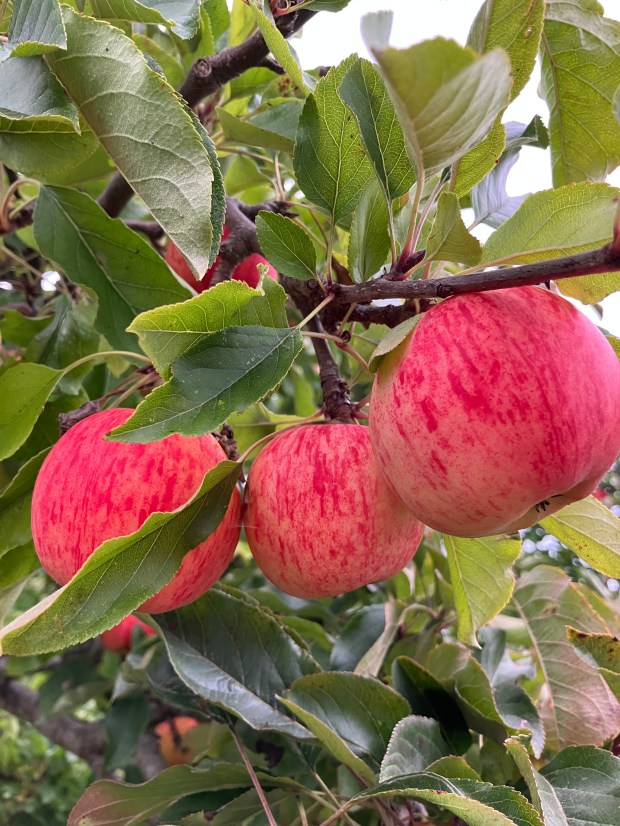
The apples are turning red. The first trees to greet you when you walk into the North Orchard are the Gala apple trees. Their cheery red fruit create the quintessential festooned apple tree forms starting this past week and on through late September during harvest. There are not too many fruits this year: the trees spent themselves last year and are taking a bit of rest. Still, there will be enough “Fruit for the People!” The juice will still flow.

-this simultaneously published on the Molino Creek Farm webpage

Right Livelihood

Picking a livelihood that helps to reduce suffering while creating a community that has access to such livelihoods are big and necessary challenges for everyone. The centrality of these goals is often overlooked. Here, I illustrate some hiccups with this process for those pursuing careers related to biology.

Biology Jobs

Bright-eyed young people gravitate towards out-of-doors careers, working with critters or plants, hoping that somehow they can help save the world by becoming experts at biology. They work hard to get biology degrees up against others who are pursuing more lucrative careers as doctors or genetic engineers. They compete for volunteer positions and internships to get hands-on experience. They go into debt to attend a Master’s degree program so that they are competitive in the marketplace of biology jobs. 

A very few of these well-educated students will obtain PhDs to become research biologists or even professors. There are fewer and fewer of these jobs however, and most realize that this is hopeless unless they compete to be affiliated with the very best University faculty and labs as doctoral candidates.

Most budding biologists discover that the most available and well-paying jobs are as biological consultants. Most have loans to pay and families to raise, and that is the easiest way forward. But some can’t stomach being biological consultants (more on that later) or just never seem to be competitive in the application pool. These folks settle for jobs with government agencies such as public parks (BLM, State, City, or County Parks), regulatory and planning agencies (state or federal wildlife agencies, water districts), or advisory agencies (US Department of Agriculture Natural Resources Conservation Service, Resource Conservation Districts).

Teaching and Research

How well does teaching and research mesh with ‘right livelihood?’ I will paraphrase Thich Nhat Hahn with this example. I teach biology and conservation to many students, but some of those students will get jobs in biology just to make money which will enable them to raise children who likewise have no ethical appreciation for conservation of life on earth. I already benefit from those students’ contribution to the economy, and their unethical children will likely pay for my social security. 

Does that mean I shouldn’t teach and research about conservation? No. What it means is that I need to consider these outcomes of my work and seek to improve my approaches to conservation. I also realize the need to improve my community, so that the biological careers that are available to the students I teach are more ethical, so even those who enter those fields ‘for the money’ can do less harm.

Agency Biologists

It is nearly impossible for biologists working for public agencies to practice excellent biology for conservation. At best, they might incrementally reduce harm to nature, but more likely they are enabling harm to nature by helping to ‘cover’ for the other, more politically supported mandates of the agencies. For instance, the tidal wave of outside influence on parks by well-funded groups such as the Outdoor Industry Association has created a situation where parks agency biologists’ opinions are marginalized, and they are not allowed to insert any meaningful biological protective language into parks planning which is mostly about expanding extractive recreational uses for public lands (for instance, for BLM see this and for State Parks this). Instead, as you will see when following those previous links, they are asked to rationalize imbalanced planning approaches that will cause environmental degradation. When such approaches from agencies are challenged in court, there is a long legal history of courts siding on behalf of the agencies. I need to do another column on the bad news that happens when courts are asked to decide on biological matters: the quote that comes to mind is ‘if a scientist testifies to affirm it in the courtroom, a pig can fly.

Consulting Biologists

Another career choice that biologists might make – and the most profitable by far – is biological consulting. Biological consulting is an area of the economy that has mostly been made feasible through regulations designed to protect the environment. Some consultants make a living helping public agencies that don’t have in-house biologists, often falling into the same pitfalls as outlined in the prior section. These and other for-hire biological consultants have a variety of approaches to helping their clients navigate environmental protection regulations. There is a spectrum of such approaches, and at the far end of the spectrum there are what a mentor of mine called ‘biostitutes’ – biologists who are in the business of ruining the earth for personal gain. 

Biostitutes

During my 35 years of watching environmental discourses play out across the Central Coast, I have seen quite a few biostitutes profiting from environmental destruction, but their numbers are diminishing for a variety of reasons. One tactic I’ve witnessed is when otherwise well educated biostitutes claim over and over again not to understand clearly written, required monitoring guidelines: instead they create very poorly executed reports using poorly collected monitoring data in order to reduce costs for their clients. And, I’ve witnessed biostitutes misrepresent the extent of endangered, legally protected habitats by inventing their own, biased methodology of vegetation classification. In many of my experiences it has been a commonplace practice for biostitutes to, without any evidence whatsoever, claim that it is feasible to restore new areas of habitat or rare species to demonstrate to environmental regulators that there is ‘no impact’ of their clients’ proposals to destroy habitat or rare species populations. It is amazing to me that these people keep getting employed, but they do…why?

The Politics of Biology

It is my contention that biostitutes and other less blatantly unethical career biologists keep earning their livings because of their expertise in navigating interpersonal political bond formation. Subtly or not so subtly, a biologist can signal their willingness to be helpful to clients with what they would call ‘biology problems.’ Be it a subdivision developer, a parks manager, or a public works director, there will inevitably be environmental protections to integrate as part of getting projects done. The biologist is faced with the dilemma of either telling their clients (or their bosses) that there is ‘serious work’ that needs to be done to avoid biological impacts or, on the other hand, that such impacts are normal, inevitable and relatively easy to justify or repair. In the case of the biostitutes I’ve seen, there’s also often the formation of chummy comradery via framing a polar world of ‘us’ (the world-improvers) vs ‘them’ (the regulators). This situation is particularly weird as the regulators easily recognize this framing, and so clients of such biostitutes end up paying a lot more money than if they had been advised by biologists with collegial working relationships with regulators.

The easiest way to identify a potential biostitute is to ask them to provide evidence of where they have succeeded with environmental protection measures. Go to those places with an expert, and you’ll either not be able to find anything or be led to something less than success.

Learning and Growing

Those with the more collegial approaches to ‘biology problems’ are seeking the path of right livelihood. They serve as educators to both the regulators as well as those who are navigating the regulations. This approach helps the regulators learn and improve environmental protection while also helping push practitioners to be more environmentally sound. These ‘learning and growing’ biologists keep up on the science, are great communicators of science, and have a track record of succeeding with well-informed environmental protection outcomes. They will be proud to show you where they have succeeded, where they are learning, and where they look for evidence of moving in the right direction for environmental protection.

Aren’t these examples with right livelihood in biology interesting to apply across the spectrum of other jobs? I hope that you will now more easily identify the right livelihoods around you and work to make it possible to have more of these options in our community.

-this article is slightly modified from the one originally posted by Bruce Bratton at his BrattonOnline.com blog

We Are One

Do humans all want the same things? Do we all know good from bad? When we look for explanations, for meaning, do we all find the same answers, and feel the same sense of wonder? It is my experience that we have much in common.

A famous 60’s poster featuring Casey Sonnabend’s photo.

In Search of Unity

A critique of Our Time Now is that too many are finding too much fault and see too many divisions. Where is unity? 

It is easy for me to find My Tribe and to describe The Others. My tribe consists of the ones who believe that all species deserve a chance and we learn to operate from that principle. Often, we feel apart, too few. We despair to see the Monterey Bay’s most special places disappear to poorly planned development, approved by bureaucrats who feel that their jobs are to strike a balance. We believe humans are capable of better, but that money and politics bend to special interests, eroding the quality of life for future generations. We know what is lost in the real world of biology, deep in the fertile healthy soil and along the ancient paths of wildlife, cannot be regained.

Then there are The Many Others, who have other principles. Many are just ‘getting by.’ A great many just want to have fun. Then there are the ones who worship money above all else, and the ones who believe that technology will somehow keep us alive and well after the loss of most of Earth’s natural biosystems. I have met these people, we have spoken about such things. These people are not strangers, they are not abstract. Can anything bring us together? 

Falling Apart, Together

One unifying theme I see is a widespread belief that things are falling apart. My Tribe is unified in understanding that humans’ relationship with Earth is increasingly critically imperiled due to poor collaboration, greed, and despotism. Many others believe that humans are doomed to extinction, perhaps sooner than later. We see that a great many people believe that things have already reached a critical state, requiring absolute destruction. There is ample evidence to support all of those positions.

Somehow, through this varied cacophony of hopelessness, a stolid force has held up a belief that everything will be alright.

Coming Together, Naturally

Another unifying theme I experience is widespread trust that everything will turn out fine. We get in our cars and drive sometimes very high speeds among thousands of strangers expecting to arrive safely at our destinations. We go to the store and find almost everything we expect to buy. Our bank accounts are secure. The weather doesn’t go to wonky extremes very often. Most of us can get food and find a safe place to sleep, largely thanks to a society that works due to trust and routine. When things don’t turn out how we expect, most people believe that humans are working to make things better, that we will have solutions to the world’s great problems. There is ample evidence to support those beliefs.

Many people simultaneously hold positive beliefs alongside much more despairing ones. How do we reconcile such disparate world views? 

Discrepancies

I have noticed many people struggling with holding opposite world views, unresolved. Most notably, I’ve seen people simultaneously decrying the inhumanity of the US ‘justice’ system and yet lauding it when it turns out favorably to their beliefs…all the while with an inability to detail even rudimentary synopses of legal arguments used in judgements. I’ve also witnessed people believing governments will find a workable solution to climate change despite local, national, and international decisions to the contrary. And, individuals celebrate trickle down economics when evidence strongly contradicts such approaches. In each case, it seems to me that there has not been enough smart talk, enough curiosity, to resolve these discrepancies. We need more smart talk.

Howdy!

After the hellos and beyond the weather, we must find things to talk about to bring us together. This will take getting personal, kindly. We might practice quickly arriving at the question of ‘what do you want to be remembered for?’ Or perhaps, ‘who has done the most good for you, personally (and why)?’ Asking people about how they are feeling is a good idea, too, but perhaps go more deeply than ‘how’s it going?’ Prolonging topics and conversations is a skill I’m seeing as important.

Carry It Forward

The most liked people remember things. Politicians remember names and faces and a few facts about many people. Every social network has someone or some few who recall many more personal things. Your circle is held together by shared memories, by long conversations lasting years. We build community by carrying conversations based on memory, respect, and kind curiosity.

What if we all make it a point to have more caring conversations, taking them as far as seems right each time we see each other? What if we take those conversations to people on our periphery, to build larger communities, to make a more peaceful society, to sustain Life on Earth? We must turn those conversations over and over in our minds, curiously seeking understanding, coming up with the next questions, and bringing those cherished questions back when we reconnect. This is what will bring healing.

-this post originally published on BrattonOnline, a weekly blog featuring some of the greatest minds of California’s Monterey Bay area on current events, news, and philosophy…from the Left of Center.

Swings

Prickly, skin burning sun gives way a day later to chilly overcast drizzle. As the planet warms, the extremes get more extreme; I don’t recall that kind of pendulum, but who knows? Monday’s sunny high at Molino Creek Farm was in the low 80’s, Tuesday a little cooler (but not much), and Wednesday it was in the low 60’s and drizzling. Let’s go back to the moment it switched: Saturday. We gathered our Community Orchardists just as the day went from somewhat cloudy and cool to crystal clear and warmer – the kind of beautiful where it feels like someone dropped a psychedelic dome over the big green earth, emphasizing color and clarity. Shimmering, exquisite beauty.

Cherry Blossoms

Fruit for the People!

The working bee rocked- cheerful chatter and hard workers knocking out pruning, weeding, fertilizing and cleaning branches & props. It was enough to turn around whatever doubt we might have had that this season is a turning point. We came together around food with toasts and kind words of appreciation for the community we create around growing Fruit for the People! Speaking of which…our Community Orchardists have delivered their first crop of Robertson navel oranges to our favorite outlet: the Pacific Elementary School‘s Food Lab in Davenport. Somewhat shy of 100 pounds of juicy, brightly colored, thin skinned oranges are making people happier and healthier. This kicks off 2025’s food donations to this important program.

Oh- and By the Way…many thanks to our dedicated readers and their forays to the Food Bin. They sold out of our tasty Bearss Limes and had to call us up to get more – vocal demand was the key. We are happy to help more people to shop local – this is The Locally Owned Grocery Store on this side of town. Go on back, now- they have a new batch of our limes, the best limes in town.

Aisle cover crop: bell beans; under tree permanent cover crop: Iberian comfrey

Terroir

We imagine we taste it in our limes, maybe in our oranges, too. But, the terroir comes out especially in our cider and wine. Cassandra Christine pointed it out first and now we are all grooving on the unique taste our soil imparts into our fruit. You’ll have to wait a bit to purchase Two Dog Farm’s chardonnay, but we are wishing them well in getting a big harvest this year after so carefully tending the vines.

Italian Prune Bark

This Land is Bird’s Land

There are so many birds at Molino Creek Farm right now – it is teeming with feathered friends. A few of us counted the bicolor blackbirds singing in a dead, bare-branched fir tree above the orchard. The number is the same as previously reported 35-40: that’s our flock.

There are hundreds more golden crowned sparrows, which are getting ready to take off to Alaska. I have some observations to share about these buddies. The sparrows around my home have accepted me as a friend and do not flee until I get around 5 feet away if I move slowly. As I walked around the garden the other evening, I approached the cherry tree, which had just started flowering. A golden crowned sparrow was happy about that – he was furtively plucking petals and pecking at buds, feasting away as fast as he could, ecstatic. This had mixed effects on me: on one hand, I was excited to realize that this species eats flowers; on the other hand, I wasn’t pleased that this bird was potentially causing loss of my favorite fruit. I talked to this guy about it, telling him that I really wished he wouldn’t eat my cherry flowers, but he didn’t seem to understand. I told him I’d get out the bird seed and feed his brethren seed if he let the cherry blossoms along. A moment later, he left and I haven’t seen sparrows in the tree again: good! I put seed out in the front yard and, looking out my sliding glass door this morning, I saw the flock of golden crowned sparrows, some of whom were eating the seed. I noticed that others, closer to the window, were eating weeds…and one was eating the petals of a California poppy. Just as I felt the rush of another discovery, yet another piled on: the poppy petal eating sparrow fed a luscious mouthful of petals to its friend, as if to say – “YES! It IS delicious!”

One more note…the golden crowned sparrows are also eating radish leaves, but not just any radish leaves – they find certain tasty radish plants and strip them to leaf midveins while completely ignoring a neighboring, probably less tasty plant.

We will miss these friends when they leave for Alaska…any day now.

Austrian Pea – a resprouting cover crop plant in a sea of chopped up calendula

Scents of Spring

Sweet smell of plum blossoms, pungent-bitter scent of calendula crushed underfoot, the perfume of fresh cut grass…and, the acrid-poopy smell of rotting radish. The Farm planted daikon radish as a cover crop and it does quite well. Grind it up with the mower and, well, it rots. To me, it didn’t smell so nice even as a live plant. I don’t really like that crucifery stench, but others apparently do: a recent UCSC class visit taught me that humans can have vastly different experiences with the mustard green smell. Good thing. A bit more rain (its coming!) and a bit more mowing and that rotting daikon scent will be ubiquitous. About that time, the rotting radish smell will mix with the freshly applied compost and melting down feather meal scents and the Farm will smell….richly stinky!

First Quince Flowers

The Sounds of Late Winter

Behind the bird chorus, waves pound. Finches crazy whistling, goldfinch squeaks, robin operas, junco twittering, bluebird sonnets, and so many other bird songs fill the air at dawn and dusk…and sporadically all day long. Lately, the waves have been very loud, rolling roars pulsing, occasionally cracking high on the rocks and sending an attention note into the hills. Gusts sing in the trees and whistle through the winter’s last dead hemlock stems, rocking.

Here goes another growing season, folks! We’re digging in deep.

2020 Fire starting to disappear to new redwood bark regrowth

Cotoni Coast Dairies, 2064: A Dystopia 

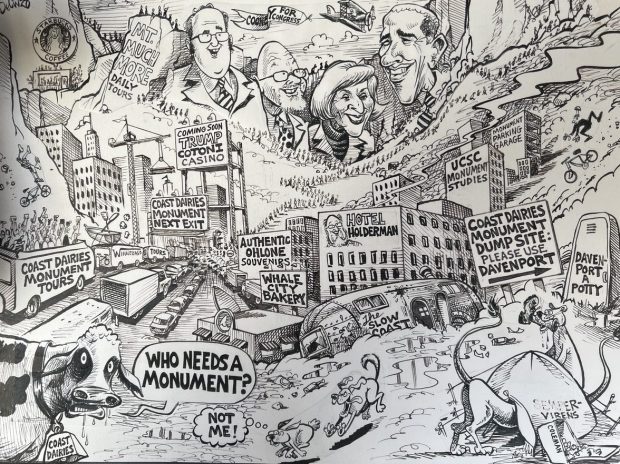
I invite you to immerse yourself for a few moments into my nightmare of the future of Santa Cruz’ North Coast. How will Cotoni Coast Dairies fare in the future, for instance in 2064? During the past year, many things have aligned to push my nightmare closer to reality. Note, this essay is the opposite view of my prior utopian sketch published here.

Wilder Ranch 2064
State Parks held off the Populists for a while, but California relented

The Recipe

Extreme factions of the far right have expertly wrangled a successful populist movement, gaining control of all three branches of the US government. Swiftly, we see dismantling of conservation including parklands staff and environmental protections for wildlife, clean water, and clean air. We recall Brazil’s Bolsonaro regime and their treatment of the precious natural areas of the Amazon and its inhabitants: park boundaries ignored and rapacious resource development encouraged, including illegal settlements. This story has been repeated in many places around the world as populist national political interests are imposed. These trends repeat: abandoning local interests with the establishment of the parks at the outset and continuing alienation of local people post parks development. As ecologists and conservationist Dan Janzen has wisely noted, it is important that the most local people see their own interests reflected in conservation lands, so that they will play an active role in protecting those lands.

What’s Coming

It is 2064, the 50th anniversary of Cotoni Coast Dairies becoming public land, and none of the hundreds of shanty inhabitants living on the property are reminded of the significance of this milestone. Parking areas and trails, once developed for the recreational elite, are covered with trash and lean-to cardboard and tin shelters, which started during the Hard Times of the 2030’s. Presidential Administrations have opened most federal lands, especially Bureau of Land Management lands, to settlement, promising to alleviate housing shortages. Millions had been displaced by extreme heat and epic storms, driven by climate change in the quickly uninhabitable interior USA. The squalor of the hastily erected federal land climate refugee camps contrasts only slightly to those on the nearby State Parks lands, which were opened by the Governor a little later and had ad hoc administrators that attempted (at first) to organize them. 

Missing Wildlife

By 2050, wildlife on the North Coast existed only as a fond memory of most settlers, who longed for the first decades of feasting on their tasty flesh. Even the smallest birds have succumbed to cooking fires, and the land is silent, without bird song. Tide pools have been scraped clean of limpets and mussels and people comb post-storm beaches for kelp and other marine vegetables, otherwise out of reach from harvest.

Cotoni Coast Dairies 2064: “House Everyone!!” The President cried, and BLM was the first to comply

Wildfire

Fires have become tamer after the raging infernos of the 20’s and 30’s consumed the last of the mature trees and, eventually, even their memories…the blackened snags and stumps. Storms come almost every summer, and it is rare that lightning fails to ignite a hundred fires between Santa Cruz and Half Moon Bay. These run quickly across the mountains in the regularly howling winds, consuming whatever diminutive weeds survive. Hundreds of people succumb to wind-driven infernos, but more replace them. As bad as it seems, there is no better place remaining: the seasons are still relatively mild compared to anywhere else in the country.

The Water 

The much-feared Water Guard and their families are the richest among the abject poor, for the cost of this scarce commodity cannot be avoided. They maintain and guard impoundments in the few streams that still provide water: Waddell, Scott, San Vicente, and Laguna Creeks. The other streams disappeared by 2050, now only scorched, mud-filled, lifeless canyons. The dams in the remaining creeks are maintained at high cost and much labor. Deluges are followed by flash floods carrying boulders, silt and debris that easily fill the tiny reservoirs. The stronger people earn water credit in trade for their labor rebuilding the dams, cleaning out storage pools, and replacing distribution pipes leading to water sales locations. Others earn their water by guarding this system day and night, sometimes with their lives. Water is life!

The Realization of This Nightmare

This dystopia is closer than most realize. It is a choice. It is everyone’s choice to avoid, but no one chooses the leadership necessary to do so. Instead, we keep electing representatives to take the place of the parents we wish we had had. Mother and daddy know best, we just want to be told to hush and to trust and that everything will be okay, but it never works out that way.

The pathway to this nightmare has been paved in so many ways. The back-room-deal-type Environmental Saviors responsible for the federal presence, for the Bureau of Land Management (of all agencies!) takeover of Cotoni Coast Dairies not that long ago fought local conservationists in court and won, then counter-sued the conservationists for their expenses. Those types are still working behind the scenes to make this deal seem palatable and good by succoring wealthy outdoor recreation types and funding their trail-building enablers. They have long abandoned partnerships with local community interests and even the more wide-ranging and very popular wildlife conservation movement. Alienation of those interests leaves the door wide open for the populists to overrun these lands which they portray as empty, pretty landscapes ready for settlement. It has always been so.

What You Can Do

The frustration we feel at the trends we have seen too late emerging can be put to good use. We can give money to the Center for Biological Diversity, a last bastion effectively using the legal system to protect wildlife, even around the Monterey Bay. We can vote for different representatives who primarily recognize the importance of the environment and the need to engage, enlighten, and empower those people who care about nature, which is everyone. We can speak up against the local lack of justice. We have more influence in local politics than national: this is the place we create the political movements that make a difference. This is the place we nurture the leaders of tomorrow’s State and Federal governments.

-this essay originally appeared alongside those of my Most Excellent Colleagues at BrattonOnline, a weekly e-newsletter covering the arts, history, ecology, politics, foreign affairs, and more.

Autocracy Continues to Build

I have long labored in this column to outline the frustrating situation all biologists feel in this world as our interests are destroyed by increasingly autocratic tendencies of the government. And no, I have never been partisan about this situation. Both parties are to blame in creating the country we find ourselves in right now, facing a perilous future where generations will not only not be able to enjoy the standards of living we do today but will suffer to keep a standard of living with any comfort at all. 

Will we see lush cover crops and small farms in the future USA?

I am not surprised, however, to find many people freaking out about a government bent on destroying social programs. After all, many voters have long been fed a thin gruel diet of small social program ‘wins,’ so that they will overlook that their future is being stolen by the 1% who are paying for both political parties, allowing them to extract wealth and power by destroying Life on Earth.

Tinkering Around the Edges

I was recently listening to the Bay Area’s own brilliant journalist Kara Swisher interviewing Rahm Emanuel, a person who seems like a reliable voice of mainstream Democratic politics. Ms. Swisher pressed Mr. Emanuel on what the Dems should do at this juncture, and his responses were along the lines of ‘messaging the voters’…’adopting a new platform or two’…etc. There was zero reflection about the way politics is using people to enrich the 1% while destroying the environment and no reflection on how to engage and involve citizens in their own governance.

All Politics Is Local

National government tactics are repeated here in California and all around the Monterey Bay. If you think that the current use of Executive Orders is unusual, check out the far-reaching litany of executive orders from California’s governor, who is proud to reduce environmental protections as part of these moves, none of which is primarily directed at environmental conservation. 

In Santa Cruz, I see politicians and government staff baselessly blaming and attacking people who are trying to protect the environment, including other columnists who write for Bratton Online. These local politicians and staff have long supported the roughshod environmental analysis of many projects before them as long as the project serves some social good and/or is economically attractive. For instance, many pointed out the inadequacy of the Regional Transportation Commission’s analysis on the estimated numbers of tourists attracted by the new North Coast Rail Trail, but politicians didn’t care enough to direct better work. I have witnessed this same political hunger for other projects that badly impact the environment at Arana Gulch (recreational development), Pogonip (recreation and agricultural developments), Glenwood (housing and school development), Santa’s Village (housing development), Seascape (housing development), Wilder Ranch (recreational development), UCSC (housing development), Terrace Point (educational buildings), Nisene Marks (recreational development), Cotoni Coast Dairies (tourism development), and Neary Lagoon (transportation development).

Up Close and Personal

I have had occasion to be privy to the autocratic decision making that creates the results where the environment, and conservationists, end up losing and here’s how it goes. First, someone who wants to develop and negatively impact nature works with an expert at navigating the review process so that they get just what they want. Second, once they have a plan for meeting regulatory demands (aka “jumping through the hoops”), they meet with one or two of the politicians whose vote they’ll need. Then, they make a deal of some sort to guarantee the votes. Then, the person proposing negatively impacting the environment meets with the bureaucrats who also get calls from the politician, and then they, too, make a deal. Finally, after everyone’s approval to the plans and approach, the project proponent goes through the motions of a public process, taking and ignoring input and moving forward with what they wanted to do in the first place. When pressed about why not do a more authentic public process, anyone that was part of those deals will tell you, “why bother?”…”it just makes more trouble”…”we know best and came up with the best solution.”

Do those trends sound familiar at a national level right now? We have far more potential to affect political change closer to home than further away.

Why Aren’t the Dems Fighting?

Some people who are concerned about the Administration’s actions nowadays ask ‘why aren’t the Democrats fighting?’ The answer is that everyone in power is in awe of what they, too, might get away with one day. Plus, some of what is being highlighted as shocking power grabbing is the same stuff that all politicians have been doing for some time now, but perhaps less bombastically.

During the first round of this administration, there was a surprising assertion that we were suddenly going to war with Iran, a country with about the same number of military as the USA. NPR picked one of their preferred retired generals to interview about the wisdom of this decision and that general said that he could not condone the action because ‘Americans have not been prepared for this war.’ That is, the military demands that politicians prepare citizens for war, presumably so that the funding will keep flowing to support the war effort once it is started.

I believe it has become equally normalized that it is the politicians’ job, in working for their biggest donors, to keep citizens constantly prepared for environmental degradation. And, it is my experience that the staff people of governmental agencies look at legally mandated disclosure and environmental review interactions with citizens as a burden and a waste with no chance of improving the agency’s work and better protecting the environment.

Is It Any Surprise?

Given what I’ve just outlined, I am not surprised by what I’m witnessing at a national level. As a nation, we have prepared ourselves well for this situation to work out excellently for the 1%. I am not happy that many more people get to experience the exasperation that conservationists have been feeling for decades, but so it goes. Perhaps this is the best chance we have had to start working together.

How can we organize an alternative in local politics where the people are prepared for a Monterey Bay that is protected by its citizens for the next 1,000 years? The answer lies with more permanence of residency, sustainable and vibrant economies, and removal of any environmental impacts of growth, but those things are at odds with our current societal structure. And yet, these things (and more) are sorely needed. If we can make it work here, the goodness will spread. It starts with developing leadership and engaging many more people. You’re right there with us, right now. 

-this essay originally posted at BrattonOnline, a weekly roundup of all thing local and sometimes global affecting the Monterey Bay. Read it and keep in touch!