Note that the letter may have only had indirect effects on the actual Proclamation. For more information, see this post.
Cotoni Coast Dairies National Monument
Restorative Justice: Trust for Public Land and Coast Dairies
There is healing to do in my community, but no one is moving that forward with one particular travesty. We’re approaching the 7-year anniversary of a local conservation organization’s legal action against our community, including environmental hero Celia Scott and others. In 2018, the Trust for Public Land sued a group of my community. Their actions incurred long-lasting damage to personal lives and the willingness and ability for the public to remain engaged in the hard work of protecting the North Coast of Santa Cruz County. This story is a microcosm of society-wide problems. In this essay, I explore this scenario in hopes that we can heal or at least learn from the past in ways to strengthen and improve the future, in similar situations.
What Happened?
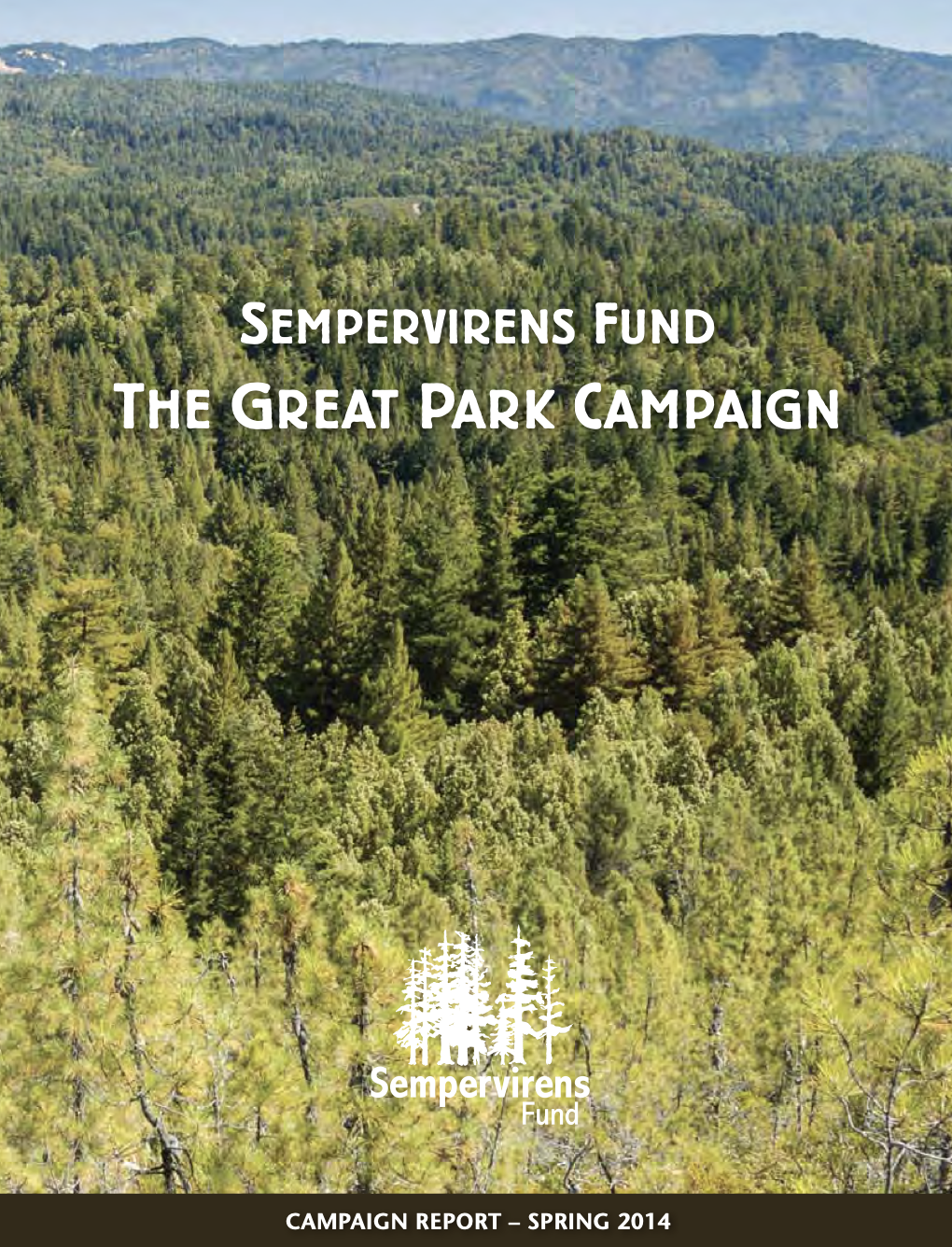
In 2014, we were extremely concerned that the Trust for Public Lands chose the Bureau of Land Management (BLM) to take possession of ~5,800 acres of the ~7,000-acre Coast Lands and Dairies property. This would be the first transfer of large acreage in Santa Cruz County to the Federal Government, putting decision making, environmental review, and management oversight far afield from local influence. Moreover, the BLM is nationally recognized as being the ‘bottom of the barrel’ of public land management agencies insofar as their ability to provide adequate staffing or adequately analyze and plan for protecting natural resources and managing visitor use. ‘Don’t worry,’ the Open Space Illuminati whispered, ‘the land will go to National Parks soon enough.’ ‘The Great Park’ was their dream, a way of cementing the legacy of a very few boomers and their deep-pocketed, old school “environmentalist” funders. A dozen or so local veteran conservationists were clearer eyed and decided to fight back.
This coalition worked with experienced legal counsel to challenge the federal lands transfer based on TPL’s need to divide the property between State, private, and Federal ownership…a process requiring County and Coastal Commission approval. When their legal action failed, TPL sued those activists, demanding a large financial settlement. TPL’s legal action also failed but not before the damage was done to individuals and their families as well as the coalition overall and my community of conservationists in general.
Outfall
TPL’s lawsuit echoed through the region, hobbling conservation and damaging community. The Open Space Illuminati felt more empowered, less humble. Family members questioned whether activism was worth the risk, fearing retribution affecting their already tenuous ability to live in an increasingly unaffordable area. Conservationists wondered how a ‘conservation’ organization like TPL could launch such an attack.
The Bullying
This history is but one instance of something we see unfolding nationally with greater consequence. In most political spaces we have mainstream, wealthy, influential ‘centrist’ “liberals” that are sure that they know what’s best for everyone, and they are determined to force their reality forward. They bully and demonize progressives who are often under-resourced for such battles: ‘successful’ centrists are often in wealthier circles/circumstances, and their visions often include methods of increasing their financial advantage. Do we forget progressives’ criticisms of the World Bank and US AID for their paving the way to the destruction of communities and ecosystems? Newsom is so good at bullying Trump because his centrist community are very experienced at bullying progressives, and they’ll be back at that focus soon enough. The centrists love the far right for the power that gives them to move the populace to the center where the rich get richer and the environment and the poor suffer greatly. The Coast Dairies situation is a microcosm in another way.
Microcosm
Many of us are familiar with the story of the colonialist tragedy affecting indigenous people, but can we also apply some of those lessons to the situation with TPL at Coast Dairies? We know we are on the unceded ground of indigenous people: each and every one of us reading this. At the same time, many prescribe to the philosophy of such colonialism when we celebrate the “keystone” of “successful” conservation. Cheers ring out when property is purchased for a park, and few ask who is losing when that happens. Some of us are familiar with the boundaries of parks being drawn without consultation of native peoples around the world: indigenous people displaced by ‘conservationists.’ Few of us see the parallels with such dangerous transitions in California where the ‘We can do better!’ mentality overwhelms local communities.
Can We Do Better?
Conservationists celebrate the quick transition away from local control, yet traditional land management knowledge is lost at great peril. Those engaged in traditional forestry know how to manage land at scale, restore forests, grow trees, and reduce wildfire risks. Those engaged with traditional range management also know how to manage lands at scale, control herds of beasts to ecological benefit, and identify stewardship risks before they become catastrophic. Indigenous peoples have a much deeper and broader experience to share. Instead, the conservation community often removes these previous communities from their stewardship roles, instead entrusting land care to too few University-educated elites with their small share of experience matched by their lack of humility, and framed by their embrace of pro-forma ‘management planning and environmental review’ processes designed to protect them from public conversation, criticism, and legal challenge.
All of this is happening at Cotoni Coast Dairies. Can the situation there, including with the Trust for Public Land, help model a way to overcome this negative global spiral?
Reconciliation
I am suggesting that we go through a truth and reconciliation process for the Coast Dairies debacle, including the TPL’s legal action against our community.
First, we must seek to understand. Who was involved with deciding that the Coast Dairies property would best be in BLM’s hands? Let’s hear from those individuals about their decision and what they think about that nowadays. Who was involved in the decision to sue our community members? Let’s hear from those individuals about what motivated that action. Why did community members sue TPL? Let’s also hear from those individuals about what they were hoping to achieve and how they see their loss affecting the current situation. Can we also hear from the Federal decision makers: how does the machinations of federal control address the concerns of our community?
A well facilitated truth and reconciliation process can move forward from such mutual understanding towards solutions that can help to heal the past and move to a more productive future.
I predict this reconciliation process will not happen until the Open Space Illuminati and the Federal decision makers feel that they are no longer ‘winning.’ Then, they might see that they need the help of the people they have marginalized. This will require the marginalized to gain more power. Please join the movement by talking to your network about these issues.
If we don’t address these past injustices, it will not be a long wait until we see them repeat in larger and more tragic ways. Right here in our communities.
-this post originally published as part of the illuminating BrattonOnline weekly blog, featuring leading thinkers on local, regional, and global affairs…in this era of squelched free speech, it is best to keep our minds agile by reflecting on well-informed commentary and journalism. Subscribe now and SAVE (your mind- the blog is free).
The Great Park Campaign
Cotoni Coast Dairies BLM Land Opens to Public
The opening ceremony for public access onto the Federal Bureau of Land Management’s Cotoni Coast Dairies property was on August 15, 2025, a grim day for those who have followed this travesty, which will only worsen with the planned public access.
Building on a Tragic History
Nothing good led up to this moment. There is no one left who speaks the language of, or can show direct descendance from, the native people of this property. There are rich archeological sites illustrating that this land was settled for thousands of years. So, as with every spot in California we must see this property and how it has been and will be used as a colonialist endeavor. There is no attempt to give the land back to any coalition of First Peoples who represent those ancestors or to respect them in any way that approaches restorative justice. Oh, but there’s the name…(!)
After the genocide, the land has seen one extractive use after the next with little regard for conserving nature. The ‘Coast Dairies’ portion of the name points to cows, and cows there still are. The grazing regime has never focused on restoring the very endangered coastal prairies on the property and, even now, there is no plan to do so. This recreational use is a new, highly impactful extractive use. The property is rare for the Santa Cruz Mountains in having had very few human visitors for the last 100 years, so wildlife has been accustomed to roaming without disturbance. Cougars and badgers are especially wary of humans when setting up dens. A million visitors a year will soon be visiting and wildlife will flee.
The consortium of people responsible for so many other, better outcomes for conservation tried hard, won some concessions, but have seen great loss with how this property came to be open to the public. We tried to get anyone but the Federal Government to manage the property, but the Open Space Illuminati had other things in mind…’The Great Park’…a handful of boomers wanted their legacy in a wide swath of the area becoming a National Park. They stopped at nothing to achieve that legacy. The activists, biologists, conservationists, and regular citizens, were even sued to strike fear into them, to make them capitulate.
Money Made it Happen
The Wyss Foundation bankrolled cash-strapped ‘conservation’ organizations to create a fake grassroots campaign that culminated in Obama signing a Monument Proclamation adding 5 properties across a wide swath of coastal California to the California Coastal National Monument.
Then, the BLM routed hundreds of thousands of dollars, sole-sourcing a contract to a mountain biking advocacy organization to build the kind of trails their users wanted to see. That business quickly changed their name to a ‘trails’ organization. Instead of supporting good paying local jobs, the BLM paid this organization to rally volunteers to do the work of installing trails that were placed across a landscape without regard for the wildlife written into the President’s Proclamation for protection. When asked about how they could do such things when the property’s designation required favoring conservation over visitor use, BLM cynically snickered that the majority of the property, 51%, is set aside without public access. The rest, apparently, is a sacrifice zone.
What We Wanted and Will Pursue
Those of us who care about the native peoples, the nature of the property, and the experience of future visitors have a vision, which we will pursue despite setbacks. The land should not be Federal land – if you wonder why, you need to look at the current situation with federal lands nationwide. We always knew this, but now others are starting to understand our concerns. The current administration is selling federal land for real estate development and other extractive uses. If, after cutting the federal workforce, there are any staff remaining to manage the land at all, that will be a surprise. The Administration has said Federal lands will remain open to visitors even if there is no staffing or budgets. Oh no- could my dystopian vision for the property be closer to reality?!
If there is a chance, California should buy Cotoni Coast Dairies. Then, let’s envision taking Canada’s Indigenous Guardian’s project to this place, giving tribal people primacy in stewardship, use, and oversight. Perhaps the State could give the land back, as it has just accomplished with the Yurok.
If the property is to remain a public park with visitor access, there needs to be a radical shift in how that is approached. The regulatory designation for first managing the property for conservation needs to apply even to the areas with public access. This will require altering use patterns, even closing the trails occasionally, for the benefit of the soil, streams, wildlife and plants that Obama clearly intended to protect. There will need to be lots of monitoring and enforcement to adequately protect natural resources. The BLM will need to do a ‘carrying capacity analysis’ to determine ‘limits of acceptable change’ – thresholds that, if surpassed, trigger altered management of visitor use to bring the use into alignment with conservation.
Next Steps
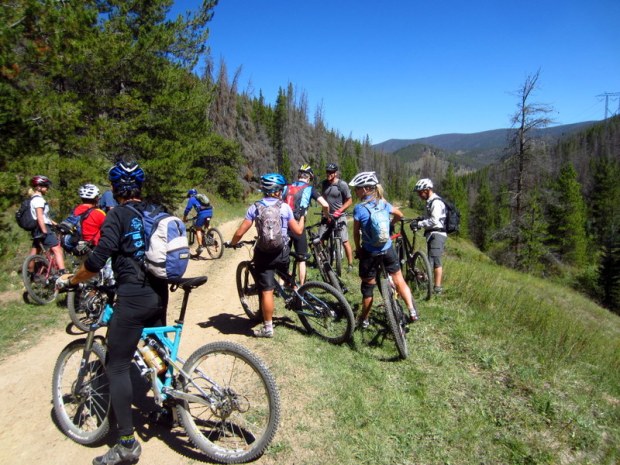
It will soon be possible for visitors to monitor the situation first hand. Those of us who asked to do baseline monitoring of wildlife and plants were refused the opportunity many times. When we asked how small children and the elderly could possibly co-recreate on trails overrun by fast-moving mountain bikes, our concerns were dismissed. We will be able to help document how well BLM’s rules are working and if there is enough enforcement. We will be able to see the spread of diseases introduced by bike tires and hiking shoes ravage the amphibians, the trees, and the soil, and we will recall how BLM staff predicted those impacts in writing, with administrators choosing to ignore even the simplest measures that hundreds of other parks managers have employed to address those concerns.
-this post updated to past tense from the one posted via Bruce Bratton’s legacy site BrattonOnline.com
Well Managed Parks?
Some people I know are saying how ‘well managed’ our public open spaces are around the Monterey Bay. Let’s examine how one might come to such a conclusion and, at the same time, consider carefully parks managers’ roles in protecting wildlife for future generations.
Logical Fallacies
The simple, unsubstantiated statement that most of the Monterey Bay region’s public parks are ‘well managed’ is rife with logical fallacies. The people saying this are hoping that their statement will resonate because they are perceived as authorities about environmental matters. They are taking advantage of a ‘bandwagon’ building on a very publicly vocal minority of parks users who are also repeating the statement for their own purposes. Members of this bandwagon really enjoy some aspect of public parks and are suggesting that because their expectations have been met, everything else the parks managers are doing is being done well, too. They may be relying on black-or-white rationale where a park is either managed well or not, and they’d rather land on the ‘managed well’ side of that dichotomy. Building on that assertion, they purport any level of critique of parks management as personal attacks on parks managers. In the ensuing discussion, they are incredulous that anyone would suggest something isn’t right with parks management. They point out that all the credible public figures regularly praise our parks. When further pressed, the person claiming local parks are ‘well managed’ says ‘prove me wrong!’ … ‘where is there any proof that local parks are being mismanaged?’ they ask. After providing several examples of failures, the next thing I hear is “well I meant ‘generally well-managed,’ not that they can’t do better.’ If the conversation continues, the ambiguity gets wider and deeper. Why do these people continue to utter this statement?
Motives
Sunny dayists, popularity by praise, narcissism, greed, business marketing…all of these alone or combined are good explanations for the motivation of the people claiming parks are ‘well managed.’ Have you ever met someone who is always leaning into the positives around them? I had the great fortune of spending lots of time with one of those types of people. Our situation allowed us to eat at many of the region’s restaurants. When we first went out to eat, I was pleased that they expressed such praise for the food, the service, the atmosphere…everything! After a long while, I noticed that their praise was the same no matter where we ate out. I tested the hypothesis, leading us to one of the worst restaurants in the region: same level of praise! I bet you know someone like this; imagine them saying that parks are so, very ‘well managed.’ Do you believe them? On the other hand, isn’t it just easier and more fun to praise parks managers? When you are part of this bandwagon, such praise makes you popular.
Or, maybe you don’t care about that bandwagon. Maybe you get exactly what you want at local parks and so share the innocent but narcissistic reflection, ‘parks are well managed!’ A perhaps more malevolent explanation is that those declaring ‘parks are well managed’ actually do understand that parks are NOT well managed but they are getting what they want and so they greedily fight any threats to what’s working for them. For instance, perhaps those sharing the ‘well managed parks’ assertion are daredevil acrobat drone pilots who raise kids and drink beers with the parks managers families…might those be the sort of people who would declare ‘parks are well managed!” There’s one more type that comes to mind: the businessperson. You can probably imagine the marketing lingo of any shrewd businessperson in the fields of nature education, outdoor recreation, tourism, conservation, public administration, or politics. Their statements are carefully crafted to build their personal brand, make more money, have more power. In that context, ‘parks are well managed,’ becomes what in politics is known as a “tribal statement.” One says ‘parks are well managed’ with a nod to one’s colleagues who are most likely to provide some positive business outcome. For instance, parks managers might provide support for nonprofits in the nature education space. Hearing that you are part of the bandwagon, perhaps an outdoor equipment maker will donate some gear to your organization. When a politician is reminded that you share their black-or-white jingoes, they might be especially helpful in supporting initiatives that move you towards business success. I know business-oriented conservationists who regularly say things they know aren’t true such as ‘this park is so very well managed!’ in the mistaken idea that such lies will improve their rapport and make them more powerful.
Bandwagon Patrol
Beware the bandwagon and beware the logical fallacies that accompany unsubstantiated generalities about things you know little about. Perhaps we could all benefit from changing vague generalities/assertions to more detailed personal reflections: ‘When I last visited Nisene Marks, I was pleased not to encounter any hikers.’ instead of ‘Nisene Marks is well managed.’ Let’s get more specific in general about things that affect the environment. Instead of ‘parks are well managed,’ maybe one could say ‘if Henry Cowell had a management plan, it would be easier to judge how well it is being managed.’ We can only fairly judge how well a park is being managed within the context of its management.
Context
If Natural Bridges park’s main objective was maximizing beach access, how are they doing at managing for that? Seems like we should know some details about the context of management at individual parks to better understand how well they are being managed. If Cotoni Coast Dairies’ main objective was managing for nature conservation, how would we know how well the managers are doing? We’d need access to supporting data and summary reports, of course!
Principles of Good Land Management
I suggest a framework of good land management principles. First, for land management to be judged at all, there must be a management plan that informs what happens on the ground. The plan needs to rely on the scientific method and an adaptive management framework, include citations for supporting peer-reviewed publications, and have recommendations for monitoring and managing for the ecological and social carrying capacity of the land. Next, managers should regularly be working to adapt management and the management plan using analyses informed by high quality data. Managers who are doing good work will be transparent with their decision making and focus on actively engaging with and including the public in all aspects of land management. Land managers doing good work will be able to prove how they are maintaining all species while providing access designed to maximize public benefit.
-this essay originally published in Bruce Bratton’s illuminating BrattonOnline.com weekly blog. Why not subscribe (and donate!) now?
Updates to BLM’s Special-status Wildlife Species List: Comments by The Western Section of the Wildlife Society

Advocates for Wildlife Protection: Where?
When was the last time you heard about someone advocating for wildlife protection in our Monterey Bay region? Who was it? Why?
I am disturbed by the lack of advocates for wildlife protection and I wonder why that might be. Here are some reflections.
A Plea for Help
Occasionally, I find a need to call out for help for wildlife protection advocacy. My most recent call for assistance was a seeming ‘no brainer.’ There was a clear need for wildlife advocates to ask the State of California office of the US Bureau of Land Management to consider a science-supported update of their statewide sensitive wildlife species list. The one BLM has been using doesn’t protect a bunch of State listed wildlife species, as it should. And, the BLM is required to work with our State Wildlife agency to do just that. This is one of the most straightforward issues I’ve faced: the facts are easy to illustrate and quick to research. And so, I reached out to the obvious pro-wildlife advocacy organizations. Who comes to mind when I say that? Pause, don’t read on…think: who would that be?
The Sierra Club
If you are a pro-wildlife advocate, the Sierra Club seems a great place to work. Well, it could use some help. My pleas to the Santa Cruz Group of the Ventana Chapter of the Sierra Club went unanswered. The one or two in the group who are apt to answer such requests are totally stretched. A while back, the local club was taken over by the pro-bicycle lobby, a group that has little regard for wildlife conservation. It should be telling that Santa Cruz doesn’t even have its own Sierra Club chapter: the local one is a sub-group of the Ventana Chapter, based in Monterey where most of the pro-environmental activism has been traditionally located.
The Wildlife Society, San Francisco Bay Area Chapter
Another far flung chapter of an organization that is supposed to represent Santa Cruz County’s wildlife conservation concerns is the SF Bay Chapter of the Wildlife Society. Unlike the Sierra Club, this Chapter did return my queries. However, after a long wait they wrote me that they were uncomfortable advocating for this issue. They actually told me that they weren’t an advocacy organization, despite their website saying that they “work to ensure that wildlife and habitats are conserved” by “advocating for effective wildlife policy and law.” It seems like whoever is active in the organization right now is uncomfortable being advocates. Luckily, their parent organization was a much better help.
The Western Section of the Wildlife Society
Even more far flung than the SF Bay Chapter, the Western Section of the Wildlife Society was a great help. Their leadership, though obviously overworked, were enthusiastic and helpful with the straightforward request for assistance. They did due diligence and had adult conversations about the need for advocacy and wrote an amazingly strong letter on the issue. If you want to support a good (local?) organization for wildlife advocacy, this is a logical choice. Unfortunately, they probably won’t be proactively monitoring our local situation and helping out without us asking.
Audubon Society
Not so far flung, the Santa Clara Valley Audubon Society is very active and quite influential…just over the hill. When approached, their overworked volunteers can sometimes be enticed to help with local conservation. I have to give them a call on this one.
Land Trusts
The Land Trust of Santa Cruz, Sempervirens Fund, Save the Redwoods League, Peninsula Open Space Trust and others…clearly all competing with one another with no unified messages or strategy for region-wide wildlife conservation. Instead, they are as likely to be public-forward with pitches for increased recreation in natural areas, which runs counter to wildlife conservation. With this contradiction, none of these organizations are able to build credible coalitions to advocate for wildlife conservation.
Wildlife Biologists
I have long approached local wildlife biologists for assistance, with mixed results. This time, I reached out to a few and was surprised. What I was asking experts to do was to do a bit of analysis so that their opinions about adding species to the BLM’s list were well supported. A handful of wildlife biologists said that they would consider advocating for this cause, but only if paid for their time for analysis. One biologist, Jacob Pollock, stepped up as a volunteer. Dr. Pollock is a steadfast advocate for science-supported wildlife conservation. He has an inquisitive mind and powerful analytical abilities. He deserves recognition and thanks for his wildlife conservation volunteerism. This is apparently quite rare. He will shortly offer up a methodological approach to updating the BLM’s State Special Status Wildlife Species list with an example from a statewide analysis of the rarity of American badger, including BLM’s contribution to its recovery.
The rarity of such volunteers was recently emphasized when a community organization contacted me to speak at a public forum considering a potentially wildlife-impacting regulation. I couldn’t speak and couldn’t think of another wildlife advocate to do that speaking engagement. Have you seen an inspirational wildlife conservation advocate who regularly speaks to local threats to wildlife and solutions for conservation?
Why So Few?
What has created this dearth of local wildlife advocates? We have no reliable analysis about what has happened. One day, maybe I’ll find the time to do some investigative work about what went on with the local Sierra Club. Meanwhile, I suggest that mere intelligent leadership in our community would result in that person getting elected to the Santa Cruz Group. However, that person would be lonely without a couple or three more such people to make a majority vote happen in favor of wildlife…and, a group of such volunteers would be necessary to pick up the workload for responsible advocacy.
Cost of living might have something to do with the situation. The Monterey Bay area is very expensive to live in, so wildlife biologists must work hard to pay their bills, leaving no time for volunteer work. And, when professional wildlife biologists do advocacy, they threaten some of their employment opportunities, so there’s further disincentive.
Parallels with Environmental Educators
If there are any social scientists out there, read this other post and compare the notes with this one – I think there are parallels. Besides wildlife biologists, why are so few environmental educators meshing conservation advocacy with their work? Is it likewise the threat to income? Or, is there something cultural going on here? There might be some redundancy with this issue as perhaps a large number of environmental educators are also wildlife biologists.
What Are We To Do?
I heard recently that progressives might be getting some funding to support a revitalization to allow improved political campaigns in Santa Cruz. Perhaps there is a similar need in wildlife advocacy. It does seem that we need a new organization to advocate for wildlife in our region. How would one go about setting it up for success? I imagine it starts with funding the set up and also creating an endowment for some staff positions. The mission would need to be building a supportive, diverse, and active public. I am looking for such change.
-this post slightly adapted from the one published by Bruce Bratton at his impactful BrattonOnline.com blog site where there is often lots of good information from some brainy characters. A great source of news.
BLM Overlooking Precious Wildlife Conservation
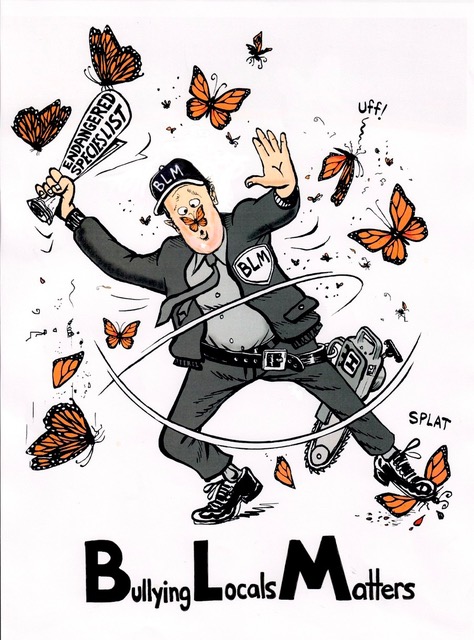
Santa Cruz County’s newest conservation land managers are supposed to conserve the wildlife prioritized by the State of California, but are failing to acknowledge their obligations, which means some of our area’s iconic wildlife species will disappear faster due to lack of Federal cooperation at Cotoni Coast Dairies.
Background
The Bureau of Land Management oversees management of Cotoni Coast Dairies, but it is following much-outdated wildlife conservation guidance. Land management agencies like the BLM are guided by policies and procedures that guarantee that they do a good job of managing wildlife. For instance, BLM has its 6840 Manual “Sensitive Species Management,” which notes:
“The objectives of the BLM special status species policy are:
A. To conserve and/or recover ESA-listed species and the ecosystems on which they depend so that ESA protections are no longer needed for these species.
B. To initiate proactive conservation measures that reduce or eliminate threats to Bureau sensitive species to minimize the likelihood of and need for listing of these species under the ESA.”
In other words, BLM recognizes that the agency should not be contributing to wildlife species becoming rarer and so receiving more regulatory protection, which would impact private landowners by restricting the uses of their property.
Mouritsen’s Duty, Neglected
To avoid that, BLM California’s State Director Karen Mouritsen is required to, “at least once every 5 years,” review and update the BLM-maintained list of sensitive species in coordination with the California Department of Fish and Wildlife (CDFW). It is unusual for such policy guidance to lay out a specific timeline, which adds clarity to expectations. The last time California BLM’s sensitive wildlife list was updated was in 2010, before Director Mouritsen’s tenure: 13 years ago! A lot has changed in those intervening years, and scientists have recognized that many more wildlife species are in need of protection by BLM.
Repercussions at Cotoni Coast Dairies
What happens when BLM’s sensitive wildlife species list isn’t updated? Let’s look at the Cotoni Coast Dairies example. BLM has already completed a Resource Management Plan that is meant to guide wildlife conservation on the property. Under the guidance and environmental review provided by the RMP, the agency is building miles of trails and parking lots, implementing a cattle grazing program, and allocating funding to other prioritized activities. BLM will soon embark on a Science Plan for the property. The RMP didn’t and the Science Plan will not consider conservation of wildlife species that do not appear on the BLM’s sensitive species list. And so, the following 10 rare wildlife species will receive no attention, pushing them further towards extinction: ferruginous hawk, grasshopper sparrow, Northern harrier, olive-sided flycatcher, American badger, San Francisco dusky-footed woodrat, Western pond turtle, California red-legged frog, American peregrine falcon, and short-eared owl.
A Deeper Dive – Grasshopper Sparrow
Let’s consider one of those species with a little more detail, the grasshopper sparrow. If this species is nesting in an area, under California law they are protected and our state wildlife agency, CDFW, has been charged with their conservation. According to BLM guidance, Director Mouritsen is 13 years overdue in updating the agency’s sensitive wildlife list for California to include this species. As their name suggests, grasshopper sparrows are grassland-dependent organisms. There is an abundance of nesting grasshopper sparrows at Cotoni Coast Dairies.
Without active management such as with carefully planned livestock grazing or fire, all of the grasslands at Cotoni Coast Dairies will disappear, being invaded first by brush and then by trees. This is already happening with extensive French broom and coyote brush invasion.
Already, BLM has planned its livestock grazing and recreational trail uses without consideration of preferred habitat for nesting grasshopper sparrows. Livestock grazing could be taking place to the detriment of the species, already. The construction of recreational trails and parking lots may have already destroyed important nesting habitat. When recreational visitors start using those facilities, it may occur before BLM has a baseline study of the density and location of nesting grasshopper sparrows. So, the agency will be unable to understand how land uses are impacting the species and so will be unable in an informed way to adjust its recreational or livestock management to better conserve the species.
It may well be that BLM’s management of Cotoni Coast Dairies will further reduce nesting populations of grasshopper sparrow, pushing the species closer to the point where they will need to be listed as threatened or endangered. When that occurs, private landowners whose land supports nesting grasshopper sparrows will see increased regulation and oversight by the State and/or Federal government. Their property values will be reduced and their ability to develop homes, farms, or other uses will be diminished.
An Alternative
On the other hand, if the California BLM State Director Mouritsen were to meet her regulatory obligation and update the BLM State Sensitive Wildlife Species List in the near future, a bunch of good would result. First, Cotoni Coast Dairies’ Science Plan could provide guidance for conserving those species. Second, because BLM funding is tied to the number of sensitive species on each property, Cotoni Coast Dairies would be better situated for increased conservation funding. If the Science Plan succeeded in moving forward the conservation of sensitive species like the grasshopper sparrow, BLM’s leadership on these issues could help many other land managers do the right thing for species, contributing to the potentiality of ‘delisting’ species, reducing the potential for increased regulatory burden and loss of private property values.
Do Your Part
I’ve said it before in this column, but I’ll say it again. NOW is the time to write Director Mouritsen to urge her to do her job. She hasn’t replied to any of the numerous letters she’s already received, so evidently she needs more pressure to take this seriously. Here’s some language to send to her via her email kmourits@blm.gov Please let me know (or cc me) if you send something.
Dear Director Mouritsen,
I care about wildlife and plant conservation on BLM’s Cotoni Coast Dairies property in Santa Cruz County. I write to urge you to help by adding sensitive species found on that property to the State BLM’s sensitive species lists. Only if those species are on the State’s lists will local administrators consider impacts of their management on those species in their analyses and planning for the property. So, I ask that you please:
- Publish an updated State BLM sensitive wildlife list in collaboration with the California Department of Fish and Wildlife, as mandated by the BLM’s 6840 Special Status Species Manual.
- This list was last updated in 2010, but you are required to update it at least every 5 years.
- Publish an updated State BLM sensitive plant list to include the State ranked 1B plant species documented at Cotoni Coast Dairies, as mandated by the 6840 Manual.
I would appreciate a reply to this email with details about how you intend to address these issues.
Signed, xx (you!)
-this post originally appeared as part of Bruce Bratton’s amazing weekly blog at BrattonOnline.com You an sign up and receive it automatic-like if you visit this site. You will be rewarded by getting smart commentary and news that is very relevant to life in general and life on the Monterey Bay specifically.
Coast Dairies, 2064
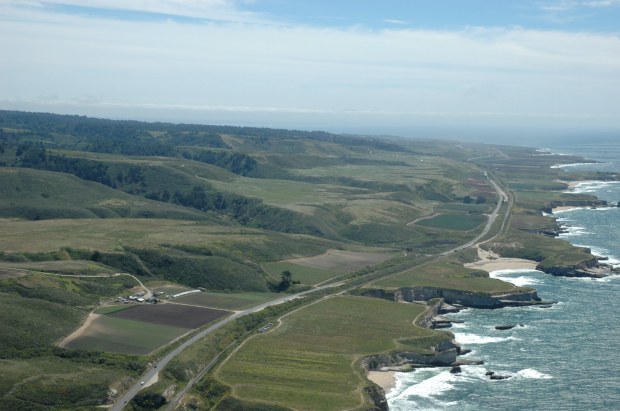
I invite you to immerse yourself for a few moments into my dream of the future of Santa Cruz’ North Coast. How will Cotoni Coast Dairies fare in the future, for instance in 2064? During the past year, many things have aligned to allow my dream to be much closer to reality.
It was 2024 and Cotoni Coast Dairies’ new manager, Zacchary Ormsby was the first with the skill, knowledge and respect to manage the property according to the Bureau of Land Management’s (BLM’s) protocol for lands with National Monument and National Conservation Lands status. Zacchary was joined by a freshly hired California Coastal Monument manager, another conservation-oriented biologist, Leisyka Parrot. Congressman Jimmy Pannetta, a skilled veteran of addressing impacts in over-loved and under-stewarded wildlands of Big Sur, has been newly elected to represent Cotoni Coast Dairies’ geography. Jimmy is dedicated to helping address North Coast tourist visitation issues with his important federal government leverage. And Justin Cummings with his doctorate in multi-disciplinary environmental problem solving was newly both the County Supervisor AND the Coastal Commissioner overseeing the park. Meanwhile, many very smart coalitions were poised to work together to assure that Cotoni Coast Dairies is a park for all, well stewarded for wildlife, forever. What a hopeful moment that was!
Looking Forward
It is 2064, the 50th anniversary of Cotoni Coast Dairies becoming public land, and there are national celebrations of this unexpectedly exemplary project. The New York Times has a full color Sunday edition article featuring the park’s success. Cotoni Coast Dairies has become a global destination for accessible, multi-cultural nature tourism. Hundreds of thousands of visitors have enjoyed immersive educational experiences that are the gold standard being copies at other parks around the world. Programs at the park have changed lives of thousands of underrepresented schoolchildren from throughout the Bay Area. Tourists of many nationalities flock to Santa Cruz with this destination in mind. The park’s managers have worked closely with scientists and conservationists, succeeding in restoring the property’s teeming wildlife populations. Visitation is so well managed that many different experiences are available, no matter what ethnicity or language and no matter the financial means. Using cutting edge technology, parks administrators provide the vast array of experiences that visitors report wanting and have developed software to continuously adapt available park experiences accordingly. BLM has received recognition for their sound management through strong public as well as private funding and through the added capacity of dedicated partner organizations and volunteers.
Badgers, Burrowing Owls, and Tule Elk, Oh My!
Early on, BLM partnered with local scientists, State and Federal wildlife agencies, and conservation groups with what turned out to be highly successful reintroduction programs for American badger, western burrowing owl, beaver, and tule elk. Volunteers working with conservation groups adapted prior regional wildlife connectivity successes to create Western North America’s first badger preserve by reintroducing ground squirrels, installing drift fences to underpasses along roads to reduce badger fatalities, and creating landscape-scale habitat corridors, and badger populations recovered. Because badgers prefer sandy soils for denning, Cotoni Coast Dairies managers designed large recreation-free buffers around the best denning sites; at first, those buffers were insufficient, but monitoring refined buffer design, and the badgers responded positively with their first young born in 2040. The badger and ground squirrel burrows created habitat that made it possible to later reintroduce burrowing owls which have established several breeding colonies in the huge swaths of restored coastal prairies. These wildlife species have become an important focus for visitation.
Restored Coastal Prairie
Besides reintroduction of these keystone grassland wildlife species, BLM managers embarked on two other processes that turned out to be critical to the restoration of some of California’s last remaining coastal prairies. First, the entire property, including its prairies, became actively cared for by the descendants of the indigenous people who have tended the landscape for thousands of years. The importance of indigenous stewardship was an insight from the outset, including in the name of the property beginning with the tribal name of the first inhabitants, ‘Cotoni.’ In the process of recognizing and revitalizing their culture, native people have directed hundreds of programs attracting thousands of volunteers, school children, and others to collaborate in the large-scale restoration of the land. They reintroduced fire management and tended wildflowers and grasses, carefully relearning the best ways to nurture them to health. The native peoples have revived their internationally renowned basketry, tending plants throughout the park for materials.
At the same time, BLM managers have used cutting-edge, science-based livestock grazing management to restore coastal prairie health. They have collaborated with many other coastal prairie managers, from Humboldt to Santa Barbara, to manage cattle alongside tule elk herds, moving the animals through a matrix of patches of grasslands managed with prescribed fire and reseeding. The prairies draw visitors each spring to view stunning spring wildflower displays unrivaled in the region.
Vibrant Lagoons and Beaches
The 2050s were a decade of sea level rise adaptation made possible by the strong North Coast public lands managers partnership facilitated for decades by Santa Cruz City Parks. The first beach and Highway 1 realignment to be redesigned was at Scott Creek Beach, back in the 2030’s. Then, there were successes in restoring Lidell Creek/Bonny Doon Beach and Laguna Creek/Laguna Beach, and then the coalitions managed to redesign all the other North Coast Beaches and highway crossings. Economic development, transportation and conservation interests all converged, and every beach has moved inland of Highway 1. Multi-use bridges accommodate public transport, pedestrian, and bicycle use as well as interpretive and viewing areas which draw the highest numbers of visitors.
The redesigned bridges allowed reintroduction of beavers, which in turn restored fish habitat. Coho salmon and steelhead have been reproducing in all the newly restored streams. After 40 years, BLM wildlife biologists have succeeded in restoring California red-legged frog populations to every beaver pond and lagoon on the North Coast; this is the last place they can be reliably found, the last viable population remaining on Earth. While beachgoing recreation is no longer possible on most North Coast Beaches, the small slivers of sand now support snowy plover nests alongside elephant seal nurseries, drawing wildlife-oriented tourists to high tech, wildlife sensitive viewing opportunities.
Visitor Highlights
Cotoni Coast Dairies has become known for its approachability and accessibility. Visitors are greeted by guides who can communicate in 14 languages; interpretive information on interactive signs is available in an additional 30 languages. Guides are provided state of the art, sustainably constructed family homes attached to visitor interpretation outposts spread throughout the property, allowing 24-7 oversight.
Visitor experiences at Cotoni Coast Dairies vary with time in response to ongoing surveys of existing and potential users. While it has become necessary to limit use, a universally available reservation system assures fair distribution of tickets. Free transportation into the park is available from nearby public transit hubs. The reservation system allows park managers to adjust amount and types of use, including segregating users within the park, to accommodate visitor expectations and reduce use conflict. Families feel safe walking small children or elderly family members on tranquil trails while thrill seeking bicycle riders enjoy uncrowded downhill forays without worrying about others’ safety. If you don’t mind more crowded conditions, you won’t be surprised by what you experience. But, if you want more solitude or better wildlife viewing opportunities, parks managers have specific days, trails and destinations just for you.
One of the most popular reservation requests is for guided nighttime wildlife viewing. For this opportunity, small groups are guided into one of 10 remote viewing locations designed to minimize wildlife impacts while maximizing the opportunity to view nighttime wildlife using the latest night vision technology. Visitors enjoy these immersive experiences, with interpretation and storytelling by expert volunteer naturalists.
Digital communication has allowed active feedback about visitors’ experiences to parks managers, and data feeds into the network of universities participating in the studies and assisting with adaptive management. Management response to real time social carrying capacity analysis has become second nature to Cotoni Coast Dairies users and the vastly superior visitor use experience has resulted in a high demand for updating other park system management protocol.
Realizing the Dream
What I describe above is truly attainable if we want it bad enough and are willing to act. The key element of success is public will which is necessary to raise our capacity to succeed. We’ll need leadership, volunteers, capital, technology, and kindness. And, we need to have a common vision: I hope I began that by communicating something we can work together to hone and then aspire to. If you like this vision, let BLM, Jimmy Panetta, and Justin Cummings know by clicking those links and writing a short note referencing this essay.
-this post originally posted via Bruce Bratton on his vastly illuminating weekly blog at BrattonOnline.com: subscribe now and SAVE!

What Went Wrong at Cotoni Coast Dairies?
Someone new on the scene recently asked me to explain the history of what went wrong at Cotoni Coast Dairies. After many, many years, the property still isn’t being managed for wildlife or public safety, and it still isn’t open to the public. As a prelude to this, I urge readers to read my essay on how the Bureau of Land Management (BLM) came to manage the property in the first place…a curious story, indeed. This essay compliments that prior essay with more details, especially since BLM took over managing the property. Soon, I’ll be writing the third in this series with suggestions about what is needed to improve this unfortunate situation.
Years of On the Ground Nothing, or Worse
Since its purchase for conservation, Cotoni Coast Dairies has a history of very little stewardship and management. Trust for Public Land purchased the property in 1998 and held it until 2014. During that time, managers working for the Trust for Public Land did almost nothing to maintain the property. Occasionally, someone would show up to clear some anticipated future trail. For instance, TPL contractors extensively cleared riparian vegetation along Liddell Creek, chainsawing decades-old willow trees that shaded endangered fish habitat and provided cover for the endangered California red-legged frog. They argued that the clearance was along an ‘existing road,’ and they started putting this trail on early maps as a favored future public access point. (The trail later appeared on BLM’s maps, but federal wildlife protection agency personnel demanded otherwise, so the trail disappeared from plans.) Otherwise, TPL let fences, gates, and culverts rust away, roads and trails erode, weeds spread, and fuels build up creating hazardous conditions for future wildfires.
In 2014, BLM took over management of Cotoni Coast Dairies, and those same patterns largely continued. Early on, BLM staff constructed a new trail, carving through nests of state-listed sensitive wildlife without required State consultation. Like TPL, BLM staff have either overlooked erosion issues along roads or graded long abandoned ‘existing roads’ (aka ‘future trails’) with uncannily similar detrimental impacts to rare fish and amphibians. Meanwhile, terrible weeds and immense wildfire risks continued to spread across the property. The reason BLM staff have given for such poor stewardship: ‘we don’t have an approved plan.’ That changed, but management hasn’t…except for one new stretch of cattle fence and subset of future trails being created mainly by volunteers. The trails and fence came before any work on invasive species or wildfire mitigation, so we sadly sense BLM staff priorities have been directed away from conservation towards recreational access.
Decades of Funky Planning and Community Engagement
Staff from both TPL and BLM have sporadically spent a bit of time working on poor planning processes or participating in largely perfunctory public meetings about property management at Cotoni Coast Dairies. In the year 2000, TPL convened and facilitated a Community Advisory Group (CAG) to advise on guidelines meant to be used by future managers. A few of us on the CAG were asked to provide feedback about the biological portion of those guidelines, but we were unable to improve the largely cursory and incomplete biological assessments used to guide future property management. It is unclear if those guidelines have ever been used by BLM, or if TPL even cares.
BLM has done little to inventory the property, so it has very poor information with which to plan its management. And so, BLM’s plans have overlooked species and ecosystems that are easily identified and/or previously catalogued by reputable sources. This alienates the conservation community including the wealth of well-trained scientists that this region enjoys.
Instead of the long series of TPL’s CAG meetings, BLM staff have appeared for a very few community-engagement-style meetings, including one early on that was convened and facilitated by the Land Trust of Santa Cruz County. That Land Trust meeting surprisingly and very oddly focused on weighing pros and cons of parking lot locations, but it was never clear why public input was sought or what became of it afterwards. In the midst of this, an outside funder parachuted in hundreds of thousands of dollars so that several local organizations could mount a seemingly ‘grassroots’ Monument Campaign.
Monument Ahoy
In 2015, The Sempervirens Fund led the “Monument Campaign,” a fast-paced, highly scripted, well-funded effort to organize rallies and letter writing to show public support for National Monument designation of Cotoni Coast Dairies. In what is increasingly common “fake news,” the bulk of the Monument Campaign messaging was about opening the property for public use, while in fact Monument designation is more about improving conservation of the property…which would typically increase limitations on public access. This nonsense was compounded by campaign organizers’ refusal to address how designation would increase deed restriction protections already in place from TPL. Furthermore, organizers dismissed concerns about managing the anticipated influx of visitors drawn to something called a National Monument. How important the Monument Campaign was in Obama’s designation is unclear, but the divisions in the community were deep and lasting. Organizers were successful in coalescing well-meaning but very poorly informed people whose nonsensical byline was “Monument designation means my family will be able to visit!” On the other hand, there was a surprisingly politically diverse coalition equipped with well-informed questions and concerns that were never addressed. After that local experience, it is difficult for me to believe that any political faction is immune from using scripted ‘truthiness,’ hype, or even lies when they feel those tools necessary in attracting popular support for secret agendas. Unsurprisingly, leaders of the ephemeral Monument Campaign movement have since disappeared from involvement, leaving the aftermath for the real, long-term grassroots organizations to deal with, and we have yet to experience any conservation benefit of Monument designation.
Pop Up Trail Plans, Abandoned
As the Monument Campaign launched in 2015, BLM issued a proposal for the property’s first public access trail, aka the “Laguna Trail,” in an expedited environmental review process that showed our community how poorly equipped BLM staff were to adequately plan for the property. BLM staff relied on old, insufficient biological inventories for their analysis, failed to survey for endangered species, and did not include any analysis of how the trail would address social equity concerns in providing for visitor use. BLM staff did not respond to the many concerns raised by the public but instead completed their pro-forma circulation and approval of planning documents and rapidly deployed machinery and workers to clear the trail. Trail construction proceeded without conforming to even the nominal environmental guidelines outlined in BLM’s planning documents. The hastily constructed trail cut through state-protected wildlife habitat, degraded historical artifacts, and came very close to a native village site which BLM failed to plan for protecting. In addition, if the project had proceeded, BLM would have opened a trail beginning at Laguna Creek Road and Highway 1 without any new parking, litter, or bathroom facilities, without sufficient staffing for enforcement or interpretation, and without a recreational plan for the property as a whole to analyze how to best protect wildlife while providing public access. This pop up trail was BLM’s way of introducing themselves to the land and to our community.
Introductions to BLM Planning Procedures
As the first federal land manager in the County, it was BLM staff who introduced our community to the federal government’s environmental planning process. This introduction was surprising in many ways. We had been accustomed to public lands managers paying careful attention to protecting “environmentally sensitive habitat areas” (ESHA) according to Coastal Commission rules. Not so with this property – BLM staff didn’t even provide the public maps of those regulated habitat areas in any of their planning documents! With the promise of National Monument protections, we were hopeful that BLM staff would follow the required and highly regimented process outlined in BLM’s policy “Manual 6220,” which provides staff with guidelines on how to manage national monuments. Again, not so! In fact, BLM staff have not used the 6220 manual and have neglected any public acknowledgement of the manual, as if they do not intend to use it, at all. Moreover, BLM staff have never specifically acknowledged the many species and ecosystems protected through the monument designation process. Monument management protocol seems irrelevant to BLM staff, who are apparently bent on expediting the public access so vocally anticipated by the Monument Campaign (coincidence?).
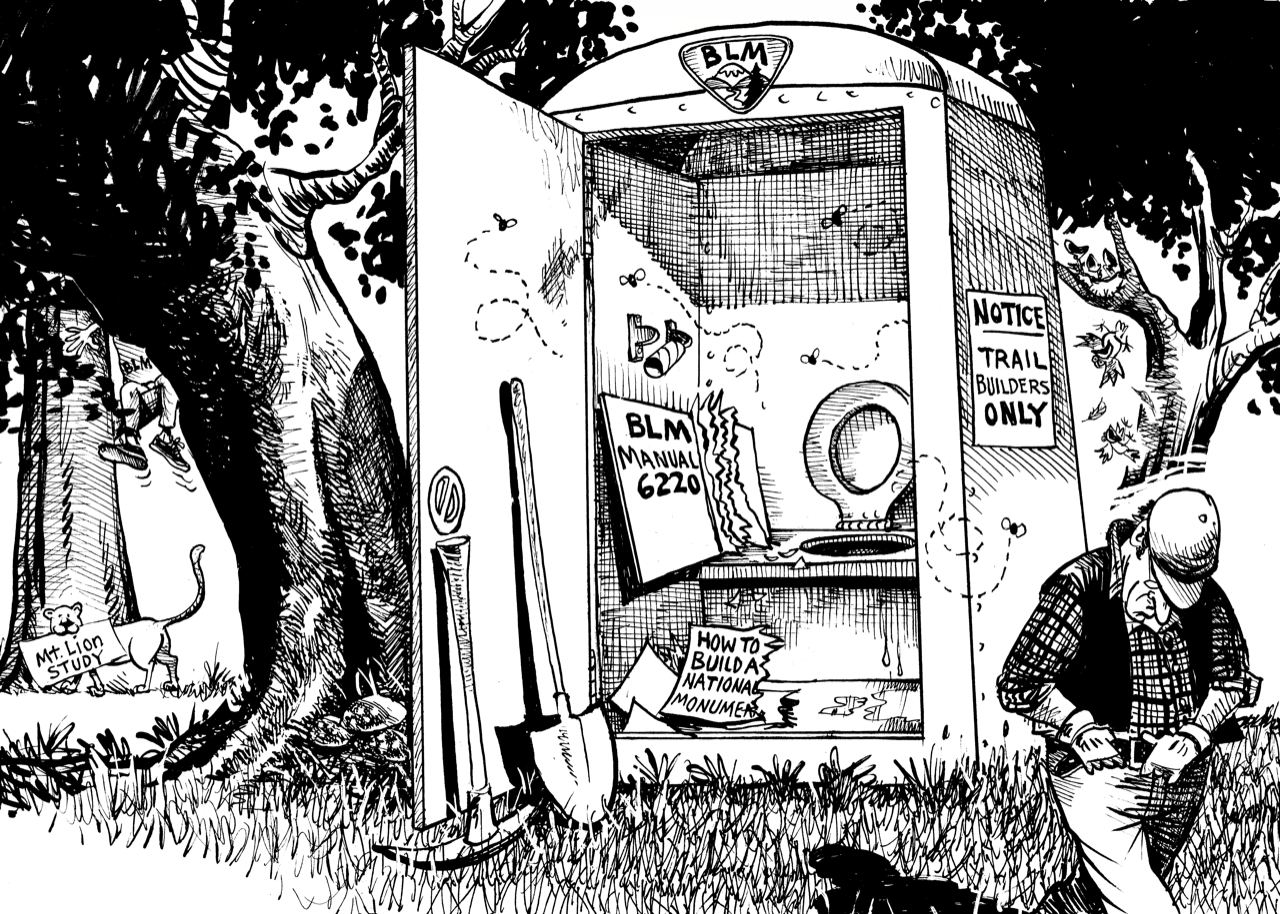
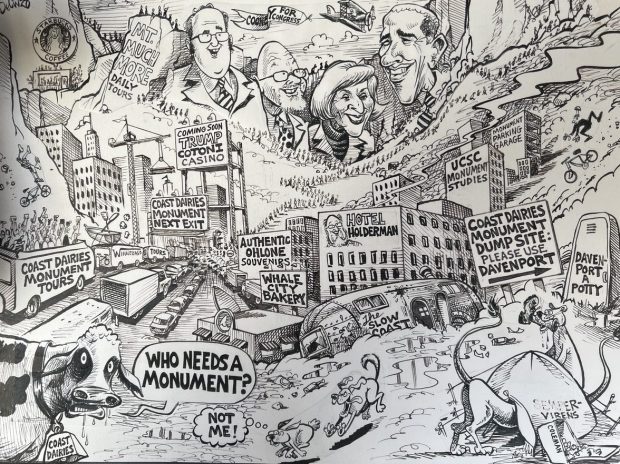
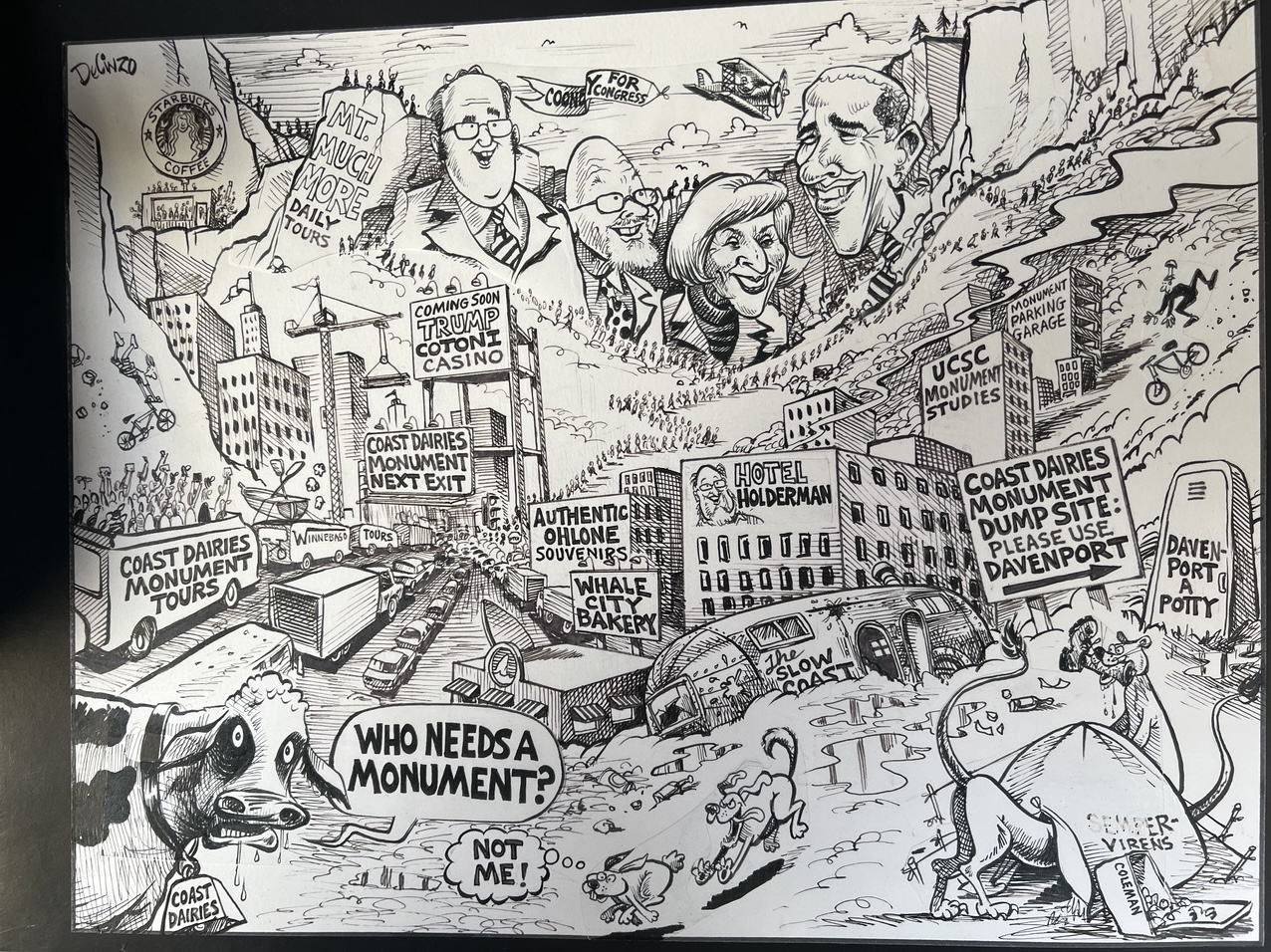
Cartoon compliments of DeCinzo, Caption by Grey Hayes
Expediting Public Access
BLM staff have chosen expediency over thoroughness in each of their property planning exercises. For their most recent property-wide plan, instead of data-based predictions of visitor use, BLM staff chose a largely arbitrary low-ball figure of 250,000 anticipated visitors/year for the property. Instead of the logical in-depth alternatives analysis of a full Environmental Impact Statement (EIS), BLM staff have chosen expedited Environmental Analysis (EA) processes, complete with incredible conclusions of ‘Finding of No Significant Impact (FONSI),’ despite significant contrary expert testimony that has gone unaddressed and unacknowledged. As we learned for the first time about its ‘federal consistency process,’ the Coastal Commission recently mandated that BLM use a phased approach to opening the property to public use. The Coastal Commission required that only if/when the BLM proved it could adequately manage public use could it open the full range of parking lots and trails; that proof requires monitoring and such monitoring would normally require a baseline inventory of sensitive natural resources, but we have yet to see that happen…we don’t even know the language to which the BLM and the Coastal Commission have agreed.
Nipping at the Community
My personal interactions with BLM staff have historically been less than pleasant, perhaps because those staff members are unused to much public engagement. My experience of poor interactions with BLM staff isn’t isolated. Someone suggested that this might be partly because those staff feel ‘rocked back on their heels’ because of criticism of their work, which is odd because our comments have been professional, polite, and part of what BLM should expect as public lands planning processes. A BLM staffer told me long ago that their colleagues were in for a surprise as they encountered the very actively involved communities of Santa Cruz County’s North Coast. Previously, most BLM staff working at Cotoni Coast Dairies had worked very much out of the public eye, in remote parts of California with little/no public oversight.
While we can’t ascertain why BLM staff have avoided offers for assistance, their subterfuge is as enlightening as it has been damaging. My compassion about staff feeling rocked back on their heels is limited because BLM staff have sought to discredit my work and harm my reputation, even approaching employers with false information to negatively affect my job while also giving ultimatums to conservation networks to preclude my participation. During one encounter at a public meeting, a BLM staff person told me that they would never collaborate with me or the groups with whom I worked because I was “against any public access at Cotoni Coast Dairies.” That was an incorrect statement about my position that I had likewise been hearing from a particularly activist, radical group of mountain bikers. As this BLM staff person echoed that quote, it was possible to better understand communication channels and allegiances.
My earliest interactions with BLM staff at Cotoni Coast Dairies were when I proposed assistance for biological monitoring. I and a few other biologists offered BLM free assistance with biological surveys to improve their understanding of the property. After that proposal, over a very long time, a BLM staff person strung us along through an incorrect informal process without ever encouraging us or acknowledging the potential value of such work. There was a chain of calls and emails that each ended with something like ‘well, maybe….’ By the time we subsequently discovered the correct application process and applied in that way, leadership had changed and the application was then officially refused.
Cumulative Impacts: Traffic, Trauma, Toilets and Trash (the 4 T’s)
It is important to view BLM’s problems in the context of issues related to visitor access on conservation lands throughout Santa Cruz County. As with all of the other public lands managers, BLM has been planning for visitor use and conservation in a vacuum, as if the surrounding lands don’t exist: this is a deeply flawed perspective. Much of the land from Santa Cruz City to the County line is heavily used by recreational visitors. Most weekends, parking lots overflow with cars and parked cars dangerously line the highway. There are too few trash cans and toilets to serve those visitors. Police and emergency responders are stretched to respond to the many accidents such visitation is bound to create.
County Parks, State Parks, the City of Santa Cruz, the Rail Trail, and BLM each have their own properties to manage and the same 4 T’s issues to address, but they aren’t doing it collaboratively. It is clear that none of those agencies has the resources to address those issues and so those issues are borne by our community. Visitors have come to expect trashy beaches. Emergency responders have come to expect exhaustion and insufficient support. Visitors with elderly family members or small children are avoiding parks due to dangerous or disgusting conditions. As each agency plans in isolation to provide for the maximum number of visitors, parks managers are dooming wildlife and visitor experience – the carrying capacity for the entire North Coast will be surpassed. It is no wonder that our community does not trust BLM to be able to manage their land and the visitors that they plan on attracting. BLM entered an arena of mistrust and fueled the fire with their own mistakes.
Who is Responsible?
Those of you who know me well know I don’t like the passive tense: I like clearly stating the subjects of verbs…who (specifically) is responsible for doing what (specifically). And yet, agencies like BLM are opaque…staff even refuse to specify who is specifically responsible for anything you might witness happening. But, placing the entire blame of the tragedy of Cotoni Coast Dairies on current BLM staff is unfair. Local, state and federal elected officials also bear some responsibility; good intel is that some of them have even winked behind closed doors in Washington DC, saying that local concerns needn’t be addressed. But again, placing a large amount of blame on elected officials also doesn’t seem fair: after all, they should be swayed by popular opinion (or at least election).
We saw how enough funding swayed popular opinion with the Monument Campaign, right? Apparently, no funders have been inspired to sway popular opinion in favor of wildlife protection on conservation lands in this particularly biodiverse region. Even if they did, there is a dearth of organizations who would lead that campaign. And so, in regard to the tragedies unfolding at Cotoni Coast Dairies and across Santa Cruz County’s North Coast, we must bear the brunt of blame within our community, which has long lacked leadership, energy, and focus on environmental conservation. For more on that, read my essay “Democracy and the Environment.” And, stay tuned for the third in this series of essays where I will outline steps forward out of this unfortunate predicament.
-this article adapted and updated from what appeared in late March at Bruce Bratton’s blog BrattonOnline.com
 Grey Hayes