Note that the letter may have only had indirect effects on the actual Proclamation. For more information, see this post.
Author: Grey Hayes
Shaping the Future of Trails in the Santa Cruz Mountains
This article published at this link and dated 8/28/25, two years after the referenced survey was implemented. Here’s a copy of the survey.
You can also watch this video recording of a presentation about the Santa Cruz Mountains Stewardship Network’s State of the Trails Report. Note, Zionne Fox’s article above, and her presentation here, overlook the very real issues of user conflicts in natural areas. The video, unlike the article above, does mention the need to understand environmental constraints.
Visitor Use/Non-Use Parks Study
Rumblings Afar
The bounty is upon us. The Horn of Plenty gushes forth a profound plethora of food as Fall begins. The Equinox returns old bird friends to the farm’s ongoing bird drama, including many galliformes. The meso-predators – fox and skunk, especially – roam and hunt each evening. Farmers sweat in frequent heat, weeding and harvesting. We are thankful the lightning has skipped us, yet, but WHAT’s WITH THE STORMS??!!

Rumblings Afar
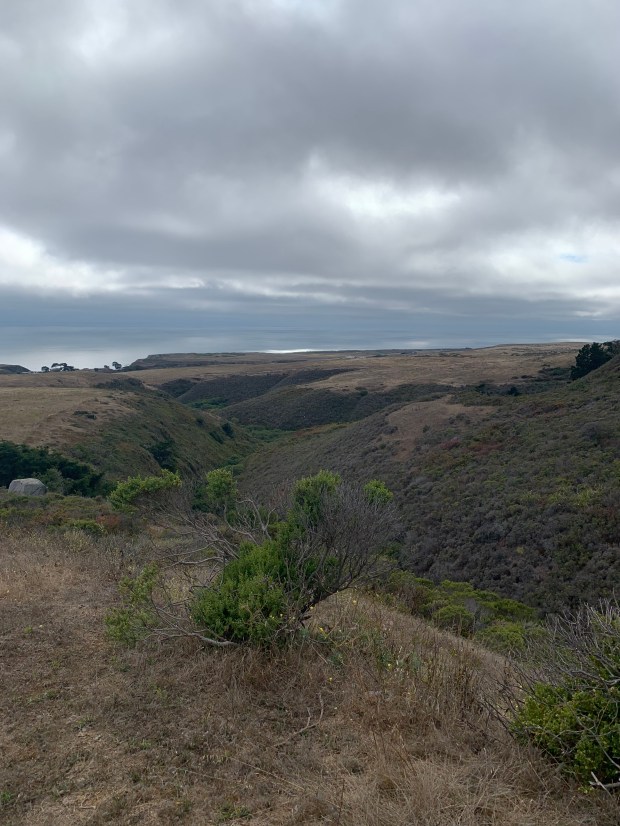
Last week it was Tropical Storm Mario, this week an unnamed spiraling monstor. Mario spewed a swarm of lightning bolts 30 miles offshore, jetting up the coast and not, as predicted, coming onshore. The unnamed storm spun arms of poofy clouds and hundreds of lightning bolts, mostly around Lompoc and the southern San Joaquin Valley. It, too, was predicted to come ashore with that violent weather this past Tuesday night but then, once again, it skipped us: the only a hundred or so lightning strikes were inland, in the foothills of the Central Valley. Tense times, these.
The mugginess, daytime heat, and even balmy evenings are unusual for us. Luckily, it hasn’t been scorchingly hot – the apples aren’t getting sunburn. And, happily for tomato farmers, there hasn’t been enough rain to even start to wet the ground – dry farmed tomatoes split with rain!
And, oh how those tropical storm clouds color our sky at sunrise and sunset. Brilliant orange hues are the dominant evening entertainment, dazzling near the horizon and all mixed up with purples and blues higher up, sprayed across cloud puffs or ethereal mists.
The Toil
Amidst the episodic heat, farmers work and sweat. The weeding never ends. One starts early to avoid the worst of it, but that early starts later…hoes hit the ground at 6:45 if we’re lucky. And the harvest takes hours through the day while the sun pushes prickles and wilting heat right through you. The sweat would drip except it is so very dry, salt cakes on the skin roughly mixing with dust. Harvesting tomatoes bent fully over, gingerly stepping between sprawling plants and peering into the dense foliage for hidden fruit, carefully extracted…boxes and boxes of big swelling fruit emerging from so little ground – it is an epic year! What a contrast to last year’s crop failure.

Fruit Ripens
In the orchard, the apples ripen with lemon harvest still in swing. Eureka lemons get ripe by the day, our first year of sending them for weeks to market. These lemons are popular among our Community Orchardists, too – they are catching on – so, the ‘seconds’ lemons are getting claimed voraciously. About 50% of the lemons aren’t perfect enough for market, and so 25 pounds a week are getting distributed. It seems like next year we’ll have surplus for the Pacific School, once they return from the summer. Our lemon trees have just past 10’ tall, a bit lanky and need of some shaping – sharp spines make portions of the getting-dense trees hard to harvest. It is surprising how difficult it is to discern the varying shades of yellow on the fruit, sometimes with hidden tinges of green, to harvest the ripe ones as they turn ever-so-slightly deeper colored.
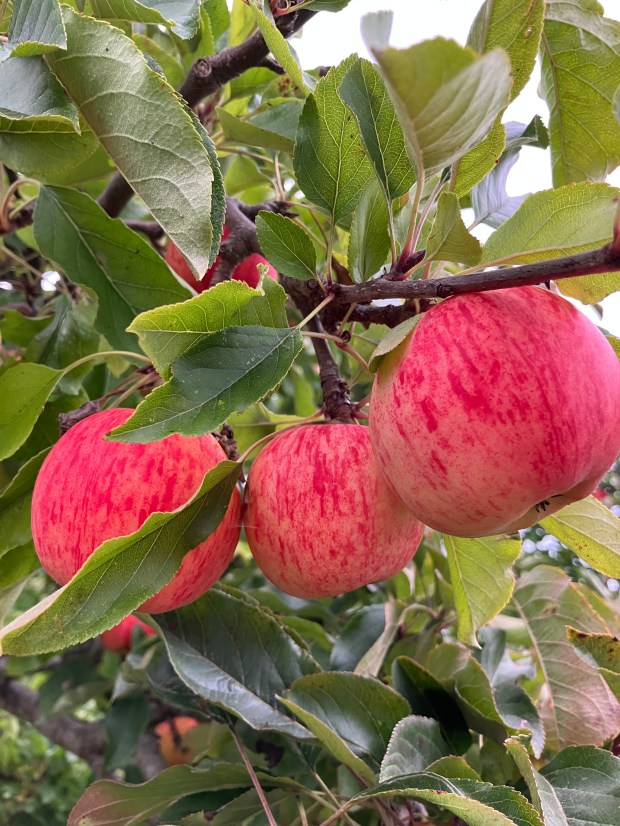
Gala apples are the first to ripen: we sent our first box to market out to the Community this past week. The background peach color, beneath the red streaks, is so obviously a sign of ripeness. They are gorgeous when ripe.

Reclaiming the Land
We are so thankful to our various partners for their assistance in restoring the natural areas of Molino Creek Farm. Last year, the Central Coast Prescribed Burn Association’s (CCPBA) massive network of volunteers and dedicated staff put Good Fire on the ground, nudging our scrub invaded systems back to coastal prairie. Their work also makes our farm safer from wildfire, which has been much on our minds of late. This fire break augments a many miles long regional firebreak that runs on our border and protects Bonny Doon and then Santa Cruz further down the fire-shed.
This week, the new President of the CCPBA, Matthew Todd, has been using his expertise and big, expensive tool to take that burning a bit further. His Bobcat runs a masticator, and he’s mowing down huge patches of the invasive French broom which sprung up after the 2020 fire. Alongside that broom are acres of brush that has taken over super-diverse prairies that were dominant in photos as recent as 1988. Matthew is a landscape artist – it is looking so great and we are much-relieved to have his help bashing broom…and jubata grass…and coyote brush. Broom control protocol calls for several years of mowing in the Fall, like we’re doing now, and we are going to do just that – maybe with a bit of Rx Fire thrown in there.
Rumor has it that CalFire will do a training burn in a few weeks (after grape harvest), so more to come.

Natural Production
While our Farm Fruit is abundant, so is the fruit of the woods. Jays and Acorn Woodpeckers have turned their attention to the acorns, which have swollen and started to drop. On the ridgelines above the Farm, the manzanita bushes have their first massive berry production since the 2020 fire. The seeds have tasty dry, sweet pulp and hard as rock seeds. Some critter has been feasting on them and then pooping out the remains in our apple orchard – a long haul, but someone has a circuit.
Critterland
It is easy to see a fox at night if you just go looking. We must have a large population. They bark and yowl. You can’t hear them, but you can certainly smell them … skunks are prowling farm-wide. The hayfields are full of their nuzzling holes where they seek mice or crickets. The bunchgrasses we’ve been nurturing in our hayfields have turned green and since we didn’t harvest the hay, there is plenty of hunting ground for skunks.

Welcome Back Sparrows! And…
Golden-crowned sparrows returned, as usual, with the Equinox. In the dark of the night on 9/19, hundreds of these winter birds dropped out of the sky and started feasting on what seeds remain from the entire summer of feasting of the other birds. They were quiet and shy at first, maybe a bit tired from their journey, but now they are feisty and squeaky.
At the same time, other types of birds arrived. The meadowlarks landed in the meadows lower down and closer to the ocean. And, the blackbirds – Brewer’s and bicolored – have suddenly formed their cacophonous flock at the top of the trees around the periphery of the farm fields.
Gallinaceous Bird Drama
The turkey flock was attacked in the forest, what a terrible noise, and only the male has been about. Seems like a good idea to go to that place of turkey noise and see what happened. A coyote or even a pack of coyotes would stand quite a challenge against such powerful birds: maybe it was a lion? Tracking is in order.
Massive quail coveys flush and whirr at every turn. They are Very Jumpy because there is a Very Good Hunter about: Cooper’s hawk is energetically flying about. Do kestrels eat quail? There’s one of those around, too.
Restorative Justice: Trust for Public Land and Coast Dairies
There is healing to do in my community, but no one is moving that forward with one particular travesty. We’re approaching the 7-year anniversary of a local conservation organization’s legal action against our community, including environmental hero Celia Scott and others. In 2018, the Trust for Public Land sued a group of my community. Their actions incurred long-lasting damage to personal lives and the willingness and ability for the public to remain engaged in the hard work of protecting the North Coast of Santa Cruz County. This story is a microcosm of society-wide problems. In this essay, I explore this scenario in hopes that we can heal or at least learn from the past in ways to strengthen and improve the future, in similar situations.
What Happened?
In 2014, we were extremely concerned that the Trust for Public Lands chose the Bureau of Land Management (BLM) to take possession of ~5,800 acres of the ~7,000-acre Coast Lands and Dairies property. This would be the first transfer of large acreage in Santa Cruz County to the Federal Government, putting decision making, environmental review, and management oversight far afield from local influence. Moreover, the BLM is nationally recognized as being the ‘bottom of the barrel’ of public land management agencies insofar as their ability to provide adequate staffing or adequately analyze and plan for protecting natural resources and managing visitor use. ‘Don’t worry,’ the Open Space Illuminati whispered, ‘the land will go to National Parks soon enough.’ ‘The Great Park’ was their dream, a way of cementing the legacy of a very few boomers and their deep-pocketed, old school “environmentalist” funders. A dozen or so local veteran conservationists were clearer eyed and decided to fight back.
This coalition worked with experienced legal counsel to challenge the federal lands transfer based on TPL’s need to divide the property between State, private, and Federal ownership…a process requiring County and Coastal Commission approval. When their legal action failed, TPL sued those activists, demanding a large financial settlement. TPL’s legal action also failed but not before the damage was done to individuals and their families as well as the coalition overall and my community of conservationists in general.
Outfall
TPL’s lawsuit echoed through the region, hobbling conservation and damaging community. The Open Space Illuminati felt more empowered, less humble. Family members questioned whether activism was worth the risk, fearing retribution affecting their already tenuous ability to live in an increasingly unaffordable area. Conservationists wondered how a ‘conservation’ organization like TPL could launch such an attack.
The Bullying
This history is but one instance of something we see unfolding nationally with greater consequence. In most political spaces we have mainstream, wealthy, influential ‘centrist’ “liberals” that are sure that they know what’s best for everyone, and they are determined to force their reality forward. They bully and demonize progressives who are often under-resourced for such battles: ‘successful’ centrists are often in wealthier circles/circumstances, and their visions often include methods of increasing their financial advantage. Do we forget progressives’ criticisms of the World Bank and US AID for their paving the way to the destruction of communities and ecosystems? Newsom is so good at bullying Trump because his centrist community are very experienced at bullying progressives, and they’ll be back at that focus soon enough. The centrists love the far right for the power that gives them to move the populace to the center where the rich get richer and the environment and the poor suffer greatly. The Coast Dairies situation is a microcosm in another way.
Microcosm
Many of us are familiar with the story of the colonialist tragedy affecting indigenous people, but can we also apply some of those lessons to the situation with TPL at Coast Dairies? We know we are on the unceded ground of indigenous people: each and every one of us reading this. At the same time, many prescribe to the philosophy of such colonialism when we celebrate the “keystone” of “successful” conservation. Cheers ring out when property is purchased for a park, and few ask who is losing when that happens. Some of us are familiar with the boundaries of parks being drawn without consultation of native peoples around the world: indigenous people displaced by ‘conservationists.’ Few of us see the parallels with such dangerous transitions in California where the ‘We can do better!’ mentality overwhelms local communities.
Can We Do Better?
Conservationists celebrate the quick transition away from local control, yet traditional land management knowledge is lost at great peril. Those engaged in traditional forestry know how to manage land at scale, restore forests, grow trees, and reduce wildfire risks. Those engaged with traditional range management also know how to manage lands at scale, control herds of beasts to ecological benefit, and identify stewardship risks before they become catastrophic. Indigenous peoples have a much deeper and broader experience to share. Instead, the conservation community often removes these previous communities from their stewardship roles, instead entrusting land care to too few University-educated elites with their small share of experience matched by their lack of humility, and framed by their embrace of pro-forma ‘management planning and environmental review’ processes designed to protect them from public conversation, criticism, and legal challenge.
All of this is happening at Cotoni Coast Dairies. Can the situation there, including with the Trust for Public Land, help model a way to overcome this negative global spiral?
Reconciliation
I am suggesting that we go through a truth and reconciliation process for the Coast Dairies debacle, including the TPL’s legal action against our community.
First, we must seek to understand. Who was involved with deciding that the Coast Dairies property would best be in BLM’s hands? Let’s hear from those individuals about their decision and what they think about that nowadays. Who was involved in the decision to sue our community members? Let’s hear from those individuals about what motivated that action. Why did community members sue TPL? Let’s also hear from those individuals about what they were hoping to achieve and how they see their loss affecting the current situation. Can we also hear from the Federal decision makers: how does the machinations of federal control address the concerns of our community?
A well facilitated truth and reconciliation process can move forward from such mutual understanding towards solutions that can help to heal the past and move to a more productive future.
I predict this reconciliation process will not happen until the Open Space Illuminati and the Federal decision makers feel that they are no longer ‘winning.’ Then, they might see that they need the help of the people they have marginalized. This will require the marginalized to gain more power. Please join the movement by talking to your network about these issues.
If we don’t address these past injustices, it will not be a long wait until we see them repeat in larger and more tragic ways. Right here in our communities.
-this post originally published as part of the illuminating BrattonOnline weekly blog, featuring leading thinkers on local, regional, and global affairs…in this era of squelched free speech, it is best to keep our minds agile by reflecting on well-informed commentary and journalism. Subscribe now and SAVE (your mind- the blog is free).
Midsummer
At midsummer, we pass the midway point of the year, the middle of summer, and the Land changes before our eyes.
Leaves
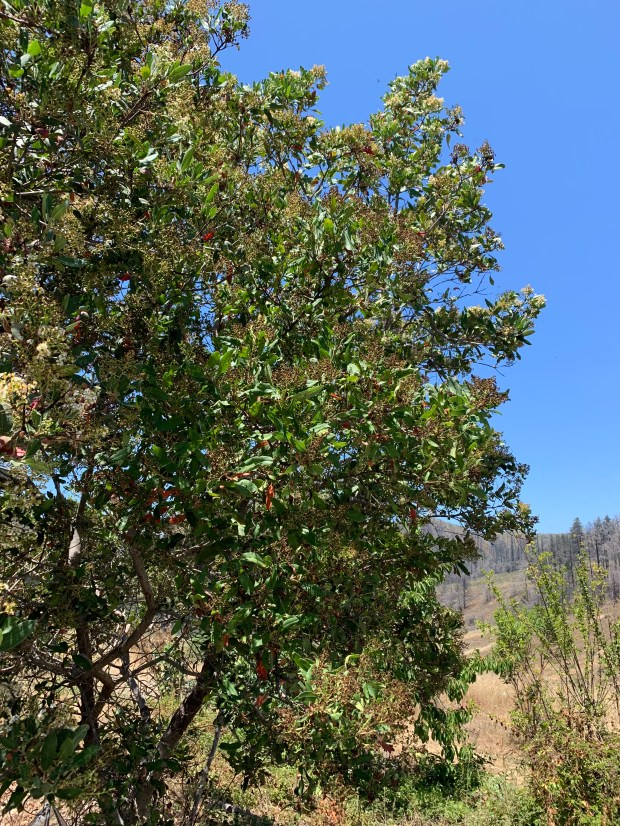
There are drought-deciduous plants and seasonally-deciduous plants. Their sometimes-colorful leaf drop is starting to overlap. Poison oak is one of those deciduous plants that are in between: on drier slopes, crimson patches have been emerging for a month as that plant decides to drop its leaves, leaving only stems and berries. Buckeye trees are dropping medium-brown leaves, too: very little Fall color to add to the landscape’s palette. Madrone Fall has happened already, leaves littering the ground most crunchily, bark peeling on the hot days making pinking and crinkling noises. Madrone trees lose their old leaves but keep their new ones. Bare madrone trees are dead, as is too often the case with some scourge that is ravaging many trees.
I was just in the Eastern Sierra and the very first seasonal fall color was showing at 8,000 feet – branch tips of the brightest lemony yellow aspens were a treat, but very rare. Time to plan your leaf-peeping trip in a month or so. Our versions of seasonally deciduous lemony yellows will emerge in a while yet with hazelnut and big leaf maple, which mostly aren’t starting to lose their chlorophyll just yet.
Fruit
The grassland seeds have (mostly) fallen and the shrubland berries ripen while the woodland acorns grow fat. In abandoned agricultural fields, dead grass slowly sags horizontal, skeletons of radish, mustard, and hemlock rattle free their last seeds in the afternoon breezes. Perennial grasses in the more pristine prairies have dried, too, and just blue wild rye still holds a few seeds on its narrow, dense flower spikes. The bases of the bunchgrasses show a little green- real toughies! You would be lucky to find a single seed in the spent rattly seed cups of soap root and other lilies.
Side hilling strolls along the prairie-shrubland boundary reveals dark leaved coffeeberry shrubs thick with ripe purple-black juicy berries. Nearby, the mixture of ripening stages of blackberry offers a few small, seedy ripe fruit. Fruit eating birds (including band-tailed pigeons) and foxes have bellies full of these, as evidenced by their scat.
It will be a while before the acorns and buckeye nuts are ripe: they grow day-by-day. Acorn woodpeckers settle for bugs or last year’s cache of acorns for sustenance.
Migration
As the season progresses, wildlife moves. The last of the barn swallows have just fledged (this last week!) and are fast growing muscle to make their long journey south. Cooper hawk and kestrel will be free of the swallows’ vigilant fuss by the middle of September.
This year’s batch of adolescent dragonflies is patrolling the air from zero to 50’ above the dry grasslands and chaparral ecosystems, far from their natal homes. They dart about capturing the insects that have matured and taken flight after devouring leaf, shoot, and seed from the prolific biomass below. Below our feet, in the deep and complex matrix of gopher and ground squirrel burrows, newts pace back and forth stalking invertebrate prey.
On foggy days, chorus frogs that have been emerging from drying ponds climb further out on tree limbs or hop further from their wetland birthplaces to find places with richer food and fewer competitors. These talkative amphibians make their squeaky hinge croaks across the extensive canopies of Fort Ord’s live oak woodlands in the long days of misty-fog “summer.”
Big things are on the move in the ocean as well. My favorite summer whale is the giant blue whale, which is typically seen in the Monterey Bay from July – October. August sitings have been scant, but still, they are out there! Meanwhile, our population of gray whales are at the height of their arctic adventures, way, way north – feasting on krill and wondering if this year is a good one to sneak over to the Atlantic Ocean. This year is the third lowest ice sheet coverage in the last nearly 50 years… gray whales were hunted out of the Atlantic and may soon act on their yearning for those ancestral feeding grounds.
Fire Season
Monsoon season brought hundreds of lightning strikes to California last weekend ushering in the fire season across large areas of the state. We just passed the anniversary of the 2020 CZU Lightning Complex Fire and, before that, the 2009 Lockheed Fire. Mid-August has been the time for the Monterey Bay to burn recently, but September and October are historically fire months as well. Our cool July and ongoing cool nights have combined to help keep things less dry, but coastal heat waves are quickly removing any residual moisture. As interior California heats up and typical conditions prevail, the moderating effect of the ocean keeps us cooler and sometimes moister so the fire danger is less. That hasn’t stopped fires from happening, though, including a roadside fire in Davenport not long ago. There are no terrific heat waves foreseeable for the coast and no predictions of remnant tropical storms carrying thunder and lightning, so thanks for those things (for now). A reminder, though- it is Not Too Late to clear fuels and otherwise prepare. Recall from Santa Rosa that fire can carry way into town, so work to do even there. Wondering where to focus? Zone Zero- the 5 feet out from structures…nothing flammable there!
Midsummer’s challenge: crunch some madrone leaves under your feet. The crispy noise, the beautiful patterns of fallen madrone leaves, the peely bark…some deep delicious experiences are in store for you if you can get there.
The Great Park Campaign

Cotoni Coast Dairies BLM Land Opens to Public
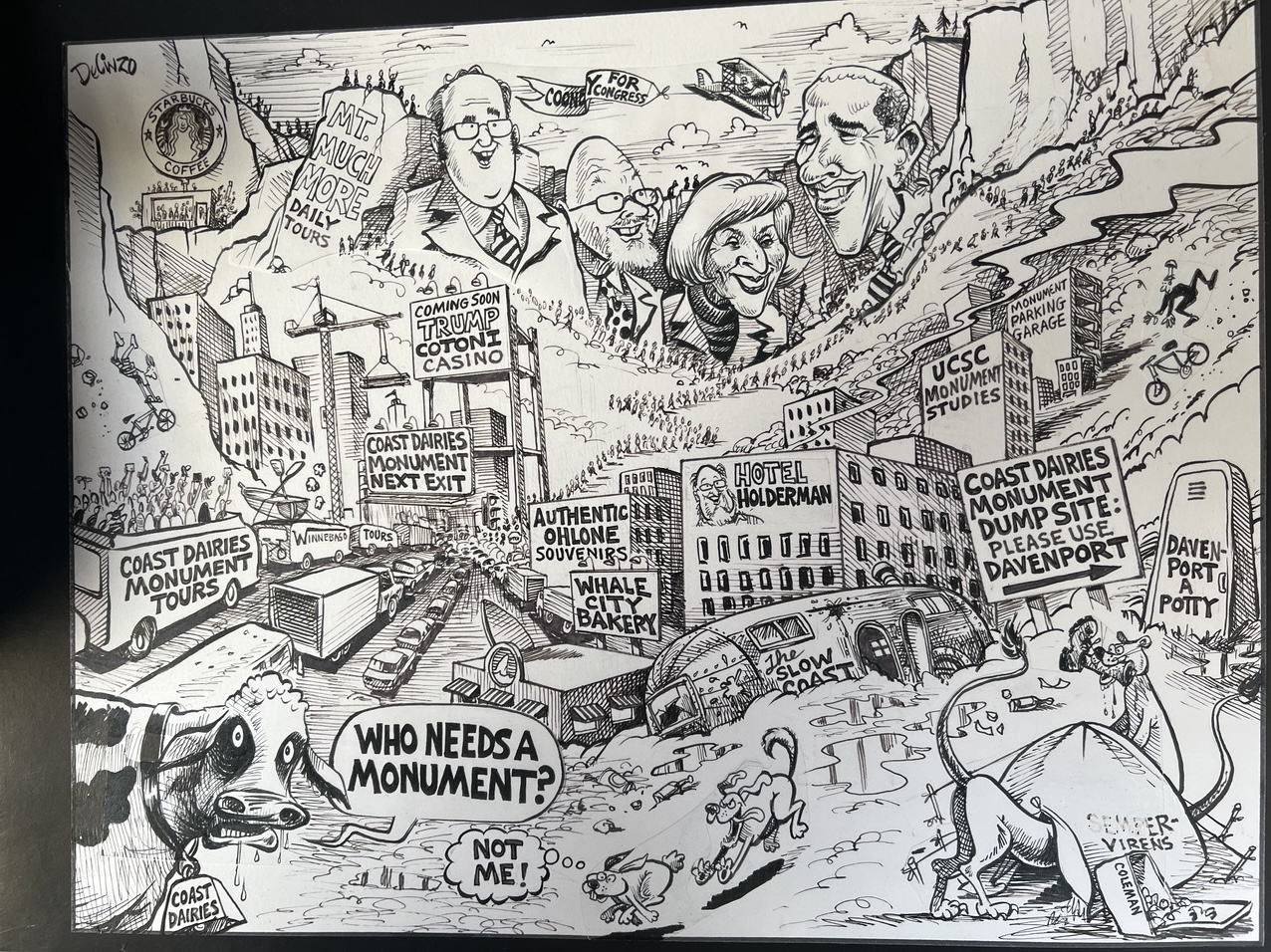
The opening ceremony for public access onto the Federal Bureau of Land Management’s Cotoni Coast Dairies property was on August 15, 2025, a grim day for those who have followed this travesty, which will only worsen with the planned public access.
Building on a Tragic History
Nothing good led up to this moment. There is no one left who speaks the language of, or can show direct descendance from, the native people of this property. There are rich archeological sites illustrating that this land was settled for thousands of years. So, as with every spot in California we must see this property and how it has been and will be used as a colonialist endeavor. There is no attempt to give the land back to any coalition of First Peoples who represent those ancestors or to respect them in any way that approaches restorative justice. Oh, but there’s the name…(!)
After the genocide, the land has seen one extractive use after the next with little regard for conserving nature. The ‘Coast Dairies’ portion of the name points to cows, and cows there still are. The grazing regime has never focused on restoring the very endangered coastal prairies on the property and, even now, there is no plan to do so. This recreational use is a new, highly impactful extractive use. The property is rare for the Santa Cruz Mountains in having had very few human visitors for the last 100 years, so wildlife has been accustomed to roaming without disturbance. Cougars and badgers are especially wary of humans when setting up dens. A million visitors a year will soon be visiting and wildlife will flee.
The consortium of people responsible for so many other, better outcomes for conservation tried hard, won some concessions, but have seen great loss with how this property came to be open to the public. We tried to get anyone but the Federal Government to manage the property, but the Open Space Illuminati had other things in mind…’The Great Park’…a handful of boomers wanted their legacy in a wide swath of the area becoming a National Park. They stopped at nothing to achieve that legacy. The activists, biologists, conservationists, and regular citizens, were even sued to strike fear into them, to make them capitulate.
Money Made it Happen
The Wyss Foundation bankrolled cash-strapped ‘conservation’ organizations to create a fake grassroots campaign that culminated in Obama signing a Monument Proclamation adding 5 properties across a wide swath of coastal California to the California Coastal National Monument.
Then, the BLM routed hundreds of thousands of dollars, sole-sourcing a contract to a mountain biking advocacy organization to build the kind of trails their users wanted to see. That business quickly changed their name to a ‘trails’ organization. Instead of supporting good paying local jobs, the BLM paid this organization to rally volunteers to do the work of installing trails that were placed across a landscape without regard for the wildlife written into the President’s Proclamation for protection. When asked about how they could do such things when the property’s designation required favoring conservation over visitor use, BLM cynically snickered that the majority of the property, 51%, is set aside without public access. The rest, apparently, is a sacrifice zone.
What We Wanted and Will Pursue
Those of us who care about the native peoples, the nature of the property, and the experience of future visitors have a vision, which we will pursue despite setbacks. The land should not be Federal land – if you wonder why, you need to look at the current situation with federal lands nationwide. We always knew this, but now others are starting to understand our concerns. The current administration is selling federal land for real estate development and other extractive uses. If, after cutting the federal workforce, there are any staff remaining to manage the land at all, that will be a surprise. The Administration has said Federal lands will remain open to visitors even if there is no staffing or budgets. Oh no- could my dystopian vision for the property be closer to reality?!
If there is a chance, California should buy Cotoni Coast Dairies. Then, let’s envision taking Canada’s Indigenous Guardian’s project to this place, giving tribal people primacy in stewardship, use, and oversight. Perhaps the State could give the land back, as it has just accomplished with the Yurok.
If the property is to remain a public park with visitor access, there needs to be a radical shift in how that is approached. The regulatory designation for first managing the property for conservation needs to apply even to the areas with public access. This will require altering use patterns, even closing the trails occasionally, for the benefit of the soil, streams, wildlife and plants that Obama clearly intended to protect. There will need to be lots of monitoring and enforcement to adequately protect natural resources. The BLM will need to do a ‘carrying capacity analysis’ to determine ‘limits of acceptable change’ – thresholds that, if surpassed, trigger altered management of visitor use to bring the use into alignment with conservation.
Next Steps
It will soon be possible for visitors to monitor the situation first hand. Those of us who asked to do baseline monitoring of wildlife and plants were refused the opportunity many times. When we asked how small children and the elderly could possibly co-recreate on trails overrun by fast-moving mountain bikes, our concerns were dismissed. We will be able to help document how well BLM’s rules are working and if there is enough enforcement. We will be able to see the spread of diseases introduced by bike tires and hiking shoes ravage the amphibians, the trees, and the soil, and we will recall how BLM staff predicted those impacts in writing, with administrators choosing to ignore even the simplest measures that hundreds of other parks managers have employed to address those concerns.
-this post updated to past tense from the one posted via Bruce Bratton’s legacy site BrattonOnline.com
The Bounty
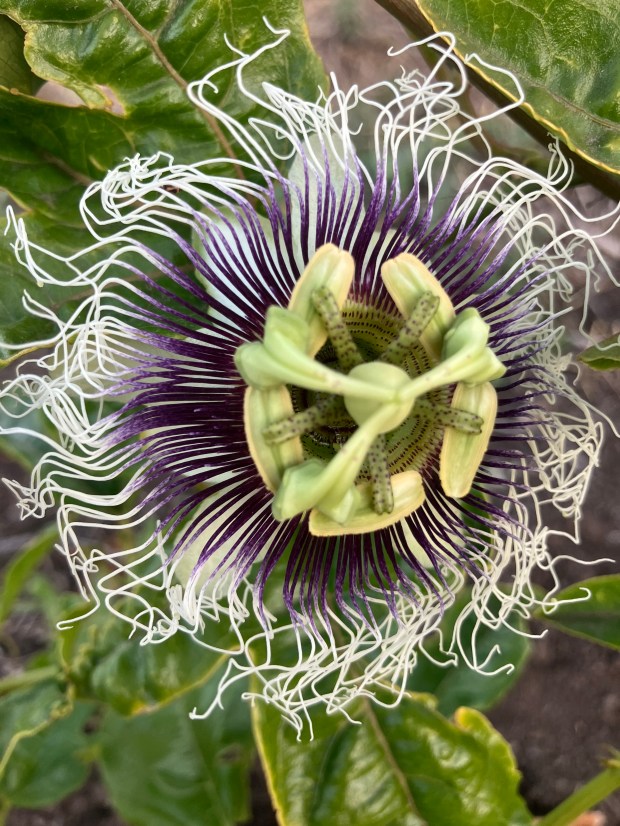
Do we revel enough in the produce on our plates? On the Farm, we get to see the food from its tiniest seeds through to buckets of production and onto the internment of the spent plant bodies back into the soil to start the cycle once again.

Zucchini-Summer Squash
Big blossoms sit atop tender green fruit; both are edible. The giant leaves shelter the center stem where climbs rank over row of production of new zucchini. We keep a close watch on them to harvest at just the right time when the fruit aren’t tough or large seeded and yet are larger than the tiniest, finger sized tender fruit. The succession from the tiny to the huge can happen rapidly: we must be ever vigilant – the fields must be visited daily, the crop harvested every other day. You can almost hear the squeaky squash flesh stretch and grow.
Winter Squash
Isn’t it funny that the hard rinded ‘winter squash’ are squash just like the so different zucchini? What makes them winter squash? Oh, it’s just that we get to eat squash in winter, long after summer squash has gone, even in the recesses of the produce drawers of our refrigerators. In market, the zucchini comes from Mexico in the winter. As I traversed the road next to Two Dog Farm’s winter squash at dawn, I was surprised at wafts of sweet perfume: the winter squash in full bloom en masse has the most delightful citrus-y scent! The vines are romping across the field – soon, no soil will be visible. It is becoming one big mass of big umbrella leaves.

Onions
Our farmers grow the most delicious onions – red onions, yellow/sweet onions. Their spikey leaves are so perky. Row after row of waxy cylindrical foliage subtended by growing bulbs. One day, the leaves start to FLOP! Then we know they’re ready. Fresh onions go to market now and soon bucketfuls will get scattered on the greenhouse tables to ‘cure.’ That will net many weeks of storing onions to go to market. Those onion rows have been weeded and weeded, and weeding isn’t easy with those delicate leaves creating such an impenetrable canopy. We miss weeding and the bulbs turn out tiny. The unintended pearl onions are labor intensive to harvest and more so to get to market, so they go to the neighbors who delight in their unexpected midsummer arrival. Never take for granted the work behind each and every onion.

Avocados
The Lamb Haas avocado has an 18-month ripening period. The fruit from this year grows alongside the fruit from last year for many months. It is looking like the few we have this year will get harvested in a month or so, but they look like the right size. The ground squirrels have started, and abandoned, eating them- a sign that there is time still to wait.
Eighteen months is a long time for fruit to hang out, vulnerable to weather and pests. No wonder these fruit are so expensive! We are just past the Avocado Fall where the old leaves fall off and the new leaves unfurl. The trees look so lush, expansive, and vigorous. The Community Orchardists have done a top-notch job of making the main grove of our avocado trees look marvelously cared for and tidy. Next year, 6 years after the fire and the subsequent mass plantings, we’ll have a good harvest of fruit, again.
Critters
Last week, Sylvie reported seeing a skunk and some raccoons. She showed a short film of mother raccoon standing down her car to protect the too innocent young who were too curious to get off of the road. Wander the farm at night and you’ll soon encounter the scent of skunk. Skunk’s diggings through the thick thatch in search of mice or crickets is everywhere. To compliment the mesopredators, an opossum wanders the road at night increasingly close to the Farm each encounter. Sylvie also reports a one-eyed fox; we all hear the foxes yelping and yowling, so vocal.
The herds of deer are incredible. Cassandra reports the mother and daughter deer are still stuck in the farm fenced area; luckily, they have all they need to eat and drink in there. At some point, mother was ‘knocking’ at the gate, but took off when we tried letting her out. What does one do with a nearly 20 acre fenced area after you repair the fence with the deer inside? Apparently, you feed them organic chard, peas, grape leaves, and tomatoes. Our artesian wells leave big puddles to quench their thirst. They are gourmet.

-post simultaneously published at the Molino Creek Farm webpage
Tranquility
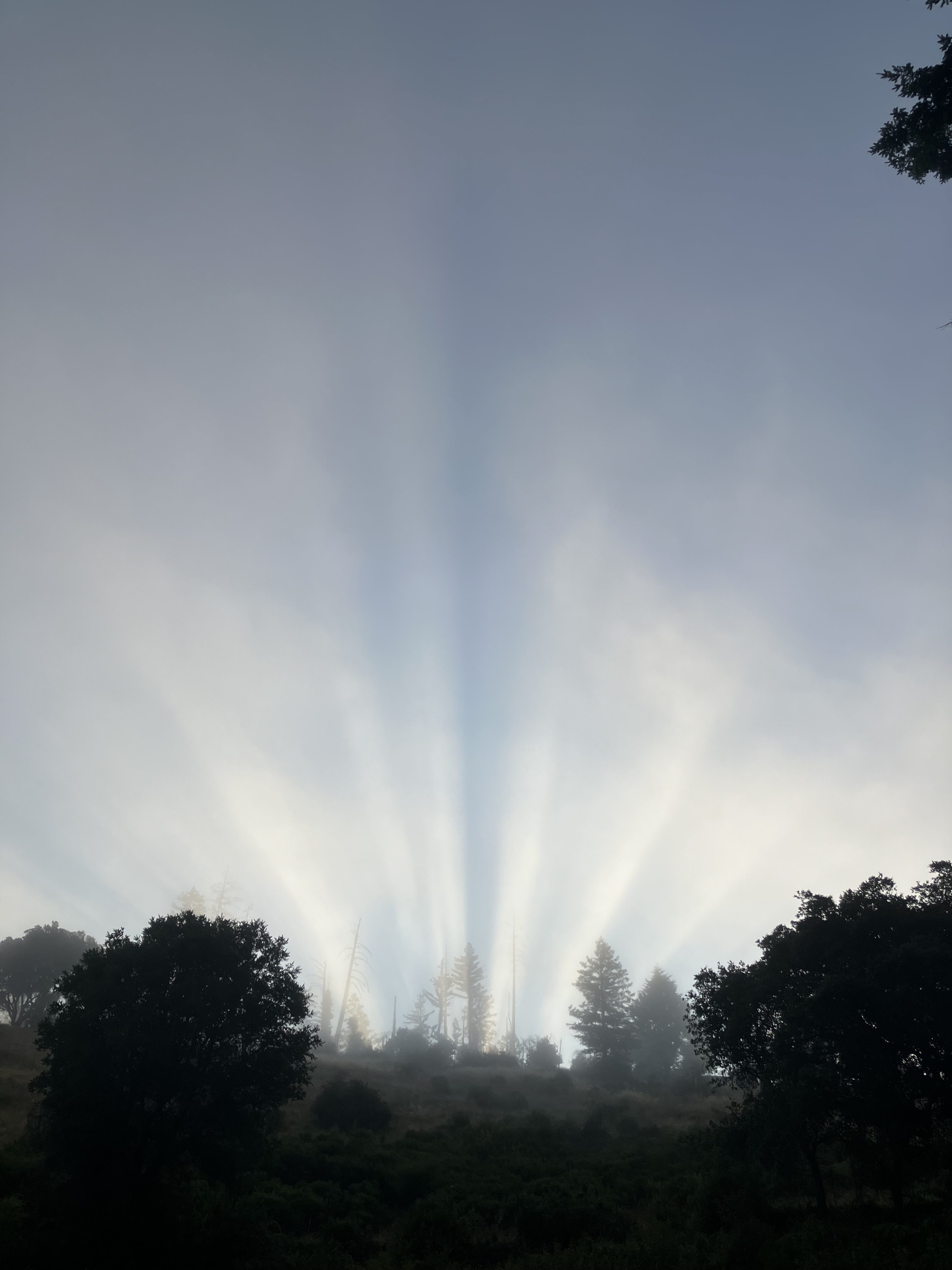
Most days there are two daybreaks. First, illumination transforms the dark night of the fog-hidden slight moon. Much later, it brightens again to blue sky and sunshine. Every morning is chill: the kind of damp cold that necessitates thick socks, sweater and jacket. Most want a shared lament, “How’s it going?” “well, the darned fog and cold and where is summer!?” Some of us still smile. “Ahhh! The cool fog!” “Glad there’s no wildfire!” We are grateful for wonderful wet smells, easy on the nose, deep breaths of fresh air.

Droplets glint from leaf tips, spider webs, and fence lines. Slightly muffled fog drip patters through tree canopies tumbling to make dents on the dusty ground. I join the quail and other birds to avoid wet weeds, wending our way along the trampled short-grassed pathways to avoid getting soaked and cold. The quail covey scratches and struts, making low whistles, talking. I gaze at them, at the distant alert-eared deer, at the obscured horizon, dark ridges and trees, there and gone again in the procession of low gray clouds.
Seedeaters
The farm is teeming with seed eating birds. Finches and goldfinches, juncos and sparrows. A roiling, chirping wave of songbirds retreats, keeping a comfortable distance from cars on the road or walkers sauntering down trails. There are shrill begging young birds and calmer chittering groups of adults. Most are intent with continuous beak probing of turf, pecking and scratching, sometimes lighting on low branches for breaks, polishing their dusty bills.
Hoes Out
As the young crops continue to mature, it is weeding time. Up to a half dozen people on any given day are hard at work obliterating unwanted pests, eyes bent on the ground, precision hoeing, thousands and thousands of plants uprooted. Success looks like a blanket of wilting plants, shriveling into dry crispy leaves and fading into nearly unnoticeable skeletons. Only the bindweed resprouts in the dry farmed deeply dusty fields but the irrigated fields will continue to flush new weeds for many weeks to come, complicating time budgets with both harvest and maintenance.
To Market!
We took food to the downtown Santa Cruz Farmer’s Market today, first market of the season. After months of tending with no cash flow, things are starting to pay off. Sunflowers, zucchini, and maybe some lemons…much more to come, more every week for a long while yet.

Camp Molino aka Boomer Fest
From its founding in the early 1980s until the mid 1990’s, there was a traditional barn party at Molino Creek Farm. After a long hiatus, the event returned this past weekend. A slow trickle of incoming visitors wandered onto the farm. New generations followed older returnees. So many fine greetings, hugs and smiles. Tents colored knoll and meadow. Groups and gaggles wandered the farm, laughing and talking.
Many joined the Community Orchard working bee. Then, a prolonged after-orchard-work-party melded into dinner followed by divine, deluxe rock and roll, dancing in the barn. It was all lit up and alive, booming bass and melodic electric guitars so expertly played.
The next morning was slow and the day brought more farm walks and friendly chatter before people returned home and the farm was quiet once again.

Orchard Progress
The large gathering resulted in an amazingly good volunteer turnout to tend the orchard. The group took on summer maintenance of 105 trees on Citrus Hill (see photo). First in the progression, a group pruned up trees so the next in the progression could rake out the dry spent leaves (wildfire damage prevention) with the weeding team close behind them. Others cleared plastic irrigation risers and some harvested lemons. We have never achieved so much in such little time. This, one of three blocks of trees, is looking so very good.
Elsewhere in the Trees
The apples are turning red. The first trees to greet you when you walk into the North Orchard are the Gala apple trees. Their cheery red fruit create the quintessential festooned apple tree forms starting this past week and on through late September during harvest. There are not too many fruits this year: the trees spent themselves last year and are taking a bit of rest. Still, there will be enough “Fruit for the People!” The juice will still flow.
-this simultaneously published on the Molino Creek Farm webpage
 Grey Hayes