Author: Grey Hayes

Rein of Seeds

Of all the phenomenon of Fall, seeds rein. Just as humans become silent around the table as they dig in, mouths full of the bounty, so have the non-human animals across the fields and forests surrounding Molino Creek Farm. A pale blue scrub jay appears on a high perch, its beak pried wide, holding a huge acorn. It dives to a patch of grass, furtively glancing about to assure no one is watching, and buries the acorn, no pause and it’s off for the next. Our normally squawky friends are quite busy with their oak harvest, back and forth, planting hundreds each day. It is not a great acorn crop year, so the competition is high.

The tiny goldfinches disperse like confetti in small flocks, alighting in field margins or scrubby areas to harvest the oil-rich seeds of thistles, prickly lettuce, and tarplants. Their songs, too, are muted, chatter replaced by dainty beak-seed-cracking.

Just one of the many nice views on the road into Molino Creek Farm

Redwoods

Fall in the wooded canyon means redwoods shedding needle-branches and a rain of seeds from newly opened, small cones. Recent gusts broke loose short sections of the outermost branches from redwood trees. Thin-stemmed branch tips are mostly needles, which are regularly shed this time of year and carpet trails and roads. Even ‘evergreen’ trees shed needles at regular intervals, each species with its own season. And so, the forest floor transforms from last year’s now dark duff to a light, red-brown coating of fresh redwood litter. Walking our Molino Creek Canyon trail now creates a crunchy, crackly sound. On a recent walk, I glanced down to appreciate the redwood fall and saw many redwood seeds sprinkled between the scattered needle branches. A heavy breeze swayed the trees back and forth over me and in all directions, and the air was suddenly filled with redwood seeds, bigger than dust and thickly moving like sheets of drizzle.

Madrone

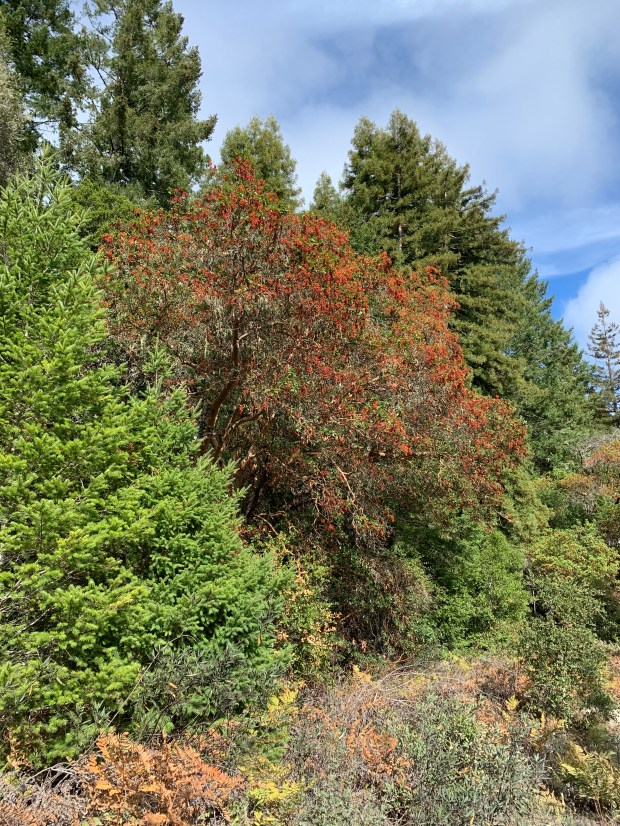
A beautiful element of our woodlands is the flesh-smooth orange-barked madrone, becoming bedecked with ripening fruit, held high in the canopies. Presented in diffuse clusters just above their large oval shiny dark green leaves, the ripening madrone berries are changing from hard and green to fleshy and bright orange-red. Band tailed pigeons and other birds are feasting, sometimes knocking the ripe fruit to the ground where mammals gobble them up. When I am lucky enough to find a grounded, deeper red fruit, I also pop it in my mouth, reveling in the sweetness, near strawberry flavor.

Walnut

The prominent black walnuts, the signature trees of the farm, are turning lemon yellow and dropping ripe nuts with a plunking noise to the ground. The 2” fleshy globes roll about a bit after dropping from the trees, settling in the grass or, more evidently, on road surfaces. The sound of tires used to be the scritch of gravel but is now accentuated with the resonance of the rubber drum when a run-over tough walnut pops and gets crushed into the road. Ravens and juncos line the roadside fence awaiting the freshly exposed juicy, oily, tasty nutmeat that is announced by the tire drum “poing.”

One day, we’ll make olive oil again, but it will take a lot of catch-up maintenance

Pome Pome, Pome-Pome!

The fruit that we eat (and drink) is rolling off the trees in delicious piles and buckets and boxes and carts. We are more than 2,000 pounds into the 4,000 pound harvest, down from last year. Nothing goes to waste. There are very rare instances when someone doesn’t pick up a really gooey apple from the orchard floor. Hygiene is in high swing with the worst orchard trash heading to the weed suppression wildlife feast buffet. The deer, rabbits, quail and coyotes take turns at the castings: nothing lasts more than a few days. The last tractor bucket of culled apples, 200+ pounds, was mopped up in 2 days, down to bare earth.

That leaves 3 other types of apples: sale apples, take home apples, and cider apples. The most common harvester and sorter vocalization is ‘awww!’ as they realize the rarity of the perfect fruit, the choice apple that is sent to market. That’s one in 8 this year, due to the uncontrolled apple scab of the moist spring. The other 8 apples are 30:70 take home apples versus cider apples. The take home apples are sent in boxes, buckets, and bags to the growingly extensive community orchardists; they have the most minor blemishes and there are hundreds of them. Our working bee network has been making their own juice, drying them, stewing apple (-quince) sauce, and just plain enjoying the crisp diversity of flavors from the many varieties we grow. The cider apples have a few more blemishes or even some signs of worms…the latter making work for the cider pressing party as chattering, smiling clean up crews prepare the fruit for a better juicing.

Juice!

The cider pressing last Saturday attracted 30 or so of our network, new and old pressers, taking the 500 pounds (or more) to 30 (or more) gallons of nectar – delicious juice. Much of this will become hard cider for future gatherings; many enjoyed diverse ciders from prior pressings. Most abundant fruit of this year’s press, Fuji, but also Mutsu which makes famously fine flavored juice. Mixed in here and there were true cider apples, varieties that are just starting to produce after 8 years in the ground. The cider apples add bitterness or sourness or tartness and overall complexity to the juice from what would otherwise be plainer if produced only from table apples.

The Community Orchardists sponsored a recent squeezing of fresh juice for the Pacific School in Davenport, our neighborhood! Bob Brunie schlogged the equipment and demonstrated the process to the schoolkids, some of whom were returnees and they enjoyed it a whole lot..

Bob Brunie shows off Molino Creek Farm’s Cidering Process to Pacific School kids, photo compilments of Mike Eaton

The falls’ fruit produces juice, brewed into all seasons’ mirth. With toiling gladness, we renew the stocks annually. Cycles of production and consumption – foundational in nature – quench more than mere bodily thirst, leading to deeper appreciation of Earth.

-this post also shared via Molino Creek Farm’s website, same time, same author

Falling leaves and moist winter chill

Fallen leaves blown across the forest path, under foot while walking, go “swoosh, swoosh, swoosh.” The sound of moist leaves (not crisply crunchy), an early rain and cool nights softened the landscape, removed the dust, made things gentle again. We are relaxing, slowly shedding the stress of the Fall’s potential for wildfire made more real these past many weeks by wind-carried smoke from prescribed fires across the entire state, even nearby at Wilder Ranch.  

Breezes carry in the clouds and then clear the clouds, waves after waves of clouds and then sun alternate as the dry summer plays with the wet winter, back and forth. This week, winter won with a bit of rain, shy of an inch and not yet wetting the soil more than superficially. After the rain, some sunny warmth and then the wind, fog, and another front , and it got chilly. Tuesday evening fog piled up on the other side of the prominent ridge across Molino Creek and poured over it, falling like a ghostly waterfall backlit by the evening sun. Beautiful!

Neither the rain nor the subsequent drippy fog has been enough to release the cedar-scented petrichor, much anticipated.

we do grow olives…for locals only olive oil!

Big swell, seasonal scents

Last night’s goose bump chill sent us to close the windows, put on sweaters, and some even built their first wood stove fires. And today’s cool air reminded me of how I’ve been taking the sun’s warmth for granted and how I’ll miss that deeply warm sense for a long time soon. The cool air, moisture, and gusty breezes accentuate the piney, resinous smells of redwood, Douglas fir, and coyote brush. Winds across the ocean pushed up an epic swell recently. Roaring and thumping waves reverberated across the landscape, but now there’s just a low more consistent hum. The patterns of breezes with long lulls awaken the senses, especially when it is peaceful on the farm but the trees on the ridge start talking, telling us a big gust is coming.

Feathered visitors

Geese, Canada and white fronted, are honking their melodies overhead near sundown. They are making their way to their winter grounds.

The newest birds are blackbirds, strutting around the fields in flocks, their heads moving curiously straight back and then straight forward with every stride. This evening, the light was catching the glean off the backs of a flock of Brewer’s blackbirds, reflecting the iridescent deep purple-blue of their gorgeous plumage. They let me get close but eventually alighted to show me the bicolor blackbirds in their midst. There are around 50 of this mixed flock and more may still arrive. They love to eat the grass seeds in the cover crop. They might even be anticipating it.

Other wildlife

Otherwise, the wildlife report is all about the Very Big Buck, coyotes, and chirping bright blue bluebirds. Perhaps there’s more than one Very Big Buck, but people are talking about an extraordinarily large, very impressive male deer from here to Davenport and north to Swanton. This creature stands very smart and tall with a giant set of antlers nearly 3’ across. He stood in the roadway looking intently north where he couldn’t traverse without going around the deer fence. He hesitated, looked north again, and then sauntered uphill following the fence line, somehow seemingly begrudgingly.

Nearly nightly, the coyotes sing. They aren’t doing the long musical numbers with multiple animals yipping and howling, but rather it’s a series of solos of the one coyote couple. One evening, they were calling from way up the Molino Creek canyon. Another evening, they sang right outside the window. Each night they try making some song from a different place, perhaps checking out the acoustics: the echoes are always fun.

The throaty, watery chirps of western bluebirds grace our midst. The brilliant blue flashes from the males’ zig-zaggy flights are breathtaking. There were seven birds, up a couple from last count. With that plumage, one wonders if they are considering breeding early…

The fading row crops will soon be tilled in and cover crop will grow, instead

Fall farming

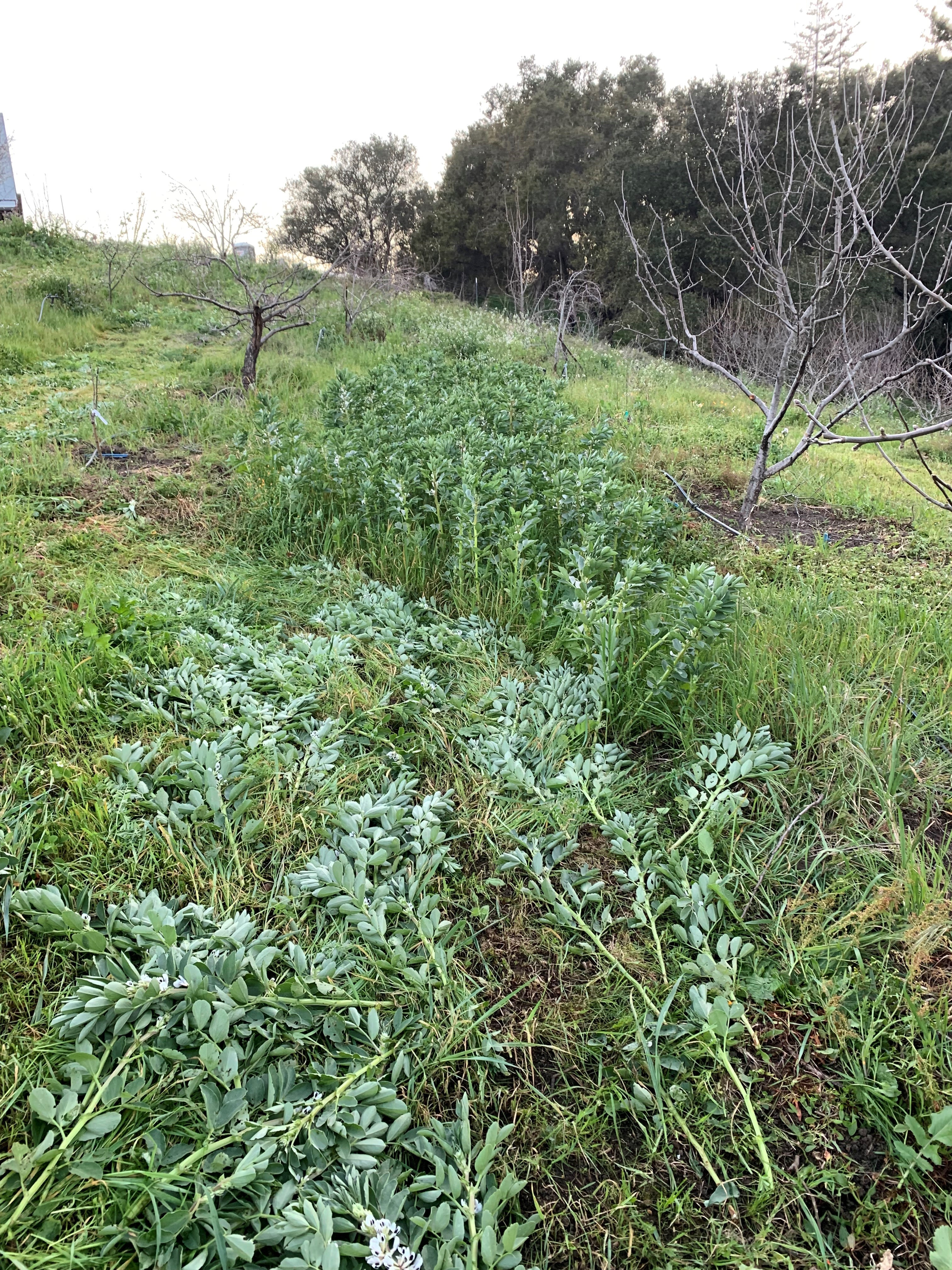
We’re not quite ready to cover crop. There are still 10 days of tomatoes to harvest and the apple harvest is in full swing. The floral crisp sweet Gala apples are almost all gone; we will pick no more for market. Last weekend, we picked all the remaining Mutsu apples which had been devastated by the apple scab disease that enjoyed our late wet warm spring. Next up are the Fuji apples, and there are plenty of those! Plus, there are Golden Delicious, an underappreciated long storing apple of extraordinary flavor. In the Barn there are hundreds of pounds of culled apples that we’ll soon be juicing for cider. And so, we pick, pick, pick…sending on the perfect apples to market. Between picking spells, we spread compost and mow to prepare for harrowing in the bell bean seeds.

those rusty brown tentacles….avocado roots poking up into the loose, month-old compost!

Tentacles in the compost

The Community Orchardists have been spending the last many weeks spreading compost under many trees. Around a month ago, we spread compost under the avocados on Citrus Hill. After that little bit of rain, I noticed those avocadoes looked particularly perky and vibrantly green. So, today I pushed around the compost to see if the avocado roots had invaded it: they had! It is so curious to me that avocado trees push pointy tenacles of roots straight up, out of the soil into mulch. How do those thick pokey roots feed off the mulch? Such a mystery.

young avocado trees are growing fast!

Being Present, Naturally

Our best moments are when we feel the most present. The stories we tell, the good ones and the bad ones, reflect on the times when we were most attentive. If you read that statement and let that realization sink in, you might be inspired to take a break from reading this.

The media we return to is that which absorbs us. When we see or read something that catches our attention, we focus on it and the world around us can fall away. Likewise, when we turn our attention outward, the world opens up. The more we pay attention, the more we see. We are incredibly good observers if we stop to do just that.

My favorite way to open myself to discovery, is to find a quiet place in nature and let all that is occurring there slowly reveal itself. There is so much complexity in any wild place that the discovery goes as deep as you are willing to observe.

Jon Young at least used to live near Santa Cruz and has written and taught a lot about how to become more present in the moment and how that presence of mind can help heal. This 17 minute TedX talk summarizes some of his most poignant lessons. Telling stories, listening to stories, being aware of your natural surroundings, and allowing yourself to become more a part of your surroundings are all central themes.

Mr. Young advocates for choosing a ‘sit spot’ to visit as a door-opening exercise to discovering yourself and nature, to finding a way to be present. Visiting one spot in nature and sitting there for an hour regularly with little movement allows us the time for discovery and the time for those beings that occupy that place to accept our presence and reveal themselves.

The Nature of Being in Nature

When we go into nature, how do we change? Some people go into nature for the most active forms of recreation: extreme or less extreme mountain biking, jogging slow or fast, the many forms of exercise for people or beast called ‘horseback riding,’ and then there is destination hiking or exercise hiking. Some people go into nature for more passive activities such as wildlife viewing, natural history study, art, poetry, contemplation, meditation, teaching children, learning from nature, becoming more at one with the wild and other beings, or just plain observation. The active forms of recreation (fast mountain biking, especially) are not compatible in the same time and place with the more passive types of natural area visitation. And yet, natural area managers mostly plan for ‘mixed use’ or ‘multi-use trails,’ mixing all of those uses together when they design and manage open space. This is despite a very well-honed natural areas planning science enshrined by the National Parks Service and other agencies who manage for visitor use expectations and experiences. There are University degree programs focusing on training natural areas managers in this science. Unfortunately, despite the huge investments in natural areas, I am unaware of any such science being applied in our region.

The Num-Num Cult

I recently came across an example of the kindergarten-level conversation we are subject to by the local open space managers who design the visitor use experiences we must tolerate. Check out this survey to “let us know if trails are meeting your needs” recently offered by the Santa Cruz Mountains Stewardship Network. The survey is meant to help inform the “State of the Trails Project,” which mostly otherwise appears on the Midpeninsula Regional Open Space District’s website on web searches. You can view a video presentation about this report at this link.

I was disheartened by the survey in that none of the rich passive uses of parks were reflected in the choices respondents could choose from. Using their terminology, all my friends’ uses of parks would be forced to fit into one use – ‘hiking’ – which is very far off from our real and precious experiences in nature. Luckily for us, the survey has blank spots that allow you to add comments.

Majority Rules?

Such a survey makes me wonder where we are heading with managing natural areas for the quality of visitor use experiences. If businesses have any say, they will support visitor use experiences that raise the most capital, experiences with expensive equipment that breaks or wears out. More passive uses of natural areas will never compete. The most passive uses, the most healing uses, will create the least amount of spending. The frugality of healthy people is astonishing.

Will those of us who are turning away from techno-gadgets and buying things be so marginalized that we will have nowhere to go to have the natural areas experiences we cherish?

Nature Heals

Many of us already understand the importance of nature in helping us stay healthy. The most recent term highlighting this phenomenon is called ‘forest bathing.’ Health care professionals recommend forest bathing, which is about practicing mindfulness, being present in nature so that we see the wealth of colors, sounds, and smells that are around us. This requires peace and quiet, the most peaceful places are the places that heal the best.

Wilderness Changed

The term wilderness is fast disappearing, for better or for worse. The term was problematic, anyways as it ignored the wealth of indigenous presence across the whole earth and the importance of indigenous people’s stewardship. And yet, the idea of wilderness being a place where technology, bustle, and noise is left behind, where contemplation and connection with nature are paramount needs to be attended to in our natural areas. Besides the wonky science of natural areas management for the ‘quality of visitor experience,’ it seems we lack a phrase that well contains such places.

Your Turn

I hope that you take the opportunity to fill in that survey and that you let politicians and open space managers know about the many ways that you cherish nature in open spaces. Let’s inform them of the term ‘displacement’ when you no longer feel comfortable going to a natural area because of the type or number of other ‘users.’ Every one of us has a right to our kind of use in natural areas, and it is open space managers’ jobs to accommodate those uses. They should be asking us about the quality of our experiences and adjusting their management to maximize that quality over time.

I hope that you also take some time to do some forest bathing. It will do a world of good. The more of us that do it, the more peaceful the world will become.

-this column originally posted in Bruce Bratton’s esteemed blog at BrattonOnline.com – I strongly suggest you subscribe (and donate to support it!) – this is precious place to learn much of what you should know to be a citizen of the Monterey Bay.

Returning Friends

High in a fruiting apple tree, harvest bags slung over our shoulders, we stop picking to glance up the road…gravel scrunching noise…a car winding its way down the road onto the farm. A neighbor or a visitor? We narrow our eyes to see where it goes, who is returning home? Who is visiting whom? By car, wing, or scales, we welcome all sorts of friends returning to Molino Creek Farm.

A String of Celebrations

The harvest festivals have already begun. We are pressing apples with two pressings already behind us, 40 gallons of divine apple juice in freezers, refrigerators, or in carboys fermenting. Upcoming is Samhain, the midpoint between the Fall Equinox and Winter Solstice, a time when the veil grows thin separating the ancestors with those here now. We will be attentive to the shadows, echoes and whispers of those who walked and loved this place before. John Brunie used to perform the astrological calculations of the exact date and time of these sacred holidays, but he’s gone so we seek a new calendar keeper for the Farm. Thanksgiving means some leave the farm for gatherings elsewhere and others arrive, a string of quiet days, friends roaming the fields and trails sharing stories and luxuriant first rain smells. The forest floor and roads are often littered with evergreen branches at Thanksgiving, blown about by the winter’s first storm. We weave fallen boughs into circles, recognizing the cycles of time. Winter solstice lies shortly thereafter and then the Wassail brings the string of celebrations to a temporary close. We are at the threshold of gatherings a’plenty.

We regularly hire who we can to mow down acres of flammable coastal scrub

Equinox Birds

The Fall Equinox has hellos and goodbyes. We said hello to hundreds of golden crowned sparrows who returned to this place from Alaska on the very evening of the Equinox as they have done time and time again. With strong site fidelity, these birds love this place more deeply than we can ever understand. These same families, these same clans, have potentially been returning for hundreds of thousands of years to this very spot. If we peer at them enough, we can recognize individuals; they already know each of the neighbors and maybe many of our friends. The Equinox saw the flight of the barn swallows, who returned to Central and South America. They may have spent days singing goodbye, soaring one more time past their favorite trees, and then they were off. As they left, the particularly whiny sapsucker(s?) dove into the orchard from the great migration from who knows where. We need help to see how many there are: last year there were three in the family. Sapsucker is elusive and shy, requiring some focused time searching for each individual to figure out how many will be here this winter. The changing birds greatly alters the soundscape. The dominant noise in the spring and summer were the creaky whistles and laughing chatter of swallows. Now, the dominant bird noise is the golden crowned sparrows’ forlorn call, a descending set of notes that might be, ‘Oh dear me,’ repeated from every shrub and tree. What hasn’t changed is the sheer biomass of birds inhabiting the Farm. Stepping out the door still flushes 50 birds. A walk down the roads or paths creates a continuous wake of fleeing birds. Feather flutter and alarm cheeps everywhere.

Winter Waves

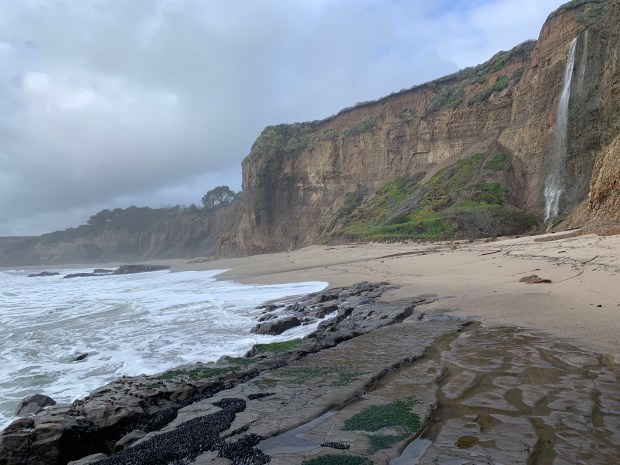
The sets of roaring and breaking big winter waves have returned. Lately, there has been no still peace as the reverberations of the ocean form a white noise backdrop to a cacophony of warm night crickets interspersed with bouts of hooting owls. The waves create a mist that blankets the ocean side farms, spreading a bit up the coastal canyons. When the waves are big and there’s even the gentlest onshore breeze, we can smell the fresh sea scent from the Farm, 2 miles inland and 900’ up. When the waves get really big, it seems the ground rumbles beneath our feet. These are familiar phenomena which make this seem more like home.

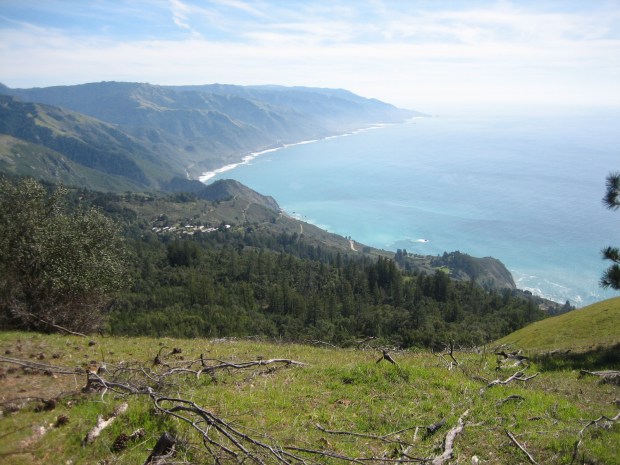
A view across the farm

Coyote Friends

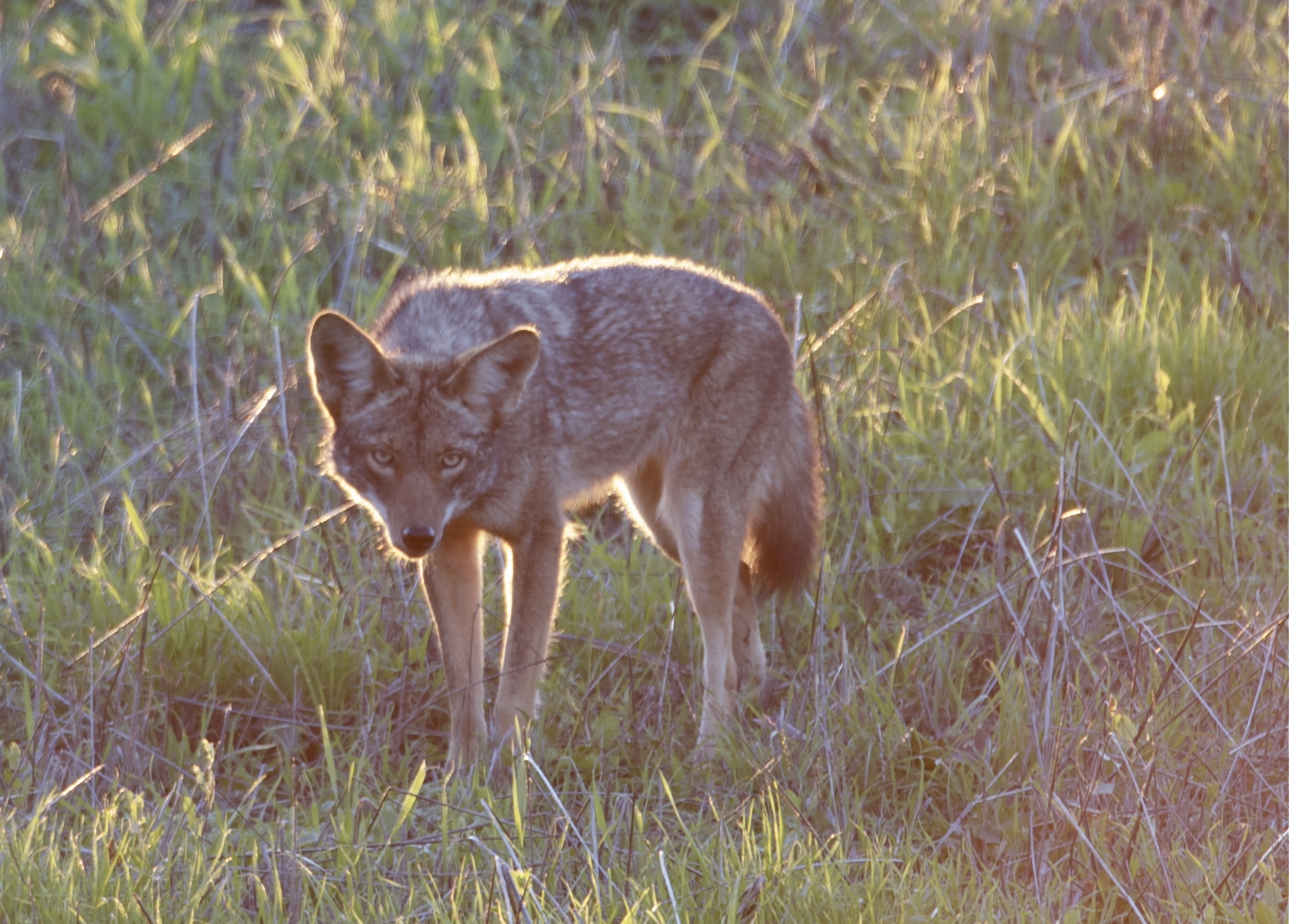
In Spring, we saw a female and her pup coyote. She had a peculiar white line behind her shoulders, a ridge of brighter fur that stood up a little above the rest. She was lithe and wary, always on the move, never playing as so many of our wild dog friends had done before. The other day, I saw her again, following the large male neighbors had been talking about. We have a pair of coyote friends! May they find a fine place to have pups nearby and feast on the rabbits and gophers that are so common around the farm. From their scat, it looks like they are enjoying apples and tomatoes for now. The two sing many nights, a deeper growly staccato barking paired with a longer noted, high yipping song.

Fall Scenes

The cycle of seasons delivers us a quintessential peaceful Fall. Time slows. The sun very gradually sets into longer and longer nights. The hills are muted colors now, dry leaves rattling. Once tall upright golden grass has settled, askew and gray-brown. The fruit and nut trees show hints of yellow. In the forest, maples, thimbleberry, and hazelnut are dropping lemon yellow leaves, splashes of color in the shade of the towering redwood forest. Bright squash litter the Two Dog fields as their peppers turn deep red. The poison oak is still moist, only a few bright red patches on the drier shrubby sites. The sunset sky is streaked with smoke from prescribed fires, humans returning to their roots, stewarding the land once again.

The last rays of sunset from a tall spot on the farm

May you take the time to meander about, soaking up the warm fall evenings.

Slowing Down -or- Rushing?

So much environmental degradation seems to be due to our rushing around. How can we best slow down? Each of us can do our part in creating the Great Slowdown that we need to sustain the planet.

Save More, Buy Less

The first and easiest way to help the Great Slowdown is to stop buying so much Stuff. If you haven’t watched the Story of Stuff in a while, or not at all, DO IT NOW. This 21-minute video is compelling, fun, and has changed more lives than many a 20-some minute experience otherwise. I think it’s worth watching regularly, perhaps in October just before the stuff-a-thon holiday season besets our culture. 

If you listen to the news, you will understand how important buying stuff is for our unsustainable economy. “Inflation is up, but ‘luckily’ consumer spending is cooking right along, otherwise our economy would be hosed.” A president once said in a national crisis, something like, “Just keep buying stuff!” Time is money, and by spending your money on useless crap, you are wasting your time, carelessly throwing away your life, and helping to wreck the planet. A few years ago, someone did a calculation and the transaction cost of each dollar spent was a liter of oil. I’m betting it’s worse now. Save a buck, keep a liter of oil from burning up.

Stop Rushing at Work

There is so much pressure to do more at work, but is that really helping anything? Chances are good that the more we rush, the worse off the planet is. How about we slow down? Carefully watch those who rush around with their work: why are they doing that? I’m betting that they mostly want to impress people, get others to work harder, or they are avoiding problems at home or something they might better be doing for Real Good.

The labor movement has something called ‘working by the book,’ which we might emulate to improve the planet. What is absolutely necessary to do with your work? What does the job description say? What are the metrics for success? Often, organizations keep the productivity targets elusive, to keep everyone guessing or trying to push for more. On the other hand, if productivity targets are defined, ask yourself if they are set too high. If so, it might be time to work with your colleagues to reduce them to something more manageable.

Slowing down at work is part of the solution, part of the Great Slowdown.

Working for the Planet

 The capitalist system mostly asks each worker to create efficiencies that are bad for the planet. As we learn to care more for the planet, we will find ways to sneak improvements into the workplace that will help Earth. Is there a way to reduce driving, material transport, waste? Does your workplace purchase recycled paper, organic foods, and other eco-friendly products? Maybe there’s a sustainability policy on your business’ horizon.

Beware the Fakes

If you see potential greenwashing, ask about it! I recently asked a seemingly eco-conscious caterer what they meant by “gourmet sandwiches, made from the finest local ingredients” and it turned out that they used very mainstream factory-farmed meats and conventionally grown produce distributed from warehouses far away. They soon thereafter changed their menu language. That was the third time I was able to affect that kind of change. Do we choose places that are true to their word about their products? How do we know if we don’t ask? Why would they be true to their word if folks never asked?

Buy Green

The list of businesses that are truly green is getting smaller, not larger in Santa Cruz. There are fewer restaurants serving local, organic foods than there were a few years ago. Local grocery stores are sliding further from, not closer to, sustainability. I suspect all of this is because people are not pursuing green purchases.

Keep Your Keel

How easy it is to go with the flow, but is that truly the best thing for the planet? There is a concept called ‘slippage’ where environmental policies are interpreted in ways that slip away from the intent of the policy, usually with negative environmental consequence.

If your work entails intersection with environmental policies, it is time to ask how you can help interpret those to environmental benefit, not environmental degradation. It is time also to ask what is the greatest good you can do with your work, focusing on the issues of greatest impact for environmental improvement. As I’ve said in prior posts, the metric should be species conservation: how can our work best affect that outcome? The answers are usually easy to arrive at.

Beware of False Dichotomies

Those who are most invested in slippage often use false dichotomies. Parks managers often note that they have a difficult dual mandate: to provide for public recreational access while conserving wildlife. For a large portion of Santa Cruz County, managers are leaning heavily on this false dichotomy to ‘sell’ the concept that it’s just fine for our wildlife to disappear because of their mismanagement. Trails erode tons of sediment into streams and wetlands, trash litters our beautiful beaches, and graffiti proliferates on sea cliffs because of the slippage that is embraced by the poor logic presented by parks managers’ adoption of their false dichotomies.

Parks Management Slippage

Many of these parks’ managers use other forms of slippage. The California Public Resources Code says this about State Parks: “Following classification or reclassification of a unit by the State Park and Recreation Commission, and prior to the development of any new facilities in any previously classified unit, the department shall prepare a general plan or revise any existing plan for the unit.” Look at the North Coast beaches, and Gray Whale Ranch…and, enter slippage: none of those have general plans, and all have ‘new facilities.’ I’m sure that someone, somewhere can provide some beautiful logic about how that can be possible. Has someone said ‘if anyone asks just tell them we never “classified or reclassified” those “units” and they were never “previously classified” (hardy-har-har-har, that’ll get ‘em).’ Anyone in their right mind would know that the responsible thing to do would be to create a general plan before opening a park, and that’s what was meant by that part of the Resources Code. Meanwhile, we must all ask WHY are these precious places opened to visitation without a plan to conserve wildlife on those spectacularly biodiverse places?? If you work for State Parks, you must ask yourself what place you have played in allowing such things to happen and how you might reverse this slippage. If you work for other land conservation organizations, you might have similar things to ponder: do you hold a false dichotomy promulgated by those with anti-conservation agendas? Where do you lie on the spectrum of serving Earth or serving Greed? If you are torn and in doubt, maybe it’s time to slow down and ‘work by the book.’ It might be better if you embrace the Great Slowdown in your job while you increasingly help others become aware of slippage.

-this post originally found at BrattonOnline.com

Winter Wrestles with Summer, Fall Progresses

Two nights ago, the lower portions of our farm dipped into the chilly 40s. Today, it was in the 80’s, tomorrow even warmer with two ‘warm’ nights not lower than 65F. Such warm nights bring a cacophony of crickets along with late summer katydids. Our ears seem to ring, and seeking the source of any one of the insect songs creates a confusing, 360° immersive dizziness. A visitor remarked, “what IS that noise?” Such sounds are not found in the City. Such sounds are not even everywhere on the farm, only in places on the farm. There are pockets of nightsong. Seek them where you can, it is a worthy experiential destination.

Sundown on the Pacific, just a short ways from the Farm

Country-style Night Show

Even where they sometimes fill the air from all directions, the insect songs fade in and out, sometimes louder and sometimes softer. Some species go quiet leaving the chorus to others and those then fade to the next song, a repeating pattern that never grows old. Some insects sing trill….trill….trill and others have a more constant chitter. Some play lower stridulations, others high, shrill ear-piercing whines. For biologists, I note black field crickets persist in lower numbers than in the early summer; now there are more brown ones. Also, the invasive green tree crickets sing with oscillating medium-toned trills from which you can calculate the temperature. The late summer, and this year in particular, features the massive laterally compressed long-legged bug-eyed katydids, a source of high-pitched, especially ear aching whining: you particularly notice when they take a break. On warm nights like tonight, there is no real silence of insects, only lulls, and always with the green tree crickets’ consistent “wee….wee….wee….wee….wee….wee….wee….wee…” Under the insect chorus, enter a baritone montage: wave sets crashing, their pulsing drone carried by the gentle onshore cool breeze. The light show for the orchestra: fields of stars and the stripe of the Spectacular Milky Way that us country dwellers get to enjoy far from the polluting night lighting which ostensibly provides increased safety and orientation in the cityscapes.

Dawn Revealing

In the East, the first glimmers of dawn cast doubt on night, but darkness at first prevails, some stars still brightly shining. The wakening mind returns to semi-slumber, the day’s return a dream (?). Another thought, eyes wider, the sky a new brighter gray and another glance brings certainty…a new day, a return to the waking life and the tasks at hand. Awakening brings smiles and gladness for the peace of country life and ease of transition into farm routines.

Watering and Harvest

Many fields are dry-farmed, and those are curiously bedecked with fading green foliage and the brightening fruit harvest. Other areas are irrigated and so still vibrant green, though the last planting of sunflowers is fading.

Those irrigated areas need regular attention during this, the driest part of the Mediterranean summer. The waves of heat alternating with cool and even drizzle make for irregular water demand. In anticipation of heat waves, we saturate the soil more. With spells of cool and drizzle, we slack off a bit and catch up. Shovels explore the soil to record the moisture condition, sometimes surprisingly dry… trees full of ripening apples are especially thirsty. We are trained to keep the soil moisture above 50%, but predicting where it will be any one day is a learning opportunity, always.

Sunflowers at Dusk

Midday Warmth

The hot days tax farmworkers and birds, alike. Tomato and pepper harvest comes midday with backs bent, sun baked and sweating; picking commences no matter the weather.  Above the farmers, migrating hawks ride warm thermals higher, soaring up and then south. A very rare occurrence: there were six red-tailed hawks and another large raptor even higher over the farm today. The great migrations called “hawktober” often co-occur with the recurring shimmering heat waves so common this month. Other birds avoid the open sun, chipping lazily from the shade of shrubs. Late in the afternoon, down by the ocean, a mixed flock of various blackbirds alighted on the roadside. Their beaks were open, panting, even as the day cooled at 5pm.

Evening

If we can, we wait to harvest apples outside of the hottest part of the day, and we can stand while doing it…easier on the body. Heavy picking bags leave the shoulders achy, and we switch sides to even the ache. The hurried apple harvest races the setting sun. What started as bright sun fades to soft golden light so briefly before all sunlight retreats to muted dusk, quickly darkening. Boxes and buckets of apples go into the barn with the last available light. Overnight, boxed apples cool naturally before the market delivery the following day.

On warm evenings like today, a great emergence of moths alights. Big moths and small zip and float everywhere, and it is impossible not to get hit in the face as they flit about. The bats are getting fatter. Poor-wills clumsily flap and dart, pouncing on their insect prey.

Also at dusk, the deer arise from their folded legs to traipse about looking for forage. Lately, they’ve been munching on the leaves of freshly felled walnut tree trimmings. Someone improved our farm road tree tunnel and left piles of fallen black walnut tree branches: this is a seasonally favorite food of the deer. Momma and her adolescent offspring deer (still unnamed) are at that salad bar. A young male caught her scent and wandered onto the farm this evening, a rare sight. The wayward bucks are very flighty and he was no exception. Upon being noticed, he bounded away, alert and head held high.

The last light of dusk barely illuminates the fading sunflowers at Molino Creek Farm

Night

Great horned owls, coyotes, foxes, and more. Two great horned owls have been having regular evening hooting contests. They sit in trees not too far apart and hoot loudly, taking turns, back and forth. There’s a silent bit, then one of them starts on some odd, non-hooty noises but then returns to the hoots soon thereafter. Is this a long conversation, or do they revel in the joy of creating or exchanging subtle variations in pitch and enunciation? They do not tire. They must be day sleepers.

Coyote barks seldom. Cassandra reports seeing a particularly large one. They leave big poops full of tomatoes and apples. Sylvie reports fox feasting on her Asian pears- a tree worth. There are poops from fox, too, all across the farm. Weasels excavate gopher runs in the apple orchard, freshly dug soil mounds ending at large gopher holes each morning.  There may be a weasel den under a prune tree.

Night strolls to manage irrigation reveal black widow spiders more commonly than any other spider. One striking large female complained about my opening the gate she was building a web trap at the base of.

Mice scurrying (but never seen) is another commonality.

These balmy nights bring pulses of warm air settling onto the farm from higher up the mountain. Warm blobs of air get pushed around by cooler onshore breezes, or nudged here and there by sinking chillier streams of Molino Creek canyon air. The half mile walk across the Farm sends me through boundaries of three or four contrasting temperature air masses, and the new temperature also brings new scents and different humidities.

Seasons Passing

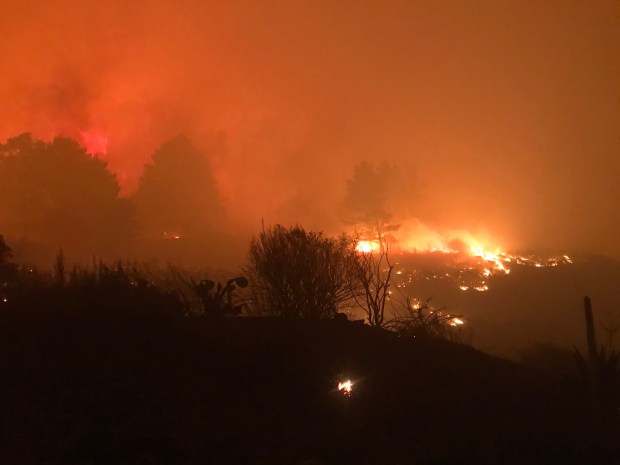
We have already passed through several waves of harvests and are set to see the last run of this year. Last February saw baskets of citrus and then Spring brought us peas and cherries. The first tomato, not until August, was a real delight, now we are in peak production. The prune plums are nearly gone as are the early comice pears. We are entering a marathon of 6 weeks of apple harvest, and that will be the end of the harvest season with the transition back around to citrus and all that follows next year. We compare years of apple harvest and the resulting cider. We mark our annual cycles as ‘before the Fire, or since the fire.’ Rains return and we burn huge piles of cut brush then the brush piles build again to be reduced the next year. On and on. Earth whirls around the Sun and we bound through space and time.