Author: Grey Hayes
Santa Cruz County Trail Access Inventory
Note that I contest these statistics separately using publicly available data, at this link. This group has since changed its name to Santa Cruz Mountains Trails Stewardship, although their advocacy for stewardship writ large is about nonexistant.
“Legal” Mountain Bike Trails in Santa Cruz County
Politician’s Community Surveys
Praises to the people and groups who reach out to invite community engagement through surveys. At the same time, I’m begging for the wealth of the Bay Area’s social scientists to help whoever is creating these surveys.
District 28, Gail Pellerin’s, Community Survey
Here is a link to a blank copy of the survey for reference after the live survey disappears. And, here is the link to the live survey. Fill it out only if you reside in California Assembly District 28, Gail Pellerin’s territory. The deadline is December 15th 2023.
Who is Gail Pellerin?
The following is Assemblymember Pellerin’s biography, from her website:
Assemblymember Gail Pellerin was elected to the California State Assembly in November of 2022 to represent the 28th Assembly District.
Assemblymember Pellerin served as the chief elections official in Santa Cruz County from 1993 until her retirement in December 2020. Gail served as President of the California Association of Clerks and Election Officials from 2010 to 2012 and as co-chair of the Secretary of State’s Voting Accessibility Advisory Committee.
Gail has a BS in Journalism from Cal Poly, San Luis Obispo. Before her experience in public service, Gail worked as a campaign assistant to political campaigns, a newspaper reporter and photographer, and a community college instructor.
Proper Survey Methodology
The first thing I instruct anyone who is creating a survey meant to inform their work is: assure that the answers are precise enough to inform your actions. Read the survey carefully with that in mind. Will Assemblymember Pellerin take the issues with the highest votes and focus effort there? Or will Pellerin use the responses to formulate a better election platform? Her next bid for election is November 2024. Maybe it’s a bit of both.
The next thing I tell anyone who is creating a survey is: tell the respondents what you will do with their data.
Neither the survey I posted last week, nor this current survey have anything definitive about how your answers might affect anything. This is a recipe for a low response rate and lowered community confidence in public process, in general. Ostensibly, public engagement surveys are created for just that: to engage the public. Surveys can not only gather information, but they can inform the public about what’s happening.
Another thing I tell survey design folks is to edit their surveys. The mix of words that are capitalized and not is distracting and further leaves intelligent respondents less than hopeful about the outcome of their time filling out the survey.
What to do with “Other?”
Most survey choices don’t reflect my proclivities, but sometimes there’s an ‘other’ choice- where I can fill in my non-conforming response. I get stuck there: if I have a non-conforming response, does that mean that it will be discarded, or will someone take the time to collate all such responses into trends? How to I pose my ‘other’ response such that it will blend with anyone else’s similar answer, so that together we make a bigger impact? Should I take the time to organize a lot of people in my District to fill in the ‘other’ category so that the Assemblymember pays attention?
I hope someone who designs these surveys lets me know, or, better, that future surveys guide respondents better.
First Question: What is Our Community’s Greatest Need?
The first question, “what is the greatest need facing your community,” is an interesting one. The question challenges the respondent to think of themselves as part of a greater community. This is laudable, encouraging civic thought along the lines of ‘what issue can an Assemblymember address that can cause the greatest good for the greatest number of my community?’ It follows that Pellerin chose the list from which the respondent can choose based on a feasibility analysis, but the survey does not clarify. The most important common human need is to reduce greed, as evidenced by income disparity in our community, and all the issues listed have root causes in that arena. Alas, addressing that need must be beyond feasibility.
With this question, I struggled with the previously mentioned “other” box. My base philosophy is that my community’s greatest need is environmental stewardship: we need all species, and we can do a lot locally to help that need. However, the survey offers the choice ‘Additional Park/Open Space,’ which doesn’t quite work. I almost wrote ‘species conservation’ in the ‘other’ box, but chose that ‘conforming’ answer just to be safe.
Question 3: Housing Nonsense
Check it out: the survey says to ‘check all that apply’ as ‘most needed.’ There’s a logical error inherent in that, right? There are undoubtedly statistics about this, and really this is a question for experts…very few civically engaged people would know how to answer this, but again it’s a laudable exercise to engage our community in the question. And, the informational aspect of the question again poses interesting contrasts. For instance, you can vote for “Middle income/moderate-density housing” versus “low income housing” or “senior housing,” suggesting low income housing or senior housing will be anything but moderate density. That is, suck it up low income people and seniors – you’re going to have to live in packed-in spaces. Interestingly, single family housing stands alone among the other choices that reflect income, age status, or density; so, medium or high density housing and housing for low income or seniors apparently also isn’t in the cards for stand-alone homes. Very informative!
Current Legislation
The final question, weighing in on expanding on someone’s list of current legislative priorities, is also enlightening. This question also says ‘check all that apply.’ I would assume any thinking person would check the box ‘combating climate change.’ Beyond that…isn’t it interesting what the Assemblymember has chosen as the menu? This is where the ‘other’ box becomes especially enticing.
Quick! Fill in the survey if you are in District 28!! And, use the survey’s design and information as you cogitate on your vote next November.
-this column originally appeared in Bruce Bratton’s highly enlightening BrattonOnline.com weekly blog- THE PLACE to get the skinny on all that’s worth pondering around California’s Monterey Bay. Sign up for automatic delivery and donate to help keep it going as often as you feel inspired.
Rein of Seeds
Of all the phenomenon of Fall, seeds rein. Just as humans become silent around the table as they dig in, mouths full of the bounty, so have the non-human animals across the fields and forests surrounding Molino Creek Farm. A pale blue scrub jay appears on a high perch, its beak pried wide, holding a huge acorn. It dives to a patch of grass, furtively glancing about to assure no one is watching, and buries the acorn, no pause and it’s off for the next. Our normally squawky friends are quite busy with their oak harvest, back and forth, planting hundreds each day. It is not a great acorn crop year, so the competition is high.
The tiny goldfinches disperse like confetti in small flocks, alighting in field margins or scrubby areas to harvest the oil-rich seeds of thistles, prickly lettuce, and tarplants. Their songs, too, are muted, chatter replaced by dainty beak-seed-cracking.
Redwoods
Fall in the wooded canyon means redwoods shedding needle-branches and a rain of seeds from newly opened, small cones. Recent gusts broke loose short sections of the outermost branches from redwood trees. Thin-stemmed branch tips are mostly needles, which are regularly shed this time of year and carpet trails and roads. Even ‘evergreen’ trees shed needles at regular intervals, each species with its own season. And so, the forest floor transforms from last year’s now dark duff to a light, red-brown coating of fresh redwood litter. Walking our Molino Creek Canyon trail now creates a crunchy, crackly sound. On a recent walk, I glanced down to appreciate the redwood fall and saw many redwood seeds sprinkled between the scattered needle branches. A heavy breeze swayed the trees back and forth over me and in all directions, and the air was suddenly filled with redwood seeds, bigger than dust and thickly moving like sheets of drizzle.
Madrone
A beautiful element of our woodlands is the flesh-smooth orange-barked madrone, becoming bedecked with ripening fruit, held high in the canopies. Presented in diffuse clusters just above their large oval shiny dark green leaves, the ripening madrone berries are changing from hard and green to fleshy and bright orange-red. Band tailed pigeons and other birds are feasting, sometimes knocking the ripe fruit to the ground where mammals gobble them up. When I am lucky enough to find a grounded, deeper red fruit, I also pop it in my mouth, reveling in the sweetness, near strawberry flavor.
Walnut
The prominent black walnuts, the signature trees of the farm, are turning lemon yellow and dropping ripe nuts with a plunking noise to the ground. The 2” fleshy globes roll about a bit after dropping from the trees, settling in the grass or, more evidently, on road surfaces. The sound of tires used to be the scritch of gravel but is now accentuated with the resonance of the rubber drum when a run-over tough walnut pops and gets crushed into the road. Ravens and juncos line the roadside fence awaiting the freshly exposed juicy, oily, tasty nutmeat that is announced by the tire drum “poing.”
Pome Pome, Pome-Pome!
The fruit that we eat (and drink) is rolling off the trees in delicious piles and buckets and boxes and carts. We are more than 2,000 pounds into the 4,000 pound harvest, down from last year. Nothing goes to waste. There are very rare instances when someone doesn’t pick up a really gooey apple from the orchard floor. Hygiene is in high swing with the worst orchard trash heading to the weed suppression wildlife feast buffet. The deer, rabbits, quail and coyotes take turns at the castings: nothing lasts more than a few days. The last tractor bucket of culled apples, 200+ pounds, was mopped up in 2 days, down to bare earth.
That leaves 3 other types of apples: sale apples, take home apples, and cider apples. The most common harvester and sorter vocalization is ‘awww!’ as they realize the rarity of the perfect fruit, the choice apple that is sent to market. That’s one in 8 this year, due to the uncontrolled apple scab of the moist spring. The other 8 apples are 30:70 take home apples versus cider apples. The take home apples are sent in boxes, buckets, and bags to the growingly extensive community orchardists; they have the most minor blemishes and there are hundreds of them. Our working bee network has been making their own juice, drying them, stewing apple (-quince) sauce, and just plain enjoying the crisp diversity of flavors from the many varieties we grow. The cider apples have a few more blemishes or even some signs of worms…the latter making work for the cider pressing party as chattering, smiling clean up crews prepare the fruit for a better juicing.
Juice!
The cider pressing last Saturday attracted 30 or so of our network, new and old pressers, taking the 500 pounds (or more) to 30 (or more) gallons of nectar – delicious juice. Much of this will become hard cider for future gatherings; many enjoyed diverse ciders from prior pressings. Most abundant fruit of this year’s press, Fuji, but also Mutsu which makes famously fine flavored juice. Mixed in here and there were true cider apples, varieties that are just starting to produce after 8 years in the ground. The cider apples add bitterness or sourness or tartness and overall complexity to the juice from what would otherwise be plainer if produced only from table apples.
The Community Orchardists sponsored a recent squeezing of fresh juice for the Pacific School in Davenport, our neighborhood! Bob Brunie schlogged the equipment and demonstrated the process to the schoolkids, some of whom were returnees and they enjoyed it a whole lot..

The falls’ fruit produces juice, brewed into all seasons’ mirth. With toiling gladness, we renew the stocks annually. Cycles of production and consumption – foundational in nature – quench more than mere bodily thirst, leading to deeper appreciation of Earth.
-this post also shared via Molino Creek Farm’s website, same time, same author
Falling leaves and moist winter chill
Fallen leaves blown across the forest path, under foot while walking, go “swoosh, swoosh, swoosh.” The sound of moist leaves (not crisply crunchy), an early rain and cool nights softened the landscape, removed the dust, made things gentle again. We are relaxing, slowly shedding the stress of the Fall’s potential for wildfire made more real these past many weeks by wind-carried smoke from prescribed fires across the entire state, even nearby at Wilder Ranch.
Breezes carry in the clouds and then clear the clouds, waves after waves of clouds and then sun alternate as the dry summer plays with the wet winter, back and forth. This week, winter won with a bit of rain, shy of an inch and not yet wetting the soil more than superficially. After the rain, some sunny warmth and then the wind, fog, and another front , and it got chilly. Tuesday evening fog piled up on the other side of the prominent ridge across Molino Creek and poured over it, falling like a ghostly waterfall backlit by the evening sun. Beautiful!
Neither the rain nor the subsequent drippy fog has been enough to release the cedar-scented petrichor, much anticipated.
Big swell, seasonal scents
Last night’s goose bump chill sent us to close the windows, put on sweaters, and some even built their first wood stove fires. And today’s cool air reminded me of how I’ve been taking the sun’s warmth for granted and how I’ll miss that deeply warm sense for a long time soon. The cool air, moisture, and gusty breezes accentuate the piney, resinous smells of redwood, Douglas fir, and coyote brush. Winds across the ocean pushed up an epic swell recently. Roaring and thumping waves reverberated across the landscape, but now there’s just a low more consistent hum. The patterns of breezes with long lulls awaken the senses, especially when it is peaceful on the farm but the trees on the ridge start talking, telling us a big gust is coming.
Feathered visitors
Geese, Canada and white fronted, are honking their melodies overhead near sundown. They are making their way to their winter grounds.
The newest birds are blackbirds, strutting around the fields in flocks, their heads moving curiously straight back and then straight forward with every stride. This evening, the light was catching the glean off the backs of a flock of Brewer’s blackbirds, reflecting the iridescent deep purple-blue of their gorgeous plumage. They let me get close but eventually alighted to show me the bicolor blackbirds in their midst. There are around 50 of this mixed flock and more may still arrive. They love to eat the grass seeds in the cover crop. They might even be anticipating it.
Other wildlife
Otherwise, the wildlife report is all about the Very Big Buck, coyotes, and chirping bright blue bluebirds. Perhaps there’s more than one Very Big Buck, but people are talking about an extraordinarily large, very impressive male deer from here to Davenport and north to Swanton. This creature stands very smart and tall with a giant set of antlers nearly 3’ across. He stood in the roadway looking intently north where he couldn’t traverse without going around the deer fence. He hesitated, looked north again, and then sauntered uphill following the fence line, somehow seemingly begrudgingly.
Nearly nightly, the coyotes sing. They aren’t doing the long musical numbers with multiple animals yipping and howling, but rather it’s a series of solos of the one coyote couple. One evening, they were calling from way up the Molino Creek canyon. Another evening, they sang right outside the window. Each night they try making some song from a different place, perhaps checking out the acoustics: the echoes are always fun.
The throaty, watery chirps of western bluebirds grace our midst. The brilliant blue flashes from the males’ zig-zaggy flights are breathtaking. There were seven birds, up a couple from last count. With that plumage, one wonders if they are considering breeding early…
Fall farming
We’re not quite ready to cover crop. There are still 10 days of tomatoes to harvest and the apple harvest is in full swing. The floral crisp sweet Gala apples are almost all gone; we will pick no more for market. Last weekend, we picked all the remaining Mutsu apples which had been devastated by the apple scab disease that enjoyed our late wet warm spring. Next up are the Fuji apples, and there are plenty of those! Plus, there are Golden Delicious, an underappreciated long storing apple of extraordinary flavor. In the Barn there are hundreds of pounds of culled apples that we’ll soon be juicing for cider. And so, we pick, pick, pick…sending on the perfect apples to market. Between picking spells, we spread compost and mow to prepare for harrowing in the bell bean seeds.
Tentacles in the compost
The Community Orchardists have been spending the last many weeks spreading compost under many trees. Around a month ago, we spread compost under the avocados on Citrus Hill. After that little bit of rain, I noticed those avocadoes looked particularly perky and vibrantly green. So, today I pushed around the compost to see if the avocado roots had invaded it: they had! It is so curious to me that avocado trees push pointy tenacles of roots straight up, out of the soil into mulch. How do those thick pokey roots feed off the mulch? Such a mystery.
Being Present, Naturally
Our best moments are when we feel the most present. The stories we tell, the good ones and the bad ones, reflect on the times when we were most attentive. If you read that statement and let that realization sink in, you might be inspired to take a break from reading this.
The media we return to is that which absorbs us. When we see or read something that catches our attention, we focus on it and the world around us can fall away. Likewise, when we turn our attention outward, the world opens up. The more we pay attention, the more we see. We are incredibly good observers if we stop to do just that.
My favorite way to open myself to discovery, is to find a quiet place in nature and let all that is occurring there slowly reveal itself. There is so much complexity in any wild place that the discovery goes as deep as you are willing to observe.
Jon Young at least used to live near Santa Cruz and has written and taught a lot about how to become more present in the moment and how that presence of mind can help heal. This 17 minute TedX talk summarizes some of his most poignant lessons. Telling stories, listening to stories, being aware of your natural surroundings, and allowing yourself to become more a part of your surroundings are all central themes.
Mr. Young advocates for choosing a ‘sit spot’ to visit as a door-opening exercise to discovering yourself and nature, to finding a way to be present. Visiting one spot in nature and sitting there for an hour regularly with little movement allows us the time for discovery and the time for those beings that occupy that place to accept our presence and reveal themselves.
The Nature of Being in Nature
When we go into nature, how do we change? Some people go into nature for the most active forms of recreation: extreme or less extreme mountain biking, jogging slow or fast, the many forms of exercise for people or beast called ‘horseback riding,’ and then there is destination hiking or exercise hiking. Some people go into nature for more passive activities such as wildlife viewing, natural history study, art, poetry, contemplation, meditation, teaching children, learning from nature, becoming more at one with the wild and other beings, or just plain observation. The active forms of recreation (fast mountain biking, especially) are not compatible in the same time and place with the more passive types of natural area visitation. And yet, natural area managers mostly plan for ‘mixed use’ or ‘multi-use trails,’ mixing all of those uses together when they design and manage open space. This is despite a very well-honed natural areas planning science enshrined by the National Parks Service and other agencies who manage for visitor use expectations and experiences. There are University degree programs focusing on training natural areas managers in this science. Unfortunately, despite the huge investments in natural areas, I am unaware of any such science being applied in our region.
The Num-Num Cult
I recently came across an example of the kindergarten-level conversation we are subject to by the local open space managers who design the visitor use experiences we must tolerate. Check out this survey to “let us know if trails are meeting your needs” recently offered by the Santa Cruz Mountains Stewardship Network. The survey is meant to help inform the “State of the Trails Project,” which mostly otherwise appears on the Midpeninsula Regional Open Space District’s website on web searches. You can view a video presentation about this report at this link.
I was disheartened by the survey in that none of the rich passive uses of parks were reflected in the choices respondents could choose from. Using their terminology, all my friends’ uses of parks would be forced to fit into one use – ‘hiking’ – which is very far off from our real and precious experiences in nature. Luckily for us, the survey has blank spots that allow you to add comments.
Majority Rules?
Such a survey makes me wonder where we are heading with managing natural areas for the quality of visitor use experiences. If businesses have any say, they will support visitor use experiences that raise the most capital, experiences with expensive equipment that breaks or wears out. More passive uses of natural areas will never compete. The most passive uses, the most healing uses, will create the least amount of spending. The frugality of healthy people is astonishing.
Will those of us who are turning away from techno-gadgets and buying things be so marginalized that we will have nowhere to go to have the natural areas experiences we cherish?
Nature Heals
Many of us already understand the importance of nature in helping us stay healthy. The most recent term highlighting this phenomenon is called ‘forest bathing.’ Health care professionals recommend forest bathing, which is about practicing mindfulness, being present in nature so that we see the wealth of colors, sounds, and smells that are around us. This requires peace and quiet, the most peaceful places are the places that heal the best.
Wilderness Changed
The term wilderness is fast disappearing, for better or for worse. The term was problematic, anyways as it ignored the wealth of indigenous presence across the whole earth and the importance of indigenous people’s stewardship. And yet, the idea of wilderness being a place where technology, bustle, and noise is left behind, where contemplation and connection with nature are paramount needs to be attended to in our natural areas. Besides the wonky science of natural areas management for the ‘quality of visitor experience,’ it seems we lack a phrase that well contains such places.
Your Turn
I hope that you take the opportunity to fill in that survey and that you let politicians and open space managers know about the many ways that you cherish nature in open spaces. Let’s inform them of the term ‘displacement’ when you no longer feel comfortable going to a natural area because of the type or number of other ‘users.’ Every one of us has a right to our kind of use in natural areas, and it is open space managers’ jobs to accommodate those uses. They should be asking us about the quality of our experiences and adjusting their management to maximize that quality over time.
I hope that you also take some time to do some forest bathing. It will do a world of good. The more of us that do it, the more peaceful the world will become.
-this column originally posted in Bruce Bratton’s esteemed blog at BrattonOnline.com – I strongly suggest you subscribe (and donate to support it!) – this is precious place to learn much of what you should know to be a citizen of the Monterey Bay.
Gail Pellerin’s 2023 District 28 Community Survey
Returning Friends
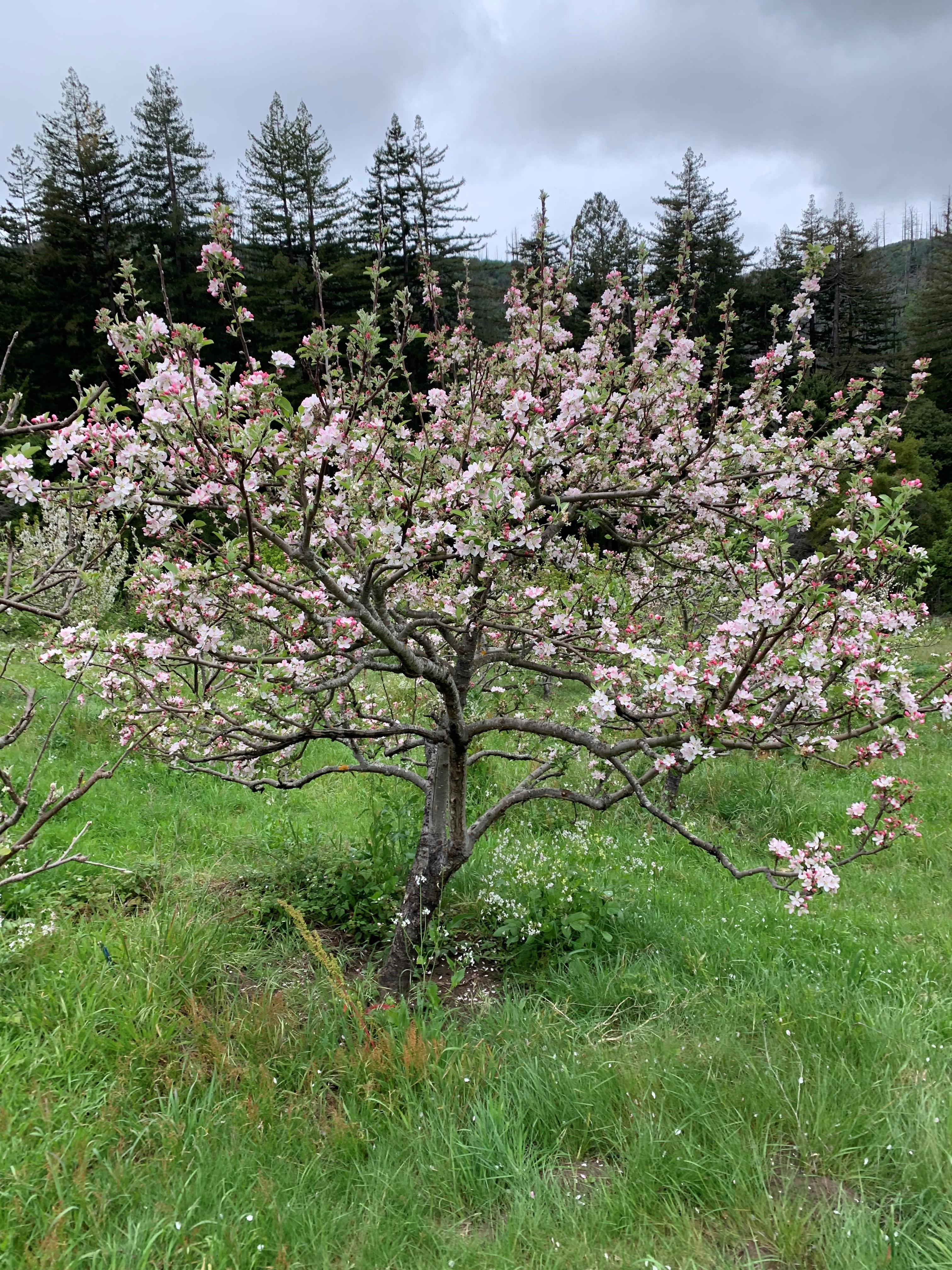
High in a fruiting apple tree, harvest bags slung over our shoulders, we stop picking to glance up the road…gravel scrunching noise…a car winding its way down the road onto the farm. A neighbor or a visitor? We narrow our eyes to see where it goes, who is returning home? Who is visiting whom? By car, wing, or scales, we welcome all sorts of friends returning to Molino Creek Farm.
A String of Celebrations
The harvest festivals have already begun. We are pressing apples with two pressings already behind us, 40 gallons of divine apple juice in freezers, refrigerators, or in carboys fermenting. Upcoming is Samhain, the midpoint between the Fall Equinox and Winter Solstice, a time when the veil grows thin separating the ancestors with those here now. We will be attentive to the shadows, echoes and whispers of those who walked and loved this place before. John Brunie used to perform the astrological calculations of the exact date and time of these sacred holidays, but he’s gone so we seek a new calendar keeper for the Farm. Thanksgiving means some leave the farm for gatherings elsewhere and others arrive, a string of quiet days, friends roaming the fields and trails sharing stories and luxuriant first rain smells. The forest floor and roads are often littered with evergreen branches at Thanksgiving, blown about by the winter’s first storm. We weave fallen boughs into circles, recognizing the cycles of time. Winter solstice lies shortly thereafter and then the Wassail brings the string of celebrations to a temporary close. We are at the threshold of gatherings a’plenty.
Equinox Birds
The Fall Equinox has hellos and goodbyes. We said hello to hundreds of golden crowned sparrows who returned to this place from Alaska on the very evening of the Equinox as they have done time and time again. With strong site fidelity, these birds love this place more deeply than we can ever understand. These same families, these same clans, have potentially been returning for hundreds of thousands of years to this very spot. If we peer at them enough, we can recognize individuals; they already know each of the neighbors and maybe many of our friends. The Equinox saw the flight of the barn swallows, who returned to Central and South America. They may have spent days singing goodbye, soaring one more time past their favorite trees, and then they were off. As they left, the particularly whiny sapsucker(s?) dove into the orchard from the great migration from who knows where. We need help to see how many there are: last year there were three in the family. Sapsucker is elusive and shy, requiring some focused time searching for each individual to figure out how many will be here this winter. The changing birds greatly alters the soundscape. The dominant noise in the spring and summer were the creaky whistles and laughing chatter of swallows. Now, the dominant bird noise is the golden crowned sparrows’ forlorn call, a descending set of notes that might be, ‘Oh dear me,’ repeated from every shrub and tree. What hasn’t changed is the sheer biomass of birds inhabiting the Farm. Stepping out the door still flushes 50 birds. A walk down the roads or paths creates a continuous wake of fleeing birds. Feather flutter and alarm cheeps everywhere.
Winter Waves
The sets of roaring and breaking big winter waves have returned. Lately, there has been no still peace as the reverberations of the ocean form a white noise backdrop to a cacophony of warm night crickets interspersed with bouts of hooting owls. The waves create a mist that blankets the ocean side farms, spreading a bit up the coastal canyons. When the waves are big and there’s even the gentlest onshore breeze, we can smell the fresh sea scent from the Farm, 2 miles inland and 900’ up. When the waves get really big, it seems the ground rumbles beneath our feet. These are familiar phenomena which make this seem more like home.
Coyote Friends
In Spring, we saw a female and her pup coyote. She had a peculiar white line behind her shoulders, a ridge of brighter fur that stood up a little above the rest. She was lithe and wary, always on the move, never playing as so many of our wild dog friends had done before. The other day, I saw her again, following the large male neighbors had been talking about. We have a pair of coyote friends! May they find a fine place to have pups nearby and feast on the rabbits and gophers that are so common around the farm. From their scat, it looks like they are enjoying apples and tomatoes for now. The two sing many nights, a deeper growly staccato barking paired with a longer noted, high yipping song.
Fall Scenes
The cycle of seasons delivers us a quintessential peaceful Fall. Time slows. The sun very gradually sets into longer and longer nights. The hills are muted colors now, dry leaves rattling. Once tall upright golden grass has settled, askew and gray-brown. The fruit and nut trees show hints of yellow. In the forest, maples, thimbleberry, and hazelnut are dropping lemon yellow leaves, splashes of color in the shade of the towering redwood forest. Bright squash litter the Two Dog fields as their peppers turn deep red. The poison oak is still moist, only a few bright red patches on the drier shrubby sites. The sunset sky is streaked with smoke from prescribed fires, humans returning to their roots, stewarding the land once again.
May you take the time to meander about, soaking up the warm fall evenings.
Santa Cruz Mountains Stewardship Network 2023 Trails Survey
Here is a link to an online presentation with Q and A about a subset of results of the survey. And, here is a brief article on the results, with an interesting spin.