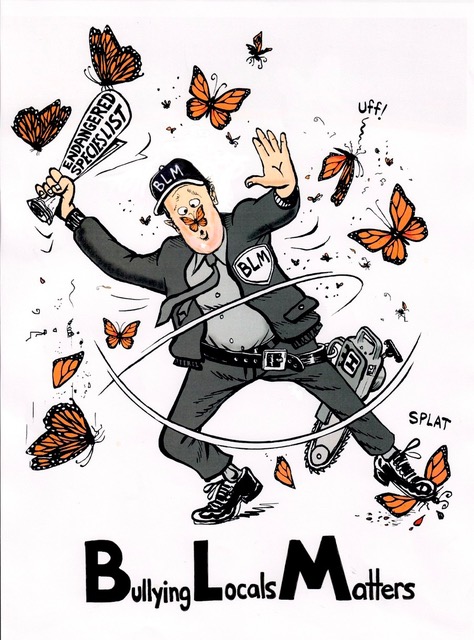
Santa Cruz County’s newest conservation land managers are supposed to conserve the wildlife prioritized by the State of California, but are failing to acknowledge their obligations, which means some of our area’s iconic wildlife species will disappear faster due to lack of Federal cooperation at Cotoni Coast Dairies.
Background
The Bureau of Land Management oversees management of Cotoni Coast Dairies, but it is following much-outdated wildlife conservation guidance. Land management agencies like the BLM are guided by policies and procedures that guarantee that they do a good job of managing wildlife. For instance, BLM has its 6840 Manual “Sensitive Species Management,” which notes:
“The objectives of the BLM special status species policy are:
A. To conserve and/or recover ESA-listed species and the ecosystems on which they depend so that ESA protections are no longer needed for these species.
B. To initiate proactive conservation measures that reduce or eliminate threats to Bureau sensitive species to minimize the likelihood of and need for listing of these species under the ESA.”
In other words, BLM recognizes that the agency should not be contributing to wildlife species becoming rarer and so receiving more regulatory protection, which would impact private landowners by restricting the uses of their property.
Mouritsen’s Duty, Neglected
To avoid that, BLM California’s State Director Karen Mouritsen is required to, “at least once every 5 years,” review and update the BLM-maintained list of sensitive species in coordination with the California Department of Fish and Wildlife (CDFW). It is unusual for such policy guidance to lay out a specific timeline, which adds clarity to expectations. The last time California BLM’s sensitive wildlife list was updated was in 2010, before Director Mouritsen’s tenure: 13 years ago! A lot has changed in those intervening years, and scientists have recognized that many more wildlife species are in need of protection by BLM.
Repercussions at Cotoni Coast Dairies
What happens when BLM’s sensitive wildlife species list isn’t updated? Let’s look at the Cotoni Coast Dairies example. BLM has already completed a Resource Management Plan that is meant to guide wildlife conservation on the property. Under the guidance and environmental review provided by the RMP, the agency is building miles of trails and parking lots, implementing a cattle grazing program, and allocating funding to other prioritized activities. BLM will soon embark on a Science Plan for the property. The RMP didn’t and the Science Plan will not consider conservation of wildlife species that do not appear on the BLM’s sensitive species list. And so, the following 10 rare wildlife species will receive no attention, pushing them further towards extinction: ferruginous hawk, grasshopper sparrow, Northern harrier, olive-sided flycatcher, American badger, San Francisco dusky-footed woodrat, Western pond turtle, California red-legged frog, American peregrine falcon, and short-eared owl.
A Deeper Dive – Grasshopper Sparrow
Let’s consider one of those species with a little more detail, the grasshopper sparrow. If this species is nesting in an area, under California law they are protected and our state wildlife agency, CDFW, has been charged with their conservation. According to BLM guidance, Director Mouritsen is 13 years overdue in updating the agency’s sensitive wildlife list for California to include this species. As their name suggests, grasshopper sparrows are grassland-dependent organisms. There is an abundance of nesting grasshopper sparrows at Cotoni Coast Dairies.
Without active management such as with carefully planned livestock grazing or fire, all of the grasslands at Cotoni Coast Dairies will disappear, being invaded first by brush and then by trees. This is already happening with extensive French broom and coyote brush invasion.
Already, BLM has planned its livestock grazing and recreational trail uses without consideration of preferred habitat for nesting grasshopper sparrows. Livestock grazing could be taking place to the detriment of the species, already. The construction of recreational trails and parking lots may have already destroyed important nesting habitat. When recreational visitors start using those facilities, it may occur before BLM has a baseline study of the density and location of nesting grasshopper sparrows. So, the agency will be unable to understand how land uses are impacting the species and so will be unable in an informed way to adjust its recreational or livestock management to better conserve the species.
It may well be that BLM’s management of Cotoni Coast Dairies will further reduce nesting populations of grasshopper sparrow, pushing the species closer to the point where they will need to be listed as threatened or endangered. When that occurs, private landowners whose land supports nesting grasshopper sparrows will see increased regulation and oversight by the State and/or Federal government. Their property values will be reduced and their ability to develop homes, farms, or other uses will be diminished.
An Alternative
On the other hand, if the California BLM State Director Mouritsen were to meet her regulatory obligation and update the BLM State Sensitive Wildlife Species List in the near future, a bunch of good would result. First, Cotoni Coast Dairies’ Science Plan could provide guidance for conserving those species. Second, because BLM funding is tied to the number of sensitive species on each property, Cotoni Coast Dairies would be better situated for increased conservation funding. If the Science Plan succeeded in moving forward the conservation of sensitive species like the grasshopper sparrow, BLM’s leadership on these issues could help many other land managers do the right thing for species, contributing to the potentiality of ‘delisting’ species, reducing the potential for increased regulatory burden and loss of private property values.
Do Your Part
I’ve said it before in this column, but I’ll say it again. NOW is the time to write Director Mouritsen to urge her to do her job. She hasn’t replied to any of the numerous letters she’s already received, so evidently she needs more pressure to take this seriously. Here’s some language to send to her via her email kmourits@blm.gov Please let me know (or cc me) if you send something.
Dear Director Mouritsen,
I care about wildlife and plant conservation on BLM’s Cotoni Coast Dairies property in Santa Cruz County. I write to urge you to help by adding sensitive species found on that property to the State BLM’s sensitive species lists. Only if those species are on the State’s lists will local administrators consider impacts of their management on those species in their analyses and planning for the property. So, I ask that you please:
- Publish an updated State BLM sensitive wildlife list in collaboration with the California Department of Fish and Wildlife, as mandated by the BLM’s 6840 Special Status Species Manual.
- This list was last updated in 2010, but you are required to update it at least every 5 years.
- Publish an updated State BLM sensitive plant list to include the State ranked 1B plant species documented at Cotoni Coast Dairies, as mandated by the 6840 Manual.
I would appreciate a reply to this email with details about how you intend to address these issues.
Signed, xx (you!)
-this post originally appeared as part of Bruce Bratton’s amazing weekly blog at BrattonOnline.com You an sign up and receive it automatic-like if you visit this site. You will be rewarded by getting smart commentary and news that is very relevant to life in general and life on the Monterey Bay specifically.
 Grey Hayes
I have sent a note to Director Mouritsen
LikeLiked by 1 person
Thank you! We are making a difference.
LikeLike