oc

A Keen Balance of Heat and Cool (but then smoke)

The balance works out just right between night and day temperatures recently. The nights have windows open, cooling the house, providing fresh air and cricket chorus; the days are warm almost hot, almost warming too much, windows get closed….then the sun goes down and windows open, fresh air pouring in. Perfect comfort, naturally.

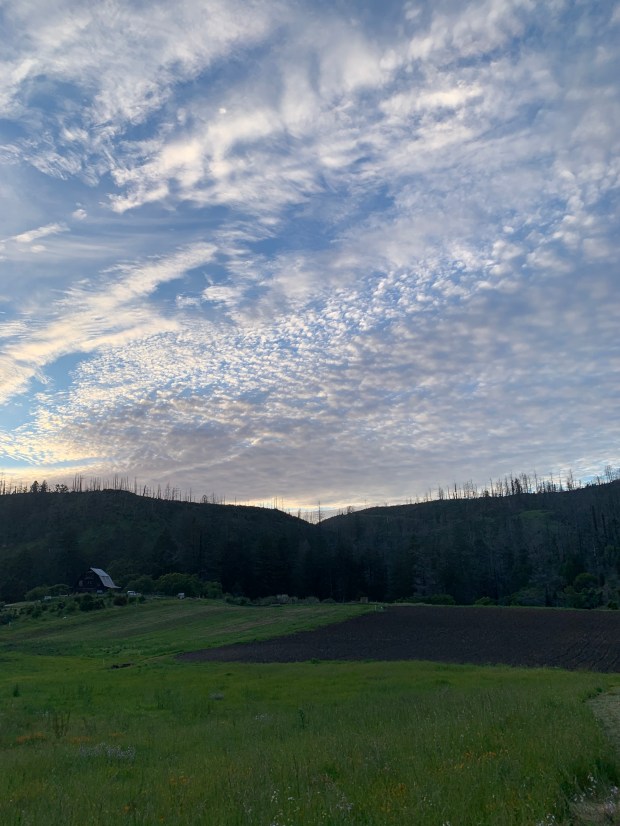
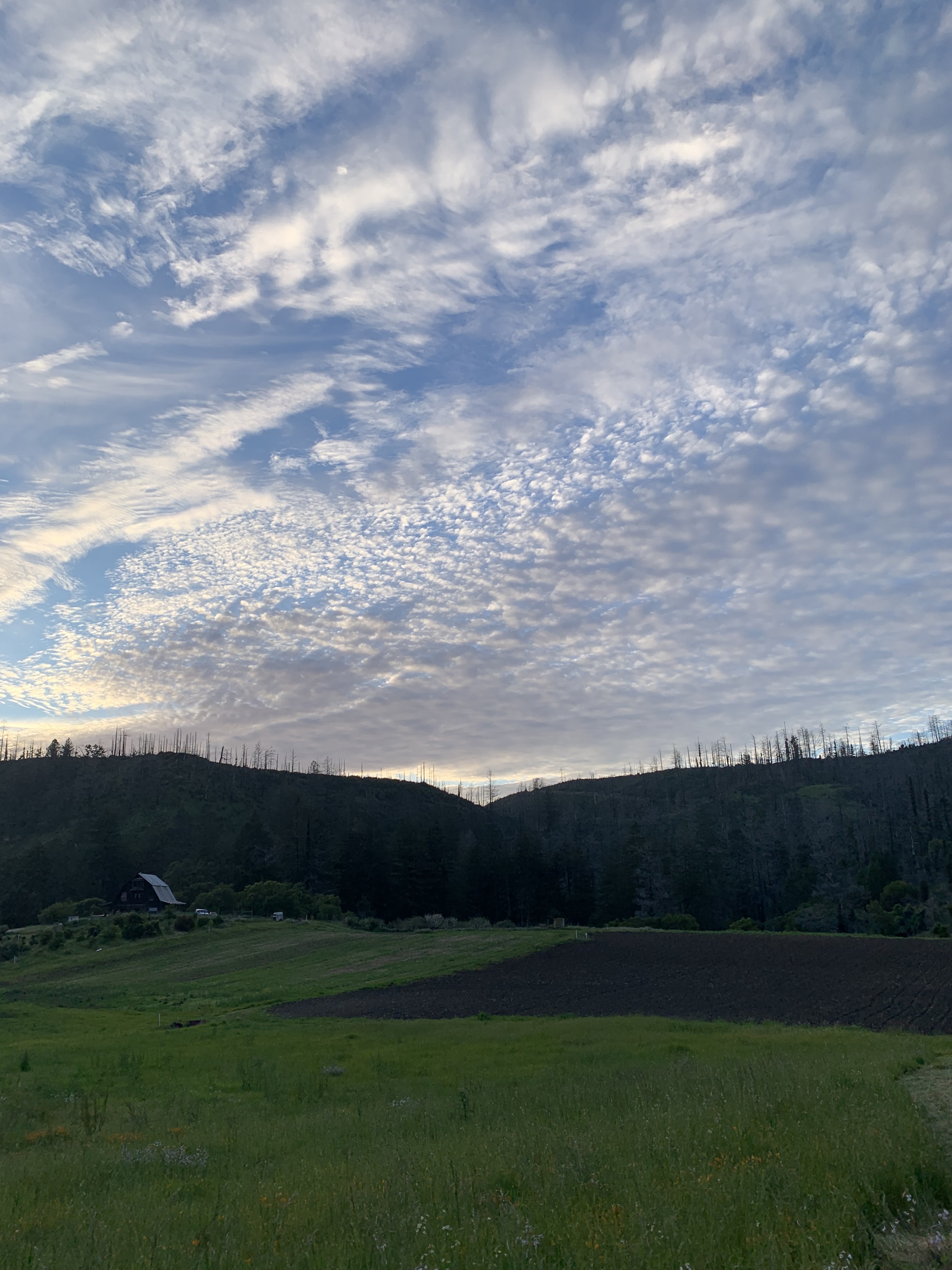
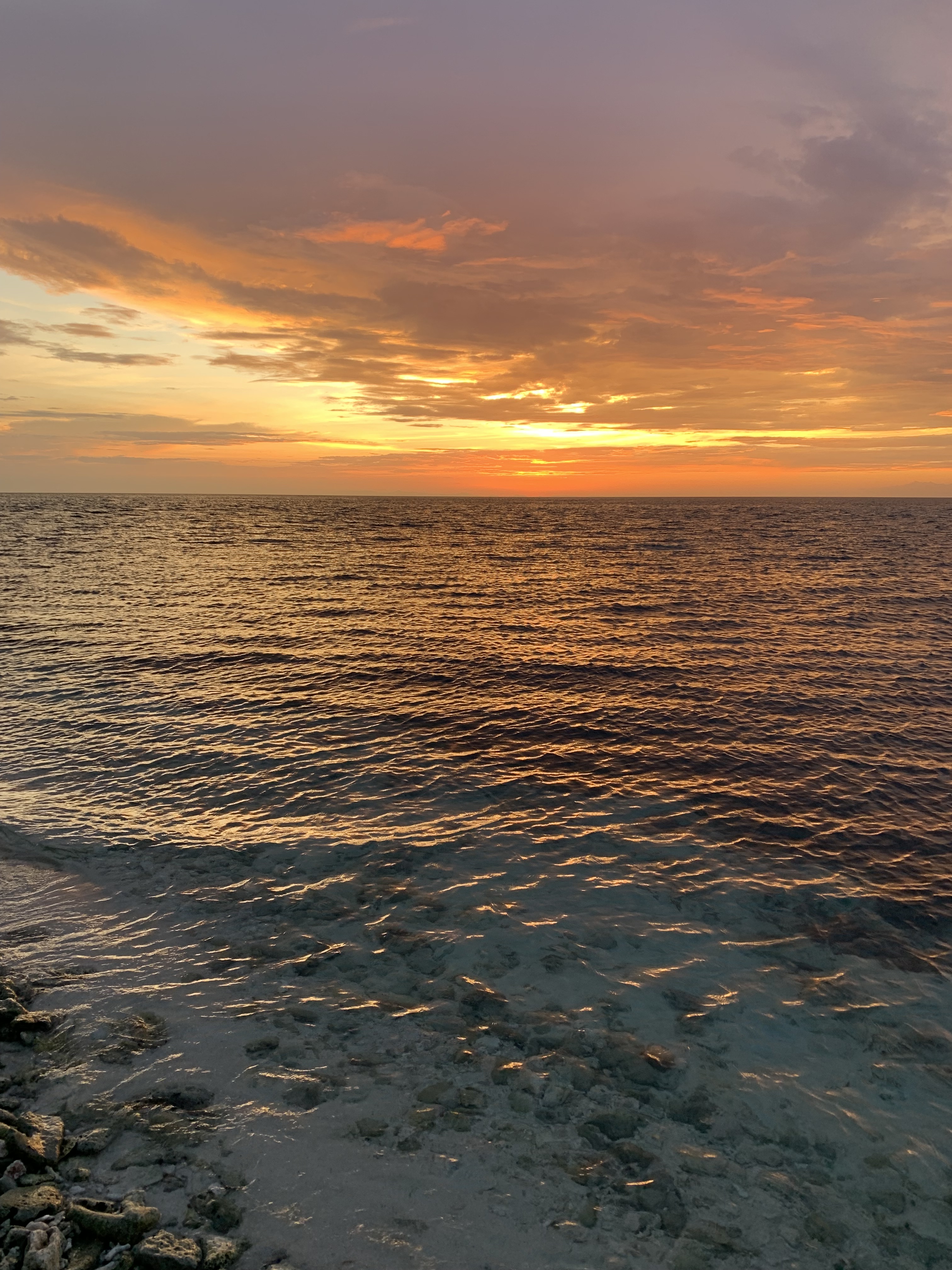
The Smoke from Prescribed Fire Makes for a Pretty Sunset

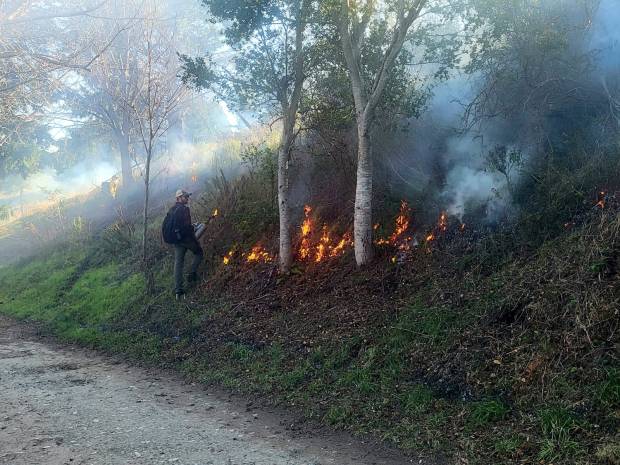
And so it was today, windows closed, an afternoon break and a glance outside reveals “OH NO!!” Smoke!!!!! The view outside was through the all-too-familiar haze that means fire somewhere: where?! Stepping outside, the characteristic smell of brush burning a ways away. Waves of denser or less dense smoke walk across the landscape, slowly – barely a breeze. Bob Brunie says he heard on the radio of a fire in Boulder Creek that had been put out, but Sylvie says it is a CAL FIRE-directed prescribed fire in the San Gregorio and Pomponio, according to the WatchDuty App on her phone. Oh good…so glad that’s what it was! And, the smoke magically changes from unwelcome and scary to welcome and thankful. So it goes. Made for an interesting sunset. Our farm will do a similar thing with the Central Coast Prescribed Burn Association soon – fuel reduction through good fire! Our smoke will cause some concern, we thinks.

What Do the Birds Think?

The smoke probably gives everyone pause, birds included. The migratory ones will recall smelling smoke and maybe even seeing flames during their journeys to our Farm this Fall: does the current smoke make them fearful? Carpets of scratching juncos and sparrows bob and hop through the churned-up dead grass, chipping and cheeping all day long, looking for food. As I approach the flocks, wrens erupt with their scratchy warning scolding alarms. Midday and coveys of quail flow from the thick patches of brush nervously crossing open spaces to sources of water, dipping and sipping, someone always keeping an eye out for danger.

Oozing holes in the orchard trees and the telltale PEENT! Gives notice that the red-breasted sapsucker(s?) have returned for the winter. Tommy Williams recently shared a photo of a burrowing owl somewhere nearby- they, too, have returned for the short-days season. As dusk dims, several poor wills flush in front of cars rolling along the very dusty road. And then, a stream of big bats sally from the barn, flapping quickly away, out of sight, a long night of foraging for bugs ahead.

Wall O’ Wickson (crab apples)

The Harvest

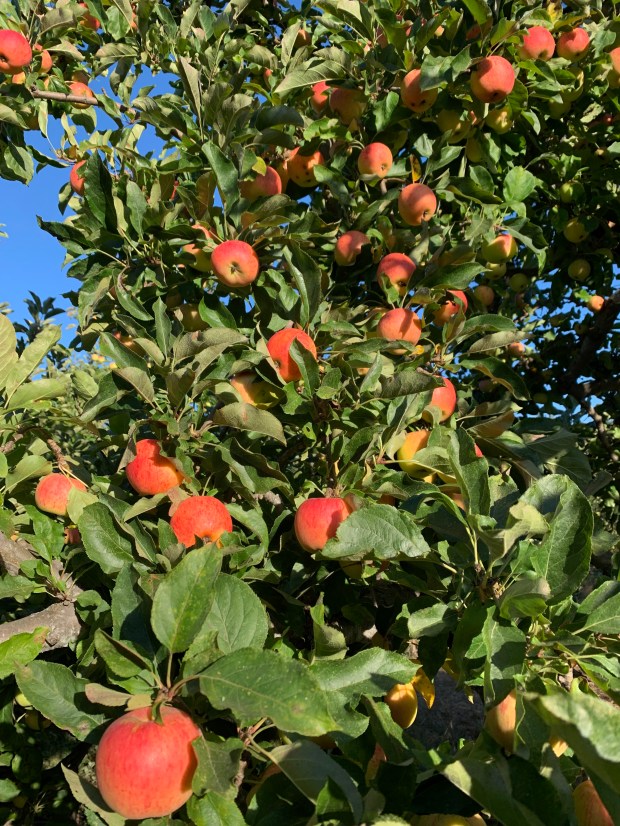
The flip side of the hungry, fruitless beginning of summer is right now, the middle of Fall. We are mid harvest in the orchard, which started in August and will continue through February this year. Next year, the harvest will go year-round as more avocado types make fruit. The early fruit is gone: the last of the prunes in the fridge are shriveling, the final gala apples are headed to market (and press). The middle season apples are ripening: grenadine is a favorite, as is Hudson’s golden gem, Bramley, Cox’s orange pippin, golden delicious, and so many more. Thanks to Freddie Menge for tipping us off to plant two dozen Wickson crab apples: we have the Wall O’ Wicksons now- a massive conglomerate of tiny red tartness bedecking the ‘left bank’ of the orchard. This is their First Big Year. We didn’t have enough props for them, and one ripped itself apart right into the ground with the weight of the fruit.

Quince are ripening

Quince are ripening!

The mandarins, limes, and Meyer lemons are also starting to ripen on Citrus Hill. Those types of fruit will extend the harvest into February when MAYBE we get some avocados for the first time since the 2020 fire set back so many trees.

In the Fields

In the farm fields, there are peppers. Two Dog Farm has a field with row after row of tiny bushes laden with peppers from dark green to bright red. Nearby, their winter squash abundance is tantalizing. Butternut squash makes for the best ‘pumpkin’ pie, and you could walk across an acre of those beautiful fruit. A very few tomatoes hang on in their own fields, maybe perking up from the heat waves…we hope for at least a trickle of harvest for a bit longer.

Logs Out

We LOVE our neighbors who, with the help of Nadia Hamey and her crew with Hamey Woods, have made our egress route a thousand times safer. The Big Hill was Dangerous, the Douglas firs burned up in the wildfire- then, dangerously perched on either side of the road awaiting windstorm or decay to come crashing down. A month ago, the saws revved and whirred for so long, trees crashing down, cut into logs, hauled into piles by huge machinery. This past week, the piles got picked up and hauled out: a changed and safer landscape. So much dust, so much noise…such an amazing amount of energy, work, and money. The effects of the fire are still with us, but smart and kind people are still mitigating the effects to great benefit. Thank you!

Birthday Boy

One of our newest members, Bodhi Grace, will soon celebrate his birthday by having the first party in the Barn in quite some time. He drained and cleaned the Cement Pond, wetting the periphery of the barn for dust and fire.  That old barn is about to rock. Happy Birthday Bodhi!!!

Welcome Fall

We woke on the Equinox, September 22, to the song of night’s arrival – golden crowned sparrows. Somehow, they know the right day and arrive the same moment each year, ending their long travel south from Alaska. With the changing world, it seems odd that some things remain constant. These pesky birds promise hours of entertainment as their pecking order is as animated as chickens and they are far more numerous. Their aggression is correlated by the brightness of gold on their heads, but they still love each other: they have tight-knit family groups and larger tribes and they are settling into the same cluster of shrubs they called home last winter. They must be pleased to have so many seeds: last winter’s bounteous precipitation made the seeds rain more than even the huge coveys of quail can keep up with. When it rains, there will still be millions of seeds to germinate and the sparrows will start grazing the lush turf.

More Typicality

Just as last year, the winter battles summer this time of year. Some of us celebrated one more Warm Night: unusual in these parts. The warm night was sandwiched between two pretty hot days and then the Fog returned: moisture rolling off rooves at sunrise, dripping from leaf tips, coloring the dust on the road beneath wetted trees. The see-sawing of temperatures was the cue the apples needed to get that much closer to ripe, but the bouts of fog enshrouded days make it difficult to keep up with the watering…solar pumps don’t produce much when there’s too few photons. It would be better to water the orchard before it gets really hot, but the hot has recently been when the sun comes out. Dynamism and daily adaption is the way of the farmer. The question now…will it be truly typical and rain an inch, our first ‘big storm’ in the middle of October? Whoah! That’s just two weeks away!!

Dry farmed tomatoes- yum!

Fields of Tomatoes

The bouts of heat and the progression of the season coalesced to create a grand glut of tomatoes. In this house, we’ve processed a hundred pounds into jars and jars of sauce to brighten the meals in seasons far from summer. Another household dried 200 pounds. The smell of tomato fruit hangs in the air on still warm evenings. The warmth and dust-loving russet mites have ravaged many plants, leaves withered and crispy: they’re time is up, but there are many more healthy plants in some patches, especially in the ‘diagonal field’ with deeper soil, upwind of the road dust. That’s where the future lies…we need tomato production through Thanksgiving for a truly prosperous year.

One of Judy’s wonderful dahlias

Flowers

This is truly the driest time of year as we’ve had no rain since April. The hillsides are crispy dry and most shrubs, flowers, and grasses are dormant. The exception is the unbelievably bright green pine-scented coyote bush…just starting to flower. Want to tell the girl from the boy coyote (bushes)? Now’s the time. I mark the coyote bush female plants and eradicate them preferentially- they are the existential threat to us folks who like to keep grasslands, grasslands and let the wildflowers have the wide open space. For now, the coyote bush is keeping the pollinator community well fed. Butterflies flock, flies buzz, and wasps hop from cluster to cluster of the pollen and nectar rich flowerheads.

In the irrigated garden, it is Dahlia time! Big poofy, luscious flowers of the most unbelievable colors pop and spangle in a scant row among cucumber, beans, and squash. Sunflowers are still going, cut for each of the 3 farmer’s markets we are going to nowadays (Aptos/Cabrillo-Saturday, Downtown Santa Cruz-Wednesday, and Palo Alto-Saturday).

It makes nice fall color, even if poison oak is terrible to some

Fall Color

The walnuts and garden birches have only the slightest tinge of the beginnings of yellow. Same with the maples in the wild canyons. At the edge of the forests and on steep hillsides, poison oak is further along with its remarkable streaked purple-reds. Rumor has it that the aspen leaves are turning in Eastern California where ‘leaf peepers’ are drawn to fall glory.

More Return of the Birds

Besides the golden crowned sparrows, other birds have returned from afar for their winter haunts. Cassandra and I have both seen an unusual feathered friend: Western meadowlarks visiting the Farm! Their bright yellow, black-spotted bib and dangerously long stout bills give them away. I guess our grasslands have reclaimed enough shrub ground to look like viable meadowlark habitat – that’s new!

Another bird sighting – an osprey! Around 2012 this time of year, two ospreys would fly over the farm each evening at dusk, west to east. One is flying now. Someone says that they saw it carrying a fish…a little late for fledglings, don’t you think? Still, this is an odd thing and someday someone’s going to have to follow that sea hawk and see where its going.

The beginnings of our haystacks

Hey Rick, hay rick!

Last weekend at our work party, Jen, Mike, and Roland rolled up the hay near Cherry Hill. Tons of the dry grassy stuff is cut, getting raked, and being placed in our rudimentary hay ricks. If we had pines nearby, we could put some needles in our haystacks, but as it is they are full of weeds. This is a new adaption from the bad idea of old…placing dry hay under perfectly innocent trees during fire season. Now, we stack the hay, let it molder, and wait until the end of fire season to swoosh it under the trees to suppress weeds, add nutrients and organic matter, and provide cozy homes for VOLES who do such a good job of ridding the orchards of gophers.

Perhaps we’ll rediscover the way of stacking the hayrick…a profession of years ago with expertise and methods long lost.

Real Pro Haystacks

Whence SCruz Enviros?

I continue to ask myself this question: where has the environmental movement gone in Santa Cruz? I have several hypotheses. This is not to deny the tireless work of various individuals who have helped on many fronts, but I sense a loss of momentum, of any organized movement of the type of conservationists that have been so crucial in the past in providing the Santa Cruz area with much of which it is now proud: Lighthouse Field, the City’s Greenbelt, Wilder Ranch, and Gray Whale Ranch come to mind, is there any kind of movement now that could achieve such success?

Questionable Rationality

One of the age-old issues with working with coalitions is the rationality factor, and the environmental conservation movement has had its share of associates who defy the laws of rational discourse. There is strength in numbers, but as those numbers grow the community will include people who are vocal about some pretty wild, unsubstantiated things. Those people sometimes have a fairly strident way of expressing themselves. Whether it is a tactic, or perhaps they believe it, the opposition to conservationists will say ‘look at that lunatic fringe group!’ They lump perfectly rational people in with the less-than-rational minority. The less-than-rational folks will also say ‘Look! I have credibility! I am associated with these rational people!’ That fringe element has driven more than a few of my colleagues away from advocating for conservation.

Oppositional Idiocy

Problems with rationality aren’t just internal to conservationists: there are many irrational people to face in the opposition. There is increased reliance on very poor methods of discourse: tu quoque, black-and-white and straw man arguments are very common, and conservationists aren’t always prepared to rebut such vacuous methods of dialogue. We often don’t even recognize them as such. As I wrote recently, add those types of arguments to a long list of unsubstantiated ‘facts’ and you have the gish gallop making it impossible to address any particular thing.

Conflict Avoidance

Poor discourse and barely rational coalition members may have contributed to the next reason I hypothesize for the demise of the local conservation movement: conflict avoidance. One thing that seems on the upswing with the younger generations is conflict avoidance, but this issue has long been a problem to conservationists. Politicians and other would-be mediators of environmental conflict have often tried problem solving by attempting solutions through compromise. That is, they see two sides – conservation versus development – and say “we can find a middle ground.” The problem with that is that often the conservation issues associated with the proposed development aren’t addressed by this middle ground: biology doesn’t work that neatly. This concept has oozed its way into the general populace where many want to solve things by reaching an imaginary happy spot – ‘half way’ between what is portrayed as two divergent points of view. Even that half-way point is difficult for most to imagine negotiating.

Those who are proponents of nature destruction are well seasoned negotiators, new public conservation advocates not so much. New recruits into conservation often balk at the need to negotiate with often well-paid consultants who are so good at their game. These new conservationists also often feel shy about hiring professionals, especially lawyers to help with the conflict: for some reason many feel like seeking that method of solution is ‘too much.’ And, then again, lawyers are expensive.

Legal Defense, Legal Bills

If somehow a group of conservationists can come to the conclusion that a lawyer would help, raising money for legal defense funds for conservation around Santa Cruz is not easy. Lawyers are expensive and their work takes time. Can you remember the last time a local conservation group asked for funding for legal defense? It has been a long time.

And yet, legal defense has often been essential to resolving many important environmental conflicts, everywhere. Especially here in California, the laws protecting the environment are strong and broad ranging. Those proposing to destroy nature fear enforcement of those laws. With my conservation advocacy, I often cite legal language and so have been called ‘litigious’ by a handful of nefarious truth-stretchers: I have never retained legal counsel to sue anyone. It is very important for conservationists to understand laws and regulations and to cite those as well as case law whenever making their point. And yet, fewer and fewer locals are forming coalitions to retain legal assistance to protect nature.

Legal Reprisals

Some conservationists have avoided the milieu of conflict because they fear that the often well-funded anti-nature crowd might sick their lawyers on them. There are Strategic Lawsuits Against Public Participation (SLAPP) where the pro-development types intimidate conservation advocates by suing them…often for libel but for lots of other things. Also, some conservation advocates have been named in lawsuits by nature destroyers. For instance, our ‘friends’ at the Trust for Public Land sued local conservationists to recover expenses the group said they used to defend themselves in court actions aimed at better protecting the Cotoni Coast Dairies property.

No Peace, No Justice

The last issue hobbling local conservationists is their inability to adequately form coalitions with environmental justice movements, which have perhaps gained more wide support and recognition. This piece well summarizes the issue, and rests with the ‘no brainer’ intersection of the two movements: climate change. In this regard, Santa Cruz might be doing okay, but we are leaving behind other conservation issues of the highest importance: conservation land management, endangered species conservation, clean water and wetlands protections, and natural areas visitor management. Each of those issues has meaning for environmental justice proponents, but conservationists have done little to make that bridge.

What Can You Do?

I urge more people to become actively involved with local conservation groups. And, when you do, help those groups to become better through your mentorship and skill. We need to train one another to be good at conservation before the next big issue threatens species, habitats, or the relationship between humans and nature in our region.

-this post originally published as part of Bruce Bratton’s long-running informative blog at BrattonOnline.com, a place you should turn for all that you need to know around the Monterey Bay (and beyond).

Gish Gallop

Has it always been so common, or is it just more apparent because it has become so prevalent in mainstream politics? The Gish Gallop is a method of debate where one streams together so many unsubstantiated points that it becomes difficult to track, and rebut, them all. Perhaps the easy swipe of social media or the increased speed of emerging news have helped to wire us to be more receptive to the full-steam-ahead BS argument technique. Here, I try my hand at making a speech using the Gish Gallop technique with a collection of commonly held nature fallacies:

A Gish’ing Example

Nature is dangerous! For instance, all sorts of snakes and spiders are venomous, and people die from their bites all the time. You have to be especially careful of mountain lions, which are increasingly attacking people across California. If environmentalists have their way, there will also be wolves roaming everywhere across the Western USA- once established, they will become habituated to eating livestock and they’ll be coming after people, too. Just outside your door trying to get into your trash are very dangerous rabid opossums. You don’t even have to go outside for nature to get you. There are spiders hiding in your house, and an average of six a year drop into sleeping people’s mouths. I heard just the other day about another venomous snake crawling out of someone’s toilet. Some crazies want to blame so many things like this on global warming, which is just hype from crackpots trying to control our lives. They claim burning fossil fuels is going to kill us all, but that’s not true! Change happens, for God’s sake, there have always been natural disasters and there always will be, just get used to it, you snowflakes!

Does that kind of diatribe sound familiar? It should, and its not just coming from the political right[1] – watch out for it coming from just about any political direction, in just about any social situation. You can tell a real Gish Gallop addict by picking out just one of their tidbits and trying to follow up with a more involved conversation. If they are a galloping gish o’phile, they’ll be unable to stick to that topic and will hit you with another round of Gish Gallop before you can yell ‘stop!’ I don’t know if its just my circles of company, but I venture to guess that 1 out of 10 of my conversations encounter something amounting to Gish Gallop.

Toilet Snakes

Let’s take a look at just one of the parts of the above parade d’ BS: toilet snakes. Mention the phrase ‘toilet snake’ during a party, and it may well take root in conversation with anecdotes just as lunatic, or even substantiating evidence of this profoundly unlikely scenario. Was it Voltaire that said absurdities beget atrocities? One step leads to the next. Who are we to deny the frequency of toilet snakes, anyway? I’m sure it has happened once or twice! It may even be getting more frequent with global warming, invasive species, collapsing and outdated infrastructure, and the loss of skilled labor attracted to public works jobs. See? How familiar is that? That’s how it goes…

Turning This Around: The Antidote

How good are you at stemming the tide of verbal diarrhea? How do we collectively alter this rotten social habit? It is time to infuse more meaningful dialogue into the world. I am particularly advocating for better dialogues about nature and hoping that we carry with us enough fascinating stories that we can knit deeper and deeper oral traditions into a regionally-oriented social fabric. As we do that, I encourage us to use science as our guide, so that we have a method of building out truth, of going deeper and deeper into nature, and to add those discoveries into our stories.

The Fate of Snakes

My essay ‘Snakes on the Monterey Bay’ is one of the most popular reads on my website. I suspect that there are widespread positive sentiments about native snake species. But there are also widespread popular beliefs, well supported in social circles, that snakes are all very dangerous. Snake phobia, even nature phobia, is far too common. I well recall a time when I was working with a farm labor crew to machete poison hemlock, an invasive species that had taken over much of Younger Lagoon Reserve that I was stewarding for the University. One of the crew spotted a garter snake: quickly three were chasing it and proudly hacked it to pieces in moments before I could stop them. They seemed astounded that I was angry at their actions. I’m sure that they still think that I was acting insanely to be defending SNAKES! Why? Many people believe snakes are dangerous, and this is one of the many subjects that we can work on to improve human-nature relations.

Might you find out a bit about one of our native snakes and start a conversation about it with your friends? Such conversations could change the world for the better.

-this column slightly modified (with The Guardian link) from that which I posted via BrattonOnline.com, Bruce Bratton (and team)’s wonderful source for news. Subscribe now and save (it is free, but donations are welcome)


[1] Although some admit that this is their favorite method of oratory.

Loss

The sadness of loss is almost too much to remain engaged as a lover of Nature. The love comes easily and despite our collective desire to protect Her, we somehow keep acquiescing to destruction. Why? Either by quick violent death or by slow strangling loss, somehow humans are capable of the most atrocious acts against Nature. These things are not happening only in some distant rainforest or coral reef…these things cannot be relegated to some guiltless past by unknown villains…they have been happening right here, are occurring right now around the Monterey Bay.

Sudden Violent Nature Destruction

I’ve been living near Santa Cruz since 1986, and during that time there have been some horrific atrocities to Nature. And they still are occurring.

Even as I weep to see the destruction of the East Meadow at UCSC, I clearly recall the moments of the tearing of bulldozers into other precious ground. The actions themselves are bad enough, but the sadness deepens as I hear the violence supported by the sentiment of members of my community. Rationalizations. Deep convictions and justifications. How can so many have become so separated from the Great Nurturer, our Mother Nature? I know the answer, but it doesn’t make it easier: greed.

UCSC. Arana Gulch. Santa’s Village. Terrace Point. Castle Rock. Glenwood. Millenium High. Large areas of Fort Ord. Armstrong Ranch. Santa Cruz Gardens. Seascape. These are just a few of the places that have been violently, suddenly and permanently transformed by bulldozers, development, pavement, and buildings since I arrived in Santa Cruz.

None of these ‘projects’ ‘needed’ to happen. All have been completely rationalized by society at large. Many have profited, and many more will feel the losses for generations. Few now feel a more direct, deep sense of loss from the destruction of those places; most did not come to know them well enough to love them deeply. Fewer still have the broader and deeper connection with Nature to feel pain upon witnessing her passing and the forlornness that comes from respect of what was there before. No one can acutely feel these things and still survive. We must “move on.”

A Slower Strangling

War or slasher movies attract human attention far more than long term torture. We eventually forget Guantanamo, refugee camps, those haunted and plagued by the trauma of war, famine, or injustice: we “move on.” Such is the case with our treatment of the lands around us. We now know that even ‘protected’ lands need careful tending, that the whole Earth needs our active care, but we are failing that responsibility everywhere. And so, our neglect means Nature is (maybe not so slowly) dying. We have put Her in a cell and neglected food and water. She cannot be so separated from us, and her dying is already causing our suffering. And although everyone hears Her rattling her cage, we “move on.”

Nature’s Slow Death Around Us

We daily witness the actions driving climate change, but it is harder to see the actions driving the torture and neglect of Nature around us. Everyone reading this can glimpse those actions in the rhetoric about Nature tourism around the Monterey Bay…mostly about mountain biking, but also about the many ‘natural’ attractions our region has ‘to offer.’ Nature tourism is one of the top ten threats to biodiversity globally. Around the Monterey Bay, there are only the grossest, ham-fisted approaches by conservation lands managers to stem the impacts of natural areas visitors. We are loving our conservation lands to death. Literally watch your step as you hike trails eroding into ditches, soil spoiling surrounding streams, trails draining the water from the land. Trash. Weeds and pathogens proliferating along trails and roads through natural areas. Wildlife fleeing frequent visitation with no where left to go. Invasive plants, pathogens, and introduced animals permanently altering Nature, spurring native species loss. Nature tourism is good for business! And, as to the cost that comes from that profit…most people have already “moved on.”

Moving On

As a society, we are “moving on,” and I and others who care are swept up in the flow. The tears we shed for the losses we see are quickly diluted in the river of profit that drives our downstream movement. We feel we must hide our Great Sadness so that the shreds of hope we retain in the resilience of Nature might inspire others to come to her aid. The future is uncertain.

To calm the panic and loose the sadness, we turn to Nature and go for a walk…quietly, respectfully, slowly, and in awe.

-this post originally posted in Bruce Bratton’s stupendous weekly blog at BrattonOnline.com I suggest you subscribe to keep up with ‘all the news that’s fit for printing’ around the Monterey Bay and beyond. If you adhere to the adage, as I do, that all politics is local, that blog is the place to be.

The Slowness of Extreme Heat

Happy Interdependence Day! I’m happy not to live under the tyranny of a monarchy AND I’m glad to be part of a community that recognizes the centrality of interdependence. The Molino Creek Farm Community relies on one another, exercising our various strengths to foster healthy farm life at its center. We include teachers, woodcrafters, a midwife, farmers, orchard tenders, bookkeepers and administrators, activists, road technicians, and natural lands managers. Many others join, from near and far. Together, we make this land sing: it depends on us, we depend on it, and everyone depends on each other. Nearly 4 years after the last wildfire, we feel that interconnectedness more than ever.

Name that shrub: one of our many hedgerow plants

Evening Scents

Each evening and early in the morning, the air is filled with the “seminal” smell of the male flowers of tanoak. It hits you strongly, suddenly: the pollen must release all at once after the evening arrives. As the sun was beginning to set, before the emanation of the heavy tanoak smell, there was a more subtle, pleasant, sweet aroma: thousands of white flowers unfurled from the field bindweed, a ground-hugging invasive morning glory- like vine of the tilled fields. There’s no detectable smell from a single bindweed flower, but en masse they sure smell pretty.

Summer Fruit

There is a pinkish blush on the first dry farmed tomatoes, but other fruits are riper. The 2 trees are young yet, but the first aprium crop is coming on: it looks like we might get 20 pounds to share among our community orchardists. They are delicious and almost make up for the lack of real apricots, which we can’t seem to produce in our cool coastal clime. The star of the show is cherries, but again too few to get to market: we anticipate 300 pounds of fat, dark red sweet cherries from the 18 trees that the fire spared. The 25 other recovering cherry trees in that block, grafted onto resprouting rootstock, will make their first sizeable harvest next year…starting in 2026, we’ll be back to ‘normal’ with 3,000 pounds plus of annual production if the stars align.

Next up this season…plums and prunes! The apples are silver dollar sized, at least, and growing. And, the avocado fruit have just set – if we can keep them moist enough, we’ll have a crop starting next January.

Sweat Investment

Even the mornings are hot as we greet the dawn ready for chores. First up: fuels reduction! Clipping, raking, and hauling the dry vegetation away from the buildings, water tanks, solar arrays, and pipes. Piles grow in the fields far away from danger…5 months from now and we’ll set them ablaze in the mist and drizzle. Today’s fuel will be tomorrow’s shrub-eradicating fire, each pile moved on top of a plant we want to eradicate.

The roar of mowers, whine of weedeaters, and buzz of saws soon obliterate the extended dawn bird chorus. When our own machinery isn’t running, we can still hear the neighbors working downhill towards us, maintaining the regional shaded fuel break along Warrennella Road. This past week we thank Brion Burrell for his artistic machinery management to reduce acres of French broom and other fire dangers to nothing, making the land around us healthier and more resilient.

Neighbors and Farm partnered in clearing French Broom and fuels away from water tanks
San Vicente Redwoods cleared an ancient meadow of post-fire French broom pulse high above the Farm

Early morning still: trucks trundle and people amble towards the irrigation controls. We reach down to turn valves, starting water flowing. Then we pace the water lines, inspecting for leaks. Earlier, ravens or mice have made holes in the plastic irrigation tubes, and out pours too much water, hissing loudly, spitting into the air, creating mud and disaster. Repair kits, a thorough soaking, and a bit of work later things return to normal and the cycle of wetting has begun on one more patch, once again. We are applying 45,000 gallons of solar pumped irrigation water from our well each week to grow orchard trees and row crops. That water makes tens of thousands of dollars of income and thousands and thousands of pounds of delicious food. And it takes lots of attention, coordination, and work to manage.

Wild Life

Those dawn treks for irrigation reveal fresh snake tracks, coyote scat, and weasel footprints. Gone are the days when you could easily see snakes, but they are still active around the farm. This past week must have been the right moon phase for reptiles to shed their skin. Fence lizards are still flakey. Shed snake skins have appeared, always trailing into gopher holes.

Gopher snake skin- as typical, entering gopher burrow

The regularly yipping coyotes are feasting on a big crop of juicy blackberries, as seen in their purple, seed-filled scat. Weasels are feasting on mice, and we hope they soon eat the surprising, sudden appearance of ground squirrels.

Very late but they finally appeared: dozens of California quail fluffies. The quail babies peep like easter chicks as they tumble and run along dusty trail and road, proud parents standing guard. The first younglings can fly, but most are still too young. A mother turkey is also shepherding a second round of just 3 much larger, still flightless and fluffy babies. High on the ridge, the purple martin chicks are in the air, noisy moist-sounding deep chirp-whistles give them away. They’ve done well this year. Maw and Caw greeted a third raven…a child from the past?…this morning – sometimes that one sticks around a few weeks, we’ll see.

Noise From Below

With the heat and extreme dry, we hope that no one sets the world on fire with fireworks at the beach tonight. The week leading up to this evening has been sporadic with preparatory explosions. The King Tides have made the beaches narrower, and the signs and Sheriff shoo people away, but still we wait with trepidation. May all we hear is the continued crash of the large ocean waves, lulling us to sleep with all of the windows open on these warm summer nights.

Fire

The advent of human control of fire was a pivotal moment in the development of our species. Human use of fire has been changing in some ways and remains steady in others. Recently, it seems that the use of fire is becoming more and more remote for more and more people. Is that good or bad? Join me for a few moments to examine the state of human relationship with fire.

In the millennia of humans’ past and on into our present, we have used fire for heating, cooking, pest control, trash disposal, transportation, and war as well as for the creation of food and fiber. I intend to revise this essay and welcome suggestions about other major uses for fire. Fire is a powerful tool.

Fire for Heating

Consider the evolution of using fire for heating: from the first flame to the storage of heat in stone, masonry fireplaces and chimneys, metal wood stoves, furnaces and, most recently, forced air central heating. Do I understand correctly that conversion of wood to fire for heat, even with super-efficient, clean burning woodstoves, is no longer legal for new construction in Santa Cruz County? Soon, even mountain folk will lose their expertise and familiarity with keeping their homes warm using locally produced fuel, easily produced as a land management byproduct making for improved wildfire safety.

Cooking Fires

My host gently wiggles and pushes three-foot branches, 3” in diameter into the fire to renew the steady heat beneath a tortilla-cooking comal. Smoke rushes out through the roof. Mayan peoples in Belize showed me this indoor cooking method, which is similar to that which many tropical and subtropical cultures have relied for generations. Elsewhere, grills over charcoal, “spits” turning above flames, and wood-fired ovens are other methods for fire-cooking food. Cast iron wood-fired cook stoves are antiques. I haven’t seen one used for a decade.

Have we entered a new era for cooking with fire? Can anyone confirm the rumor that gas stoves are no longer permitted with new construction? I understand that there are concerns about indoor air pollution as well as thoughts that such methods will unduly contribute to greenhouse gas emissions.

One of the last cooking fires in our region is employed by those ‘roughing it’ using portable gas-fired stoves, some of which have become ultra-lightweight and highly efficient. I would be remiss not to also mention wood-fired appropriate technology cooking units, fed by surprisingly small handfuls of branches to prepare family meals. These have been targeted to developing countries with increasing shortages of fuel wood.

Pest Control

A member of Sonoma’s Kashia Pomo tribe recently spoke to a group I was with about the importance of burning the understory of oaks for pest control. He pointed out insect holes in an empty acorn shell and noted that his ancestors would have burned the understory of oak forests to reduce this damage and improve the acorn crop. I’ve heard similar things about pine nut pest management.

How many other pests might have been once controlled by different uses of fire?

Food Production

Precluding the use of fire for pests, fire has been, and is still being, used for other aspects of food production. Tribal peoples use fire to increase productivity of seed crops. Burning releases nutrients trapped in dead vegetation into the soil, increasing plant growth. Native ryegrass and brome grass stands that are burned produce more, heavier seeds. Burning meadows increases the amount of clover and other wildflowers which serve as either salad greens or seed crops.

The principle of fire releasing nutrients for the next crop also applies to rice farmers in California. Burning rice fields was once a more common method of returning nutrients from “crop residue” to the soil. Some farmers have turned to selling rice straw or flooding fields so that waterfowl help break down crop residue.

Other fire-prepared food crops include morels, beef, and grasshoppers. Morels are especially numerous after fire-spurred nutrient release. Ranchers have long used fire to reduce the cover of unpalatable shrubs and increase herbaceous forage to benefit livestock production. Perhaps fire is still used to round up grasshoppers that are subsequently roasted and coated in chili powder and salt for a tasty, crunchy, protein-rich snack.

Fire-Grown Fiber

I haven’t encountered anyone burning for fiber production, but have a few ideas. Burning to reduce shrub invasion into grasslands would make those areas more productive for sheep, and, hence, wool (fiber) production.

Native peoples have burned various plants in various ways to increase fiber production. Around our region, hazel, willow, and iris burned in the right way would make it possible to harvest more and better fiber for cordage and basketry.

Trash Disposal

Travel in rural areas of the Americas and you’ll no doubt encounter the distinct smell of incinerating trash. Especially unctuous is the dioxin-tainted odor of burning plastic. I know of a certain gentleman who very recently was regularly burning 50 gallon oil drums of trash including plastic baby diapers, polluting an otherwise pristine area of Big Sur. I wonder how common the practice is at this moment in the USA? Burning plastic creates a very dangerous chemical called ‘dioxin’ – if you think it quaint when someone burns such trash, think again. This practice is on the rise and killing people.

Fire for Wildfire Fuel Reduction

Carefully planned pile burns or broadcast burns are increasingly being used to dispose of vegetation that would have otherwise been a fire hazard. I’ve written more about these practices in this and this essay.

Riding the Fire

Internal combustion engines burning fossil fuels, releasing ancient carbon, and powering vehicles is a leading cause of global warming in our nation. Not long ago, the hungry burning work of steam engines propelled society ‘forward,’ destroying forests for fuel, leading to California’s hardwood crisis in the late 1800’s. Quieter, fireless electric engines are a revolution at hand, but there’s a sound like distant thunder propelling people in much different ways.

War Fire

Sanctions aside, war is mainly a fiery affair. Bombs, bullets, flame throwers, and napalm are the fire-based war weapons of modern soldiers. No doubt too many of us have been exposed to media portrayals of more ancient warfare involving flaming projectiles meant to kill or destroy property. The most ‘modern’ of fiery death, atomic warfare, is too close at hand with entirely different types of flames.

Could war really be over if we wanted it enough? Let’s quell those violent flames starting by putting out those types of fires closer to home.

Fire – For Better or For Worse

Next time you light a candle, if you even do that anymore, take a moment to reflect on the use of good fire or bad fire. As humans become more distant from their roots, more unfamiliar with tools that we have long used to steward our world, it seems we need to make a greater effort to raise future generations to be comfortable using fire in the best of ways. We must also learn to turn aside from the power of less productive flames, as tempting as that power might be. Burn brightly! Burn well.

-this essay modified from the one originally published at BrattonOnline.com, a weekly blog from Bruce Bratton and team: sign up or miss out!

A Bun Dance

What do you do when there’s so much fruit that you can barely hold still? A Bun Dance!

What do you do in anticipation of a Great Big Harvest? A Bun Dance!

What does Mother Nature create when you take good care of the land? A Bun Dance!

(This poem built from Brock Dolman’s original notion of A Bun Dance)

A climbing rose in the Orchard hedgerow: full of clove scent!

Abundance is what we have. Perhaps over-abundance. It is fruit thinning time. Apples, pears, and plums all make more fruit than their branches can hold or that the market can bear. People like big tasty fruit: thinning makes the few bigger. Our pollinators do such a good job, there’s too many fruit for the branch strength. The meditative stroll into the orchard to inspect, fix water lines, and bask in the beauty suddenly changes: SNAP! Oh Shoot! A quarter tree has broken off, the top tilts onto the ground, a big ugly splintery break shines bright with freshly exposed, blond wood. We don’t want to see that, and too often we DO – budding orchardists must get better at their thinning jobs, “For the Sake of the Trees,” so we can do A Bun Dance.

A cluster of apples needs thinning
Apples on a new tree that has already been thinned, Schwew!

Heat and Drying

Suddenly, there was heat. The transitions between the seasons have been sporadic and forgiving. Winter faded into Spring with not a sudden cessation of rain but stops and starts of dry periods, rain storms coming farther and farther apart (“Sprinter”). Now, we have no expectation of further rain. Likewise, the transition from Spring into Summer brought us a bit of warmth and then really chilly, foggy spells (“Sumring”). This past week, we had Real Heat: up into the 80’s for the first time yet. The wind blew and blew from the East and then the North East – very unusual directions, carrying the dry Basin and Range or Desert air through to the Coast. You could almost smell the sagebrush and creosote bush (and sometimes you can). Just like that, things dried right up. The grass got straw colored, the soil got dusty, the orchard trees where the irrigation had not yet run started to wilt.

New Songs

With the onset of heat, still more migratory birds have arrived: the brilliant sky-blue lazuli buntings and red-marked black-headed grosbeaks have added their serenades to the morning air. The warmth also brightened the dawn chorus, now a melodious orchestra right at first light, nary a gap between song, bird talk filling the air, overlapping, notes complimenting and colliding, no conductor beyond Pure Joy itself. Windows open to welcome the cool night air, this chorus is made more clear and delightful.

The Struggle with Weeds

Farmers have planted the crops, weed battling commences. Some say that the great Central American civilizations collapsed because they couldn’t keep up with the weeds. A Monsanto representative who grew up in Sub-Saharan Africa argued with my opposition to Roundup herbicide, exclaiming: “What would you have us do…break our backs manually controlling weeds?!!? That’s inhumane!! That’s going BACKWARDS!!” Cheerful chatter floats up from the fields below as a crew with scuttle hoes carefully weeds between 2 Dog Farms’ just-germinating dry farmed winter squash. Organic farming shuns the synthetic chemical herbicides: not welcome, not allowed! The weeding crew here instead wields long-handled hoes with good posture and big hats, and they are full of conversation and laughter. At the same time we all get pumped to see the millions of weed seedlings quickly growing right next to the crops: time to get to work!

Suddenly Crickets

The long days have become warm. Some people were even growly about the chill, the fog, and the drizzle that have become our most frequent visitors as this long Spring crescendo slowly approaches Summer. The complaining people were particularly happy about today, and tomorrow will even be warmer. But this cool, moist spring has spread a vibrancy rarely seen across California’s central coast. The biggest grasshopper I’ve ever seen around here plopped onto the ground in front of me today and tonight the crickets have at last begun the summer’s starlight orchestra. The warmth of the day quickly fades as the night grows dark, and cricketsong wanes, replaced by a rare silent night, peculiar to the particularly cool spring. There is no wind, no echoing waves, no trilling crickets, and only a few sporadic hoots exchanged by scattered great horned owls.

Late Morning, Fog Dispersing

Sunny, bright sunrises are rare. Mostly there is the muteness of first light, glowing through dense fog. Wet grass. Puffed up quail sitting in pairs, barely moving. Slow motion rabbits tentatively beginning their daytime nibbling. The sun brightens, the fog grows thinner, and gradually bird songs escalate, becoming more diverse, varied, louder. The first bright rays carry sudden warmth, sending birds into the sky: hawks soaring, ravens patrolling, swallows chattering, swerve. The purple martins carry such huge wads of grass to line their nest cavities that they can barely fly.

As the sun takes full charge, it evaporates the dew, and a young coyote yaps and howls first from the forest edge, out of sight. She seems dissatisfied with her vantage point and trots out into the middle of a field to yowl and bark some more, glancing furtively about after each vocal session. This sets the neighborhood dogs to barking, and our coyote friend glances over her shoulder, seemingly annoyed at her domestic cousins’ primitive and unmusical repetition. Eventually, she moves on, and the morning noises go back to being dominated by bird song. Noon approaches.

Contrast of mowed, green and unmowed, brown

Drying

At every glance, there are contrasts between drying and still wet, gold versus green. Where we passed once with a mower through a grassy field, the cut area evaporated less water and is still wetly green whereas the surrounding tall grass absorbed the soil moisture and is already drying. Five foot tall tawny grass stands or falls over, crisscrossing, heavy with seed. A million things are hidden in that meadowy mess: snakes, rodents, bugs, spiders, and bird nests present a gallery of surprises as I collect native grass seed for restoring areas of the farm. The seed must dry in paper bags to be stored until first rains, to be tossed into the footprint of prescribed fire or along the tracks of mowers.

Vetch is flowering in our fallow fields

Flowers Still

Despite the drying, it remains a very floral spring. Different types of vetch have only just entered their peak bloom. Poppies are in full display, big orange patches, rabbits eating their flowers. Monkeyflower is also in peak color, whole hillsides glowing peach-orange. Nearby, the post fire chaparral giant yellow bush poppies are blossoming, creating a peculiarly sweet, cucumber scent. That chaparral air is thick with resinous blueblossom odor accentuated sometimes by the bitter-sweet yerba santa, which is displaying clusters of lilac flowers. The forest understory is bejeweled with rosey globe lilies, bobbing and lush. The last native iris flowers are fading.

Ah, the promise of Lapins cherries for late June (nets up soon!)

Fruity Promises

The orchards are producing ripe citrus while thousands of other fruit grow marble- to golf ball-sized. We compare different types of navel oranges, contrasting them with Valencia, complimented by sweet Honey mandarins. The last of the limes are coveted. In the apple orchard, the fruit has set and is rapidly growing; it is fruit thinning time! Some of our apricot relatives are thickly laden with young fruit. The bigger patch of Lapins cherry trees will soon need netting. We peer into the canopies of avocado trees, hoping to glimpse at least some fruit set; last year was grimly non fruitful…these trees are notoriously unpredictable.

Watering

To keep the fruit fattening, we have started rounds of irrigation. That routine keeps us on our toes, especially the first cycles of water flow as the need for repairs are numerous. Inadvertent mower damage, winter rodent gnawing, or just plain mysterious breaks makes for geysers, gushers, and pouring leaks that must be detected before large tanks are drained. We seek leaks by noise more than sight. This was the first week that water flowed to most orchards as well as the 2 Dog vineyard. The irrigation will run through November, tens of thousands of gallons each week…mostly pumped silently by solar power. Irrigation efficiency has us using around half of what would be considered normal, let alone that a sizeable portion of our produce is dry farmed with no irrigation at all!

We are looking forward to the summer…and hoping not to get Too Much Heat (or fire!).

Dry, tall grass – a tangle that includes Calfifornia brome grass for restoration seed

Fog, and Fog Lifting

Tall black burned tree trunks hazily emerge into view through the thick fog. Days upon days of fog prevalence make many scenes more mysterious. That eerie scene of black tree poles joins other fog-induced memories this past week: puffs of blowing dense fog hiding and then revealing drippy, dark groves of live oaks; awakening to a wall of silver cloud obscuring everything beyond the window ledge, and one evening’s approach of fog…suddenly pouring over the farm’s western ridge and down the hillsides towards the farm like a wave of terrifying suddenly-released floodwater. Each morning every spider web is illuminated by silver moisture, every leaf and blade adorned by shiny droplets.

Us Moist Critters

The dawn bird chorus is delayed and the songs fewer because all animals are made chilled and sleepy, enveloped in low clouds. The brush rabbits shake the wetness from their pelts between bouts of meandering nibbles. Extended families of quail wander slowly along roads to avoid vegetation soaking their feathers. In the absence of bird song, there is a more peaceful constant patter of dripping. Sweaters, jackets, and long pants are in order for spending time outside. The richly humid air makes breathing feel refreshing and helps accentuate late spring farm scents.

Peak Perfume

The transition between spring and summer is the season of peak perfume. Eight foot tall bolting poison hemlock emits its telltale dusty, bitter odor, which carries far in the fog-moist air. When the clouds lift and the day warms, sweeter, resinous scents are released from the sage, coyote brush, and fir. Fresh-cut-hay smell is omnipresent across the fields and down the roads as mowers constantly challenge the burgeoning grass. Warmer days bring surprising clouds of sweetness, begging for a pause to ponder the origins of scent: madrone, French broom, lilac or lupine could be the source, but maybe there’s something new to discover. I squint to the distance, upwind for patches of flowers, then shift my gaze closer to see if there are bunches of hidden flowers. There it is! –  clusters of tiny poison oak blossoms sparkling with nectar and wafting notes of clove and citrus.

Fog recently drapes the ridges surrounding Molino Creek Farm

Drying

The drippy fog does little to keep the inevitable drydown at bay. Deep soil cracks split and widen. Dust cakes vehicles and brush along the roads. This is the first week that the farm must irrigate everything or the plants will wilt and begin to die. The solar well pump runs continuously and the diesel generator will start shortly to push greater volumes of water to the grapes and storage tanks. The summer pattern of orchard watering commences: zig-zagging across acres of trees, digging 8” deep into the soil to test moisture, adjusting irrigation strategies, turning valves, recording data, monitoring storage tanks, and communicating between many farmers to assure smooth operations. For now, cool days keep this work less hectic, but one eyes the forecast and makes plans for hotter spells.

Molino Creek Farm’s amazing onions, freshly planted and regularly irrigated

Snakes, a Month Late

April is normally snake month, but the cool, wet start of this season delayed the emergence of our slithery friends. Sylvie and her brother Isaac reported a surprising night time rubber boa, crossing the road despite the drippy fog. Smooth, fresh snake tracks cross the dusty roads, always wisely perpendicular. An irate hissing baby gopher snake lunged at my leather gloves from a patch of freshly pulled weeds. We are constantly surprised by scaled creatures jetting away from disrupting orchard management: a swift yellow-bellied racer snake, head held high, escaping…giant alligator lizards making for safer ground away from hoeing. Wherever we look there are oodles of lizards and snakes, an homage to organic tilth, the diversity of plants, and the wealth of prey that result from good land management the collective respect for nature found at Molino Creek Farm.

Cherries, lushly growing with irrigation and nestled in fog drip