Molino Creek Farm

Equinox

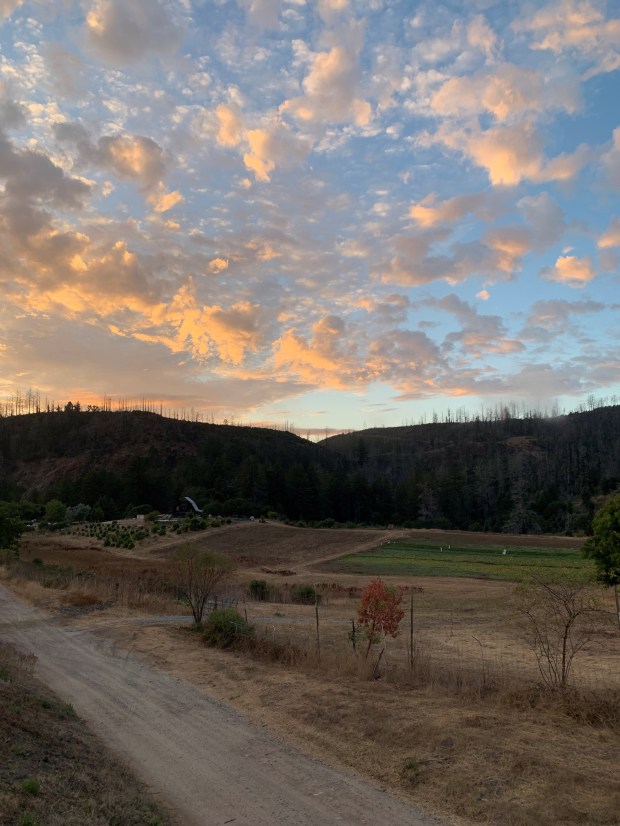
Three layers of clouds moving in different ways for different reasons woof in the soon-to-be rainy season. Time to put up firewood and stuff.

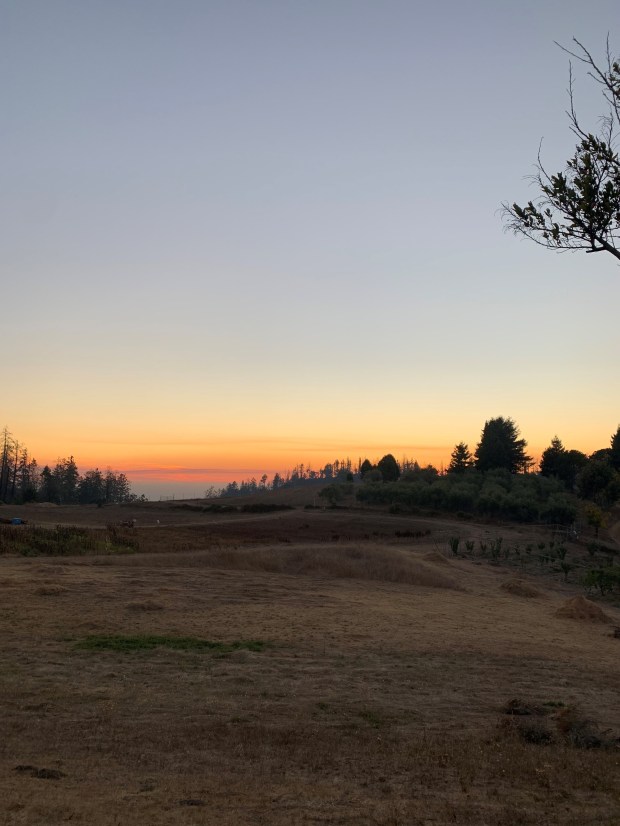
Sunset peach clounds dance above the barn, fields falling into darkness. The day’s last colors.

Another cool night pinches the sweetness into the many ripening apples.

This week spells big transitions for the Farm in another way. Day by day, each morning the chainsaws got closer and finally they emerged from Above to Here this week.

Burned Tree Control along Warrenella, Thanks to San Vicente Redwoods Conservation Partnership, photo by Sylvie Childress

Changes on the Land

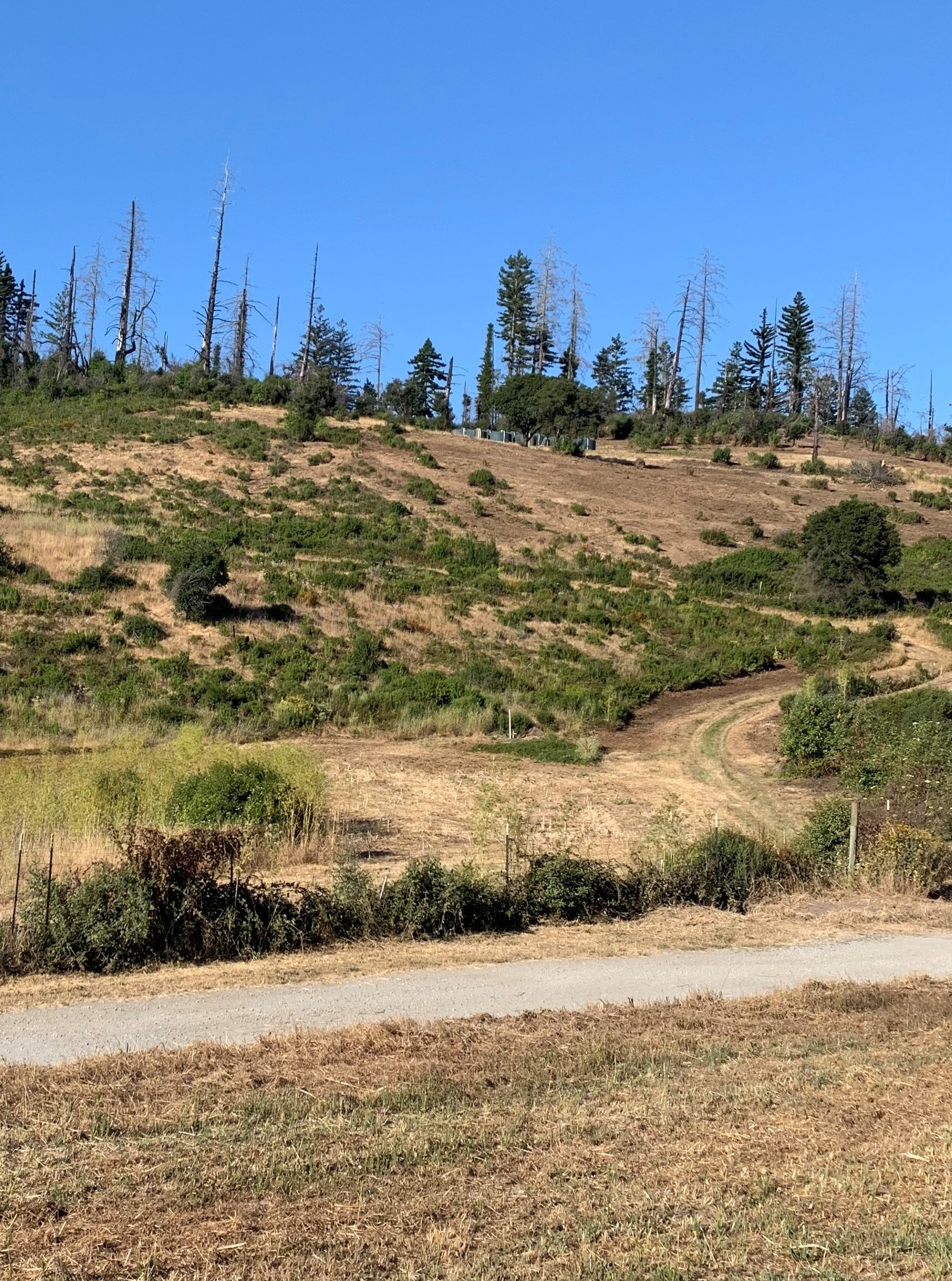
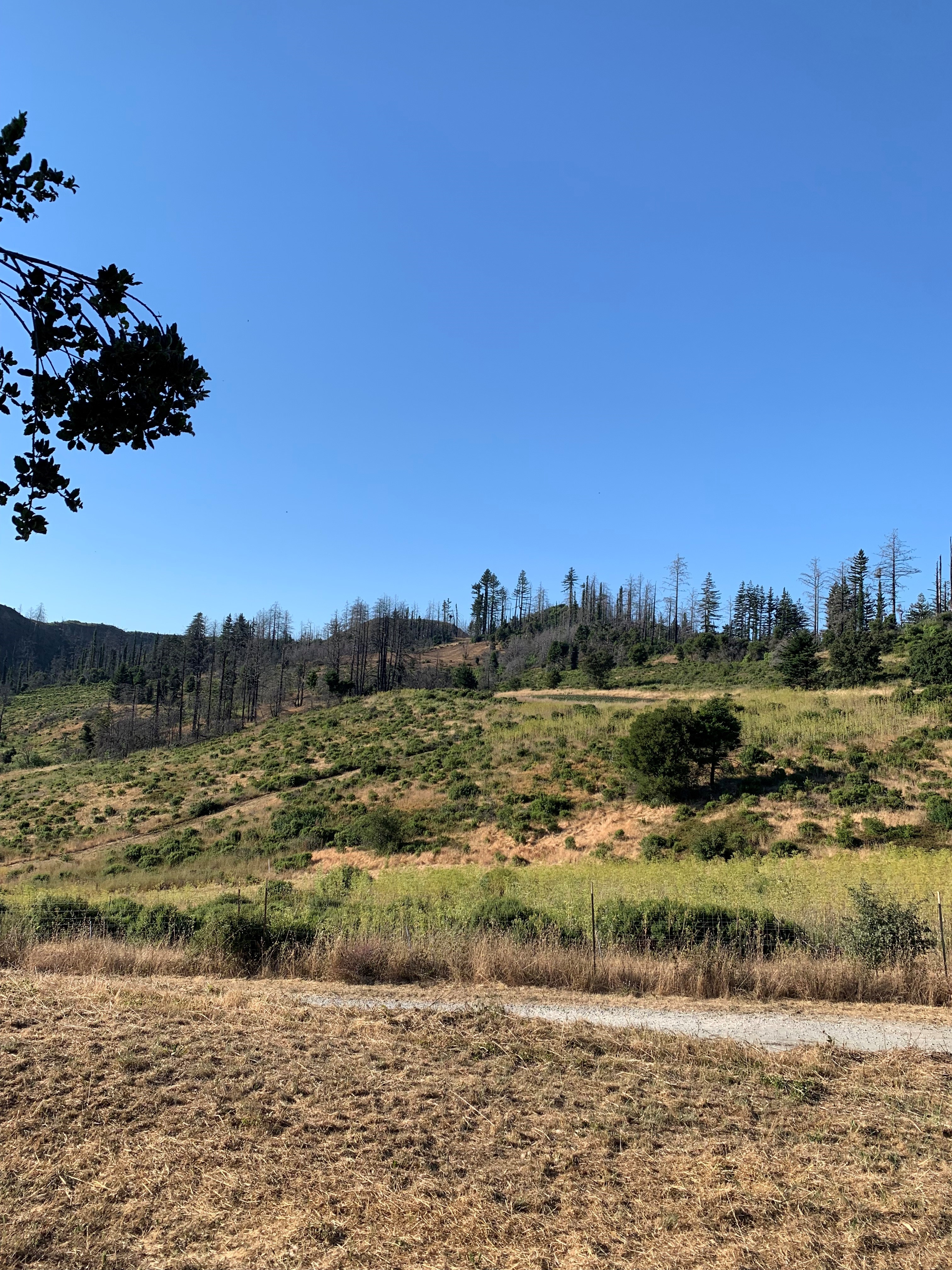
We have made great progress each year after the 2020 CZU Lightning Complex Fire blasted its way into our lives and across the property. The Big Leap recently was the clearing of hundreds of dead trees along the most proximate stretch of Warrenella Road. Our Good Neighbors have found the capacity to clear the trees that were killed or badly damaged by the fire…each and every tree that could have otherwise fallen across our road is now on the ground. Massive numbers of tree skeletons suddenly lying on their sides. (that particular area carpeted with a kind of yellow-flowering groundcover deer brush last spring).

Several close calls with waves of rain from the North this past week help the Fear of Fire fade, but it hasn’t yet become wet enough to allow the relaxation of winter rains’ wildfire reprieve.

Tomatoes!

The lack of rain relieves the tomato growers because wet tomato plants can undergo late season fungal and other blight disease melt down. The acres of tomatoes lie heavy with juicy red ripe fruit that we can’t really keep up with harvesting: too many tons all at once, and where would we sell them all anyhow? Pots full of sauce ladled into canning jars. Humming hot blowers from dryers, trays of tomatoes shrinking. Sweet, sweet tomatoes! Our favorite season. Comparing what each other can DO with them: a tasty half-dry/reduced chopped tomato relish brightened with Calabrian pepper oil a recent favorite from fabulous cook Mark Kuempel (thanks!).

Sunset on the Farm

The Deer

The Deer are (still) busy eating up apple culls. A GIANT buck proudly stands tall with excellent contrasting patches of remarkable white and black. Sylvie’s ear caught the Most Curious of Deer noises: ‘a whirly-gig’ she said. Here’s a link to the surprising noise, in the first few seconds. OH! How odd the rutting season!! We have never had so many bucks so close up; perhaps the fire made a lot of deer food and the population is headed high.

Apples

During our regular, well-attended working bee, we had an ad hoc apple tasting last weekend and found some pretty surprising results. The Cox’s Orange Pippin was almost ripe and ripe enough to cause yummy noises as well as some picking. An offspring of hybridization of that one, the Rubinette, also to a lesser degree caused some ‘oohing’ and taking of almost ripe fruit home. Areas of Fuji were getting nearly as ripe as the Galas, both at least a week away. The frightening part of this news is….there is a good chance that most of the 9,000+ pounds of fruit we have in front of us will ripen nearly simultaneously. Here comes the juice….a jolly pressing matter.

Harvest

So, yes, this is the season of harvest. Out in the fields gathering, hauling boxes and buckets back to the Barn for packaging for market, driving vehicles weighted down with food miles and miles to sell. Out early back late, hefting sore muscles balanced by glowingly thankful faces, friends, strangers all in awe of the best food on Earth. Molino Groupies. Two Dog Groupies. Unbelievable! People with Molino Creek Farm Tee shirts from years and years ago, hefting Molino Creek bags. Cheering friends welcoming the food we continue to produce from this verdant land. The harvest won’t last long. We are lucky if the food keeps coming in until Thanksgiving: just 2 more months if the weather holds! This is why we try to preserve the season’s flavorful foods by straight up canning, or roasting and then canning. Dried or canned tomatoes shifting to dried apples or canned applesauce. The prunes, however, aren’t so numerous and the competition for the best prune desserts is ON around the Farm.

Harvest Company

Whatever one does outside, one has company. Face flies and other summer flies are at their zenith. The newly born and mother cows on our drive out are covered with them, but we are just annoyed. The buzzing buggers dive over and over into your ear or make your eyes continually squint and blink as they bombard, zig-zag, or dive for a taste of you. Battling those annoying flies are the legions of dragonflies patrolling the air in patches; we could use more to vacuum up the more annoying flies.

Full Moon, Equinox Coming

This coming Sunday at about half past 5 in the morning we will cross the line where day length is equal to the hours of night. Fall Equinox marks the turn towards night, towards the long cold, onto California’s rainy season. One more month, October 15 is the date of the average commencement of rainstorms. Sometimes we can get a lot of rain just before then. Approaching this High Holiday was the Full Moon we just passed making the sky glow like day all night long.

We hope you had a Good Full Moon and will take some time on Sunday to reflect on the changing times.

Cool Breeze, Mild Summer

Most days, the gentlest breeze lightly cools my skin, carrying fresh, oxygenated air inland, moving upslope from the ocean, through the redwoods and oaks and then across the sunny, chaparral-covered ridges of Santa Cruz County’s North Coast. Triads of days are hot, and sometimes wickedly windy, but those spells have been a week or more apart this idyllic summer. Slowly fading days glow peach before starry nights take over…nights rife with meteors trailing across the Milky Way accompanied by a continuous varied melodic chorus of many cricket species, some with higher notes, others lower. Great horned owls, woo-whoooo, woo-whooo, through the night, hooting the stars across the sky, hooting through the first pale light of dawn. Sunrise is subtle, no color, and it takes a while for enough warmth to build to make the breeze start once again.

The Ghost Trees of Morning

The rising sun reveals a startling new, bright glow from the Olive Orchard. Those gorgeous trees were silver before, but now they shine stark and ghost-like, coated by bright white kaolin clay with the hope of protecting the olive fruit from pests. Momentum is building with the Olive Oil Enterprise, budding new farmers working at a new scale with a new crop…steep learning curves with dreams full of delight. The (heavy) press is here, so we must get more serious. White trees, a sign of progress.

Kaolin Clay on Various Varieties of Olives

Pepperlific

Two Dog Farm, famous organic pepper growers, are rockin’ it. The plants were slow to go with the cool and all, but now that they have started, the fruit is forming thickly. These farmer pros coddle rows upon rows of padron peppers, a frying pepper delicious as an appetizer- a seasonal treat that means late summer and is not to be missed. Molino Creek Farm has long created peppers; we even named a field “The Pepper Field” even though we grow other things there, too.

Two Dog Farm’s Tasty Padron Peppers

Flowers

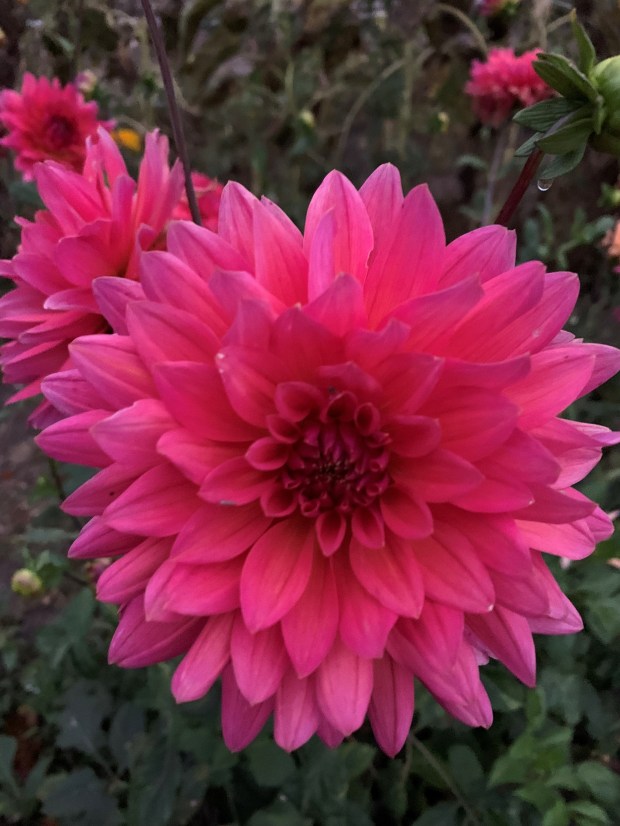
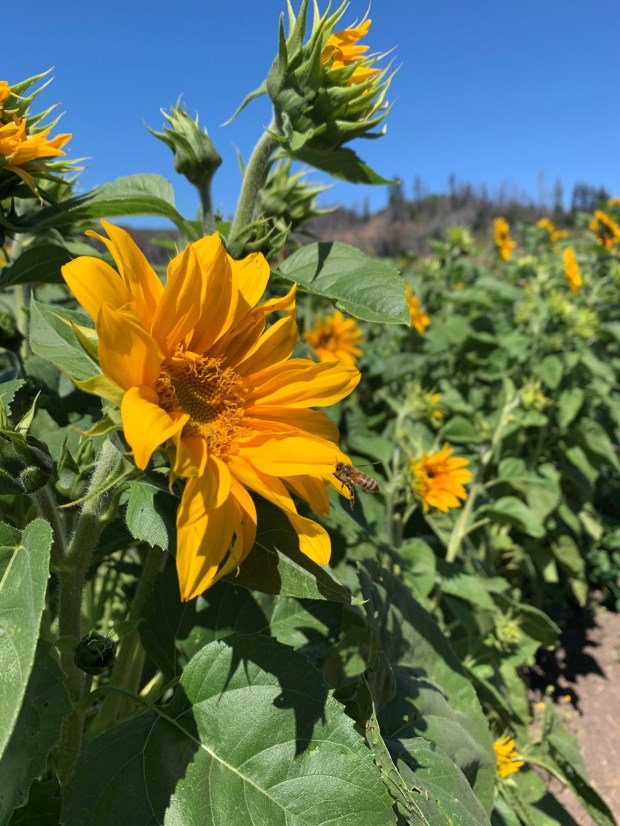
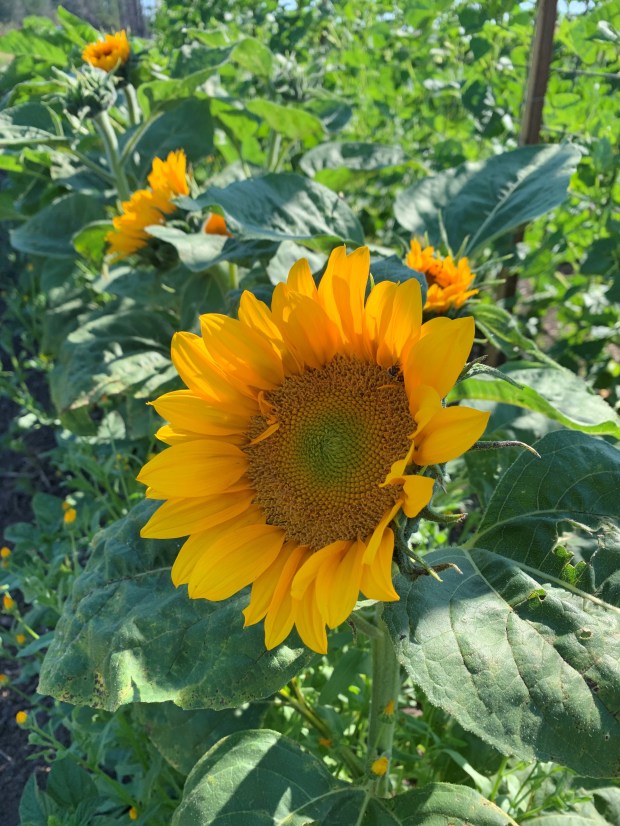
Tamed flowers, wildflowers…we have them all. Buckets of carefully bundled sunflowers are off to market and the rows of plants create the cheerfullest sight. We are still growing some outrageous dahlias, mostly dark maroon with long slightly curved sunburst petals. In the less tame sections of the farm, native California poppies are peeking up through the mowed grass with a second spring of bright color. In the heat of midday, the bumblebees show their appreciation for the mowing-released poppy patches: big furry black bees bouncing between blossoms.

California Poppies in the Interstitial Areas we keep Mowed

Birds

The approaching Fall has suddenly created changes in the avian world. There are no more young quail- the coveys consist of robust, adult-sized birds, flowing in large groups across grassy expanses nodding, scratching, and pecking through the thatch, slurping up oceans of seed. The raven pair, Maw and Caw, are calm again, no longer chased by their obnoxious children who went somewhere, somehow, to fend for themselves. Now there is only an occasional raven caw instead of the incessant cawing of not that long ago. The barn swallows left in the last two weeks, so the wheeling in the sky is now only the smaller and squeakier tree swallows. The turkeys must have grown up, too: they all seem big, and large hens are constantly strolling through the apple orchard pecking at fallen fruit (yay!). That same orchard has seen a downturn of acorn woodpeckers devouring perfectly fine apples on the trees. The acorns got ripe on the tanoaks, a much more wholesome and longer lasting (in storage) food. You can almost hear them scolding each other: stop with that high-sugar diet! Stop Pecking Apples! We need carbs! We need to store food for the winter! Let’s get those tasty acorns!! The jays, however, did not get the memo: they are still making lots of holes in the apples.

The Apple Glut Solution

Not to worry, there are enough apples for All Beings. Thousands and thousands of apples. Estimated net production upcoming, for this season, just between 2 weeks from now and Thanksgiving: 9,000 pounds! That is the most we’ve ever produced, and this is just the beginning. It will blossom into much more (if we don’t have a wildfire) over the next 10 years. What do we do with all the apples!? That is a pressing question. The answer is, in part: Juice! Hard cider! But, I’m not sure we have enough containers…and enough cider makers…or enough cider drinkers. The Party must go on.

Native hazelnut, in our hedgerow fruiting

Mild

A wet winter, a long, cool spring, and an idyllic summer make for this dreamworld that is the setting for our lives right now. It is difficult not to notice, but we can look past it, as normal, if we aren’t careful.

Summers past, not so long ago were so hot, so dry…a knife edge between getting by and disaster, between exhaustion and anxious, worried pacing, staring at the sky, shaking our heads at the drought. Back then, all life hunkered down by day and crept slowly out only on the coolest of nights. Even the crickets were muted, the days still or roaring with unnatural dry hot winds.

This summer’s gentleness smooths our worry lines, and all creatures are at ease. Birds chatter and cheep all day, long conversations. Night ants pace in groups and in lines on trails comfortably, every night, all through the night. Rabbits and deer proliferate, gorgeous big-eyed young curiously exploring their vibrant, food-filled world. Trees grow long branches. Shrubs are lush and bees buzz everywhere.

We are thankful for this year, in this place, at this moment. And we are aware that not everyone is so lucky: we hope for better years for those roasting in Arizona heat, deluged and drowning in African and Asian floods, or backed into shrinking, suffering habitat in the depths of what is left of the Amazon. And, we are wishing you well.

The Slowness of Extreme Heat

Happy Interdependence Day! I’m happy not to live under the tyranny of a monarchy AND I’m glad to be part of a community that recognizes the centrality of interdependence. The Molino Creek Farm Community relies on one another, exercising our various strengths to foster healthy farm life at its center. We include teachers, woodcrafters, a midwife, farmers, orchard tenders, bookkeepers and administrators, activists, road technicians, and natural lands managers. Many others join, from near and far. Together, we make this land sing: it depends on us, we depend on it, and everyone depends on each other. Nearly 4 years after the last wildfire, we feel that interconnectedness more than ever.

Name that shrub: one of our many hedgerow plants

Evening Scents

Each evening and early in the morning, the air is filled with the “seminal” smell of the male flowers of tanoak. It hits you strongly, suddenly: the pollen must release all at once after the evening arrives. As the sun was beginning to set, before the emanation of the heavy tanoak smell, there was a more subtle, pleasant, sweet aroma: thousands of white flowers unfurled from the field bindweed, a ground-hugging invasive morning glory- like vine of the tilled fields. There’s no detectable smell from a single bindweed flower, but en masse they sure smell pretty.

Summer Fruit

There is a pinkish blush on the first dry farmed tomatoes, but other fruits are riper. The 2 trees are young yet, but the first aprium crop is coming on: it looks like we might get 20 pounds to share among our community orchardists. They are delicious and almost make up for the lack of real apricots, which we can’t seem to produce in our cool coastal clime. The star of the show is cherries, but again too few to get to market: we anticipate 300 pounds of fat, dark red sweet cherries from the 18 trees that the fire spared. The 25 other recovering cherry trees in that block, grafted onto resprouting rootstock, will make their first sizeable harvest next year…starting in 2026, we’ll be back to ‘normal’ with 3,000 pounds plus of annual production if the stars align.

Next up this season…plums and prunes! The apples are silver dollar sized, at least, and growing. And, the avocado fruit have just set – if we can keep them moist enough, we’ll have a crop starting next January.

Sweat Investment

Even the mornings are hot as we greet the dawn ready for chores. First up: fuels reduction! Clipping, raking, and hauling the dry vegetation away from the buildings, water tanks, solar arrays, and pipes. Piles grow in the fields far away from danger…5 months from now and we’ll set them ablaze in the mist and drizzle. Today’s fuel will be tomorrow’s shrub-eradicating fire, each pile moved on top of a plant we want to eradicate.

The roar of mowers, whine of weedeaters, and buzz of saws soon obliterate the extended dawn bird chorus. When our own machinery isn’t running, we can still hear the neighbors working downhill towards us, maintaining the regional shaded fuel break along Warrennella Road. This past week we thank Brion Burrell for his artistic machinery management to reduce acres of French broom and other fire dangers to nothing, making the land around us healthier and more resilient.

Neighbors and Farm partnered in clearing French Broom and fuels away from water tanks
San Vicente Redwoods cleared an ancient meadow of post-fire French broom pulse high above the Farm

Early morning still: trucks trundle and people amble towards the irrigation controls. We reach down to turn valves, starting water flowing. Then we pace the water lines, inspecting for leaks. Earlier, ravens or mice have made holes in the plastic irrigation tubes, and out pours too much water, hissing loudly, spitting into the air, creating mud and disaster. Repair kits, a thorough soaking, and a bit of work later things return to normal and the cycle of wetting has begun on one more patch, once again. We are applying 45,000 gallons of solar pumped irrigation water from our well each week to grow orchard trees and row crops. That water makes tens of thousands of dollars of income and thousands and thousands of pounds of delicious food. And it takes lots of attention, coordination, and work to manage.

Wild Life

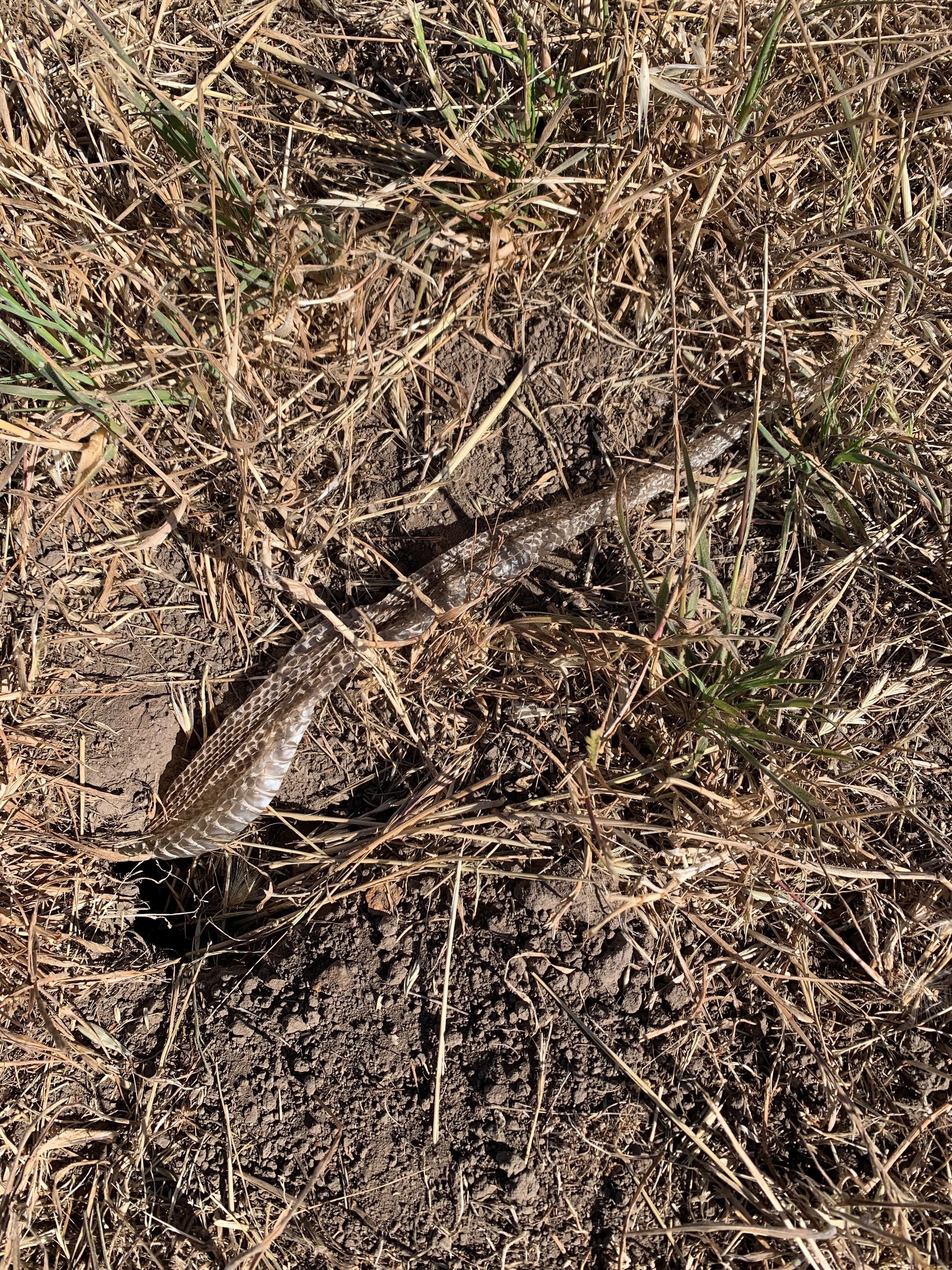
Those dawn treks for irrigation reveal fresh snake tracks, coyote scat, and weasel footprints. Gone are the days when you could easily see snakes, but they are still active around the farm. This past week must have been the right moon phase for reptiles to shed their skin. Fence lizards are still flakey. Shed snake skins have appeared, always trailing into gopher holes.

Gopher snake skin- as typical, entering gopher burrow

The regularly yipping coyotes are feasting on a big crop of juicy blackberries, as seen in their purple, seed-filled scat. Weasels are feasting on mice, and we hope they soon eat the surprising, sudden appearance of ground squirrels.

Very late but they finally appeared: dozens of California quail fluffies. The quail babies peep like easter chicks as they tumble and run along dusty trail and road, proud parents standing guard. The first younglings can fly, but most are still too young. A mother turkey is also shepherding a second round of just 3 much larger, still flightless and fluffy babies. High on the ridge, the purple martin chicks are in the air, noisy moist-sounding deep chirp-whistles give them away. They’ve done well this year. Maw and Caw greeted a third raven…a child from the past?…this morning – sometimes that one sticks around a few weeks, we’ll see.

Noise From Below

With the heat and extreme dry, we hope that no one sets the world on fire with fireworks at the beach tonight. The week leading up to this evening has been sporadic with preparatory explosions. The King Tides have made the beaches narrower, and the signs and Sheriff shoo people away, but still we wait with trepidation. May all we hear is the continued crash of the large ocean waves, lulling us to sleep with all of the windows open on these warm summer nights.

A Bun Dance

What do you do when there’s so much fruit that you can barely hold still? A Bun Dance!

What do you do in anticipation of a Great Big Harvest? A Bun Dance!

What does Mother Nature create when you take good care of the land? A Bun Dance!

(This poem built from Brock Dolman’s original notion of A Bun Dance)

A climbing rose in the Orchard hedgerow: full of clove scent!

Abundance is what we have. Perhaps over-abundance. It is fruit thinning time. Apples, pears, and plums all make more fruit than their branches can hold or that the market can bear. People like big tasty fruit: thinning makes the few bigger. Our pollinators do such a good job, there’s too many fruit for the branch strength. The meditative stroll into the orchard to inspect, fix water lines, and bask in the beauty suddenly changes: SNAP! Oh Shoot! A quarter tree has broken off, the top tilts onto the ground, a big ugly splintery break shines bright with freshly exposed, blond wood. We don’t want to see that, and too often we DO – budding orchardists must get better at their thinning jobs, “For the Sake of the Trees,” so we can do A Bun Dance.

A cluster of apples needs thinning
Apples on a new tree that has already been thinned, Schwew!

Heat and Drying

Suddenly, there was heat. The transitions between the seasons have been sporadic and forgiving. Winter faded into Spring with not a sudden cessation of rain but stops and starts of dry periods, rain storms coming farther and farther apart (“Sprinter”). Now, we have no expectation of further rain. Likewise, the transition from Spring into Summer brought us a bit of warmth and then really chilly, foggy spells (“Sumring”). This past week, we had Real Heat: up into the 80’s for the first time yet. The wind blew and blew from the East and then the North East – very unusual directions, carrying the dry Basin and Range or Desert air through to the Coast. You could almost smell the sagebrush and creosote bush (and sometimes you can). Just like that, things dried right up. The grass got straw colored, the soil got dusty, the orchard trees where the irrigation had not yet run started to wilt.

New Songs

With the onset of heat, still more migratory birds have arrived: the brilliant sky-blue lazuli buntings and red-marked black-headed grosbeaks have added their serenades to the morning air. The warmth also brightened the dawn chorus, now a melodious orchestra right at first light, nary a gap between song, bird talk filling the air, overlapping, notes complimenting and colliding, no conductor beyond Pure Joy itself. Windows open to welcome the cool night air, this chorus is made more clear and delightful.

The Struggle with Weeds

Farmers have planted the crops, weed battling commences. Some say that the great Central American civilizations collapsed because they couldn’t keep up with the weeds. A Monsanto representative who grew up in Sub-Saharan Africa argued with my opposition to Roundup herbicide, exclaiming: “What would you have us do…break our backs manually controlling weeds?!!? That’s inhumane!! That’s going BACKWARDS!!” Cheerful chatter floats up from the fields below as a crew with scuttle hoes carefully weeds between 2 Dog Farms’ just-germinating dry farmed winter squash. Organic farming shuns the synthetic chemical herbicides: not welcome, not allowed! The weeding crew here instead wields long-handled hoes with good posture and big hats, and they are full of conversation and laughter. At the same time we all get pumped to see the millions of weed seedlings quickly growing right next to the crops: time to get to work!

Suddenly Crickets

The long days have become warm. Some people were even growly about the chill, the fog, and the drizzle that have become our most frequent visitors as this long Spring crescendo slowly approaches Summer. The complaining people were particularly happy about today, and tomorrow will even be warmer. But this cool, moist spring has spread a vibrancy rarely seen across California’s central coast. The biggest grasshopper I’ve ever seen around here plopped onto the ground in front of me today and tonight the crickets have at last begun the summer’s starlight orchestra. The warmth of the day quickly fades as the night grows dark, and cricketsong wanes, replaced by a rare silent night, peculiar to the particularly cool spring. There is no wind, no echoing waves, no trilling crickets, and only a few sporadic hoots exchanged by scattered great horned owls.

Late Morning, Fog Dispersing

Sunny, bright sunrises are rare. Mostly there is the muteness of first light, glowing through dense fog. Wet grass. Puffed up quail sitting in pairs, barely moving. Slow motion rabbits tentatively beginning their daytime nibbling. The sun brightens, the fog grows thinner, and gradually bird songs escalate, becoming more diverse, varied, louder. The first bright rays carry sudden warmth, sending birds into the sky: hawks soaring, ravens patrolling, swallows chattering, swerve. The purple martins carry such huge wads of grass to line their nest cavities that they can barely fly.

As the sun takes full charge, it evaporates the dew, and a young coyote yaps and howls first from the forest edge, out of sight. She seems dissatisfied with her vantage point and trots out into the middle of a field to yowl and bark some more, glancing furtively about after each vocal session. This sets the neighborhood dogs to barking, and our coyote friend glances over her shoulder, seemingly annoyed at her domestic cousins’ primitive and unmusical repetition. Eventually, she moves on, and the morning noises go back to being dominated by bird song. Noon approaches.

Contrast of mowed, green and unmowed, brown

Drying

At every glance, there are contrasts between drying and still wet, gold versus green. Where we passed once with a mower through a grassy field, the cut area evaporated less water and is still wetly green whereas the surrounding tall grass absorbed the soil moisture and is already drying. Five foot tall tawny grass stands or falls over, crisscrossing, heavy with seed. A million things are hidden in that meadowy mess: snakes, rodents, bugs, spiders, and bird nests present a gallery of surprises as I collect native grass seed for restoring areas of the farm. The seed must dry in paper bags to be stored until first rains, to be tossed into the footprint of prescribed fire or along the tracks of mowers.

Vetch is flowering in our fallow fields

Flowers Still

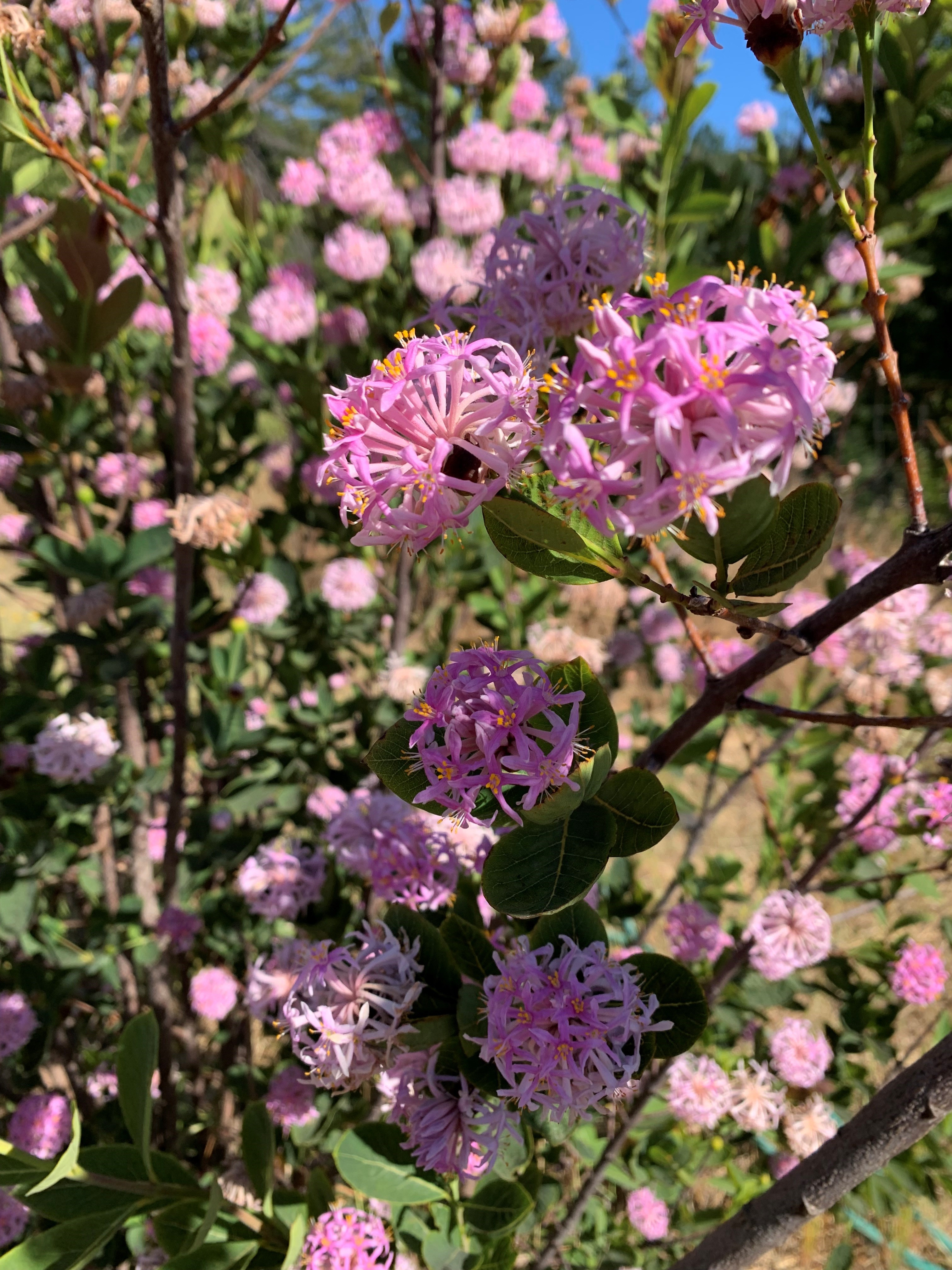
Despite the drying, it remains a very floral spring. Different types of vetch have only just entered their peak bloom. Poppies are in full display, big orange patches, rabbits eating their flowers. Monkeyflower is also in peak color, whole hillsides glowing peach-orange. Nearby, the post fire chaparral giant yellow bush poppies are blossoming, creating a peculiarly sweet, cucumber scent. That chaparral air is thick with resinous blueblossom odor accentuated sometimes by the bitter-sweet yerba santa, which is displaying clusters of lilac flowers. The forest understory is bejeweled with rosey globe lilies, bobbing and lush. The last native iris flowers are fading.

Ah, the promise of Lapins cherries for late June (nets up soon!)

Fruity Promises

The orchards are producing ripe citrus while thousands of other fruit grow marble- to golf ball-sized. We compare different types of navel oranges, contrasting them with Valencia, complimented by sweet Honey mandarins. The last of the limes are coveted. In the apple orchard, the fruit has set and is rapidly growing; it is fruit thinning time! Some of our apricot relatives are thickly laden with young fruit. The bigger patch of Lapins cherry trees will soon need netting. We peer into the canopies of avocado trees, hoping to glimpse at least some fruit set; last year was grimly non fruitful…these trees are notoriously unpredictable.

Watering

To keep the fruit fattening, we have started rounds of irrigation. That routine keeps us on our toes, especially the first cycles of water flow as the need for repairs are numerous. Inadvertent mower damage, winter rodent gnawing, or just plain mysterious breaks makes for geysers, gushers, and pouring leaks that must be detected before large tanks are drained. We seek leaks by noise more than sight. This was the first week that water flowed to most orchards as well as the 2 Dog vineyard. The irrigation will run through November, tens of thousands of gallons each week…mostly pumped silently by solar power. Irrigation efficiency has us using around half of what would be considered normal, let alone that a sizeable portion of our produce is dry farmed with no irrigation at all!

We are looking forward to the summer…and hoping not to get Too Much Heat (or fire!).

Dry, tall grass – a tangle that includes Calfifornia brome grass for restoration seed

Swarm in the Air

The air is alive with bugs and the swallows are happy. I don’t notice the tiny areal insects until dusk, by the sun’s slanting rays, but the barn swallows see them all day long. I’m sure that the swallows have learned, or always knew, which form of insect is the tastiest: maybe they dive for the biggest ones, perhaps they dart into a dense swarm of bugs with the right silvery flash, or maybe a lone moth flies in the right pattern to catch their eye from far away. Sometimes when I have the patience to watch the swallows for long enough, I see that several are crisscrossing the same patch of sky, or diving above the same patch of grass. It is hard to notice the common feeding ground because they never make tight turns, only large gradual arcs, to return to the same spot. They avoid crashing into one another by leaving a lot of margin, making it less evident that they are visiting the same feeding spot. How much of their flying antics are for feeding or just for fun makes it even more difficult to understand swallow-bug interactions.

Waves of Aphids, Troops of Predators

The slow flight of a tiny lone insect ends on the tip of a newly planted medlar. This mother aphid might soon have babies, the colony grubbing on lush new growth until it wilts. Close behind her another insect flashes red. A mother lady beetle somehow senses the right place to lay eggs where her offspring will have enough herds of aphids to feast on and grow fat. Close by, a yellow jacket wasp, aka meat bee, sips nectar at a flower; she might also be eating from aphid colonies soon – either lapping up aphid ‘honeydew’ or pinching apart their bodies or the bodies of the lady beetle larvae nearby. The acceleration of warm, long days and the lushness of plant growth is spinning up this circle of life.

The Hum of Tractor Engines

It is early morning and already a tractor is running, a farmer driving it from home base to the nearby field. The noise changes from jangling and a variable hum to a continuous deeper growl as the tiller commences row-by-row to prepare the soil for planting pepper plants, winter squash seeds and more tomato seedlings. Some tomato plants have been in the ground for weeks, and these need weeding and bed care. Bodhi recently cruised down those rows with the tiller, weeding the rows while also creating the soil mulch bed that is critical to maintaining soil moisture for dry farming. Where the tiller didn’t hit, right up against the tomato babies, a sea of the first paired leaves of weeds taunting the farmer, begging for hoe.

Jungle

Where not too long ago there were pretty patches of flowers, now it is disarray. The California poppies are buried in deep disorganized grass. Flower color has become muted, overcome by clouds of light green or even drying tawny. Where mower or cow has not touched, the meadows are 5’ tall. The overstory stems of the tallest of grasses, European oatgrass, hang thick with juicy seeds pendant and ripening. Where the soil is less productive, the grasses are already brown-dry and shorter with seeds ready to ruin your socks. Walking anywhere off trail is either a soaking experience (in the morning)(up to your knees) or a tangled, tripping, itchy experience (in the drier afternoon). Best to keep to trammeled areas, out of the jungle.

Thousands of Fruit

Apple petals have mostly fallen to be replaced by clusters of fuzzy, baby fruit. Instead of being a sea of white-pink blossoms, the orchard is fresh, light spring green with new leaves emerging from rapidly elongating shoots. Waist-high weeds have regrown where a month ago we had mowed to ground the cover crop. It is past time for another mowing. The baby plum fruit are already quarter-sized and shiny, too thick and needing immediate thinning; the apple fruit are close behind. Our regular trips to the orchard to fix and run irrigation have recently begun to include a pause to thin fruit. Soon, all attention will have to turn to thinning thousands and thousands of fruit to make room for the many fewer chosen ones.

Turkeys and the End of the Era of Fog

The last little while was so very foggy that one wondered if warmth would ever settle in. It has, but only a little. For instance today will be in the upper 60’s and the morning fog lifted by 9 a.m. The predominance of fog left its marks: taller grasses, lusher weeds, and too many patches of apple scab attacking the fruit and leaves. The fog also delayed the hatching of quail eggs, but the turkey babies couldn’t wait. Papa Turkey’s gobbling has paid off: Momma Turkey is herding a big family of babies up and down the trails and roads, out of the jungle of grass. Baby turkeys are fluffy and awkward, mother quite watchful. When she pauses and pecks, pickup off grass seed for lunch, her babies do the same.

Avocados and Oranges

Last spring was wet and rainy, and we see it with the current nonexistent avocado crop, but luckily there are oranges. If we ever get heat, the oranges will sweeten but for now they are ripe and juicy. We’ll have to wait for next year with the hope that this year’s avocado flowers get pollinated. Our 100(ish) avocado trees are growing rapidly right now. They are peculiar in that they make new leaves and shoots while shedding last year’s leaves…a kind of avocado fall. That transition leaves them vulnerable to sunburned stems; for this, we have been thankful for fog.

Fog, and Fog Lifting

Tall black burned tree trunks hazily emerge into view through the thick fog. Days upon days of fog prevalence make many scenes more mysterious. That eerie scene of black tree poles joins other fog-induced memories this past week: puffs of blowing dense fog hiding and then revealing drippy, dark groves of live oaks; awakening to a wall of silver cloud obscuring everything beyond the window ledge, and one evening’s approach of fog…suddenly pouring over the farm’s western ridge and down the hillsides towards the farm like a wave of terrifying suddenly-released floodwater. Each morning every spider web is illuminated by silver moisture, every leaf and blade adorned by shiny droplets.

Us Moist Critters

The dawn bird chorus is delayed and the songs fewer because all animals are made chilled and sleepy, enveloped in low clouds. The brush rabbits shake the wetness from their pelts between bouts of meandering nibbles. Extended families of quail wander slowly along roads to avoid vegetation soaking their feathers. In the absence of bird song, there is a more peaceful constant patter of dripping. Sweaters, jackets, and long pants are in order for spending time outside. The richly humid air makes breathing feel refreshing and helps accentuate late spring farm scents.

Peak Perfume

The transition between spring and summer is the season of peak perfume. Eight foot tall bolting poison hemlock emits its telltale dusty, bitter odor, which carries far in the fog-moist air. When the clouds lift and the day warms, sweeter, resinous scents are released from the sage, coyote brush, and fir. Fresh-cut-hay smell is omnipresent across the fields and down the roads as mowers constantly challenge the burgeoning grass. Warmer days bring surprising clouds of sweetness, begging for a pause to ponder the origins of scent: madrone, French broom, lilac or lupine could be the source, but maybe there’s something new to discover. I squint to the distance, upwind for patches of flowers, then shift my gaze closer to see if there are bunches of hidden flowers. There it is! –  clusters of tiny poison oak blossoms sparkling with nectar and wafting notes of clove and citrus.

Fog recently drapes the ridges surrounding Molino Creek Farm

Drying

The drippy fog does little to keep the inevitable drydown at bay. Deep soil cracks split and widen. Dust cakes vehicles and brush along the roads. This is the first week that the farm must irrigate everything or the plants will wilt and begin to die. The solar well pump runs continuously and the diesel generator will start shortly to push greater volumes of water to the grapes and storage tanks. The summer pattern of orchard watering commences: zig-zagging across acres of trees, digging 8” deep into the soil to test moisture, adjusting irrigation strategies, turning valves, recording data, monitoring storage tanks, and communicating between many farmers to assure smooth operations. For now, cool days keep this work less hectic, but one eyes the forecast and makes plans for hotter spells.

Molino Creek Farm’s amazing onions, freshly planted and regularly irrigated

Snakes, a Month Late

April is normally snake month, but the cool, wet start of this season delayed the emergence of our slithery friends. Sylvie and her brother Isaac reported a surprising night time rubber boa, crossing the road despite the drippy fog. Smooth, fresh snake tracks cross the dusty roads, always wisely perpendicular. An irate hissing baby gopher snake lunged at my leather gloves from a patch of freshly pulled weeds. We are constantly surprised by scaled creatures jetting away from disrupting orchard management: a swift yellow-bellied racer snake, head held high, escaping…giant alligator lizards making for safer ground away from hoeing. Wherever we look there are oodles of lizards and snakes, an homage to organic tilth, the diversity of plants, and the wealth of prey that result from good land management the collective respect for nature found at Molino Creek Farm.

Cherries, lushly growing with irrigation and nestled in fog drip

Night shifts to dawn

At first darkness yields only very slightly and the first bird to sing is quiet, murmuring a few quizzical, uncertain, almost apologetic notes. A few minutes later, that same bird sings the same few notes, sounding a little more certain. A second bird joins a little while later, more certain still. Dark turns slowly to gray and more birds start singing. Soon, dawn rushes on, the sky lightens, and many birds start singing, no gaps between songs, many species, many notes. The cheerful Spring dawn chorus fills the chill morning air as color begins to spread across the landscape in advance of the rising sun. By the time the first rays brightly illuminate the ridges, the bird orchestra is loud across the farm and as far as you can trace sound. Each taller shrub and at the top of many trees there are tilting, perky birds, beaks outstretched, singing away.

Spring Antics

As it warms, bluebirds and black phoebes flit about, catching bugs. Barn swallows warm on perches awaiting a brighter sun before taking to the air. Towhees strut through short grass, darting at one another, chasing for fun or territoriality. As the dew dries, one of the yard bunnies hops inquisitively towards another. The wide-eyed approached one suddenly flattens itself hugging the ground, snaking forward slowly and then faster on a pathway through the low grass, ears back, while the other hops again and again over its pancaked friend: what oddness! Spring morning antics.

Big Oaks in the background, Green Fields in the foreground. Life is a Rich Green

Green

Bolting grasses dry from the tops and from the bottom. The tallest grasses turn tawny above still-green fields. The grassy understory is browning, too. A gust carries dust clouds away from the road and across the fields. Despite the drying, overall a lush green prevails. Big bushy oaks shimmer life above pulsing green fields. The morning warmth massages a sweet perfume from the grass, which changes with the drying day to the scent of dusty pollen. Middays have become quite warm, though sometimes breezy. Cheerful bird solos continue right through the day.

Birds in Air

The afternoon breeze carries soaring red-tailed hawks, loudly screaming, one following the other in broad circles, high across the sky. The ravens, too, enjoy soaring on the wind but more in long arcs from one side of the farm to the other, loudly beating their wings and furtively glancing about for something to scrounge. Something startles a flock of band tailed pigeons, and they take flight but not so high in the sky, making for one patch of trees, then suddenly veering to another. One pigeon isn’t paying attention, gets too far ahead of the others, which have turned for another destination; it panics and wheels about, making lots of strong and rapid wing beats to catch up to its family.  The standard number of pigeons is 14, but the flock was 30 for a brief bit…some apparently were just passing through. The regular flock patrols the walnut trees hoping for ripening catkins which will shortly make them fat and happy. I’m not sure what keeps them fed in the meanwhile- there doesn’t seem to be much to eat for those big birds.

Molino Creek Farm’s Dryfarmed Tomatoes – Just planted this week

Planting

Bodhi and Judy have been planting the summer crops. Long rows of tomato seedlings are settling in nicely, in less than a week already overcoming transplant shock with perky new leaves facing skyward. Succulent leaves of freshly planted onions contrast greatly with the deep brown soil, poking up from row after freshly planted row. Green crop seedlings are hard to see in the broad swaths of brown, tilled soil, striped in rows of tractor tire tracks.

Lapins Cherry Trees – Thanks, Drake Bialecki for the grafting!

Peak Bloom

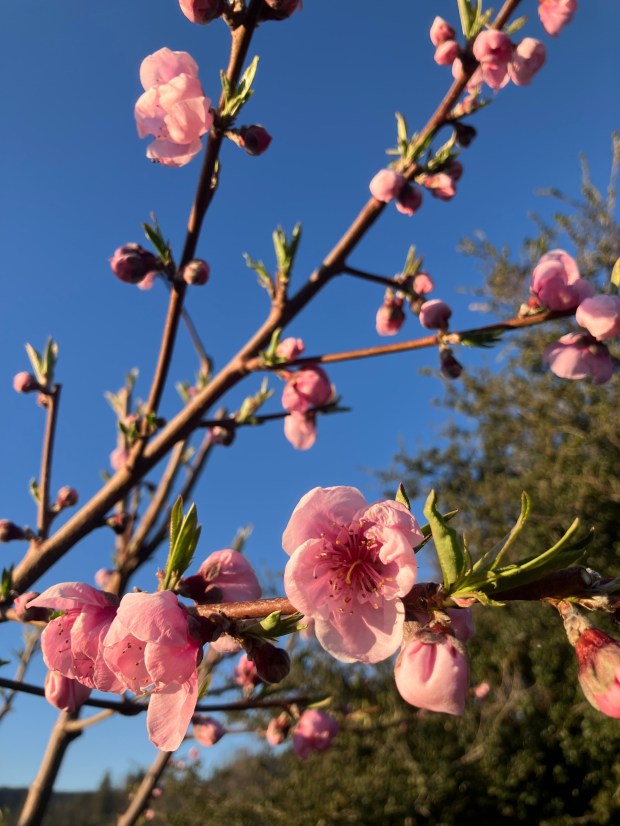
The orchards are in peak bloom. Though the cherries are just a bit past peak, on average the various varieties of other fruit trees make for the most floriferous moment in orchard bloom. With so many flowers, the trees have created a thick blanket of pink across the hillsides. The avocado spring is more subtle, but still their masses of tiny yellow-green flowers overshadow both the broad, old green leaves and the emerging spikes of purple-bronze leaflets. I was pleased to find honeybees on the avocado flower clusters today- the first time the hive has turned its attention to this essential service. Peak bloom, however it appears, is beautiful, the blossom parade a constant show of dancing pollinators one type arriving after the next. As the day progresses, the afternoon warmth waves clouds of ecstatic perfume into the aisles. Gradually, the day cools and the scent changes back to grass and mold and dew.

Two Dog Farm Chardonnay – SPRING!

Evening

The light fails and great horned owls glide silently out of the tall trees on the canyon edge, across the farm fields. They perch on fence posts and trees closer to the rodent-filled grasses and weeds. When the sun disappears behind the ridge, the evening turns quickly colder. As the setting sun finishes raking the higher hillsides with its golden glow, we retreat home for sweaters and wool hats. Chores demand further outdoor time until the light completely fails, now at almost half past eight. Burr! It turns cold with the darkness and gets chillier all night. Recently, it got down to 44F by dawn. Some fruit trees long for hundreds of chill hours, leafing out only after arriving at their total: their clocks are still gathering those hours, and the (shortening) cold nights keep them snoozing and gathering strength for their (eventual) leafy season.

Sky lupine and purple needlegrass on one of the Farm’s ridges
Bicolor lupine and more on a knoll on the Farm

Wild Flowers

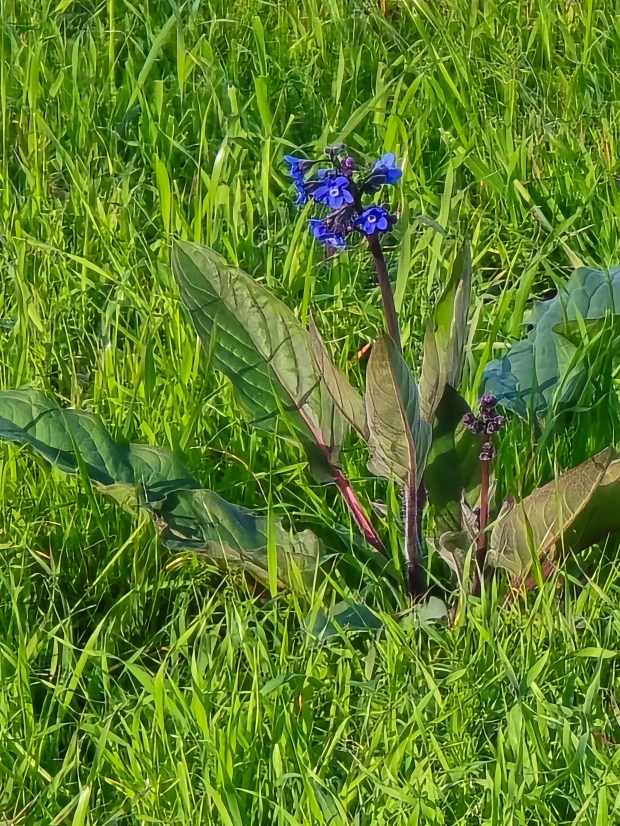
The wildlands are blooming spring. Two types of lupine, the big and the small, as well as poppy, tarplant, blue eyed grass, vetch, and purple sanicle have burst into flower and paint big patches with crazy color mixes and fascinating patterns. In the forest, white starburst panicles of fat false Solomon’s seal and the simpler four petals of purple-white milk maids brighten road cuts above Molino Creek Farm. More than anything, miles of the fire-following shrub California lilac throw rafts and sprays of pale blue blossoms, drowning out their shiny green leaves. The scent of this blueblossom is heady and sweet, but only faintly like the more-sweet perfume of the old-world traditional lilac which also has much more showy flowers.

California lilac
Old World Lilac

Misty Stillness

After work it is time to walk around the farm, legs swishing through soaking grass. Each one I touch lets loose a shower and, lightened, the stems straighten for a bit until more mist collects. Where I walk today and where I walked yesterday will remain evident for weeks: tall, lax vegetation flattened and so fat with moisture as to be unable to get back upright. Above the tall boots my pants still get wet; the grass is 3’ high. The mist muffles sound like snow, and it is very still. The moist chill has hushed the birds, the only sounds my feet and the dripping of a million drops.

Native brome grass and poppy, laden with moisture

Composting Fields

The brief drying and warmth allowed everyone a chance to mow and till, but there was still not enough time. Some fields got more thoroughly tilled than others. A sweetish funk of rotting cover crop hangs in the air near turned up earth. Topsy turvy pieces of cover crop stick out of the mud, the finer leaves and stems melting into mush. The tiny pieces of ground up punk will enrich the soil, hold moisture, feed microorganisms, and nutrify plants. “Green manure.”

Freshly tilled, ‘Pepper Field’

Standing Crop

In the orchards, the cover crop gets cut but we don’t till. This year, in the poorer soiled areas between trees, I ran the flail or mulching mower, grinding up the cover crop to feed the soil right where it grew. Where the fava beans are towering taller, it’s the dance with the sickle bar mower, cutting the tall plants, which fall in rows to dry and then get raked as mulch under the trees.

I keep the orchard mower regularly running not just for exercise but to ‘keep up’ with re-growth. It is nice to get March rains after the cover crop is cut. The ongoing moisture allows the soil to digest the shed off nitrogen rich cover crop roots and make that food available to wakening trees. It is becoming critical to mow the last of the fava beans, but there is never enough time. The Avocado Bowl and Cherry Hill cover crops are going to be 4’ tall soon, thousands of flowers feeding hummingbirds and bumblebees. I hate to deprive those friends of their nectar.

A sea of fava beans (and vetch!) surrounding the Avocado Bowl

Cherry Buds Swelling

The cherry trees are about to flower. Buds are showing color and the sleek red bark is taught from running sap. It is the last moment to observe the bare tree architecture and envision summer pruning. The old, fire-damaged trees are hanging in and the ones that died, root sprouts grafted, hold lots of promise to become more tree-like this year. The piles of grass mulch the Orchardistas hauled and stacked last June have almost entirely melted away but not too soon: there are few weeds where those mulch piles sat at the beginning of winter.

Lapins cherry buds nearly bursting
Old, fire damaged cherry trees (left) and the sprouted Colt rootstock grafted (right)

Native Wildflower Spring

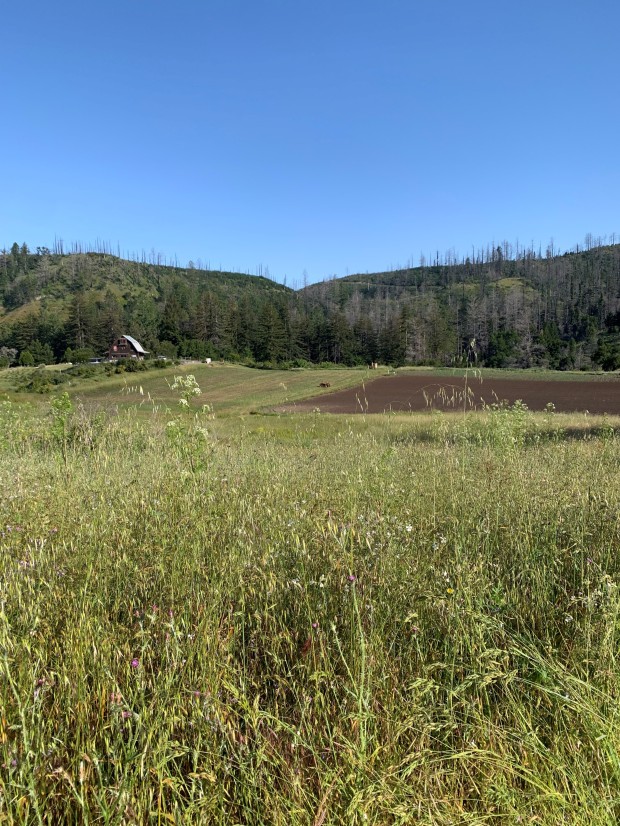
The Community Orchardists not only steward trees but also the mulch fields, some of which are becoming amazing and beautiful native grasslands. Molino Creek Farm was a hay farm in the early 1900’s. It still makes fine hay and those hayfields are alive with many flowers and lots of wildlife action.

Our farm has a curious pattern of shallow-soiled knolls surrounded by pockets of deep soil. The rolling landscape provides for diversity in crops and native habitats. It seems that cutting hay (at the ‘right’ time) and hauling it to the trees as mulch has helped wildflowers proliferate. We are at the onset of poppy spring and two types of lupines are soon to glow. After that, rafts of tiny tarplants will flash yellow each morning. The brome grass has already started and will keep producing seeds at the end of waving graceful arched stems, towering over the wildflowers. Blackbirds march noisily across these fields in lines, scaring up the bugs that find feast in grassland diversity. A giant mound indicates gopher action, a few seedling poppies germinating on the fresh, moist soil. Networks of pathways and open burrow entrances means voles are active. Deeper, bigger holes with fresh claw marks – coyotes at work digging up furry late-night dinners in the hay fields. Where we don’t collect and manage for hay, those fallow fields are humpy with thatch and scattered with shrubs and poison hemlock: a different type of habitat…one which we hope we can muster new energy to manage. More orchards- and more need for mulch…the fate lies with the capacity of Community Orchardists.

Poppy, brome, bicolor lupine and madia- cutting hay creates knoll diversity!

Pulsing into the Dry Season

This is the hardest-work season for the farm. Everything needs doing, and it needs doing all at once: mowing, tilling, planting, pruning, burning, weeding. It’s a race. We’re racing to keep the fields mowed before the birds invest in nests amongst the tall, inviting cover crops. A tractor changes from a purr to a rattle or a high screaming whine: oops! It broke. Backup tractors and backup tools come out- there’s not time to fix things! We chase the weeds and cover crops, tractor-chopping them into little pieces before they set seed.

New Farmer!

Its Bodhi Grace’s first year actively farming at Molino Creek Farm as he takes the helm of the big fading orange, old Kubota tractor: back and forth, back and forth. We manage to have two generations as members of the Collective: what a celebration! Go Bodhi! His infectious smile cheers us all. Good posture on the tractor seat, he rocks out with music through headphones that somehow manage above the din of the tractor mowing. For the first time, the tractor has a big colorful umbrella for shade.

Mowing the Fava Bean Cover Crop in the Old Apple Orchard

Drying, Tilling

The fields are nearly mowed, but still things resprout until the soil gets turned. We poke at the ground to make sure its not too wet to till as we don’t want to compact the soil and we don’t want the drag behind disc to churn up big mud clumps. A couple of weeks of dry warmth and already the mower throws up a few puffs of pale brown dust from the shallow-soiled portion of a field.

Birdsong

Spring’s bird songs have flourish, notes elongated and fancier than wintertime conversational peeps. The first male barn swallows returned last Saturday night, greatly changing both the soundscape and the visual show. Now, fence posts and rooflines emit the swallows’ metallic squeaks and burbling. Crisscrossing the sky, jetting swallow silhouettes grab attention mostly because of the absence of many months. The swallow women were weeks behind the guys last spring; I’ll count this time.

Bluebird’s flashy blues and finch’s purple reds are especially vibrant with breeding plumage. Beaks agape, heads thrown back, song sparrows furiously belt out long and complex solos from atop the tallest white-flowering radishes. Are they proclaiming nesting territory, or are they just celebrating the longer days and the finally warm sun? It has been a long, wet, cool, blustery winter. The unusually poor weather undoubtedly claimed lives.

Late Winter Harvest

Even this time of year, there’s a harvest going on: citrus! Each day presents a few more ripe fruit from the 250 pound harvest of seedless, somewhat surprisingly sweet Persian limes. These limes are yellow-when-ripe, and that is surprising to many. We’ll first distribute to the Community Orchardists and then to Two Dog Farm, who take them to market or to their chef who jars delicious lime marmalade.

Oranges, too, are coming ripe. Navels, Velencias, day by day a little sweeter, a little more juicy.

Sun to Rain

The week’s dry heatwave will break the day after tomorrow and the world will transform for many days to clouds and drip. Mist will blow across the fresh-mowed fields and showers will soak the already thirsting ground. Puddles will fill for already longed-for bird baths, and the newts will march once more, moving towards creek or grassy tunnel system.

An Unknown Bee Visits Flowering Currant, a hedgerow plant at Molino Creek Farm

Bees

Petals close and nectar slows with cooler, cloudy weather. Bumble bees will be hungry. Flowering patches and warm days create quite a buzz. I’m a newfound bee watcher and notice a new bee every few days; today, it was loudly buzzing, honeybee-sized, gray, furry bees… shy and furtive, and very fast. The first bees of spring are still around- giant bumblebees either gracefully bopping between flowers or klutzily fumbling in the grass, seeking burrows for raising brood.

We hope you enjoy the emerging spring.

-this post simultaneously made on Molino Creek Farm’s website