fire and fuels management

Fire Era

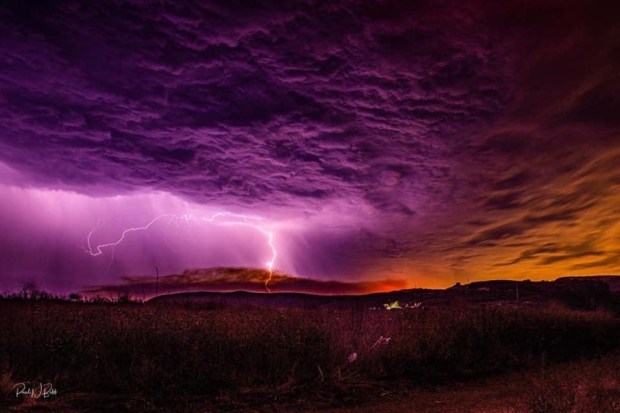
It seems like the world has changed. As I write this on Tuesday 9/16/25, Tropical Storm Mario is headed towards California. Back in 2020, the CZU Lightning Complex Fire was the result of another such situation, via Tropical Storm Fausto. And, as with 2020, there is a lineup of such storms…another is predicted soon after this upcoming one. We look forward to the regular Fall rains to start, typically on October 15. Meanwhile, we wait to see where the lightning will strike and if someone can extinguish the flames before the resulting inferno.

I moved to Santa Cruz in 1986…did I somehow miss old timer stories or some other form of history that tropical storms, lightning, thunder, etc., are ‘normal’ for this part of the world??!!

Does this seem normal to you?
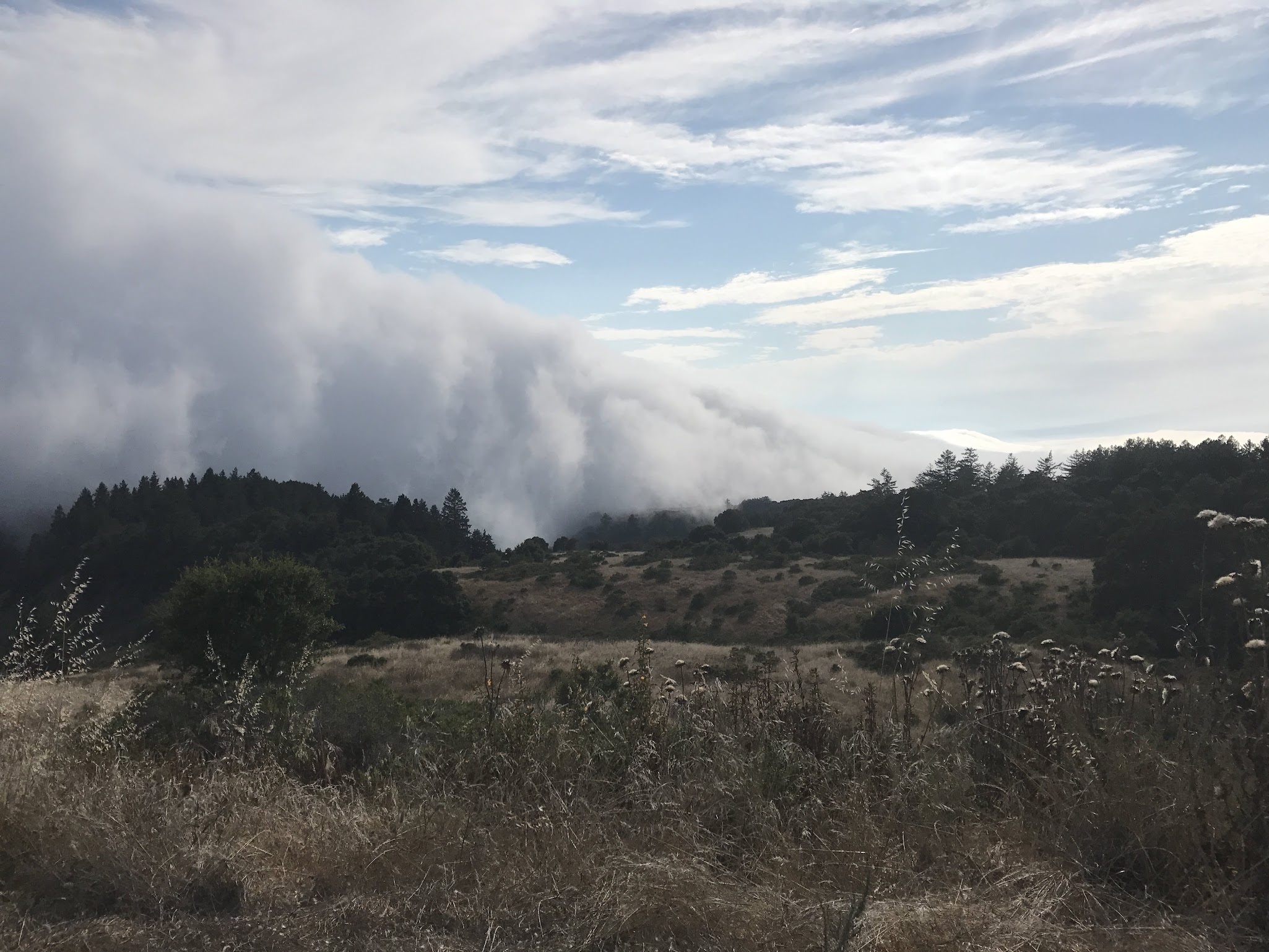
An ODD wall of clouds eats a North Coast ridgeline, quickly (from the South) – how unusual! Aug 2, 2017

Changing How We Live

All us country folk are changing the way we live, out here on the outskirts of towns. 

Many modern Californians lived for decades in the “woods.” They had sprawling outbuildings full of canning supplies and landscaping tools, tractors, chicken coops, pet pens, toys scattered about. Their homes were ”original” architecture, funky and artful. Their gardens neat or a tangle, blended into the surrounding with the forest engulfing less tended portions. Funky. That was much of country California.

In this changing world, we can no longer afford to be that way: our ‘stuff’ is burning up and making a mess. Now, we must consolidate our things into fire resistant structures and manage the surrounding vegetation. 

The Vegetation Around Us

This land is productive, which means that plants make a lot of biomass each year. In most natural areas near Santa Cruz, plants produce 4,000 – 8,000 dry pounds of biomass per acre per year: that’s 6,800 – 13,600 pounds of living biomass: literally ‘tons.’ For a house that’s 1200 square feet, clearing within the 100’ required space is managing about an acre and a half of vegetation. That means chipping, burning, mulching, composting, or hauling biomass “away” – otherwise, living or shed plant parts accumulate, add up, and pose a worse fire hazard in subsequent years.

Same goes for the thousands and thousands of acres of open space/parkland around the Monterey Bay. That open space is producing lots of fuel for future wildfire.
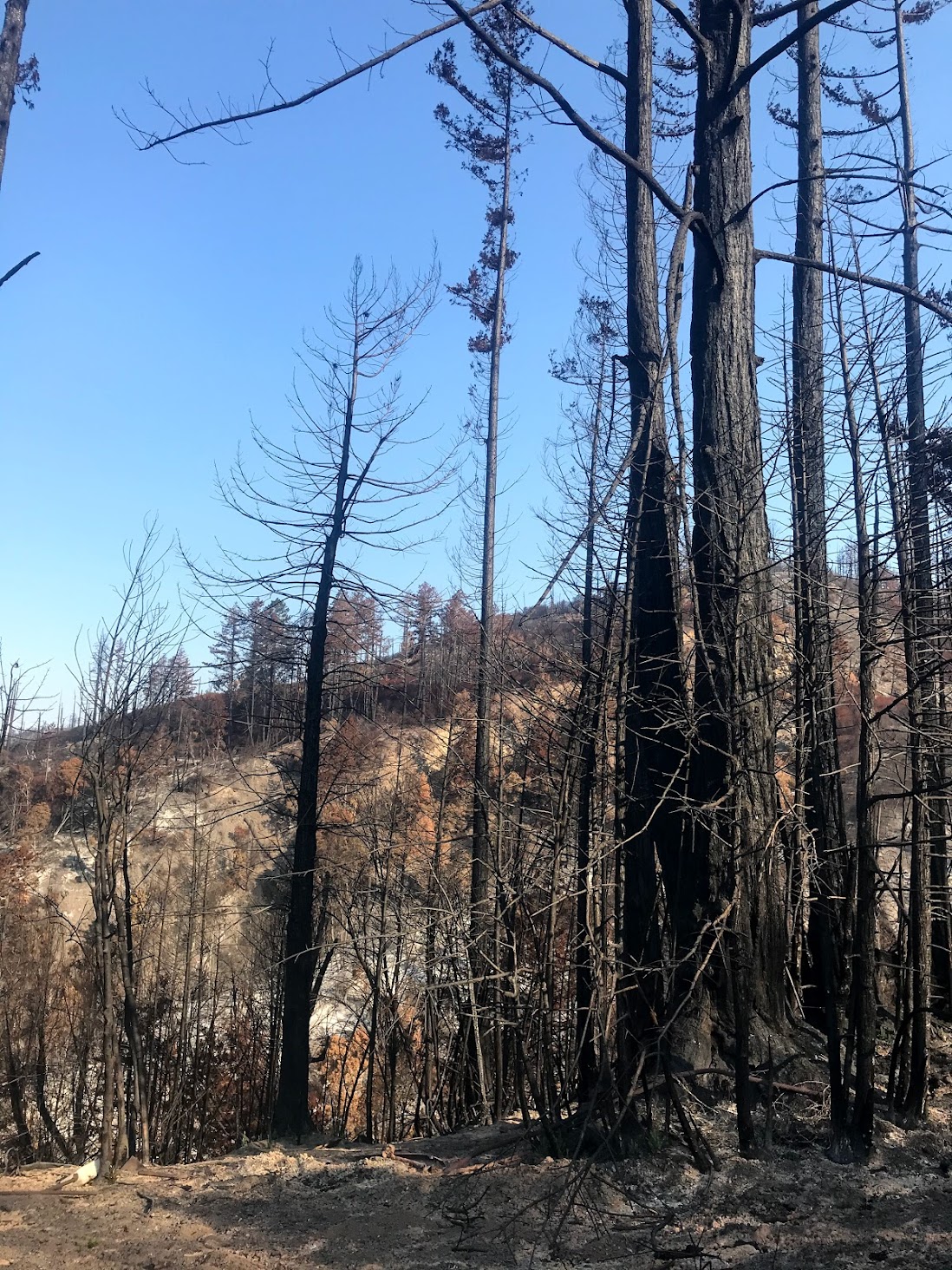
Some of the outfall of the 2020 CZU Lightning Complex Fire

Attitudes

Many people can’t handle this new reality of living with fire, especially in the country. Sure, if you are wealthy and live rurally, you can pay for someone to manage your property for wildfire…but still it is expensive! If you are poor, you can work to do it yourself…but it takes time, strength, and know-how! I’ve asked the folks I know who take care of their rural spaces how much time it takes to manage their (small!) home’s vegetation wildfire danger. The uncannily similar answer for my informal poll is….6 hours a week.

But most people are just plain in denial about the danger, even though everyone knows someone who’s been through one of the giant fires of the past few years. Some of those in denial actually went through the last fires and somehow think that it can’t happen again. 

Perhaps we’ve become inured to the fire news and so can’t grip reality. Did you know that Chinese Camp, a small town in the Sierra was nearly completely destroyed by wildfire in early September? That was the result of another ‘monsoon’ full of lightning from the South! Too much!

City Folks

It might be easier to ignore the wildfire danger if you live in the City. But people must change the way they live in the cities, apparently: in case you don’t recall there was this thing in Santa Rosa called the Tubbs Fire that burned thousands of homes, many of which were ‘in town.’

It looks to me like a wind-driven wildfire could burn a long way into Santa Cruz with houses stacked against one another adjacent to the forested and shrubby steep canyons of Moore Creek or adjacent to the thickly vegetated and at times crispy dry San Lorenzo Valley. The towns sprinkled around Fort Ord share the same danger/fate as does Monterey and Carmel.

Wind Driven?

Do we forget about the 70 mph gusts that fanned the CZU 2020 fires? Were we watching the Santa Rosa Tubbs Fire blast on high winds? The winds are increasing…

The Cause and Effect

The changing world I have outlined here is in large part due to the burning of fossil fuels, trapping sunlight…aka ‘the greenhouse effect.’ More ‘greenhouse gasses’ cause more atmospheric energy: part of the reason we are seeing the new tropical storms headed our way. The winds, with or without the storms, are demonstrably getting more intense. Predicted outcomes of climate change include extreme heat and drought events…extremes of all sorts – big swings.

The sad changes we are struggling to manage with just plain living are probably quite minor compared to what is to come based on climate change predictions. One day, folks will look back at the one-day-a-week that it takes us now to manage our yards and say “humf! That’s nothing.” What will their struggles be like? Will they be trying to survive weeks-long dust storms…building storm proof greenhouses for food? 

When will we reverse this terrible trajectory?

– this article originally appeared as part of BrattonOnline.com – check it out!
The Slowness of Extreme Heat

Happy Interdependence Day! I’m happy not to live under the tyranny of a monarchy AND I’m glad to be part of a community that recognizes the centrality of interdependence. The Molino Creek Farm Community relies on one another, exercising our various strengths to foster healthy farm life at its center. We include teachers, woodcrafters, a midwife, farmers, orchard tenders, bookkeepers and administrators, activists, road technicians, and natural lands managers. Many others join, from near and far. Together, we make this land sing: it depends on us, we depend on it, and everyone depends on each other. Nearly 4 years after the last wildfire, we feel that interconnectedness more than ever.

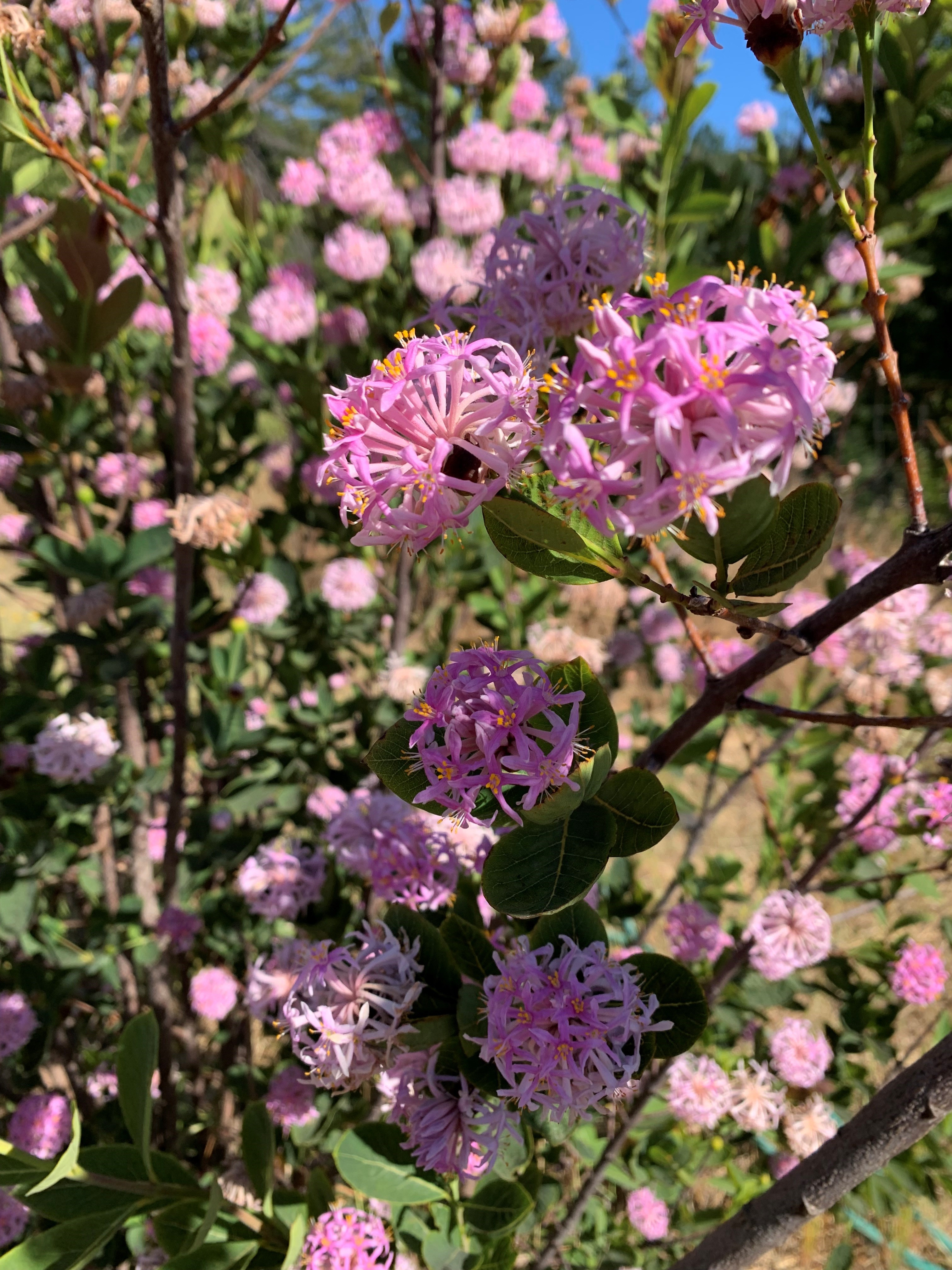
Name that shrub: one of our many hedgerow plants

Evening Scents

Each evening and early in the morning, the air is filled with the “seminal” smell of the male flowers of tanoak. It hits you strongly, suddenly: the pollen must release all at once after the evening arrives. As the sun was beginning to set, before the emanation of the heavy tanoak smell, there was a more subtle, pleasant, sweet aroma: thousands of white flowers unfurled from the field bindweed, a ground-hugging invasive morning glory- like vine of the tilled fields. There’s no detectable smell from a single bindweed flower, but en masse they sure smell pretty.

Summer Fruit

There is a pinkish blush on the first dry farmed tomatoes, but other fruits are riper. The 2 trees are young yet, but the first aprium crop is coming on: it looks like we might get 20 pounds to share among our community orchardists. They are delicious and almost make up for the lack of real apricots, which we can’t seem to produce in our cool coastal clime. The star of the show is cherries, but again too few to get to market: we anticipate 300 pounds of fat, dark red sweet cherries from the 18 trees that the fire spared. The 25 other recovering cherry trees in that block, grafted onto resprouting rootstock, will make their first sizeable harvest next year…starting in 2026, we’ll be back to ‘normal’ with 3,000 pounds plus of annual production if the stars align.

Next up this season…plums and prunes! The apples are silver dollar sized, at least, and growing. And, the avocado fruit have just set – if we can keep them moist enough, we’ll have a crop starting next January.

Sweat Investment

Even the mornings are hot as we greet the dawn ready for chores. First up: fuels reduction! Clipping, raking, and hauling the dry vegetation away from the buildings, water tanks, solar arrays, and pipes. Piles grow in the fields far away from danger…5 months from now and we’ll set them ablaze in the mist and drizzle. Today’s fuel will be tomorrow’s shrub-eradicating fire, each pile moved on top of a plant we want to eradicate.

The roar of mowers, whine of weedeaters, and buzz of saws soon obliterate the extended dawn bird chorus. When our own machinery isn’t running, we can still hear the neighbors working downhill towards us, maintaining the regional shaded fuel break along Warrennella Road. This past week we thank Brion Burrell for his artistic machinery management to reduce acres of French broom and other fire dangers to nothing, making the land around us healthier and more resilient.

Neighbors and Farm partnered in clearing French Broom and fuels away from water tanks
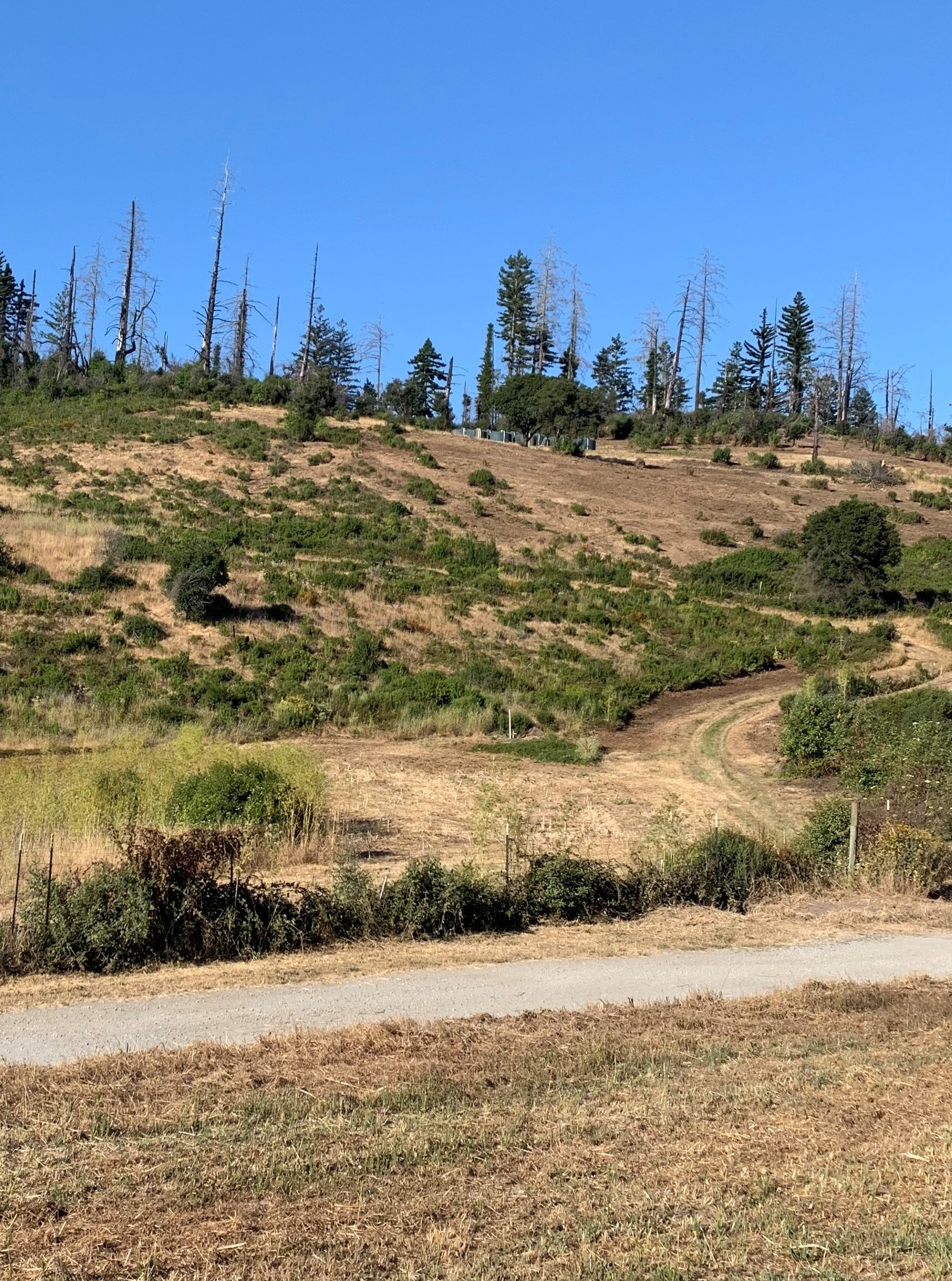
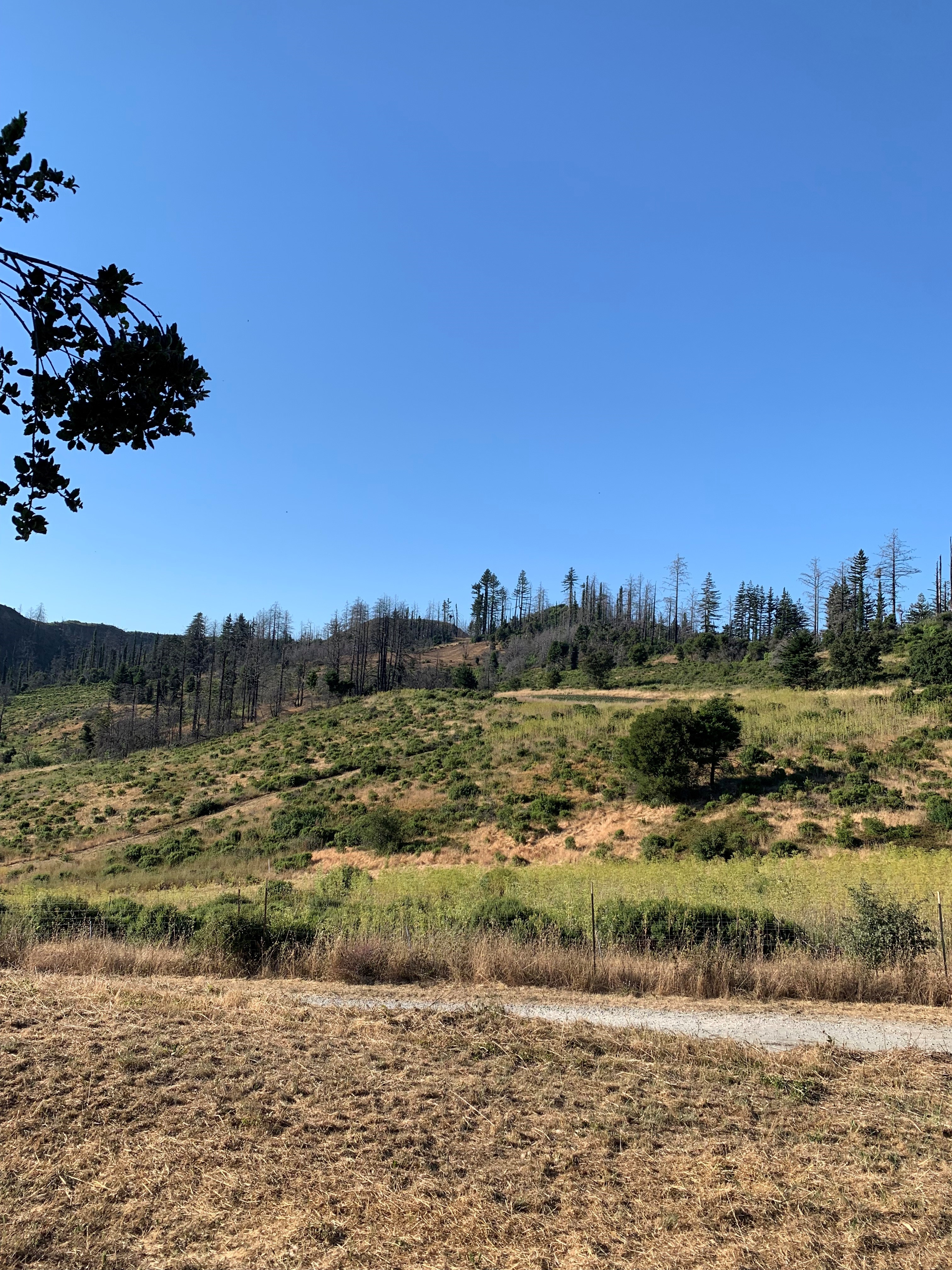
San Vicente Redwoods cleared an ancient meadow of post-fire French broom pulse high above the Farm

Early morning still: trucks trundle and people amble towards the irrigation controls. We reach down to turn valves, starting water flowing. Then we pace the water lines, inspecting for leaks. Earlier, ravens or mice have made holes in the plastic irrigation tubes, and out pours too much water, hissing loudly, spitting into the air, creating mud and disaster. Repair kits, a thorough soaking, and a bit of work later things return to normal and the cycle of wetting has begun on one more patch, once again. We are applying 45,000 gallons of solar pumped irrigation water from our well each week to grow orchard trees and row crops. That water makes tens of thousands of dollars of income and thousands and thousands of pounds of delicious food. And it takes lots of attention, coordination, and work to manage.

Wild Life

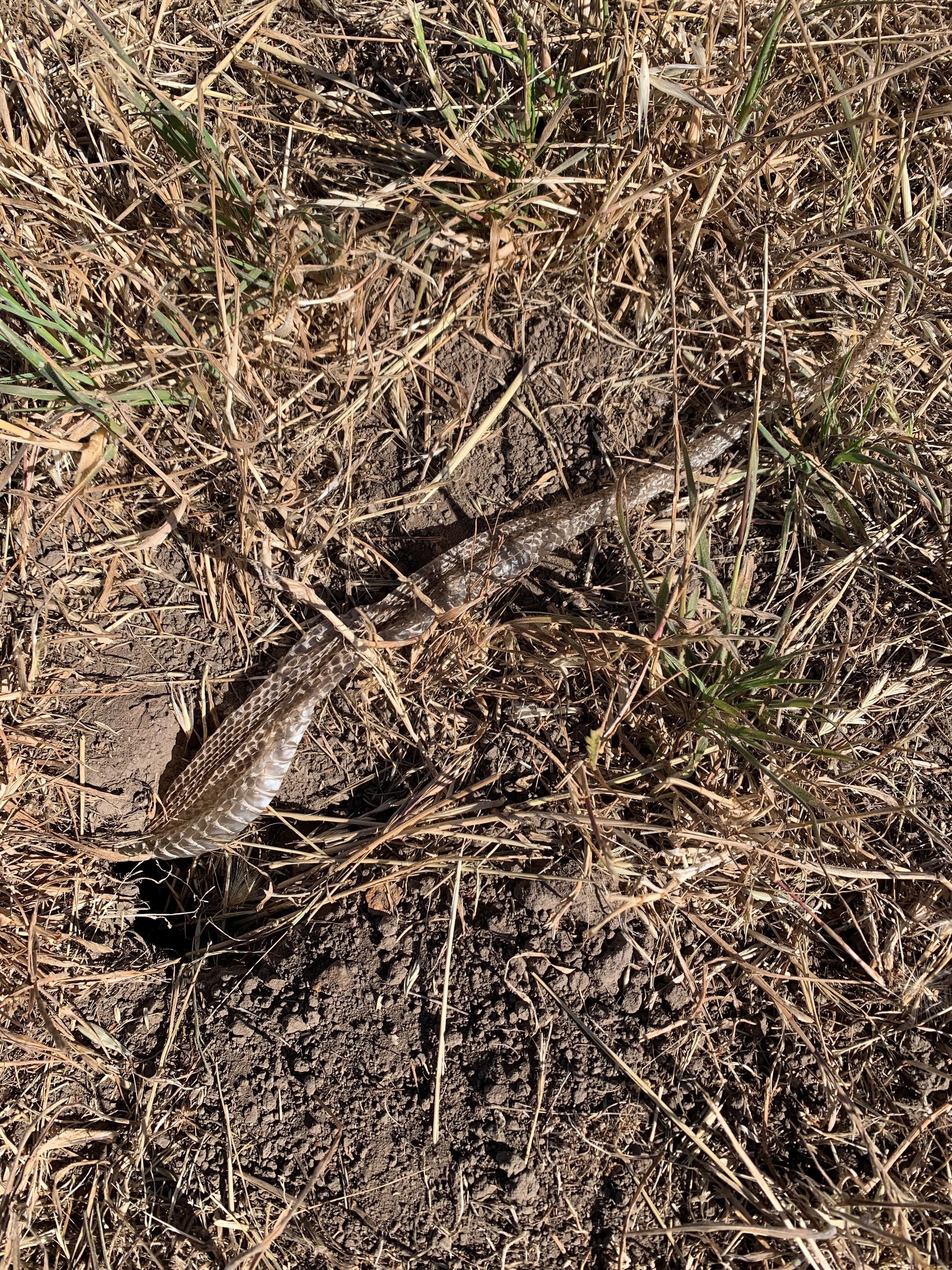
Those dawn treks for irrigation reveal fresh snake tracks, coyote scat, and weasel footprints. Gone are the days when you could easily see snakes, but they are still active around the farm. This past week must have been the right moon phase for reptiles to shed their skin. Fence lizards are still flakey. Shed snake skins have appeared, always trailing into gopher holes.

Gopher snake skin- as typical, entering gopher burrow

The regularly yipping coyotes are feasting on a big crop of juicy blackberries, as seen in their purple, seed-filled scat. Weasels are feasting on mice, and we hope they soon eat the surprising, sudden appearance of ground squirrels.

Very late but they finally appeared: dozens of California quail fluffies. The quail babies peep like easter chicks as they tumble and run along dusty trail and road, proud parents standing guard. The first younglings can fly, but most are still too young. A mother turkey is also shepherding a second round of just 3 much larger, still flightless and fluffy babies. High on the ridge, the purple martin chicks are in the air, noisy moist-sounding deep chirp-whistles give them away. They’ve done well this year. Maw and Caw greeted a third raven…a child from the past?…this morning – sometimes that one sticks around a few weeks, we’ll see.

Noise From Below

With the heat and extreme dry, we hope that no one sets the world on fire with fireworks at the beach tonight. The week leading up to this evening has been sporadic with preparatory explosions. The King Tides have made the beaches narrower, and the signs and Sheriff shoo people away, but still we wait with trepidation. May all we hear is the continued crash of the large ocean waves, lulling us to sleep with all of the windows open on these warm summer nights.

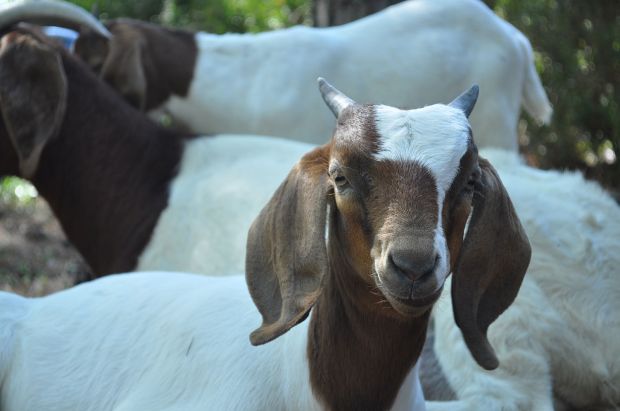
Grazing Goats for Fire Safety

One of the more common questions I’m getting these days is: what do you think about all this goat grazing for fuels reduction? I suspect the questions are coming to me because folks want to hear about my ecological perspective about goat grazing effects. There are other concerns, and I try to wrap those into this essay.

Goat Grazing Benefits

Grazing goats can produce many benefits from food and fiber production to wildfire fuels reduction, invasive species control, ecological restoration, and endangered species recovery. Goat meat is popular in many different people’s cuisines, and raising goats locally reduces transportation costs and resulting greenhouse gas emissions. Many have criticized the beef industry for greenhouse gas emissions impacts, this might be a better solution for those who desire meat as part of their diet. Goat hair (angora, cashmere, etc) is a useful fiber in place of sheep’s wool, and goat skins are used to create and repair drums and banjos. Is anyone doing these kinds of things with the herds of goats used for fuels reduction?

Goat herds are mainly being used for reducing the fuel loads that could make wildfires more catastrophic. Goats are useful in this way as they readily eat brush as well as grass. Sheep, cows and horses mainly eat grass, though they’ll nibble at shrubs, too.  Goats like to eat shrubs so much that they will get on their hind legs and pull at branches as far up as they can reach. They’ll even climb trees!

Properly managed goats can help to reduce the cover and reproduction of invasive plants, including shrubby species. Goats can reduce thistle patches, mow down infestations of invasive grasses, and tear up French broom. These things qualify as ecological restoration, but goats can do more than just this…

By properly managing goats, we can help to restore evolutionary grazing disturbance regimes on which ecosystems and endangered species depend. By reducing the growth of grasses, or the thatch that grasses make, goat grazing can facilitate the germination and survival of wildflowers, which also helps restore pollinators. By grazing brush, goats can keep coastal prairies more open, conserving habitat for grassland dependent birds, such as black shouldered kite, burrowing owl, and grasshopper sparrow. When livestock reduces thatch in grasslands, grasses are less competitive and wildflowers flourish; so, endangered butterflies like Bay checkerspot which depends on wildflowers can thrive.

Cautions about Goat Grazing

Note that I’ve said ‘properly managed’ a lot. Saying ‘goat grazing is good’ is like saying ‘weather is good’ – both statements are nonsensical without details. The four variables to control with livestock grazing are seasonality, intensity, duration, and frequency. Grazing in the winter growing season can help reduce the growth of cool-wet-season grasses and so favor wildflowers (and thistles!). Putting many, many goats in an area is more intense than just a few. Putting many, many goats in an area for a long period of time is more impactful than a short period of time. Returning a herd of goats to an area more- versus less-frequently makes a difference. I just witnessed a recently goat-grazed public park area near San Rafael where there was almost no grass left and the oak and eucalyptus trees had been moderately damaged by goats gnawing through bark. Grazing goats in the early summer certainly made sense to reduce the potential for soil compaction and erosion on the steep slopes I was visiting. But, on the ungrazed adjoining areas, native tarplants were in blossom – I’m not sure if those will come back in the goat grazed area so that pollinators will have something to visit. Small oak trees that had goat munched bark scars from the previous year were dying or dead. I questioned not only the need to graze the ground so hard as to negatively affect native trees, but I also questioned the health and welfare of the animals: was it necessary to make those animals very, very hungry to eat the grass down to near dirt and then start gnawing on tree bark?

Other cautions about goat grazing I wonder about: flies, manure, and weeds. Do communities near goat grazing areas get more flies, even biting flies? Does the manure wash off the grazed barrens and into streams and cause pollution? Are the goats transporting weed seeds onto the property from an area they grazed right before they were temporarily transported for fire control? All good cautions to ask about when reviewing the costs vs. the benefits of goat grazing.

The last caution I have is about training mountain lions to eat goats. I’ve heard too many folks raising goats blame the mountain lions for the loss of their animals when the fault almost certainly lies with careless livestock managers. Proper protection includes guardian dogs, electric fencing, and lion-proof night pens. When folks don’t properly protect goats, mountain lions figure out a way to eat them…and then become accustomed to those easy meals. At that point, the human has effectively trained the mountain lion to eat livestock and then there’s a problem.

Challenges Ahead

It seems that goat grazing is an expanding enterprise for fuels reduction, so how do we make it work better? Part of the solution is already on the table: all livestock grazing programs must be approved by a state-licensed Certified Rangeland Manager. This is a parallel program to the Registered Professional Forester who signs off on any timber production in California. A Certified Rangeland Manager has the skills to outline a plan to maximize the benefits and minimize the problems of a goat grazing operation.

Even with a good plan, there are significant challenges ahead for goat-led habitat and fuels management. For instance, given the oversight needed for each herd, how do we afford the shepherds and still affordably manage goats? Goats are escape artists, so shepherds are necessary to keep them contained and well supervised, if only to assure that areas don’t get overgrazed and the goats stay healthy and safe. We need to find the right way for shepherds to have a good standard of living and decent working hours in an economy that already has a difficult time paying a living wage. If we can find and keep the labor, how do we train enough people to pay enough attention to the nuances of habitat management so that we restore habitats instead of destroy them while we seek a more fire-safe landscape?

In Conclusion

Next time you see goats arrive to do some work, I’m hoping you ask some of the questions I posed above. Only by having respectful dialogues about these issues can we hope to find the ‘right’ place for goat powered fuels reduction and habitat restoration. Such conversations can elevate the intelligence of all parties as we seek a better way to live on this super biologically diverse, fire prone landscape.

-this content originally published at Bruce Bratton’s wonderful weekly blog: BrattonOnline.com sign up now and save on the already low, low price of nothing (donations welcomed).