conservation

Beachtime

This was my post from the highly recommended weekly publication Bratton Online (10/20/21 edition)

People at the Beach

I hop off my bike and lock it to a post at the entrance to the beach. I’m here to meet Juan and Ted and their dog Fluffy for an evening stroll to catch up and get some fresh air. I smile with the transition to the beach, which is a regular way to leave my busy day behind and return me to myself, my normal world and what I want to be – relaxed! Squinting through the reflective brightness off the sparkling water, I spot my friends already down by the water and jog towards them. We exchange hugs and start on our walk. We won’t turn around for a long while…this stretch of sand goes on and on, and we have an hour before we need to head back to our homes. We keep to the wet sand where its easier (and less messy) to walk. Juan uses one of those plastic scoop arms for extra lift to lob a ball for Fluffy. There’s lots to talk about, the light breeze feels invigorating, the sand cool and wet between my toes. For the breeze and noise of the lapping waves, we walk closer than we might otherwise to hear one another better. Fluffy comes crashing into us as she rough houses with another dog, now we are sandy and wet to our waists, laughing, and smiling at another group passing by. The sun is getting lower, and the clouds are turning pastel orange and magenta, a myriad of colors reflected in fractal patterns of swirling sea foam. We’re quiet for a bit, pausing on our walk to watch bottlenose dolphins pass by and to hear the lapping waves. Way down the beach we approach a party – bonfires in big metal bins and chairs around portable tables, musicians setting up for an event that will last into the night. We are at our halfway point, turning around we face into the wind and towards the setting sun. I know from our past walks that we are now each pondering what more we want to ask to make sure we are all caught up on conversations that have lasted years. Our walks are not often enough, this time together is precious. The conversation picks up pace and the walk back seems faster than the way out. We brush off the sand, towel off Fluffy, and say our goodbyes.

Nonhumans at the Beach

In parallel, the nonhuman organisms at the beach were having very different experiences during our visit. Walking in the wet sand, Ted, Juan and I crushed hundreds of living organisms and smashed the structure of the sand where critters had tunneled for breath and to filter feed…contributing to the greatly diminished diversity and abundance of such organisms with increasing recreation on beaches. Fluffy’s cavorting flushed dozens of shorebirds, already exhausted from being frightened over and over by people and their dogs. Those shorebirds also particularly need the wet sand, where they probe for food; they only get a few chances to dart into that feeding zone between the constant parade of walkers. The fires and noise from the beach party will keep nesting beach birds on high alert nearby, as they cuddle their newborn chicks; those families will not be having restful nights and will have a harder time remaining healthy. Next season, maybe they will remember not to make a nest so close to those areas of the beach where parties light up the night, but there isn’t much beach left where they can still find peace.

What Makes a Beach?

There is so much we take for granted about our beaches and few even realize what a natural beach might look like, or how nature maintains and forms it. Our best beaches are sandy, and that sand is constantly on the move, eroding and replenishing with the wind, waves, and tides. Streams and rivers are beachmakers, depositing sand into the ocean. In Santa Cruz County, the sand is driven downshore from the north with the prevailing wind and current. Promontories create sand deposition shadows- rockier areas to the north of most beaches and more sand on the south, including piles of sand up on the bluffs above the beach to the south. Where beaches are wide enough, there are low mounds of sand towards the waves and bigger and bigger dunes further onshore. Typically, the sand blocks most rivers and streams in the summer, creating still water lagoons full of life.

Natural Diversity in the Sand

Our beaches are super-diverse ecosystems, teeming with life wherever we let them thrive. Where we don’t trample them, plants establish close to the sea. Sea rocket, with its pale, simple 4-petaled lavender flowers, is notoriously resilient, establishing from seeds that are constantly floating around the ocean waiting to wash ashore. This plant is cosmopolitan, on beaches around the world. By stabilizing the blowing sand, sea rocket starts formation of the little mounds we call foredunes. Foredunes then become habitat for many other species. Further inland are taller and taller back dunes where waves rarely crash. There can be freshwater ponds in back dunes in the winter. Elephant seals rest there. North facing back dune slopes have ferns and mosses; throughout these taller dunes you can find succulent plants, shrubs flowering year-round, endangered lupines, wallflowers, paintbrush, spineflower, and gilia…as well as many species of songbirds. Around the lagoons and ‘dune slack’ (ponds) ducks breed and red legged frogs, newts, and garter snakes flourish. Raccoons, pond turtles, egrets, herons, and lots more are at home in these wet areas.

Healing Beaches and Dunes

As I mentioned above, we have loved our beaches to death but, in some places, people are trying to establish more of a balance. Across the Monterey Bay, there is just one beach that is off limits to people: Wilder Beach. We set aside this State Park beach to protect nesting endangered snowy plovers. Any regular and observant beach goer will know this story: there are signs and “symbolic” fences on many beaches to remind people not to trample their habitat. Unfortunately, fences and signs are not enough, and the species is struggling to survive in our region. What few snowy plovers are left is because of a team of conservationists associated with the nonprofit Point Blue Conservation Science who monitor the species and work with parks managers to protect them. Without those always underpaid and generous people, there would be no signs and no fences: they serve as the conscience for the species and are supported by grants and donations. Further south, in Santa Barbara County, at Coal Oil Point, a docent program has volunteers standing by the plover fences with signs and binoculars educating visitors and assuring plover safety, a program that is being duplicated elsewhere. Again, generous conservationists coming to the rescue!

Snowy plovers are an indicator species for healthy beaches and dunes, and other programs are working to restore the plants needed to sustain healthy plover habitat. From Seabright Beach through Pacific Grove’s Asilomar State Beach, parks managers and volunteers are controlling invasive species and planting dune plants. Ice plant is the most widespread and pernicious threat. Each year for the rest of eternity, people will have to comb the beaches and dunes to find iceplant and rip it up before it takes over. Thanks to years of this work, we are starting to see the return of dunes and associated vibrant rolling mounds of wildflowers.

Before Our Time

Four hundred years ago…imagine the scene at the beach. Native peoples must have had a common presence on beaches for many reasons: launching boats, fishing, clam digging, tide pool foraging, harvesting of marine algae, leisure, and play. The lowest tides of the Spring and Fall must have drawn many people to the deep rocky intertidal where there were easier to reach larger and more varied shellfish. And there would have been grizzlies, condors, and coyotes sharing that space, feasting on (stinky!) washed up marine mammals. The tiny snowy plover probably had much larger flocks scampering around. Every beach would have had intact dune communities and clean lagoons.

The Future of Beaches

Can we find a way to conserve beach and dune species for future generations? What would that entail? Biologists suggest we need more control of the main threat: beach visitation – we already have too much. We thank the California Coastal Commission for steadfastly pursuing public access to beaches, a job that never seems to be finished. But we also understand that this agency has a mandate to protect biological diversity, something that they sometimes forget when it comes to beach access. For instance, they recently required the University to provide public access to Younger Lagoon and were surprisingly acquiescent at State Parks providing nearly unregulated and completely unplanned public access to Coast Dairies beaches. The Coastal Commission doesn’t have a plan for beach and dune biological conservation in California despite this being the only ecologically sensitive habitat that is in their jurisdiction statewide! I think almost all of us would like for all the plants and animals to have a place on Earth, even if it means giving up some of our conveniences…including our ability to use every beach or every inch of every beach. We need a comprehensive plan across all California beaches if we are to realize this outcome. And people need to care enough to support parks and the Coastal Commission if they decide to do pursue beach and dune protections. Oh, and it would be good to keep our Fluffy dogs from harassing beach wildlife, our strolls up on the dry sand, and our trajectories steering wide, away from foraging shorebirds.

Killing Santa Cruz’ Greenbelt

Fellow citizens of Santa Cruz, we have done so much good for the environment. We are transforming our city into a bicycling mecca, and our entire region will soon be powered by mostly renewable energy. Hundreds of volunteers work hard to keep our many beautiful beaches accessible and clean. We recycle and conserve water at unprecedented rates. Our culture strongly supports organic agriculture, and we purchase local and organic foods at a plethora of organic grocers and farmers markets every day of the week. And, we have supported leaders who found the funding and partners to protect thousands of acres of parks and open space across our lovely hills.

So why is our community welcoming the destruction of the City of Santa Cruz’ greenbelt?

The City’s Greenbelt has been a great environmental accomplishment. For a while, our City was circled by open space, and we nearly connected the pieces – from Natural Bridges State Beach to Antonelli Pond up to the Moore Creek Preserve and onto UCSC’s meadows, across Pogonip, down into Henry Cowell and Sycamore Grove, up onto De La Veaga Park, and down the creek to Arana Gulch and the Harbor. We worked well together to make that happen. Different people had different goals for supporting our Greenbelt: improving property values, protecting water quality, preserving nice views, protecting wildlife, creating recreational opportunities, limiting urban sprawl, and giving our children natural places to learn and grow.

Setting the land aside has been the easiest part of reaching our greenbelt goals. But, the greenbelt is relatively new – it is in its infancy – and Santa Cruzans are proving poor stewards.

Neighbors complain that greenbelt areas are messy homeless encampments, harboring unsavory elements and even criminals. Trail erosion, pavement, fires, and trash in greenbelts pollute our streams. The pleasant views of the greenbelt are being transformed though crowds of users, buildings, recreational infrastructure- fences, roads, signs, and parking lots- all of which is destroying wildlife habitat and scaring away what critters are left. For those who would enjoy the parks, planners with little capacity are trying to provide for all types of recreation, assuring degradation of the quality of all recreational experiences. The greatest number of those who would use the greenbelt for generations to come are those seeking peaceful, passive, family recreation. That potential is rapidly disappearing – our children’s children will have to travel further from home to enjoy quiet nature experiences, healthy wildlife, or clear-running streams.

How did the Greenbelt end up in this mess?

Organizational and individual leadership and capacity has been lacking to preserve and steward the Santa Cruz Greenbelt. The agency responsible for oversight of the greenbelt is the City of Santa Cruz Parks and Recreation Department; its mission is ‘to provide the best facilities, recreational cultural and parks programs.’ The agency is understaffed and mostly focused on safety, aesthetics, and maximizing recreational development. Greenbelt conservation then falls to nonprofit advocates- friends groups and larger environmental organizations. Pogonip Watch and Friends of Arana Gulch are important. Volunteers with the California Native Plant Society work hard to raise funds, educate our community, pull invasive species, and are focused on a few mostly long-term conservation issues. But, they can’t do enough. The local chapter of the Sierra Club has had difficulty addressing much local nature conservation as well, and greenbelt issues have divided the group.

Meanwhile, well-funded and organized special interest groups are succeeding in transforming the greenbelt to benefit a small fraction of our community. A passionate bicycle transportation community along with lucrative mountain bicycle businesses are succeeding in carving up the greenbelt, criss-crossing it with high-speed recreation and transportation corridors. Organizations hoping to make some small improvements with homelessness issues are converting 9 acres of Pogonip’s wildlife habitats to agriculture; they hope also to have a permanent homeless encampment there, as well. Sports enthusiasts are working to transform still more of Pogonip to ballfields.

These special interests join the City of Santa Cruz and most other regional leaders who seem to believe that more is better when it comes to extractive use of natural areas, including the Greenbelt. Here are three bars of their collective public relations tune:

  • The greenbelt works best when it serves the maximum number of people and types of uses.
  • Legitimate use of the greenbelt drives away unsavory use.
  • If we don’t maximize use of the greenbelt, people will stop caring about preserving nature.

These three statements are false.

We need to support organizations and leaders that will expose these falsehoods and work to preserve the greenbelt for future generations.

To solidify our commitment to a greenbelt that supports wildlife, clean water, and passive recreational enjoyment, our greenbelt areas need to be protected by conservation easements enforced by third party organizations. Only then can our greenbelt be protected from the special interest groups which will inevitably garner political support until nothing is left.

The Monument-Worthy Birds of Cotoni-Coast Dairies: An Analysis

Introduction and Background

Obama’s Proclamation giving National Monument status to Cotoni Coast Dairies included protection for an interesting list of birds: a challenge or a nose-thumbing to preservationists? We don’t know, but in this essay I present both perspectives. First, a reminder that experts presented the President with a science-based white paper suggesting a list of sensitive natural resources worthy of protection by his Proclamation; most local conservation organizations wrote letters supporting this proposal. The white paper included 7 species of birds that are protected by the California Department of Fish and Wildlife, but not protected under the Federal Endangered Species Act (ESA)…and so, without mention in the Monument Proclamation, might not be protected on BLM lands:

  • American peregrine falcon –  Falco peregrinus anatum– CA fully protected
  • Bryant’s savannah sparrow – Passerculus sandwichensis alaudinus – CA Species of Special Concern
  • Ferruginous hawk – Buteo regalis – California Watch List (wintering)
  • Grasshopper sparrow – Ammodramus savannarum – CA Species of Special Concern (nesting)
  • Northern harrier – Circus cyaneus – CA Species of Special Concern (nesting)
  • Olive-sided flycatcher-Contopus cooperi – CA Species of Special Concern (nesting)
  • Short-eared owl –Asio flammeus – CA Species of Special Concern (nesting)
  • Tricolored blackbird – Agelaius tricolor – CA Threatened
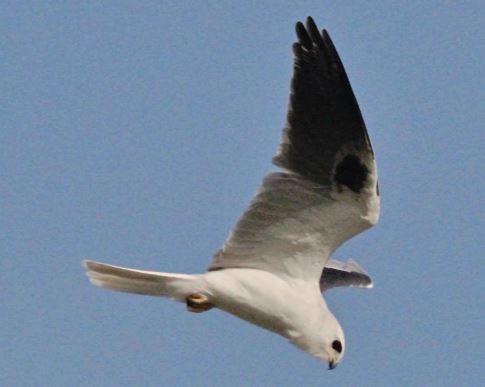
  •  White-tailed kite – Elanus leucurus – CA Fully Protected (nesting)

The white paper also included recommendation for recognition of species that are federally protected as long as they are on California BLM’s sensitive animal list:

  • Burrowing owl – Athene cunicularia – BLM CA sensitive animal; CA Species of Special Concern
  • Golden eagle – Aquila chrysaetos – BLM CA sensitive animal; CA fully protected

And, experts mentioned two other notable bird species that frequent the property:

  • Red-tailed hawk – Buteo jamaicensis – IUCN Status: Least Concern
  • Short-eared owl – Asio flammeus – IUCN Status: Least Concern

At first glance… the Proclamation was a moderate success for bird conservation- experts proposed 11 bird species for the Proclamation, and the President’s Proclamation included 9 bird species. But, the Proclamation included just two of the species experts proposed: the white tailed kite and peregrine falcon. Besides the kite and falcon, the other species listed by the President are common and widespread enough to not warrant any conservation concern. Here are the other 7 birds listed in the President’s proclamation, along with their listing status:

  • American kestrel – Falco sparverius – IUCN Status: Least Concern
  • Black swift – Cypseloides niger – IUCN Status: Least Concern
  • Cooper’s hawk – Accipiter cooperii- IUCN Status: Least Concern
  • Downy woodpecker – Picoides pubescens – IUCN Status: Least Concern
  • Orange-crowned warbler – Oreothlypis celata – IUCN Status: Least Concern
  • Tree swallow – Tachycineta bicolor – IUCN Status: Least Concern
  • Wilson’s warbler – Cardellina pusilla – IUCN Status: Least Concern

Optimism: A Presidential Challenge?

An optimist might consider the list of birds in the President’s Proclamation could be seen as a challenge to biologists, preservationists, and BLM. The President might have been truly insightful, providing protection for species common enough across the property for scientifically sound analysis of the impacts of varying levels of future visitor use. Only when there are enough nesting attempts of a bird species can we compare nest success in areas with and without visitors, or between areas of varying visitor use types/intensities.

With all of the biota listed in the Proclamation, BLM is required to provide protections in their management plans, setting scientifically-based preservation targets, and monitoring the status of these resources over time. Establishing preservation targets for species will involve developing various hypotheses, such as:

  • What is a minimum viable population size?
  • How many individuals are necessary to maintain their ecological functions?
  • How many individuals are necessary in various parts of the property to ensure that the public has an opportunity to view them?

It is likely that at least some of these birds are common enough across the property right now, when the property is seeing very little visitor use, that experts can inventory their densities and then notice change over time in response to varying management decisions. This would not be the case with more uncommon species.

I should point out that this optimistic viewpoint is difficult to completely uphold because the President did not include the expert’s suggestion of olive-sided flycatcher in his Proclamation: this is a species common enough on the property to meet the criteria outlined above.

Pessimism: A Presidential Nose-Thumbing?

The pessimist might consider it a purposeful snub by the President when he ignored most of the birds recommended by experts for inclusion in the Proclamation. He might have various reasons for snubbing the experts.

For instance, in recent Santa Cruz County history, and with the Monument Campaign in particular, we have seen political leaders leveraging and emphasizing the divide between pro-access, maximum use, recreation advocates and conservation advocates. If the pro-access, maximum use advocates had leverage with the President, they may have advised that inclusion of the conservation community’s recommendations as something to ignore.

An additional and perhaps additive possibility is that the President’s advisers were opposed to preservation of grassland habitat on the property, possibly because of the near necessity of using livestock grazing to maintain that habitat. Despite a growing scientific consensus, some maintain that California’s coastal grasslands are largely ‘unnatural’ relicts of human management, evidenced by their ‘natural’ succession into mixed coniferous forests. And, while fire is sporadically used to maintain California’s coastal grasslands, livestock grazing is more common. Many of the bird species that experts recommended for inclusion are dependent on extensive grassland habitats; some may even require livestock grazing to maintain structure that is conducive to nesting success. The reader is no doubt cognizant of some of the environmental community’s opposition to livestock grazing on conservation lands, and this philosophy could well have been in play when advisers helped the President to draft his Proclamation. None of the birds included in the President’s Proclamation rely on grassland habitat.

A final additional and perhaps additive possibility is the Presidential adviser philosophy that the protection of grassland dependent birds might interfere with maximizing visitor use of the property. Grasslands on the property offer the easiest opportunities for access to the many visitors desiring expeditious photographic opportunities. And so, perhaps the President’s advisers refused protection of grassland birds in order to more readily allow for maximum visitor use.

Concluding Remarks

The future will help inform the prevalence of the optimistic or pessimistic interpretation of the President’s motivations for naming the Monument-worthy birds of Cotoni Coast Dairies in his Proclamation. With luck, we may be able to have conversations with the President’s Proclamation advisers to learn, first-hand their rationale. And, we may gather more clues in the advocacy of Monument Campaign organizers and others during the planning process for the property. We will share our discoveries to help science-based conservationists better engage with similar situations in the United States. And, we will use what we learn to improve our strategy moving forward with preserving the sensitive natural resources of Cotoni Coast Dairies.

Postscripts

  1.  One reviewer suggested an alternative possibility for the President’s advisers largely avoiding the experts’ list of sensitive bird species: the advisers may have not recognized the credibility or legitimacy of the source of information.
  2. Another reviewer pointed out the irony of the Proclamation recognition of indigenous peoples and yet the lack of inclusion of those peoples’ iconic birds: eagle and hummingbird.
  3. Bird experts point out that the President’s inclusion of American kestrel was cogent because of a regional decline in nesting, a phenomenon that isn’t explicable but warrants attention.
  4. Bird experts also point out that the President’s inclusion of black swift is curious because the species has never been known to nest on the property, and nesting areas anywhere nearby have long been abandoned.

Monument Proclamation for Cotoni-Coast Dairies Adds Significant Protections for Biota

The President’s Proclamation adding the Cotoni-Coast Dairies to the California Coastal National Monument has created protections for many biota, helping to guarantee a balanced approach between public access and preservation. The property’s managers, the federal Bureau of Land Management (BLM), had previously demonstrated disregard for all but federally listed species of plants and animals, which are few on the property. The Proclamation now obligates BLM to manage for 24 species as well as 13 biotic communities that are not otherwise federally protected.  The Proclamation guarantees some public access for the property only after the completion of a management plan that is ‘consistent with the care and management’ of these resources.

The following non-federally protected species (24) probably would not have received attention by BLM had this Monument proclamation not included their mention:

  • Wilson’s warbler
  • Orange-crowned warbler
  • Downy woodpecker
  • Black swift
  • Tree swallow
  • Cooper’s hawk
  • American kestrel
  • California vole
  • Dusky footed woodrat
  • Black-tailed jackrabbit
  • Gray fox
  • Bobcat
  • Mountain lion
  • Mule deer
  • California buttercup
  • Brown-headed rush
  • Redwood sorrel
  • Elk clover
  • Madrone
  • California bay
  • Monterey pine
  • Knobcone pine
  • Douglas fir
  • Coast live oak


The following biotic groups/communities (13) must now be protected and managed for by BLM:

  • California sagebrush
  • Coyote brush scrub
  • Amphibians and reptiles
  • Bats
  • Red alder forests
  • Arroyo willow forests
  • Riparian areas
  • Riparian corridors
  • Wetlands – in riparian areas as well as meadows and floodplains
  • Grasslands
  • Scrublands
  • Woodlands
  • Forests

The following federally listed species (4)were also mentioned in the Proclamation:

  • Tidewater goby
  • Steelhead
  • Coho salmon
  • California red-legged frog

The following species (2) are listed in the Proclamation and are also listed by BLM California as requiring protection on BLM lands. These species might not have been protected in perpetuity, though, as that BLM list changes with administrations.

  • White tailed kite
  • Townsend’s big-eared bat

Saving the Coastal Prairie on the Santa Cruz North Coast, Thanks to California State Parks Ecologists

On Tuesday, December 27th I hiked onto the Gray Whale section of Wilder Ranch to see the prairies where the smoke was coming from back in October. I first visited these meadows in the late 1980’s while the property was privately owned; cattle were grazing the meadows, and there were abundant native grasses and wildflowers. Santa Cruz preservationists fought hard to protect the property from a proposed housing development, it went to State Parks, which removed the cows and took many years to start managing the prairies, which were starting to disappear to weeds, shrubs, and trees. Luckily, things were to change…

dsc_0156

Postburn strikingly green meadows.

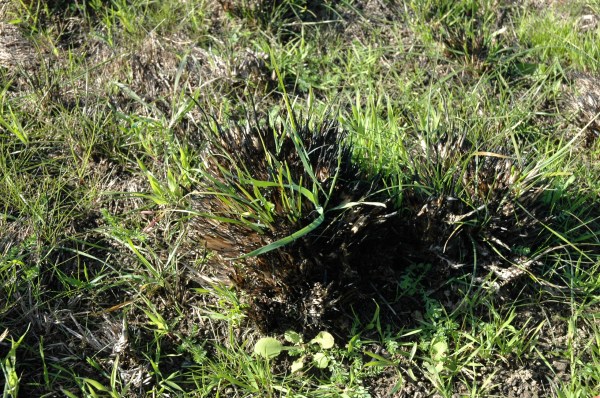
This past October, I knew that big plume of smoke I saw while driving on Highway 1 meant that State Parks was continuing their work at maintaining the meadows that I love so much. Fellow ecologist Jacob Pollock and I hiked from Twin Gates on Empire Grade down the Long Meadow ‘trail’ and into the strikingly bright green resprouting native grasses and wildflowers growing from the charcoal blackened ground. We found many types of native grass and a few wildflowers in the burned areas. Purple needlegrass, California’s State Grass, dominated the burned area, its dark green, rough leaves now 6” long and ubiquitous- a plant every square foot! These bunchgrasses promise a beautiful spring of silvery-purple flowers swaying 2’ high in the breeze. Patches of California oatgrass were less plentiful in the burn area than in the adjoining unburned area. This is the wet meadow loving indicator species of coastal prairie, and, in the many years after grazing and before the fires, it’s bunches grew taller to get to the sun- these tall bunches are susceptible to fire, but some survive.

dsc_0162

Fire recovery of California oatgrass

Patches of the leaves of wildflowers dotted the meadow and promise much more in the months ahead. Most abundant were sun cups, purple sanicle, and soap plant all long-lived perennials with nice flowers. Sun cups will be the earliest to bloom, maybe as early as late February, with simple, 4-petaled yellow flowers. Purple sanicle will be next to bloom in earl April with it’s small, purple spherical clusters of flowers. Soap plant blooms in late spring with evening blooming, white flowers that attract a variety of bumblebees.

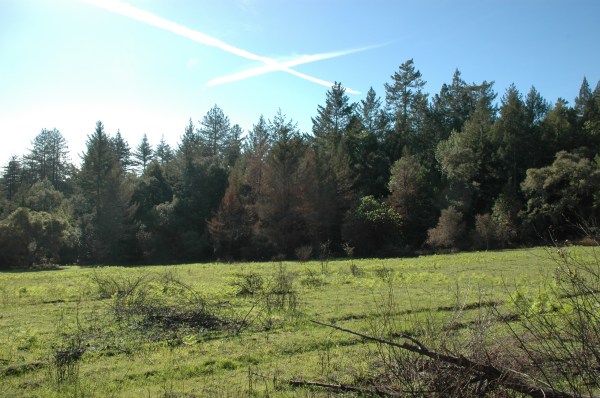
Besides the obvious revitalization of the meadow plants, we marveled at other aspects of the handiwork of State Parks’ expert ecologist land stewards. Unlike many of our area’s meadows, there wasn’t a single French broom plant, a super-invasive non-native shrub that obliterates meadows, overruns trails, and is a major fire hazard. A many year program with State Parks partnering with volunteer groups has controlled that and other weed species at the park. We also saw dead coyote brush both in and out of the burn area- this native shrub can completely overrun meadows, closing bush-to-bush canopy in 15 to 35 years, depending on the soil. State Parks killed the coyote bush to maintain the prairie, and then burned the skeletons of the bushes so that there are now wide opened expanses of meadows, which are attractive to hawks, owls, coyotes, bobcats, and prairie-loving songbirds like meadowlarks. The ecologists also sent the fire into the adjoining and invading forests, maintaining the sinuous coast live oak ecotone that so beautifully frames the meadows.

dsc_0148

Fire maintains prairie ecotone

Today, I’m celebrating environmental heroes- 2-3 State Park Ecologists who manage over 18,000 acres in Santa Cruz County. They are motivated and hardworking. They need more support, more staff, more funding- please tell your State Assemblyperson/Senator! Without their dedication, our prairies would disappear. Thank you!

June 2017 Addendum: Portia Halbert sent me this photo (from State Parks Ecologist Tim Reilly), taken recently. The unburned portion of the coastal prairie in Long Meadow turns out this year to be dominated by Italian thistle, an invasive plant, whereas the fire from last fall seems to have more-or-less obliterated the species in the adjoining meadow. Thistles are especially bad this year in many meadows that haven’t been well stewarded. This discovery, that fire might help with thistle invasion, is a complete surprise to me- it deserves some careful scientific investigation! Long meadow italian thistle

Wildlife Protection at the Potential Cotoni Coast Dairies Monument- The Naysayers

Preservationists have done what they can to protect natural resources at the Cotoni Coast Dairies, should it become a National Monument- but, who didn’t support that work, and why?

The Proposal

Early in 2016, a broad coalition of experts and I drafted a proposal to add natural resource protection to any Presidential declaration of the Cotoni Coast Dairies National Monument. Expert wildlife biologists, amphibian and bird experts, plant community ecologists, and others co-created a list of sensitive species and rare ecosystems that would receive more protection under a Presidential Monument declaration, should that list be included. Sensitive natural resources at other presidentially declared Monuments in California have enjoyed such protections, so there is no reason such protections shouldn’t be in place at Cotoni Coast Dairies.

Questions: Who is writing the Presidential Proclamation that will give the Cotoni Coast Dairies National Monument status? Do they know about this proposal?

Answers: The staff at the Council on Environmental Quality, an office that advises the President. As of Fall 2016, they have our proposal, and we are hoping they will include it, in its entirety.

Supporting the Proposal…

The proposal enjoyed the public support of the following organizations:

The Trust for Public Land, which owned the Coast Dairies property before handing it to BLM, wrote an especially important support letter. Their letter emphasized the importance of including our proposal because it documented species and ecosystems that had been discovered since TPL wrote the legally-binding land management plan that would otherwise serve to protect the property under BLM ownership.

Not Supporting the Proposal…

Despite repeated requests, the following organizations refused to publicly support our sound, science-based proposal to increase protections of natural resources at the Cotoni Coast Dairies:

It is ironic that all of these organizations publicly supported the proposal to make the Cotoni Coast Dairies a National Monument. And, these are all expert conservation organizations. And so, these organizations must have been aware that BLM provides less protection to the natural resources listed in our proposal without those species being included in the Presidential Monument declaration.

The various written rationales for not supporting the proposal included (paraphrased):

  • ‘it would take too much time for our organization to analyze the issue’ (two organizations)
  • ‘our policies have changed since we signed on to support the proposed Monument, now we don’t do those types of things’(one organization)
  • ‘some influential people (elected officials/Monument advocates) wouldn’t like us as much if we supported the proposal- so, it’s not worth it’ (two organizations)

What Can You Do?

If you agree that future generations deserve to enjoy healthy wildlife and clean coastal streams….

And, if you agree in science-based, policy-smart solutions to make that happen…

  • When choosing to join or support in any way an environmental organization: choose from the list of those organizations that supported our proposal.
  • Even without such support, please let the organizations listed above know what you think. Click on the organization names above- I included links to their websites.

True or False: National Monument Designation Will Confer Additional Natural Resource Protection to Cotoni Coast Dairies?


-Part 1-

Our government designates National Monuments in order to protect them, but would a National Monument designation for Cotoni Coast Dairies really better protect these lands? An informed answer requires an examination of the protections already in place, the language of the monument designation, and how the public and US Bureau of Land Management (BLM) follow through after monument designation. Today we will examine the first two of those three subjects with a subsequent essay that will cover the last subject.

Through decades of public effort, natural resource protections in place at Cotoni Coast Dairies were already very strong when the BLM took possession in 2014. The owners before BLM – the Trust for Public Land (TPL) – created two sets of deed restrictions that incorporated private and public funders’ interests as well as protections imposed by the California Coastal Commission. These deed restrictions require future managers to accommodate public recreation without sacrificing protected endangered species or endangered species habitat. The restrictions also prohibit mining, commercial timber production, and use of off-road motorized vehicles. The TPL and the California Coastal Commission both have standing to enforce these deed restrictions in perpetuity. Since these restrictions serve to protect the Cotoni Coast Dairies property’s natural resources in most of the ways Federal National Monument status normally affords, the question is: what additional natural resource protections might National Monument status afford?

Interestingly, National Monument designation doesn’t necessarily guarantee any specific types of natural resource protection. Those that exist are entirely subject to the discretion of Congress or the President. There are different regulatory guidelines for Congress versus the President in establishing National Monuments. Congress has constitutional authority to declare an area a National Monument; the Constitution allows Congress to make whatever rules it wishes for such land. For example, Congress can allow off road vehicles and commercial timber production on National Monuments, or Congress can prohibit human visitors, altogether. Alternatively, the Antiquities Act of 1906 allows Presidents to designate an area as a National Monument. The President is limited by the Antiquities Act which requires the size of the Monuments is ‘smallest area compatible with proper care and management of the objects to be protected.’

In 2015 two US Congresswomen and both US Senators from California co-sponsored a measure to add the Cotoni Coast Dairies property to the California Coastal Monument. The proposed addition lacked any substantive natural resource protections and ultimately failed to motivate sufficient support to make it to a floor vote. In accounting for the omission, aides to both the House and Senate sponsors have directly claimed that such language was ‘inappropriate’ because the representatives believe that Congress should not exert political influence on federal agencies’ land management decisions. In keeping with this policy, other Monument legislation in California from this era has contained little natural resource protection language.

As early as February 2016, in the wake of the failure of the California proposal, Congressional proponents met with the Obama administration on numerous occasions to urge designation of Cotoni Coast Dairies as a National Monument via an Executive Order under the Antiquities Act. We know little about what if any natural resource protections those Congressional offices lobbied for in their negotiations with the President, because this information is not available to the public. But when Congressional designation of National Monuments failed in the past, subsequent Presidential Antiquities Act proclamations of Monuments have had a regrettably mixed record of inclusion of natural resource protection language.

No discernible pattern exists –not one informed by policy or ‘pragmatism’– to account for the variable inclusion of natural resource protections in Presidential National Monument declarations. Most often, local grassroots conservation efforts motivated Presidents to designate lands as National Monuments. In most of those designations, grassroots organizations proactively provided Presidents with the information necessary to inform specific natural resource protection language in their Monument proclamations. This language often provided for protections above and beyond the federally listed species protected on federal lands by including mention of state-listed, rare, and unusual species.

The following Presidential Antiquities Act proclamations declaring National Monuments all had language protecting natural resources above and beyond what would have been protected had these areas not been declared Monuments:

  • Carrizo Plain
  • Berryessa Snow Mountain
  • Giant Sequoia, and
  • the Pt. Arena Stornetta boundary enlargement of the California Coastal National Monument (of particular relevance).

Presidential Antiquities Act proclamations for these Monuments each called out protections for a number of rare or state-listed species not otherwise protected on Federal lands (Appendix 1). Here is a tally of the numbers of non-federally listed plants and animals in these proclamations:

  • Carrizo Plain National Monument – 8 plants, 3 mammals
  • Berryessa Snow Mountain National Monument – 17 plants
  • Point Arena-Stornetta Unit, California Coastal Monument – 1 plant, 4 animals
  • Giant Sequoia National Monument – 3 animals

On the other hand, some Presidential monument proclamations had little or no such language. For instance, the proclamations creating the Santa Rosa/San Jacinto and Fort Ord National Monuments did not include mention of any specific non-federally listed species.

When non-federally listed species and other natural resource protection language is included in Antiquities Act proclamations of National Monuments, land managers must explicitly manage for those resources. If no natural resource protection language is included in proclamations the managers need never exceed baseline practices of natural resource protection. In my next post I will provide details on how land managers for the above listed Monuments adjusted their management to account for National Monument status, answering in the main the ‘what happens when’ question. For our purposes here suffice it to say that natural resource protection language in Monument designations has correlated with additional protection of those natural resources.

The nut of our position is this: Cotoni Coast Dairies is already largely protected in the ways that National Monument status would confer. If National Monument status is meant to increase protection of Cotoni Coast Dairies –as advocates for Monument status have suggested– the only sure way is if the President’s proclamation includes specific natural resource protections.

————————————————————————–

Appendix 1: Recent, Antiquities Act created Californian National Monuments and the sensitive natural resources that the Presidential proclamations protected.

Monument Species Listing Status
     
Carrizo Plain San Joaquin (Nelson’s) Antelope squirrel State of California Threatened
Pale‐yellow layia

Carrizo peppergrass

Lost Hills saltbush

Temblor buckwheat


California Rare Plant Rank 1B
Hoover’s woolly‐star

Forked fiddleneck

California Rare Plant Rank 4 “Watch List”


Pronghorn antelope

Tule elk


Unlisted
Berryessa Snow Mountain


Indian Valley brodiaea

Red Mountain catchfly


State of California Threatened


Bent flowered fiddleneck

Brittlescale

Brewer’s jewelflower

Snow Mountain buckwheat

Coastal bluff morning glory

Cobb Mountain lupine

Napa western flax


California Rare Plant Rank 1B
Purdy’s fringed onion

Serpentine sunflower

Bare monkeyflower

Swamp larkspur

Purdy’s fritillary


California Rare Plant Rank 4 “Watch List”


Musk brush

MacNab cypress

Leather oak


Not listed
Point Arena-Stornetta


Humboldt Bay owl’s clover


California Rare Plant Rank 1B
Black oystercatcher

Yellow warbler

Black-crowned night heron

Brown pelican


Not listed
Giant Sequoia Great gray owl


State of California Endangered


Northern goshawk


State of California

Species of Concern


American marten


Not listed


Experts Weigh in on Monument Proposal: Sensitive Natural Resources of Cotoni Coast Dairies

Introduction

The BLM-managed Cotoni Coast Dairies property is being proposed for National Monument status, but thus far proposed legislation lacks language typical in such proclamations that recognizes the natural and geologic features which make this place special. This brief proposes such language as reviewed by the region’s experts in this area and its natural resources.

Methodology

The following language about the Cotoni Coast Dairies property contains information about natural and geologic features of national significance as reviewed for accuracy by regional experts familiar with the property. Natural resources presented here include plant and animal species that are found in few other places. Bird species are included if they are suspected of breeding on the property. Because the property has historically been in private ownership and biological investigation has been largely prohibited, this list is not meant to be exhaustive. Experts who reviewed the proposed language for their areas of expertise are included in Appendix 1.

 Proposed Language

“Because of its history, topographic features, and water resources, Cotoni Coast Dairies is a property notable for its species-rich, diverse habitats as well as its sensitive plants and wildlife. The property is located in one of the richest biodiversity hot spots in North America. Many species of plants and wildlife found on the property are listed as rare, sensitive, threatened or endangered under Federal, State, and local laws. These include: Point Reyes horkelia, Choris’ popcornflower, Santa Cruz manzanita, steelhead, coho salmon, California red-legged frog, western pond turtle, white-tailed kite, northern harrier, olive-sided flycatcher, Bryant’s savannah sparrow, grasshopper sparrow, tricolored blackbird, San Francisco dusky-footed woodrat, and American badger (for a complete list, see Appendix 2).

Cotoni Coast Dairies is replete with wild and diverse landscapes and climatic micro-habitats that support unique biotic assemblages. These include deep, riparian canyons containing seven nearly undeveloped watersheds and clear-running streams that have been rarely impacted by humans. Ridges contain intact lowland maritime chaparral, a threatened and species-rich, fire adapted ecosystem endemic to low elevations along the California coast. The property’s four marine terraces contain an ecological staircase providing a unique localized profile of ancient soil development and evolution. Each of these terraces contains sensitive and unique assemblages of coastal prairie grasslands, of which more than 40 types have been documented from the vicinity. The extensive coastal scrub on the property includes species-rich rocky outcrops and large areas inaccessible to humans. The property contains numerous wetlands and springs, which are buffered by the maritime environment and fed by healthy watersheds that provide spawning, breeding, and foraging habitat for fish, amphibian and aquatic reptile species including steelhead, California red-legged frog and western pond turtle. The rare ecosystems of redwood, Shreve oak, and Monterey pine forests on the property are globally significant. The relative isolation of the property provides core wildlife habitat to a particularly diverse mammalian carnivore community including mountain lion, American badger, gray fox, long-tailed weasel, bobcat, and coyote. The grasslands on the property likewise support foraging habitat for an unusually abundant and diverse raptor community including: white-tailed kite, golden eagle, northern harrier, red-tailed hawk, ferruginous hawk, American kestrel, American peregrine falcon, short-eared owl, barn owl, and burrowing owl.”

Appendix 1: Expert Reviewers

These persons provided review of the proposed language for their areas of expertise.

Name Expertise, Affiliation
Mark Allaback Certified Wildlife biologist

Biosearch Associates


Don Alley D.W. ALLEY & Associates

Certified Fisheries Scientist


Sandra Baron Ecologist


Phil Brown


President

Santa Cruz Bird Club


Dr. Don Croll Professor, Ecology and Evolutionary Biology

University of California at Santa Cruz


Dr. Gage Dayton Ecologist

University of California at Santa Cruz


Carleton Eyster Coastal Ecologist


Steve Gerow


Past President and County Records Keeper

Santa Cruz Bird Club


D. Kim Glinka Wildlife Biologist


Dan Grout Wildlife Biologist

Grout Wildlife Research

Brett Hall


California Native Plant Program Director

UC Santa Cruz Arboretum


Grey Hayes, PhD Botanist/Restoration Ecologist


Kim Hayes Biologist/Conservation Lands Manager


Dr. David Kossack San Andreas Land Conservancy


Kerry Kriger, PhD Executive Director

SAVE THE FROGS!


Inger Marie Laursen Wildlife Ecologist


Dr. Bruce Lyon Avian Ecologist

University of California at Santa Cruz

Bryan Mori Certified Wildlife Biologist

Bryan Mori Biological Consulting

Watsonville, CA


Dylan Neubauer


Botanist
Elliot Schoenig Herpetologist


Lisa Sheridan


Conservation Officer

Santa Cruz Bird Club


Dr. Dean Taylor


Botanist

California Academy of Sciences


Jim West


Botanist


Appendix 2: Sensitive Species of the Cotoni Coast Dairies Property.

Animals
Common name Latin name Rarity Status
California red-legged frog


Rana draytonii Federally Threatened

CA Species of Special Concern


Coho salmon Oncorhynchus kisutch Federally and State Endangered

(central California coast ESU)


Steelhead Oncorhynchus mykiss irideus Federally Threatened

(central California coast DPS)


White-tailed kite Elanus leucurus


CA Fully Protected

(nesting)


Bryant’s savannah sparrow Passerculus sandwichensis alaudinus


CA Species of Special Concern
Ferruginous hawk


Buteo regalis California Watch List

(wintering)


Grasshopper sparrow Ammodramus savannarum CA Species of Special Concern (nesting)


Northern harrier Circus cyaneus


CA Species of Special Concern (nesting)


Olive-sided flycatcher


Contopus cooperi CA Species of Special Concern (nesting)


Tricolored blackbird Agelaius tricolor


CA Species of Special Concern

(nesting colony)


American badger Taxidea taxus CA Species of Special Concern


San Francisco dusky-footed woodrat Neotoma fuscipes

annectens


CA Species of Special Concern
Western pond turtle Actinemys marmorata CA Species of Special Concern


Plants
Common name Latin name Rarity Status
Choris’ popcornflower Plagiobothrys chorisianus var. chorisianus


California Rare Plant Rank (CRPR) List 1B
Point Reyes horkelia Horkelia marinensis


CRPR List 1B
Santa Cruz Manzanita Arctostaphylos andersonii


CRPR List 1B
California bottlebrush grass Elymus californicus


CRPR List 4
Michael’s rein orchid Piperia michaelii


CRPR List 4
Bolander’s goldenaster Heterotheca sessiliflora subsp. bolanderi


Locally rare1
Brownie thistle Cirsium quercetorum


Locally rare1
Cascades oregon grape Berberis nervosa


Locally rare1
Coast barberry Berberis pinnata subsp. pinnata


Locally rare1
Coastal larkspur Delphinium decorum subsp. decorum


Locally rare1
Common muilla Muilla maritime


Locally rare1
Elmer fescue Festuca elmeri


Locally rare1
Fire reedgrass Calamagrostis koelerioides


Locally rare1
Hoary bowlesia


Bowlesia incana


Locally rare1
Narrow leaved mule ears Wyethia angustifolia


Locally rare1
Round woolly marbles Psilocarphus tenellus


Locally rare1
Salmon berry Rubus spectabilis


Locally rare1
Woolly goat chicory Agoseris hirsuta


Locally rare1


1 Locally rare species were not included in the suggested language but may deserve mention; these species are recognized by experts as deserving of protection because of their local rarity.

Post Scripts:

  • I submitted the above to representatives and agencies responsible for National Monument designation including the Obama Administration, Department of Interior, Bureau of Land Management, Senators Boxer and Feinstein, Congresswomen Capps and Eshoo.
  • Letters of support for this proposal included with submission from the Trust for Public Lands, Land Trust of Santa Cruz County, Audubon California, California Native Plant Society, Sierra Club, Valley Women’s Club of San Lorenzo Valley, Save the Frogs, and the Resource Conservation District of Santa Cruz County

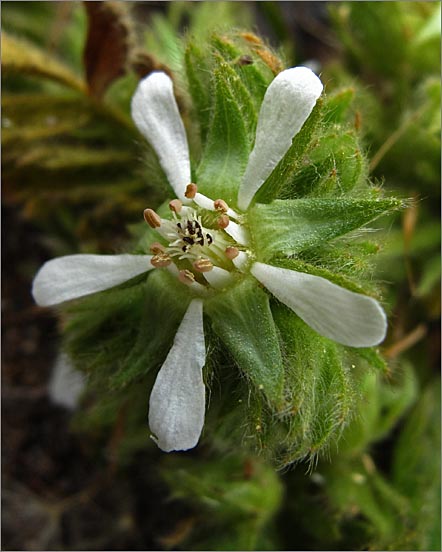
Rare wildflower: the Point Reyes Horkelia

Horkelia marinensis Pt Reyes Horkelia

Licensed under CC: photo by CalFlora user Vernon Smith.  All rights revert to originator.

The Point Reyes Horkelia is a delicate rose-sister with finely fragranced foliage forming drought-hearty dark green patches in California’s remaining coastal prairies. This species, like other close relatives, has strong horticultural value; when only slightly watered in the driest of months, it forms a beautiful, resilient, fire retardant ground cover. White five-petaled flowers form starburst patterned over-stories to a leafy silver carpet. Plants are strong, long-lived microshrubs with deep, woody taproots. Given ideal conditions, mature square meter-sized Pt. Reyes Horkelia clones support extensive root systems, capturing nutrients and rainfall, sequestering carbon, and stabilizing slopes. Across the 25-odd distinct patches of coastal prairie that support this species, Horkelia clones are nurturing increased soil ecosystem diversity.

The Latin, Horkelia marinensis, references Marin County, California, the heartland of the species’ distribution. There are outlying populations elsewhere along California’s central coast.  A few plants live in a meadow on the Moore Creek Greenbelt, more live in prairies near Twin Gates, upper UCSC campus and Wilder Ranch State Park.  More recently discovered populations are at the Bonny Doon Ecological Reserve, San Vicente Redwoods, and on the Cotoni Coast Dairies Preserve.

How rare is this wildflower? Should it be given legal protection under the State or Federal Endangered Species Acts? The criteria are not transparent for awarding threatened or endangered status to this kind of widely distributed plant, which mostly grows in ‘protected’ areas including heavily-used public parks. Some have suggested that if a plant were to have fewer than 16 populations, and if a significant number of those populations are substantially threatened with extirpation, and if a petition were submitted to the government and authored by a legitimate  source…. then perhaps the bureaucracy would rule in favor of conservation.

There are dramatic swings in the annual number of new species protected under State and Federal Endangered Species Acts. Do we have a good system for adequately capturing the urgency of protecting particular species? Experts with the California Native Plant Society agree that the Point Reyes Horkelia is indeed endangered – biologically. These experts routinely reassess their recommended status for species, and make recommendations based both on close scientific observation and the knowledge of experts. Discovery of so rare a species in our hard-pressed midst merits at least an immediate population survey, without which we can’t begin to address its conservation status. Even when this rare species is on public lands there is no government botanist available to collate surveys across the range of the species. And so, surveys and documentation are left mainly to volunteers.

As just such a volunteer, I am pleased to offer what is already known about Pt. Reyes Horkelia distribution in our area. The Santa Cruz County populations of Pt. Reyes Horkelia live on many differently owned and managed lands, with varying management attention. The southern range limit for the species is currently believed to end on the Moore Creek Greenbelt. Santa Cruz City Parks Department has been spending some attention to managing the parks’ beautiful meadows, where the Pt. Reyes Horkelia and other rare wildflowers have been restored through carefully managed cattle grazing. UCSC land also includes a few patches of the species, in moist meadows mainly near Twin Gates, on both sides of Empire Grade in an area known as Marshall Field. The University occasionally does good things for those meadows, like prescribed fire and mowing to maintain native plant species, but the area with this species has been largely neglected for the past decade, so it may be declining. The BLM hasn’t really hit the ground with any kind of targeted meadow management aimed at conserving native plant species on their Cotoni Coast Dairies Preserve. The consortium of land trusts owning the San Vicente Redwoods know about the species being on their land, so they would presumably be careful with any of their timber, fire, or recreational management. The California Department of Fish and Wildlife’s Bonny Doon Ecological Reserve has a single small patch of plants, but no management or monitoring to maintain the species.

Horkelia marinensis Pt Reyes Horkelia

Licensed under CC: photo by CalFlora user Jorg Fleige. All rights revert to originator.

While some of these patches are in good hands, others are under daily threat from disuse or overuse. The impossibility of cooperation across such broad swathes of countryside renders survey work on the holdings of amenable or accessible landowners more urgent. Stunned as we may be that work of this nature is barely funded for the government agencies tasked with oversight of such matters, there are things we can do to help this plant out. For instance, join the California Native Plant Society, which is the most effective native plant conservation organization per dollar invested in the state. Also, every time you hear about plans to increase access, adding trails and visitors, to the meadows of our area…weigh in on native plant conservation with the lands managing entity involved. Mostly, those weighing in are vocal users- mountain bikers, especially…people not inclined to also care about rare native plants. By speaking for, caring about, and investing in our rarest native plant species, you will be contributing to the possibility that future generations will have the chance to experience the fine, rose scented foliage of this beautiful, rare wildflower.

Many thanks to Wes Harman for editorial assistance.

Unbalancing Act: park planners threatening wildlife by appeasing the masses

Here on Santa Cruz County’s North Coast, parks managers aren’t using the normal tools to help them balance recreation and wildlife conservation.  There are numerous proposals for new wild land park access points, trails, campgrounds, parking lots and the like.  Meanwhile, miles of unplanned, ‘illegal,’ uninvited trails from dozens of ad hoc trail heads proliferate, unheeded.

To manage parks correctly, parks managers would normally go through a planning process that includes understanding the current situation, planning for specific goals, and monitoring to see if they got it right.  Park planners start with studying both the wildlife (types, distribution) and likely recreational visitors (expectations).  The results of these studies inform a ‘carrying capacity analysis’ – how many of what kind of human recreational use can occur in a particular area of conservation land without too deleteriously affecting a given set of natural resource goals.  The analysis details thresholds of acceptable change, which sets in motion a monitoring program so that managers can adjust visitor use accordingly.

Limiting wild land visitor use to protect wildlife is a lot like hunting and fishing regulations that have been succeeding well in restoring game species.  Fishing and hunting regulations require good information on how many fish or game can be caught while maintaining or increasing a population.   Regulatory agencies set the regulatory limits of “take” and monitor both the amount of animals reported to have been killed as well as the populations of the animals still alive, adapting regulations on a regular basis to maintain healthy populations.  Hunting and fishing regulations can change yearly. Sometimes, there are moratoriums on “take” of a certain species.

Despite the parallels in theory and efficacy, in actual practice there is divergence between hunting/fishing and management of park visitors, especially here in Santa Cruz County.  Whereas hunting and fishing regulations are widespread and accepted in U.S. culture, Santa Cruz County’s wild land recreation culture hasn’t experienced controls of visitor use, with a couple of exceptions.  The endangered snowy plover and elephant seal both have seasonal closure, prohibiting recreational visitation to the beaches that are critical to their survival:  two of umpteen species protected on a miniscule percentage of our park land.  This is not for want of policies that mandate better park management.

There are many policy mechanisms obligating wild land parks managers towards more effective recreational visitation management.  For instance, California State Parks is required by law to perform a carrying capacity analysis (Pub. Resources Code 5019.5) for all of their parks.  And yet, such analyses have yet to be implemented using modern biological or sociological principles.  Instead, State Parks’ plans contain arbitrary zones grading from high to low recreational use radiating out from the most convenient park entrance.  Likewise, BLM is required to balance recreational and environmental goals and to monitor and adjust visitor use as necessary.   Santa Cruz County Parks and all other parks managers must protect sensitive park locations by limiting use to interpretative activities under the California Coastal Act.  Despite these regulations, between the disinterested public and “slippage” in agency interpretation/implementation, we see little evidence of professional management of recreational use in Santa Cruz County’s precious parks.

What you can do

Each and every time a new access proposal comes forward, ask the organization responsible what they will be monitoring to assure that recreation isn’t causing too much wildlife disturbance.