conservation

Whence SCruz Enviros?

I continue to ask myself this question: where has the environmental movement gone in Santa Cruz? I have several hypotheses. This is not to deny the tireless work of various individuals who have helped on many fronts, but I sense a loss of momentum, of any organized movement of the type of conservationists that have been so crucial in the past in providing the Santa Cruz area with much of which it is now proud: Lighthouse Field, the City’s Greenbelt, Wilder Ranch, and Gray Whale Ranch come to mind, is there any kind of movement now that could achieve such success?

Questionable Rationality

One of the age-old issues with working with coalitions is the rationality factor, and the environmental conservation movement has had its share of associates who defy the laws of rational discourse. There is strength in numbers, but as those numbers grow the community will include people who are vocal about some pretty wild, unsubstantiated things. Those people sometimes have a fairly strident way of expressing themselves. Whether it is a tactic, or perhaps they believe it, the opposition to conservationists will say ‘look at that lunatic fringe group!’ They lump perfectly rational people in with the less-than-rational minority. The less-than-rational folks will also say ‘Look! I have credibility! I am associated with these rational people!’ That fringe element has driven more than a few of my colleagues away from advocating for conservation.

Oppositional Idiocy

Problems with rationality aren’t just internal to conservationists: there are many irrational people to face in the opposition. There is increased reliance on very poor methods of discourse: tu quoque, black-and-white and straw man arguments are very common, and conservationists aren’t always prepared to rebut such vacuous methods of dialogue. We often don’t even recognize them as such. As I wrote recently, add those types of arguments to a long list of unsubstantiated ‘facts’ and you have the gish gallop making it impossible to address any particular thing.

Conflict Avoidance

Poor discourse and barely rational coalition members may have contributed to the next reason I hypothesize for the demise of the local conservation movement: conflict avoidance. One thing that seems on the upswing with the younger generations is conflict avoidance, but this issue has long been a problem to conservationists. Politicians and other would-be mediators of environmental conflict have often tried problem solving by attempting solutions through compromise. That is, they see two sides – conservation versus development – and say “we can find a middle ground.” The problem with that is that often the conservation issues associated with the proposed development aren’t addressed by this middle ground: biology doesn’t work that neatly. This concept has oozed its way into the general populace where many want to solve things by reaching an imaginary happy spot – ‘half way’ between what is portrayed as two divergent points of view. Even that half-way point is difficult for most to imagine negotiating.

Those who are proponents of nature destruction are well seasoned negotiators, new public conservation advocates not so much. New recruits into conservation often balk at the need to negotiate with often well-paid consultants who are so good at their game. These new conservationists also often feel shy about hiring professionals, especially lawyers to help with the conflict: for some reason many feel like seeking that method of solution is ‘too much.’ And, then again, lawyers are expensive.
Legal Defense, Legal Bills

If somehow a group of conservationists can come to the conclusion that a lawyer would help, raising money for legal defense funds for conservation around Santa Cruz is not easy. Lawyers are expensive and their work takes time. Can you remember the last time a local conservation group asked for funding for legal defense? It has been a long time.

And yet, legal defense has often been essential to resolving many important environmental conflicts, everywhere. Especially here in California, the laws protecting the environment are strong and broad ranging. Those proposing to destroy nature fear enforcement of those laws. With my conservation advocacy, I often cite legal language and so have been called ‘litigious’ by a handful of nefarious truth-stretchers: I have never retained legal counsel to sue anyone. It is very important for conservationists to understand laws and regulations and to cite those as well as case law whenever making their point. And yet, fewer and fewer locals are forming coalitions to retain legal assistance to protect nature.

Legal Reprisals

Some conservationists have avoided the milieu of conflict because they fear that the often well-funded anti-nature crowd might sick their lawyers on them. There are Strategic Lawsuits Against Public Participation (SLAPP) where the pro-development types intimidate conservation advocates by suing them…often for libel but for lots of other things. Also, some conservation advocates have been named in lawsuits by nature destroyers. For instance, our ‘friends’ at the Trust for Public Land sued local conservationists to recover expenses the group said they used to defend themselves in court actions aimed at better protecting the Cotoni Coast Dairies property.

No Peace, No Justice

The last issue hobbling local conservationists is their inability to adequately form coalitions with environmental justice movements, which have perhaps gained more wide support and recognition. This piece well summarizes the issue, and rests with the ‘no brainer’ intersection of the two movements: climate change. In this regard, Santa Cruz might be doing okay, but we are leaving behind other conservation issues of the highest importance: conservation land management, endangered species conservation, clean water and wetlands protections, and natural areas visitor management. Each of those issues has meaning for environmental justice proponents, but conservationists have done little to make that bridge.

What Can You Do?

I urge more people to become actively involved with local conservation groups. And, when you do, help those groups to become better through your mentorship and skill. We need to train one another to be good at conservation before the next big issue threatens species, habitats, or the relationship between humans and nature in our region.

-this post originally published as part of Bruce Bratton’s long-running informative blog at BrattonOnline.com, a place you should turn for all that you need to know around the Monterey Bay (and beyond).

Gish Gallop

Has it always been so common, or is it just more apparent because it has become so prevalent in mainstream politics? The Gish Gallop is a method of debate where one streams together so many unsubstantiated points that it becomes difficult to track, and rebut, them all. Perhaps the easy swipe of social media or the increased speed of emerging news have helped to wire us to be more receptive to the full-steam-ahead BS argument technique. Here, I try my hand at making a speech using the Gish Gallop technique with a collection of commonly held nature fallacies:

A Gish’ing Example

Nature is dangerous! For instance, all sorts of snakes and spiders are venomous, and people die from their bites all the time. You have to be especially careful of mountain lions, which are increasingly attacking people across California. If environmentalists have their way, there will also be wolves roaming everywhere across the Western USA- once established, they will become habituated to eating livestock and they’ll be coming after people, too. Just outside your door trying to get into your trash are very dangerous rabid opossums. You don’t even have to go outside for nature to get you. There are spiders hiding in your house, and an average of six a year drop into sleeping people’s mouths. I heard just the other day about another venomous snake crawling out of someone’s toilet. Some crazies want to blame so many things like this on global warming, which is just hype from crackpots trying to control our lives. They claim burning fossil fuels is going to kill us all, but that’s not true! Change happens, for God’s sake, there have always been natural disasters and there always will be, just get used to it, you snowflakes!

Does that kind of diatribe sound familiar? It should, and its not just coming from the political right[1] – watch out for it coming from just about any political direction, in just about any social situation. You can tell a real Gish Gallop addict by picking out just one of their tidbits and trying to follow up with a more involved conversation. If they are a galloping gish o’phile, they’ll be unable to stick to that topic and will hit you with another round of Gish Gallop before you can yell ‘stop!’ I don’t know if its just my circles of company, but I venture to guess that 1 out of 10 of my conversations encounter something amounting to Gish Gallop.

Toilet Snakes

Let’s take a look at just one of the parts of the above parade d’ BS: toilet snakes. Mention the phrase ‘toilet snake’ during a party, and it may well take root in conversation with anecdotes just as lunatic, or even substantiating evidence of this profoundly unlikely scenario. Was it Voltaire that said absurdities beget atrocities? One step leads to the next. Who are we to deny the frequency of toilet snakes, anyway? I’m sure it has happened once or twice! It may even be getting more frequent with global warming, invasive species, collapsing and outdated infrastructure, and the loss of skilled labor attracted to public works jobs. See? How familiar is that? That’s how it goes…

Turning This Around: The Antidote

How good are you at stemming the tide of verbal diarrhea? How do we collectively alter this rotten social habit? It is time to infuse more meaningful dialogue into the world. I am particularly advocating for better dialogues about nature and hoping that we carry with us enough fascinating stories that we can knit deeper and deeper oral traditions into a regionally-oriented social fabric. As we do that, I encourage us to use science as our guide, so that we have a method of building out truth, of going deeper and deeper into nature, and to add those discoveries into our stories.

The Fate of Snakes

My essay ‘Snakes on the Monterey Bay’ is one of the most popular reads on my website. I suspect that there are widespread positive sentiments about native snake species. But there are also widespread popular beliefs, well supported in social circles, that snakes are all very dangerous. Snake phobia, even nature phobia, is far too common. I well recall a time when I was working with a farm labor crew to machete poison hemlock, an invasive species that had taken over much of Younger Lagoon Reserve that I was stewarding for the University. One of the crew spotted a garter snake: quickly three were chasing it and proudly hacked it to pieces in moments before I could stop them. They seemed astounded that I was angry at their actions. I’m sure that they still think that I was acting insanely to be defending SNAKES! Why? Many people believe snakes are dangerous, and this is one of the many subjects that we can work on to improve human-nature relations.

Might you find out a bit about one of our native snakes and start a conversation about it with your friends? Such conversations could change the world for the better.

-this column slightly modified (with The Guardian link) from that which I posted via BrattonOnline.com, Bruce Bratton (and team)’s wonderful source for news. Subscribe now and save (it is free, but donations are welcome)


[1] Although some admit that this is their favorite method of oratory.

Loss

The sadness of loss is almost too much to remain engaged as a lover of Nature. The love comes easily and despite our collective desire to protect Her, we somehow keep acquiescing to destruction. Why? Either by quick violent death or by slow strangling loss, somehow humans are capable of the most atrocious acts against Nature. These things are not happening only in some distant rainforest or coral reef…these things cannot be relegated to some guiltless past by unknown villains…they have been happening right here, are occurring right now around the Monterey Bay.

Sudden Violent Nature Destruction

I’ve been living near Santa Cruz since 1986, and during that time there have been some horrific atrocities to Nature. And they still are occurring.

Even as I weep to see the destruction of the East Meadow at UCSC, I clearly recall the moments of the tearing of bulldozers into other precious ground. The actions themselves are bad enough, but the sadness deepens as I hear the violence supported by the sentiment of members of my community. Rationalizations. Deep convictions and justifications. How can so many have become so separated from the Great Nurturer, our Mother Nature? I know the answer, but it doesn’t make it easier: greed.

UCSC. Arana Gulch. Santa’s Village. Terrace Point. Castle Rock. Glenwood. Millenium High. Large areas of Fort Ord. Armstrong Ranch. Santa Cruz Gardens. Seascape. These are just a few of the places that have been violently, suddenly and permanently transformed by bulldozers, development, pavement, and buildings since I arrived in Santa Cruz.

None of these ‘projects’ ‘needed’ to happen. All have been completely rationalized by society at large. Many have profited, and many more will feel the losses for generations. Few now feel a more direct, deep sense of loss from the destruction of those places; most did not come to know them well enough to love them deeply. Fewer still have the broader and deeper connection with Nature to feel pain upon witnessing her passing and the forlornness that comes from respect of what was there before. No one can acutely feel these things and still survive. We must “move on.”

A Slower Strangling

War or slasher movies attract human attention far more than long term torture. We eventually forget Guantanamo, refugee camps, those haunted and plagued by the trauma of war, famine, or injustice: we “move on.” Such is the case with our treatment of the lands around us. We now know that even ‘protected’ lands need careful tending, that the whole Earth needs our active care, but we are failing that responsibility everywhere. And so, our neglect means Nature is (maybe not so slowly) dying. We have put Her in a cell and neglected food and water. She cannot be so separated from us, and her dying is already causing our suffering. And although everyone hears Her rattling her cage, we “move on.”

Nature’s Slow Death Around Us

We daily witness the actions driving climate change, but it is harder to see the actions driving the torture and neglect of Nature around us. Everyone reading this can glimpse those actions in the rhetoric about Nature tourism around the Monterey Bay…mostly about mountain biking, but also about the many ‘natural’ attractions our region has ‘to offer.’ Nature tourism is one of the top ten threats to biodiversity globally. Around the Monterey Bay, there are only the grossest, ham-fisted approaches by conservation lands managers to stem the impacts of natural areas visitors. We are loving our conservation lands to death. Literally watch your step as you hike trails eroding into ditches, soil spoiling surrounding streams, trails draining the water from the land. Trash. Weeds and pathogens proliferating along trails and roads through natural areas. Wildlife fleeing frequent visitation with no where left to go. Invasive plants, pathogens, and introduced animals permanently altering Nature, spurring native species loss. Nature tourism is good for business! And, as to the cost that comes from that profit…most people have already “moved on.”

Moving On

As a society, we are “moving on,” and I and others who care are swept up in the flow. The tears we shed for the losses we see are quickly diluted in the river of profit that drives our downstream movement. We feel we must hide our Great Sadness so that the shreds of hope we retain in the resilience of Nature might inspire others to come to her aid. The future is uncertain.

To calm the panic and loose the sadness, we turn to Nature and go for a walk…quietly, respectfully, slowly, and in awe.

-this post originally posted in Bruce Bratton’s stupendous weekly blog at BrattonOnline.com I suggest you subscribe to keep up with ‘all the news that’s fit for printing’ around the Monterey Bay and beyond. If you adhere to the adage, as I do, that all politics is local, that blog is the place to be.

Protecting Our Most Precious Spots

The most highly protected terrestrial areas around California’s Monterey Bay are designated as “Natural Preserves” by the California Department of Parks and Recreation and as “Ecological Reserves” by the California Department of Fish and Wildlife. Let’s explore where those places are, and how the State’s premier land management agencies are directed to protect areas with these designations.

CDFW Ecological Reserves

The California Department of Fish and Wildlife (CDFW) manages 1.1 million acres of land in California. Unfortunately, CDFW does not publish summary statistics about how many of those acres are designated as Ecological Reserves, which have the highest protection of any state-owned public lands, as reflected in the following regulatory language:

“….ecological reserves are maintained for the primary purpose of …..protection of rare, threatened, or endangered native plants, wildlife, aquatic organisms, and specialized terrestrial or aquatic habitat types. Visitor uses are dependent upon the provisions of applicable laws and upon a determination by the commission that opening an area to such visitor use is compatible with the purposes of the property.” (Cal. Code Regs. tit. 14 § 630Additional Visitor Use Regulations on Department Lands Designated as Ecological Reserves).

Note the stress on maintaining these properties for species and habitat conservation, first and foremost. And note that it takes a vote by the California Fish and Game Commission to allow any visitors to use those properties. Any such vote must be supported by an analysis of the impacts of such visitation on the species and/or habitats that the Ecological Reserve was designated to protect.

Local Ecological Reserves

The two CDFW Ecological Reserves that people regularly visit around the Monterey Bay are the Elkhorn Slough Ecological Reserve and the Bonny Doon Ecological Reserve. The two other CDFW Ecological Reserves do not allow public access without special permission: Quail Hollow and Watsonville Slough.

The Elkhorn Slough regularly has many visitors. The Fish and Game Commission appears to have at some point voted to approve visitor use at that property. However, a Commission-approved Elkhorn Ecological Reserve Management Plan outlining how visitor use is compatible with the conservation purposes of the property is not readily available. So, unfortunately, I can’t tell you what ‘conservation purposes’ were designated when the property was afforded such a high level of protection.

The other CDFW Ecological Reserve that the public visits was founded with the conservation purposes, according to their approved management plan, from 2003:

“The Bonny Doon Ecological Reserve (BDER) contains the largest and most pristine remaining occurrences of several rare plant communities which are limited to ancient marine sand deposits in Santa Cruz County. These communities contain three plant species which are considered to be rare or endangered: Santa Cruz cypress (Cupressus abramsiana) and Santa Cruz wallflower (Erysimum teretifolium), both listed as Federal and State endangered at the time of acquisition; and Ben Lomond spineflower (Chorizanthe pungens var. hartwegiana), which has subsequently been listed as Federal endangered….The BDER acquisition represented a unique opportunity to preserve a comparatively large area of rare habitat in nearly pristine condition”

In contravention to the regulation cited above, CDFW has allowed public use despite the Fish and Game Commission never having approved visitor use according a plan analyzing the compatibility of visitor use and protection of the Bonny Doon Ecological Reserve. Moreover, such a plan would also be required to have a Coastal Development Plan, approved by the California Coastal Commission. The 2003 management plan alludes to the need for a trail plan, but it is not clear if the plan’s environmental impact sufficiently addressed issues associated with the vague plans outlined in the document. The plan did, however, require creation of a monitoring program that designed to trigger changes in visitor use and trail maintenance. {ask for monitoring reports}

State Parks Natural Preserves

The California Department of Parks and Recreation manages 1.6 million acres of land. As with CDFW, Parks does not publish how many acres are designated as Natural Preserves. Natural Preserves have the highest protection of any State Parks managed lands, as reflected in the following policy language:

“… natural preserves will be established to give full protection to environmental and ecological integrity, from the standpoints of watershed influences, scenic and visual unity, cultural values, and other appropriate environmental factors.

Developments in natural preserves are limited to trails and interpretive facilities required to make possible the visual and sensory enjoyment of the resources by visitors. Vehicle access and parking are not appropriate; visitor centers, restrooms, structures, and facilities other than signs shall be placed outside natural preserves.

Bicycles are allowed only on paved roads in…Natural Preserves.”

Note the language, as with CDFW, stressing the primary importance of these State Parks areas for ecological conservation, and how Parks adds to this designation watershed processes and areas of cultural significance.

Local Natural Preserves

There are 5 Monterey Bay spots with State Parks Natural Preserve designation: Wilder Beach Natural Preserve (small, Wilder Ranch State Park); San Lorenzo Headwaters Natural Preserve (1800 acres, Castle Rock State Park); Theodore Hoover Natural Preserve (23 acres, Big Basin State Park); Año Nuevo Coast Natural Preserve (925 acres, Año Nuevo State Park), and; Point Lobos State Natural Preserve (550 acres). A large portion of the Año Nuevo Coast Natural Preserve has restricted public access and there is no public access allowed at Wilder Beach. The other spots allow public access, but, as noted in the above policies, no one is allowed to leave trails in areas with this designation, and bicycles are not permitted except on paved roads.

One Natural Preserve is missing from State Park’s list: the one that was to be designated for the coastal prairies in upper Wilder Ranch. During the process of approving use of that part of the park, Parks was discussing designation of vast areas of the diverse grasslands as a Natural Preserve. However, it turned out that Parks never updated the Wilder Ranch General Plan and so didn’t pursue such a designation, possibly due to opposition from mountain bikers.

How Are They Doing?

Many people reading this will be familiar with at least some of the areas listed above, places afforded the highest levels of conservation protection. For each spot, ask yourself: how are the managers doing? Do those areas seem to be better managed for conservation than other places? In the case of Wilder Beach, are snowy plovers nesting there…do people get away with trespassing there? In the case of the Bonny Doon Ecological Reserve, is visitor use truly compatible with protecting the many species and habitats, which includes the most endangered ecosystem in North America? How can we tell these stories and help the managers elevate these very special places to give them the protection they deserve?

-this essay revised with new information from that which appeared in June 2024 at Bruce Bratton’s inimitable Monterey Bay news source at BrattonOnline.com

Advocates for Wildlife Protection: Where?

When was the last time you heard about someone advocating for wildlife protection in our Monterey Bay region? Who was it? Why?

I am disturbed by the lack of advocates for wildlife protection and I wonder why that might be. Here are some reflections.

A Plea for Help

Occasionally, I find a need to call out for help for wildlife protection advocacy. My most recent call for assistance was a seeming ‘no brainer.’ There was a clear need for wildlife advocates to ask the State of California office of the US Bureau of Land Management to consider a science-supported update of their statewide sensitive wildlife species list. The one BLM has been using doesn’t protect a bunch of State listed wildlife species, as it should. And, the BLM is required to work with our State Wildlife agency to do just that. This is one of the most straightforward issues I’ve faced: the facts are easy to illustrate and quick to research. And so, I reached out to the obvious pro-wildlife advocacy organizations. Who comes to mind when I say that? Pause, don’t read on…think: who would that be?

The Sierra Club

If you are a pro-wildlife advocate, the Sierra Club seems a great place to work. Well, it could use some help. My pleas to the Santa Cruz Group of the Ventana Chapter of the Sierra Club went unanswered. The one or two in the group who are apt to answer such requests are totally stretched. A while back, the local club was taken over by the pro-bicycle lobby, a group that has little regard for wildlife conservation. It should be telling that Santa Cruz doesn’t even have its own Sierra Club chapter: the local one is a sub-group of the Ventana Chapter, based in Monterey where most of the pro-environmental activism has been traditionally located.

The Wildlife Society, San Francisco Bay Area Chapter

Another far flung chapter of an organization that is supposed to represent Santa Cruz County’s wildlife conservation concerns is the SF Bay Chapter of the Wildlife Society. Unlike the Sierra Club, this Chapter did return my queries. However, after a long wait they wrote me that they were uncomfortable advocating for this issue. They actually told me that they weren’t an advocacy organization, despite their website saying that they “work to ensure that wildlife and habitats are conserved” by “advocating for effective wildlife policy and law.” It seems like whoever is active in the organization right now is uncomfortable being advocates. Luckily, their parent organization was a much better help.

The Western Section of the Wildlife Society

Even more far flung than the SF Bay Chapter, the Western Section of the Wildlife Society was a great help. Their leadership, though obviously overworked, were enthusiastic and helpful with the straightforward request for assistance. They did due diligence and had adult conversations about the need for advocacy and wrote an amazingly strong letter on the issue. If you want to support a good (local?) organization for wildlife advocacy, this is a logical choice. Unfortunately, they probably won’t be proactively monitoring our local situation and helping out without us asking.

Audubon Society

Not so far flung, the Santa Clara Valley Audubon Society is very active and quite influential…just over the hill. When approached, their overworked volunteers can sometimes be enticed to help with local conservation. I have to give them a call on this one.

Land Trusts

The Land Trust of Santa Cruz, Sempervirens Fund, Save the Redwoods League, Peninsula Open Space Trust and others…clearly all competing with one another with no unified messages or strategy for region-wide wildlife conservation. Instead, they are as likely to be public-forward with pitches for increased recreation in natural areas, which runs counter to wildlife conservation. With this contradiction, none of these organizations are able to build credible coalitions to advocate for wildlife conservation.

Wildlife Biologists

I have long approached local wildlife biologists for assistance, with mixed results. This time, I reached out to a few and was surprised. What I was asking experts to do was to do a bit of analysis  so that their opinions about adding species to the BLM’s list were well supported. A handful of wildlife biologists said that they would consider advocating for this cause, but only if paid for their time for analysis. One biologist, Jacob Pollock, stepped up as a volunteer. Dr. Pollock is a steadfast advocate for science-supported wildlife conservation. He has an inquisitive mind and powerful analytical abilities. He deserves recognition and thanks for his wildlife conservation volunteerism. This is apparently quite rare. He will shortly offer up a methodological approach to updating the BLM’s State Special Status Wildlife Species list with an example from a statewide analysis of the rarity of American badger, including BLM’s contribution to its recovery.

The rarity of such volunteers was recently emphasized when a community organization contacted me to speak at a public forum considering a potentially wildlife-impacting regulation. I couldn’t speak and couldn’t think of another wildlife advocate to do that speaking engagement. Have you seen an inspirational wildlife conservation advocate who regularly speaks to local threats to wildlife and solutions for conservation?

Why So Few?

What has created this dearth of local wildlife advocates? We have no reliable analysis about what has happened. One day, maybe I’ll find the time to do some investigative work about what went on with the local Sierra Club. Meanwhile, I suggest that mere intelligent leadership in our community would result in that person getting elected to the Santa Cruz Group. However, that person would be lonely without a couple or three more such people to make a majority vote happen in favor of wildlife…and, a group of such volunteers would be necessary to pick up the workload for responsible advocacy.

Cost of living might have something to do with the situation. The Monterey Bay area is very expensive to live in, so wildlife biologists must work hard to pay their bills, leaving no time for volunteer work. And, when professional wildlife biologists do advocacy, they threaten some of their employment opportunities, so there’s further disincentive.

Parallels with Environmental Educators

If there are any social scientists out there, read this other post and compare the notes with this one – I think there are parallels. Besides wildlife biologists, why are so few environmental educators meshing conservation advocacy with their work?  Is it likewise the threat to income? Or, is there something cultural going on here? There might be some redundancy with this issue as perhaps a large number of environmental educators are also wildlife biologists.

What Are We To Do?

I heard recently that progressives might be getting some funding to support a revitalization to allow improved political campaigns in Santa Cruz. Perhaps there is a similar need in wildlife advocacy. It does seem that we need a new organization to advocate for wildlife in our region. How would one go about setting it up for success? I imagine it starts with funding the set up and also creating an endowment for some staff positions. The mission would need to be building a supportive, diverse, and active public. I am looking for such change.

-this post slightly adapted from the one published by Bruce Bratton at his impactful BrattonOnline.com blog site where there is often lots of good information from some brainy characters. A great source of news.

Earth Day

How do you feel about Earth Day, both in Santa Cruz and throughout the USA? The first Earth Day was in 1970 and was organized by Wisconsin’s Senator Gaylord Nelson to be a massive public demonstration to restore the environment. Estimates are that 20 million people took to the streets in protest. They say that the Environmental Protection Agency (EPA) was founded because of those first Earth Day demonstrations.

Imagine so many people demonstrating because of environmental degradation in the United States! While some things have improved since 1970, we are now facing the greatest threat to the planet ever due to greenhouse gases and climate change. Earth Day nowadays is tamer, perhaps too tame. What are we going to do to better celebrate Earth Day?

Earth Day Learning Back in 2023

The best things I find to do on Earth Day in the Monterey Bay area last year, in 2023, were about learning. My favorite educational attractions for Earth Day are being offered in conjunction with Earth Day Santa Cruz. Mainly, I suggest that you check out the free admission to the Museum of Art and History where the main feature is the Bay of Life exhibit. Chris Eckstrom’s and Frans Lanting’s Bay of Life project is very important- a way for more of the Monterey Bay’s people to learn how we live in an epically special place. The photos at the exhibition are more than memorable…they are inspirational, and the project aims to mobilize people, much as Earth Day did at its origin.

Earth Day Reading

For Earth Day every year, I highly recommend people read the book Ishmael by Daniel Quinn. The book is full of wisdom about how to live better on this planet. If you are interested in what your find in Ishmael, take the next step and read Derrick Jensen’s Endgame. Both books will point you in the right direction in many ways. A lot of what Derrick Jensen has to say is pretty important.

Learning is Not Enough

Environmental education is only valuable if it helps nurture pro-environmental behavior.

Give or Take?

In Quinn’s Ishmael, we are asked to reflect on if we are taking too much or just what we need from Earth. I take that another step to ask what we are giving back to Earth. Very few of the events I find about Earth Day every year in the Monterey Bay area are about taking less, not giving back to Mother Earth. Some of the events are downright greenwashing or irrelevant. Ecological restoration is the main way I see that we can give back to Earth, but I can’t find a single opportunity to help with ecological restoration associated with Earth Day near Santa Cruz.

I know of five organizations in Santa Cruz that help people give back to Earth. The California Native Plant Society, through its habitat restoration projects. The Coastal Watershed Council through its River Health programs. The Santa Cruz Museum of Natural History with its habitat restoration volunteer opportunities. Groundswell Coastal Ecology has The Most Regularly Available opportunities to help restore areas around Santa Cruz. One might consider committing to helping these efforts as a pledge on Earth Day and then following up at one of their next events. Last, Watsonville Wetlands Watch also (rarely) has opportunities to help restore areas in south county.

Don’t be Fooled: This and other Earth Day events aren’t necessarily good for Mother Nature

Greenwashing Earth Day

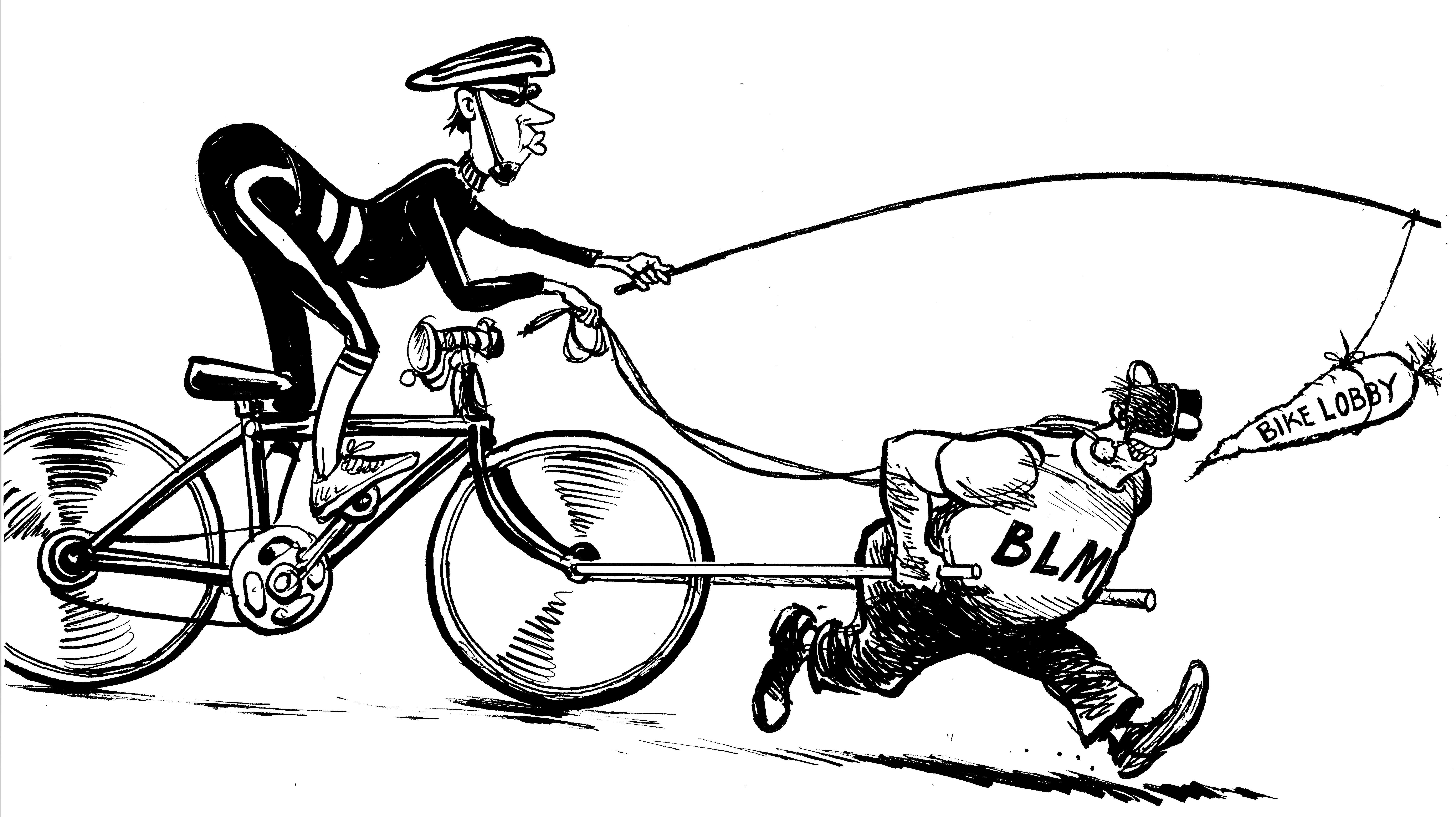
In 2023, I noticed one event that brought greenwashing to local Earth Day celebrations. Building new trails is not a pro-environmental behavior, especially when it comes to building those trails at Cotoni Coast Dairies. As I have mentioned in previous essays, that property has not experienced the kind of planning for trails that is necessary to conserve our extraordinary biodiversity, especially that land’s sensitive wildlife species and the species protected through its National Monument status. That hasn’t stopped the Mountain Bikers of Santa Cruz (aka Santa Cruz Mountain Trail Stewardship) from advertising an Earth Day event that focuses on habitat degradation. At their ‘Dig Day,’ volunteers will be unwittingly paving the way for unnecessarily wildlife disturbing activities. Earth Day volunteers will be helping folks rich enough to afford both a car and the gas to get to that park to bring their mountain bikes to have a ‘rad time’ on trails too narrow to be comfortable for bombing bikers and families going for a walk to use at the same time. To assure mountain bikers rule the trails, BLM has proposed rules that would make it illegal to step off of the narrow trails. It’s a pity that the Bureau of Land Management has had such a special relationship with this group, allowing them so much access to the closed park while turning away ecologists who would help better understand the plants and wildlife that need protection.

Illustration by DeCinzo

Outdoor Industry Lobbying Infects Earth Day

This Earth Day let’s renew our dedication to vigilance in protecting our public lands from well-funded special interest groups. In California as elsewhere, there are coalitions of businesses organizing to lobby for “increased access”(read wildlife habitat destruction). Their job is to “streamline regulations and policy affecting the active outdoor industry” (read stop public lands managers from protecting wildlife in favor of outdoor recreation). The clout of the Outdoor Industry Association is affecting politics, apparently trickling down right here on our North Coast.

Earth Day is Every Day

In closing, I hope you can sort through the Earth Day hype to find something meaningful to do. If you seek educational programs, may your experience lead in in the direction of actions that you can take to not only reduce your footprint on Earth but also to help improve wildlife conservation in and around the Monterey Bay. May we all think about that impactful, original Earth Day and how we might soon mobilize to push for the changes needed to avert the catastrophes of climate change. We are gathering together to make a difference, and our might will be felt in the near future.

-this post slightly edited from the original part of Bruce Bratton’s BrattonOnline.com weekly blog.

Public Testimony: Pathogen Response Process

What happens when a member of the public raises a concern about ecological pathogens to conservation lands managers during a public testimony process? This is a story that unfolded not long ago on the North Coast of Santa Cruz County concerning BLM’s management planning for Cotoni Coast Dairies.

Recall Last Week’s Column

If you haven’t already read my column from last week, it would be best to give it a quick read to put this essay into context. In brief, I outlined the devastation caused by reckless human movement of invasive, non-native pathogens affecting native plants and wildlife. The process introducing and spreading such pathogens is ongoing, despite the dangers being common knowledge. At the end of the essay, I pointed to the root cause of this issue, human greed, and outlined the common knowledge about the solution: slowing global trade enough so that we can take the time to be more careful. What I didn’t outline is what we can do more locally to address already introduced pathogens that have yet to spread across our conservation lands.

Conservation Lands Managers’ Pathogen Abatement Responsibilities

What responsibilities do conservation lands managers have for the wildlife and plants that occur on the lands they oversee? I’m betting you can guess one of those managers’ responsibilities…but not to wildlife and plants. Public access is often a conservation lands manager’s ‘responsibility.’ Consider the term ‘conservation lands’ for a moment and know that public access comes at a cost to conservation. So, part of those managers’ responsibilities is mitigating and avoiding the impacts of public visitors on wildlife and plants. And, those public visitors bring with them a variety of pathogens that can have grave negative impacts. While planning for public access at Cotoni Coast Dairies, unknown BLM staff wrote many statements acknowledging the danger of proposed recreational use and the spread of pathogens.

BLM Staff List Public Access Pathogen Dangers

Unknown BLM staff wrote extensively in the management plan for Cotoni Coast Dairies about the dangers of recreational use increasing plant and wildlife pathogens. They noted that recreational users “increase introduction of pathogens” (Chapter 4, pp. 5 and 11), which “pose risks to sensitive species,” impact native wildlife, and are “anticipated to impact aquatic species including special status fish species” (Chapter 3, p. 22; Chapter 4, pp. 18, and 32). BLM staff also addressed introduced plant pathogens using sudden oak death as an example. They noted that recreational trail use has been documented as being a significant source of the spread of plant pathogens (Chapter 4, p. 6). In addition, BLM staff also specifically addressed the spread of pathogens to wildlife from domesticated animals, warning that bobcats, grey foxes, dusky footed woodrat, and badgers are all known from Cotoni Coast Dairies and could all be negatively impacted by such diseases (Chapter 4, p. 19). The BLM staff went on to note that domestic dogs carry ‘hundreds’ of pathogens that can be spread to wildlife, including rabies, canine distemper, and canine parvovirus (Chapter 4. p. 21). Finally, the anonymous BLM staff also noted the dangers of introduced amphibian pathogens, including chytrid that is a major concern for California red-legged frog conservation (Chapter 4, p. 30), noting that recreational users spread such diseases (Chapter 4, pp. 35 and 36).

In sum, the BLM staff who wrote the governing management plan for Cotoni Coast Dairies articulated many of the concerns about introduced pathogens affecting the biota of that high-value conservation property. But, how did that knowledge affect their management? Very, very little.

BLM’s Management Response to Environmental Pathogens

After that litany of concerns, one might expect BLM staff to write appropriate management responses. Here are the two responses:

In response to the danger of domestic animals spreading pathogens to wildlife, they state:

“Therefore, BLM will not authorize or condone free-ranging dogs, or any other free-ranging domesticated animals or pets to utilize C-CD. (Chapter 4, p. 21)”

In response to the danger of recreationists spreading pathogens into the freshwater systems, they state:

“Therefore, BLM will seek to educate members of the public on this topic whenever possible. Appropriate signage may aid in reducing the potential for this to happen at C-CD. (Chapter 4, p. 36)

Note that the BLM staff avoided producing management measures that address the majority of the impacts of pathogens spread through the recreational activities they propose. This is particularly troubling because the foundational principle governing management of Cotoni Coast Dairies is not providing recreation, it is conserving the ecology of the property. Instead of outlining management to avoid or mitigate the spread of the pathogens, BLM staff favor recreational uses that they document increasing pathogen risk.

Pride, Prejudice, Ignorance, Overwork, or Institutional Policy?

Given the perplexing approach to increasing the danger of recreationists spreading pathogens that endanger the plants and wildlife of Cotoni Coast Dairies, it is reasonable to ask: WHY? The answer to that question seems to be ‘we will never know.’ Let’s examine some of the potential explanations.

On my documentation of planning shortcomings, one BLM staff person passionately and confidently proclaimed that their team had completely and professionally addressed all comments raised during the public comment period on the management plan. It could be that they were proud of their work and it could be that they were proud of the work of the other staff in their agency. And, given the clear shortcomings of the responses to my concerns about pathogen spread, it also appears that they might be prejudiced about the professionality of their agency. It might be that they are ignorant of the many solutions and mitigations available to stem the spread of pathogens on conservation lands. Another possibility is that staff are so overburdened with a multitude of responsibilities that they are unable to adequately address their planning responsibilities. Or, it might be institutional policy to avoid committing to certain types of management measures, whether due to cost, ease, or interference with recreation or other management preferences of prejudiced staff within the institution.

But, again, we will likely never know the reasons for these oversights. It is likely that BLM staff writing such plans will remain anonymous, so we won’t be able to ask individuals. When I’ve asked staff to refer me to the individuals responsible for decisions so that I could ask them about their rationale, they’ve refused. When BLM suggests that they ‘welcome public input,’ or are ‘seeking public input,’ such as with their latest proposal for a parking lot at Cotoni Coast Dairies, you have to wonder if your time is being well spent providing that input, given the hypotheses presented here. All we can do meanwhile is investigate and hypothesize: is it pride, prejudice, ignorance, overwork, or institutional policy that will lead to recreationists spreading the pathogens  that will kill the wildlife and plants at Cotoni Coast Dairies?

– this essay slightly modified from that which was presented by the esteemed Bruce Bratton at his laudable BrattonOnline.com weekly blog.

Fast Forward: FIRE! Rewind: Ungulates

In the future, it looks like there will be a lot of fire in California. Whether that is Good Fire or Bad Fire depends on you…depends on each and every one of us. Although it might not be ‘natural,’ we need Good Fire because we messed up a long time ago by driving ungulates extinct. Can we rewind? Let’s see.

Infernal Invitation

Our part of Planet Earth is constantly producing tons of fuel for the next wildfire. The coastal prairies are the most productive grasslands in California, creating 4 tons of dry grass per acre every year. Oaks, madrones, redwoods, and Douglas fir grow fast and tall around here. Shrubby plant communities go from nothing to impenetrable, dense thickets in just six years, ready to carry another inferno shortly thereafter.

With plenty of plant biomass to burn, and because of climate change, it is only a matter of time and the right fire weather to set things ablaze across our landscape. Local tribes could get fires to carry through the forests every 4-6 years: that’s how quickly fuel builds up to carry flames. About 6 years after the last fire, we should start expecting the next one, especially if there’s the right conditions. 2 consecutive years of drought makes parts of plants die, creating the dry wildfire kindling. Next up…heat waves….and then wind….and then all that is needed is ignition. We expect more summer lightning to do the job of starting fires as climate change destabilizes weather patterns and sends parts of hurricanes spinning across California.

Compost Happens

People are wrong if they imagine that once plant leaves and stems fall, they quickly decompose into the soil. Lots of folks I talk to think that things rot…mushrooms break down plant parts, after all, right? The cycle of life is all about death, decay, and rebirth! In miniature experiments, many people work this cycle with compost piles, or at least they purchase compost and add it to their gardens. Compost is nature’s proof that decay happens, so it must be the same in the plant communities around here, right?

Mediterranean Mummies

Rot misconceptions are founded in moisture preconceptions. Half of the year, the hot part, is dry: no rain. The wet part of the year is cool. The combination slows decay. In the forests, from what I’ve seen no stem, branch, or trunk larger than 2”diameter will fully decay before it burns in the next fire. Rot resistant redwood needles accumulate in a thick mulch that carries smoldering fire. Grass stems in our prairies last 3-5 years if they don’t touch the ground or are grazed, so there’s lots of accumulation there, too. In shrubby areas, plants are so closely packed that nothing tips over onto the ground, so dead stems and whole dead bushes are held upright for years awaiting the next blaze.

Drier, Hotter, and Few Big Creatures

It hasn’t been this fire dangerous for very long in these parts. This coast was moister and cooler just 15,000 years ago. Pollen records show the departure of grand fir and the arrival of coast redwood around that time on the Santa Cruz coast. On the larger scale, California has been getting drier and hotter since the Rocky Mountains and the Sierra Nevada started blocking summer rain that came from that away. About 15,000 years ago, huge herds of animals went extinct here: elephant relatives, horse and camel relatives, bison, and many more grazing critters roamed in massive herds, grazing and browsing the landscape. This would have profoundly affected fuel accumulation and plant community structure. In that kind of situation, wildfire would have been much more patchily intense. Big grazing creatures crush brush, eat leaves, topple trees. Bears and ground sloths tear apart tree trunks. Dead plant parts plus big creature impacts plus moisture conditions would have made composting much more natural.

What Now?

Okay, so change is happening: what do we do now? Good Fire is the answer, and to make that happen will take everyone’s cooperation. Good Fire involves careful planning and enough labor to set ablaze large areas of nature…at the right time…at the right intensity…at the right season and interval. We will have to feel safe when people tend fires in our forests and grasslands, right up next to roads and homes. Not many people feel that sense of safety right now, but we are still learning and training, and getting better at working together and building trust.

Meanwhile

Meanwhile, how do we live around such a flammable and dangerous landscape? I see people clearing vegetation and trying all sorts of ways of disposing of dead plant parts. As fewer people burn wood for heat or cooking, that is decreasingly a means of wood disposal. People seem enamored with wood chip additions to landscaping, but wood chips only slowly decay and are a fire hazard for years. Some folks are ardent about hügelkultur and composting, but these systems are of limited potential, requiring intensive management and, often, summer irrigation to speed decay. I see many people attempting clearing and biomass addition – mulching, composting, and even summer irrigation – in our poor-soiled chaparral communities. These practices destroy epicenters of biodiversity, type converting precious habitat to flammable weeds and increasing the potential for pathogens to spread into the adjoining habitat. Better to carefully thin and prune back chaparral vegetation where necessary and have low-intensity wintertime burn piles.

In many other situations, wintertime burn piles seem a fitting solution while we await better alternatives, such as Good Fire. Burning piled up biomass takes skill and careful planning to do it right. There are good regulations which get you started on the right path to pile burning: they require not too big of pile and that the biomass is dry so as to create not too much smoke. Permissible burn days assure smoke doesn’t too badly affect human health. I suggest a few other items to the list of things to pay attention to when pile burning. First, don’t burn a pile where it sits: a fox skeleton was the first sign that taught me that. Poor fox, cowering in the pile of brush hoping we’d go away only to be set on fire! There are lots of other critters living under that pile of dead plants! Also, why not use that burn pile to do something else useful? For instance, use the heat to kill an unwanted tree, shrub, or weed. French broom seedbanks might be devastated by a burn pile. A jubata grass plant could be eradicated. A coyote bush that would otherwise start to invade a meadow could be taken out. Also, one might have a group around the bonfire for a social occasion. And, think about how the nutrients and burned bare patch might affect the natural situation: weeds (or natives) will grow stronger, fire-following plants might germinate along the perimeter!

Here’s to learning how to live in a new era on this wonderful landscape. Join a bonfire this winter and pitch some biomass onto the flames to make our community safer!

-this post originally published by Bruce Bratton in his laudable weekly blog at BrattonOnline.com

Not Passing Through

A fundamental issue related to the inter-connectedness between humans and between humans and Nature is how we move. How often do we change homes? When we are doing errands or our work, how quickly do we move around the landscape, in cars, bikes, buses, or on foot? When we visit nature, how do we move…and how fast?

Changing Homes

According to surveys, US citizens move from one house to another 18 times. On average, they move every 6-11 years, depending on region and economic status. In other parts of the world, such as China, there are millions of itinerant workers who are on the move all of the time. Refugees from war, climate disasters, cartel/mob threats, etc., are numerous. Is this natural?

Some would suggest humans are naturally nomadic. Long lived civilizations are very rare, and I’d be interested in knowing how long pre-industrial indigenous group are thought to have remained in the same territory.

The Social Meaning of Moving

Neighbors are a very long type of human relationship. Some people don’t know their neighbors. Some even don’t want to. The throng of cities provide anonymity that some crave. Rural areas lay bare the need to interact with neighbors. Some loner rural denizens stand out in their desire for isolation, leaving the rest of the neighborhood wondering and curious. That spectrum means there is a wide variety of meaning when we move away from the social fabric of our neighborhoods. When we move farther still, we leave behind those we chose to interact with, our communities, our friends. How have those moves affected you, your family, your friends?

Lost Communities

I posit that the frequency of people moving is negatively affecting the quality of communities. If people stayed put more, wouldn’t they come to better understand the things that affect their community? Even if they aren’t particularly interested, it seems like people gradually come to understand housing issues, strains on water sources, the health of the public transit systems, who has power and who doesn’t, how weather affects people, social norms, and history. Each of those types of understanding influences our relationships with others in our community and can affect the political parties and politicians we choose. When we move, our votes make less sense, and our communities suffer the consequences.

Moving Around Where We Are

Closer to home, how do we move about in our daily lives? I am amazed at rush hour traffic and suppose that most of those people can’t afford not to be moving so slowly, breathing thick exhaust. For a long time, as a commuter, I tallied the very expensive vehicles on the road at various times of day. Not surprisingly, the rich are better able to avoid rush hour. So, how and when we move around is highly affected by how much money we have. But, everyone moving in cars on the road share the experience of isolation from each other and from the world as a whole. The more time people spend in their cars, the more isolated they are.

Economic conditions notwithstanding, Covid lockdowns changed many people’s movement patterns. People looked at their homes differently. For instance, people started cultivating many more houseplants. As the urban bustle subsided, wildlife started edging further into the built environment. We noticed the world around us a lot more. It was quieter both on the streets and in the air. Air pollution declined. Some of our movement patterns remain curtailed despite city governments’ attempts to get businesses to reverse work-from-home policies.

Moving Around In Nature

A ‘avid’ mountain bike enthusiast once told me that they rode carefully so as to avoid running over newts. For those who read my column regularly, you know I have an affinity with newts. When I walk in the forest, avoiding stepping on newts is something that keeps my attention. It is not easy. Newts blend into the forest floor easily, are varying sizes and move at varying speeds, and are sometimes so numerous that you have to walk ever so gingerly to avoid them. It is even more difficult for a bicyclist to avoid smashing newts, and that example serves for a world of other nature interactions. The faster you move around nature, the less likely it is that you will see the nature around you. Also, bicyclists, by covering more ground than those on foot, also disturb more wildlife than other, slower-moving parks visitors. If we are looking to increase the nature sense of humans, we must work to get mountain bikers off of their bikes, so they move more slowly and experience nature more deeply. The same goes for joggers. Parents who care about helping their children connect with nature have a challenge to show their kids how nature is exciting even if you aren’t on a bike or running through a park.

Infrastructure in Nature

‘Stay on the trails’ is an increasingly common park visitation rule. It wasn’t that way very long ago. Technically, State Parks has to formally designate an area as a natural reserve to legally restrict use to trails. At Cotoni Coast Dairies, the land managers have to go through an arduous rulemaking procedure to restrict future visitors to trails. Staying on trails changes the way you experience nature. Wildlife avoid trails. The vegetation surrounding trails is different. Your chance of encountering other people on the trails changes your experience. And, most trails are designed as straight lines, as if we are all in a hurry to get from one place to the next when we visit nature. Trail builders with parks agencies think that people want ‘loops’ and are averse to ‘out-and-back’ trails. Turn offs from the main trail better end in some giant attraction, like an incredible view. Those straight lines and loops create a certain type of experience for parks visitors. I suggest those designs enforce a more fleeting and more separate interaction with nature. What would it be like if more trails led one way to nothing obviously spectacular? What if parks managers designed in slow, immersive experiences into their ‘infrastructure?’

If people slowed down, looked around, and took more time to experience nature, wouldn’t that connect them more with the natural environment? Wouldn’t that connection make them care more about protecting the environment? Just as people moving less increases the possibility of caring more for their neighbors and human community, people moving more slowly in parks should increase their caring for the non-human world.

-this post originally published by Bruce Bratton in his highly engaging and enlightening weekly blog found at BrattonOnline.com, where you can turn for the most meaningful news for the Monterey Bay area.