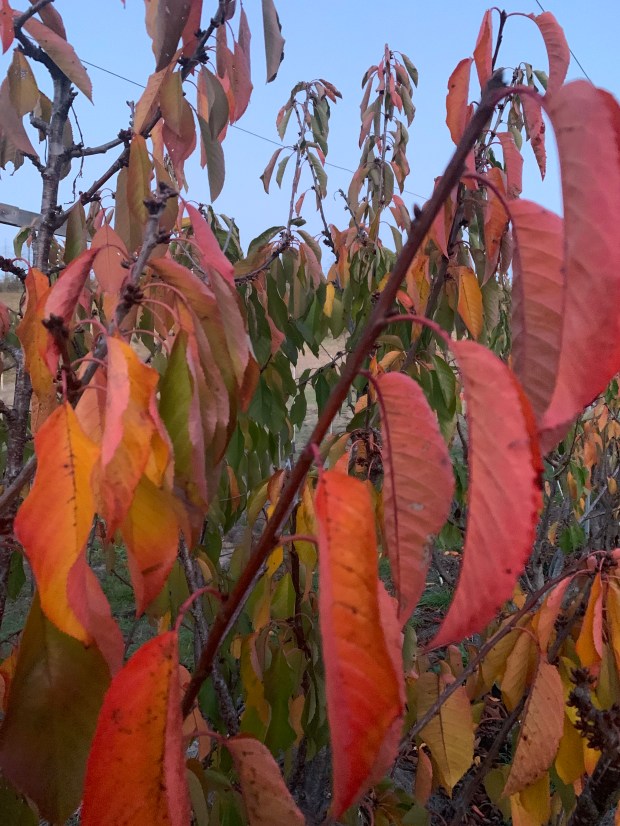
bicolor blackbirds

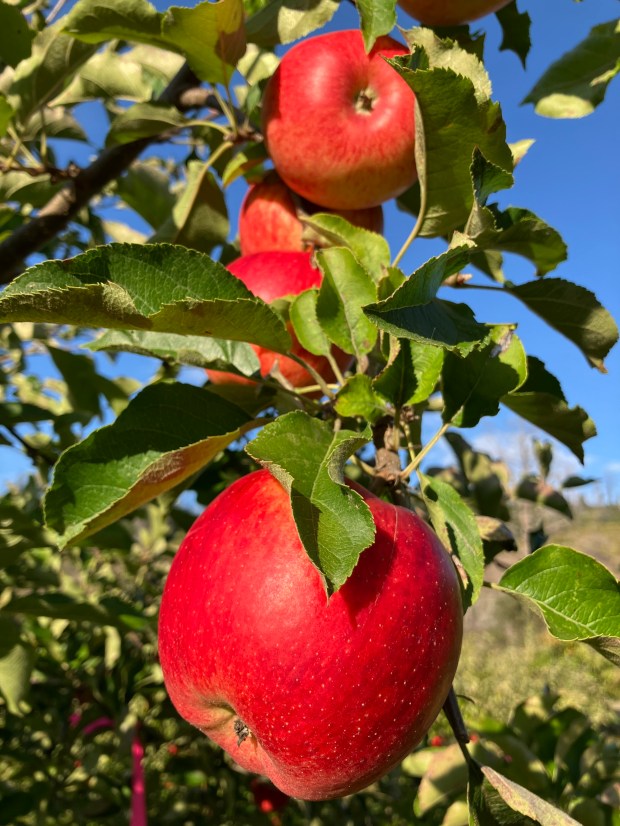
red, red apples

Darkness Closes In

Soon, (the fairly dumb) Daylight Savings Time ends and the days will seem even shorter, by a quick, artificial burst. Wildlife adjusts to Fall, changing their behavioral patterns. Fruits galore – ripening of successive apples, limes hanging thick. A new solar power array materializes. The end of Molino Creek Farm farmer’s markets. The ever-greening of fields. Thunder and fog, chill and sun.

Jonagold apples are especially bright…and quite delicious!

Bursts of Rain

We’ve had two storms so far bring precipitation, but the soil is bone dry 2’ down. It hasn’t been enough rain to stop needing to irrigate. Nevertheless, in the fallow fields and meadows – the first herbs have germinated and the green blush is growing into outright blankets of verdancy. 

The GreenUp has started – germination in fallow fields

Last night in the wee hours I was awakened by the rattling of the house. Thunder! Some caught great movies of lightning strikes over the Monterey Bay. The last thunder that rattled things was back in 2020 when an orchestra of timpani rolled and rolled, ‘Rolling Thunder’ went from myth to reality. So, up from bed I was forced and off to gawk out the windows to see what was up. Alas, the flashes were too rare, the thunder had moved off and the night was calm once again. No rain then but rain rumored to be forthcoming this weekend.

Between rain storms, it has been nice, even hitting 82F this past weekend. A firefighter asked me what the relative humidity has been – ugh, not Rx fire weather: 85%! 

Shorter Days

We clock the shortening days through anticipation of the last light for harvesting apples for the following day’s market. We need enough daylight to sort the apples with even the tiniest blemish from the perfect ones that go to market. That moment is 6:30 this week. For those of us with day jobs, that makes for a very tight window to harvest and sort. Today, there were 11 hours of daylight: the night is surely taking over to the glee of owls and other night time predators.

Lone Fangsters

The fiercest of predators are guarding their territory and prowling alone through the lengthening nights. Long tailed weasel mating season has been over for some months: they fend for themselves, darting up to 30 miles per hour and winding slowly through the narrowest of rodent holes. Their scat is everywhere across the farm, reminding their brethren who is who and where they’ve set up shop. 

Fiercer still, mountain lions are just starting to think about pairing up with the first caterwauling a few weeks back. There was a memorable pre-fire Winter Solstice where we heard 3 lion females yowling from different ridges around the farm. That seems about the normal date for that kind of behavior, and it is a ways away. Meanwhile, massive solitary male mountain lions prowl a huge area all the while worrying about running into another male, which can be fatal or at least badly injurious. They scent mark to avoid such encounters. The urine scratch marking of Big Cats has started on the trails through the dark redwood forest along Molino Creek – signs we haven’t seen for 6 years. 

Bird Season

Now that their young are on their own, the chickadees, goldfinches, and Anna’s hummingbirds are also about, cruising without immediate families. Chickadees and goldfinches flock with other unpaired tribal members, though in fairly small groups around the Farm. 6 chickadees seems like the biggest flock right now, and even that’s unusual to see. Goldfinches are hanging in similarly small groups but there are many of those tea parties. 

The Anna’s hummingbirds, though – anything but social: they bomb and whistle at each other fighting for territory with what little nectar can be found, mostly around home landscapes right now. Those hummers will be the first of these non-monogamous birds to nest: in January they start gathering lichens and spider webs to weave their beautiful baby-homes. Those tiny nests will in a few months glisten with raindrops and grow transplanted mosses, cradling tiny eggs and their near torpid sheltering parent. Now, these future parents aren’t associating with one another, but instead joust for food, and try to get fat on the dwindling nectar.

Deeply Social Birds

For whatever reason, our blackbird flock is extraordinarily large this year. I counted 80 birds in one tree yesterday. Another flock came in this evening to join that one – over 100 birds. Perhaps it is because we allowed cover crops to go to seed this past spring, so there’s lots of food. I dread the bird seed predation right after the planting of cover crops. This year, we opted for only bell beans for orchard cover crop – the seeds so massive as to avoid easy bird swallowing. Late germinating bell beans are welcome salad greens for a lot of birds, though. 

I ponder how the blackbirds know to stop singing all at once. Their sing-song squeaky cacophony sounds a bit more melodious than a long line of train cars squeaking and screeching on ice cold rails. All of the sudden, they all stop: not one at a time, no slow lowering of the volume. How do they do that…and why?

I would be remiss under this heading to not mention the California quail. Never fear, the coveys are numerous, the birds fat and happy. What a show!

Arkansas Black – a dark apple with a bright white inside

Harvesting

The Two Dog crew returned to Molino Creek Farm to harvest their wonderfully productive tomato patch this week. At the same time, their pepper field is knee high and hanging densely with fruit. And, 2 Dog winter squash leaves are wilting revealing rafts of colorful squash.

Molino Creek Farm tomatoes, on the other hand, are mostly picked though the plants are putting on a flush of new growth after the early rains. Zucchini plants still push out yummy food. But, the season for that business is winding down – maybe only two more weeks of farmers markets to go!

The apple ripening season is just beginning to unfold. There was an unusually low amount of Gala apples and almost no Mutsu: our early varieties. So, this week we finish gathering the Galas and look to other types next. We’ll pick Jonagold apples – big, shiny, beautiful fruit and the prizewinner of our farm’s apple tasting competitions time and again. We are lucky to have a good number of those to share this season. Braeburn are close behind. But, the big amount of fruit is in the Fuji crop, which is 3 weeks away from being ripe. Will we be harvesting Fuji apples in the dark, or how will we figure out how to harvest so many of those fruit?!

Olives are hanging – December harvest?

The see-sawing of apple abundance is a result of what is called ‘alternate bearing’ syndrome. 2021 – post fire season, nothing much to harvest, then 2022 big year…2023 little year…2024 epic year…2025 little year. The way around this is to thin, thin, thin – and clip off fruiting spurs and so forth to make harvest more steady. Let’s hope we can keep up with thinning next spring – a crucial year to break this cycle.

Granny Smith – the quintessential winter apple….not ripe for months yet!

Limes!

The Persian lime crop hangs heavy – what an abundance we will have if this all works out. We are frequently told that our limes are the best on Earth, and we agree. Someone wanted to see if we could pick them now, while they are green, to provide people with what they expect to be limes. So, off we went to squeeze and test and try to find a green Persian lime worth selling. Sample number 3- the squishiest green limes we could find and the results…NO! No juice! The vesicles, or ‘juice sacks,’ just haven’t matured: they were pungent, poppy and quite void of juice. So, we’ll have to keep explaining to folks that the yellow citrus are the best limes in the world. We’ll have about 500 pounds of them this year to share…in February – March, or thereabouts. 

Persian limes are getting HEAVY

So, the shortening days doesn’t mean the end of the harvest. Nay, the harvest for our tree crops is just beginning!

While the nights are clear – get you outside to a dark area and enjoy the night time sky. We are marveling in the big, clear Milky Way from Molino Creek Farm these long, dark nights.

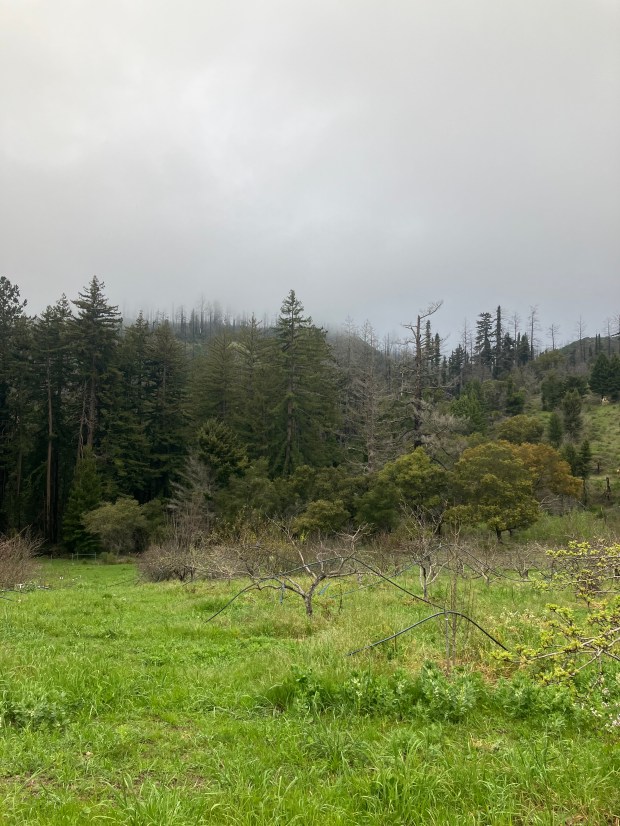
High in the canopy…Bacon avocados for a year from now!

Swings

Prickly, skin burning sun gives way a day later to chilly overcast drizzle. As the planet warms, the extremes get more extreme; I don’t recall that kind of pendulum, but who knows? Monday’s sunny high at Molino Creek Farm was in the low 80’s, Tuesday a little cooler (but not much), and Wednesday it was in the low 60’s and drizzling. Let’s go back to the moment it switched: Saturday. We gathered our Community Orchardists just as the day went from somewhat cloudy and cool to crystal clear and warmer – the kind of beautiful where it feels like someone dropped a psychedelic dome over the big green earth, emphasizing color and clarity. Shimmering, exquisite beauty.

Cherry Blossoms

Fruit for the People!

The working bee rocked- cheerful chatter and hard workers knocking out pruning, weeding, fertilizing and cleaning branches & props. It was enough to turn around whatever doubt we might have had that this season is a turning point. We came together around food with toasts and kind words of appreciation for the community we create around growing Fruit for the People! Speaking of which…our Community Orchardists have delivered their first crop of Robertson navel oranges to our favorite outlet: the Pacific Elementary School‘s Food Lab in Davenport. Somewhat shy of 100 pounds of juicy, brightly colored, thin skinned oranges are making people happier and healthier. This kicks off 2025’s food donations to this important program.

Oh- and By the Way…many thanks to our dedicated readers and their forays to the Food Bin. They sold out of our tasty Bearss Limes and had to call us up to get more – vocal demand was the key. We are happy to help more people to shop local – this is The Locally Owned Grocery Store on this side of town. Go on back, now- they have a new batch of our limes, the best limes in town.

Aisle cover crop: bell beans; under tree permanent cover crop: Iberian comfrey

Terroir

We imagine we taste it in our limes, maybe in our oranges, too. But, the terroir comes out especially in our cider and wine. Cassandra Christine pointed it out first and now we are all grooving on the unique taste our soil imparts into our fruit. You’ll have to wait a bit to purchase Two Dog Farm’s chardonnay, but we are wishing them well in getting a big harvest this year after so carefully tending the vines.

Italian Prune Bark

This Land is Bird’s Land

There are so many birds at Molino Creek Farm right now – it is teeming with feathered friends. A few of us counted the bicolor blackbirds singing in a dead, bare-branched fir tree above the orchard. The number is the same as previously reported 35-40: that’s our flock.

There are hundreds more golden crowned sparrows, which are getting ready to take off to Alaska. I have some observations to share about these buddies. The sparrows around my home have accepted me as a friend and do not flee until I get around 5 feet away if I move slowly. As I walked around the garden the other evening, I approached the cherry tree, which had just started flowering. A golden crowned sparrow was happy about that – he was furtively plucking petals and pecking at buds, feasting away as fast as he could, ecstatic. This had mixed effects on me: on one hand, I was excited to realize that this species eats flowers; on the other hand, I wasn’t pleased that this bird was potentially causing loss of my favorite fruit. I talked to this guy about it, telling him that I really wished he wouldn’t eat my cherry flowers, but he didn’t seem to understand. I told him I’d get out the bird seed and feed his brethren seed if he let the cherry blossoms along. A moment later, he left and I haven’t seen sparrows in the tree again: good! I put seed out in the front yard and, looking out my sliding glass door this morning, I saw the flock of golden crowned sparrows, some of whom were eating the seed. I noticed that others, closer to the window, were eating weeds…and one was eating the petals of a California poppy. Just as I felt the rush of another discovery, yet another piled on: the poppy petal eating sparrow fed a luscious mouthful of petals to its friend, as if to say – “YES! It IS delicious!”

One more note…the golden crowned sparrows are also eating radish leaves, but not just any radish leaves – they find certain tasty radish plants and strip them to leaf midveins while completely ignoring a neighboring, probably less tasty plant.

We will miss these friends when they leave for Alaska…any day now.

Austrian Pea – a resprouting cover crop plant in a sea of chopped up calendula

Scents of Spring

Sweet smell of plum blossoms, pungent-bitter scent of calendula crushed underfoot, the perfume of fresh cut grass…and, the acrid-poopy smell of rotting radish. The Farm planted daikon radish as a cover crop and it does quite well. Grind it up with the mower and, well, it rots. To me, it didn’t smell so nice even as a live plant. I don’t really like that crucifery stench, but others apparently do: a recent UCSC class visit taught me that humans can have vastly different experiences with the mustard green smell. Good thing. A bit more rain (its coming!) and a bit more mowing and that rotting daikon scent will be ubiquitous. About that time, the rotting radish smell will mix with the freshly applied compost and melting down feather meal scents and the Farm will smell….richly stinky!

First Quince Flowers

The Sounds of Late Winter

Behind the bird chorus, waves pound. Finches crazy whistling, goldfinch squeaks, robin operas, junco twittering, bluebird sonnets, and so many other bird songs fill the air at dawn and dusk…and sporadically all day long. Lately, the waves have been very loud, rolling roars pulsing, occasionally cracking high on the rocks and sending an attention note into the hills. Gusts sing in the trees and whistle through the winter’s last dead hemlock stems, rocking.

Here goes another growing season, folks! We’re digging in deep.

2020 Fire starting to disappear to new redwood bark regrowth

Green Hills, Bare Trees

A good friend from Back East (USA) once told me that they had a hard time getting used to California’s “seasons” where “winter is the time that the leaves fall from the trees, and the grass turns green.” Here we are, in our rainy season once again.  And, unlike Back East, we are planting things: cover crops. The first bell beans we planted have cracked their seed coats, shooting a white root down into the moist soil; leaves have yet to emerge. The nights have turned so cold that the crickets stopped singing. The moon is big and the nights long, bright, and silent. The last few days, 3+ inches of rain soaked our farm. There are puddles everywhere.

Farm work

The pace of harrowing is the rhythm of the moment. I pull on gloves, hearing protection, a dust mask and hat then turn the key to start up the BCS tractor. Backing it out of the garage, the racket of the engine distracts wildlife from their otherwise peaceful times. Shifting into high gear the machine lurches forward and I pick up my pace, steering it down the road towards the orchard. I park it and then go get the heavy bags of cover crop seed: vetch, oats, and bell beans. Full bags are difficult to pour into the bucket and seeds spill onto the ground. Half full is heavy enough, and I take off down the rows, tossing seeds as evenly as I can, just where the harrow can scratch. Scoop, toss, swish…scoop, toss, swish. I sew bell beans at 3 seeds per square foot, oats at 10 and vetch at 5 per square foot…at least that is what I aim for. The seed spread is never that even and the resulting cover crop is patchy with one species growing more lushly than the others, different species in different places. The bucket empties quickly though I’ve covered good ground – back to the emptying bags for a refill.

After the Seed

After the seed is spread, I fire up the tractor and the heavy duty work begins. I put back on my hearing protection, hat, gloves and dust mask. The BCS is a bear to turn, but turn it must…at the end of every row it’s an about face. Back and forth the harrow scratches, sometimes bucking when it hits particularly hard soil. The harrow sometimes digs into one side or the other, pulling the heavy tractor sideways. I heave-ho to straighten it, tilt it back to clear debris, and then its back to harrowing long rows, pulling and weaving to miss the tree branches. After just 2 rows, I’m soaked with sweat. After 6 rows, I’m beat and its dark. Tractor in high gear again, off it goes to cover for the night. I haul the heavy seed bags back to the barn. The bucket gets stowed for the next cover cropping session. This BCS cover cropping takes us around 15 hours each year just for the orchard areas. The resulting lush growth gets mowed in the spring and raked under the trees for mulch and fertilizer.

Laughing birds poop

The blackbird cacophony is loud, a hundred birds calling from the skeletal branches of a big dead fire-scorched Douglas fir close to the orchard. They alighted there, flushing from a part of the orchard that I had planted in cover crop a week before. I walk up the hill and take a look where they had been: 3” tall fresh bright green oatgrass sprouts have been pulled up and messily scattered, but they left the bell beans alone. Soon, enough cover crop will be coming up all over the farm to more than satisfy the blackbird maw, but for now the early cover crop plantings bear the brunt of bird hunger. Bicolor and Brewers blackbirds strut and peck shoulder to shoulder. I reflect that they are leaving behind bird poop that would otherwise cost us a bunch if we were to import chicken manure: thanks, flock!

-this from my weekly blog at Molino Creek Farm’s webpage.

Surprises

The winds come and go, the nights are still chilly, and the days are getting warm again. Today it was in the 70’s. The whole world seems sparkly, extra vivid and alive. Critters are zipping about and the breezes sporadic and then, some days, ripping. The sky has been mostly clear but then suddenly fog will creep up the canyon or giant puffy clouds peek over the ridge above the farm. Many little birds are cheeping and carrying on midday, but there are occasional surprising quiet moments. Once this past week…zoom – the vultures not lazily but energetically were sweeping across the farm, chasing one another, riding a sudden new and steady afternoon wind. Some nights it has been so breezy that the house shakes, but then there was a recent night that was so quiet that you could hear a million crickets near and far.

Surprises and Singing Friends

Yes, crickets are singing at night, and many birds sing all day long. Song sparrows are making the most constant melodious songs. I flushed a snipe from the Avocado Bowl this early evening…what a surprise – for both of us. It yipped and I yelped: it was almost under foot. Off it went downhill off the farm. They say it is passing through- lots of migration happening these past weeks.

Bizarre Black Birds, redux

A while back, bicolor blackbirds changed their social behavior. Towards the end of winter, bicolors joined the Brewers blackbirds and starlings in the leafless walnut trees, raising a cacophonous symphony but somehow breaking into a hypnotic melodious chorus (and sometimes with soloists, other times with jazzy subgroups, and always with startling punctuated pauses). Then, the Brewers left the stage. The starlings took to their own flocks. And, the bicolors broke off in small groups. Now, bicolors are exhibiting undecipherable and very different behavior. As is normal, males continue puffing up with their extraordinary epaulettes. The males and females have intricate chases or face offs; I have seen very alert females clustered together, I have also seen the females apparently chasing males, and I have seen males chasing ravens, swallows, and even hummingbirds. Those guy bicolor blackbirds seem proud to bravely chirp at me staying as close as they dare – showing off?

Sneezing Time

The grasses are turning tawny even with the late rains and pollen is flying thickly. Ten minutes outside fill the corner of my eyes with dust that starts immediately itching. Before my nose fills and congests from the pollen, there is a sweet grassy scent blanketing everywhere. I want to keep smelling that but it is subtle and my nose reacts poorly to the pollen filled air. It is, unfortunately for me, indoor time lest my lungs seize and my neighbors too serenaded by the loudest of continuous sneezing until my throat is chaffed and my eyes water to streams of tears. Oh, those N95 masks are serving another purpose!

Gophers and Snakes

Meanwhile, in the soil…hundreds of gophers are tossing up small piles of earth across the farm – crumbly mounds, the fresher excavations dark and moist for a little while, sprinkled with a mess of critter cut hay. A meadow vole was midday sunbathing in some short grass next to the solar panels the other day, not even moving when approached. I got to see how tiny its ears were, folded up against its head: un-mouse like. Shortly thereafter, I was startled by the biggest gopher snake I’ve ever encountered – around 5’ long and 2” thick. This snake was almost under foot and I found myself emitting another involuntary yell, body levitating up miraculously and seemingly sky high, arching up and up before touching down and happy not to have squinched it. Yesterday, there was yet another gopher snake, this one a ’mere’ 3’ long, near the citrus orchard about to cross the road. It is a good year to be a snake and a good time for accenting the need to be present when walking, so as not to tread on them serpents.

Ursi’s Bouquets

This is the time of year that roadside wildflowers are at their most diverse. When I visit farm partners Bob and Ursi at their beautiful downtown home, this time of year there are the most beautiful bouquets of wildflowers from that roadside: lupines and poppies, deep blue globed bulb flowers, monkeyflowers…and many more. They so appreciate that beauty and it has been increasing because of their attention. They are the ones who requested that the roadside mowing crews avoid the once few lavender bush lupines. We did. Those few spread and then after the fire erupted in giant patches of color and quick cover for so many creatures. Bob and Ursi are profoundly appreciative of natural beauty and share their observations easily with bright eyes and kind smiles.

Newly planted tomato plants – off to a hard start but promising much in the long term

Crop Planting, Orchard Production

A variety of neighbors have been pitching in to plant the Molino Creek Farm crops this year. The first tomato plants are in the ground as of today! Onions went in a few days ago. The sad but promising rows of new crops are settling in, a hard transition from the nursery but they will soon adjust.

In the orchard, the limes are getting so ripe to be dropping from the trees, but the oranges don’t have sweetness yet. Nearly every apple tree has set fruit, and those tiny fruits are growing fast in large clusters. The cherry trees have few fruit, fewer still the prunes and apricots: late rains might have pummeled the tiny fruit or perhaps the wind? It will be a big apple year if the pests don’t get too many; there are very few jays as of yet.

The farmed and natural worlds of Molino Creek Farm change by the day, as does the world around everyone. Catch it while you can! Enjoy the changes!!

A bud grafted Lapins cherry on the Colt Rootstock that survived the fire to resprout. Thanks, Drake Bialecki for making this magic!

-this post simultaneously posted at Molino Creek Farm’s website.