Caring about Public Land Management

What’s going on with public land management around you, and what are you doing about it?

Most citizens of the U.S.A. state that they want healthy wildlife populations and clean water for their communities and for future generations to enjoy. And yet, repeated surveys of Santa Cruz County residents suggest declining efforts to learn about wildlife so that individuals could take action to protect assure wildlife conservation. We can see this decline also reflected in our activism and politics. When was the last time you heard about an environmental activist group taking a stand to protect local wildlife? Which politician can you name that had environmental conservation as a major portion of their platforms? Have you looked at the agendas or minutes from Santa Cruz County’s Commission on the Environment or Fish and Game Commission – both advisory bodies to County Supervisors? I challenge you to find any evidence of solicited or unsolicited advice to the Supervisors. In short, our County, at the top of the nation’s biodiverse counties, is effectively asleep while their precious natural heritage is being rapidly eroded by neglect. I frequently hear how much Santa Cruzans appreciate the wildlife, the open space, and the natural beauty of this area. If we take these things for granted and do not make efforts to be involved with conservation, I think we know what will happen to these values: they will decline, whither, and disappear altogether with time. It is time to make a shift, and the shift is best focused on our public lands management.

One of the most important things we can do as citizens of this county is to be involved with the management of the public lands around us. There are many ways to be involved in wildlife conservation on public lands throughout the region: volunteering for stewardship, rallying political support for increased conservation on public lands, and supporting environmental conservation organizations. There are three main threats facing nature conservation public lands: changed disturbance regimes, invasive species, and poor management of visitor use. I discuss each briefly in the following and present ways that you might be involved in solution for improved public lands management.

With climate change and increased development encroachment on natural areas, natural disturbance regimes, such as fire and grazing, are rapidly changing presenting a high degree of danger to nature conservation. With climate change, fires are expected to be more frequent and more severe; this is exacerbated by increased human interactions at the Wildland Urban Interface where accidental fires more frequently occur. Likewise, we have removed tule elk and pronghorn and it is becoming increasingly difficult for natural areas managers to use livestock to mimic natural grazing regimes. With both fire and grazing, public lands managers need more public funding to increase their ability to manage natural systems. There needs to be more public outcry and support for both funding and expertise within those agencies to improve lands management. Those kinds of support are also important for invasive species management. A different kind of support is needed for better management of natural areas in the face of poor visitor use management.

Badly managed visitor use in natural areas is a major cause of concern globally for nature conservation, and locally this seems to be nearly entirely ignored. The most glaring evidence that this is a problem is the nearly ubiquitous and unquestioned philosophy that increased access to natural areas is an important goal for nature conservation. Look carefully around our local parks agencies and you’ll also notice that there are no personnel trained at managing the conflict between nature conservation and visitor use, the field of study necessary to assure nature conservation in parks. The most recent planning effort for visitor use in a public park was with the BLM’s Cotoni Coast Dairies property, a real disaster in public process with recreational infrastructure development proceeding apace despite an active and unsettled legal appeal by a very small of citizens who have seen too little community support. Of the many larger, environmental groups in the area, only the Sempervirens Fund has offered publicly stated concern”Important details remain to be determined and we look forward to working with BLM to resolve them.” For the grave impacts to nature from visitor use in natural areas, there seems to me to be a need for a fundamental shift in both public perception and in the public lands management agencies to better recognize and address this issue. The following section outlines some actions you can take to help this process forward.

There are many ways, big and small, for you to be more involved with the paradigm shift needed to better address the serious issues surrounding visitor use management in natural areas. First and foremost, many more of us should become educated about the science documenting the concerns and how those concerns are addressed through social and environmental carrying capacity analysis and adaptive management. Social carrying capacity analyses define the limits of acceptable change from visitor use conflicts: conflicts between different types of uses (for instance, mountain bikers vs. passive recreational use of families with children) or conflicts due to overcrowding. Ecological carrying capacity analyses define the limits of acceptable change for soils, biota, or other natural phenomenon (for instance, amounts of trail erosion, wildlife such as cougars that are easily disrupted by visitors).

Another thing we can do to help the situation of poor visitor use management in our parks is to advocate for improvement. We should tune our senses to notice negative impacts of visitor use and then aim our activism towards change: make formal reports of issues to natural area managers, follow up on those reports, and also message higher level administration, commissions overseeing those agencies, and politicians who are invested in agency oversight. Persistence will help. Let’s also vote for politicians who promise to help. And, let’s support environmental groups who promise to work on these issues. Finally, many more people who care about these issues need to be involved with public lands management planning. Currently, mainly exploitive and well-funded non-passive recreational users are organized and vocal during these processes (i.e., Outdoor Industry Association funded groups like mountain biking advocates). Meanwhile, traditional conservation groups like the Sierra Club and Audubon Society have shied away from such issues due to either controversy or co-option. We need a new group or need to sway old groups to take these issues on.

-this article originally appeared at Bruce Bratton’s weekly BrattonOnline.com If you haven’t subscribed, I recommed it: “The last great news sources of Santa Cruz.”

Monsoonal Moisture

It poured down rain yesterday and thunder rolled across the sky. This was the third warm, wet monsoonal system to whoosh up from the south across Central California this summer: very unusual for this era of our climate. With the rain came petrichor, the complex sweet odor of freshly moistened soil. For a few hours, there was no more dust. Coincidentally, this storm came on the anniversary of the 2020 fire. The weather prediction centers know our memory and assured us that this system was not like the one two years ago. Nevertheless, many people watched the sky carefully. Fire spotting helicopters combed the hills. No fires have yet erupted, but sometimes they smolder for days after a lightning strike awaiting a heatwave…

Best Weather

Inland, it has been hot but cooler on the coast: several days were in the low 80s this last week at Molino Creek Farm, but the evenings were cool and so on balance the weather has been glorious. This is the longest stretch of the most beautiful weather we’ve seen in a long, long time.

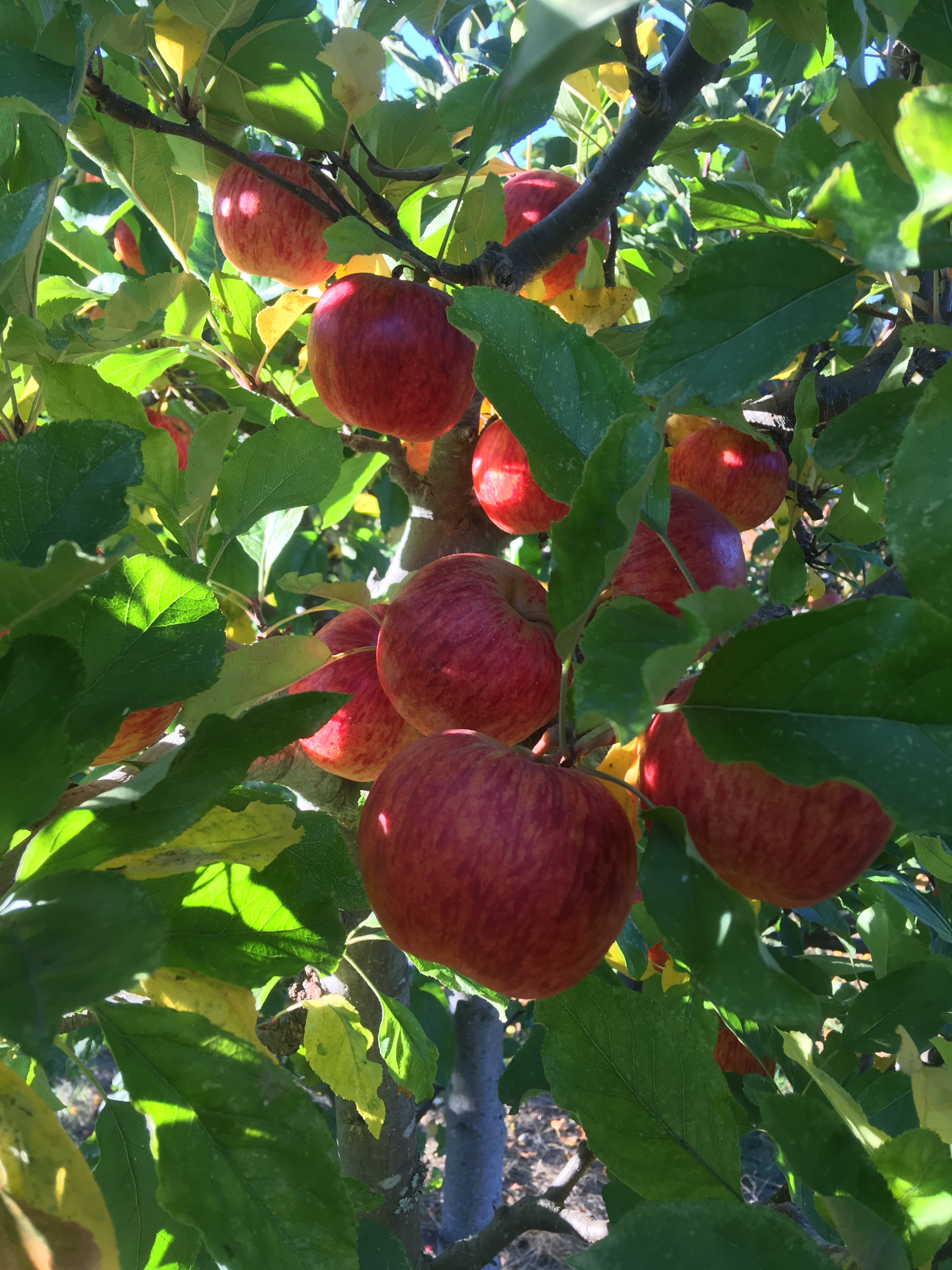
Organic, Community Orchard Grown Gala Apples – weeks from ripeness, and growing sweeter/bigger by the day

Good Pears, Apples Coming

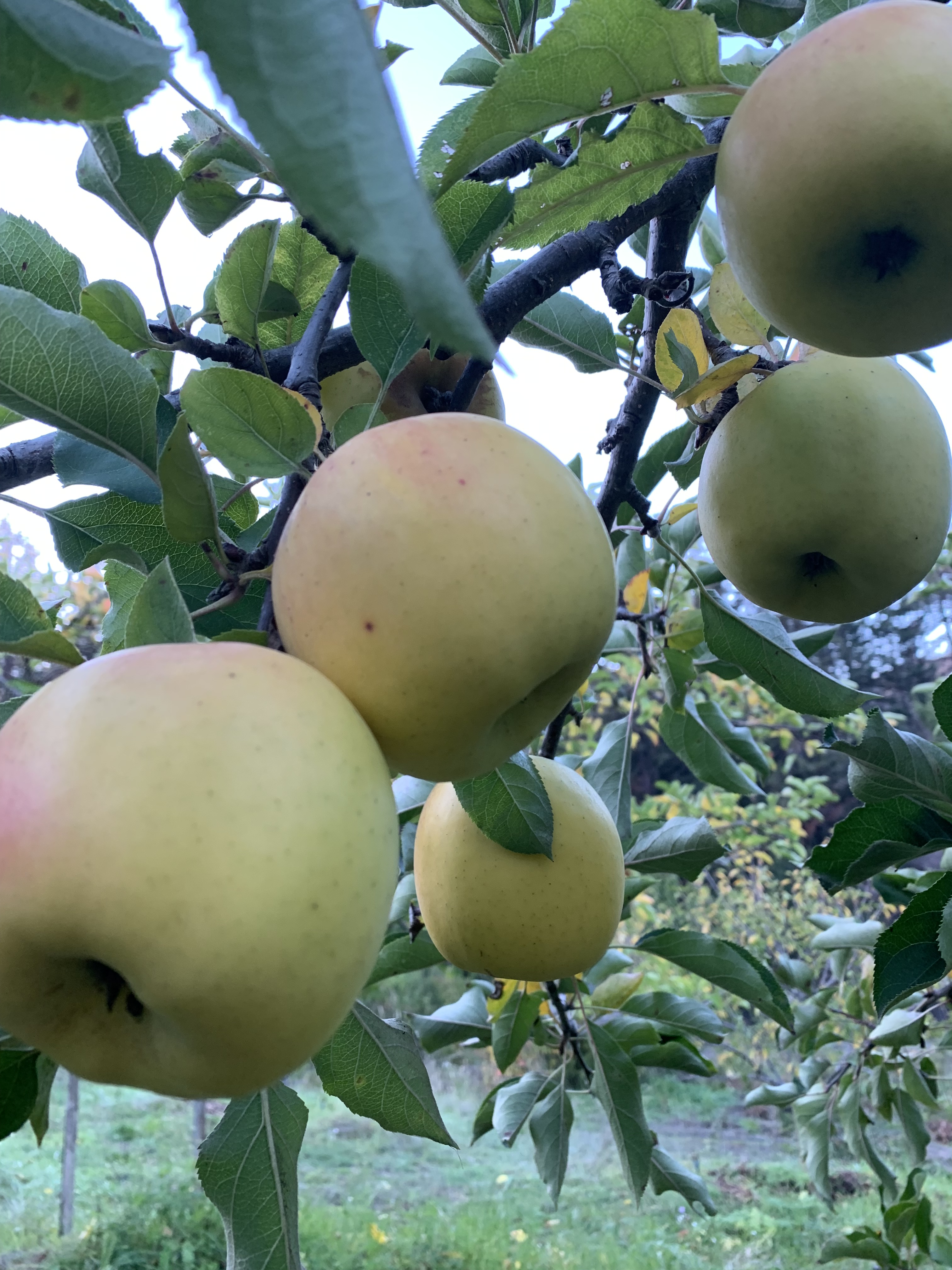
Apples like warm days and cool nights. The pears are ripening. After a sprint from small to medium sized fruit, apples seem to have taken a break in enlarging, but perhaps it’s our patience- it will be some weeks before they are ripe. On the other hand, we literally can’t wait for the pears now: it is a race to pick them before they get too ripe on the tree. Three harvests from the Big Comice, one week apart each: the first two picks have been delicious, but the third pick is sporting many ‘water balloons’ with overripe, brown and fermenting centers. It is an art to recognize the correct coloring of each type of pear in order to know when to pick them. Fruit separation strength should also be a clue that we might heed. Live and learn! Community orchardists can’t take enough pears home, so understory fruit fall critter feasting is heavily underway. Some homes are abuzz with dehydrators, others’ fridges are stuffed with pears, counters crowded with bowls overflowing.

Bowls of Bartletts

Future Fuels for Fires Falling

Today, there was a CRACK and an extended rushing crash: another huge burn-damaged tree fell on the hillsides above the farm. It is dangerous to walk in the forest. This one fell with no breeze, just a still warm late afternoon. The hundreds of fire-killed trees are starting to fall. Their crisscrossed trunks will pile up across thousands of acres awaiting the next conflagration, which will encounter this fuel and roar hotly, cooking the soil and all life nearby. No number of termites or unusual monsoonal rains will be enough to rot those downed trees before the next fire.

Wildlife Mysteries

The mother deer who had two young not long ago is all by herself now.

The Cooper’s Hawk is still terrorizing the birds. The orchard remains quieter than normal- not so many acorn woodpeckers and jays calling as they were constantly before. This bird killing hawk has been very effective at changing the tone of the birds across the farm.

Something is assiduously killing paper wasp nests. The huge one hanging in the pony trailer- torn apart and no more wasps. Three ground dwelling paper wasp nests dug up and dead as soon as the mower cleared around them. Its funny, we don’t smell or see skunks…maybe foxes do the same? What got the hanging one?

Flowers

For now, only the goldenrod is blooming in the natural areas around the farm. The bright yellow tall pointy clusters of fuzzy blossoms bow and sway on 2’ tall flexuous leafy stems…only a few, here and there- not a very common plant and not enough to help feed the hungry bees which now swarm onto rotten fruit and into the crop fields where tomatoes, squash, and peppers are loaded with pollinators.

These Still Nights

The silent night brings out the darkness creatures. Early evening is dark and moonless. And out come the nocturnal ants- big shiny ones with a bit of dark rusty brown…also tiny shiny ones all black and with elongated sections. A gauntlet of black widows still occupies gopher holes in the unimproved roadbeds. There’s a harvest mouse sitting in the dusty road, ducking silently into a gopher hole. Black field crickets. Brown crickets. Tiny cockroaches. A barn owl screeches overhead now close, then far away. The still cool night makes clouds when I exhale. Distant waves crashing, a rhythmic pulsing, though muffled in the nighttime air.

Hoping these still quiet nights bring peace to your restful sleep.

Dark Prunes A’Ripening

-This post originally published at my weekly blog at Molino Creek Farm’s webpage and on that Facebook site

Bluebirds Now, Acorns Later

The bluebirds’ wet warbles call from fence lines, the birds swoop, scooping up grasshoppers from the dusty ground, picking off caterpillars from stalks of dry grass. Acorns fatten on the oaks, not yet ripe, not yet falling. The days shimmer from bright sunshine and a clear dark blue sky. It is nearly half way between the summer solstice and the fall equinox; the days are becoming noticeably shorter, the nights sometimes warmer, the cricket songs more diverse and louder. And, full moon is tomorrow.

Citrus Hill, now with oodles of new avocado trees growing up fast

The Silence of the Birds

The jays and acorn woodpeckers are more silent. Most of the birds have quieted considerably. Cooper’s hawk is terrorizing the entire range of bird life, but the quail are its favorite game. It is everywhere: flying through the apple orchard, winging around corners of buildings, soaring above the fields…full of the energy of the hunt. The northern harrier is more surprising, returning for stints and then disappearing for a day or hours – its hunting ground extends beyond Molino Creek Farm. Two red tailed hawks are constantly but less energetically hunting, sometimes soaring, often perched, watching, waiting. The night brings the barn owls’ metallic screech; these are as commonly calling as the great horned owls- the fire may have favored the return of barnies because there is less of the great horned’s favorite dense tall forest cover. There’s even a barn owl baby calling in the San Vicente creek canyon just over the ridge. I worry, though, since there are great horned owls…when will we find a pile of barn owl feathers in the field- that’s a repeating pattern: the great horned owls always seem to win.

Sunflower Show

 Judy’s sunflowers are making quite a show. What skill to keep a batch always coming into bloom through the entire farming season, making bouquets for farmers’ markets each week. Bright yellow cheerful sunflower heads…the dominant cut flower in the irrigated field alongside onions, zucchinis, cucumbers, and pole beans. She grows a lovely small patch of diverse market crops.

Sunflowers – for sale at local farmers markets

Apples A’ Hoy

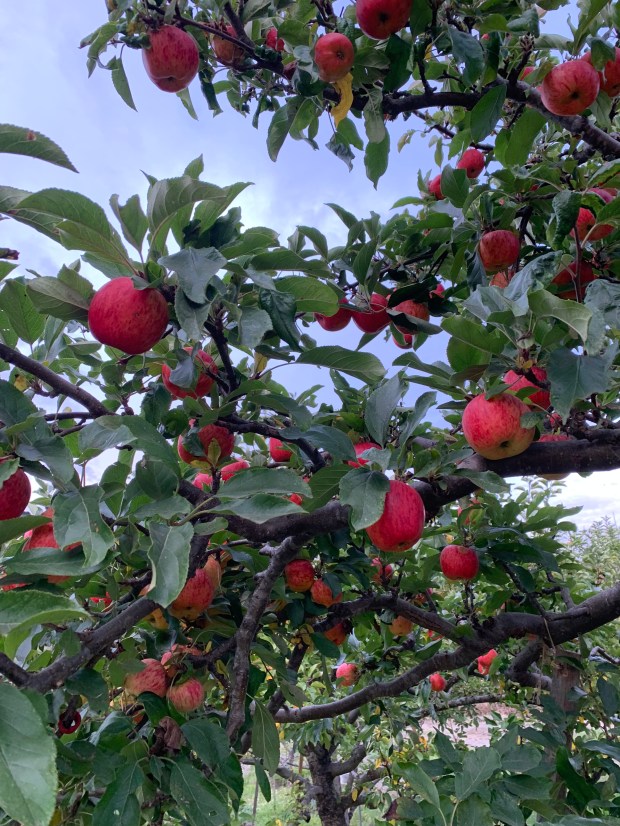
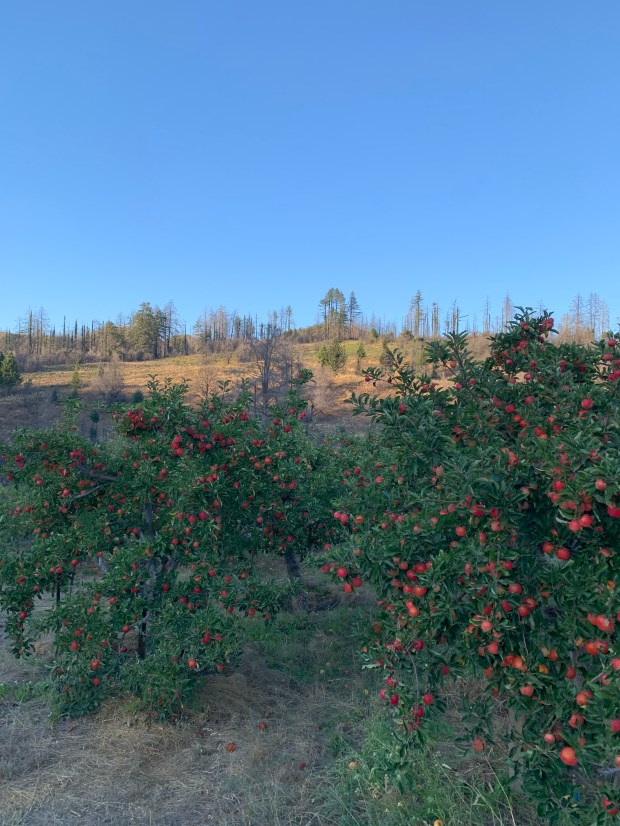
Meanwhile, in the apple orchard the burgeoning crop of fruit is unbelievably large. Almost every branch of every apple tree is bent with full weight of fattening fruit, props holding them from breaking or resting on the ground. The frequent zipping by of the hawks have substantially decreased bird damage to apple fruit. Gala apples are always the winners: last to set and first to ripen. We recalled that the second week of September is the week of gala, but it might be early…

Oranges at Molino? Moooo

On Citrus Hill, near the Barn, we have been plucking cara cara oranges from the two trees we planted a few years back. The first substantial crop of cara cara has been wonderfully juicy and sweet: Score! Cara cara navel oranges are crosses between ruby red grapefruit and navel orange. Its flesh is redder than normal oranges. We are very very stoked to be able to grow a tasty orange: the others we’ve tried make okay juice, but they aren’t that good to eat just plain- cara cara oranges ARE good.

The view downhill of Molino…down Molino Creek Canyon to the coast

Night Walks

Shorter, hotter days create conditions for night watering of the orchard, leading to late night walks to turn off irrigation valves. This leads me to unavoidable opportunities for nurturing the nocturnal naturalist in me. Tonight’s observation: black widow spiders aka Molino farm road median lurkers. Over and over again I witnessed (for the first time!) black widow spiders busily building web networks 4” or less from the soil surface on the unimproved road median strips, emanating from web encrusted gopher holes that must be their lairs. Another nocturnal roadside observation: the emergence of many brown field crickets, now evident in the chorus from various areas. Also, slender shiny dark brown ‘night ants,’ tiny cockroaches, big greasy looking black field crickets, and a myriad of different spiders. No mammalian eye shine gave something away with my bright headlamp, darn.

Rodent Fiasco

The fact that this is an epic Rodent Year still is in force. Mark Jones reports hundreds of rodents fleeing the path of the mower. Every inch has been rototilled by gophers. Farmers are losing crops. Orchardists are seeing girdling, making for more urgent trunk clearing. Every storage shed reeks of mice. A family of 10 mickey mouse deermice greeted me when opening up the small orchard tool storage shed. The bunnies have proliferated in areas, as well. And that fox which we had been seeing down the road a bit…well, its moved onto the farm! Prints in the dust, leaping fox scattering to hide: welcome back Gray Fox!

Hoping you get some warm weather basking!

-this is from my weekly blog at Molino Creek Farm’s webpage

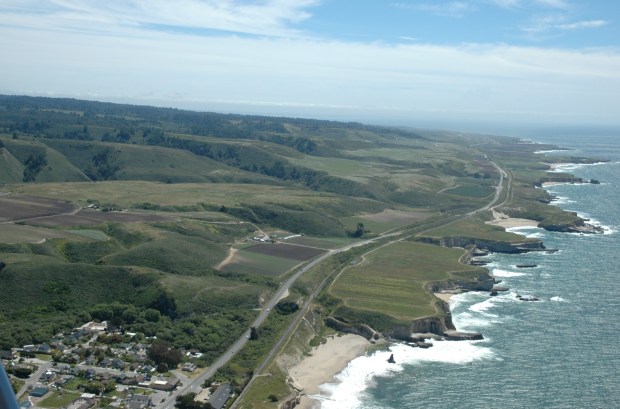
A view to the sea overlooking habitats at Cotoni Coast Dairies

Dripless Fog and Peace

Gazing out to the ocean from 900’ above it at Molino Creek Farm, I notice layers of fog. The high one is at farm height – just peeling back from the land, wisps still hanging in the sheltered canyon, shrouding tall redwood trees. It is white-silvery and seems light and airy. The lower fog layer is darker and heavier, streaked with patches of varying shades of gray. The layers seem still but are moving slowly. The lower, denser deck as normal marches southward. These foggy mornings are quiet and still, except for the occasional muffled purr of waves playing with the shore. The sets of quiet waves accentuate the peaceful silence between.

Foggy Shrouds Surround the Farm Frequently this July

The fog has kept the air cool despite the mostly cloudless skies above the farm’s fields. Even when the fog moves across the entire farm, it has been too light to precipitate. It seems odd that the fog can play so thickly around the tall trees and not make for under-tree precipitation. This might be the least wet foggy spell I’ve seen. If it would only drip…it would feel even better.

The view from our drive off the farm…Santa Cruz County’s Beautiful North Coast

Along the Coast

Out the main road and downhill to the ocean, the sun breaks through the shrouding fog and lights the ocean in bright patches. Flocks of turkeys roam the edges of the grasslands and kestrels harass the voles. The meadows have turned summer brown. The damp air smells sulphury and salty from the ocean’s seaweedy soup. An alert coyote lopes rapidly away through the close cow-cropped dry grass, glancing back at me, tail low, wary. I passed a mother and a cub fox similarly rushing for hiding; others report gray foxes on the road frequently.

Fruity Orchards

Wandering into the orchards, we encounter delicious orange-red cara cara navel oranges and unripe, but just getting tasty gala and gravenstein apples. We pick a few ripe limes and lemons as a new dark green, shiny-bumpy crop grows bigger. Downhill, the Swanton Pacific Ranch orchard is turning out a few ripe Lodi apples, a light gold-green and sweet-tart. Flocks of starlings, acorn woodpeckers, stellar and scrub jays are exacting their tithe from the fruit, but perhaps it saves us some thinning.

The apples are hanging so thickly that we can’t keep up with the propping. We lost a half tree last week when the branches pulled it apart. The big old pear also peeled off a major limb; same with an old apple tree. The birds stripped an entire tree of comice pears, saving any additional thinning; same with a couple of the Italian prune trees. Argh! The acorns are getting ripe, so maybe the woodpeckers and jays will be off for more nutritious long term food storage soon.

In the Surrounding Forest

Seeds hang thick on the native grasses along the forest paths. Woodland brome hangs pendulously with dense furry seeds. Blue wild rye’s dense upright spikes are often woven with spider webs, keeping the seeds on the stalks. I’m drawn to the striking orange stems of fine-leaved fescue with its delicate tiny seeds. The forest understory is still lush and green in the growing shade from fire-recovering redwoods.

Evening Sky

The sunset was gorgeously playing with fish scale high clouds, ushered in from a ‘passing monsoonal system’ (schwew! No summer lightning, please!). The sunsets are also being colored by very high smoke billowing forth from the big fire near Yosemite. No smoke smell – its not dipping that low around here (thankfully).

-from my weekly blog for Molino Creek Farm’s webpage and Facebook sites.

Toyon

There’s an important plant showing off right now. Cast your eyes across our hillsides or hike deep in the ravines, and you may catch a glimpse of large multi-trunked treelike shrubs festooned with bright white blossoms. In December, these plants will be weighted with bright red berries, just in time for the holidays. Branches with berries were so popular as wild gleaned holiday décor that Californians had to pass laws to prohibit harvesting in the early 1900’s. This big shrub or at times small tree is called “toyon,” Hollywood, or Christmas berry.

Little rose-family flowers of toyon

Madrone-like Different Apple

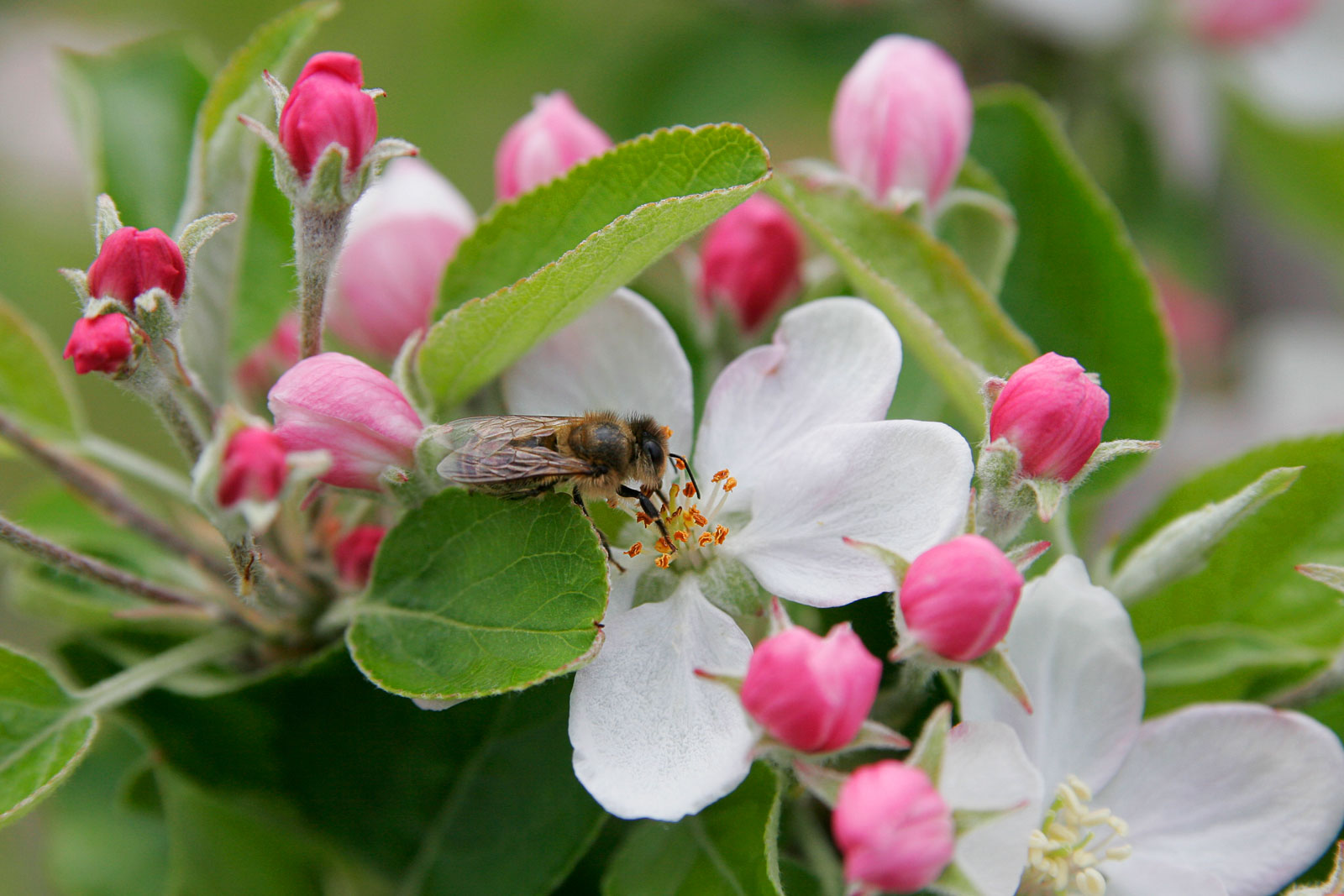
The plant’s genus name “Heteromeles” means ‘different apple’ (“hetero” translates as ‘different’ and “meles” references the apple genus ‘Malus’), which makes sense because this super shrub is related to apples, which are also in the rose family. You can see why it is a rose relative if you examine the small flowers and find that they are five-petaled, like wild roses. I captured a photo of a honeybee visiting Toyon flowers (note the attractive red leaves in the background). Like roses (and apples!) the flowers have an alluring scent…some say like Hawthorn – but, does anyone know how to describe hawthorn smell?? Oh, so much to learn…in Nature, there’s always more to learn.

More plant name etymology…as we already covered the secrets behind the genus name. Botanists often play most playfully with “plant nomenclature.” As a profession, they might be the punniest. This shrub-tree’s species name is “arbutifolia” referring to the shape of the leaves, which are like leaves in the genus Arbutus, which includes our native madrones. I recognize that the overall leaf shape fits and that the leaves are extremely waxy like madrone leaves. But, Toyon leaves are a darker green and have little teeth on their margins, unlike madrones. Nevertheless, if you cut branches of this plant for the holidays, you’ll get both a dark green ‘holly-like’ leaf color as well as the bright red distinctly holly-like berries- a fine combination.

Do We Eat Them?

Yes, we do eat them. The original people of this land made delicious food out of Toyon berries. The name Toyon is a Spanish-era mispronunciation of the native peoples’ name “totcon.” There is a problem, though…when ripe, the seeds are full of cyanide, so one must process the berries to get rid of that poison. I don’t know anyone who has done that work, and I leave the berries for the birds.

What Else Do We Do with Toyon?

Toyon wood is epically useful but little known these days. Know anyone with a toyon wood anything? Native peoples used the wood for poles, arrows, bows, pegs, pestles, frames for furniture, bowls, etc.

Nowadays we use the plant in restoration and habitat management. The birds, pollinators, and mammals like it a lot- a prime candidate for restoration in many ecosystems.

Wildlife Food

Wildlife worship at the Toyon many times a year. Now, when the shrubtrees are in bloom, they vibrate with pollinator noises in all octaves. Being one of the only early summer abundant sources of pollen and nectar, Toyon is the go-to nectar bar for a wide variety of buzzing floral resource collectors. The distinct drone of European honeybees emanates from the flowering canopy, joined by the high whine of numerous flies and the deeper tones of larger native bees. And then there are fruit…

Cedar Waxwing on toyon (copyright by Creative Commons and photo by Flickr user Becky Matsubara).

The fruit take a long time to mature, a long wait until berries are ripe and delicious, but as with the good fortune of early summer flowers, the fruit arrives at a time when few other such foods are available. One of my favorite wintertime visitors, flocks of noisy cedar waxwings descend on a toyon and feast joyously on the berries. The amazing photo above is copyright by Creative Commons and is by Flickr user Becky Matsubara. Robins, too, regular fruit eaters, gulp them down. I’m not sure how coyotes reach the Toyon fruit around here, often too high to reach. If there were bears still around, they would feast on Toyon berries, probably tearing off limbs that bore berries too high for their reach. All of these critters disperse Toyon seeds with their poop. If you aren’t lucky enough to have a waxwing-dispersed toyon sprouting up in your home’s vicinity…or, if an open space near you doesn’t sport crowns of Hollywood stars…there’s always a chance to plant them!

A mature toyon near Davenport, California

Landscaping with Toyon

Toyon is a great landscape and restoration plant when you want a large, resilient, and wildlife friendly shrub. The species isn’t the fastest growing, but it is quick enough! After 10 years, you can count on a 12’ tall, 10’ diameter plant with a full round crown chock full of flowers. What you can’t count on is a full canopy of leaves…or red berries…it seems that those only occur on the driest of sites – mine get mildewy leaves that fall off readily and the berries turn moldy black in many years. The flowers, though, consistently appear in larger and larger bee-covered masses. Count on multiple trunks with smooth grayish bark that are easily pruned up to be more fire safe. If there is a fire, you can count on Toyon to bound back with new sprouts so perhaps once established a shrub can live a very long time. Another bonus- although Toyon is ostensibly evergreen, it does shed its leaves a few at a time…and as those leaves get ready to shed they turn a bright and beautiful red.

I took this photo of a 10 year old toyon just today, high above Davenport- in bloom and very lush looking.

Your Task

Your homework, should you decide to take my advice, is to spot the Toyon. There really aren’t that many trees or near tree shrubs to learn in our area, and this one is a great one to add to your repertoire of local knowledge. Where will you go to find this species???            

-This post originally posted by Bruce Bratton in his weekly blog BrattonOnline.com
July Awakens the True Summer: Warmth and Welcome Shade

Sunshine rakes across exposed skin, prickly hot. A cooling light breeze helps, but the shade offers a more pleasing comfort. We smile entering the cool understories of lush walnut trees or beneath the canopies of perky well-watered apples. It is nice to have both the summer warmth and the cool shade in proximity. Our creature brains welcome the return to normal weather patterns with this typical July weather at Molino Creek Farm. The past week’s temperatures were precisely what the dry farmed tomatoes, winter squash, peppers, avocados, apples, and sunflowers crave: highs in the mid 70’s and lows in the upper 50’s. The cool breezes emanate from the tops of the billowing fog racing down the coast 200’ below the farm, obscuring our view of the wind-swept waves.

Don’t all you folks way East of us slather at our weather, it comes with a cost…the potential for FIRE! (I shouldn’t have said that). Do non-human critters worry about fire?

Wildlife

How would we know if our critter friends fret about wildfire? The turkey mothers seem to worry less about their young than the quail, judging from their skittishness. Bigger birds might have less worry and these turkeys look proud and bold. The turkey ‘chicks’ which we encounter along the road out from the farm are mostly pretty big, half the size of the adults and not so many as the quail. The quail are raising their second flush of teeny-tiny young fluffballs, stumbling along the roadsides. Their big brothers and sisters are nearly the size of adults- they grew so very fast. A 30-strong covey isn’t unusual to see on the Farm- we might have 4 of those calling their territories here and there. The coveys of quail have mostly orchestrated their flushing formations, launching and landing in unison.

A high flock of 50+ smallish swallows (species TBD) gathers at the top of the Salix Stream’s highest burnt Douglas firs, alarm calling and scattering when our resident red-shouldered hawk flies by. The above-door barn swallows have either just fledged (neighbors) or are feeding their second clutch (my house). A large flock of Brewer’s blackbirds has settled back on the farm after their off-farm nesting; they are accompanied by at least one adolescent bicolored blackbird. The pair of band tailed pigeons who are robbing chicken feed bravely from the coop are still at it.

No new news on the gophers and voles. The gopher population still as the upper hand as the vole population rebounds, crowded into thick-thatched corners of the farm, here and there. I predict the gophers will start losing ground to voles later this year…

Farm Activities

Mark Jones is still the rock star behind the mowing- weed eating and mowing to get the grass down to a fire-safe, dirt-touching mulch. Adan made a pass through the tomatoes with the tractor, tilling in the summer weeds. The Two Dog crew has been assiduously hoe-hoe-hoeing the row crops which had an unusual flush of weedy amaranth this year, so lots of work! Free the peppers!

As I type, Molino Creek Farm has made its debut at the Downtown Santa Cruz Farmer’s Market. Judy took many beautiful sunflowers, zucchini and various other goodies to say our first hellos to new friends and old.

Organic Tasty Gala Apples, Growing Fast for a September Harvest

Crop Report

Tomato bushes are 18” across and a little taller with the first green, shiny fruit plumping up half way up their stems. Two Dog winter squash is bounding- tendrils stretching and long stems bounding from vibrant plants whose bases are adorned by big yellow blossoms. The orchard mulch project is gaining ground- we’re almost through with raking, delivering, and placing the first mulch field, aka “Squash Field”- an acre of ground just past the Old Apple Orchard. We’ve got much more to do with the 1-acre “Habitat Field” near Cherry Hill. And then, we have more patches to gather as our hunger for hay mulch has grown with the new plantings the past few years. Our 3 acres of orchards seem to want to be fed 3 acres of hay, easy math.

The Heavenly Scented San Pedro Cacti are in Bloom Right Now at Molino Creek Farm

Flowers

There are very few flowers alive on the landscape. The row crops are too small to make many flowers, yet and the wild plants are too far from rain to be making many flowers. The exception is toyon – a rose-family shrub that we’ve planted here and there for habitat and pollinators. Toyon is aglow with big bouquets of small white flowers, abuzz with bees and even attracting Allen’s hummingbirds. And so, things are drawn to our home landscape gardens. An old Molino tradition is cultivation of the sacred columnar San Pedro cactus, a native of the west slope of the Andes. Twice a year, San Pedro goes to bloom, opening its massive white fragrant trumpets at dusk. The flowers are full of drunk and dazed honeybees and you can smell the divine smell many yards away. And…what a show! Otherwise, we keep a few salvias and petunias and things flowering for color near our homes and those must serve as nectar and pollen respite while the pollinators await the Great Flowering – thousands of coyote bush: those are while out.

-from my weekly blog on Molino Creek Farm’s web page blog.

Botta Pocket Gophers

Pocket gophers are an important and very common mammal in many habitats in our area, so it seems appropriate to learn a little more about them. Most people know them as pests of ornamental plants or crops, but they play important roles far beyond that pestiferousness. And, just look at how cute they can be- photo by Flickr user Chuck Abbe:

What is a Pocket Gopher?

Why is this critter called a pocket gopher? No, it’s not because of some 1970’s fad of domesticating gophers and putting them inside pocket protector-lined pockets. BTW, this fad fantasy must include pocket protectors because gophers have sharp teeth that they habitually gnaw with to wear them down…without such nervous-seeming gnawing, their teeth would be 11” long by the end of the year. This fad could really take off one day because pocket gophers are not legally protected by the State!

Back to the subject at hand…the ‘pocket gopher’ name comes from odd pockets that these critters use as their cargo containers, hauling soil or food. Those pockets extent from the cheeks back to their shoulders. Inside those furry pouches, they haul food into their burrow, creating food storage piles in a deep portion of their burrow system. This food pantry also serves as their sleeping, baby raisin area, so food’s close at hand. That makes me think that maybe there’s a niche for food-storing bedroom furniture for humans!

Local Gophers

Our local species of pocket gopher is the most widespread in California, and so there’s lots of information around about its natural history. Our species, Botta Pocket Gopher, is almost everywhere in the state except the high Sierra Nevada. Like most pocket gophers, the males of this species are larger than the females. So, its likely that the Jury Room sign that was posted for years ‘Home of the Giant Gopher’ referenced a male. Not that you’d try, but you tell pocket gopher species apart from where they live and then the size of their rear feet, the shape of their ears and the relative size of the dark area around their ear.

Territorial Gopher

Pocket gophers are very territorial, protecting their extensive burrow system which represents the extent of their feeding ground. The size of their territory depends on how much food there is, but they range from the size of a tennis court or, sometimes, you can fit 10 gopher territories in the space of a tennis court. If you kill a gopher, its burrow system won’t be vacant for long…

Waves of Dispersing Gopher Young

During breeding season, gophers become less territorial, allowing visitors into their burrows, which seems sensible for reproduction. Where people aren’t watering plants, and the summers are so very dry, pocket gophers have a single breeding season in late winter. They bear 2-5 blind babies (aka ‘pinkies’). Gophers kick these offspring out of their burrows as soon as they are weaned (40 days after birth), and those young have to find a place to live. Those dispersing gopher children are why folks suggest leaving root protection cages out of the ground 6 inches. That wave of dispersing gophers will try to occupy whatever burrows they find…including the burrow complexes that have been abandoned by other gophers due to trapping or old age. People think that our gophers only live 3 years.

Gophers Drought Solutions

Gophers are soil engineers and are so good at their work that they are known to be an important solution to California’s water crisis.

Some have suggested that restoring mountain meadows in the Sierra Nevada could store as much water as two new giant reservoirs. Part of this would be done with reintroduction of a different rodent, the beaver, but another part is already under way by the pocket gopher. Pocket gophers are excellent hydrological engineers, assuring infiltration of snow melt and rain through the soil through their burrows, which include specific drainage architecture. Gophers can drown and need to breathe air, so their burrow systems must accommodate drainage for the rainy season.

Native Meadow Gardener Gopher

The better local natural historians around us will already know about the super-diverse and super-interesting mima mound meadows around Santa Cruz. These are caused by eons of soil movement by gophers, which means that they are literally “ecosystem architects.” Atop the mima mounds, there are poppies, lupines, purple needlegrass and other ‘dry’ loving species; between the mounds there are buttercups and rushes as well as streams and pools of water weeping from ancient gopher mounds during the winter. Dry and wet gopher-created ecosystems in close proximity makes for extraordinary species diversity.

Gopher Burrows: Habitat for Other Creatures

All of those gopher burrows are quite inviting to other creatures. In other places, scientists have described insect species that only live in gopher burrows. I see a species of brown fly come out of gopher burrows around here- there’s probably much more to be discovered. Pocket gophers don’t much like to invite things to enter their homes, so they plug their holes with a distinctive soil plug. However, I’ve seen newts poised for nocturnal forays at the mouths of gopher burrows. Others have seen rare California tiger salamanders using gopher runs. Those tunnels would of course be cooler and moister than the surrounding habitats in the summer. I commonly see the aptly named gopher snake winding its way from one gopher hole to the next, only the middle of its body visible. If gophers plug their holes, how do the snakes find their way in? Somehow they know…I saw a gopher snake recently quickly and energetically ‘dive’ into a gopher-strewn dirt pile and disappear quickly. Many are thankful for gopher predators because of the damage gophers can do to human-plants. Gopher snakes and alligator lizards are the most effective gopher control, because they can get down in the gopher burrows and eat the pinkies, controlling many gophers at one sitting.

What to do About Gophers

There are plenty of websites with information about how to, and many tools to, kill gophers, but is there another way to coexist with these creatures? I have spent a fair amount of money and time killing gophers or protecting plants from gophers using buried metal caging, and I have a few suggestions for gopher coexistence.

Lawns are pretty much passe at this point in California, so how about letting gophers make their homes in what would have been a lawn? The only drawback I’ve experienced is the mounds of dusty soil that they pile up, making a mess of what I want to be level ground without trip hazards. Use a gravel rake and smooth those mounds out and you’ve got a great seedbed for wildflowers to sprout from next spring. Yes, with all of that soil disturbance, gophers are doing a great job of preparing wildflower beds- poppies, lupines and other wild pea relatives, new yarrow seedlings, redmaids, owls’ clover, and lots more appreciates that fresh ground.

Another thing to do is choose plants that gophers don’t bother. Colt rootstock for cherry trees is highly resistant to gophers. Wild rushes (especially Juncus patens) stay green through the summer and are so tough that gophers can’t destroy them.

A final solution is to cultivate meadow voles, which are superior at running gophers out of their tunnels. Voles like lots of mulch- put mulch around and voles proliferate…and the gophers run away (or die at the homicidal teeth of the vole militia).

I’d like to see more discussion about human-gopher coexistence, so these important creatures can continue to do so much good across our region.

-This post originally presented as part of Bruce Bratton’s BrattonOnline.com weekly blog…check it out!

Two Young Deer and the Pending Summer

Two fawns are losing their spots, following their healthy mother with her shiny coat and her healthy, full, and muscular body. She watches us carefully as we traverse the farm, walking carefully to a safe distance, the young twitchy and nervous, sprinting and hopping when we approach. Often, there is food sticking out of their chewy mouths. The other day, I saw one of the fawns walking around on two feet, not just for seconds but for a good while. WHAT? Oh, that one was eating high up walnut leaves: what a trick!

Molino Creek Farm’s Dry Farmed Tomatoes

Fruit

The tomatoes, apples, onions, pears, and peppers are getting bigger and bigger by the day. The apples are gaining color.

Dry Grass: what next?

It is mowing and mulching time. The lads are swinging weed eaters a’buzzing. They protect the roadsides, the wells and generator houses. The sickle bar is on the bigger BCS walk-behind tractor, the hay is falling and curing, the mulch cart is rolling, and deep dish ’apple fritters’ of mulch a’forming under the orchard trees.

Patterns of cut hay and uncut hay (where the wasp nests are). Mulch 2 B

Drips

It rained this morning. A light sprinkle, very off-season, enough to calm the dust for a moment. A pitter patter falling from the rooflines. Birds sipped droplets from sparkling leaves as the sun broke through the clouds late morning. Beautiful.

Martins

A flock of nesting purple martins wheel and chirp high in the sky above the highest point of the farm. The fierce males’ battle cries ring out against the prowling hawks. These are rare birds around here- glad to host them in cavities in burned trees from the 2009 fire. The snags from the more recent fire will support nesting generations to come.

Wildflowers of Summer

Little white puffs emerge from drying grass, among the post-fire thistles and between resprouting coyote bush. The complexly sweet smell of the native perennial cudweeds drifts on the gentle breezes. The clusters of bright white flowers fade to straw white that feel papery when rubbed to check out their scent (recommended).

Cudweed!

We hope you are enjoying the entrance of summer with its warm spells, foggy beaches, and occasional whiffs of dry grass and resiny sagebrush.

-from my near weekly postings at Molino Creek Farm’s webpage.

Birds from the Coffee Region

Many of us enjoy both delicious coffee and the fascinating birds that hail from coffee growing regions: how do these two seemingly disparate subjects relate to our daily lives?

Coffee Botany

Coffee shrubs are beautiful, lush shrubs, 6-15’ tall and wide with many stems and glossy oval leaves with long ‘drip tips’ – a common feature in rainforest plants that help shed water. I have a potted, indoor coffee plant and many of my friends have raised them, but they are notoriously finicky to care for and especially prone to indoor plant pests. That coffee plant is the thirstiest of my house plants, wilting quickly when drying out: at least it is good at communicating! That thirstiness makes sense as coffee is naturally an understory plant, originating in the lush damp shade of African tropical rainforests.

After 5 years, my coffee plant blossomed this spring, and I was reminded of it’s very sweet smelling (like jasmine!), small white tubular flowers. Now, I’m looking forward to the tasty fruit, which is confusingly called a ‘cherry’ and turns deep maroon-red when ripe and is soft-fleshy (slimy?) sweet (like hibiscus) and full of antioxidants. In the center of the red fruit, there will be a pair of seeds…called coffee ‘beans’ – another misnomer associated with this plant as the plant isn’t related to cherries or beans! Whenever I encounter a small red fleshy fruit, I’ve been trained to suspect the plant co-evolved with birds for seed dispersal. Even when coffee is grown far from its African origins, there are birds that devour the fruit, but cultivated coffee has a more important relationship with tropical birds.

Coffee Farms and Birds

Coffee is a lucrative tropical farming product and is cultivated on 27 million acres. Tropical regions are the most biologically diverse areas of the planet with many species still being discovered. Conversion of tropical rainforest to agriculture is occurring rapidly, threatening that biodiversity. Soybeans and palm oil are two crops that are expanding rapidly, but coffee is much more lucrative per acre. And coffee can be grown more in harmony with tropical biodiversity, but only if it is ‘shade grown.’

Shade Grown Coffee

As reviewed by independent, peer reviewed, published science, the only credible shade grown certification is from the Smithsonian Migratory Bird Center, carrying the logo inserted here.

The standards for this certification include maintaining real shade provided by diverse overstory trees as well as organic practices (certified by another agency)…and diverse other plant life, maintenance of natural mulch, and protection/buffering of waterways.

These standards have been shown to support native bird life as well as providing habitat for many other native species, including mammals.

The Effects of the Central Coast’s Coffee Shed

Here on California’s central coast, we are lucky to have both coffee AND birds that hail from coffee growing regions. Judging from the aroma of roasting coffee, the many businesses supported by serving coffee, and the plethora of local coffee labels, our region greatly appreciates this caffeinated beverage. I am curious about how many acres of coffee farms are needed to support Santa Cruz County’s coffee-drinking habits – anyone know? We can call that our ‘coffee-shed.’ If we support a coffee shed that nurtures the birds that come visit us in the summers, we can look into those birds’ sparkling eyes through the steam of a latte and be proud of those connections…

Beautiful Migratory Songbirds

There are many migratory bird species that come to California’s central coast for the summer to nest, raise young and store up enough reserves to return south before our winter gets too harsh. I’ve been enjoying steaming cups of shade grown coffee while watching two beautiful tropical migratory songbirds this summer. The startling colored thick-billed black headed grosbeak is fledging young right now on the Central Coast. Check out this photo from a Flickr site by Kersti Niebelsek; maybe this striking image will inspire you to purchase certified shade-grown coffee and grab some binoculars to see the bird in the wild.

The other striking species that lights up my mornings and gets me pouring boiling water to drip through freshly ground, certified shade grown coffee is the lazuli bunting. Be similarly inspired by another extraordinary photo, this time by Flickr user Julio Mulero who captured this pretty bird at Ed Levine Park in Milpitas.

Both that grosbeak and the bunting may have traveled from the coffee growing region of southern Mexico, where they spent last winter. Other species come from coffee growing areas even farther away, including: ash-throated flycatcher, olive-sided flycatcher, Wilson’s warbler and yellow warbler. That last deserves a photo, as well. That photo is compliments of Flickr user Kelly Colgan Azar.

Finding and Procuring Certified Shade Grown Coffee

Surprisingly, it is Very Difficult to find certified shade grown coffee in our area. You can always search the internet and have it delivered! Last I checked Whole Foods had one of its wall of coffees that was certified shade grown. Not so for any of our other local grocery stores! You can find all sorts of supposedly “bird friendly” or “shade grown” coffees, but only those with the certification shown above are verifiable. Because shade-grown coffee produces less per acre, you are going to pay more for it. Think of those extra dollars going to the trust funds for these beautiful birds.

This post originally published as part of my series with Bruce Bratton at BrattonOnline.com Thanks, Bruce, for keeping Santa Cruz actively informed!

A Mild but Disturbingly Gusty Early Summer

July Fourth was one of those epic clear days. On the drive out to the coast, we marveled at the clarity, took out binoculars and spotted ‘individual trees’ on the Monterey Peninsula way across the Monterey Bay. The Dorrance Ranch homes were Right There on the side of Mt. Toro. Peak naming phone software corrected the location of the very clear Pimkolam Peak, the farthest off. It was clear but yet surprisingly little wind. It was clear like a winter breezy day. Point Sur where the lighthouse sits in Big Sur was also very nicely visible: a curious dome, seeming like an island out past Monterey.

Wildlife on the Farm

Since then, some of summer weather has been normal; other bits not so much. As normal, morning fog has returned. Of note was the abnormal June-gloom-lessness: no fog in June! Very Odd. Now, we mostly wake to a gray-capped sky, a fog deck sometimes dipping low enough to pour small wisps over the ridges north of the Farm.  Then, the fog breaks apart, pieces here and there and then gone. A breeze picks up…and then becomes abnormal: wind land! We are increasingly living in wind land. Not pleasant breezes but hearty menacing gusts, whipping up bits of dry hay and dust devils, setting us on edge about the potential for fire. The wind dies and then breezes commence as ‘normal’….and then after a bit (or not) in no pattern whatsoever, another gust event alerts us to the presence of the out of doors. Sundown brings a welcome calm, the nights peaceful and the fog steals in again by dawn.

The hills around the Farm are turning blonde from tall oatgrass

Wildlife on the Farm

The cutest of cuties- baby bunnies are proliferating, returning to pre-fire numbers and helping graze the grass for fire control. Weeds nipped off: no expense! Bonus: kind black shiny eyes gazing at you framed by the softest mottled brown fur with a most curious jumpyscoot run only when warranted. Tiny Baby Bunnies. Everywhere: roadside, field side…

There are no deer, still. For the other fuzzy creatures, we mostly see only (fresh!) footprints. Well, there was one report of a daytime fox out the road a bit a few days ago. Oh, and MICE! Millions of mice: voles, deer mice, and harvest mice – leaping, scurrying, scuttling and squeaking away through their grassy tunnels, their woodshed nests, and as evidenced by their chewed up fabrics left only briefly outside. Underground rodent friends aka pocket gophers- still abounding like never before.

Red tailed hawk is having a field day, but just one red tailed hawk will not do it…enter the gopher snake. Huge fresh snake tracks in the dust are a common sight. Yellow bellied racers are the other regularly seen snake.  Snake sign, in general, is regular: we have lots of snakes! We hear snakes or lizards or mice startled through the dry rattly leaves along the road or trail side every few strides: a wave of critters running from our shadows when we take walks.

Lock your car doors! Here come the Zucchini!

The Fields

Rows upon rows of lanky but sturdy tomato plants are settling into their summer growth. Molino Creek Farm just watered its young tomatoes, as normal- the ‘one watering a year, after planting.’ The farmers carefully place the aluminum irrigation pipes at the right distances between the tick-tick-ticking spray of the rainbirds. Hit the buttons at the Well and out flows so much water…for hours. How deep is our soil? How deep does the water go? How deep are we saturating? Deep enough. Deep experience suggests that this is the way to go….and then on to withholding water the rest of the season. Contrast this with Two Dog Farm’s dryland farming of tomatoes: not a drop of irrigation, relying solely on the previous winter’s soil reserves of moisture. Two ways to do it, diversity in practice, and experiment in motion….Oh, and yes, you’ll have to wait another month for the first tomatoes!

Fire Work

“It seems like all we do with our spare time!” It has become critical fire clearance time! The late (March) rains grew tall grasses and now we gotta clip it down. Brush clipping, too. Truck loads piled high with precarious brush mounds are hauled out to the middle of a spare field, out away from any mischief they might cause. In 2020, the brush piles ‘burned themselves’ but it will be up to us to do that next rainy season, returning the ashy minerals to areas where we can grow hay for the orchard, cycling the farm nutrients from one corner to the next.

We had a fire clearing work party recently, many neighbors chipping in to clear to ‘bare mineral soil’ around one of our three water tank complexes. Plastic 5,000 gallon water tanks with plastic pipes going into them…all very vulnerable-flammable. So, no fuel can be left anywhere nearby. Again, trucks hauling piles of grass, leaves and branches to safe places. The Great Biomass Transportation Scheme is in motion. Same with around peoples’ houses, the barn, our outbuildings. Living in the Country isn’t what it used to be…(or is).

Many well wishes to all our friends around the American West as we set off into another hot dry fire season.

-post originally published on our Molino Creek Farm website.