Wildlife conservation

Advocates for Wildlife Protection: Where?

When was the last time you heard about someone advocating for wildlife protection in our Monterey Bay region? Who was it? Why?

I am disturbed by the lack of advocates for wildlife protection and I wonder why that might be. Here are some reflections.

A Plea for Help

Occasionally, I find a need to call out for help for wildlife protection advocacy. My most recent call for assistance was a seeming ‘no brainer.’ There was a clear need for wildlife advocates to ask the State of California office of the US Bureau of Land Management to consider a science-supported update of their statewide sensitive wildlife species list. The one BLM has been using doesn’t protect a bunch of State listed wildlife species, as it should. And, the BLM is required to work with our State Wildlife agency to do just that. This is one of the most straightforward issues I’ve faced: the facts are easy to illustrate and quick to research. And so, I reached out to the obvious pro-wildlife advocacy organizations. Who comes to mind when I say that? Pause, don’t read on…think: who would that be?

The Sierra Club

If you are a pro-wildlife advocate, the Sierra Club seems a great place to work. Well, it could use some help. My pleas to the Santa Cruz Group of the Ventana Chapter of the Sierra Club went unanswered. The one or two in the group who are apt to answer such requests are totally stretched. A while back, the local club was taken over by the pro-bicycle lobby, a group that has little regard for wildlife conservation. It should be telling that Santa Cruz doesn’t even have its own Sierra Club chapter: the local one is a sub-group of the Ventana Chapter, based in Monterey where most of the pro-environmental activism has been traditionally located.

The Wildlife Society, San Francisco Bay Area Chapter

Another far flung chapter of an organization that is supposed to represent Santa Cruz County’s wildlife conservation concerns is the SF Bay Chapter of the Wildlife Society. Unlike the Sierra Club, this Chapter did return my queries. However, after a long wait they wrote me that they were uncomfortable advocating for this issue. They actually told me that they weren’t an advocacy organization, despite their website saying that they “work to ensure that wildlife and habitats are conserved” by “advocating for effective wildlife policy and law.” It seems like whoever is active in the organization right now is uncomfortable being advocates. Luckily, their parent organization was a much better help.

The Western Section of the Wildlife Society

Even more far flung than the SF Bay Chapter, the Western Section of the Wildlife Society was a great help. Their leadership, though obviously overworked, were enthusiastic and helpful with the straightforward request for assistance. They did due diligence and had adult conversations about the need for advocacy and wrote an amazingly strong letter on the issue. If you want to support a good (local?) organization for wildlife advocacy, this is a logical choice. Unfortunately, they probably won’t be proactively monitoring our local situation and helping out without us asking.

Audubon Society

Not so far flung, the Santa Clara Valley Audubon Society is very active and quite influential…just over the hill. When approached, their overworked volunteers can sometimes be enticed to help with local conservation. I have to give them a call on this one.

Land Trusts

The Land Trust of Santa Cruz, Sempervirens Fund, Save the Redwoods League, Peninsula Open Space Trust and others…clearly all competing with one another with no unified messages or strategy for region-wide wildlife conservation. Instead, they are as likely to be public-forward with pitches for increased recreation in natural areas, which runs counter to wildlife conservation. With this contradiction, none of these organizations are able to build credible coalitions to advocate for wildlife conservation.

Wildlife Biologists

I have long approached local wildlife biologists for assistance, with mixed results. This time, I reached out to a few and was surprised. What I was asking experts to do was to do a bit of analysis  so that their opinions about adding species to the BLM’s list were well supported. A handful of wildlife biologists said that they would consider advocating for this cause, but only if paid for their time for analysis. One biologist, Jacob Pollock, stepped up as a volunteer. Dr. Pollock is a steadfast advocate for science-supported wildlife conservation. He has an inquisitive mind and powerful analytical abilities. He deserves recognition and thanks for his wildlife conservation volunteerism. This is apparently quite rare. He will shortly offer up a methodological approach to updating the BLM’s State Special Status Wildlife Species list with an example from a statewide analysis of the rarity of American badger, including BLM’s contribution to its recovery.

The rarity of such volunteers was recently emphasized when a community organization contacted me to speak at a public forum considering a potentially wildlife-impacting regulation. I couldn’t speak and couldn’t think of another wildlife advocate to do that speaking engagement. Have you seen an inspirational wildlife conservation advocate who regularly speaks to local threats to wildlife and solutions for conservation?

Why So Few?

What has created this dearth of local wildlife advocates? We have no reliable analysis about what has happened. One day, maybe I’ll find the time to do some investigative work about what went on with the local Sierra Club. Meanwhile, I suggest that mere intelligent leadership in our community would result in that person getting elected to the Santa Cruz Group. However, that person would be lonely without a couple or three more such people to make a majority vote happen in favor of wildlife…and, a group of such volunteers would be necessary to pick up the workload for responsible advocacy.

Cost of living might have something to do with the situation. The Monterey Bay area is very expensive to live in, so wildlife biologists must work hard to pay their bills, leaving no time for volunteer work. And, when professional wildlife biologists do advocacy, they threaten some of their employment opportunities, so there’s further disincentive.

Parallels with Environmental Educators

If there are any social scientists out there, read this other post and compare the notes with this one – I think there are parallels. Besides wildlife biologists, why are so few environmental educators meshing conservation advocacy with their work?  Is it likewise the threat to income? Or, is there something cultural going on here? There might be some redundancy with this issue as perhaps a large number of environmental educators are also wildlife biologists.

What Are We To Do?

I heard recently that progressives might be getting some funding to support a revitalization to allow improved political campaigns in Santa Cruz. Perhaps there is a similar need in wildlife advocacy. It does seem that we need a new organization to advocate for wildlife in our region. How would one go about setting it up for success? I imagine it starts with funding the set up and also creating an endowment for some staff positions. The mission would need to be building a supportive, diverse, and active public. I am looking for such change.

-this post slightly adapted from the one published by Bruce Bratton at his impactful BrattonOnline.com blog site where there is often lots of good information from some brainy characters. A great source of news.

Snakes on the Monterey Bay

As with most species, we have a wealth of snakes in the Monterey Bay region, and I want to help you to know them…and to encourage a young person to become a wildlife biologist.

April is Snake Month

April is usually the month that you can see the most snakes. With the weather this year, it seems the snakes waited a little while so maybe May will also be rich with snake sightings. Most people I know see snakes crossing roads and trails. Too many people see snakes that were killed by vehicles on roads. Not many people get the opportunity to walk off trail to see snakes. If you can get out off trail, you might walk with a few friends side-by-side in a line through a meadow- an efficient way to see snakes. Another place most folks aren’t afforded to look is along bodies of water. A foray along the edge of a marsh or pond will likely net a snake sighting. And yet another unusual activity is a good way to see snakes: turn over ‘cover’ – logs, boards, bark, tin roofing, or anything else that is big enough and has touched ground enough to provide a hiding place for snakes. The rule is to put that piece of cover back gently and exactly like you found it. Looking for snakes is a good way to get in touch with wild nature around here, and it is also a viable and fascinating career. There aren’t enough local wildlife biologists: can you name one? We need to encourage more children to seek careers in wildlife conservation. There are a variety of nice jobs for people who know their snake ecology.

Wildlife Careers

I’ll briefly outline the places one might work as a wildlife biologist, and then I’ll get to discussing what cool snakes there are around here. Parks and other conservation lands agencies employ ecologists to help conserve wildlife. There is also an abundance of ecologists working in research around the Monterey Bay. College and University wildlife careers come with teaching and research while jobs at other research institutions might not have the same teaching roles. There are also careers just doing outreach: think folks in museums, aquaria, on whale watching boats, and leading tours on land. Because of the environmental laws in our nation and in California in particular, there are a host of jobs as consultants, either in private business or as advisors working with Resource Conservation Districts or other such entities. While wildlife ecologists might not earn as much money as engineers, doctors, or lawyers, I know many who love their work and are leaving amazing legacies for future generations: peregrine falcons or condors that would otherwise have gone extinct, restored ponds hosting rare California red-legged frogs and tiger salamanders, wildlife corridors that support the movement of badgers and cougars, and many other such things. Next time a child or young adult mentions a love of birds, mammals, reptiles, or any wildlife, I hope that you will pause a moment and tell them how amazing it would be if they sought a career in wildlife biology. Perhaps they will be the ones to help conserve our rarest local snake, the San Francisco gartersnake.

Snake List

Here’s the list of the 13 local snakes:

  • San Francisco garter snake
  • Santa Cruz garter snake
  • California red-sided garter snake
  • Coast garter snake
  • Gopher snake
  • Northern Pacific rattlesnake
  • Ring-necked snake
  • California king snake
  • California mountain king snake
  • Forest sharp-tailed snake
  • Northern rubber boa
  • Wester yellow-bellied racer
  • California striped racer (whipsnake)

Seeing Snakes

How many of these snakes have you seen? Traveling as I do through grasslands, I see gopher snakes every week. I once had a dog that for some reason wanted to gently pick up ring necked snakes in the forest. Now, I  only see forest snakes (rubber boas, ring necked, and sharp-tailed snakes) when I go with a gaggle of folks doing surveys. There used to be more rubber boas on the north coast before the 2020 fire- a lot of them and other forest snakes must have died in that conflagration.

The Most Beautiful Snake

I don’t get around water much, but when I do, I have always seen garter snakes and then I have to remember how to tell them apart. Your location matters if you are trying to see San Francisco garter snake. That endangered species has never been documented south of Waddell Creek, but you supposedly can find them from Año Nuevo north and east to the urbanized areas. It ought to be called the San Mateo County garter snake at this point, but maybe someone has seen one in the many wetlands of San Francisco. I include them here because they do occur on the northern boundary of the Monterey Bay, which is around Pigeon Point. The San Francisco garter snake with its blue, yellow, and red stripes has been called the most beautiful snake in the world.

Santa Cruz’ Garter Snake

We have a namesake garter snake which is much plainer, the Santa Cruz garter snake. This one like most garter snakes has a dark blackish background and a single yellow or orangish line down its back. This species overlaps a lot with the San Francisco garter snake but its range extends south to Watsonville.

The coast garter snake is midway in coloration between the colorful San Francisco garter snake and the not so colorful Santa Cruz garter snake. This one has the gold line down its back but also has a red checks down its side, mixed with browns and blacks.

The Santa Cruz garter snake, a local endemic

Smelly Snake

I like garter snakes for their smell. When you pick them up, they emit a ‘foul musk odor’ – apparently a defense. The smell washes right off, it is water soluble.

Handling Snakes

I don’t recommend picking up snakes unless you know what you are doing. If you are older than 16, you shouldn’t handle them without a fishing permit from the California Department of Fish and Wildlife. If you do handle a snake, even the non-venomous ones might bite you. If they bite, you have to let them stay attached to you until they let go: if you pull away, you could dislocate their jaws. It is no fun to have to watch a snake chew on you until it is done. Some snakes, like mountain king snakes, have razor sharp teeth that will then make you bleed a bunch after they chew awhile.

Snake Summary

Remember please to encourage young people to pursue careers in wildlife conservation. If you have a place for someone to live more affordably, you might pitch in for conservation by advertising it for a wildlife expert. Whatever you do, I hope you can appreciate our area more – our amazing snake diversity is just another example of how special our region is. Let’s conserve it!

-this article originally published in Bruce Bratton’s amazing weekly blog BrattonOnline.com – sign up to receive it and you won’t be sorry.

Fall Redwood Ecosystem Notes

From Bruce Bratton’s Weekely 10/6/2021

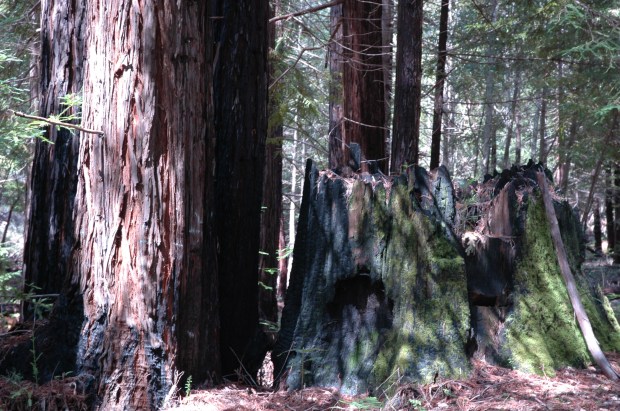
Taking good care of yourself means getting out of doors, and the redwood forest is a good place to do that at this time of year. Our conservation history has focused on setting aside redwood forests around the Santa Cruz Mountains, so there are lots of parks beckoning for your next walk. Here are some things to look for and think about when you next visit those majestic trees.

The presence of redwood trees signals a lot more is going on. You can predictably find certain animals in your redwood forest excursions, if you take the time to look. Banana slugs are perhaps the easiest to find redwood wildlife. To find them this time of year, you’ll have to visit the low elevation redwood forests when the fog is so thick it drips. Redwood trees soak up fog directly through their needles, and the fog they don’t capture directly drips down through the canopy, moistening the ground. Those giant yellow slugs like the moisture, cruising around to munch leaves and fungi. I’ve seen slug evidence in the tracks they’ve left cleaning windows otherwise covered in dirt and algae in redwood shade. But, I haven’t seen slugs lowering themselves from the canopy on slime threads- have you? Its easier to see slugs than other redwood animal associates- marbled murrelets are one of the hardest. But, this year after the catastrophic fires in Big Basin State Park, Frans Lanting and Chris Eckstrom captured the first film of one of those elusive birds fledging! You might be more familiar with seeing Steller’s jays in the redwood forest- magnificent ‘blue jays’ with a pointy black crest on their heads and loud squawking alarm calls. Steller’s jay populations go way up around people because people are messy, leaving food out (pet food, picnic crumbs, garbage, compost, farm/garden crops) which makes it possible for these smart birds to raise more young. Artificially high jay populations are a major problem for other wildlife- they have a proclivity to being nest robbers- including eating marbled murrelet chicks. I saw the carnage of jays this spring when they raided house finch nests I was monitoring. Jays pecked to death and then ate 4 just hatched finches in one nest and, in a nest of older chicks ate one and pecked the other 3 to pulp and left them there. We need to be more ‘crumb free’ to keep our redwood forests more naturally in balance with the jays.

With wildlife and plants, redwood forests aren’t the most diverse of local ecosystems, but they do have some iconic and beautiful understory plants. When I think of redwood forests, I think of huckleberry and ferns. Huckleberries are our native blueberry and, though the fruit is small…it is tasty and one person I know was patient enough to gather so many as to make a huckleberry pie. For even the most amateur of naturalist, I recommend the well-illustrated Plants of the Coast Redwood Region. One thing us botanists are looking for these days are plant associations that are distinct in less disturbed or old growth redwood areas. One plant that might indicate more intact redwood areas is the trillium, with beautiful pink or white or deep purple flowers decorating the middle of three leaves in the spring. So much of our redwood forests have had such extensive disturbance- almost all of them were clear cut in around 1900- that plant indicators of less disturbance may allow us to learn more about the less-disturbed areas and set more meaningful management and restoration targets.

Redwoods are fire adapted and fared okay in the recent fires, except for tragic some old growth loss. People have been asking me about how many redwood trees died from the CZU Lightning Complex Fire. I say none, which shocks even people who are frequent visitors of the fire zone…people “in the know.” I haven’t seen a single redwood tree that isn’t sprouting from its base…aka ‘basal burl.’ What I’ve said is that, fire-wide, we might have lost 10% of redwood stems (trunks). Most of the redwoods are sprouting from their stems and many are sprouting from their branches. Since we will all see redwood trees sprouting from their stems, here’s a term: ‘bottlebrush trees.’ Along the line of logic of how many trees were killed, I point at a tree and ask: ‘how old is that tree?’ Because so many are familiar with the 1900-era clear cutting, if it is a large tree most people say something like “120 years!” I respond provocatively ’Nope, its probably 15,000 years old.’ Redwood trees in the Swanton area arrived around that long ago, according to a record of pollen deep in the stratified sediment of a local lagoon. So, the second generation after the cutting of the old growth might be the grandchildren-sprouts of the original colonizers.

With the global warming associated with climate change, we expect more frequent weather events- intense droughts, summer lightning storms, thunder snow, incredible flooding deluges….etc. Those resilient redwood root systems will be important to hold our hills together, stabilize stream beds, and generally keep the catch basins (‘watersheds’) intact…so we can have drinking water. If we can keep redwood tree canopies from burning through the expected increase in wildfire, the shade of redwoods will keep us cooler throughout the region. The key to that is increasing the amount of prescribed burning in our mountains- clearing the fuel from the redwood forest understory so that fires don’t get too hot, damaging the redwood shade. The best way you can help with our ability to apply prescribed fire is to congratulate and support those who are working on that. The ‘good fire’ people are hampered by public opinion…complaints about smoke or worry about fire. People also worry that even prescribed fire will harm the redwood forests that they care about so much.

I encourage you to visit an area where the fire impacted the redwood forest. Visit soon! Each month after the fire changes so much. This past month, many burned redwood trees broke through their charred bark to show new light brown growth of their trunks. Green needles are erupting from redwood branches and trunks. And, the biggest redwood cones you’ll ever see are weighting down redwood branches, creating a seed crop to take advantage of the rare bare soil that they need to establish seedings. Those redwood seedlings are the key to the next generation. The wood from a redwood seedling, since it is slower growing than a resprout, might be dense and the deepest red- like old growth! I am hoping that together we can support prescribed fire so that these seedlings will someday be giant old trees supporting marbled murrelets for many future generations to enjoy.

Killing Santa Cruz’ Greenbelt

Fellow citizens of Santa Cruz, we have done so much good for the environment. We are transforming our city into a bicycling mecca, and our entire region will soon be powered by mostly renewable energy. Hundreds of volunteers work hard to keep our many beautiful beaches accessible and clean. We recycle and conserve water at unprecedented rates. Our culture strongly supports organic agriculture, and we purchase local and organic foods at a plethora of organic grocers and farmers markets every day of the week. And, we have supported leaders who found the funding and partners to protect thousands of acres of parks and open space across our lovely hills.

So why is our community welcoming the destruction of the City of Santa Cruz’ greenbelt?

The City’s Greenbelt has been a great environmental accomplishment. For a while, our City was circled by open space, and we nearly connected the pieces – from Natural Bridges State Beach to Antonelli Pond up to the Moore Creek Preserve and onto UCSC’s meadows, across Pogonip, down into Henry Cowell and Sycamore Grove, up onto De La Veaga Park, and down the creek to Arana Gulch and the Harbor. We worked well together to make that happen. Different people had different goals for supporting our Greenbelt: improving property values, protecting water quality, preserving nice views, protecting wildlife, creating recreational opportunities, limiting urban sprawl, and giving our children natural places to learn and grow.

Setting the land aside has been the easiest part of reaching our greenbelt goals. But, the greenbelt is relatively new – it is in its infancy – and Santa Cruzans are proving poor stewards.

Neighbors complain that greenbelt areas are messy homeless encampments, harboring unsavory elements and even criminals. Trail erosion, pavement, fires, and trash in greenbelts pollute our streams. The pleasant views of the greenbelt are being transformed though crowds of users, buildings, recreational infrastructure- fences, roads, signs, and parking lots- all of which is destroying wildlife habitat and scaring away what critters are left. For those who would enjoy the parks, planners with little capacity are trying to provide for all types of recreation, assuring degradation of the quality of all recreational experiences. The greatest number of those who would use the greenbelt for generations to come are those seeking peaceful, passive, family recreation. That potential is rapidly disappearing – our children’s children will have to travel further from home to enjoy quiet nature experiences, healthy wildlife, or clear-running streams.

How did the Greenbelt end up in this mess?

Organizational and individual leadership and capacity has been lacking to preserve and steward the Santa Cruz Greenbelt. The agency responsible for oversight of the greenbelt is the City of Santa Cruz Parks and Recreation Department; its mission is ‘to provide the best facilities, recreational cultural and parks programs.’ The agency is understaffed and mostly focused on safety, aesthetics, and maximizing recreational development. Greenbelt conservation then falls to nonprofit advocates- friends groups and larger environmental organizations. Pogonip Watch and Friends of Arana Gulch are important. Volunteers with the California Native Plant Society work hard to raise funds, educate our community, pull invasive species, and are focused on a few mostly long-term conservation issues. But, they can’t do enough. The local chapter of the Sierra Club has had difficulty addressing much local nature conservation as well, and greenbelt issues have divided the group.

Meanwhile, well-funded and organized special interest groups are succeeding in transforming the greenbelt to benefit a small fraction of our community. A passionate bicycle transportation community along with lucrative mountain bicycle businesses are succeeding in carving up the greenbelt, criss-crossing it with high-speed recreation and transportation corridors. Organizations hoping to make some small improvements with homelessness issues are converting 9 acres of Pogonip’s wildlife habitats to agriculture; they hope also to have a permanent homeless encampment there, as well. Sports enthusiasts are working to transform still more of Pogonip to ballfields.

These special interests join the City of Santa Cruz and most other regional leaders who seem to believe that more is better when it comes to extractive use of natural areas, including the Greenbelt. Here are three bars of their collective public relations tune:

  • The greenbelt works best when it serves the maximum number of people and types of uses.
  • Legitimate use of the greenbelt drives away unsavory use.
  • If we don’t maximize use of the greenbelt, people will stop caring about preserving nature.

These three statements are false.

We need to support organizations and leaders that will expose these falsehoods and work to preserve the greenbelt for future generations.

To solidify our commitment to a greenbelt that supports wildlife, clean water, and passive recreational enjoyment, our greenbelt areas need to be protected by conservation easements enforced by third party organizations. Only then can our greenbelt be protected from the special interest groups which will inevitably garner political support until nothing is left.

Lessons from a Sad History of a Santa Cruz Park

This is a story illustrating how nature is damaged by recreation focused parks managers, and how that focus creates unfortunate adversarial situations with their fellow citizen park stewards. Soon the managers are lashing out at the very conservationists who brought them this beautiful piece of nature to protect in the public commons.

This particular tale starts out typically—environmentalists successfully saving land threatened by development and establishing a public park. This victory evolved into a barely legal and cursory process to open the park to recreation and to expand recreational access to the maximum extent feasible. Opportunities for a more balanced approach to protect wildlife habitat while providing public access were missed. Organized opposition to this unbalanced approach led to a series of unpleasant altercations, minimal mitigation requirements, and, eventually, abandonment of most environmental protections. In sum, there was inadequate resolution of disputes between parks managers and conservationists, resulting in recreationists winning and wildlife losing. Many elements of this story are evident in most other parks in Santa Cruz County, but there is hope: working together, we can improve these situations. Perhaps you can help. Please read on.

The recent conservation history of the Gray Whale Ranch began in the early 1990s when a land developer purchased a working ranch, proposing a housing development. The developer’s plans envisioned an extensive housing subdivision: a private, gated paradise. Conservationists organized and created the group “Save the Gray Whale Parklands” to oppose the proposal. Behind the public battle, others organized politically to find funding to purchase the property. Negotiations and pressure eventually succeeded, and the California Department of Parks and Recreation added Gray Whale Ranch to Wilder Ranch State Park.

Conservation purchase of a property is like a wedding, where the real work comes afterwards…. The years that followed the purchase of Gray Whale Ranch have been at times tense and rife with unfortunate surprises. Directly after the celebration of park acquisition, there was pressure to open the park for recreation. To open the park to visitors, State Parks created an Interim Use Plan to adhere to legally required public and environmental review regulations. Park management policy requires managers to thoroughly inventory natural resources, identifying sensitive areas for protection from any potential recreational development—including the extensive trails, roads, and the parking lot envisioned for this particular new park. Instead, parks planners favored a streamlined approach that ignored the locations of sensitive natural resources, expediting recreational access on the “‘existing trails” of the former ranch. Surely, they proffered, using existing ranch roads would be better than creating new trails. Similarly, State Parks’ proposed parking lot was to be situated in a purportedly degraded site, where planners suggested previous use had destroyed any sensitive natural resources. However, these claims were not supported by rigorous analysis and seemed contrary to conditions observed in the field, so once again conservationists had to organize to protect the park from this new set of threats.

It became clear that State Parks’ streamlined planning process in effect ignored input, and that the agency would proceed apace with opening the park for recreation. Even so, opposition had gained some ground on stopping the new vehicular entrance and parking lot proposal since State Parks had suggested they be located in what was clearly sensitive habitat.

After failing to improve the Interim Use Plan through the initial public and environmental review process, the conservation community had four remaining avenues to pursue: political pressure, action by either the California Coastal Commission or California Department of Fish and Wildlife (CDFW), or perhaps a lawsuit. They dismissed the last option as infeasibly expensive and unpopular, turning their attention to the other possibilities. But first, more research was needed.

With the park now open to the public and with the blessing of State Parks ecologists, conservationists organized a more careful examination of the entrance and proposed parking lot location. They collected data on locations of mima mound-associated wetlands, mapped the state-listed endangered San Francisco popcorn flower, and inventoried locations of the federally endangered Ohlone tiger beetle (OTB). All of these sensitive natural resources would be impacted by the proposed developments.

Armed with this information, conservationists first met with Assemblyman Fred Keeley, who was able to extract verbal assurances from State Parks that they would not impact rare mima mound habitat. To address concerns about enforcing resource protections, Keeley was also able to secure funding for an additional park ranger as well as establish a Gray Whale Advisory Committee to explore expanded public access while addressing resource protection. At the same time, conservationists were working with the Coastal Commission, resulting in direction that State Parks desist from developing the parking lot in sensitive habitat and instead explore other, less sensitive locations. The Coastal Commission also directed State Parks to develop an Ohlone Tiger Beetle Management Plan. Finally, upon notification of the parking lot location’s threats to the endangered popcorn flower, the California Department of Fish Game issued a letter notifying State Parks of a state law violation if they commenced with the proposed parking lot. Despite these seeming victories, State Parks proceeded with a series of unfortunate actions: developing the parking lot in sensitive habitat, ignoring the OTB planning process, destroying OTB habitat, and launching legal actions against conservationists.

Despite pressure to abandon the proposed parking lot development, State Parks started development with cement pouring for a foundation for the restrooms as well as placement of logs outlining the parking lot. Discovering the parking lot development, conservationists quickly worked to follow up on the assurances given to Fred Keeley and the Coastal Commission. Further investigation revealed a curious situation: an unprecedented hand-edited backtracking on the CDFW’s original letter to State Parks striking and replacing language, thus green-lighting the parking lot. Investigations concluded that a State Parks staff person had approached a high level CDFW staff person “friend” to achieve this result, favoring State Parks’ plans. Shortly thereafter, a State Parks staff person wrote a very threatening letter (on State letterhead) threatening one of the conservationists with legal action. This was a commonly employed strategy at the time called “Strategic Legal Action against Public Participation” or a SLAPP suit. Shortly thereafter, higher level State Parks administrators distanced the agency from this individual’s actions, but the staff person went on to file the lawsuit as an individual citizen. Amazingly, this individual’s complaint was supported by testimony of two of their subordinate employees. The lawsuit dragged on, costing thousands of dollars and untold stress; the matter was eventually settled though not before frightening other conservationists working on the issue.

Fortunately, through all of this, the Coastal Commission maintained its pressure on State Parks and was experiencing some success. Whether it was Fred Keeley or the Coastal Commission, or the embarrassment of the legal actions of its employees, State Parks eventually abandoned work on the ill-advised parking lot and turned its attention to the potential expansion of recreational trails through the work of Fred Keeley’s Gray Whale Advisory Committee (GWAC).

The GWAC’s first meeting was an unveiling of a polished plan presented by Mountain Bikers of Santa Cruz for an extensive new trail system throughout the park. In a well-orchestrated maneuver to establish the basis for group’s focus, the biking community had been working with State Parks’ permission, surveying areas of the park for potential trail development. Meeting after meeting, the outnumbered conservationists on the committee repeated their testimony from earlier in the planning process: the right way to do recreational trail planning was by inventorying natural resources and subsequently planning for recreation where impacts to the most sensitive resources could be minimized. Parks administrators, clearly inexperienced and unprepared for group process, failed at any progress from the group, which eventually stopped meeting. State Parks presented the Fred Keeley with the report of failure to find a way to expand trails and eventually stopped organizing meetings. Fred Keeley had failed at his venture to secure both increased natural resource protection alongside increased public access. In one small way, this outcome might be seen as a conservation success, but in many other more significant ways it was a terrible failure. Conservationists had succeeded in stopping an expansion of official, State Parks-sanctioned trails through the many sensitive areas on the property, and yet, proposals to move existing and ill-designed access out of sensitive habitats had failed. Gradually, mountain bikers built and currently use the expansive trail system they had originally proposed with no consequence from State Parks’ enforcement staff. And so, mountain bikers got what they wanted while conservationists got little: wildlife lost habitat, and future generations have lost the chance to experience a more intact version of nature within the park.

To complete this story, we must explore two remaining legacies of the Gray Whale planning process: the outstanding Ohlone Tiger Beetle Management Plan and whatever planning process State Parks would initiate to take over where the Interim Use Plan left off.

Gray Whale Ranch is home to one of four populations of the very endangered Ohlone tiger beetle, and State Parks management of the species has been mixed. State Parks never submitted the required Ohlone tiger beetle management plan that the Coastal Commission had required for opening the park to recreation. Instead, sometime in late 2006 or early 2007, State Parks staff spread tons of gravel over very large areas of recreational trails, including in areas previously occupied by the Ohlone tiger beetle. To survive, these beetles create burrows in certain types of native soil: their larvae develop in those burrows, feeding on invertebrates passing within the reach of the burrow entrances. Adding gravel destroys Ohlone tiger beetle habitat. Gravel placement skipped the largest known area of beetle burrows: somehow, State Parks had decided to limit the species to a single area, perhaps in an effort to simplify their management and oversight. But, management at that now single site has seen some positive results: that population at times has been quite successful and healthy. Also, to State Parks’ credit, recreational users of the trails are at times able to learn about the species (when interpretive signs are maintained and legible). State Parks ecologists have even managed trail use to create additional habitat for the beetles. And yet untold but large areas of the beetle’s habitat have been destroyed and there is no published comprehensive plan for mitigating that destruction nor the ongoing destruction of their habitat throughout the park.

It has been many years since the publication of the Gray Whale Ranch Interim Use Plan, but there has been no progress on creating a longer-term plan for managing the park. According to State policy, State Parks must create a General Plan for each park. And, each General Plan is to include a carrying capacity analysis that outlines ways to balance recreational use with protection of natural resources. General Plans are subject to public review and concurrence by other agencies charged with protection of public trust resources (wildlife, clean water, plants, soils, etc.). Without further planning and improved management, the future of Gray Whale Ranch is in some ways certain and in other ways unknown. Without major changes in management, there will be continuing but gradual and severe habitat degradation from ill-planned recreational use and management. Trails have already eroded with the loss of hundreds of tons of soil that has been washed into surrounding habitats, filling wetlands and degrading streams. Unplanned and unregulated trails bisect sensitive wildlife habitat, degrading it and spreading diseases and invasive plants. The park ranger position that Fred Keeley helped to fund has long since evaporated and one very rarely sees any ranger presence at the park. Families with small children and horseback riders report feeling displaced from using the park, which has been overrun by fast moving mountain bikers on the shared trails. And yet, a small but very dedicated cadre of State Parks ecologists do what they can to restore portions of the park when they have the time.

On face value, this story is all about one place, but every element of the story has been and is currently being repeated in every park in our area. Public parks planning processes in our area are always done in contravention to best practices, failing to analyze the park for opportunities and constraints to recreational use with natural resource inventories. Parks planners point to limited resources and a rushed timeline to complete such inventories and yet reject offers by volunteers to complete those—suspect of these meddlers as “biased” and “unscientific.” As with this story, when presented with data, parks personnel ignore it. As with this story, parks planning processes are driven behind the scenes, outside of public process, by the mountain biking community in close partnership with the public parks agencies. Like the example given in this story, conservationists who actively participate in parks planning processes and attempt to increase natural resource protection are reviled by parks managers and face personal attacks and punishing retribution. When other agencies attempt to influence conservation outcomes, their work is stymied and ultimately abandoned. Sometimes, too few staff manage well-designed conservation successes but addressing only a tiny fraction of the need. Finally, parks planners who promise the necessarily ongoing and subsequent planning and monitoring fail to deliver, making temporary plans permanent, follow-up plans never materialize, and monitoring very rarely occurs.

In closing, I want to give some means of action for those who care about wildlife, clean water, and the ability for future generations to experience the wonder of nature in our parks. First, we badly need a more organized constituency for nature. The California Native Plant Society needs funding, more members, and more active members; this group offers a science-based and collaborative approach to conserving native plants including in our parks. The Wildlife Society might also benefit from increased funding, membership, and participation— this group might one day become more active in parks management planning for wildlife conservation. The Xerces Society has resolutely been protecting insects everywhere they can- including by advocating for sound public land management. Second, everyone should express concern about parks management often to their elected officials, who should be pressured to increase funding for the natural resource/ecologist positions for parks agencies. Third, people could monitor parks resources and report their findings to the agencies, perhaps even using the popular iNaturalist application during organized bioblitzes: long term monitoring of trends using the same methods could be powerful. Fourth, assisting volunteer groups in removing invasive species from parks would have very direct positive impact: there are regularly organized opportunities throughout our area. Fifth, following up on any aspect of the above story in any park would be useful—ask questions, investigate, document, and stay involved … that attention could garner results. And, finally, participation in the public processes for planning in parks; learn from others about how to do this effectively and teach others what you’ve learned. Though my story seems grim, together many conservationists have accomplished much. There are many others working on these issues right now. Every success to protect nature in parks means a better chance of a child a hundred years off experiencing natural wonder on their visits to parks. I hope you will help.

Surpassing Sustainability? Natural Areas Visitor Use in Northern Santa Cruz County

The Situation

Our community has done a relatively good job of preserving nature and building a tourist economy, but with no end in sight to development pressure and wild lands feeling the pinch we as a community have nature tourism sustainability issues it’s up to us to face and manage. In the current configuration around 20% of Santa Cruz County has been set aside as parks, most of that managed by State Parks but with many other locations falling under the purview of a patchwork of public and private managers. This extensive park system allows us to enjoy diverse and healthy wildlife populations, increased property values, recreational open space, and clean ground & surface water that can only flow from unpolluted drainages. The 8+ million tourists that visit Santa Cruz County each year are a substantial driver of the economy –bringing jobs and tax revenue to our community– and yet, each of the 3 realms of sustainability – social, economic, and environmental – are already facing unprecedented strain, with even greater challenges clearly identifiable in the very near future. There is an urgent need for action.

Socially, both parks users and parks neighbors are facing a crisis of expectations. Visitors do not find the amenities they expect of open space areas; instead they find few restrooms, no interpretation, degraded and dangerous trails, and parks in a humiliating state of neglect. As neighbors with a long-timer’s perspective our experience of the natural areas around us is quickly changing with jammed parking areas, increased motor vehicle traffic, more users of more types, and the inevitable trash, graffiti, emergency response, and noise issues becoming more frequent and more intense. Longtime residents, where able, increasingly adjust their lives to avoid interactions with crowded tourist weekends. Those who live adjacent to public open spaces are more frequently picking up trash and calling law enforcement or for emergency response assistance. The impacts on our community are random and incur real costs, all the while being totally preventable.

Economically, we don’t have a good understanding of costs and benefits of open space users on our local economy. Certainly, many businesses embrace maximizing tourism to improve their profits. But, the tax revenue that nature tourism brings doesn’t seem to be enough to maintain our vehicle access & amenities at parks and hasn’t increased either trash or restroom services. We grimly consider how many more tourism-related accidents our emergency services can accommodate before negatively impacting response time for residents. Parks budgets have not kept up with the increased demand for interpretation, enforcement, trail management, or stewardship activities; local tourist taxes have for the most part not been allocated to our community’s natural attractions, and parks entrance fees are vastly insufficient in the rare cases that they are collected at all.   

Ecologically, our area is rich with globally-significant treasures all of which are threatened by increased use. Our rich predator community — understood by biologists to be a key indicator of ecological health– is only holding its own because we have at times been careful to maintain areas with fewer human impacts. Mountain lions, badger, ringtail, bobcat, coyote, and fox all are important to the ecology of our natural areas and each species requires careful planning to ensure sufficient habitat and that human use of those habitats does not disrupt them. Increased visitation also threatens our rare and endangered birds, fish, and amphibians through poaching; introductions of weeds and disease; as well as mere regular behavioral disruption.

Solutions

How do we create a more sustainable future for natural areas visitation in Northern Santa Cruz County? First and foremost, there must be a more comprehensive natural areas visitation plan across the landscape. Such a plan would address all of the social, economic, and ecological issues raised above. Currently, there are 11 entities operating in various levels of natural areas management isolation. Each time one of those entities proposes a new public access plan, there would be benefit from a more holistic analysis and plan for regional visitor use sustainability.

In addition, and in the meanwhile, there are two other important elements to create a more sustainable public access program: scientific rigor and public accountability. Public access managers are not able to adapt their management to social, economic, or ecological thresholds without good data; without good data, much will be lost. And, without a means for the public to hold them accountable, public access managers will be unable to comply with their civic agreements. Both of these elements require advocates strong enough to allow public access managers to reduce use as necessary and until data exist to support any level of access. Public engagement in natural areas management will be fostered through regular public reporting including convening of community meetings where there is evidence of both the standing of and responsiveness to our community.

The Monument-Worthy Birds of Cotoni-Coast Dairies: An Analysis

Introduction and Background

Obama’s Proclamation giving National Monument status to Cotoni Coast Dairies included protection for an interesting list of birds: a challenge or a nose-thumbing to preservationists? We don’t know, but in this essay I present both perspectives. First, a reminder that experts presented the President with a science-based white paper suggesting a list of sensitive natural resources worthy of protection by his Proclamation; most local conservation organizations wrote letters supporting this proposal. The white paper included 7 species of birds that are protected by the California Department of Fish and Wildlife, but not protected under the Federal Endangered Species Act (ESA)…and so, without mention in the Monument Proclamation, might not be protected on BLM lands:

  • American peregrine falcon –  Falco peregrinus anatum– CA fully protected
  • Bryant’s savannah sparrow – Passerculus sandwichensis alaudinus – CA Species of Special Concern
  • Ferruginous hawk – Buteo regalis – California Watch List (wintering)
  • Grasshopper sparrow – Ammodramus savannarum – CA Species of Special Concern (nesting)
  • Northern harrier – Circus cyaneus – CA Species of Special Concern (nesting)
  • Olive-sided flycatcher-Contopus cooperi – CA Species of Special Concern (nesting)
  • Short-eared owl –Asio flammeus – CA Species of Special Concern (nesting)
  • Tricolored blackbird – Agelaius tricolor – CA Threatened
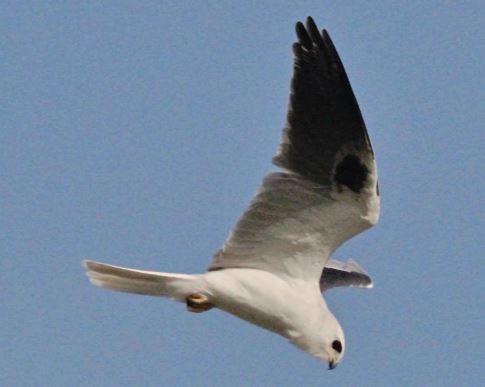
  •  White-tailed kite – Elanus leucurus – CA Fully Protected (nesting)

The white paper also included recommendation for recognition of species that are federally protected as long as they are on California BLM’s sensitive animal list:

  • Burrowing owl – Athene cunicularia – BLM CA sensitive animal; CA Species of Special Concern
  • Golden eagle – Aquila chrysaetos – BLM CA sensitive animal; CA fully protected

And, experts mentioned two other notable bird species that frequent the property:

  • Red-tailed hawk – Buteo jamaicensis – IUCN Status: Least Concern
  • Short-eared owl – Asio flammeus – IUCN Status: Least Concern

At first glance… the Proclamation was a moderate success for bird conservation- experts proposed 11 bird species for the Proclamation, and the President’s Proclamation included 9 bird species. But, the Proclamation included just two of the species experts proposed: the white tailed kite and peregrine falcon. Besides the kite and falcon, the other species listed by the President are common and widespread enough to not warrant any conservation concern. Here are the other 7 birds listed in the President’s proclamation, along with their listing status:

  • American kestrel – Falco sparverius – IUCN Status: Least Concern
  • Black swift – Cypseloides niger – IUCN Status: Least Concern
  • Cooper’s hawk – Accipiter cooperii- IUCN Status: Least Concern
  • Downy woodpecker – Picoides pubescens – IUCN Status: Least Concern
  • Orange-crowned warbler – Oreothlypis celata – IUCN Status: Least Concern
  • Tree swallow – Tachycineta bicolor – IUCN Status: Least Concern
  • Wilson’s warbler – Cardellina pusilla – IUCN Status: Least Concern

Optimism: A Presidential Challenge?

An optimist might consider the list of birds in the President’s Proclamation could be seen as a challenge to biologists, preservationists, and BLM. The President might have been truly insightful, providing protection for species common enough across the property for scientifically sound analysis of the impacts of varying levels of future visitor use. Only when there are enough nesting attempts of a bird species can we compare nest success in areas with and without visitors, or between areas of varying visitor use types/intensities.

With all of the biota listed in the Proclamation, BLM is required to provide protections in their management plans, setting scientifically-based preservation targets, and monitoring the status of these resources over time. Establishing preservation targets for species will involve developing various hypotheses, such as:

  • What is a minimum viable population size?
  • How many individuals are necessary to maintain their ecological functions?
  • How many individuals are necessary in various parts of the property to ensure that the public has an opportunity to view them?

It is likely that at least some of these birds are common enough across the property right now, when the property is seeing very little visitor use, that experts can inventory their densities and then notice change over time in response to varying management decisions. This would not be the case with more uncommon species.

I should point out that this optimistic viewpoint is difficult to completely uphold because the President did not include the expert’s suggestion of olive-sided flycatcher in his Proclamation: this is a species common enough on the property to meet the criteria outlined above.

Pessimism: A Presidential Nose-Thumbing?

The pessimist might consider it a purposeful snub by the President when he ignored most of the birds recommended by experts for inclusion in the Proclamation. He might have various reasons for snubbing the experts.

For instance, in recent Santa Cruz County history, and with the Monument Campaign in particular, we have seen political leaders leveraging and emphasizing the divide between pro-access, maximum use, recreation advocates and conservation advocates. If the pro-access, maximum use advocates had leverage with the President, they may have advised that inclusion of the conservation community’s recommendations as something to ignore.

An additional and perhaps additive possibility is that the President’s advisers were opposed to preservation of grassland habitat on the property, possibly because of the near necessity of using livestock grazing to maintain that habitat. Despite a growing scientific consensus, some maintain that California’s coastal grasslands are largely ‘unnatural’ relicts of human management, evidenced by their ‘natural’ succession into mixed coniferous forests. And, while fire is sporadically used to maintain California’s coastal grasslands, livestock grazing is more common. Many of the bird species that experts recommended for inclusion are dependent on extensive grassland habitats; some may even require livestock grazing to maintain structure that is conducive to nesting success. The reader is no doubt cognizant of some of the environmental community’s opposition to livestock grazing on conservation lands, and this philosophy could well have been in play when advisers helped the President to draft his Proclamation. None of the birds included in the President’s Proclamation rely on grassland habitat.

A final additional and perhaps additive possibility is the Presidential adviser philosophy that the protection of grassland dependent birds might interfere with maximizing visitor use of the property. Grasslands on the property offer the easiest opportunities for access to the many visitors desiring expeditious photographic opportunities. And so, perhaps the President’s advisers refused protection of grassland birds in order to more readily allow for maximum visitor use.

Concluding Remarks

The future will help inform the prevalence of the optimistic or pessimistic interpretation of the President’s motivations for naming the Monument-worthy birds of Cotoni Coast Dairies in his Proclamation. With luck, we may be able to have conversations with the President’s Proclamation advisers to learn, first-hand their rationale. And, we may gather more clues in the advocacy of Monument Campaign organizers and others during the planning process for the property. We will share our discoveries to help science-based conservationists better engage with similar situations in the United States. And, we will use what we learn to improve our strategy moving forward with preserving the sensitive natural resources of Cotoni Coast Dairies.

Postscripts

  1.  One reviewer suggested an alternative possibility for the President’s advisers largely avoiding the experts’ list of sensitive bird species: the advisers may have not recognized the credibility or legitimacy of the source of information.
  2. Another reviewer pointed out the irony of the Proclamation recognition of indigenous peoples and yet the lack of inclusion of those peoples’ iconic birds: eagle and hummingbird.
  3. Bird experts point out that the President’s inclusion of American kestrel was cogent because of a regional decline in nesting, a phenomenon that isn’t explicable but warrants attention.
  4. Bird experts also point out that the President’s inclusion of black swift is curious because the species has never been known to nest on the property, and nesting areas anywhere nearby have long been abandoned.

Monument Proclamation for Cotoni-Coast Dairies Adds Significant Protections for Biota

The President’s Proclamation adding the Cotoni-Coast Dairies to the California Coastal National Monument has created protections for many biota, helping to guarantee a balanced approach between public access and preservation. The property’s managers, the federal Bureau of Land Management (BLM), had previously demonstrated disregard for all but federally listed species of plants and animals, which are few on the property. The Proclamation now obligates BLM to manage for 24 species as well as 13 biotic communities that are not otherwise federally protected.  The Proclamation guarantees some public access for the property only after the completion of a management plan that is ‘consistent with the care and management’ of these resources.

The following non-federally protected species (24) probably would not have received attention by BLM had this Monument proclamation not included their mention:

  • Wilson’s warbler
  • Orange-crowned warbler
  • Downy woodpecker
  • Black swift
  • Tree swallow
  • Cooper’s hawk
  • American kestrel
  • California vole
  • Dusky footed woodrat
  • Black-tailed jackrabbit
  • Gray fox
  • Bobcat
  • Mountain lion
  • Mule deer
  • California buttercup
  • Brown-headed rush
  • Redwood sorrel
  • Elk clover
  • Madrone
  • California bay
  • Monterey pine
  • Knobcone pine
  • Douglas fir
  • Coast live oak


The following biotic groups/communities (13) must now be protected and managed for by BLM:

  • California sagebrush
  • Coyote brush scrub
  • Amphibians and reptiles
  • Bats
  • Red alder forests
  • Arroyo willow forests
  • Riparian areas
  • Riparian corridors
  • Wetlands – in riparian areas as well as meadows and floodplains
  • Grasslands
  • Scrublands
  • Woodlands
  • Forests

The following federally listed species (4)were also mentioned in the Proclamation:

  • Tidewater goby
  • Steelhead
  • Coho salmon
  • California red-legged frog

The following species (2) are listed in the Proclamation and are also listed by BLM California as requiring protection on BLM lands. These species might not have been protected in perpetuity, though, as that BLM list changes with administrations.

  • White tailed kite
  • Townsend’s big-eared bat

Saving the Coastal Prairie on the Santa Cruz North Coast, Thanks to California State Parks Ecologists

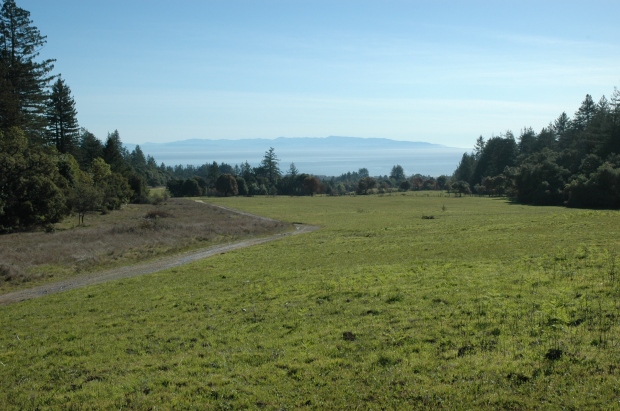
On Tuesday, December 27th I hiked onto the Gray Whale section of Wilder Ranch to see the prairies where the smoke was coming from back in October. I first visited these meadows in the late 1980’s while the property was privately owned; cattle were grazing the meadows, and there were abundant native grasses and wildflowers. Santa Cruz preservationists fought hard to protect the property from a proposed housing development, it went to State Parks, which removed the cows and took many years to start managing the prairies, which were starting to disappear to weeds, shrubs, and trees. Luckily, things were to change…

dsc_0156

Postburn strikingly green meadows.

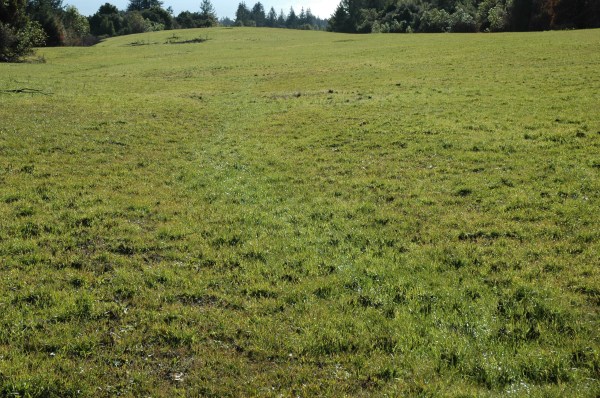
This past October, I knew that big plume of smoke I saw while driving on Highway 1 meant that State Parks was continuing their work at maintaining the meadows that I love so much. Fellow ecologist Jacob Pollock and I hiked from Twin Gates on Empire Grade down the Long Meadow ‘trail’ and into the strikingly bright green resprouting native grasses and wildflowers growing from the charcoal blackened ground. We found many types of native grass and a few wildflowers in the burned areas. Purple needlegrass, California’s State Grass, dominated the burned area, its dark green, rough leaves now 6” long and ubiquitous- a plant every square foot! These bunchgrasses promise a beautiful spring of silvery-purple flowers swaying 2’ high in the breeze. Patches of California oatgrass were less plentiful in the burn area than in the adjoining unburned area. This is the wet meadow loving indicator species of coastal prairie, and, in the many years after grazing and before the fires, it’s bunches grew taller to get to the sun- these tall bunches are susceptible to fire, but some survive.

dsc_0162

Fire recovery of California oatgrass

Patches of the leaves of wildflowers dotted the meadow and promise much more in the months ahead. Most abundant were sun cups, purple sanicle, and soap plant all long-lived perennials with nice flowers. Sun cups will be the earliest to bloom, maybe as early as late February, with simple, 4-petaled yellow flowers. Purple sanicle will be next to bloom in earl April with it’s small, purple spherical clusters of flowers. Soap plant blooms in late spring with evening blooming, white flowers that attract a variety of bumblebees.

Besides the obvious revitalization of the meadow plants, we marveled at other aspects of the handiwork of State Parks’ expert ecologist land stewards. Unlike many of our area’s meadows, there wasn’t a single French broom plant, a super-invasive non-native shrub that obliterates meadows, overruns trails, and is a major fire hazard. A many year program with State Parks partnering with volunteer groups has controlled that and other weed species at the park. We also saw dead coyote brush both in and out of the burn area- this native shrub can completely overrun meadows, closing bush-to-bush canopy in 15 to 35 years, depending on the soil. State Parks killed the coyote bush to maintain the prairie, and then burned the skeletons of the bushes so that there are now wide opened expanses of meadows, which are attractive to hawks, owls, coyotes, bobcats, and prairie-loving songbirds like meadowlarks. The ecologists also sent the fire into the adjoining and invading forests, maintaining the sinuous coast live oak ecotone that so beautifully frames the meadows.

dsc_0148

Fire maintains prairie ecotone

Today, I’m celebrating environmental heroes- 2-3 State Park Ecologists who manage over 18,000 acres in Santa Cruz County. They are motivated and hardworking. They need more support, more staff, more funding- please tell your State Assemblyperson/Senator! Without their dedication, our prairies would disappear. Thank you!

June 2017 Addendum: Portia Halbert sent me this photo (from State Parks Ecologist Tim Reilly), taken recently. The unburned portion of the coastal prairie in Long Meadow turns out this year to be dominated by Italian thistle, an invasive plant, whereas the fire from last fall seems to have more-or-less obliterated the species in the adjoining meadow. Thistles are especially bad this year in many meadows that haven’t been well stewarded. This discovery, that fire might help with thistle invasion, is a complete surprise to me- it deserves some careful scientific investigation! Long meadow italian thistle

Wildlife Protection at the Potential Cotoni Coast Dairies Monument- The Naysayers

Preservationists have done what they can to protect natural resources at the Cotoni Coast Dairies, should it become a National Monument- but, who didn’t support that work, and why?

The Proposal

Early in 2016, a broad coalition of experts and I drafted a proposal to add natural resource protection to any Presidential declaration of the Cotoni Coast Dairies National Monument. Expert wildlife biologists, amphibian and bird experts, plant community ecologists, and others co-created a list of sensitive species and rare ecosystems that would receive more protection under a Presidential Monument declaration, should that list be included. Sensitive natural resources at other presidentially declared Monuments in California have enjoyed such protections, so there is no reason such protections shouldn’t be in place at Cotoni Coast Dairies.

Questions: Who is writing the Presidential Proclamation that will give the Cotoni Coast Dairies National Monument status? Do they know about this proposal?

Answers: The staff at the Council on Environmental Quality, an office that advises the President. As of Fall 2016, they have our proposal, and we are hoping they will include it, in its entirety.

Supporting the Proposal…

The proposal enjoyed the public support of the following organizations:

The Trust for Public Land, which owned the Coast Dairies property before handing it to BLM, wrote an especially important support letter. Their letter emphasized the importance of including our proposal because it documented species and ecosystems that had been discovered since TPL wrote the legally-binding land management plan that would otherwise serve to protect the property under BLM ownership.

Not Supporting the Proposal…

Despite repeated requests, the following organizations refused to publicly support our sound, science-based proposal to increase protections of natural resources at the Cotoni Coast Dairies:

It is ironic that all of these organizations publicly supported the proposal to make the Cotoni Coast Dairies a National Monument. And, these are all expert conservation organizations. And so, these organizations must have been aware that BLM provides less protection to the natural resources listed in our proposal without those species being included in the Presidential Monument declaration.

The various written rationales for not supporting the proposal included (paraphrased):

  • ‘it would take too much time for our organization to analyze the issue’ (two organizations)
  • ‘our policies have changed since we signed on to support the proposed Monument, now we don’t do those types of things’(one organization)
  • ‘some influential people (elected officials/Monument advocates) wouldn’t like us as much if we supported the proposal- so, it’s not worth it’ (two organizations)

What Can You Do?

If you agree that future generations deserve to enjoy healthy wildlife and clean coastal streams….

And, if you agree in science-based, policy-smart solutions to make that happen…

  • When choosing to join or support in any way an environmental organization: choose from the list of those organizations that supported our proposal.
  • Even without such support, please let the organizations listed above know what you think. Click on the organization names above- I included links to their websites.