Molino Creek Farm

Fattening Apples, Impending Heat

The tension of summer is upon us. We relish the beautiful days, like today, with an ocean breeze and high temperatures in the upper 70s to low 80s. The nights are cool enough to be our air conditioning. We awake to cool houses that slowly warm as the day progresses until the (welcome) onset of cooler evenings. The crickets are loud, the birds silent in the midday warmth, and cicadas fill the heat of the day with their one note, incessant, high metallic-whining song.

The magnificent pulse of pleasantly warm days and cool nights used to be normal, for decades it was normal. Recently, there is a prickle of worry that the HEAT will arrive: days of above 90s when the night never cool. We’ve had 4 of those in the last 3 years, 1 right before the 2020 fire and one just after. Those are tough. We might get one of those this weekend. The Weather Service can’t say. While they predict 110F inland, ”readings along the coast are a bit more tricky.” Sigh. All we can do is get the irrigated ground as wet as possible to buffer our poor crops against what might be wilting, damaging heat.

Molino Community Orchardists produce this beauty…a gala apple tree perfectly thinned

Pomelogically Speaking

Meanwhile, in the cool shade of apples trees…We gaze across a lush and happy orchard filled with quarter-sized fruit peaking out from beneath the protective cover of deep green leaves. The many hands of orchard collective workers have thinned almost the entire orchard to well-spaced fruit that is gaining girth expeditiously. By taking off most of the fruit and leaving a few, we relieve the mother trees of too much work. You can almost hear them sigh and relax.

The apple trees are growing so well that their bark is splitting, the first furrows appear on our aging tree trunks. So, this is how trees show their wrinkles. We are only a month away from the first apples ripening: The Gravensteins. We will have just two of those types of apple trees bearing this time around, but there are many more small ones getting bigger – 3 more years and the crop will begin to burgeon. After that, the Gala apples will be on hand in 2 months, and that’s the beginning of the big apple party. Apple trees do not like warm roots, but this spring saw the canopies grow so much that there is good shade across most of the orchard floor. The edge trees suffer more, but we’ll dispense thick mulch over their tender roots soon enough.

Plum Nothing!

Soon, there will be plums but none right now. The challenge with plums is netting them. We need to create an easy-to-deploy single tree netting system, so we can get plums this year. There is a promising fruit set.

Maw and Caw Update

Taking my morning stroll this morning, I heard a raven scream from down near the netted cherry grove. ‘Oh NO!’ I thought…’What’s wrong?!’ Perched on the cherry net structure were 4 ravens, not just our farm pair, Maw and Caw. Did they have twins this year? Was that single scream an obnoxious raven yell, so typical of their adolescent young? More study is needed.

Other Wildlife Observations

Foxes and coyotes calling, fledged barn swallows, frequent Lazuli song. It sounds like someone is strangling a cat, but its just a gray fox calling. It was very startling, though. It’s the first sign I’ve had in a long time that the foxes are still around. Uh-oh for the fruit, though.

Sylvie woke one night to the pitched song of coyotes.

One of the 4 fledged barn swallows from my porch hung upside down like a bat for an hour yesterday. What’s up with that. I worried that it was sick, but then saw it idly preening itself while hanging upside down. Odd bird! It seems to the smallest and is quite a rebel. The other three fly one way, it tilts its head at them going that way, chips, and flies a different way.

The laughing calls of lazuli bunting are very common on the farm. They well compliment the high giggling peeps of the many lesser goldfinches that are feasting on Madia seed happily.

Molino Creek Farm’s dryfarmed tomatoes

Farming

Dusty clouds billow in the wake of mowing tractors, weed-tilling tractors. Bent forms slowly hoe their way down the rows in the morning heat. Shimmering waves of warmth bend the images of quickly growing crops, not yet covering the ground, but soon! This is the time of cash outlay, the gamble that the harvest will bring the returns to pay back all the labor going into the crops right now. Killing gophers, weeding, watering…repeating…over and over, the harvest weeks away.

Black walnut – we have a lot of them on the farm!

Walnuts

We have a lot of black walnuts growing on our farm, never harvested. Still, they are beautiful trees!

-this post also placed at the Molino Creek Farm web space.

Bluebird Chicks

Baby bird begging is almost as beguiling as human baby crying. Heads turn to see what the fuss is about. Perched near the nest, the mother holds her wings out just a bit, anxiously glancing around. I haven’t seen any fledglings, but the earliest squeakers must be close to getting out of their nests. At least two bluebird nest boxes have clutches going. There are other species of baby bird noises from nearby shrubs, from holes in cabin walls, from tree hole cavities, from anywhere there might be enough cover. The lush productive spring promises well-fed big baby birds. Next door, the jays have already been at their nasty deeds, tearing apart barn swallow nests to eat eggs for breakfast.

Orange crowned warblers! I’ve been using the Merlin bird call recognition software on my iPhone, and it has been teaching me better bird identification. I didn’t know warbler calls before using this tool, but now I can recognize orange crowned warblers, which are suddenly (for me) everywhere I hike through the forest. Some focused time recently netted several warblers, all nearby: Wilsons, orange-crowned, black throated gray, MacGilvery’s, and yellow. Most of these were close by, from the sound of them, but nearly invisible. They seemed to like darting around just under the canopy of the acres and acres of 4 foot tall, post fire California lilac. Imagine, a sea of glossy green-leaved shrubs with flashes of yellow birds and a constant sweet warbler song.

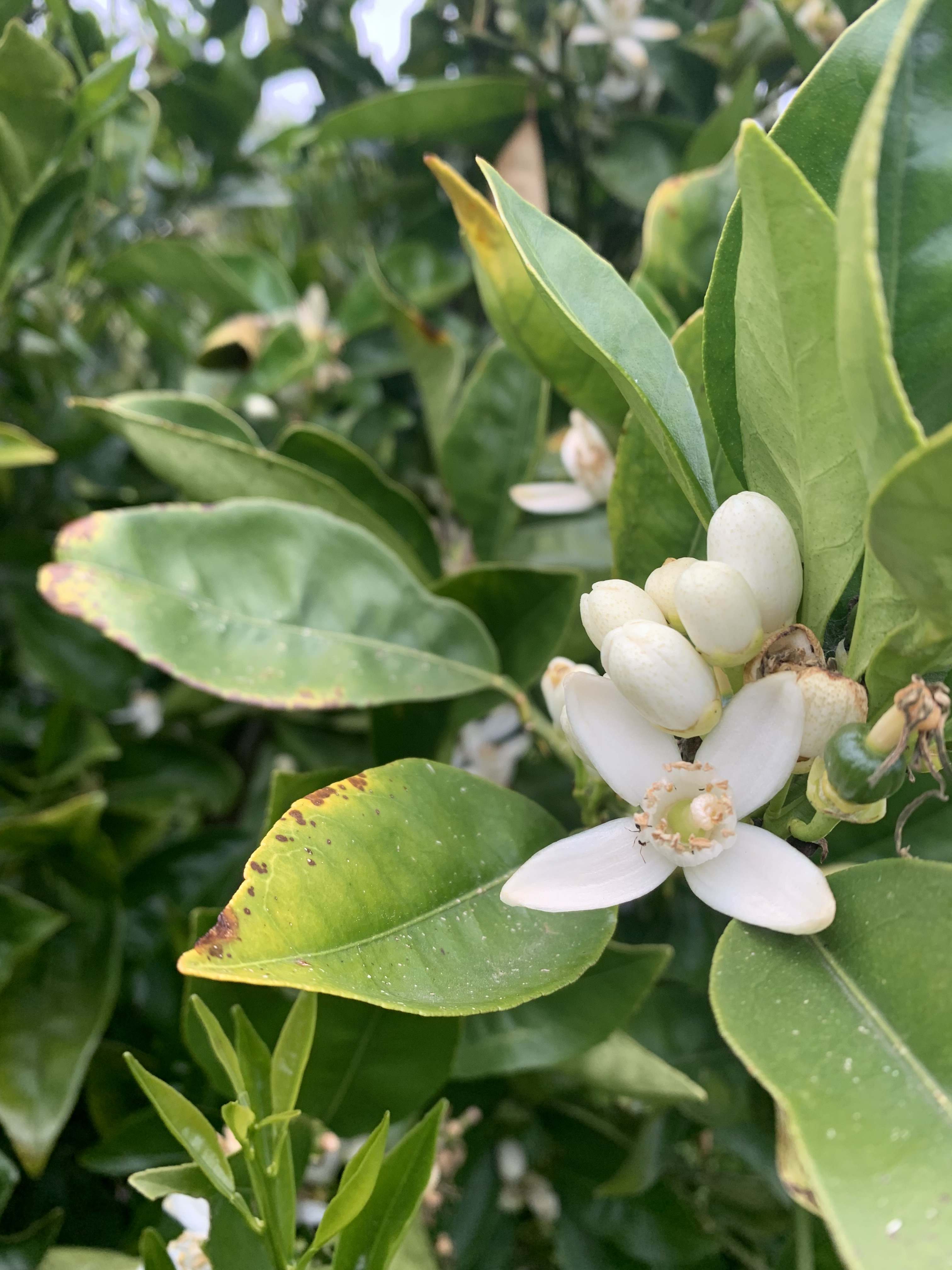
Navel orange flowers produce an amazing scent on Molino Creek Farm’s fabulous Citrus Hill

Sweetness in Scent

Song can be sweet, but so can scent. Molino Creek Farm’s citrus orchard has never had so many blossoms. It is peak citrus blossom time, especially with oranges and their particularly alluring scent. It is dizzying many yards downwind. Closer up, the pure white of their simple flowers is beautiful to look at. This flowering is brief. Soon there will be tiny dark green fruit that will get larger by the week and then slowly turn colorful. The harvest is mostly 9 months away, but still we glean the last few limes, lemons, and tangerines. As the flowers fade and the fruit forms, a new flush of leaves will create thick, sheltering canopies of glossy dark green. We put yoghurt containers of feather meal into the drip lines of the citrus orchard more than a month ago, and it seems to be helping with the generous leafing.

Farm Work

Molino Creek Farm and Two Dog have been planting many plants, and now attention turns to hoes. The last rains spur more weed germination in the dry farmed fields. In the irrigated rows, a massive weed flush threatens to overwhelm the crops. The hoeing race is on!

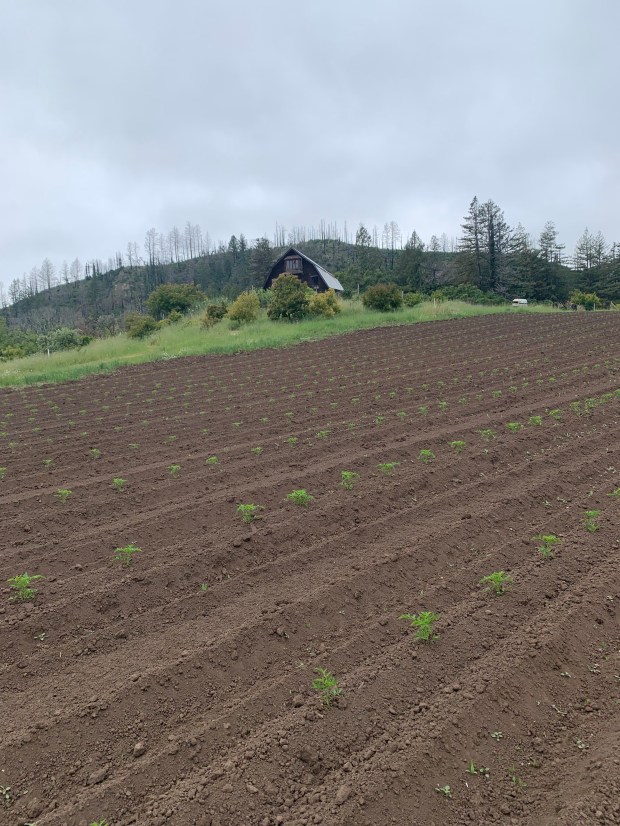
Molino Creek Farm’s famous dry farmed tomatoes are starting a new season in freshly tilled soil

We are irrigating again: a routine that will last until November. Up early to check the water tank level, turn on irrigation valves, hike around the orchard to see if any irrigation is amiss, fix a leak or two and go home. Lunch time (or later!)- repeat in reverse: turn off the irrigation valves, log the water use, check the storage tanks, and head home again. Big cyclical walks around the farm keep creating material for this writing project.

Half the first round of hay raking is done. Mulch for the orchard gets clipped by a sickle bar mower, then sundried (hah!), then raked, then pitchforked onto the mulch cart, hauled to The Trees, and spread around the rootzone thicker than anyone wants to place it. Really? This thick?! This is the third spring since the fire burned up all the mulch. This will be the last year that weeds come up so thick around the trees. The mulch is thick enough now to subdue seedling weeds. There are also mulch benefits of water retention, slow-release fertilizer, root cooling insulation, and wildlife (vole, lizard, snake) habitat. Long live mulch! Mulch is the key to life!! Under the mulch, worms wiggle and scoot, creating a carpet of 2” deep “castings.”

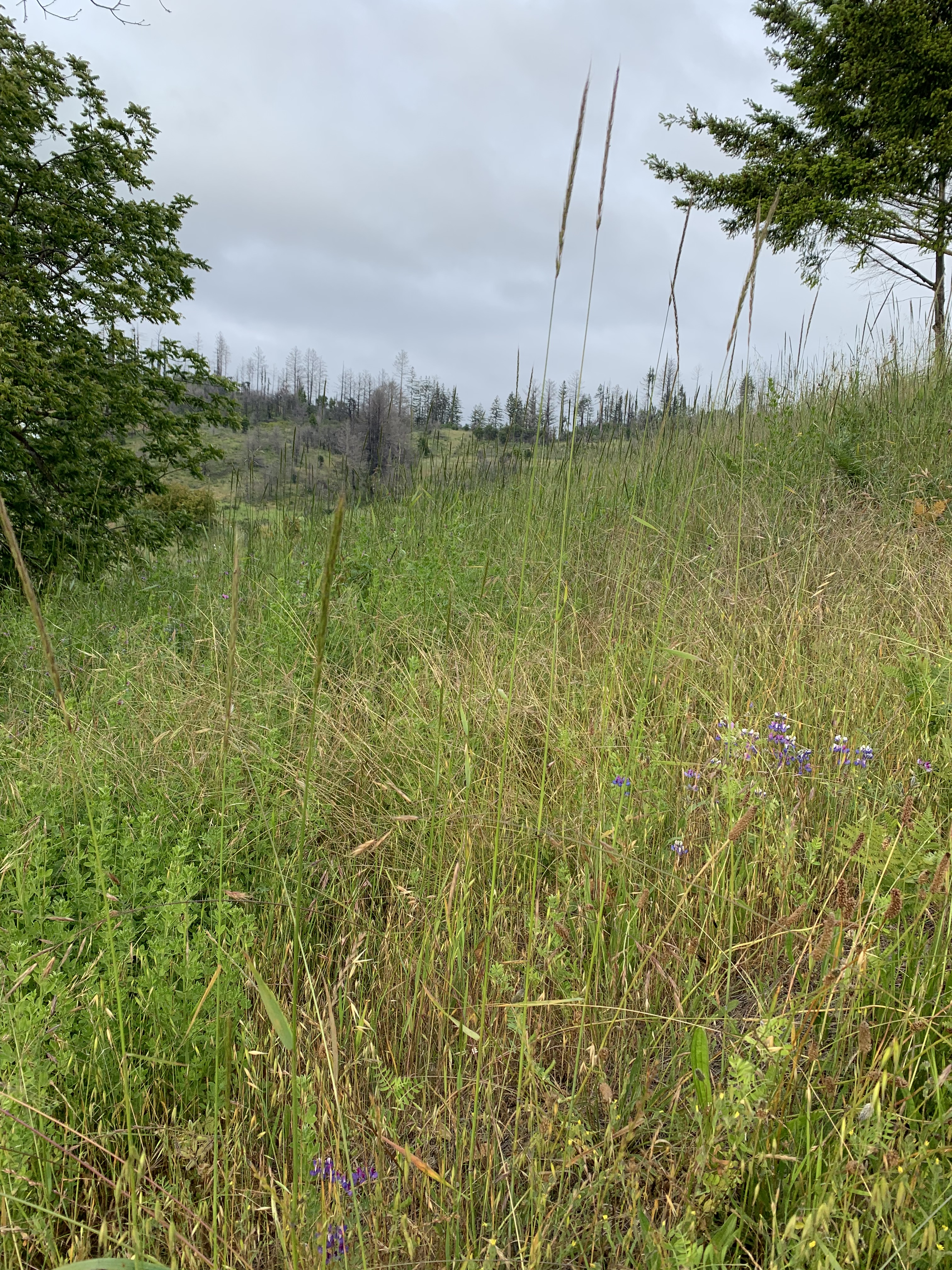
On our carefully stewarded hillsides, a menagerie of native grasses and wildflowers: Elymus glaucus (blue wild rye), lupines and other things…

-this post also placed at Molino Creek Farm’s website.

Endless Foggy Days

Day after day the fog variously seeps up the canyons, pours across the ridges, or just hangs across everything, dripping and drizzling. Droplets cover every plant, glistening. It is cool and damp, but the soil is still drying. The dust is subdued but the plants grow thirsty.

Blossoming Hillsides

This weather has prolonged the spring bloom which is entering the moment of giant patches of colorful shrubs. Lavender bush lupines and yellow-orange monkey flowers are being joined by bright yellow lizard tail, each of these gentle shrubs has its own color place on the hillsides but intermingle in the interstices in a mélange of crazy color patterns. More subtle flower patches also claim their spaces – Phacelia, bee plant, and cudweeds are also in full bloom. It is a good time to go for a walk where the coastal scrub is near, especially the post-fire coastal scrub. The fire set us up for a very colorful spring.

Snakes and Such

The extended cool spring seems to have concentrated the snakes into piles to keep warm. Last Sunday, Pete Trenham visited the farm and helped catalog 19 snakes in one walk about, including four rubber boas under one piece of roofing tin: a grip of snakes! We found gopher snakes of all sizes, a few ring neck snakes, yellow bellied racers, and garter snakes along with southern and San Francisco alligator lizards and blue bellied lizards. Down in the creek, we found California newts guarding their egg masses as a California giant salamander swam about. Molino Creek was much rearranged after the dynamic winter- now there are pools and riffles along with many beds of fresh piled rock.

Pete Trenham holding a grip of snakes: northern rubber boa to be exact

Planting Time

Farmers are planting seedlings. Baby onions are especially numerous in long rows. Adolescent sunflowers are getting bigger. Tomato plants are settling in nicely. The cool overcast weather makes for transition ease as plants move from the protection in the greenhouse out into the open air.

newly planted dry farmed tomatoes

Perennial Fruit

The orchards are lush and gorgeous. Apple trees have dark green leaves, a foot of new shoot growth, and oodles of tiny furry new fruit. Cherry trees are laden with clusters of fattening light green shiny fruit nested in curtains of deep dark green foliage. Avocado trees are perky explosions of new reddish leaves reaching for the sky with bolting new growth. Slower, the citrus trees are beginning to flush with shiny new baby leaves while buds break with stark white flowers and famously sweet scent. The grape vines have thousands of long clusters of buds nestled in bright delicate spring green leaves

More Scents and Sounds

The gentle breeze brings a faint smell of fire and a distant hum is the source: air curtain burners are disposing of hazard trees on the nearby land. That distant hum is joined by hours of closer noise: mowers! This spring in particular has called the mowers to work. Mow the 5’ grass to 2” and the next week it will be back quickly with 6” a week growth. The sweet smell of fresh cut grass permeates the air when the wind dies down. The Merlin bird app identifies the dominant dusk chorus: purple finch, song sparrow, and barn swallow fill the ears with song as the day grows dark and evening sets in.

A Preponderance of Fog

The memory of sunny spring days slipped behind a fog bank. The muffled quietness is emphasized by mysterious pattering drips echoing from the hidden depths of the forest. A single flute-like song from a hermit thrush serenades the slowly darkening evening as it becomes night. The winds have died. All is damp and chill.

Ground Birds

Somehow, the quail predicted this cold spell. Everyone has been asking where the puff ball baby quail are – this is the normal season, and they are late. The fluffy turkey babies are out, though. Passing carefully in our cars, they peep loudly after diving into the ditch, scared that momma will lose them. Mother turkey herds the children a bit, but not too frantically, not like the more fretful quail. The quail are in pairs and in a few small groups, the hens must be full of eggs awaiting the return of warmth. Wet grass is hypothermic to baby birds.

Box Birds

Bluebird parents dip and dive, scooping up caterpillars and bugs. Off they hurry to the nest box where squeaking kids beg noisily for food. Perched at the nest box opening, mother bluebird eyes the gaping mouths of her chicks, picks the lucky one who gets fed, and off she goes to find the next catch. Father bluebird returns with food, same story. They come and go all day, feeding the quickly-growing hungry young ones. In between parental feeding, the babies go quiet. A scrub jay perches on the nest box. Both parents alight nearby. It is a silent standoff for a few minutes until I scare the jay away. Nasty nest predators! Four of the five bluebird boxes have nests this year. Electric blue male bluebirds are quite the color show. We look forward to a menagerie of young in the not-too-distant future.

Lush

The land is lush. Wild oats are 5 feet tall, wild radish bushes 4 feet around, and wild cucumber vines hang heavily on our 7’ fences. A hike through the forest, even on trails has become a swimming breaststroke to part the tall, fast-growing post fire blueblossom bushes. The ground surface is buried under several layers of canopies, hidden holes hold worry for footfall ankle twisting. The native iris are already fading. Nuts hang from hazelnut bush branch tips. The live oaks on the edge of the meadows are dense with new growth and thick with leaves.

Tiny Fuji apples, just forming. Photo by Sylvie Childress, Molino Community Orchard Photojournalist

Orchard Fruiting

Apple flower petals have long since fallen and small fruit have formed. It is time to thin the fruit, to keep the branches from being too heavy, to make for bigger fruit, and to keep the trees from bearing only in alternate years. The first mow is behind us, but the regrowth is thick already wanting the next mow soon. Wide oat leaves and thinner leaved tufts of dark green weedy rye grass poke up from a thick mat of mowed material. A rich moldy smell permeates the air. Nearby, bell beans and vetch that we missed mowing the first round are vibrantly blooming and growing high. Between cover crop and understory weeds, patches of native strawberry are in fruit: the apple orchard’s first harvest! With the late rain, the strawberries are the biggest we’ve ever seen and oh so sweet!

Sylvie Childress, Photographer and Hand Model. Wild strawberries in the Community Orchard understory

Farm Work

Farmers are planting, and there are neat rows of seedlings nestling into freshly tilled fields. Onions and sunflowers as well as rows and rows of tomatoes are pushing roots into the soft brown soil.

Also, the mowers are mowing. As is too often the case, one of our BCS tractors went down and is off to repair just when we needed it most. Bob moved the sickle bar mower to the other BCS and off we went once again. Sheaths of grass are felled in neat rows, drying. The timing…as the thistles begin to flower and before the radish seeds get ripe. Earlier, regular we swiped the hay field with the mower to discourage nesting birds- those paths also add heterogeneity for swallow feeding, coyote loping, and skunk snuffling.

-this also posted at Molino Creek Farm’s webpage.

Weasel Land

 The weather has fretted with fog and drizzle then heat and back again, the flux of summer, accentuated over short periods of time.  It has been long enough since the last rain that the soil is drying for the second time this spring, and it is time to water once (again).

One of the many lush hillsides, well stewarded, at Molino Creek Farm

Fruitiness

We picked the very last of this season’s navel oranges, but our one Valencia tree might still have a few ripen and sweeten. Two young mandarins are producing a few sweet fruit each week. There were enough Persian limes to satisfy some of the orchardists, but those are almost gone. Such wraps up the fruiting season, and a bit of a dearth awaits us to be broken in July when the first cherries ripen. If we can get the gumption to net the trees, we will have those delicious fruit.

Rodent Explosions Past

Last year, everyone was talking about the plague of rodents. There were never so many gophers and mice as then; it seemed like not a foot of ground was spared the gopher till. Many winter squash were chewed, unsaleable. A bunch of our old hazelnut bushes fell over, roots gnawed off near the soil surface. A long, cold rainy winter no doubt took its toll on rodent lives. The voles began their rebound, zipping about and ousting gophers to their demise. Now, new numbers of fanged rodent patrols are on the prowl.

Weasel Friends

Either the long-tailed weasel population has skyrocketed or a handful of weasels are covering some ground. We are all seeing weasels. One weasel was trying to get in the house, poking its snakey body into every nook and crevice, even bobbing back and forth on its hind legs, looking up the walls for a place of better purchase. These weasels have dark red-brown hair and a big white heart spot on their foreheads. They are rumored to ‘run’ down gopher holes. May they control the rodent population!

The Buck Didn’t Stop There

A large buck, its velvet-covered antlers budding up to their first fork, ran hastily across the upper farm this past week. Otherwise, I haven’t been hearing much about deer.

Haying Time

The grass is 5’ tall, on average, in our hayfields. Mostly, it is European oat grass of the “bearded” variety (Avena barbata), but there are also sizeable stands of native brome grass as well as wild radish. When we can, we get to the barn and start up the clickity-clack Italian BCS walk-behind tractor with the sickle bar mower. Aim it at a long row of tall grass and keep it pointed in the right direction. It snicks off the sward at 2” tall, laying down neat hanks of hay that fall to either side. After a few passes, there are beautiful rows of neatly cut grass to cure in the sun before being pitchforked into the mulch cart for placement around the fruit trees. We cut about as much ground as the trees take up- just over an acre! At last calculation, we hoist and spread about 8 dried tons. To do this right, we’ll need to do that pitching before July 1, the magic date that allows the hay to start decomposing and moistening again in the irrigation so that it is less likely to burn very hot with the late summer fires.

Iris fernaldii, one of the panoply of odd colors on Ben Lomond Mountain

Peak Iris

From Santa Cruz to Santa Rosa, it is Peak Time for the Native Iris Bloom. Maybe the wet winter spurred such an epic show. The variation in color and petal shape in the plants near Bonny Doon is astonishing. Around 900’ there are patches of Iris douglasiana, but all are a creamy yellow. Just up elevation, they mix in a narrow band with Iris fernaldii, also a creamy yellow. The douglas types drop out at 1100’ elevation and then there are many more fernald’s. At 1700’ elevation, something magical happens. That blue that the douglas iris was supposed to have now seems transferred to the fernald’s, but there’s more. There are rosy flowers and sky blue, pure white and more deep yellow- no two fernald’s iris seem the same- it is a mystical array of a profusion of color.

the most blue that I. fernaldii gets as far as I can tell

More Color

The colors of iris isn’t all that is happening. The bush lupines and sticky monkeyflower are showing abounding colors. There is so much spring that it can’t be contained. Flowers are gushing brilliant color everywhere. It is time to get out and about!

The Longest Winter

Through late last week and into this one, waves of unseasonal rain kept sweeping across the sky: shower after shower, sheets of drizzle, or a splattering of only a few big raindrops. It was mostly cold rain, and any remaining heating firewood is gone – the longest, coldest, rainiest winter in memory. Wearing sweaters and hats inside, we wonder when the transition to summer will come. Perfectly reasonable people are now complaining about rain, even arguing with an emphatic, ‘enough!’ when reminded about the contrasting potential for heat, dryness, and fire. Some of us will never complain about rain again, but perhaps that’s just the indelible memory of dangerously close-at-hand wildfire.

The Scents and Sound of Weighty Fog

Is that fog now? The sky is still capped but ragged bright blue holes appear in the clouds by midday. The sounds of gusty winds mix with the echoing roar of big waves. The air smells sweet from vegetal spring mixed with salty ocean spray and dusty pollen.

At the end of the rainy period, before the winds, there was a still morning and both the canyons and ridges were draped in clouds. Dampness coated every surface, leaves glistening with droplets. I could hear the nearby waterfall song and a bit of the creek below. It was so peaceful. Then, <<CRACK, CRASH!!>> another big tree fell down somewhere near our boundary in the Molino Creek canyon.

Colors Splashing

Besides the spectacularly blossoming apple orchard, there are dots and pools of color popping out from the mostly grass-green landscape. There are striking large powdery blue patches of wild California lilac, both large shrubs that escaped the 2020 fire and a sea of smaller ones that emerged after that fire. Whorls of sky lupine flowers brighten shallow soiled nobs and ridges, aided by our firewise mowing. On the rare occasion that sunrays warmed their petals, California poppies open with their flame-orange shiny glow. It takes a curious eye and intrepid soggy walking to spot some flower colors: buried in the thick grass are hiding patches of blue-eyed grass, a miniature deep-blue-blossomed iris relative.

Hello Yarrow!

Standing up high among the tall grass, bright white patches of yarrow just started flowering. Like so much of the farm’s color, this one is a result of intention. In 2008, there was no native yarrow on the farm. But, there were a few patches of yarrow poking through the roadside shrubs nearby. In the dusty summer heat, we paced those roadsides, shaking yarrow seedheads into paper bags. Then, as winter rains approached, we shook the seed from those bags in the areas we were mowing for fire safety. Now, there is yarrow proliferating and butterflies alighting on their flat-topped pollen-rich platforms of white flowers.

Random Acupuncture

Everyone who is anyone is controlling thistles. On hikes and impromptu field meeting strolls, we pause to pound our heels into the ground, trying to uproot invasive thistles. When we stroll through anywhere that hasn’t been mowed within a week, we get poked by needle-sharp thistle spines. Italian thistle is the main culprit, but there are also pokey giant lush leaves of milk thistle with which to contend (in the moister spots). If we wanted to wait a bit to mow, there can be no more waiting – there is an urgency about the timing. Seeds will soon be forming then taking flight on thistle-down gossamer parachutes, creating next year’s problems.

Younglings

Baby turkeys, baby bunnies. The thick tall grass nearly hides the adults and completely veils their newborn young. Turkey young, too small to fly, struggle through dense forests of oat grass. They don’t have to venture far with tasty grass seeds presenting so thickly. They have already learned mother’s beak precision to pick individual seeds from grass inflorescences. At the boundary of shrubs and grass, tiny newborn rabbits are also gazing at their parents for lessons, from when to scurry from danger to what to eat and where. It is fattening time for coyote, fox, and bobcat.

Farming

The unexpected late soak changed the farming routine. We stopped our panicking irrigation setup, grabbed hoes and went to work on the easily removed weeds. The big field hoe pries giant radish roots from the wet soil. Glove protected hands yank clusters of grasses that grow too close to tree trunks for the hoe. Either way, hoe or glove, the spring has presented the opportunity for building forearm muscles and body core strengthening.

A new generator arrived and will provide backup power for our normally solar-powered well. The well has been mostly idle for months because of the rain, but soon will be running every daylight hour to keep up with irrigation needs. Should smoke shroud the sun with the onset of wildfire, we’ll need the generator to keep our fire fighting water replenished.

The sounds of powerful diesel engine tractor tilling, weedeater droning, and the lower growl of mowers fill the air most days. The early mornings and the longer evenings provide respites from farm noise. Then, the air is filled with spring bird song.

Spring Heat then Rain Returning

The warm spring sun began feeling prickly to my skin, and so it was sunscreen and sunhats to go outside. It had been a long time: a long cold, rainy winter. Suddenly, spring pollen dusted everything, everyone sneezing across the farm and into town, sneezes in parking lots, bike paths and in lines at the store. ACHOO!

Spring warmth triggered grass to bolting, really toweringly bolting grass flower heads arching and poking up high, waving pollen from dancing wands ladening the ever present breeze.

A Sudden Dryness

It seemed like the rain was over, as it normally would have been, but we were in for a surprise. Us orchardists hustled to get the irrigation set up, discovering mouse-chew leaks to repair, stuck valves, broken sprinklers – the perennial time-consuming setup always seems to come too late. The ground was DRY…very dry! Cover crop was wilting, bent over in the springtime heat. Digging weeds out from under orchard trees became a hassle, shovels and hoes striking hard ground, ringing metal sounds. It was dry not only on the surface but a foot down into the soil. Last Saturday, I asked my fellow weeder, “anyone discovering any soil moisture?” The answer was a disbelieving ‘No!’ Someone said, ‘It calls for rain.’ Yeah, right. It seemed somehow impossible.

Wind to Rain

The wind picked up strongly that evening and the next day it was blowing trees and branches down, hard gusts joining a steady stiff wind from the northwest. A little drizzle followed. Then there was a shower with quite big drops. A few hours later, another shower, that one longer, also with big raindrops. And then it poured on and off for many hours late through the night. Afterwards, still the soil is only wet about six inches down, but its moist down a foot. That much water will get used up in a few days when the sun shines again. And, it is enough to spur the grass growth (and pollen). What a surprise! At least it will be easier to weed for a few days.

A May Storm at Molino Creek Farm

The Resulting Flowers

The flowers are out. Poppies and lupines in peak flower. Cassandra reports binocular-spying a strikingly bright patch of solid lush orange California poppies high on the steep slope across Molino Creek canyon. The coast live oaks, tassels fading, are dense with shiny new leaves, a rich array of greens, each tree its own unique shade. On oak twigs, the tiniest of acorn babies have been born. Forest edge madrone trees display giant pom-poms of white flowers, a celebration of the moist winter. Big yellow blankets of post-fire germinated French broom sweeten the breeze but make my muscles tense with the stress of the seemingly hopeless weed invasion on our farm’s otherwise beautifully diverse hillsides. Redwood sorrel carpets the forest understory with strikingly pink blossoms. The wild iris has begun its colorful parade, trailside through the woodlands.

Two Lupines: Lupinus nanus (sky lupine) and Lupinus bicolor (miniature lupine) side by side

And Bryophytes

The return of rain also reawakens mosses and lichens. The black walnuts and oaks host a wealth of moss, growing thicker on the older branches and on the shady side of trunks. Summer comes and their thick green piles shrink and fade. Just as quickly, with dense fog (or this rain), they brighten and grow plush once again.

A Diversity of Ephiphyes…Rain Soaked and Glorious. On one of the Farm’s black walnut trees

A Deer

An adolescent buck with the faintest of felty nubbins jutting from its forehead warily considered me during a recent walk. At first, its giant pointy ears tilted towards me like satellite dishes honing in on my approach. Each time I get close to deer, I talk to them, gently letting them know that I am no threat. Generally, this slows their retreat, but this one was suspicious. It took off, energetically bounding with all four feet high in the air between pounces. Reaching a good distance, its ears were once again on alert, pointed at me as I tried urge it, ‘don’t worry.’ I looked down and up again. He was gone. Why so concerned, deer? This one was new to the neighborhood, maybe just passing through. People still hunt deer in these hills, so wariness is warrented.

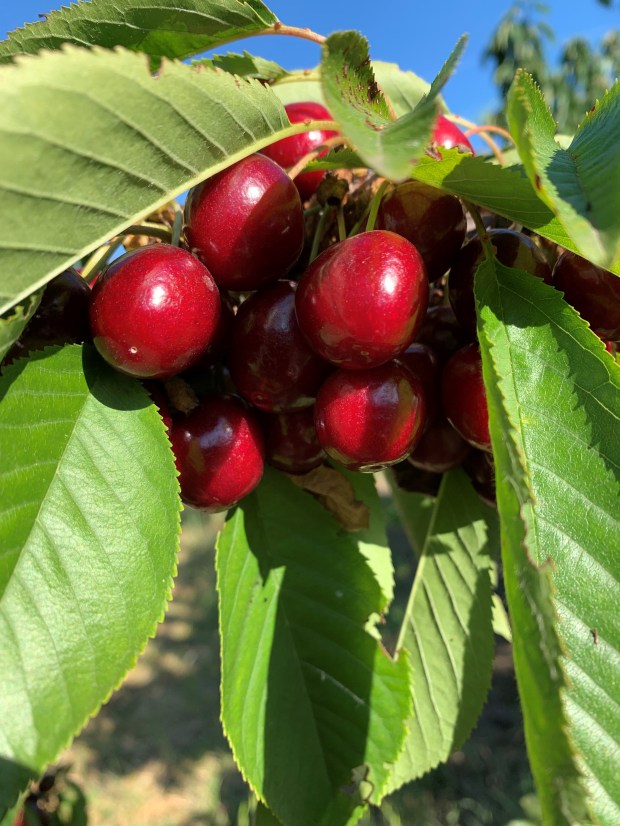
Lapins Cherry Fruit – seems to be setting thickly, but we have to wait to see..they often drop off later

Fruit Forming

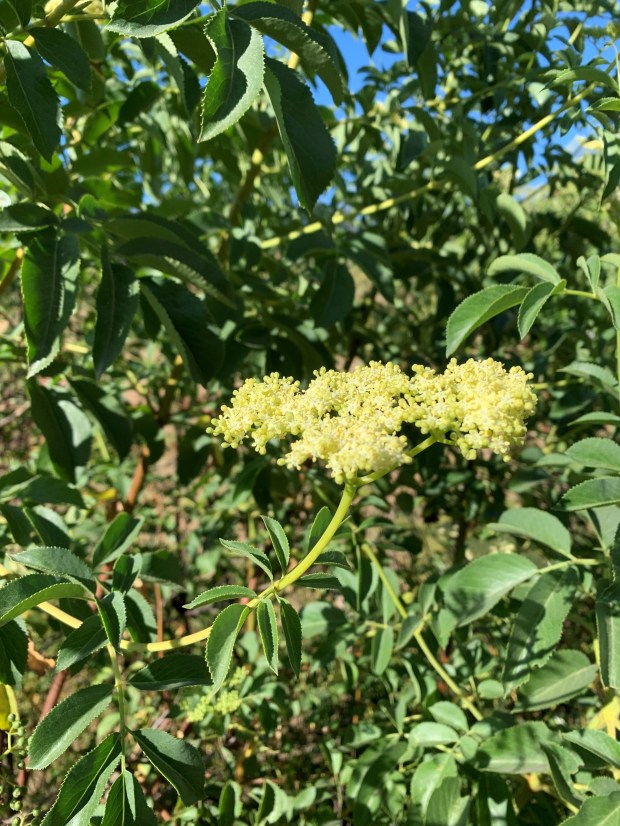
Bright white citrus blossoms unfold sweetly while cherry petals drop to reveal shiny fruit. The apple orchard has entered peak bloom. The freshly clipped understory, not long ago was ugly stubble, but now it’s turning green, resprouting through the mown mess. The faint rose smell of apple blossoms is temporarily overpowered by a rain-fetched dank compost smell, hints of the bitterness of rotting chopped up weedy mustards and radishes. At the base of the apple flowers, furry hints of apples to be. Down the hill from the apples, fruit grows fast in our stonefruit grove- mostly various apriums and pluots, a hybrid swarm that also includes the parents, plums and apricots. Those fruits are mostly silver dollar sized, hard as rocks and green. The wild hazelnuts of our hedgerow have set fruit, bracts swelling. Elderberry flower clusters are a curious near-black, their buds forming.

Birds

Barn swallows have formed pairs, their mates arrived sometime in the last couple of weeks. They dive and swoop right past my face, closer than ever, as I mow the orchard. Maybe these are my porch swallows, and they are comfortable with me, and so the proximity. It seems I can feel their wingbeat wind on my cheeks they swoop so close.

The band tailed pigeon flock is back to its more normal farm size: 18 (ish). There were many more last week, but some moved on. As always, they scare easily from the walnut trees where they feast on catkins. Their clapping wings send them quickly skyward where they wheel about in a flock that eventually alights in a tall tree awaiting a safer moment to glide back down to their feast. How many times a day do they make this circuit? Sometimes, we hear them cooing deeply, at times answered by the higher, more sad sounding mourning doves that strut on the ground in pairs across the moist freshly tilled farm soil.

In the understory of the orchards, there are bunches of sharp-billed robins.

Somewhere nearby, there is the call and response sing-song of grosbeaks. In the woods, a flycatcher serenade joins the flute-like Swainson’s thrush song.

There are many other birds making lots of noise. Such is spring on our beautiful, diverse, wildlife friendly organic farm. We are so thankful.

-my weekly blog for Molino Creek Farm simultaneously published here.

Lushness, Still, but Rapidly Drying

Gusty winds and cold nights faded quickly to calmer breeze and warmer days. Now, the grass bolts quickly and everything goes to bloom.  Lushness seems on the edge of fading, we don’t know how long the green will last. Already, the thinnest soils are turning tawny in the coastal facing prairies.

Freshly Tilled Soil

Fading Mud, To Dust

After the ground’s gushiness fades, the farmers work the ground. The fields are getting tilled. Cover crops are almost all gone, mowed and integrated into the soil. With the farm roads dry, in comes a compost delivery: fine organic crumbly brown piles getting distributed into some important places, including the orchards.

Gravenstein Apple Flowers

Orchard Blooming

Orchard blossoms burst forth. The earliest flowers are past, cherry petals falling like snow, the first fruit seems to be setting…same with the plums, prunes, and apricots. Now, the apple trees start blossoming. Our one old gravenstein apple tree, with the earliest apples to ripen, is aglow in full bloom. Other apple trees are coming along, a diversity of flower colors, shapes, and sizes. Meanwhile, the vines…

Two Dog Farm Chardonnay Grape Vines Springing from Dormancy

Wine!

Recently, our Two Dog Farm Wine endeavor has started returning deliciousness. The Bartles opened a bottle of their very own Chardonnay at a recent gathering and oh! the praise rang high! The promise of a larger harvest looms for this fall. The neatly pruned and tied vines are flushing leaves and flower clusters.

Elusive Wild Things

Scat is easier to see than the furries. Coyotes, bobcats, and weasels talking sh**, carefully placed to make inter- and intra-species statements, scatting. A small weasel spotted in the orchard, chicken owners worried. No bobcats for so long. Deer tracks but no deer. Skunk digging but no skunk.

Flies.

And now suddenly a hundred types of flies buzzing about. Flies on poop, flies on flowers, flies frolicking in pairs tumbling on the ground.  No face flies, yet, luckily. Clouds of midges, clouds of gnats. Different flies in the forest, different flies on the road.

Winged Friends

The purple martin colony returned from way down south. This is one of two colonies in Santa Cruz County. They have the most distinctive, amazing throaty deep chirps. Goodness, they make a lot of noise. Glad to be back, I guess.

And the stranger noises are coming from the ravens. Maw and Caw are greeting friends passing through with their cluck-clicking patterns, rolling upside down, dipping and turning playfully. Perhaps a bit of this greeting is the kids coming back to say hello. Just the pair, mostly, but then there are brief visitations. The pair stand watch in the freshly tilled fields looking for the lost or injured rodents for lunch.

Two flickers poke and explore something in the ground. The thrasher sings a most refined and eloquent soliloquy.

Flap flap flap! 40 band tailed pigeons wheel across the sky and settle back into the walnut trees. Catkin feasts! It is a good time for the flock, bigger than in recent years.

A Wild Phacelia from Roundabouts the Farm

Flowers

Walnut leaves unfurl with the droopy elongation of the catkins that survive by sheer number the feasting of the pigeons. Poppy displays wash orange across the south-facing slopes across Molino Creek and brighten the grassy balds along the highway. Whorled lupines poke up from the sea of grasses in patches around the farm.

The Harvest One Gwen avocado reminds us about the fruit that this portion of the harvest season will one day bring. One Gwen tree does not enough avocados make. Ironically, the fructification of Spring is the hungriest time of year. Pre seed. Pre fruit.

– also simultaneously published at Molino Creek Farm’s website

Black Berry Blossom

Wild blackberries are blooming big time. Their brambly tip-rooting canes are sprouting new leaves and are festooned with bright white five-petalled flowers. In rare years, they make tasty, juicy berries, but mostly the weather turns hot and dry, and the fruits are seedy/not-so juicy. Currently, they are making pollen and nectar for the emerging bumble bees, while we dream of the tasty fruit. Wild blackberries are the dominant wildflower right now on the farm, creating hedgelets along all the fences ‘cause that’s where we can’t mow them too much. They arch out from there onto our fence-side trails: trip hazards!

Rubus ursinus, literally bear blackberry…in full bloom right now

Wild Lilac

Soon, there will be more wildflowers – spring is on the verge of letting loose! Nearby, on south-facing shallow-soiled spots, the poppy displays are epic splashes of orange, bigger than any recent year. Across Molino Creek, on that steep south facing slope, a large patch of poppy orange has erupted where before the fire there had been shrubs. I’m looking forward to the woodland iris displays, though they are getting overtaken by post-fire shrubs like blue blossom (Ceanothus), which is starting to blossom as well. In about 2 weeks, there will be miles of blue blossom shrubs blooming about 5 feet high across at least half of the 85,000-acre burn footprint of the 2020 CZU Lightning Complex Fire. Imagine a sea of powder blue, framed by glossy light green leaves…thousands of acres of rolling wild lilac scent wafting headily, luring you to just stand still and gaze.

Ridge Guardians

More than a few of the noble ridge-line tree skeletons have fallen, but many remain silhouetted on the ridgelines. The redwoods have enjoyed the rain and are recovering from drought and fire with luxurious new growth; the ones that burned hotter sprouting from only their trunks…others from their branches…and all of them from the base of their trunks with 5’+ tall sprouts sprinting skyward. And everywhere, between it all, so very green and lush, but the ground is getting drier.

The ridge to the North of Molino Creek Farm

Drying Out

Even with all the rain, the ground is starting to dry out. Once the rain stops, even for a little while, the long days and the strong breezy days we’ve been having make for quick dry soil. The upper 2” of soil is dry, dry, but below it is still pretty moist. Gophers are awaking and their soil throws are starting to appear, moist piles burying the surrounding lush grass. Roots pump moisture from deep in the earth and plants grow quickly to blossom and seed before the last moisture is gone and the long dry summer sets in.

Green Manure

The most proud bolt is in cover crop land. Thick bell bean stalks sport rows of big white flowers and flapping succulent leaves. Twining ferny leaved vetch climbs up those stalks. Pert sharp leaves of oats grow in thick forests through it all, promising tons of tough stems for future spongy soil organic matter.

Bell beans, oats, and vetch – ‘soil builder mix’ – a cover crop that conserves and builds soil for organic farms

Along Come the Mowers

Back and forth, hither and yon, the mowers must mow. Behind the machines, dense mats of sweet-smelling chopped up vegetation, either to be tractored into the soil or left on top as mulch, protecting the earthworms from sunburn. We rush to mow the farm fields and the orchard understory to keep the plants from sucking up the soil moisture, to keep the water for the crops to delay irrigation for as long as we can.

It’s suddenly become a busy time around the Farm. I suspect the spring is revving everyone’s energy about now. Keep calm and plod forward!

-from my weekly blog also posted at Molino Creek Farm’s website.

All Weather in One Day

Vibrancy

Bare twigs are erupting from buds into clusters of flowers and whorls of spring green leaves. It is bud break. Unfurling walnut leaves are the subtlest green whereas apple leaves emerge more deliciously bright. Even evergreen coast live oaks have a flush of new spring leaves – some pinker, some shiny olive green. The really stunning eye-hurting green though is from the grasslands, which haven’t been this bright due to years of drought. The last two years, the grasslands greened by December only to brown again by March. This year, the amplitude of green keeps ramping up each week and today was so shimmeringly brilliant as to in contrast dull the sky’s pure blue.

Molino Creek Farm’s Vibrant Green Returns After a Long Drought

All Weather in One Day

Sun, clouds, rain, sleet, wind, hail. We recently had a few days with everything possible in a day’s weather. The most striking part was the pea + sized hail, which pelleted the landscape, wave after wave for a long, long time…wide large storm stalling across the North Coast. The hail bruised miles of freshly emerged poison oak leaves, releasing its distinct pungent, acrid, sweet scent that soon blanketed the land, seeping through car vents and into homes.

Poison oak is emerging – an amazing color

Forest Fall

For months, we’ve had storm after storm, but only more recently have we had truly ghastly wind storms. The latest storm dwarfed the prior. Giant trees toppled, shredding through the canopy sending branches flying far. Just across Molino Creek canyon, a half-acre of trees all pitched sideways at once, roots pitched, baring the slope like a landslide. Where we had just spent a hundred hours cleaning fallen limbs to buffer from wildfire…there is now another big project to tackle once again. The entire forest is so thickly strewn with 6” + branches, it is a wonder that any branches or trees remain; it is very difficult to walk anywhere in the forest even along the trail we used to walk to the creek.

An Entire Grove of Trees Pitched Over in Windstorm

Wildlife

When the weather clears, pent up bird song erupts. The birds are singing their spring songs. Song sparrow and house finch melodious jabbering dominates the sound scape, and the whole farm is enveloped in near frenzied mating song. Calling from nooks above the farm and echoing from the canyon walls: turkey gobbling. In the meadows just below the farm, there are huge groups of turkeys with a fair number of showy, strutting toms.

Raptors are calling, as well. The eerie screech of a barn owl reminds us that they are still around: bone-filled pellets stack up below the redwoods at the water tanks complex. In the recent profound breezes, the farm kestrel hovered and dove, over and over, little need to flap. The wind seemed to agitate the red tailed hawk into frequent screaming as it darted between tree tops.

Farm partners have been mowing the cover crop- the fields dried out fast enough with the wind so tractoring was possible. I wanted to follow to gather the scent of fresh-mown grass and also found a juvenile California red-legged frog hopping across the shortened sward.

There are only 2 barn swallows just yet and those two males wheel and swerve in constant play. How soon will their kin arrive, their mates?

Flowers

The first sky lupines blossomed on the farm this week, tailing the first poppies by a few weeks. Bush lupines started blooming as well along with scarlet paintbrush and blue-eyed grass.

First flowering lupine among the Stipa pulchra, purple needlgrass

The scent across the farm comes from a series of blossoming plums, the first over a month ago but more blooming each week. Plum scent contains the highest of sweet notes and just a little low musk to add a bit of interest. The first cherry blooms also erupted this week, but more cherry blossoms are soon in store.

Quickening Farm Pulse

The greenhouse is stacked with young farm plants – Two Dog Farm’s seedlings are itching to get planted soon. Meanwhile, the fields are nearly already mowed, well in advance of nesting birds this year. Soon, the tilling will begin as it has in the brussels sprouts fields along the coast. This Spring, the plow contends with a huge hole that opened up in our lower field. That hole seems as close to a mini active sinkhole as anything we’ve seen:  it is 3’ across and that deep, an odd crater that suggests a both a drain and the spigot for the artesian lake that we got twice this year.

The orchardistas must now hurry: three weeks and we’ll need to irrigate again. The soil quickly dries as the trees leaf out and the cover crop rockets skyward. The pruning is nearly done but young trees need propping! So much to do…

-shared here from my usual posts at Molino Creek Farm’s webpage.