Molino Creek Farm

Night shifts to dawn

At first darkness yields only very slightly and the first bird to sing is quiet, murmuring a few quizzical, uncertain, almost apologetic notes. A few minutes later, that same bird sings the same few notes, sounding a little more certain. A second bird joins a little while later, more certain still. Dark turns slowly to gray and more birds start singing. Soon, dawn rushes on, the sky lightens, and many birds start singing, no gaps between songs, many species, many notes. The cheerful Spring dawn chorus fills the chill morning air as color begins to spread across the landscape in advance of the rising sun. By the time the first rays brightly illuminate the ridges, the bird orchestra is loud across the farm and as far as you can trace sound. Each taller shrub and at the top of many trees there are tilting, perky birds, beaks outstretched, singing away.

Spring Antics

As it warms, bluebirds and black phoebes flit about, catching bugs. Barn swallows warm on perches awaiting a brighter sun before taking to the air. Towhees strut through short grass, darting at one another, chasing for fun or territoriality. As the dew dries, one of the yard bunnies hops inquisitively towards another. The wide-eyed approached one suddenly flattens itself hugging the ground, snaking forward slowly and then faster on a pathway through the low grass, ears back, while the other hops again and again over its pancaked friend: what oddness! Spring morning antics.

Big Oaks in the background, Green Fields in the foreground. Life is a Rich Green

Green

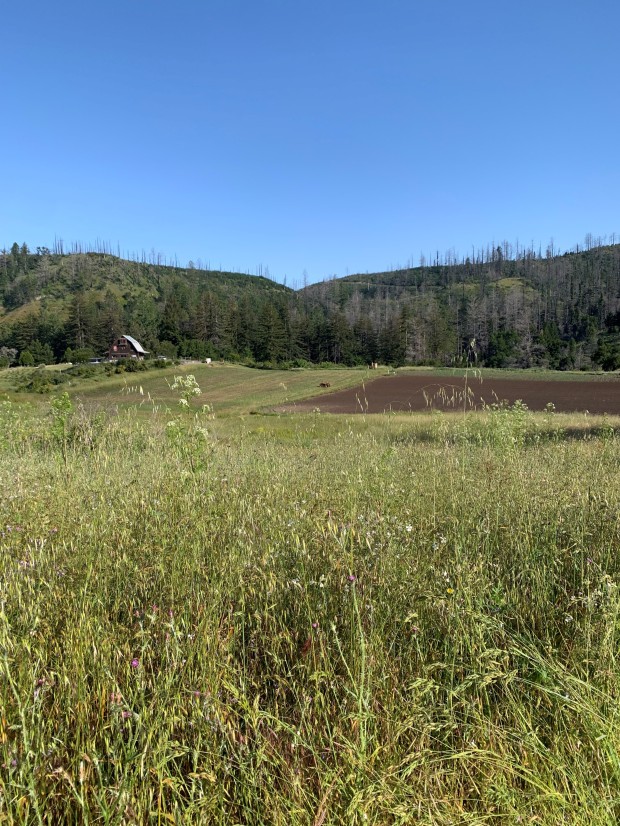
Bolting grasses dry from the tops and from the bottom. The tallest grasses turn tawny above still-green fields. The grassy understory is browning, too. A gust carries dust clouds away from the road and across the fields. Despite the drying, overall a lush green prevails. Big bushy oaks shimmer life above pulsing green fields. The morning warmth massages a sweet perfume from the grass, which changes with the drying day to the scent of dusty pollen. Middays have become quite warm, though sometimes breezy. Cheerful bird solos continue right through the day.

Birds in Air

The afternoon breeze carries soaring red-tailed hawks, loudly screaming, one following the other in broad circles, high across the sky. The ravens, too, enjoy soaring on the wind but more in long arcs from one side of the farm to the other, loudly beating their wings and furtively glancing about for something to scrounge. Something startles a flock of band tailed pigeons, and they take flight but not so high in the sky, making for one patch of trees, then suddenly veering to another. One pigeon isn’t paying attention, gets too far ahead of the others, which have turned for another destination; it panics and wheels about, making lots of strong and rapid wing beats to catch up to its family.  The standard number of pigeons is 14, but the flock was 30 for a brief bit…some apparently were just passing through. The regular flock patrols the walnut trees hoping for ripening catkins which will shortly make them fat and happy. I’m not sure what keeps them fed in the meanwhile- there doesn’t seem to be much to eat for those big birds.

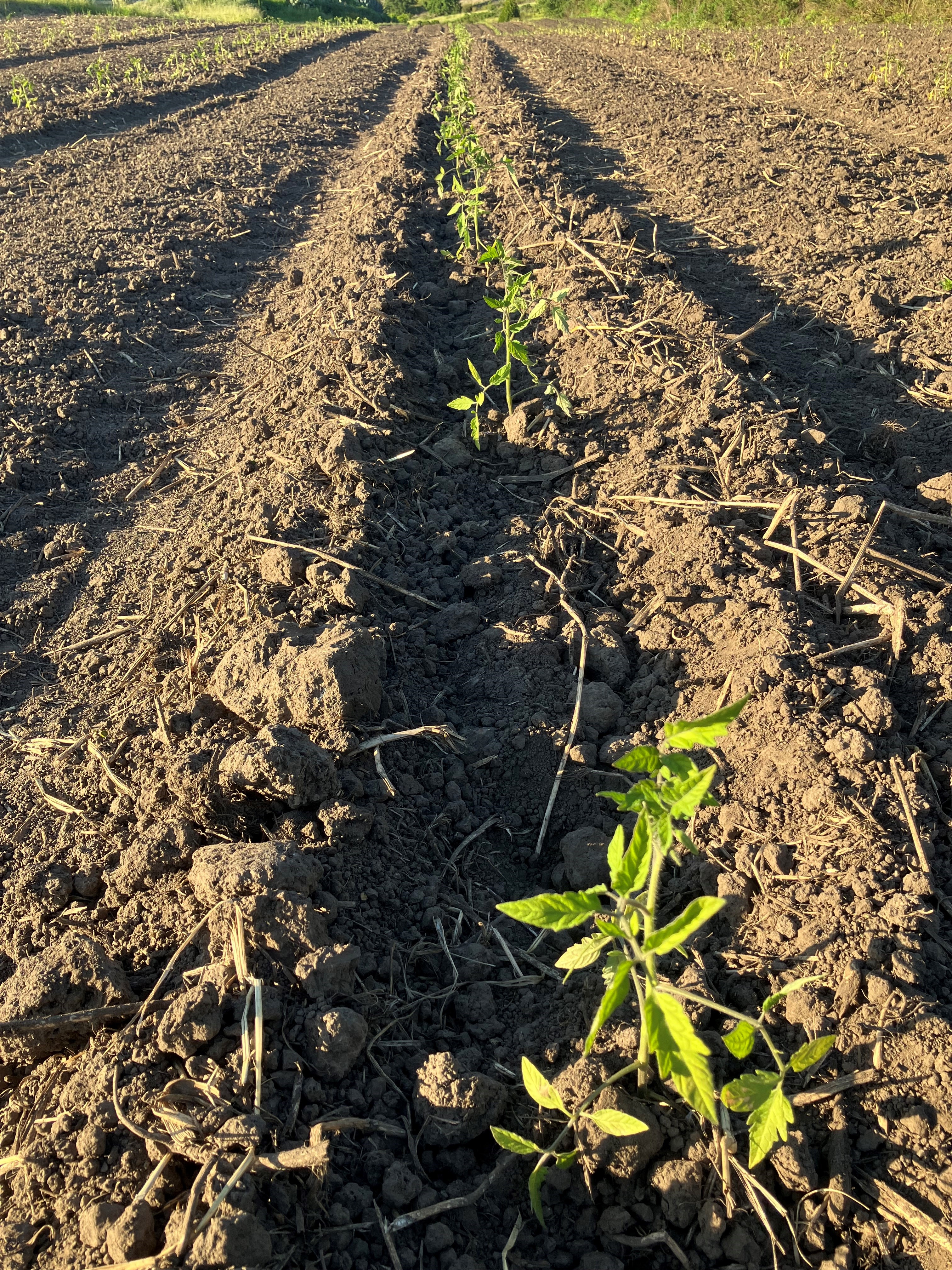
Molino Creek Farm’s Dryfarmed Tomatoes – Just planted this week

Planting

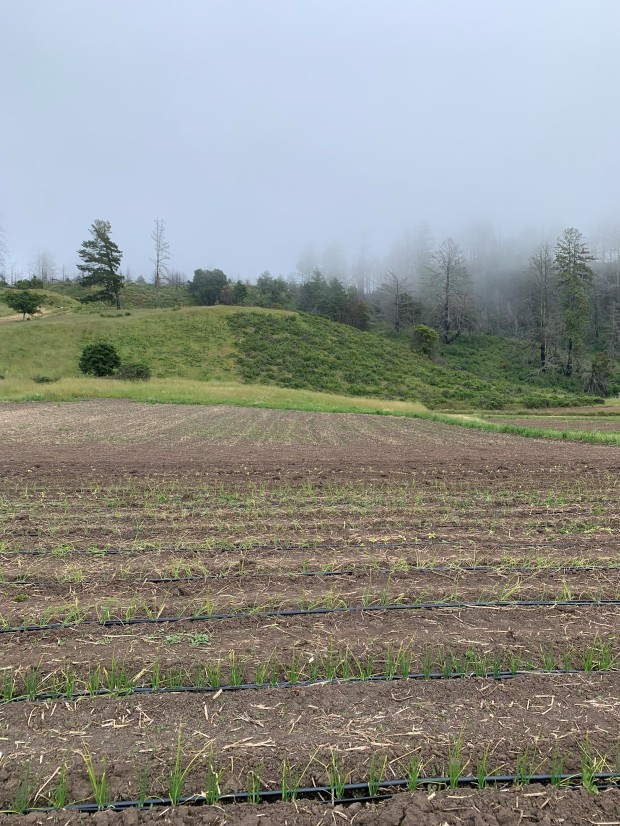
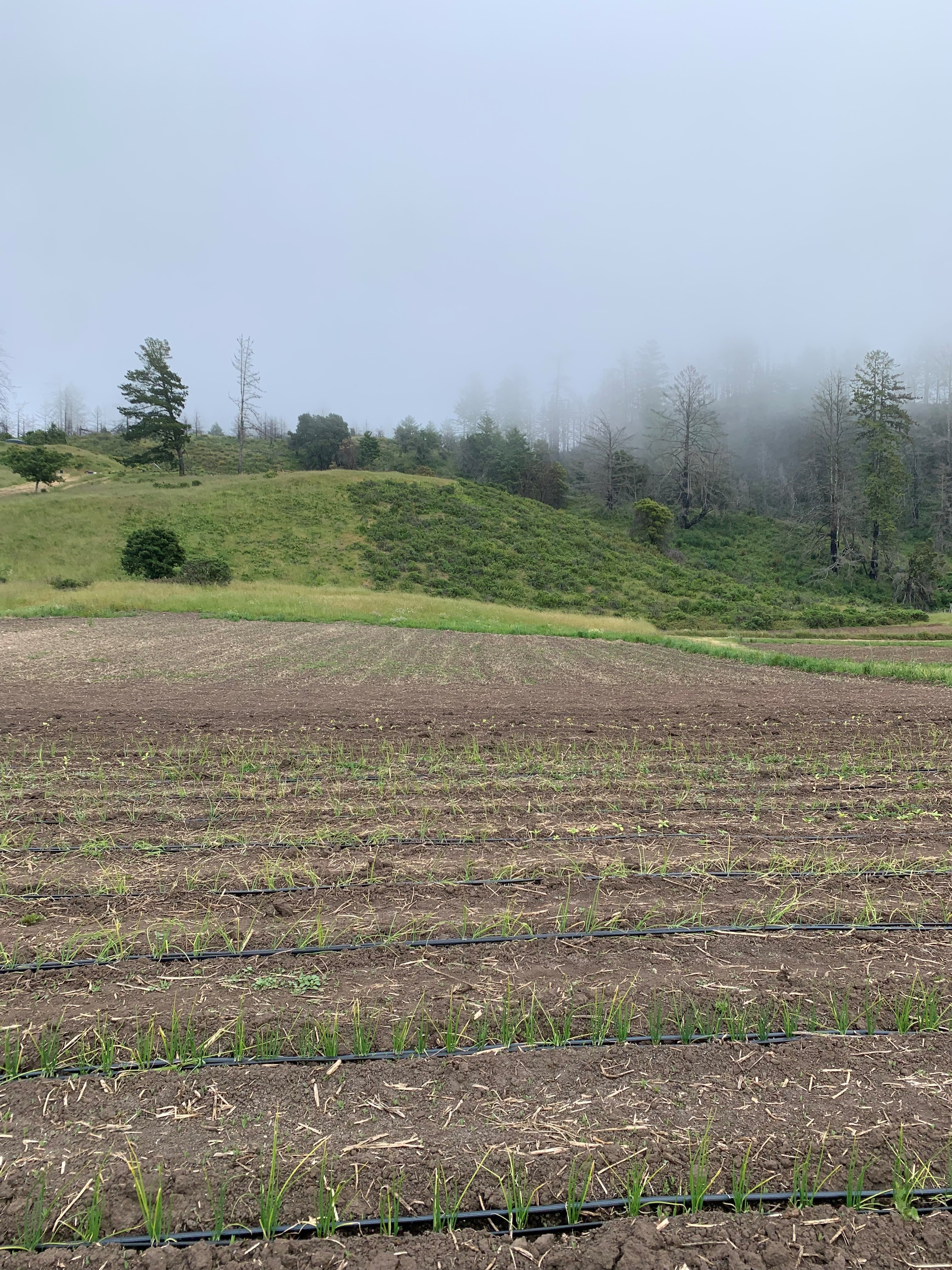
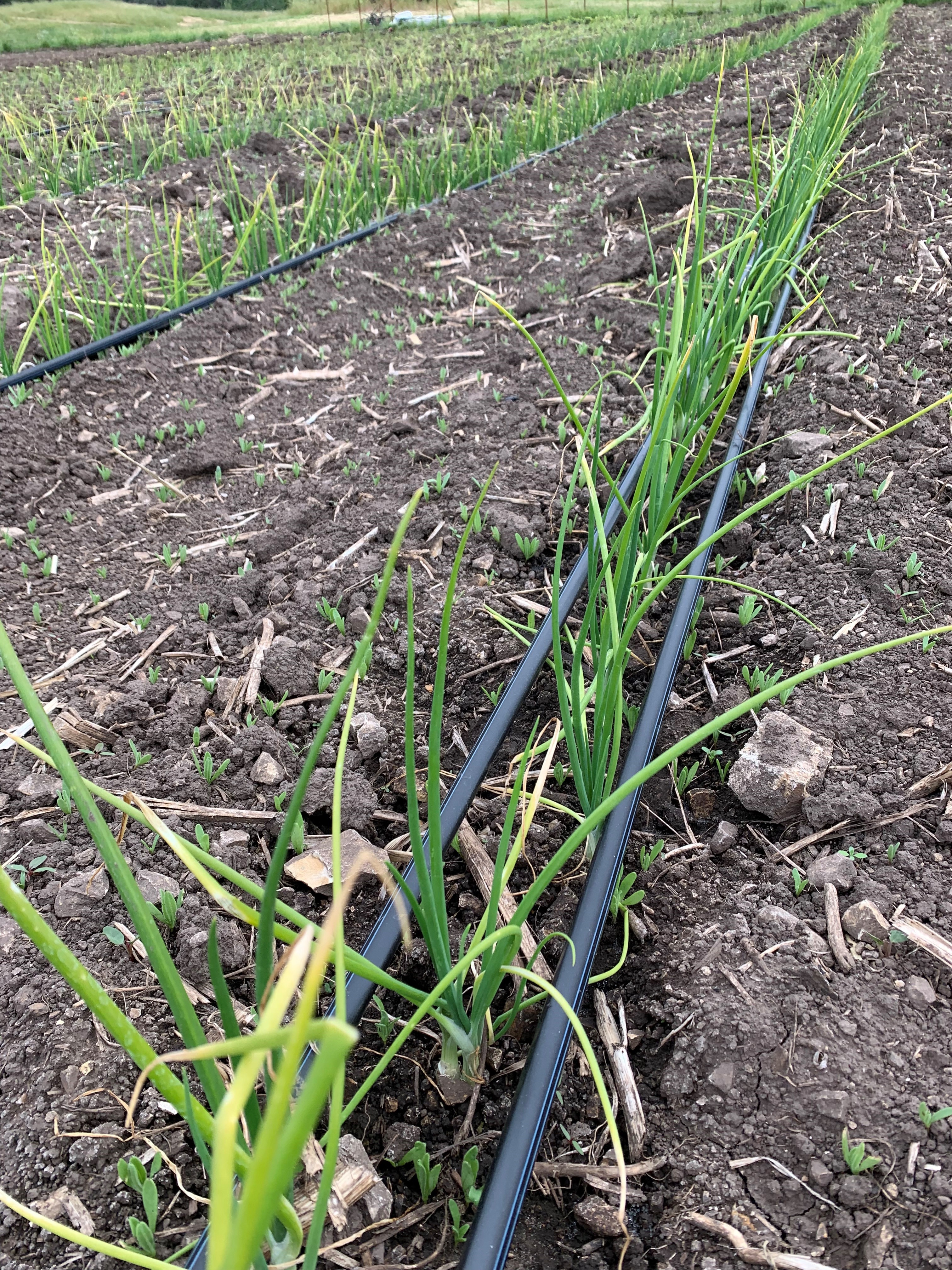
Bodhi and Judy have been planting the summer crops. Long rows of tomato seedlings are settling in nicely, in less than a week already overcoming transplant shock with perky new leaves facing skyward. Succulent leaves of freshly planted onions contrast greatly with the deep brown soil, poking up from row after freshly planted row. Green crop seedlings are hard to see in the broad swaths of brown, tilled soil, striped in rows of tractor tire tracks.

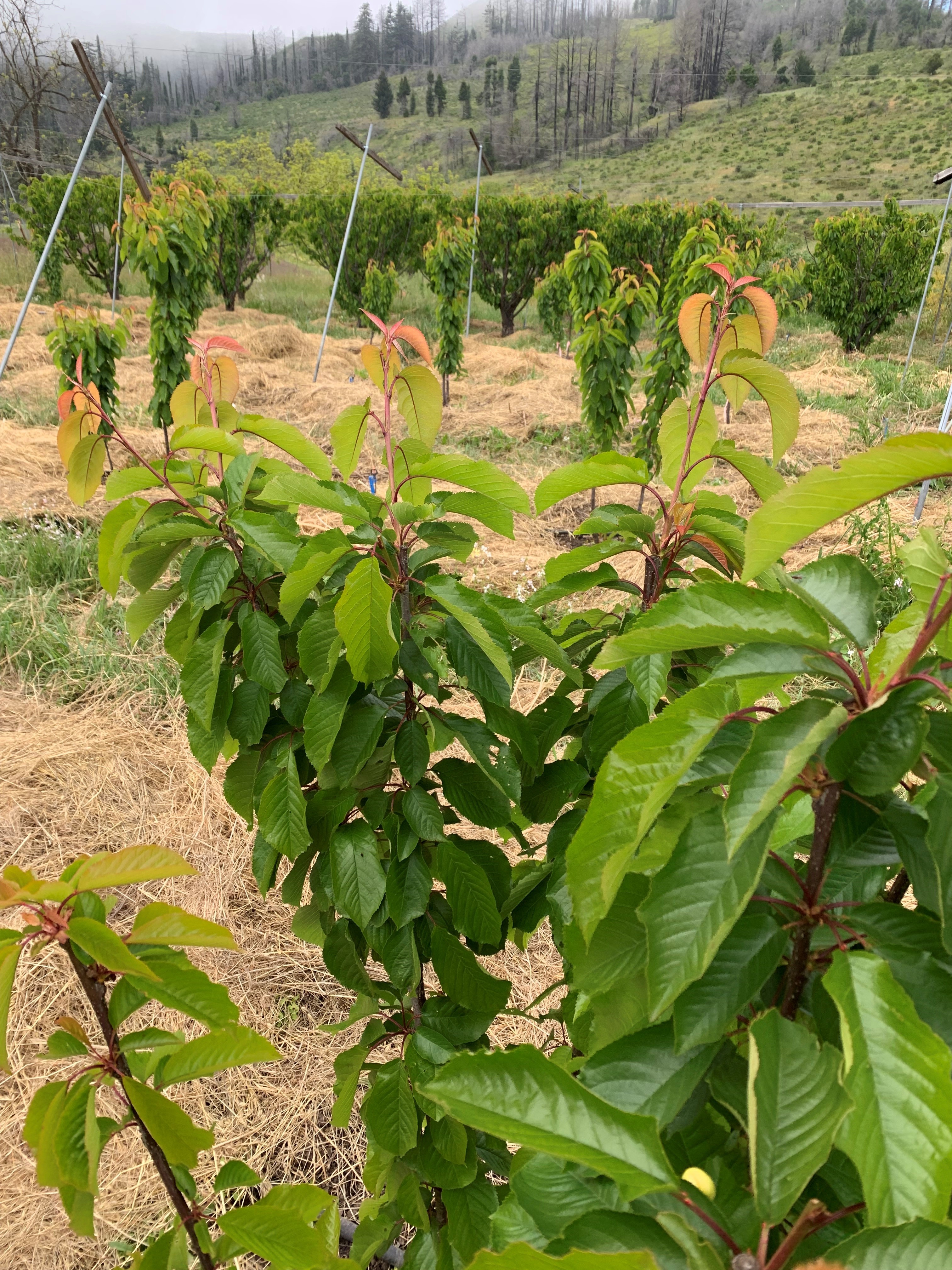
Lapins Cherry Trees – Thanks, Drake Bialecki for the grafting!

Peak Bloom

The orchards are in peak bloom. Though the cherries are just a bit past peak, on average the various varieties of other fruit trees make for the most floriferous moment in orchard bloom. With so many flowers, the trees have created a thick blanket of pink across the hillsides. The avocado spring is more subtle, but still their masses of tiny yellow-green flowers overshadow both the broad, old green leaves and the emerging spikes of purple-bronze leaflets. I was pleased to find honeybees on the avocado flower clusters today- the first time the hive has turned its attention to this essential service. Peak bloom, however it appears, is beautiful, the blossom parade a constant show of dancing pollinators one type arriving after the next. As the day progresses, the afternoon warmth waves clouds of ecstatic perfume into the aisles. Gradually, the day cools and the scent changes back to grass and mold and dew.

Two Dog Farm Chardonnay – SPRING!

Evening

The light fails and great horned owls glide silently out of the tall trees on the canyon edge, across the farm fields. They perch on fence posts and trees closer to the rodent-filled grasses and weeds. When the sun disappears behind the ridge, the evening turns quickly colder. As the setting sun finishes raking the higher hillsides with its golden glow, we retreat home for sweaters and wool hats. Chores demand further outdoor time until the light completely fails, now at almost half past eight. Burr! It turns cold with the darkness and gets chillier all night. Recently, it got down to 44F by dawn. Some fruit trees long for hundreds of chill hours, leafing out only after arriving at their total: their clocks are still gathering those hours, and the (shortening) cold nights keep them snoozing and gathering strength for their (eventual) leafy season.

Sky lupine and purple needlegrass on one of the Farm’s ridges
Bicolor lupine and more on a knoll on the Farm

Wild Flowers

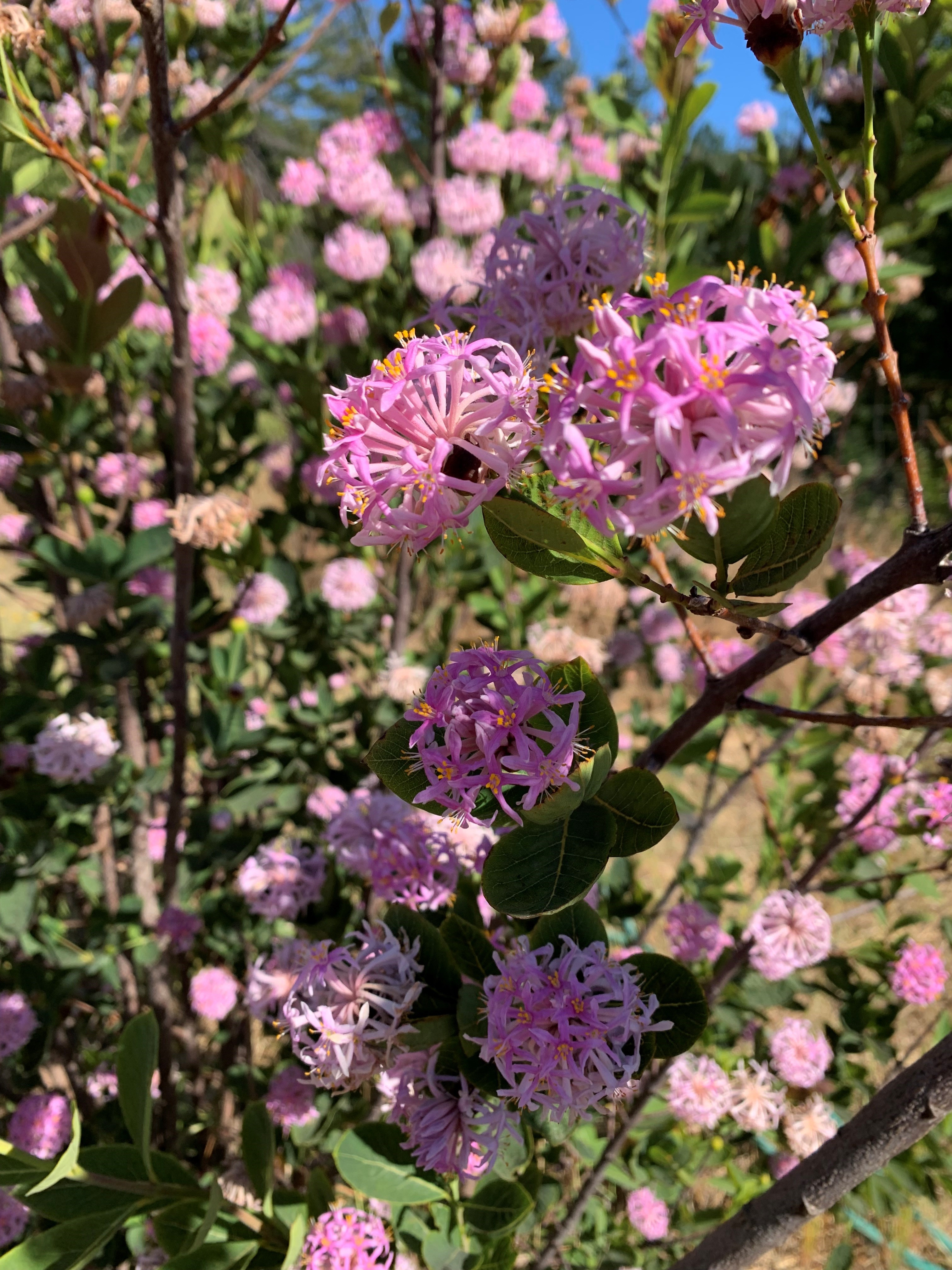
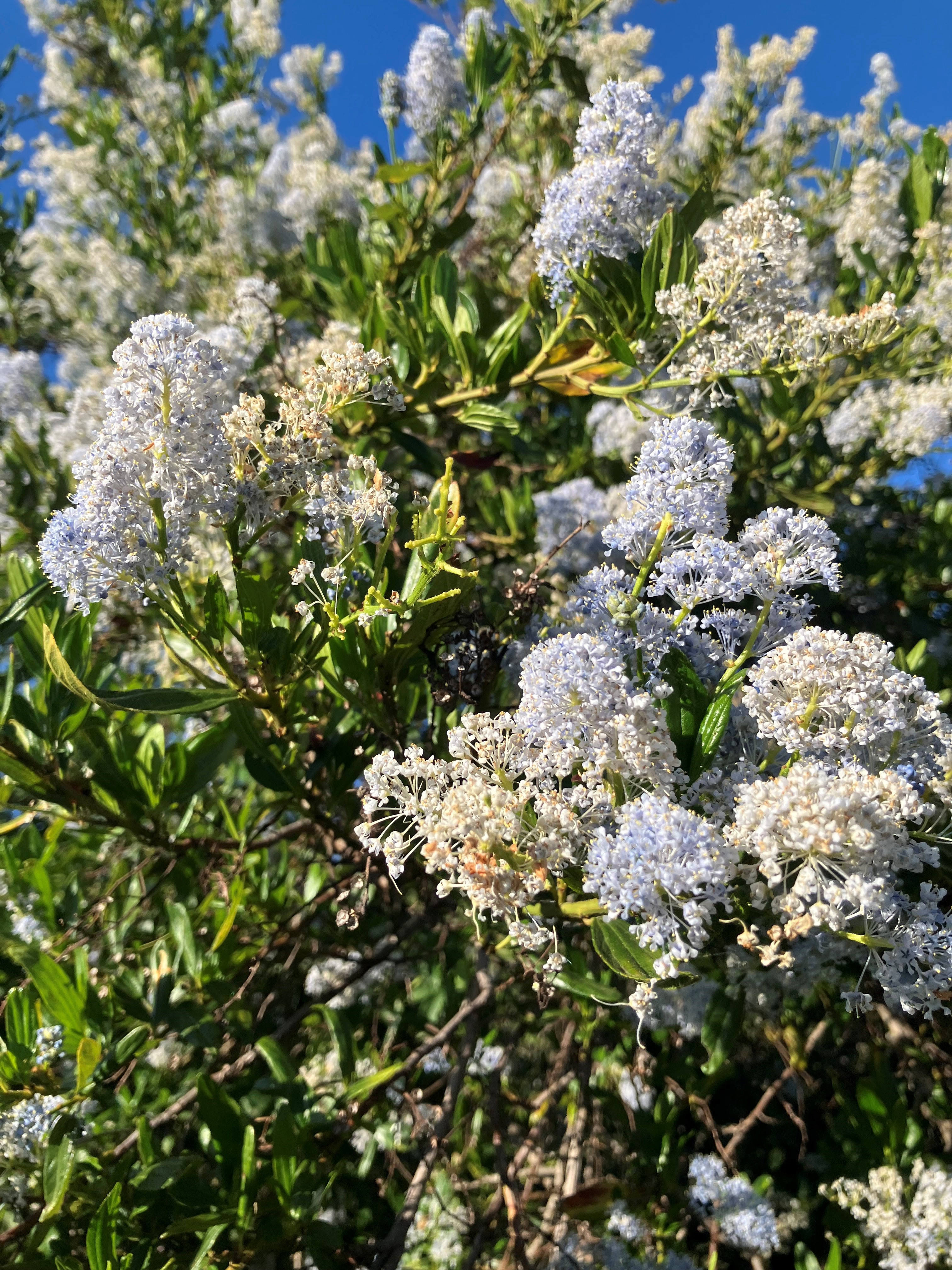
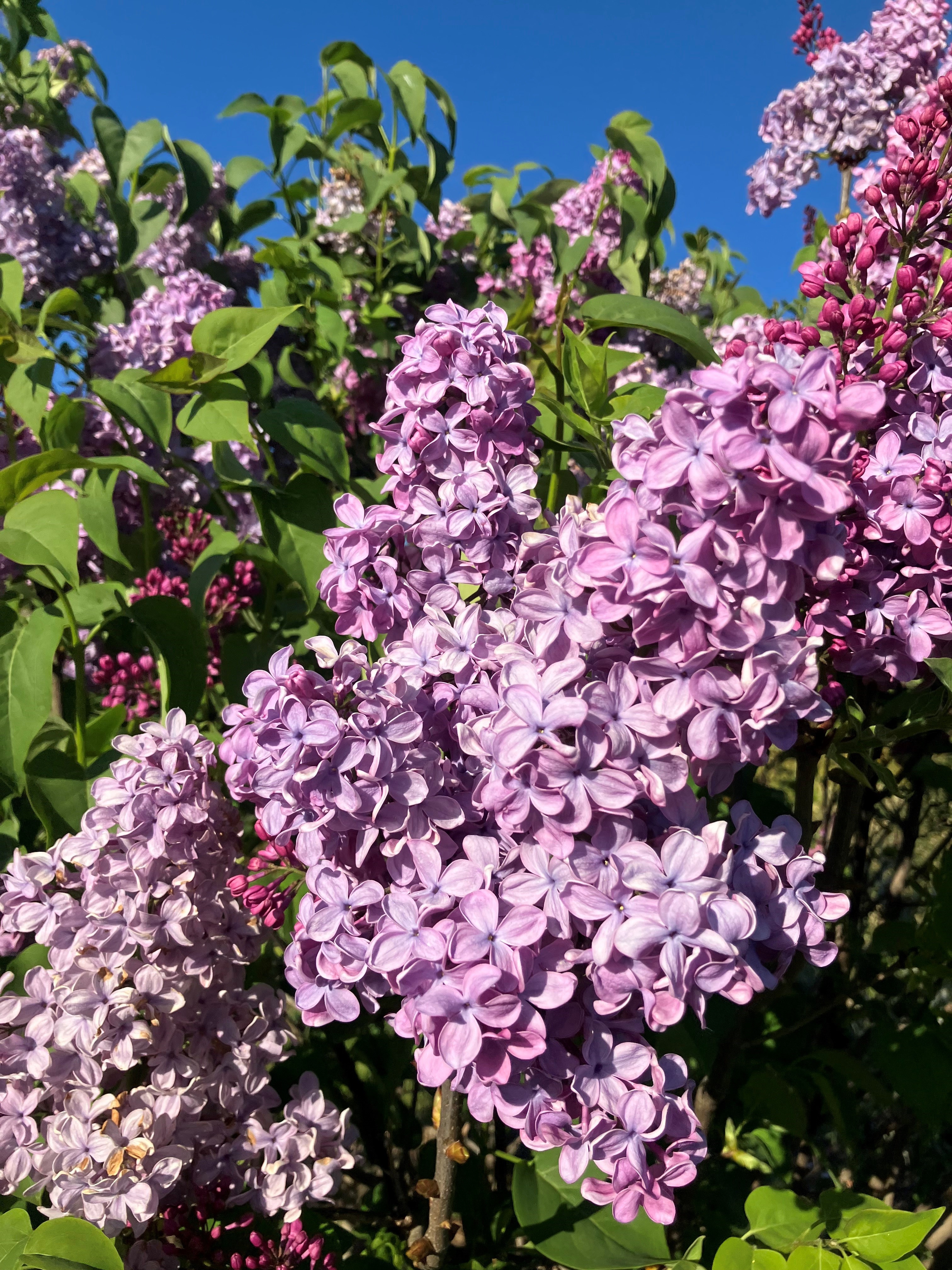
The wildlands are blooming spring. Two types of lupine, the big and the small, as well as poppy, tarplant, blue eyed grass, vetch, and purple sanicle have burst into flower and paint big patches with crazy color mixes and fascinating patterns. In the forest, white starburst panicles of fat false Solomon’s seal and the simpler four petals of purple-white milk maids brighten road cuts above Molino Creek Farm. More than anything, miles of the fire-following shrub California lilac throw rafts and sprays of pale blue blossoms, drowning out their shiny green leaves. The scent of this blueblossom is heady and sweet, but only faintly like the more-sweet perfume of the old-world traditional lilac which also has much more showy flowers.

California lilac
Old World Lilac

An Unusual Dreariness of Spring

Drizzle and fog surprised us this past week as dew-covered wildflowers blossomed, buried in tall soggy grass. The weather forecasters had said it would be sunny, but something changed and suddenly the outlook went to partly, and then mostly, cloudy. Gusts blew tiny misty droplets against the windows. Trees caught the mist, making showers in rings, illustrating ‘driplines’ on the previously dusty roads.

Drying

But the mist and drizzle were not enough. The soil is drying. The 2 inches of late rain two weeks ago can no longer forestall the normal drying of our Mediterranean summer. A day of stiff, dry winds from the north wicked away the moister 2” down into the soil and the drying keeps reaching deeper. The long days keep the plant transpiration pumps pumping. The prairies won’t be green much longer. The orchard trees need water starting now.

Eye Hurtingly Beautiful

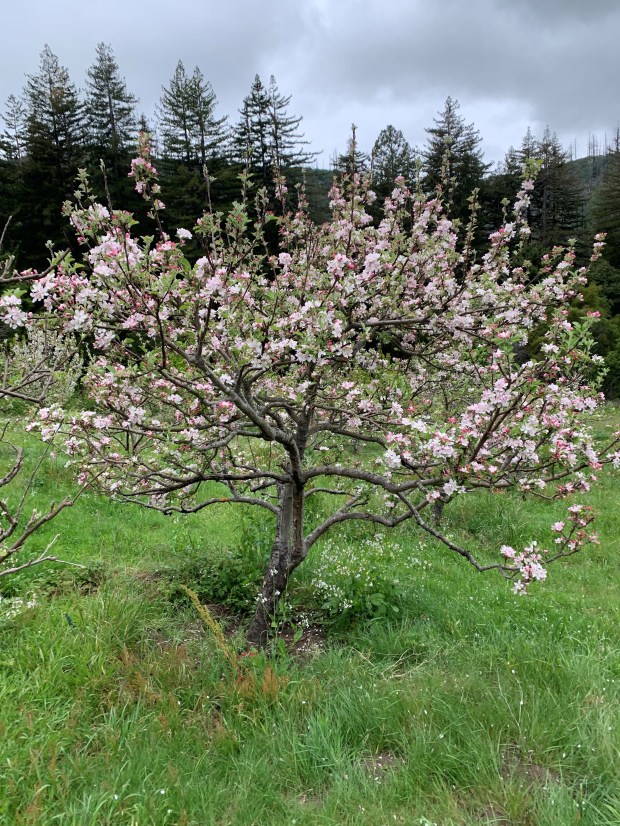
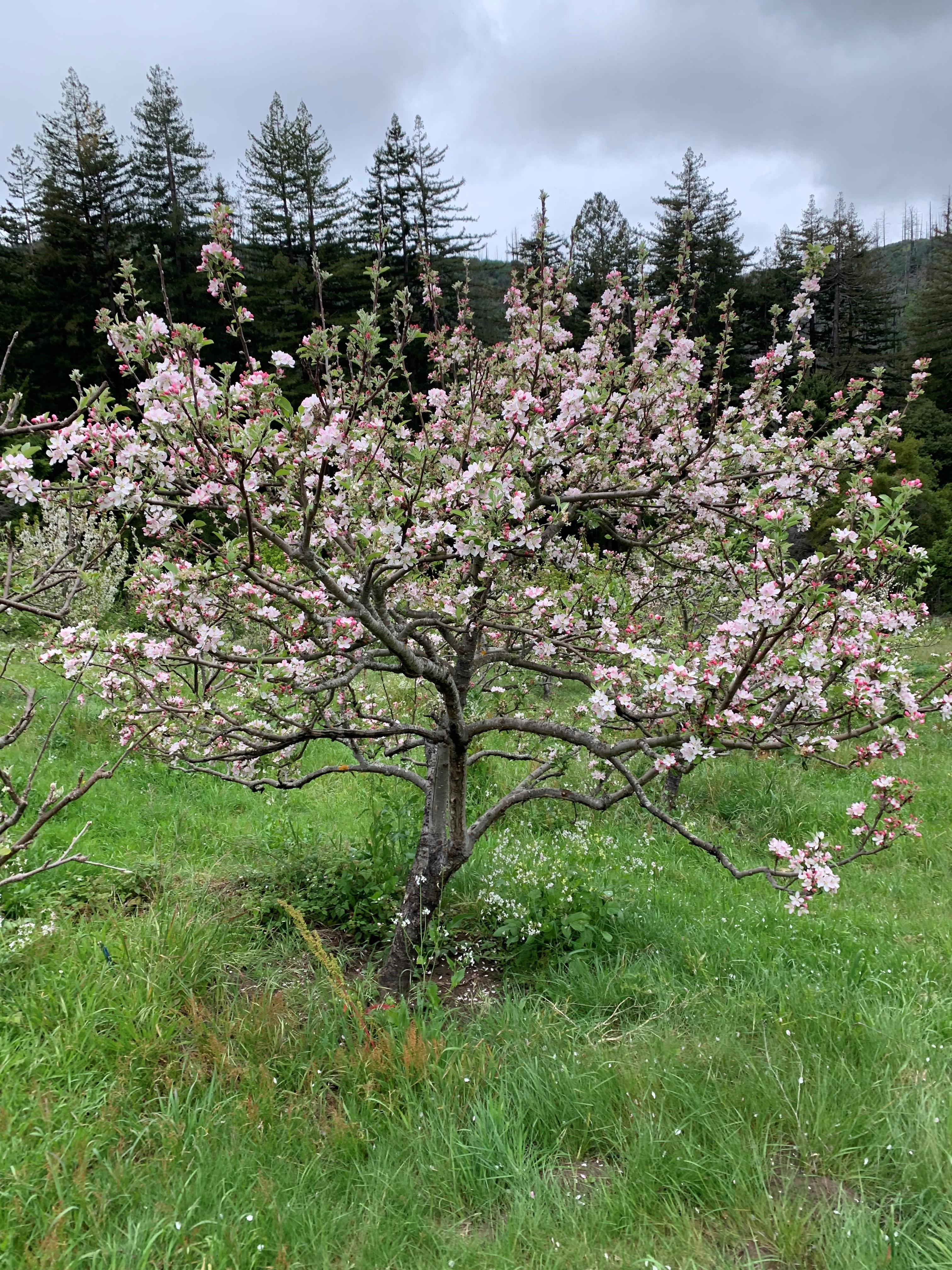
The flowers bursting forth in the apple orchard are stunning. Artists! Ganderers! It is time to bask in the dizziness that only a grove full of apple blossoms can impart. Sauntering around the farm, I take what I expect will be the normal short tangential turn into the apple orchard. Soon, I am stumbling around, not paying enough attention to footing, going from tree to tree, from one palette of pink and white and red blossoms to another, slightly more white or slightly more pink…some petals more lush, some clusters more diffuse…some flowers displayed in widely spaced massive shelf platforms…others arranged in small, tightly spaced clusters of polka-dot-like puffs for long distances along branches. Petals falling like snow on the breeze. Pale green points of new leaves poke forth from buds. Lush grass and flowers in understory tufts. Bees, hummingbirds, and flocks of tiny peeping juncos dart and dance with the beauty. An hour later, driven out by the dwindling daylight, I emerge from the orchard bedazzled and grinning from the ‘short tangent’ of my evening walk.

Soil Fields

In stark contrast to the orchard full of life are acres of brown, tilled ground. Life there is under the surface among clod and crumb where worms and millipedes and a million tinier things wriggle and crawl. It is cool and damp below the plowed surface where no plant now grows. We conserve a winter of rain by making the top foot of soil into mulch, and it takes a lot of turns of the tractor to make that happen. And so we set the stage where the drama of dry farming tomatoes is starting to take place.

First Tomato Day

The greenhouse grown tomato seedlings are tall and lanky and so take delicate hands to carefully place them in holes dug deep through the loose, tractor worked ground. The first seedlings went in the ground today, April 24, 2024! There are so many more plants to nestle into their homes. The big empty fields fill slowly, thousands of deep knee bends, hours of meditative labor, months before getting any income from this year’s crop. Such is the gamble and the hope.

Our First Ground Squirrel

Ground squirrels have been spreading across the landscape. They probably were here before and probably were effectively poisoned out when poisoning the landscape was in vogue. A single ground squirrel bounds across the road into various hiding places down by the big walnut tree many times a day, seen by many people. This squirrel is a keystone species for our prairies, making deep burrows that are critical for other creatures to make it through the hot, dry summer, and through fires, too. Burrowing owls need those holes for nests. Golden eagles’ and badgers’ favorite food is ground squirrels. Ground squirrel burrow complexes also may assist with groundwater recharge. The squirrels make habitat for wildflowers as they graze down invasive grasses. Bubonic plague is ubiquitous in ground squirrel populations, too! And, they undermine houses and roads with those burrows. Farmers and ranchers think of ground squirrels as pests for eating their crops. What are we to do with this first explorer of an astronaut squirrel?

The Individuality of Trees

Just as every apple tree has character, the live oaks too show individuality. We are fortunate to have several groves of live oaks on the farm that survived the 2020 wildfire. One grove thrived because we had mowed around it and then were vigilant with wetting them with fire hoses when the fire raged – it was too close to the barn and other buildings to allow it to burn. The various trees of this grove are displaying the range of traits typical of coast live oaks. New leaves are flushing: these ‘evergreen’ oaks nevertheless mostly replace last year’s leaves around now. The fresh leaves are emerging at different times and in different shades of green, depending on the individual tree. Some are already in bloom, long pollen bearing tassels waving in the wind. Other trees haven’t shown any blossoms yet at all. The lush new growth is forming densely green, bushy canopies, These deep-rooted trees will continue to be that kind of vibrantly alive for a few more months…long after the grass has dried brown.

Lupines!

Each year, as a result of our careful stewardship, we get more and more sky lupines. This year is the biggest year yet. Patches of sky lupines are mostly mixed with California poppies. There is something so very right about the mix of wide-petaled, fiery orange poppy flowers mixed with lines and waves of spikes of whorled blue-and-white lupine flowers. It hasn’t yet been warm and still long enough to get the grape bubble gum scent clouds emanating from the lupine patches. Between these fields of wildflowers and the orchards full of blossoming trees, the bees have lots of choices. We are glad they are getting enough food to grow big families on our farm, a haven for pollinators.

Misty Stillness

After work it is time to walk around the farm, legs swishing through soaking grass. Each one I touch lets loose a shower and, lightened, the stems straighten for a bit until more mist collects. Where I walk today and where I walked yesterday will remain evident for weeks: tall, lax vegetation flattened and so fat with moisture as to be unable to get back upright. Above the tall boots my pants still get wet; the grass is 3’ high. The mist muffles sound like snow, and it is very still. The moist chill has hushed the birds, the only sounds my feet and the dripping of a million drops.

Native brome grass and poppy, laden with moisture

Composting Fields

The brief drying and warmth allowed everyone a chance to mow and till, but there was still not enough time. Some fields got more thoroughly tilled than others. A sweetish funk of rotting cover crop hangs in the air near turned up earth. Topsy turvy pieces of cover crop stick out of the mud, the finer leaves and stems melting into mush. The tiny pieces of ground up punk will enrich the soil, hold moisture, feed microorganisms, and nutrify plants. “Green manure.”

Freshly tilled, ‘Pepper Field’

Standing Crop

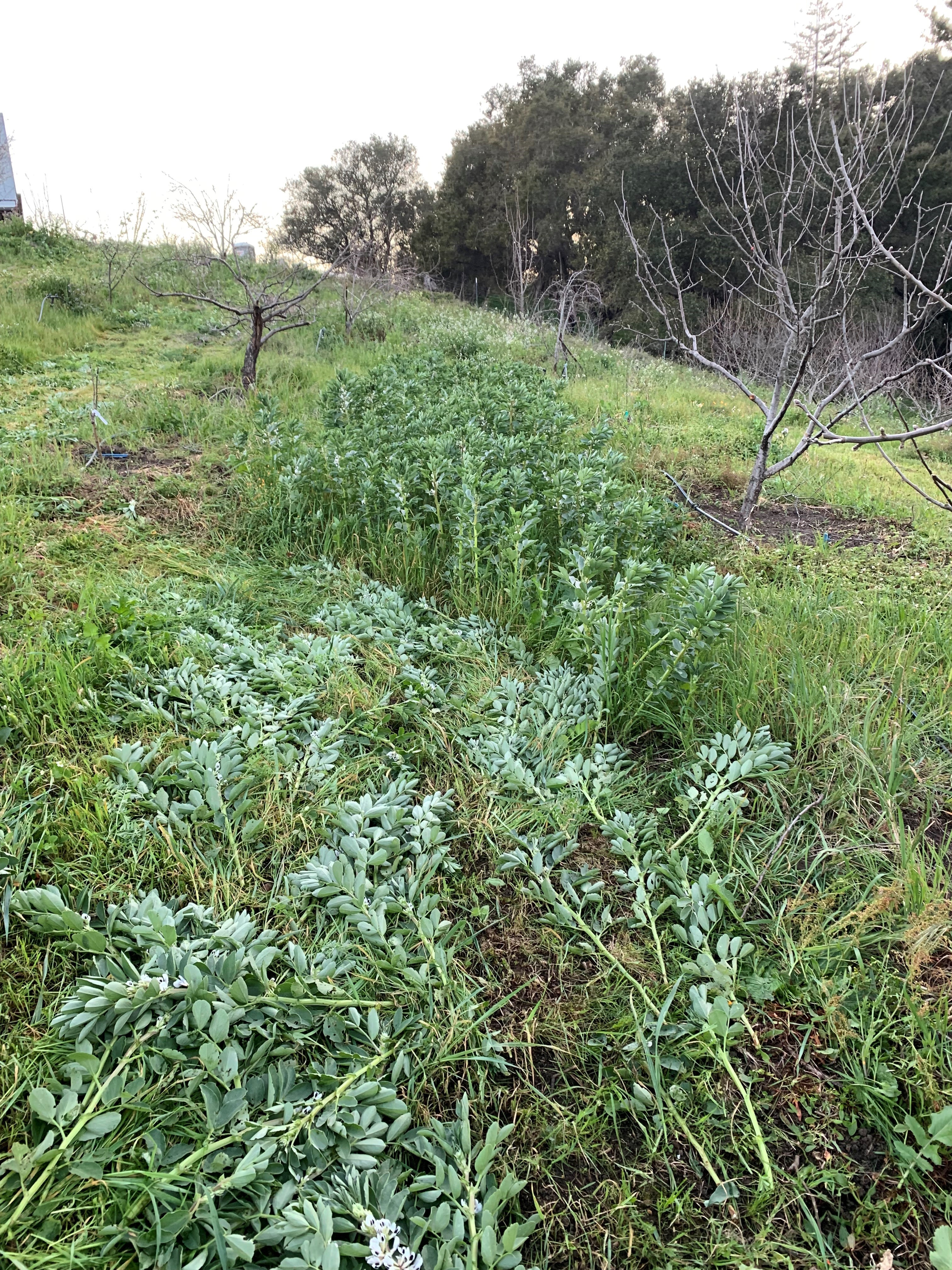
In the orchards, the cover crop gets cut but we don’t till. This year, in the poorer soiled areas between trees, I ran the flail or mulching mower, grinding up the cover crop to feed the soil right where it grew. Where the fava beans are towering taller, it’s the dance with the sickle bar mower, cutting the tall plants, which fall in rows to dry and then get raked as mulch under the trees.

I keep the orchard mower regularly running not just for exercise but to ‘keep up’ with re-growth. It is nice to get March rains after the cover crop is cut. The ongoing moisture allows the soil to digest the shed off nitrogen rich cover crop roots and make that food available to wakening trees. It is becoming critical to mow the last of the fava beans, but there is never enough time. The Avocado Bowl and Cherry Hill cover crops are going to be 4’ tall soon, thousands of flowers feeding hummingbirds and bumblebees. I hate to deprive those friends of their nectar.

A sea of fava beans (and vetch!) surrounding the Avocado Bowl

Cherry Buds Swelling

The cherry trees are about to flower. Buds are showing color and the sleek red bark is taught from running sap. It is the last moment to observe the bare tree architecture and envision summer pruning. The old, fire-damaged trees are hanging in and the ones that died, root sprouts grafted, hold lots of promise to become more tree-like this year. The piles of grass mulch the Orchardistas hauled and stacked last June have almost entirely melted away but not too soon: there are few weeds where those mulch piles sat at the beginning of winter.

Lapins cherry buds nearly bursting
Old, fire damaged cherry trees (left) and the sprouted Colt rootstock grafted (right)

Native Wildflower Spring

The Community Orchardists not only steward trees but also the mulch fields, some of which are becoming amazing and beautiful native grasslands. Molino Creek Farm was a hay farm in the early 1900’s. It still makes fine hay and those hayfields are alive with many flowers and lots of wildlife action.

Our farm has a curious pattern of shallow-soiled knolls surrounded by pockets of deep soil. The rolling landscape provides for diversity in crops and native habitats. It seems that cutting hay (at the ‘right’ time) and hauling it to the trees as mulch has helped wildflowers proliferate. We are at the onset of poppy spring and two types of lupines are soon to glow. After that, rafts of tiny tarplants will flash yellow each morning. The brome grass has already started and will keep producing seeds at the end of waving graceful arched stems, towering over the wildflowers. Blackbirds march noisily across these fields in lines, scaring up the bugs that find feast in grassland diversity. A giant mound indicates gopher action, a few seedling poppies germinating on the fresh, moist soil. Networks of pathways and open burrow entrances means voles are active. Deeper, bigger holes with fresh claw marks – coyotes at work digging up furry late-night dinners in the hay fields. Where we don’t collect and manage for hay, those fallow fields are humpy with thatch and scattered with shrubs and poison hemlock: a different type of habitat…one which we hope we can muster new energy to manage. More orchards- and more need for mulch…the fate lies with the capacity of Community Orchardists.

Poppy, brome, bicolor lupine and madia- cutting hay creates knoll diversity!

Pulsing into the Dry Season

This is the hardest-work season for the farm. Everything needs doing, and it needs doing all at once: mowing, tilling, planting, pruning, burning, weeding. It’s a race. We’re racing to keep the fields mowed before the birds invest in nests amongst the tall, inviting cover crops. A tractor changes from a purr to a rattle or a high screaming whine: oops! It broke. Backup tractors and backup tools come out- there’s not time to fix things! We chase the weeds and cover crops, tractor-chopping them into little pieces before they set seed.

New Farmer!

Its Bodhi Grace’s first year actively farming at Molino Creek Farm as he takes the helm of the big fading orange, old Kubota tractor: back and forth, back and forth. We manage to have two generations as members of the Collective: what a celebration! Go Bodhi! His infectious smile cheers us all. Good posture on the tractor seat, he rocks out with music through headphones that somehow manage above the din of the tractor mowing. For the first time, the tractor has a big colorful umbrella for shade.

Mowing the Fava Bean Cover Crop in the Old Apple Orchard

Drying, Tilling

The fields are nearly mowed, but still things resprout until the soil gets turned. We poke at the ground to make sure its not too wet to till as we don’t want to compact the soil and we don’t want the drag behind disc to churn up big mud clumps. A couple of weeks of dry warmth and already the mower throws up a few puffs of pale brown dust from the shallow-soiled portion of a field.

Birdsong

Spring’s bird songs have flourish, notes elongated and fancier than wintertime conversational peeps. The first male barn swallows returned last Saturday night, greatly changing both the soundscape and the visual show. Now, fence posts and rooflines emit the swallows’ metallic squeaks and burbling. Crisscrossing the sky, jetting swallow silhouettes grab attention mostly because of the absence of many months. The swallow women were weeks behind the guys last spring; I’ll count this time.

Bluebird’s flashy blues and finch’s purple reds are especially vibrant with breeding plumage. Beaks agape, heads thrown back, song sparrows furiously belt out long and complex solos from atop the tallest white-flowering radishes. Are they proclaiming nesting territory, or are they just celebrating the longer days and the finally warm sun? It has been a long, wet, cool, blustery winter. The unusually poor weather undoubtedly claimed lives.

Late Winter Harvest

Even this time of year, there’s a harvest going on: citrus! Each day presents a few more ripe fruit from the 250 pound harvest of seedless, somewhat surprisingly sweet Persian limes. These limes are yellow-when-ripe, and that is surprising to many. We’ll first distribute to the Community Orchardists and then to Two Dog Farm, who take them to market or to their chef who jars delicious lime marmalade.

Oranges, too, are coming ripe. Navels, Velencias, day by day a little sweeter, a little more juicy.

Sun to Rain

The week’s dry heatwave will break the day after tomorrow and the world will transform for many days to clouds and drip. Mist will blow across the fresh-mowed fields and showers will soak the already thirsting ground. Puddles will fill for already longed-for bird baths, and the newts will march once more, moving towards creek or grassy tunnel system.

An Unknown Bee Visits Flowering Currant, a hedgerow plant at Molino Creek Farm

Bees

Petals close and nectar slows with cooler, cloudy weather. Bumble bees will be hungry. Flowering patches and warm days create quite a buzz. I’m a newfound bee watcher and notice a new bee every few days; today, it was loudly buzzing, honeybee-sized, gray, furry bees… shy and furtive, and very fast. The first bees of spring are still around- giant bumblebees either gracefully bopping between flowers or klutzily fumbling in the grass, seeking burrows for raising brood.

We hope you enjoy the emerging spring.

-this post simultaneously made on Molino Creek Farm’s website

Rainsong from Creek and Cloud

It has been blowing and blustery with so much rain that the ground is oozing and bubbling, and newfound springs are pouring from gopher holes across the entire landscape. The creeks do more than murmur: they rush and shout. The ocean has been loudly roaring with unfathomably massive waves, more foam showing than water. People tire of no sun, but all are thankful for the rain, we will perhaps never again complain of rain…lucky us for the wetness, for hydration of the ground, moistening of the forest duff, the slicking of the rocks and mud, and the paddling of the 11 ring necked ducks across Lake Molino.

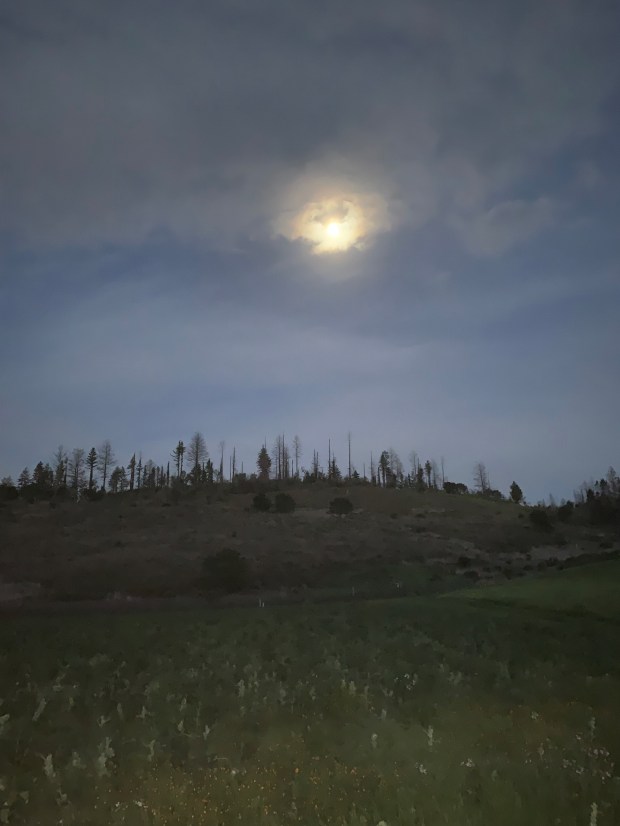
An enlarging moon rises above Molino Creek Farm and some of its cover-cropped fields

Moon Growth

Last night, the cloud cover slackened, and the moon was as bright as the sun has been for many days. Moonglow shining through drizzly fog. Owls hooting. Deciduous trees awaken even at night, the quickening of sap, the fattening of buds.

Dazzling Green

We all this sprinter. The trees are bare and the grass is turning Electric Green. The meadows around Molino will get 6’ tall this spring, if we let them. In the past week, in the aisles between the orchard trees and the margins of the farm fields the grass doubled to 2’ tall. It has become unbearably wet to trod off trail or road, shoes and pant legs quickly soaked, even when it hasn’t rained for hours (rare).

Sprinter- the trees are still bare, but the grass is turning electric green

Flowers Unfurling

The first orchard trees are in bloom – the first plums are a’flowerin’. The quince bushes aren’t far behind. The orchard understory is thick with 2’ tall (!) someplaces lush cover crop: fava beans, oats, and vetch. The wide, blue-green fava bean leaves are lush and heavy, nodding as the first white flowers emerge in whorls along the stems. Under the trees, the Iberian comfrey is in full bloom, tempting the bumble bees, preparing them for the Big Bloom when we really need them. Borage, native strawberries, and weedy radish are also offering nectar in the understory. Sprinter – a time for the vibrancy and lushness of the herbaceous world.

Pile It Up

There’s not much going on with the farming, but the Molino folks have been ‘at it’ with land management. We’re not quite done burning all the biomass we piled up this last and the prior year, but we’re close. Fourteen piles ate up lots of stuff into relatively nothing, doing work at the same time. We made the burn piles on top of brush that we didn’t want, so the stumps were thermically removed, saving future work. Often, these piles went through both weekend days with shifts of energetic people tending and adding to them. Each branch we torch is one less to add to the future wildfire, and we work apace to make the farm more fire safe with the understanding that next summer could challenge us once again with an uncontrolled inferno. Meanwhile, we get soaked in the rain while the bonfires steam our clothes dry and keep us warm.

The ridge has fewer trees: dozens fell in the 75mph winds a few weeks back

Chores

We can no longer rest. Although the short, dark, wet days still make us lazy, we must awake and enliven and get to work. After a 2-year hiatus, the meadow voles are back- good news for the riddance of gophers but bad news for the sweet bark of the young trees. Time to make bare the area around young tree trunks- the only way to keep the voles at bay. Also, many young trees pitched sideways must be propped. And…The Pruning! The Grafting! The Planting! Wow, is it ever time to catch up.

-this post simultaneously published at Molino Creek Farm’s website

Season’s End

Now newts arise from dry grassland tunnels wetted by fresh winter rain,

ecstatic, star-guided, stretching towards far away ponds.

Now dust washes from every needle and leaf.

Wind gusts. Torrents. Then blue sky.

Nights dominate – deep rest, many dreams.

Now owl hoots with raindrop percussion –

raindrops, millions, each with its own tone.

Sharp snares – bouncing splashes explode from waxy madrone leaves.

Muffled droplets sink silently through softened turf.

The Molino Community Orchard, so loved…now prepared for a resting winter

Crop fields tilled and rested.

Brown, crumbly, bared soil,

winter seeds, absorbing.

2 Dog Farm’s dryfarmed butternut squash, culls, got tilled in this week

Now the rumbling, crashing, hissing roar,

musical hum of waves.

Reverberating waves echoing notes like distant Tuvan throat singing.

Now the wind howls.

Centipedes, pill bugs, beetles,

burrow deeper into the wetting duff.

Leaves shake loose, settle, sheltering myriad ground critters.

White, yellow, brown…fine fungal roots spawn through the complex of soil and leaflitter salad,

buttons, parasols push and unfold.

Banana slugs slither trailing tracks, silver mucous crossing leaves, clearing algae off dank windows, slime traversing the furry, rough bark plates of redwoods.

Sun rises after storm.

Vast glittering sparkles shine and twinkle across the landscape.

Celebration of rain,

so begins a new season of growth.

So begins the long dark wet muddy winter.

The last of Molino Creek Farm’s dryfarmed tomatoes have been tilled in.

Rest Impending

The sun grows distant, already so far South, days so brief. Rain has moistened everywhere. Fall is sweeping the farm, triggering bright leaf colors, tree-by-tree, each evening stroll revealing new tones in new places.

The ground blushes newly green from the previous expanse of dark brown soil or gray aged thatch. Millions of seeds germinated on the much-anticipated first significant rainfall this past week. Pairs of many-patterned leaves unfurl from different types of flower seeds while single first grass leaves poke straight up.

More wetting storms are approaching, pushing southward from the distant northern horizon. Beautiful clouds appear, sometimes a skyfull of feathery patterns, other times ominous heavy gray huge pillows. Layers of clouds above oceanward fog are often accentuated by sparkling orange pulses in between them at sunset.

Muffled Song

As the winter approaches, birds become more quiet, their songs more concise. Bird-eating hawks swoop and wheel, frightening seed- and seedling-fattened flocks. Silent spells with no song signals hawk. The consistent whispered squeaks and chirps suggest hawk absence as groups of quail, sparrows, and juncos slowly emerge from cover, pecking up thousands of tasty sprouts; their favorites are abundant: clovers, filaree, medic, lupine, poppy, wild lettuce, and dock. Full bills, filling tummies, hunger satisfied peaceful birds prepare for long stormy wet nights. Each evening at sundown, flocks huddle together in dense clusters surrounded by protective thick tree or shrub canopies. They have already negotiated safe roost locations and even their individual places in the rows along branches. There are a few squabbles at dusk in the roost locations as some on the edges realize disadvantages of their relegated positions. By dark, they have become politely quiet and still.

Tree nest woven over compost-strewn soil makes for cozy beds for the coming winter

Tucking in the Trees

As orchard leaves begin to fall, we prepare tree beds for the long slumber. Last weekend, Community Orchardists hauled and spread the final compost and then the last windrows of dried hay. Energetic tree keepers filled and then hauled bucket after bucket scattering compost/worm castings in the understory of each tree. Following them, skilled pitchfork wielding orchardists pitched, piled, and sculpted neat circular hay nests surrounding young trees. Winter snacks and cozy blankets for our tree friends.

Stone fruit fall color

Nodding Off, Colorfully

As the trees approach their sleep, leaves brighten then drop. Cherry tree leaves are turning orange-to-red, starting on the sunnier sides of each tree and day by day progressing onto the northern side of the canopy. Apricot, aprium, plums and pluots echo those cherry leaf reds but tend more orange to yellow. Apple tree fall color extends well into winter, slowly unfolding many shades of yellow through February in an extended fall. Most leaf colors change fast and fall quickly, splashing rings of color bright in circles on the ground beneath brief spells of brightness dancing across the orchard among the high held branches.

The place of deer beds and rustling

The Rustling

We were unable to mow every corner of the farm and in some places the dried grass and wildflowers formed thick dry swards. Deer paths wend into these stands. Following these wildlife trails, we find hidden clusters of mashed down straw – cozy deer beds. The breezes sing high schwews on the ridges with more of a full, wooing noise in the nearer conifers, but these tall dry grassy areas make scratchy, rustling noises in the winds at the onset of each storm. The deer thank us for leaving them some dense cover to shield them from the chilly gales through the dark nights.

Fuji apples held ripe while leaves change color

The Last of the Fruit

Tomato vines whither after rain; winter squash vines long spent, fruit curing; later season apples grow sweeter and crispier with the cool nights. We feel lucky again to find a ripe tomato among the melting vines. Weeds will soon occlude the deliquescent reddish fruit and then all will be tilled and cover cropped.

Molino Creek Farm’s wilting dry farmed tomatoes, slain by rain

Two Dog Farm is boxing and curing the bountiful dry farmed winter squash crop, and colorful squash still brighten the fields.

2 Dog Farm’s last dry farmed winter squash, waiting to be gathered.

Fuji apples are the last bigger harvest in the orchard. We will gather the last of the apples over the next week and press the last of the culls into the final cider of the season. Much of the orchard has had a final mowing, the harrow scratching in bell beans is close at hand.

Emerging New Tree Characteristics: a dance between species

Sunsets and Quickening Evenings

The sun speeds quickly towards the west and evenings pass suddenly to night. One moment, the beautiful array at sunset tinges the hills and the next moment colors wash and fade to gray, stars winking into sight until the night sky reveals vast constellations. There is a moment in this transition to night when my attention is drawn to the silhouettes of trees, revealing new characteristics of long familiar friends. Brushy oaks dance on the edge of regal, posturing clusters of redwoods. Then they disappear, overcome by the majesty of night.

simultaneously published at Molino Creek Farm’s website

Rein of Seeds

Of all the phenomenon of Fall, seeds rein. Just as humans become silent around the table as they dig in, mouths full of the bounty, so have the non-human animals across the fields and forests surrounding Molino Creek Farm. A pale blue scrub jay appears on a high perch, its beak pried wide, holding a huge acorn. It dives to a patch of grass, furtively glancing about to assure no one is watching, and buries the acorn, no pause and it’s off for the next. Our normally squawky friends are quite busy with their oak harvest, back and forth, planting hundreds each day. It is not a great acorn crop year, so the competition is high.

The tiny goldfinches disperse like confetti in small flocks, alighting in field margins or scrubby areas to harvest the oil-rich seeds of thistles, prickly lettuce, and tarplants. Their songs, too, are muted, chatter replaced by dainty beak-seed-cracking.

Just one of the many nice views on the road into Molino Creek Farm

Redwoods

Fall in the wooded canyon means redwoods shedding needle-branches and a rain of seeds from newly opened, small cones. Recent gusts broke loose short sections of the outermost branches from redwood trees. Thin-stemmed branch tips are mostly needles, which are regularly shed this time of year and carpet trails and roads. Even ‘evergreen’ trees shed needles at regular intervals, each species with its own season. And so, the forest floor transforms from last year’s now dark duff to a light, red-brown coating of fresh redwood litter. Walking our Molino Creek Canyon trail now creates a crunchy, crackly sound. On a recent walk, I glanced down to appreciate the redwood fall and saw many redwood seeds sprinkled between the scattered needle branches. A heavy breeze swayed the trees back and forth over me and in all directions, and the air was suddenly filled with redwood seeds, bigger than dust and thickly moving like sheets of drizzle.

Madrone

A beautiful element of our woodlands is the flesh-smooth orange-barked madrone, becoming bedecked with ripening fruit, held high in the canopies. Presented in diffuse clusters just above their large oval shiny dark green leaves, the ripening madrone berries are changing from hard and green to fleshy and bright orange-red. Band tailed pigeons and other birds are feasting, sometimes knocking the ripe fruit to the ground where mammals gobble them up. When I am lucky enough to find a grounded, deeper red fruit, I also pop it in my mouth, reveling in the sweetness, near strawberry flavor.

Walnut

The prominent black walnuts, the signature trees of the farm, are turning lemon yellow and dropping ripe nuts with a plunking noise to the ground. The 2” fleshy globes roll about a bit after dropping from the trees, settling in the grass or, more evidently, on road surfaces. The sound of tires used to be the scritch of gravel but is now accentuated with the resonance of the rubber drum when a run-over tough walnut pops and gets crushed into the road. Ravens and juncos line the roadside fence awaiting the freshly exposed juicy, oily, tasty nutmeat that is announced by the tire drum “poing.”

One day, we’ll make olive oil again, but it will take a lot of catch-up maintenance

Pome Pome, Pome-Pome!

The fruit that we eat (and drink) is rolling off the trees in delicious piles and buckets and boxes and carts. We are more than 2,000 pounds into the 4,000 pound harvest, down from last year. Nothing goes to waste. There are very rare instances when someone doesn’t pick up a really gooey apple from the orchard floor. Hygiene is in high swing with the worst orchard trash heading to the weed suppression wildlife feast buffet. The deer, rabbits, quail and coyotes take turns at the castings: nothing lasts more than a few days. The last tractor bucket of culled apples, 200+ pounds, was mopped up in 2 days, down to bare earth.

That leaves 3 other types of apples: sale apples, take home apples, and cider apples. The most common harvester and sorter vocalization is ‘awww!’ as they realize the rarity of the perfect fruit, the choice apple that is sent to market. That’s one in 8 this year, due to the uncontrolled apple scab of the moist spring. The other 8 apples are 30:70 take home apples versus cider apples. The take home apples are sent in boxes, buckets, and bags to the growingly extensive community orchardists; they have the most minor blemishes and there are hundreds of them. Our working bee network has been making their own juice, drying them, stewing apple (-quince) sauce, and just plain enjoying the crisp diversity of flavors from the many varieties we grow. The cider apples have a few more blemishes or even some signs of worms…the latter making work for the cider pressing party as chattering, smiling clean up crews prepare the fruit for a better juicing.

Juice!

The cider pressing last Saturday attracted 30 or so of our network, new and old pressers, taking the 500 pounds (or more) to 30 (or more) gallons of nectar – delicious juice. Much of this will become hard cider for future gatherings; many enjoyed diverse ciders from prior pressings. Most abundant fruit of this year’s press, Fuji, but also Mutsu which makes famously fine flavored juice. Mixed in here and there were true cider apples, varieties that are just starting to produce after 8 years in the ground. The cider apples add bitterness or sourness or tartness and overall complexity to the juice from what would otherwise be plainer if produced only from table apples.

The Community Orchardists sponsored a recent squeezing of fresh juice for the Pacific School in Davenport, our neighborhood! Bob Brunie schlogged the equipment and demonstrated the process to the schoolkids, some of whom were returnees and they enjoyed it a whole lot..

Bob Brunie shows off Molino Creek Farm’s Cidering Process to Pacific School kids, photo compilments of Mike Eaton

The falls’ fruit produces juice, brewed into all seasons’ mirth. With toiling gladness, we renew the stocks annually. Cycles of production and consumption – foundational in nature – quench more than mere bodily thirst, leading to deeper appreciation of Earth.

-this post also shared via Molino Creek Farm’s website, same time, same author

Falling leaves and moist winter chill

Fallen leaves blown across the forest path, under foot while walking, go “swoosh, swoosh, swoosh.” The sound of moist leaves (not crisply crunchy), an early rain and cool nights softened the landscape, removed the dust, made things gentle again. We are relaxing, slowly shedding the stress of the Fall’s potential for wildfire made more real these past many weeks by wind-carried smoke from prescribed fires across the entire state, even nearby at Wilder Ranch.  

Breezes carry in the clouds and then clear the clouds, waves after waves of clouds and then sun alternate as the dry summer plays with the wet winter, back and forth. This week, winter won with a bit of rain, shy of an inch and not yet wetting the soil more than superficially. After the rain, some sunny warmth and then the wind, fog, and another front , and it got chilly. Tuesday evening fog piled up on the other side of the prominent ridge across Molino Creek and poured over it, falling like a ghostly waterfall backlit by the evening sun. Beautiful!

Neither the rain nor the subsequent drippy fog has been enough to release the cedar-scented petrichor, much anticipated.

we do grow olives…for locals only olive oil!

Big swell, seasonal scents

Last night’s goose bump chill sent us to close the windows, put on sweaters, and some even built their first wood stove fires. And today’s cool air reminded me of how I’ve been taking the sun’s warmth for granted and how I’ll miss that deeply warm sense for a long time soon. The cool air, moisture, and gusty breezes accentuate the piney, resinous smells of redwood, Douglas fir, and coyote brush. Winds across the ocean pushed up an epic swell recently. Roaring and thumping waves reverberated across the landscape, but now there’s just a low more consistent hum. The patterns of breezes with long lulls awaken the senses, especially when it is peaceful on the farm but the trees on the ridge start talking, telling us a big gust is coming.

Feathered visitors

Geese, Canada and white fronted, are honking their melodies overhead near sundown. They are making their way to their winter grounds.

The newest birds are blackbirds, strutting around the fields in flocks, their heads moving curiously straight back and then straight forward with every stride. This evening, the light was catching the glean off the backs of a flock of Brewer’s blackbirds, reflecting the iridescent deep purple-blue of their gorgeous plumage. They let me get close but eventually alighted to show me the bicolor blackbirds in their midst. There are around 50 of this mixed flock and more may still arrive. They love to eat the grass seeds in the cover crop. They might even be anticipating it.

Other wildlife

Otherwise, the wildlife report is all about the Very Big Buck, coyotes, and chirping bright blue bluebirds. Perhaps there’s more than one Very Big Buck, but people are talking about an extraordinarily large, very impressive male deer from here to Davenport and north to Swanton. This creature stands very smart and tall with a giant set of antlers nearly 3’ across. He stood in the roadway looking intently north where he couldn’t traverse without going around the deer fence. He hesitated, looked north again, and then sauntered uphill following the fence line, somehow seemingly begrudgingly.

Nearly nightly, the coyotes sing. They aren’t doing the long musical numbers with multiple animals yipping and howling, but rather it’s a series of solos of the one coyote couple. One evening, they were calling from way up the Molino Creek canyon. Another evening, they sang right outside the window. Each night they try making some song from a different place, perhaps checking out the acoustics: the echoes are always fun.

The throaty, watery chirps of western bluebirds grace our midst. The brilliant blue flashes from the males’ zig-zaggy flights are breathtaking. There were seven birds, up a couple from last count. With that plumage, one wonders if they are considering breeding early…

The fading row crops will soon be tilled in and cover crop will grow, instead

Fall farming

We’re not quite ready to cover crop. There are still 10 days of tomatoes to harvest and the apple harvest is in full swing. The floral crisp sweet Gala apples are almost all gone; we will pick no more for market. Last weekend, we picked all the remaining Mutsu apples which had been devastated by the apple scab disease that enjoyed our late wet warm spring. Next up are the Fuji apples, and there are plenty of those! Plus, there are Golden Delicious, an underappreciated long storing apple of extraordinary flavor. In the Barn there are hundreds of pounds of culled apples that we’ll soon be juicing for cider. And so, we pick, pick, pick…sending on the perfect apples to market. Between picking spells, we spread compost and mow to prepare for harrowing in the bell bean seeds.

those rusty brown tentacles….avocado roots poking up into the loose, month-old compost!

Tentacles in the compost

The Community Orchardists have been spending the last many weeks spreading compost under many trees. Around a month ago, we spread compost under the avocados on Citrus Hill. After that little bit of rain, I noticed those avocadoes looked particularly perky and vibrantly green. So, today I pushed around the compost to see if the avocado roots had invaded it: they had! It is so curious to me that avocado trees push pointy tenacles of roots straight up, out of the soil into mulch. How do those thick pokey roots feed off the mulch? Such a mystery.

young avocado trees are growing fast!

Returning Friends

High in a fruiting apple tree, harvest bags slung over our shoulders, we stop picking to glance up the road…gravel scrunching noise…a car winding its way down the road onto the farm. A neighbor or a visitor? We narrow our eyes to see where it goes, who is returning home? Who is visiting whom? By car, wing, or scales, we welcome all sorts of friends returning to Molino Creek Farm.

A String of Celebrations

The harvest festivals have already begun. We are pressing apples with two pressings already behind us, 40 gallons of divine apple juice in freezers, refrigerators, or in carboys fermenting. Upcoming is Samhain, the midpoint between the Fall Equinox and Winter Solstice, a time when the veil grows thin separating the ancestors with those here now. We will be attentive to the shadows, echoes and whispers of those who walked and loved this place before. John Brunie used to perform the astrological calculations of the exact date and time of these sacred holidays, but he’s gone so we seek a new calendar keeper for the Farm. Thanksgiving means some leave the farm for gatherings elsewhere and others arrive, a string of quiet days, friends roaming the fields and trails sharing stories and luxuriant first rain smells. The forest floor and roads are often littered with evergreen branches at Thanksgiving, blown about by the winter’s first storm. We weave fallen boughs into circles, recognizing the cycles of time. Winter solstice lies shortly thereafter and then the Wassail brings the string of celebrations to a temporary close. We are at the threshold of gatherings a’plenty.

We regularly hire who we can to mow down acres of flammable coastal scrub

Equinox Birds

The Fall Equinox has hellos and goodbyes. We said hello to hundreds of golden crowned sparrows who returned to this place from Alaska on the very evening of the Equinox as they have done time and time again. With strong site fidelity, these birds love this place more deeply than we can ever understand. These same families, these same clans, have potentially been returning for hundreds of thousands of years to this very spot. If we peer at them enough, we can recognize individuals; they already know each of the neighbors and maybe many of our friends. The Equinox saw the flight of the barn swallows, who returned to Central and South America. They may have spent days singing goodbye, soaring one more time past their favorite trees, and then they were off. As they left, the particularly whiny sapsucker(s?) dove into the orchard from the great migration from who knows where. We need help to see how many there are: last year there were three in the family. Sapsucker is elusive and shy, requiring some focused time searching for each individual to figure out how many will be here this winter. The changing birds greatly alters the soundscape. The dominant noise in the spring and summer were the creaky whistles and laughing chatter of swallows. Now, the dominant bird noise is the golden crowned sparrows’ forlorn call, a descending set of notes that might be, ‘Oh dear me,’ repeated from every shrub and tree. What hasn’t changed is the sheer biomass of birds inhabiting the Farm. Stepping out the door still flushes 50 birds. A walk down the roads or paths creates a continuous wake of fleeing birds. Feather flutter and alarm cheeps everywhere.

Winter Waves

The sets of roaring and breaking big winter waves have returned. Lately, there has been no still peace as the reverberations of the ocean form a white noise backdrop to a cacophony of warm night crickets interspersed with bouts of hooting owls. The waves create a mist that blankets the ocean side farms, spreading a bit up the coastal canyons. When the waves are big and there’s even the gentlest onshore breeze, we can smell the fresh sea scent from the Farm, 2 miles inland and 900’ up. When the waves get really big, it seems the ground rumbles beneath our feet. These are familiar phenomena which make this seem more like home.

A view across the farm

Coyote Friends

In Spring, we saw a female and her pup coyote. She had a peculiar white line behind her shoulders, a ridge of brighter fur that stood up a little above the rest. She was lithe and wary, always on the move, never playing as so many of our wild dog friends had done before. The other day, I saw her again, following the large male neighbors had been talking about. We have a pair of coyote friends! May they find a fine place to have pups nearby and feast on the rabbits and gophers that are so common around the farm. From their scat, it looks like they are enjoying apples and tomatoes for now. The two sing many nights, a deeper growly staccato barking paired with a longer noted, high yipping song.

Fall Scenes

The cycle of seasons delivers us a quintessential peaceful Fall. Time slows. The sun very gradually sets into longer and longer nights. The hills are muted colors now, dry leaves rattling. Once tall upright golden grass has settled, askew and gray-brown. The fruit and nut trees show hints of yellow. In the forest, maples, thimbleberry, and hazelnut are dropping lemon yellow leaves, splashes of color in the shade of the towering redwood forest. Bright squash litter the Two Dog fields as their peppers turn deep red. The poison oak is still moist, only a few bright red patches on the drier shrubby sites. The sunset sky is streaked with smoke from prescribed fires, humans returning to their roots, stewarding the land once again.
The last rays of sunset from a tall spot on the farm

May you take the time to meander about, soaking up the warm fall evenings.