Fire

People for Fire

Nature around the Monterey Bay has been adjusting to changing wildfire regimes; we should expect that to continue, but how that happens is up to us in many different ways. Very recently, we are putting purposeful, good fire back onto the land. This may help restore the land while protecting human infrastructure from catastrophic damage, but there are too few projects to learn from…we must learn more!

Burning History

The Monterey Bay area has been getting hotter and drier for 20,000 years, which coincides with the era of fire-lighting humans. Laguna de las Trancas is an ancient pond that lies on a geological fault on the North Coast. Ancient ponds record the history of their place in strata. Scientists have taken sediment cores from that pond and recorded layers of pollen and volcanic ash, going back through time as the deeper sediment is older. Volcanic ash has properties that allow us to know from which volcano it originates and scientists have used various methods to chart the age of ancient volcanic eruptions. So, volcanic ash serves as milestones marking known years in the sediment’s past. This is how we know that this region changed to a much more fire-prone landscape around 12,000 years ago, consequent with the widespread archeological evidence of humans. Before that, the dominant forest trees were firs; after that, fire-adapted redwoods came to dominate. More recently, for the past 1200 years, fire scars on ancient redwoods illustrate a 4-6 year burn return interval. Indigenous people likely managed the fires sweeping frequently through redwood forests, but their fire tending of this landscape tragically ended during the genocidal colonist period. Purposeful fire has been almost entirely absent on most of this landscape for 230 years. In its place, long-interval catastrophic wildfires have caused all sorts of mayhem and loss of life.

Indigenous Pyro Management 

Oral history, written accounts at the time of colonist contact, pollen records in ponds, burn scars on ancient trees, and vegetation patterns on this landscape are things that can teach us bits about thousands of years of intentional use of fire by humans. One early written account from early Old-World colonist explorers notes that many of the meadows around Monterey Bay were burned black. We know now that without burning and/or grazing all of this region’s prairies change quickly into forests, so fire must have been maintaining meadows for a very long time, in the absence of grazing and tree-pulling by the Pleistocene megafauna. The blackened meadows hampered the progress of invading Old-World explorers because they had trouble feeding their horses, which they relied on for transport. In this case, we might contemplate the use prairie fire as self-defense, but we also know that indigenous peoples used fire to cultivate native plants that served as medicine, salad greens, grain, basket materials and much more.

Good Fire Emerging Now

California’s governor has set a goal of using prescribed fire on a half million acres a year. It has been 1/10th of that for too long but indigenous folks probably burned more like 3 million acres (or more) a year previously.  

Most people do not see the natural landscape as their pharmacy, grocery store, or fibershed, but many people look to the hills and know the danger of wildfire. Purposeful, good fire is starting to address this last concern and one day will help people reunite with the land in those other ways. 

I was recently fortunate to interact with the Central Coast Prescribed Burn Association as they purposefully burned big patches of brush on Santa Cruz County’s North Coast. After much planning and preparation, forty volunteers gathered one Saturday to light big patches of hillside on fire. The goal was to restore coastal prairie and to train more wildland fire lighters in order to expand our region’s capacity to reintroduce fire on the landscape. These volunteer groups are growing around the world, including here in California. We have learned that their work is essential for everyone’s safety, and for the stewardship of the land, which provides us so much: water, timber, livestock, recreation, clean air, food, health, and solace.

Value-Added Fire

As we realize the importance of good fire in natural lands, entrepreneurs are envisioning profit. People are cashing in on the wildfire crisis by managing wildland fuels to power electrical generators. Some are seeing a potential to power electrical land stewardship equipment with generators fired by the fuel that equipment is removing. Others are already hauling wildland fuels to generation facilities supplying regions in Northern California with power. New technology allows burning wildland fuels to create charcoal, which is added to agricultural areas improving water holding capacity and maybe even soil fertility. That carbon is captured to mitigate greenhouse gas emissions. The machines are called ‘carbonators’ and they use thousands of gallons of water a day to keep them cool, which is the trick to making charcoal.

There was a lull for a bit, fand now there’s a rejuvenation of wood fired heaters for rural homes. The new woodstoves are engineered to be very efficient with very low air particulate output. Greenhouse gas (carbon) output is from recently grown wood rather than ancient fossil fuels.

The Future?

I envision a time when robots harvest biomass for fuel, farming every square inch of Planet Earth for energy. Imagine micro technology…ant-sized robots that prune plants in cultivated landscapes and natural areas, hauling bits of biomass back to larger robots which haul it to biomass energy production facilities…one big conveyor belt of fuel stolen from natural food webs. I do not like that future, but it seems inevitable in our ‘civilized’ world. How far off is that future? Without another way of managing wildfire, the day of that scenario is coming closer, quickly. The alternative is for more people to be involved with community groups managing purposeful, good fire across large areas, like the Monterey Bay region.

Your Role

Each of us has a role in helping Good Fire gain traction. Start with getting an air filter for your house: you need one anyway for wildfire smoke. Air pollution is a great concern, even with purposeful fires. The recent burning exercise I was a part of was delayed a week because of air quality concerns, and that week delay caused a bunch of issues with people’s schedules, wasted catering food, etc. If we can all be better prepared for smoke, it will be easier to get Good Fire on the ground. If you are able, help to figure out a way to get air filters to folks who can’t afford them!

We can’t expand Good Fire unless everyone feels safe in their homes. So, helping people get safe in their homes is an important thing. And, even when those homes are well secured against wildfire, people still need to be talked to, shown Good Fire, and helped to shed their fears. We can try to experience purposeful fire and see how well it is managed and then tell those stories to more people: there is a lot of fear about even professionally managed, purposeful fire.

The last thing I think more people might do: volunteer to help! The Prescribed Burn Associations could use more volunteers. Learning to manage purposeful fire is hard work and many people are needed.

-this column originally posted in the very informative weekly blog, BrattonOnline – please subscribe, like, and spread the word!

Fire

The advent of human control of fire was a pivotal moment in the development of our species. Human use of fire has been changing in some ways and remains steady in others. Recently, it seems that the use of fire is becoming more and more remote for more and more people. Is that good or bad? Join me for a few moments to examine the state of human relationship with fire.

In the millennia of humans’ past and on into our present, we have used fire for heating, cooking, pest control, trash disposal, transportation, and war as well as for the creation of food and fiber. I intend to revise this essay and welcome suggestions about other major uses for fire. Fire is a powerful tool.

Fire for Heating

Consider the evolution of using fire for heating: from the first flame to the storage of heat in stone, masonry fireplaces and chimneys, metal wood stoves, furnaces and, most recently, forced air central heating. Do I understand correctly that conversion of wood to fire for heat, even with super-efficient, clean burning woodstoves, is no longer legal for new construction in Santa Cruz County? Soon, even mountain folk will lose their expertise and familiarity with keeping their homes warm using locally produced fuel, easily produced as a land management byproduct making for improved wildfire safety.

Cooking Fires

My host gently wiggles and pushes three-foot branches, 3” in diameter into the fire to renew the steady heat beneath a tortilla-cooking comal. Smoke rushes out through the roof. Mayan peoples in Belize showed me this indoor cooking method, which is similar to that which many tropical and subtropical cultures have relied for generations. Elsewhere, grills over charcoal, “spits” turning above flames, and wood-fired ovens are other methods for fire-cooking food. Cast iron wood-fired cook stoves are antiques. I haven’t seen one used for a decade.

Have we entered a new era for cooking with fire? Can anyone confirm the rumor that gas stoves are no longer permitted with new construction? I understand that there are concerns about indoor air pollution as well as thoughts that such methods will unduly contribute to greenhouse gas emissions.

One of the last cooking fires in our region is employed by those ‘roughing it’ using portable gas-fired stoves, some of which have become ultra-lightweight and highly efficient. I would be remiss not to also mention wood-fired appropriate technology cooking units, fed by surprisingly small handfuls of branches to prepare family meals. These have been targeted to developing countries with increasing shortages of fuel wood.

Pest Control

A member of Sonoma’s Kashia Pomo tribe recently spoke to a group I was with about the importance of burning the understory of oaks for pest control. He pointed out insect holes in an empty acorn shell and noted that his ancestors would have burned the understory of oak forests to reduce this damage and improve the acorn crop. I’ve heard similar things about pine nut pest management.

How many other pests might have been once controlled by different uses of fire?

Food Production

Precluding the use of fire for pests, fire has been, and is still being, used for other aspects of food production. Tribal peoples use fire to increase productivity of seed crops. Burning releases nutrients trapped in dead vegetation into the soil, increasing plant growth. Native ryegrass and brome grass stands that are burned produce more, heavier seeds. Burning meadows increases the amount of clover and other wildflowers which serve as either salad greens or seed crops.

The principle of fire releasing nutrients for the next crop also applies to rice farmers in California. Burning rice fields was once a more common method of returning nutrients from “crop residue” to the soil. Some farmers have turned to selling rice straw or flooding fields so that waterfowl help break down crop residue.

Other fire-prepared food crops include morels, beef, and grasshoppers. Morels are especially numerous after fire-spurred nutrient release. Ranchers have long used fire to reduce the cover of unpalatable shrubs and increase herbaceous forage to benefit livestock production. Perhaps fire is still used to round up grasshoppers that are subsequently roasted and coated in chili powder and salt for a tasty, crunchy, protein-rich snack.

Fire-Grown Fiber

I haven’t encountered anyone burning for fiber production, but have a few ideas. Burning to reduce shrub invasion into grasslands would make those areas more productive for sheep, and, hence, wool (fiber) production.

Native peoples have burned various plants in various ways to increase fiber production. Around our region, hazel, willow, and iris burned in the right way would make it possible to harvest more and better fiber for cordage and basketry.

Trash Disposal

Travel in rural areas of the Americas and you’ll no doubt encounter the distinct smell of incinerating trash. Especially unctuous is the dioxin-tainted odor of burning plastic. I know of a certain gentleman who very recently was regularly burning 50 gallon oil drums of trash including plastic baby diapers, polluting an otherwise pristine area of Big Sur. I wonder how common the practice is at this moment in the USA? Burning plastic creates a very dangerous chemical called ‘dioxin’ – if you think it quaint when someone burns such trash, think again. This practice is on the rise and killing people.

Fire for Wildfire Fuel Reduction

Carefully planned pile burns or broadcast burns are increasingly being used to dispose of vegetation that would have otherwise been a fire hazard. I’ve written more about these practices in this and this essay.

Riding the Fire

Internal combustion engines burning fossil fuels, releasing ancient carbon, and powering vehicles is a leading cause of global warming in our nation. Not long ago, the hungry burning work of steam engines propelled society ‘forward,’ destroying forests for fuel, leading to California’s hardwood crisis in the late 1800’s. Quieter, fireless electric engines are a revolution at hand, but there’s a sound like distant thunder propelling people in much different ways.

War Fire

Sanctions aside, war is mainly a fiery affair. Bombs, bullets, flame throwers, and napalm are the fire-based war weapons of modern soldiers. No doubt too many of us have been exposed to media portrayals of more ancient warfare involving flaming projectiles meant to kill or destroy property. The most ‘modern’ of fiery death, atomic warfare, is too close at hand with entirely different types of flames.

Could war really be over if we wanted it enough? Let’s quell those violent flames starting by putting out those types of fires closer to home.

Fire – For Better or For Worse

Next time you light a candle, if you even do that anymore, take a moment to reflect on the use of good fire or bad fire. As humans become more distant from their roots, more unfamiliar with tools that we have long used to steward our world, it seems we need to make a greater effort to raise future generations to be comfortable using fire in the best of ways. We must also learn to turn aside from the power of less productive flames, as tempting as that power might be. Burn brightly! Burn well.

-this essay modified from the one originally published at BrattonOnline.com, a weekly blog from Bruce Bratton and team: sign up or miss out!

One Year After Our Big Fire

Since the firestorm of 2020, I’ve witnessed both the rebounding resilience of nature as well as post-fire human responses that have ranged from truly awe-inspiring to bewildering. When the fire first struck, I had a harrowing 10-day amateur-firefighting experience. I well recall the panic – and the portentous moment when toasted tanoak leaves floated down from the smoke-darkened sky. Soon thereafter, the march of head-high flames incinerated everything on our farm that we couldn’t save with just us two people and our heavy fire hoses. After the smoke and flames – and through the entire year since – there’s been so much change.

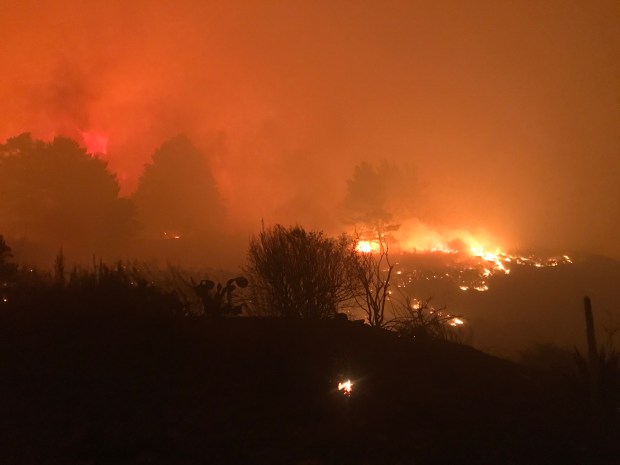
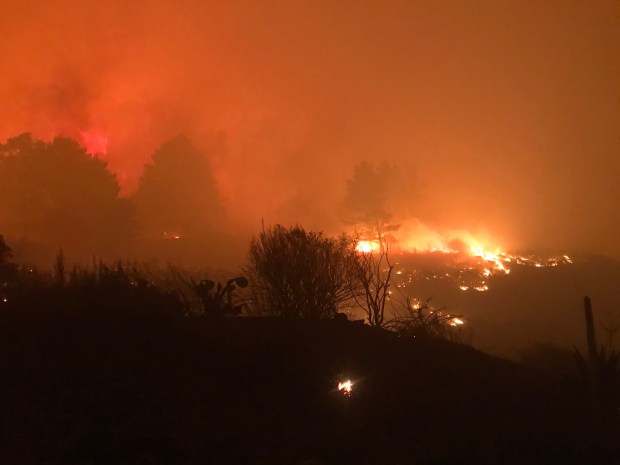
This story starts last August, when we endured three days of wilting heat. Then, a hurricane hundreds of miles south of us went rogue, splitting in two, half of it raking quickly across the length of California. I woke to that half a hurricane – a massive silver-gray cloud-wall steaming and rolling north along the coast and a 10-minute-long 70-mph wind gust accompanying devilish sheets of whole sky-enveloping lightning and unbroken thunder. Soon, lightning-ignited small fires in too-remote areas joined together into a monstrously huge and fast-moving firestorm. State firefighters could not gather resources quickly enough to fight it and called for evacuations, and all but one person escaped with their lives. Non-humans fared less well. The smoke and flames took a month to dissipate, allowing thousands of evacuees to return to what, if anything, might be left of their homes.

The fire left a landscape of blowing ash and a hundred shades of charcoal gray with sporadic patches of toasted brown vegetation and very few areas of green plants that somehow escaped the flames.

Before the fire, lush redwood forests had dripped fog onto carpets of ferns and sorrel. Under high conifer canopy, Pacific wrens whistled away the days in brilliant, wandering sunrays. Daylight transitioned into forest-hushed nights with owls hooting and woodrats rattling their fleshy tails. Those same forests, after the fire, were spires of high, blackened, tree-trunk pillars with few branches remaining. These towered over ankle-deep, white, fluffy ash and patches of crunchy charcoal. All the animals were gone … many had roasted alive.

Before the fire, the ridgelines above those forests had been dense chaparral. There were millions of 10-foot-tall, lush, green pines erupting through rafts of shorter shrubs – a dazzling array of colors with resinous and sweet scents and a multitude of textures. Eleven years previous, the Lockheed Fire had burned much of this chaparral, and all this life had since rebounded. In the wake of that fire – a timebomb: criss-crossed, 6–12-inch-diameter logs from killed and gradually falling pines piled up hip-high for thousands of acres and miles around. During last year’s firestorm, those logs burned so hot they left impressions criss-crossing the hillsides, each outlined in white ash and vaporizing what little soil there was into red brick. That heat cleared ridge after ridge down to the stone we call “chalk rock,” a fractured mudstone crushing easily or making metallic, pottery-shard noises when you walk across it. For months after the fire, peering closely, nestled in piles of charred rock, you could find little fingers of burned stems and twisted fists of stump-like burls, all black, seemingly lifeless.

Among these forests and in the chaparral, people were living in neighborhoods and rural properties large and small. Since the early 1900s, neighborhoods had gradually developed, woven in between natural areas and parks set aside for redwood conservation and recreation. The fire destroyed the remote Last Chance neighborhood and badly affected other neighborhoods in the hills above Boulder Creek. The fire also tore through the Swanton community and then much of Bonny Doon. These communities contained layers of history. Generations-old families shared this landscape with the newest wave of neighbors from the wealth machine of Silicon Valley. University of California administrators and professors, along with student renters, were living alongside old hippies and back-to-the-landers of all political persuasions. There were also many blue-collar tradespeople, teachers, and retailers. This was a mixing pot of politics, perhaps with more left-leaners, and all united by a love of rural living. They found ways to be good neighbors from sharing news to clearing roads and helping newcomers figure out how to settle in comfortably with the various issues unique to this part of the Santa Cruz Mountains.

The fire burned homes new and old, whether they were owned by the super-rich or the very poor. There were dilapidated, barely habitable shacks surrounded by old cars, tattered furniture, and storage sheds with recyclables overflowing into the surrounding forest. And then there were the fancier estates – polished redwood decks, outdoor kitchens with marble countertops and brick pizza ovens, fancy hot tubs, and English gardens with statuary. These varied developments were all mixed up in the matrix of shrubs and trees, chaparral, and forest – one of the two most diverse natural landscapes of North America. The fire made the patches of human stuff into the same types of ash and waste: deep piles of charcoal and blowing nasty ash accented in places by unrecognizable twisted metal and piles of collapsed brick. New cars or old – it was hard to tell from the burned-out, fire-wasted frames. It was impossible to tell where the landscaping stopped, and the wild places began.

People’s responses to the fire were even more varied than their ways of life had been prior to the fire. During the peak of the fire and for the long period of smoldering and even longer evacuation period, the few brave and stalwart worked hard protecting their homes, their neighbors’ homes, their pets, and human friends wherever possible. On the edges of retreating flames, packs of looters swept in, stealing from houses burned and those that were spared. A standoff between the stalwart stay-behinds and looters resulted in a looter getting shot in the leg. Someone who lost nearly everything set aside some mementos at dusk, only to find them gone the next morning. A year later, strangers still lurk around the burned areas looking for stuff to steal. As if the fire itself weren’t enough.

The many who lost their homes were scattered. A few quite visible ones took up trailer homes along the highway in Davenport. Many moved to rentals or into homes with friends, adding to the crowded town. After a few, seemingly long months of waiting, the government-run cleanup started: giant machines scooping and scraping the charred piles of debris into convoys of trucks, hauling the stuff “away.” We were impatient and then happy for the efficiency, strength, and scale of this enterprise. No one asked and there was no news about where that stuff went, what the communities and land think of how we disposed of it, far away from here. After cleanup, some people sold out while others stayed put. It was a sellers’ market, but that meant those selling out faced grim realities for purchasing anything else in the area, and some were forced to leave. Slowly house trailers appeared on wrecked properties. A small fraction found the means to start rebuilding.

Between the remaining homes or the burned-up human stuff, some people (like me) were fascinated and relieved by the resilience of nature, bolstered by its ability to heal and rebound. To others, nature was too slow—they wanted a kind of speed healing and found many ways to apply Band-Aids to cover the fire’s wounds. Some know nature heals but wanted to help it along. Others had no sense of nature and acted like alien gardeners on some other planet. Others were never much at tending the land: they had never been much interested in such things. County-hired contractors hydroseeded burned building sites and surrounded them with straw bundles to contain toxic runoff. RCD employees were heroes, working ceaselessly to help stunned property owners prepare for post-fire rains, erosion, and slope failure. Meanwhile, people were tossing around native wildflower seed mixes to hopefully brighten land. Others, wanting more instant and positively perky landscapes, dug in thousands of roadside daffodil bulbs to persist and spread for centuries, a long-lasting and sad legacy spurred on by a well-meaning community leader.

Along roadsides and powerlines, orange-vested, hard-hatted officials spray-painted numbers on thousands of dead or damaged trees, and then the saws and grinders got going. Months of chainsaws and chippers whined and roared, shaking the earth and sky, filling hundreds and hundreds of trucks, hauling more stuff to yet unknown fates and destinations: “away.” People already traumatized by burn damage faced another shock as workers removed patches of forest in what was left of their yards, forever changing their historic views, removing their remaining privacy … all in the name of road or utility safety … or perhaps liability.

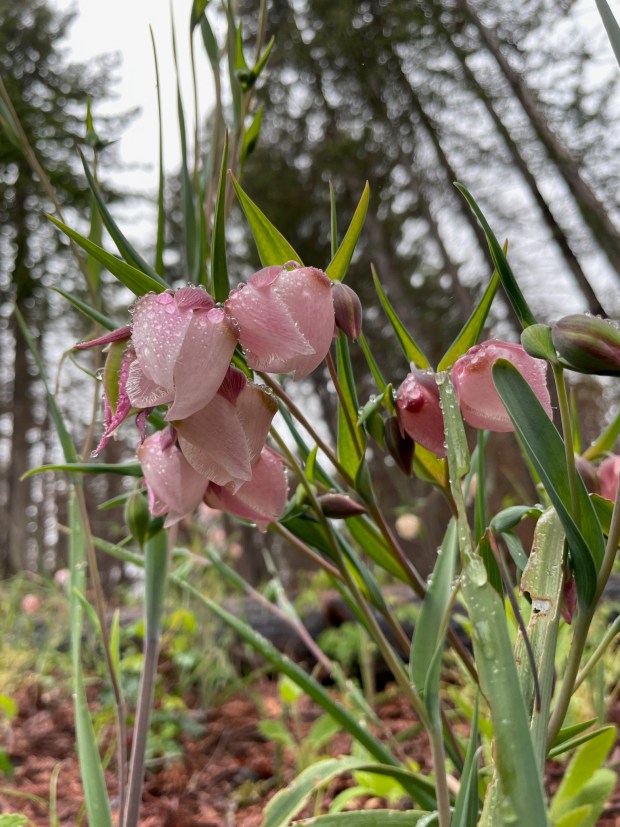
The first spring after the fire, the forest surged with life. Most redwood and oak trees that had burned resprouted. Some sprouted from their charred trunks, while others sprouted only from their bases. Understory herbs filled the spaces between the trees – twining vines, prickly thistles, and carpets of wildflowers. In many places, the forest floor was brighter than we had ever witnessed – dazzling flowers! Splashes of cream or blue iris bloomed profusely alongside extensive rafts of pale pink globe lilies. Animal life returned, too. Hungry deer shortened tanoak sprouts by the mouthful. Fish biologist “snorkel surveys” spotted surprising numbers of steelhead in the burnt and newly sun-brightened streams. Shortly after the fire, great horned owls hooted from recently cooled trees. A few more healing months and then pygmy owls also were cheerfully hooting away from the scorched forest.

The chaparral mostly rebounded, too. First there were many bush poppy sprouts…and many, tiny seedlings. Then, very slowly, the many fewer manzanita burls began pushing up sprouts. Chaparral oaks, madrones, and chinquapin joined the resprouting. In late April, the diverse fire-following flowers were starting their famous post-fire show. Massive patches of whispering bells carpeted hillsides – ferny foliage and pale-yellow bell-shaped flowers along with an odd scent that some people enjoy. An intrepid bunch of botanists I hiked with discovered a new population of small-flowered blazing star. And, we found previously undocumented areas of pink-purple stinging lupine, as well as sweetest-scented, tiny phacelia with yellow and pink flower mounds, and one new patch of the sapphire blue–flowered twining snapdragon. By midsummer, I could still walk easily through extensive areas of chaparral in the bare spots between resprouted 2-foot-tall shrubs and trees. Big patches of bright yellow bush poppies were feeding innumerable bees.

I could find only a very few pine and manzanita seedlings, so the chaparral will look a little different in the wake of this fire compared with the last fire. The cooler burning Lockheed Fire created massive thickets of knobcone pine seedlings – extending for miles outside of the fire footprint, where seeds were blown on the fire wind. With the very dry winter following this more recent fire, along with fewer pine cones and a short-lived seedbank, many fewer knobcone pines may regenerate this time around. With the aforementioned piles of Lockheed Fire–killed knobcone logs, the ground temperature got so hot that many ancient manzanita burls were destroyed. So, now fewer manzanitas and perhaps more open space (more weeds, more grasses or wildflowers?) will characterize the next generation of this chaparral.

Wildlife has recovered in the chaparral areas. The deer were most evident – I found bedding areas nestled into the protective, denser patches of burned-out pine shoots; they had also been browsing off the diversity of resprouting shoots. I was surprised to see gopher mounds – they must have been hungry for a long while awaiting something fresh to eat! Solitary bees were creating patches of burrows in the rare areas with soil, in between the chalk rock. Other pollinators were buzzing busily between the many post-fire wildflowers.

I am wondering now … what will happen next? In the hominid realm, I predict that this fire is in the process of creating a shift in the hill cultures. Cultural shifts occurred in Santa Cruz after the University opened in 1965, then again after the 1989 earthquake, and again after UCSC admissions policy changes in the late 1990s, and yet again with Silicon Valley gentrification accentuated by COVID remote-working policies. And, while the fire changed some minds as to attractiveness of rural living, it also has probably permanently displaced people who were economically marginal before the fire. Like downtown and the University, these rural areas are already taking a giant step towards having less “character” – the numbers of tinkerers, artists, and oddballs will plummet to be replaced by “normal” people of much greater economic means. I hope there will be enough critical mass of those people staying to continue the culture of rural, peaceful living, and cross-cultural welcoming and kindness. Already, I see people helping others in recovery, in bearing through the many jumpy instances – tedious smoke scares, power outages, and road closures. Our farm is so grateful for the outpouring of donations and physical support for recovery; many others have experienced the same generosity.

I predict that the attitude towards nature in general will shift from what has been more natural towards the more manicured, non-native, unnatural landscapes currently found more often in suburban Southern California. This trend started with the mass plantings of “cheerful” daffodils and will continue with greater numbers of fire-proof “garden beds” full of red lava rock gravel, trucked from torn apart hillsides miles away, accented by well-spaced foreign, pink-flowering daisy bushes … trellis arches of bougainvillea pouring over hummingbird feeders by tiled patios with huge propane grills and circles of ornate metal lawn furniture. More of our endangered chaparral will be bulldozed to dirt, forests will be chainsawed farther away from “civilization.” Where once red-trunked manzanitas were festooned by honey-scented clusters of pink flowers through winter, where once there were sprawling, lichen-covered live oaks full of birdsong, there will be lifeless mats of 2-inch weed stubble, the product of three or four times a year of mowing, for fire safety. These weeds will carry fire quickly nevertheless, when comes the day that fire returns.

I find the predictable response of the general population only somewhat offset by a few people with greater things in mind. This past year, I’ve seen signs of more of my community learning to live in this fire-prone place during these increasingly hot and dry times. Friends I visit are doing more safety clearance around their homes. I see Bonny Doon Firesafe Council’s and others’ advertisements of well-attended workshops for “home hardening” – an odd term that means making it harder for fire to burn your house. Across our region, volunteers are training together to use “good fire” to clear fuels that would be more dangerous during uncontrolled wildfire. The Central Coast Prescribed Burn Association has even started burning areas using well-trained volunteers who are gaining more experience. Just this past year it has become common knowledge that the only way to really live in this state is to use prescribed burns over millions of acres, and that’s going to take a lot of work.

Fire is part of ecological restoration in California, but forests that haven’t been tended since Native People’s times require a lot of fuels reduction before “good fire” can hit the ground. Conservation lands managers with the San Vicente Redwoods, State Parks, and Swanton Pacific Ranch have all been awarded State funding to prepare their forests for prescribed burns. In the coming few years, we will be able to witness the largest-scale restoration work our area has experienced in more than 200 years, since the native peoples were forcibly removed from this land.

We can all take part in this restoration effort. We can volunteer with the Prescribed Burn Association or with invasive plant control teams. Neighbors to wildlands can do their part to protect their homes and to keep fire from spreading from built areas into the wildland while still restoring native species. Through these coming times, if you have the wherewithal, it is important to document what happens. The year before this past fire, I began organizing a “ten-year retrospective” from the Lockheed Fire. I searched to find anyone who could speak to what we had learned or what (even more simply) change they had documented over that decade. I could find no scientific studies, no documentation at all. Jim West took hundreds of photos immediately post-fire in the Swanton area, but no one followed up to see how those scenes changed over time. Without documentation, without trying to learn from our experiences, how can we improve how we live on the land, how we restore nature, or how we respond the next time fire scorches the landscape?

With this fire, though, I know people who have initiated post-fire research. For instance, there are now two studies examining fire effects on our local forest soils. And, mainly because of the Montecito landslides, teams from United States Geological Survey and the California Geologic Survey mobilized quickly, before last winter’s rains, to learn how to better predict slope failure and debris flows. Ongoing marbled murrelet and mountain lion research will no doubt incorporate fire effects into their analyses. The Federal Fish People have been studying how salmonid populations changed after the fire. This post fire report after the fire is all I have seen that analyzes firefighter response; there may be other internal studies.

What’s next with our rebound from the CZU Lightning Complex Fire? Timelines for rebuilding will necessitate a continuation of the housing problems – people in trailers or displaced to rentals while they organize for rebuilding. Hundreds of people who had no prior experience with home building, and all of the permitting involved, will continue their steep learning curves and patience development. They are lucky for the leadership shown by the Community Foundation who sponsored a fire-wide debris flow study, which would have otherwise been burdens on each individual landowner to fund, separately, for each house rebuild. The County has enacted some building review and permit streamlining processes, but experiences have been mixed.

While we really want more rain this winter, we will worry about landslides. The winter rains will bring lush regrowth in the burned areas – any remaining patches left bare by the fire will be covered with luxuriant plants. Rebounding and lush, miles of newly sprouting shrubs mean lots of food for lots more deer … which will be good food for mountain lions. The blue-blossom ceanothus that sprouted from millions of seeds after the fire will bloom this spring, creating drifts of sweet-smelling lilac flowers and clouds of bees. Some woodpecker populations will skyrocket, but acorn woodpeckers will be having a hard time from the loss of all the oaks. With much of the hazardous trees removed along roads and utility lines, that kind of noise will be slowly replaced by hammering and sawing of anything that can be rebuilt.

The future is uncertain. I wish the best for nature and for those who need to heal, to rebuild, to settle into their new communities, to fall in love again with new pets, to learn to live with new neighbors and new landscapes, to learn and grow from past trauma and new fear. I also am so happy to be a part of a community of brave and stalwart protectors, skilled makers, musicians, healers, restorationists, cooks, and land-tenders. I wish my community the best, to live long healthy lives and to stick around, working together to settle into becoming indigenous with this beautiful land.

Note: if you have observations from the post fire Aug 2020-Aug 2021 to share, please leave them as a comment here. I want to collect stories of what we’ve seen.
Fire Safe Homes on Santa Cruz County’s North Coast

Expect Wildfires

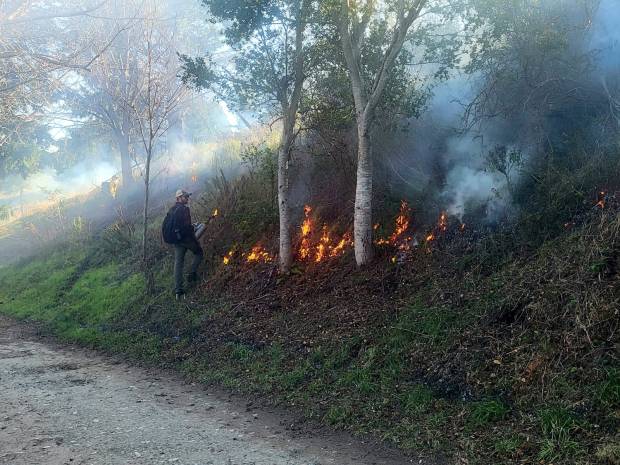
Wildfire is a natural phenomenon on the North Coast of Santa Cruz County, and there are things we can do to be better prepared. The Lockheed Fire (2009) followed by the CZU Lightning Complex Fire (2020) illustrate the extreme danger of wildfire as well as the potential return interval. Wildfires can repeat over the same landscapes quite frequently. Until we figure out how to use prescribed fire across our landscape to reduce the chance of wildfire*, we should plan on big, catastrophic wildfires at least every 10 years, especially because global warming will most probably increase the frequency and intensity of wildfire in California. If our infrastructure is well built and well maintained, we will be happier and nature, the land around us, will be better stewarded. To this end, we have much to learn and much work to do.

Protecting Houses

For most of us, our most expensive burnable item is our home and its contents. What can we do to protect houses? Our State’s wildfire agency, CALFIRE, starts with a simple message: “Clear to 100 feet!” But, what does this mean?

The hundred foot clearance guideline is meant to provoke questions about how to create a fire-safe envelope that will help to protect houses and the firefighters whose help is needed while a wildfire is blazing. (more about what that work entails in another essay) “Clearance” doesn’t mean every bit of everything needs to be removed from a one hundred foot radius around your house: it means vegetation must be “managed” within that area. Too much of the wrong vegetation in the wrong patterns can create flames that will set fire to your roof or siding, or break your windows and light the inside of your building. But, mostly poorly managed vegetation endangers fire fighters. 100’ of vegetation management is not always enough, but it is the beginner’s guide to getting started.

There are diagrams with written descriptions and checklists as well as videos, about what 100’ of clearance means. Unless you’ve been trained to interpret those resources, it is almost certain you won’t be able to apply them to your landscape. Just as a person new to cooking is unlikely to have success from a written recipe for chicken cattitore, someone who hasn’t learned about vegetation management directly from professionals is unlikely to get it right. Even if you aren’t doing the work yourself, if you are hiring landscapers claiming to know what to do, it is best if you have a basic understanding of the science behind firescaping before you waste time and money going it on your own. Take a workshop, occasionally offered by the Bonny Doon Fire Safe Council, visit guided demonstration sites, and seek advice from knowledgeable people, especially anyone who is experienced and whose work has demonstrably saved other homes during wildfires. Count on at least 40 hours of training to develop the necessary basic understanding and a day of continuing education each year to keep up on the latest information.

Protecting Other Stuff

It is important to understand that the house itself is rarely your only infrastructure needing wildfire maintenance- there are normally a lot of other things that require similar attention. These include: fences, outbuildings, water systems, power systems, lawn furniture, gardens, etc. Everyone understands that wood burns, but so does plastic…even metal can get damaged by fire. All of these things are costly and preparation can save you money when wildfire happens. If all of this other stuff is within your zone of 100’ of clearance, your plans in that zone must account for those, even there. If they are outside that safety envelope, they will need special attention in those other locations.

If you live in the country, roads and driveways are important to think about in case of wildfire. If you are lucky enough to live in a forest, creating shaded fuel breaks along those transportation corridors will be relatively easy to maintain annually but can be costly at the outset. If you live in shrubby or grassy areas, you will have to work several times each year to reduce fuels- annually, these take much more time and effort than in forests. Take note: most roads have culverts under them to carry rain runoff; hopefully, those culverts are concrete or metal, but if they are plastic they will easily burn and are expensive to replace, so those will need fire maintenance plans, as well.

Next Steps

Using an aerial photograph, create a map of all of the critical stuff on your property – your house, power, roads/driveways, and water infrastructure. Make a separate map of the other “stuff.” When you get those maps right- clearly marked and easily read, keep a set with your ‘go’ bag– the bag you grab when you evacuate during a wildfire. Keep another set next to your front door to give to firefighters as orientation for your site. Over time, as you are working with others to develop a fire safe landscape, you can use a set of these maps for planning purposes. These maps are also good reminders about what you need to protect each year while working on vegetation management.

* footnote: Chuck Striplen’s research for this region provides strong evidence that Native Peoples applied fire based on their Traditional Ecological Knowledge every 4-6 years. The catastrophic nature of fire after 11 years provides evidence that they understood when to apply fire to avoid such conflagrations.

Saving the Coastal Prairie on the Santa Cruz North Coast, Thanks to California State Parks Ecologists

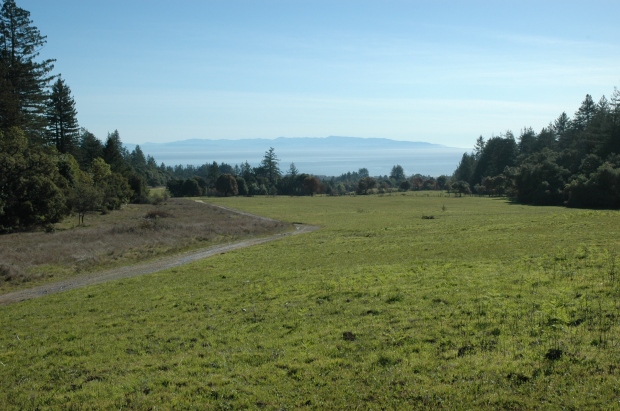
On Tuesday, December 27th I hiked onto the Gray Whale section of Wilder Ranch to see the prairies where the smoke was coming from back in October. I first visited these meadows in the late 1980’s while the property was privately owned; cattle were grazing the meadows, and there were abundant native grasses and wildflowers. Santa Cruz preservationists fought hard to protect the property from a proposed housing development, it went to State Parks, which removed the cows and took many years to start managing the prairies, which were starting to disappear to weeds, shrubs, and trees. Luckily, things were to change…

dsc_0156

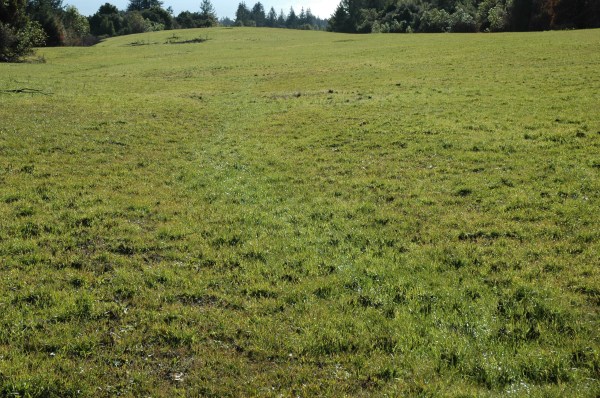
Postburn strikingly green meadows.

This past October, I knew that big plume of smoke I saw while driving on Highway 1 meant that State Parks was continuing their work at maintaining the meadows that I love so much. Fellow ecologist Jacob Pollock and I hiked from Twin Gates on Empire Grade down the Long Meadow ‘trail’ and into the strikingly bright green resprouting native grasses and wildflowers growing from the charcoal blackened ground. We found many types of native grass and a few wildflowers in the burned areas. Purple needlegrass, California’s State Grass, dominated the burned area, its dark green, rough leaves now 6” long and ubiquitous- a plant every square foot! These bunchgrasses promise a beautiful spring of silvery-purple flowers swaying 2’ high in the breeze. Patches of California oatgrass were less plentiful in the burn area than in the adjoining unburned area. This is the wet meadow loving indicator species of coastal prairie, and, in the many years after grazing and before the fires, it’s bunches grew taller to get to the sun- these tall bunches are susceptible to fire, but some survive.

dsc_0162

Fire recovery of California oatgrass

Patches of the leaves of wildflowers dotted the meadow and promise much more in the months ahead. Most abundant were sun cups, purple sanicle, and soap plant all long-lived perennials with nice flowers. Sun cups will be the earliest to bloom, maybe as early as late February, with simple, 4-petaled yellow flowers. Purple sanicle will be next to bloom in earl April with it’s small, purple spherical clusters of flowers. Soap plant blooms in late spring with evening blooming, white flowers that attract a variety of bumblebees.

Besides the obvious revitalization of the meadow plants, we marveled at other aspects of the handiwork of State Parks’ expert ecologist land stewards. Unlike many of our area’s meadows, there wasn’t a single French broom plant, a super-invasive non-native shrub that obliterates meadows, overruns trails, and is a major fire hazard. A many year program with State Parks partnering with volunteer groups has controlled that and other weed species at the park. We also saw dead coyote brush both in and out of the burn area- this native shrub can completely overrun meadows, closing bush-to-bush canopy in 15 to 35 years, depending on the soil. State Parks killed the coyote bush to maintain the prairie, and then burned the skeletons of the bushes so that there are now wide opened expanses of meadows, which are attractive to hawks, owls, coyotes, bobcats, and prairie-loving songbirds like meadowlarks. The ecologists also sent the fire into the adjoining and invading forests, maintaining the sinuous coast live oak ecotone that so beautifully frames the meadows.

dsc_0148

Fire maintains prairie ecotone

Today, I’m celebrating environmental heroes- 2-3 State Park Ecologists who manage over 18,000 acres in Santa Cruz County. They are motivated and hardworking. They need more support, more staff, more funding- please tell your State Assemblyperson/Senator! Without their dedication, our prairies would disappear. Thank you!

June 2017 Addendum: Portia Halbert sent me this photo (from State Parks Ecologist Tim Reilly), taken recently. The unburned portion of the coastal prairie in Long Meadow turns out this year to be dominated by Italian thistle, an invasive plant, whereas the fire from last fall seems to have more-or-less obliterated the species in the adjoining meadow. Thistles are especially bad this year in many meadows that haven’t been well stewarded. This discovery, that fire might help with thistle invasion, is a complete surprise to me- it deserves some careful scientific investigation! Long meadow italian thistle