Bruce Bratton

Well Managed Parks?

Some people I know are saying how ‘well managed’ our public open spaces are around the Monterey Bay. Let’s examine how one might come to such a conclusion and, at the same time, consider carefully parks managers’ roles in protecting wildlife for future generations.

Logical Fallacies

The simple, unsubstantiated statement that most of the Monterey Bay region’s public parks are ‘well managed’ is rife with logical fallacies. The people saying this are hoping that their statement will resonate because they are perceived as authorities about environmental matters. They are taking advantage of a ‘bandwagon’ building on a very publicly vocal minority of parks users who are also repeating the statement for their own purposes. Members of this bandwagon really enjoy some aspect of public parks and are suggesting that because their expectations have been met, everything else the parks managers are doing is being done well, too. They may be relying on black-or-white rationale where a park is either managed well or not, and they’d rather land on the ‘managed well’ side of that dichotomy. Building on that assertion, they purport any level of critique of parks management as personal attacks on parks managers. In the ensuing discussion, they are incredulous that anyone would suggest something isn’t right with parks management. They point out that all the credible public figures regularly praise our parks. When further pressed, the person claiming local parks are ‘well managed’ says ‘prove me wrong!’ … ‘where is there any proof that local parks are being mismanaged?’ they ask. After providing several examples of failures, the next thing I hear is “well I meant ‘generally well-managed,’ not that they can’t do better.’ If the conversation continues, the ambiguity gets wider and deeper. Why do these people continue to utter this statement?

Motives

Sunny dayists, popularity by praise, narcissism, greed, business marketing…all of these alone or combined are good explanations for the motivation of the people claiming parks are ‘well managed.’ Have you ever met someone who is always leaning into the positives around them? I had the great fortune of spending lots of time with one of those types of people. Our situation allowed us to eat at many of the region’s restaurants. When we first went out to eat, I was pleased that they expressed such praise for the food, the service, the atmosphere…everything! After a long while, I noticed that their praise was the same no matter where we ate out. I tested the hypothesis, leading us to one of the worst restaurants in the region: same level of praise! I bet you know someone like this; imagine them saying that parks are so, very ‘well managed.’ Do you believe them? On the other hand, isn’t it just easier and more fun to praise parks managers? When you are part of this bandwagon, such praise makes you popular.

Or, maybe you don’t care about that bandwagon. Maybe you get exactly what you want at local parks and so share the innocent but narcissistic reflection, ‘parks are well managed!’ A perhaps more malevolent explanation is that those declaring ‘parks are well managed’ actually do understand that parks are NOT well managed but they are getting what they want and so they greedily fight any threats to what’s working for them. For instance, perhaps those sharing the ‘well managed parks’ assertion are daredevil acrobat drone pilots who raise kids and drink beers with the parks managers families…might those be the sort of people who would declare ‘parks are well managed!”  There’s one more type that comes to mind: the businessperson. You can probably imagine the marketing lingo of any shrewd businessperson in the fields of nature education, outdoor recreation, tourism, conservation, public administration, or politics. Their statements are carefully crafted to build their personal brand, make more money, have more power. In that context, ‘parks are well managed,’ becomes what in politics is known as a “tribal statement.” One says ‘parks are well managed’ with a nod to one’s colleagues who are most likely to provide some positive business outcome. For instance, parks managers might provide support for nonprofits in the nature education space. Hearing that you are part of the bandwagon, perhaps an outdoor equipment maker will donate some gear to your organization. When a politician is reminded that you share their black-or-white jingoes, they might be especially helpful in supporting initiatives that move you towards business success. I know business-oriented conservationists who regularly say things they know aren’t true such as ‘this park is so very well managed!’ in the mistaken idea that such lies will improve their rapport and make them more powerful.

Bandwagon Patrol

Beware the bandwagon and beware the logical fallacies that accompany unsubstantiated generalities about things you know little about. Perhaps we could all benefit from changing vague generalities/assertions to more detailed personal reflections: ‘When I last visited Nisene Marks, I was pleased not to encounter any hikers.’ instead of ‘Nisene Marks is well managed.’ Let’s get more specific in general about things that affect the environment. Instead of ‘parks are well managed,’ maybe one could say ‘if Henry Cowell had a management plan, it would be easier to judge how well it is being managed.’ We can only fairly judge how well a park is being managed within the context of its management.

Context

If Natural Bridges park’s main objective was maximizing beach access, how are they doing at managing for that? Seems like we should know some details about the context of management at individual parks to better understand how well they are being managed. If Cotoni Coast Dairies’ main objective was managing for nature conservation, how would we know how well the managers are doing? We’d need access to supporting data and summary reports, of course!

Principles of Good Land Management

I suggest a framework of good land management principles. First, for land management to be judged at all, there must be a management plan that informs what happens on the ground. The plan needs to rely on the scientific method and an adaptive management framework, include citations for supporting peer-reviewed publications, and have recommendations for monitoring and managing for the ecological and social carrying capacity of the land. Next, managers should regularly be working to adapt management and the management plan using analyses informed by high quality data. Managers who are doing good work will be transparent with their decision making and focus on actively engaging with and including the public in all aspects of land management. Land managers doing good work will be able to prove how they are maintaining all species while providing access designed to maximize public benefit.

-this essay originally published in Bruce Bratton’s illuminating BrattonOnline.com weekly blog. Why not subscribe (and donate!) now?

Whence SCruz Enviros?

I continue to ask myself this question: where has the environmental movement gone in Santa Cruz? I have several hypotheses. This is not to deny the tireless work of various individuals who have helped on many fronts, but I sense a loss of momentum, of any organized movement of the type of conservationists that have been so crucial in the past in providing the Santa Cruz area with much of which it is now proud: Lighthouse Field, the City’s Greenbelt, Wilder Ranch, and Gray Whale Ranch come to mind, is there any kind of movement now that could achieve such success?

Questionable Rationality

One of the age-old issues with working with coalitions is the rationality factor, and the environmental conservation movement has had its share of associates who defy the laws of rational discourse. There is strength in numbers, but as those numbers grow the community will include people who are vocal about some pretty wild, unsubstantiated things. Those people sometimes have a fairly strident way of expressing themselves. Whether it is a tactic, or perhaps they believe it, the opposition to conservationists will say ‘look at that lunatic fringe group!’ They lump perfectly rational people in with the less-than-rational minority. The less-than-rational folks will also say ‘Look! I have credibility! I am associated with these rational people!’ That fringe element has driven more than a few of my colleagues away from advocating for conservation.

Oppositional Idiocy

Problems with rationality aren’t just internal to conservationists: there are many irrational people to face in the opposition. There is increased reliance on very poor methods of discourse: tu quoque, black-and-white and straw man arguments are very common, and conservationists aren’t always prepared to rebut such vacuous methods of dialogue. We often don’t even recognize them as such. As I wrote recently, add those types of arguments to a long list of unsubstantiated ‘facts’ and you have the gish gallop making it impossible to address any particular thing.

Conflict Avoidance

Poor discourse and barely rational coalition members may have contributed to the next reason I hypothesize for the demise of the local conservation movement: conflict avoidance. One thing that seems on the upswing with the younger generations is conflict avoidance, but this issue has long been a problem to conservationists. Politicians and other would-be mediators of environmental conflict have often tried problem solving by attempting solutions through compromise. That is, they see two sides – conservation versus development – and say “we can find a middle ground.” The problem with that is that often the conservation issues associated with the proposed development aren’t addressed by this middle ground: biology doesn’t work that neatly. This concept has oozed its way into the general populace where many want to solve things by reaching an imaginary happy spot – ‘half way’ between what is portrayed as two divergent points of view. Even that half-way point is difficult for most to imagine negotiating.

Those who are proponents of nature destruction are well seasoned negotiators, new public conservation advocates not so much. New recruits into conservation often balk at the need to negotiate with often well-paid consultants who are so good at their game. These new conservationists also often feel shy about hiring professionals, especially lawyers to help with the conflict: for some reason many feel like seeking that method of solution is ‘too much.’ And, then again, lawyers are expensive.

Legal Defense, Legal Bills

If somehow a group of conservationists can come to the conclusion that a lawyer would help, raising money for legal defense funds for conservation around Santa Cruz is not easy. Lawyers are expensive and their work takes time. Can you remember the last time a local conservation group asked for funding for legal defense? It has been a long time.

And yet, legal defense has often been essential to resolving many important environmental conflicts, everywhere. Especially here in California, the laws protecting the environment are strong and broad ranging. Those proposing to destroy nature fear enforcement of those laws. With my conservation advocacy, I often cite legal language and so have been called ‘litigious’ by a handful of nefarious truth-stretchers: I have never retained legal counsel to sue anyone. It is very important for conservationists to understand laws and regulations and to cite those as well as case law whenever making their point. And yet, fewer and fewer locals are forming coalitions to retain legal assistance to protect nature.

Legal Reprisals

Some conservationists have avoided the milieu of conflict because they fear that the often well-funded anti-nature crowd might sick their lawyers on them. There are Strategic Lawsuits Against Public Participation (SLAPP) where the pro-development types intimidate conservation advocates by suing them…often for libel but for lots of other things. Also, some conservation advocates have been named in lawsuits by nature destroyers. For instance, our ‘friends’ at the Trust for Public Land sued local conservationists to recover expenses the group said they used to defend themselves in court actions aimed at better protecting the Cotoni Coast Dairies property.

No Peace, No Justice

The last issue hobbling local conservationists is their inability to adequately form coalitions with environmental justice movements, which have perhaps gained more wide support and recognition. This piece well summarizes the issue, and rests with the ‘no brainer’ intersection of the two movements: climate change. In this regard, Santa Cruz might be doing okay, but we are leaving behind other conservation issues of the highest importance: conservation land management, endangered species conservation, clean water and wetlands protections, and natural areas visitor management. Each of those issues has meaning for environmental justice proponents, but conservationists have done little to make that bridge.

What Can You Do?

I urge more people to become actively involved with local conservation groups. And, when you do, help those groups to become better through your mentorship and skill. We need to train one another to be good at conservation before the next big issue threatens species, habitats, or the relationship between humans and nature in our region.

-this post originally published as part of Bruce Bratton’s long-running informative blog at BrattonOnline.com, a place you should turn for all that you need to know around the Monterey Bay (and beyond).

Gish Gallop

Has it always been so common, or is it just more apparent because it has become so prevalent in mainstream politics? The Gish Gallop is a method of debate where one streams together so many unsubstantiated points that it becomes difficult to track, and rebut, them all. Perhaps the easy swipe of social media or the increased speed of emerging news have helped to wire us to be more receptive to the full-steam-ahead BS argument technique. Here, I try my hand at making a speech using the Gish Gallop technique with a collection of commonly held nature fallacies:

A Gish’ing Example

Nature is dangerous! For instance, all sorts of snakes and spiders are venomous, and people die from their bites all the time. You have to be especially careful of mountain lions, which are increasingly attacking people across California. If environmentalists have their way, there will also be wolves roaming everywhere across the Western USA- once established, they will become habituated to eating livestock and they’ll be coming after people, too. Just outside your door trying to get into your trash are very dangerous rabid opossums. You don’t even have to go outside for nature to get you. There are spiders hiding in your house, and an average of six a year drop into sleeping people’s mouths. I heard just the other day about another venomous snake crawling out of someone’s toilet. Some crazies want to blame so many things like this on global warming, which is just hype from crackpots trying to control our lives. They claim burning fossil fuels is going to kill us all, but that’s not true! Change happens, for God’s sake, there have always been natural disasters and there always will be, just get used to it, you snowflakes!

Does that kind of diatribe sound familiar? It should, and its not just coming from the political right[1] – watch out for it coming from just about any political direction, in just about any social situation. You can tell a real Gish Gallop addict by picking out just one of their tidbits and trying to follow up with a more involved conversation. If they are a galloping gish o’phile, they’ll be unable to stick to that topic and will hit you with another round of Gish Gallop before you can yell ‘stop!’ I don’t know if its just my circles of company, but I venture to guess that 1 out of 10 of my conversations encounter something amounting to Gish Gallop.

Toilet Snakes

Let’s take a look at just one of the parts of the above parade d’ BS: toilet snakes. Mention the phrase ‘toilet snake’ during a party, and it may well take root in conversation with anecdotes just as lunatic, or even substantiating evidence of this profoundly unlikely scenario. Was it Voltaire that said absurdities beget atrocities? One step leads to the next. Who are we to deny the frequency of toilet snakes, anyway? I’m sure it has happened once or twice! It may even be getting more frequent with global warming, invasive species, collapsing and outdated infrastructure, and the loss of skilled labor attracted to public works jobs. See? How familiar is that? That’s how it goes…

Turning This Around: The Antidote

How good are you at stemming the tide of verbal diarrhea? How do we collectively alter this rotten social habit? It is time to infuse more meaningful dialogue into the world. I am particularly advocating for better dialogues about nature and hoping that we carry with us enough fascinating stories that we can knit deeper and deeper oral traditions into a regionally-oriented social fabric. As we do that, I encourage us to use science as our guide, so that we have a method of building out truth, of going deeper and deeper into nature, and to add those discoveries into our stories.

The Fate of Snakes

My essay ‘Snakes on the Monterey Bay’ is one of the most popular reads on my website. I suspect that there are widespread positive sentiments about native snake species. But there are also widespread popular beliefs, well supported in social circles, that snakes are all very dangerous. Snake phobia, even nature phobia, is far too common. I well recall a time when I was working with a farm labor crew to machete poison hemlock, an invasive species that had taken over much of Younger Lagoon Reserve that I was stewarding for the University. One of the crew spotted a garter snake: quickly three were chasing it and proudly hacked it to pieces in moments before I could stop them. They seemed astounded that I was angry at their actions. I’m sure that they still think that I was acting insanely to be defending SNAKES! Why? Many people believe snakes are dangerous, and this is one of the many subjects that we can work on to improve human-nature relations.

Might you find out a bit about one of our native snakes and start a conversation about it with your friends? Such conversations could change the world for the better.

-this column slightly modified (with The Guardian link) from that which I posted via BrattonOnline.com, Bruce Bratton (and team)’s wonderful source for news. Subscribe now and save (it is free, but donations are welcome)


[1] Although some admit that this is their favorite method of oratory.

A Spurious Statement (and How to Solve It): “We Need More Mountain Bike Trails!”

Let’s reflect a moment about the changing nature of the desires of outdoor enthusiasts’ over the past one hundred and fifty years. A hundred and fifty years ago, hunting (including market hunting) was a predominant desire of outdoor enthusiasts. Hunters had already hunted out tule elk and beaver across the Central Coast, and they were quickly driving to extinction California quail and band tailed pigeons. Wildlife laws and enforcement had to be put in place to change those behaviors and expectations. Then, a hundred years ago, Santa Cruz citizens flocked to the County’s North Coast to enjoy wildflowers, a national trend. Here and across the United States, city people went to the country on day-long sojourns to picnic, walk, and enjoy wildflowers which they picked, dug up, and brought home for bouquets and gardens. It took a concerted effort and rulemaking to conserve wildflowers, to change public behavior on open space.

Fast Forward: A New Desired Outdoor Experience in the 2000’s

A well-funded and organized political campaign can have a lot of impact. We’ve been surprised by marginal segments of the population gaining traction and power in so many aspects of our lives. The group Mountain Bikers of Santa Cruz (MBOSC) is an excellent example, and their statement ‘we need more mountain bike trails’ is the rallying cry that has propelled them forward over a very short time. We can learn a lot about marketing, rallying cries, and how a functioning democracy can effectively counterbalance minorities by examining this parks management issue in Santa Cruz County. All politics is local.

Local Trail Statistics

There’s a lot behind the statement about ‘needing’ more mountain bike trails. In 2017, I first encountered this statement when MBOSC started circulating deceptive statistics about the limited number of mountain bike trails in Santa Cruz County. Shortly thereafter, a local land trust used those same statistics in a misguided effort at a partnership. MBOSC staff said: “We have 220 miles of legitimate trails here in the county. Of those, less than 40 miles are open to bikes.” On the contrary, my statistics (linked here) documented 136 miles of trails open to bikes.

What Need?

When pressed, MBOSC noted that the skewed data they presented was because their constituency wants more ‘narrow single-track’ trails dedicated only to those recreating on mountain bikes. So, first we must delete the word ‘need’ and replace it with the word ‘want.’ With that, let’s also get more honest about the group and who wants what, where, and why. Here’s their marketing phrase, restated more honestly:

“According to an advocacy organization, a subset of those individuals who choose to recreate on mountain bikes want increased mileage in Santa Cruz County of narrow single-track trails that exclude all other types of recreational use, which they feel would otherwise interfere with their own recreational experience.”

Designing Trails for Desired User Experience

What processes do we have in place to weigh some parks users’ desired experiences with that of others? How do we balance the desire for “narrow single-track trails dedicated to mountain biking” versus other user desires on public and conservation lands? Here is a link to an overview of the modern method of planning for these issues in parks.

The Purpose of Parks Institutions

To plan for park visitor use correctly, one must delve into the institutional purpose of a given land management agency. To continue using my example of State Parks, this is what the State has to say about whether or not single-tracked trails only for use by mountain bikers are appropriate:

“Improvements that do not directly enhance the public’s enjoyment of the natural, scenic, cultural, or ecological values of the resource, which are attractions in themselves, or which are otherwise available to the public within a reasonable distance outside the park, shall not be undertaken within state parks.” (Cal. Pub. Resources Code § 5019.53)

I suggest that ‘narrow single-track trails used only for mountain bikers’ are ‘attractions in themselves’ rather than enhancing ‘the public’s enjoyment of the natural, scenic, cultural, and ecological values’ of a park. In the same manner, do we seriously want to argue that zip lines or drones would ‘enhance’ anyone’s enjoyment of the scenic values of a park?

A Specific Park Goal

Planning for desired visitor experiences proceeds with the definition of the purpose of a particular park. For Wilder Ranch, the purpose is:

“…to protect, preserve, and make available to visitors the cultural and natural resources, including historic features, natural biotic communities, geologic and edaphic resources, and related recreational values of this portion of the coastline and coastal mountain region of central California. Public use and enjoyment of the park is encouraged in the limits established by the State Park classification and resource sensitivities.”

So, Parks planners at Wilder Ranch State Park get to determine which types of desired visitor use experiences fit within those goals, which are clearly related to protecting and preserving lots of things at the park.

Visitor Experience Conflict

When parks managers created the management plan for Wilder Ranch State Park, in 1980, they worked with UCSC professors and students to study the park and there were lots of public meetings. Those studies and the public meetings suggested a potential for visitor experience conflict between the two user groups recognized at the time: hikers and equestrians. As was common with the outdated approach, since hikers outnumbered equestrians, they delineated 27 miles of trails for hiking use only and 9 miles of trail for use by both equestrians and hikers. Parks planners did not envision mountain biking at all, and the plan has not since been updated for that use. Without formal adoption of this new user group in the Wilder Ranch General Plan, mountain biking is not officially allowed at Wilder Ranch State Park. Obviously, there are conflicts between the desired experiences of bikers, equestrians, and hikers…and even more conflicts now recognized by subsets of bikers (thrill riders versus family riders) and hikers (exercise hikers and wildlife viewers).

Next Steps

To minimize conflict and plan to integrate the many modern visitor use experiences at Wilder Ranch State Park using standard modern protocol would require an update of the General Plan. This is important, anyway, at Wilder Ranch State Park as Gray Whale Ranch and Coast Dairies Beaches have since been added to the Park…without any review/planning (no thanks to #CaliforniaCoastalCommission and #CaliforniaNaturalResourcesAgency for being okay with that!).

User experiences are ‘balanced’ not in terms of majority rule, but rather in terms of minimizing conflict with other users and natural resources. In other words, just because your advocacy campaigns make a lot of noise about wanting more miles of ‘narrow-single-tracked trails only for mountain bikers’ doesn’t mean you’ll keep getting more and more of those ‘rad experiences.’ There are too many other conflicting types of users wanting experiences in nature for that to happen, especially when the primary purpose of so many of our parks isn’t active recreational sports, but rather conservation.

Let’s recall that visitor use and wildlife conservation are conflicting goals on open space. This requires careful planning to accommodate both in a given region, across park boundaries. To make this point more strongly, I urge everyone to use the statement “active recreation in open space is Nature Extraction” – we now understand that recreational use disturbs and even eliminates certain species of wildlife. We are extracting recreational areas of open space for human gain…same as mining, only perhaps less obvious. This is one of the top ten threats to biodiversity worldwide and we can find solutions right in our own county, if we take this seriously.

-this one originally posted at BrattonOnline.com as part of Bruce Bratton’s regular weekly blog of news and events in and around the Monterey Bay area.

Perennial Grasses and Healthy Soil

Isn’t it amazing how marketing pitches can formulate the foundations for societal dialogues? Somehow, forest management gets ridiculed with the phrase ‘raking the forest,’ aiding the politics of defunding the US Forest Service at a time when we really do need widespread restoration of prescribed fire…not raking, but effectively the same thing. And ‘forgiving student debt’ gets bandied about, helping to steer conversations/media away from the more difficult subjects of: better funding/better outcomes of public education; training young adults about contractual obligations and financial planning, and; regulating financial institutions to make student loans more affordable. I’m sure each area of human dialogue has its ‘short hand’ statements that one sector uses to manipulate others. The one I’m faced with currently is the jingo ‘healthy perennial grasses make for healthy soil.’ Let’s take a closer look at that phrase.

Bunchgrass Paradigm

Long ago, a preeminent ecologist traveled to California and ‘discovered’ something that formulated the basis of myriad dialogues continuing through today. Frederic Clements described ‘natural succession’ where nature transforms itself from one habitat to the next in a logical and predictable order. You may recall the diagram that still sticks with me where a pond becomes a marsh becomes a bog becomes a meadow becomes shrubland, culminating in the ‘climax’ community…a forest. In examining California’s grasslands, Dr. Clements found a patch of ‘pristine’ grassland, one of the few that had escaped the plow, along a railroad right of way. That ‘pristine’ grassland was dominated by a perennial bunchgrass, purple needlegrass: this, he said, was how all California’s grasslands should look. Many people still believe this. What about the hundreds of species of wildflowers, such as those cited by John Muir as creating carpets across the Central Valley, and those which provided food for indigenous peoples for generations? Those holding dear to the ‘bunchgrass paradigm’ will say those species grew only in between the bunchgrasses where weeds now proliferate.

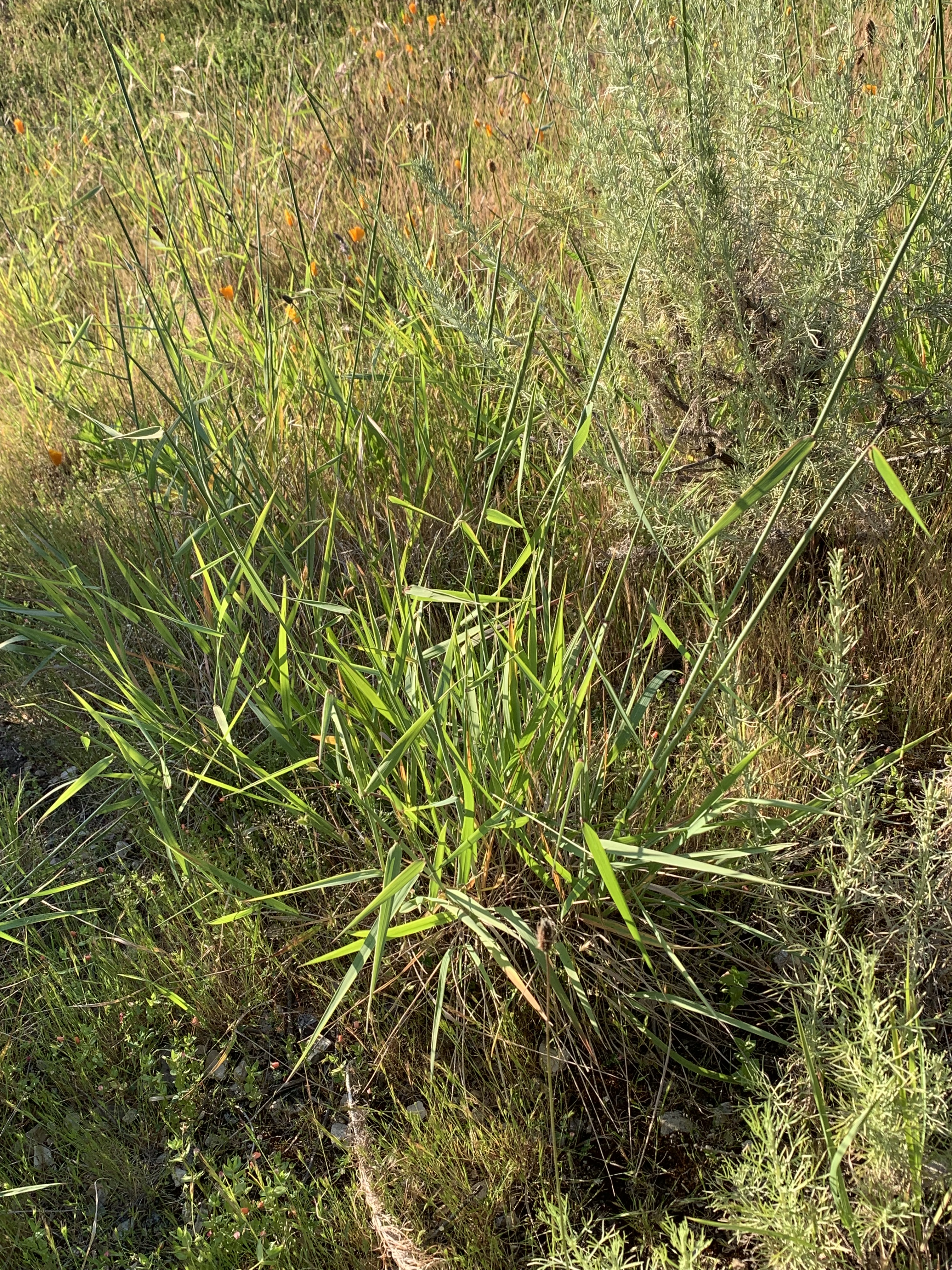
Blue wild rye, a native perennial bunchgrass common to coastal prairies in California

Perennialization Bandwagon

As the bunchgrass paradigm has been perpetuating, another popular movement has been building, a desire to transform agriculture from annual plants into perennial plants with little to no tilling, which purportedly ‘destroys’ soil health. Despite being disproven as effective over and over again, farmers are still attempting to grow lettuce, carrots, broccoli, etc, on ground without tilling. Meanwhile, rangeland managers are repeating a similarly disproven hypothesis that all California grasslands would be better off if ‘restored’ to perennial grasses. Buoyed by science papers that suggest the importance of cattle grazing to help establish/maintain perennial grasses, livestock managers have found good use of this message to gain credibility and increase their land base.

The “Perennial Grasses Have Bigger Roots” Myth

Add the two previously described popular myths together and you encounter another emergent, oft-repeated myth: perennial grasses restore soil health because they have larger masses of roots (in comparison with annual grasses). Central to this popular misconception are comparison photos from the Midwest showing profiles of annual wheat versus perennial wheat including both above and below-ground portions of the plants.  The idea being promulgated is that larger root systems add more organic matter to the soil, break up soil compaction, and allow for better water infiltration. Most recently, proponents of this myth point out that the increased below ground organic matter of the larger rooted perennials means that more carbon is being sequestered, helping to address climate change.

California’s Grasslands: Not Naturally Perennial

California is mostly a Mediterranean state with a long history of ecological disturbance: grazing, fire, drought, inundation, etc. That ecological situation does not naturally produce widespread perennial grass dominated prairies. Even where there are perennial grasses present in a given area of prairie, they are rarely naturally ubiquitous: species seem specific to soils, steepness of slopes, wetness, nutrients, and so on. There are many more annual species than perennial, and many more wildflowers than grasses. Some of the most emblematic grasslands in California are naturally annual plant dominated, such as the wildflower-display rich Carizzo Plains, the rolling hills over the Altamont Pass, and the flower-filled savannahs of the southern, low-elevation Sierra Nevada. On the other hand, large swaths of the former wetlands of the Great Valley were probably once dominated in wide swaths by perennial rushes, sedges, and tall native, rhizomatous (not bunch) grasses.

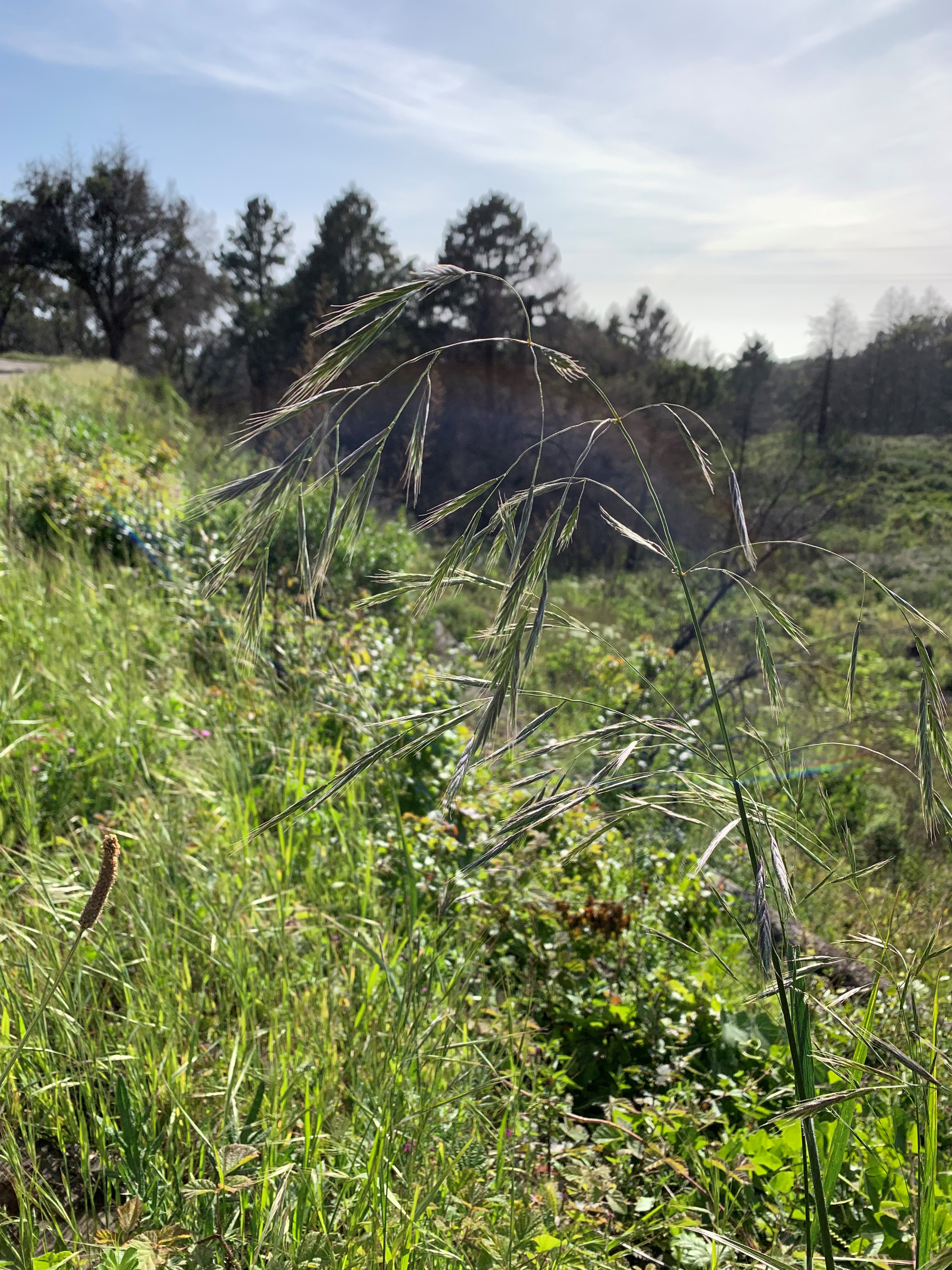
California brome grass, a perennial bunchgrass common to California’s coastal prairies

Myths of the Perennial Life Form

Let’s examine the “Perennial Grasses Have Bigger Roots” myth for a moment. The most widespread native perennial grass in California is pine bluegrass, a diminutive grass that often has leaves a mere inch or two high and a flower stalk reaching a foot or so into the air. This species likes it hot, dry, and shady, growing in interior oak savannahs. With the first rains, it turns green, later sends up flower heads, and then dries by late spring. There is no reality in which this species has longer roots, or a bigger root system, than the often 4’ tall European oatgrass. Around here, that European oatgrass is more comparable to the perennial California brome grass. This brome, in some soils, alongside European oats similarly continues growing, flowering, and seeding well into summer. In wet areas, a common native perennial grass is meadow barley. Meadow barley is relatively small and short-lived, and goes dormant very early in the season, when it is replaced by the proliferate annual Italian ryegrass, which is larger by far. Most people surveying for perennial bunchgrasses have overlooked meadow barley altogether as it disappears so early in the season.

Yes, there are smaller annual grasses and larger perennial grasses, but my point is that the generality that ‘perennial grasses have bigger roots’ is untrue and not that useful as a generality.

Regenerative Ranching: Regenerating What?

Although the definition of ‘regenerative ranching’ is elusive, it seems most proponents are gravitating towards suggesting that they are ‘restoring healthy soil.’ The idea here is that soil has been in some way degraded and must be returned to its primeval state. Often, the soil degradation concern is ‘compaction.’ To restore soil health, proponents rely heavily on the myths described above overlaid with management hypotheses that using livestock can mimic evolutionary disturbance regimes last encountered with the Pleistocene megafauna, 10,000 years ago. Regenerative ranchers really believe that such approaches work and are full of anecdotes about what they’ve witnessed, though changes in soil health are notoriously slow and always soils-specific.

Compared to What?

I’m pleased that there is a conversation about how to best manage California’s prairies, but concerned about bandwagons, slogans, and misinformation. Humans are really, really good at pairwise comparisons, but their attraction to such must be tempered. Perennial vs. annual grasses: nonsensical! Livestock grazed vs. ungrazed: not helpful! We can try really hard or spend a lot of money trying to ‘restore’ soil health, but what are we restoring it to? There is the possibility for a great collaboration in this conversation. The USDA NRCS has a long-running research project that fits nicely: their ‘ecological site description’ project would do well to help define which sites are best compared with one another, based on soil types. When having these conversations, we would do well to have great respect for the state of the science, referencing a rich literature and how it does, or doesn’t pertain. And, in our pairwise comparison analysis, let’s always try to compare what we are doing, regenerative or otherwise, with someone else’s approach: what is working better, and why? We must always make these conversations very site-specific…variability across sites is the rule.

Meanwhile, beware of definition-less terms without a systematic third party certification program: ‘natural,’ ‘grassfed,’ or ‘regenerative’ labels hope to entice you to pay more, have higher respect, adhere to brand loyalty, or just plain ‘believe’ you are doing the right thing by supporting such verbiage. With this and other jingo-based bandwagons, let’s get a tad more critical so that we support what is worth supporting with greater clarity on WHY.

-this post originally appeared as part of Bruce Bratton’s weekly blog at BrattonOnline.com

Loss

The sadness of loss is almost too much to remain engaged as a lover of Nature. The love comes easily and despite our collective desire to protect Her, we somehow keep acquiescing to destruction. Why? Either by quick violent death or by slow strangling loss, somehow humans are capable of the most atrocious acts against Nature. These things are not happening only in some distant rainforest or coral reef…these things cannot be relegated to some guiltless past by unknown villains…they have been happening right here, are occurring right now around the Monterey Bay.

Sudden Violent Nature Destruction

I’ve been living near Santa Cruz since 1986, and during that time there have been some horrific atrocities to Nature. And they still are occurring.

Even as I weep to see the destruction of the East Meadow at UCSC, I clearly recall the moments of the tearing of bulldozers into other precious ground. The actions themselves are bad enough, but the sadness deepens as I hear the violence supported by the sentiment of members of my community. Rationalizations. Deep convictions and justifications. How can so many have become so separated from the Great Nurturer, our Mother Nature? I know the answer, but it doesn’t make it easier: greed.

UCSC. Arana Gulch. Santa’s Village. Terrace Point. Castle Rock. Glenwood. Millenium High. Large areas of Fort Ord. Armstrong Ranch. Santa Cruz Gardens. Seascape. These are just a few of the places that have been violently, suddenly and permanently transformed by bulldozers, development, pavement, and buildings since I arrived in Santa Cruz.

None of these ‘projects’ ‘needed’ to happen. All have been completely rationalized by society at large. Many have profited, and many more will feel the losses for generations. Few now feel a more direct, deep sense of loss from the destruction of those places; most did not come to know them well enough to love them deeply. Fewer still have the broader and deeper connection with Nature to feel pain upon witnessing her passing and the forlornness that comes from respect of what was there before. No one can acutely feel these things and still survive. We must “move on.”

A Slower Strangling

War or slasher movies attract human attention far more than long term torture. We eventually forget Guantanamo, refugee camps, those haunted and plagued by the trauma of war, famine, or injustice: we “move on.” Such is the case with our treatment of the lands around us. We now know that even ‘protected’ lands need careful tending, that the whole Earth needs our active care, but we are failing that responsibility everywhere. And so, our neglect means Nature is (maybe not so slowly) dying. We have put Her in a cell and neglected food and water. She cannot be so separated from us, and her dying is already causing our suffering. And although everyone hears Her rattling her cage, we “move on.”

Nature’s Slow Death Around Us

We daily witness the actions driving climate change, but it is harder to see the actions driving the torture and neglect of Nature around us. Everyone reading this can glimpse those actions in the rhetoric about Nature tourism around the Monterey Bay…mostly about mountain biking, but also about the many ‘natural’ attractions our region has ‘to offer.’ Nature tourism is one of the top ten threats to biodiversity globally. Around the Monterey Bay, there are only the grossest, ham-fisted approaches by conservation lands managers to stem the impacts of natural areas visitors. We are loving our conservation lands to death. Literally watch your step as you hike trails eroding into ditches, soil spoiling surrounding streams, trails draining the water from the land. Trash. Weeds and pathogens proliferating along trails and roads through natural areas. Wildlife fleeing frequent visitation with no where left to go. Invasive plants, pathogens, and introduced animals permanently altering Nature, spurring native species loss. Nature tourism is good for business! And, as to the cost that comes from that profit…most people have already “moved on.”

Moving On

As a society, we are “moving on,” and I and others who care are swept up in the flow. The tears we shed for the losses we see are quickly diluted in the river of profit that drives our downstream movement. We feel we must hide our Great Sadness so that the shreds of hope we retain in the resilience of Nature might inspire others to come to her aid. The future is uncertain.

To calm the panic and loose the sadness, we turn to Nature and go for a walk…quietly, respectfully, slowly, and in awe.

-this post originally posted in Bruce Bratton’s stupendous weekly blog at BrattonOnline.com I suggest you subscribe to keep up with ‘all the news that’s fit for printing’ around the Monterey Bay and beyond. If you adhere to the adage, as I do, that all politics is local, that blog is the place to be.

Fire

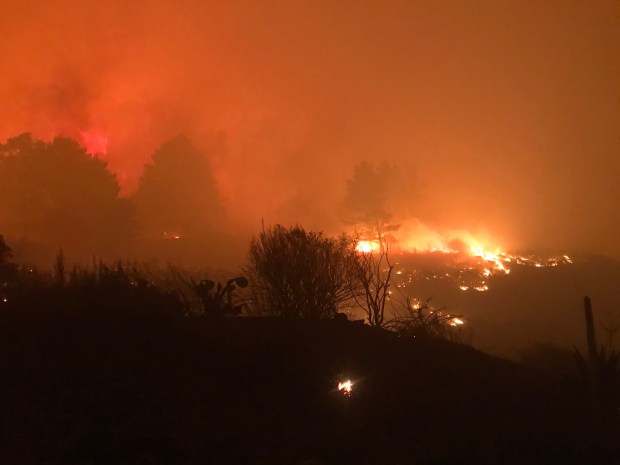
The advent of human control of fire was a pivotal moment in the development of our species. Human use of fire has been changing in some ways and remains steady in others. Recently, it seems that the use of fire is becoming more and more remote for more and more people. Is that good or bad? Join me for a few moments to examine the state of human relationship with fire.

In the millennia of humans’ past and on into our present, we have used fire for heating, cooking, pest control, trash disposal, transportation, and war as well as for the creation of food and fiber. I intend to revise this essay and welcome suggestions about other major uses for fire. Fire is a powerful tool.

Fire for Heating

Consider the evolution of using fire for heating: from the first flame to the storage of heat in stone, masonry fireplaces and chimneys, metal wood stoves, furnaces and, most recently, forced air central heating. Do I understand correctly that conversion of wood to fire for heat, even with super-efficient, clean burning woodstoves, is no longer legal for new construction in Santa Cruz County? Soon, even mountain folk will lose their expertise and familiarity with keeping their homes warm using locally produced fuel, easily produced as a land management byproduct making for improved wildfire safety.

Cooking Fires

My host gently wiggles and pushes three-foot branches, 3” in diameter into the fire to renew the steady heat beneath a tortilla-cooking comal. Smoke rushes out through the roof. Mayan peoples in Belize showed me this indoor cooking method, which is similar to that which many tropical and subtropical cultures have relied for generations. Elsewhere, grills over charcoal, “spits” turning above flames, and wood-fired ovens are other methods for fire-cooking food. Cast iron wood-fired cook stoves are antiques. I haven’t seen one used for a decade.

Have we entered a new era for cooking with fire? Can anyone confirm the rumor that gas stoves are no longer permitted with new construction? I understand that there are concerns about indoor air pollution as well as thoughts that such methods will unduly contribute to greenhouse gas emissions.

One of the last cooking fires in our region is employed by those ‘roughing it’ using portable gas-fired stoves, some of which have become ultra-lightweight and highly efficient. I would be remiss not to also mention wood-fired appropriate technology cooking units, fed by surprisingly small handfuls of branches to prepare family meals. These have been targeted to developing countries with increasing shortages of fuel wood.

Pest Control

A member of Sonoma’s Kashia Pomo tribe recently spoke to a group I was with about the importance of burning the understory of oaks for pest control. He pointed out insect holes in an empty acorn shell and noted that his ancestors would have burned the understory of oak forests to reduce this damage and improve the acorn crop. I’ve heard similar things about pine nut pest management.

How many other pests might have been once controlled by different uses of fire?

Food Production

Precluding the use of fire for pests, fire has been, and is still being, used for other aspects of food production. Tribal peoples use fire to increase productivity of seed crops. Burning releases nutrients trapped in dead vegetation into the soil, increasing plant growth. Native ryegrass and brome grass stands that are burned produce more, heavier seeds. Burning meadows increases the amount of clover and other wildflowers which serve as either salad greens or seed crops.

The principle of fire releasing nutrients for the next crop also applies to rice farmers in California. Burning rice fields was once a more common method of returning nutrients from “crop residue” to the soil. Some farmers have turned to selling rice straw or flooding fields so that waterfowl help break down crop residue.

Other fire-prepared food crops include morels, beef, and grasshoppers. Morels are especially numerous after fire-spurred nutrient release. Ranchers have long used fire to reduce the cover of unpalatable shrubs and increase herbaceous forage to benefit livestock production. Perhaps fire is still used to round up grasshoppers that are subsequently roasted and coated in chili powder and salt for a tasty, crunchy, protein-rich snack.

Fire-Grown Fiber

I haven’t encountered anyone burning for fiber production, but have a few ideas. Burning to reduce shrub invasion into grasslands would make those areas more productive for sheep, and, hence, wool (fiber) production.

Native peoples have burned various plants in various ways to increase fiber production. Around our region, hazel, willow, and iris burned in the right way would make it possible to harvest more and better fiber for cordage and basketry.

Trash Disposal

Travel in rural areas of the Americas and you’ll no doubt encounter the distinct smell of incinerating trash. Especially unctuous is the dioxin-tainted odor of burning plastic. I know of a certain gentleman who very recently was regularly burning 50 gallon oil drums of trash including plastic baby diapers, polluting an otherwise pristine area of Big Sur. I wonder how common the practice is at this moment in the USA? Burning plastic creates a very dangerous chemical called ‘dioxin’ – if you think it quaint when someone burns such trash, think again. This practice is on the rise and killing people.

Fire for Wildfire Fuel Reduction

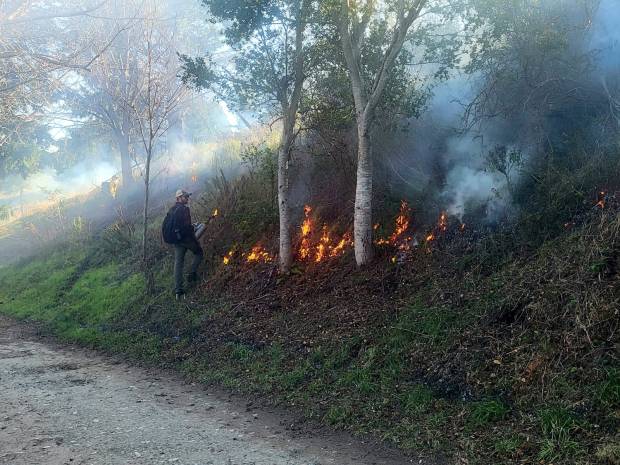
Carefully planned pile burns or broadcast burns are increasingly being used to dispose of vegetation that would have otherwise been a fire hazard. I’ve written more about these practices in this and this essay.

Riding the Fire

Internal combustion engines burning fossil fuels, releasing ancient carbon, and powering vehicles is a leading cause of global warming in our nation. Not long ago, the hungry burning work of steam engines propelled society ‘forward,’ destroying forests for fuel, leading to California’s hardwood crisis in the late 1800’s. Quieter, fireless electric engines are a revolution at hand, but there’s a sound like distant thunder propelling people in much different ways.

War Fire

Sanctions aside, war is mainly a fiery affair. Bombs, bullets, flame throwers, and napalm are the fire-based war weapons of modern soldiers. No doubt too many of us have been exposed to media portrayals of more ancient warfare involving flaming projectiles meant to kill or destroy property. The most ‘modern’ of fiery death, atomic warfare, is too close at hand with entirely different types of flames.

Could war really be over if we wanted it enough? Let’s quell those violent flames starting by putting out those types of fires closer to home.

Fire – For Better or For Worse

Next time you light a candle, if you even do that anymore, take a moment to reflect on the use of good fire or bad fire. As humans become more distant from their roots, more unfamiliar with tools that we have long used to steward our world, it seems we need to make a greater effort to raise future generations to be comfortable using fire in the best of ways. We must also learn to turn aside from the power of less productive flames, as tempting as that power might be. Burn brightly! Burn well.

-this essay modified from the one originally published at BrattonOnline.com, a weekly blog from Bruce Bratton and team: sign up or miss out!

Protecting Our Most Precious Spots

The most highly protected terrestrial areas around California’s Monterey Bay are designated as “Natural Preserves” by the California Department of Parks and Recreation and as “Ecological Reserves” by the California Department of Fish and Wildlife. Let’s explore where those places are, and how the State’s premier land management agencies are directed to protect areas with these designations.

CDFW Ecological Reserves

The California Department of Fish and Wildlife (CDFW) manages 1.1 million acres of land in California. Unfortunately, CDFW does not publish summary statistics about how many of those acres are designated as Ecological Reserves, which have the highest protection of any state-owned public lands, as reflected in the following regulatory language:

“….ecological reserves are maintained for the primary purpose of …..protection of rare, threatened, or endangered native plants, wildlife, aquatic organisms, and specialized terrestrial or aquatic habitat types. Visitor uses are dependent upon the provisions of applicable laws and upon a determination by the commission that opening an area to such visitor use is compatible with the purposes of the property.” (Cal. Code Regs. tit. 14 § 630Additional Visitor Use Regulations on Department Lands Designated as Ecological Reserves).

Note the stress on maintaining these properties for species and habitat conservation, first and foremost. And note that it takes a vote by the California Fish and Game Commission to allow any visitors to use those properties. Any such vote must be supported by an analysis of the impacts of such visitation on the species and/or habitats that the Ecological Reserve was designated to protect.

Local Ecological Reserves

The two CDFW Ecological Reserves that people regularly visit around the Monterey Bay are the Elkhorn Slough Ecological Reserve and the Bonny Doon Ecological Reserve. The two other CDFW Ecological Reserves do not allow public access without special permission: Quail Hollow and Watsonville Slough.

The Elkhorn Slough regularly has many visitors. The Fish and Game Commission appears to have at some point voted to approve visitor use at that property. However, a Commission-approved Elkhorn Ecological Reserve Management Plan outlining how visitor use is compatible with the conservation purposes of the property is not readily available. So, unfortunately, I can’t tell you what ‘conservation purposes’ were designated when the property was afforded such a high level of protection.

The other CDFW Ecological Reserve that the public visits was founded with the conservation purposes, according to their approved management plan, from 2003:

“The Bonny Doon Ecological Reserve (BDER) contains the largest and most pristine remaining occurrences of several rare plant communities which are limited to ancient marine sand deposits in Santa Cruz County. These communities contain three plant species which are considered to be rare or endangered: Santa Cruz cypress (Cupressus abramsiana) and Santa Cruz wallflower (Erysimum teretifolium), both listed as Federal and State endangered at the time of acquisition; and Ben Lomond spineflower (Chorizanthe pungens var. hartwegiana), which has subsequently been listed as Federal endangered….The BDER acquisition represented a unique opportunity to preserve a comparatively large area of rare habitat in nearly pristine condition”

In contravention to the regulation cited above, CDFW has allowed public use despite the Fish and Game Commission never having approved visitor use according a plan analyzing the compatibility of visitor use and protection of the Bonny Doon Ecological Reserve. Moreover, such a plan would also be required to have a Coastal Development Plan, approved by the California Coastal Commission. The 2003 management plan alludes to the need for a trail plan, but it is not clear if the plan’s environmental impact sufficiently addressed issues associated with the vague plans outlined in the document. The plan did, however, require creation of a monitoring program that designed to trigger changes in visitor use and trail maintenance. {ask for monitoring reports}

State Parks Natural Preserves

The California Department of Parks and Recreation manages 1.6 million acres of land. As with CDFW, Parks does not publish how many acres are designated as Natural Preserves. Natural Preserves have the highest protection of any State Parks managed lands, as reflected in the following policy language:

“… natural preserves will be established to give full protection to environmental and ecological integrity, from the standpoints of watershed influences, scenic and visual unity, cultural values, and other appropriate environmental factors.

Developments in natural preserves are limited to trails and interpretive facilities required to make possible the visual and sensory enjoyment of the resources by visitors. Vehicle access and parking are not appropriate; visitor centers, restrooms, structures, and facilities other than signs shall be placed outside natural preserves.

Bicycles are allowed only on paved roads in…Natural Preserves.”

Note the language, as with CDFW, stressing the primary importance of these State Parks areas for ecological conservation, and how Parks adds to this designation watershed processes and areas of cultural significance.

Local Natural Preserves

There are 5 Monterey Bay spots with State Parks Natural Preserve designation: Wilder Beach Natural Preserve (small, Wilder Ranch State Park); San Lorenzo Headwaters Natural Preserve (1800 acres, Castle Rock State Park); Theodore Hoover Natural Preserve (23 acres, Big Basin State Park); Año Nuevo Coast Natural Preserve (925 acres, Año Nuevo State Park), and; Point Lobos State Natural Preserve (550 acres). A large portion of the Año Nuevo Coast Natural Preserve has restricted public access and there is no public access allowed at Wilder Beach. The other spots allow public access, but, as noted in the above policies, no one is allowed to leave trails in areas with this designation, and bicycles are not permitted except on paved roads.

One Natural Preserve is missing from State Park’s list: the one that was to be designated for the coastal prairies in upper Wilder Ranch. During the process of approving use of that part of the park, Parks was discussing designation of vast areas of the diverse grasslands as a Natural Preserve. However, it turned out that Parks never updated the Wilder Ranch General Plan and so didn’t pursue such a designation, possibly due to opposition from mountain bikers.

How Are They Doing?

Many people reading this will be familiar with at least some of the areas listed above, places afforded the highest levels of conservation protection. For each spot, ask yourself: how are the managers doing? Do those areas seem to be better managed for conservation than other places? In the case of Wilder Beach, are snowy plovers nesting there…do people get away with trespassing there? In the case of the Bonny Doon Ecological Reserve, is visitor use truly compatible with protecting the many species and habitats, which includes the most endangered ecosystem in North America? How can we tell these stories and help the managers elevate these very special places to give them the protection they deserve?

-this essay revised with new information from that which appeared in June 2024 at Bruce Bratton’s inimitable Monterey Bay news source at BrattonOnline.com

Environmental Education Without Civics Lessons?

There are so many opportunities for environmental education around the Monterey Bay, but all seem to avoid anything related to civic engagement. Why?

Whale Watching

The most impactful environmental education I recall was aboard a whale watching boat in the early 2000’s. We left the Moss Landing harbor with a full boat and shortly were surrounded by whales, then pods of dolphins. The captain knew where to go, aided by friendly radio chatter from fishing vessels out on the Bay. We learned a lot about the biology of the whales and dolphins, including about the history of whale populations. The whales were so dense that summer that you could smell them! The guides noted historical journal entries that spoke of that smell from the era when there were many more whales. We seemed to be returning the Bay to the dense whale populations of deep history. How exciting to be steeped in biology, history, and the hopeful story of whale recovery! The lessons didn’t stop there.

The captain noticed bad behavior of another boat, which was chasing some whales to get a better view. It is illegal and ill-advised to closely pursue whales, and our boat was radioing the other one to let them know. All aboard our boat were getting a first-hand education about the Marine Mammal Protection Act and civic engagement. Our captain shared information about how common this bad behavior was and about the inadequacy of enforcement by the responsible agencies. We were informed about how we could be involved: by supporting more responsible whale watching enterprises, through contacting the appropriate enforcement agencies, and by supporting advocacy groups working on this issue.

The owners of that whale watching business sold to someone else. Now, none of the whale watching boats educate about this important issue. Predictably, the issue of whale harassment has declined in the news and enforcement has never improved.

Museums, Parks, Aquaria, and Hikes

Think about your experiences with environmental education – do any of those include anything about civic engagement? One highlight is the advice from a local aquarium about buying responsible fish for your meals, a program which is expensive an no doubt has had a big impact. Are there any stories about how environmental advocacy groups made a difference? Are there any stories about a politician who pushed forward an environmental initiative? Are docents trained to help you to understand how you might be more engaged, civically? Do leaders of environmental education hikes tell the history of environmental struggles and how ordinary people made a difference? I’d love to hear if you have experienced any of this in any of our many local environmental education programs. I haven’t.

Terrace Point, Santa Cruz

Many people on the westside of the city of Santa Cruz take walks at Terrace Point, aka Seymour Center or the ‘coastal campus’ of UCSC. There is a trail network through swaths of habitat. There are even guided walks to view Younger Lagoon which, no doubt, avoid any discussion of the political struggles that resulted in their ability to have that experience. The trail network and the swaths of habitat are brought to you by the Terrace Point Action Network (TPAN) formed by a wide-ranging group of local residents with great leadership as well as coalitions of local environmental organizations. I doubt if anyone reading this remembers the names of any of the groups or leaders. Readers would also probably be surprised to learn the names of the leaders of the opposition: faculty of the University who proclaimed that the sprawling development for which they advocated would become the ‘Woods Hole of the West Coast.’ The delusional architects who were designing the site plans testified to the public that the site would be improved by such development, much like “castles along the Rhine (River).”

TPAN’s Good Work

The battle saw TPAN engaging the nation’s leading wetland scientist, pitted against the second best hired by the University. The areas set aside are based on a wetland delineation battle mediated by the only ecologist at the time with the Coastal Commission, who advised that agency to force the University to set aside the swaths of habitat you experience there now. The pro-access division of the Coastal Commission also exacted the trails from the University, despite those trails destroying areas of the wetlands the other division of the Coastal Commission had advised be set aside. And they also won the requirement that Younger Lagoon Reserve be opened to the public, even if it was by reservation at a scheduled tour. There are many other hilarious and telling parts of the Terrace Point story, which would make for an inspirational and entertaining docent-led walk, interpretive sign, or brochure for the site; but I doubt those will happen.

Coastal Campus Now

It is typical that these environmental battles are never over and if the activists disappear the protections slip. The Coastal Commission also required the University to only build buildings that supported ‘coastal dependent’ uses. Labs requiring use of the sea water intake system, for instance, would fit that bill. After not that many years, the entire University biology department moved to Terrace Point – classes are being held there, there are offices and meeting spaces. None of these are in the least bit coastally dependent: the University is getting away with blatant disregard to prohibitions of a much-changed, pro-development Coastal Commission.

When I ask biology professors who once helped with the opposition to the University’s development of the site, they note that the classes held at Terrace Point include environmental education about coastal ecosystems, allowing students to walk outside and participate in hands-on restoration.

Environmental Education Without Civic Engagement

UCSC has succeeded greatly with hands-on, experiential environmental education, but seemingly without much success getting students to be engaged civically. When I was a student at UCSC, professors taught about the social and political aspects of their class content, which was very much based on situations in and around the University. We were encouraged to become civically engaged in those ongoing issues. City Council and County Supervisor meetings commonly had students testifying on environmental issues and local environmental organizations recruited new generations of well-educated activists. Not so now.

I hear about environmental programs in local high schools: are these, too, lacking in any civic engagement components?

Has the rancorously divided politics of our nation made our environmental educators shy to raise political issues to the many eager learners?

How do we do this better?

-this post originally appeared at BrattonOnline.com

Advocates for Wildlife Protection: Where?

When was the last time you heard about someone advocating for wildlife protection in our Monterey Bay region? Who was it? Why?

I am disturbed by the lack of advocates for wildlife protection and I wonder why that might be. Here are some reflections.

A Plea for Help

Occasionally, I find a need to call out for help for wildlife protection advocacy. My most recent call for assistance was a seeming ‘no brainer.’ There was a clear need for wildlife advocates to ask the State of California office of the US Bureau of Land Management to consider a science-supported update of their statewide sensitive wildlife species list. The one BLM has been using doesn’t protect a bunch of State listed wildlife species, as it should. And, the BLM is required to work with our State Wildlife agency to do just that. This is one of the most straightforward issues I’ve faced: the facts are easy to illustrate and quick to research. And so, I reached out to the obvious pro-wildlife advocacy organizations. Who comes to mind when I say that? Pause, don’t read on…think: who would that be?

The Sierra Club

If you are a pro-wildlife advocate, the Sierra Club seems a great place to work. Well, it could use some help. My pleas to the Santa Cruz Group of the Ventana Chapter of the Sierra Club went unanswered. The one or two in the group who are apt to answer such requests are totally stretched. A while back, the local club was taken over by the pro-bicycle lobby, a group that has little regard for wildlife conservation. It should be telling that Santa Cruz doesn’t even have its own Sierra Club chapter: the local one is a sub-group of the Ventana Chapter, based in Monterey where most of the pro-environmental activism has been traditionally located.

The Wildlife Society, San Francisco Bay Area Chapter

Another far flung chapter of an organization that is supposed to represent Santa Cruz County’s wildlife conservation concerns is the SF Bay Chapter of the Wildlife Society. Unlike the Sierra Club, this Chapter did return my queries. However, after a long wait they wrote me that they were uncomfortable advocating for this issue. They actually told me that they weren’t an advocacy organization, despite their website saying that they “work to ensure that wildlife and habitats are conserved” by “advocating for effective wildlife policy and law.” It seems like whoever is active in the organization right now is uncomfortable being advocates. Luckily, their parent organization was a much better help.

The Western Section of the Wildlife Society

Even more far flung than the SF Bay Chapter, the Western Section of the Wildlife Society was a great help. Their leadership, though obviously overworked, were enthusiastic and helpful with the straightforward request for assistance. They did due diligence and had adult conversations about the need for advocacy and wrote an amazingly strong letter on the issue. If you want to support a good (local?) organization for wildlife advocacy, this is a logical choice. Unfortunately, they probably won’t be proactively monitoring our local situation and helping out without us asking.

Audubon Society

Not so far flung, the Santa Clara Valley Audubon Society is very active and quite influential…just over the hill. When approached, their overworked volunteers can sometimes be enticed to help with local conservation. I have to give them a call on this one.

Land Trusts

The Land Trust of Santa Cruz, Sempervirens Fund, Save the Redwoods League, Peninsula Open Space Trust and others…clearly all competing with one another with no unified messages or strategy for region-wide wildlife conservation. Instead, they are as likely to be public-forward with pitches for increased recreation in natural areas, which runs counter to wildlife conservation. With this contradiction, none of these organizations are able to build credible coalitions to advocate for wildlife conservation.

Wildlife Biologists

I have long approached local wildlife biologists for assistance, with mixed results. This time, I reached out to a few and was surprised. What I was asking experts to do was to do a bit of analysis  so that their opinions about adding species to the BLM’s list were well supported. A handful of wildlife biologists said that they would consider advocating for this cause, but only if paid for their time for analysis. One biologist, Jacob Pollock, stepped up as a volunteer. Dr. Pollock is a steadfast advocate for science-supported wildlife conservation. He has an inquisitive mind and powerful analytical abilities. He deserves recognition and thanks for his wildlife conservation volunteerism. This is apparently quite rare. He will shortly offer up a methodological approach to updating the BLM’s State Special Status Wildlife Species list with an example from a statewide analysis of the rarity of American badger, including BLM’s contribution to its recovery.

The rarity of such volunteers was recently emphasized when a community organization contacted me to speak at a public forum considering a potentially wildlife-impacting regulation. I couldn’t speak and couldn’t think of another wildlife advocate to do that speaking engagement. Have you seen an inspirational wildlife conservation advocate who regularly speaks to local threats to wildlife and solutions for conservation?

Why So Few?

What has created this dearth of local wildlife advocates? We have no reliable analysis about what has happened. One day, maybe I’ll find the time to do some investigative work about what went on with the local Sierra Club. Meanwhile, I suggest that mere intelligent leadership in our community would result in that person getting elected to the Santa Cruz Group. However, that person would be lonely without a couple or three more such people to make a majority vote happen in favor of wildlife…and, a group of such volunteers would be necessary to pick up the workload for responsible advocacy.

Cost of living might have something to do with the situation. The Monterey Bay area is very expensive to live in, so wildlife biologists must work hard to pay their bills, leaving no time for volunteer work. And, when professional wildlife biologists do advocacy, they threaten some of their employment opportunities, so there’s further disincentive.

Parallels with Environmental Educators

If there are any social scientists out there, read this other post and compare the notes with this one – I think there are parallels. Besides wildlife biologists, why are so few environmental educators meshing conservation advocacy with their work?  Is it likewise the threat to income? Or, is there something cultural going on here? There might be some redundancy with this issue as perhaps a large number of environmental educators are also wildlife biologists.

What Are We To Do?

I heard recently that progressives might be getting some funding to support a revitalization to allow improved political campaigns in Santa Cruz. Perhaps there is a similar need in wildlife advocacy. It does seem that we need a new organization to advocate for wildlife in our region. How would one go about setting it up for success? I imagine it starts with funding the set up and also creating an endowment for some staff positions. The mission would need to be building a supportive, diverse, and active public. I am looking for such change.

-this post slightly adapted from the one published by Bruce Bratton at his impactful BrattonOnline.com blog site where there is often lots of good information from some brainy characters. A great source of news.