
What comes to mind when you hear someone say something like, “She is a principled person?” If you trust the source of the statement, perhaps you will think more highly of the person being referenced, which is curious because you don’t have any idea of the nature of her principles. Perhaps merely having principles and acting upon them makes you more predictable, and that predictability is an asset. It seems that this might be a good time to reflect on principle-based living.
Social Principles
I posit that most religions are based on social principles of great value. Kindness, fairness, gratitude, generosity, and attentiveness are some such principles, stated positively. Some principles are stated in the negative such as “evil” including murder, greed, vengeance, gluttony, etc. It is a mystery to me that discussion of such principles is not the primary driver of political discourse. Perhaps we get confused when juxtaposing wealth redistribution as both generous (to the poor) and greedy (against the rich)? Or, maybe we wonder if it might or might not be kind to murder someone for heinous crimes? These are heady questions.
On a national level, we might feel ready to label presidents, members of the house and senate, or even Supreme Court officials as ‘principled’ or ‘unprincipled,’ but how would we take such labels to more definition? What precise principles would you suggest your favorite national politician has had or has lacked? So much media hype focuses on either fallabilities or exhilarating roaring successes of our so-called ‘leaders,’ and yet that question may be difficult to answer. I challenge you to try.
I suggest that everyone has some familiarity with social principles and that most people, if asked, would be able to speak to their personal framework. However, beyond that, I wonder how much people are guided by principles for their work, their homes, or their relationship with the environment.
While I challenge everyone to think about what principles they operate on at the workplace or in their homes, I am more interested here in elaborating on some environmental principles that you might consider.
Ecological Principles
There are principles that could guide humans in better forming their relationship with the environment, creating increased benefit for future generations. The root of all evil is said to be greed, and what better test of an environmental principle than just that – greed?
One of the key attributes of greed is to seek only to take, without giving. For thousands of years, indigenous peoples understood that humans should be very mindful about what they took from nature, and also they should give back. Frugality is a central principle for humans’ relationship with the environment. The less stuff we buy, the more pro-environmental we are. Last I checked, it cost a liter of crude oil every time a dollar was exchanged.
Giving Back to Nature
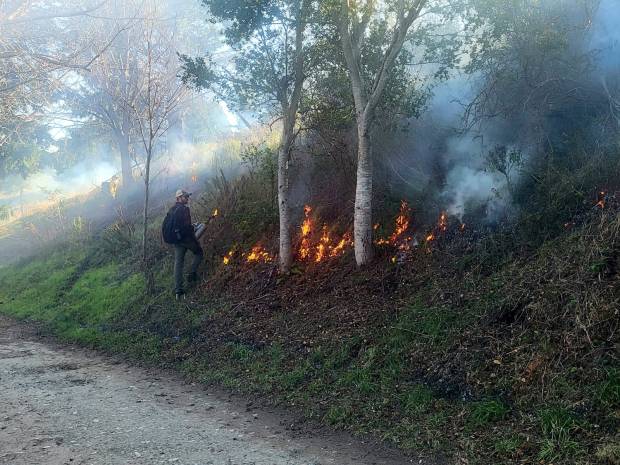
What is ‘giving back’ to nature? An indigenous person asked our community once why we were burning our prairies without seeding after the fire. Perhaps that is one way of giving back. We still aren’t doing that. Another way to give back would be to control the invasive plants and animals that are so terribly affecting nature. Please write to me if you can think of any other ways that Monterey Bay residents might give back to nature.
Energy Expenditure Principle
The way we create energy makes a difference and serves as a ripe area for environmental principle formation. Is the principle to create the most energy from the least impactful source? If so, how are we getting reports on how we might help?
The havoc being wrought by climate change has convinced many to be more mindful about what we take from nature, but most people have a very shallow understanding about that. Burning fewer fossil fuels is a Big Problem for life on Earth, but I hear very little about the impacts of alternate energy solutions on nature. Nuclear energy has a great environmental impact not normally described, same with solar panel production and concrete/steel installations for the bases of wind turbines. We might all benefit from getting more information about trade offs for various types of energy production. That way, we can shape our political or consumer voices to help create the best solutions. Plus, what are we hearing about using less energy, altogether? Long gone are the energy saving public service announcements of the now-lauded Jimmy Carter years.
Species Conservation Principle
Fossil-fuel burning-caused climate change is the number one threat to the environment, but there are other threats, and the core concern I believe we should have is about species conservation. I suggest that we should weigh human decisions on how well we can guarantee that all species continue to thrive. I have yet to speak with anyone that discounts this principle’s importance, but I have also seen many decisions made with too little information to adequately assess this principle. How is a regular person to evaluate whether or not a decision favorably affects species conservation? Luckily, we have public disclosure laws and people considering impacting the environment are required to analyze and disclose impacts on species. So, one would expect things like disclosure of species that might be impacted and how the impacts would affect their future chances of survival under the varied alternatives project proponents are required to analyze. If you don’t see such analysis, you should be careful about supporting such proposals.
For further thought on this, consider author Gregory David Roberts’ assertion in the novel Shantaram of the principle of complexity conservation. He would say that we should weigh the good of an action on whether it creates more or less complexity in the future…more complexity is the goal.
Go ahead- try using these pro-environmental principles or come up with your own! Let me know how it goes.
This article originally posted at BrattonOnline– try it, it’s FREE! Plus, very smart people contribute important news there- please do check it out and keep checking back, for substantive, real news.











 Grey Hayes