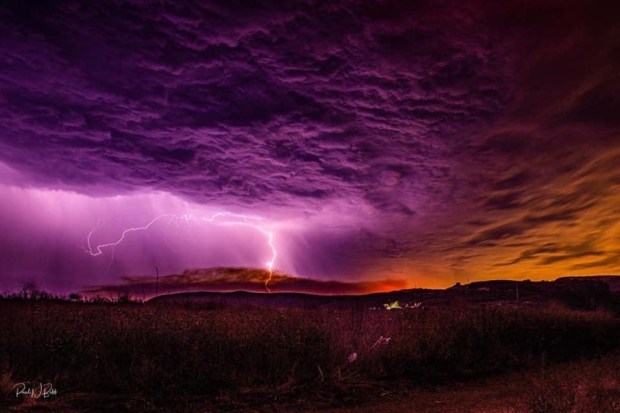
It seems like the world has changed. As I write this on Tuesday 9/16/25, Tropical Storm Mario is headed towards California. Back in 2020, the CZU Lightning Complex Fire was the result of another such situation, via Tropical Storm Fausto. And, as with 2020, there is a lineup of such storms…another is predicted soon after this upcoming one. We look forward to the regular Fall rains to start, typically on October 15. Meanwhile, we wait to see where the lightning will strike and if someone can extinguish the flames before the resulting inferno.
I moved to Santa Cruz in 1986…did I somehow miss old timer stories or some other form of history that tropical storms, lightning, thunder, etc., are ‘normal’ for this part of the world??!!
Does this seem normal to you?
Changing How We Live
All us country folk are changing the way we live, out here on the outskirts of towns.
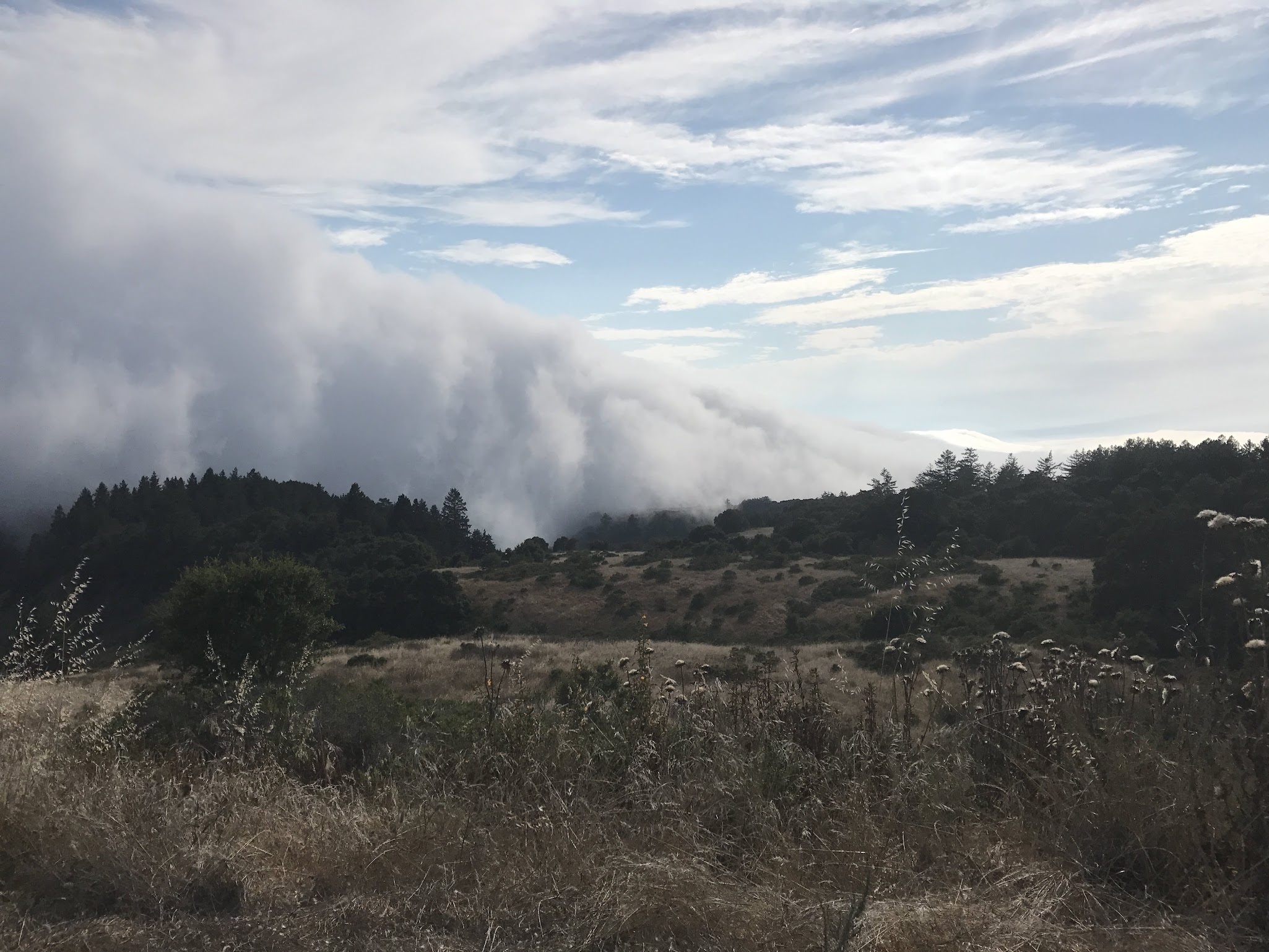
Many modern Californians lived for decades in the “woods.” They had sprawling outbuildings full of canning supplies and landscaping tools, tractors, chicken coops, pet pens, toys scattered about. Their homes were ”original” architecture, funky and artful. Their gardens neat or a tangle, blended into the surrounding with the forest engulfing less tended portions. Funky. That was much of country California.
In this changing world, we can no longer afford to be that way: our ‘stuff’ is burning up and making a mess. Now, we must consolidate our things into fire resistant structures and manage the surrounding vegetation.
The Vegetation Around Us
This land is productive, which means that plants make a lot of biomass each year. In most natural areas near Santa Cruz, plants produce 4,000 – 8,000 dry pounds of biomass per acre per year: that’s 6,800 – 13,600 pounds of living biomass: literally ‘tons.’ For a house that’s 1200 square feet, clearing within the 100’ required space is managing about an acre and a half of vegetation. That means chipping, burning, mulching, composting, or hauling biomass “away” – otherwise, living or shed plant parts accumulate, add up, and pose a worse fire hazard in subsequent years.
Same goes for the thousands and thousands of acres of open space/parkland around the Monterey Bay. That open space is producing lots of fuel for future wildfire.
Attitudes
Many people can’t handle this new reality of living with fire, especially in the country. Sure, if you are wealthy and live rurally, you can pay for someone to manage your property for wildfire…but still it is expensive! If you are poor, you can work to do it yourself…but it takes time, strength, and know-how! I’ve asked the folks I know who take care of their rural spaces how much time it takes to manage their (small!) home’s vegetation wildfire danger. The uncannily similar answer for my informal poll is….6 hours a week.
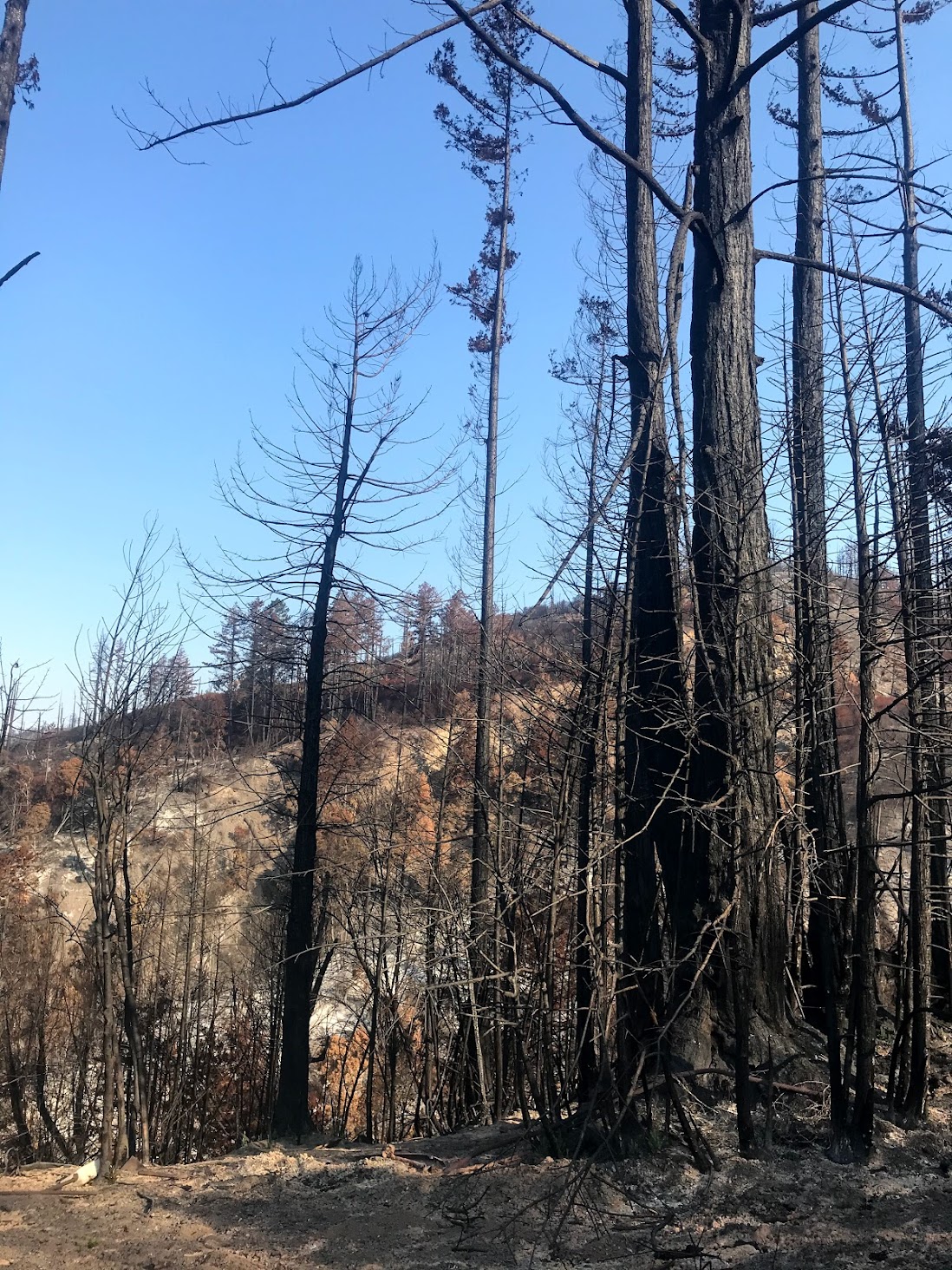
But most people are just plain in denial about the danger, even though everyone knows someone who’s been through one of the giant fires of the past few years. Some of those in denial actually went through the last fires and somehow think that it can’t happen again.
Perhaps we’ve become inured to the fire news and so can’t grip reality. Did you know that Chinese Camp, a small town in the Sierra was nearly completely destroyed by wildfire in early September? That was the result of another ‘monsoon’ full of lightning from the South! Too much!
City Folks
It might be easier to ignore the wildfire danger if you live in the City. But people must change the way they live in the cities, apparently: in case you don’t recall there was this thing in Santa Rosa called the Tubbs Fire that burned thousands of homes, many of which were ‘in town.’
It looks to me like a wind-driven wildfire could burn a long way into Santa Cruz with houses stacked against one another adjacent to the forested and shrubby steep canyons of Moore Creek or adjacent to the thickly vegetated and at times crispy dry San Lorenzo Valley. The towns sprinkled around Fort Ord share the same danger/fate as does Monterey and Carmel.
Wind Driven?
Do we forget about the 70 mph gusts that fanned the CZU 2020 fires? Were we watching the Santa Rosa Tubbs Fire blast on high winds? The winds are increasing…
The Cause and Effect
The changing world I have outlined here is in large part due to the burning of fossil fuels, trapping sunlight…aka ‘the greenhouse effect.’ More ‘greenhouse gasses’ cause more atmospheric energy: part of the reason we are seeing the new tropical storms headed our way. The winds, with or without the storms, are demonstrably getting more intense. Predicted outcomes of climate change include extreme heat and drought events…extremes of all sorts – big swings.
The sad changes we are struggling to manage with just plain living are probably quite minor compared to what is to come based on climate change predictions. One day, folks will look back at the one-day-a-week that it takes us now to manage our yards and say “humf! That’s nothing.” What will their struggles be like? Will they be trying to survive weeks-long dust storms…building storm proof greenhouses for food?
When will we reverse this terrible trajectory?
– this article originally appeared as part of BrattonOnline.com – check it out!
 Grey Hayes