visitor use
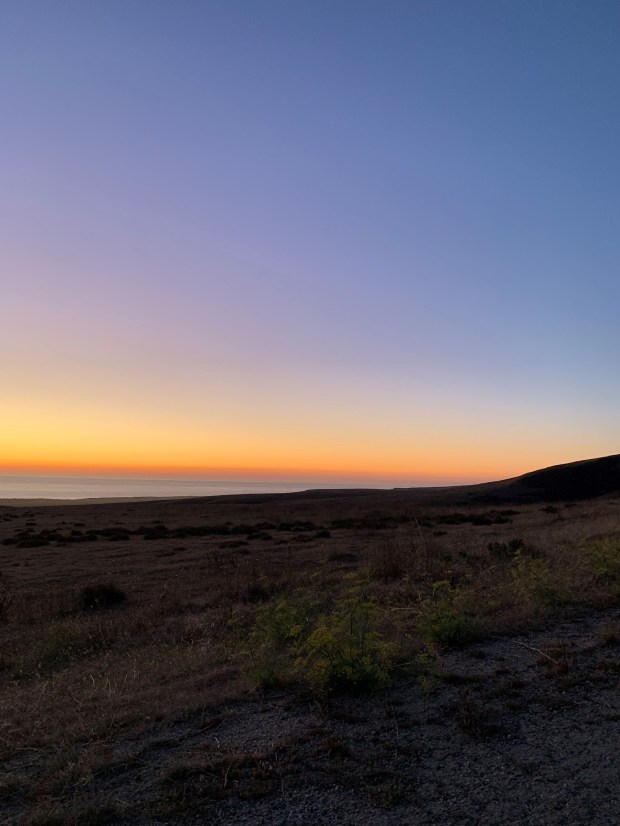
Being Present, Naturally
Our best moments are when we feel the most present. The stories we tell, the good ones and the bad ones, reflect on the times when we were most attentive. If you read that statement and let that realization sink in, you might be inspired to take a break from reading this.
The media we return to is that which absorbs us. When we see or read something that catches our attention, we focus on it and the world around us can fall away. Likewise, when we turn our attention outward, the world opens up. The more we pay attention, the more we see. We are incredibly good observers if we stop to do just that.
My favorite way to open myself to discovery, is to find a quiet place in nature and let all that is occurring there slowly reveal itself. There is so much complexity in any wild place that the discovery goes as deep as you are willing to observe.
Jon Young at least used to live near Santa Cruz and has written and taught a lot about how to become more present in the moment and how that presence of mind can help heal. This 17 minute TedX talk summarizes some of his most poignant lessons. Telling stories, listening to stories, being aware of your natural surroundings, and allowing yourself to become more a part of your surroundings are all central themes.
Mr. Young advocates for choosing a ‘sit spot’ to visit as a door-opening exercise to discovering yourself and nature, to finding a way to be present. Visiting one spot in nature and sitting there for an hour regularly with little movement allows us the time for discovery and the time for those beings that occupy that place to accept our presence and reveal themselves.
The Nature of Being in Nature
When we go into nature, how do we change? Some people go into nature for the most active forms of recreation: extreme or less extreme mountain biking, jogging slow or fast, the many forms of exercise for people or beast called ‘horseback riding,’ and then there is destination hiking or exercise hiking. Some people go into nature for more passive activities such as wildlife viewing, natural history study, art, poetry, contemplation, meditation, teaching children, learning from nature, becoming more at one with the wild and other beings, or just plain observation. The active forms of recreation (fast mountain biking, especially) are not compatible in the same time and place with the more passive types of natural area visitation. And yet, natural area managers mostly plan for ‘mixed use’ or ‘multi-use trails,’ mixing all of those uses together when they design and manage open space. This is despite a very well-honed natural areas planning science enshrined by the National Parks Service and other agencies who manage for visitor use expectations and experiences. There are University degree programs focusing on training natural areas managers in this science. Unfortunately, despite the huge investments in natural areas, I am unaware of any such science being applied in our region.
The Num-Num Cult
I recently came across an example of the kindergarten-level conversation we are subject to by the local open space managers who design the visitor use experiences we must tolerate. Check out this survey to “let us know if trails are meeting your needs” recently offered by the Santa Cruz Mountains Stewardship Network. The survey is meant to help inform the “State of the Trails Project,” which mostly otherwise appears on the Midpeninsula Regional Open Space District’s website on web searches. You can view a video presentation about this report at this link.
I was disheartened by the survey in that none of the rich passive uses of parks were reflected in the choices respondents could choose from. Using their terminology, all my friends’ uses of parks would be forced to fit into one use – ‘hiking’ – which is very far off from our real and precious experiences in nature. Luckily for us, the survey has blank spots that allow you to add comments.
Majority Rules?
Such a survey makes me wonder where we are heading with managing natural areas for the quality of visitor use experiences. If businesses have any say, they will support visitor use experiences that raise the most capital, experiences with expensive equipment that breaks or wears out. More passive uses of natural areas will never compete. The most passive uses, the most healing uses, will create the least amount of spending. The frugality of healthy people is astonishing.
Will those of us who are turning away from techno-gadgets and buying things be so marginalized that we will have nowhere to go to have the natural areas experiences we cherish?
Nature Heals
Many of us already understand the importance of nature in helping us stay healthy. The most recent term highlighting this phenomenon is called ‘forest bathing.’ Health care professionals recommend forest bathing, which is about practicing mindfulness, being present in nature so that we see the wealth of colors, sounds, and smells that are around us. This requires peace and quiet, the most peaceful places are the places that heal the best.
Wilderness Changed
The term wilderness is fast disappearing, for better or for worse. The term was problematic, anyways as it ignored the wealth of indigenous presence across the whole earth and the importance of indigenous people’s stewardship. And yet, the idea of wilderness being a place where technology, bustle, and noise is left behind, where contemplation and connection with nature are paramount needs to be attended to in our natural areas. Besides the wonky science of natural areas management for the ‘quality of visitor experience,’ it seems we lack a phrase that well contains such places.
Your Turn
I hope that you take the opportunity to fill in that survey and that you let politicians and open space managers know about the many ways that you cherish nature in open spaces. Let’s inform them of the term ‘displacement’ when you no longer feel comfortable going to a natural area because of the type or number of other ‘users.’ Every one of us has a right to our kind of use in natural areas, and it is open space managers’ jobs to accommodate those uses. They should be asking us about the quality of our experiences and adjusting their management to maximize that quality over time.
I hope that you also take some time to do some forest bathing. It will do a world of good. The more of us that do it, the more peaceful the world will become.
-this column originally posted in Bruce Bratton’s esteemed blog at BrattonOnline.com – I strongly suggest you subscribe (and donate to support it!) – this is precious place to learn much of what you should know to be a citizen of the Monterey Bay.

Conservation Land Management: Critical Thinking about Local Matters
When you visit conservation lands, how do you think critically about stewardship? There are various things to consider and ways you might help.
The Balance
Often conservation lands managers mention their obligation to balance conservation with public access. In our area, this is especially true for State Parks and the Bureau of Land Management (BLM). Here are some Mission Statements to help you understand:
State Parks Mission: “To provide for the health, inspiration and education of the people of California by helping to preserve the state’s extraordinary biological diversity, protecting its most valued natural and cultural resources, and creating opportunities for high-quality outdoor recreation.”
BLM’s mission is “to sustain the health, diversity, and productivity of America’s public lands for the use and enjoyment of present and future generations.”
The normal thing to do when analyzing how to provide a balance between recreational access and conservation is to perform a carrying capacity analysis, which defines ‘limits of acceptable change.’ Monitoring determines if limits are surpassed, and adaptive management reacts with changes to public access patterns to address any problems. If the carrying capacity analysis process were integrated into a collaborative natural resource management program that welcomed public participation, controversies about changing and limiting public access could be managed with more understanding and cooperation.
Visitor Use Expectations
If they followed state of the art management practices, conservation lands managers would consistently determine what prospective visitors expected and adjust to meet those expectations. Expectations are monitored through interviews and surveys not only of people actually visiting the conservation area, but also prospective visitors in the general population. Managers normally encounter a great deal of diversity of expectations from conservation lands visitors. Some want active recreational experiences – trails/roads to jog along or mountain bike; some mountain bikers even want “rad” experiences involving tricky terrain to navigate at high speed on single track trails. Other visitors hope for quiet, contemplative strolls, opportunities to observe wildlife, or safe places to walk with elderly or very young family members. Still other portions of the population want to recreate on motorized vehicles, fly kites or drones, or rock out with parties involving amplified music and dancing. And, other segments of the population want places to meditate, collect medicinal herbs or edible mushrooms, help with stewardship, or take photographs. Obviously, it is impossible to provide everything to all people on any given parcel of conservation land, but how can managers decide what to do?
Meeting Whose Expectations?
Conservation lands proponents are sensitive about meeting many different expectations because they perceive benefits of increasing the public’s support of conservation lands acquisition, which is expensive. Sometimes this is complicated because lobbyists for various recreationally-oriented businesses are good at amplifying their client’s voices to advocate for specific types of visitor use. Traditionally, hunter groups and off highway vehicle organizations achieved successes this way. More recently, mountain biking organizations have been similarly influencing conservation lands management. Proponents of conservation lands acquisition dodge the tricky nature of favoring some types of visitors over others by public cheerleading for ‘maximum public access’ while privately providing pressure for a small subset of visitors, usually those they think are most politically influential. This is why State Parks managers opened Wilder Ranch hiking trails to mountain biking without any analysis or planning, welcomed the public onto the Coast Dairies’ beaches without environmental review, and allowed a private organization to operate a parking lot, gift shop, and privately controlled entrance to Castle Rock State Park. This is also why the Bureau of Land Management will soon allow e-bikes to use trails at Cotoni Coast Dairies. BLM is also planning on crowding all visitors onto trails that will be so heavily used as to spurn contemplative users while disturbing wildlife enough to alienate bird watchers. Families will have their hopes dashed of viewing sensitive wildlife such as bobcats, badgers, and foxes, species that frequent the property before the public has been admitted.
Coastal Commission Cahoots
I would be remiss if I didn’t remind readers that the much-lauded California Coastal Commission has been a close party to such poor ‘maximize public access’ decisions. Politicians have long appointed Coastal Commissioners who agree to the (bogus) ‘maximize public access’ mantra and who consequently believe that protecting nature gets in the way of their political success. Likewise, staff who support this schtick are empowered and promoted…and an organizational culture has been created that knows little else. And so, our beaches, bluffs, and coastal parks are being overrun by visitors, vegetation trampled, hillsides eroding, and wildlife quickly disappearing.
Quality Experience
In our rush to maximize public access, we are losing the quality of visitor experience. Social scientists have long understood that conservation lands visitor expectations can erode based on what is “normal” to experience. As levels of trash increase, people expect trash…and become more careless about leaving trash in natural areas. With poor planning, parks become more crowded, and people lose expectation of contemplative experiences, nature becomes less healing. As over-used, badly managed trails erode into ditches with holes, elderly people stop visiting their favorite places; the average age of visitors grows younger and younger. As poorly educated conservationists work together for the ‘maximum use’ paradigm, families stop expecting to teach their children about wildlife from first-hand observation and the conservation movement loses wildlife advocates.
Oh, But Funding!
Enter into conversation with conservation lands managers with these critiques and the conversation quickly turns to lack of funding as the excuse. ‘We just don’t have the funding to….’ While I am compassionate to lands managers that they face a very dire funding situation, I posit that such poor funding is a result of bad decisions by individuals within their organization and lack of enlightened leadership in the conservation community.
When you hear complaints about funding, I encourage you to ask some follow up questions, like: ‘Have you completed “Carrying Capacity Analyses?”’ ‘Have you delineated “Limits of Acceptable Change?”’ ‘What has your monitoring revealed about the trends of sensitive plant and animal populations on your land?’ ‘How have you managed for changing visitor use and visitor expectations over time?’ If conservation lands managers prioritized addressing those questions in collaboration with the conservation community and the public at large, funding would be less of an issue. When visitor use is curtailed within the collaborative and adaptive management context, there is increased political support and funding for stewardship, planning, and improved alternatives that better address visitor expectations.
What You Can Do
See something, say something. I encourage everyone to speak up and vote for these issues. Any politician at any level must interact with these issues in some way: they should have clearly stated policies that they support to improve conservation lands management. And, they should know the term ‘carrying capacity analysis’ and support the practice as it relates to conservation lands management.
And, if your expectations are not met when you visit conservation lands, you should let the managers know. Are the trails in good shape? Did you see wildlife? Was it too crowded? Did you feel comfortable with the other kinds of users on the same trails? Was there trash? Were bathrooms adequate? Did you and your family feel safe?
Finally, ask conservation lands managers the questions posed above. Also, ask how you might help to manage and monitor within their defined carrying capacity, or how you might then advocate for increased funding for their adaptive management. These dialogues could help immensely.
-this article originally published by Bruce Bratton at his weekly BrattonOnline.com, an invaluable piece of journalism helping thousands of people keep in touch with what really matters around the Monterey Bay area of California. Subscribe today- better yet, donate to keep it going.
 Grey Hayes