Sustainability

Appreciations

I feel gratitude for many of the actions people are doing to help nature around the Monterey Bay. In this column, I will extend praise for those actions to specific people but inevitably will overlook others to whom I apologize in advance…chalk it up to not knowing everything everyone is up to or just plain forgetfulness. I also realize that no one is perfect, so I focus on the specific actions that I appreciate, not the whole of what anybody or group of people does, which might include things that are, on the other hand, very bad for nature.
First Peoples

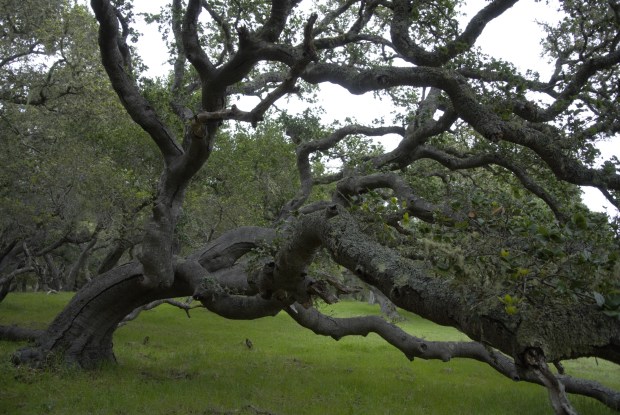
I lead with my appreciation for the First Peoples for their care for the Monterey Bay region. It is not hyperbole to say we owe everything we experience, the whole of nature, to the First People. The people who are and were indigenous to this place for thousands and thousands of generations took care of this land – every part of it. From squirrel to deer, from river to ridge, from the tallest oak to the tiniest wildflower – these things are here because of those people. The descendants of some of these people are still here, and we have much to learn from them and alongside them if we care to do so. They are still weaving together the fabric of this wonderful part of Earth.

Organic Farmers

I also appreciate organic farmers for caring for nature. By shunning the use of synthetic chemicals for pesticides and fertilizers, organic farmers are avoiding poisoning nature. These farmers forgo these things, pay fees for certification and inspection, and work harder to produce food that often times, to me, tastes better. Farming is not an easy career. I am so glad that I can afford organically grown food and that there is such an abundance produced in our region. There are lots of organic farmers that have inspired me, but I especially think of Phil Foster (Pinnacle Farm), Ronald Donkevoort(Windmill Farms), and Jane Friedmon and Ali Edwards (the original Dirty Girl Farm), and Jerry Thomas (Thomas Family Farm) as inspirations.

Weed Warriors

I want to give thanks to the folks who have long battled invasive plants in our area. Some of the hardest work protecting nature is done by the Monterey Bay’s weed warriors. These folks often volunteer their time to battle the worst invasive species affecting natural areas. They’ve battled French broom, jubata grass, ice plant, sticky Eupatorium, and on and on. Ken Moore was the godfather of weed warriors through his founding of the Wildland Restoration Team (interview pt. 1and pt. 2), but there have been many others. Linda Broadman worked with Ken and carries the torch through her leadership with the Habitat Restoration Team of the Santa Cruz Chapter of the California Native Plant Society. The Monterey District of State Parks deserves mention for steadfastly and regularly organizing volunteers to control invasive plants. Then, of course, there are the many volunteers who actually do much of the work…

Conservation Activists

This is where my appreciation will surely fall short as there are so many people who deserve recognition. Conservation activists often take civic engagement quite seriously. I am in awe of the many nature conservation activists who have fought and won so many important battles around the Monterey Bay. I have enjoyed learning from and sometimes working alongside Celia and Peter Scott, Bruce Bratton, Jodi Frediani, Michael Lewis and Jean Brocklebank, Corky Matthews, Gillian Greensite, Debbie and Richard Bulger, and Don Stevens. Behind and working with these good people were expert and dedicated legal support from Debbie Sivas, Jonathan Wittwer, Gary Patton, and Bill Parkin. Folks who have been affiliated with the Rural Bonny Doon Association and Friends of the North Coast also deserve recognition. Without people who are willing to donate their time, expertise, good judgement, intelligence, and skills we would not have much of the open space that species need to survive.

Tending the Fire

I have been so pleasantly surprised to see so much work with prescribed fire in our community. For me, this started years ago with Cal Fire including more recently as Angela Bernheisel led the first good fire at Soquel Demonstration State Forest. I have been thankful also to the work of the Central Coast Prescribed Burn Association, including their leaders Jared Childress and Spencer Klinefelter. State Parks’ Portia Halbert is a dynamo for putting good flames on the ground and an inspiration to so many others in moving that powerful tool forward. This prescribed fire work is tricky and takes brave people who know so much about so many sciences to get that kind of work done. Plus, they have to work well with others because it takes so many others to do that kind of work. They are restoring nature while making our communities safer. Thank you.

Politicians

For the last 35 years, there have been few politicians in our area that have openly declared nature to be central to their platforms, and I deeply appreciate those who have. Currently, there are very few indeed. State Senator John Laird seems to me to be an outstanding example of how a politician might succeed when keeping environmental conservation a publicly stated priority. Mayor of Marina, Bruce Delgado, is another example. I wish there were more than just those two, but that says something about both the need for more folks to run for office and the public’s will to prioritize such things when they vote. 

-this post originally appeared at my weekly column for BrattonOnline.com where one can subscribe and get the best local, regional, and global news from very smart and observant people.
Giving Thanks

Here it is…suddenly the season where we reflect on what it means to be thankful and what to be thankful about. All around us, beings are ecstatically grateful every moment. But, us humans seem to segregate our thankful moments, relegating them to holidays or ceremonies. Well, we should be happy for the ability to reflect in such a way, however it occurs.

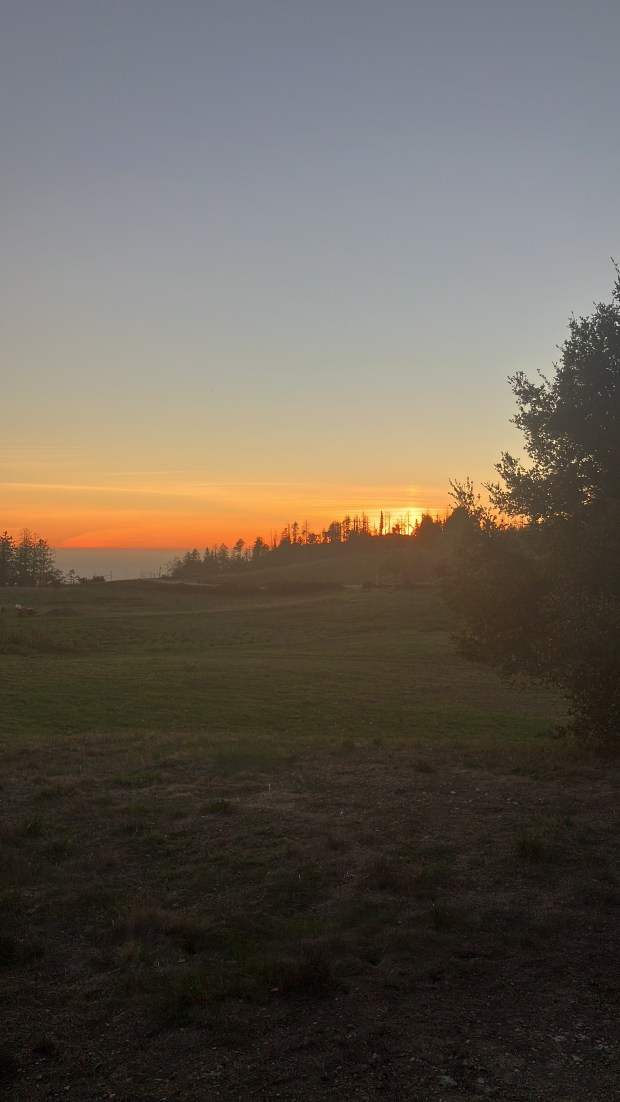
A recent sunset from Molino Creek Farm

Deep Time Thanks

Molino Creek Farm lies within the unceded territory of the Awasawas, or Santa Cruz People, in the Cotoni tribe. They lived on and cared for our land. They left lots of artifacts. There are places where seashells are still coming out of the soil. There are lots and lots of chert and some obsidian flakes. We have found bowls, mortars, and cooking stones. They were the first human inhabitants of this land and they took care of the old growth redwoods and ancient oaks that we still enjoy. Their land management made our soil rich for the crops we still grow.

The Greek Ranch and Transition

Much more recently, us Molino Creek Farm folks have The Greek Ranch and then Kay Thornley, Harlow Dougherty, Jim Pepper, Steve Gliessman, and others to thank for being here. There were years of hippies living here, wild years as we understand back in the Greek Ranch days. As the Greek Ranch transitioned to Molino Creek Farm, this contingent from UC Santa Cruz managed to purchase the land and created the organization that we have now. Many thanks to the folks who had the patience and fortitude to wade through all sorts of issues in establishing this cooperative.

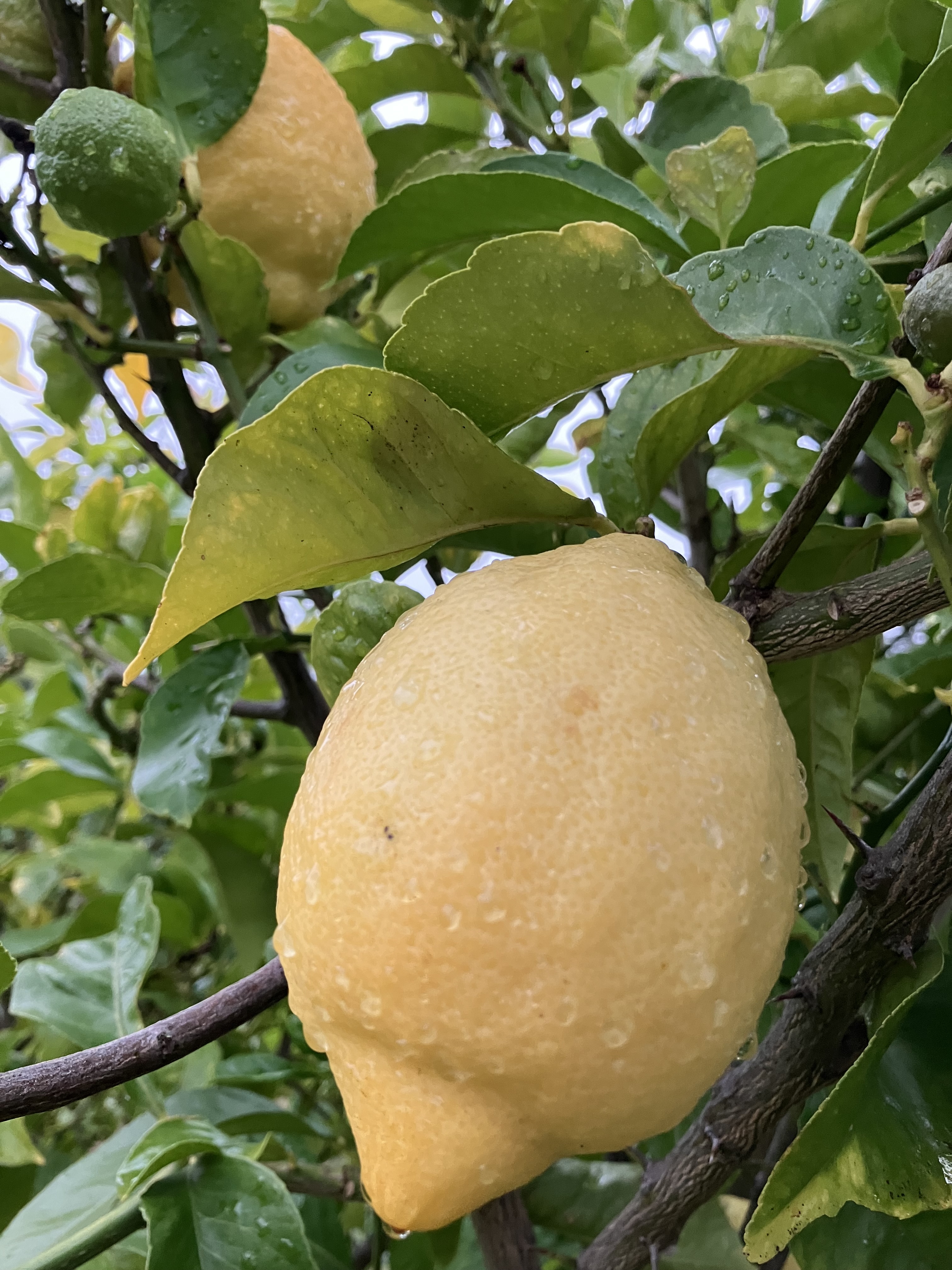
A few Lisbon lemons still left on the trees

Farming

Joe Curry, Judy Low, Mark and Nibby Bartle, and many others worked very hard to establish Molino Creek Farm, which became a legend for dry farmed tomato production. The early farmers made enough money and worked hard with piles of purchased materials to put up miles of deer fence, long stretches of irrigation, and a very good agricultural well. They bought equipment – tractors, fuel tanks, implements, generators…much of which we still rely on. These intrepid farmers taught many people how to grow dry farmed tomatoes and those people started their own businesses. The Farm was the 13th certified organic farm in California…there are hundreds now. We must thank these organic farming pioneers for showing how it’s done and inspiring others to give it a go.

Intentional Community

Other work deserving thanks is from the communal spirit and willingness of those who co-own this land. Living together in such a rural place takes work. The Farm is off grid and so produces its own power and water. We live 3.5 miles up a private road, which takes a lot of maintenance. They say people used to have to drive with chains to get up a muddy hill on the way in, and even then it wasn’t certain.

We have people who manage the finances, ‘the books,’ taxes, meeting facilitation, meeting notes, work party conveners, and so much more. Some of the group maintain the farmland, others maintain the wildlands, and others the water infrastructure. There is a legal committee, a road committee, and a neighbor committee – all very necessary. It takes great generosity to make these things work and we remain grateful to one another for the things we fit into our otherwise busy lives to help keep things together.

2020 Fire

The CZU Lightning Complex Fire devastated our farm. We lost two homes and a community garage workspace, fences, parts of our water system, many orchard trees, and much more. We put out word about what happened and an accompanying call for assistance. Within a short while, we raised $80,000 to help generally and a big portion of that to revitalize what was lost in the orchard. Such Huge Generosity!! We are still awed by that support. The financial support we received is just one indication of the strength and support of the social networks that the partners in this endeavor hold and tend.

We lost quite a few of our avocados in the 2020 fire, but they are just starting to fruit again

Land Stewardship

Since the fire, we have had amazing support for tending our land. The Prescribed Burn Association has poured support into teaching our cooperative about good fire and then leading a prescribed burn last year, reducing fuels over many acres, restoring coastal prairie. They brought people here to help and keep in touch, watching with us the effects of their management. Now CalFire is offering that same kind of help!

Neighbors

Our neighbors have always been helpful. For years, the folks at the cement plant helped keep our road in good shape, the gate secure, and even supplied us with road material, rocks, and spare cement. PG&E has chipped in lots of funding and work to keep the road repaired. 

The partners with the San Vicente Redwoods have also been unendingly great to us. Roadwork and weed work, fire and fuel management, security, and so much more have all been graciously a part of their contributions. We are learning together how to take better care of our lands, the non-human beings, and each other.

Community Orchardists

For 15 years, we have enjoyed the growth of our Community Orchard. We keep in touch with 225 people on email. 5 – 20 people show up to tend the orchard on many Saturday afternoons. Even though the fire took us backward a step, 5 years later we discover the orchard has surpassed that damage and is creating more and more amazing fruit, feeding more people. 

This year, we needed a tractor and the community orchard network donated funds that allowed us to buy one this past week. It is amazing how the generosity continues, born out of the relationships we build by tending a beautiful orchard, creating “Fruit for the People!”

In sum, we are very thankful. We have so much to be grateful for. Thank you, each and every one of you, for the various kinds of love and support you offer this amazing place, this greater community, which we steward together.

Living by Principles

What comes to mind when you hear someone say something like, “She is a principled person?” If you trust the source of the statement, perhaps you will think more highly of the person being referenced, which is curious because you don’t have any idea of the nature of her principles. Perhaps merely having principles and acting upon them makes you more predictable, and that predictability is an asset. It seems that this might be a good time to reflect on principle-based living.

Social Principles

I posit that most religions are based on social principles of great value. Kindness, fairness, gratitude, generosity, and attentiveness are some such principles, stated positively. Some principles are stated in the negative such as “evil” including murder, greed, vengeance, gluttony, etc. It is a mystery to me that discussion of such principles is not the primary driver of political discourse. Perhaps we get confused when juxtaposing wealth redistribution as both generous (to the poor) and greedy (against the rich)? Or, maybe we wonder if it might or might not be kind to murder someone for heinous crimes? These are heady questions.

On a national level, we might feel ready to label presidents, members of the house and senate, or even Supreme Court officials as ‘principled’ or ‘unprincipled,’ but how would we take such labels to more definition? What precise principles would you suggest your favorite national politician has had or has lacked? So much media hype focuses on either fallabilities or exhilarating roaring successes of our so-called ‘leaders,’ and yet that question may be difficult to answer. I challenge you to try.

I suggest that everyone has some familiarity with social principles and that most people, if asked, would be able to speak to their personal framework. However, beyond that, I wonder how much people are guided by principles for their work, their homes, or their relationship with the environment. 

While I challenge everyone to think about what principles they operate on at the workplace or in their homes, I am more interested here in elaborating on some environmental principles that you might consider.

Ecological Principles  

There are principles that could guide humans in better forming their relationship with the environment, creating increased benefit for future generations. The root of all evil is said to be greed, and what better test of an environmental principle than just that – greed? 

One of the key attributes of greed is to seek only to take, without giving. For thousands of years, indigenous peoples understood that humans should be very mindful about what they took from nature, and also they should give back. Frugality is a central principle for humans’ relationship with the environment. The less stuff we buy, the more pro-environmental we are. Last I checked, it cost a liter of crude oil every time a dollar was exchanged. 

Giving Back to Nature

What is ‘giving back’ to nature? An indigenous person asked our community once why we were burning our prairies without seeding after the fire. Perhaps that is one way of giving back. We still aren’t doing that. Another way to give back would be to control the invasive plants and animals that are so terribly affecting nature. Please write to me if you can think of any other ways that Monterey Bay residents might give back to nature.

Energy Expenditure Principle

The way we create energy makes a difference and serves as a ripe area for environmental principle formation. Is the principle to create the most energy from the least impactful source? If so, how are we getting reports on how we might help?

The havoc being wrought by climate change has convinced many to be more mindful about what we take from nature, but most people have a very shallow understanding about that. Burning fewer fossil fuels is a Big Problem for life on Earth, but I hear very little about the impacts of alternate energy solutions on nature. Nuclear energy has a great environmental impact not normally described, same with solar panel production and concrete/steel installations for the bases of wind turbines. We might all benefit from getting more information about trade offs for various types of energy production. That way, we can shape our political or consumer voices to help create the best solutions. Plus, what are we hearing about using less energy, altogether? Long gone are the energy saving public service announcements of the now-lauded Jimmy Carter years.

Species Conservation Principle

Fossil-fuel burning-caused climate change is the number one threat to the environment, but there are other threats, and the core concern I believe we should have is about species conservation. I suggest that we should weigh human decisions on how well we can guarantee that all species continue to thrive. I have yet to speak with anyone that discounts this principle’s importance, but I have also seen many decisions made with too little information to adequately assess this principle. How is a regular person to evaluate whether or not a decision favorably affects species conservation? Luckily, we have public disclosure laws and people considering impacting the environment are required to analyze and disclose impacts on species. So, one would expect things like disclosure of species that might be impacted and how the impacts would affect their future chances of survival under the varied alternatives project proponents are required to analyze. If you don’t see such analysis, you should be careful about supporting such proposals.

For further thought on this, consider author Gregory David Roberts’ assertion in the novel Shantaram of the principle of complexity conservation. He would say that we should weigh the good of an action on whether it creates more or less complexity in the future…more complexity is the goal.

Go ahead- try using these pro-environmental principles or come up with your own! Let me know how it goes.

This article originally posted at BrattonOnline– try it, it’s FREE! Plus, very smart people contribute important news there- please do check it out and keep checking back, for substantive, real news.

The Slowness of Extreme Heat

Happy Interdependence Day! I’m happy not to live under the tyranny of a monarchy AND I’m glad to be part of a community that recognizes the centrality of interdependence. The Molino Creek Farm Community relies on one another, exercising our various strengths to foster healthy farm life at its center. We include teachers, woodcrafters, a midwife, farmers, orchard tenders, bookkeepers and administrators, activists, road technicians, and natural lands managers. Many others join, from near and far. Together, we make this land sing: it depends on us, we depend on it, and everyone depends on each other. Nearly 4 years after the last wildfire, we feel that interconnectedness more than ever.

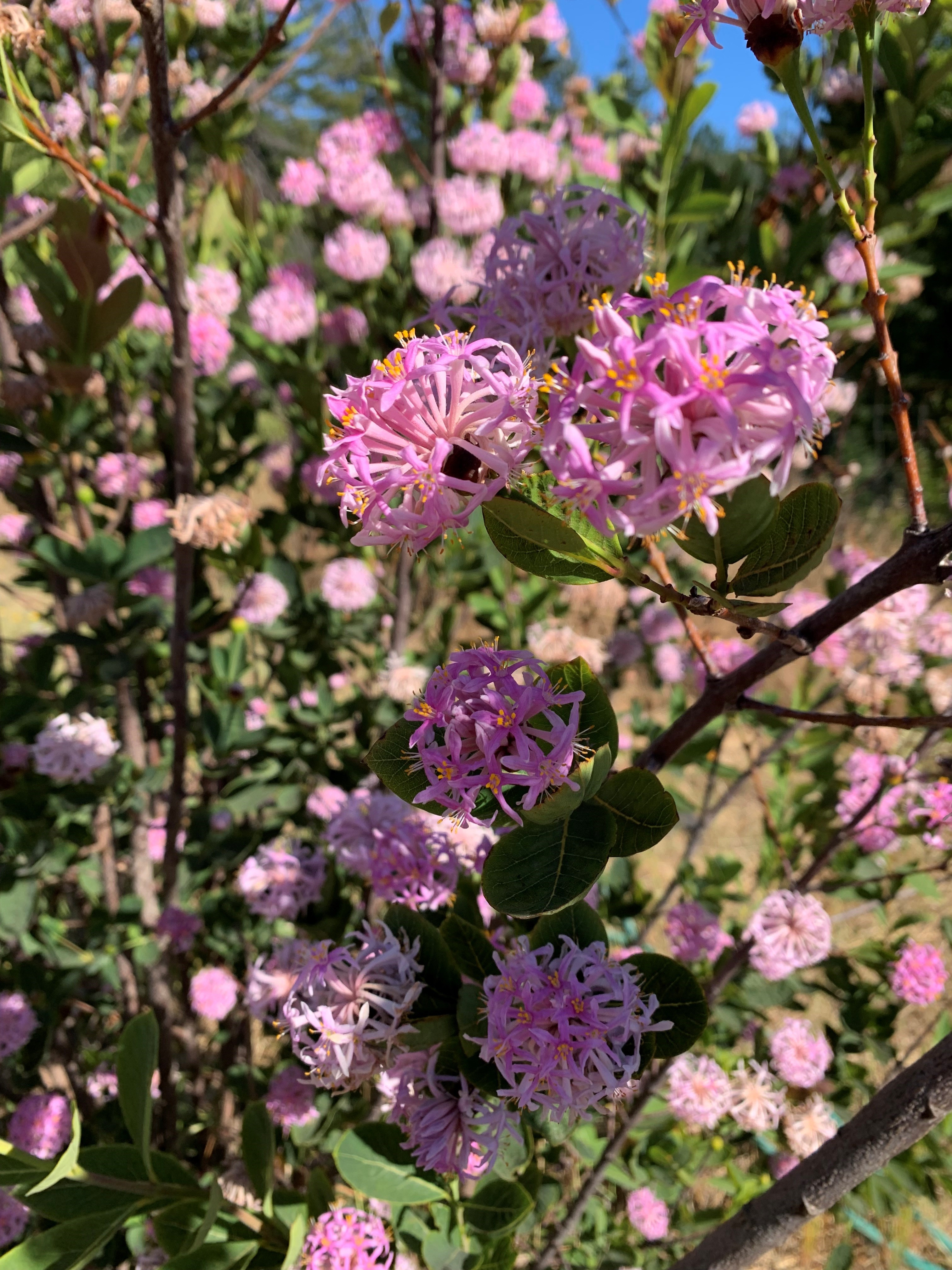
Name that shrub: one of our many hedgerow plants

Evening Scents

Each evening and early in the morning, the air is filled with the “seminal” smell of the male flowers of tanoak. It hits you strongly, suddenly: the pollen must release all at once after the evening arrives. As the sun was beginning to set, before the emanation of the heavy tanoak smell, there was a more subtle, pleasant, sweet aroma: thousands of white flowers unfurled from the field bindweed, a ground-hugging invasive morning glory- like vine of the tilled fields. There’s no detectable smell from a single bindweed flower, but en masse they sure smell pretty.

Summer Fruit

There is a pinkish blush on the first dry farmed tomatoes, but other fruits are riper. The 2 trees are young yet, but the first aprium crop is coming on: it looks like we might get 20 pounds to share among our community orchardists. They are delicious and almost make up for the lack of real apricots, which we can’t seem to produce in our cool coastal clime. The star of the show is cherries, but again too few to get to market: we anticipate 300 pounds of fat, dark red sweet cherries from the 18 trees that the fire spared. The 25 other recovering cherry trees in that block, grafted onto resprouting rootstock, will make their first sizeable harvest next year…starting in 2026, we’ll be back to ‘normal’ with 3,000 pounds plus of annual production if the stars align.

Next up this season…plums and prunes! The apples are silver dollar sized, at least, and growing. And, the avocado fruit have just set – if we can keep them moist enough, we’ll have a crop starting next January.

Sweat Investment

Even the mornings are hot as we greet the dawn ready for chores. First up: fuels reduction! Clipping, raking, and hauling the dry vegetation away from the buildings, water tanks, solar arrays, and pipes. Piles grow in the fields far away from danger…5 months from now and we’ll set them ablaze in the mist and drizzle. Today’s fuel will be tomorrow’s shrub-eradicating fire, each pile moved on top of a plant we want to eradicate.

The roar of mowers, whine of weedeaters, and buzz of saws soon obliterate the extended dawn bird chorus. When our own machinery isn’t running, we can still hear the neighbors working downhill towards us, maintaining the regional shaded fuel break along Warrennella Road. This past week we thank Brion Burrell for his artistic machinery management to reduce acres of French broom and other fire dangers to nothing, making the land around us healthier and more resilient.

Neighbors and Farm partnered in clearing French Broom and fuels away from water tanks
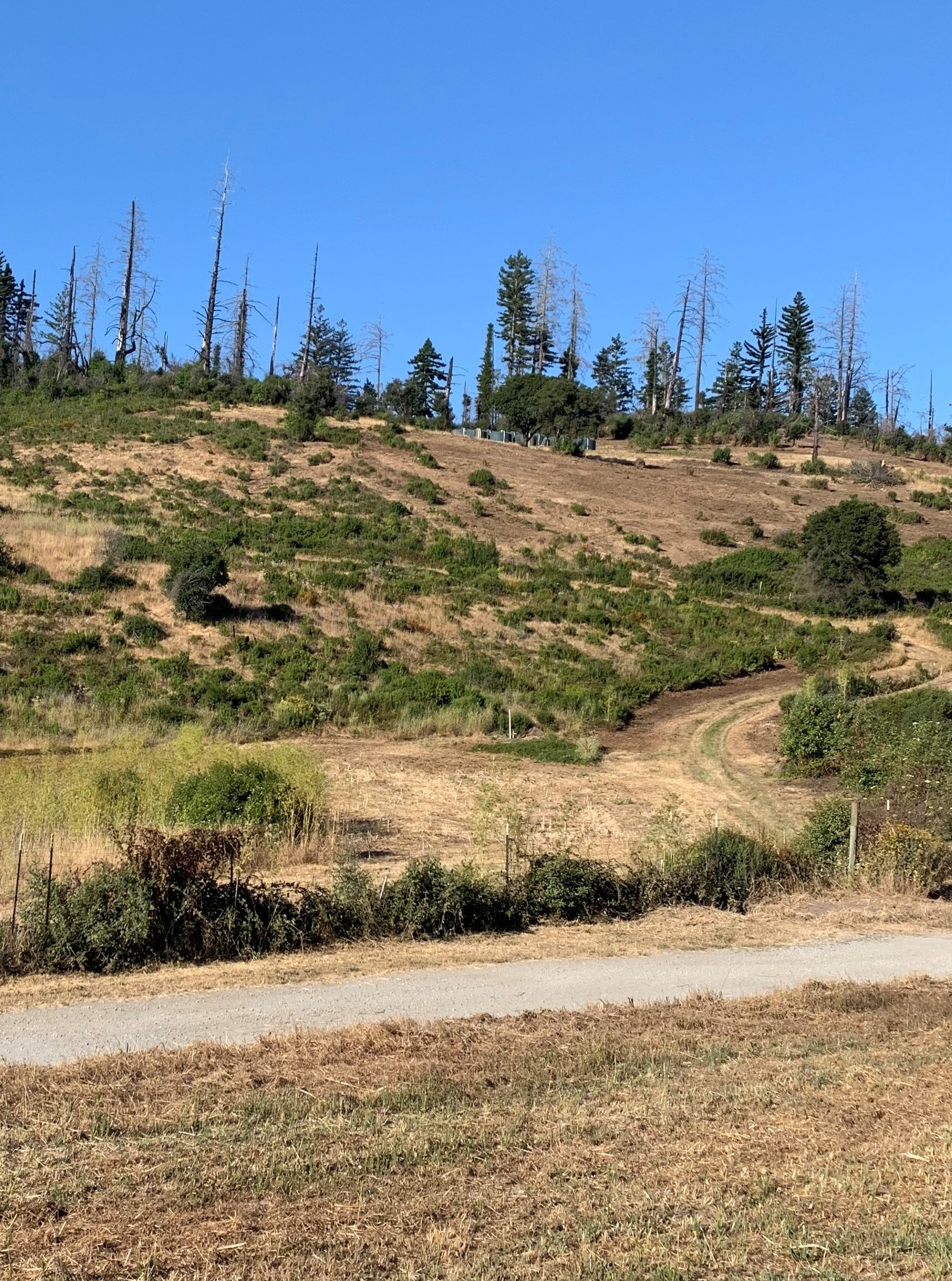
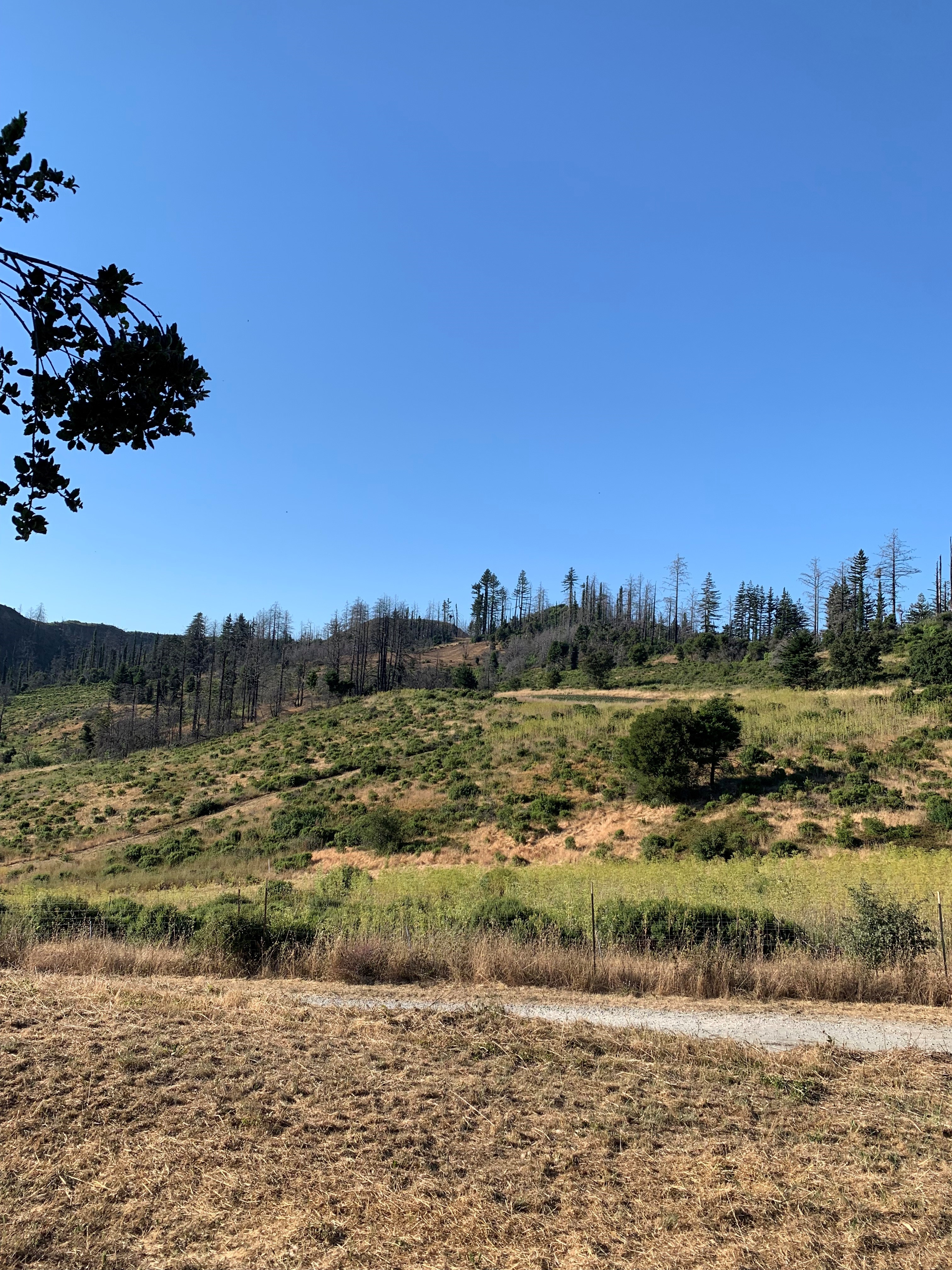
San Vicente Redwoods cleared an ancient meadow of post-fire French broom pulse high above the Farm

Early morning still: trucks trundle and people amble towards the irrigation controls. We reach down to turn valves, starting water flowing. Then we pace the water lines, inspecting for leaks. Earlier, ravens or mice have made holes in the plastic irrigation tubes, and out pours too much water, hissing loudly, spitting into the air, creating mud and disaster. Repair kits, a thorough soaking, and a bit of work later things return to normal and the cycle of wetting has begun on one more patch, once again. We are applying 45,000 gallons of solar pumped irrigation water from our well each week to grow orchard trees and row crops. That water makes tens of thousands of dollars of income and thousands and thousands of pounds of delicious food. And it takes lots of attention, coordination, and work to manage.

Wild Life

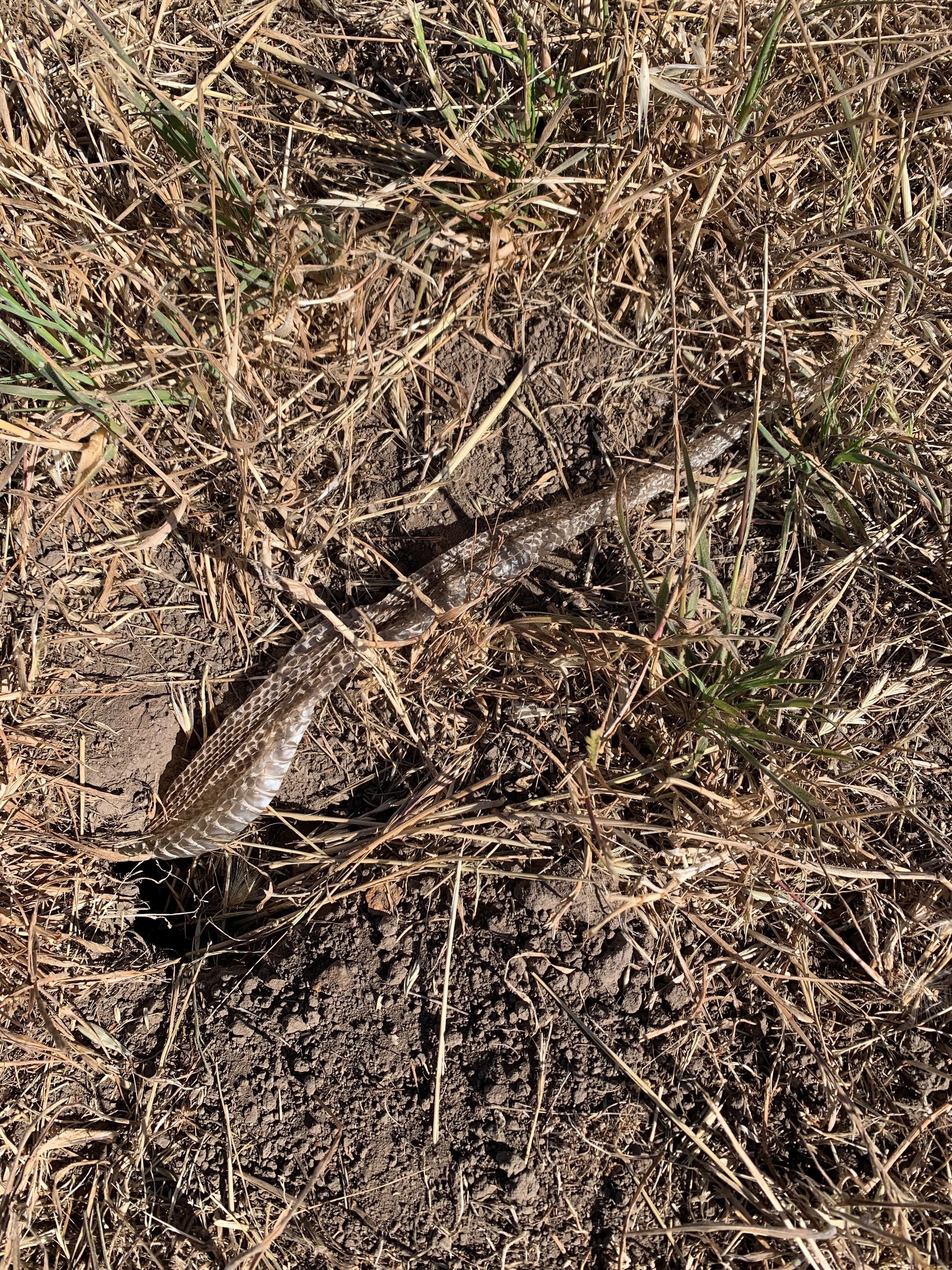
Those dawn treks for irrigation reveal fresh snake tracks, coyote scat, and weasel footprints. Gone are the days when you could easily see snakes, but they are still active around the farm. This past week must have been the right moon phase for reptiles to shed their skin. Fence lizards are still flakey. Shed snake skins have appeared, always trailing into gopher holes.

Gopher snake skin- as typical, entering gopher burrow

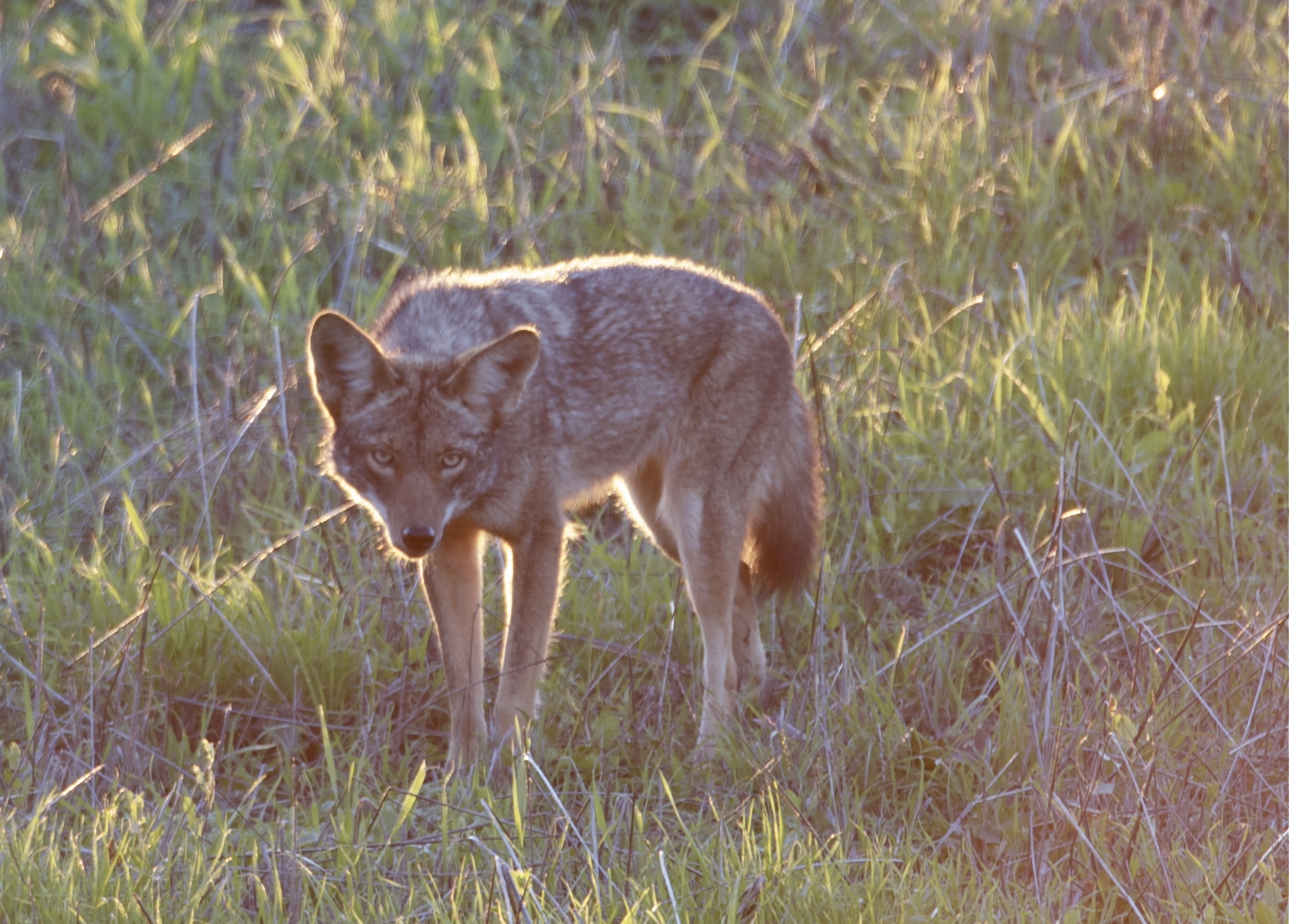
The regularly yipping coyotes are feasting on a big crop of juicy blackberries, as seen in their purple, seed-filled scat. Weasels are feasting on mice, and we hope they soon eat the surprising, sudden appearance of ground squirrels.

Very late but they finally appeared: dozens of California quail fluffies. The quail babies peep like easter chicks as they tumble and run along dusty trail and road, proud parents standing guard. The first younglings can fly, but most are still too young. A mother turkey is also shepherding a second round of just 3 much larger, still flightless and fluffy babies. High on the ridge, the purple martin chicks are in the air, noisy moist-sounding deep chirp-whistles give them away. They’ve done well this year. Maw and Caw greeted a third raven…a child from the past?…this morning – sometimes that one sticks around a few weeks, we’ll see.

Noise From Below

With the heat and extreme dry, we hope that no one sets the world on fire with fireworks at the beach tonight. The week leading up to this evening has been sporadic with preparatory explosions. The King Tides have made the beaches narrower, and the signs and Sheriff shoo people away, but still we wait with trepidation. May all we hear is the continued crash of the large ocean waves, lulling us to sleep with all of the windows open on these warm summer nights.

Environmental Injustice and Accountability

Shall we all agree? Injustice shall not stand! But what are the ultimate measures of environmental injustice, and how do we make those responsible for violating those measures more accountable? Shouldn’t these be the primary questions we pose as ethical humans concerned with the welfare of future generations? As the which came first the chicken-or-the-egg statement goes, ‘no peace, no justice.’

Species Loss and Soil Loss

I posit that the loss of species is the primary measure of environmental injustice. And I would suggest that soil loss is, as a measure, just as important. It is sometimes difficult to make the case that a given species is critical to the welfare of humans. But any informed, rational conversation on the subject will eventually conclude that the most justice is served by ensuring all species survive. It is similarly difficult for most people to understand and discuss the importance of keeping soil in its rightful place. And again, if people take the time to have informed rational discussions on this matter, they will conclude that is absolutely critical that humans do everything in their power to ensure that soil is not lost…from any place.

Measuring Success

Humans have become expert at measuring things, and there are easily available metrics for monitoring species and soil health. The federal government of the United States has an Endangered Species Act and a Marine Mammal Protection Act and the State of California has its analogues. These two very powerful pieces of legislation demand a science-based approach of measuring the degree to which species are approaching extinction, publishing lists of species which have entered that trajectory, and demanding humans take the actions necessary to recover those species back to healthy populations. With those rules, we have progressed well in our species health measurements, database management, analyses, and predictions – oodles of very smart humans’ careers are spent on these issues. The US Fish and Wildlife Service, National Marine Fisheries and California Department of Fish and Wildlife are the authorities responsible for protecting species.

Similarly, both the federal government and the State of California have strong legislation to address soil loss. The federal Clean Water Act and the state Porter-Cologne Act both address soil loss where it can most easily be shown to affect human welfare: in wetlands, streams, and rivers. Again, humans have become adept at measuring soil (aka ‘sediment’) levels in our wetlands and waterways. The acting authority for both pieces of legislation is the State Water Quality Control Board, acting with Regional Water Quality Control Boards…ours being the Central Coast office based in San Luis Obispo.

Photo by Vince Duperron

Progress?

We have had some success, but mostly we are failing to address species decline and soil loss. The Monterey Bay region has excellent examples of both the limited successes and abject failures with both issues. If you get to Moss Landing or Monterey and hop on a whale watching boat (and I hope you do!), you can predictably view endangered species that, due to legal protections, measurements, and adaptive management, have recovered somewhat from extinction. Hike at the Pinnacles, and you can see California condors which most people feared would go extinct not that long ago. Walk on some of our local beaches and you might see a snowy plover…another species who owes its survival around here to the Endangered Species Act. Same with the southern sea otter, marbled murrelet, and the central coast populations of steelhead and coho salmon. If I’m convincing you of humans’ ability to reverse species extinction, you are being premature. All of those species, and dozens more endangered animal species remain on the federal and state lists of imperiled species because they have not been recovered. And, many, many more species qualify for listing under the state and federal endangered species acts but the authorities haven’t spent the time to analyze them. Locally, only the peregrine falcon has been ‘delisted’ – no small feat! The reason so many species are so tenuously holding onto their existence: lack of accountability.

Accountability

Holding people accountable begins with measuring their success. After legal action by the Center for Biological Diversity, the US Fish and Wildlife Service has been dutifully publishing 5-year reviews of the status of each federally listed species; the stories in those reports are not good, but their reports fail to go so far as to hold anyone accountable. Turning to our much-vaunted free press, The Intercept recently published an exposé that illustrates who should be held accountable for the lack of protection afforded endangered grizzly bears. That story, and similar stories I’ve documented from around the Monterey Bay, point to problems with the justice system. If you haven’t figured it out yet, the US justice system is seriously in trouble: there is no justice in the USA! As shown in that Intercept article, anyone can destroy the habitat of, or kill individuals of, any endangered species and easily get away with it.

Point Reyes Horkelia: another species about to be listed as Endangered due to bad public lands management decisions

Local Examples – Endangered Species

Whale species, snowy plovers, Ohlone tiger beetles, California red-legged frogs – all local endangered species with good documentation of legal infractions that have gone unanswered. There are films, witnesses, and reliable first-hand accounts (including by legal enforcement personnel) showing boat captains purposefully pursuing and interfering with the movement of – harassing – legally protected whales on the Monterey Bay…and these are ongoing situations. When interviewed, Federal enforcement personnel say that it is hopeless to enforce such infractions because they report to too few legal personnel and those personnel say such cases don’t stand any hope of holding up in court. Similarly, State enforcement personnel say that unless they catch, film, and have witnesses of someone in the act of killing an endangered sea otter (with ‘blood on their hands’ and a ‘body in their trunk’) there is no hope of legal enforcement of the many more frequent (and well documented) situations of human behavior negatively impacting that imperiled species. Again, they say this is due to limited legal bandwidth within their agency and the hopeless nature of the justice system in convicting anyone. In Florida, there is good legal precedent for finding parks agencies responsible for allowing visitors to trample endangered sea turtle nests. In Florida, as with California, state parks personnel are required to plan for such endangered species protection, even on popular beaches. Around the Monterey Bay, parks agencies routinely allow visitors to trample endangered snowy plover nests and squish endangered Ohlone tiger beetles: there’s documentation aplenty with both situations. As recently as this past year, park agency personnel have destroyed wetlands occupied by California red-legged frogs to ‘improve’ trails. In past years, park agencies have graded and graveled trails, destroying Ohlone tiger beetle habitat. When reports reach federal officials, they respond that they contact parks personnel, admonish them, receive apologies, and then they forget it…there is not one bit of justice served!

Local Examples – Soil Loss

I could, and will in a future essay, provide a similar litany of examples where responsible agencies have failed to enforce regulations designed to address soil loss. The San Lorenzo River is ‘listed’ as impaired by sediment- soil loss in that watershed is rampant and largely unaddressed. There is more to come on this.

Upper- and Lower-Level Accountability

What do we do? If voters don’t demand that District Attorneys enforce environmental crimes, they won’t. If we don’t demand that our politicians have environmental platforms, they won’t work to improve the justice system so that it protects species and soils. But is the fault really way up there at those ranks? Can’t we demand accountability at lower levels? After all, unless we work together at every level, we won’t succeed.

If you see something, say something. We must have compassion for the enforcement personnel who so want to do their jobs but feel disempowered. And let’s learn how to be good witnesses, how to provide the right reports, and how to help document the two primary root environmental justice issues. Evidence must mount from more people more frequently. We must also make sure that the evidence is well stewarded: I look forward to annual reports from enforcement agencies about the frequency of infractions that remain unenforced.

Finally, why do we allow parks agencies to keep operating so that visitors are destroying the endangered species that those parks were designated to protect? Why do parks personnel allow so much soil loss from roads, trails, farms, and buildings? This goes beyond enforcement. This is a political issue. No one wants such injustice.

-this essay originally posted by the wise Bruce Bratton, who aligns some of the areas’ best minds to post in his weekly blog at BrattonOnline.com – why not subscribe today?