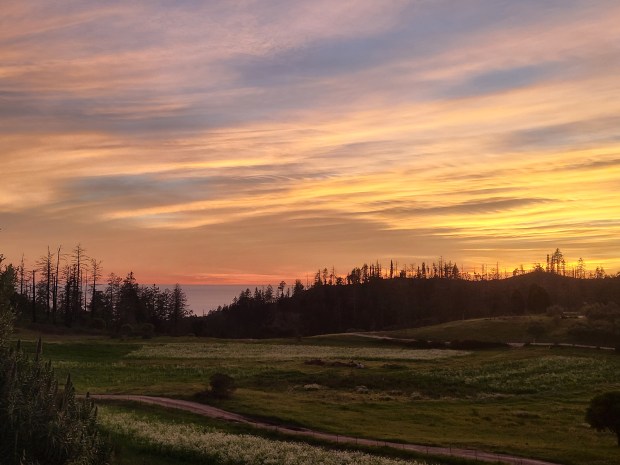
Humans keep calendars and clocks, rarely aligned with Nature’s metronome. Religion nudges ceremony further, further from the harmonic pulse of seasons, from the spin of Earth, Moon, and Sun. The peeling of millions of people-machines drown timekeeping (dawn and dusk!) birdsong, belching chemical steam, blotching sky, trapping heat, swaying ancient melodies into continuous disharmonious cacophony.
Disoriented humans growing old too fast, days’ flight, years’ fast wrinkle.
Jumping Ahead
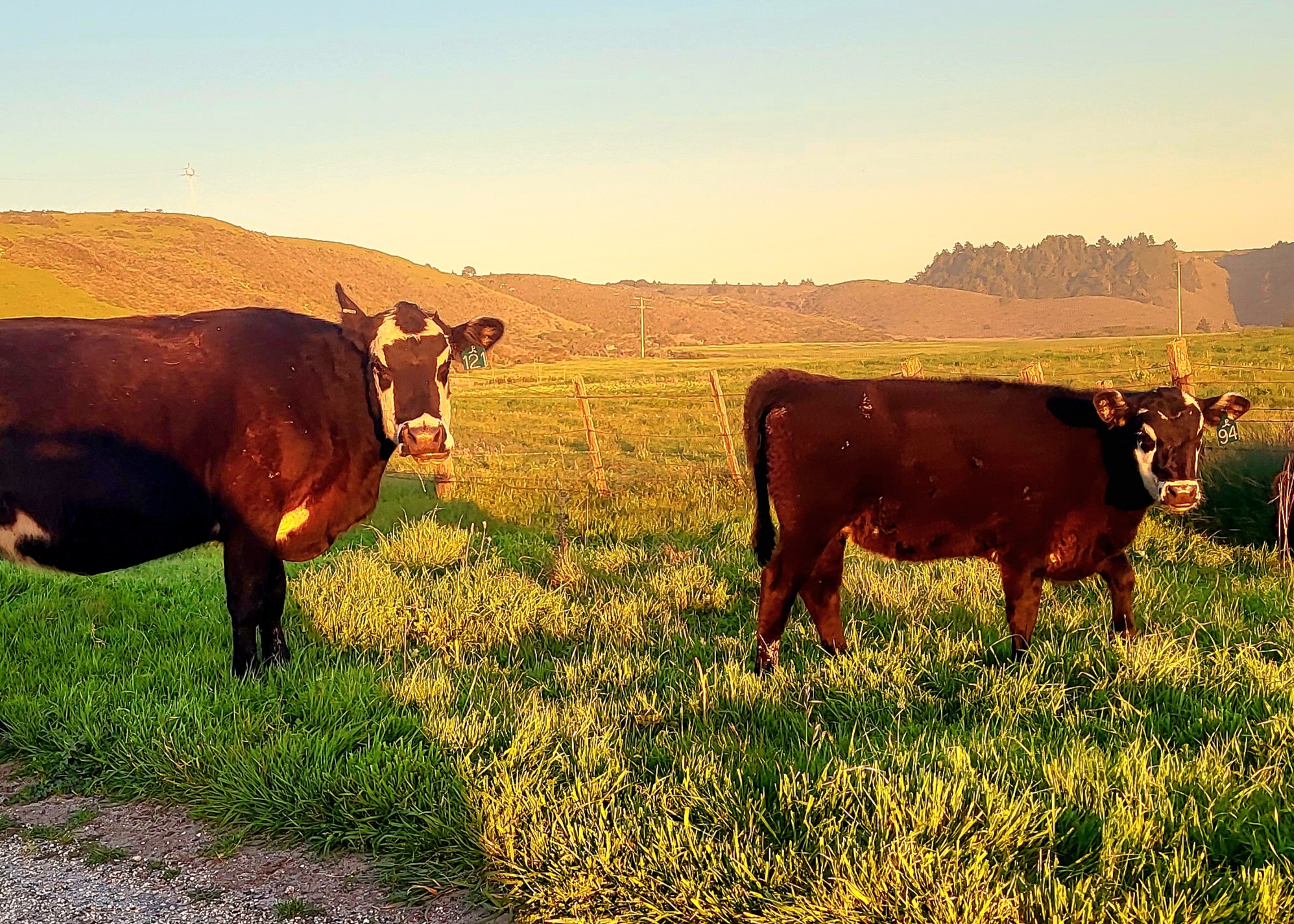
Daylight Savings Time came and March lept into the place where April used to be. Apples are blossoming a month too soon. The blinding greens from the shining fields are already upon us, grass bolting, wildflower riot. Heat waves follow draughts of rain (again!). No more rain foretold and yet too early to believe it is the end of this ‘rainy’ season.
Prescience
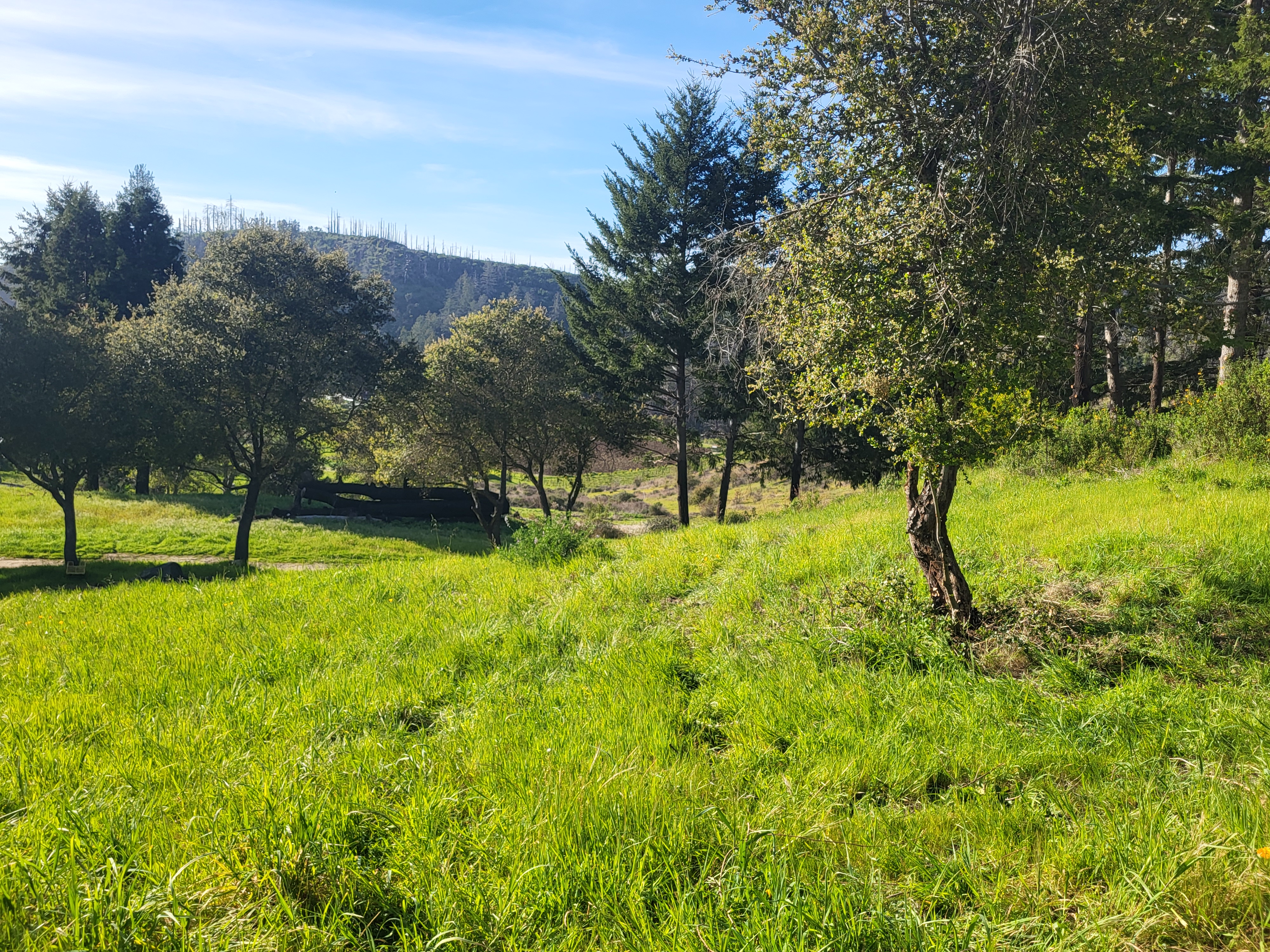
Presently taking the time to gaze and smile at verdant hillsides, lush grass and dark green, leafy oaks. Endless ranks of pointy grass strain skyward portending future pokey seeds and ankle-torturing socks. For now, it is grassland Peak Green.
Big, bushy coast live oaks unveil soft new leaves, some trees more yellow, some more red, all gradually turning more uniform dark, prickly, waxy green. Pale dusty pollen filled oak flower tassles dangle from every branch tip; tinier, unseen…stem-hugging female flowers promise acorn births. Farm fields glow at sundown – rafts of white radish, yellow mustard splashes, sprays of bright calendula orange. These will hurry seed-making against all odds, facing the pace of people-priorities under tractor-wheel, mower and plow onto worm-work, rot, and crop-root (joy!).
Creature Gathering
Toms and hens, spiders to the wind, and the dawn reveals the arrival of swallows.
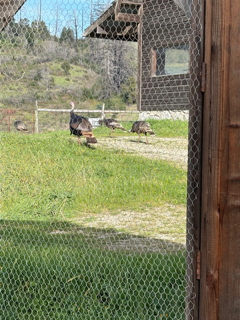
The harem found Tom, amused at flashes of facial color (the blues! the reds!), gobbling and strut – cooing encouragement then giggling. Too soon for (echoes of Mardi Gra chiefs) tail displays. The Molino Creek Farm turkey flock saunters along the roads, pecking at field margins. Wondering if this is the same flock that disappeared last early November, all except the Tom: where did they go?
Marty reports spiders taking to the sky. Arachnid astronauts spin and then drop from web ends. Abandoned threads continue downwind, tangling together, creating scattered ropes, white crazy string biotic ‘litter.’ Parachuting predators terrorize fast-reproducing feasts – herbivorous bugs or themselves become wren or robin snacks.
Mysterious moonlit sky trails recently led the barn swallows back to their Molino summer home. They peer into last year’s neglected mud nests, taking stock. Last year’s brood must find new nest locations, not too far from family… collective actions guarantee the coming year’s sibling success. Each whirring swallow eventually lands puddle-side, testing the qualities of mud with both claw and beak.
So goes the rhythm and so goes the song of the consistently changing world at Molino Creek Farm.
 Grey Hayes