restoration

Rain, Mushrooms, Fire, and More

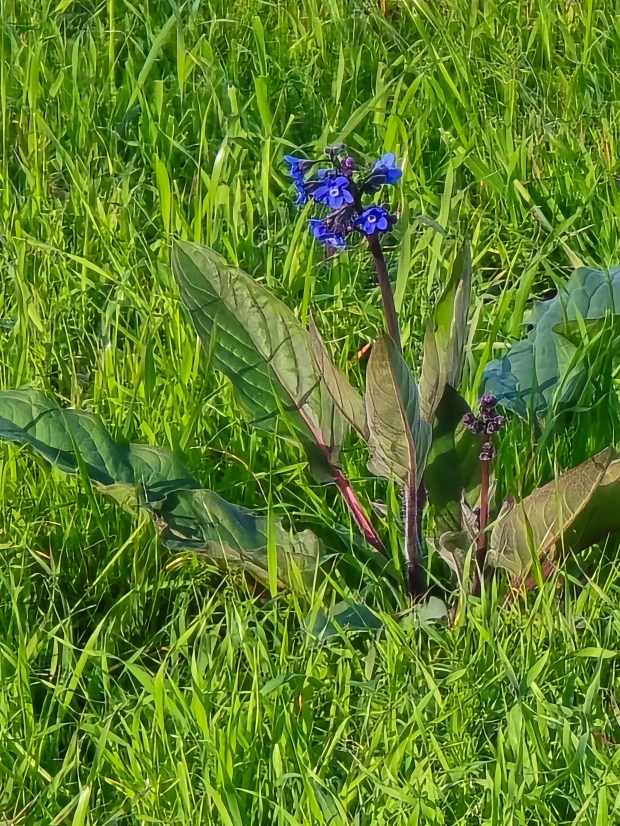
Another round of rain enlivens the vibrant living system that is Molino Creek Farm. Citrus ripens, quince/hazels/milkmaids/houndstongue blossom, and grass and herbs thicken and deepen in every field. Sun returns, wind…the cycles back-and-forth unfold into spring and (too) soon the epic dry summer. The Earth drinks now in preparation for the long parch ahead.

Hound’s Tongue by Cassandra Christine

Water

It rained so much a few weeks back that the Bottomlands pond quickly filled. And, it as rapidly disappeared: not long enough, or deep enough to attract the ducks of yesteryear. Then it was sunny and warm. And then the rain returned, mists and drizzle and the occasional shower. The wetting brought back the chanterelles and beaucoup mushrooms, which had previously pulsed in December only to dry and disappear during the long dry January. Parasols and puffballs poke up from grass and leaves, a variety of colors and textures. Feasts of fresh-picked mushroom risotto return to the menu. The waterfall on the unnamed tributary of Molino Creek spatters and sings, a newly reopened path leads to the overlook. A long glistening wet wall, profusely dripping, towers over the far side of the lively creek channel, hanging thick with wild ginger and ferns. Downstream, the main creek makes even louder creek noises with pool, fall, and rock pile riffles.

A LBM, Little Brown Mushroom, by Cassandra Christine

Fire

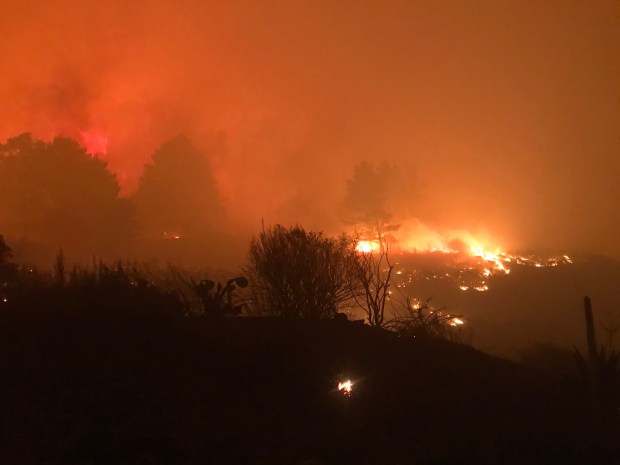
Does it ever get too old to talk about Fire? 2020 seems to be fading into the past; 4 ½ years past the catastrophic fire that destroyed so much and changed our landscape forever. Soon, we hope, the Bartles move into their rebuilt home. Our Good Neighbors at San Vicente Redwoods meanwhile continue their excellent post-fire restoration and management. This past week, their crews burned many, many piles of fuel that they had cleared alongside our shared road, including adjacent to the Big Hill. One moment there were stacks of Douglas fir longs and brush, the next moment only charcoal and ash. If a wildfire had raged up that small canyon, it would have been spectacular, dangerous, and destructive, but this controlled pile burn left a smaller footprint with more beneficial outcomes. We are safer. Nature is better off.

Restoration

Our work post fire and overall is evident with the wildflowers. Shucking seeds with our bare hands from nearby wildflowers and Hucking those seeds into the right places throughout the farm creates promise. For instance, a couple of roadside hound’s tongue plants popped up several years ago and have been seeding into the surrounding fire safety mowing zone. Now, there are 10 new seedlings…the patch is growing…the flowers beautiful and there will be more.

Elsewhere, strewn poppy seeds, ant-dispersed footsteps of spring, and grass seeds cast about are manifesting as big patches of increasing species diversity. Besides the rich hound’s tongue blue, there are already splashes of early spring yellow and loud bangs of poppy orange. Bunchgrass tufts throw up panicles of flowers above the meadow sward. Blackberry vines are flashing cascades of white star flowers along fencelines. Trimmed up oaks will survive the next fire, shading a short, fire-safe understory.

Working Fields and Orchards

Mark Bartle steered the 2 Dog tractor in rows across the Roadside Field, mowing cover crop, sending the season’s first cut grass smell to thickly scent the air. A legion of helpers cleared the youngest trees of weeds, saving them from voles. The orchard cover crop is growing tall or just plain growing, depending on whether it was sown early or late; the voles should be going into those rows and feasting on vetch, or bell bean, or oats…soon their litter strewn trails will be evident as they graze and poop and pee and serve as they key component of our regenerative animal impact integration. The owls and coyotes and hawks are thanking us, too.

The oscillating weather still allows for citrus ripening, trees hanging heavily with rain filled yellow, orange, and green fruit. New leaves are sprouting, spikey branches elongating, and older leaves falling to make dense mulch. It still amazes me that we can make this fruit, and we seem to have escaped the frosts of another potentially devastating winter.

Buds swell and the first orchard blossoms have appeared. Quince petals decorate the haphazardly growing bushes near the entrance of the orchard. Apple buds swell on some varieties while others’ buds remain tight and small. Hazelnut catkins dangle and sway in the breeze. Pointy green elderberry leaf tips begin to emerge. The multitude of orchard trees are patient overall in their response to approaching spring.


Waterfall at Molino Creek Farm by Cassandra Christine

Land Atonement

Very slowly, we must move in the direction of becoming at one with the Land. All that we eat, all that we breathe, all that we drink comes from the Land.

What is your opinion of how people have treated the land around us?

Have we damaged it, or made it better? How do you know?

Big Sur: Whole or Shattered?

The Santa Lucia Mountains…Big Sur, to our South. On one hand, we see picturesque beauty, “wilderness,” a rugged, sparsely settled landscape, millions of flowers, huge trees, and a rich marine environment. On the other hand, there is a land devoid of much of the wildlife that once called that place habitat, the native peoples that called it home and stewarded that place are mostly gone (but still there!), wildfires ravage the landscape too hot and too frequently, roads and other development bleed soil and pollution into streams, and hordes of poorly managed visitors negatively impact the richest ecology, where the land meets the sea.

Monterey Peninsula: Zombie Ecosystems or Well-Managed Parks?

An ecological treasure, the Monterey Peninsula has rare pine and cypress forests, chaparral, and coastal prairies. Millions of humans visit to play golf, shop, drive fancy cars, visit art galleries, taste wine, or do tourism at an aquarium and historic sites. Nature there is fragmented into isolated parks which have no chance of long-term health. With lots of exposure to disease and human disturbance, with no chance of natural interactions with wildlife or fire, the parks represent zombie ecosystems, seemingly alive but really walking dead as they slowly decline with species after species winking out.

Tilled Valleys, How do You Fare?

The Salinas and Pajaro Valleys frame the central Monterey Bay, rich alluvial soils that support Agriculture, the nation’s salad bowl. Farming is an economic engine, sustaining jobs and communities and feeding people vegetables, never enough helpings per capita in any given day. The effluent flowing out of that engine creates the most polluted surface water in the US, pools of eutrophic, stinking rot. Ancient rich soil is disappearing, lost with the rain, in floods, and in the wind. Groundwater is being contaminated with pollution or by sea water intrusion caused by over pumping groundwater.

Santa Cruz and the North Coast, Loved and Smothered

On the other side of the Bay lies Big Sur North, a tamer landscape, thickly inhabited, worn. Tourism, Silicon Valley settlement, and education rule here. Surf and mountain bike culture are ‘natural’ tourism while hordes of cotton candy fueled tourists amble in the relatively cool beachy haven that contrasts so readily with the increasingly baking inland. Millions of feet pummel the beach sand substrate, crushing the food chain of flocks of would-be shorebirds; the remaining birds scatter, no longer comfortable foraging on these overrun beaches. Similarly, most meadows and canyons zip with such continual disturbance that wildlife families flee….fewer places left to hide. In the built areas, hundreds of fossil fuel formulations leak from engines, pesticides ooze from landscapes, headwater rivers and streams are diverted for toilet flushing and carwashes, downstream they receive and convey pollutants into our treasured Bay.

How do We?

How do we atone for the ongoing damage we are causing to the land around us? In ecological terms we call this restoration. In social terms, we call this reparation. In economic terms, we call this re-investment. Do you see enough of this going on? I cannot believe that you do.

Ecological Restoration

We must make room for all of the species of plants and wildlife to flourish if we ourselves are to survive. We read such things, but do we believe them? Do we act on them? Are there things individuals can do to make this happen? Many of us can vote for those who have this vision. Many of us can learn about ecological restoration and tell others about the ways forward around here. There is good fire to put back on the landscape. There are ecological linkages to restore, across roads, through development. There are invasive species to control. And, there are many species of wildlife that need to be better managed, monitored, and restored with the California Department of Fish and Wildlife at the helm.

Reparations

We live on unceded lands. We are surrounded by people displaced by greed-fueled governmental policies, including war. The nation owes its current wealth to people terribly taken advantage of for generations. What are we doing for reparations? Anything at all?

Re-Investment

The way we do it, every new home, every new development creates a heavier burden on our already strapped local municipalities. The way we have done it for generations, businesses have profited from extraction from Nature, most recently including agriculture, water use, and tourism in natural areas. Some suggest it is time to increase the taxes of landowners to enable more tourists to overrun our natural areas…’investing” in new trails and repairing old trails degraded by millions of tourists to keep local businesses thriving. How did this become part of a re-investment proposal? 

A Path Forward

Whether you take part in restoration, reparations, or re-investment, each of us must do our part. I’m sure that none of us want to leave the world worse off than it was before we enjoyed the water, the air, and the food that Nature made possible. We regularly eat meals…taking. We regularly drink water…taking. We regularly travel through Nature…taking. We regularly purchase things and throw away things…taking. What are we regularly doing to give back, to atone for all that we are taking from Nature, from each other?

I hope that you will think about that debt when you vote this Fall. And, I hope that you will plan at least one activity in the next little while that gives something back. Make such giving a regular practice, please.

-this column brought to you in part by Bruce Bratton, who graciously publishes my work weekly at BrattonOnline.com Sign up, donate, and read it- a great way to catch up on what is going on around the Monterey Bay, and beyond.

Fire

The advent of human control of fire was a pivotal moment in the development of our species. Human use of fire has been changing in some ways and remains steady in others. Recently, it seems that the use of fire is becoming more and more remote for more and more people. Is that good or bad? Join me for a few moments to examine the state of human relationship with fire.

In the millennia of humans’ past and on into our present, we have used fire for heating, cooking, pest control, trash disposal, transportation, and war as well as for the creation of food and fiber. I intend to revise this essay and welcome suggestions about other major uses for fire. Fire is a powerful tool.

Fire for Heating

Consider the evolution of using fire for heating: from the first flame to the storage of heat in stone, masonry fireplaces and chimneys, metal wood stoves, furnaces and, most recently, forced air central heating. Do I understand correctly that conversion of wood to fire for heat, even with super-efficient, clean burning woodstoves, is no longer legal for new construction in Santa Cruz County? Soon, even mountain folk will lose their expertise and familiarity with keeping their homes warm using locally produced fuel, easily produced as a land management byproduct making for improved wildfire safety.

Cooking Fires

My host gently wiggles and pushes three-foot branches, 3” in diameter into the fire to renew the steady heat beneath a tortilla-cooking comal. Smoke rushes out through the roof. Mayan peoples in Belize showed me this indoor cooking method, which is similar to that which many tropical and subtropical cultures have relied for generations. Elsewhere, grills over charcoal, “spits” turning above flames, and wood-fired ovens are other methods for fire-cooking food. Cast iron wood-fired cook stoves are antiques. I haven’t seen one used for a decade.

Have we entered a new era for cooking with fire? Can anyone confirm the rumor that gas stoves are no longer permitted with new construction? I understand that there are concerns about indoor air pollution as well as thoughts that such methods will unduly contribute to greenhouse gas emissions.

One of the last cooking fires in our region is employed by those ‘roughing it’ using portable gas-fired stoves, some of which have become ultra-lightweight and highly efficient. I would be remiss not to also mention wood-fired appropriate technology cooking units, fed by surprisingly small handfuls of branches to prepare family meals. These have been targeted to developing countries with increasing shortages of fuel wood.

Pest Control

A member of Sonoma’s Kashia Pomo tribe recently spoke to a group I was with about the importance of burning the understory of oaks for pest control. He pointed out insect holes in an empty acorn shell and noted that his ancestors would have burned the understory of oak forests to reduce this damage and improve the acorn crop. I’ve heard similar things about pine nut pest management.

How many other pests might have been once controlled by different uses of fire?

Food Production

Precluding the use of fire for pests, fire has been, and is still being, used for other aspects of food production. Tribal peoples use fire to increase productivity of seed crops. Burning releases nutrients trapped in dead vegetation into the soil, increasing plant growth. Native ryegrass and brome grass stands that are burned produce more, heavier seeds. Burning meadows increases the amount of clover and other wildflowers which serve as either salad greens or seed crops.

The principle of fire releasing nutrients for the next crop also applies to rice farmers in California. Burning rice fields was once a more common method of returning nutrients from “crop residue” to the soil. Some farmers have turned to selling rice straw or flooding fields so that waterfowl help break down crop residue.

Other fire-prepared food crops include morels, beef, and grasshoppers. Morels are especially numerous after fire-spurred nutrient release. Ranchers have long used fire to reduce the cover of unpalatable shrubs and increase herbaceous forage to benefit livestock production. Perhaps fire is still used to round up grasshoppers that are subsequently roasted and coated in chili powder and salt for a tasty, crunchy, protein-rich snack.

Fire-Grown Fiber

I haven’t encountered anyone burning for fiber production, but have a few ideas. Burning to reduce shrub invasion into grasslands would make those areas more productive for sheep, and, hence, wool (fiber) production.

Native peoples have burned various plants in various ways to increase fiber production. Around our region, hazel, willow, and iris burned in the right way would make it possible to harvest more and better fiber for cordage and basketry.

Trash Disposal

Travel in rural areas of the Americas and you’ll no doubt encounter the distinct smell of incinerating trash. Especially unctuous is the dioxin-tainted odor of burning plastic. I know of a certain gentleman who very recently was regularly burning 50 gallon oil drums of trash including plastic baby diapers, polluting an otherwise pristine area of Big Sur. I wonder how common the practice is at this moment in the USA? Burning plastic creates a very dangerous chemical called ‘dioxin’ – if you think it quaint when someone burns such trash, think again. This practice is on the rise and killing people.

Fire for Wildfire Fuel Reduction

Carefully planned pile burns or broadcast burns are increasingly being used to dispose of vegetation that would have otherwise been a fire hazard. I’ve written more about these practices in this and this essay.

Riding the Fire

Internal combustion engines burning fossil fuels, releasing ancient carbon, and powering vehicles is a leading cause of global warming in our nation. Not long ago, the hungry burning work of steam engines propelled society ‘forward,’ destroying forests for fuel, leading to California’s hardwood crisis in the late 1800’s. Quieter, fireless electric engines are a revolution at hand, but there’s a sound like distant thunder propelling people in much different ways.

War Fire

Sanctions aside, war is mainly a fiery affair. Bombs, bullets, flame throwers, and napalm are the fire-based war weapons of modern soldiers. No doubt too many of us have been exposed to media portrayals of more ancient warfare involving flaming projectiles meant to kill or destroy property. The most ‘modern’ of fiery death, atomic warfare, is too close at hand with entirely different types of flames.

Could war really be over if we wanted it enough? Let’s quell those violent flames starting by putting out those types of fires closer to home.

Fire – For Better or For Worse

Next time you light a candle, if you even do that anymore, take a moment to reflect on the use of good fire or bad fire. As humans become more distant from their roots, more unfamiliar with tools that we have long used to steward our world, it seems we need to make a greater effort to raise future generations to be comfortable using fire in the best of ways. We must also learn to turn aside from the power of less productive flames, as tempting as that power might be. Burn brightly! Burn well.

-this essay modified from the one originally published at BrattonOnline.com, a weekly blog from Bruce Bratton and team: sign up or miss out!

A Fine Legacy

How do we leave a good legacy that will benefit future generations in a world of uncertainty? Some suggest well-raised children are a sure bet, but with this the humble must demur. We must however try. I suggest two other things that are essential: 1) species and ecosystem restoration on natural lands and 2) building soil health on agricultural lands. These are things we can each find a way to support, and they are both crucial for the future of life on Earth.

A World of Uncertainty

We live in extraordinary, unprecedented times. Humans have built a remarkable global civilization with a burgeoning population. To survive, we are in a race to shed polluting fossil fuels. But, we have no idea if and how we can replace all that petroleum has provided to fuel population growth and the civilizing of landscapes. No matter what superficial form of government seems to be in place, the “oilogarchy” is deeply entrenched, exercising economic and political control. For evidence, just watch US politics: both parties’ have an inability to act in the expeditious way that the vast majority of citizens know to be necessary. And so, life, including human life, on Earth will likely become much more difficult for the next several hundred years. Of course, we should rise up and protest as if life itself depends on it, but there are other tangible things we can do to make the world more habitable for future generations.

Species and Ecosystem Restoration

There are a variety of activities you can partake in to help restore species and ecosystems, which humans will increasingly rely on for their wellbeing. As global warming creates climate chaos, and as humans increasingly falter without boosts from cheap petro-supplies, species diversity and resilient ecosystems will become more closely tied to better standards of living.

Oil and Water

For an example, let’s consider water. Some suggest oil and water don’t mix, but the two are closely intertwined over most of the world. We might suppose that the role petroleum plays in repairing, creating, and powering our water supply will be replaced by some renewable energy supply in the future. Plastic pipes will be made from hemp, renewable energy will power our pumps, electric vehicles will transport the legions of water district workers who maintain water systems, etc. However, when rain comes in torrential bursts or not at all, we will rely on very well-tended ecosystems to absorb and meter out rainfall so that we can benefit from more dependable surface or groundwater supplies.

Dust Storms

For another example, let’s consider erosion. The stability of our infrastructure- homes, utility lines, roads, dams, communication towers, airports, etc., depends on more than just good geological anchors: that stability is deeply dependent on functioning ecosystems. Species hold our stuff together. On the coast and along rivers and streams, species protect shorelines. On hillsides, in the mountains and on the plains, species hold the land in place. Without a wealth of species supported by resilient ecosystems, everything will come unzipped – gullies, floods, landslides…infrastructure collapse. At the same time, the bared soil will start to blow and dust storms will become more frequent, destroying engines, burying buildings and roads, and darkening the sky.

Restoration Means Now

The species that currently perform best at the “holding the soil in place” function are likely not the ones that will do best in a hundred years, given the rapidly changing climate. So, we must conserve every species, and plan to allow species migration through a healthy landscape of resilient ecosystems. Right now, this very year, we must quickly turn increasingly to restoration of the land because we have degraded too many places already. You can help by volunteering with the many habitat restoration projects in our area, taking better care of your land, voting for politicians that support ecological restoration and land care, spreading the word, and/or giving money to groups that are making a difference. Many people are joining this movement, we are making a difference, and we need more help.

Bye-Bye Soil, Hello Agricultural Substrate

Since World War 2, agricultural systems have become increasingly intertwined with petroleum at great expense to the soil that humans rely on for sustenance. Petroleum-fueled mechanical cultivation has destabilized billions of tons of soil which has already washed or blown away due to recklessness. You can watch it happening, still: in the Salinas and Pajaro valleys and along Santa Cruz’ North Coast watch the soil blow or wash away, depending on the season. At the same time, cheap fertilizers and expedient pesticides have been made possible by petroleum and the application of these have destroyed ecosystems that once sustained and built topsoil. Farmers for years have acted like soil is just a substrate, something to hold a plant in place long enough to harvest a crop. And so, most agricultural land is highly degraded and production is increasingly and deeply dependent on the supply of petroleum. While we can, there is a great opportunity to build the kind of soil health that will be necessary to feed humans when petroleum-subsidized fertilizers become too expensive, and the human population is still larger than it is now.

Soil Health

Healthy agricultural soils can retain more water, provide plants more dependable nutrition, and stabilize pest outbreaks. So, why would a farmer not create more healthy soils? There are two main reasons. First, investing in healthy soil reduces profits. For example, using cover crops to cover and build the soil during the rainy season means the loss of one or more potential harvests. That also drives up food costs, which then helps to create the second reason: mandates for soil health are politically difficult. The good news is that you can help with both of these conundrums.

You Can Help Create Healthy Soil

We all purchase groceries, and the choices we make can help support soil stewardship. Already, the organic agriculture movement has been growing and makes a difference for soil health. Certified organic agriculture requires farmers to find alternatives to pesticides and fertilizers that are synthesized from petroleum. In ‘conventional’ agriculture, novel petro-created compounds working alone or as a mixed concoction are released into agricultural systems without analysis on long-term soil health. Organic farmers more often rely on soil health as a means of production, and the higher cost of those products reflects that investment. Some tell me that they can’t afford organic foods, but discussions reveal that they are unwilling to make more basic food choices, preferring to rely on processed foods or meat that are especially more expensive when certified organic. Going organic may mean dietary changes that might be more healthy, anyway.

Besides using the power of your purse to support farmers who build soil health, you might more directly create healthy soils in community orchards or gardens. You can volunteer in a school garden which has the added benefit of helping children better understand soil health and healthy foods. You might also support, by volunteering or donations, organizations that are working to improve soil health on agricultural lands.

-this piece originally published by Bruce Bratton in his extraordinary BrattonOnline.com, the place to go for movie reviews and local news…unparalleled. Sign up and get it weekly. Donate and it is money well spent.