pathogens

Public Testimony: Pathogen Response Process

What happens when a member of the public raises a concern about ecological pathogens to conservation lands managers during a public testimony process? This is a story that unfolded not long ago on the North Coast of Santa Cruz County concerning BLM’s management planning for Cotoni Coast Dairies.

Recall Last Week’s Column

If you haven’t already read my column from last week, it would be best to give it a quick read to put this essay into context. In brief, I outlined the devastation caused by reckless human movement of invasive, non-native pathogens affecting native plants and wildlife. The process introducing and spreading such pathogens is ongoing, despite the dangers being common knowledge. At the end of the essay, I pointed to the root cause of this issue, human greed, and outlined the common knowledge about the solution: slowing global trade enough so that we can take the time to be more careful. What I didn’t outline is what we can do more locally to address already introduced pathogens that have yet to spread across our conservation lands.

Conservation Lands Managers’ Pathogen Abatement Responsibilities

What responsibilities do conservation lands managers have for the wildlife and plants that occur on the lands they oversee? I’m betting you can guess one of those managers’ responsibilities…but not to wildlife and plants. Public access is often a conservation lands manager’s ‘responsibility.’ Consider the term ‘conservation lands’ for a moment and know that public access comes at a cost to conservation. So, part of those managers’ responsibilities is mitigating and avoiding the impacts of public visitors on wildlife and plants. And, those public visitors bring with them a variety of pathogens that can have grave negative impacts. While planning for public access at Cotoni Coast Dairies, unknown BLM staff wrote many statements acknowledging the danger of proposed recreational use and the spread of pathogens.
BLM Staff List Public Access Pathogen Dangers

Unknown BLM staff wrote extensively in the management plan for Cotoni Coast Dairies about the dangers of recreational use increasing plant and wildlife pathogens. They noted that recreational users “increase introduction of pathogens” (Chapter 4, pp. 5 and 11), which “pose risks to sensitive species,” impact native wildlife, and are “anticipated to impact aquatic species including special status fish species” (Chapter 3, p. 22; Chapter 4, pp. 18, and 32). BLM staff also addressed introduced plant pathogens using sudden oak death as an example. They noted that recreational trail use has been documented as being a significant source of the spread of plant pathogens (Chapter 4, p. 6). In addition, BLM staff also specifically addressed the spread of pathogens to wildlife from domesticated animals, warning that bobcats, grey foxes, dusky footed woodrat, and badgers are all known from Cotoni Coast Dairies and could all be negatively impacted by such diseases (Chapter 4, p. 19). The BLM staff went on to note that domestic dogs carry ‘hundreds’ of pathogens that can be spread to wildlife, including rabies, canine distemper, and canine parvovirus (Chapter 4. p. 21). Finally, the anonymous BLM staff also noted the dangers of introduced amphibian pathogens, including chytrid that is a major concern for California red-legged frog conservation (Chapter 4, p. 30), noting that recreational users spread such diseases (Chapter 4, pp. 35 and 36).

In sum, the BLM staff who wrote the governing management plan for Cotoni Coast Dairies articulated many of the concerns about introduced pathogens affecting the biota of that high-value conservation property. But, how did that knowledge affect their management? Very, very little.

BLM’s Management Response to Environmental Pathogens

After that litany of concerns, one might expect BLM staff to write appropriate management responses. Here are the two responses:

In response to the danger of domestic animals spreading pathogens to wildlife, they state:

“Therefore, BLM will not authorize or condone free-ranging dogs, or any other free-ranging domesticated animals or pets to utilize C-CD. (Chapter 4, p. 21)”

In response to the danger of recreationists spreading pathogens into the freshwater systems, they state:

“Therefore, BLM will seek to educate members of the public on this topic whenever possible. Appropriate signage may aid in reducing the potential for this to happen at C-CD. (Chapter 4, p. 36)

Note that the BLM staff avoided producing management measures that address the majority of the impacts of pathogens spread through the recreational activities they propose. This is particularly troubling because the foundational principle governing management of Cotoni Coast Dairies is not providing recreation, it is conserving the ecology of the property. Instead of outlining management to avoid or mitigate the spread of the pathogens, BLM staff favor recreational uses that they document increasing pathogen risk.
Pride, Prejudice, Ignorance, Overwork, or Institutional Policy?

Given the perplexing approach to increasing the danger of recreationists spreading pathogens that endanger the plants and wildlife of Cotoni Coast Dairies, it is reasonable to ask: WHY? The answer to that question seems to be ‘we will never know.’ Let’s examine some of the potential explanations.

On my documentation of planning shortcomings, one BLM staff person passionately and confidently proclaimed that their team had completely and professionally addressed all comments raised during the public comment period on the management plan. It could be that they were proud of their work and it could be that they were proud of the work of the other staff in their agency. And, given the clear shortcomings of the responses to my concerns about pathogen spread, it also appears that they might be prejudiced about the professionality of their agency. It might be that they are ignorant of the many solutions and mitigations available to stem the spread of pathogens on conservation lands. Another possibility is that staff are so overburdened with a multitude of responsibilities that they are unable to adequately address their planning responsibilities. Or, it might be institutional policy to avoid committing to certain types of management measures, whether due to cost, ease, or interference with recreation or other management preferences of prejudiced staff within the institution.

But, again, we will likely never know the reasons for these oversights. It is likely that BLM staff writing such plans will remain anonymous, so we won’t be able to ask individuals. When I’ve asked staff to refer me to the individuals responsible for decisions so that I could ask them about their rationale, they’ve refused. When BLM suggests that they ‘welcome public input,’ or are ‘seeking public input,’ such as with their latest proposal for a parking lot at Cotoni Coast Dairies, you have to wonder if your time is being well spent providing that input, given the hypotheses presented here. All we can do meanwhile is investigate and hypothesize: is it pride, prejudice, ignorance, overwork, or institutional policy that will lead to recreationists spreading the pathogens  that will kill the wildlife and plants at Cotoni Coast Dairies?

– this essay slightly modified from that which was presented by the esteemed Bruce Bratton at his laudable BrattonOnline.com weekly blog.
Bad Things Moving

We humans move bad things around, and Nature quickly suffers. But I am not one of those people that believes that everything humans do is bad for Planet Earth. To the contrary, I have researched and written much about the things we do that are essential to restoring and maintaining Nature. We do lots of good work, we should do a lot more, and things would not be altogether better without people. However, humans’ propensity to carelessly move living things great distances is not one of the good things we do. After recently learning about the cause of the disappearance of certain species of local bumblebees, I have been focusing on the pathogens that humans are transporting around the globe.

Plant Pathogens

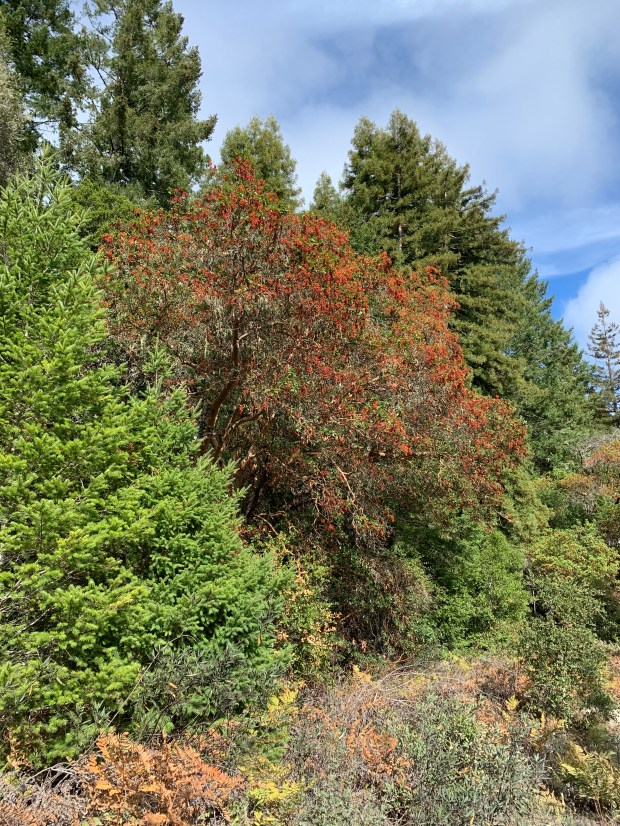
We don’t have to explore far, or think back very far in history, to see the signs of human mistakes in the kingdom of plants. In the 1990’s, I drove past Waddell Creek on Santa Cruz’s North Coast and gasped when I saw huge patches of tree skeletons – dead and dying Monterey pine trees succumbing from the introduced pine pitch canker disease (Fusarium circinatum – origin Mexico and/or Eastern US). In the last decade, I’ve been similarly shocked at hillsides of brown leaves as forests of tanoaks and live oaks died due to sudden oak death (Phytophthora ramorum – origin East Asia). These are the most recent and widespread results of human carelessness and greed.

Millions upon millions of dead trees are piling up across the world right now due to people vectoring plant disease around the world. Especially with climate change, this is not the right time to be killing trees. Without recalling history, we are doomed to repeat it. We should have learned by now as those recently introduced plant plagues are repeating the devastation of the not-so-distant past. The eastern US lost its dominant forest tree, millions of American chestnuts, to chestnut blight (Cryphonectria parasitica – origin East or Southeast Asia) starting around 1900. A little later, wave after wave of Dutch elm disease (Ophiostoma ulmi 1910 and O. novo-ulmi 1965 – origin Asia) killed millions of elm trees in Europe. No one living recalls the forests of old; soon, no one will recall the beautiful tanoak forests of Central California.

Animal Pathogens

Similarly, human carelessness (and greed) is causing misery and death to many of our wildlife friends. Brucellosis (Brucella ssp. – origin Mediterranean) causes big grazing animals to get sick and sometimes abort their babies. Cattle ranchers worry about the proximity of wild grazing animals that carry the disease. Conservationists are concerned about ranchers wanting to cull wildlife that infect cattle herds. Besides through unregulated hunting, elk, bison, and bighorn sheep populations have probably been depleted through brucellosis and other introduced diseases. This disease also affects humans who become infected through unpasteurized milk or undercooked meat from infected animals.

Another animal disease that humans spread to the detriment of many other species is called chytrid. One type of chytrid (Batrachochytrium dendrobatidis) has caused serious decline and even extinctions in toads and frogs. This disease spread from African clawed frogs imported into the US for the first generation of human pregnancy tests (1930s – 1960s): inject urine into the frog’s skin and it made bumps if you were pregnant – easy, accurate….and a complete disaster for the frogs and toads of the New World. In the late 1980’s, I saw the last of the Golden Toads, a beautiful orange-gold species native to a small patch of cloud forest in Costa Rica. Chytrid found its way into even that remote location, as it found its way into many other seemingly unlikely far-away places, killing off millions of beautiful and sometimes narrowly geographically restricted species. Long-term monitoring plots in Costa Rica and elsewhere in the tropics plummeted in diversity and abundance of frogs. The disease also caused the decline of our local California red-legged frog as well as the frightening annihilation of the Sierran yellow-legged frog, both of which nevertheless survive.

Resistance To … Change or Learning?

 My most recent lesson in invasive pathogens was recently with bumblebees. As I engage in restoration and land management across the Central Coast, I recently received notification that the Western bumblebee has disappeared from much of its historic range and now is being seriously considered to be listed as threatened or endangered by the State of California. If you pay attention to environmental media, you no doubt have heard about the effects of pesticides on pollinators. So, hearing about the local extinction of Western bumblebee, you might wonder how pesticides have affected local bumblebees even across the vast areas of parkland and forest where there doesn’t seem to be widespread pesticide application.

While we can’t dismiss the danger of pesticides in affecting pollinators, the more likely culprit for the far-ranging disappearance of this local species of bumblebee is Nosema bombi, a ‘microsporidia’  belongning to group of organisms that might be protozoa or fungi. A bunch of these types of organisms infect humans, but the species infecting, and the effects on, humans is ‘an emerging field.’ Meanwhile, that particular species has been a very serious problem for many bumblebees of the United States. How did it get here? The story again….greed and carelessness: you’d think we should know better by now.

The origin of this bumblebee-killing plague was Europe. Specifically, upstart profit-motivated companies seeking a market in alternative pollinators took our native bumblebees to Europe for breeding, mixed them with diseased European bumblebees, and then brought the disease back to the USA. In the mid-1990s! Companies are applying to do more of this kind of thing right now.

What’s To Be Done?

Each one of us can make a difference to thwart the greed and ignorance at the root of the ongoing introduction of pathogens to the US. I illustrated a very small percentage of instances: there are hundreds or thousands of other examples, even without addressing the pathogens mainly affecting humans (we are all too familiar with recent difficulties of global Covid spread). If even left-leaning media stories included mention of the possibility that pathogen spread has been weaponized for economic warfare, more politicians might be forced to address these issues, which are, after all, national security concerns. National security concerns get bigger pots of federal funding when the voting public gets concerned about them. So, click away at any media story featuring invasive species, introduced pathogens, crop pests, etc: the more literacy we build about these issues, the better. Also…vote for environmentally savvy candidates (if you can find them!). But what do we tell the politicians to do? We tell them to address greed by slowing global trade.

At this point in our knowledge base, we can’t blame ignorance: pathogen introduction is a result of greed. People want money, and they want it now. We have processes in place to detect things we don’t want to come across our borders, but we don’t use them enough to prevent new pathogens from entering. There is no national crisis driving speedy trade in insects, plants, and animals: we can slow down and be more careful. If the politician you support doesn’t understand this, they should. If a politician can’t say that they support a ‘slowing of global trade’ to protect humans and the species that they rely on…that’s a red flag.

-this post originally “printed” in Bruce Bratton’s amazing weekly online blog BrattonOnline.com – check it out!