organic agriculture

The Bounty

Do we revel enough in the produce on our plates? On the Farm, we get to see the food from its tiniest seeds through to buckets of production and onto the internment of the spent plant bodies back into the soil to start the cycle once again.

The not so subtle beauty of zucchini plants

Zucchini-Summer Squash

Big blossoms sit atop tender green fruit; both are edible. The giant leaves shelter the center stem where climbs rank over row of production of new zucchini. We keep a close watch on them to harvest at just the right time when the fruit aren’t tough or large seeded and yet are larger than the tiniest, finger sized tender fruit. The succession from the tiny to the huge can happen rapidly: we must be ever vigilant – the fields must be visited daily, the crop harvested every other day. You can almost hear the squeaky squash flesh stretch and grow.

Winter Squash

Isn’t it funny that the hard rinded ‘winter squash’ are squash just like the so different zucchini? What makes them winter squash? Oh, it’s just that we get to eat squash in winter, long after summer squash has gone, even in the recesses of the produce drawers of our refrigerators. In market, the zucchini comes from Mexico in the winter. As I traversed the road next to Two Dog Farm’s winter squash at dawn, I was surprised at wafts of sweet perfume: the winter squash in full bloom en masse has the most delightful citrus-y scent! The vines are romping across the field – soon, no soil will be visible. It is becoming one big mass of big umbrella leaves.

Onions at Molino Creek Farm

Onions

Our farmers grow the most delicious onions – red onions, yellow/sweet onions. Their spikey leaves are so perky. Row after row of waxy cylindrical foliage subtended by growing bulbs. One day, the leaves start to FLOP! Then we know they’re ready. Fresh onions go to market now and soon bucketfuls will get scattered on the greenhouse tables to ‘cure.’ That will net many weeks of storing onions to go to market. Those onion rows have been weeded and weeded, and weeding isn’t easy with those delicate leaves creating such an impenetrable canopy. We miss weeding and the bulbs turn out tiny. The unintended pearl onions are labor intensive to harvest and more so to get to market, so they go to the neighbors who delight in their unexpected midsummer arrival. Never take for granted the work behind each and every onion.

Lamb Haas avocados…wait for it!

Avocados

The Lamb Haas avocado has an 18-month ripening period. The fruit from this year grows alongside the fruit from last year for many months. It is looking like the few we have this year will get harvested in a month or so, but they look like the right size. The ground squirrels have started, and abandoned, eating them- a sign that there is time still to wait. 

Eighteen months is a long time for fruit to hang out, vulnerable to weather and pests. No wonder these fruit are so expensive! We are just past the Avocado Fall where the old leaves fall off and the new leaves unfurl. The trees look so lush, expansive, and vigorous. The Community Orchardists have done a top-notch job of making the main grove of our avocado trees look marvelously cared for and tidy. Next year, 6 years after the fire and the subsequent mass plantings, we’ll have a good harvest of fruit, again.

Critters

Last week, Sylvie reported seeing a skunk and some raccoons. She showed a short film of mother raccoon standing down her car to protect the too innocent young who were too curious to get off of the road. Wander the farm at night and you’ll soon encounter the scent of skunk. Skunk’s diggings through the thick thatch in search of mice or crickets is everywhere. To compliment the mesopredators, an opossum wanders the road at night increasingly close to the Farm each encounter. Sylvie also reports a one-eyed fox; we all hear the foxes yelping and yowling, so vocal. 

The herds of deer are incredible. Cassandra reports the mother and daughter deer are still stuck in the farm fenced area; luckily, they have all they need to eat and drink in there. At some point, mother was ‘knocking’ at the gate, but took off when we tried letting her out. What does one do with a nearly 20 acre fenced area after you repair the fence with the deer inside? Apparently, you feed them organic chard, peas, grape leaves, and tomatoes. Our artesian wells leave big puddles to quench their thirst. They are gourmet.

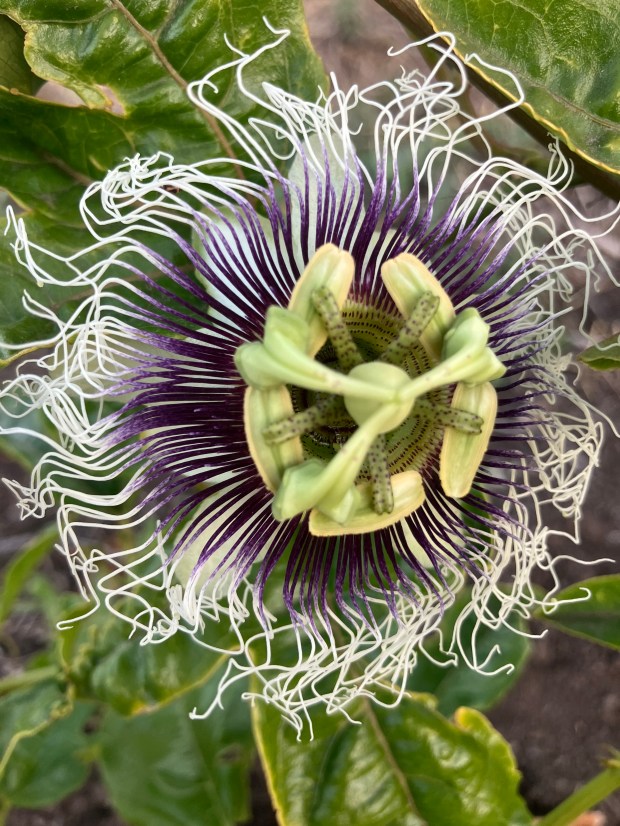
Our first passionfruit in a long while are on their way: variety ‘Frederick’

-post simultaneously published at the Molino Creek Farm webpage

Pulsing into the Dry Season

This is the hardest-work season for the farm. Everything needs doing, and it needs doing all at once: mowing, tilling, planting, pruning, burning, weeding. It’s a race. We’re racing to keep the fields mowed before the birds invest in nests amongst the tall, inviting cover crops. A tractor changes from a purr to a rattle or a high screaming whine: oops! It broke. Backup tractors and backup tools come out- there’s not time to fix things! We chase the weeds and cover crops, tractor-chopping them into little pieces before they set seed.

New Farmer!

Its Bodhi Grace’s first year actively farming at Molino Creek Farm as he takes the helm of the big fading orange, old Kubota tractor: back and forth, back and forth. We manage to have two generations as members of the Collective: what a celebration! Go Bodhi! His infectious smile cheers us all. Good posture on the tractor seat, he rocks out with music through headphones that somehow manage above the din of the tractor mowing. For the first time, the tractor has a big colorful umbrella for shade.

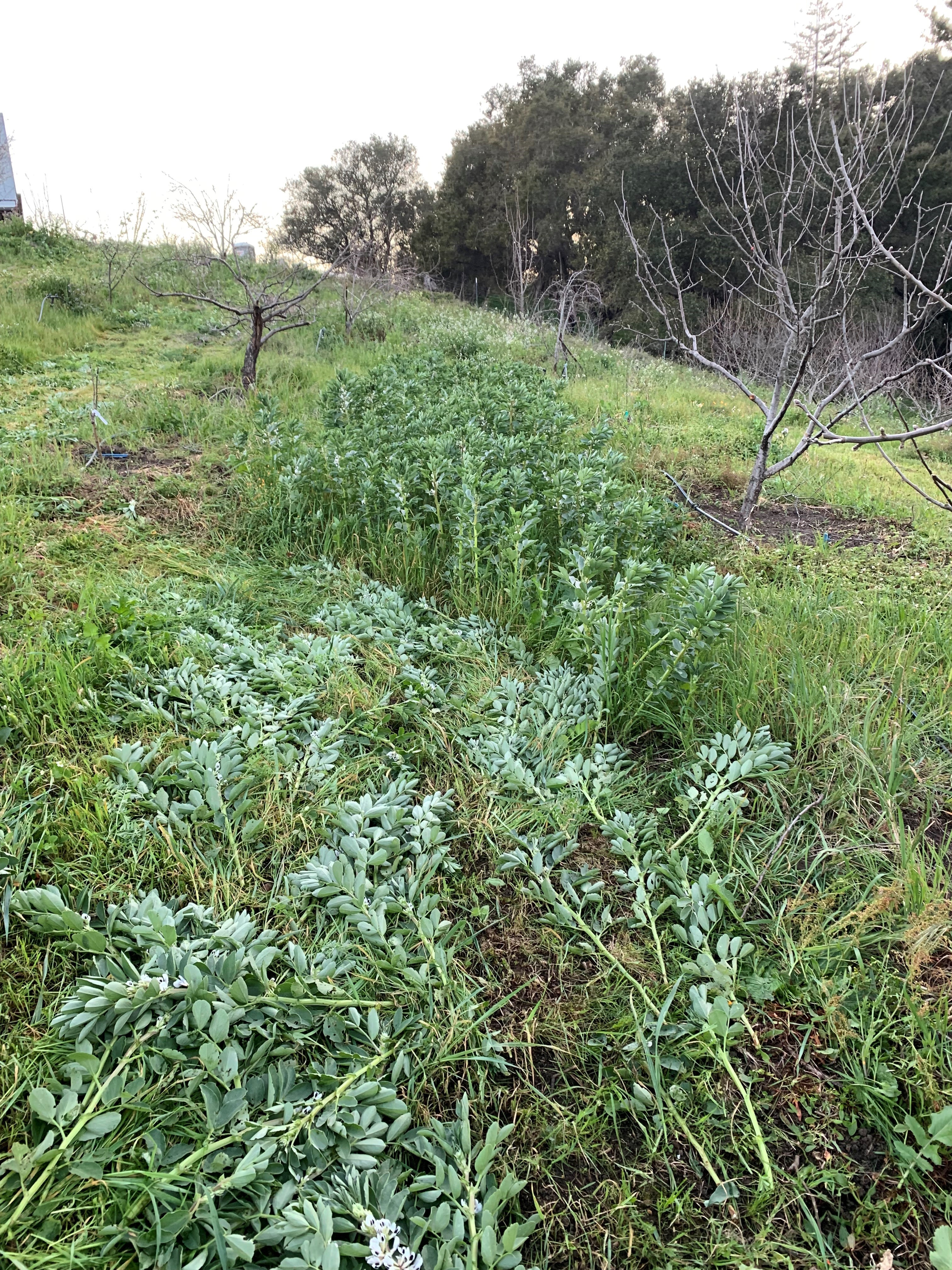
Mowing the Fava Bean Cover Crop in the Old Apple Orchard

Drying, Tilling

The fields are nearly mowed, but still things resprout until the soil gets turned. We poke at the ground to make sure its not too wet to till as we don’t want to compact the soil and we don’t want the drag behind disc to churn up big mud clumps. A couple of weeks of dry warmth and already the mower throws up a few puffs of pale brown dust from the shallow-soiled portion of a field.

Birdsong

Spring’s bird songs have flourish, notes elongated and fancier than wintertime conversational peeps. The first male barn swallows returned last Saturday night, greatly changing both the soundscape and the visual show. Now, fence posts and rooflines emit the swallows’ metallic squeaks and burbling. Crisscrossing the sky, jetting swallow silhouettes grab attention mostly because of the absence of many months. The swallow women were weeks behind the guys last spring; I’ll count this time.

Bluebird’s flashy blues and finch’s purple reds are especially vibrant with breeding plumage. Beaks agape, heads thrown back, song sparrows furiously belt out long and complex solos from atop the tallest white-flowering radishes. Are they proclaiming nesting territory, or are they just celebrating the longer days and the finally warm sun? It has been a long, wet, cool, blustery winter. The unusually poor weather undoubtedly claimed lives.

Late Winter Harvest

Even this time of year, there’s a harvest going on: citrus! Each day presents a few more ripe fruit from the 250 pound harvest of seedless, somewhat surprisingly sweet Persian limes. These limes are yellow-when-ripe, and that is surprising to many. We’ll first distribute to the Community Orchardists and then to Two Dog Farm, who take them to market or to their chef who jars delicious lime marmalade.

Oranges, too, are coming ripe. Navels, Velencias, day by day a little sweeter, a little more juicy.

Sun to Rain

The week’s dry heatwave will break the day after tomorrow and the world will transform for many days to clouds and drip. Mist will blow across the fresh-mowed fields and showers will soak the already thirsting ground. Puddles will fill for already longed-for bird baths, and the newts will march once more, moving towards creek or grassy tunnel system.

An Unknown Bee Visits Flowering Currant, a hedgerow plant at Molino Creek Farm

Bees

Petals close and nectar slows with cooler, cloudy weather. Bumble bees will be hungry. Flowering patches and warm days create quite a buzz. I’m a newfound bee watcher and notice a new bee every few days; today, it was loudly buzzing, honeybee-sized, gray, furry bees… shy and furtive, and very fast. The first bees of spring are still around- giant bumblebees either gracefully bopping between flowers or klutzily fumbling in the grass, seeking burrows for raising brood.

We hope you enjoy the emerging spring.

-this post simultaneously made on Molino Creek Farm’s website

A Fine Legacy

How do we leave a good legacy that will benefit future generations in a world of uncertainty? Some suggest well-raised children are a sure bet, but with this the humble must demur. We must however try. I suggest two other things that are essential: 1) species and ecosystem restoration on natural lands and 2) building soil health on agricultural lands. These are things we can each find a way to support, and they are both crucial for the future of life on Earth.

A World of Uncertainty

We live in extraordinary, unprecedented times. Humans have built a remarkable global civilization with a burgeoning population. To survive, we are in a race to shed polluting fossil fuels. But, we have no idea if and how we can replace all that petroleum has provided to fuel population growth and the civilizing of landscapes. No matter what superficial form of government seems to be in place, the “oilogarchy” is deeply entrenched, exercising economic and political control. For evidence, just watch US politics: both parties’ have an inability to act in the expeditious way that the vast majority of citizens know to be necessary. And so, life, including human life, on Earth will likely become much more difficult for the next several hundred years. Of course, we should rise up and protest as if life itself depends on it, but there are other tangible things we can do to make the world more habitable for future generations.

Species and Ecosystem Restoration

There are a variety of activities you can partake in to help restore species and ecosystems, which humans will increasingly rely on for their wellbeing. As global warming creates climate chaos, and as humans increasingly falter without boosts from cheap petro-supplies, species diversity and resilient ecosystems will become more closely tied to better standards of living.

Oil and Water

For an example, let’s consider water. Some suggest oil and water don’t mix, but the two are closely intertwined over most of the world. We might suppose that the role petroleum plays in repairing, creating, and powering our water supply will be replaced by some renewable energy supply in the future. Plastic pipes will be made from hemp, renewable energy will power our pumps, electric vehicles will transport the legions of water district workers who maintain water systems, etc. However, when rain comes in torrential bursts or not at all, we will rely on very well-tended ecosystems to absorb and meter out rainfall so that we can benefit from more dependable surface or groundwater supplies.

Dust Storms

For another example, let’s consider erosion. The stability of our infrastructure- homes, utility lines, roads, dams, communication towers, airports, etc., depends on more than just good geological anchors: that stability is deeply dependent on functioning ecosystems. Species hold our stuff together. On the coast and along rivers and streams, species protect shorelines. On hillsides, in the mountains and on the plains, species hold the land in place. Without a wealth of species supported by resilient ecosystems, everything will come unzipped – gullies, floods, landslides…infrastructure collapse. At the same time, the bared soil will start to blow and dust storms will become more frequent, destroying engines, burying buildings and roads, and darkening the sky.

Restoration Means Now

The species that currently perform best at the “holding the soil in place” function are likely not the ones that will do best in a hundred years, given the rapidly changing climate. So, we must conserve every species, and plan to allow species migration through a healthy landscape of resilient ecosystems. Right now, this very year, we must quickly turn increasingly to restoration of the land because we have degraded too many places already. You can help by volunteering with the many habitat restoration projects in our area, taking better care of your land, voting for politicians that support ecological restoration and land care, spreading the word, and/or giving money to groups that are making a difference. Many people are joining this movement, we are making a difference, and we need more help.

Bye-Bye Soil, Hello Agricultural Substrate

Since World War 2, agricultural systems have become increasingly intertwined with petroleum at great expense to the soil that humans rely on for sustenance. Petroleum-fueled mechanical cultivation has destabilized billions of tons of soil which has already washed or blown away due to recklessness. You can watch it happening, still: in the Salinas and Pajaro valleys and along Santa Cruz’ North Coast watch the soil blow or wash away, depending on the season. At the same time, cheap fertilizers and expedient pesticides have been made possible by petroleum and the application of these have destroyed ecosystems that once sustained and built topsoil. Farmers for years have acted like soil is just a substrate, something to hold a plant in place long enough to harvest a crop. And so, most agricultural land is highly degraded and production is increasingly and deeply dependent on the supply of petroleum. While we can, there is a great opportunity to build the kind of soil health that will be necessary to feed humans when petroleum-subsidized fertilizers become too expensive, and the human population is still larger than it is now.

Soil Health

Healthy agricultural soils can retain more water, provide plants more dependable nutrition, and stabilize pest outbreaks. So, why would a farmer not create more healthy soils? There are two main reasons. First, investing in healthy soil reduces profits. For example, using cover crops to cover and build the soil during the rainy season means the loss of one or more potential harvests. That also drives up food costs, which then helps to create the second reason: mandates for soil health are politically difficult. The good news is that you can help with both of these conundrums.

You Can Help Create Healthy Soil

We all purchase groceries, and the choices we make can help support soil stewardship. Already, the organic agriculture movement has been growing and makes a difference for soil health. Certified organic agriculture requires farmers to find alternatives to pesticides and fertilizers that are synthesized from petroleum. In ‘conventional’ agriculture, novel petro-created compounds working alone or as a mixed concoction are released into agricultural systems without analysis on long-term soil health. Organic farmers more often rely on soil health as a means of production, and the higher cost of those products reflects that investment. Some tell me that they can’t afford organic foods, but discussions reveal that they are unwilling to make more basic food choices, preferring to rely on processed foods or meat that are especially more expensive when certified organic. Going organic may mean dietary changes that might be more healthy, anyway.

Besides using the power of your purse to support farmers who build soil health, you might more directly create healthy soils in community orchards or gardens. You can volunteer in a school garden which has the added benefit of helping children better understand soil health and healthy foods. You might also support, by volunteering or donations, organizations that are working to improve soil health on agricultural lands.

-this piece originally published by Bruce Bratton in his extraordinary BrattonOnline.com, the place to go for movie reviews and local news…unparalleled. Sign up and get it weekly. Donate and it is money well spent.