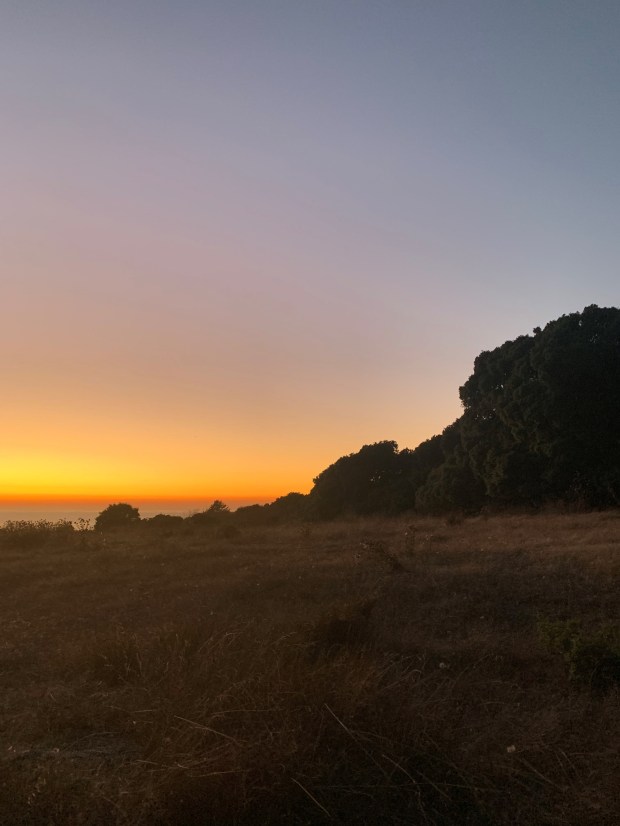
Two nights ago, the lower portions of our farm dipped into the chilly 40s. Today, it was in the 80’s, tomorrow even warmer with two ‘warm’ nights not lower than 65F. Such warm nights bring a cacophony of crickets along with late summer katydids. Our ears seem to ring, and seeking the source of any one of the insect songs creates a confusing, 360° immersive dizziness. A visitor remarked, “what IS that noise?” Such sounds are not found in the City. Such sounds are not even everywhere on the farm, only in places on the farm. There are pockets of nightsong. Seek them where you can, it is a worthy experiential destination.

Country-style Night Show
Even where they sometimes fill the air from all directions, the insect songs fade in and out, sometimes louder and sometimes softer. Some species go quiet leaving the chorus to others and those then fade to the next song, a repeating pattern that never grows old. Some insects sing trill….trill….trill and others have a more constant chitter. Some play lower stridulations, others high, shrill ear-piercing whines. For biologists, I note black field crickets persist in lower numbers than in the early summer; now there are more brown ones. Also, the invasive green tree crickets sing with oscillating medium-toned trills from which you can calculate the temperature. The late summer, and this year in particular, features the massive laterally compressed long-legged bug-eyed katydids, a source of high-pitched, especially ear aching whining: you particularly notice when they take a break. On warm nights like tonight, there is no real silence of insects, only lulls, and always with the green tree crickets’ consistent “wee….wee….wee….wee….wee….wee….wee….wee…” Under the insect chorus, enter a baritone montage: wave sets crashing, their pulsing drone carried by the gentle onshore cool breeze. The light show for the orchestra: fields of stars and the stripe of the Spectacular Milky Way that us country dwellers get to enjoy far from the polluting night lighting which ostensibly provides increased safety and orientation in the cityscapes.
Dawn Revealing
In the East, the first glimmers of dawn cast doubt on night, but darkness at first prevails, some stars still brightly shining. The wakening mind returns to semi-slumber, the day’s return a dream (?). Another thought, eyes wider, the sky a new brighter gray and another glance brings certainty…a new day, a return to the waking life and the tasks at hand. Awakening brings smiles and gladness for the peace of country life and ease of transition into farm routines.
Watering and Harvest
Many fields are dry-farmed, and those are curiously bedecked with fading green foliage and the brightening fruit harvest. Other areas are irrigated and so still vibrant green, though the last planting of sunflowers is fading.
Those irrigated areas need regular attention during this, the driest part of the Mediterranean summer. The waves of heat alternating with cool and even drizzle make for irregular water demand. In anticipation of heat waves, we saturate the soil more. With spells of cool and drizzle, we slack off a bit and catch up. Shovels explore the soil to record the moisture condition, sometimes surprisingly dry… trees full of ripening apples are especially thirsty. We are trained to keep the soil moisture above 50%, but predicting where it will be any one day is a learning opportunity, always.

Midday Warmth
The hot days tax farmworkers and birds, alike. Tomato and pepper harvest comes midday with backs bent, sun baked and sweating; picking commences no matter the weather. Above the farmers, migrating hawks ride warm thermals higher, soaring up and then south. A very rare occurrence: there were six red-tailed hawks and another large raptor even higher over the farm today. The great migrations called “hawktober” often co-occur with the recurring shimmering heat waves so common this month. Other birds avoid the open sun, chipping lazily from the shade of shrubs. Late in the afternoon, down by the ocean, a mixed flock of various blackbirds alighted on the roadside. Their beaks were open, panting, even as the day cooled at 5pm.
Evening
If we can, we wait to harvest apples outside of the hottest part of the day, and we can stand while doing it…easier on the body. Heavy picking bags leave the shoulders achy, and we switch sides to even the ache. The hurried apple harvest races the setting sun. What started as bright sun fades to soft golden light so briefly before all sunlight retreats to muted dusk, quickly darkening. Boxes and buckets of apples go into the barn with the last available light. Overnight, boxed apples cool naturally before the market delivery the following day.
On warm evenings like today, a great emergence of moths alights. Big moths and small zip and float everywhere, and it is impossible not to get hit in the face as they flit about. The bats are getting fatter. Poor-wills clumsily flap and dart, pouncing on their insect prey.
Also at dusk, the deer arise from their folded legs to traipse about looking for forage. Lately, they’ve been munching on the leaves of freshly felled walnut tree trimmings. Someone improved our farm road tree tunnel and left piles of fallen black walnut tree branches: this is a seasonally favorite food of the deer. Momma and her adolescent offspring deer (still unnamed) are at that salad bar. A young male caught her scent and wandered onto the farm this evening, a rare sight. The wayward bucks are very flighty and he was no exception. Upon being noticed, he bounded away, alert and head held high.

Night
Great horned owls, coyotes, foxes, and more. Two great horned owls have been having regular evening hooting contests. They sit in trees not too far apart and hoot loudly, taking turns, back and forth. There’s a silent bit, then one of them starts on some odd, non-hooty noises but then returns to the hoots soon thereafter. Is this a long conversation, or do they revel in the joy of creating or exchanging subtle variations in pitch and enunciation? They do not tire. They must be day sleepers.
Coyote barks seldom. Cassandra reports seeing a particularly large one. They leave big poops full of tomatoes and apples. Sylvie reports fox feasting on her Asian pears- a tree worth. There are poops from fox, too, all across the farm. Weasels excavate gopher runs in the apple orchard, freshly dug soil mounds ending at large gopher holes each morning. There may be a weasel den under a prune tree.
Night strolls to manage irrigation reveal black widow spiders more commonly than any other spider. One striking large female complained about my opening the gate she was building a web trap at the base of.
Mice scurrying (but never seen) is another commonality.
These balmy nights bring pulses of warm air settling onto the farm from higher up the mountain. Warm blobs of air get pushed around by cooler onshore breezes, or nudged here and there by sinking chillier streams of Molino Creek canyon air. The half mile walk across the Farm sends me through boundaries of three or four contrasting temperature air masses, and the new temperature also brings new scents and different humidities.
Seasons Passing
We have already passed through several waves of harvests and are set to see the last run of this year. Last February saw baskets of citrus and then Spring brought us peas and cherries. The first tomato, not until August, was a real delight, now we are in peak production. The prune plums are nearly gone as are the early comice pears. We are entering a marathon of 6 weeks of apple harvest, and that will be the end of the harvest season with the transition back around to citrus and all that follows next year. We compare years of apple harvest and the resulting cider. We mark our annual cycles as ‘before the Fire, or since the fire.’ Rains return and we burn huge piles of cut brush then the brush piles build again to be reduced the next year. On and on. Earth whirls around the Sun and we bound through space and time.



 Grey Hayes