Most days, the gentlest breeze lightly cools my skin, carrying fresh, oxygenated air inland, moving upslope from the ocean, through the redwoods and oaks and then across the sunny, chaparral-covered ridges of Santa Cruz County’s North Coast. Triads of days are hot, and sometimes wickedly windy, but those spells have been a week or more apart this idyllic summer. Slowly fading days glow peach before starry nights take over…nights rife with meteors trailing across the Milky Way accompanied by a continuous varied melodic chorus of many cricket species, some with higher notes, others lower. Great horned owls, woo-whoooo, woo-whooo, through the night, hooting the stars across the sky, hooting through the first pale light of dawn. Sunrise is subtle, no color, and it takes a while for enough warmth to build to make the breeze start once again.
The Ghost Trees of Morning
The rising sun reveals a startling new, bright glow from the Olive Orchard. Those gorgeous trees were silver before, but now they shine stark and ghost-like, coated by bright white kaolin clay with the hope of protecting the olive fruit from pests. Momentum is building with the Olive Oil Enterprise, budding new farmers working at a new scale with a new crop…steep learning curves with dreams full of delight. The (heavy) press is here, so we must get more serious. White trees, a sign of progress.

Pepperlific
Two Dog Farm, famous organic pepper growers, are rockin’ it. The plants were slow to go with the cool and all, but now that they have started, the fruit is forming thickly. These farmer pros coddle rows upon rows of padron peppers, a frying pepper delicious as an appetizer- a seasonal treat that means late summer and is not to be missed. Molino Creek Farm has long created peppers; we even named a field “The Pepper Field” even though we grow other things there, too.

Flowers
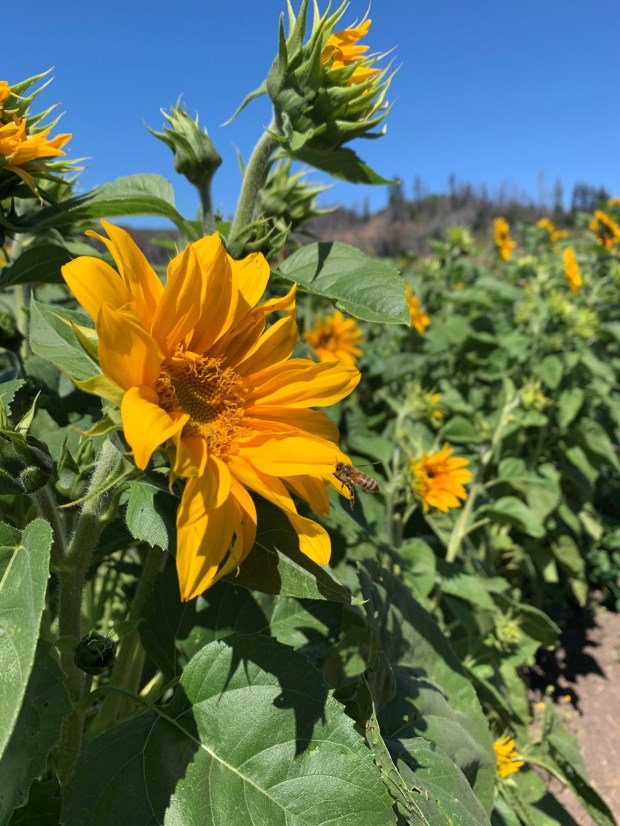
Tamed flowers, wildflowers…we have them all. Buckets of carefully bundled sunflowers are off to market and the rows of plants create the cheerfullest sight. We are still growing some outrageous dahlias, mostly dark maroon with long slightly curved sunburst petals. In the less tame sections of the farm, native California poppies are peeking up through the mowed grass with a second spring of bright color. In the heat of midday, the bumblebees show their appreciation for the mowing-released poppy patches: big furry black bees bouncing between blossoms.

Birds
The approaching Fall has suddenly created changes in the avian world. There are no more young quail- the coveys consist of robust, adult-sized birds, flowing in large groups across grassy expanses nodding, scratching, and pecking through the thatch, slurping up oceans of seed. The raven pair, Maw and Caw, are calm again, no longer chased by their obnoxious children who went somewhere, somehow, to fend for themselves. Now there is only an occasional raven caw instead of the incessant cawing of not that long ago. The barn swallows left in the last two weeks, so the wheeling in the sky is now only the smaller and squeakier tree swallows. The turkeys must have grown up, too: they all seem big, and large hens are constantly strolling through the apple orchard pecking at fallen fruit (yay!). That same orchard has seen a downturn of acorn woodpeckers devouring perfectly fine apples on the trees. The acorns got ripe on the tanoaks, a much more wholesome and longer lasting (in storage) food. You can almost hear them scolding each other: stop with that high-sugar diet! Stop Pecking Apples! We need carbs! We need to store food for the winter! Let’s get those tasty acorns!! The jays, however, did not get the memo: they are still making lots of holes in the apples.
The Apple Glut Solution
Not to worry, there are enough apples for All Beings. Thousands and thousands of apples. Estimated net production upcoming, for this season, just between 2 weeks from now and Thanksgiving: 9,000 pounds! That is the most we’ve ever produced, and this is just the beginning. It will blossom into much more (if we don’t have a wildfire) over the next 10 years. What do we do with all the apples!? That is a pressing question. The answer is, in part: Juice! Hard cider! But, I’m not sure we have enough containers…and enough cider makers…or enough cider drinkers. The Party must go on.

Mild
A wet winter, a long, cool spring, and an idyllic summer make for this dreamworld that is the setting for our lives right now. It is difficult not to notice, but we can look past it, as normal, if we aren’t careful.
Summers past, not so long ago were so hot, so dry…a knife edge between getting by and disaster, between exhaustion and anxious, worried pacing, staring at the sky, shaking our heads at the drought. Back then, all life hunkered down by day and crept slowly out only on the coolest of nights. Even the crickets were muted, the days still or roaring with unnatural dry hot winds.
This summer’s gentleness smooths our worry lines, and all creatures are at ease. Birds chatter and cheep all day, long conversations. Night ants pace in groups and in lines on trails comfortably, every night, all through the night. Rabbits and deer proliferate, gorgeous big-eyed young curiously exploring their vibrant, food-filled world. Trees grow long branches. Shrubs are lush and bees buzz everywhere.
We are thankful for this year, in this place, at this moment. And we are aware that not everyone is so lucky: we hope for better years for those roasting in Arizona heat, deluged and drowning in African and Asian floods, or backed into shrinking, suffering habitat in the depths of what is left of the Amazon. And, we are wishing you well.
 Grey Hayes