Ohlone tiger beetle

The Meadows of Scotts Valley

When you think of Scotts Valley, what comes to mind? What comes to my mind are hours of tedious battles to save what was left of the remarkable meadows, which are home to some fascinating species. Embedded in those memories are lessons about how other people viewed those meadows and the diversity of human perspectives.

Glenwood and Santa’s Village

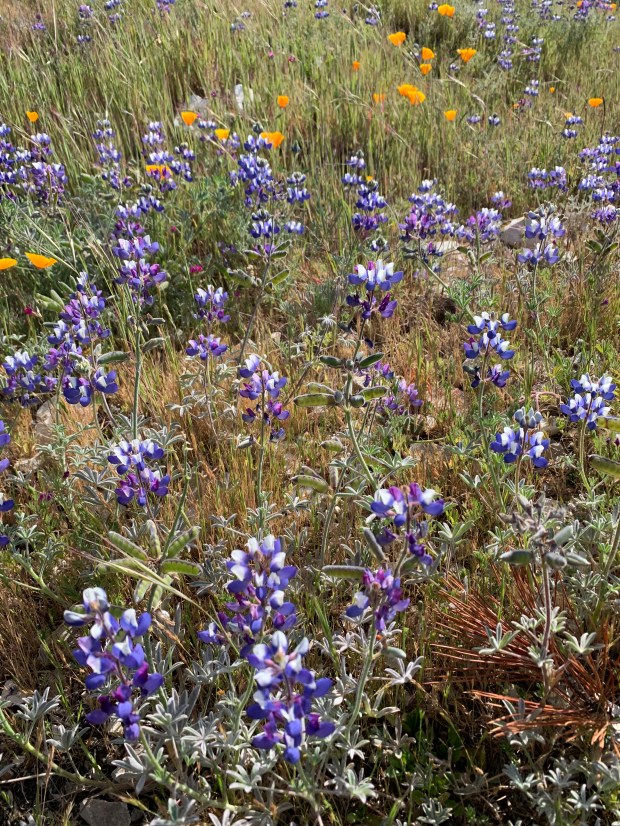
Highway 17 bisected some fascinating grasslands in Scotts Valley. On the west side of the highway, one can visit what remains of the Glenwood meadows. It is called the Glenwood Open Space Preserve and is owned by the City of Scotts Valley and managed by the Land Trust of Santa Cruz County. I’m not sure how many native species are left now, but in the 1990’s when I joined the battle to save those meadows, we used R. Morgan’s statistic of an extraordinary 250 native plants on just over 200 acres. The meadows would erupt in spectacular displays of lupines and poppies, each hillslope a slightly different color with many other wildflower species. 

Home to Rarities

To the east side of Highway 17 the last remaining meadow is at what was formerly known as Santa’s Village or the Polo Ranch. This smaller meadow was recently carved apart to make room for a luxury housing development by the seemingly ubiquitous Lennar Homes. Though smaller, this meadow has wonderful botanical surprises both in shallow-soiled dry rocky places and in some seepy wetlands.

These meadows are the home to the federally endangered Scotts Valley spineflower and the state-listed endangered Scotts Valley polygonum, species found nowhere else in the world. The state-listed endangered San Francisco popcornflower is awaiting better management in the seedbank in both meadows. A distinct form of Gray’s clover, if it survives, will probably one day be called the Scotts Valley clover as will a distinct form of Douglas’ sandwort – both should be listed as critically endangered and are only in the Polo Ranch meadow. A population of the State-listed rare Pacific grove clover has been found in the Glenwood meadow. The federally listed endangered Ohlone tiger beetles are also found in these meadows and in only 5 other places…all within Santa Cruz County. Opler’s long-horned moth, which should also be listed as endangered, is found feeding on cream cups in the Glenwood meadows. Western pond turtles have been found in the Glenwood pond, which would also make great habitat for the rare California red-legged frog were it not for nonnative fish which were put there a while back. 

Prior Losses

Scotts Valley has a long history of destroying the things that made it a very special place and replacing those special things with poorly planned housing developments. One gets the distinct feeling that poor planning is a hallmark of that town, which has no town center and is entirely sprawl. Smells like a legacy of greed combined with lack of civic engagement and the resulting pro-developer elected official. My mentor R. Morgan lamented the loss of the marsh that was once at Camp Evers, an ancient peat bog like no other for hundreds of miles. Then there was the development at Skypark, which was an airport and now has a small fragment of the once wildflower-rich extensive meadows.  

Scotts Valley High

Since the early 1990’s, as I’ve been following the more recent destruction of Scotts Valley’s ecosystems, the first to get to bulldozed was the Scotts Valley High School site. There were other sites but someone in power got their way, sacrificing rare species and permanently destroying a treasure of immense value. So powerful were the proponents that they managed to protect only tiny set aside areas for the rare species, spaces that were doomed to fail. Promises of integrating these small conservation areas with high school biology classes never materialized. Management for the endangered San Francisco popcornflower has never succeeded.

Glenwood Open Space Preserve

With great effort, the Friends of Glenwood, the California Native Plant Society and the Sierra Club managed to fend off 200+ homes and a golf course that had been proposed at the site.

Meanwhile, the Land Trust of Santa Cruz County is both succeeding and failing to manage this preserve. On one hand, they have been quite successful in managing for the most endangered species on the property- the Ohlone tiger beetle. This beautiful beetle has flourished because of their work. On the other hand, the habitat for the Pacific Grove clover seems to have been lost due to poor decisions. And, large areas of the property are being overcome by invasive species such as stinkwort and French broom.

Santa’s Village

Legal wrangling and the California Native Plant Society’s (CNPS) negotiations resulted in the protection of a small private park above 40+ homes. CNPS fought to have fewer homes, arguing that more homes would require more grading, which would threaten the hydrology of the steep terrain and its rare plants. Undeterred and supported by the ‘any development is good development’ Scotts Valley City Council, the home builders dug into the hillsides which subsequently collapsed, severely damaging the rare plant habitat. After years of delaying any management, the preserve area degraded due to brush and weed encroachment. But, after many years, the Wildlife Heritage Foundation is managing the property and trying to restore some of the rare species. Let’s wish them luck!

Lessons Learned

Scotts Valley has been, like Capitola, pro-sprawl whereas Santa Cruz is hemmed in. Just wait…one day Santa Cruz may re-think its greenbelt. Maybe I’ll get to hear another City Council person tell me that if such-and-such endangered species was in their yard they’d destroy it. Maybe I’ll once again hear a developer say something like ‘that Ohlone tiger beetle is probably the most common bug in the world!’ As pressure grows to develop around the Monterey Bay, I hope that we figure out sooner than later how to ensure that natural areas remain natural. How about third-party conservation easements on our parks? Can you not see how municipalities like the City of Santa Cruz will one day try to build housing on its greenbelt? Even State Parks will see that pressure. It seems to me that land trusts should be eyeing those opportunities with interest. They could be helping to guarantee longer-term conservation now that we’ve seen how quickly the tides can turn against conservation as the populace gets poorer and the developers get richer and more powerful.
The Early Winter Prairie

This is a slightly edited reprint of my recent column at Bruce Bratton’s online weekly, to which I strongly suggest you subscribe.

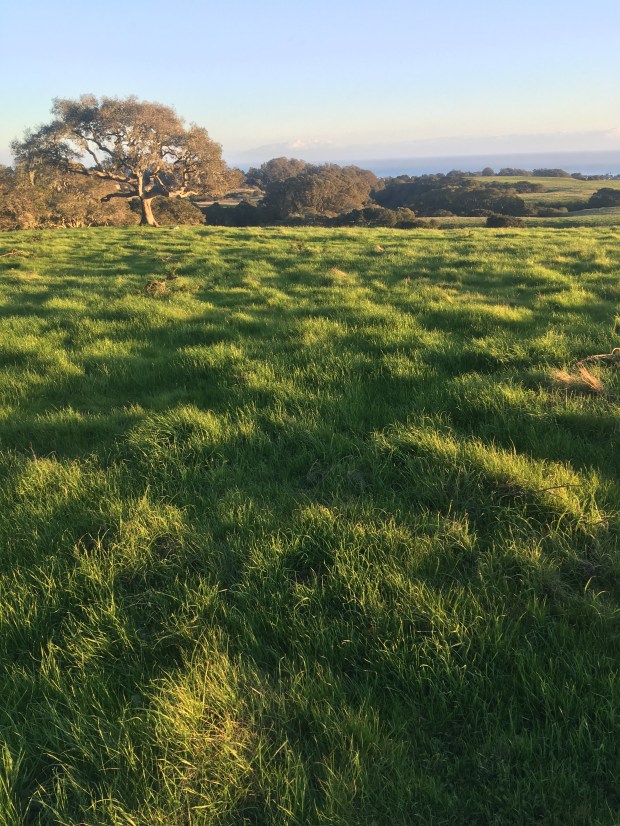
Each season life in the coastal prairie changes in hue and character. The many inches of rain and the cold nights fashion the winter’s prairie now turning bright green with life that is gradually emerging from quiescence. Most annual plants have germinated; both annuals and perennials are growing slowly, the sward just 4 inches tall. The first flowers are blossoming, swales and pools abound with water, gophers throw muddy balls out their desperate breathing holes, and frost ices leaf edges, wilting tender new growth. Newborn calves follow their hungrily grazing mothers far to find enough food. Recreational trails through the prairies are frequently stirred muddy messes, destroying life while eroding ancient soils onto the few remaining prairies; bicyclists proudly sport their muddy equipment and clothes. Some signs of early winter prairie are ancient, while others are quite new.

Pop Goes the…

The first native coastal prairie wildflowers are related to broccoli and celery. Popweed and peppergrass are in bloom, relatives of broccoli. These are a tiny plants on shallow soil or along trails and the sparrow-grazed edges of shrubs…or on last year’s badger or gopher mounds. They have little white flowers with 4 petals that seem to twinkle almost like glitter brightening the prairie. After flowering, popweed makes elongated pods that dry and then ‘pop’ sending seeds further than you might think possible from such a small plant. The U.S. gave popweed to the rest of the world…as a pest! You are probably more likely to encounter both of these plants in sidewalk cracks or (popweed) in potted plants in town. I’ve had the unpleasant experience of getting popweed seeds in my eye more than once, a victim of the barrage of flinging seeds from one of these weeds hiding in a pot that I was moving in my nursery.

Who Spilled the Yellow Paint?

The other very early prairie wildflower is starting to show color. It is called ‘footsteps of spring.’ It has the botanical name Sanicula arctopoides – that last word of its name being a botanical pun: “arcto” for bear and “poides” for foot: barefoot (harr harr!) footsteps (guffaw!) of spring … chuckle-chuckle go those goofy botanists. The name seems right somehow if you think Spring leaves footprints when she arrives: the first really bright thing is this plant- the entire 8” across flat plant turns a surprisingly vibrant yellow framing similarly yellow clusters of flowers. These wildflowers tend to make patches on shallow-soiled ridgelets and outcrops in the prairie. And so, Spring seems to have left footprints with her arrival as she danced from ridge to ridge and across rocky pathways to awaken the prairie from its moist green wintery slumber.

Prairies as Wetlands

Many people are surprised that many of our prairies are wetlands, but if you wander out there now, you’ll become a believer. Coastal Terrace Prairies are on flat ground, mostly along the ancient wavecut and uplifted coastal terraces within a few miles of the coast. Housing and agriculture cover most of the first terrace, the one right above the ocean, but there are extensive prairies on the second, third, and fourth terraces. Look uphill and inland of Highway 1 on the North Coast, for instance. Being flat, coastal terraces don’t drain well and so are apt to have long periods of saturated soil, which is a key attribute of wetlands. In some places, there’s water pooled across the soil surface, but mostly the soil is just so wet that only plant species adapted to wetlands can survive. Walk across these areas and you’ll find shimmering rivulets snaking among the grasses downhill to add water to creeks. Along the edges of these squishy grasslands are seeps and springs oozing and gushing with plentiful water now and remaining green late into spring. In mima mounds and on rocky areas on the terraces, you might find vernal pools- small ephemeral ponds with chorus frog or toad tadpoles, festooned with curious alga and teeming with zooplankton.

Grassy Carpet

Looking broadly across the prairies, grasses are mostly what you see, but slimy things are hiding underneath. Perennial grasses, many of them million-year natives, are waking underground with only the slightest sign in their leaves; their tiny leaves are green, but their new white roots have already grown inches into the surrounding soil, quickly claiming as wide an area as possible. They compete against quicker-growing annual grasses, most of them here for just a few hundred years; these get tall faster and shade natives, inhibiting many native plants from establishing from seed. Without something like the ancient megafaunal grazing regimes, the non-native annuals create a (relatively) towering canopy protecting slugs and snails from bird. Under the grassy protection, mollusks devour the nutrient-rich native annual wildflower seedlings before they stand a chance.

Cows = Flowers

In some places, cattle graze the prairies, maintaining some semblance of the evolutionary disturbance regimes that coastal prairie diversity requires. Betting on a better yearling market, some local cattle ranchers set the bulls free among the heifers at a time that makes for calves right now. This is a difficult time for raising a calf – despite the slow growing lush grasses, there’s very little protein in those leaves. To make enough milk, the mothers must constantly graze, cropping the prairie short. Flocks of birds follow the cattle for the food they expose along the way. Research UCSC Professor Karen Holl and I have performed over the past many years has shown that cattle grazing in coastal prairie creates more abundant and more diverse native annual wildflowers than adjoining ungrazed areas. Cattle grazing, cow trails and the lightly driven ranch roads that accompany livestock also make for excellent habitat for the rarest of beetles…the Ohlone tiger beetle.

OTB

The Ohlone tiger beetle is emerging from its burrows now, bright metallic green-blue carapaces like finest jewels of our local prairies. This species is only found in a handful of grasslands near Santa Cruz. On sunny, warmer days, it forages for invertebrates along open trails in only the most diverse coastal prairies. Those sunny warm days also attract mountain bikers who cruise so swiftly along the trails – including miles of trails that are not sanctioned by the landowners – as to smash innumerable of these endangered insects. Just last week, a colleague visited the Mima Meadow at UC Santa Cruz to find many smashed, most probably killed by fast-moving bicyclists. The carcasses were on a trail not sanctioned for bicyclist use and even in an area the University, as a legal mandate from the US Fish and Wildlife Service, has set aside expressly for beetle conservation. If court cases from Florida are any precedent, the University could be held liable for the death of a federally protected endangered species…and penalized. Perhaps that’s what it would take for the University to enforce the protection of this area.

Muddy Mess

Perhaps one could understand a University’s difficulty in managing natural areas, but what about our State Park managers? Many of the coastal prairie trails at Wilder Ranch State Park once had Ohlone tiger beetles, but State Parks destroyed much of that habitat by dumping tons of gravel to ‘harden’ the trails as a ‘solution’ to allowing recreational access during the muddy winters. Parks staff subsequently decided to manage a small remnant area (successfully) for this endangered species. Even so, coastal prairie trails are a muddy mess these days, and use only stirs up that mud, loosening it so that it washes off into the surrounding grasslands. Those extra nutrients spur weedy growth and destroy wildflowers. Meanwhile the incising and eroding trails serve to drain the surrounding wet meadows, an alteration that also degrades the habitat. Shame on users and managers alike for destroying eons of evolution and a legacy for future generations! If you see the (rare) ‘trails closed’ signs…which are almost always (if present) defaced and thrown aside…please prop them back up and go for a forest walk, instead.