oc

Fast Forward: FIRE! Rewind: Ungulates

In the future, it looks like there will be a lot of fire in California. Whether that is Good Fire or Bad Fire depends on you…depends on each and every one of us. Although it might not be ‘natural,’ we need Good Fire because we messed up a long time ago by driving ungulates extinct. Can we rewind? Let’s see.

Infernal Invitation

Our part of Planet Earth is constantly producing tons of fuel for the next wildfire. The coastal prairies are the most productive grasslands in California, creating 4 tons of dry grass per acre every year. Oaks, madrones, redwoods, and Douglas fir grow fast and tall around here. Shrubby plant communities go from nothing to impenetrable, dense thickets in just six years, ready to carry another inferno shortly thereafter.

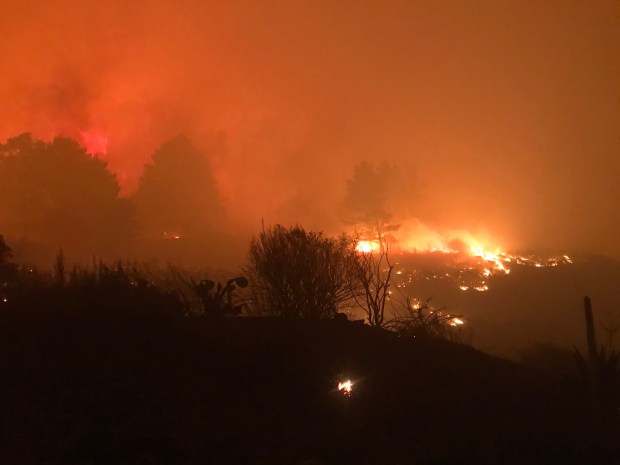
With plenty of plant biomass to burn, and because of climate change, it is only a matter of time and the right fire weather to set things ablaze across our landscape. Local tribes could get fires to carry through the forests every 4-6 years: that’s how quickly fuel builds up to carry flames. About 6 years after the last fire, we should start expecting the next one, especially if there’s the right conditions. 2 consecutive years of drought makes parts of plants die, creating the dry wildfire kindling. Next up…heat waves….and then wind….and then all that is needed is ignition. We expect more summer lightning to do the job of starting fires as climate change destabilizes weather patterns and sends parts of hurricanes spinning across California.

Compost Happens

People are wrong if they imagine that once plant leaves and stems fall, they quickly decompose into the soil. Lots of folks I talk to think that things rot…mushrooms break down plant parts, after all, right? The cycle of life is all about death, decay, and rebirth! In miniature experiments, many people work this cycle with compost piles, or at least they purchase compost and add it to their gardens. Compost is nature’s proof that decay happens, so it must be the same in the plant communities around here, right?

Mediterranean Mummies

Rot misconceptions are founded in moisture preconceptions. Half of the year, the hot part, is dry: no rain. The wet part of the year is cool. The combination slows decay. In the forests, from what I’ve seen no stem, branch, or trunk larger than 2”diameter will fully decay before it burns in the next fire. Rot resistant redwood needles accumulate in a thick mulch that carries smoldering fire. Grass stems in our prairies last 3-5 years if they don’t touch the ground or are grazed, so there’s lots of accumulation there, too. In shrubby areas, plants are so closely packed that nothing tips over onto the ground, so dead stems and whole dead bushes are held upright for years awaiting the next blaze.

Drier, Hotter, and Few Big Creatures

It hasn’t been this fire dangerous for very long in these parts. This coast was moister and cooler just 15,000 years ago. Pollen records show the departure of grand fir and the arrival of coast redwood around that time on the Santa Cruz coast. On the larger scale, California has been getting drier and hotter since the Rocky Mountains and the Sierra Nevada started blocking summer rain that came from that away. About 15,000 years ago, huge herds of animals went extinct here: elephant relatives, horse and camel relatives, bison, and many more grazing critters roamed in massive herds, grazing and browsing the landscape. This would have profoundly affected fuel accumulation and plant community structure. In that kind of situation, wildfire would have been much more patchily intense. Big grazing creatures crush brush, eat leaves, topple trees. Bears and ground sloths tear apart tree trunks. Dead plant parts plus big creature impacts plus moisture conditions would have made composting much more natural.

What Now?

Okay, so change is happening: what do we do now? Good Fire is the answer, and to make that happen will take everyone’s cooperation. Good Fire involves careful planning and enough labor to set ablaze large areas of nature…at the right time…at the right intensity…at the right season and interval. We will have to feel safe when people tend fires in our forests and grasslands, right up next to roads and homes. Not many people feel that sense of safety right now, but we are still learning and training, and getting better at working together and building trust.

Meanwhile

Meanwhile, how do we live around such a flammable and dangerous landscape? I see people clearing vegetation and trying all sorts of ways of disposing of dead plant parts. As fewer people burn wood for heat or cooking, that is decreasingly a means of wood disposal. People seem enamored with wood chip additions to landscaping, but wood chips only slowly decay and are a fire hazard for years. Some folks are ardent about hügelkultur and composting, but these systems are of limited potential, requiring intensive management and, often, summer irrigation to speed decay. I see many people attempting clearing and biomass addition – mulching, composting, and even summer irrigation – in our poor-soiled chaparral communities. These practices destroy epicenters of biodiversity, type converting precious habitat to flammable weeds and increasing the potential for pathogens to spread into the adjoining habitat. Better to carefully thin and prune back chaparral vegetation where necessary and have low-intensity wintertime burn piles.

In many other situations, wintertime burn piles seem a fitting solution while we await better alternatives, such as Good Fire. Burning piled up biomass takes skill and careful planning to do it right. There are good regulations which get you started on the right path to pile burning: they require not too big of pile and that the biomass is dry so as to create not too much smoke. Permissible burn days assure smoke doesn’t too badly affect human health. I suggest a few other items to the list of things to pay attention to when pile burning. First, don’t burn a pile where it sits: a fox skeleton was the first sign that taught me that. Poor fox, cowering in the pile of brush hoping we’d go away only to be set on fire! There are lots of other critters living under that pile of dead plants! Also, why not use that burn pile to do something else useful? For instance, use the heat to kill an unwanted tree, shrub, or weed. French broom seedbanks might be devastated by a burn pile. A jubata grass plant could be eradicated. A coyote bush that would otherwise start to invade a meadow could be taken out. Also, one might have a group around the bonfire for a social occasion. And, think about how the nutrients and burned bare patch might affect the natural situation: weeds (or natives) will grow stronger, fire-following plants might germinate along the perimeter!

Here’s to learning how to live in a new era on this wonderful landscape. Join a bonfire this winter and pitch some biomass onto the flames to make our community safer!

-this post originally published by Bruce Bratton in his laudable weekly blog at BrattonOnline.com

Rainsong from Creek and Cloud

It has been blowing and blustery with so much rain that the ground is oozing and bubbling, and newfound springs are pouring from gopher holes across the entire landscape. The creeks do more than murmur: they rush and shout. The ocean has been loudly roaring with unfathomably massive waves, more foam showing than water. People tire of no sun, but all are thankful for the rain, we will perhaps never again complain of rain…lucky us for the wetness, for hydration of the ground, moistening of the forest duff, the slicking of the rocks and mud, and the paddling of the 11 ring necked ducks across Lake Molino.

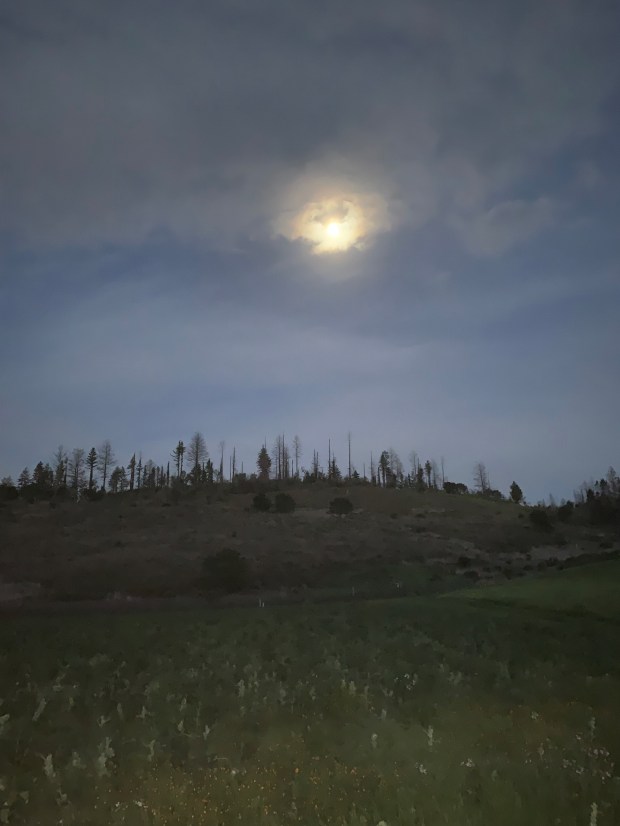
An enlarging moon rises above Molino Creek Farm and some of its cover-cropped fields

Moon Growth

Last night, the cloud cover slackened, and the moon was as bright as the sun has been for many days. Moonglow shining through drizzly fog. Owls hooting. Deciduous trees awaken even at night, the quickening of sap, the fattening of buds.

Dazzling Green

We all this sprinter. The trees are bare and the grass is turning Electric Green. The meadows around Molino will get 6’ tall this spring, if we let them. In the past week, in the aisles between the orchard trees and the margins of the farm fields the grass doubled to 2’ tall. It has become unbearably wet to trod off trail or road, shoes and pant legs quickly soaked, even when it hasn’t rained for hours (rare).

Sprinter- the trees are still bare, but the grass is turning electric green

Flowers Unfurling

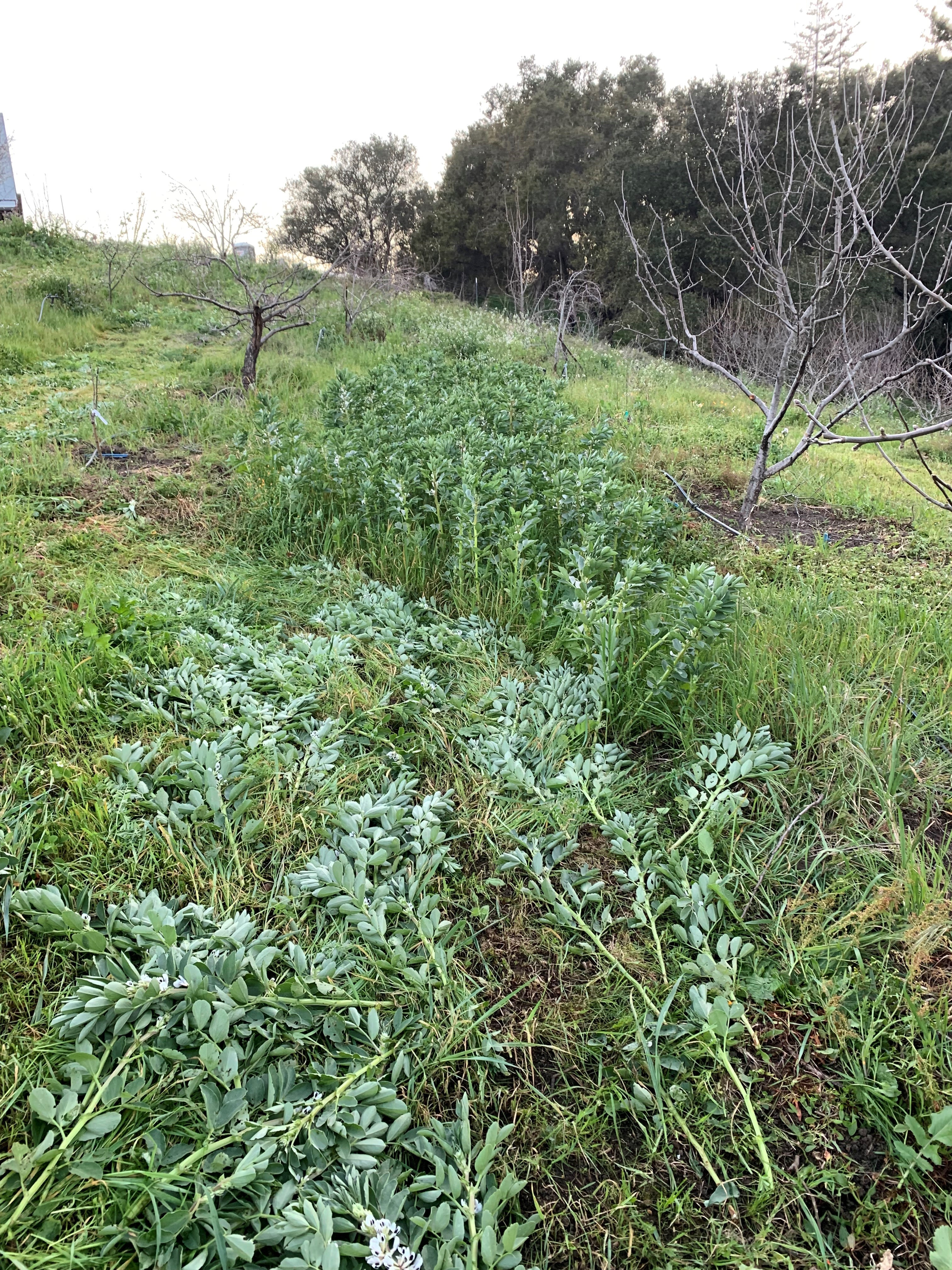
The first orchard trees are in bloom – the first plums are a’flowerin’. The quince bushes aren’t far behind. The orchard understory is thick with 2’ tall (!) someplaces lush cover crop: fava beans, oats, and vetch. The wide, blue-green fava bean leaves are lush and heavy, nodding as the first white flowers emerge in whorls along the stems. Under the trees, the Iberian comfrey is in full bloom, tempting the bumble bees, preparing them for the Big Bloom when we really need them. Borage, native strawberries, and weedy radish are also offering nectar in the understory. Sprinter – a time for the vibrancy and lushness of the herbaceous world.

Pile It Up

There’s not much going on with the farming, but the Molino folks have been ‘at it’ with land management. We’re not quite done burning all the biomass we piled up this last and the prior year, but we’re close. Fourteen piles ate up lots of stuff into relatively nothing, doing work at the same time. We made the burn piles on top of brush that we didn’t want, so the stumps were thermically removed, saving future work. Often, these piles went through both weekend days with shifts of energetic people tending and adding to them. Each branch we torch is one less to add to the future wildfire, and we work apace to make the farm more fire safe with the understanding that next summer could challenge us once again with an uncontrolled inferno. Meanwhile, we get soaked in the rain while the bonfires steam our clothes dry and keep us warm.

The ridge has fewer trees: dozens fell in the 75mph winds a few weeks back

Chores

We can no longer rest. Although the short, dark, wet days still make us lazy, we must awake and enliven and get to work. After a 2-year hiatus, the meadow voles are back- good news for the riddance of gophers but bad news for the sweet bark of the young trees. Time to make bare the area around young tree trunks- the only way to keep the voles at bay. Also, many young trees pitched sideways must be propped. And…The Pruning! The Grafting! The Planting! Wow, is it ever time to catch up.

-this post simultaneously published at Molino Creek Farm’s website

Environmental Injustice and Accountability

Shall we all agree? Injustice shall not stand! But what are the ultimate measures of environmental injustice, and how do we make those responsible for violating those measures more accountable? Shouldn’t these be the primary questions we pose as ethical humans concerned with the welfare of future generations? As the which came first the chicken-or-the-egg statement goes, ‘no peace, no justice.’

Species Loss and Soil Loss

I posit that the loss of species is the primary measure of environmental injustice. And I would suggest that soil loss is, as a measure, just as important. It is sometimes difficult to make the case that a given species is critical to the welfare of humans. But any informed, rational conversation on the subject will eventually conclude that the most justice is served by ensuring all species survive. It is similarly difficult for most people to understand and discuss the importance of keeping soil in its rightful place. And again, if people take the time to have informed rational discussions on this matter, they will conclude that is absolutely critical that humans do everything in their power to ensure that soil is not lost…from any place.

Measuring Success

Humans have become expert at measuring things, and there are easily available metrics for monitoring species and soil health. The federal government of the United States has an Endangered Species Act and a Marine Mammal Protection Act and the State of California has its analogues. These two very powerful pieces of legislation demand a science-based approach of measuring the degree to which species are approaching extinction, publishing lists of species which have entered that trajectory, and demanding humans take the actions necessary to recover those species back to healthy populations. With those rules, we have progressed well in our species health measurements, database management, analyses, and predictions – oodles of very smart humans’ careers are spent on these issues. The US Fish and Wildlife Service, National Marine Fisheries and California Department of Fish and Wildlife are the authorities responsible for protecting species.

Similarly, both the federal government and the State of California have strong legislation to address soil loss. The federal Clean Water Act and the state Porter-Cologne Act both address soil loss where it can most easily be shown to affect human welfare: in wetlands, streams, and rivers. Again, humans have become adept at measuring soil (aka ‘sediment’) levels in our wetlands and waterways. The acting authority for both pieces of legislation is the State Water Quality Control Board, acting with Regional Water Quality Control Boards…ours being the Central Coast office based in San Luis Obispo.

Photo by Vince Duperron

Progress?

We have had some success, but mostly we are failing to address species decline and soil loss. The Monterey Bay region has excellent examples of both the limited successes and abject failures with both issues. If you get to Moss Landing or Monterey and hop on a whale watching boat (and I hope you do!), you can predictably view endangered species that, due to legal protections, measurements, and adaptive management, have recovered somewhat from extinction. Hike at the Pinnacles, and you can see California condors which most people feared would go extinct not that long ago. Walk on some of our local beaches and you might see a snowy plover…another species who owes its survival around here to the Endangered Species Act. Same with the southern sea otter, marbled murrelet, and the central coast populations of steelhead and coho salmon. If I’m convincing you of humans’ ability to reverse species extinction, you are being premature. All of those species, and dozens more endangered animal species remain on the federal and state lists of imperiled species because they have not been recovered. And, many, many more species qualify for listing under the state and federal endangered species acts but the authorities haven’t spent the time to analyze them. Locally, only the peregrine falcon has been ‘delisted’ – no small feat! The reason so many species are so tenuously holding onto their existence: lack of accountability.

Accountability

Holding people accountable begins with measuring their success. After legal action by the Center for Biological Diversity, the US Fish and Wildlife Service has been dutifully publishing 5-year reviews of the status of each federally listed species; the stories in those reports are not good, but their reports fail to go so far as to hold anyone accountable. Turning to our much-vaunted free press, The Intercept recently published an exposé that illustrates who should be held accountable for the lack of protection afforded endangered grizzly bears. That story, and similar stories I’ve documented from around the Monterey Bay, point to problems with the justice system. If you haven’t figured it out yet, the US justice system is seriously in trouble: there is no justice in the USA! As shown in that Intercept article, anyone can destroy the habitat of, or kill individuals of, any endangered species and easily get away with it.

Point Reyes Horkelia: another species about to be listed as Endangered due to bad public lands management decisions

Local Examples – Endangered Species

Whale species, snowy plovers, Ohlone tiger beetles, California red-legged frogs – all local endangered species with good documentation of legal infractions that have gone unanswered. There are films, witnesses, and reliable first-hand accounts (including by legal enforcement personnel) showing boat captains purposefully pursuing and interfering with the movement of – harassing – legally protected whales on the Monterey Bay…and these are ongoing situations. When interviewed, Federal enforcement personnel say that it is hopeless to enforce such infractions because they report to too few legal personnel and those personnel say such cases don’t stand any hope of holding up in court. Similarly, State enforcement personnel say that unless they catch, film, and have witnesses of someone in the act of killing an endangered sea otter (with ‘blood on their hands’ and a ‘body in their trunk’) there is no hope of legal enforcement of the many more frequent (and well documented) situations of human behavior negatively impacting that imperiled species. Again, they say this is due to limited legal bandwidth within their agency and the hopeless nature of the justice system in convicting anyone. In Florida, there is good legal precedent for finding parks agencies responsible for allowing visitors to trample endangered sea turtle nests. In Florida, as with California, state parks personnel are required to plan for such endangered species protection, even on popular beaches. Around the Monterey Bay, parks agencies routinely allow visitors to trample endangered snowy plover nests and squish endangered Ohlone tiger beetles: there’s documentation aplenty with both situations. As recently as this past year, park agency personnel have destroyed wetlands occupied by California red-legged frogs to ‘improve’ trails. In past years, park agencies have graded and graveled trails, destroying Ohlone tiger beetle habitat. When reports reach federal officials, they respond that they contact parks personnel, admonish them, receive apologies, and then they forget it…there is not one bit of justice served!

Local Examples – Soil Loss

I could, and will in a future essay, provide a similar litany of examples where responsible agencies have failed to enforce regulations designed to address soil loss. The San Lorenzo River is ‘listed’ as impaired by sediment- soil loss in that watershed is rampant and largely unaddressed. There is more to come on this.

Upper- and Lower-Level Accountability

What do we do? If voters don’t demand that District Attorneys enforce environmental crimes, they won’t. If we don’t demand that our politicians have environmental platforms, they won’t work to improve the justice system so that it protects species and soils. But is the fault really way up there at those ranks? Can’t we demand accountability at lower levels? After all, unless we work together at every level, we won’t succeed.

If you see something, say something. We must have compassion for the enforcement personnel who so want to do their jobs but feel disempowered. And let’s learn how to be good witnesses, how to provide the right reports, and how to help document the two primary root environmental justice issues. Evidence must mount from more people more frequently. We must also make sure that the evidence is well stewarded: I look forward to annual reports from enforcement agencies about the frequency of infractions that remain unenforced.

Finally, why do we allow parks agencies to keep operating so that visitors are destroying the endangered species that those parks were designated to protect? Why do parks personnel allow so much soil loss from roads, trails, farms, and buildings? This goes beyond enforcement. This is a political issue. No one wants such injustice.

-this essay originally posted by the wise Bruce Bratton, who aligns some of the areas’ best minds to post in his weekly blog at BrattonOnline.com – why not subscribe today?

Contrasting Two Biodiversity Hot Spots

When I can muster it, I travel to the American tropics to experience an even greater degree of species diversity than California. I’d like to share some of what I noticed in the contrasts between the people and places I experienced this December in Ecuador, perhaps the most species rich place on Planet Earth.

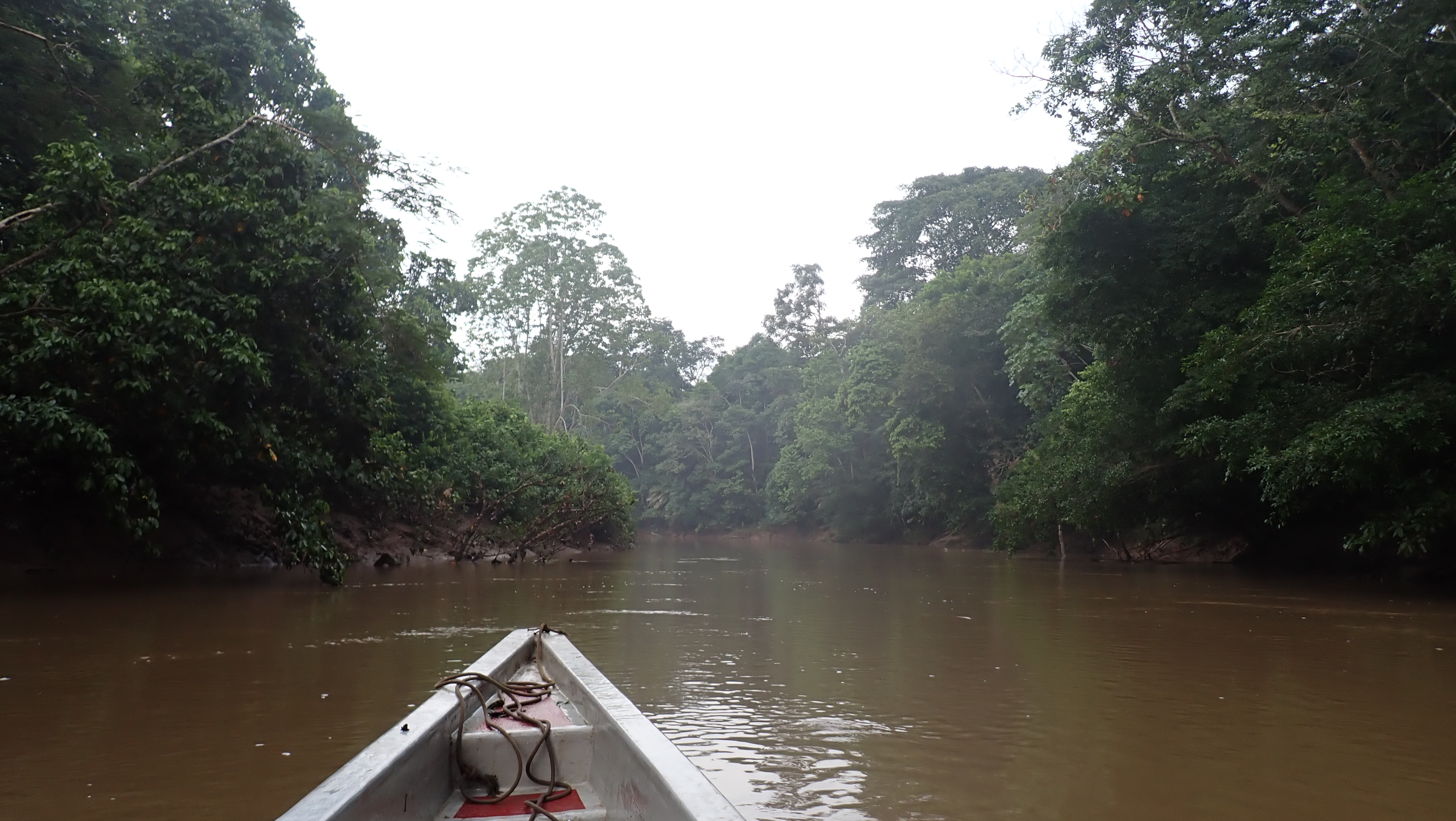
A indigenous guided Amazonian river tour in Ecuador, one of hundreds available

Oh, the Riches

One of the most interesting conversations I had while traveling in Ecuador was during the taxi ride back to the airport as I was departing for California. I mentioned to the taxi driver some of the things I’d noticed in Ecuador that contrasted with California. For instance, the roadways were clean – no litter! Also, I hadn’t seen any homelessness during my travels, though I frequented areas where entire people had no obvious means of employment. Everyone I encountered during my 3-week stay had been more than polite – outgoingly kind more like it. And, those with whom I interacted seemed to appreciate and even understand a lot about the biological richness of their country. I told the taxi driver that these things were surprising to me as Ecuador was supposed to be such a poor country. He shook his head and corrected me – Ecuador is a rich country, quoting Friedrich Wilhelm Heinrich Alexander von Humboldt, “Ecuadorians are rare and unique beings: they sleep peacefully in the midst of crisp volcanoes, live poor in the midst of incomparable riches and rejoice with sad music.” He then asked me if the United States was also a rich country, and how well did the people of the USA sleep? I didn’t know quite how to answer. (It turns out that one-in-five US citizens take sleep medication regularly).

Tourism Economy

It is interesting that both Santa Cruz County and the country of Ecuador generate approximately the same amount of cash due to tourism: $1.1 billion annually. It is there that the similarities end. The Beach Boardwalk is the driving force for Santa Cruz County tourism. Experiences in nature are what drives tourists to Ecuador; they go to experience Darwin’s discoveries in the Galapagos Islands or to see the rich jungles, volcanos, mountains, and the plethora of wildlife. Everywhere you go in Ecuador there are lodges hosting people whose destination is Nature. Lodges are gateways to the Parks, and each lodge has a cadre of nature guides trained to help tourists see the richness around them. Nature guides study for years to become certified to lead tours in the parks. The guides I met could identify hundreds of birds by their songs, knew a bit about most of the plants we encountered, could identify tracks in the mud, and could talk about the distribution of species across the country and beyond. There are hundreds and hundreds of such guides in that country, which is the size of Colorado.

What a Contrast!

As I returned home, I wracked my brain to think of a single lodge in the Monterey Bay that caters to nature tourists and has any nature guides at all. The San Francisco Airport toilets were much nastier than the toilets in the Quito airport. Trash litters Highway 1. The homeless population was not sleeping peacefully, though others might have been, back in my hometown of Santa Cruz. I’m not sure how many of my culture were rejoicing, with sad music or otherwise: joyfulness is not a phenomenon I equate with this culture. Certainly, most of us living around the Monterey Bay aren’t living poor, but we, like Ecuador, dwell ‘in the midst of incomparable riches.’

Miles of beautiful coast and not an eco-lodge or terrestrial biodiversity guide to be found

When is a Tourist Just a Tourist?

What does it matter that tourists go to the Boardwalk versus taking a walk with a nature guide? They come, they spend, they go home…its all good for the economy, right?

Between guided hikes at an Ecuadorian lodge at 9,000’ I sat by a fireplace looking through the reading material on the coffee table. There, among giant, full-color books published by the Ecuadorian government about the nation’s biological richness, I saw a magazine published by the American Bird Conservancy. That group, and the Audubon Society are two fairly mainstream conservation groups working to save birds from extinction. Many of the tourists supporting Ecuador’s lodges are birders. There is a natural connection between tourism and conservation. The same cannot be argued about Beach Boardwalk visitors.

So, why isn’t there an economy of immersive nature tourism around the Monterey Bay?

The Thrill Isn’t There and We Just Don’t Care

Thrilling, isn’t it? Roller coasters…rides…the children won’t be bored. Once the children grow up, the adults head overseas to see birds and nature: why not sooner? What is it about Nature that makes experiencing it so family unfriendly?

Even a drive along Highway 1 is so unenthralling as to invite so much littering.

Do we care so little about impressing the tourists, do we have such little pride, that we don’t bother keeping our airport toilets and roadsides clean? Aren’t we richer than that? Or, are we really quite poor?

What would Humboldt say of those currently living around the Monterey Bay? “They are just normal beings: they sleep fitfully in the midst of isolation and crime, living poorly in the midst of incomparable riches and rejoice in violent movies.”

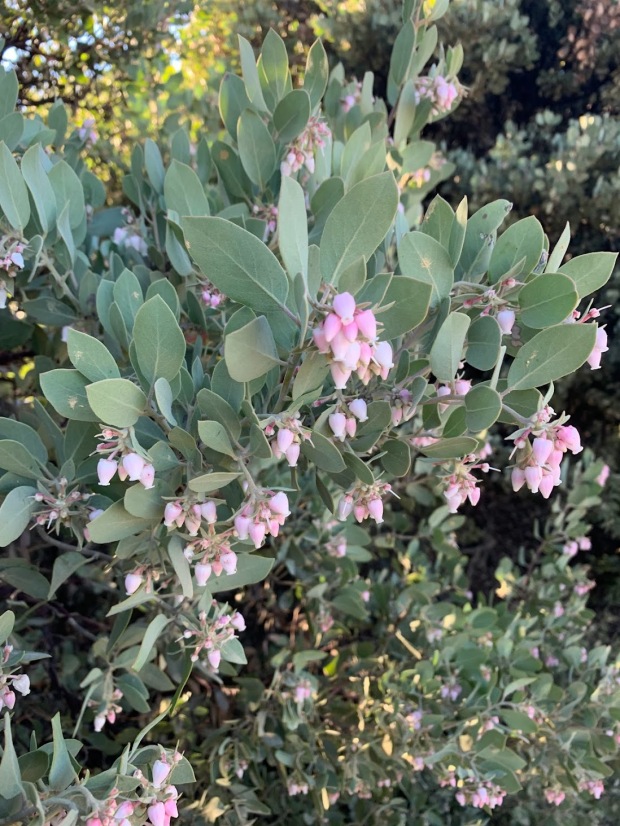
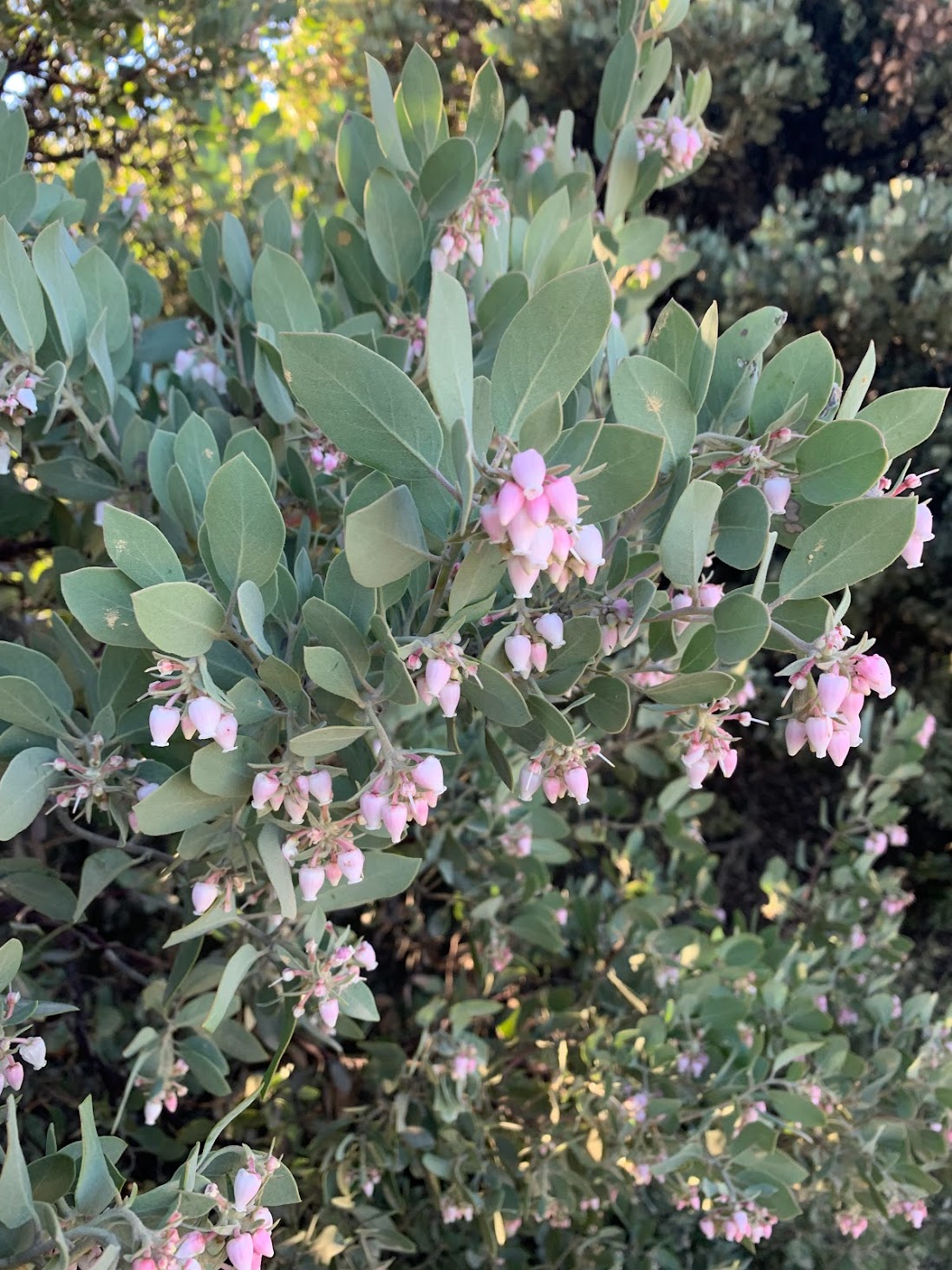
Hoary manzanita, Arctostaphylos canescens – on granodiorite, ridgeline south of Loma Prieta

Awake! The Unfolding is Nigh

Now the rain has wetted the green hills, flowers are bursting, birds are singing spring songs, and streams are noisily dancing. The solution is at hand. Toss aside the social media, decline the invitation to the movies, take the trail and saunter. Invite someone to join you, someone with whom you can adventure and discover the amazing life unfolding around the Monterey Bay. First on the list: the manzanitas! A dozen species within a short drive – discover them all, their beautiful bark, their honey-scented flowers with hummingbirds and bumble bees aplenty. Jackrabbits and brush bunnies, roadrunners and quail, coyote and mountain lion tracks around every corner. Need a guide? Sign up for a walk if you can find one: ask me if you can’t. The Monterey Bay’s ecotourist economy and resulting conservation start with you, now and tomorrow. Let’s make Ecuador a sister country to the Monterey Bay – biodiversity hotspots with plenty of inspiration to share.

-this post originally appeared as part of Bruce Bratton’s laudable BrattonOnline.com weekly blog: check it out! Subscribe! Support! It is The Place for news on the Monterey Bay. No other outlet supports a regular environmental column. Other outlets have SUBPAR environmental reporting.

Not Passing Through

A fundamental issue related to the inter-connectedness between humans and between humans and Nature is how we move. How often do we change homes? When we are doing errands or our work, how quickly do we move around the landscape, in cars, bikes, buses, or on foot? When we visit nature, how do we move…and how fast?

Changing Homes

According to surveys, US citizens move from one house to another 18 times. On average, they move every 6-11 years, depending on region and economic status. In other parts of the world, such as China, there are millions of itinerant workers who are on the move all of the time. Refugees from war, climate disasters, cartel/mob threats, etc., are numerous. Is this natural?

Some would suggest humans are naturally nomadic. Long lived civilizations are very rare, and I’d be interested in knowing how long pre-industrial indigenous group are thought to have remained in the same territory.

The Social Meaning of Moving

Neighbors are a very long type of human relationship. Some people don’t know their neighbors. Some even don’t want to. The throng of cities provide anonymity that some crave. Rural areas lay bare the need to interact with neighbors. Some loner rural denizens stand out in their desire for isolation, leaving the rest of the neighborhood wondering and curious. That spectrum means there is a wide variety of meaning when we move away from the social fabric of our neighborhoods. When we move farther still, we leave behind those we chose to interact with, our communities, our friends. How have those moves affected you, your family, your friends?

Lost Communities

I posit that the frequency of people moving is negatively affecting the quality of communities. If people stayed put more, wouldn’t they come to better understand the things that affect their community? Even if they aren’t particularly interested, it seems like people gradually come to understand housing issues, strains on water sources, the health of the public transit systems, who has power and who doesn’t, how weather affects people, social norms, and history. Each of those types of understanding influences our relationships with others in our community and can affect the political parties and politicians we choose. When we move, our votes make less sense, and our communities suffer the consequences.

Moving Around Where We Are

Closer to home, how do we move about in our daily lives? I am amazed at rush hour traffic and suppose that most of those people can’t afford not to be moving so slowly, breathing thick exhaust. For a long time, as a commuter, I tallied the very expensive vehicles on the road at various times of day. Not surprisingly, the rich are better able to avoid rush hour. So, how and when we move around is highly affected by how much money we have. But, everyone moving in cars on the road share the experience of isolation from each other and from the world as a whole. The more time people spend in their cars, the more isolated they are.

Economic conditions notwithstanding, Covid lockdowns changed many people’s movement patterns. People looked at their homes differently. For instance, people started cultivating many more houseplants. As the urban bustle subsided, wildlife started edging further into the built environment. We noticed the world around us a lot more. It was quieter both on the streets and in the air. Air pollution declined. Some of our movement patterns remain curtailed despite city governments’ attempts to get businesses to reverse work-from-home policies.

Moving Around In Nature

A ‘avid’ mountain bike enthusiast once told me that they rode carefully so as to avoid running over newts. For those who read my column regularly, you know I have an affinity with newts. When I walk in the forest, avoiding stepping on newts is something that keeps my attention. It is not easy. Newts blend into the forest floor easily, are varying sizes and move at varying speeds, and are sometimes so numerous that you have to walk ever so gingerly to avoid them. It is even more difficult for a bicyclist to avoid smashing newts, and that example serves for a world of other nature interactions. The faster you move around nature, the less likely it is that you will see the nature around you. Also, bicyclists, by covering more ground than those on foot, also disturb more wildlife than other, slower-moving parks visitors. If we are looking to increase the nature sense of humans, we must work to get mountain bikers off of their bikes, so they move more slowly and experience nature more deeply. The same goes for joggers. Parents who care about helping their children connect with nature have a challenge to show their kids how nature is exciting even if you aren’t on a bike or running through a park.

Infrastructure in Nature

‘Stay on the trails’ is an increasingly common park visitation rule. It wasn’t that way very long ago. Technically, State Parks has to formally designate an area as a natural reserve to legally restrict use to trails. At Cotoni Coast Dairies, the land managers have to go through an arduous rulemaking procedure to restrict future visitors to trails. Staying on trails changes the way you experience nature. Wildlife avoid trails. The vegetation surrounding trails is different. Your chance of encountering other people on the trails changes your experience. And, most trails are designed as straight lines, as if we are all in a hurry to get from one place to the next when we visit nature. Trail builders with parks agencies think that people want ‘loops’ and are averse to ‘out-and-back’ trails. Turn offs from the main trail better end in some giant attraction, like an incredible view. Those straight lines and loops create a certain type of experience for parks visitors. I suggest those designs enforce a more fleeting and more separate interaction with nature. What would it be like if more trails led one way to nothing obviously spectacular? What if parks managers designed in slow, immersive experiences into their ‘infrastructure?’

If people slowed down, looked around, and took more time to experience nature, wouldn’t that connect them more with the natural environment? Wouldn’t that connection make them care more about protecting the environment? Just as people moving less increases the possibility of caring more for their neighbors and human community, people moving more slowly in parks should increase their caring for the non-human world.

-this post originally published by Bruce Bratton in his highly engaging and enlightening weekly blog found at BrattonOnline.com, where you can turn for the most meaningful news for the Monterey Bay area.

Animals of our Hearts

We each come to loving non-human wildlife for our own reasons, and we want to assure that all species are thriving for future generations. Among the many people with whom I interact, their answer to an intriguing question is uncannily and increasingly resolute.

“How many species do you need to maintain the quality of life you desire?”

“All of them” is the answer more and more people are giving me.

How does that work?

Only through the goodness of our hearts will we conserve wildlife. What doors open our hearts enough that we are willing to act to restore wildlife?

Cute, Fuzzy Creatures

As children, we are fascinated and kind towards non-human animals. Often, what we glean from children is that they find wildlife to be ‘cute.’ Whether they are stuffed plush toys or animated cartoons, we indulge our youngest children’s inherent love of wildlife. They have pets, or visit friends’ pets, and develop relationships with non-human species. Children learn to cuddle and stroke pet fur, and the pets purr and roll, and show pleasure, giving love back. Humans and non-humans give and receive love, reducing stress and building trust. We expand the community from our core human families to include non-humans.

As adults, we carry with us that love of cuteness, the desire for connection with non-humans, the tactile pleasure of the furry cuddling interaction. And we develop still other ways to connect with non-human animals.

Non-Human Friends: Our Pets

The friendships we create with non-human species are complex, and we each have our own approach. Many share a basic understanding that has developed with our non-human pet species. There are troves of common wisdom about dog and cat behavior towards, and expectations of, humans, which I will not repeat. I’m sure you have plenty of material to reference, as this is a deeply cultural realm and the subject of many conversations, especially when extended family gathers and ‘pet talk’ is a relatively safe space for discussion.

As those pet conversations get more personal, it becomes clear that many humans rely on non-humans (and vice versa) for friendship. Our pets go with us on adventures and reveal to us much that we may not have otherwise experienced. Our pets recognize our ups and downs and participate actively with all of our emotional territory.

Wild Friends

It’s not only pets: some people recognize friendship with wild creatures. The stand-out crowd are those who feed or provide water for wild birds. This bunch is so numerous as to have a sizeable economy surrounding these connections. People buy and maintain hummingbird feeders, bird baths, bird feeders, suet cages…some even invest in specialized foods such as worms or fruit jellies for their favorite bird species. There is an emerging movement in gardening for wild birds.

Still others connect with the wild furry animals that they frequently encounter in parks or in their yards…squirrels, deer, and foxes are the ones I hear about the most. People put out squirrel food, some even getting to know a squirrel well enough to feed it out of their hands. Some folks get to know a certain local doe and her fawns, watching her through the year as she raises them from spots to adolescents. The doe may very well know about the safety net provided by their proximity to a friendly human’s habitation. She and her fawns will feel comfortable near the humans they recognize. Being very sound-centric, they respond attentively and curiously when we talk to them. The very habitual fox, trotting the same paths at the same times each day, will know just how to avoid human encounters but we catch glances of them when we break our rhythms. They poop on our shoes outside the door as a way of saying hello. For a while, foxes were so regularly seen in Bonny Doon that when their populations dipped a whole community was saddened.

Wildlife Viewers

Many of us are falling in love with more and more species of wildlife. We call ourselves naturalists or wildlife viewers. We study the critters we encounter in order to learn new stories. Domesticated dogs provide a gateway into the natural world…through our regular ‘dog walks’ and through our observation of their sniffing around and explorations. Wild animals do those things, too, in many more ways. They draw us out of our cozy homes to visit them and see what they are up to. Observing their behavior, we learn new things about the natural world. As our curiosity grows, we find ourselves in places we wouldn’t otherwise venture, at times of day we might not otherwise get out. Wildlife viewers must get up very early sometimes. To see a river otter, they go to the riverside; to see whales, they go out in boats; to see pond turtles, they spend time gazing at logs in ponds; to see snowy plovers, they squint into binoculars on a wind-blown beach; to hear owls, they stay up late and scritch gravel to goad them to calling.

Hunters

A significant and important segment of the human population connects with wildlife as part of the hunt. Sometimes, hunting provides important food for subsistence; historically, this was even more so. Other times, hunters enjoy the sport as well as the food. Hunters and people who fish get to know the species they pursue and the habitats those species rely on. And, their love of wildlife for hunting has actualized incredible conservation successes. Ducks Unlimited and Trout Unlimited are two of the many organizations supported by hunters which have helped steward wildlife habitat and recover species.

All of Us

Statistics suggest that the vast majority of humans, even here in the apparently divided USA, strongly support wildlife conservation. When we realize the importance of wildlife to our standard of living, we are compelled to learn more about what wildlife need to survive. When we connect with wildlife, we realize we are part of something greater than ourselves, bigger than our simplified human-oriented world. When we see wildlife make a connection with us, we feel part of the natural world, and our basic selves become more grounded and real. When we work to conserve wildlife, we are at our best…serving the world that serves us. Three ways we can be effective at wildlife conservation:

  • Vote for candidates that detail their approaches to conservation. Every political candidate has the means to make a bigger difference than any one of us acting alone.
  • Join a wildlife conservation organization, donate more than membership fees. The Center for Biological Diversity is my choice. The Audubon Society is a good one, too. I’m vetting others…suggest one that you think I should mention!
  • Tell your friends heart-felt wildlife stories. Help create a culture that connects with wildlife!

-this post originally part of a Bruce Bratton weekly blog at BrattonOnline.com, read it and be enlightened!

-to be further enlightened on this subject, see the recording of my recent presentation about local wildlife by clicking here.

Surrounding Sounds

As the Great Marvel occurs, the sounds so change also. The Great Marvel is the onset of winter rains. As citizens of a Mediterranean climate, this should be as monumental as it is for the other living beings around us. Simultaneously, the sounds of winter set in. Are you listening?

Humans are very visual, but we have other senses that would be good to emphasize. Let’s call this next week “Sound Awareness Week.” This will have particular meaning for those who can’t hear at all or hear well: for those of you, perhaps your gift this next week is to help more people describe what they are hearing, a two-for-one kind of experience. For those of you who are already acutely aware of sound…there is always more to explore!

Background, Seasonless Sounds: Rural and Urban

Everywhere you go, there are always a few noises no matter what season. Airplanes: more so on weekends with recreational aircraft. Roaring motorcycles: replete with accentuating noise apparatus, illegal, but unenforced! Barking domestic dogs, a seemingly Universal human mishap: some dog owners can’t seem to hear their own hounds (or don’t care)!

Seasonless Urban Noises

As many readers are situated in urban or near-urban areas, let’s first sift through the background sounds that a realtor once told me (mistakenly) that I would ‘get used to’ so that one day I ‘won’t even notice.’ Traffic: the hum or revving of engines, the squealing of tires. Car stereos played so loudly as to accelerate deafness. Sirens. Fighting domestic cats. Crows, hundreds of crows cawing. Pigeons cooing. The mechanical noises of Boardwalk rides and the accompanying screaming.

Uniquely Rural Noises, All Year Round

A few birds and coyotes sing the same all year round. Dark eyed junco, spotted towhee, Stellars and California scrub jay, great horned owl…all birds that seem to go on and on with similar calls all year round. Many other birds clearly vary their songs more seasonally. Coyotes yap and chortle-howl most any time during the year.

Winter Noises

Think about those prior non-seasonal noises, review them and visit them in your mental soundscape…then think about what you are hearing these days that’s different than say a month ago.

The three big noises that mean winter most to me: rainfall, wind, and waves.

Rain

The many sounds of rain make me smile whenever I stop long enough to enjoy them. The sound of urban rain – on pavement, bouncing off cars, pouring off of roofs, rushing down storm drains. In the City, its like you are part of a giant cement fountain where all of the water is guided this way and that, popping out here and there by design.

In the country, you can enjoy the very varied sound of rain hitting different plant communities. Grassland rain is very quiet as millions of grass blades expertly catch and lower raindrops, springing back for the next one, dancing on and on, up and down. Conifer forest rain is quiet at first, too: needles delicately capture the oncoming rains. After a bit, the sound changes as the needles let loose big droplets that clamor as they pass down through the canopy and onto the ground. Waxy leaved plant communities, oak and madrone forests and chaparral have particularly rattly-noisy rain sounds. Raindrops pop when they hit those leaves, spattering and spraying with more noise still. Rain on the ocean, in lagoons and estuaries, and on ponds has the most soothing sound, where you can really get a sense of the minute changes in rainfall intensity and duration.

Wind

City and country wind sounds are different, too; either way, the wind noise is significantly heightened with the onset of winter storms. Tuning into wind noises in either place, you can visualize zephyrs and gust fronts as they pass by, come towards you, or after they retreat.

In the City, wind makes varied and unique high whistling noises as it passes through wires; there are wires everywhere in the City. If you live near a tree that catches the wind, you come to know its song. Palm trees rattle and bark. Conifers roar with different pitches. Bare branches of the many street trees also sing songs.

In the Country, the ridge top forests are often talking through the winter. Depending on the wind direction, each ridge and forest type has its own distant hum-roar-swoosh. If you are in the forest when its windy, you get to hear the groan and sometimes pop of trees swaying. Leafy evergreen live oaks make a noise in the wind that makes you wonder if its raining.

Waves

Big wave events are common around the Bay through the winter, and those waves make big noises. Besides bird song, listening for the waves is what most frequently brings me back to the moment. When I catch the wave noise and pause, I try to pick out individual waves even from far away. I try to follow that wave as its crashing progresses directionally. Then, I listen for the crescendo or the lulls of the varying sets. I pay attention to my breath to compare the tempo. Sometimes, I think I can feel the waves through the ground, perhaps the big noise reverberating into the ridges and terraces. After a particularly long lull, I pick up the spray off of the first big wave before the subsequent waves drown out that higher note. I’m thinking of late that long sets of big waves make tones like singing: listen for the notes, am I right?

Other Winter Noises

There are a few other winter noises that are unique to the city or countryside.

In the City, the sound of traffic changes as rolling tires are louder, making wet and splashing noises. The Boardwalk makes less noise.

In the Country, the ephemeral streams start their chorus. Post-storm waterfalls sing. Under the redwoods in the mountains, you can hear the flute-like call of the varied thrush, a winter denizen. In orchards and in riparian forests, you might hear the distinct whiney ‘weeent’ of the red-bellied sapsucker, another species only around in the rainy season.

Now Listen!

Its over to you…check it out…report back on the onset of uniquely winter sounds. Tell me, tell your family, tell your friends what’s all that noise about? Compare notes.

-this originally posted by Bruce Bratton in his outstanding weekly blog BrattonOnline.com – check it out, donate…and read it!

Rein of Seeds

Of all the phenomenon of Fall, seeds rein. Just as humans become silent around the table as they dig in, mouths full of the bounty, so have the non-human animals across the fields and forests surrounding Molino Creek Farm. A pale blue scrub jay appears on a high perch, its beak pried wide, holding a huge acorn. It dives to a patch of grass, furtively glancing about to assure no one is watching, and buries the acorn, no pause and it’s off for the next. Our normally squawky friends are quite busy with their oak harvest, back and forth, planting hundreds each day. It is not a great acorn crop year, so the competition is high.

The tiny goldfinches disperse like confetti in small flocks, alighting in field margins or scrubby areas to harvest the oil-rich seeds of thistles, prickly lettuce, and tarplants. Their songs, too, are muted, chatter replaced by dainty beak-seed-cracking.

Just one of the many nice views on the road into Molino Creek Farm

Redwoods

Fall in the wooded canyon means redwoods shedding needle-branches and a rain of seeds from newly opened, small cones. Recent gusts broke loose short sections of the outermost branches from redwood trees. Thin-stemmed branch tips are mostly needles, which are regularly shed this time of year and carpet trails and roads. Even ‘evergreen’ trees shed needles at regular intervals, each species with its own season. And so, the forest floor transforms from last year’s now dark duff to a light, red-brown coating of fresh redwood litter. Walking our Molino Creek Canyon trail now creates a crunchy, crackly sound. On a recent walk, I glanced down to appreciate the redwood fall and saw many redwood seeds sprinkled between the scattered needle branches. A heavy breeze swayed the trees back and forth over me and in all directions, and the air was suddenly filled with redwood seeds, bigger than dust and thickly moving like sheets of drizzle.

Madrone

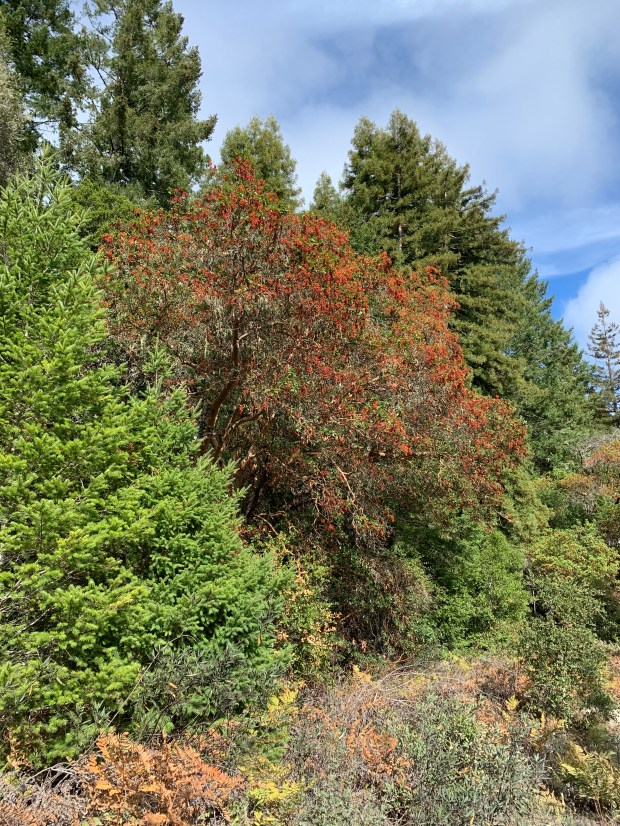
A beautiful element of our woodlands is the flesh-smooth orange-barked madrone, becoming bedecked with ripening fruit, held high in the canopies. Presented in diffuse clusters just above their large oval shiny dark green leaves, the ripening madrone berries are changing from hard and green to fleshy and bright orange-red. Band tailed pigeons and other birds are feasting, sometimes knocking the ripe fruit to the ground where mammals gobble them up. When I am lucky enough to find a grounded, deeper red fruit, I also pop it in my mouth, reveling in the sweetness, near strawberry flavor.

Walnut

The prominent black walnuts, the signature trees of the farm, are turning lemon yellow and dropping ripe nuts with a plunking noise to the ground. The 2” fleshy globes roll about a bit after dropping from the trees, settling in the grass or, more evidently, on road surfaces. The sound of tires used to be the scritch of gravel but is now accentuated with the resonance of the rubber drum when a run-over tough walnut pops and gets crushed into the road. Ravens and juncos line the roadside fence awaiting the freshly exposed juicy, oily, tasty nutmeat that is announced by the tire drum “poing.”

One day, we’ll make olive oil again, but it will take a lot of catch-up maintenance

Pome Pome, Pome-Pome!

The fruit that we eat (and drink) is rolling off the trees in delicious piles and buckets and boxes and carts. We are more than 2,000 pounds into the 4,000 pound harvest, down from last year. Nothing goes to waste. There are very rare instances when someone doesn’t pick up a really gooey apple from the orchard floor. Hygiene is in high swing with the worst orchard trash heading to the weed suppression wildlife feast buffet. The deer, rabbits, quail and coyotes take turns at the castings: nothing lasts more than a few days. The last tractor bucket of culled apples, 200+ pounds, was mopped up in 2 days, down to bare earth.

That leaves 3 other types of apples: sale apples, take home apples, and cider apples. The most common harvester and sorter vocalization is ‘awww!’ as they realize the rarity of the perfect fruit, the choice apple that is sent to market. That’s one in 8 this year, due to the uncontrolled apple scab of the moist spring. The other 8 apples are 30:70 take home apples versus cider apples. The take home apples are sent in boxes, buckets, and bags to the growingly extensive community orchardists; they have the most minor blemishes and there are hundreds of them. Our working bee network has been making their own juice, drying them, stewing apple (-quince) sauce, and just plain enjoying the crisp diversity of flavors from the many varieties we grow. The cider apples have a few more blemishes or even some signs of worms…the latter making work for the cider pressing party as chattering, smiling clean up crews prepare the fruit for a better juicing.

Juice!

The cider pressing last Saturday attracted 30 or so of our network, new and old pressers, taking the 500 pounds (or more) to 30 (or more) gallons of nectar – delicious juice. Much of this will become hard cider for future gatherings; many enjoyed diverse ciders from prior pressings. Most abundant fruit of this year’s press, Fuji, but also Mutsu which makes famously fine flavored juice. Mixed in here and there were true cider apples, varieties that are just starting to produce after 8 years in the ground. The cider apples add bitterness or sourness or tartness and overall complexity to the juice from what would otherwise be plainer if produced only from table apples.

The Community Orchardists sponsored a recent squeezing of fresh juice for the Pacific School in Davenport, our neighborhood! Bob Brunie schlogged the equipment and demonstrated the process to the schoolkids, some of whom were returnees and they enjoyed it a whole lot..

Bob Brunie shows off Molino Creek Farm’s Cidering Process to Pacific School kids, photo compilments of Mike Eaton

The falls’ fruit produces juice, brewed into all seasons’ mirth. With toiling gladness, we renew the stocks annually. Cycles of production and consumption – foundational in nature – quench more than mere bodily thirst, leading to deeper appreciation of Earth.

-this post also shared via Molino Creek Farm’s website, same time, same author

Falling leaves and moist winter chill

Fallen leaves blown across the forest path, under foot while walking, go “swoosh, swoosh, swoosh.” The sound of moist leaves (not crisply crunchy), an early rain and cool nights softened the landscape, removed the dust, made things gentle again. We are relaxing, slowly shedding the stress of the Fall’s potential for wildfire made more real these past many weeks by wind-carried smoke from prescribed fires across the entire state, even nearby at Wilder Ranch.  

Breezes carry in the clouds and then clear the clouds, waves after waves of clouds and then sun alternate as the dry summer plays with the wet winter, back and forth. This week, winter won with a bit of rain, shy of an inch and not yet wetting the soil more than superficially. After the rain, some sunny warmth and then the wind, fog, and another front , and it got chilly. Tuesday evening fog piled up on the other side of the prominent ridge across Molino Creek and poured over it, falling like a ghostly waterfall backlit by the evening sun. Beautiful!

Neither the rain nor the subsequent drippy fog has been enough to release the cedar-scented petrichor, much anticipated.

we do grow olives…for locals only olive oil!

Big swell, seasonal scents

Last night’s goose bump chill sent us to close the windows, put on sweaters, and some even built their first wood stove fires. And today’s cool air reminded me of how I’ve been taking the sun’s warmth for granted and how I’ll miss that deeply warm sense for a long time soon. The cool air, moisture, and gusty breezes accentuate the piney, resinous smells of redwood, Douglas fir, and coyote brush. Winds across the ocean pushed up an epic swell recently. Roaring and thumping waves reverberated across the landscape, but now there’s just a low more consistent hum. The patterns of breezes with long lulls awaken the senses, especially when it is peaceful on the farm but the trees on the ridge start talking, telling us a big gust is coming.

Feathered visitors

Geese, Canada and white fronted, are honking their melodies overhead near sundown. They are making their way to their winter grounds.

The newest birds are blackbirds, strutting around the fields in flocks, their heads moving curiously straight back and then straight forward with every stride. This evening, the light was catching the glean off the backs of a flock of Brewer’s blackbirds, reflecting the iridescent deep purple-blue of their gorgeous plumage. They let me get close but eventually alighted to show me the bicolor blackbirds in their midst. There are around 50 of this mixed flock and more may still arrive. They love to eat the grass seeds in the cover crop. They might even be anticipating it.

Other wildlife

Otherwise, the wildlife report is all about the Very Big Buck, coyotes, and chirping bright blue bluebirds. Perhaps there’s more than one Very Big Buck, but people are talking about an extraordinarily large, very impressive male deer from here to Davenport and north to Swanton. This creature stands very smart and tall with a giant set of antlers nearly 3’ across. He stood in the roadway looking intently north where he couldn’t traverse without going around the deer fence. He hesitated, looked north again, and then sauntered uphill following the fence line, somehow seemingly begrudgingly.

Nearly nightly, the coyotes sing. They aren’t doing the long musical numbers with multiple animals yipping and howling, but rather it’s a series of solos of the one coyote couple. One evening, they were calling from way up the Molino Creek canyon. Another evening, they sang right outside the window. Each night they try making some song from a different place, perhaps checking out the acoustics: the echoes are always fun.

The throaty, watery chirps of western bluebirds grace our midst. The brilliant blue flashes from the males’ zig-zaggy flights are breathtaking. There were seven birds, up a couple from last count. With that plumage, one wonders if they are considering breeding early…

The fading row crops will soon be tilled in and cover crop will grow, instead

Fall farming

We’re not quite ready to cover crop. There are still 10 days of tomatoes to harvest and the apple harvest is in full swing. The floral crisp sweet Gala apples are almost all gone; we will pick no more for market. Last weekend, we picked all the remaining Mutsu apples which had been devastated by the apple scab disease that enjoyed our late wet warm spring. Next up are the Fuji apples, and there are plenty of those! Plus, there are Golden Delicious, an underappreciated long storing apple of extraordinary flavor. In the Barn there are hundreds of pounds of culled apples that we’ll soon be juicing for cider. And so, we pick, pick, pick…sending on the perfect apples to market. Between picking spells, we spread compost and mow to prepare for harrowing in the bell bean seeds.

those rusty brown tentacles….avocado roots poking up into the loose, month-old compost!

Tentacles in the compost

The Community Orchardists have been spending the last many weeks spreading compost under many trees. Around a month ago, we spread compost under the avocados on Citrus Hill. After that little bit of rain, I noticed those avocadoes looked particularly perky and vibrantly green. So, today I pushed around the compost to see if the avocado roots had invaded it: they had! It is so curious to me that avocado trees push pointy tenacles of roots straight up, out of the soil into mulch. How do those thick pokey roots feed off the mulch? Such a mystery.

young avocado trees are growing fast!

Returning Friends

High in a fruiting apple tree, harvest bags slung over our shoulders, we stop picking to glance up the road…gravel scrunching noise…a car winding its way down the road onto the farm. A neighbor or a visitor? We narrow our eyes to see where it goes, who is returning home? Who is visiting whom? By car, wing, or scales, we welcome all sorts of friends returning to Molino Creek Farm.

A String of Celebrations

The harvest festivals have already begun. We are pressing apples with two pressings already behind us, 40 gallons of divine apple juice in freezers, refrigerators, or in carboys fermenting. Upcoming is Samhain, the midpoint between the Fall Equinox and Winter Solstice, a time when the veil grows thin separating the ancestors with those here now. We will be attentive to the shadows, echoes and whispers of those who walked and loved this place before. John Brunie used to perform the astrological calculations of the exact date and time of these sacred holidays, but he’s gone so we seek a new calendar keeper for the Farm. Thanksgiving means some leave the farm for gatherings elsewhere and others arrive, a string of quiet days, friends roaming the fields and trails sharing stories and luxuriant first rain smells. The forest floor and roads are often littered with evergreen branches at Thanksgiving, blown about by the winter’s first storm. We weave fallen boughs into circles, recognizing the cycles of time. Winter solstice lies shortly thereafter and then the Wassail brings the string of celebrations to a temporary close. We are at the threshold of gatherings a’plenty.

We regularly hire who we can to mow down acres of flammable coastal scrub

Equinox Birds

The Fall Equinox has hellos and goodbyes. We said hello to hundreds of golden crowned sparrows who returned to this place from Alaska on the very evening of the Equinox as they have done time and time again. With strong site fidelity, these birds love this place more deeply than we can ever understand. These same families, these same clans, have potentially been returning for hundreds of thousands of years to this very spot. If we peer at them enough, we can recognize individuals; they already know each of the neighbors and maybe many of our friends. The Equinox saw the flight of the barn swallows, who returned to Central and South America. They may have spent days singing goodbye, soaring one more time past their favorite trees, and then they were off. As they left, the particularly whiny sapsucker(s?) dove into the orchard from the great migration from who knows where. We need help to see how many there are: last year there were three in the family. Sapsucker is elusive and shy, requiring some focused time searching for each individual to figure out how many will be here this winter. The changing birds greatly alters the soundscape. The dominant noise in the spring and summer were the creaky whistles and laughing chatter of swallows. Now, the dominant bird noise is the golden crowned sparrows’ forlorn call, a descending set of notes that might be, ‘Oh dear me,’ repeated from every shrub and tree. What hasn’t changed is the sheer biomass of birds inhabiting the Farm. Stepping out the door still flushes 50 birds. A walk down the roads or paths creates a continuous wake of fleeing birds. Feather flutter and alarm cheeps everywhere.

Winter Waves

The sets of roaring and breaking big winter waves have returned. Lately, there has been no still peace as the reverberations of the ocean form a white noise backdrop to a cacophony of warm night crickets interspersed with bouts of hooting owls. The waves create a mist that blankets the ocean side farms, spreading a bit up the coastal canyons. When the waves are big and there’s even the gentlest onshore breeze, we can smell the fresh sea scent from the Farm, 2 miles inland and 900’ up. When the waves get really big, it seems the ground rumbles beneath our feet. These are familiar phenomena which make this seem more like home.

A view across the farm

Coyote Friends

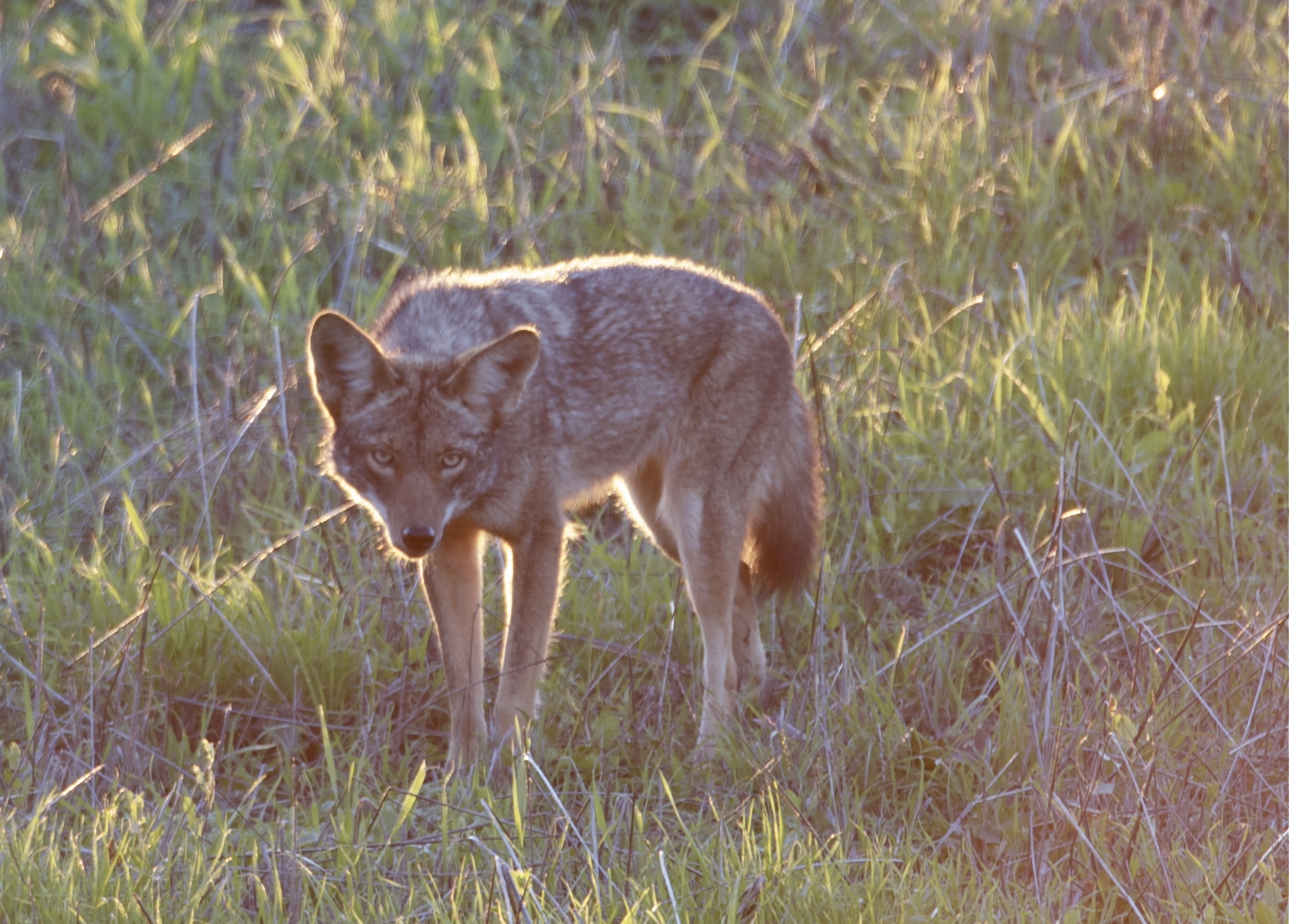
In Spring, we saw a female and her pup coyote. She had a peculiar white line behind her shoulders, a ridge of brighter fur that stood up a little above the rest. She was lithe and wary, always on the move, never playing as so many of our wild dog friends had done before. The other day, I saw her again, following the large male neighbors had been talking about. We have a pair of coyote friends! May they find a fine place to have pups nearby and feast on the rabbits and gophers that are so common around the farm. From their scat, it looks like they are enjoying apples and tomatoes for now. The two sing many nights, a deeper growly staccato barking paired with a longer noted, high yipping song.

Fall Scenes

The cycle of seasons delivers us a quintessential peaceful Fall. Time slows. The sun very gradually sets into longer and longer nights. The hills are muted colors now, dry leaves rattling. Once tall upright golden grass has settled, askew and gray-brown. The fruit and nut trees show hints of yellow. In the forest, maples, thimbleberry, and hazelnut are dropping lemon yellow leaves, splashes of color in the shade of the towering redwood forest. Bright squash litter the Two Dog fields as their peppers turn deep red. The poison oak is still moist, only a few bright red patches on the drier shrubby sites. The sunset sky is streaked with smoke from prescribed fires, humans returning to their roots, stewarding the land once again.

The last rays of sunset from a tall spot on the farm

May you take the time to meander about, soaking up the warm fall evenings.