oc

July Awakens the True Summer: Warmth and Welcome Shade

Sunshine rakes across exposed skin, prickly hot. A cooling light breeze helps, but the shade offers a more pleasing comfort. We smile entering the cool understories of lush walnut trees or beneath the canopies of perky well-watered apples. It is nice to have both the summer warmth and the cool shade in proximity. Our creature brains welcome the return to normal weather patterns with this typical July weather at Molino Creek Farm. The past week’s temperatures were precisely what the dry farmed tomatoes, winter squash, peppers, avocados, apples, and sunflowers crave: highs in the mid 70’s and lows in the upper 50’s. The cool breezes emanate from the tops of the billowing fog racing down the coast 200’ below the farm, obscuring our view of the wind-swept waves.

Don’t all you folks way East of us slather at our weather, it comes with a cost…the potential for FIRE! (I shouldn’t have said that). Do non-human critters worry about fire?

Wildlife

How would we know if our critter friends fret about wildfire? The turkey mothers seem to worry less about their young than the quail, judging from their skittishness. Bigger birds might have less worry and these turkeys look proud and bold. The turkey ‘chicks’ which we encounter along the road out from the farm are mostly pretty big, half the size of the adults and not so many as the quail. The quail are raising their second flush of teeny-tiny young fluffballs, stumbling along the roadsides. Their big brothers and sisters are nearly the size of adults- they grew so very fast. A 30-strong covey isn’t unusual to see on the Farm- we might have 4 of those calling their territories here and there. The coveys of quail have mostly orchestrated their flushing formations, launching and landing in unison.

A high flock of 50+ smallish swallows (species TBD) gathers at the top of the Salix Stream’s highest burnt Douglas firs, alarm calling and scattering when our resident red-shouldered hawk flies by. The above-door barn swallows have either just fledged (neighbors) or are feeding their second clutch (my house). A large flock of Brewer’s blackbirds has settled back on the farm after their off-farm nesting; they are accompanied by at least one adolescent bicolored blackbird. The pair of band tailed pigeons who are robbing chicken feed bravely from the coop are still at it.

No new news on the gophers and voles. The gopher population still as the upper hand as the vole population rebounds, crowded into thick-thatched corners of the farm, here and there. I predict the gophers will start losing ground to voles later this year…

Farm Activities

Mark Jones is still the rock star behind the mowing- weed eating and mowing to get the grass down to a fire-safe, dirt-touching mulch. Adan made a pass through the tomatoes with the tractor, tilling in the summer weeds. The Two Dog crew has been assiduously hoe-hoe-hoeing the row crops which had an unusual flush of weedy amaranth this year, so lots of work! Free the peppers!

As I type, Molino Creek Farm has made its debut at the Downtown Santa Cruz Farmer’s Market. Judy took many beautiful sunflowers, zucchini and various other goodies to say our first hellos to new friends and old.

Organic Tasty Gala Apples, Growing Fast for a September Harvest

Crop Report

Tomato bushes are 18” across and a little taller with the first green, shiny fruit plumping up half way up their stems. Two Dog winter squash is bounding- tendrils stretching and long stems bounding from vibrant plants whose bases are adorned by big yellow blossoms. The orchard mulch project is gaining ground- we’re almost through with raking, delivering, and placing the first mulch field, aka “Squash Field”- an acre of ground just past the Old Apple Orchard. We’ve got much more to do with the 1-acre “Habitat Field” near Cherry Hill. And then, we have more patches to gather as our hunger for hay mulch has grown with the new plantings the past few years. Our 3 acres of orchards seem to want to be fed 3 acres of hay, easy math.

The Heavenly Scented San Pedro Cacti are in Bloom Right Now at Molino Creek Farm

Flowers

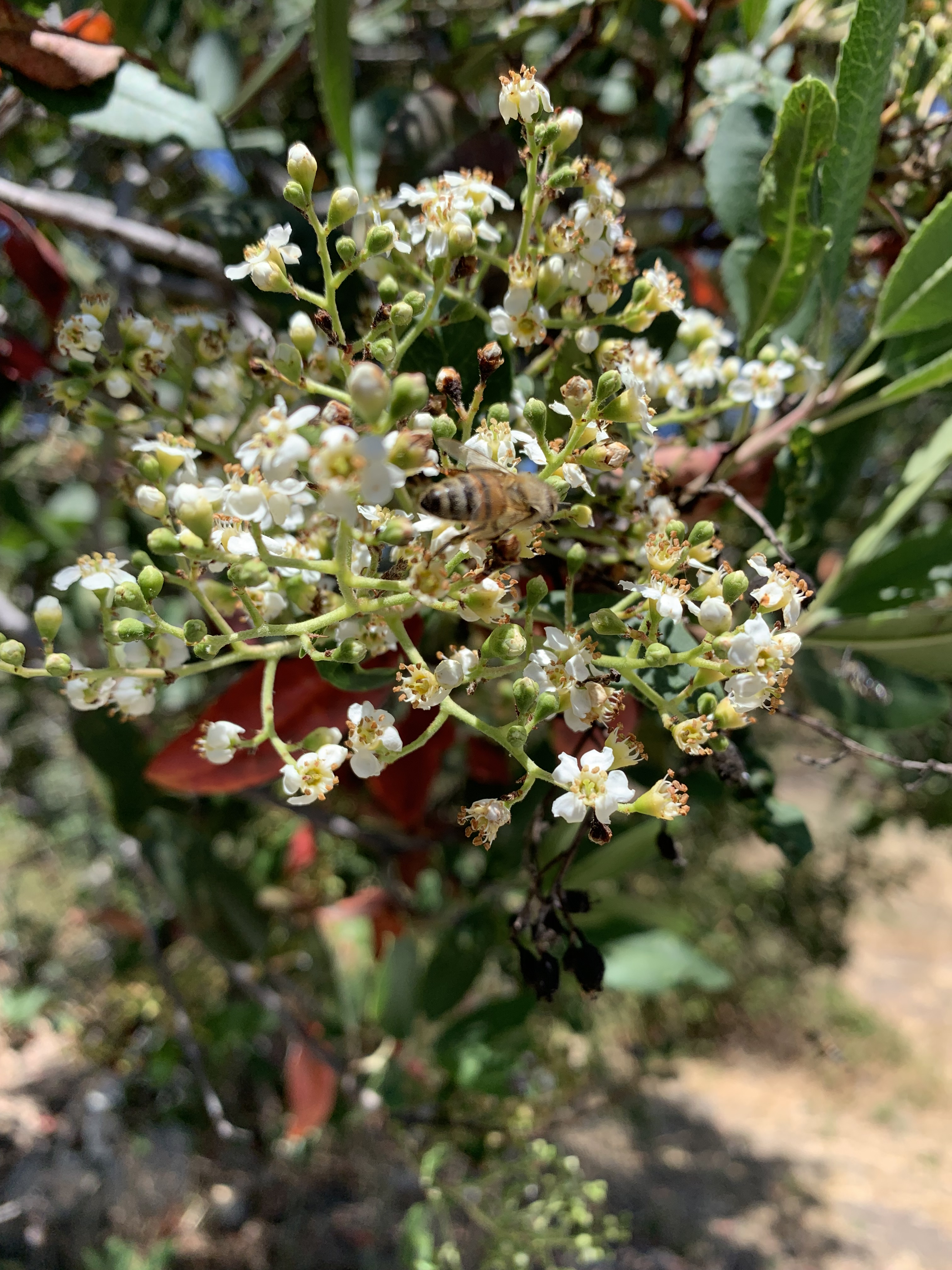
There are very few flowers alive on the landscape. The row crops are too small to make many flowers, yet and the wild plants are too far from rain to be making many flowers. The exception is toyon – a rose-family shrub that we’ve planted here and there for habitat and pollinators. Toyon is aglow with big bouquets of small white flowers, abuzz with bees and even attracting Allen’s hummingbirds. And so, things are drawn to our home landscape gardens. An old Molino tradition is cultivation of the sacred columnar San Pedro cactus, a native of the west slope of the Andes. Twice a year, San Pedro goes to bloom, opening its massive white fragrant trumpets at dusk. The flowers are full of drunk and dazed honeybees and you can smell the divine smell many yards away. And…what a show! Otherwise, we keep a few salvias and petunias and things flowering for color near our homes and those must serve as nectar and pollen respite while the pollinators await the Great Flowering – thousands of coyote bush: those are while out.

-from my weekly blog on Molino Creek Farm’s web page blog.

Botta Pocket Gophers

Pocket gophers are an important and very common mammal in many habitats in our area, so it seems appropriate to learn a little more about them. Most people know them as pests of ornamental plants or crops, but they play important roles far beyond that pestiferousness. And, just look at how cute they can be- photo by Flickr user Chuck Abbe:

What is a Pocket Gopher?

Why is this critter called a pocket gopher? No, it’s not because of some 1970’s fad of domesticating gophers and putting them inside pocket protector-lined pockets. BTW, this fad fantasy must include pocket protectors because gophers have sharp teeth that they habitually gnaw with to wear them down…without such nervous-seeming gnawing, their teeth would be 11” long by the end of the year. This fad could really take off one day because pocket gophers are not legally protected by the State!

Back to the subject at hand…the ‘pocket gopher’ name comes from odd pockets that these critters use as their cargo containers, hauling soil or food. Those pockets extent from the cheeks back to their shoulders. Inside those furry pouches, they haul food into their burrow, creating food storage piles in a deep portion of their burrow system. This food pantry also serves as their sleeping, baby raisin area, so food’s close at hand. That makes me think that maybe there’s a niche for food-storing bedroom furniture for humans!

Local Gophers

Our local species of pocket gopher is the most widespread in California, and so there’s lots of information around about its natural history. Our species, Botta Pocket Gopher, is almost everywhere in the state except the high Sierra Nevada. Like most pocket gophers, the males of this species are larger than the females. So, its likely that the Jury Room sign that was posted for years ‘Home of the Giant Gopher’ referenced a male. Not that you’d try, but you tell pocket gopher species apart from where they live and then the size of their rear feet, the shape of their ears and the relative size of the dark area around their ear.

Territorial Gopher

Pocket gophers are very territorial, protecting their extensive burrow system which represents the extent of their feeding ground. The size of their territory depends on how much food there is, but they range from the size of a tennis court or, sometimes, you can fit 10 gopher territories in the space of a tennis court. If you kill a gopher, its burrow system won’t be vacant for long…

Waves of Dispersing Gopher Young

During breeding season, gophers become less territorial, allowing visitors into their burrows, which seems sensible for reproduction. Where people aren’t watering plants, and the summers are so very dry, pocket gophers have a single breeding season in late winter. They bear 2-5 blind babies (aka ‘pinkies’). Gophers kick these offspring out of their burrows as soon as they are weaned (40 days after birth), and those young have to find a place to live. Those dispersing gopher children are why folks suggest leaving root protection cages out of the ground 6 inches. That wave of dispersing gophers will try to occupy whatever burrows they find…including the burrow complexes that have been abandoned by other gophers due to trapping or old age. People think that our gophers only live 3 years.

Gophers Drought Solutions

Gophers are soil engineers and are so good at their work that they are known to be an important solution to California’s water crisis.

Some have suggested that restoring mountain meadows in the Sierra Nevada could store as much water as two new giant reservoirs. Part of this would be done with reintroduction of a different rodent, the beaver, but another part is already under way by the pocket gopher. Pocket gophers are excellent hydrological engineers, assuring infiltration of snow melt and rain through the soil through their burrows, which include specific drainage architecture. Gophers can drown and need to breathe air, so their burrow systems must accommodate drainage for the rainy season.

Native Meadow Gardener Gopher

The better local natural historians around us will already know about the super-diverse and super-interesting mima mound meadows around Santa Cruz. These are caused by eons of soil movement by gophers, which means that they are literally “ecosystem architects.” Atop the mima mounds, there are poppies, lupines, purple needlegrass and other ‘dry’ loving species; between the mounds there are buttercups and rushes as well as streams and pools of water weeping from ancient gopher mounds during the winter. Dry and wet gopher-created ecosystems in close proximity makes for extraordinary species diversity.

Gopher Burrows: Habitat for Other Creatures

All of those gopher burrows are quite inviting to other creatures. In other places, scientists have described insect species that only live in gopher burrows. I see a species of brown fly come out of gopher burrows around here- there’s probably much more to be discovered. Pocket gophers don’t much like to invite things to enter their homes, so they plug their holes with a distinctive soil plug. However, I’ve seen newts poised for nocturnal forays at the mouths of gopher burrows. Others have seen rare California tiger salamanders using gopher runs. Those tunnels would of course be cooler and moister than the surrounding habitats in the summer. I commonly see the aptly named gopher snake winding its way from one gopher hole to the next, only the middle of its body visible. If gophers plug their holes, how do the snakes find their way in? Somehow they know…I saw a gopher snake recently quickly and energetically ‘dive’ into a gopher-strewn dirt pile and disappear quickly. Many are thankful for gopher predators because of the damage gophers can do to human-plants. Gopher snakes and alligator lizards are the most effective gopher control, because they can get down in the gopher burrows and eat the pinkies, controlling many gophers at one sitting.

What to do About Gophers

There are plenty of websites with information about how to, and many tools to, kill gophers, but is there another way to coexist with these creatures? I have spent a fair amount of money and time killing gophers or protecting plants from gophers using buried metal caging, and I have a few suggestions for gopher coexistence.

Lawns are pretty much passe at this point in California, so how about letting gophers make their homes in what would have been a lawn? The only drawback I’ve experienced is the mounds of dusty soil that they pile up, making a mess of what I want to be level ground without trip hazards. Use a gravel rake and smooth those mounds out and you’ve got a great seedbed for wildflowers to sprout from next spring. Yes, with all of that soil disturbance, gophers are doing a great job of preparing wildflower beds- poppies, lupines and other wild pea relatives, new yarrow seedlings, redmaids, owls’ clover, and lots more appreciates that fresh ground.

Another thing to do is choose plants that gophers don’t bother. Colt rootstock for cherry trees is highly resistant to gophers. Wild rushes (especially Juncus patens) stay green through the summer and are so tough that gophers can’t destroy them.

A final solution is to cultivate meadow voles, which are superior at running gophers out of their tunnels. Voles like lots of mulch- put mulch around and voles proliferate…and the gophers run away (or die at the homicidal teeth of the vole militia).

I’d like to see more discussion about human-gopher coexistence, so these important creatures can continue to do so much good across our region.

-This post originally presented as part of Bruce Bratton’s BrattonOnline.com weekly blog…check it out!
Two Young Deer and the Pending Summer

Two fawns are losing their spots, following their healthy mother with her shiny coat and her healthy, full, and muscular body. She watches us carefully as we traverse the farm, walking carefully to a safe distance, the young twitchy and nervous, sprinting and hopping when we approach. Often, there is food sticking out of their chewy mouths. The other day, I saw one of the fawns walking around on two feet, not just for seconds but for a good while. WHAT? Oh, that one was eating high up walnut leaves: what a trick!

Molino Creek Farm’s Dry Farmed Tomatoes

Fruit

The tomatoes, apples, onions, pears, and peppers are getting bigger and bigger by the day. The apples are gaining color.

Dry Grass: what next?

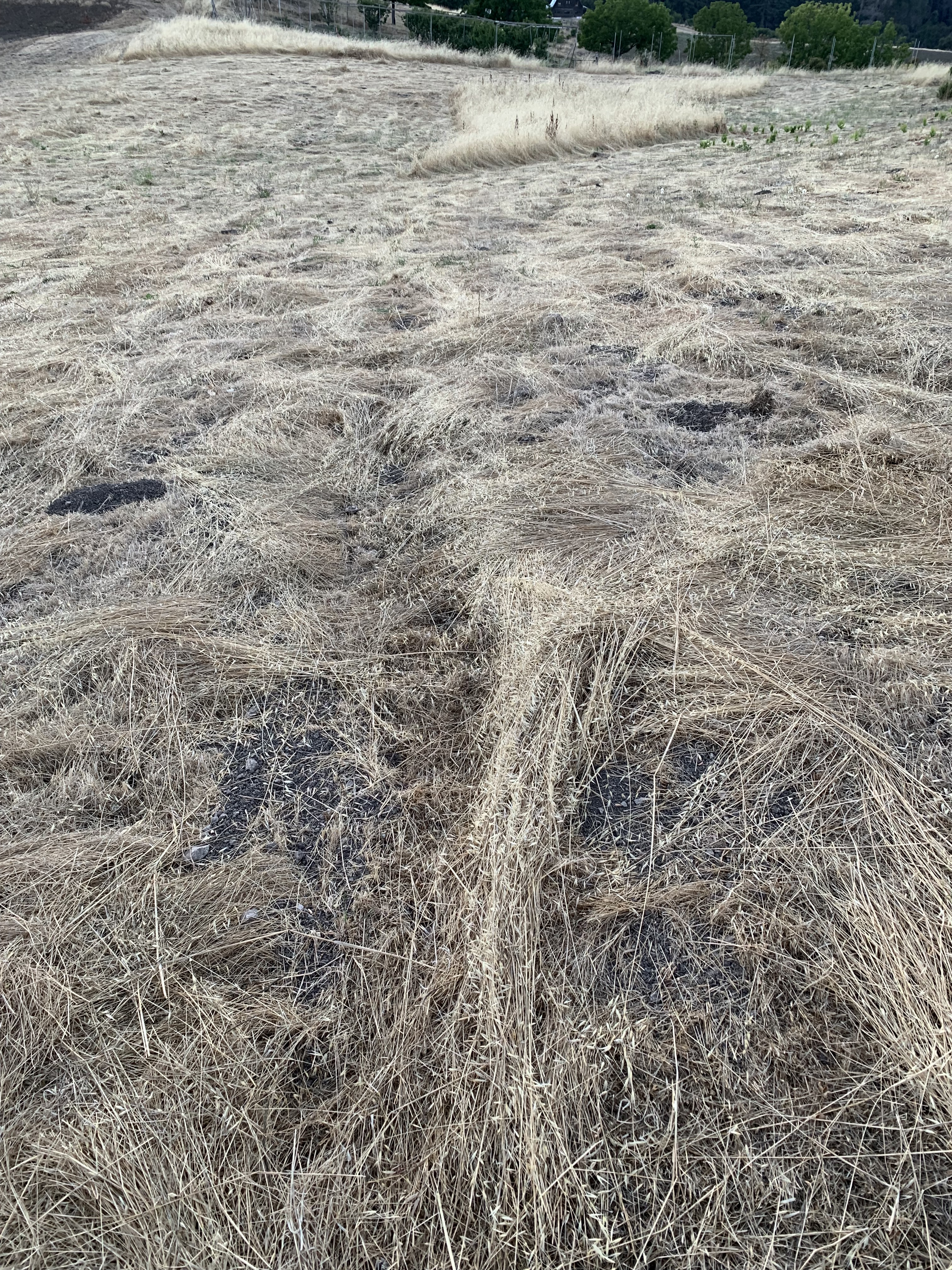
It is mowing and mulching time. The lads are swinging weed eaters a’buzzing. They protect the roadsides, the wells and generator houses. The sickle bar is on the bigger BCS walk-behind tractor, the hay is falling and curing, the mulch cart is rolling, and deep dish ’apple fritters’ of mulch a’forming under the orchard trees.

Patterns of cut hay and uncut hay (where the wasp nests are). Mulch 2 B

Drips

It rained this morning. A light sprinkle, very off-season, enough to calm the dust for a moment. A pitter patter falling from the rooflines. Birds sipped droplets from sparkling leaves as the sun broke through the clouds late morning. Beautiful.

Martins

A flock of nesting purple martins wheel and chirp high in the sky above the highest point of the farm. The fierce males’ battle cries ring out against the prowling hawks. These are rare birds around here- glad to host them in cavities in burned trees from the 2009 fire. The snags from the more recent fire will support nesting generations to come.

Wildflowers of Summer

Little white puffs emerge from drying grass, among the post-fire thistles and between resprouting coyote bush. The complexly sweet smell of the native perennial cudweeds drifts on the gentle breezes. The clusters of bright white flowers fade to straw white that feel papery when rubbed to check out their scent (recommended).

Cudweed!

We hope you are enjoying the entrance of summer with its warm spells, foggy beaches, and occasional whiffs of dry grass and resiny sagebrush.

-from my near weekly postings at Molino Creek Farm’s webpage.

Birds from the Coffee Region

Many of us enjoy both delicious coffee and the fascinating birds that hail from coffee growing regions: how do these two seemingly disparate subjects relate to our daily lives?

Coffee Botany

Coffee shrubs are beautiful, lush shrubs, 6-15’ tall and wide with many stems and glossy oval leaves with long ‘drip tips’ – a common feature in rainforest plants that help shed water. I have a potted, indoor coffee plant and many of my friends have raised them, but they are notoriously finicky to care for and especially prone to indoor plant pests. That coffee plant is the thirstiest of my house plants, wilting quickly when drying out: at least it is good at communicating! That thirstiness makes sense as coffee is naturally an understory plant, originating in the lush damp shade of African tropical rainforests.

After 5 years, my coffee plant blossomed this spring, and I was reminded of it’s very sweet smelling (like jasmine!), small white tubular flowers. Now, I’m looking forward to the tasty fruit, which is confusingly called a ‘cherry’ and turns deep maroon-red when ripe and is soft-fleshy (slimy?) sweet (like hibiscus) and full of antioxidants. In the center of the red fruit, there will be a pair of seeds…called coffee ‘beans’ – another misnomer associated with this plant as the plant isn’t related to cherries or beans! Whenever I encounter a small red fleshy fruit, I’ve been trained to suspect the plant co-evolved with birds for seed dispersal. Even when coffee is grown far from its African origins, there are birds that devour the fruit, but cultivated coffee has a more important relationship with tropical birds.

Coffee Farms and Birds

Coffee is a lucrative tropical farming product and is cultivated on 27 million acres. Tropical regions are the most biologically diverse areas of the planet with many species still being discovered. Conversion of tropical rainforest to agriculture is occurring rapidly, threatening that biodiversity. Soybeans and palm oil are two crops that are expanding rapidly, but coffee is much more lucrative per acre. And coffee can be grown more in harmony with tropical biodiversity, but only if it is ‘shade grown.’

Shade Grown Coffee

As reviewed by independent, peer reviewed, published science, the only credible shade grown certification is from the Smithsonian Migratory Bird Center, carrying the logo inserted here.

The standards for this certification include maintaining real shade provided by diverse overstory trees as well as organic practices (certified by another agency)…and diverse other plant life, maintenance of natural mulch, and protection/buffering of waterways.

These standards have been shown to support native bird life as well as providing habitat for many other native species, including mammals.

The Effects of the Central Coast’s Coffee Shed

Here on California’s central coast, we are lucky to have both coffee AND birds that hail from coffee growing regions. Judging from the aroma of roasting coffee, the many businesses supported by serving coffee, and the plethora of local coffee labels, our region greatly appreciates this caffeinated beverage. I am curious about how many acres of coffee farms are needed to support Santa Cruz County’s coffee-drinking habits – anyone know? We can call that our ‘coffee-shed.’ If we support a coffee shed that nurtures the birds that come visit us in the summers, we can look into those birds’ sparkling eyes through the steam of a latte and be proud of those connections…

Beautiful Migratory Songbirds

There are many migratory bird species that come to California’s central coast for the summer to nest, raise young and store up enough reserves to return south before our winter gets too harsh. I’ve been enjoying steaming cups of shade grown coffee while watching two beautiful tropical migratory songbirds this summer. The startling colored thick-billed black headed grosbeak is fledging young right now on the Central Coast. Check out this photo from a Flickr site by Kersti Niebelsek; maybe this striking image will inspire you to purchase certified shade-grown coffee and grab some binoculars to see the bird in the wild.

The other striking species that lights up my mornings and gets me pouring boiling water to drip through freshly ground, certified shade grown coffee is the lazuli bunting. Be similarly inspired by another extraordinary photo, this time by Flickr user Julio Mulero who captured this pretty bird at Ed Levine Park in Milpitas.

Both that grosbeak and the bunting may have traveled from the coffee growing region of southern Mexico, where they spent last winter. Other species come from coffee growing areas even farther away, including: ash-throated flycatcher, olive-sided flycatcher, Wilson’s warbler and yellow warbler. That last deserves a photo, as well. That photo is compliments of Flickr user Kelly Colgan Azar.

Finding and Procuring Certified Shade Grown Coffee

Surprisingly, it is Very Difficult to find certified shade grown coffee in our area. You can always search the internet and have it delivered! Last I checked Whole Foods had one of its wall of coffees that was certified shade grown. Not so for any of our other local grocery stores! You can find all sorts of supposedly “bird friendly” or “shade grown” coffees, but only those with the certification shown above are verifiable. Because shade-grown coffee produces less per acre, you are going to pay more for it. Think of those extra dollars going to the trust funds for these beautiful birds.

This post originally published as part of my series with Bruce Bratton at BrattonOnline.com Thanks, Bruce, for keeping Santa Cruz actively informed!

Land Ethic

Have you formed ethical standards for your relationship with Earth? Most people teach ethical standards to children in what behaviors are ‘right’ and how best to treat other people. As we grow, we learn through experience how to build on those ethical standards to be good people. But, few people I’ve met have taught their children the ethics of their relationship outside of the human world. How would you answer questions about how to act ethically with the natural world?

Aldo Leopold wrote possibly the most influential modern treatise on this subject, which was published in his Sand County Almanac and entitled The Land Ethic. I suggest you read that 14 page essay first and this second, as I supply a framework for how his thoughts apply in our shared place, the central coast of California.

We Hold These Truths…

Are these statements true to you?

  • Our food, air, and water are products of Nature
  • Nature is very, very complex: there is wisdom in considering the precautionary principle when considering impacts to the natural world
  • As citizens of this particularly ecologically rich place, we have a particularly high level of responsibility for nature conservation.

Land as Economic

As Leopold suggested was normal throughout the USA in 1949, so it is today…we citizens of central California are continuing to commodify nature. We treat our agricultural lands as short-term profit-making properties; most are barely cover cropped so that soil is washing away at tremendous rates, many agricultural properties are awash with fertilizer and chemical pesticides that have had too little human health and environmental impact study. Our conversations around property circle around what ‘rights’ we are afforded, not what duties we have: even knowledgeable people lack the information to well manage private property. Land Trusts commodify land that they hold, managing negatively impactful agriculture, grazing, and other uses and expanding recreational use with little idea of its impacts. Public parks are even more guilty of commodifying nature for highly exploitive, barely planned/monitored recreational uses that are rife with negative impacts on soil and wildlife. Economic interests drive these types of nature commodification, those interests are embedded in even local politics, yet few people vote for candidates based on these types of issues.

Aldo’s Land Ethic

A thing is right when it tends to preserve the integrity, stability, and beauty of the biotic community. It is wrong when it tends otherwise.” – Aldo Leopold

What would happen if we all used Leopold’s land ethic when weighing proposals on natural lands around the Central Coast? For instance, how would application of that ethic affect how you feel about the development of the Homeless Garden Project in the middle of Pogonip Greenbelt’s main meadow? What about the way proposals have been made for the new trails at Cotoni Coast Dairies? What would you think about the plans for post-fire re-building of Big Basin State Park’s visitor center?  How do your feelings on those proposals compare with how you think about applying Leopold’s Land Ethic to the planned wildlife tunnel under Highway 17…to restoring the Scott Creek Marsh on the North Coast?

Is Education Enough?

Most people with whom I discuss the Land Ethic emphasize a problem Leopold anticipated: they focus on a perceived need for more education before it will be possible to apply the Land Ethic. I have spoken with leaders and practitioners of environmental education around the Monterey Bay, and they all reiterate the primary need for education until a more ethical approach to Nature can take hold. And yet, almost none of these educators are familiar with well-established tools to change human behavior towards the environment. I wonder how many would be able to help others by describing what a Land Ethic might be?

The same goes for most staff whose jobs entail environmental protection. Parks law enforcement staff rarely give tickets for environmental destruction, preferring ‘education.’ Municipal planning agency personnel rely almost entirely on education in hopes that it will serve to protect nature in the Central Coast. The personnel responsible for protecting whales and other marine mammals in the Monterey Bay also entirely rely on education to accomplish their mission. With the many interactions I’ve witnessed with these individuals, none have ever tried to help elevate awareness of the ethics of caring for Nature. I have heard political decision makers cite anything like the Land Ethic very, very few times.

The Central Coast has a large variety of environmental organizations focused on environmental education. I hope that they will incorporate the Land Ethic in their curricula, including the many available local case studies to further illustrate lessons.

A Place for Science?

We are lucky to have the California Environmental Quality Act (aka CEQA) as a potential to start the conversation about portions of Leopold’s suggested Land Ethic. For instance, lead agencies using CEQA might ask ‘How does the proposed project affect the integrity of the biotic community?’ What if this question were posed about the numerous wetlands that will be obliterated along the proposed Rail Trail on the North Coast? I would anticipate that the lead agency would pick scientist-consultants to outline a restoration program somewhere along the coast that would ‘improve’ the integrity of wetlands in the project vicinity…checking that box in CEQA…and proceeding with the project. The ‘improved’ wetlands would likely have some attention for restoration for 3 years, but with no long term proposal for management or monitoring. It is very likely that the more correct answer to the Land Ethic-informed question would be ‘the proposed project negatively affects the integrity of the biotic community.’ But, even in the unlikely possibility that the lead agency received that answer from their paid consultants, they would likely proceed with a “statement of overriding considerations” and proceed anyway…because there is no chance that anyone would be held accountable during their election to political office. In short, there is a lot of demand for consultant-scientists to create plans that appear to address the Land Ethic but which in fact are just the excuse a project proponent needed to proceed with their destruction of Nature.

The Solution?

Any decision maker in our region whose work impacts the environment should have access to the smartest ecologists around, so that they receive the best information possible to make excellent decisions to conserve nature. For a while, this happened in the Santa Cruz County Planning office. That model could expand. There are certainly a very many well respected biologists in our region who we might learn from!

-this originally published in Bruce Bratton’s weekly blog BrattonOnline.com

Transitions Between Light and Dark…Day and Night

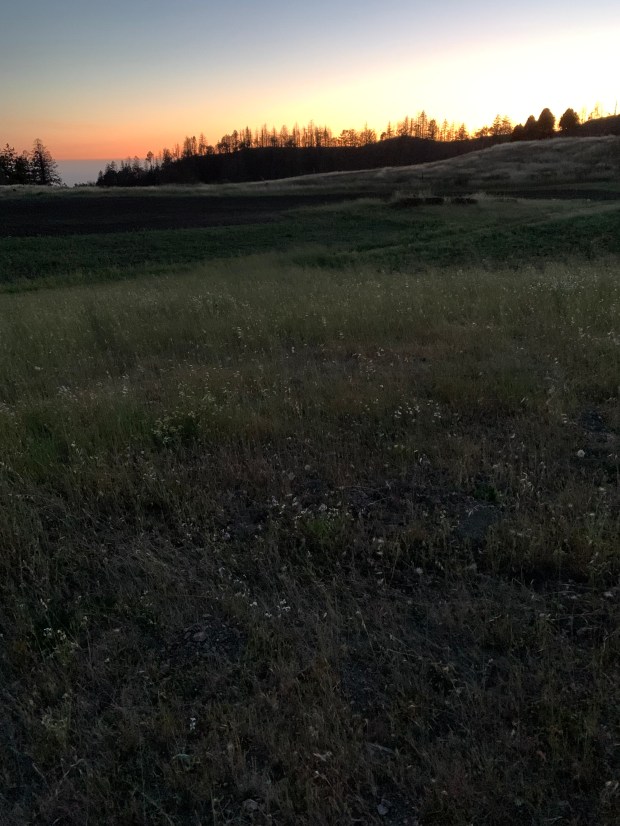
Each evening there’s a dancing art show: swallows soar and weave higher and higher, snapping up insects, following the intersection of sun and shade as the sun slowly dips behind the ridge across Molino Creek. The disappearance of the sun takes more than an hour to make its way across the farm; the last light glows a deepening gold from the west-facing ridges studded still with many tall black spires of the trees burned by the 2020 wildfire.

Evening

I sit at the end of the days watching sunset transitions, noticing the many familiar but always fascinating evening routines. The world slows down and the stage provides each actor enough time. The raven pair trade an intermittent ‘caw’ tracking one another’s whereabouts as if to say ‘almost time’ before following one another with noisy slow powerful wingbeats, as they sneak off to their mysterious and distant night roost. Clouds of tiny beetles dance silently in dense clouds on the cooler sides of shrubs, backlit by the sun, lighting shiny wings. The flicker family swoops in for one last drink at the bird bath. First one, then the next and soon a hundred crickets are chirping- more when its warmer than cooler. With the increasing crickets, more and more stars shine. The western sky glows long after the sun has set.

Padrones

The long days are fueling burgeoning crop production. The peppers and tomatoes are deep dark green with suddenly stout stems and elongating root systems pushing farther out in the rich, dark, beautiful soil. Two Dog Farm’s padrone peppers have fruit and are lighting up with constellations of bright white star-shaped flowers.

Two Dog Farm’s Padrone Peppers- getting ready to start picking!

The warm days have been followed mostly by cool nights. Plants that wilted slightly during the day return to vigor as the sun rides lower in the sky. At night, those same plants are tall upright and luxuriant. Apples are still small, now 1 ½ inch across; the plums are growing quickly and starting to color. The tops of these trees rise up into the warm summer air; under the trees it is cool and slightly humid, no scent yet from any of the fruit- its too young! As its too soon to have enough food to take to market, Judy’s delivering the season’s first zucchini in neat small paper bags to farm neighbors, and we welcome these tasty treats as the first sign of summer. It’s cool enough to still have some sweet garden lettuce to be combined with geranium and salvia blossoms, baby kale and other greens, for a wealth of home-grown salads.

Comice Pears: Brought to you by a community of Orchardists

Thank You, Friends

We have deep gratitude for the various skilled community members that help our Farm along. Most recently the incredibly talented duo from the Last Chance community, Steve Barnes and Ian Kapostins, have been piecing together a bunch of new water tanks- 30,000 gallons worth- to replace some we lost in the fire. Their artistry and skill combine with nice equipment to create a much-needed bank of drinking and firefighting water. These guys have been sweating out the days with pipe and saws, glue and wrenches, on the side of a hot hill and in and out of dirty dusty trenches. How lucky we are that they are willing to help us way out in the country in less than favorable conditions! It takes a community to afford us the possibility of living and farming in this beautiful place. Thanks, guys…we really appreciate your work!

Dawn

The sunrise dawn chorus has been mysteriously quiet: is there a hawk near the yard? At 3000’ in the Sierra last weekend, I awoke on several mornings to a signature dawn chorus filled with sweet, almost liquidy flycatcher song, so different than our sometimes sharp-peeping orchestra. Each place has its song. There, the chorus was short- half an hour before and up to dawn then quickly quieter. I’m hoping that our dawn chorus song returns soon.

Over to You

I’m hoping you step outside, leave your windows open, turn off anything noisy, and immerse yourselves in these long transitions of dawns and dusks. What is unfolding around you? Whose watching you listen for them? Are there repeating themes in your part of the world?

-post copied from the Molino Creek Farm website where I also publish regularly

Save the Bees!

As the fields of lupine blossom at higher and higher elevations, other flowers follow in wave after wave of color and design, and the bees dance and hum celebrating each new unfolding.

Bees! There are so many types of bees: mason, bumble, leaf cutter, long horned, orchard…For each of those, there are many species. For instance, there are 10 species of bumble bees in Santa Cruz County. As with most species on Earth, all those bee species are in decline.

Flower Pollination

Bees pollinate flowers. Sure, there are other types of pollinators such as butterflies, moths, and flies. Even some types of mosquitoes and ants pollinate flowers…as do hummingbirds. But, bees are the most important pollinators in general.

Evolutionarily, bee (and other) pollination gives plants the advantage of shaking up the genetics, helping populations of plants be more resilient to change in climate, disease, and even fluxes in pollinator communities.

Invasion of the Honeybee

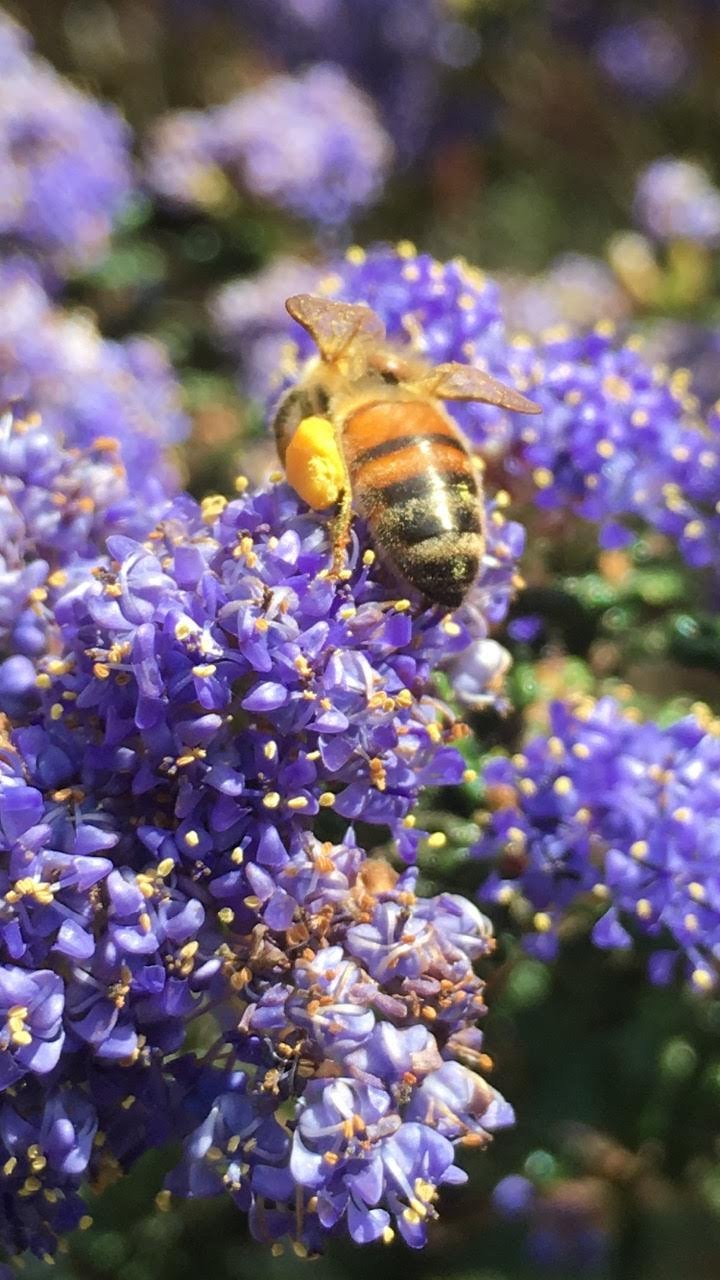
Honeybees are not native to our area, and yet they are everywhere. They were introduced in the late 1600’s to the United States and then moved around more easily in portable hives in the mid-1700’s. In California, beekeepers earn money by strategically moving large numbers of hive boxes into agricultural areas to perform pollination services. When they aren’t doing that work, they must find areas to put those boxes where there are enough flowers to feed the bees and keep them healthy. Especially in wintertime, coastal areas in California are prized by beekeepers because it is not too cold for flowers; something is bound to be in bloom year-round. At the same time, honeybees have escaped into the wild, becoming naturalized. Swanton’s Jim West has documented a honeybee colony year after year in an old redwood tree for most of his 74 years of life.

Honeybee on Ceanothus; nonnative bee on native shrub

The Good Honeybee

Most of us know about all the good honeybees can do from pollination to honey and wax production. Almond growers in California’s Central Valley have been particularly worried about the ongoing problems with honeybees as they have been reliant on imported bees to pollinate their early-flowering trees so that they will make nuts. With the mysterious Colony Collapse Disorder, honey and beeswax prices have increased, making us appreciate even more honeybee production.

The Bad Honeybee

Most people I talk to are unaware of the problems honeybees can cause, including competition with native pollinators, plant community changes, invasive plant species proliferation, and disease vectoring. I was lucky to attend UC Santa Cruz at the same time as the brilliant Dr. Diane Thomson who has studied honeybee and native bee interactions in our area for decades. Her research adds to a growing body of scientific evidence warning us about the negative consequences of honeybees to native bees, with whom they compete. That science has suggested that 20 honeybee boxes rob the food from 2 million native bees. This competition can cause some plant species to be pollinated and not others, shifting the composition of plant communities. And, because honeybees can pollinate some invasive species more than native bees, they can cause bad trouble, like adding momentum to thistle problems. Oh, and by the way….honeybees carry diseases and parasites that can negatively affect native bees. For example, there is a virus that causes bumble bees to have deformed wings – honeybees carry it!

In the last few decades, Randall Morgan documented the diversity of bees in Santa Cruz County.

The Good Native Bees

Native bees are important for pollination, contributing to crop production for humans and food production for wildlife. Dr. Claire Kremen and others have shown that California farms that have a good amount of native bee habitat around them have better crop pollination. Native bees are also essential for pollinating native species of plants, which produce fruit that are important for wildlife. For instance, native bumblebees pollinate manzanita flowers, which produce fruit that is eaten by native foxes and many bird species. Likewise, native bees pollinate coffeeberry bushes that produce fruit eaten by lots of birds, including band tailed pigeons as well as foxes and coyotes. There are many other examples of the natural fruit that is wildlife food made possible by native pollinators.

What You Can Do

You can help conserve native pollinators by helping do the right thing with nonnative honeybees. The first thing to do is help spread the word about these issues. To learn more, read this publication by The Xerces Society for Invertebrate Conservation. That paper has good details about where it is, and isn’t, appropriate for raising honeybees. This caution caught my attention: don’t put hives within 4 miles of “habitats of special value for biodiversity and/or pollinators:” I suggest that this covers most of Santa Cruz County, which has special habitats full of rare pollinators throughout. The plethora of native bee habitats throughout our area would also suggest good potential for gardens and farms to be visited by enough native pollinators to perform enough pollination for the fruits we desire. Besides not placing more honeybees near native habitat, there are other things you can do.

If you know a beekeeper who wants bees, you might point them in the direction of harvesting bee swarms out of native areas and exporting them to urban or agricultural areas where they can do some good and avoid impacts to native pollinators. Also…read below about avoiding bug zappers and darkening night lighting. Finally, reducing or eliminating pesticide use is also important. One of the biggest threats to native bees (and honeybees!) is neonic pesticides; to learn more and write a letter to California’s decision makers, see this Natural Resources Defense Council webpage.

Bug Zappers

I’ve recently heard about people in our area using ‘bug zappers’ that attract insects to ultraviolet light and then electrocute them with a grid of electrified screen. Anyone buying one of these devices has been scammed: they do not work against biting insects. Instead, they kill a broad range of native insects that might have otherwise performed pollination, controlled pests, or fed birds. On top of that, the owner destroys their own nighttime peace with obnoxious electrocution noise and light. Oh…and speaking of light-

Night Lighting is Bad

Turn off outdoor lighting! Darken your windows. Anything you can do to make for a darker nighttime world will help conserve native insects and pollinators. Find out more with the International Dark-Sky Association. Urge local decision makers to reduce light pollution.

-this post originally posted in Bruce Bratton’s online blog at BrattonOnline.com

Twilight, Calming Wind

The long persistent crazy wind continued along the coast this past week, but calmer nights are full of black field cricket chorus. Chip-chip-chip, chip-chip-chip, chip-chip-chip. So tireless and repetitive as individuals and as many together mesmerizing.

Lingering twilight as the wind calms

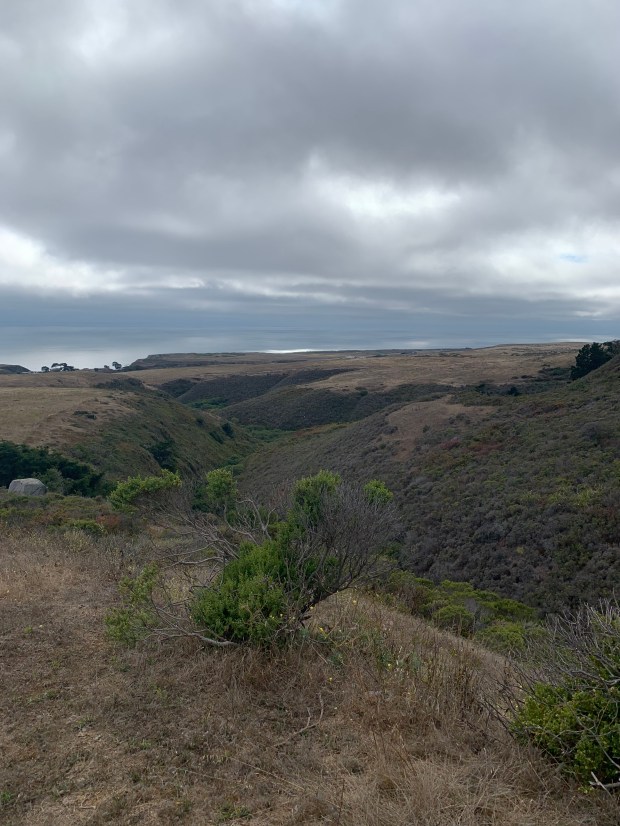
A long twilight with glowing colors and the calming of the wind closes each evening. Then, a big moon rises and brightens the farm in soft tones of silver and gray. Offshore, the night glows from the bright light lures of fishing boats. On the windy days, the ocean turns turquoise dotted with white caps that we glimpse from the farm. The rain has ended, but we get touched by moist fog and dew still hangs heavy on the still green grasses in the morning. Chilly legs and cold feet…wet pant legs and soaked shoes for us early morning field walkers. The damp morning air carries the early summer sweet earthy scent from the farm fields.

Grass has grown as much as it will – time to mow to prepare for fire

Mowing

It is heavy duty mowing time- the last mowing of a drying spring. I drove the brush mower over a ground wasp nest but didn’t get stung. I’ve become adept at recognizing the patterns of angry wasp flight, luckily especially evident silhouetted against the black body of the mower. There the mower sat for an hour while the wasps calmed down, and I snuck back to (heart pounding) grab the mower handle, shift it to neutral and drag it downhill rapidly away from the nest hole. Now I’m scouting more for the nests before I mow.

Rare Birds

Yes, there are no deer. Instead of those common beasts, we are surrounded by rarities. Storey heard the elusive and uncommon house wren on the farm and she and others have been watching a group of purple martins probably settling into nest holes in a dead tree near our property line. Downhill, at the gate by the highway, crowds have gathered to see a waif scissor tailed flycatcher.

Mother Hens

We have many a wary quail, fretful probably as their eggs are hatching and there are soon to be little clutzy puffball babies following them around. Nearby, there are new baby turkeys with watchful mothers herding them and showing them how to forage.

Adolescent tomato plants- much promise for the season

The Plantings

Tomatoes are getting bigger- the once weak looking seedings have settled in and want to start seriously growing. Likewise, spry onions are getting robust. When the fire came in 2020, we had just begun the Conservatory of Passion, an arbor with passionfruit vines with hope for hops. Those all needed to get replanted and we put in our first McGregor hops a few weeks back. All those vines are settling in and starting to look really good. We need to set up some strings for the hops to climb! The 2020 and 2021 avocado plantings are growing profusely. The earlier batch will get overhead this year as giant bushes and the trees from last year will turn less lanky soon.

-this is one of many of my weekly posts at the Molino Creek Farm website

Swishing

Our main old apple orchard and the hillsides around it recovering from the August 2020 fire

On a recent breezy day, I lay down, nestled into the 3’ tall drying grass and watched amazing clouds tearing apart and scudding across the bright blue sky. The grasses around me were singing, swishing with waves of delightful whooshing. The whooshing would rapidly approach, ruffle my hair and chill my skin then pass me to dance across more distant meadows. The breeze carried the scent of sweet fresh grass and the freshness of salty ocean air. In circles around me, between the grasses, and during lulls in the wind, beige California ringlet butterflies were skipping and fluttering – a welcome sign of grassland spring.

It has been exceptionally windy and cold for nearly an entire week straight. The wind has been more than annoying, it has been nearly prohibitive to being outside. The temperature differential between the cold cranium and the warm brain makes for a very specific head pain. We put on winter jackets and wool hats. The barn swallows above the front door complain about leaving their cozy warm nest too early on cold mornings, so I don’t want to disturb them but still must go out.

Last Sunday, an unpredicted series of showers pelted down sometimes very big powerful raindrops from ominous giant patches of fast-moving clouds, and then there was sun. No matter, I thought, I’ll keep mowing…and then it rained again so hard that water was pouring off of the brim of my hat!

Birds

The barn swallows are getting so friendly that they brush past me and I can hear their wing beats. They chatter “chui chui chui chui chui…” chasing one another, expertly turning to capture bugs. I don’t know why but one sometimes will sit in the middle of the road looking around at the others flying by. Nadia our neighboring land’s Forester tells me that the Purple Martins have returned- their homes are in a ridgeline tree up above our new tank complex. Purple martins are a rare thing around here.

Two great horned owls were hooting from the roof the night after yard mowing: a promising feast of newly uncovered rodent runs. They fly silently but you can make out their weight when they land on the peak of the roof: a gentle but solid…wump! When the winds pick up, the turkey vultures play around the eddies and updrafts around the Farm. They tilt their bright red heads to follow the movement of the others in what seems like playful chase, giant wings arching acrobatically.

On the other side of the size spectrum, many chestnut backed chickadees are chick-a-dee-deeing in the trees and shrubs along the field edges. A very bright bird caught my eye as it flitted into sight, staring right at me: oh! The lazuli buntings have returned! What a treat- this one a bright blue breeding plumage male with a nice neat orange bib. I could go on and on about birds…the Spring Bird Show is going strong.

Slithering towards the Leaping

The dust on the roads and trails reveals the movement of snakes…many big snakes. The 2020 fire has opened up acres of new weeds and grasses where there used to be shrubs. The herbaceous post fire world is rodent heaven…and therefore more snakes! Someone reported a rattlesnake near downtown Davenport. No reports from Molino…yet. We have gopher snakes wending their sleek long bodies silently through the grass, shiny skin and wary eyes. Their bellies push and flatten long wavy patterns through the fine road dust.

Many tiny tawny harvest mice have been leaping away from the mower this spring. This is the dominant small mammal and there never were so many. Snake snacks. Below ground, the gophers tunnel and store food. Digging a hole for a new table grape planting, the soil gave way and out came a softball sized cache of gopher groceries: a ball of grass and weeds stowed for future consumption. Gopher hay!

People Food

The orange trees are hanging heavy with fruit and we keep trying them to see if they’re ripe. Juicy – check! Tasty – well…just okay. Sweet – no! For all that juice, you’d hope for sugar, but we have to wait longer. The limes are great, though. Not enough lemons this year: maybe next year. The one remaining mature Bacon avocado tree has maybe 50 fruit on it that are just starting to hint about getting ripe, maybe a month from now. And that’s about it for farm food except for a few sprigs of arugula or kale, snacks on nasturtiums and perhaps some nettles for the industrious chefs. The apples have set fruit that is growing rapidly while still the same tree is in flower. We hope that the prolonged flowering means a prolonged fruiting season as well!

Gala apple with fruit and flowers at the same time!

Plantings

Our hard working Two Dog Farm partners are doing just that as another season ramps up. Headlights rake the hillsides, shockingly cutting through deep dark pre-dawn; off they go to start a new farming day. Long rows of new peppers and onions are settling into the fluffy brown soil of their Roadside Field. Mark Bartle (bundled up!) was recently steering back and forth, back and forth to seed this year’s crop of winter squash into beautifully formed seed beds. He is an artist with a tractor and his sculpture grows!

Two Dog Chardonnay
Two Dog Farm new pepper planting

-this originally and simultaneously posted at Molino Creek Farm’s website blog

Surprises

The winds come and go, the nights are still chilly, and the days are getting warm again. Today it was in the 70’s. The whole world seems sparkly, extra vivid and alive. Critters are zipping about and the breezes sporadic and then, some days, ripping. The sky has been mostly clear but then suddenly fog will creep up the canyon or giant puffy clouds peek over the ridge above the farm. Many little birds are cheeping and carrying on midday, but there are occasional surprising quiet moments. Once this past week…zoom – the vultures not lazily but energetically were sweeping across the farm, chasing one another, riding a sudden new and steady afternoon wind. Some nights it has been so breezy that the house shakes, but then there was a recent night that was so quiet that you could hear a million crickets near and far.

Surprises and Singing Friends

Yes, crickets are singing at night, and many birds sing all day long. Song sparrows are making the most constant melodious songs. I flushed a snipe from the Avocado Bowl this early evening…what a surprise – for both of us. It yipped and I yelped: it was almost under foot. Off it went downhill off the farm. They say it is passing through- lots of migration happening these past weeks.

Bizarre Black Birds, redux

A while back, bicolor blackbirds changed their social behavior. Towards the end of winter, bicolors joined the Brewers blackbirds and starlings in the leafless walnut trees, raising a cacophonous symphony but somehow breaking into a hypnotic melodious chorus (and sometimes with soloists, other times with jazzy subgroups, and always with startling punctuated pauses). Then, the Brewers left the stage. The starlings took to their own flocks. And, the bicolors broke off in small groups. Now, bicolors are exhibiting undecipherable and very different behavior. As is normal, males continue puffing up with their extraordinary epaulettes. The males and females have intricate chases or face offs; I have seen very alert females clustered together, I have also seen the females apparently chasing males, and I have seen males chasing ravens, swallows, and even hummingbirds. Those guy bicolor blackbirds seem proud to bravely chirp at me staying as close as they dare – showing off?

Sneezing Time

The grasses are turning tawny even with the late rains and pollen is flying thickly. Ten minutes outside fill the corner of my eyes with dust that starts immediately itching. Before my nose fills and congests from the pollen, there is a sweet grassy scent blanketing everywhere. I want to keep smelling that but it is subtle and my nose reacts poorly to the pollen filled air. It is, unfortunately for me, indoor time lest my lungs seize and my neighbors too serenaded by the loudest of continuous sneezing until my throat is chaffed and my eyes water to streams of tears. Oh, those N95 masks are serving another purpose!

Gophers and Snakes

Meanwhile, in the soil…hundreds of gophers are tossing up small piles of earth across the farm – crumbly mounds, the fresher excavations dark and moist for a little while, sprinkled with a mess of critter cut hay. A meadow vole was midday sunbathing in some short grass next to the solar panels the other day, not even moving when approached. I got to see how tiny its ears were, folded up against its head: un-mouse like. Shortly thereafter, I was startled by the biggest gopher snake I’ve ever encountered – around 5’ long and 2” thick. This snake was almost under foot and I found myself emitting another involuntary yell, body levitating up miraculously and seemingly sky high, arching up and up before touching down and happy not to have squinched it. Yesterday, there was yet another gopher snake, this one a ’mere’ 3’ long, near the citrus orchard about to cross the road. It is a good year to be a snake and a good time for accenting the need to be present when walking, so as not to tread on them serpents.

Ursi’s Bouquets

This is the time of year that roadside wildflowers are at their most diverse. When I visit farm partners Bob and Ursi at their beautiful downtown home, this time of year there are the most beautiful bouquets of wildflowers from that roadside: lupines and poppies, deep blue globed bulb flowers, monkeyflowers…and many more. They so appreciate that beauty and it has been increasing because of their attention. They are the ones who requested that the roadside mowing crews avoid the once few lavender bush lupines. We did. Those few spread and then after the fire erupted in giant patches of color and quick cover for so many creatures. Bob and Ursi are profoundly appreciative of natural beauty and share their observations easily with bright eyes and kind smiles.

Newly planted tomato plants – off to a hard start but promising much in the long term

Crop Planting, Orchard Production

A variety of neighbors have been pitching in to plant the Molino Creek Farm crops this year. The first tomato plants are in the ground as of today! Onions went in a few days ago. The sad but promising rows of new crops are settling in, a hard transition from the nursery but they will soon adjust.

In the orchard, the limes are getting so ripe to be dropping from the trees, but the oranges don’t have sweetness yet. Nearly every apple tree has set fruit, and those tiny fruits are growing fast in large clusters. The cherry trees have few fruit, fewer still the prunes and apricots: late rains might have pummeled the tiny fruit or perhaps the wind? It will be a big apple year if the pests don’t get too many; there are very few jays as of yet.

The farmed and natural worlds of Molino Creek Farm change by the day, as does the world around everyone. Catch it while you can! Enjoy the changes!!

A bud grafted Lapins cherry on the Colt Rootstock that survived the fire to resprout. Thanks, Drake Bialecki for making this magic!

-this post simultaneously posted at Molino Creek Farm’s website.