Isn’t it amazing how marketing pitches can formulate the foundations for societal dialogues? Somehow, forest management gets ridiculed with the phrase ‘raking the forest,’ aiding the politics of defunding the US Forest Service at a time when we really do need widespread restoration of prescribed fire…not raking, but effectively the same thing. And ‘forgiving student debt’ gets bandied about, helping to steer conversations/media away from the more difficult subjects of: better funding/better outcomes of public education; training young adults about contractual obligations and financial planning, and; regulating financial institutions to make student loans more affordable. I’m sure each area of human dialogue has its ‘short hand’ statements that one sector uses to manipulate others. The one I’m faced with currently is the jingo ‘healthy perennial grasses make for healthy soil.’ Let’s take a closer look at that phrase.
Bunchgrass Paradigm
Long ago, a preeminent ecologist traveled to California and ‘discovered’ something that formulated the basis of myriad dialogues continuing through today. Frederic Clements described ‘natural succession’ where nature transforms itself from one habitat to the next in a logical and predictable order. You may recall the diagram that still sticks with me where a pond becomes a marsh becomes a bog becomes a meadow becomes shrubland, culminating in the ‘climax’ community…a forest. In examining California’s grasslands, Dr. Clements found a patch of ‘pristine’ grassland, one of the few that had escaped the plow, along a railroad right of way. That ‘pristine’ grassland was dominated by a perennial bunchgrass, purple needlegrass: this, he said, was how all California’s grasslands should look. Many people still believe this. What about the hundreds of species of wildflowers, such as those cited by John Muir as creating carpets across the Central Valley, and those which provided food for indigenous peoples for generations? Those holding dear to the ‘bunchgrass paradigm’ will say those species grew only in between the bunchgrasses where weeds now proliferate.
Perennialization Bandwagon
As the bunchgrass paradigm has been perpetuating, another popular movement has been building, a desire to transform agriculture from annual plants into perennial plants with little to no tilling, which purportedly ‘destroys’ soil health. Despite being disproven as effective over and over again, farmers are still attempting to grow lettuce, carrots, broccoli, etc, on ground without tilling. Meanwhile, rangeland managers are repeating a similarly disproven hypothesis that all California grasslands would be better off if ‘restored’ to perennial grasses. Buoyed by science papers that suggest the importance of cattle grazing to help establish/maintain perennial grasses, livestock managers have found good use of this message to gain credibility and increase their land base.
The “Perennial Grasses Have Bigger Roots” Myth
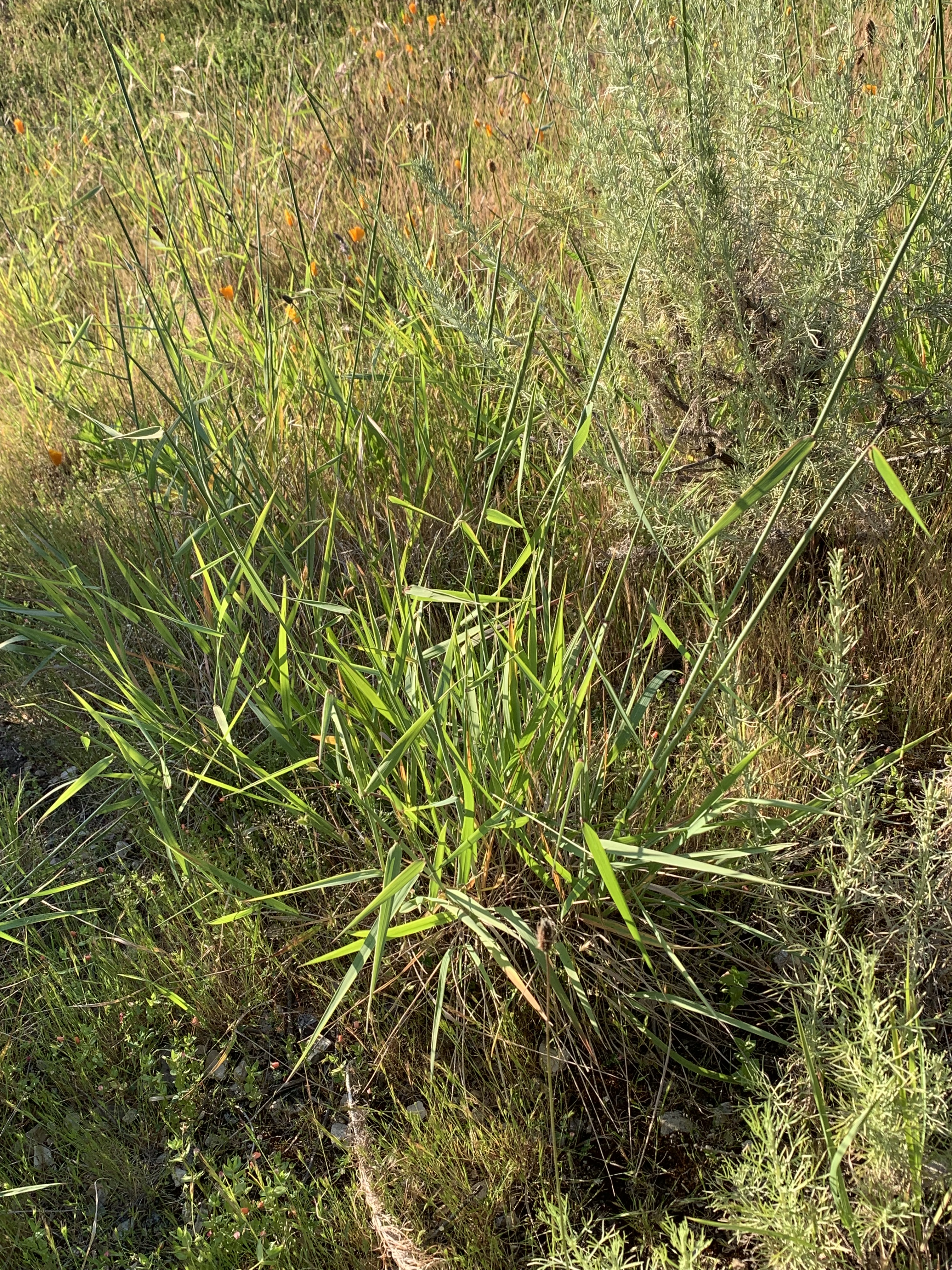
Add the two previously described popular myths together and you encounter another emergent, oft-repeated myth: perennial grasses restore soil health because they have larger masses of roots (in comparison with annual grasses). Central to this popular misconception are comparison photos from the Midwest showing profiles of annual wheat versus perennial wheat including both above and below-ground portions of the plants. The idea being promulgated is that larger root systems add more organic matter to the soil, break up soil compaction, and allow for better water infiltration. Most recently, proponents of this myth point out that the increased below ground organic matter of the larger rooted perennials means that more carbon is being sequestered, helping to address climate change.
California’s Grasslands: Not Naturally Perennial
California is mostly a Mediterranean state with a long history of ecological disturbance: grazing, fire, drought, inundation, etc. That ecological situation does not naturally produce widespread perennial grass dominated prairies. Even where there are perennial grasses present in a given area of prairie, they are rarely naturally ubiquitous: species seem specific to soils, steepness of slopes, wetness, nutrients, and so on. There are many more annual species than perennial, and many more wildflowers than grasses. Some of the most emblematic grasslands in California are naturally annual plant dominated, such as the wildflower-display rich Carizzo Plains, the rolling hills over the Altamont Pass, and the flower-filled savannahs of the southern, low-elevation Sierra Nevada. On the other hand, large swaths of the former wetlands of the Great Valley were probably once dominated in wide swaths by perennial rushes, sedges, and tall native, rhizomatous (not bunch) grasses.
Myths of the Perennial Life Form
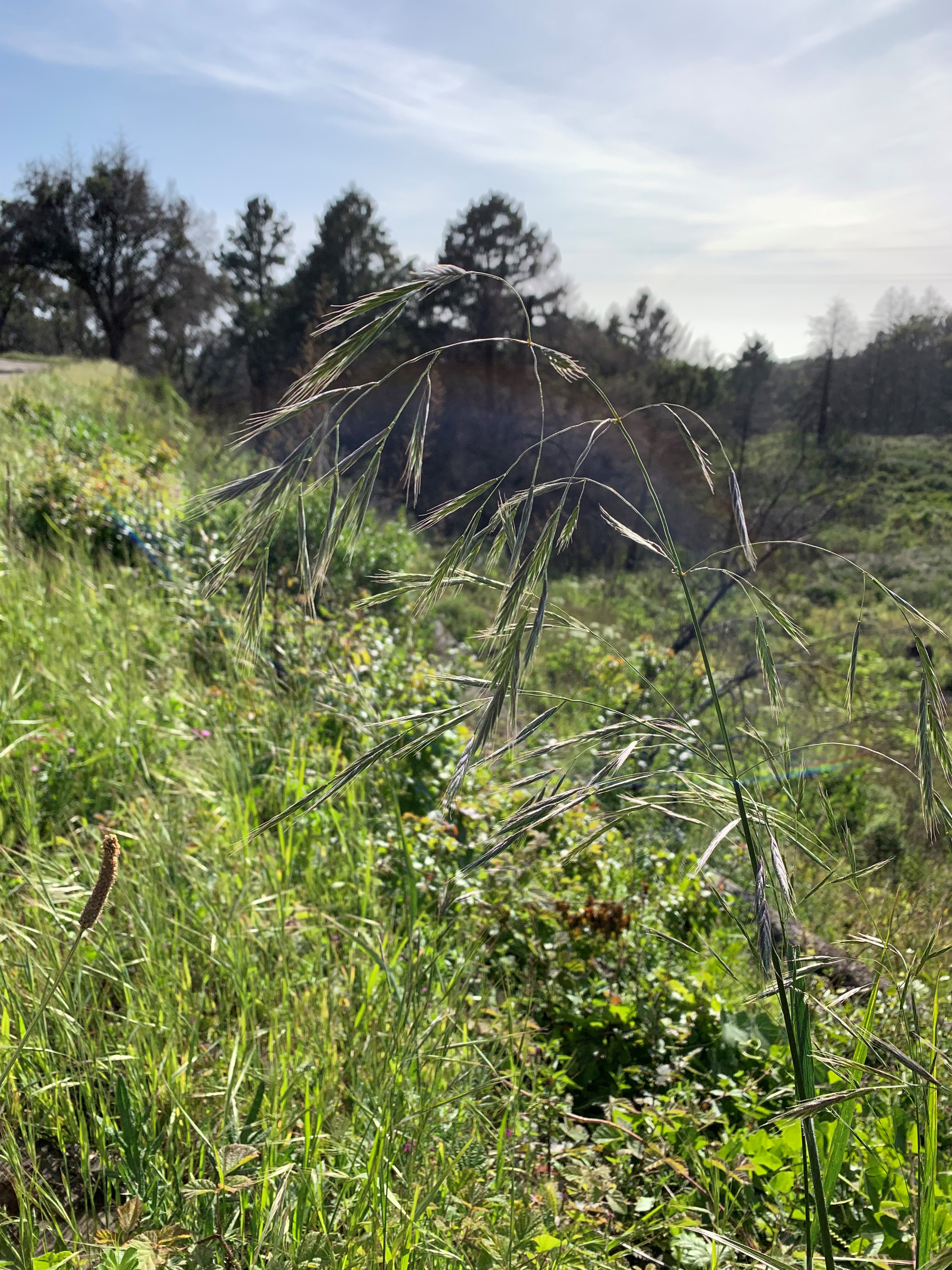
Let’s examine the “Perennial Grasses Have Bigger Roots” myth for a moment. The most widespread native perennial grass in California is pine bluegrass, a diminutive grass that often has leaves a mere inch or two high and a flower stalk reaching a foot or so into the air. This species likes it hot, dry, and shady, growing in interior oak savannahs. With the first rains, it turns green, later sends up flower heads, and then dries by late spring. There is no reality in which this species has longer roots, or a bigger root system, than the often 4’ tall European oatgrass. Around here, that European oatgrass is more comparable to the perennial California brome grass. This brome, in some soils, alongside European oats similarly continues growing, flowering, and seeding well into summer. In wet areas, a common native perennial grass is meadow barley. Meadow barley is relatively small and short-lived, and goes dormant very early in the season, when it is replaced by the proliferate annual Italian ryegrass, which is larger by far. Most people surveying for perennial bunchgrasses have overlooked meadow barley altogether as it disappears so early in the season.
Yes, there are smaller annual grasses and larger perennial grasses, but my point is that the generality that ‘perennial grasses have bigger roots’ is untrue and not that useful as a generality.
Regenerative Ranching: Regenerating What?
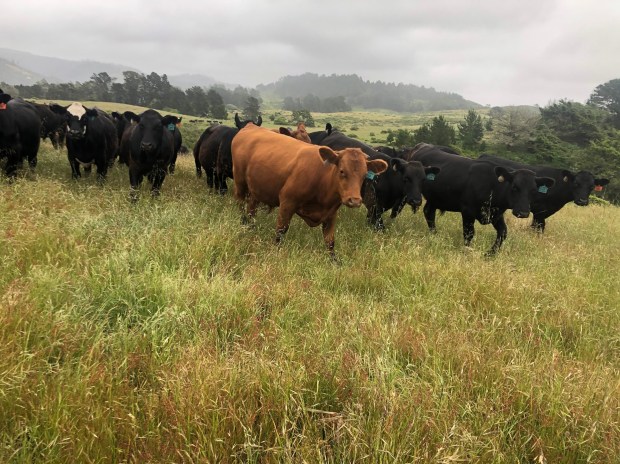
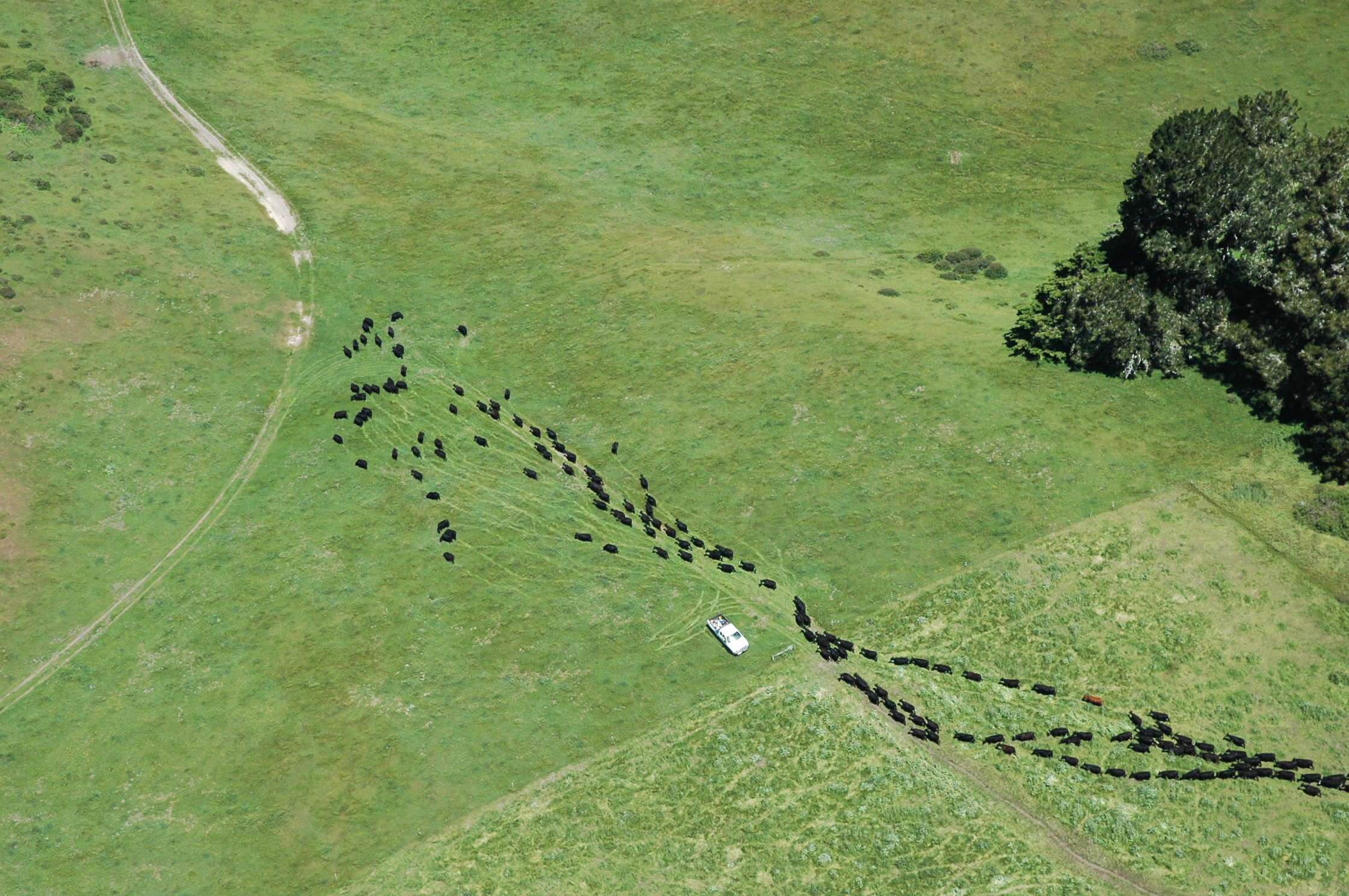
Although the definition of ‘regenerative ranching’ is elusive, it seems most proponents are gravitating towards suggesting that they are ‘restoring healthy soil.’ The idea here is that soil has been in some way degraded and must be returned to its primeval state. Often, the soil degradation concern is ‘compaction.’ To restore soil health, proponents rely heavily on the myths described above overlaid with management hypotheses that using livestock can mimic evolutionary disturbance regimes last encountered with the Pleistocene megafauna, 10,000 years ago. Regenerative ranchers really believe that such approaches work and are full of anecdotes about what they’ve witnessed, though changes in soil health are notoriously slow and always soils-specific.
Compared to What?
I’m pleased that there is a conversation about how to best manage California’s prairies, but concerned about bandwagons, slogans, and misinformation. Humans are really, really good at pairwise comparisons, but their attraction to such must be tempered. Perennial vs. annual grasses: nonsensical! Livestock grazed vs. ungrazed: not helpful! We can try really hard or spend a lot of money trying to ‘restore’ soil health, but what are we restoring it to? There is the possibility for a great collaboration in this conversation. The USDA NRCS has a long-running research project that fits nicely: their ‘ecological site description’ project would do well to help define which sites are best compared with one another, based on soil types. When having these conversations, we would do well to have great respect for the state of the science, referencing a rich literature and how it does, or doesn’t pertain. And, in our pairwise comparison analysis, let’s always try to compare what we are doing, regenerative or otherwise, with someone else’s approach: what is working better, and why? We must always make these conversations very site-specific…variability across sites is the rule.
Meanwhile, beware of definition-less terms without a systematic third party certification program: ‘natural,’ ‘grassfed,’ or ‘regenerative’ labels hope to entice you to pay more, have higher respect, adhere to brand loyalty, or just plain ‘believe’ you are doing the right thing by supporting such verbiage. With this and other jingo-based bandwagons, let’s get a tad more critical so that we support what is worth supporting with greater clarity on WHY.
-this post originally appeared as part of Bruce Bratton’s weekly blog at BrattonOnline.com
 Grey Hayes