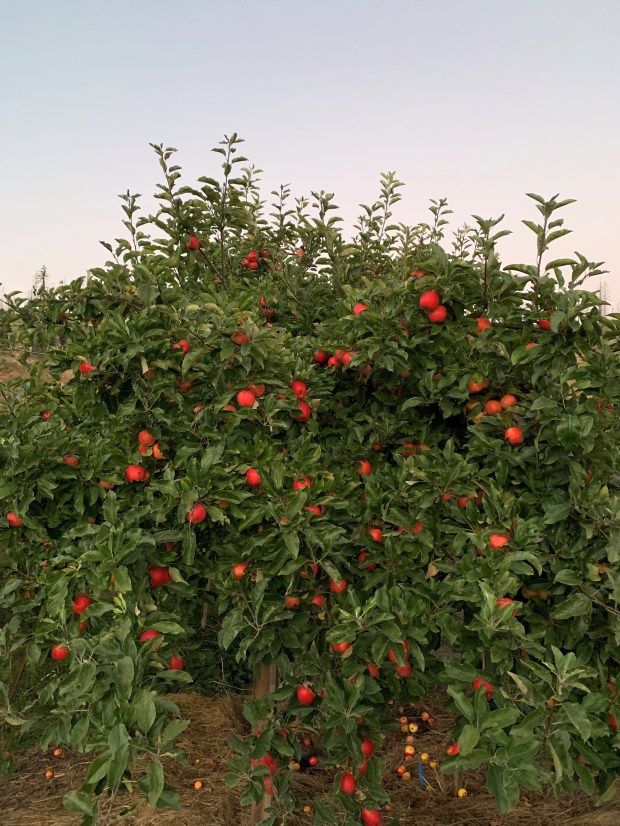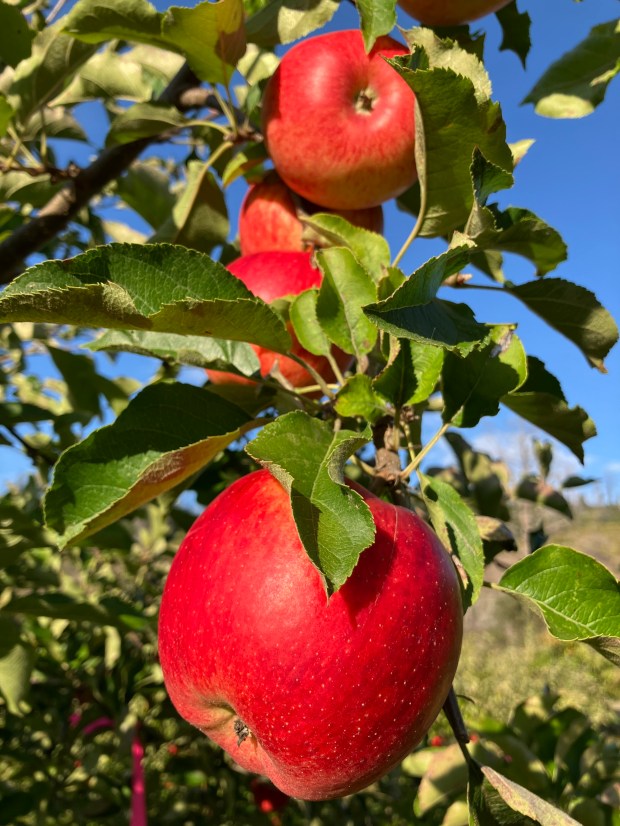
gala apples

red, red apples

Darkness Closes In

Soon, (the fairly dumb) Daylight Savings Time ends and the days will seem even shorter, by a quick, artificial burst. Wildlife adjusts to Fall, changing their behavioral patterns. Fruits galore – ripening of successive apples, limes hanging thick. A new solar power array materializes. The end of Molino Creek Farm farmer’s markets. The ever-greening of fields. Thunder and fog, chill and sun.

Jonagold apples are especially bright…and quite delicious!

Bursts of Rain

We’ve had two storms so far bring precipitation, but the soil is bone dry 2’ down. It hasn’t been enough rain to stop needing to irrigate. Nevertheless, in the fallow fields and meadows – the first herbs have germinated and the green blush is growing into outright blankets of verdancy. 

The GreenUp has started – germination in fallow fields

Last night in the wee hours I was awakened by the rattling of the house. Thunder! Some caught great movies of lightning strikes over the Monterey Bay. The last thunder that rattled things was back in 2020 when an orchestra of timpani rolled and rolled, ‘Rolling Thunder’ went from myth to reality. So, up from bed I was forced and off to gawk out the windows to see what was up. Alas, the flashes were too rare, the thunder had moved off and the night was calm once again. No rain then but rain rumored to be forthcoming this weekend.

Between rain storms, it has been nice, even hitting 82F this past weekend. A firefighter asked me what the relative humidity has been – ugh, not Rx fire weather: 85%! 

Shorter Days

We clock the shortening days through anticipation of the last light for harvesting apples for the following day’s market. We need enough daylight to sort the apples with even the tiniest blemish from the perfect ones that go to market. That moment is 6:30 this week. For those of us with day jobs, that makes for a very tight window to harvest and sort. Today, there were 11 hours of daylight: the night is surely taking over to the glee of owls and other night time predators.

Lone Fangsters

The fiercest of predators are guarding their territory and prowling alone through the lengthening nights. Long tailed weasel mating season has been over for some months: they fend for themselves, darting up to 30 miles per hour and winding slowly through the narrowest of rodent holes. Their scat is everywhere across the farm, reminding their brethren who is who and where they’ve set up shop. 

Fiercer still, mountain lions are just starting to think about pairing up with the first caterwauling a few weeks back. There was a memorable pre-fire Winter Solstice where we heard 3 lion females yowling from different ridges around the farm. That seems about the normal date for that kind of behavior, and it is a ways away. Meanwhile, massive solitary male mountain lions prowl a huge area all the while worrying about running into another male, which can be fatal or at least badly injurious. They scent mark to avoid such encounters. The urine scratch marking of Big Cats has started on the trails through the dark redwood forest along Molino Creek – signs we haven’t seen for 6 years. 

Bird Season

Now that their young are on their own, the chickadees, goldfinches, and Anna’s hummingbirds are also about, cruising without immediate families. Chickadees and goldfinches flock with other unpaired tribal members, though in fairly small groups around the Farm. 6 chickadees seems like the biggest flock right now, and even that’s unusual to see. Goldfinches are hanging in similarly small groups but there are many of those tea parties. 

The Anna’s hummingbirds, though – anything but social: they bomb and whistle at each other fighting for territory with what little nectar can be found, mostly around home landscapes right now. Those hummers will be the first of these non-monogamous birds to nest: in January they start gathering lichens and spider webs to weave their beautiful baby-homes. Those tiny nests will in a few months glisten with raindrops and grow transplanted mosses, cradling tiny eggs and their near torpid sheltering parent. Now, these future parents aren’t associating with one another, but instead joust for food, and try to get fat on the dwindling nectar.

Deeply Social Birds

For whatever reason, our blackbird flock is extraordinarily large this year. I counted 80 birds in one tree yesterday. Another flock came in this evening to join that one – over 100 birds. Perhaps it is because we allowed cover crops to go to seed this past spring, so there’s lots of food. I dread the bird seed predation right after the planting of cover crops. This year, we opted for only bell beans for orchard cover crop – the seeds so massive as to avoid easy bird swallowing. Late germinating bell beans are welcome salad greens for a lot of birds, though. 

I ponder how the blackbirds know to stop singing all at once. Their sing-song squeaky cacophony sounds a bit more melodious than a long line of train cars squeaking and screeching on ice cold rails. All of the sudden, they all stop: not one at a time, no slow lowering of the volume. How do they do that…and why?

I would be remiss under this heading to not mention the California quail. Never fear, the coveys are numerous, the birds fat and happy. What a show!

Arkansas Black – a dark apple with a bright white inside

Harvesting

The Two Dog crew returned to Molino Creek Farm to harvest their wonderfully productive tomato patch this week. At the same time, their pepper field is knee high and hanging densely with fruit. And, 2 Dog winter squash leaves are wilting revealing rafts of colorful squash.

Molino Creek Farm tomatoes, on the other hand, are mostly picked though the plants are putting on a flush of new growth after the early rains. Zucchini plants still push out yummy food. But, the season for that business is winding down – maybe only two more weeks of farmers markets to go!

The apple ripening season is just beginning to unfold. There was an unusually low amount of Gala apples and almost no Mutsu: our early varieties. So, this week we finish gathering the Galas and look to other types next. We’ll pick Jonagold apples – big, shiny, beautiful fruit and the prizewinner of our farm’s apple tasting competitions time and again. We are lucky to have a good number of those to share this season. Braeburn are close behind. But, the big amount of fruit is in the Fuji crop, which is 3 weeks away from being ripe. Will we be harvesting Fuji apples in the dark, or how will we figure out how to harvest so many of those fruit?!

Olives are hanging – December harvest?

The see-sawing of apple abundance is a result of what is called ‘alternate bearing’ syndrome. 2021 – post fire season, nothing much to harvest, then 2022 big year…2023 little year…2024 epic year…2025 little year. The way around this is to thin, thin, thin – and clip off fruiting spurs and so forth to make harvest more steady. Let’s hope we can keep up with thinning next spring – a crucial year to break this cycle.

Granny Smith – the quintessential winter apple….not ripe for months yet!

Limes!

The Persian lime crop hangs heavy – what an abundance we will have if this all works out. We are frequently told that our limes are the best on Earth, and we agree. Someone wanted to see if we could pick them now, while they are green, to provide people with what they expect to be limes. So, off we went to squeeze and test and try to find a green Persian lime worth selling. Sample number 3- the squishiest green limes we could find and the results…NO! No juice! The vesicles, or ‘juice sacks,’ just haven’t matured: they were pungent, poppy and quite void of juice. So, we’ll have to keep explaining to folks that the yellow citrus are the best limes in the world. We’ll have about 500 pounds of them this year to share…in February – March, or thereabouts. 

Persian limes are getting HEAVY

So, the shortening days doesn’t mean the end of the harvest. Nay, the harvest for our tree crops is just beginning!

While the nights are clear – get you outside to a dark area and enjoy the night time sky. We are marveling in the big, clear Milky Way from Molino Creek Farm these long, dark nights.

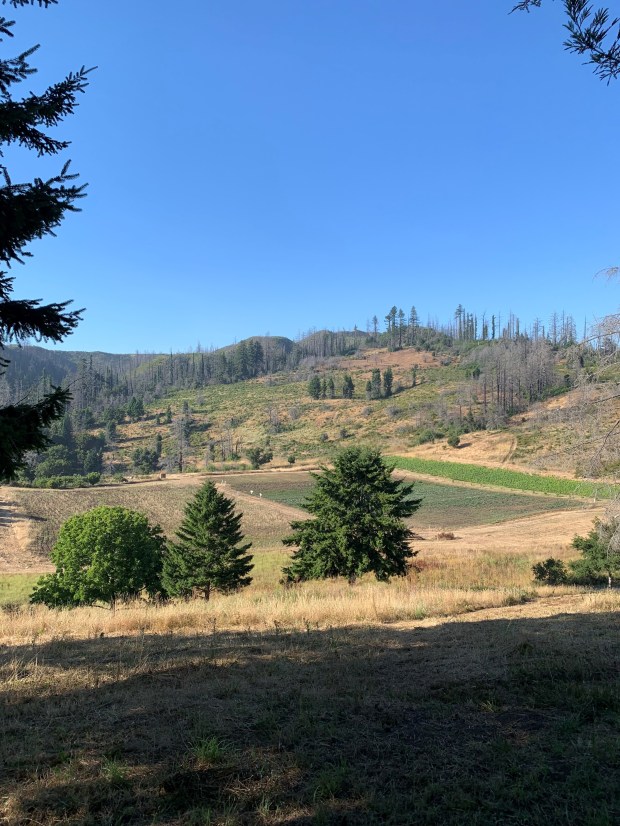
High in the canopy…Bacon avocados for a year from now!

Shimmering

Morning fog gives quickly to sun and the days warm rapidly to the upper 70s, perfect tomato growing weather. Those tomato plants are heavy with first fruit, mostly pale green and many blushing orange: fruit season is here and there will be many lovely boxes going to market soon.

Big Moon, Lost Friends

The full moon was bright, lighting the farm in silver deep into the night, and the coyotes went silent. Two neighbors saw lions recently, and we all see foxes. One of those predator species has been murdering domesticated animals – a good friend housecat, the two recently adopted ducks, and all of the hens near the walnut. The two remaining barn cats are huddled inside, or under equipment, in fear. The moon wanes, the night grows darker…and still…and quiet…except the pulsing cricket chorus and occasional echoes of wave sets from way down below. We miss the high-tailed aloof-friendly kitty rubbing hellos, the exuberant morning duck quacks, and the loving hens, clucking and looking you straight in the eye.

Baby Gala Apples- some of our tastiest!

Orchards

The cherries are all gone now, any remaining abuzz with wasps carrying away the last bites of fruit. We are enjoying some citrus – navel, Valencia, a lime here and there, and honey mandarins. The citrus trees are growing madly, responding well to good fertilizing and water, and setting many fruit for harvest next winter. The avocado fruit are a bit smaller: the ones left on the trees are half a dime in diameter, and we lost some in a gap of watering…very important to keep the trees watered when fruit just sets, it seems. It looks like we will get around 10 avocados per 4-year-old tree (20+)…next February-May. After that, many, many more! Contrast that with mature apple trees- it will be another year of tons of apples. The predicted apple harvest is 9,000 pounds- the new treat being 600 pounds of Wickson crab apples, which are thickly laden for the first time since we planted them maybe 10 years ago. “What will you do with all of the apples?” you ask. “Juice and ferment into cider” we say, but there are so many other destinations and Apple Dreams for the harvest to come. Prunes, plums, hazel, pears…and much more coming into fruit. Tending the trees takes a community, and we are so thankful for ours, sweating together to get work done each Saturday (and many days in between).

Birdies

A friend visiting said he’d like to see a ‘lifer’ lazuli bunting, but missed it: they are here, though – first sighting that very day. The western bluebirds are thinking about another clutch in one of the same house boxes that raised a brood just before. A pair of screaming red tailed hawks makes for daytime drama. The obnoxious young raven pair still scream and pout, annoyingly to both humans and, I’m sure, their parents Maw and Caw. The big thing on the bird scene is the hundreds of quail babies: a big, big year. The covies are multigenerational with puffy baby babies, adolescents, young and old parents, all mixed up. The flushing of quail is disconcerting for the varied flight abilities and the angst of the parents. Wirr! Peep peep peep peep peep peep. Wirr! Chuek, chuek!! This is the sound we are getting used to hearing.

Molino Creek Farm’s famous dry farmed tomatoes

To Market

Molino Creek Farm is going to the downtown Santa Cruz farmer’s market on Wednesdays. Zucchini, flowers, and the first tomatoes were headed that way today and we’ll continue through nearly Thanksgiving. Soon, we’ll get to Palo Alto and later Aptos (both Saturday markets). We love the enthusiasm when we arrive and how people greet our tomatoes so happily.

The Arrival of Fall

Last Friday, Night equaled Day; it was the Equinox, and our world stood in balance. From here, things tilt rapidly towards the dominance of Night, and we share the Sun increasingly with the South for a while.  There, Spring is emerging. The cooling temperature change switch is not thrown quickly; there is a lag of the Sun’s heating, and we often are assaulted by wilting, week-long heat waves in October. The return of the rainy season will likely be a way off. Meanwhile, the Harvest is in full swing at Molino Creek Farm with all of its various enterprises. Welcome to Fall.

Organic Gala apple fruit are laden on one of many trees in our older trees

The Orchard

Apple trees hang heavily with giant loads of ripening fruit. The branches bend more each day as fruits get bigger, juicier, and more colorful. Gala apples are finally gaining their peachy blush, underlaying the sun-side bright red streaking, overlaying the shade-side yellows. Our much smaller crop of Mutsu apples are getting Really Big and kissed with a patch of purply red where they see the most sunshine. The Braeburn and Jonagold crops, a total failure due to apple scab, a combined result of the long, moist, cool spring and our own lack of applying sulfur to kill it. There are so many other varieties…one tree each…to taste, to give to friends to taste…to revel in the diversity of apple flavors and textures. Oh, and then there’s the patch of Wickson Crabs, which are laden with the tart poppy nuggets that will tint so many batches of hard cider, real soon.

The gold-red-purple French prune-plums are past but the yummier deep purple Italian prune plums are getting ripe now: tarts a’hoy!

Nearby, young avocado trees are stretching with late summer growth shoots, so well-tended and vigorous. And, an array of citrus also puts on pale new growth while slowly swelling their fruits toward a February harvest.

A Big Moon rises over Molino Creek Farm and its patches of dry-farmed Early Girl tomatoes

The Tomatoes

Rows and rows of tomato vines are laden with fruit of all colors. The harvest will continue for a while. There are plenty of pale green orbs from tiny younglings to larger plumpers. Pale orange fruits are transitioning to the bright reds, nestled within distinctly green foliage. Between the rows, tossed rejects of tomatoes melt into the soil and flocks of birds flit around chowing on their remains, hungry especially for the protein-rich seeds.

Quince!

Harvesting

The ripening tomatoes go into buckets only so full. The apples go into shoulder-mounted bags. Both fruit get sorted for sale. Tomatoes of varying quality go for varying prices. Only the perfect apples go to sale, the rest to home use, charity, or juice (cider!). Starting tomorrow, apple harvesters will gather a few times a week and we will be handling 6,000 pounds between now and Thanksgiving. Wow.

Seasonal Wildlife

On the drive down to the highway last Monday, I saw the Largest Buck…a real beauty with big antlers, a broad chest, and massive muscles. That large of a male is a rare sight, one I’ve experienced only three times since 1986. Back on the farm, we have a much smaller mother deer and only one of her twins from last season. Their still summer coats are shiny and light-roast coffee brown, and they appear well fed and relaxed. They have enough food to not be walking around on two legs reaching up for the Fall walnut leaves, but I smile remembering that ridiculous-looking behavior.

Like clockwork, the golden-crowned sparrows returned last Friday night. They always return on the night of the Equinox. The sound of their songs are now coloring the days; they have transformed the soundscape to mark the seasonal transition. This is somehow deeply comforting.

Scent Landscape

With the sweet sparrow song also arrives the scent of Fall. So many things contribute to the scentscape. Mostly, it is the piney-bitter smell of coyotebush, but add to it wafting sweetness of flowering domestic garden plants- angel’s trumpet, San Pedro cactus, four-o’clock and ornamental ginger. Also, the breezes bring other scent ingredients like agricultural sulfur, pungent tomato foliage, cidery apple culls, and so much more. The dry, cool air accentuates and mixes these scents and creates the Molino Creek fall perfume. Emerging from the night warmth of shelter, we breathe deeply the outdoor air to experience all that’s on the air.

When the clouds and fog clear – the minority of nights as of late – the star-filled sky is bright with the Milky Way. Tonight, a Big Moon hails and lights the farm in its blue glow, illuminating the soon-to-be walk to juggle irrigation valves once again.

Somewhere, somehow…it is all Right Now

Right, now

Posted simultaneously at the website for Molino Creek Farm.

Regular Summer

There’s a certain relaxation that sets in when everything is going as ‘normal.’ Late at night, the fog rolls up the valley and we awaken to the silver tongue of fog lapping at the edge of the lowest points of the farm. Down there, redwoods drip and it smells piney and dank. The fog pulses in further and then back out in a morning battle against the heat, but always the fog lowers just below our elevation; but, we can feel the coolness even as the sun’s warmth prickles our skin and begs for long sleeves. At ten o’clock, a slight breeze picks up onshore with the cool ocean air. The days are sunny and in the 70s. It is dry and dust wells up when we walk, work, or drive, big or small clouds blowing predictably towards the southeast. Everything has become dusty. For many weeks, it has been a regular summer.

It has been a regular summer except very recently when high clouds streamed in from the (!) East. Other places in California have been experiencing Zeus’ playfulness, but we haven’t heard a single thunder clap, though a few large raindrops at one point, briefly. Those clouds make for spectacular sunsets.

Molino Creek Farm’s dry farmed tomatoes are getting ready!

The Ripening

Apples, tomatoes, winter squash, peppers, zucchini, pears, prune plums, hazelnuts…they are all ripening. As with the cherries recently, we must pace ourselves with the pear intake.

Looking down the long rows of lush, half-grown tomato ‘vines,’ we see the first ripening tomatoes blowing orange-red among the green boughs. One day soon, there will be so many ripe tomatoes that it will be difficult to keep up with the harvest. For now, we bide our time for the first batch of vine ripened, dry farmed tomatoes, a point where the farmers are as happy as the consumers. “Oh Boy!” people exclaim when they first see our tomatoes at the market. Sometimes, we have to limit the pounds purchased so that more of our loyal customers are pleased. It won’t be long now.

Gala apples growing and glowing

Gravenstein then Gala

We have only one large and one small Gravenstein apple tree, the first apples to get ripe each year. Sylvie reports ‘not quite ripe’ this morning, so we will wait another week to try again.

Next up, Gala apples. They aren’t half the size that they should be, but are the quickest growing apples on the block. They are catching up and will be ready to harvest the second half of September. We’ve had another round of thinning the fruit on those trees, thinning from the highest points of ladders. Propping, too!

Maw or Caw, who can tell? (Still Life with a Bird and Tree)

Wild Things

When the days are warm enough and the nights not too cool, we can listen for the night noises. There’s the rough repeated bark-yowl of a fox. There’s the odd sweet whistling call of a great horned owl along with the more normal hoots. There are also the calls of thousands of crickets. The black cricket rough sawing has been going for a while and was recently joined by the less raspy song of brown crickets; both are easy to spot at night along the farm’s many roads at night. The high twirring of the green tree cricket has joined the chorus only this past week; that’s the one you can tell the temperature from if you count the chirps right.

A walking around the farm reveals other wild visitors. Big piles of coyote poo is the most frequent scat. They rarely sing, but they sometimes do. Turkey tracks and feathers are another common sight, though the birds themselves aren’t frequently evident. Reports of a herd of deer seen frequently – no bucks but a few does and young.

And then there are the quail! Bumper crop of quail with many more being born. Clouds of quail, a profusion of quail, lots and lots of quail. I was wondering where the Cooper’s hawk was when it appeared for the first time in months this morning. Then again, the red-tailed hawks have moved on with their young one, a great relief to the wealth of bunnies also being born.

The large gopher snakes are a frequent sight. Mark Jones reports a 5 foot long fatty near the Hayfield gate. There’s one that lost the tip of its tail near the Yard water tanks. There are eerily large tracks in the dusty roadbeds. The temperature has been such that large snakes have to sun themselves to keep warm enough to hunt in the shade. I picked one up to move it off the road, and it was shivering.

Small family groups of band-tailed pigeons are feasting on elderberries, which have been ripening while still in blossom. Those large pigeons are clumsy out at the branch tips where the elderberries reside…clumsy and nervous. Those are generally pretty nervous birds, which makes sense since they narrowly escaped extinction due to overhunting not that many generations ago.

Maw and Caw are around, but not so sure about their kids, who may have flown the coop. These parents may have the literal empty nest syndrome. We don’t hear the screaming adolescents. Mostly, Maw and Caw are in proximity, poking at the ground and occasionally finding something- what? They might be eating mice…maybe Jerusalem crickets?

Our native elderberries in a hedgerow. Imagine big pigeons trying to balance and eat them

Fire Preparations

As we hear news of fires starting up around the state, we redouble our efforts for fuel management. CAL FIRE has been sending up an engine from Swanton to inspect how we are doing, encouraging us and guiding us in little ways to do a better job. Many thanks to their Captains for inspiring us to do better! They say we’re doing good jobs with the mowing, and mowing we continue to do. There never seems to be enough time for mowing….or weedeating…or hauling cut brush (or burning that cut stuff in the winter). This week, Mark Bartle jumped on his tractor and mowed some of our fallow fields, so suddenly we’re minus more acres of bad fuel: yay!