environmentalism

Whence SCruz Enviros?

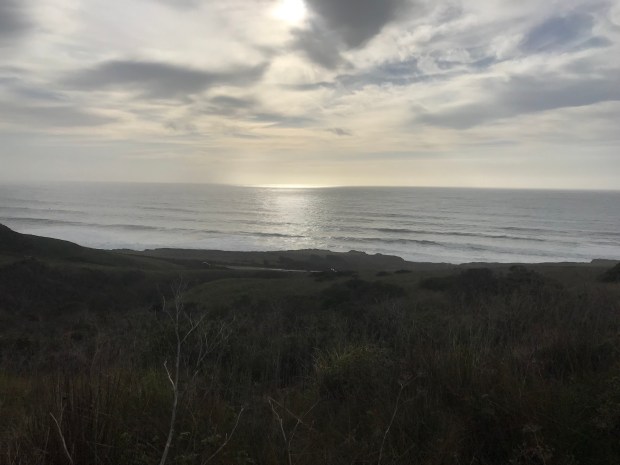
I continue to ask myself this question: where has the environmental movement gone in Santa Cruz? I have several hypotheses. This is not to deny the tireless work of various individuals who have helped on many fronts, but I sense a loss of momentum, of any organized movement of the type of conservationists that have been so crucial in the past in providing the Santa Cruz area with much of which it is now proud: Lighthouse Field, the City’s Greenbelt, Wilder Ranch, and Gray Whale Ranch come to mind, is there any kind of movement now that could achieve such success?

Questionable Rationality

One of the age-old issues with working with coalitions is the rationality factor, and the environmental conservation movement has had its share of associates who defy the laws of rational discourse. There is strength in numbers, but as those numbers grow the community will include people who are vocal about some pretty wild, unsubstantiated things. Those people sometimes have a fairly strident way of expressing themselves. Whether it is a tactic, or perhaps they believe it, the opposition to conservationists will say ‘look at that lunatic fringe group!’ They lump perfectly rational people in with the less-than-rational minority. The less-than-rational folks will also say ‘Look! I have credibility! I am associated with these rational people!’ That fringe element has driven more than a few of my colleagues away from advocating for conservation.

Oppositional Idiocy

Problems with rationality aren’t just internal to conservationists: there are many irrational people to face in the opposition. There is increased reliance on very poor methods of discourse: tu quoque, black-and-white and straw man arguments are very common, and conservationists aren’t always prepared to rebut such vacuous methods of dialogue. We often don’t even recognize them as such. As I wrote recently, add those types of arguments to a long list of unsubstantiated ‘facts’ and you have the gish gallop making it impossible to address any particular thing.

Conflict Avoidance

Poor discourse and barely rational coalition members may have contributed to the next reason I hypothesize for the demise of the local conservation movement: conflict avoidance. One thing that seems on the upswing with the younger generations is conflict avoidance, but this issue has long been a problem to conservationists. Politicians and other would-be mediators of environmental conflict have often tried problem solving by attempting solutions through compromise. That is, they see two sides – conservation versus development – and say “we can find a middle ground.” The problem with that is that often the conservation issues associated with the proposed development aren’t addressed by this middle ground: biology doesn’t work that neatly. This concept has oozed its way into the general populace where many want to solve things by reaching an imaginary happy spot – ‘half way’ between what is portrayed as two divergent points of view. Even that half-way point is difficult for most to imagine negotiating.

Those who are proponents of nature destruction are well seasoned negotiators, new public conservation advocates not so much. New recruits into conservation often balk at the need to negotiate with often well-paid consultants who are so good at their game. These new conservationists also often feel shy about hiring professionals, especially lawyers to help with the conflict: for some reason many feel like seeking that method of solution is ‘too much.’ And, then again, lawyers are expensive.
Legal Defense, Legal Bills

If somehow a group of conservationists can come to the conclusion that a lawyer would help, raising money for legal defense funds for conservation around Santa Cruz is not easy. Lawyers are expensive and their work takes time. Can you remember the last time a local conservation group asked for funding for legal defense? It has been a long time.

And yet, legal defense has often been essential to resolving many important environmental conflicts, everywhere. Especially here in California, the laws protecting the environment are strong and broad ranging. Those proposing to destroy nature fear enforcement of those laws. With my conservation advocacy, I often cite legal language and so have been called ‘litigious’ by a handful of nefarious truth-stretchers: I have never retained legal counsel to sue anyone. It is very important for conservationists to understand laws and regulations and to cite those as well as case law whenever making their point. And yet, fewer and fewer locals are forming coalitions to retain legal assistance to protect nature.

Legal Reprisals

Some conservationists have avoided the milieu of conflict because they fear that the often well-funded anti-nature crowd might sick their lawyers on them. There are Strategic Lawsuits Against Public Participation (SLAPP) where the pro-development types intimidate conservation advocates by suing them…often for libel but for lots of other things. Also, some conservation advocates have been named in lawsuits by nature destroyers. For instance, our ‘friends’ at the Trust for Public Land sued local conservationists to recover expenses the group said they used to defend themselves in court actions aimed at better protecting the Cotoni Coast Dairies property.

No Peace, No Justice

The last issue hobbling local conservationists is their inability to adequately form coalitions with environmental justice movements, which have perhaps gained more wide support and recognition. This piece well summarizes the issue, and rests with the ‘no brainer’ intersection of the two movements: climate change. In this regard, Santa Cruz might be doing okay, but we are leaving behind other conservation issues of the highest importance: conservation land management, endangered species conservation, clean water and wetlands protections, and natural areas visitor management. Each of those issues has meaning for environmental justice proponents, but conservationists have done little to make that bridge.

What Can You Do?

I urge more people to become actively involved with local conservation groups. And, when you do, help those groups to become better through your mentorship and skill. We need to train one another to be good at conservation before the next big issue threatens species, habitats, or the relationship between humans and nature in our region.

-this post originally published as part of Bruce Bratton’s long-running informative blog at BrattonOnline.com, a place you should turn for all that you need to know around the Monterey Bay (and beyond).

Democracy and the Environment

I like the phrase ‘all politics is local’ and have coined a corollary phrase ‘war starts at home.’ We must find solutions that work at the local level, including resolving conflict. My twist on these issues has an environmental focus, and I want to illustrate our local situation in this essay.

Voting

If locals were judged for those they elect, how environmentally-minded would anyone think we are? I can’t think of a single local city council member who purports to prioritize environmental conservation. None of our County Supervisors advertises environmental conservation as a primary concern. Likewise, the local State Assembly members do not have strong environmental conservation platforms. Only when you reach the level of State Senator do we get an inkling that our local constituencies support environmental conservation: John Laird has long been an effective environmental conservationist, and conservation is one of his main priorities.

As we consider voting, how are we to be informed about which candidate might best serve environmental conservation? My experience has been that it is not easy. Unfortunately, there is no reliable environmental conservation organization informing local votes through their endorsement process. The Santa Cruz Group of the Ventana Chapter of the Sierra Club used to serve this important role, and the Group still ostensibly considers making endorsements – apparently only if a candidate seeks their endorsement. For 2022, the Group posted a list of endorsements, though without any analysis explaining their reasoning. Upon examination, most of the candidates they endorsed had little or no mention of environmental conservation in any of their election materials.

Lacking other means, you must follow environmental issues yourself and watch how politicians and political candidates react to those issues. Even if you track a single issue, you will find it helpful in illuminating for whom you should cast your vote. As a reminder from my past columns, priority environmental conservation issues for our area include: habitat protection for maritime chaparral and coastal prairies, creek and river habitat conservation, water pollution, and wildlife habitat connectivity/corridors. Of course, there are many issues to address when conserving rare and endangered species throughout our region, and those must be prioritized as well. If one of those priorities strikes your fancy, watch it carefully to see who is active and how politicians navigate to address them…and vote accordingly.

Environmental Advisors for Politicians

One of the ways environmental conservation conflicts might get resolved is through governmental advisory bodies. Locally, cities and the County have advisory bodies that ostensibly COULD advise on environmental matters. However, I cannot think of a time when City Council Members or County Supervisors sought out those advisory committees for advice, let alone acted on any of the advice otherwise offered by those committees. I suppose that’s a reflection of politicians’ assessment of how much local voters care about environmental matters. You might ask yourself, ‘are there environmental conservation conflicts locally?’ I hope you recognize that the answer is, ‘yes.’ The next question is ‘how are those conflicts being addressed?’ The answer is, ‘they are not.’ ‘Why?’ The answer to that question is ‘one side, the one in power…the one that destroys the environment…is winning.’ Why would anyone seek to resolve conflict when they are already winning? Two reasons come to mind: the primacy of environmental conservation for life on Earth and, consequently, avoidance of war which is the natural result of the degradation of the environment. All politics is local, and we’ve punted on this issue to our peril.

The following section lists the advisory groups that could be tasked to help resolve environmental conflicts, should politicians ever realize the importance of doing so.

City of Santa Cruz

The Santa Cruz City Council has a Parks and Recreation Commission to advise the City Council. Unfortunately, as reflects the views of the politicians who appointed them, the majority of those advisors care so little for environmental conservation that they fail to address those issues as part of their advisory role. This is a shame because the City’s parks contain a wealth of biological diversity, including many rare and endangered species, and these advisors could be valuable in helping to address most of the priorities I outlined above.

County Political Advisors

The County curiously has two bodies to advise the Supervisors about environmental matters: the Fish and Wildlife Advisory Commission and the Commission on the Environment. The Fish and Wildlife Advisory Commission membership historically has included a majority of experts with strong environmental conservation track records. After years of that Commission, there was the anomalous creation of a second advisory body, the Commission on the Environment – this one appointed with a majority of members without any environmental conservation interest, expertise, or experience. If you’ve got insight into why that second commission was convened when Supervisors could easily turn to the first, I’d love to hear from you.

Joining Together: Activism

Another way locals can affect change democratically is through organized activism. The list of environmental conservation groups acting at our local level includes the Valley Women’s Club of San Lorenzo Valley, California Native Plant Society, Land Trust of Santa Cruz County, Watsonville Wetlands Watch, Surfrider, Friends of the North Coast, Friends of the Greenbelt, Friends of Pogonip, Save our Shores, the East Meadow Action Committee, the Habitat and Watershed Caretakers and the Santa Cruz Group of the Ventana Chapter of the Sierra Club.

From time to time, other groups including Audubon Society, Earthjustice, the Xerces Society for Invertebrate Conservation, the First Amendment Project, Save the Redwoods League, Peninsula Open Space Trust, Sempervirens Fund, and the Center for Biological Diversity have stepped into the Monterey Bay area to assist with environmental conservation.

Each of the groups above has a history of success in their own issue areas in our region. But, even with all of their work, major environmental crises still plague our area and are going virtually unaddressed. Those crises are getting worse. And, despite the work of all of these groups, we have the bleak political landscape that I outlined in the opening of this piece. Simply put, none of those groups has affected the political change we need to sustain environmental conservation in our region.

Rating Activist Groups

If we want to donate money or join a group, how do we know how effective it is? Unfortunately, there isn’t an organization that rates our local conservation groups for their effectiveness. Nationally, if you want to give money to a group for environmental conservation, you might use Charity Navigator to peruse groups’ effectiveness. But that group’s ratings don’t really reflect our local situation. For instance, if you looked at the Sierra Club, you might find Charity Navigator’s high rating for the Sierra Club Foundation, whose work (despite the nomenclatural similarity with the Sierra Club Santa Cruz Group) doesn’t address our local conservation issues. Here again, if you follow even a single local issue, chances are that you’ll get to witness the effectiveness of a local conservation group. I know the groups I’ve been impressed with…but, we have so much more to do!

Working Together to Healthy Nature and a Lasting Peace

Only by working together, through democratic institutions and processes, by supporting the leaders and groups that are most effective, can we create the local changes from which others can learn. Together, starting locally, we will create a world that embraces successful environmental conservation and achieves a lasting peace. I hope that you will do something to help.

-this post originally published at BrattonOnline.com, a dependable source of interesting information especially for the Monterey Bay area. Sign up and enjoy.