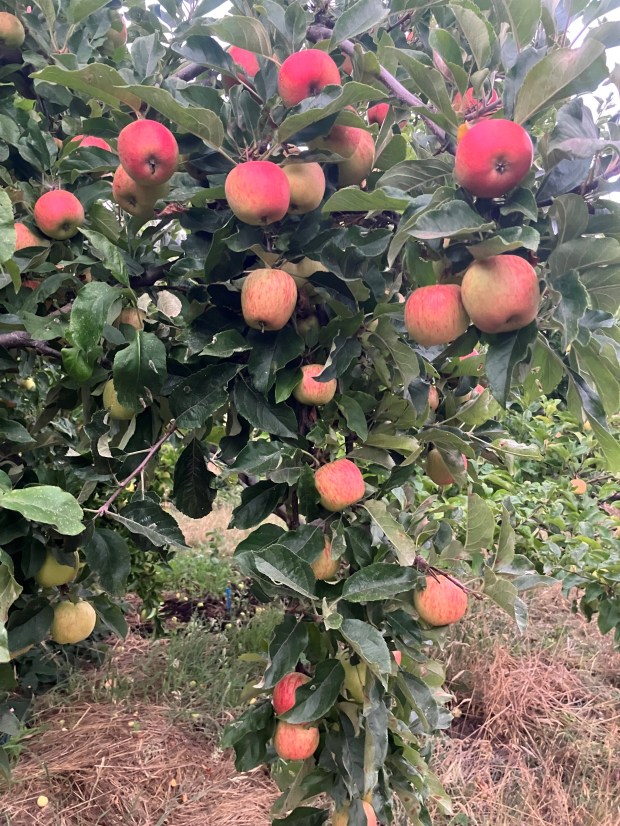
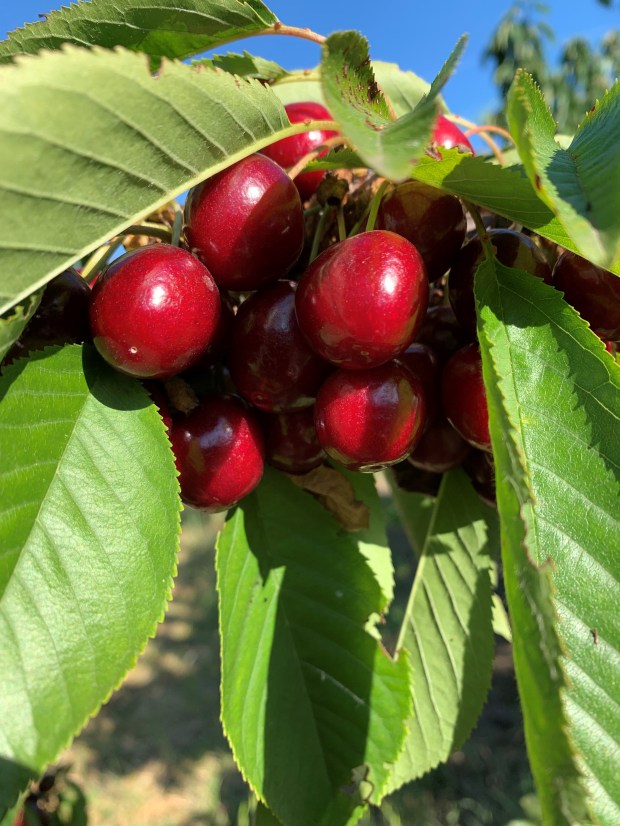
coyote

Misty Stillness

After work it is time to walk around the farm, legs swishing through soaking grass. Each one I touch lets loose a shower and, lightened, the stems straighten for a bit until more mist collects. Where I walk today and where I walked yesterday will remain evident for weeks: tall, lax vegetation flattened and so fat with moisture as to be unable to get back upright. Above the tall boots my pants still get wet; the grass is 3’ high. The mist muffles sound like snow, and it is very still. The moist chill has hushed the birds, the only sounds my feet and the dripping of a million drops.

Native brome grass and poppy, laden with moisture

Composting Fields

The brief drying and warmth allowed everyone a chance to mow and till, but there was still not enough time. Some fields got more thoroughly tilled than others. A sweetish funk of rotting cover crop hangs in the air near turned up earth. Topsy turvy pieces of cover crop stick out of the mud, the finer leaves and stems melting into mush. The tiny pieces of ground up punk will enrich the soil, hold moisture, feed microorganisms, and nutrify plants. “Green manure.”

Freshly tilled, ‘Pepper Field’

Standing Crop

In the orchards, the cover crop gets cut but we don’t till. This year, in the poorer soiled areas between trees, I ran the flail or mulching mower, grinding up the cover crop to feed the soil right where it grew. Where the fava beans are towering taller, it’s the dance with the sickle bar mower, cutting the tall plants, which fall in rows to dry and then get raked as mulch under the trees.

I keep the orchard mower regularly running not just for exercise but to ‘keep up’ with re-growth. It is nice to get March rains after the cover crop is cut. The ongoing moisture allows the soil to digest the shed off nitrogen rich cover crop roots and make that food available to wakening trees. It is becoming critical to mow the last of the fava beans, but there is never enough time. The Avocado Bowl and Cherry Hill cover crops are going to be 4’ tall soon, thousands of flowers feeding hummingbirds and bumblebees. I hate to deprive those friends of their nectar.

A sea of fava beans (and vetch!) surrounding the Avocado Bowl

Cherry Buds Swelling

The cherry trees are about to flower. Buds are showing color and the sleek red bark is taught from running sap. It is the last moment to observe the bare tree architecture and envision summer pruning. The old, fire-damaged trees are hanging in and the ones that died, root sprouts grafted, hold lots of promise to become more tree-like this year. The piles of grass mulch the Orchardistas hauled and stacked last June have almost entirely melted away but not too soon: there are few weeds where those mulch piles sat at the beginning of winter.

Lapins cherry buds nearly bursting
Old, fire damaged cherry trees (left) and the sprouted Colt rootstock grafted (right)

Native Wildflower Spring

The Community Orchardists not only steward trees but also the mulch fields, some of which are becoming amazing and beautiful native grasslands. Molino Creek Farm was a hay farm in the early 1900’s. It still makes fine hay and those hayfields are alive with many flowers and lots of wildlife action.

Our farm has a curious pattern of shallow-soiled knolls surrounded by pockets of deep soil. The rolling landscape provides for diversity in crops and native habitats. It seems that cutting hay (at the ‘right’ time) and hauling it to the trees as mulch has helped wildflowers proliferate. We are at the onset of poppy spring and two types of lupines are soon to glow. After that, rafts of tiny tarplants will flash yellow each morning. The brome grass has already started and will keep producing seeds at the end of waving graceful arched stems, towering over the wildflowers. Blackbirds march noisily across these fields in lines, scaring up the bugs that find feast in grassland diversity. A giant mound indicates gopher action, a few seedling poppies germinating on the fresh, moist soil. Networks of pathways and open burrow entrances means voles are active. Deeper, bigger holes with fresh claw marks – coyotes at work digging up furry late-night dinners in the hay fields. Where we don’t collect and manage for hay, those fallow fields are humpy with thatch and scattered with shrubs and poison hemlock: a different type of habitat…one which we hope we can muster new energy to manage. More orchards- and more need for mulch…the fate lies with the capacity of Community Orchardists.

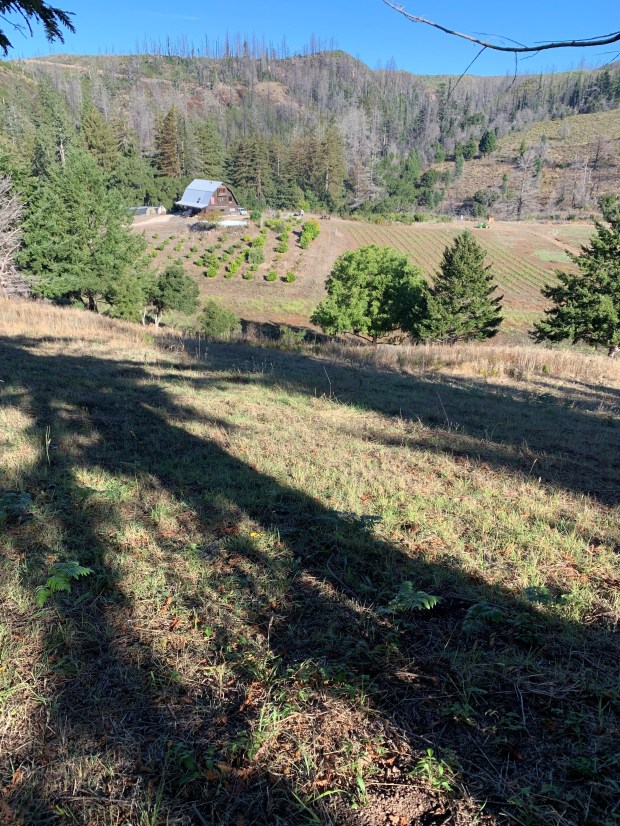
Poppy, brome, bicolor lupine and madia- cutting hay creates knoll diversity!

Falling leaves and moist winter chill

Fallen leaves blown across the forest path, under foot while walking, go “swoosh, swoosh, swoosh.” The sound of moist leaves (not crisply crunchy), an early rain and cool nights softened the landscape, removed the dust, made things gentle again. We are relaxing, slowly shedding the stress of the Fall’s potential for wildfire made more real these past many weeks by wind-carried smoke from prescribed fires across the entire state, even nearby at Wilder Ranch.  

Breezes carry in the clouds and then clear the clouds, waves after waves of clouds and then sun alternate as the dry summer plays with the wet winter, back and forth. This week, winter won with a bit of rain, shy of an inch and not yet wetting the soil more than superficially. After the rain, some sunny warmth and then the wind, fog, and another front , and it got chilly. Tuesday evening fog piled up on the other side of the prominent ridge across Molino Creek and poured over it, falling like a ghostly waterfall backlit by the evening sun. Beautiful!

Neither the rain nor the subsequent drippy fog has been enough to release the cedar-scented petrichor, much anticipated.

we do grow olives…for locals only olive oil!

Big swell, seasonal scents

Last night’s goose bump chill sent us to close the windows, put on sweaters, and some even built their first wood stove fires. And today’s cool air reminded me of how I’ve been taking the sun’s warmth for granted and how I’ll miss that deeply warm sense for a long time soon. The cool air, moisture, and gusty breezes accentuate the piney, resinous smells of redwood, Douglas fir, and coyote brush. Winds across the ocean pushed up an epic swell recently. Roaring and thumping waves reverberated across the landscape, but now there’s just a low more consistent hum. The patterns of breezes with long lulls awaken the senses, especially when it is peaceful on the farm but the trees on the ridge start talking, telling us a big gust is coming.

Feathered visitors

Geese, Canada and white fronted, are honking their melodies overhead near sundown. They are making their way to their winter grounds.

The newest birds are blackbirds, strutting around the fields in flocks, their heads moving curiously straight back and then straight forward with every stride. This evening, the light was catching the glean off the backs of a flock of Brewer’s blackbirds, reflecting the iridescent deep purple-blue of their gorgeous plumage. They let me get close but eventually alighted to show me the bicolor blackbirds in their midst. There are around 50 of this mixed flock and more may still arrive. They love to eat the grass seeds in the cover crop. They might even be anticipating it.

Other wildlife

Otherwise, the wildlife report is all about the Very Big Buck, coyotes, and chirping bright blue bluebirds. Perhaps there’s more than one Very Big Buck, but people are talking about an extraordinarily large, very impressive male deer from here to Davenport and north to Swanton. This creature stands very smart and tall with a giant set of antlers nearly 3’ across. He stood in the roadway looking intently north where he couldn’t traverse without going around the deer fence. He hesitated, looked north again, and then sauntered uphill following the fence line, somehow seemingly begrudgingly.

Nearly nightly, the coyotes sing. They aren’t doing the long musical numbers with multiple animals yipping and howling, but rather it’s a series of solos of the one coyote couple. One evening, they were calling from way up the Molino Creek canyon. Another evening, they sang right outside the window. Each night they try making some song from a different place, perhaps checking out the acoustics: the echoes are always fun.

The throaty, watery chirps of western bluebirds grace our midst. The brilliant blue flashes from the males’ zig-zaggy flights are breathtaking. There were seven birds, up a couple from last count. With that plumage, one wonders if they are considering breeding early…

The fading row crops will soon be tilled in and cover crop will grow, instead

Fall farming

We’re not quite ready to cover crop. There are still 10 days of tomatoes to harvest and the apple harvest is in full swing. The floral crisp sweet Gala apples are almost all gone; we will pick no more for market. Last weekend, we picked all the remaining Mutsu apples which had been devastated by the apple scab disease that enjoyed our late wet warm spring. Next up are the Fuji apples, and there are plenty of those! Plus, there are Golden Delicious, an underappreciated long storing apple of extraordinary flavor. In the Barn there are hundreds of pounds of culled apples that we’ll soon be juicing for cider. And so, we pick, pick, pick…sending on the perfect apples to market. Between picking spells, we spread compost and mow to prepare for harrowing in the bell bean seeds.

those rusty brown tentacles….avocado roots poking up into the loose, month-old compost!

Tentacles in the compost

The Community Orchardists have been spending the last many weeks spreading compost under many trees. Around a month ago, we spread compost under the avocados on Citrus Hill. After that little bit of rain, I noticed those avocadoes looked particularly perky and vibrantly green. So, today I pushed around the compost to see if the avocado roots had invaded it: they had! It is so curious to me that avocado trees push pointy tenacles of roots straight up, out of the soil into mulch. How do those thick pokey roots feed off the mulch? Such a mystery.

young avocado trees are growing fast!

Returning Friends

High in a fruiting apple tree, harvest bags slung over our shoulders, we stop picking to glance up the road…gravel scrunching noise…a car winding its way down the road onto the farm. A neighbor or a visitor? We narrow our eyes to see where it goes, who is returning home? Who is visiting whom? By car, wing, or scales, we welcome all sorts of friends returning to Molino Creek Farm.

A String of Celebrations

The harvest festivals have already begun. We are pressing apples with two pressings already behind us, 40 gallons of divine apple juice in freezers, refrigerators, or in carboys fermenting. Upcoming is Samhain, the midpoint between the Fall Equinox and Winter Solstice, a time when the veil grows thin separating the ancestors with those here now. We will be attentive to the shadows, echoes and whispers of those who walked and loved this place before. John Brunie used to perform the astrological calculations of the exact date and time of these sacred holidays, but he’s gone so we seek a new calendar keeper for the Farm. Thanksgiving means some leave the farm for gatherings elsewhere and others arrive, a string of quiet days, friends roaming the fields and trails sharing stories and luxuriant first rain smells. The forest floor and roads are often littered with evergreen branches at Thanksgiving, blown about by the winter’s first storm. We weave fallen boughs into circles, recognizing the cycles of time. Winter solstice lies shortly thereafter and then the Wassail brings the string of celebrations to a temporary close. We are at the threshold of gatherings a’plenty.

We regularly hire who we can to mow down acres of flammable coastal scrub

Equinox Birds

The Fall Equinox has hellos and goodbyes. We said hello to hundreds of golden crowned sparrows who returned to this place from Alaska on the very evening of the Equinox as they have done time and time again. With strong site fidelity, these birds love this place more deeply than we can ever understand. These same families, these same clans, have potentially been returning for hundreds of thousands of years to this very spot. If we peer at them enough, we can recognize individuals; they already know each of the neighbors and maybe many of our friends. The Equinox saw the flight of the barn swallows, who returned to Central and South America. They may have spent days singing goodbye, soaring one more time past their favorite trees, and then they were off. As they left, the particularly whiny sapsucker(s?) dove into the orchard from the great migration from who knows where. We need help to see how many there are: last year there were three in the family. Sapsucker is elusive and shy, requiring some focused time searching for each individual to figure out how many will be here this winter. The changing birds greatly alters the soundscape. The dominant noise in the spring and summer were the creaky whistles and laughing chatter of swallows. Now, the dominant bird noise is the golden crowned sparrows’ forlorn call, a descending set of notes that might be, ‘Oh dear me,’ repeated from every shrub and tree. What hasn’t changed is the sheer biomass of birds inhabiting the Farm. Stepping out the door still flushes 50 birds. A walk down the roads or paths creates a continuous wake of fleeing birds. Feather flutter and alarm cheeps everywhere.

Winter Waves

The sets of roaring and breaking big winter waves have returned. Lately, there has been no still peace as the reverberations of the ocean form a white noise backdrop to a cacophony of warm night crickets interspersed with bouts of hooting owls. The waves create a mist that blankets the ocean side farms, spreading a bit up the coastal canyons. When the waves are big and there’s even the gentlest onshore breeze, we can smell the fresh sea scent from the Farm, 2 miles inland and 900’ up. When the waves get really big, it seems the ground rumbles beneath our feet. These are familiar phenomena which make this seem more like home.

A view across the farm

Coyote Friends

In Spring, we saw a female and her pup coyote. She had a peculiar white line behind her shoulders, a ridge of brighter fur that stood up a little above the rest. She was lithe and wary, always on the move, never playing as so many of our wild dog friends had done before. The other day, I saw her again, following the large male neighbors had been talking about. We have a pair of coyote friends! May they find a fine place to have pups nearby and feast on the rabbits and gophers that are so common around the farm. From their scat, it looks like they are enjoying apples and tomatoes for now. The two sing many nights, a deeper growly staccato barking paired with a longer noted, high yipping song.

Fall Scenes

The cycle of seasons delivers us a quintessential peaceful Fall. Time slows. The sun very gradually sets into longer and longer nights. The hills are muted colors now, dry leaves rattling. Once tall upright golden grass has settled, askew and gray-brown. The fruit and nut trees show hints of yellow. In the forest, maples, thimbleberry, and hazelnut are dropping lemon yellow leaves, splashes of color in the shade of the towering redwood forest. Bright squash litter the Two Dog fields as their peppers turn deep red. The poison oak is still moist, only a few bright red patches on the drier shrubby sites. The sunset sky is streaked with smoke from prescribed fires, humans returning to their roots, stewarding the land once again.

The last rays of sunset from a tall spot on the farm

May you take the time to meander about, soaking up the warm fall evenings.

Changes Slowly Emerging

The calendar says it is almost fall, just a couple of weeks away. But, the temperatures and dryness suggest it is more like midsummer. The days wake up mostly sleepy, fog having rolled in during the night. Everything glistens with dew in morning’s first light. Sunrises are muted with tones of gray and silver across the shadowless and chill landscape. There is no dawn chorus, only a few peeps when the birds warm, late. The morning crawls on as the fog slowly breaks. It brightens more, bit by bit, until there is mostly blue sky by about noon. Then, barn swallows take noisily to the sky. The afternoons slowly warm until the sun gradually fades, a shadow line edging across the fields as the sun disappears behind the ridge to the west. This past Friday, the fog was so heavy and long lasting that it drizzled enough moisture to wet and settle the road dust.

Pattern Recognition

Last year, we would have been about to get our first inch of rain. That September storm produced what we call the germinating rain, and the early timing was extremely unusual. After that, there was another Big Storm in October – more expected timing. A bit later, all heck broke loose in December through January when we got atmospheric river after atmospheric river. None of that was predicted. In fact, as late as October, our national weather service climate scientists were saying it was going to be a dry winter, a La Niña situation! Right now, those same experts are saying there are strong El Niño conditions and that there is a 95% chance of those continuing through February of 2024. Compared to the last 12 years of data, this year looks comparable only to 2015, a year that brought some hefty rains to our part of California. With last winter’s deluges fresh in memory, it is easier to prepare though the really rainy times should be months away. So, we are able to chip away at the chores: an armload of firewood here, a bit of road drainage improvement there.

Nature’s Patient Changes

The nature around us also patiently transitions. The monkeyflower bushes leaves fade from top to bottom from their sticky dark glossy green to a crisp and withered black. This year, even those drying bushes still sport flowers feeding hummingbirds and bumblebees as they make their daily rounds. Madrone leaves and shreds of bark fall bit by bit, day by day, refreshing a layer to keep the footpaths only a bit crunchy. The grass, once shiny golden as it started to dry, is now almost gray with age, falling over and covered with dust. It will bend still until it is all in broad arcs and pillows in the unmown areas. The mounds of dry grass resist herbivory in that elevated state. In areas we mowed and the chopped grass touches the ground, herbivores feast on hay: insects, mice, and gophers are fast eliminating this year’s productive crop. Crickets in particular are having a good year.

Cricket Families

The night walks reveal new generations of crickets alongside the older, bigger adults. There are many sizes of crickets from the tiniest of young to sub-adult adolescents to honking adults. The adults are surprisingly large, especially the black field crickets which are the bravest, barely moving from the examining beam of my flashlight. One large adult sings from every 3 square yards, and I haven’t seen two of those large adults more in proximity, so from whence the young? Ah, something more to learn…

One of our many odd comice varietie- all ripening differently though contiguous

Abundant Life

Life’s young are growing in other species. Coyote parents follow their adolescents’ lead for the yelping chorus. Judging from their plentiful and frequent scat, they are enjoying scavenging lots of farm fruit. Momma deer has two growing young in tow; they might not realize that she is pregnant again and so will share the space with a new sibling or two before very long. It has been a few weeks since I saw the latest puffball young quail, and there are currently huge groups with lots of curious nearly grown young learning the techniques to avoid being the meal of so many predators. Those quail groups are so large as to seem to flow like liquid from bush to bush as they shuffle and scuttle through their days. Tiny fence/blue bellied lizards have recently emerged, inch long babies that are much more energetic and jumpy than their older counterparts. They leap impossible distances and dart down holes at the slightest movement. There are no intermediate sizes, so a simultaneous hatching seems logical. Medium sized snakes, now that’s a thing! Foot or so long gopher snakes share paths with similarly sized yellow bellied racers. I wouldn’t want to be a mouse right now given the snake abundance.

Organic Gala Apples Hanging Heavy, Soon to Pick

Fruit Developing

The fruit are also growing up. This past week, we reached the saturation point for pears: there are 60 pounds of pears sitting under one comice pear tree waiting to be scavenged; more pears are on their way with boughs bending under the weight of so many fruit. The Gala apple crop hangs heavy, too, and has just started gaining its peachy blush that indicates ripeness. Fuji apples are farther behind, still green with the slightest of red blush just appearing where the sun hits the fruit.

Organic Fuji Apples, a ways off… until ripe!

Noticing

Fog, then sun, then night…fog ebbs and flows. The recent super blue moon fades gradually, night by night. The Milky Way gains prominence. The roar of waves crashing creates the baritone and bass notes of the cricket-filled soundscape of Molino Creek Farm. Long still nights beckon sleep. The first subtle light of dawn is the call to chores abounding. Each day flows into the next, an unending cycle of light and dark, coolness and warmth, and the chance to curiously glance up to see who else is watching the play of light as the sun travels the sky’s glorious arc.

I hope you are.

For Fruit’s Sake!

Balmy Days, Cool Ocean Breezes

The days have been perfectly warm with a light breeze off the ocean – we have not been smited by the heat so famously noted in inland California and 5. The cool upwelling ocean has been our nearby friend.

Some odd clouds have been streaming overhead, making for glorious sunsets. One sunset this past week was (briefly) completely Pure Lucious Purple.

Cherries Cherries and more Cherries.

In the past two weeks, we’ve harvested 75 pounds off of the 18 trees. There are another 60 pounds at least ripe right now; those we’ll pick for Two Dog Farm to take to the Alemany Farmer’s Market in San Francisco on this Saturday. The heat is making them get ripe in a hurry! Family, friends, and Community Orchardists are thick in cherry fruit, the very best anyone has experienced. Yum.

In the depths of the night, occasionally we get fog. Rarely now, we wake up to a brief patch of fog, but its not too drippy.

Yip Yip Horray!

Also in the deep dark night: coyote chorus. High squeaky notes of coyote song ring out across the farm. At least three animals are celebrating and almost every night, late-late at night.

Giant gopher snakes are out sunning themselves on the road, frequently.

The second, or third, batch of new bunnies has arrived. There are also big batches of new quail everywhere- not still fluffy, but young enough to be Very entertaining to watch in their barely coordinated flights, weaving willy-nilly much to their parents’ chagrin. After such a flush, it must take hours to regather the covey. Another successful reproductive situation: The Deer! A mother deer is trailing a single fawn around the property.

Here’s a confirmation that Maw and Caw have been quite successful again with two adolescent yelling and demanding offspring. They are good parents, watching carefully after the kids.

In a tall tree near the Brush Field, a pair of red tailed hawks have fledged a talkative young one. This is the first pair and the first offspring I’ve seen since my arrival in 2008. We could use more hawk action with the burgeoning bunnies, gophers, and mice.

Hay There

The grass has dried. All of the grass has dried. So, it is time to make the Last Mowing, dust and all. There are three ways to get rid of the hay this late in the season: 1) pile the hay in the field and let it moulder; hope to apply at the onset of rains before it becomes too heavy to move…2) compost it, layered with dirt and weeds, kept moist…3) put it on the dirt roads for dust control. After the CZU fire burned up the freshly applied understory hay, we won’t be fooled again. Wait for more mulch application! Otherwise, we grind up the hay and leave it be in the roadsides and fields where it won’t be harvested. The mice will like it there. I saw a bunny eating such ‘stored’ hay recently.

-this post also shared via Molino Creek Farm’s webpage, see this link.

Oh Deer, What a Year!

The deer have had a good few seasons. Before the CZU Lightning Complex Fire of August 2020, the forest had grown back shady and dense after the prior fire of 2009. Between the shade and the passing of time allowing shrubs to get tall, deer food had slackened off quite a bit. Shrubs are the deer’s favorite food. Also, that extensive shady forest provided just the kind of cover mountain lions like best; they might have been taking out quite a bit of the deer population. Nowadays, there’s not so much mountain lion sign, but lots of post-fire small shrubs, and a burgeoning deer population. Several healthy bucks are roaming in and around the farm. At least one of our does seems to be getting pretty big around the tummy right now, so more are on their way. All the deer are looking quite healthy: there are at last 8 here and there nearby…back to our old record number.

Slack’n Lion

Another sign that the cougar population has slackened…coyotes! I heard a coyote calling again the other night, very nearby. 2008 was the last year the farm had any regular yipping coyotes, but they returned after the 2020 fire and have been regular visitors ever since. Coyotes are a good sign of few (if any) lions in the vicinity. I’d rather have lions, but the coyotes are nice visitors, too.

Hawktober

Winged predators are also doing well: hawks seem quite numerous and healthy. I see the resident Cooper’s hawk and kestrel frequently resting between what must have been successful hunting sprees. The 2-3 red tailed hawks likewise have some down time. There are nearly always hawks wheeling lazily overhead now that the breezes have returned. Oh yeah…it’s hawk migration time along California’s coast! Some are just passing through.

Pomologically Speaking

The apple harvest this Fall has been surprising in many ways. ‘Normally’ the Community Orchardists gather just once a week for the working bee: on Saturday afternoons. During those gatherings, we saw the apple crop growing and growing. We thinned the fruit 3 times to make sure the fruit were fewer and far enough apart to nurture bigger, more pest free apples. The turnout at the working bees was great through the Spring and Summer. As the well-spaced fruit started swelling, we went from weeding to propping branches. We did not expect so many apples to survive the thinning and the pests, including 25 jays and woodpeckers which pecked hundreds of fruits mercilessly. We kept testing apples for ripeness every day until they started ripening the second week of September. For the last 5 weeks, we have harvested a record crop and it has required many extra hands on so many levels.

Two Tons of Fun (for starters)

Mind you, we are very part time apple farmers. The Apple Corps are a couple of focalizers, a few dedicated regulars, and a whole lot of others sporadically joining to nurture the Molino Creek Farm Community Orchard. We have sent around 1500 pounds of apples to farmers markets, 500 pounds to Davenport’s Pacific School food program, and 2000 pounds to the cider press. And, we aren’t even done…

Mountains of Fuji

The last part of our apple harvest are from the orchard’s original planting of Fuji apple trees. Fuji apples are half Red Delicious and half Virginia Ralls Janet. They were so named because of the town near the agricultural research station where they were developed: Fujisaki, Japan. Dense, sweet flesh and great storage potential makes this a very popular apple. We sent 200 pounds of those to Saturday farmers markets this week. They will sell out.

Green Manure

When I first learned about organic farming, cover crops were called ‘green manure,’ a term I haven’t heard much more recently. The idea is that you don’t need farm animal dung to fertilize your crops- nitrogen fixing legumes can do the trick if you manage them right.

We’re planting cover crops now across the farm. This evening, I finished harrowing the sixth of 50 rows in the apple orchard: 3 rows to the hour to spread the seed and then run the tractor implement called a harrow to cover the seed with soil. There are many hours yet to go, but it is nice to chip away at the project. Bell bean seeds are big and shiny and fun to throw, like casting marbles around the trees. Tossing about oat seeds has its rhythm, too, and the seeds are bright blond and easy to see how evenly they are landing on the dark soil. Vetch seeds are jet black, perfectly round, and it is impossible to know how well you are casting them about, handful after handful.

A Harrowing Experience

The harrow leaves a pleasant looking seed bed consisting of bits of leaf litter and chopped up plants mixed with soil and rolled flat. Perennial plants are spared (they sprout back right away), and earthworms and other soil organisms mostly survive. We use a BCS Italian-made walk-behind tractor. The harrow is mounted such that you have to back up the whole time while running it, always looking over your shoulder. That’s a harrowing experience!

Fall Report

Fall is progressing in both the wild and cultivated areas. Poison oak still wins the award for the most colorful native plant display: crimson patches brighten hillsides in forests and shrublands everywhere you glance along the coast nearby. The orchard’s apricot relatives and hazelnuts are the latest things to add to the fall color palette with their menagerie of yellows, oranges, and everything in between. Breezes have returned, but the fall leaves are most thick just under the trees’ canopies. Colorful leaves, thickly strewn in tree understories are delightful, each orchard visit presenting a new display.

-original post at my blog on Molino Creek Farm’s webpage, Facebook page, etc.

Coyote Calling

Another of my regular posts for Molino Creek Farm’s website

She stood in the middle of a field still strewn with winter squash, yipping her higher and higher trilling song, snout pointed upwards, sweeping her head to throw her voice across the hills and ridges. She stopped, listening and peering around before starting again, facing other directions. The echoing coyote song might have been another one calling back, and it seemed she wondered, too. But these were just echoes and there was no return call. No one came to join her. She kept singing her piercing high yowls and, in the long pauses between song, she mumbled widely spaced, low hoarse growling barks. This went on for 20 minutes and then suddenly stopped. Then she paced wearily across the farm fields, pausing to glance this way and that across the ground for sign of some small mammal that might be dinner. After a long while, with the failing evening light, I turned away briefly. Looking back, she was gone.

Adan told Judy that he saw two coyotes. That was the first one I saw or heard for more than a month. They seem to be passing through but not daily lurking. Same with a big healthy looking male bobcat: it slowly walks through a field and then is gone, sometimes for many days.

Hungry

There is less prey for these predators than anytime in memory. There is little sign of voles. Gopher throws are there, but not very thick. I haven’t seen a brush bunny in months. There were only ever a couple squirrels- now none. I haven’t seen a new wood rat house assembled anywhere around the farm since the fire.  So, coyote, fox, and bobcat must have to travel widely to get enough to eat right now. And the nights get colder, the ground suddenly constantly damp and chill.

Storm Consequences

Another storm swept in this past week. Winds rattled windows, threw foam from tall ocean waves, and took half of the leaves off of the walnut trees. Showers, sometimes heavy, pelted the North Coast, making puddles and rivulets in the fields and roads. The soil is wet enough to have woken up the earthworms: open holes surrounded by round globs of earthworm frass now dot the soil everywhere.

With the series of storms this early rainy season, the grassy areas have turned green and the creeks are running again. There is no still summer nighttime silence: now the farm is serenaded by the constant rush of waterfall splashing, accented by great horned owl hooting. Just one owl, though maybe it is answering one in the next drainage that I can’t well hear.

Harvest Fading

Orchard harvesting is winding down. We have been selling 200 pounds a week of perfect apples, which means a harvest of 800 pounds to sort through with apples also going to cider and the Pacific School lunch program. We get a month of that kind of production this year, even though the Fire had damaged the trees. We are lucky to have the volume of fruit we are getting- the proceeds will pay for compost and coddling moth control, maybe a soil test, maybe some other supplies. Next year will be much bigger…from this year’s 5000 pounds to 8000 pounds and we’ll be asking once again- what do we do with all the apples? And the reply will come: More Cider! There are 70 gallons bubbling away in either Bob Brunie’s or Jacob Pollock’s ciderlairs.

In years past, we would be picking olives right about now. But, Sheri’s not on the farm anymore; no one organizes a pick this year. The fruits are few and small, anway. But the trees are still beautiful and this silvery patch is home to many birds.

Still people comb the tomato rows, the plants mere skeletons but festooned with fruit. The sunflowers have passed, as have most of the cut flowers. String beans, zucchini, cucumbers, and peppers- all fading and melting with the chill nights and soaking rains. The farm pace is plummeting, the season winding down. To thwart any ambition, the ground threatens to eat tires. Long weed-scalped tire tracks tell of spinning tires and nearly stuck trucks. Ambition to drive threatens hours of unstucking. We pulled a tractor with a pickup and a pickup with a pickup, at least, so far. Any wetter, and wheels will get so buried that vehicles will stay until drier times: the bulldozer is dead and the ultimate solution is no longer available.

Thanksgiving normally marks the end of the farming season and the beginning of a much-needed break. The days are getting shorter, and we turned back our clocks this past week. There very nearly is no time at all past our desk job’s quitting hour and the last sunlight, so afterwork chores must be hurried. Anyway, there won’t be any harvest worth harvesting in a couple more weeks. There will be a month until we turn to citrus harvest. It will be nice to rest.