California spring

Rain, Mushrooms, Fire, and More

Another round of rain enlivens the vibrant living system that is Molino Creek Farm. Citrus ripens, quince/hazels/milkmaids/houndstongue blossom, and grass and herbs thicken and deepen in every field. Sun returns, wind…the cycles back-and-forth unfold into spring and (too) soon the epic dry summer. The Earth drinks now in preparation for the long parch ahead.

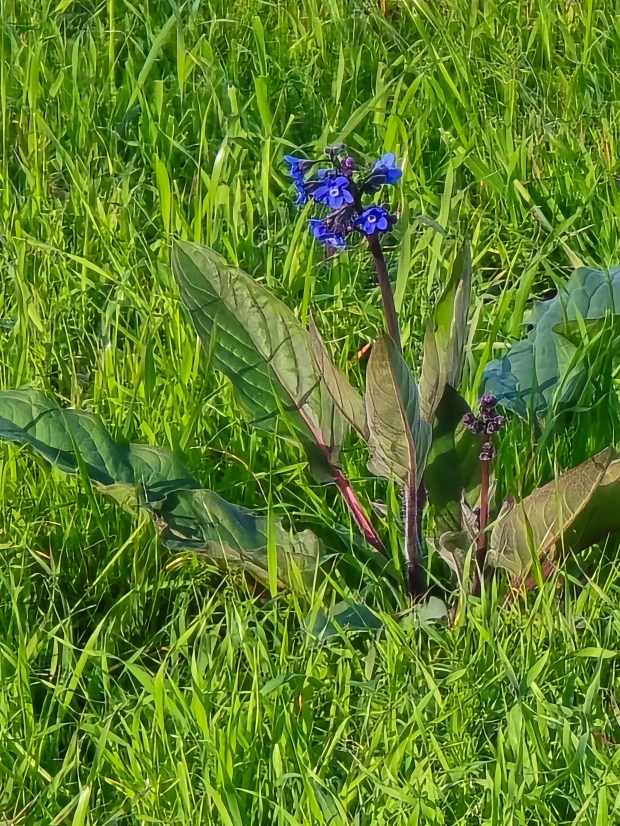
Hound’s Tongue by Cassandra Christine

Water

It rained so much a few weeks back that the Bottomlands pond quickly filled. And, it as rapidly disappeared: not long enough, or deep enough to attract the ducks of yesteryear. Then it was sunny and warm. And then the rain returned, mists and drizzle and the occasional shower. The wetting brought back the chanterelles and beaucoup mushrooms, which had previously pulsed in December only to dry and disappear during the long dry January. Parasols and puffballs poke up from grass and leaves, a variety of colors and textures. Feasts of fresh-picked mushroom risotto return to the menu. The waterfall on the unnamed tributary of Molino Creek spatters and sings, a newly reopened path leads to the overlook. A long glistening wet wall, profusely dripping, towers over the far side of the lively creek channel, hanging thick with wild ginger and ferns. Downstream, the main creek makes even louder creek noises with pool, fall, and rock pile riffles.

A LBM, Little Brown Mushroom, by Cassandra Christine

Fire

Does it ever get too old to talk about Fire? 2020 seems to be fading into the past; 4 ½ years past the catastrophic fire that destroyed so much and changed our landscape forever. Soon, we hope, the Bartles move into their rebuilt home. Our Good Neighbors at San Vicente Redwoods meanwhile continue their excellent post-fire restoration and management. This past week, their crews burned many, many piles of fuel that they had cleared alongside our shared road, including adjacent to the Big Hill. One moment there were stacks of Douglas fir longs and brush, the next moment only charcoal and ash. If a wildfire had raged up that small canyon, it would have been spectacular, dangerous, and destructive, but this controlled pile burn left a smaller footprint with more beneficial outcomes. We are safer. Nature is better off.

Restoration

Our work post fire and overall is evident with the wildflowers. Shucking seeds with our bare hands from nearby wildflowers and Hucking those seeds into the right places throughout the farm creates promise. For instance, a couple of roadside hound’s tongue plants popped up several years ago and have been seeding into the surrounding fire safety mowing zone. Now, there are 10 new seedlings…the patch is growing…the flowers beautiful and there will be more.

Elsewhere, strewn poppy seeds, ant-dispersed footsteps of spring, and grass seeds cast about are manifesting as big patches of increasing species diversity. Besides the rich hound’s tongue blue, there are already splashes of early spring yellow and loud bangs of poppy orange. Bunchgrass tufts throw up panicles of flowers above the meadow sward. Blackberry vines are flashing cascades of white star flowers along fencelines. Trimmed up oaks will survive the next fire, shading a short, fire-safe understory.

Working Fields and Orchards

Mark Bartle steered the 2 Dog tractor in rows across the Roadside Field, mowing cover crop, sending the season’s first cut grass smell to thickly scent the air. A legion of helpers cleared the youngest trees of weeds, saving them from voles. The orchard cover crop is growing tall or just plain growing, depending on whether it was sown early or late; the voles should be going into those rows and feasting on vetch, or bell bean, or oats…soon their litter strewn trails will be evident as they graze and poop and pee and serve as they key component of our regenerative animal impact integration. The owls and coyotes and hawks are thanking us, too.

The oscillating weather still allows for citrus ripening, trees hanging heavily with rain filled yellow, orange, and green fruit. New leaves are sprouting, spikey branches elongating, and older leaves falling to make dense mulch. It still amazes me that we can make this fruit, and we seem to have escaped the frosts of another potentially devastating winter.

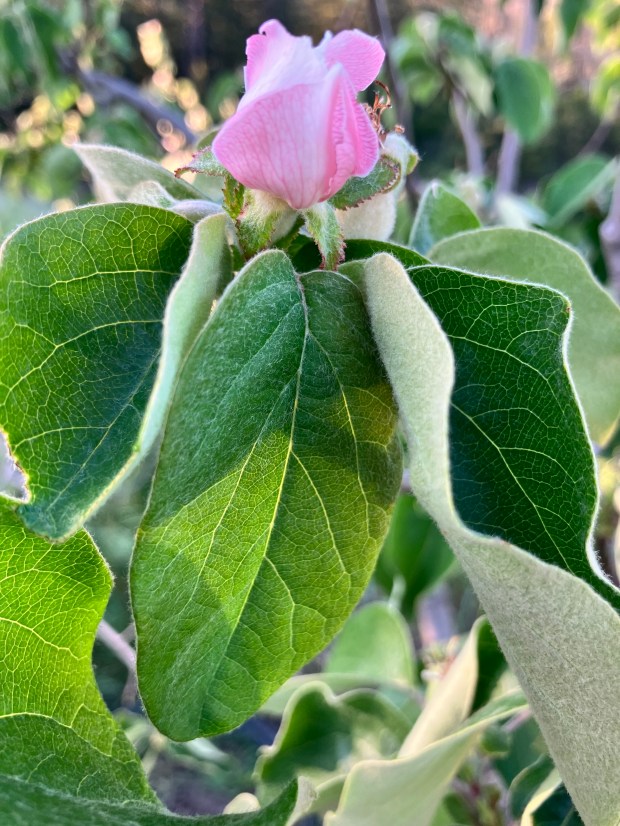
Buds swell and the first orchard blossoms have appeared. Quince petals decorate the haphazardly growing bushes near the entrance of the orchard. Apple buds swell on some varieties while others’ buds remain tight and small. Hazelnut catkins dangle and sway in the breeze. Pointy green elderberry leaf tips begin to emerge. The multitude of orchard trees are patient overall in their response to approaching spring.

Waterfall at Molino Creek Farm by Cassandra Christine

Night shifts to dawn

At first darkness yields only very slightly and the first bird to sing is quiet, murmuring a few quizzical, uncertain, almost apologetic notes. A few minutes later, that same bird sings the same few notes, sounding a little more certain. A second bird joins a little while later, more certain still. Dark turns slowly to gray and more birds start singing. Soon, dawn rushes on, the sky lightens, and many birds start singing, no gaps between songs, many species, many notes. The cheerful Spring dawn chorus fills the chill morning air as color begins to spread across the landscape in advance of the rising sun. By the time the first rays brightly illuminate the ridges, the bird orchestra is loud across the farm and as far as you can trace sound. Each taller shrub and at the top of many trees there are tilting, perky birds, beaks outstretched, singing away.

Spring Antics

As it warms, bluebirds and black phoebes flit about, catching bugs. Barn swallows warm on perches awaiting a brighter sun before taking to the air. Towhees strut through short grass, darting at one another, chasing for fun or territoriality. As the dew dries, one of the yard bunnies hops inquisitively towards another. The wide-eyed approached one suddenly flattens itself hugging the ground, snaking forward slowly and then faster on a pathway through the low grass, ears back, while the other hops again and again over its pancaked friend: what oddness! Spring morning antics.

Big Oaks in the background, Green Fields in the foreground. Life is a Rich Green

Green

Bolting grasses dry from the tops and from the bottom. The tallest grasses turn tawny above still-green fields. The grassy understory is browning, too. A gust carries dust clouds away from the road and across the fields. Despite the drying, overall a lush green prevails. Big bushy oaks shimmer life above pulsing green fields. The morning warmth massages a sweet perfume from the grass, which changes with the drying day to the scent of dusty pollen. Middays have become quite warm, though sometimes breezy. Cheerful bird solos continue right through the day.

Birds in Air

The afternoon breeze carries soaring red-tailed hawks, loudly screaming, one following the other in broad circles, high across the sky. The ravens, too, enjoy soaring on the wind but more in long arcs from one side of the farm to the other, loudly beating their wings and furtively glancing about for something to scrounge. Something startles a flock of band tailed pigeons, and they take flight but not so high in the sky, making for one patch of trees, then suddenly veering to another. One pigeon isn’t paying attention, gets too far ahead of the others, which have turned for another destination; it panics and wheels about, making lots of strong and rapid wing beats to catch up to its family.  The standard number of pigeons is 14, but the flock was 30 for a brief bit…some apparently were just passing through. The regular flock patrols the walnut trees hoping for ripening catkins which will shortly make them fat and happy. I’m not sure what keeps them fed in the meanwhile- there doesn’t seem to be much to eat for those big birds.

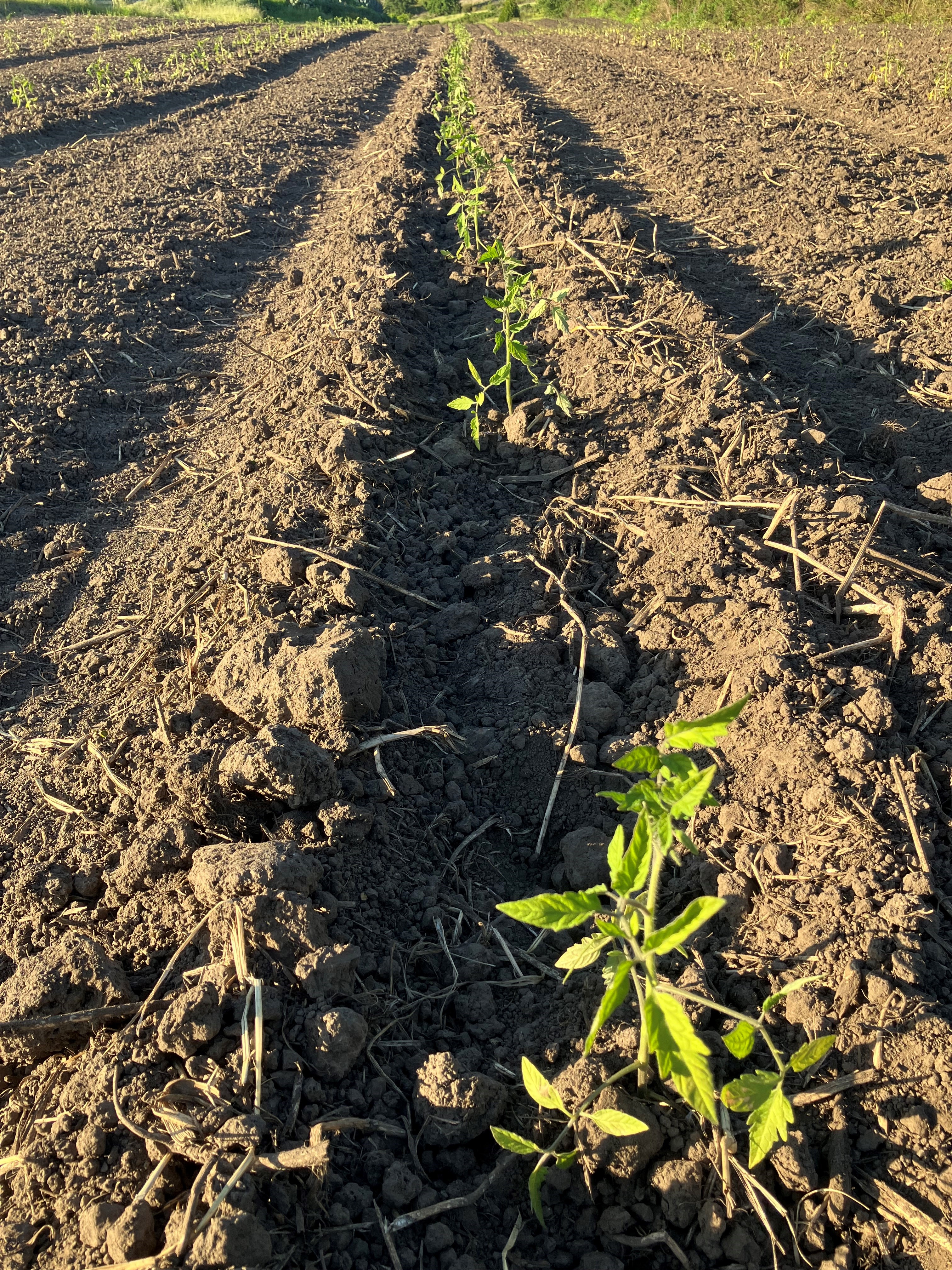
Molino Creek Farm’s Dryfarmed Tomatoes – Just planted this week

Planting

Bodhi and Judy have been planting the summer crops. Long rows of tomato seedlings are settling in nicely, in less than a week already overcoming transplant shock with perky new leaves facing skyward. Succulent leaves of freshly planted onions contrast greatly with the deep brown soil, poking up from row after freshly planted row. Green crop seedlings are hard to see in the broad swaths of brown, tilled soil, striped in rows of tractor tire tracks.

Lapins Cherry Trees – Thanks, Drake Bialecki for the grafting!

Peak Bloom

The orchards are in peak bloom. Though the cherries are just a bit past peak, on average the various varieties of other fruit trees make for the most floriferous moment in orchard bloom. With so many flowers, the trees have created a thick blanket of pink across the hillsides. The avocado spring is more subtle, but still their masses of tiny yellow-green flowers overshadow both the broad, old green leaves and the emerging spikes of purple-bronze leaflets. I was pleased to find honeybees on the avocado flower clusters today- the first time the hive has turned its attention to this essential service. Peak bloom, however it appears, is beautiful, the blossom parade a constant show of dancing pollinators one type arriving after the next. As the day progresses, the afternoon warmth waves clouds of ecstatic perfume into the aisles. Gradually, the day cools and the scent changes back to grass and mold and dew.

Two Dog Farm Chardonnay – SPRING!

Evening

The light fails and great horned owls glide silently out of the tall trees on the canyon edge, across the farm fields. They perch on fence posts and trees closer to the rodent-filled grasses and weeds. When the sun disappears behind the ridge, the evening turns quickly colder. As the setting sun finishes raking the higher hillsides with its golden glow, we retreat home for sweaters and wool hats. Chores demand further outdoor time until the light completely fails, now at almost half past eight. Burr! It turns cold with the darkness and gets chillier all night. Recently, it got down to 44F by dawn. Some fruit trees long for hundreds of chill hours, leafing out only after arriving at their total: their clocks are still gathering those hours, and the (shortening) cold nights keep them snoozing and gathering strength for their (eventual) leafy season.

Sky lupine and purple needlegrass on one of the Farm’s ridges
Bicolor lupine and more on a knoll on the Farm

Wild Flowers

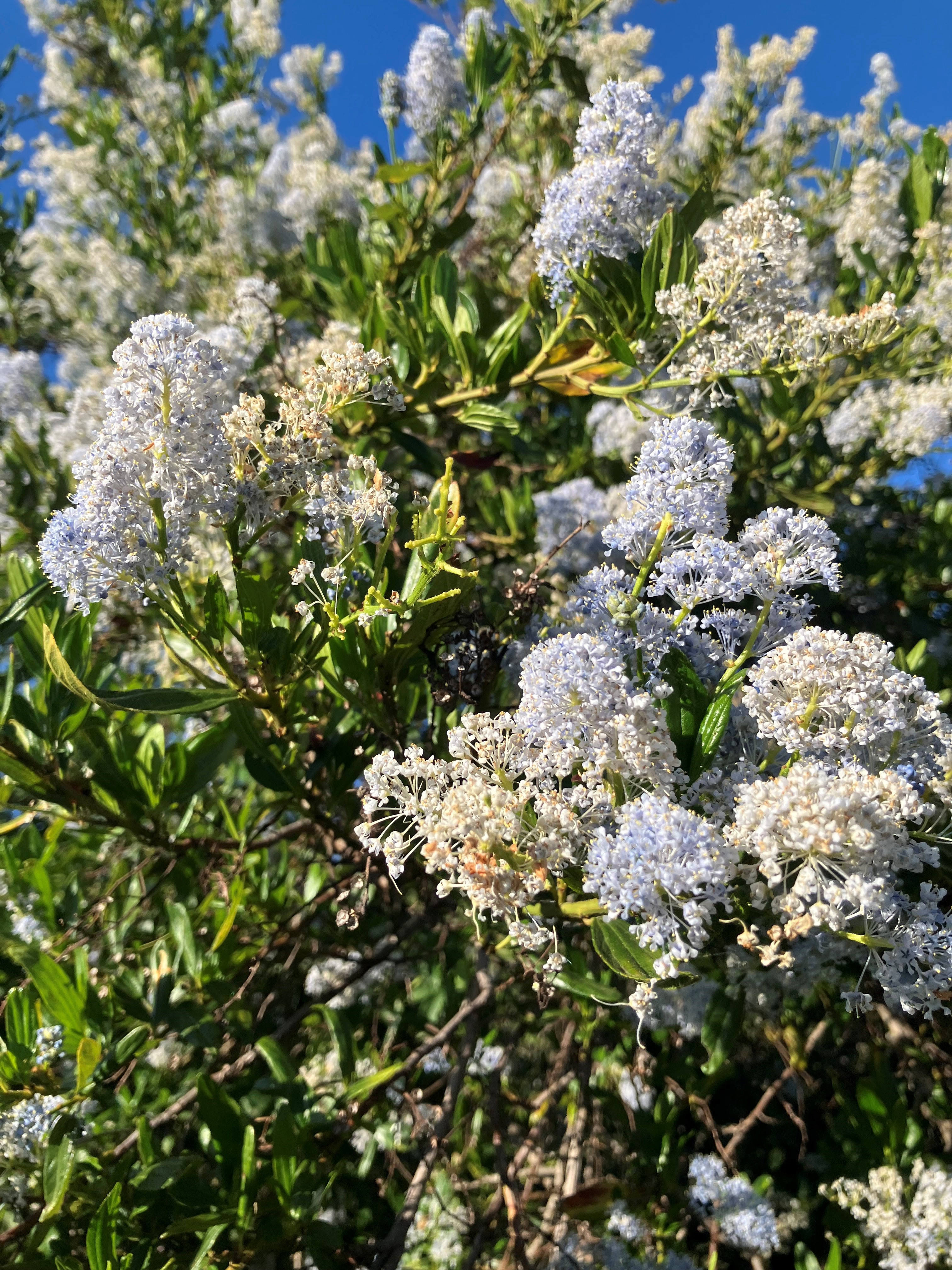
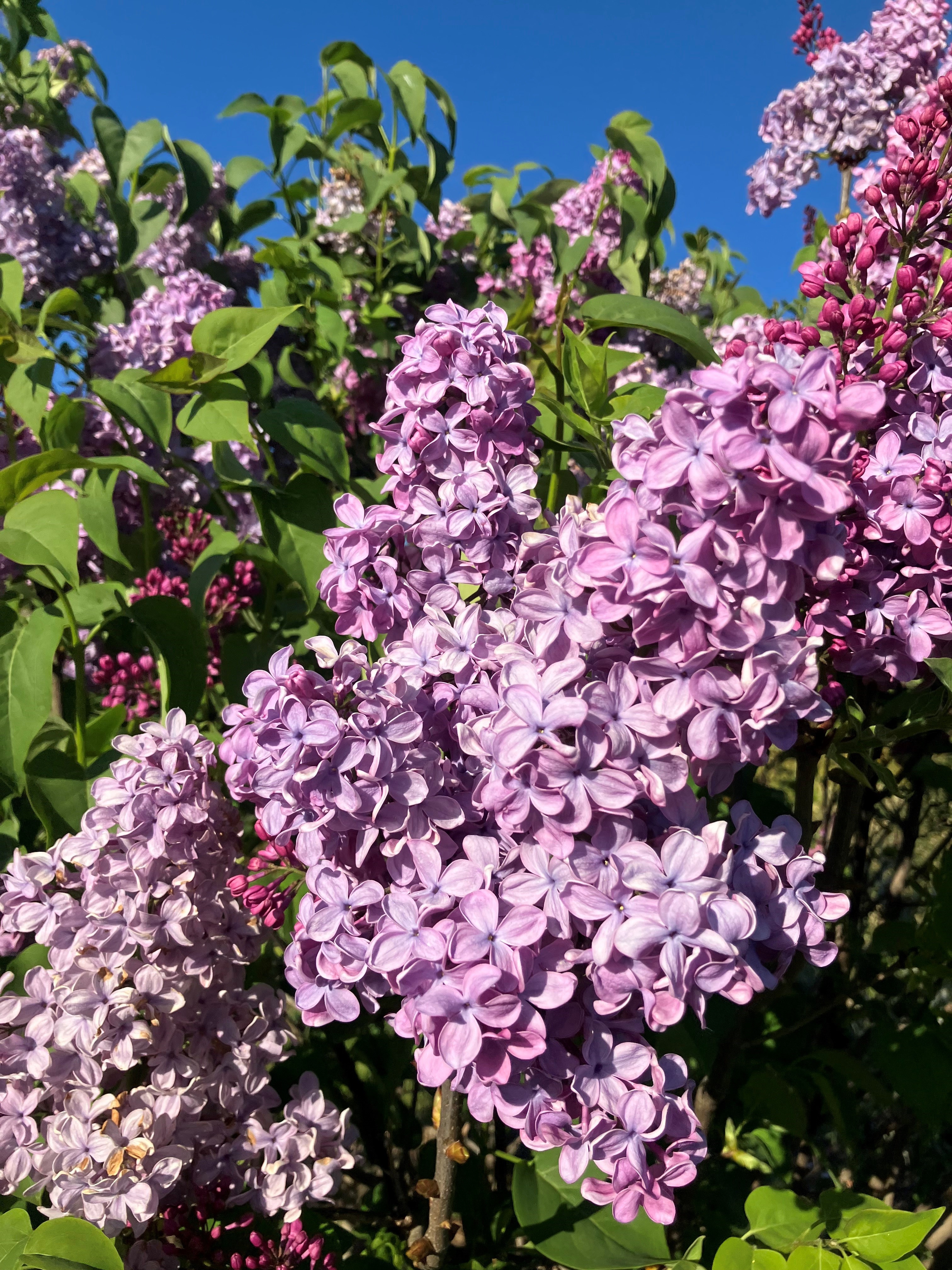
The wildlands are blooming spring. Two types of lupine, the big and the small, as well as poppy, tarplant, blue eyed grass, vetch, and purple sanicle have burst into flower and paint big patches with crazy color mixes and fascinating patterns. In the forest, white starburst panicles of fat false Solomon’s seal and the simpler four petals of purple-white milk maids brighten road cuts above Molino Creek Farm. More than anything, miles of the fire-following shrub California lilac throw rafts and sprays of pale blue blossoms, drowning out their shiny green leaves. The scent of this blueblossom is heady and sweet, but only faintly like the more-sweet perfume of the old-world traditional lilac which also has much more showy flowers.

California lilac
Old World Lilac

Footsteps of Spring

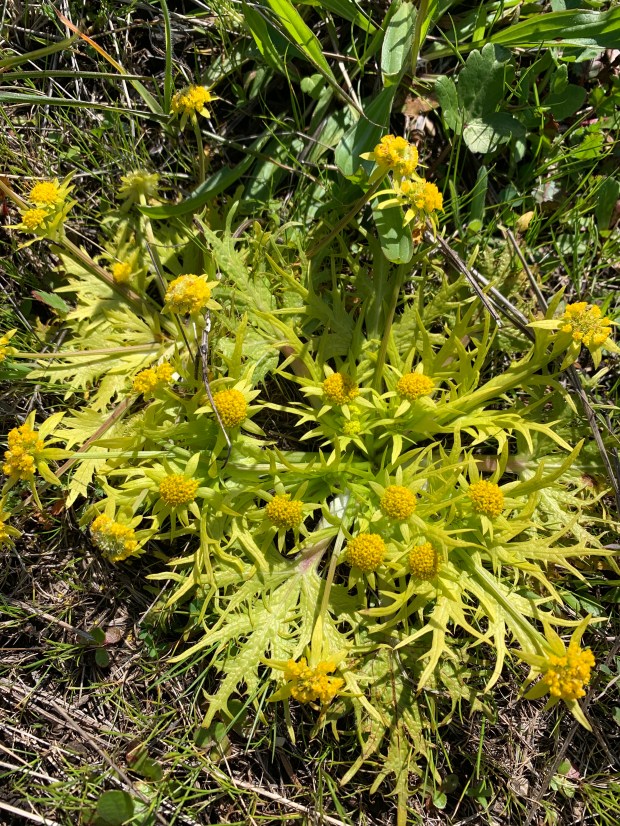
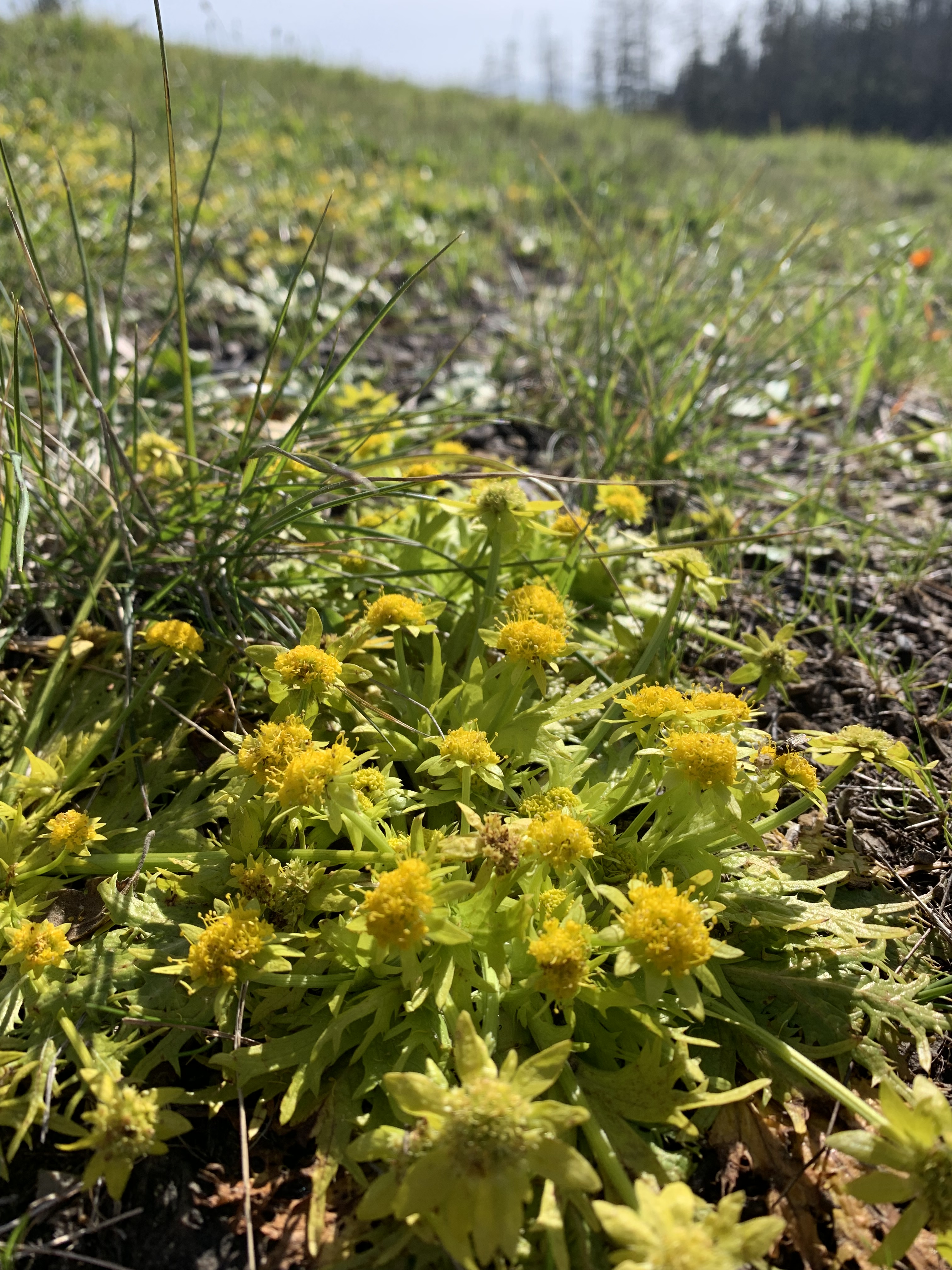
Another in my monthly series challenging readers to stay in touch with the seasons by locating one of the quintessential plants flowering at this moment in Central California. This month’s (March’s) flower: footsteps of spring.

Bare Foot Healthy

Botanists have a history of assigning ironic, sometimes deeply ironic, Latin names to plants. This one’s Latin name is Sanicula arctopoides. Some suggest that going barefoot is good for your health, others suggest caution. This plant’s Latin name does nothing to settle that score. The first name comes from the Latin “Sanus” meaning ‘healthy’ (sanitary, for instance) and its second name is a play on words: “arcto” means ‘bear’ and “poides” refers to ‘foot:’ put the two together and you start sensing the wordplay – “bear foot.” In full, the name means bear foot healthy. I’m not suggesting that the Latin name refers to the horrible and unsupported consumption of bear’s feet for health benefits. Rather, I suppose it was meant to be a twist on words. There has long been controversy over whether or not going bare foot makes for better health. I’ve had hippy friends swear to the benefits of going barefoot – I tried it myself for quite a long time with mixed results. I spent a semester of my undergraduate time in a Costa Rican cloud forest, during which I mostly went bare foot as my shoes otherwise never seemed to dry out. This led to a memorable experience where an itchy blister turned out to be full of maggots, an infection of tropical foot-burrowing flea larvae. That experience was kind of the opposite of this plant’s Latin name translation, “healthy bear (bare) foot.” But, I digress…

Magical Tracks

If there was a magical grassland Sprite calling up the advancing Spring across our meadows, she might dance from one ridge to the next, leaving her first footprints in the form of this gorgeous plant, subsequent waves of other wildflowers and color emanating from her earlier footfalls.

Yellow-Splashed Rocks

Footsteps of spring plants are the brightest of yellow, but it’s not just the flowers. As the plant starts to make flower clusters, the leaves surrounding the flowers emerge as pale, bright lemon yellow framing the likewise pale yellow flower clusters. The entire plant frames and highlights globe-like clusters of tiny flowers. This species is low-growing – ground-hugging even – and can’t take light competition from surrounding taller plants. And so, patches of footsteps of spring are found on rocky ridge tops or rocky-shelved outcrops especially where the surrounding vegetation consists of grassland species and where soil conditions aren’t conducive to taller, shading, more productive plants.

Smells Like…

I don’t want to prejudice your sniffer, but I am hoping to hear from people about what scent they get from the flowers of this plant. Also, the leaves of the close relatives of this plant normally have interesting odors…one species releases an uncannily cilantro-like scent, for instance.

Whatever scents this wildflower emits, the only types of pollinators I’ve seen visiting the flowers are different types of flies. Maybe the presence of flies as pollinators hints at the scent of the flowers…

-this essay originally published by Bruce Bratton at his weekly blog BrattonOnline.com