california quail

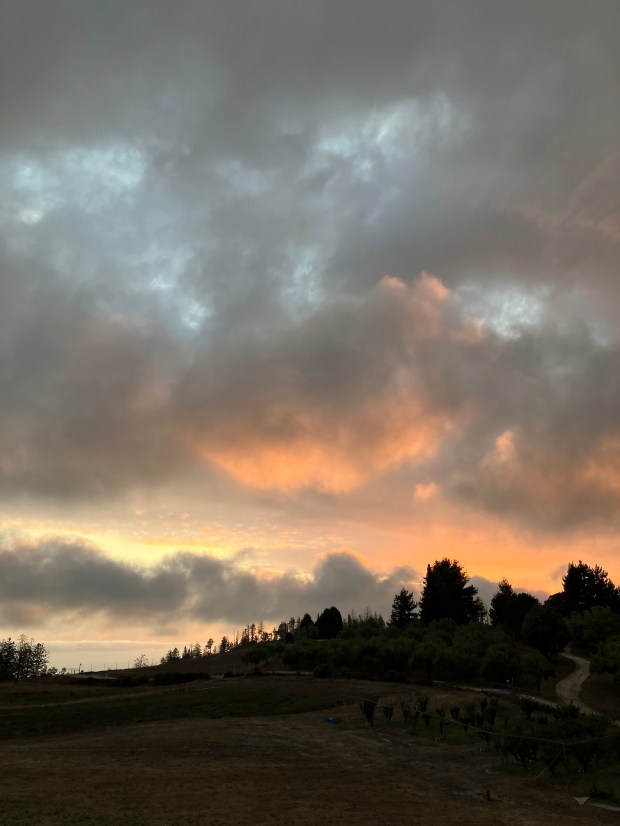
Sunset with poofy clouds over a tree-lined ridge

Behold! The Tomato!!

Behold, the peak of ripe, sweet, delicious dry-farmed tomatoes. The best in the world at the peak of the season, which will wind down soon. Lots of people are canning, drying…putting up food as the harvest rolls in, a bounty beyond any other season. Jays and acorn woodpeckers, too, rushing about, storing food like so many others.

A Ripe Molino Creek Farm Tomato: YUM!

Harvest

Tomato farmers can barely keep up, and people are buying. There are three particular crunches in the season: planting, weeding, and harvest. Each has its particularly critical moment interspersed not so much with ‘what do we do’ but more ‘how many people are necessary’ to do the work. The crunch times require more people than the weeks between, making it difficult for labor management and economics for small farms. 

Soon, the Community Orchard will face that final crunch. It seems to be a year like the last one when all varieties get ripe simultaneously. Gala apples are suddenly all ripe at once and the Braeburn and Jonagolds aren’t far behind. Luckily, the Fujis are going to wait a bit…and they are the biggest crop this year. It is a scratch year for the Mutsu variety for some reason. There are ten other varieties with one tree each that will get ripe in about 2 weeks. So, we’ll start preparing for a cider pressing gathering to process 1,000 pounds of apples in 2-3 weeks.

Two Dog Farm’s pepper field is lush and green with abundant fattening fruit. Their winter squash patch is still luxuriant and green with hundreds of butternut squash peeking through the leaves. Their Chardonnay grapes are getting honey-green and close to ripe…all ~2,000 pounds.

Wild Life

Baby owl begging, distant coyotes singing, a mountain lion caterwauling, masses of quail, a morning garter snake, bright-eyed deer herds, and many, many ground squirrels. 

Every now and then one of the baby birds strikes up a unique racket; this time, it is a baby great horned owl…begging. The begging goes all night long and it is loud and obnoxious. I suppose if you are the Queen of the Sky, you can make that kind of racket and not fear getting eaten. With no other baby around to mimic, a single young owl can pick whatever obnoxious voice to really bother its parents. This one ended up being half way to a barn owl screech, but louder. Mom and Dad owl hardly bother to hoot as the baby steals the show. You’d think it would get hoarse.

Sylvie reports a mountain lion caterwaul – that’s new since before the 2020 fire! Celebrations!!! Welcome back lion momma. 

There are streams and rivers of quail pouring out of the brush to peck-peck-peck at masses of seeds strewn everywhere on the ground. They are fat with glossy plumage. It has been a good quail year.

Open the front door first thing and there’s a 2.5 foot long garter snake on the stoop. What luck. First snake in a long while. The other moist morning or late evening snake to see is the (common here) rubber boa…haven’t seen that one for a month.

There are a record number of deer hanging out on the farm. Deer highways pound grass flat and expose soil along hoof-rutted trails. Piles of fertile deer poop litter the ground every few feet on the north-facing grassy slopes where they graze on a mix of grass and resprouting shrubs. At night, flashlight beams illuminate more than a dozen pairs of eyes on that slope. Walking down the road to turn off evening irrigation sessions, my heart races to be too near to huge antlered bucks;  hoping not to antagonize one: they seem feisty.

A  flock of 60 blackbirds has gathered on the farm, a mix of Brewer’s and bicolored, singing their complex anarchistic melodies from atop bare-branched fire killed trees and then flying like wind-scattered fall leaves down into the fallow fields to feast on seeds. Their song lights up every hour of every day, a chorus that will entertain us through the winter. Their rhythm section has squeaky peeps that nearly match the repetitive, constant, mechanical ‘Chip! of ground squirrels scattered far across the Farm- between the two species it approaches cacophony.

A skein of 50 honking, white-fronted geese in a huge V flew West to East high above the Farm at 4:30 this evening.

Bills Open: Nuts!

Jay cries are muffled, acorn caps scattered. It is peak acorn season and the jays hardly have time to taunt. Their heads are down, shoulders hunched, beaks pried open carrying fat ripe green shiny acorns to-and-fro. Don’t watch them when they try to bury the nuts – they’ll get mad, pick back up the nut and fly to somewhere where you aren’t watching. They suspiciously glance about, quickly poking each nut into a hole, making a quick swipe to cover it up and it’s onto another one. Back-and-forth over and over: busy days! We are pleased that they are distracted from eating apples, leaving the fruit destruction mostly to yellow jacket wasps now.

Dahlias are a long-time specialty of Judy Low

Land Tending

Our great gratitude to one generous guy- Matthew Todd has finished his mastication work for us this year: 4 acres of brush ground to small pieces! We needed to do something about the weeds and he offered to help for a great big discount that made it possible. He resonates with our mission to keep our hillsides wild and native and tending back to coastal prairie and so he wanted to help. His wonderful skill and powerful machine took care of jubata grass, radiata pine, and French broom, which had proliferated after the 2020 fire. Now we have a better chance of tackling those scourges with other tools – excavators, pulaskis, burn piles, and broadcast burns will join a several year mastication project to reduce the broom until we can get livestock to help manage the restoration areas. Thanks, Matthew!

We’ll collect a bunch of grass and wildflower seed this next spring to hurry the restoration along.

Hoping CalFire will be able to help this Fall with another prescribed burn.

Longer evenings make for less work time.

Enjoy the lengthening nights!
The Slowness of Extreme Heat

Happy Interdependence Day! I’m happy not to live under the tyranny of a monarchy AND I’m glad to be part of a community that recognizes the centrality of interdependence. The Molino Creek Farm Community relies on one another, exercising our various strengths to foster healthy farm life at its center. We include teachers, woodcrafters, a midwife, farmers, orchard tenders, bookkeepers and administrators, activists, road technicians, and natural lands managers. Many others join, from near and far. Together, we make this land sing: it depends on us, we depend on it, and everyone depends on each other. Nearly 4 years after the last wildfire, we feel that interconnectedness more than ever.

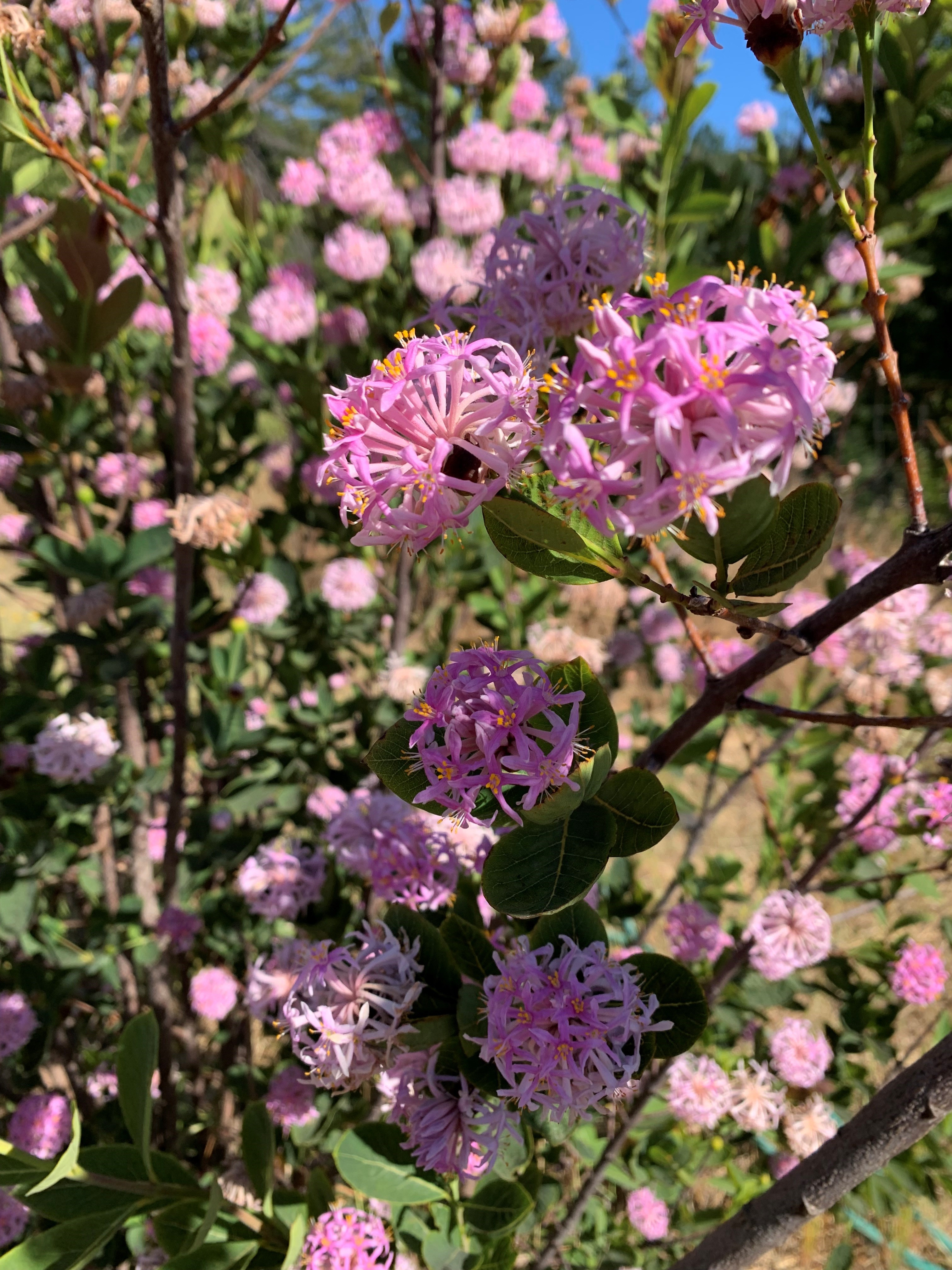
Name that shrub: one of our many hedgerow plants

Evening Scents

Each evening and early in the morning, the air is filled with the “seminal” smell of the male flowers of tanoak. It hits you strongly, suddenly: the pollen must release all at once after the evening arrives. As the sun was beginning to set, before the emanation of the heavy tanoak smell, there was a more subtle, pleasant, sweet aroma: thousands of white flowers unfurled from the field bindweed, a ground-hugging invasive morning glory- like vine of the tilled fields. There’s no detectable smell from a single bindweed flower, but en masse they sure smell pretty.

Summer Fruit

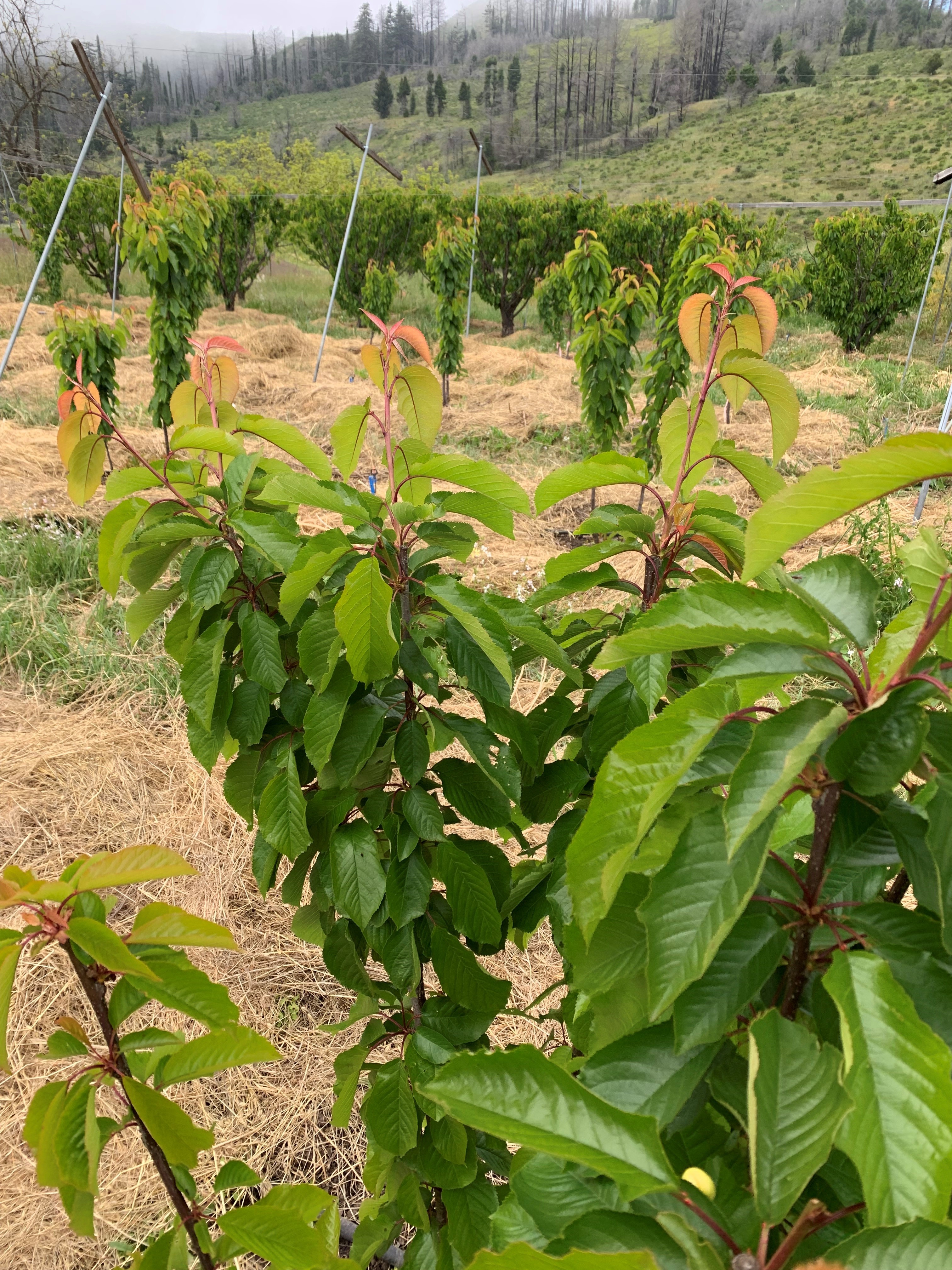
There is a pinkish blush on the first dry farmed tomatoes, but other fruits are riper. The 2 trees are young yet, but the first aprium crop is coming on: it looks like we might get 20 pounds to share among our community orchardists. They are delicious and almost make up for the lack of real apricots, which we can’t seem to produce in our cool coastal clime. The star of the show is cherries, but again too few to get to market: we anticipate 300 pounds of fat, dark red sweet cherries from the 18 trees that the fire spared. The 25 other recovering cherry trees in that block, grafted onto resprouting rootstock, will make their first sizeable harvest next year…starting in 2026, we’ll be back to ‘normal’ with 3,000 pounds plus of annual production if the stars align.

Next up this season…plums and prunes! The apples are silver dollar sized, at least, and growing. And, the avocado fruit have just set – if we can keep them moist enough, we’ll have a crop starting next January.

Sweat Investment

Even the mornings are hot as we greet the dawn ready for chores. First up: fuels reduction! Clipping, raking, and hauling the dry vegetation away from the buildings, water tanks, solar arrays, and pipes. Piles grow in the fields far away from danger…5 months from now and we’ll set them ablaze in the mist and drizzle. Today’s fuel will be tomorrow’s shrub-eradicating fire, each pile moved on top of a plant we want to eradicate.

The roar of mowers, whine of weedeaters, and buzz of saws soon obliterate the extended dawn bird chorus. When our own machinery isn’t running, we can still hear the neighbors working downhill towards us, maintaining the regional shaded fuel break along Warrennella Road. This past week we thank Brion Burrell for his artistic machinery management to reduce acres of French broom and other fire dangers to nothing, making the land around us healthier and more resilient.

Neighbors and Farm partnered in clearing French Broom and fuels away from water tanks
San Vicente Redwoods cleared an ancient meadow of post-fire French broom pulse high above the Farm

Early morning still: trucks trundle and people amble towards the irrigation controls. We reach down to turn valves, starting water flowing. Then we pace the water lines, inspecting for leaks. Earlier, ravens or mice have made holes in the plastic irrigation tubes, and out pours too much water, hissing loudly, spitting into the air, creating mud and disaster. Repair kits, a thorough soaking, and a bit of work later things return to normal and the cycle of wetting has begun on one more patch, once again. We are applying 45,000 gallons of solar pumped irrigation water from our well each week to grow orchard trees and row crops. That water makes tens of thousands of dollars of income and thousands and thousands of pounds of delicious food. And it takes lots of attention, coordination, and work to manage.

Wild Life

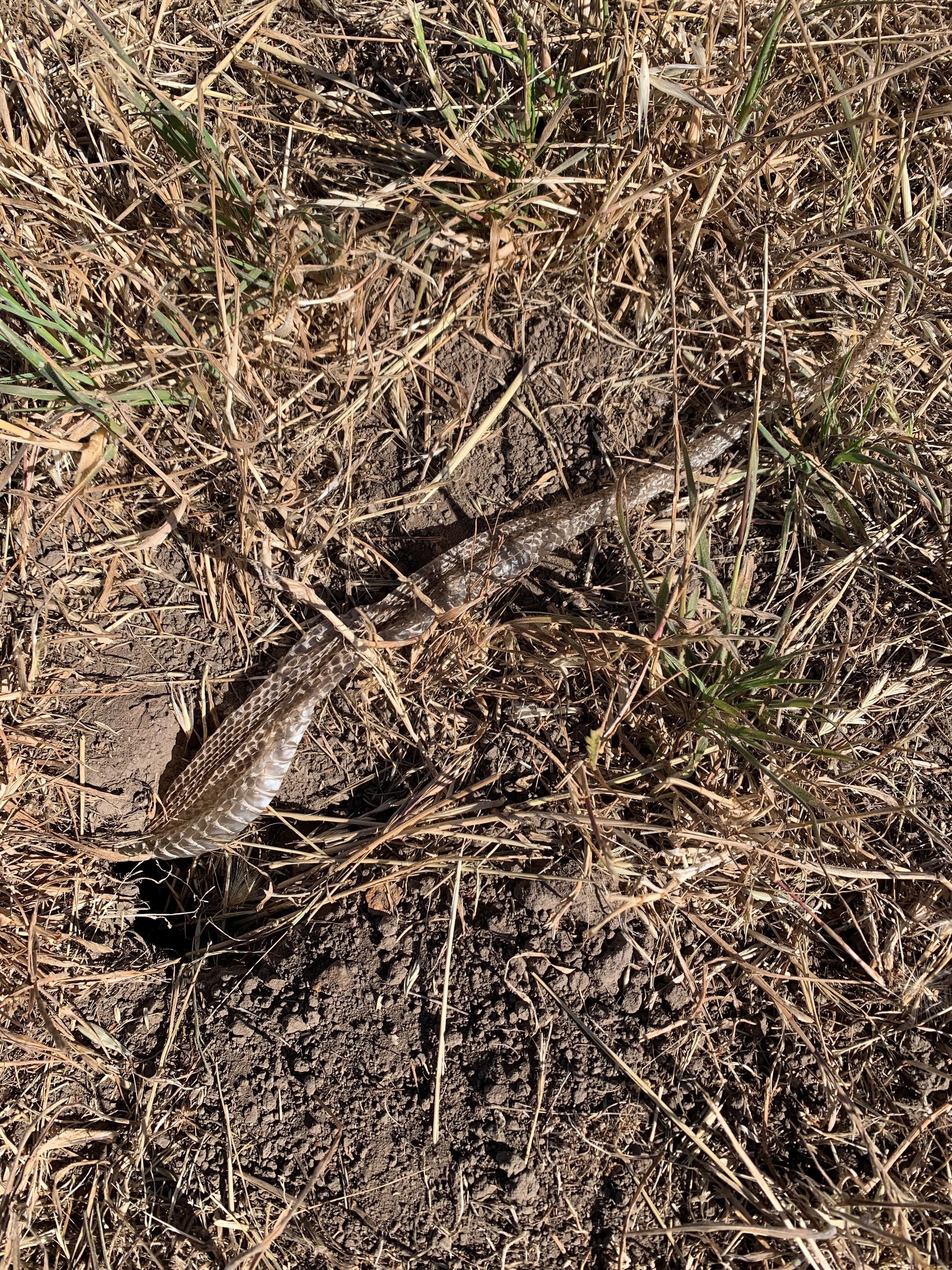
Those dawn treks for irrigation reveal fresh snake tracks, coyote scat, and weasel footprints. Gone are the days when you could easily see snakes, but they are still active around the farm. This past week must have been the right moon phase for reptiles to shed their skin. Fence lizards are still flakey. Shed snake skins have appeared, always trailing into gopher holes.

Gopher snake skin- as typical, entering gopher burrow

The regularly yipping coyotes are feasting on a big crop of juicy blackberries, as seen in their purple, seed-filled scat. Weasels are feasting on mice, and we hope they soon eat the surprising, sudden appearance of ground squirrels.

Very late but they finally appeared: dozens of California quail fluffies. The quail babies peep like easter chicks as they tumble and run along dusty trail and road, proud parents standing guard. The first younglings can fly, but most are still too young. A mother turkey is also shepherding a second round of just 3 much larger, still flightless and fluffy babies. High on the ridge, the purple martin chicks are in the air, noisy moist-sounding deep chirp-whistles give them away. They’ve done well this year. Maw and Caw greeted a third raven…a child from the past?…this morning – sometimes that one sticks around a few weeks, we’ll see.

Noise From Below

With the heat and extreme dry, we hope that no one sets the world on fire with fireworks at the beach tonight. The week leading up to this evening has been sporadic with preparatory explosions. The King Tides have made the beaches narrower, and the signs and Sheriff shoo people away, but still we wait with trepidation. May all we hear is the continued crash of the large ocean waves, lulling us to sleep with all of the windows open on these warm summer nights.

Fog, and Fog Lifting

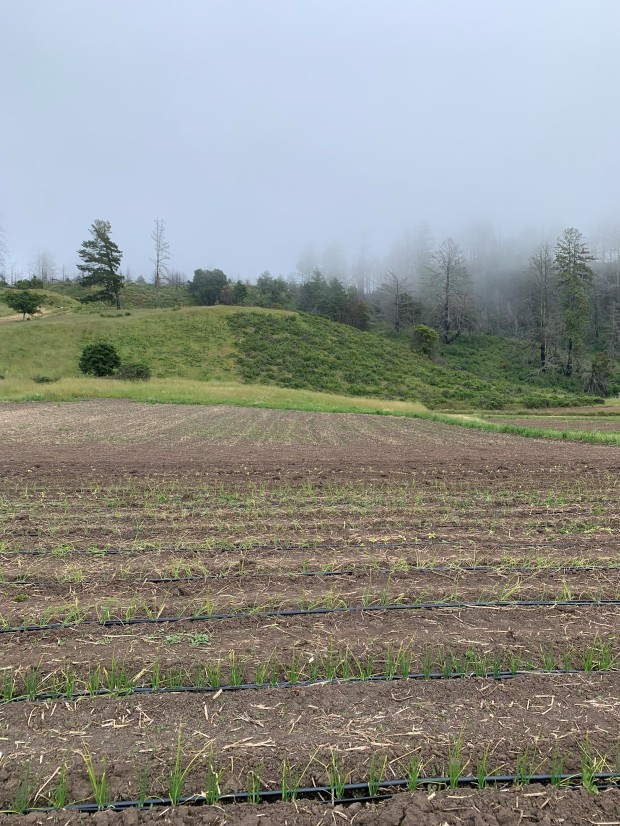
Tall black burned tree trunks hazily emerge into view through the thick fog. Days upon days of fog prevalence make many scenes more mysterious. That eerie scene of black tree poles joins other fog-induced memories this past week: puffs of blowing dense fog hiding and then revealing drippy, dark groves of live oaks; awakening to a wall of silver cloud obscuring everything beyond the window ledge, and one evening’s approach of fog…suddenly pouring over the farm’s western ridge and down the hillsides towards the farm like a wave of terrifying suddenly-released floodwater. Each morning every spider web is illuminated by silver moisture, every leaf and blade adorned by shiny droplets.

Us Moist Critters

The dawn bird chorus is delayed and the songs fewer because all animals are made chilled and sleepy, enveloped in low clouds. The brush rabbits shake the wetness from their pelts between bouts of meandering nibbles. Extended families of quail wander slowly along roads to avoid vegetation soaking their feathers. In the absence of bird song, there is a more peaceful constant patter of dripping. Sweaters, jackets, and long pants are in order for spending time outside. The richly humid air makes breathing feel refreshing and helps accentuate late spring farm scents.

Peak Perfume

The transition between spring and summer is the season of peak perfume. Eight foot tall bolting poison hemlock emits its telltale dusty, bitter odor, which carries far in the fog-moist air. When the clouds lift and the day warms, sweeter, resinous scents are released from the sage, coyote brush, and fir. Fresh-cut-hay smell is omnipresent across the fields and down the roads as mowers constantly challenge the burgeoning grass. Warmer days bring surprising clouds of sweetness, begging for a pause to ponder the origins of scent: madrone, French broom, lilac or lupine could be the source, but maybe there’s something new to discover. I squint to the distance, upwind for patches of flowers, then shift my gaze closer to see if there are bunches of hidden flowers. There it is! –  clusters of tiny poison oak blossoms sparkling with nectar and wafting notes of clove and citrus.

Fog recently drapes the ridges surrounding Molino Creek Farm

Drying

The drippy fog does little to keep the inevitable drydown at bay. Deep soil cracks split and widen. Dust cakes vehicles and brush along the roads. This is the first week that the farm must irrigate everything or the plants will wilt and begin to die. The solar well pump runs continuously and the diesel generator will start shortly to push greater volumes of water to the grapes and storage tanks. The summer pattern of orchard watering commences: zig-zagging across acres of trees, digging 8” deep into the soil to test moisture, adjusting irrigation strategies, turning valves, recording data, monitoring storage tanks, and communicating between many farmers to assure smooth operations. For now, cool days keep this work less hectic, but one eyes the forecast and makes plans for hotter spells.

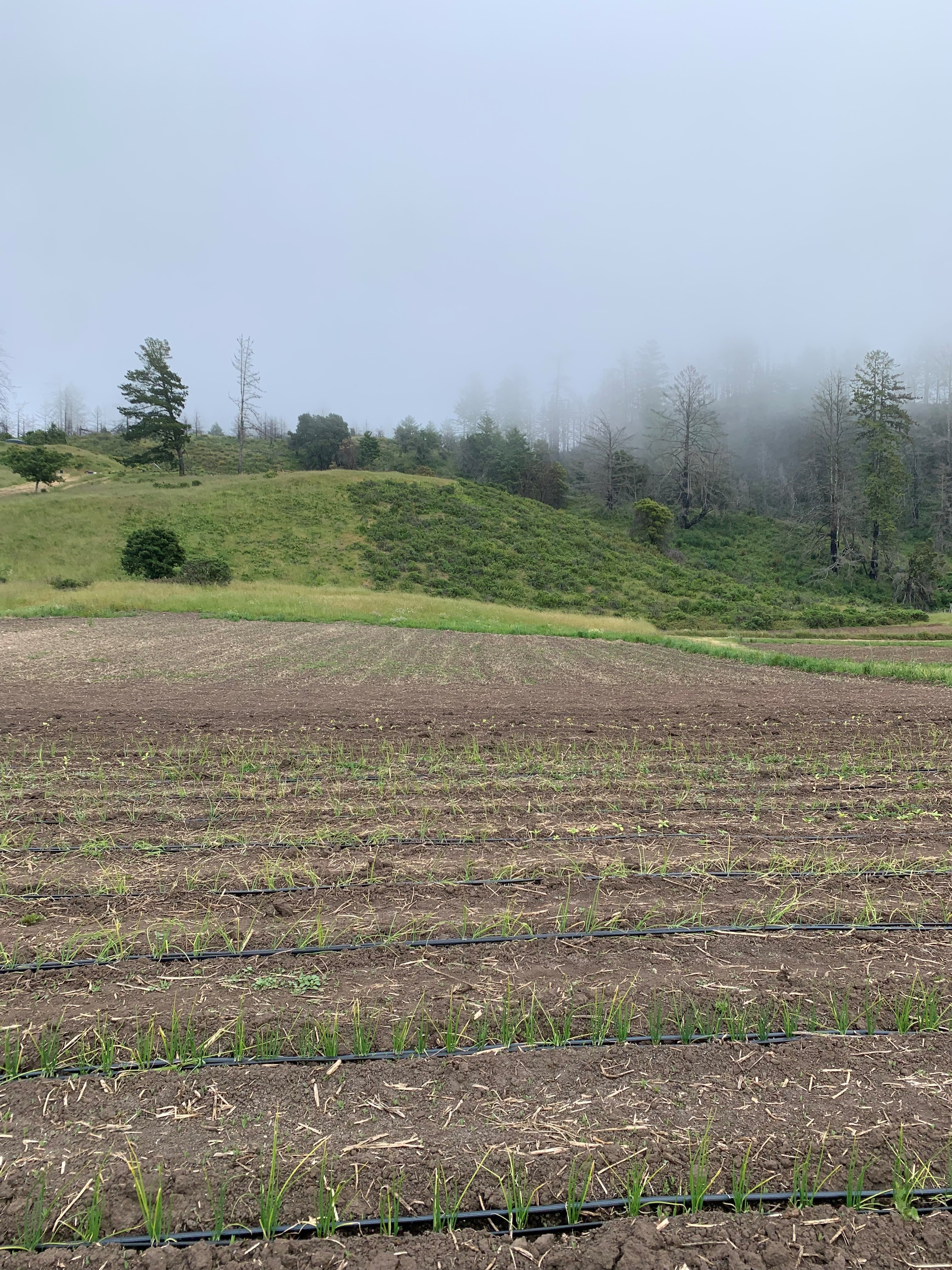
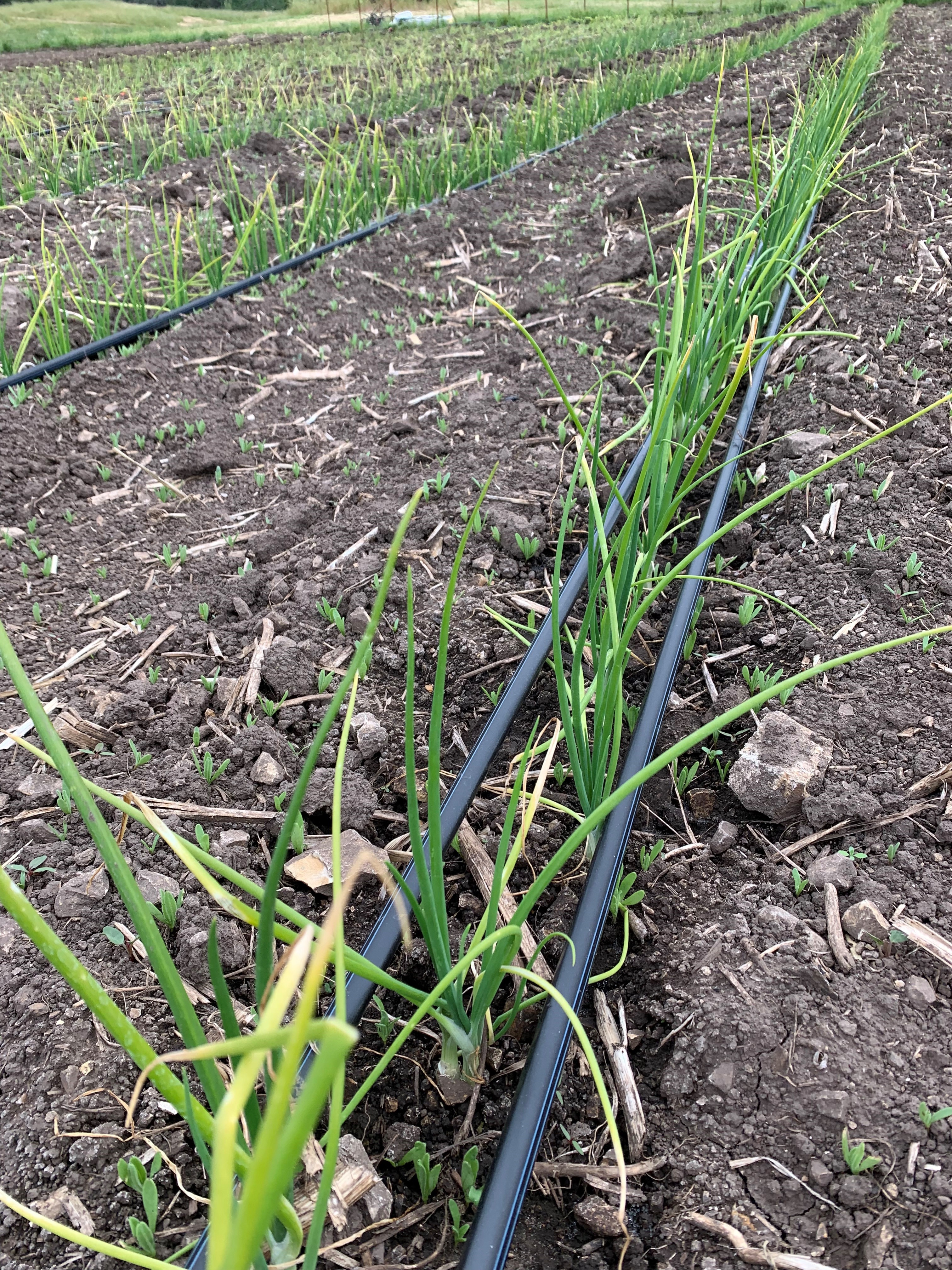
Molino Creek Farm’s amazing onions, freshly planted and regularly irrigated

Snakes, a Month Late

April is normally snake month, but the cool, wet start of this season delayed the emergence of our slithery friends. Sylvie and her brother Isaac reported a surprising night time rubber boa, crossing the road despite the drippy fog. Smooth, fresh snake tracks cross the dusty roads, always wisely perpendicular. An irate hissing baby gopher snake lunged at my leather gloves from a patch of freshly pulled weeds. We are constantly surprised by scaled creatures jetting away from disrupting orchard management: a swift yellow-bellied racer snake, head held high, escaping…giant alligator lizards making for safer ground away from hoeing. Wherever we look there are oodles of lizards and snakes, an homage to organic tilth, the diversity of plants, and the wealth of prey that result from good land management the collective respect for nature found at Molino Creek Farm.

Cherries, lushly growing with irrigation and nestled in fog drip

A Preponderance of Fog

The memory of sunny spring days slipped behind a fog bank. The muffled quietness is emphasized by mysterious pattering drips echoing from the hidden depths of the forest. A single flute-like song from a hermit thrush serenades the slowly darkening evening as it becomes night. The winds have died. All is damp and chill.

Ground Birds

Somehow, the quail predicted this cold spell. Everyone has been asking where the puff ball baby quail are – this is the normal season, and they are late. The fluffy turkey babies are out, though. Passing carefully in our cars, they peep loudly after diving into the ditch, scared that momma will lose them. Mother turkey herds the children a bit, but not too frantically, not like the more fretful quail. The quail are in pairs and in a few small groups, the hens must be full of eggs awaiting the return of warmth. Wet grass is hypothermic to baby birds.

Box Birds

Bluebird parents dip and dive, scooping up caterpillars and bugs. Off they hurry to the nest box where squeaking kids beg noisily for food. Perched at the nest box opening, mother bluebird eyes the gaping mouths of her chicks, picks the lucky one who gets fed, and off she goes to find the next catch. Father bluebird returns with food, same story. They come and go all day, feeding the quickly-growing hungry young ones. In between parental feeding, the babies go quiet. A scrub jay perches on the nest box. Both parents alight nearby. It is a silent standoff for a few minutes until I scare the jay away. Nasty nest predators! Four of the five bluebird boxes have nests this year. Electric blue male bluebirds are quite the color show. We look forward to a menagerie of young in the not-too-distant future.

Lush

The land is lush. Wild oats are 5 feet tall, wild radish bushes 4 feet around, and wild cucumber vines hang heavily on our 7’ fences. A hike through the forest, even on trails has become a swimming breaststroke to part the tall, fast-growing post fire blueblossom bushes. The ground surface is buried under several layers of canopies, hidden holes hold worry for footfall ankle twisting. The native iris are already fading. Nuts hang from hazelnut bush branch tips. The live oaks on the edge of the meadows are dense with new growth and thick with leaves.

Tiny Fuji apples, just forming. Photo by Sylvie Childress, Molino Community Orchard Photojournalist

Orchard Fruiting

Apple flower petals have long since fallen and small fruit have formed. It is time to thin the fruit, to keep the branches from being too heavy, to make for bigger fruit, and to keep the trees from bearing only in alternate years. The first mow is behind us, but the regrowth is thick already wanting the next mow soon. Wide oat leaves and thinner leaved tufts of dark green weedy rye grass poke up from a thick mat of mowed material. A rich moldy smell permeates the air. Nearby, bell beans and vetch that we missed mowing the first round are vibrantly blooming and growing high. Between cover crop and understory weeds, patches of native strawberry are in fruit: the apple orchard’s first harvest! With the late rain, the strawberries are the biggest we’ve ever seen and oh so sweet!

Sylvie Childress, Photographer and Hand Model. Wild strawberries in the Community Orchard understory

Farm Work

Farmers are planting, and there are neat rows of seedlings nestling into freshly tilled fields. Onions and sunflowers as well as rows and rows of tomatoes are pushing roots into the soft brown soil.

Also, the mowers are mowing. As is too often the case, one of our BCS tractors went down and is off to repair just when we needed it most. Bob moved the sickle bar mower to the other BCS and off we went once again. Sheaths of grass are felled in neat rows, drying. The timing…as the thistles begin to flower and before the radish seeds get ripe. Earlier, regular we swiped the hay field with the mower to discourage nesting birds- those paths also add heterogeneity for swallow feeding, coyote loping, and skunk snuffling.

-this also posted at Molino Creek Farm’s webpage.

Drippy Fog and Fall Color

The fog rolled in thickly, the second drippy session of the season. Most fog has been ‘dry’ this summer- an unusual phenomenon not previously broadly recognized as ‘normal’ in our culture. For two mornings, the whole world went gently pitterpat, rooflines and gutters a constant spatter. Then the sun started winking through in silvery streaming rays lighting droplets on leaf tips, sparkling. The fine breezy dust particles stuck together and the wet smell of fall let us breathe deep and clean air once again.

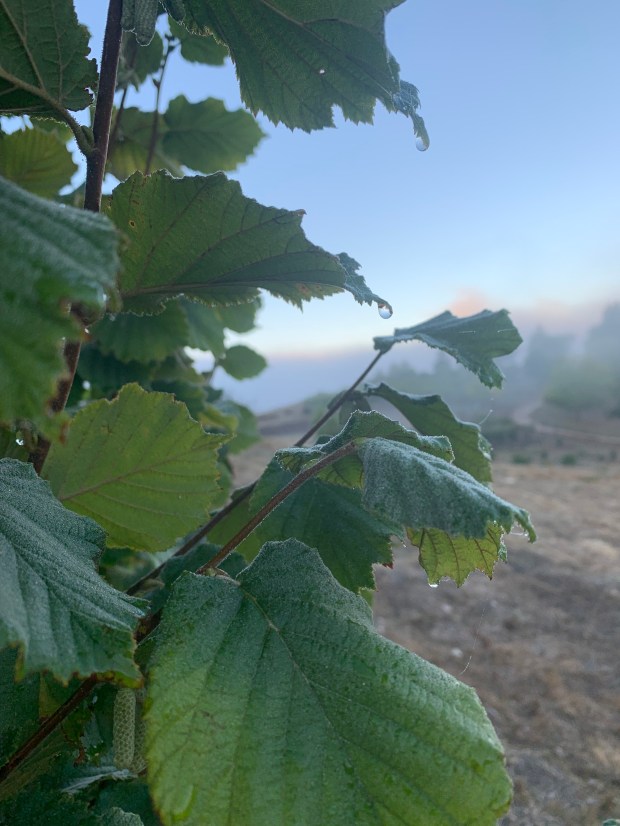
Fog makes leaf tip drips on our hazelnut plants

Bird Friends

We wake each morning to the high shrill peeps of black phoebes, insistent and fierce. Peep, PEEEEEP, peeep! …. flutter, Snap! They nab flying insects expertly out of the air. And then they perch on the roof line, their glistening knowing dark black eyes gaze back at me when I say my hellos. Off they go, flitting arcs from many perches hunting.

The quail have done well this year. The smaller clan coveys have melded into massive tribal gatherings. Seventy plus birds thickly dot grassy hillocks and across fallow farm fields. Three and four birds peck shoulder to shoulder, others only a couple feet away. They must be finding lots of food as these groups don’t move far, satisfied to stay put for an hour or more. When startled, the whir of those many wings is loud and invigorating.

The Brewer’s blackbirds returned en masse, fluttering like fallen leaves from high in the sky. Now their staccato chips, squeaks, and trills brighten the farm soundscape. They strut proudly forward unidirectionally in flocks herding and frightening ground bugs to supplement their diets.

fog streams in above Molino Creek canyon

Ripening Time

In the lush forest of fruit trees, it is apple ripening time. Galas are peak flavor and earnestly moving to harvest bags. Also, Jonagold apples, the tastiest crop, arrived at their best this week – off they went to market, too! Next up…Mutsu and Golden Delicious. After that, Braeburn apples are in line for ripening…and there are quite a few big, beautiful apples on those trees. It is interesting to see the fruits of our labors: bigger apples hanging low on the trees ‘cause that’s where we could most easily reach to do the fruit thinning!

On the ground where Two Dog Farm has been cultivating dry farmed winter squash, the vines are withering and revealing and understory of acres of big yummy squash. The pale yellow of butternut squashes dot the ground on the undulating rich soil of our Roadside Field. The dark green acorn squash are all sidled up against their bushy main stems high up in Vandenberg Field.

Fall Color

Fall color is erupting all around the farm. The big bushy walnut trees are brightening to pure yellow. Poison oak, resprouted after the 2020 fire, is 3’ tall and startling crimson and violet. Wild roses are also turning towards the yellows in the understory of the forest where the fire burned. There is more fall color to come- our apples wait until December or even January to change color!

We hope you are having a spectacular fall enjoying bountiful harvests of healthy organic food raised by small farmers taking great care of their wildlife filled land.

-from my weekly blog at Molino Creek Farm’s webpage

The Quietest Whisper, Goodbye

– this is the last of my regular posts from the Molino Creek Farm blog for 2021, stay tuned for more regular posts February 2022.

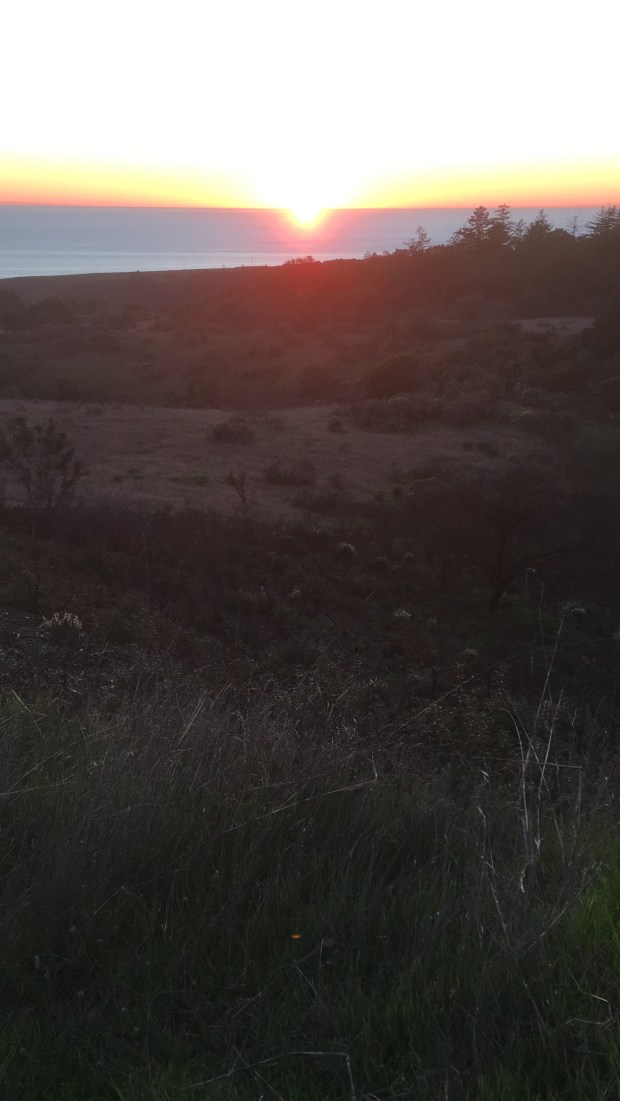
A recent sunset, captured just below Molino Creek Farm along Warrenella Road

For now, I put down my farm tools and stow them oiled and sharp, ready for next Spring. In the orchard, we coil hoses, hang irrigation pipes among the branches high off the ground so they don’t get buried and inadvertently mowed. We cut free and pile remaining tree props and haul and spread the last of the chipped oak branch mulch.

Apple leaves slowly fall, holding on long with fading yellow beauty. The last of fall’s leaves won’t drop until January, the fruit trees revel in the cool moisture after being blown by dry air during the long summer. But the fading light of shortening days push the orchard trees into their necessary and healthy sleep. Even we feel this pull.

Togetherness

The long cool still nights descend rapidly, driving us indoors early to stoke woodstoves and await the roaring warmth. We shed clothes and gaze at firelight, relaxing into the many-hour evenings. It is time to gather sometimes with family, sometimes with friends. Some find these gatherings especially precious from a year spent in solitude and self-reflection. Sparkling eyes greet us, loving words spoken close to our ears during long greeting hugs. Some are no longer with us or will soon be gone. We feel the losses more keenly during the gatherings, close to the warmth of others…spontaneous hushed moments we dare not fill.

Whence the Feasts?

Sighing, we raise from our chairs and head for the kitchen, for this is a season of feasts. The food is from farms. Somewhere in our minds, we hope at least some of our grocery purchases support family farms…maybe that farmer’s market trip helped keep family farming alive. Sometimes it does!

Some say we need to be thinking about new farming models, cooperatives combined with higher wages and increasing food costs, where broader support helps free farming families from the 80-hour weeks that’s required to pay the bills, to raise and support children. For cooperatives to work, we need to find a way to get along, to work together, and we also need for people to be willing to pay more for food. We desperately need more young farmers.

As we eat our food, as we chew, imagine the people it took, the many jobs and steps it took to bring that food to your mouth. Picture the water…the rich soil…the sun that helped produce your food and the tender hearts of (aging) farmers who smile proudly as they reflect on each stage of growing their crops. The newly tilled field, and the sowing. The seedlings planted…eventually the first flowers, then the tiny new fruit. There’s also the watering, the pest control, the nurturing propping and pruning, and, eventually, the harvest. Right livelihood. Good food. Favorite recipes. Big feasts.

In Between, Walks

Those who are able, take walks between meals, enjoying the squinty-bright sun and catching the remaining fall color. Poison oak leaves still dot the hillsides with red, and a few maple leaves remain yellow on the ground. Across much of the wildland, there are no flowers- except in the chaparral, where the manzanitas have just the past few days burst with clusters of bloom. Hummingbirds move upslope to the manzanita patches, or feed on landscape plants; they are also spending lots of time eating bugs. Step carefully on your forest walks…there are slow moving newts moving around!

Wild Brethren

Like us, nonhuman animals are also resting between feasts. This is the break they get between periods of raising the young. I heard the peeping of a young begging towhee, the only young bird sound for the last month. The wild farm birds are the most frightened I’ve ever seen them because we have two Norther Harriers patrolling every hour of each day. When that pair are farther away, out come hundreds of sparrows, juncos, and goldfinches furtively feeding on whatever they can peck. Then, alarm calls and swooshes, they dive into the bushes to avoid the bird-killing Harriers, one right after the other. Silence. Long silence, watchful eyes, and then tentative peeps and the brave ones creep from cover to feed once again, the more cautious ones eventually following.

Nonhumans Alike

Like us, these critters are gathering and holding together with friends and family, loving each other. All day, they watch out for one another…peeping, chipping and singing their language of safety, satisfaction or danger. They go to roost early, an hour before sunset, settling into the thick cover of oak or shrub canopies for these long winter nights. There, with the quietist whispers they tell their stories, sharing their experiences after they sidle up snuggly and cozy to keep each other warm. Like us, they remember the voices of those lost, the uniqueness of the personalities snuffed by fate, taken by the Harrier or by sickness, or by old age.

Last night, two sister quails fussed about not having quite enough space on the most comfortable branch near the top of the thick canopy of an incense cedar. They chucked and chucked, whirring their wings against one another and into the surround branches, trying to make more room before eventually scrunching in and settling down. Tonight, there is more space on that, the best of the high branches, and a bobcat is curled in deep sleep with a full belly…a pile of feathers will take a while to melt into the grass and decay. The remaining sister misses her warmth and her stories but now turns to another of her kin for such comfort…listening closely to the familiar tone and pace of their murmurs, sharing meandering feelings at the end of their day, until the last low chatter brings sleep to the covey and the silence of the night settles under the dark and twinkling sky.