birds

Blue Skies, Bursting Blossoms

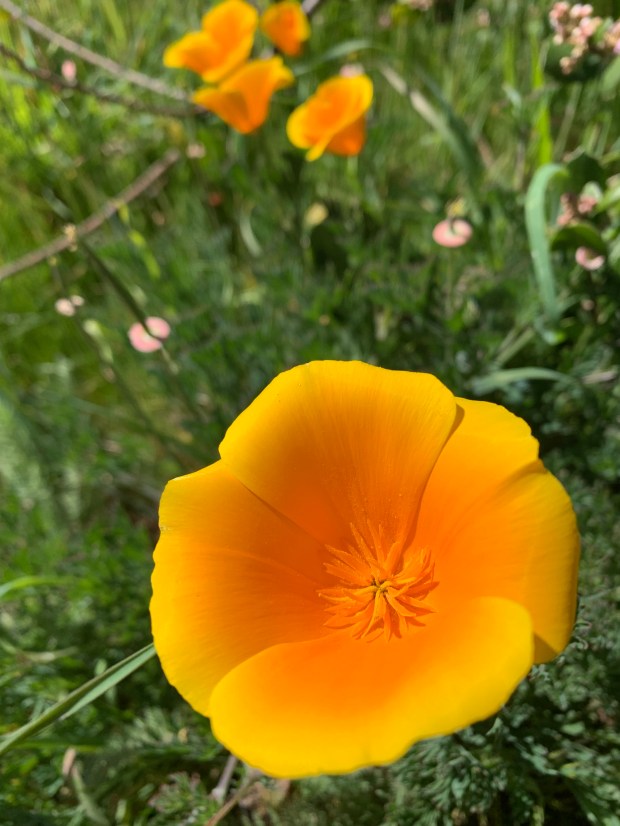
Right on time, the first tulip-sized California poppies have opened. Unusually, and a month early, the sky lupines have started blossoming, as well. The habitat areas, field margins, the hedgerow, and the orchard are starting to fill with Spring blooms. We hope for the return of rain before Spring’s beginning date arrives.

Lupinus nanus Sky Lupine Too early, but still nice

For a few nights, the air has carried a winter scent, like snow; frost decorates leaves in the grassy areas and wild radish leaves wilt from cold damage. We check the margins of avocado and citrus leaves to see if they are damaged. But, its only been evaporative frost- we still haven’t hit critical freezing temperatures! The cool temperatures are helping some fruit trees to sleep well, but others are waking up. The Santa Rosa plum popped into bloom – it only needs 250 accumulated hours of temperatures below 45 degrees Fahrenheit. Other stone fruit trees are budding and/or blooming in the orchard.

Juicy Santa Rosa Plums start with brilliant flowers

The semi-cacophony of blackbirds continues, and other birdy things are happening, too. The blackbirds mostly gather in one tree but as you look around, the party has outliers as bicolor blackbirds court one another away from the crowd. I watched for a while as one outlier male bicolor blackbird did his thing: the trilling scree song while bowing slightly, wings shrugged out, flashing his bright red wing patches. A few feet away, a female watched in rapture…it was just this pair alone at the top of an isolated tree, though they kept glancing towards their flock in the tree nearby. Buzzing by, not entirely oblivious to the blackbird antics…hummingbirds, up to their own shenanigans.

Somewhere, I heard that the blossoming of the flowering currants triggers estrous in hummingbirds. Allen’s hummingbirds returned with those blooms from somewhere Way South. I’m not sure how the year-round resident Anna’s hummingbirds like them. Bright flashing throats and aerial sparring is constant around our yards and up and down the hedgerow. Flowering currant isn’t common in the wild around here, though you can find other, less showy species in that genus in the forests surrounding the farm- the hummingbirds like those, too. With the early nesting of hummingbirds under way, it is time to closely inspect any brush we are clearing before chopping it down. There never seems to be enough time to cut out brush for fire safety, especially when being careful with nesting birds.

Ribes sanguineum glutinosum, pink flowering currant – hummingbird food!

The farm fields are sleeping…the cover crops have slowed down with so little rain. The soil surface is dry, road traffic makes dust again. Limes are ripe, tangerines and oranges have color but no sugar, yet. Meyer lemons are hanging heavy and ready to go into lemonade or pie.

The Molino Creek Canyon has changed so much since the fire of August 2020. Big trees and many burn damaged redwood branches have crashed down across the hillside around our farm’s beautiful wintertime waterfall, which is flowing and noisy still. It is difficult to hike there, but we’ll open up the paths again soon with chainsaws and muscle. I’ve been exploring Molino creek, which was heavily scoured by the big rains in December. Now, it is so much easier to walk by the creek- no vegetation and a rocky sidewalk of a path alongside the clear running stream. There are potential dunking holes for the summer and wide rocky beaches. The large expanse of sandstone bedrock has accumulated a covering of redwood seeds. Last year, the redwoods made an Epic Cone Crop, with cones much larger than anyone had seen before. The branches were heavy with cones. For the last month, those seeds have released from the opening cones: dropping and scattering onto the ground. Now there is a red-brown scattering of the delicate seeds. In moist cracks, the seeds are germinating: a new crop of redwoods, just as their mother intended- a rare sight as redwood seedlings only ever get going on bare ground following a fire.

-I published this at my regular blog at Molino Creek Farm’s webpage.

Provocative Eucalyptus

This is reprinted from my weekly post as part of Bruce Bratton’s excellent weekly brattononline.com This post was modified from the original in response to critique by Gillian Greensite who has followed this issue for many years. My content was largely informed by a science conference on the subject, with a record of many materials here.

Many Californians have opinions about Eucalyptus. Either you are for them or against them. Its a subject like politics or religion that you hesitate to bring up at the dinner table. As with Covid-19 vaccination, you can’t predict who’ll be on what side (or why) – people of any political persuasion can surprise you with their beliefs. I’m betting that you know what I’m talking about…I didn’t even need to mention which of the hundreds of species of Eucalyptus I am talking about.

Eucalyptus Bad

The most common concern I hear about blue gum (Eucalyptus globulus) in California is how fire-dangerous it is. Locally, some recall the 2008 Trabing Fire just north of Watsonville, ignited on a hot day by a poorly running vehicle backfiring, and spitting out fire balls along Highway 1. Grass caught fire and quickly spread into nearby invasive pines, acacia and Eucalyptus (those have since regrown denser than before). That fire surprised fire-fighting professionals from how high embers were flying…hitting their fire monitoring planes at altitudes previously thought safe. They cited the architecture of Eucalyptus forests…the tall, close very vertical trunks create chimney-like conditions, hurling fiery brands much further than expected. Leaves with volatile oils and large amounts of bark and branches accumulated in the understory are other reasons for fire concern.

Eucalyptus Good

The most common defense of Eucalyptus I have encountered is its beauty. Our cityscapes have surprisingly few trees, but there are almost always huge Eucalyptus nearby. Many are fond of their massive trunks, shaggy bark, and towering, spreading canopies, shimmering with blue green leaves. I have seen many painters capturing the alluring patterns of rows of old Eucalyptus trees in many seasons, in many shades of light. A few people will dedicate their spare time and energy to protect big old Eucalyptus city trees from the too-frequent human desire to cut down trees.

What Do the Birds Say?

If birds are any indicator, Eucalyptus is good in some places and bad in other places. Birds like city trees including Eucalyptus. Eucalyptus adjacent to larger bodies of water are attractive to birds. You may have seen masses of herons and egrets using Eucalyptus as ‘rookeries’ where they raise their young. Trees near the Santa Cruz Yacht Harbor are roosting areas for herons. The Eucalyptus grove south and inland of the Elkhorn Slough Bridge in Moss Landing has a huge rookery, with so many birds that their guano is killing the trees. Peregrine falcons were using the talk Eucalyptus near the river mouth for a while. Raptors like the tallest trees for nests and perches.

Gum Gone Wild

Eucalyptus in our area is considered to have a moderate threat of invasiveness, with regionally specific higher rate of spread in foggy areas and in areas with more water availability, especially along the Central Coast. As with so many Eucalyptus issues, this was once a source of controversy before Eric Van Dyke at the Elkhorn Slough Reserve demonstrated an 8 foot per year rate of spread of groves in northern Monterey County. Since then, many other examples of the species’ ability to spread in our region have been documented. Where Eucalyptus spreads into streamside habitats, there is a particularly bad impact for bird conservation.

River Gum Bad

Riverside or streamside (aka ‘riparian’) habitats are by far the most crucial targets for bird conservation in California. Most of these habitats have been highly altered and are no longer good habitat for wildlife. Many migratory birds visiting from the tropics nest in those habitats. The loss of riparian bird habitat compounds with the loss of tropical forests, and so these birds are particularly imperiled. Riparian ecosystems host many cavity nesting birds that favor holes in the soft wood of riparian trees like willows, cottonwoods, and alders. Eucalyptus trees quickly invade and transform diverse riparian forest, and cavities become much less common. Bird conservationists say that controlling Eucalyptus in riparian areas should be a ‘no brainer.’

Euc Pests

Some types of birds have recently been newly attracted to Eucalyptus because they like at least one of its natural pests that found its way to California. The blue gum psyllid is apparently tasty for birds such as warblers. I’m less sure if birds are eating other ‘new’ Eucalyptus pests: apparently a number of blue gum eating pests recently found their way to California. It used to be that Eucalyptus leaves were perfectly shaped, no damage- nothing ate them! Now, those leaves look like someone took a paper punch to them. Eucalyptus tortoise beetle are eating blue gum leaves – does anyone know if birds like to eat it or other of the new Euc pests?

The Arrival of Eucalyptus

Eucalyptus has a long history in California. It was widely planted in the 1870’s to address the ‘hardwood famine.’ Hardwood was becoming scarce because of its use as fuel for steam engines and heat, so there was a Eucalyptus planting boom. Eucalyptus was soon advertised as the solution to many problems: a fast-growing hardwood for fuel, people thought its wood could be used for railroad ties and other lumber, people said the tree would dry up wetlands and reduce mosquitoes, and its fast growth attracted people to plant it for windbreaks. People were buying large numbers of seedlings. Some advertised, promising investors good returns from productive Eucalyptus wood lots.

Hardwood, though, eventually lost favor to petroleum in California. But, if you travel to Central or South America, where hardwood is still important for fuel, you will notice many areas managed for Eucalyptus firewood.

Heavy and Twisty

It turned out that Eucalyptus wood twists and buckles when drying, so it was eventually recognized as useless for lumber. Well, almost. 15 years ago, someone claimed they had a process for drying Eucalyptus “correctly” so that it could be used lumber, including for picnic tables. They donated one to the organization I worked for…it weighed 250 pounds and took 4 people to move! After a couple of years it was impossible to use. It was so warped that when people sat on it, it rocked wildly about, and created a balancing challenge with people bobbing around spilling their drinks at vastly different elevations.

Perhaps this would be different if the wood were kept dry, indoors. Woodlots for Eucalyptus hardwood are still around, but you are more likely to see Eucalyptus spreading from old, planted windbreaks. Look carefully for the oldest biggest trees in a row with many generations of younger trees spreading from there. One thing remains true from the old hype: Eucalyptus does well at drying wetlands!

Drink it Up

With its huge canopy thick with leaves, Eucalyptus is known globally for its thirsty nature. Deforestation in its native home in Australia led to salinization of the soil from the evaporating heightened water table. Here in California, people note the loss of springs where Eucalyptus grows. Although closer scrutiny is needed, using transpiration rates from Eucalyptus elsewhere in similar climates, it is likely that a grove of Eucalyptus drinks most of the rainfall falling on it along our coast. This is much more water than native trees use. One day, one mitigation for new development that demands more water might be investment in Eucalyptus control.

Thinning and Containing

Given the fire danger and negative ecological and water impacts of most Eucalyptus groves, it is sad that they are still proliferating. To be sure, Eucalyptus control is an expensive proposition. Having felled several large trees, I can attest to the work it takes to clean up a fallen tree properly. The wood makes great firewood and is easy to split if you split it soon after felling. But there is an enormous amount of slash to deal with…chipping or burn piles- either way a lot of work. The stand-out organization for Eucalyptus control locally is State Parks. They are ‘thinning and containing’ some groves that people like to look at while obliterating others in ecologically sensitive areas. They realize that Eucalyptus control will cost more each year they wait, so they do what they can with the (too few) resources that our elected officials budget for them.

Fer it or Agin it?

After reading this, maybe you will have a more informed opinion about this provocative tree. It is my hope that you be ‘for’ the ones that grow near bodies of water or are city trees and ‘against’ the ones in riparian areas or spreading through our other precious native ecosystems.

Falling Leaves with Swards A’Greening

from my blog for Molino Creek Farm

The meadows are turning GREEN: electric, eye straining, shiny, bright grassy green. It smells fresh and alive again. The sky seems a deeper sparkling blue and the stars shinier: it’s like the rain cleaned everything.

I’ve heard it said (with derision?) ‘back east’ – “California’s where Fall means the leaves drop and the grass turns green.” (Ironically, this is sometimes said by the same people that claim we don’t have seasons at all)

In the forest, yellowish fall colors, the scrublands dotted with brilliant red. Maples and hazelnuts are at their brightest fall pale yellow. Nestled into the mostly evergreen bushes of coastal scrub, poison oak glows brilliant crimson, leaves sometimes swirled with subtle purple or blushed with melon orange.

The honeybees have been getting hungrier as the last of the coyote bush flowers fade. A lone Australian import in my landscape, a white bell-shaped flowering Correa shrub, is now nearly being carried off by honeybees. I have never seen a single plant of any kind so buzzy.

Native wild strawberry, naturally established in our orchard understory…a rose by any other name (in a rose family orchard!)

Bonfire Time

It is bonfire time. Directly after the rain soaked the land, regulators lifted the ‘burn ban.’ With increasingly unpredictable rainfall patterns, we know better than to wait. Even after running a chipper on many piles earlier in the summer, we have around 10 tons of brush remaining to burn.

Beautiful, guilty pleasures, bonfires. With the heating of the planet, we are torn about this torching of biomass. In the few years leading up to this wildfire, I told everyone I knew that there was no feasible way of composting wood around here. Any branch over an inch diameter, I said, is just waiting to fuel the next wildfire. What does one do with the trimmings, fallen branches and trees, in that case? In the ten-year interval we expect between wildfires, we would quickly fill all of our open space with brush piles…and then they would burn anyways (as they did in the last fire). If we place branches in the forest, the forest trees will burn hotter and be more likely to die. And so, we burn piles when it is safe to do so. That means burning every time a storm is blowing in. Two piles down….20 more to go…At least we can enjoy the warmth and cheer: friends join in…bonfires by request! (selfishly, this helps us tend the fires)

Non Human Farm Mammals

The mammals love the rain-fueled regreening, too. Last night, I heard the first caterwauling of a cougar in a long time. It was yelling from near the intersection of Molino Creek Farm Road and Warrenella Road. Her sounds freak many people out as they are somewhat similar to a screaming human. The lion in the area making those noises would explain the reason our neighborhood dog, Fiona has had a few long barking sprees recently! What a terrifying sound…what a brave guard dog! Ruff! Ruff! The fierce barking echoes off the surrounding ridge lines.

Some may recall my mention of the relationship between skunks and ground wasps, aka yellow jackets, aka vespid wasps. I have seen it so many years…the first rain and the skunks dig up the wasp nests. What an amazing and guaranteed service. After this last rain, where there were once dangerous zones of sure firey stings, now there are holes, soil thrown up with scattered torn up papery honeycombs, a few upset wasps still trying to make sense of their broken homes. Somewhere there’s a skunk with a very full belly (and lots of skin welts).

Scary (and curious) Birds

One recent dusk, I was dreamily soaking in the beauty of the fading colors and the wet scents of the newly moistened landscape when the oddest sound startled me. The noise was sudden and like the horror movie sound of a hundred attack raptors – coming right at me! I almost ducked, but then realized that it was a hundred mourning doves flying as low and fast as they could, over and all around me. Their wings make a sharp swooping air-cutting noise as they come towards you with only the slightest dove wing whistle after they pass. This pattern has been repeating every evening at dusk- mourning doves jetting at tree (shrub) level downhill across the whole farm to roost somewhere at lower elevation. The conservation of elevational clines, from high to low elevation, on the western slope of Ben Lomond Mountain may be important for undocumented and mysterious reasons…We saw robins doing the same thing (though less speedily) at winter solstice a couple years ago.

Our resident ravens started an unusual bout of extreme danger warning calls, and I left my desk to go outside to ask ‘what up?!’ Whoosh- right by my door-exiting body: a norther harrier. This big acrobatic predator hunted all day long Monday, all over the farm. Late afternoon and the ravens were hoarse from alarm calls and making sad and exhausted crows; I thought maybe they lost a friend, or maybe were crying in despair that this dangerous foe would set up shop more regularly around the farm. They were probably hungry for the day of hiding.

Then, right after the raven dirge…a screaming peregrine falcon lit up the soundscape! What a drag to be on the receiving side of bird-on-bird predators! Eternal vigilance…

A more genteel bird observed…late afternoon and I hear a persistent raspy squeaky bewick’s wren call. It is most persistent, too persistent. And then I saw it, on top of a columnar cactus under my house eaves- looking up at the 3-year-old wasp nest that it had used the last two winters as a winter roost, with a mate. That wren was squeaking and flicking its wings, twitching its tail upwards, and making quite a show, over and over glancing up at the wasp nest…for 15 minutes. What was on its mind??

Harvest Season

Giant Mutsu Apples, Just Getting Ripe

Our Two Dog and Molino Creek Farm crews are still at it: lots to harvest, still! Tomatoes are still holding out, a little. Winter squash still colors the ground. Peppers hang thickly. The flowers are fading…

In the orchard, the apples are mid harvest: this is late! The Gala apples are a distant memory, and we are halfway into the Fuji harvest. We are also picking Mutsu, Braeburn, Jonagold, and Golden Delicious. Those personally passing through the orchard can eat many other varieties…Arkansas Black, Esopus Spitzenberg, and many more.

We are going to have to be quite measured and tactical to sow the cover crop seed in the apple orchard- leaving harvesting rows to last but getting seed in wherever we can- and soon!

Besides the colorful and varied crop of rain-drenched, juicy, delicious apples…the orchard is giving us the longest most colorful fall. A long while ago already the prunes started changing flaming red and orange colors, now the aprium and other stone fruits are rapidly progressing into similarly spectacular colors. Some apple branches are giving it up to their signature yellow leaves. If the past is any indication, this slow fall will continue way into January until we have bare trees. The Wassail seems to happen right as they enter their leafless dormancy.

Fall flaming stonefruit, eye candy in the orchard

RAIN

-this from my weekly post for Molino Creek Farm

Tuesday, most of the day, it was sunny but noticeably cooler. There was a breeze and then it started getting colder after noon. It was 1pm and I glanced towards the ocean and was surprised to see thick fog down there. Another look at 3:30 pm- clear at the beach but a deck of clouds suddenly obscured the whole sky. It smelled like rain, but the rain didn’t start for hours. Sometime in the early dark hours of Wednesday morning, I awoke thinking a coyote was lapping water in the birdbath, but it was the pitter patter of rain dripping from my roof into the rainwater catch buckets. It’s been raining on and off all day, raindrops vying to be the teeniest of them all: a small raindrop contest! Mist was so thick it stuck to everything on all sides, wafting in from all directions. Then some bigger drops pelt down for a bit, then misty drippiness returns, again. Everything sparkles with droplets under a silver-gray sky.

This “first significant” rain started a month earlier than the past two years, when the first real rain was at Thanksgiving…following uncomfortable lengthy hot spells. What a welcome difference! Tomorrow, we’ll have petrichor, the smell of the freshly wetted soil, which takes a bit to emerge.

Thus far, Molino Creek Farm might have had a little over a half inch of rain, judging from the rain buckets and the amount of soil wetting. Our soil is ancient- more than 300,000 years old. It is hydrophobic once dry, so wetting it takes some time…droplets scoot down soil pores or sit on the soil surface or reluctantly soak in. Once the soil starts accepting water, it takes 1” of rain to saturate 1 foot of soil. If we get the expected 4” of rain between now and Sunday, the soil will be gushy four feet down!

Ten Pound Mud Boots

As one neighbor remarked, farmers must now reluctantly stop working, though there is much to do. If we steal off to try to harvest something…and there is much to harvest…we’ll end up with “ten pound mud boots.” Farm field mud is so sticky that each step adds more globs onto your shoes, making huge hunks of mess: you are quickly 4 inches taller walking on mud platforms that stick out 3” in every direction. Lifting your feet makes your pant legs muddy, very muddy.

Boots that weigh ten pounds are good if you want to exercise without moving far, but practically speaking, they are an absolute and unarguable hinderance to vegetable harvesting. We must wait for things to dry, and that’s going to be a while. “Luckily” the show goes on…we rushed and harvested enough prior to the rain to go to market, so off to market we go. Boxes and boxes of late season delicious tomatoes, glowing piles of beautiful winter squash, piles of shiny red ripe peppers will soon grace our sales tables.

Two Dog Farm’s Beautiful and Even More Tasty Red Kuri Squah

The rain has put a stopwatch to the end of the tomato season. The wetness means melt down. Already, a wave of russet mites seriously damaged the Molino Creek Farm plants. Patches of plants started turning a characteristic russetty-brown that you can see half a mile away…the patches spread quickly in all directions, vibrant deep green healthy plants folding over to this vicious pest. And now, the rain. Thousands of tomatoes remain on the plants…

Molino Creek Farm’s Dry Farmed Tomatoes…nearly end of the season

Ravens Back to Normal…and other birds

With the advent of the rainy season, Maw and Caw are back to their normal selves. Everyday inspections of the farm reveal just these two Farm Ravens without their rowdy children or their rowdy children’s proud new mates. Once this past week there were three other ravens, Maw and Caw talking loudly to them, spinning up to meet them high above the farm. Do our two friends feel they must chase away their kids to protect their territory, now? Are the playful windy days of spring the only days they feel comfortable to reunion with their more extended families? Oh, to know the dynamics of Raven Society. I love these two, they are such good friends, and I’m so happy to see them each and every time (especially when they are hopping up and down with their characteristic wing flicks).

We have a kestrel back on the farm and a (single!) sapsucker returned. The kestrel seems to be scooping up Jerusalem crickets these days, sometimes with a few accidental grass stalks. Its plumage is particularly vibrant and so seems very healthy. Why do we only ever get one individual kestrel…and only once did another show for just one week…?? Speaking of pairs, there is, once again, only one sapsucker. So, this second widow(er?) will linger how many winters in this territory before we get another year or so with none and then a pair shows again- that seems to be our story. This got me to thinking that sapsuckers might not have that large of populations…how well are they doing?

At dusk…gliding, prowling, and perching…great horned owls: easy to see around the farm right now.

No Till Orchard Crops

Back to the mud boots…are lack thereof. As we do not till our orchards, we can walk in those, still, to harvest and to harvest some more. We are 1,000 pounds into our expected 4,000 pound harvest. Almost all we have been harvesting has been Gala apples- the old trees our forebearers planted in 1998. They were laden with the most beautiful glowing red fruit, now all boxed up or as fermenting juice for next year’s cider.

You, yes YOU can get these incredibly sweet, crunchy, and beautiful Gala apples at the Food Bin, right on the main drag…Mission Street (and Laurel) in Santa Cruz. Support us Community Orchardists and go buy a bag of these gems. An apple a day….does what? (and have you done it?)

Next up…Fuji apples. In fact, we are sending Fuji, Mutsu, Gala, and Golden Delicious apples with Judy to the Palo Alto market this Saturday. So, if you are over that way…more diversity, more deliciousness. Plus, this is the run up to the last tomatoes of the season- we might not be at markets after another 3 weeks (or sooner for the mud boots).

For internal use only, us Community Orchardists are sharing the prized quince fruits. The legendary addition to apple sauce…the quince jam…the quince juice…the smell and beauty of this novel and ancient fruit. The test this year: do we need to plant more, or is 4 bush/trees enough for our needs? Already, people are suggesting we plant more, but they sit at the markets, unmoving.

Quince! Beautiful.

The Monument-Worthy Birds of Cotoni-Coast Dairies: An Analysis

Introduction and Background

Obama’s Proclamation giving National Monument status to Cotoni Coast Dairies included protection for an interesting list of birds: a challenge or a nose-thumbing to preservationists? We don’t know, but in this essay I present both perspectives. First, a reminder that experts presented the President with a science-based white paper suggesting a list of sensitive natural resources worthy of protection by his Proclamation; most local conservation organizations wrote letters supporting this proposal. The white paper included 7 species of birds that are protected by the California Department of Fish and Wildlife, but not protected under the Federal Endangered Species Act (ESA)…and so, without mention in the Monument Proclamation, might not be protected on BLM lands:

  • American peregrine falcon –  Falco peregrinus anatum– CA fully protected
  • Bryant’s savannah sparrow – Passerculus sandwichensis alaudinus – CA Species of Special Concern
  • Ferruginous hawk – Buteo regalis – California Watch List (wintering)
  • Grasshopper sparrow – Ammodramus savannarum – CA Species of Special Concern (nesting)
  • Northern harrier – Circus cyaneus – CA Species of Special Concern (nesting)
  • Olive-sided flycatcher-Contopus cooperi – CA Species of Special Concern (nesting)
  • Short-eared owl –Asio flammeus – CA Species of Special Concern (nesting)
  • Tricolored blackbird – Agelaius tricolor – CA Threatened
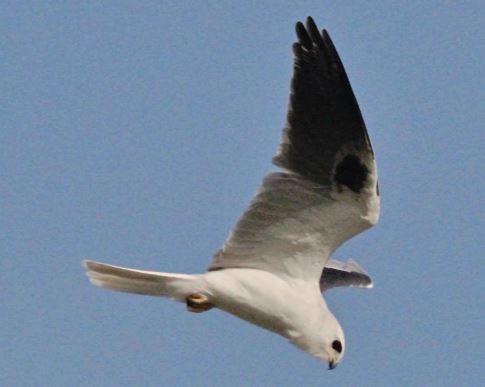
  •  White-tailed kite – Elanus leucurus – CA Fully Protected (nesting)

The white paper also included recommendation for recognition of species that are federally protected as long as they are on California BLM’s sensitive animal list:

  • Burrowing owl – Athene cunicularia – BLM CA sensitive animal; CA Species of Special Concern
  • Golden eagle – Aquila chrysaetos – BLM CA sensitive animal; CA fully protected

And, experts mentioned two other notable bird species that frequent the property:

  • Red-tailed hawk – Buteo jamaicensis – IUCN Status: Least Concern
  • Short-eared owl – Asio flammeus – IUCN Status: Least Concern

At first glance… the Proclamation was a moderate success for bird conservation- experts proposed 11 bird species for the Proclamation, and the President’s Proclamation included 9 bird species. But, the Proclamation included just two of the species experts proposed: the white tailed kite and peregrine falcon. Besides the kite and falcon, the other species listed by the President are common and widespread enough to not warrant any conservation concern. Here are the other 7 birds listed in the President’s proclamation, along with their listing status:

  • American kestrel – Falco sparverius – IUCN Status: Least Concern
  • Black swift – Cypseloides niger – IUCN Status: Least Concern
  • Cooper’s hawk – Accipiter cooperii- IUCN Status: Least Concern
  • Downy woodpecker – Picoides pubescens – IUCN Status: Least Concern
  • Orange-crowned warbler – Oreothlypis celata – IUCN Status: Least Concern
  • Tree swallow – Tachycineta bicolor – IUCN Status: Least Concern
  • Wilson’s warbler – Cardellina pusilla – IUCN Status: Least Concern

Optimism: A Presidential Challenge?

An optimist might consider the list of birds in the President’s Proclamation could be seen as a challenge to biologists, preservationists, and BLM. The President might have been truly insightful, providing protection for species common enough across the property for scientifically sound analysis of the impacts of varying levels of future visitor use. Only when there are enough nesting attempts of a bird species can we compare nest success in areas with and without visitors, or between areas of varying visitor use types/intensities.

With all of the biota listed in the Proclamation, BLM is required to provide protections in their management plans, setting scientifically-based preservation targets, and monitoring the status of these resources over time. Establishing preservation targets for species will involve developing various hypotheses, such as:

  • What is a minimum viable population size?
  • How many individuals are necessary to maintain their ecological functions?
  • How many individuals are necessary in various parts of the property to ensure that the public has an opportunity to view them?

It is likely that at least some of these birds are common enough across the property right now, when the property is seeing very little visitor use, that experts can inventory their densities and then notice change over time in response to varying management decisions. This would not be the case with more uncommon species.

I should point out that this optimistic viewpoint is difficult to completely uphold because the President did not include the expert’s suggestion of olive-sided flycatcher in his Proclamation: this is a species common enough on the property to meet the criteria outlined above.

Pessimism: A Presidential Nose-Thumbing?

The pessimist might consider it a purposeful snub by the President when he ignored most of the birds recommended by experts for inclusion in the Proclamation. He might have various reasons for snubbing the experts.

For instance, in recent Santa Cruz County history, and with the Monument Campaign in particular, we have seen political leaders leveraging and emphasizing the divide between pro-access, maximum use, recreation advocates and conservation advocates. If the pro-access, maximum use advocates had leverage with the President, they may have advised that inclusion of the conservation community’s recommendations as something to ignore.

An additional and perhaps additive possibility is that the President’s advisers were opposed to preservation of grassland habitat on the property, possibly because of the near necessity of using livestock grazing to maintain that habitat. Despite a growing scientific consensus, some maintain that California’s coastal grasslands are largely ‘unnatural’ relicts of human management, evidenced by their ‘natural’ succession into mixed coniferous forests. And, while fire is sporadically used to maintain California’s coastal grasslands, livestock grazing is more common. Many of the bird species that experts recommended for inclusion are dependent on extensive grassland habitats; some may even require livestock grazing to maintain structure that is conducive to nesting success. The reader is no doubt cognizant of some of the environmental community’s opposition to livestock grazing on conservation lands, and this philosophy could well have been in play when advisers helped the President to draft his Proclamation. None of the birds included in the President’s Proclamation rely on grassland habitat.

A final additional and perhaps additive possibility is the Presidential adviser philosophy that the protection of grassland dependent birds might interfere with maximizing visitor use of the property. Grasslands on the property offer the easiest opportunities for access to the many visitors desiring expeditious photographic opportunities. And so, perhaps the President’s advisers refused protection of grassland birds in order to more readily allow for maximum visitor use.

Concluding Remarks

The future will help inform the prevalence of the optimistic or pessimistic interpretation of the President’s motivations for naming the Monument-worthy birds of Cotoni Coast Dairies in his Proclamation. With luck, we may be able to have conversations with the President’s Proclamation advisers to learn, first-hand their rationale. And, we may gather more clues in the advocacy of Monument Campaign organizers and others during the planning process for the property. We will share our discoveries to help science-based conservationists better engage with similar situations in the United States. And, we will use what we learn to improve our strategy moving forward with preserving the sensitive natural resources of Cotoni Coast Dairies.

Postscripts

  1.  One reviewer suggested an alternative possibility for the President’s advisers largely avoiding the experts’ list of sensitive bird species: the advisers may have not recognized the credibility or legitimacy of the source of information.
  2. Another reviewer pointed out the irony of the Proclamation recognition of indigenous peoples and yet the lack of inclusion of those peoples’ iconic birds: eagle and hummingbird.
  3. Bird experts point out that the President’s inclusion of American kestrel was cogent because of a regional decline in nesting, a phenomenon that isn’t explicable but warrants attention.
  4. Bird experts also point out that the President’s inclusion of black swift is curious because the species has never been known to nest on the property, and nesting areas anywhere nearby have long been abandoned.

Robin Irruption!


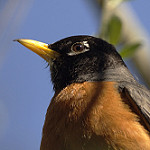
American Robin

Licensed under CC: Photo by Flickr user Lucina M. All rights revert to originator.

Thousands of robins are visiting California’s central coast: lots more than usual, an ‘irruption.’ Unfortunately, I lack records of the timing of their arrival, but many people are talking about their astounding numbers, including: Feynner at Big Creek Reserv
e in Big Sur and Brock Dolman in Occidental, Sonoma County…and birders with the Monterey Bay Birds list serve. Feynner’s says maybe they came this way to avoid big burned areas inland and North. I counted 200 in about 10 minutes, flying in squeaky-talkative groups across a North Coast Santa Cruz field. This has been a daily occurrence for many weeks.

I have spent a little while standing among flocks of hundreds of robins in the fields and orchards at Molino Creek Farm, watching them. They scratch the mulch under the apple trees or poke at the ground in the fields, each bird holding their own few square feet. Some birds rest, alert high in nearby branches in two’s and three’s. I hear the crackle crackle crackle-squeak of a perturbed bird chasing away another, too close; they chatter their beaks by clicking them together rapidly when they seem especially territorial in a favorite food spot. These birds are apt to live up to the cliché, a worm hanging sideways out of their mouths.

Robins were Rachel Carson’s indicator species for the ‘Silent Spring.’ In 1950’s Michigan, researchers documented that elm leaves containing a pesticide applied to battle Dutch elm disease were digested by earthworms, and the earthworms by Robins. Pesticide poisoning made the Robins’ egg shells too thin, and they faced reproductive failure at a landscape level.  Mornings got quieter and quieter in the Great Lakes states as the friendly dawn chorus of Robins quickly faded. Thanks to Rachel Carson and a host of others, America woke up and stopped large-scale broadcast spraying of pesticides.

Robins seem especially wise. Their gaze is intent. Someone once saw an American Robin sweep leaves aside using a twig- tool using intelligence. I imagine their vocal chatter is carrying lots of information. Their friendliness towards me suggests that they know I don’t eat them- people once hunted them for food. They are still food, but for other species: while hiking the other day, I walked towards a cacophony of Robin voices. As I do for all flocks, I spoke gently saying “don’t worry about me!” But, they wouldn’t stop and, after another dozen strides at my feet was a freshly dead Robin, neck broken, just killed…probably by a Cooper Hawk. Cooper Hawk and Sharp Shinned Hawks must be well fed this winter.

I’m pleased to have witnessed this Robin irruption, reminding me that terrestrial ecosystems of the Western United States can still produce bird abundance. This is the third irruption in recent years. 2014 was the Varied Thrush irruption. Winter of 2012/2013 was a Red Breasted Nuthatch irruption. What next? Don’t miss this one! Take time at dawn or dusk in the fields around the Central Coast to see the many Robins and hear their “chock chock” talk. (Check out their big beaks, too!).