Biodiversity

Land Atonement

Very slowly, we must move in the direction of becoming at one with the Land. All that we eat, all that we breathe, all that we drink comes from the Land.

What is your opinion of how people have treated the land around us?

Have we damaged it, or made it better? How do you know?

Big Sur: Whole or Shattered?

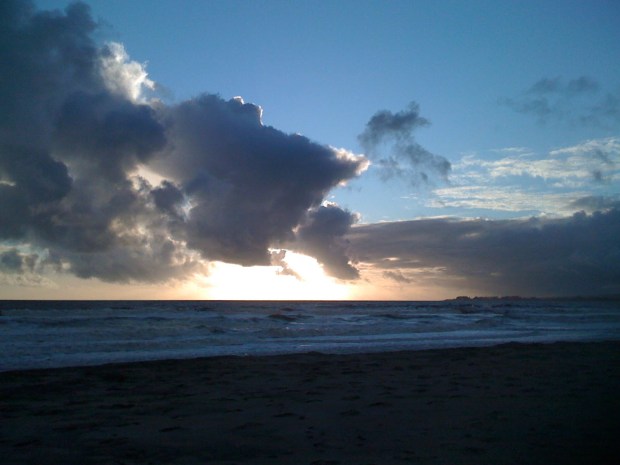
The Santa Lucia Mountains…Big Sur, to our South. On one hand, we see picturesque beauty, “wilderness,” a rugged, sparsely settled landscape, millions of flowers, huge trees, and a rich marine environment. On the other hand, there is a land devoid of much of the wildlife that once called that place habitat, the native peoples that called it home and stewarded that place are mostly gone (but still there!), wildfires ravage the landscape too hot and too frequently, roads and other development bleed soil and pollution into streams, and hordes of poorly managed visitors negatively impact the richest ecology, where the land meets the sea.

Monterey Peninsula: Zombie Ecosystems or Well-Managed Parks?

An ecological treasure, the Monterey Peninsula has rare pine and cypress forests, chaparral, and coastal prairies. Millions of humans visit to play golf, shop, drive fancy cars, visit art galleries, taste wine, or do tourism at an aquarium and historic sites. Nature there is fragmented into isolated parks which have no chance of long-term health. With lots of exposure to disease and human disturbance, with no chance of natural interactions with wildlife or fire, the parks represent zombie ecosystems, seemingly alive but really walking dead as they slowly decline with species after species winking out.

Tilled Valleys, How do You Fare?

The Salinas and Pajaro Valleys frame the central Monterey Bay, rich alluvial soils that support Agriculture, the nation’s salad bowl. Farming is an economic engine, sustaining jobs and communities and feeding people vegetables, never enough helpings per capita in any given day. The effluent flowing out of that engine creates the most polluted surface water in the US, pools of eutrophic, stinking rot. Ancient rich soil is disappearing, lost with the rain, in floods, and in the wind. Groundwater is being contaminated with pollution or by sea water intrusion caused by over pumping groundwater.

Santa Cruz and the North Coast, Loved and Smothered

On the other side of the Bay lies Big Sur North, a tamer landscape, thickly inhabited, worn. Tourism, Silicon Valley settlement, and education rule here. Surf and mountain bike culture are ‘natural’ tourism while hordes of cotton candy fueled tourists amble in the relatively cool beachy haven that contrasts so readily with the increasingly baking inland. Millions of feet pummel the beach sand substrate, crushing the food chain of flocks of would-be shorebirds; the remaining birds scatter, no longer comfortable foraging on these overrun beaches. Similarly, most meadows and canyons zip with such continual disturbance that wildlife families flee….fewer places left to hide. In the built areas, hundreds of fossil fuel formulations leak from engines, pesticides ooze from landscapes, headwater rivers and streams are diverted for toilet flushing and carwashes, downstream they receive and convey pollutants into our treasured Bay.

How do We?

How do we atone for the ongoing damage we are causing to the land around us? In ecological terms we call this restoration. In social terms, we call this reparation. In economic terms, we call this re-investment. Do you see enough of this going on? I cannot believe that you do.

Ecological Restoration

We must make room for all of the species of plants and wildlife to flourish if we ourselves are to survive. We read such things, but do we believe them? Do we act on them? Are there things individuals can do to make this happen? Many of us can vote for those who have this vision. Many of us can learn about ecological restoration and tell others about the ways forward around here. There is good fire to put back on the landscape. There are ecological linkages to restore, across roads, through development. There are invasive species to control. And, there are many species of wildlife that need to be better managed, monitored, and restored with the California Department of Fish and Wildlife at the helm.

Reparations

We live on unceded lands. We are surrounded by people displaced by greed-fueled governmental policies, including war. The nation owes its current wealth to people terribly taken advantage of for generations. What are we doing for reparations? Anything at all?

Re-Investment

The way we do it, every new home, every new development creates a heavier burden on our already strapped local municipalities. The way we have done it for generations, businesses have profited from extraction from Nature, most recently including agriculture, water use, and tourism in natural areas. Some suggest it is time to increase the taxes of landowners to enable more tourists to overrun our natural areas…’investing” in new trails and repairing old trails degraded by millions of tourists to keep local businesses thriving. How did this become part of a re-investment proposal? 

A Path Forward

Whether you take part in restoration, reparations, or re-investment, each of us must do our part. I’m sure that none of us want to leave the world worse off than it was before we enjoyed the water, the air, and the food that Nature made possible. We regularly eat meals…taking. We regularly drink water…taking. We regularly travel through Nature…taking. We regularly purchase things and throw away things…taking. What are we regularly doing to give back, to atone for all that we are taking from Nature, from each other?

I hope that you will think about that debt when you vote this Fall. And, I hope that you will plan at least one activity in the next little while that gives something back. Make such giving a regular practice, please.

-this column brought to you in part by Bruce Bratton, who graciously publishes my work weekly at BrattonOnline.com Sign up, donate, and read it- a great way to catch up on what is going on around the Monterey Bay, and beyond.
Perennial Grasses and Healthy Soil

Isn’t it amazing how marketing pitches can formulate the foundations for societal dialogues? Somehow, forest management gets ridiculed with the phrase ‘raking the forest,’ aiding the politics of defunding the US Forest Service at a time when we really do need widespread restoration of prescribed fire…not raking, but effectively the same thing. And ‘forgiving student debt’ gets bandied about, helping to steer conversations/media away from the more difficult subjects of: better funding/better outcomes of public education; training young adults about contractual obligations and financial planning, and; regulating financial institutions to make student loans more affordable. I’m sure each area of human dialogue has its ‘short hand’ statements that one sector uses to manipulate others. The one I’m faced with currently is the jingo ‘healthy perennial grasses make for healthy soil.’ Let’s take a closer look at that phrase.

Bunchgrass Paradigm

Long ago, a preeminent ecologist traveled to California and ‘discovered’ something that formulated the basis of myriad dialogues continuing through today. Frederic Clements described ‘natural succession’ where nature transforms itself from one habitat to the next in a logical and predictable order. You may recall the diagram that still sticks with me where a pond becomes a marsh becomes a bog becomes a meadow becomes shrubland, culminating in the ‘climax’ community…a forest. In examining California’s grasslands, Dr. Clements found a patch of ‘pristine’ grassland, one of the few that had escaped the plow, along a railroad right of way. That ‘pristine’ grassland was dominated by a perennial bunchgrass, purple needlegrass: this, he said, was how all California’s grasslands should look. Many people still believe this. What about the hundreds of species of wildflowers, such as those cited by John Muir as creating carpets across the Central Valley, and those which provided food for indigenous peoples for generations? Those holding dear to the ‘bunchgrass paradigm’ will say those species grew only in between the bunchgrasses where weeds now proliferate.

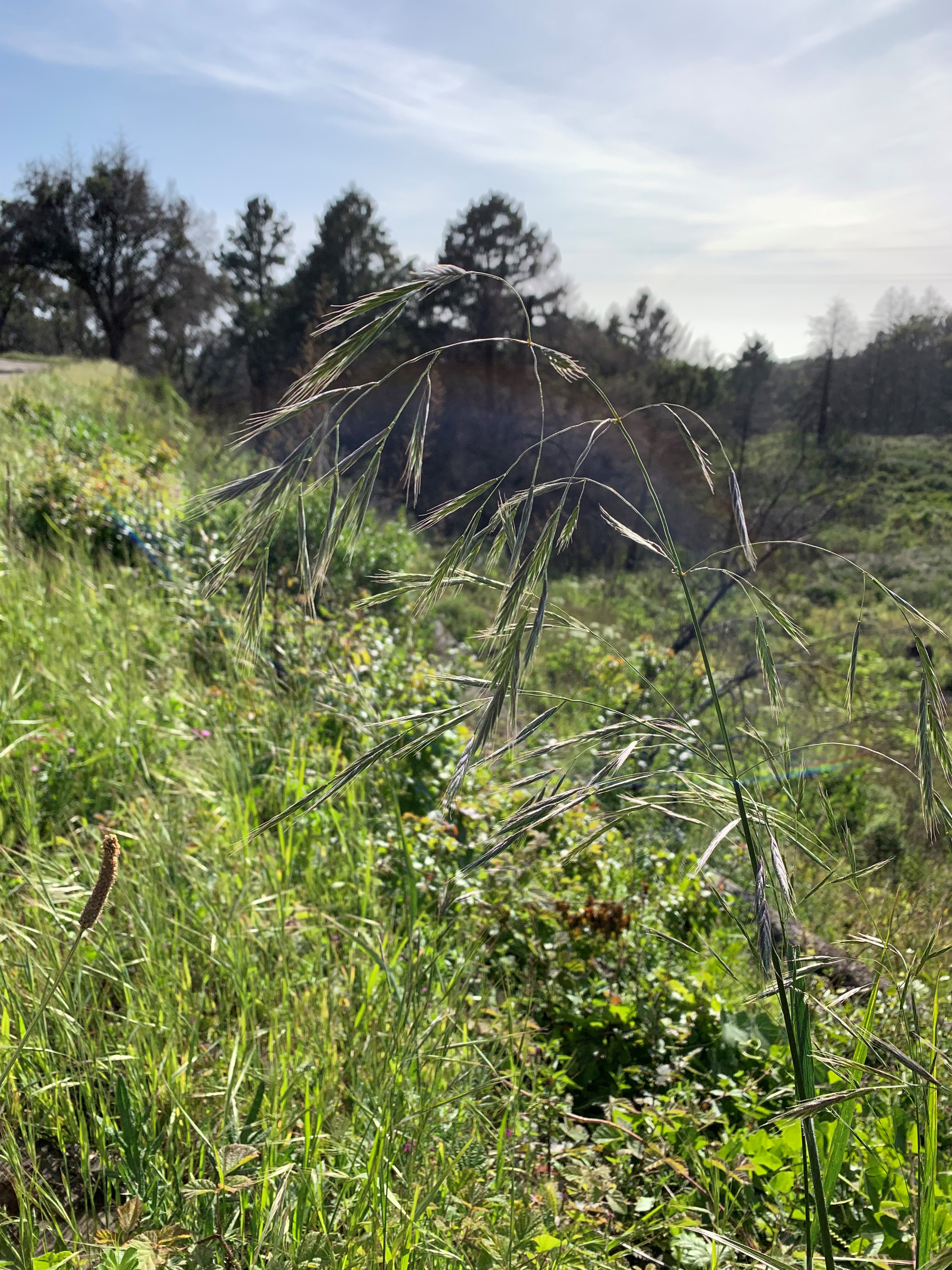
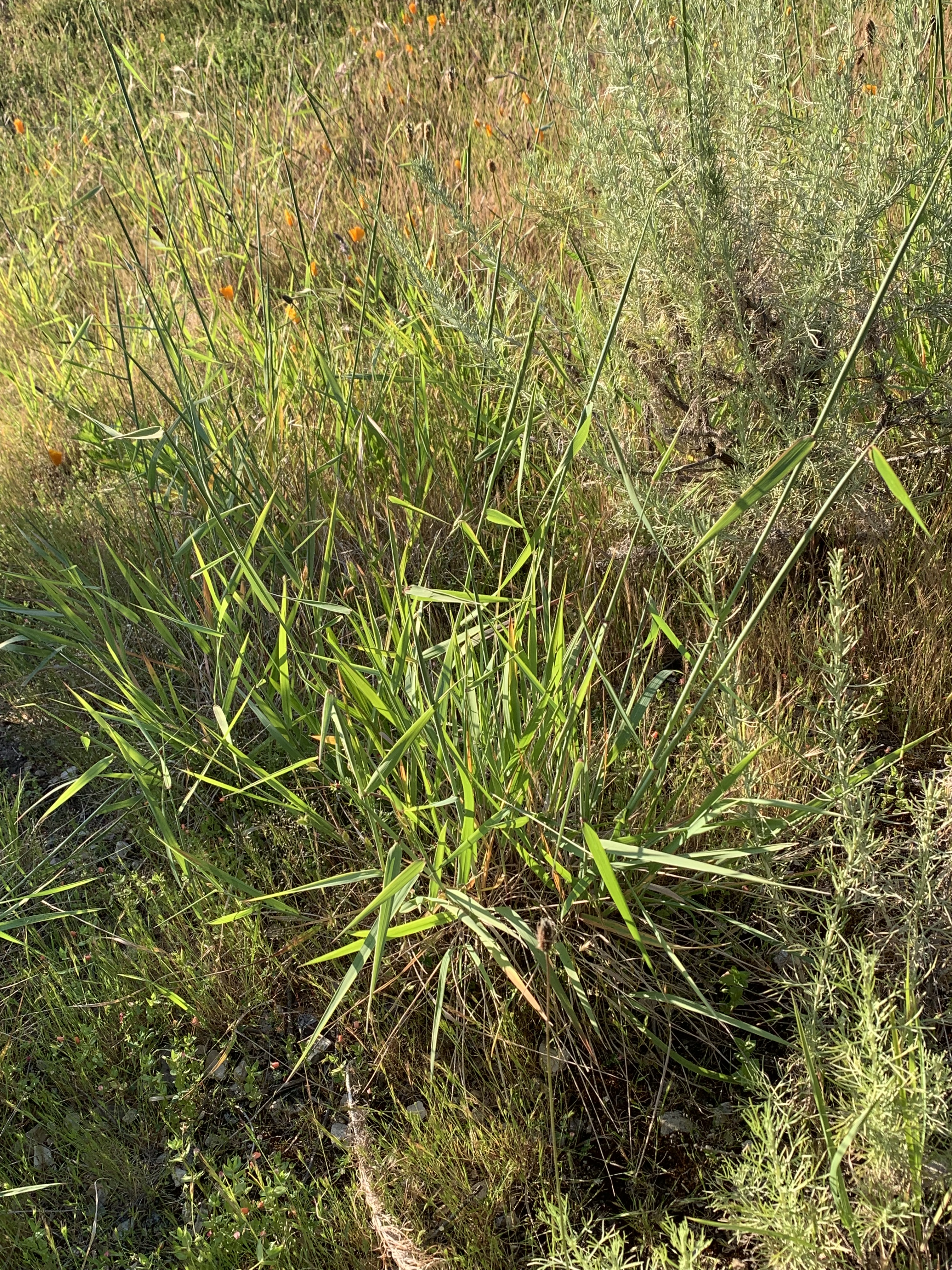
Blue wild rye, a native perennial bunchgrass common to coastal prairies in California

Perennialization Bandwagon

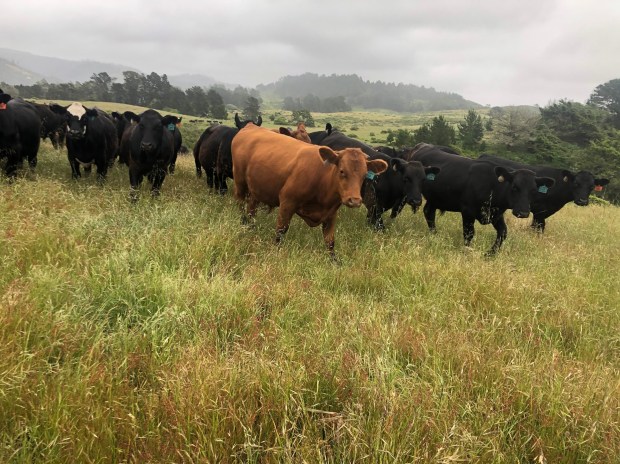
As the bunchgrass paradigm has been perpetuating, another popular movement has been building, a desire to transform agriculture from annual plants into perennial plants with little to no tilling, which purportedly ‘destroys’ soil health. Despite being disproven as effective over and over again, farmers are still attempting to grow lettuce, carrots, broccoli, etc, on ground without tilling. Meanwhile, rangeland managers are repeating a similarly disproven hypothesis that all California grasslands would be better off if ‘restored’ to perennial grasses. Buoyed by science papers that suggest the importance of cattle grazing to help establish/maintain perennial grasses, livestock managers have found good use of this message to gain credibility and increase their land base.

The “Perennial Grasses Have Bigger Roots” Myth

Add the two previously described popular myths together and you encounter another emergent, oft-repeated myth: perennial grasses restore soil health because they have larger masses of roots (in comparison with annual grasses). Central to this popular misconception are comparison photos from the Midwest showing profiles of annual wheat versus perennial wheat including both above and below-ground portions of the plants.  The idea being promulgated is that larger root systems add more organic matter to the soil, break up soil compaction, and allow for better water infiltration. Most recently, proponents of this myth point out that the increased below ground organic matter of the larger rooted perennials means that more carbon is being sequestered, helping to address climate change.

California’s Grasslands: Not Naturally Perennial

California is mostly a Mediterranean state with a long history of ecological disturbance: grazing, fire, drought, inundation, etc. That ecological situation does not naturally produce widespread perennial grass dominated prairies. Even where there are perennial grasses present in a given area of prairie, they are rarely naturally ubiquitous: species seem specific to soils, steepness of slopes, wetness, nutrients, and so on. There are many more annual species than perennial, and many more wildflowers than grasses. Some of the most emblematic grasslands in California are naturally annual plant dominated, such as the wildflower-display rich Carizzo Plains, the rolling hills over the Altamont Pass, and the flower-filled savannahs of the southern, low-elevation Sierra Nevada. On the other hand, large swaths of the former wetlands of the Great Valley were probably once dominated in wide swaths by perennial rushes, sedges, and tall native, rhizomatous (not bunch) grasses.

California brome grass, a perennial bunchgrass common to California’s coastal prairies

Myths of the Perennial Life Form

Let’s examine the “Perennial Grasses Have Bigger Roots” myth for a moment. The most widespread native perennial grass in California is pine bluegrass, a diminutive grass that often has leaves a mere inch or two high and a flower stalk reaching a foot or so into the air. This species likes it hot, dry, and shady, growing in interior oak savannahs. With the first rains, it turns green, later sends up flower heads, and then dries by late spring. There is no reality in which this species has longer roots, or a bigger root system, than the often 4’ tall European oatgrass. Around here, that European oatgrass is more comparable to the perennial California brome grass. This brome, in some soils, alongside European oats similarly continues growing, flowering, and seeding well into summer. In wet areas, a common native perennial grass is meadow barley. Meadow barley is relatively small and short-lived, and goes dormant very early in the season, when it is replaced by the proliferate annual Italian ryegrass, which is larger by far. Most people surveying for perennial bunchgrasses have overlooked meadow barley altogether as it disappears so early in the season.

Yes, there are smaller annual grasses and larger perennial grasses, but my point is that the generality that ‘perennial grasses have bigger roots’ is untrue and not that useful as a generality.

Regenerative Ranching: Regenerating What?

Although the definition of ‘regenerative ranching’ is elusive, it seems most proponents are gravitating towards suggesting that they are ‘restoring healthy soil.’ The idea here is that soil has been in some way degraded and must be returned to its primeval state. Often, the soil degradation concern is ‘compaction.’ To restore soil health, proponents rely heavily on the myths described above overlaid with management hypotheses that using livestock can mimic evolutionary disturbance regimes last encountered with the Pleistocene megafauna, 10,000 years ago. Regenerative ranchers really believe that such approaches work and are full of anecdotes about what they’ve witnessed, though changes in soil health are notoriously slow and always soils-specific.

Compared to What?

I’m pleased that there is a conversation about how to best manage California’s prairies, but concerned about bandwagons, slogans, and misinformation. Humans are really, really good at pairwise comparisons, but their attraction to such must be tempered. Perennial vs. annual grasses: nonsensical! Livestock grazed vs. ungrazed: not helpful! We can try really hard or spend a lot of money trying to ‘restore’ soil health, but what are we restoring it to? There is the possibility for a great collaboration in this conversation. The USDA NRCS has a long-running research project that fits nicely: their ‘ecological site description’ project would do well to help define which sites are best compared with one another, based on soil types. When having these conversations, we would do well to have great respect for the state of the science, referencing a rich literature and how it does, or doesn’t pertain. And, in our pairwise comparison analysis, let’s always try to compare what we are doing, regenerative or otherwise, with someone else’s approach: what is working better, and why? We must always make these conversations very site-specific…variability across sites is the rule.

Meanwhile, beware of definition-less terms without a systematic third party certification program: ‘natural,’ ‘grassfed,’ or ‘regenerative’ labels hope to entice you to pay more, have higher respect, adhere to brand loyalty, or just plain ‘believe’ you are doing the right thing by supporting such verbiage. With this and other jingo-based bandwagons, let’s get a tad more critical so that we support what is worth supporting with greater clarity on WHY.

-this post originally appeared as part of Bruce Bratton’s weekly blog at BrattonOnline.com

Protecting Our Most Precious Spots

The most highly protected terrestrial areas around California’s Monterey Bay are designated as “Natural Preserves” by the California Department of Parks and Recreation and as “Ecological Reserves” by the California Department of Fish and Wildlife. Let’s explore where those places are, and how the State’s premier land management agencies are directed to protect areas with these designations.

CDFW Ecological Reserves

The California Department of Fish and Wildlife (CDFW) manages 1.1 million acres of land in California. Unfortunately, CDFW does not publish summary statistics about how many of those acres are designated as Ecological Reserves, which have the highest protection of any state-owned public lands, as reflected in the following regulatory language:

“….ecological reserves are maintained for the primary purpose of …..protection of rare, threatened, or endangered native plants, wildlife, aquatic organisms, and specialized terrestrial or aquatic habitat types. Visitor uses are dependent upon the provisions of applicable laws and upon a determination by the commission that opening an area to such visitor use is compatible with the purposes of the property.” (Cal. Code Regs. tit. 14 § 630Additional Visitor Use Regulations on Department Lands Designated as Ecological Reserves).

Note the stress on maintaining these properties for species and habitat conservation, first and foremost. And note that it takes a vote by the California Fish and Game Commission to allow any visitors to use those properties. Any such vote must be supported by an analysis of the impacts of such visitation on the species and/or habitats that the Ecological Reserve was designated to protect.

Local Ecological Reserves

The two CDFW Ecological Reserves that people regularly visit around the Monterey Bay are the Elkhorn Slough Ecological Reserve and the Bonny Doon Ecological Reserve. The two other CDFW Ecological Reserves do not allow public access without special permission: Quail Hollow and Watsonville Slough.

The Elkhorn Slough regularly has many visitors. The Fish and Game Commission appears to have at some point voted to approve visitor use at that property. However, a Commission-approved Elkhorn Ecological Reserve Management Plan outlining how visitor use is compatible with the conservation purposes of the property is not readily available. So, unfortunately, I can’t tell you what ‘conservation purposes’ were designated when the property was afforded such a high level of protection.

The other CDFW Ecological Reserve that the public visits was founded with the conservation purposes, according to their approved management plan, from 2003:

“The Bonny Doon Ecological Reserve (BDER) contains the largest and most pristine remaining occurrences of several rare plant communities which are limited to ancient marine sand deposits in Santa Cruz County. These communities contain three plant species which are considered to be rare or endangered: Santa Cruz cypress (Cupressus abramsiana) and Santa Cruz wallflower (Erysimum teretifolium), both listed as Federal and State endangered at the time of acquisition; and Ben Lomond spineflower (Chorizanthe pungens var. hartwegiana), which has subsequently been listed as Federal endangered….The BDER acquisition represented a unique opportunity to preserve a comparatively large area of rare habitat in nearly pristine condition”

In contravention to the regulation cited above, CDFW has allowed public use despite the Fish and Game Commission never having approved visitor use according a plan analyzing the compatibility of visitor use and protection of the Bonny Doon Ecological Reserve. Moreover, such a plan would also be required to have a Coastal Development Plan, approved by the California Coastal Commission. The 2003 management plan alludes to the need for a trail plan, but it is not clear if the plan’s environmental impact sufficiently addressed issues associated with the vague plans outlined in the document. The plan did, however, require creation of a monitoring program that designed to trigger changes in visitor use and trail maintenance. {ask for monitoring reports}

State Parks Natural Preserves

The California Department of Parks and Recreation manages 1.6 million acres of land. As with CDFW, Parks does not publish how many acres are designated as Natural Preserves. Natural Preserves have the highest protection of any State Parks managed lands, as reflected in the following policy language:

“… natural preserves will be established to give full protection to environmental and ecological integrity, from the standpoints of watershed influences, scenic and visual unity, cultural values, and other appropriate environmental factors.

Developments in natural preserves are limited to trails and interpretive facilities required to make possible the visual and sensory enjoyment of the resources by visitors. Vehicle access and parking are not appropriate; visitor centers, restrooms, structures, and facilities other than signs shall be placed outside natural preserves.

Bicycles are allowed only on paved roads in…Natural Preserves.”

Note the language, as with CDFW, stressing the primary importance of these State Parks areas for ecological conservation, and how Parks adds to this designation watershed processes and areas of cultural significance.

Local Natural Preserves

There are 5 Monterey Bay spots with State Parks Natural Preserve designation: Wilder Beach Natural Preserve (small, Wilder Ranch State Park); San Lorenzo Headwaters Natural Preserve (1800 acres, Castle Rock State Park); Theodore Hoover Natural Preserve (23 acres, Big Basin State Park); Año Nuevo Coast Natural Preserve (925 acres, Año Nuevo State Park), and; Point Lobos State Natural Preserve (550 acres). A large portion of the Año Nuevo Coast Natural Preserve has restricted public access and there is no public access allowed at Wilder Beach. The other spots allow public access, but, as noted in the above policies, no one is allowed to leave trails in areas with this designation, and bicycles are not permitted except on paved roads.

One Natural Preserve is missing from State Park’s list: the one that was to be designated for the coastal prairies in upper Wilder Ranch. During the process of approving use of that part of the park, Parks was discussing designation of vast areas of the diverse grasslands as a Natural Preserve. However, it turned out that Parks never updated the Wilder Ranch General Plan and so didn’t pursue such a designation, possibly due to opposition from mountain bikers.

How Are They Doing?

Many people reading this will be familiar with at least some of the areas listed above, places afforded the highest levels of conservation protection. For each spot, ask yourself: how are the managers doing? Do those areas seem to be better managed for conservation than other places? In the case of Wilder Beach, are snowy plovers nesting there…do people get away with trespassing there? In the case of the Bonny Doon Ecological Reserve, is visitor use truly compatible with protecting the many species and habitats, which includes the most endangered ecosystem in North America? How can we tell these stories and help the managers elevate these very special places to give them the protection they deserve?

-this essay revised with new information from that which appeared in June 2024 at Bruce Bratton’s inimitable Monterey Bay news source at BrattonOnline.com

Advocates for Wildlife Protection: Where?

When was the last time you heard about someone advocating for wildlife protection in our Monterey Bay region? Who was it? Why?

I am disturbed by the lack of advocates for wildlife protection and I wonder why that might be. Here are some reflections.

A Plea for Help

Occasionally, I find a need to call out for help for wildlife protection advocacy. My most recent call for assistance was a seeming ‘no brainer.’ There was a clear need for wildlife advocates to ask the State of California office of the US Bureau of Land Management to consider a science-supported update of their statewide sensitive wildlife species list. The one BLM has been using doesn’t protect a bunch of State listed wildlife species, as it should. And, the BLM is required to work with our State Wildlife agency to do just that. This is one of the most straightforward issues I’ve faced: the facts are easy to illustrate and quick to research. And so, I reached out to the obvious pro-wildlife advocacy organizations. Who comes to mind when I say that? Pause, don’t read on…think: who would that be?

The Sierra Club

If you are a pro-wildlife advocate, the Sierra Club seems a great place to work. Well, it could use some help. My pleas to the Santa Cruz Group of the Ventana Chapter of the Sierra Club went unanswered. The one or two in the group who are apt to answer such requests are totally stretched. A while back, the local club was taken over by the pro-bicycle lobby, a group that has little regard for wildlife conservation. It should be telling that Santa Cruz doesn’t even have its own Sierra Club chapter: the local one is a sub-group of the Ventana Chapter, based in Monterey where most of the pro-environmental activism has been traditionally located.

The Wildlife Society, San Francisco Bay Area Chapter

Another far flung chapter of an organization that is supposed to represent Santa Cruz County’s wildlife conservation concerns is the SF Bay Chapter of the Wildlife Society. Unlike the Sierra Club, this Chapter did return my queries. However, after a long wait they wrote me that they were uncomfortable advocating for this issue. They actually told me that they weren’t an advocacy organization, despite their website saying that they “work to ensure that wildlife and habitats are conserved” by “advocating for effective wildlife policy and law.” It seems like whoever is active in the organization right now is uncomfortable being advocates. Luckily, their parent organization was a much better help.

The Western Section of the Wildlife Society

Even more far flung than the SF Bay Chapter, the Western Section of the Wildlife Society was a great help. Their leadership, though obviously overworked, were enthusiastic and helpful with the straightforward request for assistance. They did due diligence and had adult conversations about the need for advocacy and wrote an amazingly strong letter on the issue. If you want to support a good (local?) organization for wildlife advocacy, this is a logical choice. Unfortunately, they probably won’t be proactively monitoring our local situation and helping out without us asking.

Audubon Society

Not so far flung, the Santa Clara Valley Audubon Society is very active and quite influential…just over the hill. When approached, their overworked volunteers can sometimes be enticed to help with local conservation. I have to give them a call on this one.

Land Trusts

The Land Trust of Santa Cruz, Sempervirens Fund, Save the Redwoods League, Peninsula Open Space Trust and others…clearly all competing with one another with no unified messages or strategy for region-wide wildlife conservation. Instead, they are as likely to be public-forward with pitches for increased recreation in natural areas, which runs counter to wildlife conservation. With this contradiction, none of these organizations are able to build credible coalitions to advocate for wildlife conservation.

Wildlife Biologists

I have long approached local wildlife biologists for assistance, with mixed results. This time, I reached out to a few and was surprised. What I was asking experts to do was to do a bit of analysis  so that their opinions about adding species to the BLM’s list were well supported. A handful of wildlife biologists said that they would consider advocating for this cause, but only if paid for their time for analysis. One biologist, Jacob Pollock, stepped up as a volunteer. Dr. Pollock is a steadfast advocate for science-supported wildlife conservation. He has an inquisitive mind and powerful analytical abilities. He deserves recognition and thanks for his wildlife conservation volunteerism. This is apparently quite rare. He will shortly offer up a methodological approach to updating the BLM’s State Special Status Wildlife Species list with an example from a statewide analysis of the rarity of American badger, including BLM’s contribution to its recovery.

The rarity of such volunteers was recently emphasized when a community organization contacted me to speak at a public forum considering a potentially wildlife-impacting regulation. I couldn’t speak and couldn’t think of another wildlife advocate to do that speaking engagement. Have you seen an inspirational wildlife conservation advocate who regularly speaks to local threats to wildlife and solutions for conservation?

Why So Few?

What has created this dearth of local wildlife advocates? We have no reliable analysis about what has happened. One day, maybe I’ll find the time to do some investigative work about what went on with the local Sierra Club. Meanwhile, I suggest that mere intelligent leadership in our community would result in that person getting elected to the Santa Cruz Group. However, that person would be lonely without a couple or three more such people to make a majority vote happen in favor of wildlife…and, a group of such volunteers would be necessary to pick up the workload for responsible advocacy.

Cost of living might have something to do with the situation. The Monterey Bay area is very expensive to live in, so wildlife biologists must work hard to pay their bills, leaving no time for volunteer work. And, when professional wildlife biologists do advocacy, they threaten some of their employment opportunities, so there’s further disincentive.

Parallels with Environmental Educators

If there are any social scientists out there, read this other post and compare the notes with this one – I think there are parallels. Besides wildlife biologists, why are so few environmental educators meshing conservation advocacy with their work?  Is it likewise the threat to income? Or, is there something cultural going on here? There might be some redundancy with this issue as perhaps a large number of environmental educators are also wildlife biologists.

What Are We To Do?

I heard recently that progressives might be getting some funding to support a revitalization to allow improved political campaigns in Santa Cruz. Perhaps there is a similar need in wildlife advocacy. It does seem that we need a new organization to advocate for wildlife in our region. How would one go about setting it up for success? I imagine it starts with funding the set up and also creating an endowment for some staff positions. The mission would need to be building a supportive, diverse, and active public. I am looking for such change.

-this post slightly adapted from the one published by Bruce Bratton at his impactful BrattonOnline.com blog site where there is often lots of good information from some brainy characters. A great source of news.

Contrasting Two Biodiversity Hot Spots

When I can muster it, I travel to the American tropics to experience an even greater degree of species diversity than California. I’d like to share some of what I noticed in the contrasts between the people and places I experienced this December in Ecuador, perhaps the most species rich place on Planet Earth.

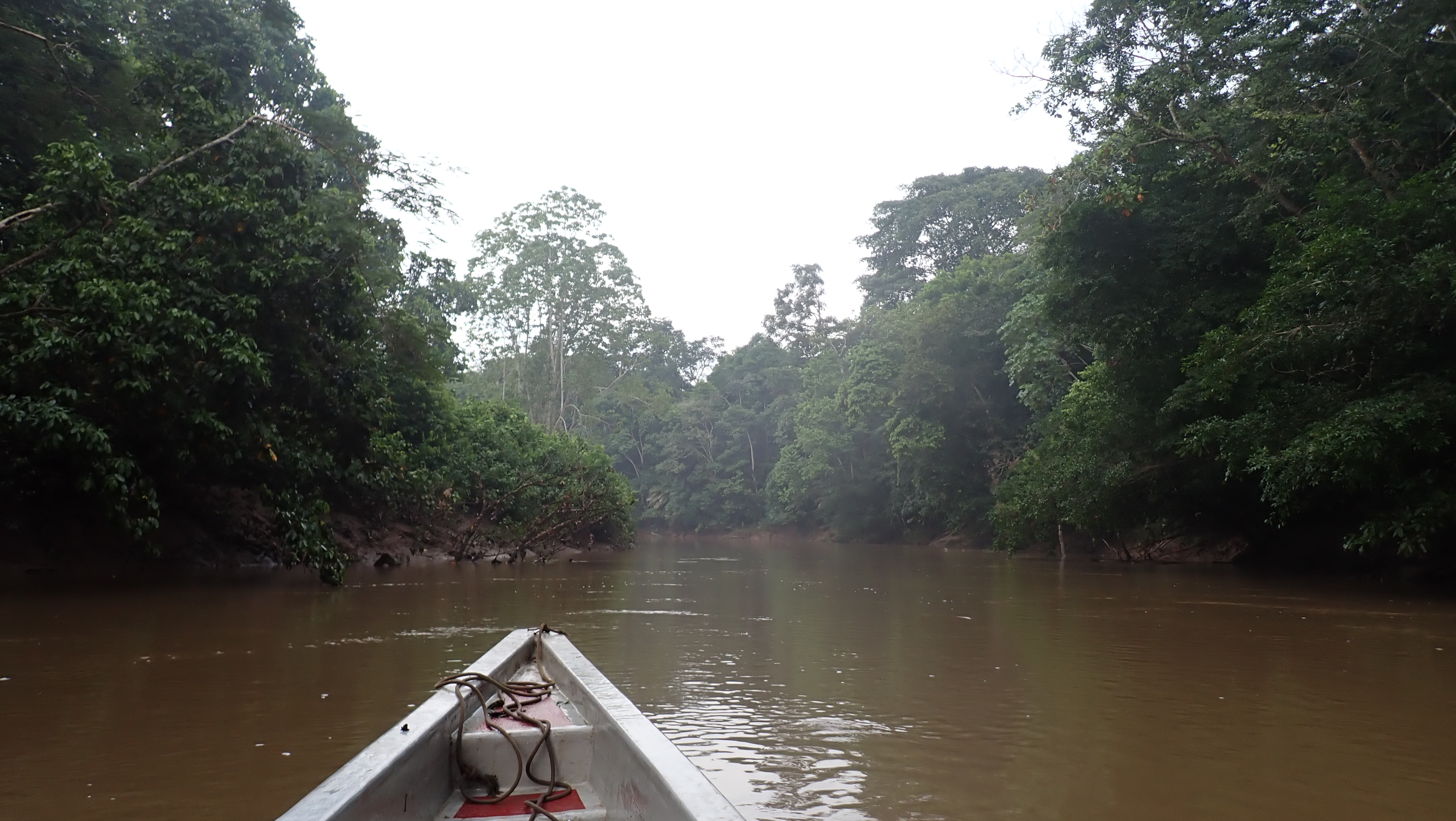
A indigenous guided Amazonian river tour in Ecuador, one of hundreds available

Oh, the Riches

One of the most interesting conversations I had while traveling in Ecuador was during the taxi ride back to the airport as I was departing for California. I mentioned to the taxi driver some of the things I’d noticed in Ecuador that contrasted with California. For instance, the roadways were clean – no litter! Also, I hadn’t seen any homelessness during my travels, though I frequented areas where entire people had no obvious means of employment. Everyone I encountered during my 3-week stay had been more than polite – outgoingly kind more like it. And, those with whom I interacted seemed to appreciate and even understand a lot about the biological richness of their country. I told the taxi driver that these things were surprising to me as Ecuador was supposed to be such a poor country. He shook his head and corrected me – Ecuador is a rich country, quoting Friedrich Wilhelm Heinrich Alexander von Humboldt, “Ecuadorians are rare and unique beings: they sleep peacefully in the midst of crisp volcanoes, live poor in the midst of incomparable riches and rejoice with sad music.” He then asked me if the United States was also a rich country, and how well did the people of the USA sleep? I didn’t know quite how to answer. (It turns out that one-in-five US citizens take sleep medication regularly).

Tourism Economy

It is interesting that both Santa Cruz County and the country of Ecuador generate approximately the same amount of cash due to tourism: $1.1 billion annually. It is there that the similarities end. The Beach Boardwalk is the driving force for Santa Cruz County tourism. Experiences in nature are what drives tourists to Ecuador; they go to experience Darwin’s discoveries in the Galapagos Islands or to see the rich jungles, volcanos, mountains, and the plethora of wildlife. Everywhere you go in Ecuador there are lodges hosting people whose destination is Nature. Lodges are gateways to the Parks, and each lodge has a cadre of nature guides trained to help tourists see the richness around them. Nature guides study for years to become certified to lead tours in the parks. The guides I met could identify hundreds of birds by their songs, knew a bit about most of the plants we encountered, could identify tracks in the mud, and could talk about the distribution of species across the country and beyond. There are hundreds and hundreds of such guides in that country, which is the size of Colorado.

What a Contrast!

As I returned home, I wracked my brain to think of a single lodge in the Monterey Bay that caters to nature tourists and has any nature guides at all. The San Francisco Airport toilets were much nastier than the toilets in the Quito airport. Trash litters Highway 1. The homeless population was not sleeping peacefully, though others might have been, back in my hometown of Santa Cruz. I’m not sure how many of my culture were rejoicing, with sad music or otherwise: joyfulness is not a phenomenon I equate with this culture. Certainly, most of us living around the Monterey Bay aren’t living poor, but we, like Ecuador, dwell ‘in the midst of incomparable riches.’

Miles of beautiful coast and not an eco-lodge or terrestrial biodiversity guide to be found

When is a Tourist Just a Tourist?

What does it matter that tourists go to the Boardwalk versus taking a walk with a nature guide? They come, they spend, they go home…its all good for the economy, right?

Between guided hikes at an Ecuadorian lodge at 9,000’ I sat by a fireplace looking through the reading material on the coffee table. There, among giant, full-color books published by the Ecuadorian government about the nation’s biological richness, I saw a magazine published by the American Bird Conservancy. That group, and the Audubon Society are two fairly mainstream conservation groups working to save birds from extinction. Many of the tourists supporting Ecuador’s lodges are birders. There is a natural connection between tourism and conservation. The same cannot be argued about Beach Boardwalk visitors.

So, why isn’t there an economy of immersive nature tourism around the Monterey Bay?

The Thrill Isn’t There and We Just Don’t Care

Thrilling, isn’t it? Roller coasters…rides…the children won’t be bored. Once the children grow up, the adults head overseas to see birds and nature: why not sooner? What is it about Nature that makes experiencing it so family unfriendly?

Even a drive along Highway 1 is so unenthralling as to invite so much littering.

Do we care so little about impressing the tourists, do we have such little pride, that we don’t bother keeping our airport toilets and roadsides clean? Aren’t we richer than that? Or, are we really quite poor?

What would Humboldt say of those currently living around the Monterey Bay? “They are just normal beings: they sleep fitfully in the midst of isolation and crime, living poorly in the midst of incomparable riches and rejoice in violent movies.”

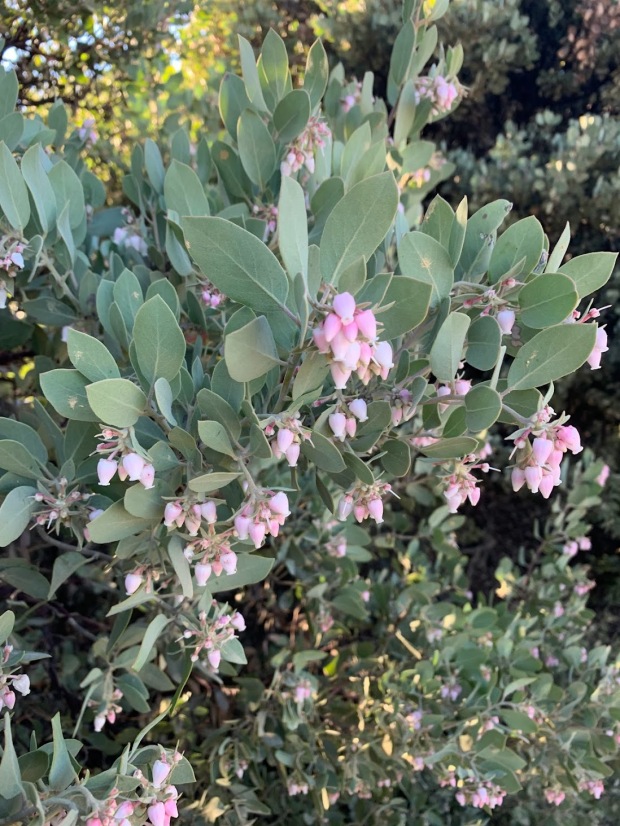
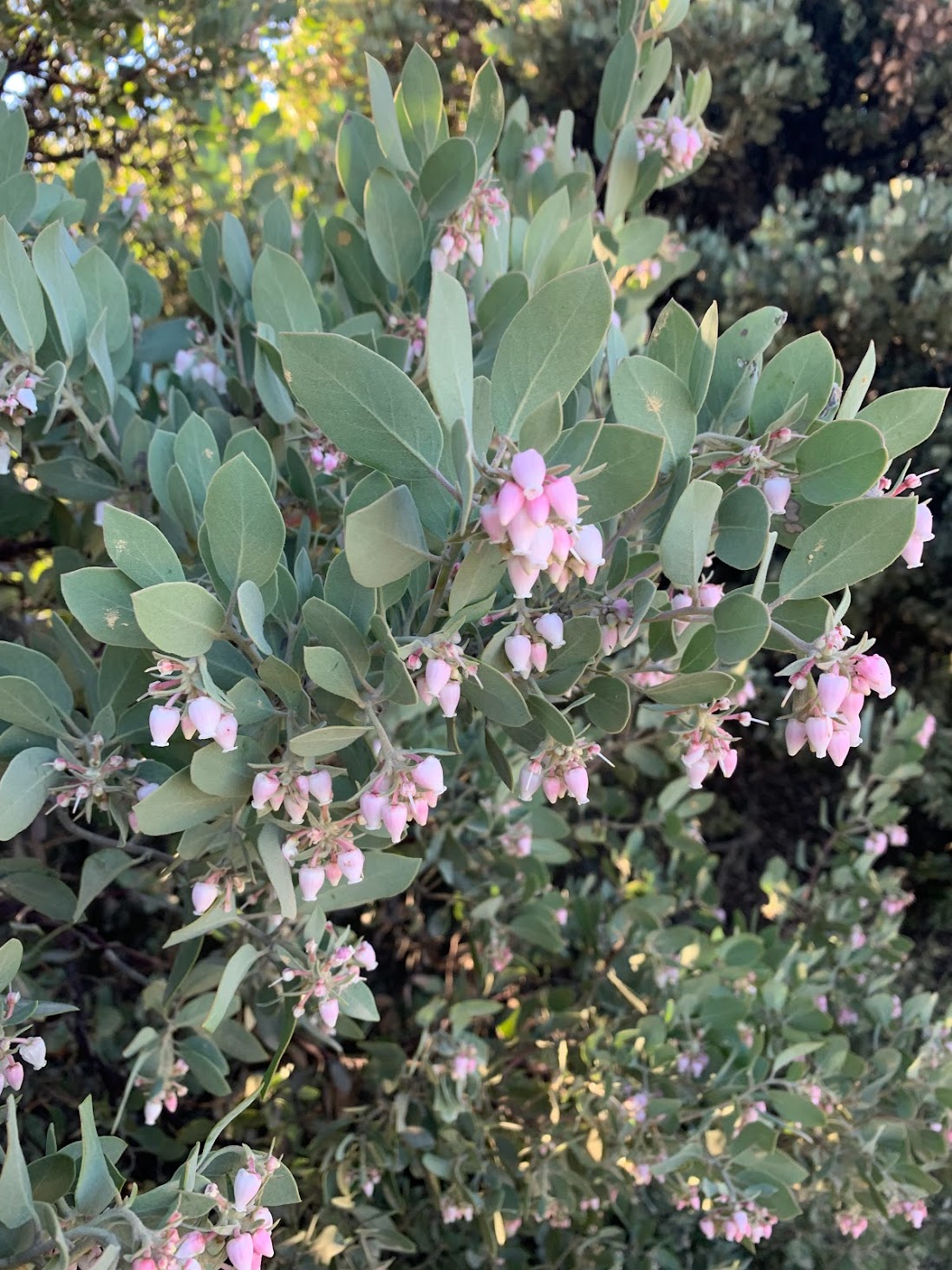
Hoary manzanita, Arctostaphylos canescens – on granodiorite, ridgeline south of Loma Prieta

Awake! The Unfolding is Nigh

Now the rain has wetted the green hills, flowers are bursting, birds are singing spring songs, and streams are noisily dancing. The solution is at hand. Toss aside the social media, decline the invitation to the movies, take the trail and saunter. Invite someone to join you, someone with whom you can adventure and discover the amazing life unfolding around the Monterey Bay. First on the list: the manzanitas! A dozen species within a short drive – discover them all, their beautiful bark, their honey-scented flowers with hummingbirds and bumble bees aplenty. Jackrabbits and brush bunnies, roadrunners and quail, coyote and mountain lion tracks around every corner. Need a guide? Sign up for a walk if you can find one: ask me if you can’t. The Monterey Bay’s ecotourist economy and resulting conservation start with you, now and tomorrow. Let’s make Ecuador a sister country to the Monterey Bay – biodiversity hotspots with plenty of inspiration to share.

-this post originally appeared as part of Bruce Bratton’s laudable BrattonOnline.com weekly blog: check it out! Subscribe! Support! It is The Place for news on the Monterey Bay. No other outlet supports a regular environmental column. Other outlets have SUBPAR environmental reporting.

Animals of our Hearts

We each come to loving non-human wildlife for our own reasons, and we want to assure that all species are thriving for future generations. Among the many people with whom I interact, their answer to an intriguing question is uncannily and increasingly resolute.

“How many species do you need to maintain the quality of life you desire?”

“All of them” is the answer more and more people are giving me.

How does that work?

Only through the goodness of our hearts will we conserve wildlife. What doors open our hearts enough that we are willing to act to restore wildlife?

Cute, Fuzzy Creatures

As children, we are fascinated and kind towards non-human animals. Often, what we glean from children is that they find wildlife to be ‘cute.’ Whether they are stuffed plush toys or animated cartoons, we indulge our youngest children’s inherent love of wildlife. They have pets, or visit friends’ pets, and develop relationships with non-human species. Children learn to cuddle and stroke pet fur, and the pets purr and roll, and show pleasure, giving love back. Humans and non-humans give and receive love, reducing stress and building trust. We expand the community from our core human families to include non-humans.

As adults, we carry with us that love of cuteness, the desire for connection with non-humans, the tactile pleasure of the furry cuddling interaction. And we develop still other ways to connect with non-human animals.

Non-Human Friends: Our Pets

The friendships we create with non-human species are complex, and we each have our own approach. Many share a basic understanding that has developed with our non-human pet species. There are troves of common wisdom about dog and cat behavior towards, and expectations of, humans, which I will not repeat. I’m sure you have plenty of material to reference, as this is a deeply cultural realm and the subject of many conversations, especially when extended family gathers and ‘pet talk’ is a relatively safe space for discussion.

As those pet conversations get more personal, it becomes clear that many humans rely on non-humans (and vice versa) for friendship. Our pets go with us on adventures and reveal to us much that we may not have otherwise experienced. Our pets recognize our ups and downs and participate actively with all of our emotional territory.

Wild Friends

It’s not only pets: some people recognize friendship with wild creatures. The stand-out crowd are those who feed or provide water for wild birds. This bunch is so numerous as to have a sizeable economy surrounding these connections. People buy and maintain hummingbird feeders, bird baths, bird feeders, suet cages…some even invest in specialized foods such as worms or fruit jellies for their favorite bird species. There is an emerging movement in gardening for wild birds.

Still others connect with the wild furry animals that they frequently encounter in parks or in their yards…squirrels, deer, and foxes are the ones I hear about the most. People put out squirrel food, some even getting to know a squirrel well enough to feed it out of their hands. Some folks get to know a certain local doe and her fawns, watching her through the year as she raises them from spots to adolescents. The doe may very well know about the safety net provided by their proximity to a friendly human’s habitation. She and her fawns will feel comfortable near the humans they recognize. Being very sound-centric, they respond attentively and curiously when we talk to them. The very habitual fox, trotting the same paths at the same times each day, will know just how to avoid human encounters but we catch glances of them when we break our rhythms. They poop on our shoes outside the door as a way of saying hello. For a while, foxes were so regularly seen in Bonny Doon that when their populations dipped a whole community was saddened.

Wildlife Viewers

Many of us are falling in love with more and more species of wildlife. We call ourselves naturalists or wildlife viewers. We study the critters we encounter in order to learn new stories. Domesticated dogs provide a gateway into the natural world…through our regular ‘dog walks’ and through our observation of their sniffing around and explorations. Wild animals do those things, too, in many more ways. They draw us out of our cozy homes to visit them and see what they are up to. Observing their behavior, we learn new things about the natural world. As our curiosity grows, we find ourselves in places we wouldn’t otherwise venture, at times of day we might not otherwise get out. Wildlife viewers must get up very early sometimes. To see a river otter, they go to the riverside; to see whales, they go out in boats; to see pond turtles, they spend time gazing at logs in ponds; to see snowy plovers, they squint into binoculars on a wind-blown beach; to hear owls, they stay up late and scritch gravel to goad them to calling.

Hunters

A significant and important segment of the human population connects with wildlife as part of the hunt. Sometimes, hunting provides important food for subsistence; historically, this was even more so. Other times, hunters enjoy the sport as well as the food. Hunters and people who fish get to know the species they pursue and the habitats those species rely on. And, their love of wildlife for hunting has actualized incredible conservation successes. Ducks Unlimited and Trout Unlimited are two of the many organizations supported by hunters which have helped steward wildlife habitat and recover species.

All of Us

Statistics suggest that the vast majority of humans, even here in the apparently divided USA, strongly support wildlife conservation. When we realize the importance of wildlife to our standard of living, we are compelled to learn more about what wildlife need to survive. When we connect with wildlife, we realize we are part of something greater than ourselves, bigger than our simplified human-oriented world. When we see wildlife make a connection with us, we feel part of the natural world, and our basic selves become more grounded and real. When we work to conserve wildlife, we are at our best…serving the world that serves us. Three ways we can be effective at wildlife conservation:

  • Vote for candidates that detail their approaches to conservation. Every political candidate has the means to make a bigger difference than any one of us acting alone.
  • Join a wildlife conservation organization, donate more than membership fees. The Center for Biological Diversity is my choice. The Audubon Society is a good one, too. I’m vetting others…suggest one that you think I should mention!
  • Tell your friends heart-felt wildlife stories. Help create a culture that connects with wildlife!

-this post originally part of a Bruce Bratton weekly blog at BrattonOnline.com, read it and be enlightened!

-to be further enlightened on this subject, see the recording of my recent presentation about local wildlife by clicking here.